



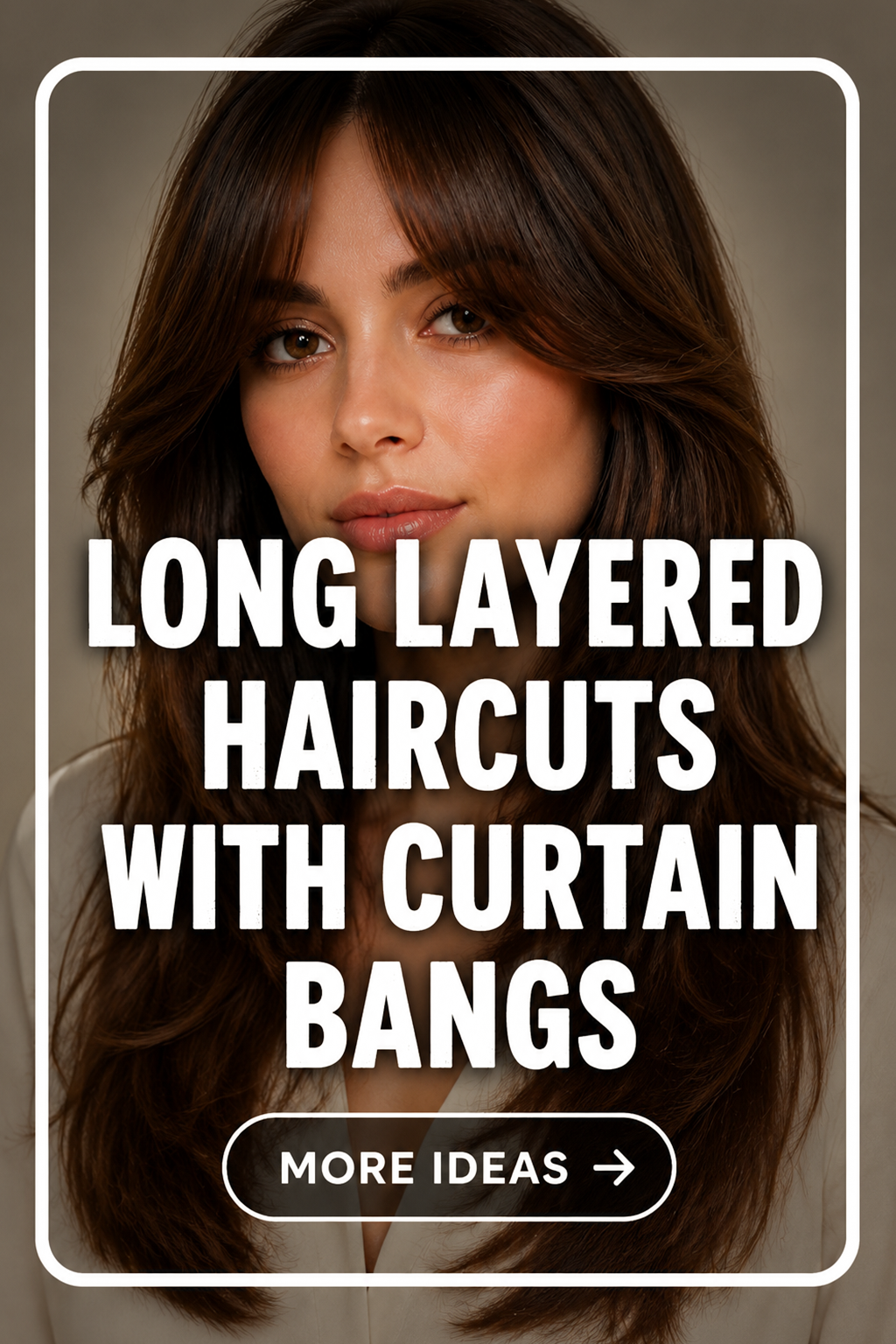
Long layered haircuts with curtain bangs combine two details that work especially well together: movement through the lengths and a soft frame around the face. The layers stop long hair from feeling heavy, while the center-parted fringe blends into the front pieces instead of sitting separately from the rest of the cut.
Choose the layer placement according to the finish you want. Longer, quieter layers keep the shape polished; feathered or butterfly layers create more lift; and softly textured layers give waves a relaxed finish. Curtain bangs can also be cut longer or shorter so they sit naturally around the cheekbones, jawline, or eyes.
Key Takeaways
- Long layers add shape and movement while preserving overall length.
- Curtain bangs should blend into the front layers for a soft, connected silhouette.
- The same haircut can look sleek, bouncy, wavy, feathered, or shag-inspired depending on styling.
1. Classic Chestnut Long Layers With Curtain Bangs
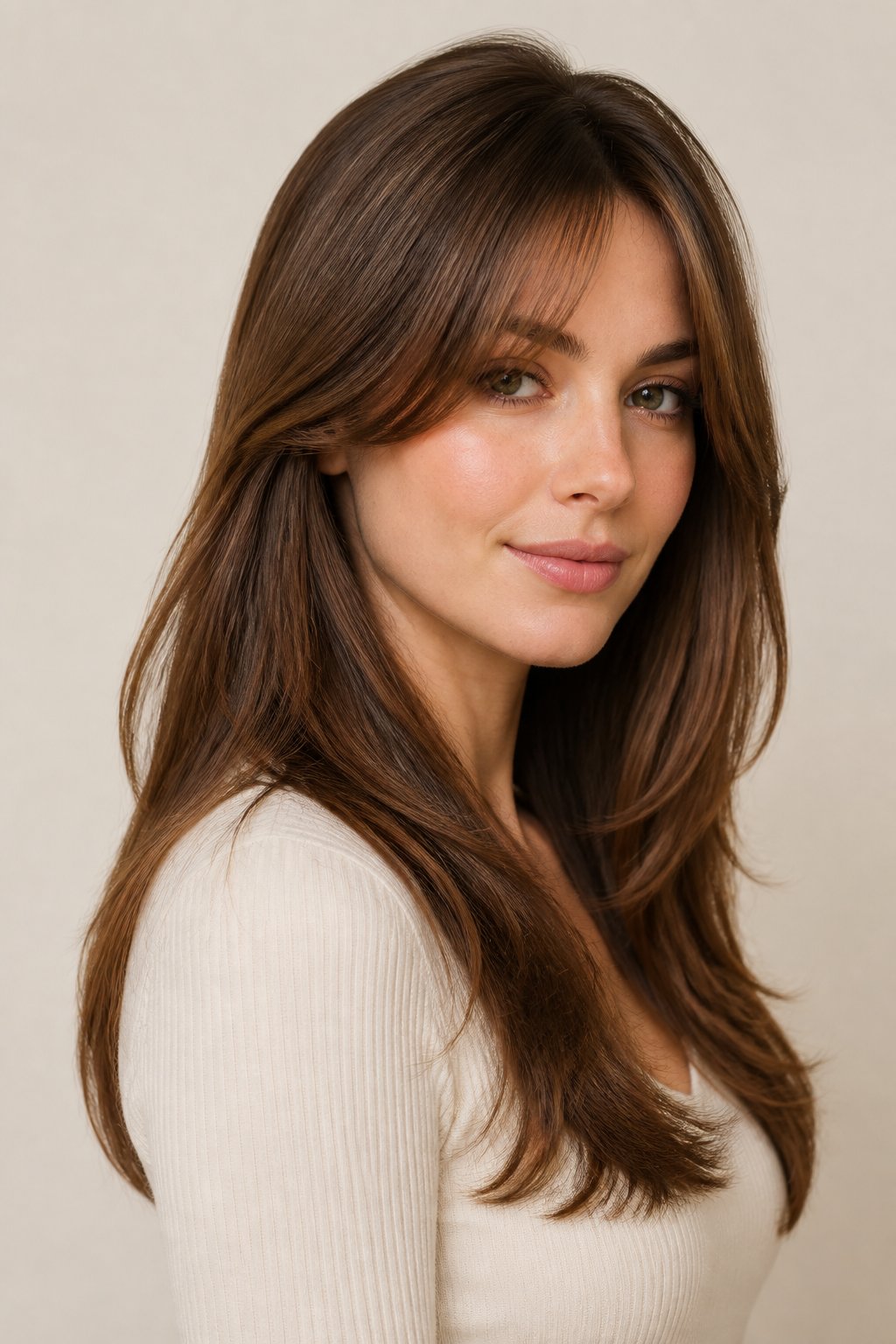

This classic version keeps the fringe light and lets the longer face-framing pieces flow directly into the rest of the haircut. The chestnut tone makes the curved layers easy to see, while the soft bend through the ends keeps the shape polished rather than overly styled.
2. Feathered Long Layers With Curtain Bangs
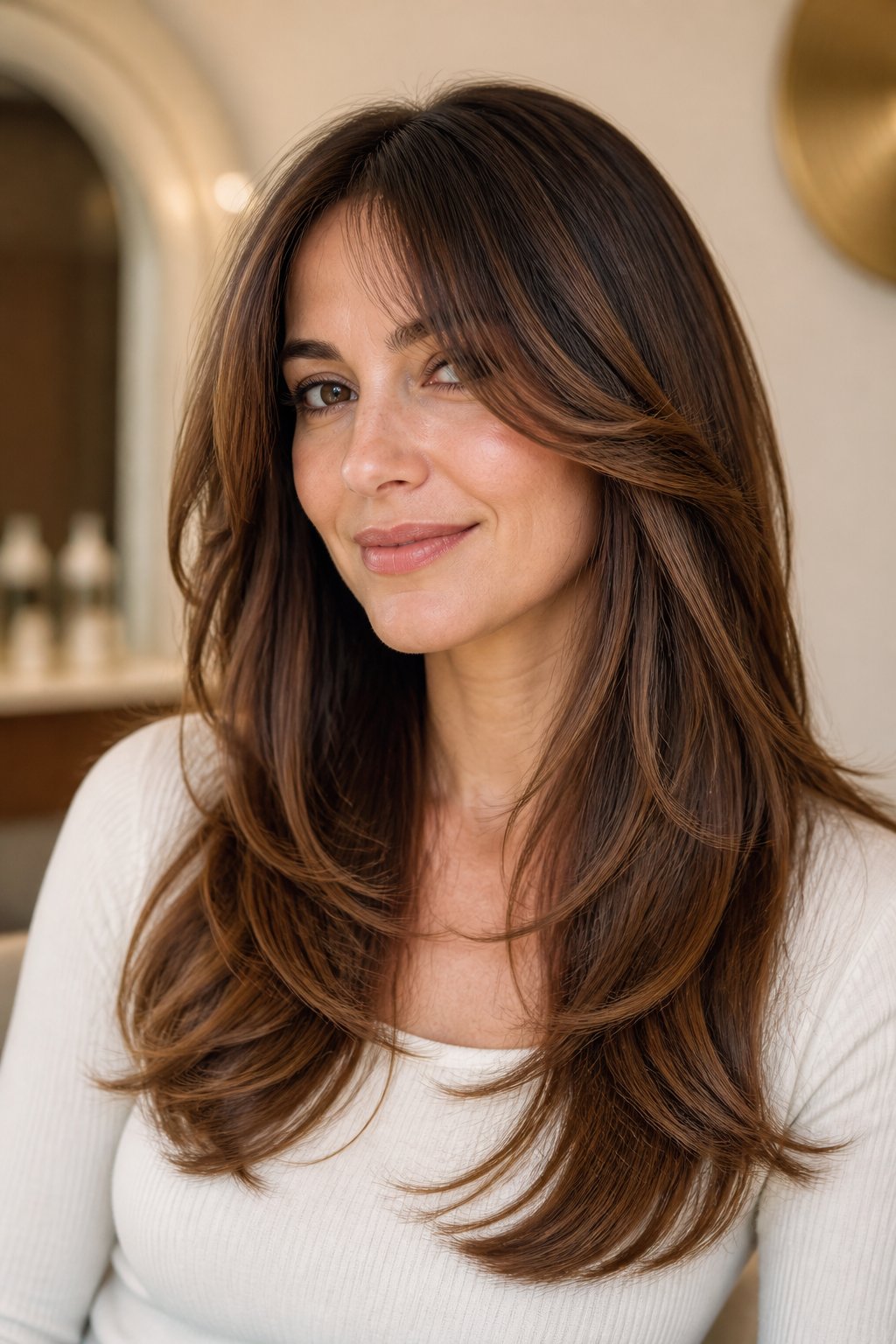
Feathered layers create an airy finish by removing visual heaviness from the front and ends. In this look, the curtain fringe is delicate and slightly wispy, while the longer pieces sweep away from the face and echo the same feathered direction through the lengths.
This cut is a good reference if you want movement without a heavily choppy outline. Ask for soft graduation around the face and long, blended layers rather than short disconnected pieces. A round-brush blow-dry can emphasize the feathered shape, but the cut should still fall naturally when worn with minimal styling.
The warm brunette base with subtle lighter ribbons also helps show the separation between layers, adding dimension without making the haircut look busy.
3. Face-Framing Long Layers With Curtain Bangs
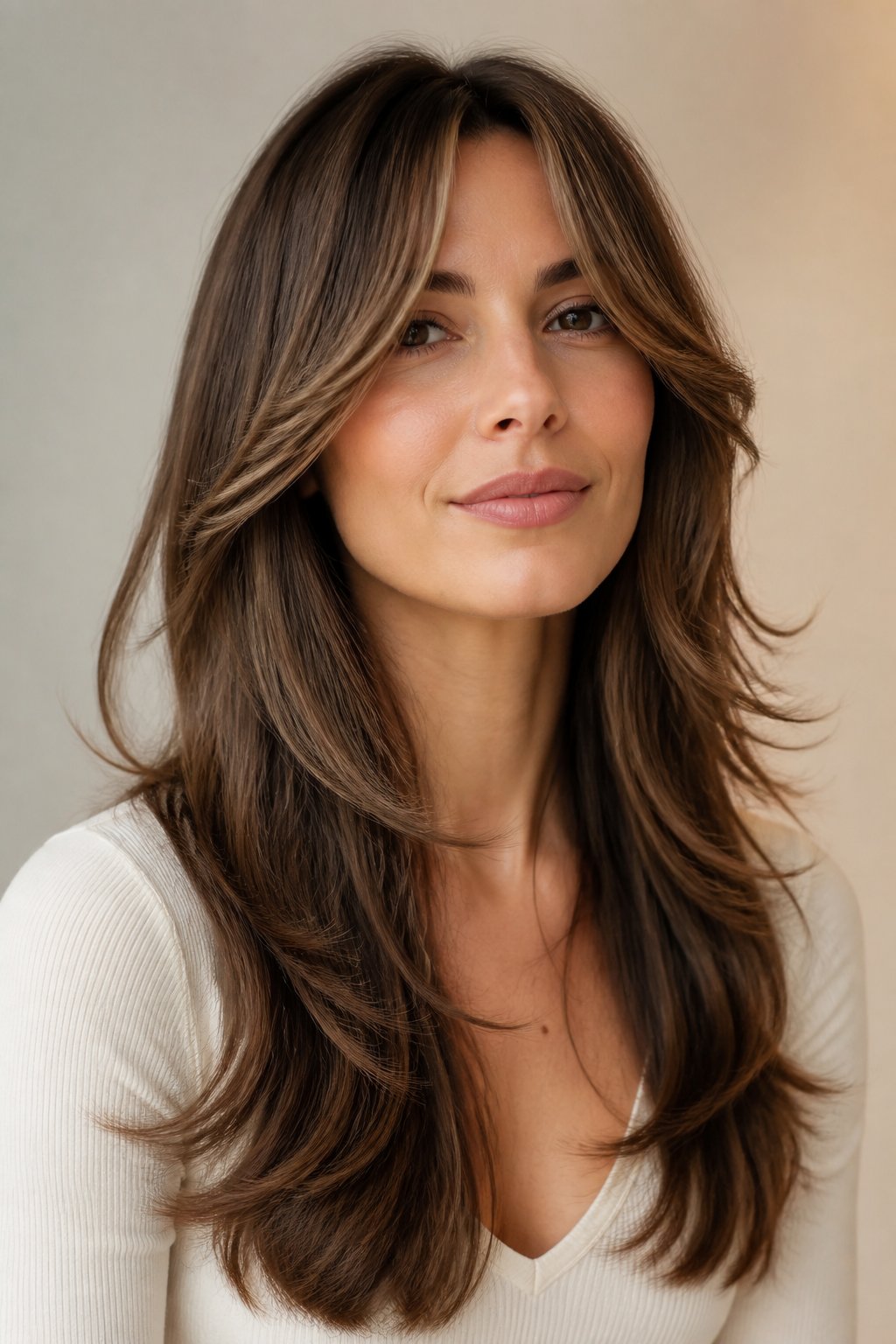
Here, the strongest detail is the face frame. The front layers begin high enough to draw attention to the cheekbones, then gradually lengthen so the transition into the rest of the hair feels smooth. The curtain bangs sit in the same direction, which keeps the front of the haircut cohesive.
This shape works particularly well when you want to keep plenty of length but still see a noticeable change around the face. The shorter front pieces can be styled inward for softness or flicked away from the face for a more open, lifted finish.
For the most natural result, the bangs and first layer should not look like two separate steps. A blended connection between them creates the flowing effect seen in the image.
4. Soft Shag-Inspired Long Layers With Curtain Bangs
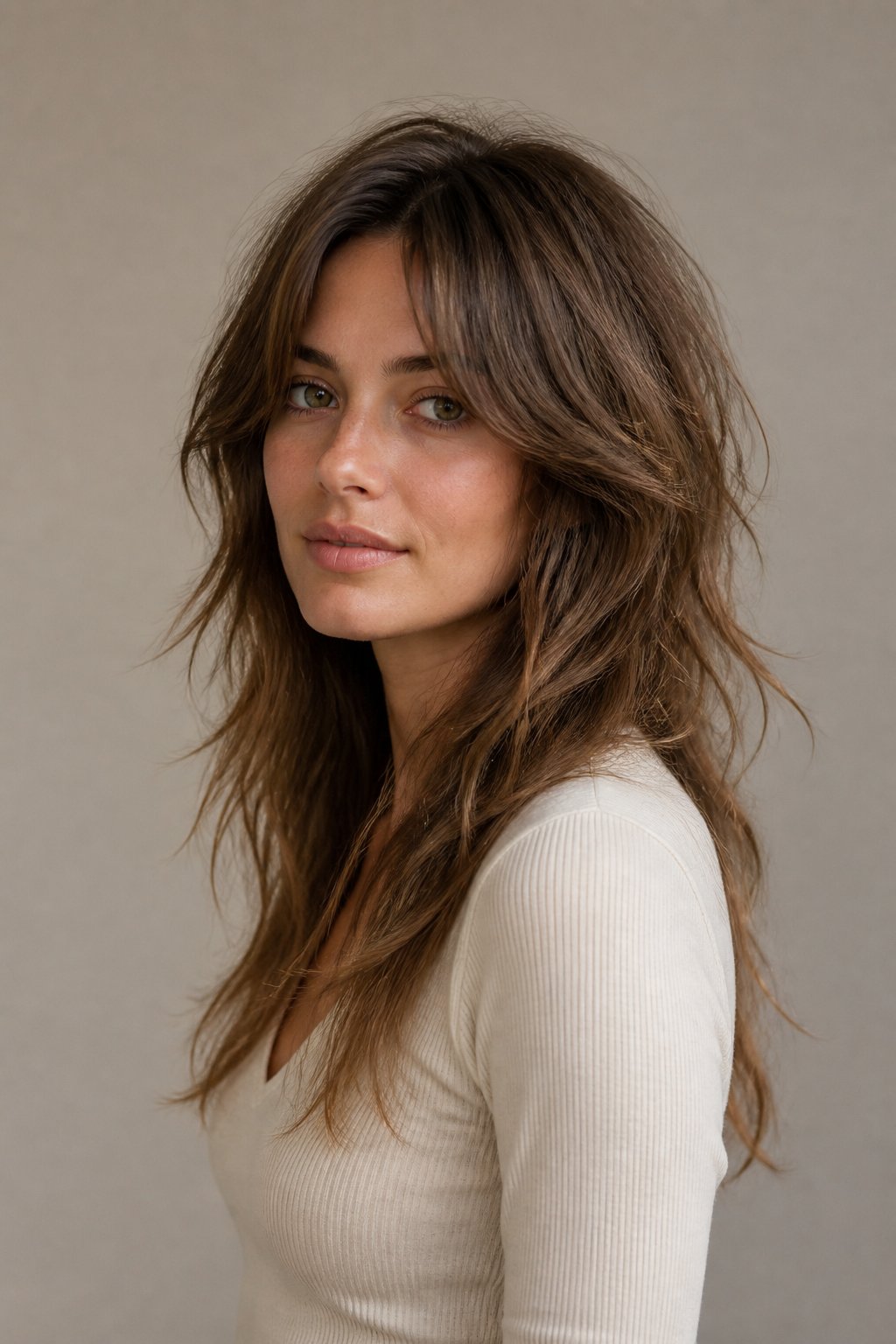
A long shag-inspired cut adds more visible texture than a classic layered haircut while keeping the overall length. The curtain fringe is lighter and a little more relaxed, and the layers around the face have a soft, lived-in edge instead of a perfectly rounded blowout.
The key is controlled texture. Keeping the shortest pieces around the front prevents the haircut from becoming too bulky through the crown, while longer textured sections create movement through the lower half. This gives the style character without turning it into a heavily razored shag.
Wear it with natural waves, a light bend from a styling iron, or a soft air-dried finish. The cut looks best when the texture remains touchable rather than stiff.
5. Voluminous Blowout Layers With Curtain Bangs
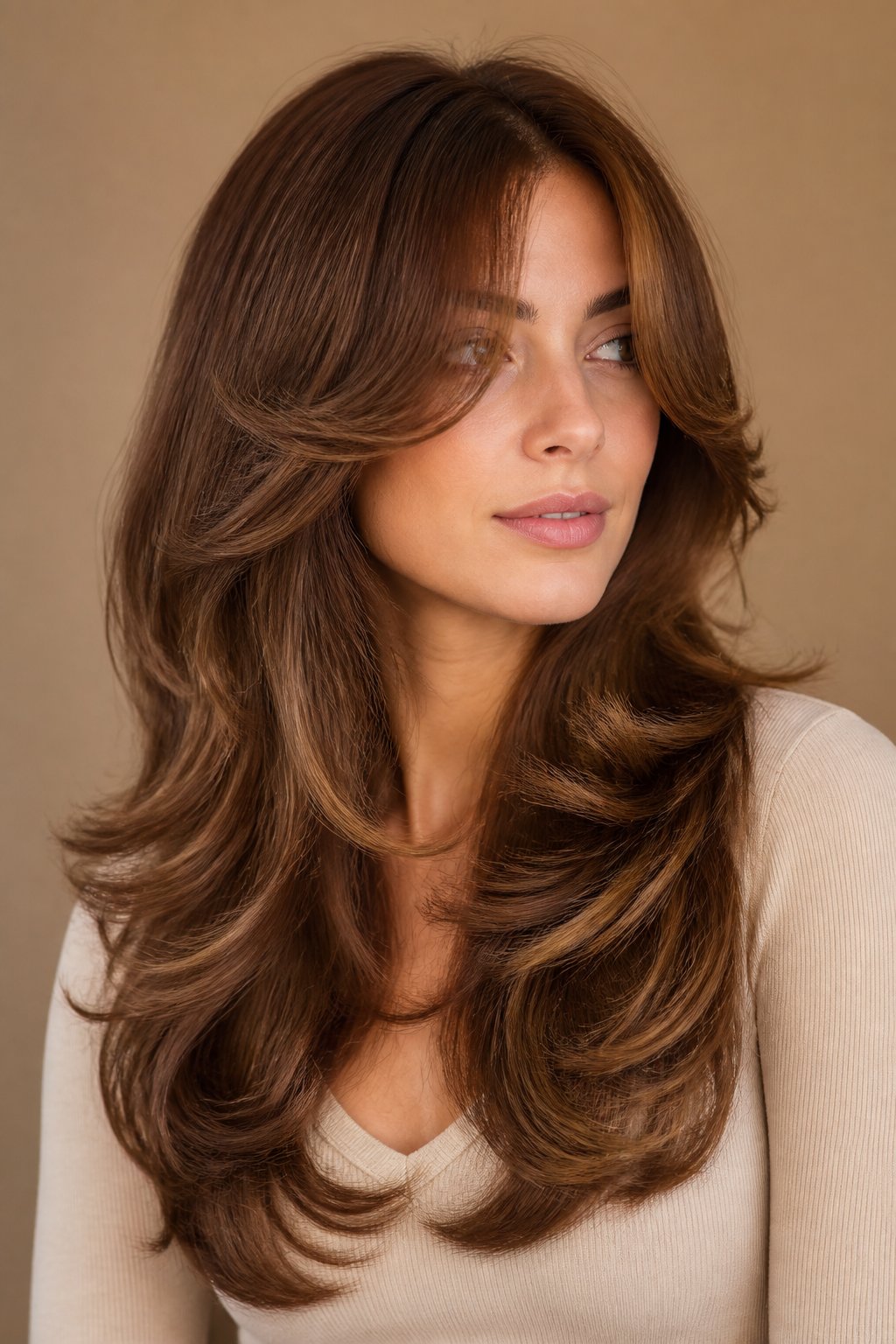
Voluminous long layers are ideal when you want the haircut to look full from the front while still showing clear movement. The layers in this style curve outward around the face and then fall into broad, polished sections through the lengths. Curtain bangs open the face and reinforce that lifted shape.
To recreate the finish, focus on root lift and large sections rather than tight curls. A large round brush or wide rollers can create the soft bend, especially around the front. Let the hair cool in its curved shape before brushing it out so the volume lasts without looking overly curled.
This is a strong salon reference for anyone who likes a glamorous, bouncy result but still wants a wearable everyday haircut underneath the styling.
6. Rounded Feathered Layers With Curtain Bangs
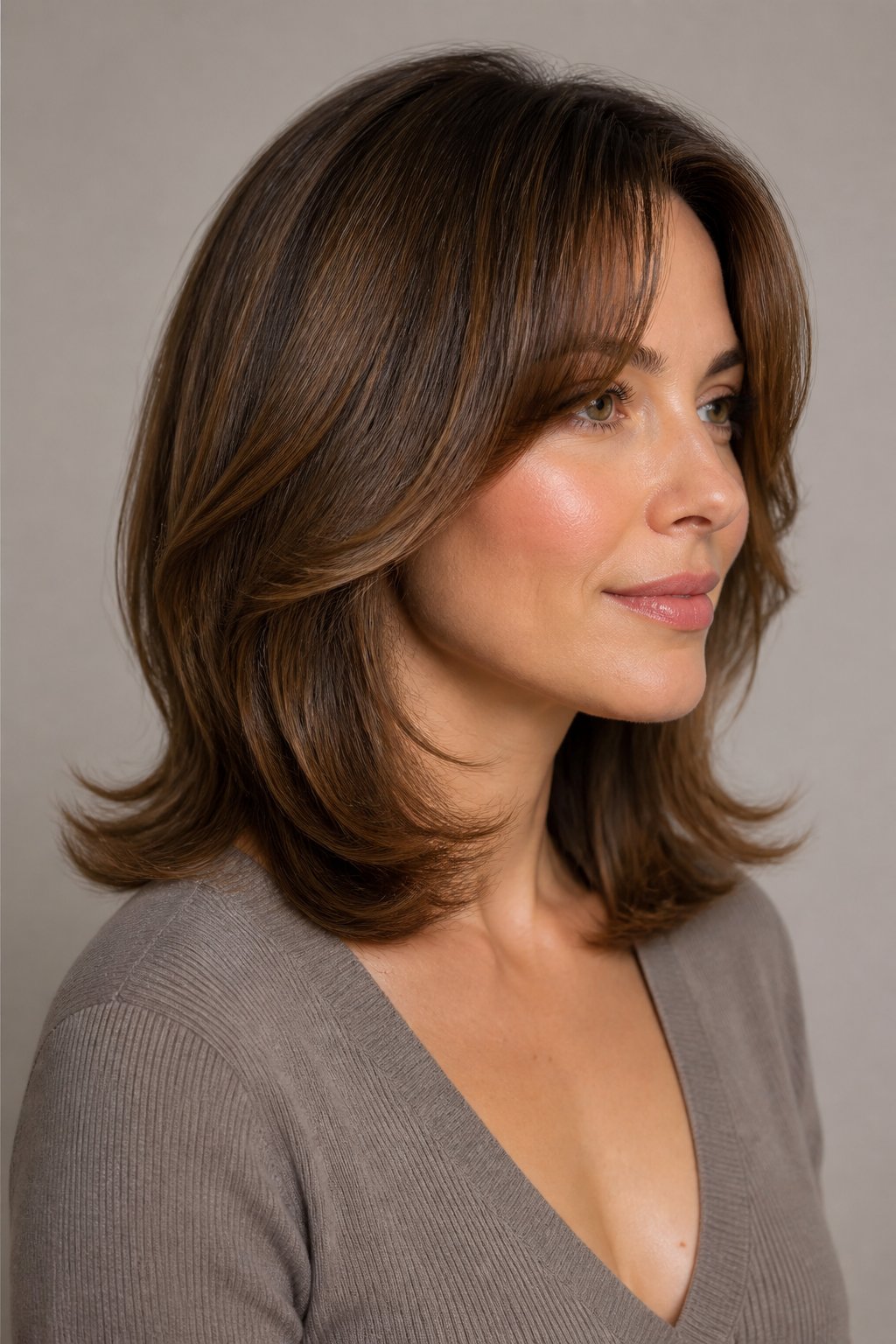
Rounded feathered layers give the haircut a softer, more sculpted outline. Instead of looking piecey, the sections curve together in smooth arcs from the fringe down through the shoulder area. The side view makes the gradual progression of the layers especially easy to see.
This variation is useful if you prefer polished movement rather than a messy or shaggy texture. Keeping the ends healthy and softly tapered helps the layers turn under or away from the face without appearing thin.
For styling, direct the front sections away from the face and use a light smoothing product only through the mid-lengths and ends. Too much product at the roots can flatten the airy shape that makes feathered layers attractive.
7. Balayage Long Layers With Curtain Bangs
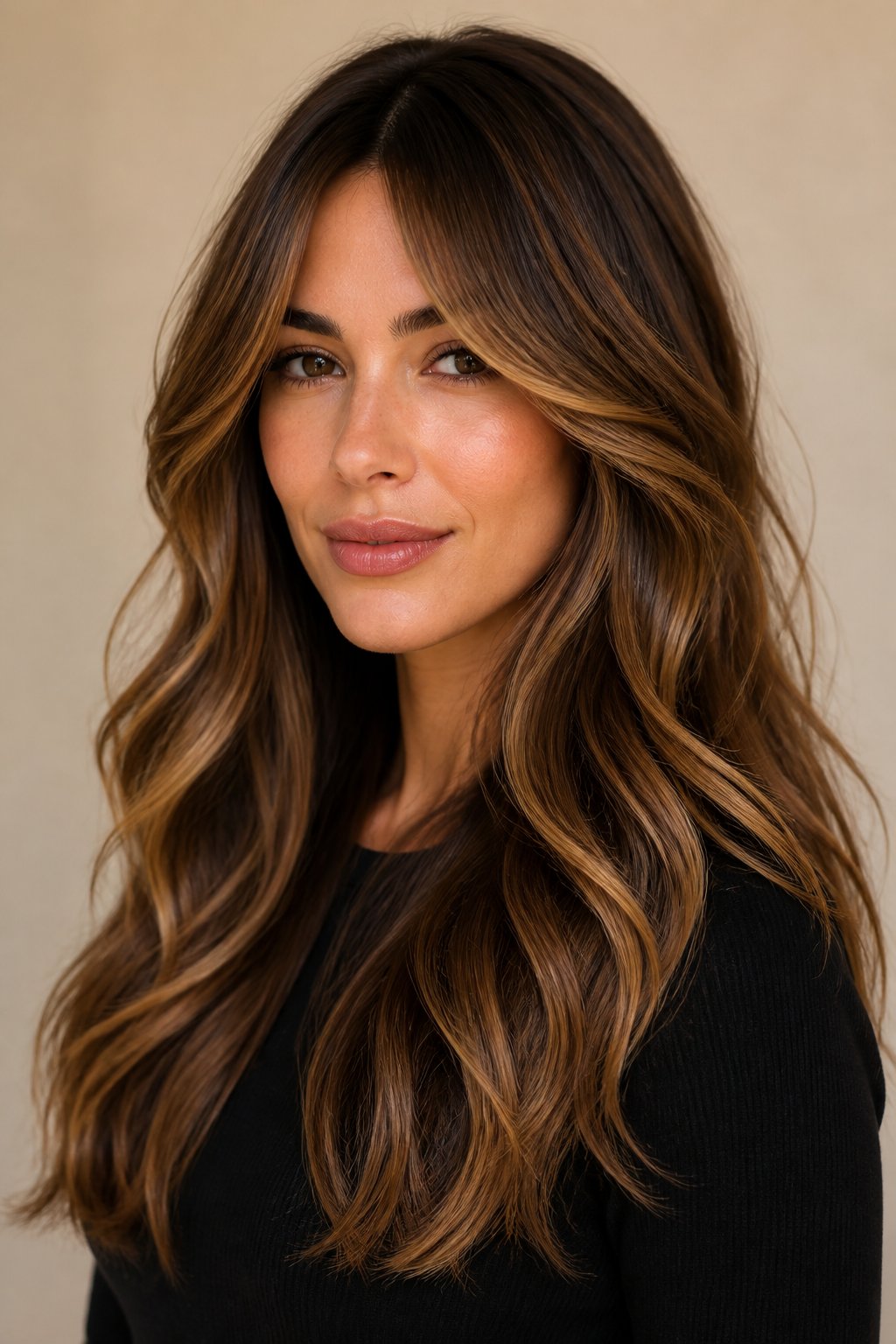
Balayage makes long layers more visible because the lighter ribbons catch on the curves and bends of the haircut. In this look, caramel and honey tones sit over a deeper brunette base, giving the curtain bangs and face-framing sections extra dimension.
The haircut itself is full and blended, with longer layers that keep the ends looking substantial. This is important when adding highlights to long hair: overly short or thin layers can make the lower lengths appear sparse, while a balanced shape keeps the color and cut looking rich.
If you bring this image to a salon, mention both the placement of the layers and the placement of the brighter pieces. Keeping lightness around the face can visually emphasize the curtain fringe without changing the bang length.
8. Wavy Long Layers With Curtain Bangs
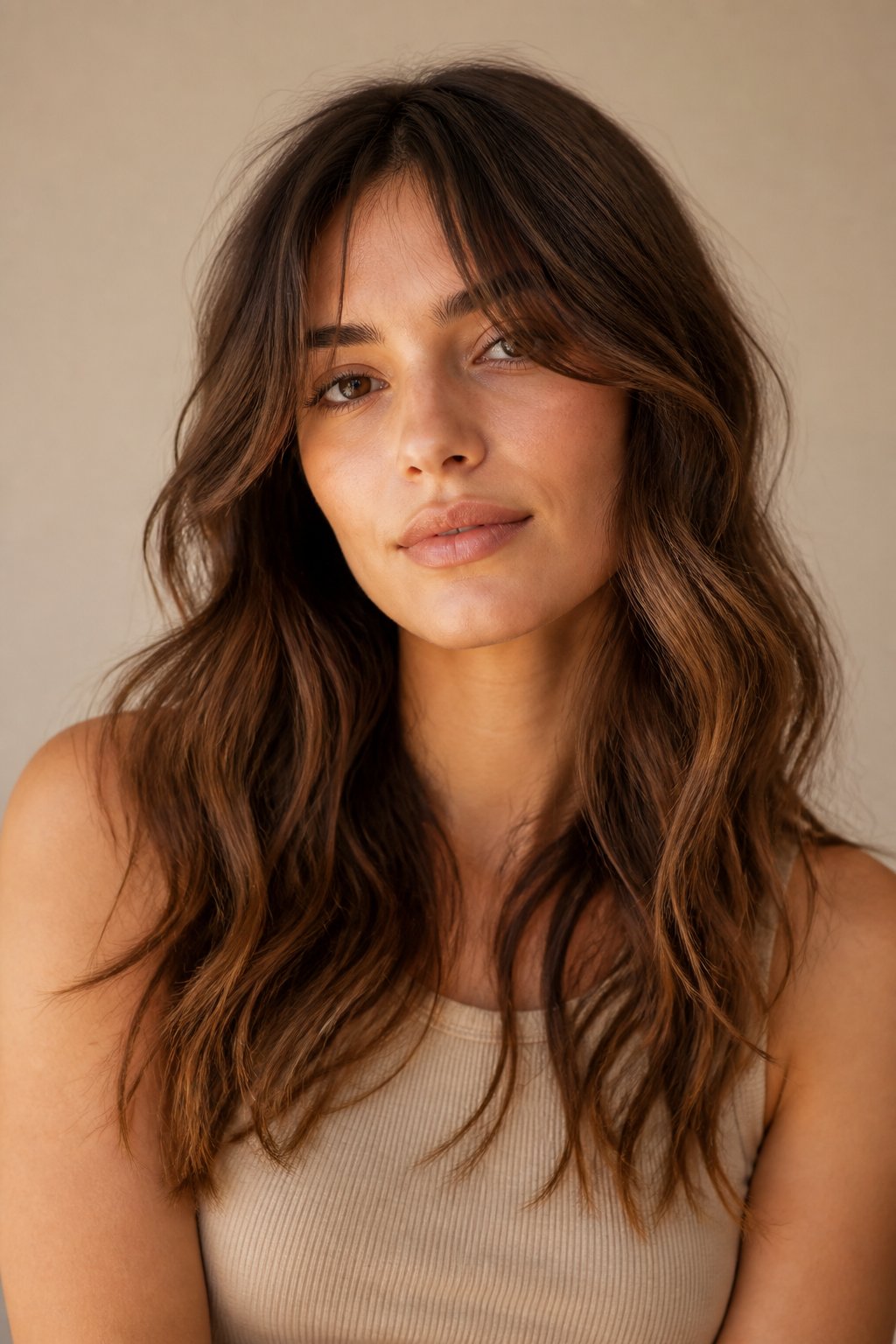
Loose waves show how long layers can create movement without needing a dramatic blowout. The curtain bangs remain soft and slightly separated, while the front layers continue into relaxed S-shaped bends through the lengths. The result feels casual but still intentionally shaped.
This is a useful option for naturally wavy hair because the cut works with texture instead of forcing every section into the same curl pattern. Ask your stylist to consider where your waves naturally bend so the layers do not interrupt the pattern in awkward places.
For a simple finish, define only a few sections around the face and leave the rest looser. That keeps the haircut looking modern and avoids turning the waves into uniform ringlets.
9. Glossy Long Layers With Soft Curtain Bangs
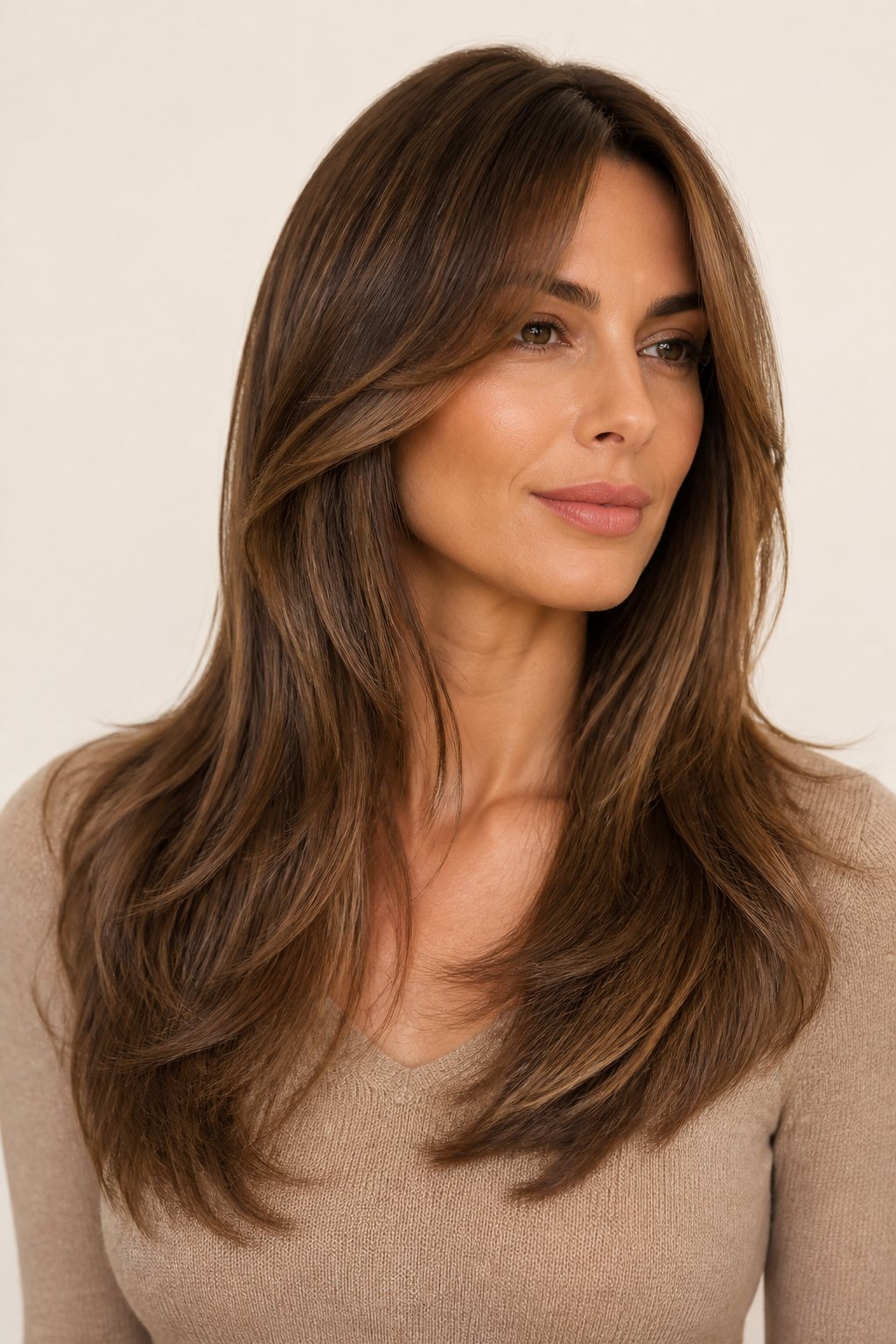
A glossy finish makes blended layers look especially refined. This cut keeps the overall outline smooth, with enough layering near the face to create movement but no harsh separation through the ends. The curtain bangs curve outward just enough to open the eyes and cheekbones.
If you prefer hair that looks sleek rather than highly textured, ask for long internal and face-framing layers with a clean perimeter. The goal is movement when the hair moves, not a visibly choppy surface when it is lying still.
A lightweight smoothing serum through the lower lengths can enhance shine. Keep the bangs soft and flexible so they maintain their curtain shape instead of forming a rigid center part.
10. Sleek Dark Long Layers With Curtain Bangs
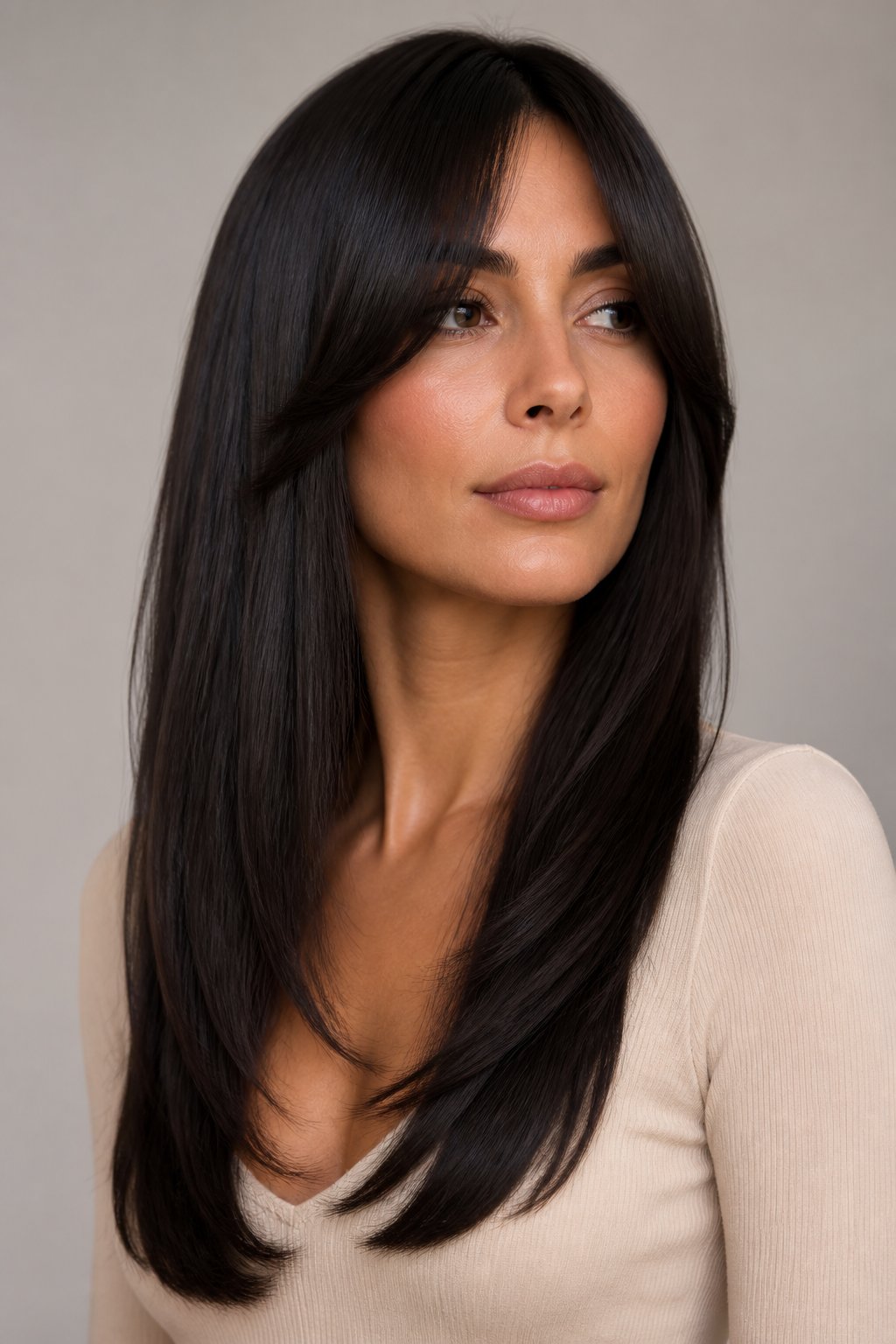
Sleek long layers prove that curtain bangs do not require a bouncy or wavy finish. The shape here is smooth and controlled, with subtle layering at the ends and more visible movement around the face. The fringe is long enough to blend naturally into the cheekbone-length pieces.
This version is especially helpful if you usually wear your hair straight. Rather than adding many short layers, keep the bulk of the length intact and concentrate the shaping through the front and lower perimeter. That preserves a polished silhouette while avoiding a flat, one-length look.
When styling, use a heat protectant and smooth the hair in sections. A slight inward or outward curve at the front is enough to show the layers without losing the sleek character of the cut.
11. Full Curtain Fringe With Long Layers
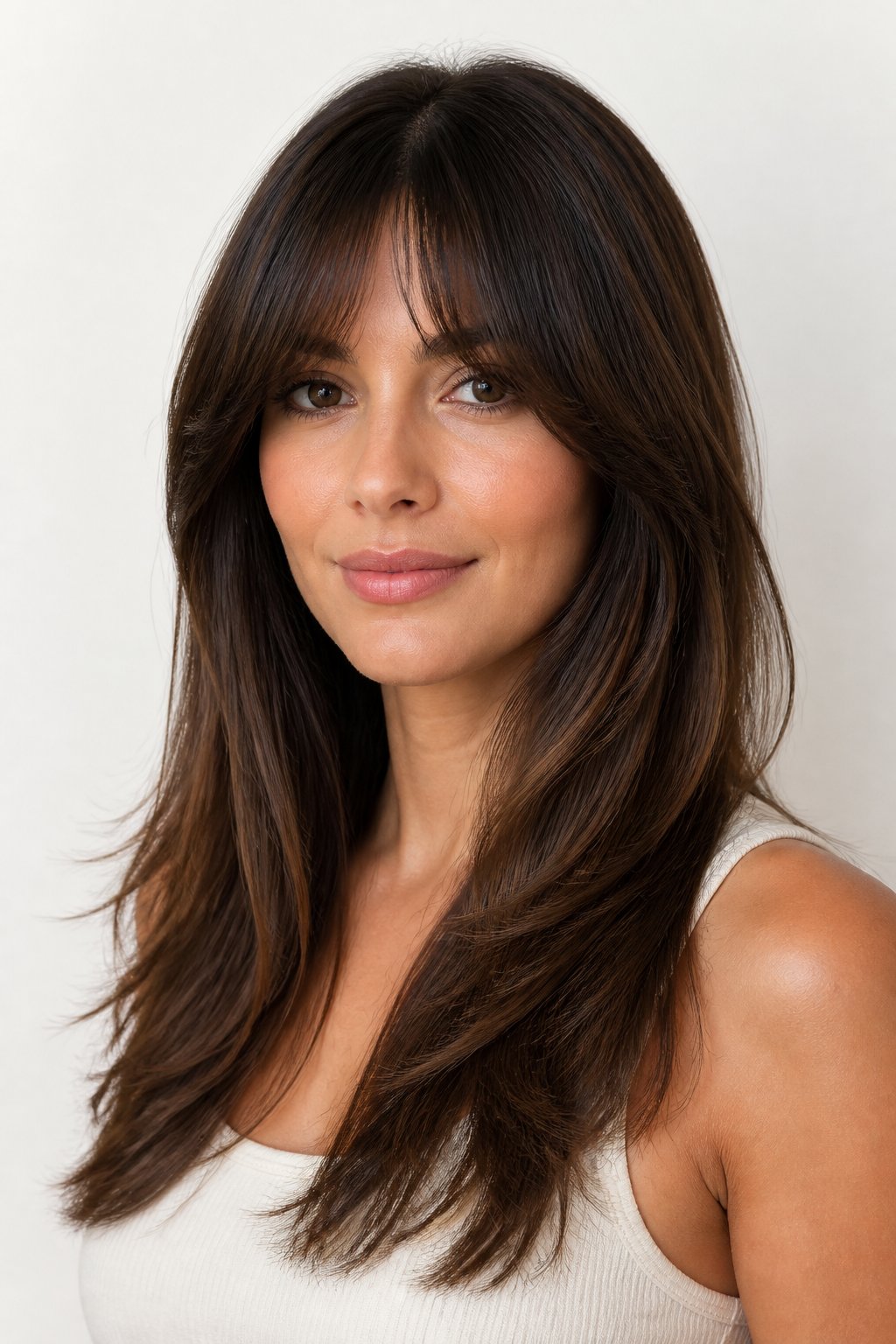
A fuller curtain fringe creates a stronger focal point while still maintaining the signature center opening. Compared with wispy bangs, this version has more density across the forehead and a more noticeable curve into the side pieces. The long layers underneath keep the style balanced.
This is a good reference if you want bangs that feel intentional but softer than a blunt fringe. The shortest point can sit around the brow or eye area, with the outer edges gradually lengthening so they can be swept away from the face.
Because fuller bangs contain more hair, discuss your natural growth pattern and daily styling routine with your stylist. A well-planned section should fall easily without requiring heavy product or constant heat.
12. Butterfly Long Layers With Curtain Bangs
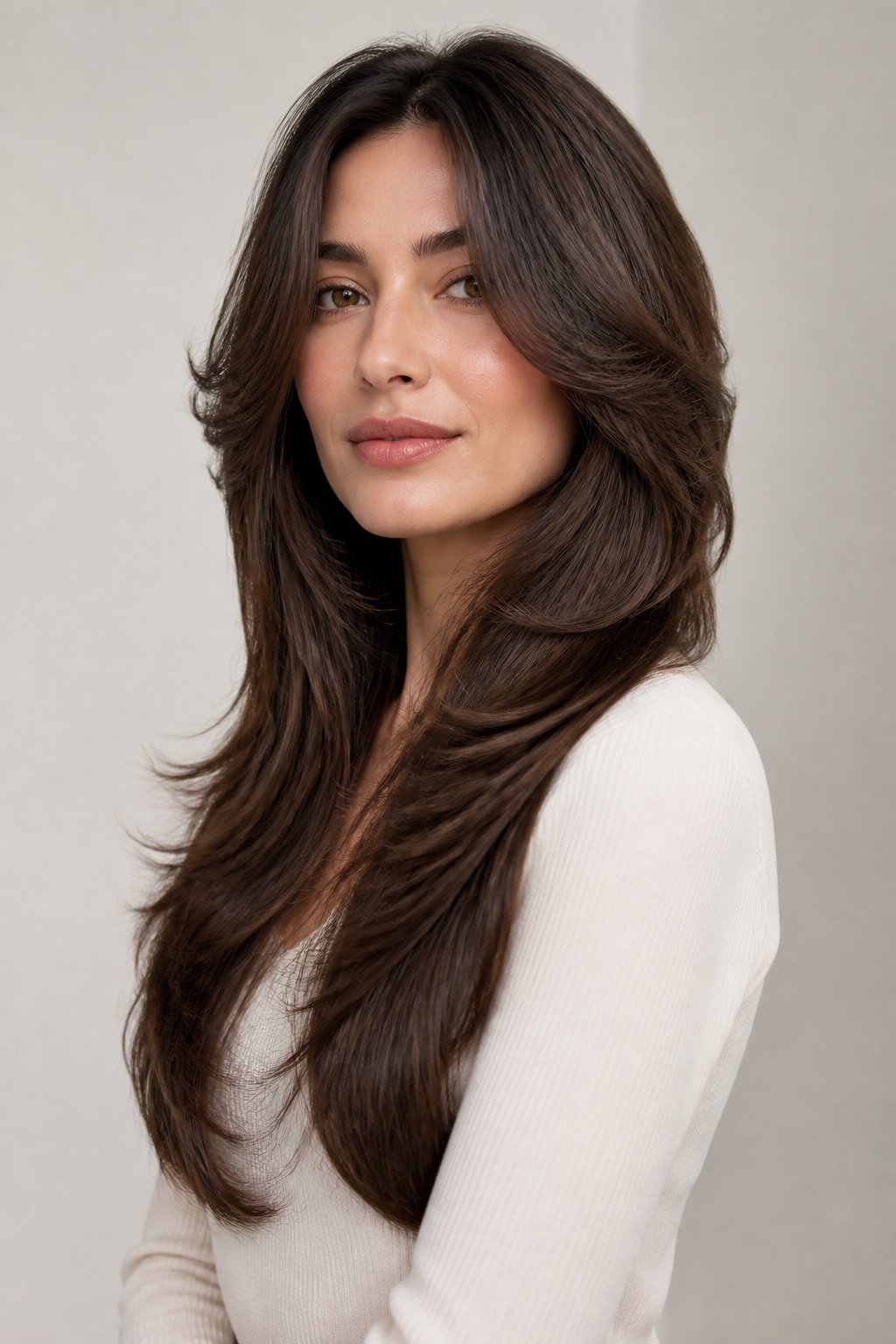
Butterfly layers create a layered, wing-like effect around the face while keeping the lower lengths long. The front pieces in this look are lifted and curved away from the cheeks, then flow into longer sections that give the hair a full, cascading shape.
Curtain bangs work naturally with this haircut because both details are designed to open the face. The bangs form the shortest part of the shape, while the butterfly layers continue the same outward movement through the cheekbone, jaw, and shoulder areas.
This cut responds beautifully to a large round brush or rollers. For a softer everyday version, style only the front layers and let the rest of the hair fall in its natural texture.
13. Straight Long Layers With Soft Curtain Bangs
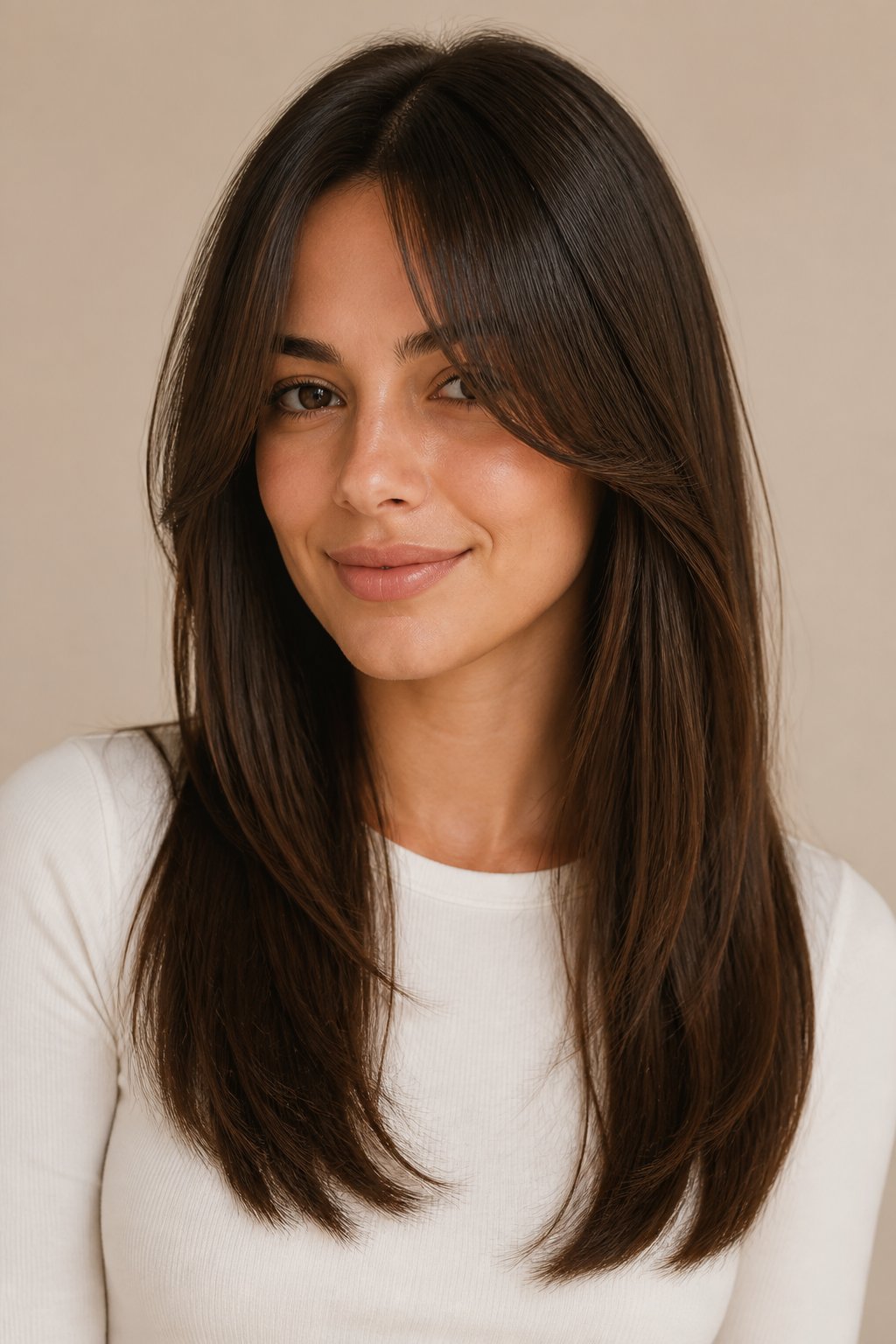
Straight hair makes the precision of a layered haircut easy to see. In this style, the layers are subtle enough to preserve density through the bottom, while the curtain bangs and front pieces add shape around the face. The result is clean, simple, and easy to wear sleek.
If your hair tends to fall very straight, avoid requesting too many short layers unless you want a visibly textured finish. Long, controlled layers can create movement without causing the ends to look thin or disconnected.
A smooth blow-dry with a gentle bend through the front is usually enough. The curtain fringe should move easily to either side so it can be worn with a center part or a slightly off-center part when desired.
14. Blonde Long Layers With Curtain Bangs
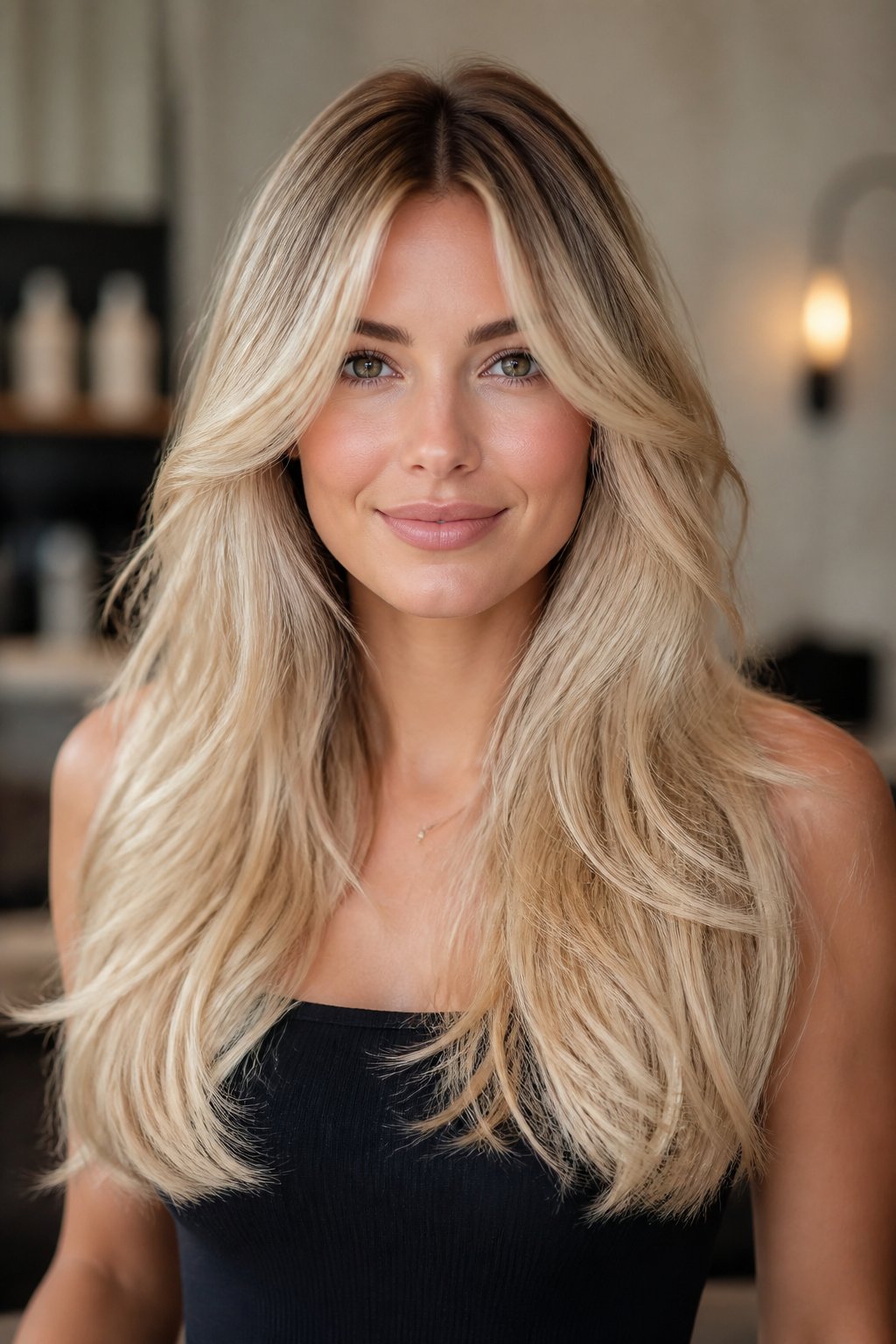
Dimensional blonde color can make every layer stand out. The darker root and brighter lengths in this image create visible depth around the curtain bangs, while the lighter ribbons emphasize the long feathered pieces through the sides and ends.
The haircut remains soft rather than choppy, which keeps the overall look polished despite the strong color contrast. If your hair is lightened, maintaining a fuller perimeter can also help the ends appear healthier and more substantial.
Use this as a reference when you want both cut and color to work together. Ask for brightness around the face that follows the direction of the curtain fringe and long layers instead of placing every highlight in the same vertical pattern.
15. Deep Brunette Long Layers With Wispy Curtain Bangs
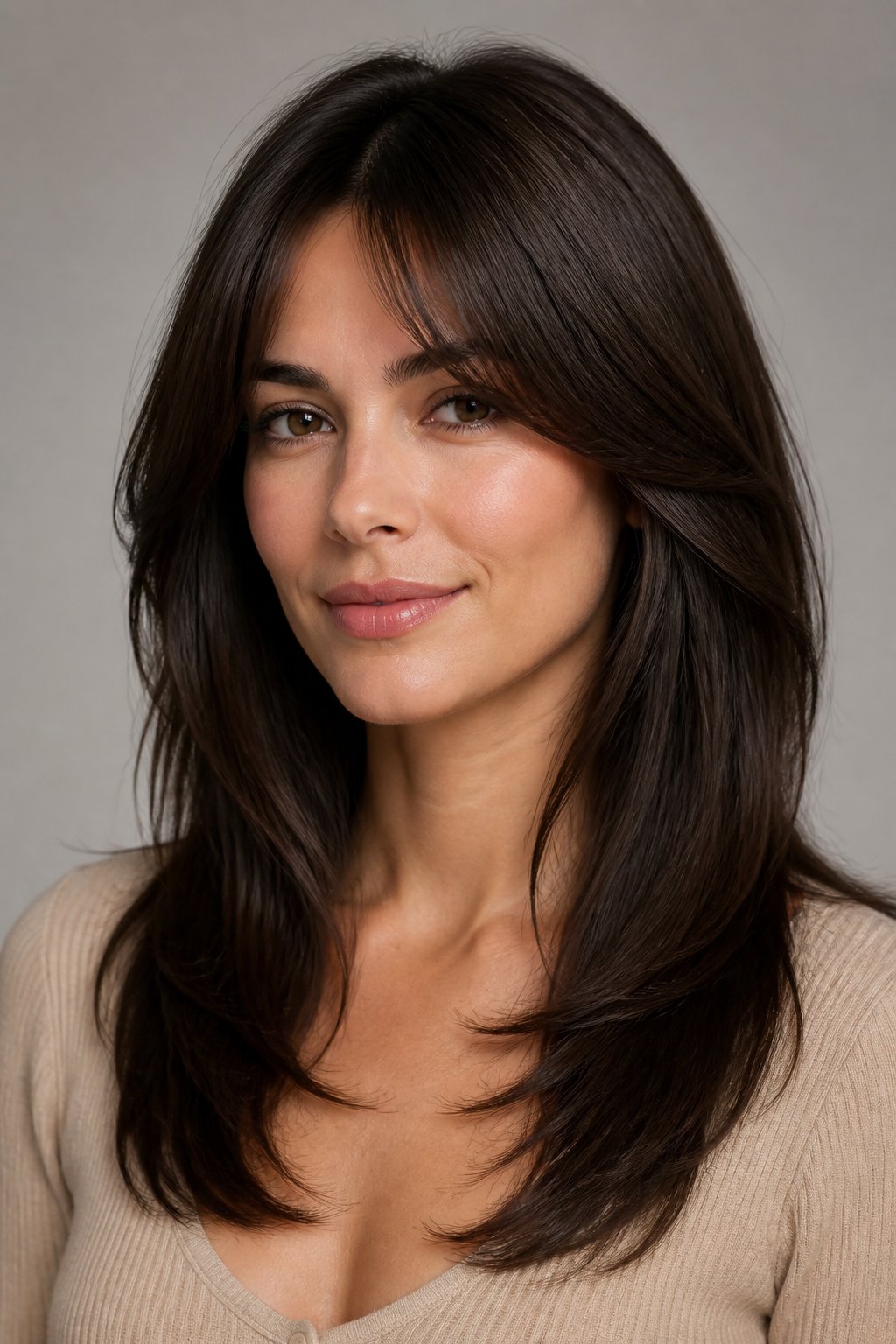
Deep brunette hair gives this version a sleek, understated feel. The bangs are wispy and light enough to show the forehead through the center, while the side pieces create a smooth transition into the longer layers. The shape feels soft even without obvious curls or strong highlights.
This is a good choice if you want the effect of curtain bangs without committing to a thick fringe. A lighter bang section can be easier to sweep aside, pin back, or blend into the front layers as it grows.
Keep the ends softly shaped and the face frame connected. The simplicity of the dark color makes any uneven or disconnected layering more noticeable, so a clean blend is the key to this polished finish.
Choose the Right Curtain Bang Length for Your Look
Curtain bangs can change the balance of the same long layered haircut depending on where the shortest point sits. A longer fringe feels subtle and blends quickly into face-framing layers, while a shorter fringe creates more definition around the eyes and brows. The image below shows a softly curved version that keeps the center open and the sides connected to the layers.
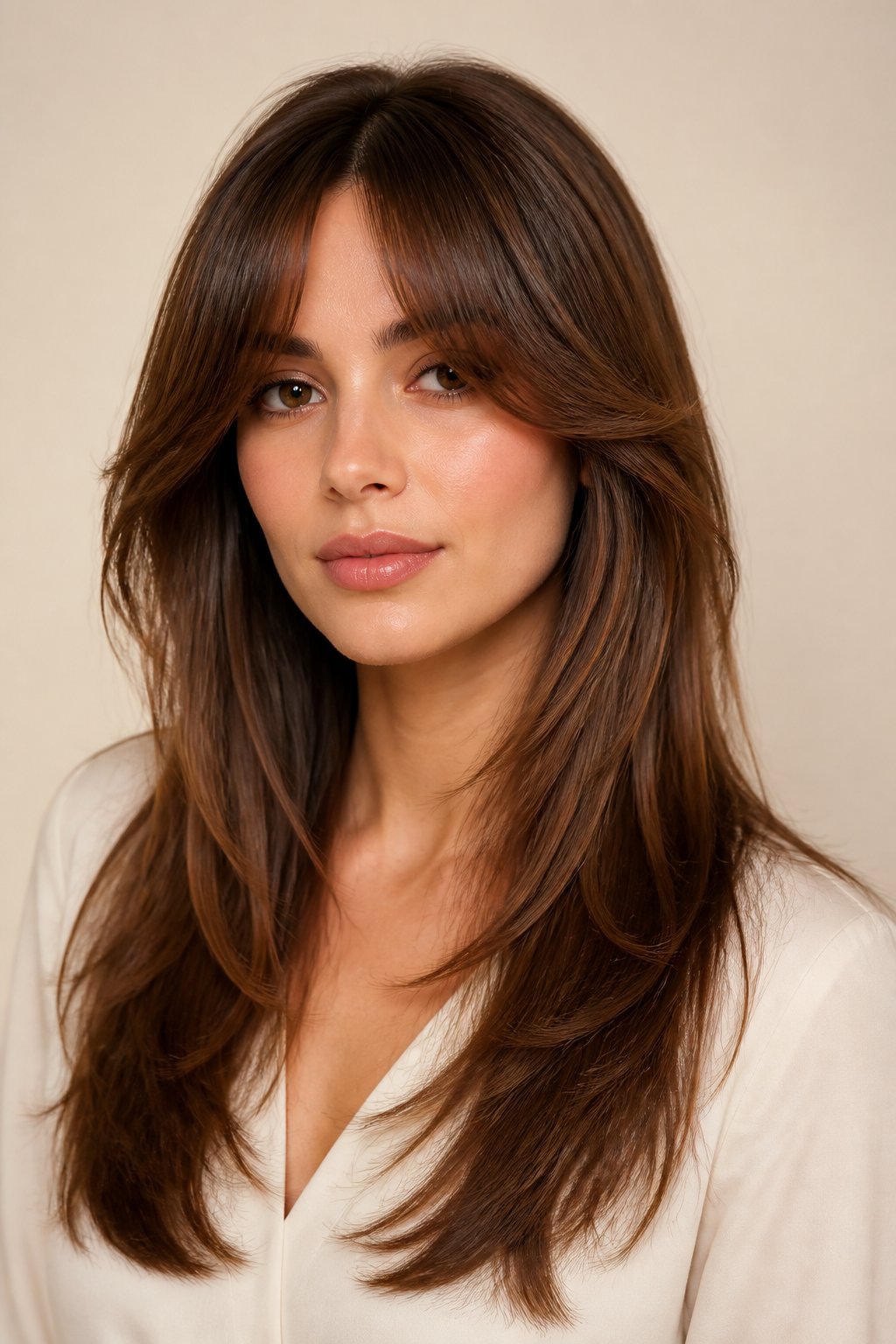
- If you want a softer change: Keep the shortest section near the cheekbone or upper cheek so the fringe can be tucked or swept aside easily.
- To create more definition: Bring the center slightly shorter around the brow or eye area, then lengthen the outer edges gradually.
Bring a front-facing and side-view reference to your stylist. The most flattering length also depends on your hairline, natural part, density, and how much time you want to spend styling the fringe each morning.
Frequently Asked Questions
Long layers and curtain bangs are flexible, but the best version depends on your texture, density, styling habits, and preferred level of maintenance. These answers cover the most common questions to consider before your appointment.
Are curtain bangs high maintenance?
They usually need more frequent attention than the long layers because the fringe sits close to the face and loses its shape sooner. Longer curtain bangs are generally easier to grow out and sweep aside than shorter or blunt bangs.
Do long layers make long hair look thinner?
They can if too much weight is removed or if many short layers are cut into already fine ends. A well-balanced long-layered cut keeps enough density through the perimeter while adding movement through selected areas.
Can I wear curtain bangs with naturally straight hair?
Yes. Straight hair can show the shape of curtain bangs very clearly. A slight bend through the fringe and front layers is often enough to create the soft opening associated with the style.
Do curtain bangs work with wavy hair?
Yes. The fringe can be tailored to follow your natural wave pattern. Your stylist should consider how much the hair springs or bends when dry so the bangs do not end up shorter than expected.
Before Your Salon Appointment
Should the curtain bangs start at my cheekbones?
Not always. Cheekbone-length curtain bangs create a soft, low-commitment effect, while shorter center pieces can frame the eyes more strongly. Choose the length according to the look you want and how easily you want to tuck the fringe away.
How often should long layers be reshaped?
There is no single schedule for everyone. Book a reshaping appointment when the front layers stop sitting where you want them, the perimeter feels uneven, or the haircut loses its movement. Fringe trims may be needed sooner than full-length trims.
Can curtain bangs be grown out easily?
They are one of the easier fringe shapes to grow because the outer pieces are already longer. As the center grows, it can gradually be blended into face-framing layers instead of needing a sudden change in shape.
What styling tool is easiest for curtain bangs?
A round brush and dryer are classic choices because they create lift and direction without making the fringe look tightly curled. Large rollers or a large-barrel styling tool can also work if you prefer a more pronounced bend.
What makes the haircut look modern instead of dated?
A soft blend, flexible movement, and a fringe that connects naturally to the front layers keep the shape current. Avoid overly stiff curls or a visible step between the bangs and the rest of the haircut unless that contrast is intentionally part of the style.
Save two or three reference images that show the haircut from different angles. The most useful references clearly show the bang length, the shortest face-framing layer, the density at the ends, and the amount of volume you actually want in everyday life.


