




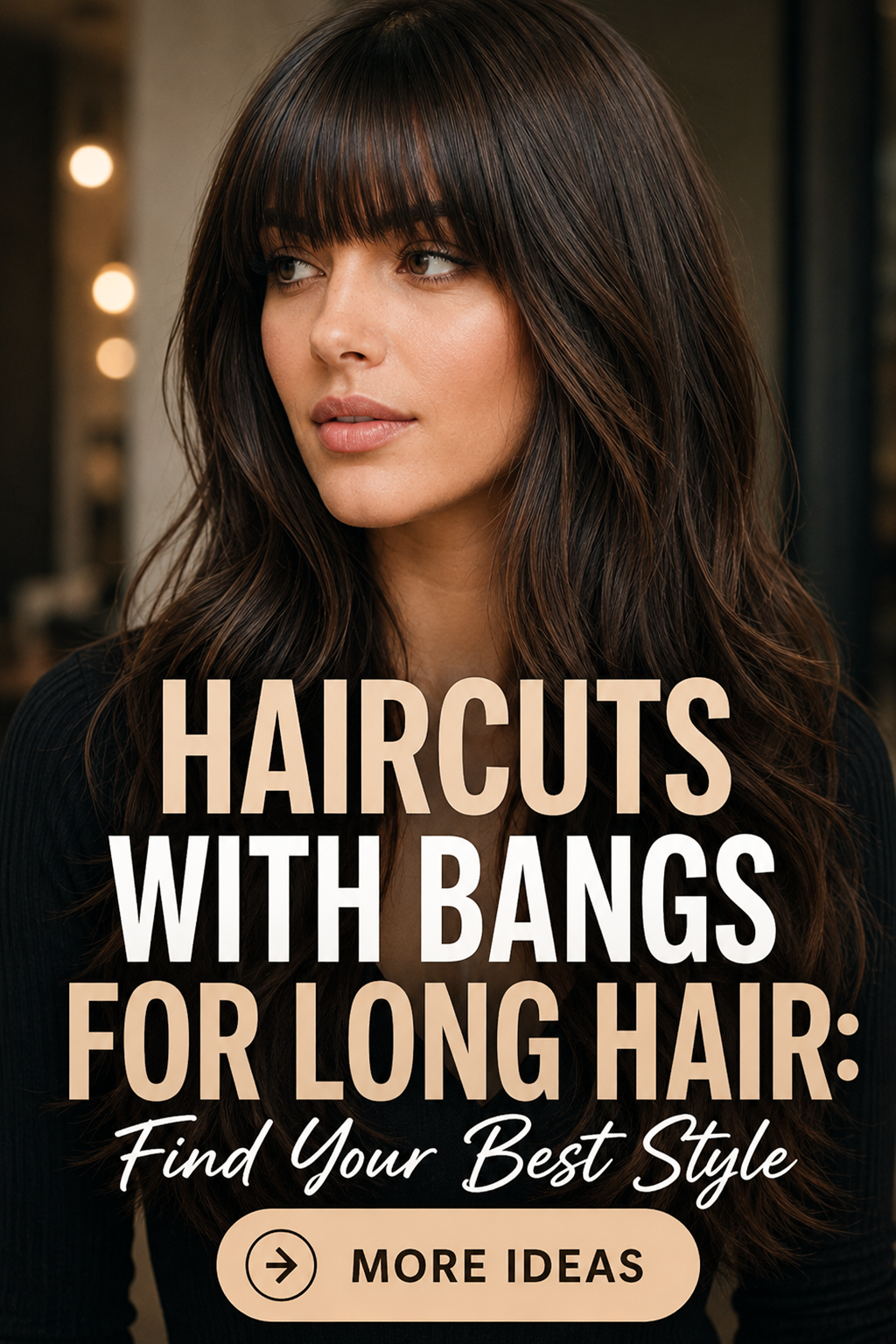
Long hair with bangs can look polished and effortless, but keeping the fringe in shape usually requires a little more attention than the rest of the haircut. Styling direction, trim timing, hair texture, and grow-out all affect how easy the look is to maintain.
This guide focuses on the practical side of living with bangs: how to style them at home, keep them from separating or falling flat, work with different textures, manage grow-out, and know when it is time for a salon trim.
You’ll also find examples of how common bang types behave with long hair so you can understand the styling and maintenance needs before choosing your next fringe.
Key Takeaways
- Style bangs according to their natural growth pattern and texture.
- Use light products and controlled heat to keep fringe soft and movable.
- Plan regular trims or a grow-out strategy before leaving the salon.
How Different Bang Types Affect Styling and Upkeep
Bangs rarely work alone on long hair. They need layers around them to blend properly, and the type of layer you choose changes how soft, sharp, or voluminous the whole cut feels. A long layered haircut with bangs gives your stylist room to shape face-framing pieces, remove bulk, and add volume and movement without shortening your overall length.
Some pairings lean soft and low-maintenance. Others create a defined, sculpted look that needs more frequent trims to hold its shape. Matching the layer style to the bang style keeps the transition between them from looking choppy or unfinished.
Long Layers With Curtain Bangs
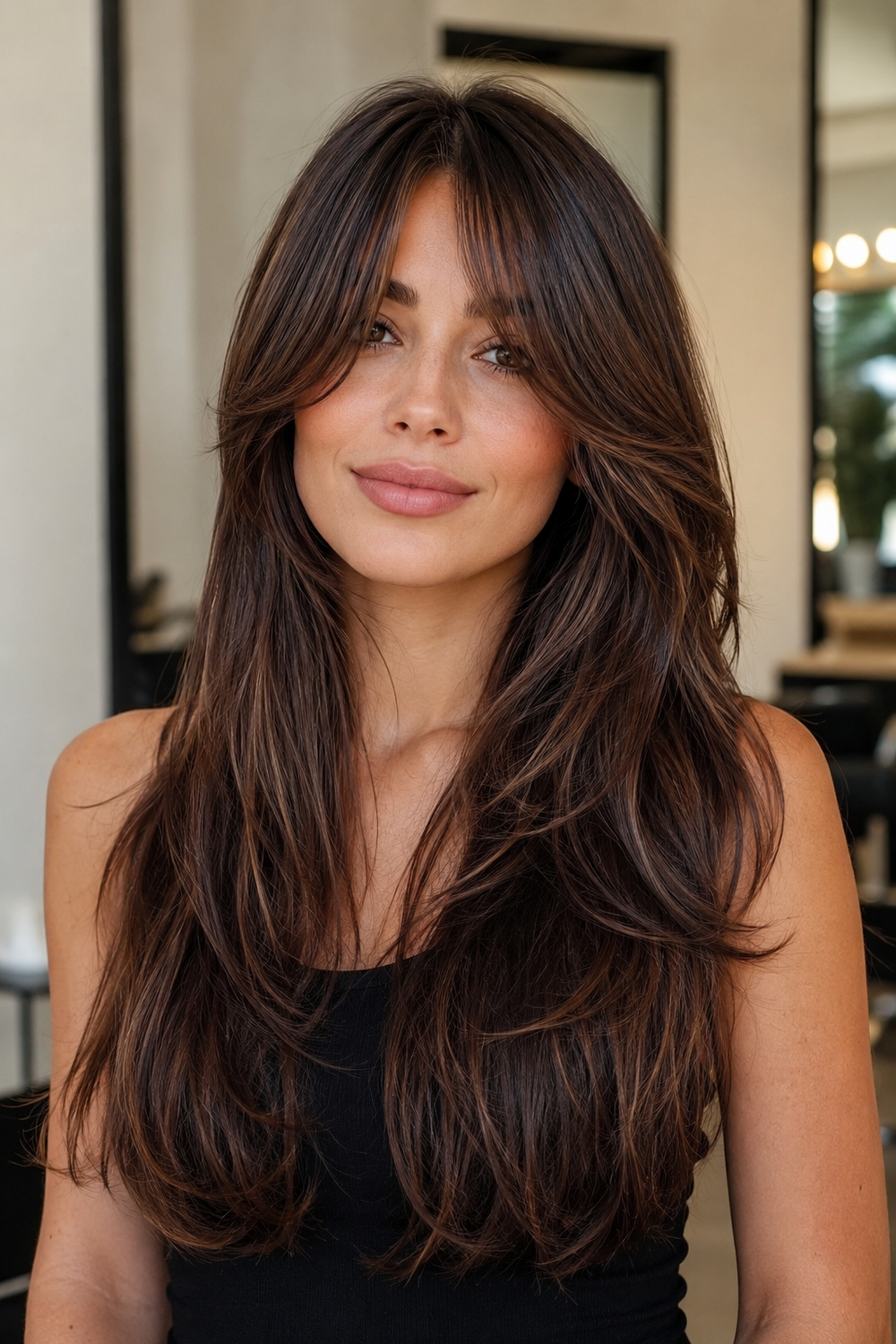

Curtain bangs part in the center and sweep to either side, blending into long layered hair almost seamlessly. This pairing works because the layers around your face pick up right where the curtain fringe leaves off, creating one continuous, feathered shape.
It’s one of the lowest-maintenance fringe styles around, since the length and part make it easy to grow out or pin back without an awkward stage.
Wispy Fringe With Cascading Layers
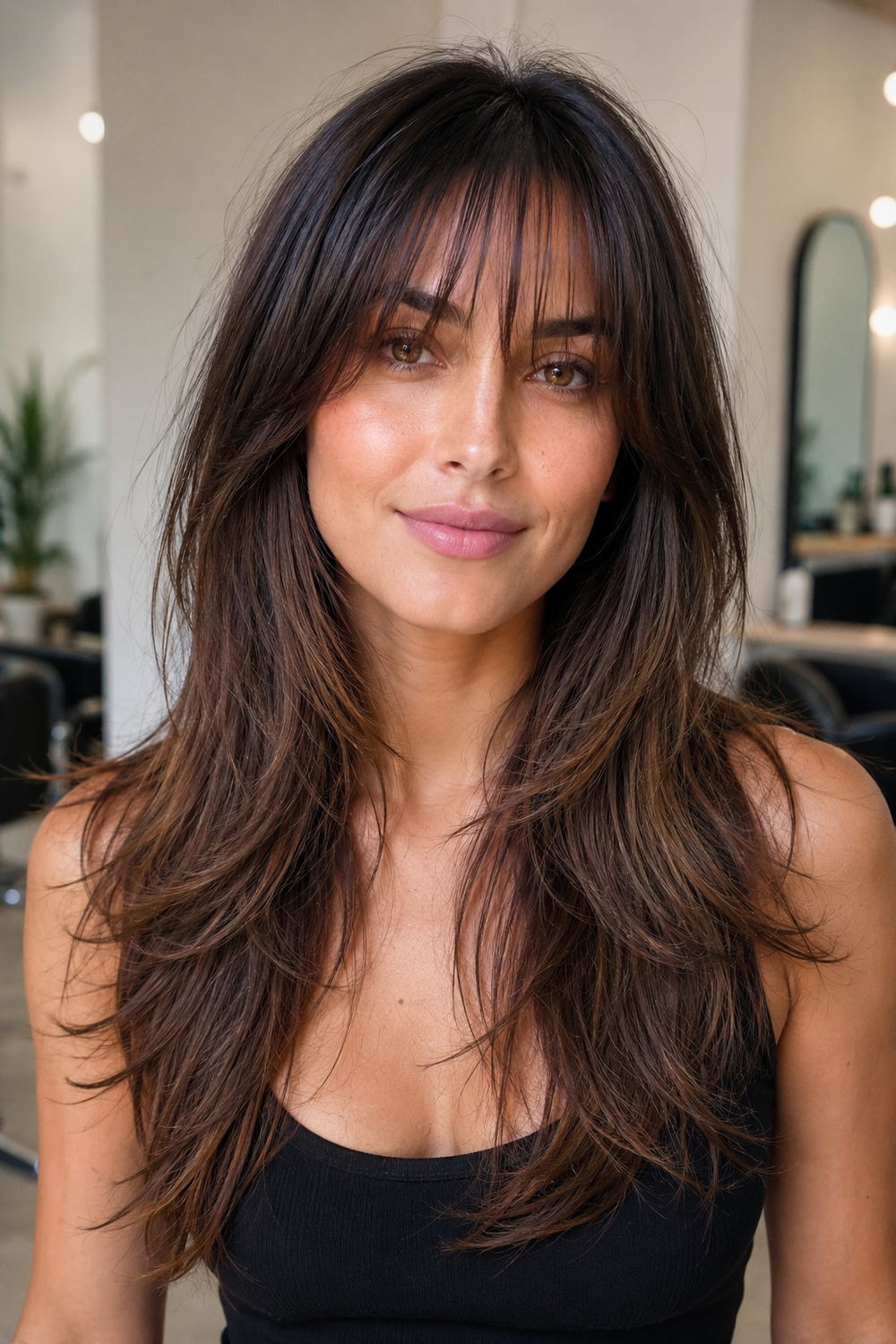
Wispy, thin bangs sit lightly across the forehead and pair naturally with cascading, feathered layers that taper down the length of the hair. The combination feels airy rather than heavy, which suits fine or medium hair that can look weighed down by a thicker fringe.
Feathered ends throughout the layers keep the movement going all the way to the tips.
Sleek Lengths With a Blunt Fringe
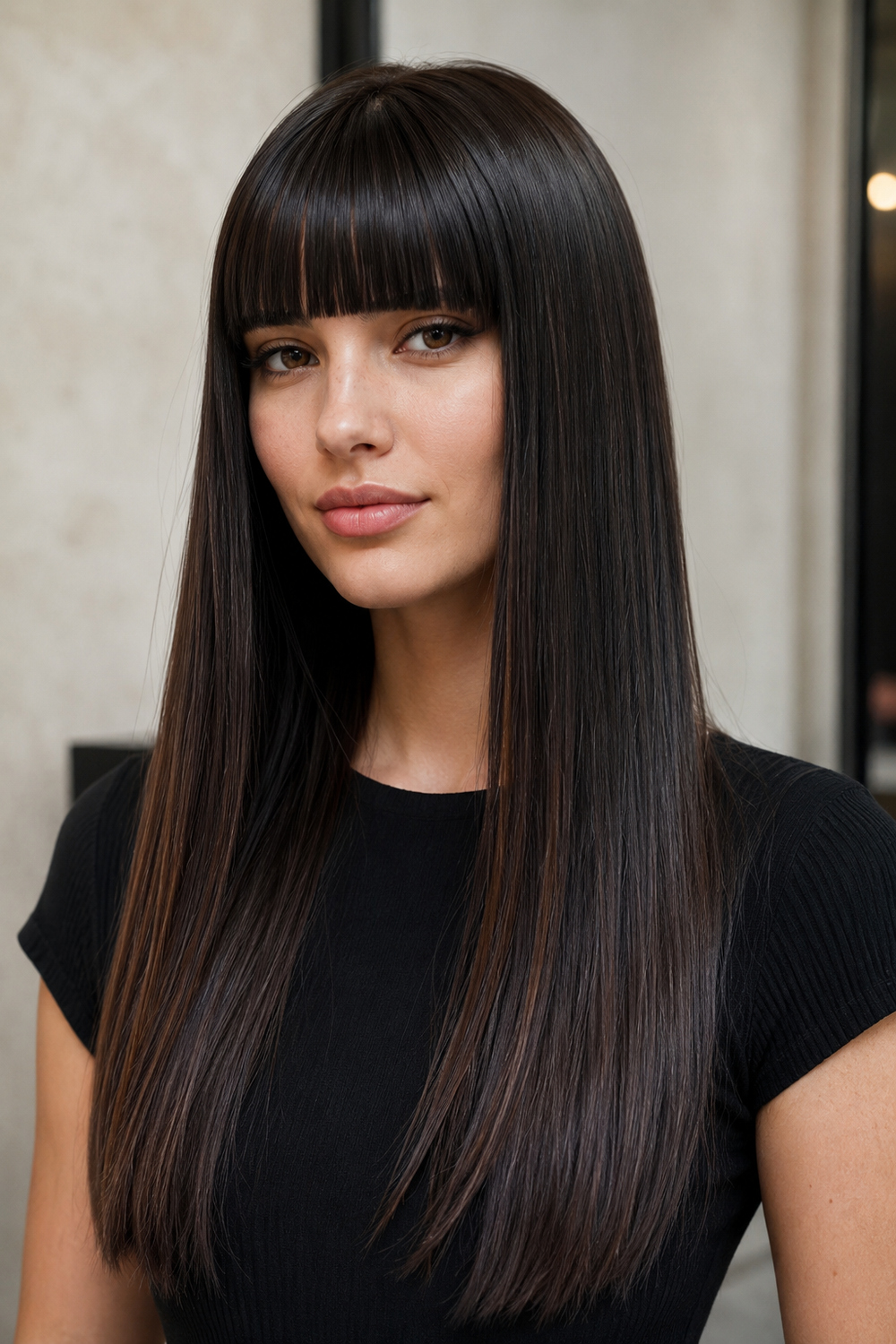
Blunt bangs cut in a straight, defined line create a graphic, polished contrast against sleek, straight layers. This pairing reads as more structured and intentional, and it photographs sharply because of the clean line across the forehead.
Subtle layers (rather than heavily textured ones) keep the rest of the cut looking smooth and let the blunt fringe stay the focal point.
Long Shag With Textured Bangs
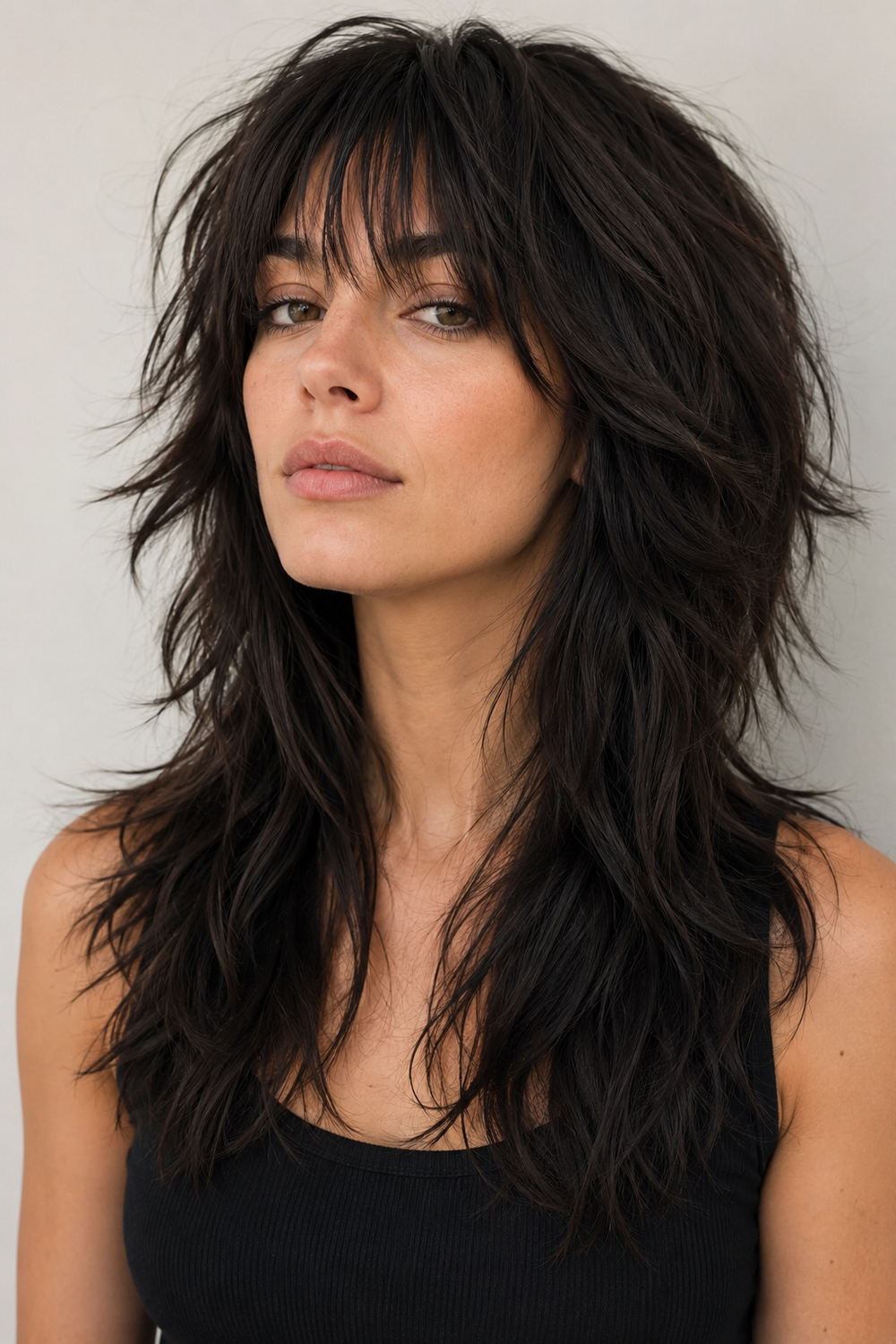
A long shag haircut is built on choppy, shaggy layers that add volume and movement throughout, and textured, piecey bangs finish the look with an undone, rock-and-roll edge. This is a strong option for thick hair that needs weight removed, since choppy layers and jagged fringe work together to thin out density while keeping the length looking full and bouncy.
Which Bangs Suit Your Face Shape?
Your face shape gives you a strong starting point for bang selection, though it’s a guide rather than a rule. Round and square faces generally do well with bangs that create length and soften angles, while heart, oval, and long face shapes have more flexibility to experiment with fuller or blunter fringe.
Curtain bangs, side-swept bangs, and full bangs each interact with your features differently depending on width, length, and where they part.
Options for Round and Square Faces
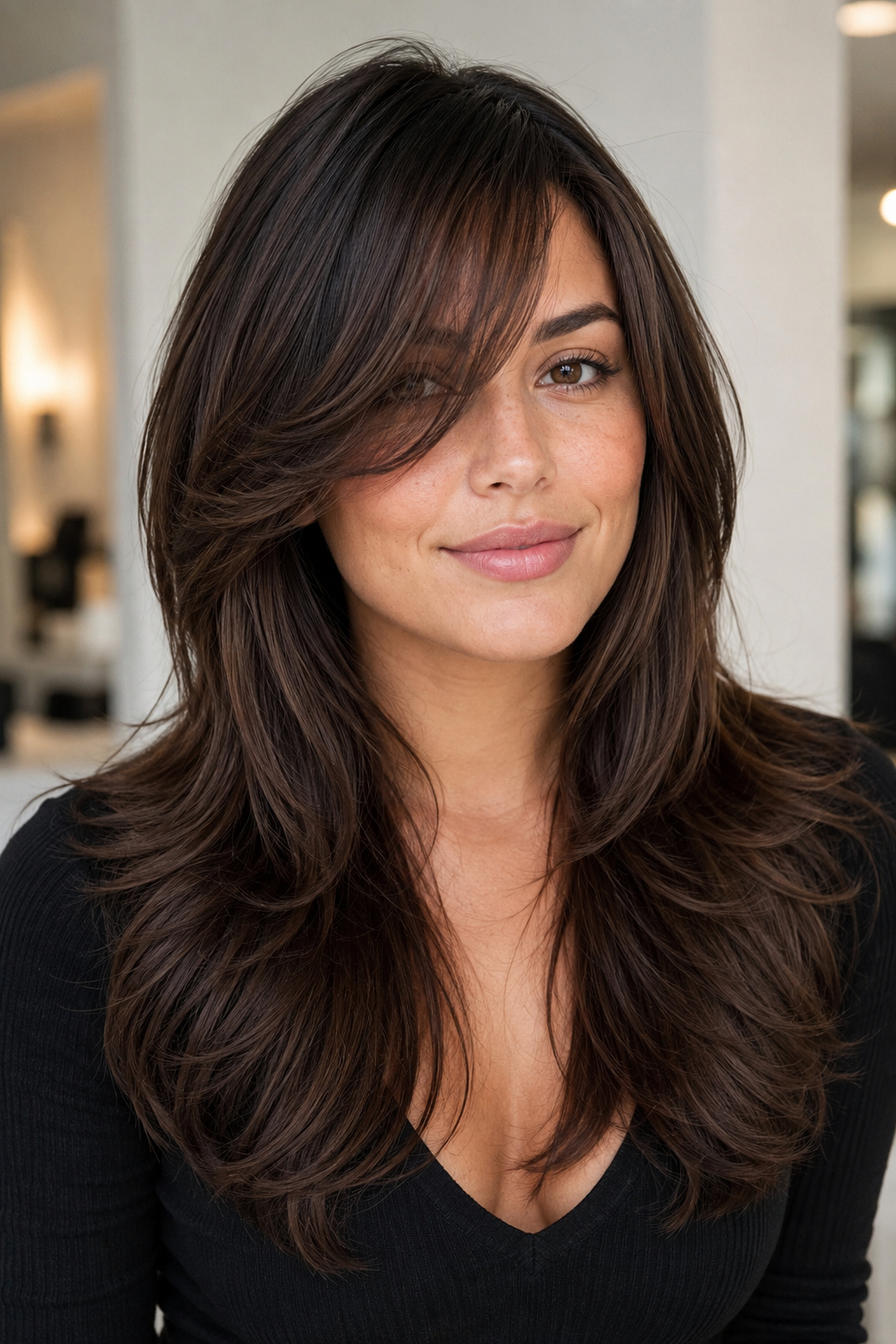
Long, side-swept fringe and curtain bangs work well on round and square face shapes because they create diagonal lines that visually lengthen the face. Side bangs with a deep swoop soften a strong jawline, while curtain bangs are considered great for round faces since they open up the center of the face instead of cutting straight across it.
Avoid heavy, blunt bangs cut straight across the brow on these shapes. That style tends to shorten the face and emphasize width rather than balance it.
Options for Heart-Shaped and Oval Faces
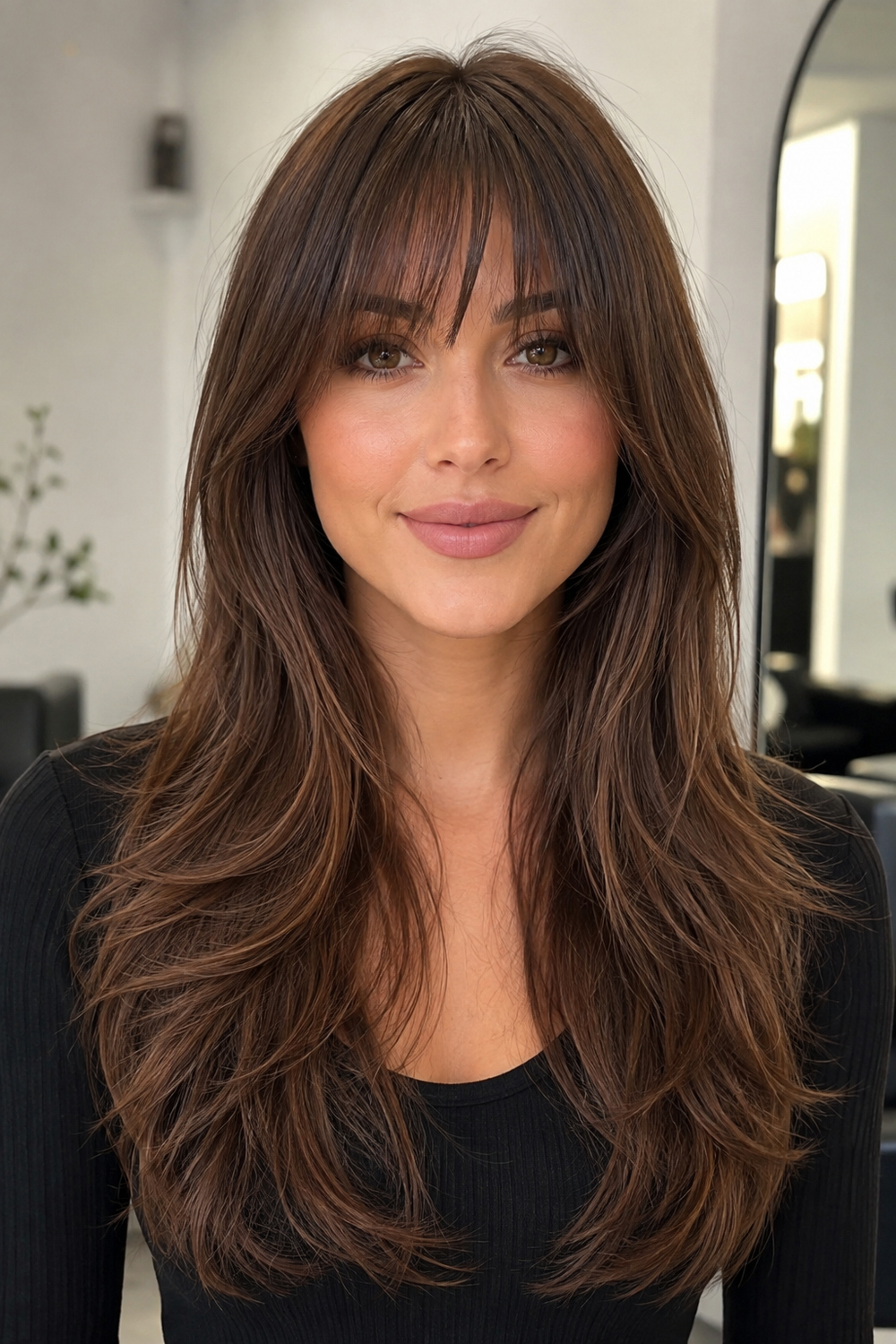
Full bangs, wispy fringe, and center-parted styles all suit heart-shaped and oval faces with fewer restrictions than other shapes. A heart-shaped face benefits from side-swept bangs that soften a narrower chin, while oval faces have enough balance to wear almost any fringe style, from a blunt fringe to arched bangs, without much risk.
Full fringe in particular gives oval faces a bold, statement look since there’s little risk of it overwhelming the proportions.
Options for Long Face Shapes
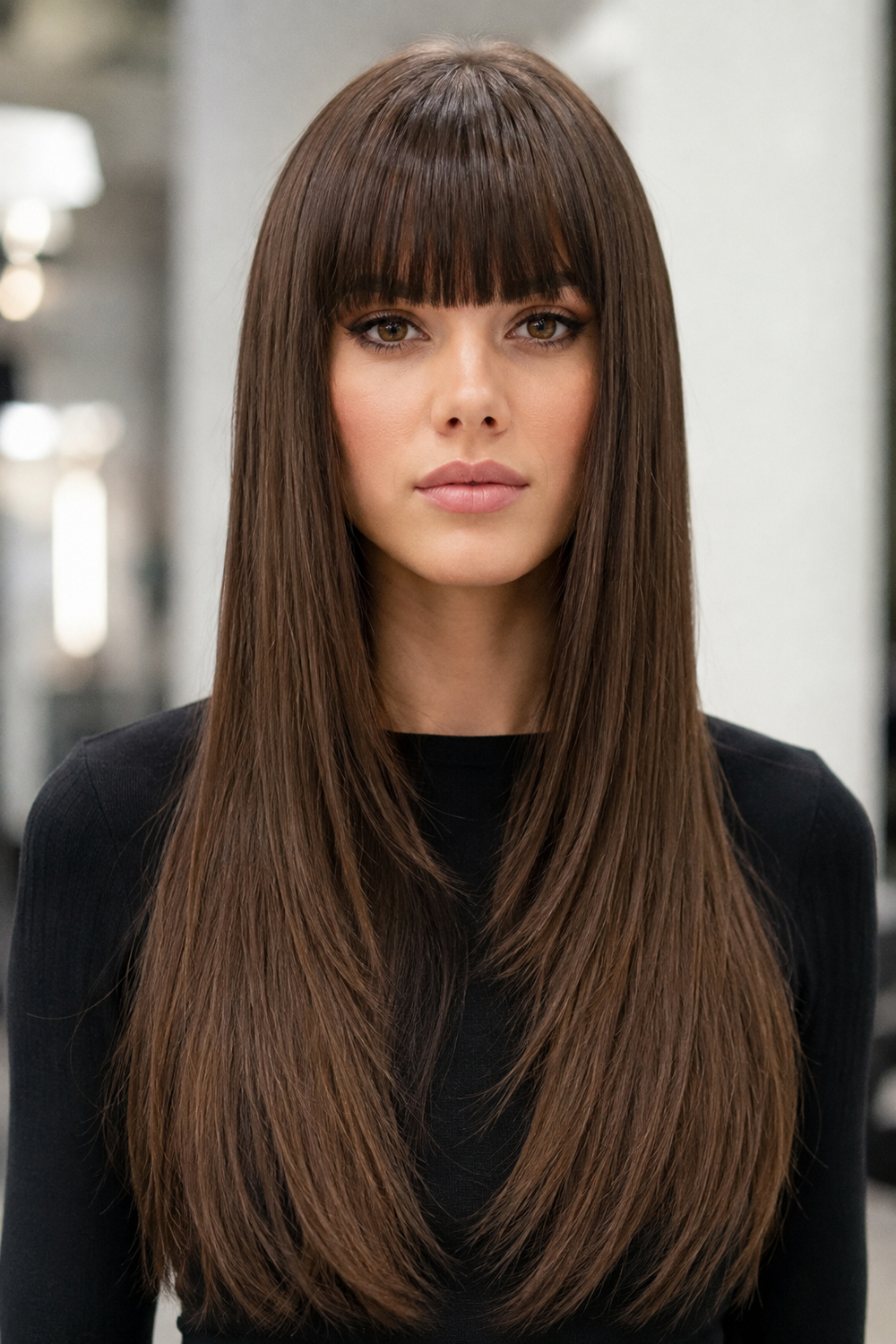
Blunt, heavy bangs cut straight across the brow help shorten the appearance of a long face shape by adding a visual break in the middle of the forehead. A full, straight-across fringe works better here than a wispy or heavily side-swept style, since more coverage creates a stronger horizontal line.
Long, curtain-style fringe can also work if it’s kept fuller through the center rather than swept fully to the sides.
What Bang Width and Length Mean at the Salon
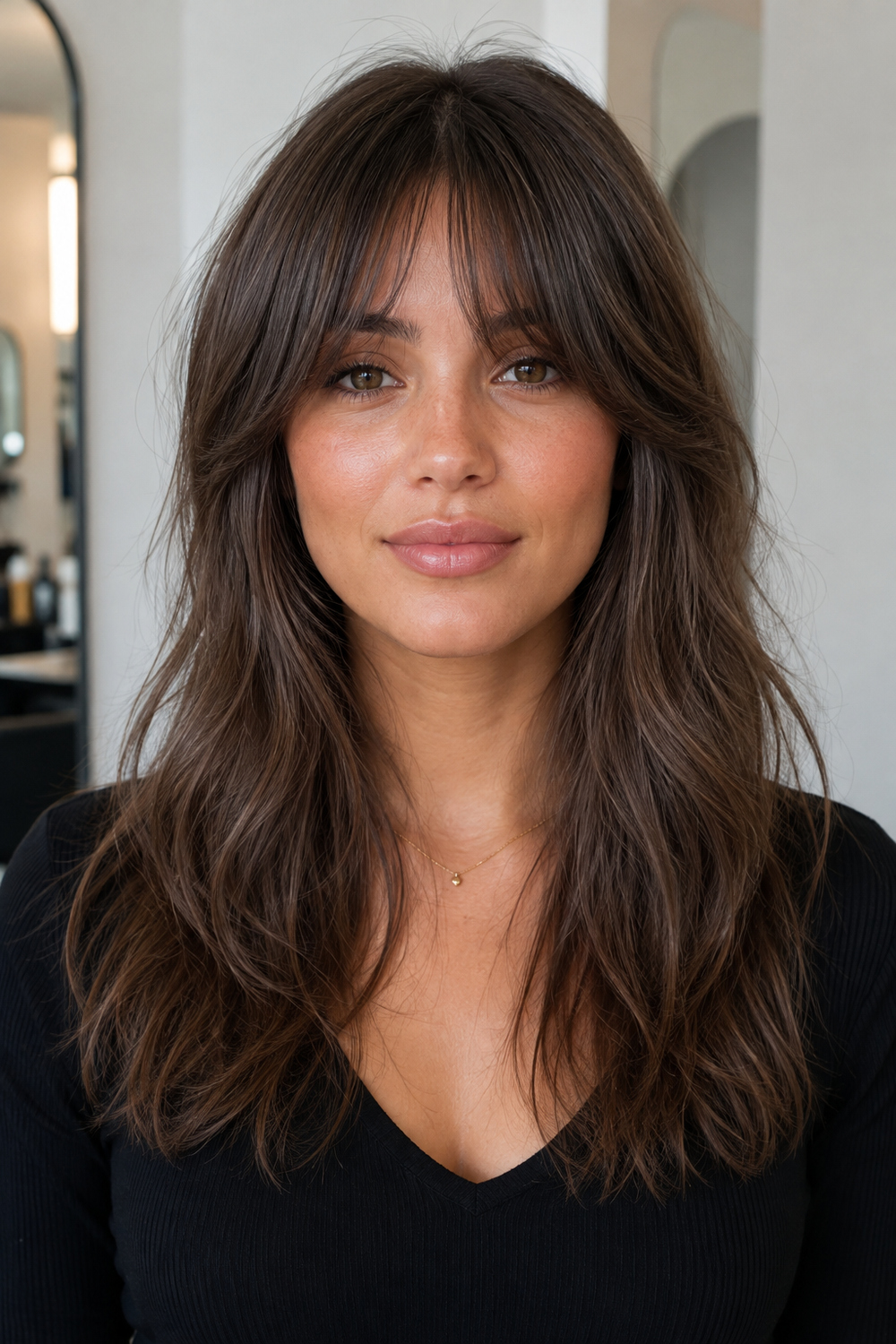
Wider, heavier bangs draw more attention to the forehead and create a bolder frame, while narrower, wispy bangs blend more softly into the rest of the hair. Longer fringe that hits at the cheekbone or brow bone tends to feel more versatile day to day, since it’s easy to tuck back or push to the side when you want a change.
Shorter, blunt fringe sits higher on the forehead and makes more of a style statement, but it also shows regrowth faster.
Match the Cut to Your Texture and Density
Hair texture changes how any bang style behaves, sometimes more than face shape does. Fine hair needs lift and softer edges to avoid looking sparse, thick hair often needs weight removed so the fringe doesn’t sit like a heavy curtain, and curly or wavy hair needs a cut that accounts for how much the fringe will spring up once it dries.
The same bang photographed on three different hair types can look like three different haircuts.
Fine or Thin Hair That Needs More Lift
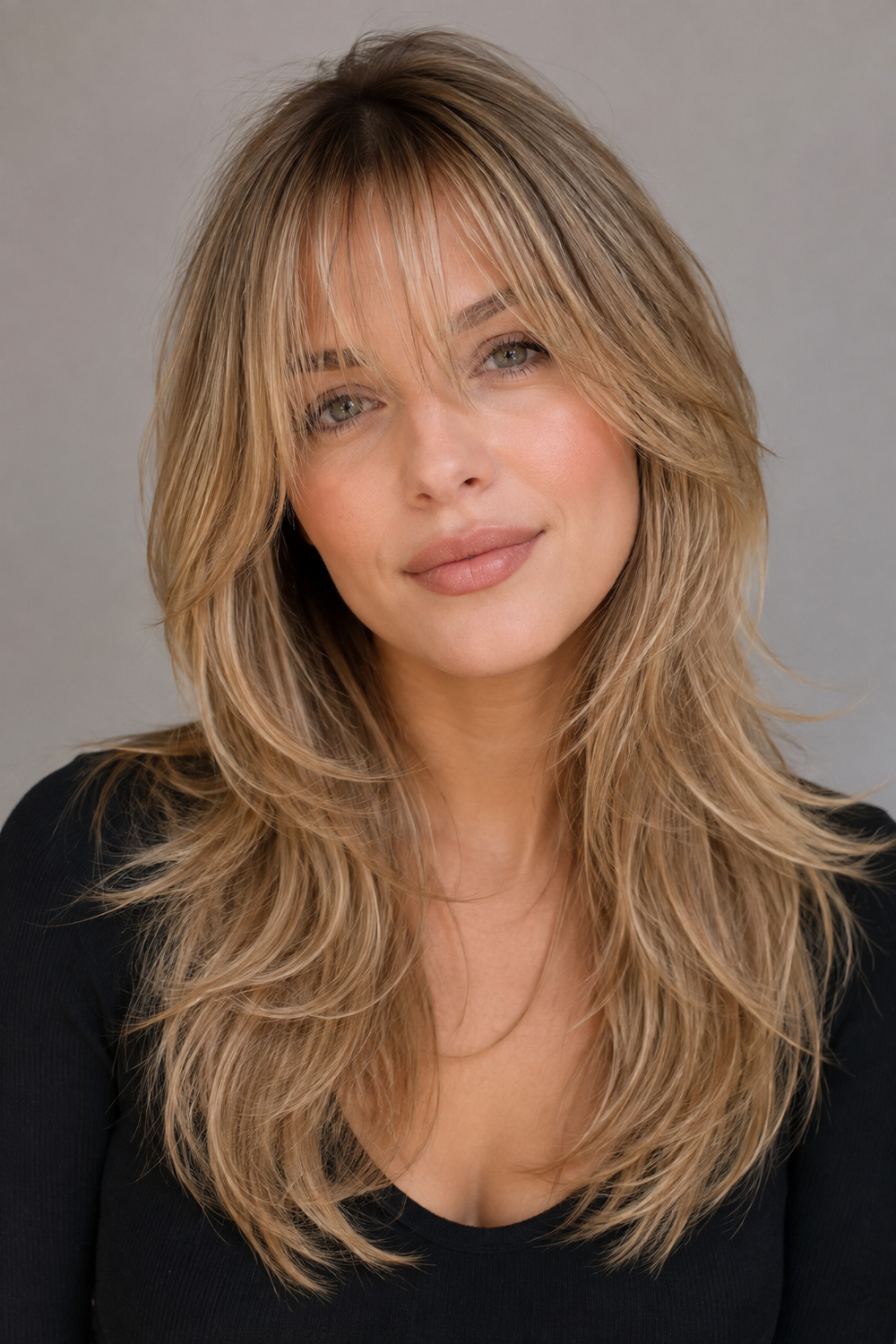
Fine and thin hair does best with soft, wispy, or see-through bangs cut with minimal blunt weight. A dense, blunt fringe on thin hair often looks thin and patchy within a few weeks of growth, while a lighter, feathered cut disguises lower density and still frames the face.
Volumizing mousse at the root before blow-drying helps fine bangs hold lift through the day.
Thick Hair That Needs Shape and Weight Removal
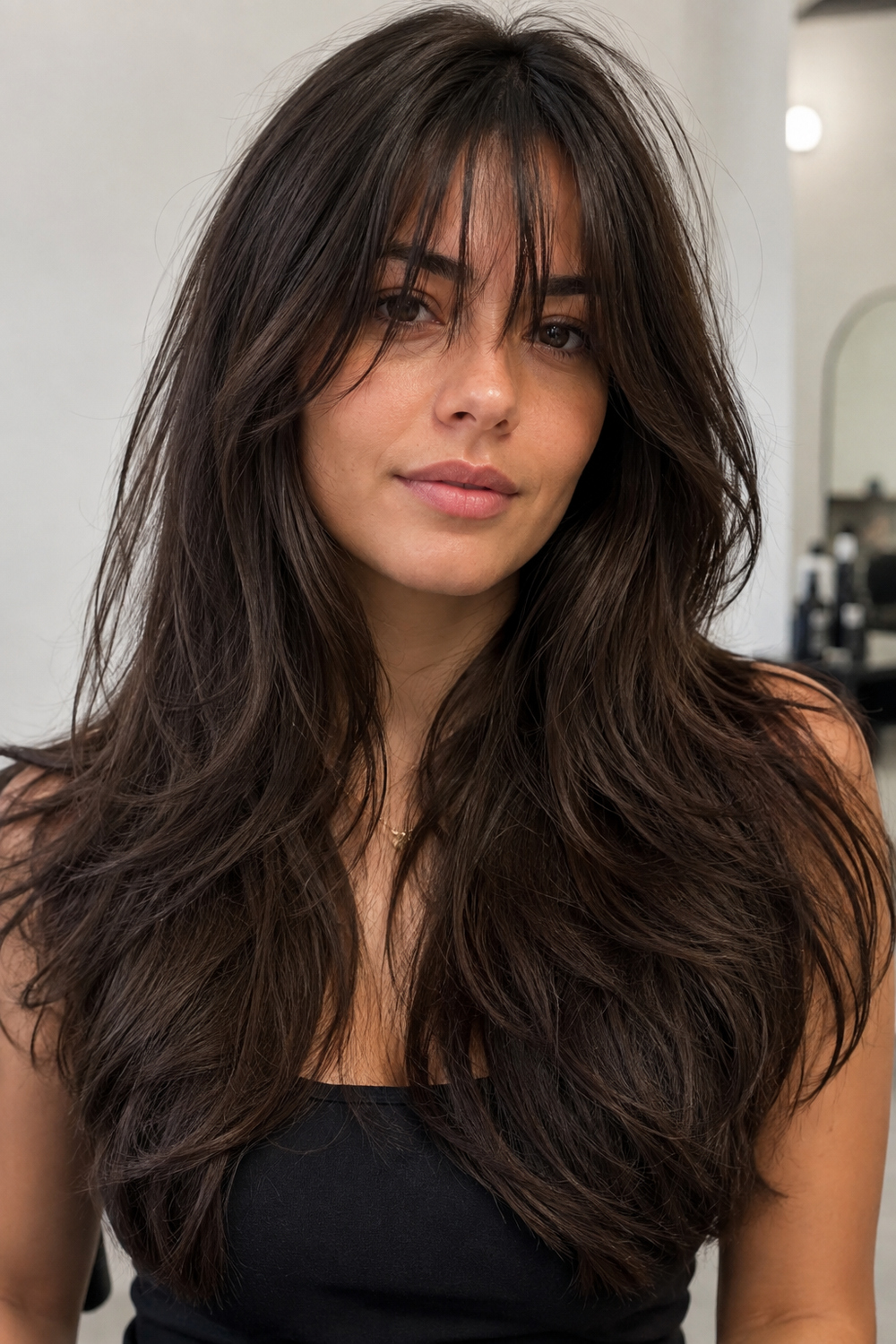
Thick hair usually needs point-cutting or texturizing to remove bulk from the fringe, or the bangs end up sitting like a solid, heavy block. Choppy or piecey bangs work well here because the texturizing keeps the density from overwhelming the forehead.
Ask your stylist to thin the fringe with thinning shears or a razor if your natural bangs still feel heavy after the first cut.
Straight Hair With Defined Fringe
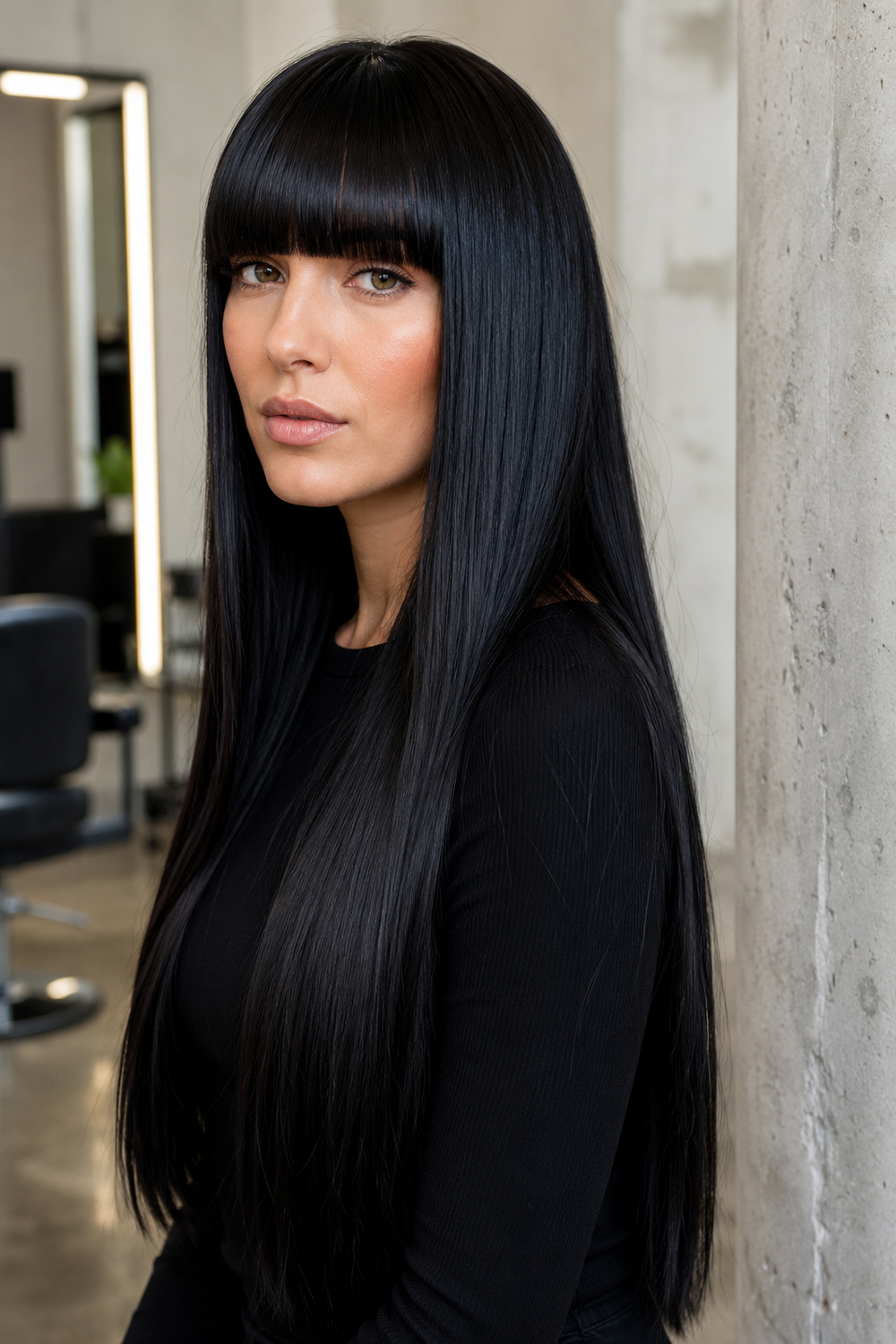
Straight hair holds a crisp, blunt line better than any other texture, which makes it a strong match for structured, sleek bangs. Long straight hair with blunt bangs keeps its defined shape between wash days with minimal touch-up styling.
A flat iron on the fringe section only, using a low heat setting, keeps the line sharp without over-processing the rest of the hair.
Wavy and Curly Hair With Natural Movement
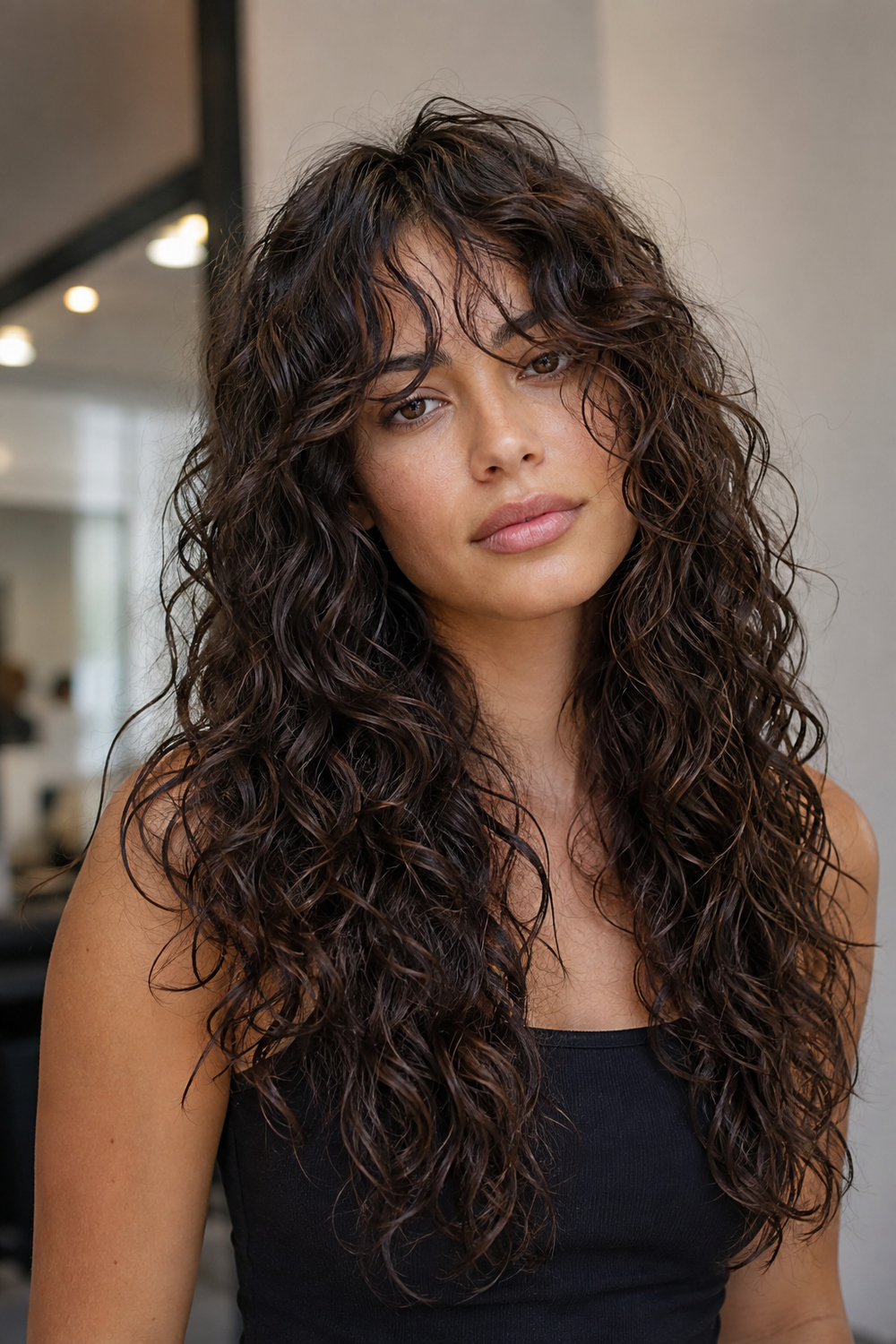
Wavy and curly hair needs a longer, looser fringe cut with the natural texture in mind, since curls shrink up significantly once fully dry. Long curly hair with bangs often looks best when the fringe is cut a full inch or two longer than the intended finished length, giving the curl pattern room to spring up without landing too short.
A diffuser on low heat helps curly bangs dry into their natural shape instead of frizzing out.
Long-Hair Fringe Looks to Bring to the Salon
Bottleneck bangs, bardot bangs, and feathered fringe are some of the most requested long-hair looks right now, and each one pairs with a different base texture and color approach. Bringing a specific name and description to your consultation helps your stylist translate a photo into a cut that will actually work on your hair.
Soft Waves With Bottleneck Fringe
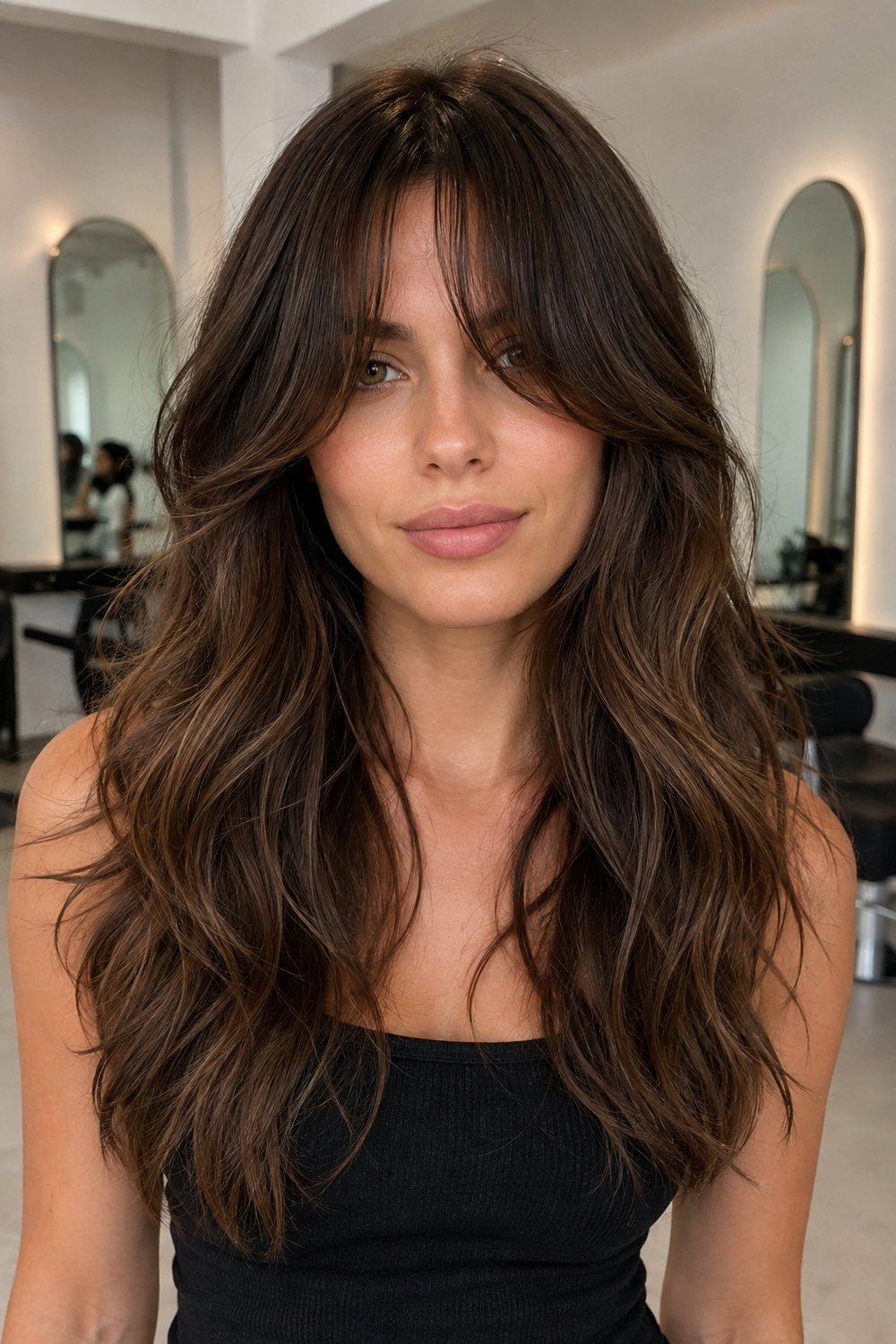
Bottleneck bangs are longer in the center and gradually get shorter toward the outer edges, creating a rounded, face-framing shape that flares slightly at the cheekbones. Paired with soft, loose waves, this combination gives long hair a romantic, effortless finish that photographs well without looking overstyled.
This fringe works especially well with balayage, since the lighter pieces around the face catch the light through the waves.
Beachy Layers With Feathered Bangs
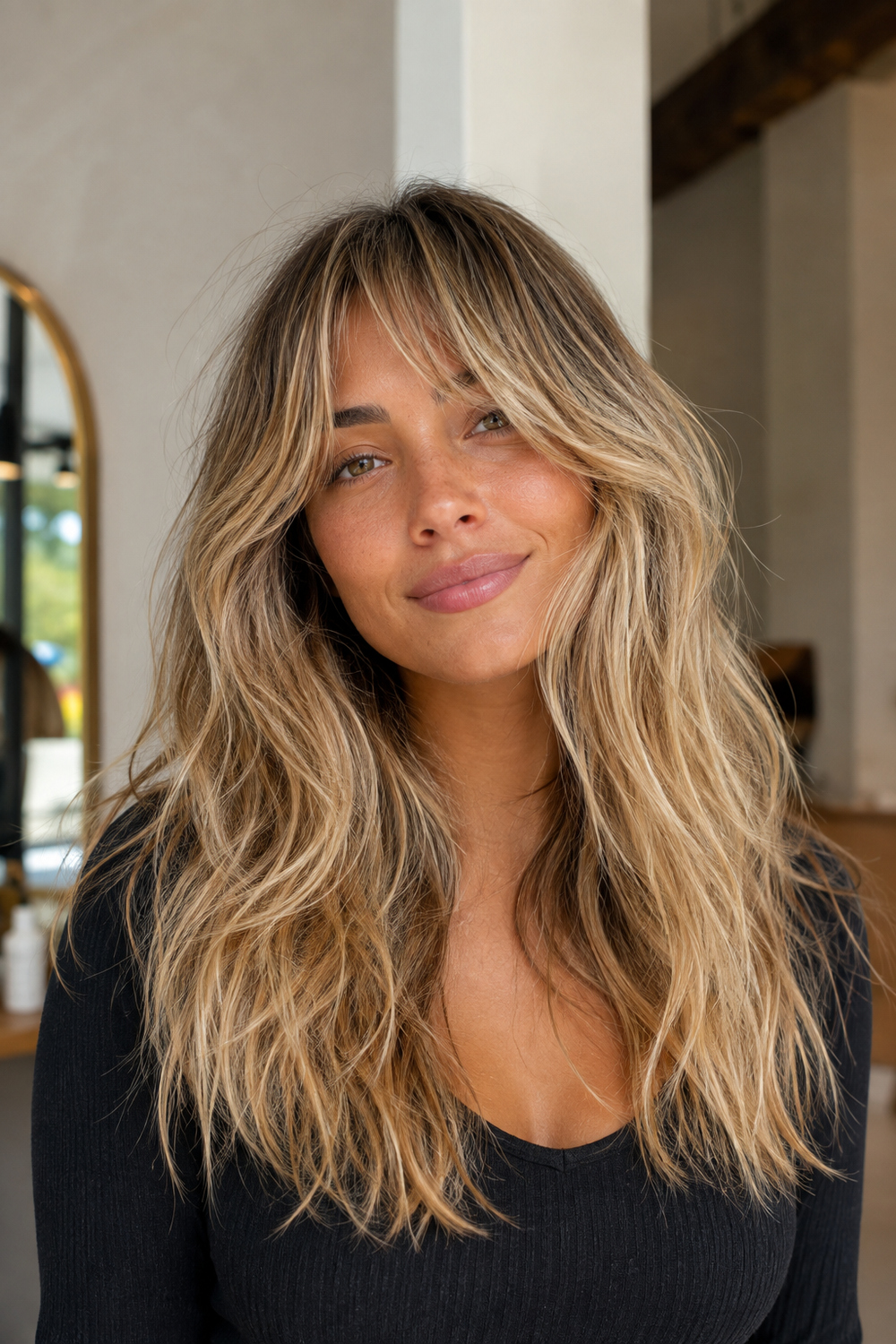
Feathered bangs are cut with soft, tapered ends rather than a hard line, and they blend naturally into beachy, textured layers. A sea salt spray scrunched through damp waves enhances the tousled effect, while the feathered fringe stays light enough not to clump when the rest of the hair goes wavy or messy.
This pairing suits long blonde hair and warm balayage tones especially well, since the feathering shows off dimension.
Bold Blunt Bangs With Long Straight Hair
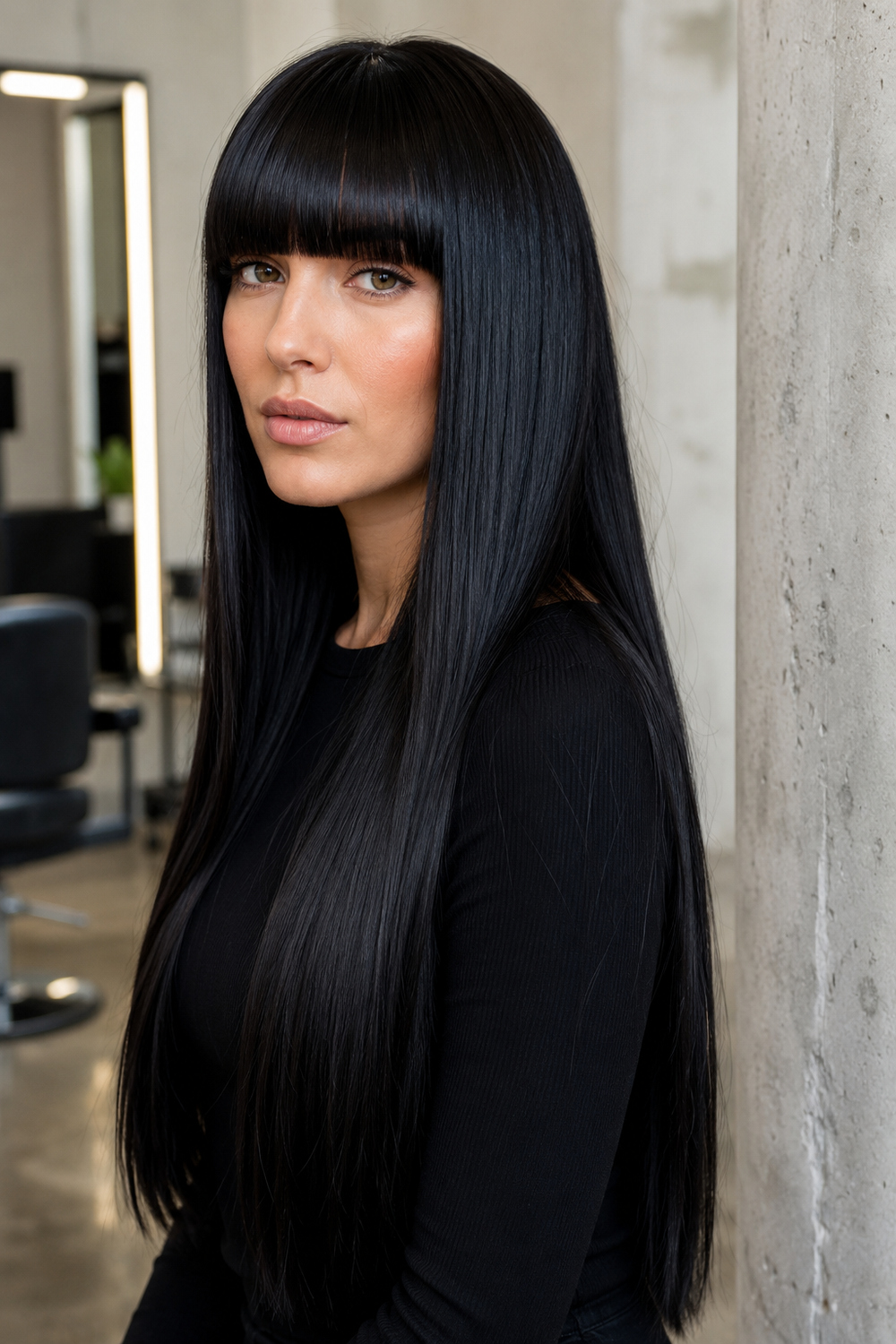
Blunt bangs cut in a straight, precise line make the strongest visual statement when paired with sleek, straight long hair. Red hair with a blunt fringe reads as especially graphic, since the solid color makes the clean line even more noticeable.
This combination needs the most frequent trims of any look on this list, since even a quarter inch of growth shows.
Piecey Bangs With a Textured Shag
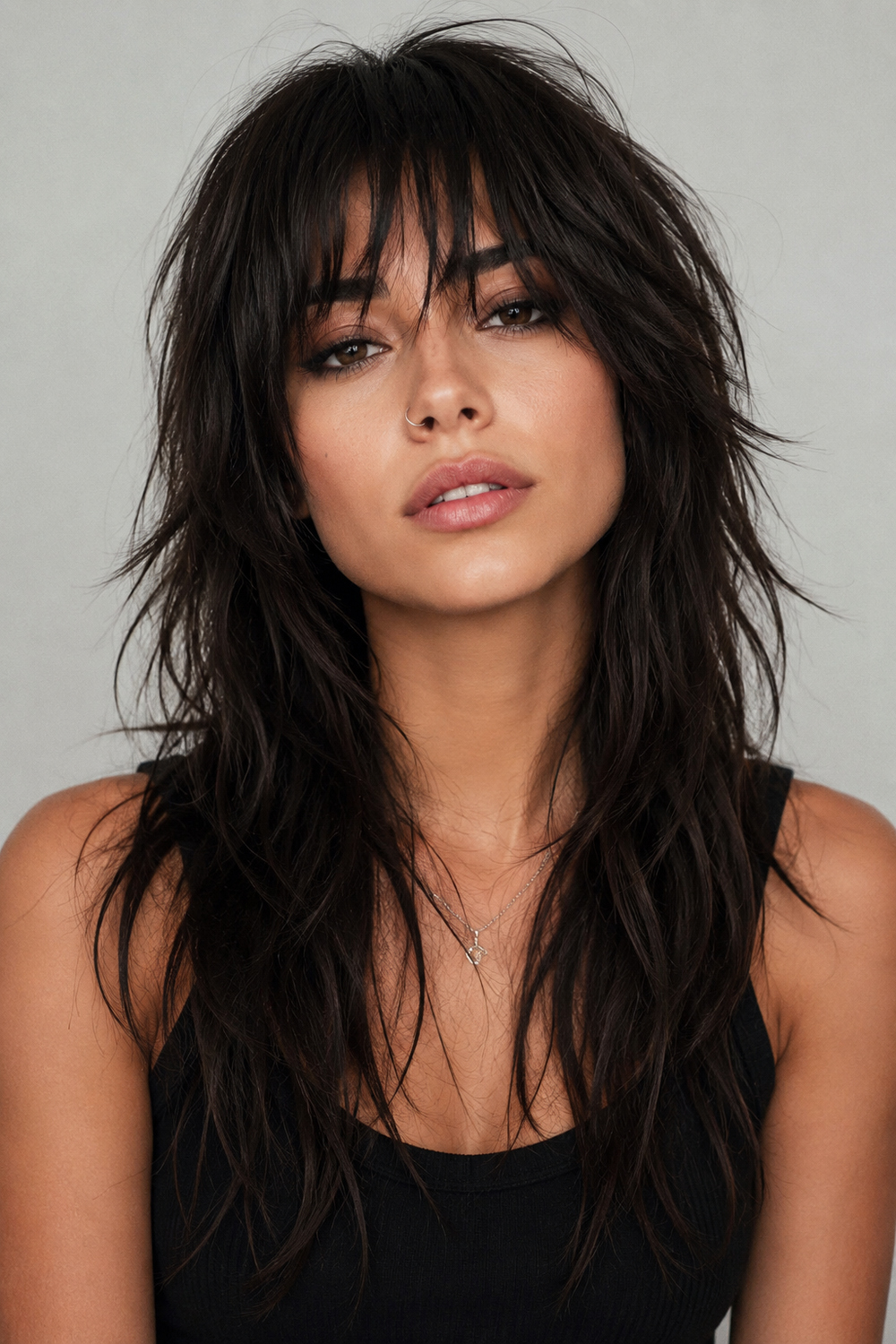
Piecey, textured bangs finish with separated, choppy pieces rather than a smooth curtain, and they belong on a shaggy, layered base. Tapered ends throughout the shag echo the piecework in the fringe, so the whole cut feels intentional rather than mismatched.
Texturizing spray on dry bangs brings out the separation between pieces on days when hair looks flat.
How to Style Long Hair and Bangs at Home
A round brush and a low-heat blow dry keep long hair with bangs looking polished without flattening the fringe against your forehead. Most day-to-day styling struggles come down to heat direction and product placement, not the cut itself.
Create a Smooth Blowout Without Flattening the Fringe
Dry your bangs first while they’re still slightly damp, using a small round brush to pull them slightly up and away from the scalp before directing them down into shape. This builds a little lift at the root so the fringe doesn’t end up pasted flat against your forehead by midday.
A light heat protectant on the bangs section prevents dryness from repeated daily heat exposure.
Add Soft Waves While Keeping Bangs Intentional
Curl the length of your hair with a curling iron or curling wand, but leave the bangs out of the curl pattern unless you want them to blend into the wave. A quick pass with a flat iron on just the fringe after curling the rest keeps the bangs looking deliberate instead of accidentally wavy.
Texturizing spray on the waves, kept away from the roots of the fringe, adds grip without weighing bangs down.
Enhance Curly Texture and Prevent Fringe Shrinkage
Apply a curl-defining product to damp bangs and diffuse them on low heat, checking the length often since curly fringe shrinks more than the rest of the hair as it dries. Curly bangs benefit from being scrunched upward rather than pulled straight down, which helps the curl pattern match the rest of your long hair.
If bangs shrink shorter than expected, a light mist of water can relax and re-set the curl.
Wear a Ponytail Without Losing Face-Framing Shape
Pull your hair into a ponytail while leaving your fringe and any face-framing pieces out to keep the softening effect around your features. Long hair with bangs still looks finished in a ponytail as long as the bangs are styled first, since an unstyled fringe can look separate from the rest of the look.
Sea salt spray scrunched into the ponytail length adds texture without disturbing the shape of the bangs.
Maintenance, Grow-Out, and Salon Timing
Blunt and full bangs need trims every three to four weeks, while curtain and side-swept bangs can often stretch to six or eight weeks between visits. Knowing this before your first cut helps you choose a fringe that matches your actual salon schedule and budget, not just the photo you brought in.
How Often Different Fringe Types Need Trimming
Full bangs and blunt bangs grow out fast because any extra length changes the line dramatically, so most stylists recommend a trim every three to four weeks to keep the shape sharp. Curtain bangs and side-swept bangs are more forgiving, since the longer length and diagonal shape hide a few weeks of growth easily.
A face-framing layer cut into the bangs at your regular haircut appointment can extend the time between fringe-only trims.
How to Grow Out Bangs Into Face-Framing Layers
Growing bangs out into long, face-framing layers takes patience through an awkward middle stage where the fringe is too long to sit forward but too short to blend fully into the rest of the hair. Clipping the front sections back, using a texturizing spray to add grip, or wearing a low ponytail with the front pieces pinned can carry you through that stretch.
Regular trims to the very ends of the growing fringe, even just a quarter inch at a time, keep the shape from looking stringy while it lengthens.
When a Long Bob May Be the Better Reset
A long bob with bangs can be a smarter reset than adding fringe to already-long hair if your ends are damaged or your length has lost its shape. Cutting into a long layered haircut at collarbone or shoulder length removes old damage and gives your stylist a cleaner base to build face-framing bangs around.
This route sacrifices some length, but it often grows back into long layers faster than repairing overworked ends would.
How to Describe Your Desired Shape to a Stylist
Bring specific words like “curtain,” “blunt,” “wispy,” or “face-framing” instead of general terms like “bangs” when you talk to your stylist. Describing the length you want (brow-skimming, cheekbone-length, or chin-length) and how much daily styling you’re willing to do gives your stylist the real information they need to cut a shape you’ll actually maintain.
Mentioning your natural texture and how your hair usually dries helps your stylist account for shrinkage or drop before the first cut.
Choosing a Fringe That Works Beyond the First Appointment
The best bang style is the one that still looks good three weeks after your appointment, not just the day you leave the salon. That means factoring in your hair texture, your face shape, and how much styling time you actually have on a Tuesday morning, not just what looked good in a photo.
Long layers give any fringe room to blend and move, and getting that pairing right from the start saves you a return trip for adjustments. Natural texture, whether straight, wavy, or curly, changes how a bang behaves once it’s washed and air-dried, so plan the cut around your real hair, not a smoothed-out version of it.
Volume and movement come from the layers surrounding your bangs as much as from the fringe itself.
Frequently Asked Questions
How often should bangs be trimmed?
Most bangs need reshaping every three to six weeks, depending on their length and style. Longer curtain or side-swept bangs can usually go longer between trims.
How can I stop my bangs from separating during the day?
Use a small amount of lightweight styling product and blow-dry the fringe in the direction you want it to sit. Avoid applying heavy oils or conditioner near the roots.
How should I refresh bangs between wash days?
Lightly dampen only the fringe and restyle it with a blow-dryer or round brush. Dry shampoo can also help absorb excess oil at the roots.
What is the easiest way to grow out bangs?
Gradually blend the fringe into face-framing layers and switch to a side or center part as the pieces become longer.
What should I tell my stylist about bang maintenance?
Explain how often you are willing to style and trim your bangs. This helps the stylist choose a fringe length and shape that suits your routine.
Can bangs be styled without high heat every day?
Yes. Velcro rollers, air-drying techniques, and low-heat blow-drying can help maintain shape while reducing repeated heat exposure.


