



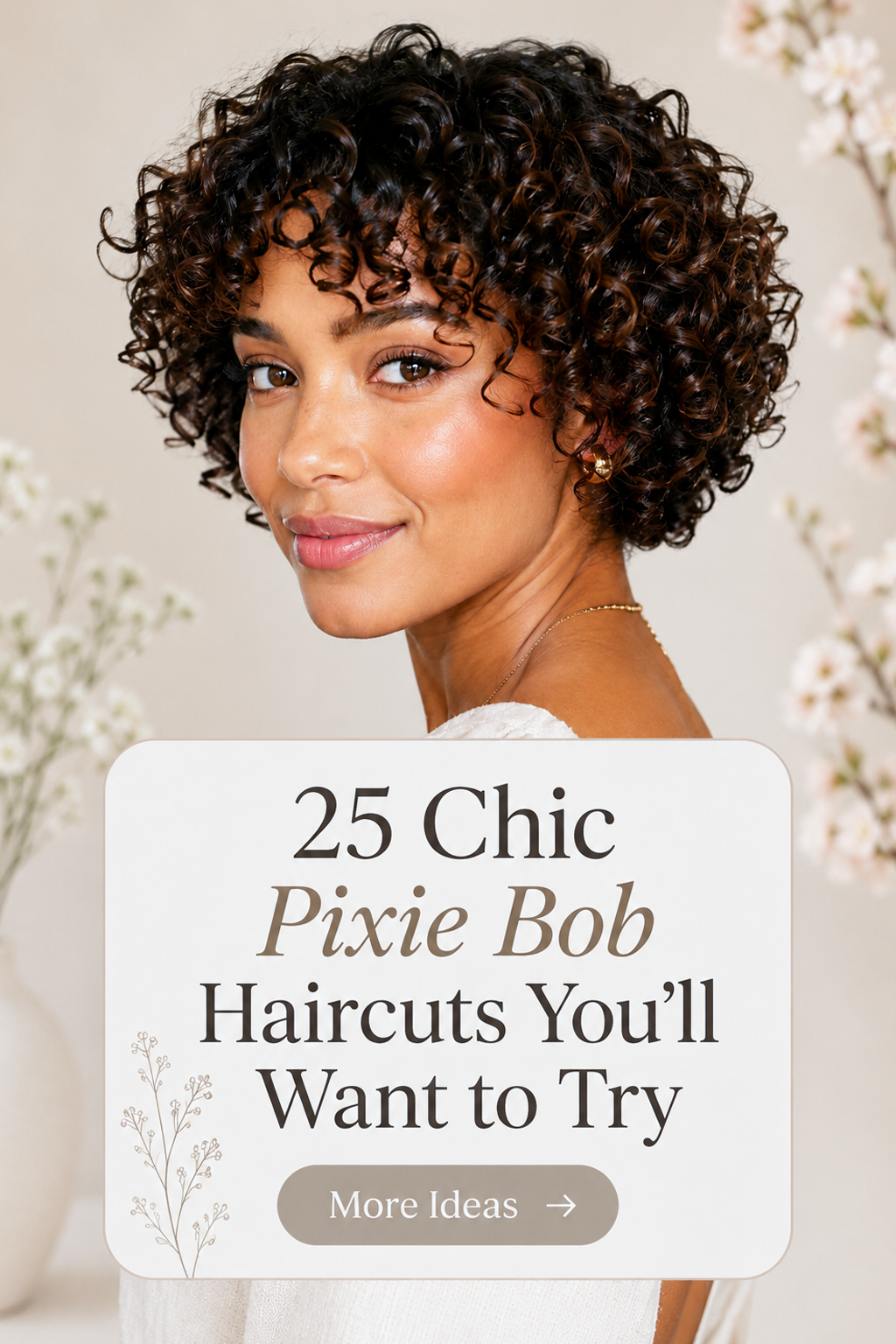
A pixie bob gives you the crisp shape of a pixie with the softer length and movement of a bob. You can choose a pixie bob that suits your face shape, hair texture, and styling routine while keeping a modern, manageable cut. If you like a slightly softer blend of pixie and bob styles, explore these trendy bixie cut ideas for more short-hair inspiration.
Explore 25 fresh ideas, from sleek asymmetrical shapes and stacked layers to textured, wavy, curly, and undercut versions. Each idea below is paired with one matching image and a focused description, so the article is easy to read and visually consistent.
25 Fresh Pixie Bob Style Ideas
Use these 25 looks to compare length, layering, fringe, texture, volume placement, and maintenance before your next salon visit.
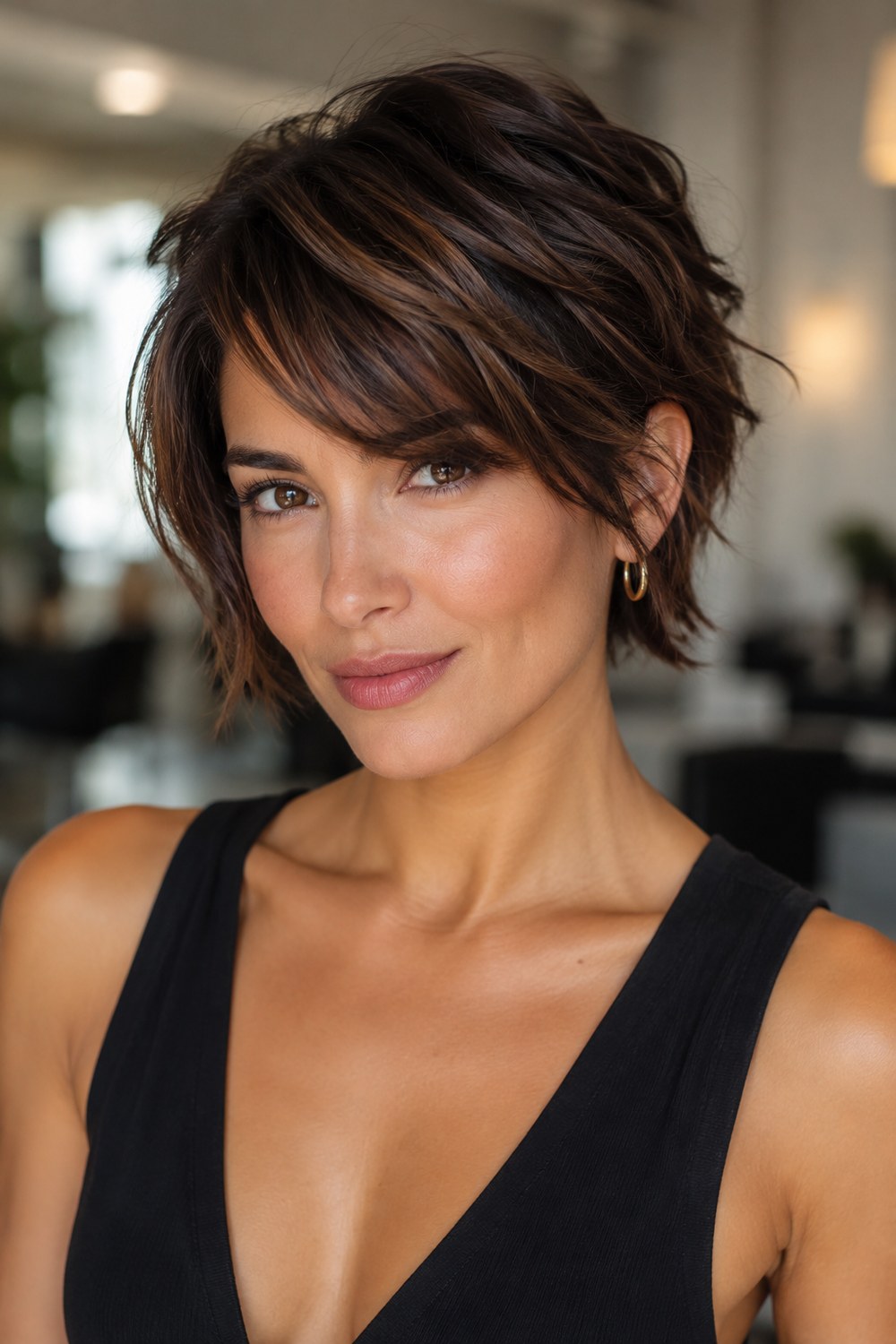
1. Tapered Pixie Bob with a Textured Crown
This tapered pixie bob keeps extra length through the crown and front while the sides and nape gradually become shorter. The textured top and side-swept bangs add movement without losing the clean pixie-bob shape. It is a practical choice for fine to medium hair when you want the crown to look fuller.

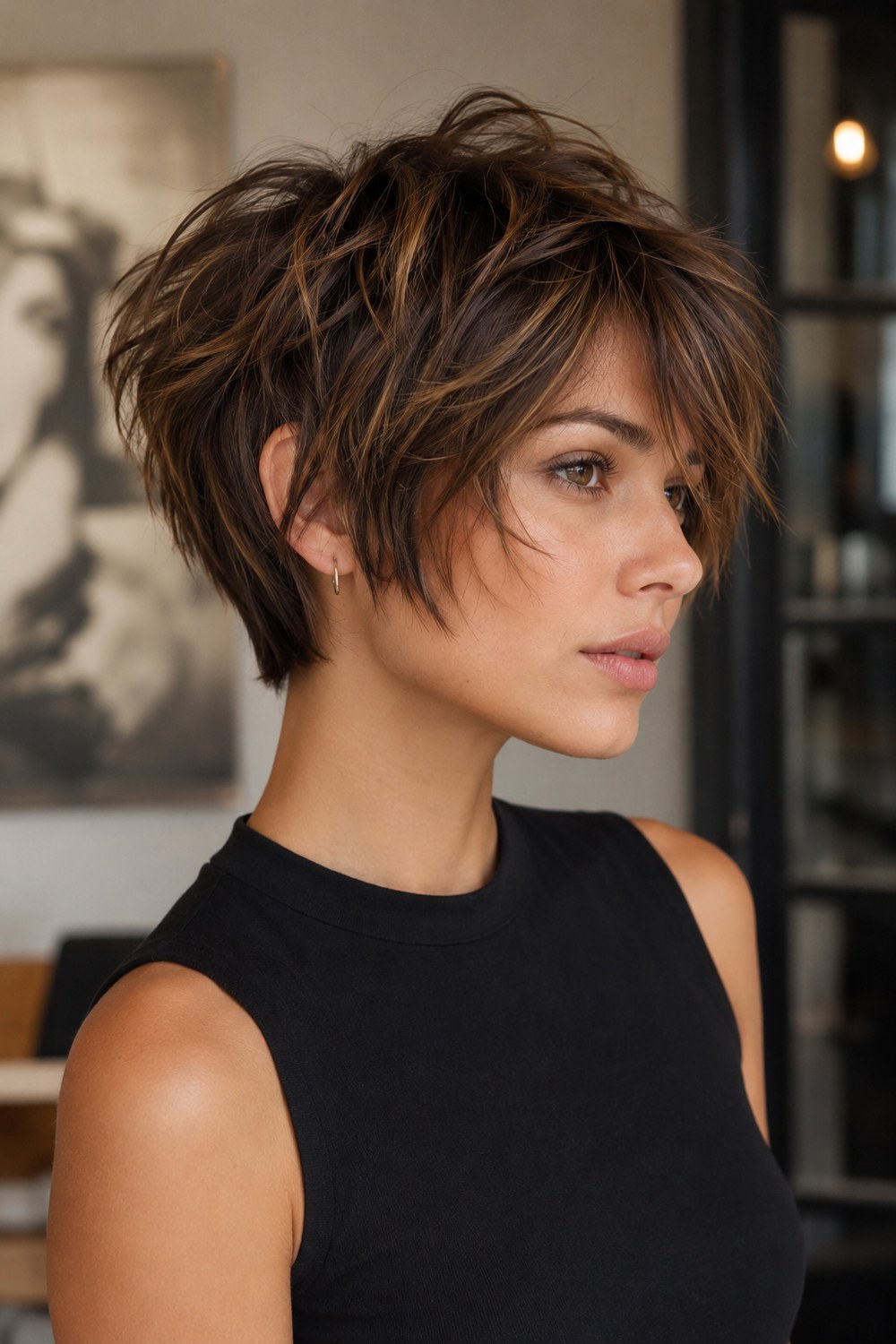
2. Textured Choppy Pixie Crop
Uneven layers and piecey ends give this pixie bob a deliberately tousled finish. The choppy crown creates visible movement and helps shorter hair look less flat, especially when styled with a small amount of matte paste or texture cream. Keep products light near the roots so the shape stays airy.
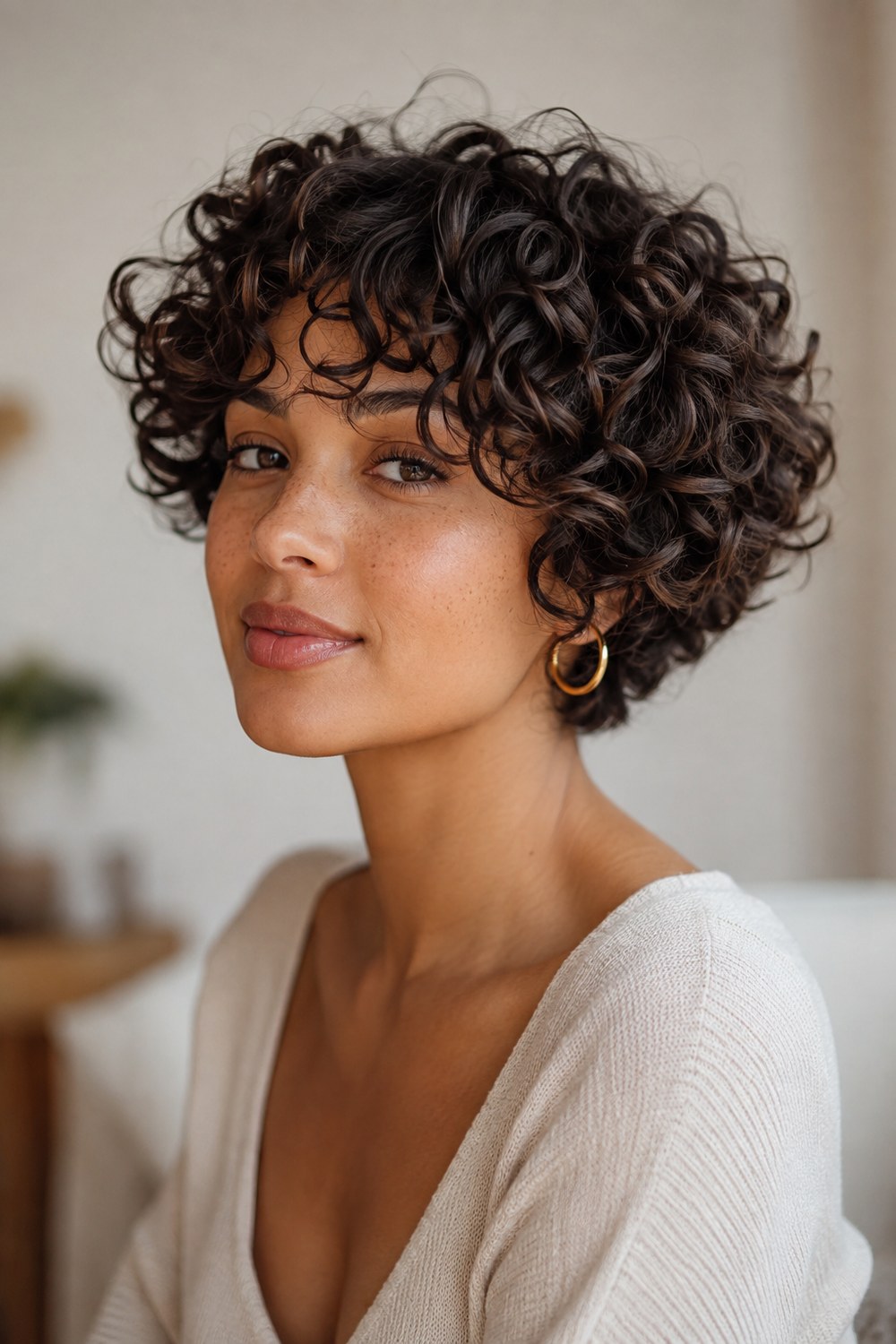
3. Curly Pixie Bob with Defined Ringlets
A curly pixie bob can keep natural ringlets defined while maintaining a rounded, balanced silhouette. Leaving enough length through the top and sides helps account for shrinkage and preserves the curl pattern. A light curl cream and gentle diffusing can enhance definition without creating stiffness.
4. Blunt Jaw-Length Pixie Bob with Short Fringe
This sharp jaw-length shape uses a clean blunt perimeter and a short straight fringe for a graphic, modern look. The structured line works especially well on straight hair because it clearly shows the outline of the cut. Regular fringe trims help keep the style crisp and intentional.
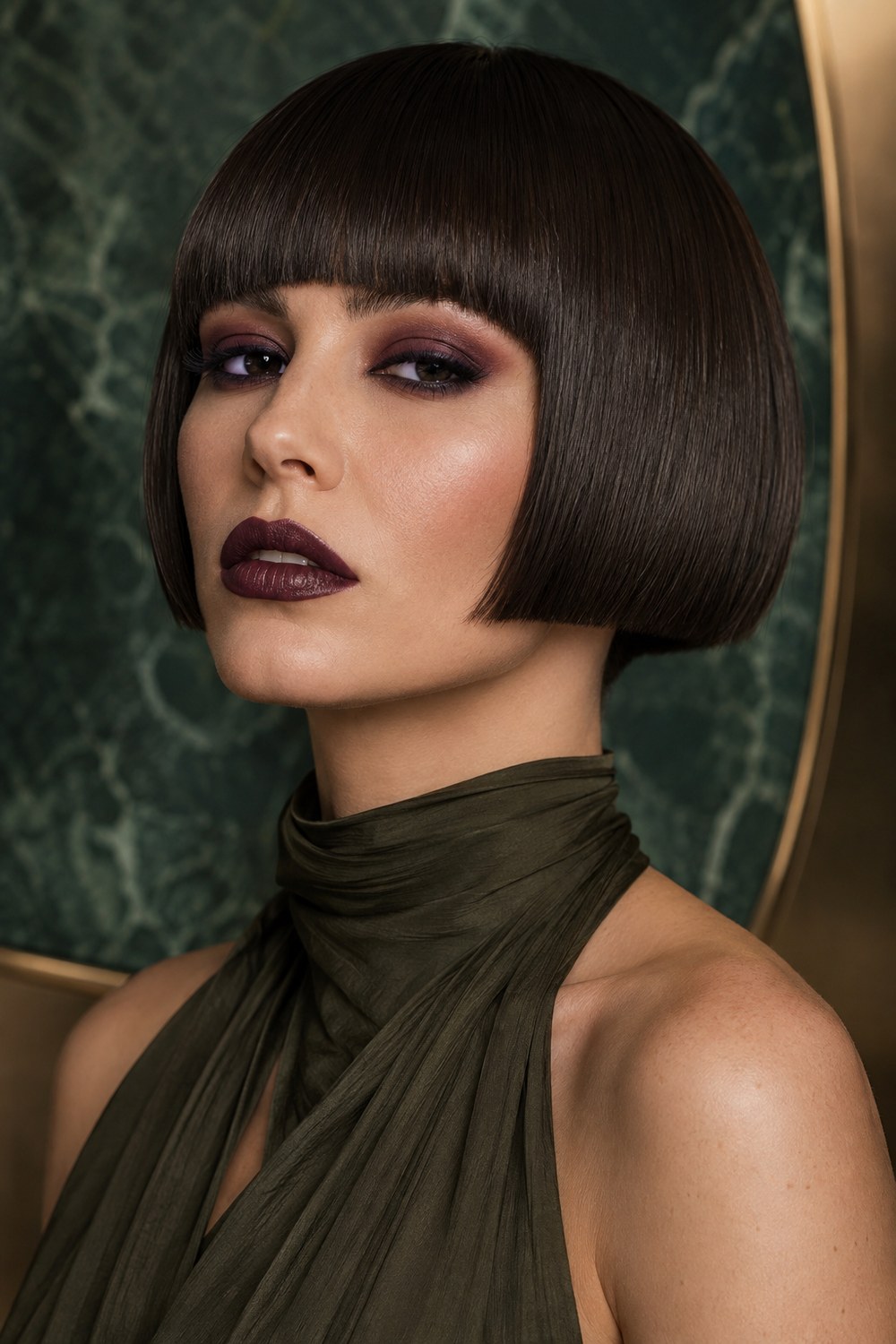
5. Sleek Asymmetrical Side-Swept Pixie Bob
One side is left noticeably longer to create a sleek diagonal line across the face. A deep side part emphasizes the asymmetry, while the shorter opposite side keeps the silhouette neat and easy to manage. This shape can add visual length and draw attention toward the cheekbones.
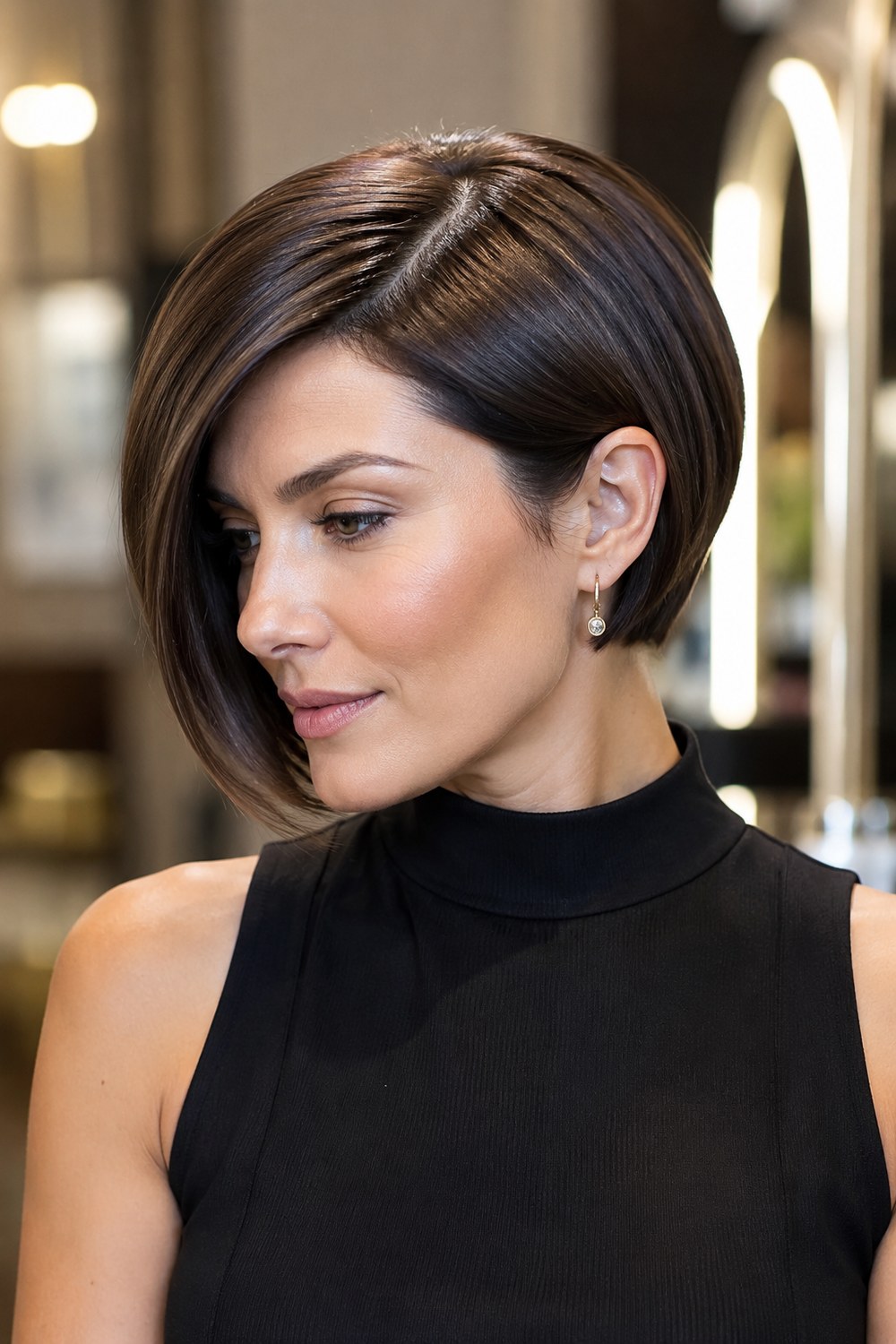
6. Sleek Straight Pixie Bob with Full Fringe
A smooth blunt perimeter makes straight hair look polished and can give fine hair the appearance of fuller ends. The full fringe adds structure at the front while the sleek sides keep the overall shape refined. Use a lightweight smoothing product so the hair stays controlled without looking heavy.
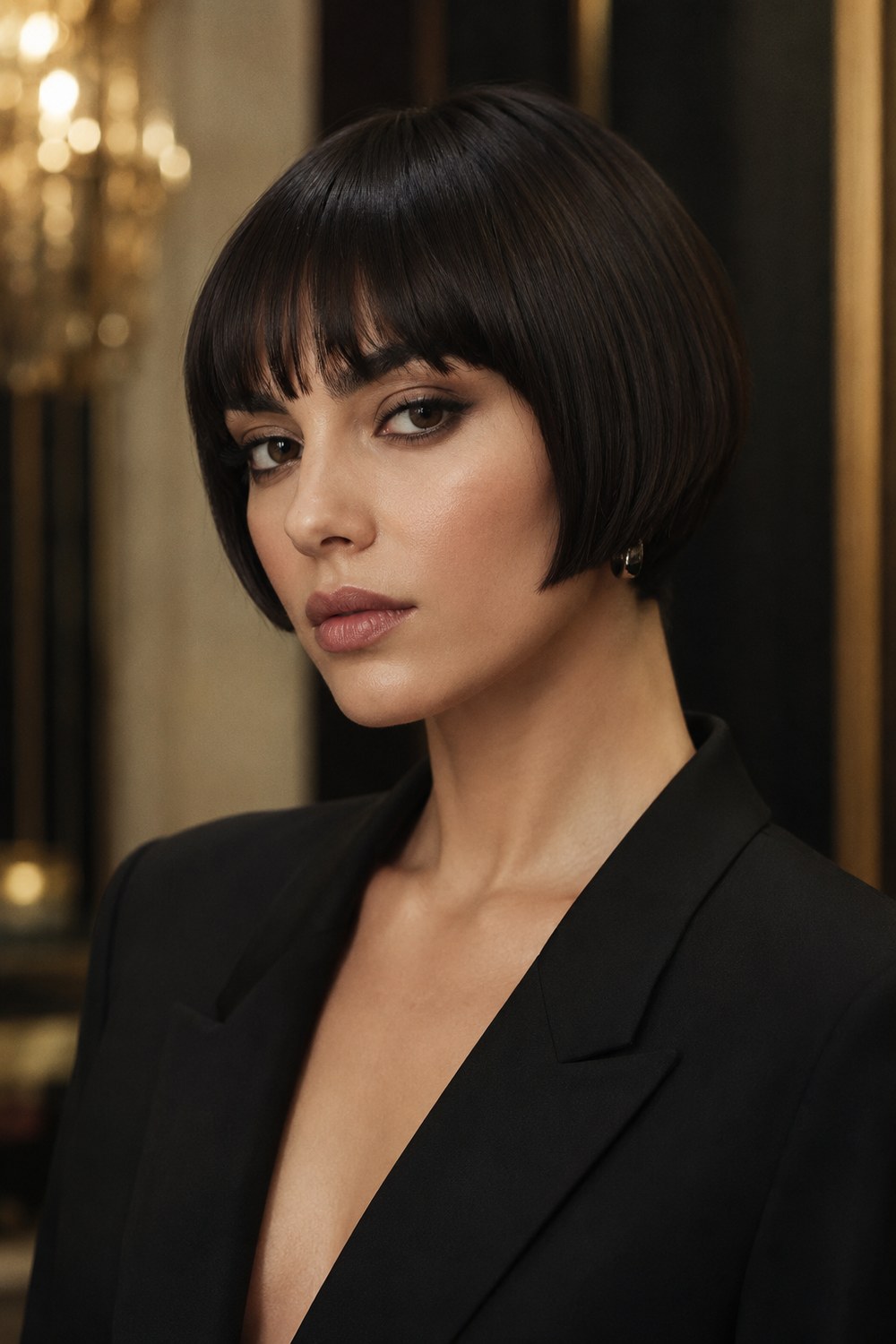
7. Soft Layered French-Inspired Bob
This French-inspired pixie bob combines a jaw-length outline with soft layers, loose movement, and a natural-looking part. The relaxed texture prevents the haircut from feeling too rigid or over-styled. A light cream or leave-in conditioner is usually enough to support the airy finish.
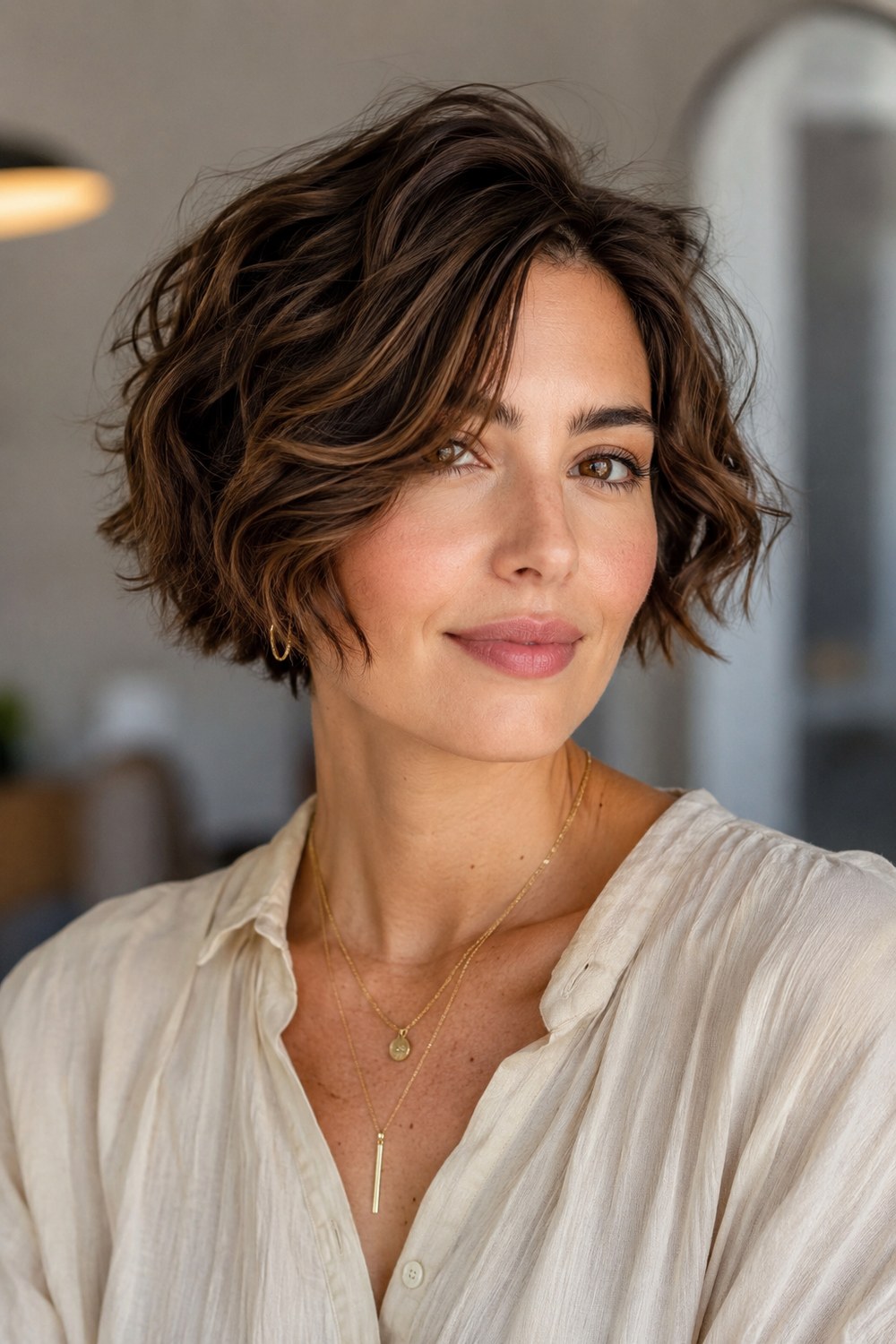
8. Chin-Length Layered Pixie Bob for Oval Faces
A chin-length pixie bob with centered face-framing pieces creates a balanced, versatile shape. Oval faces can carry many pixie-bob variations, so soft layers can be added for movement without changing the overall proportion too dramatically. The extra length also gives you more styling flexibility than an ear-length crop.
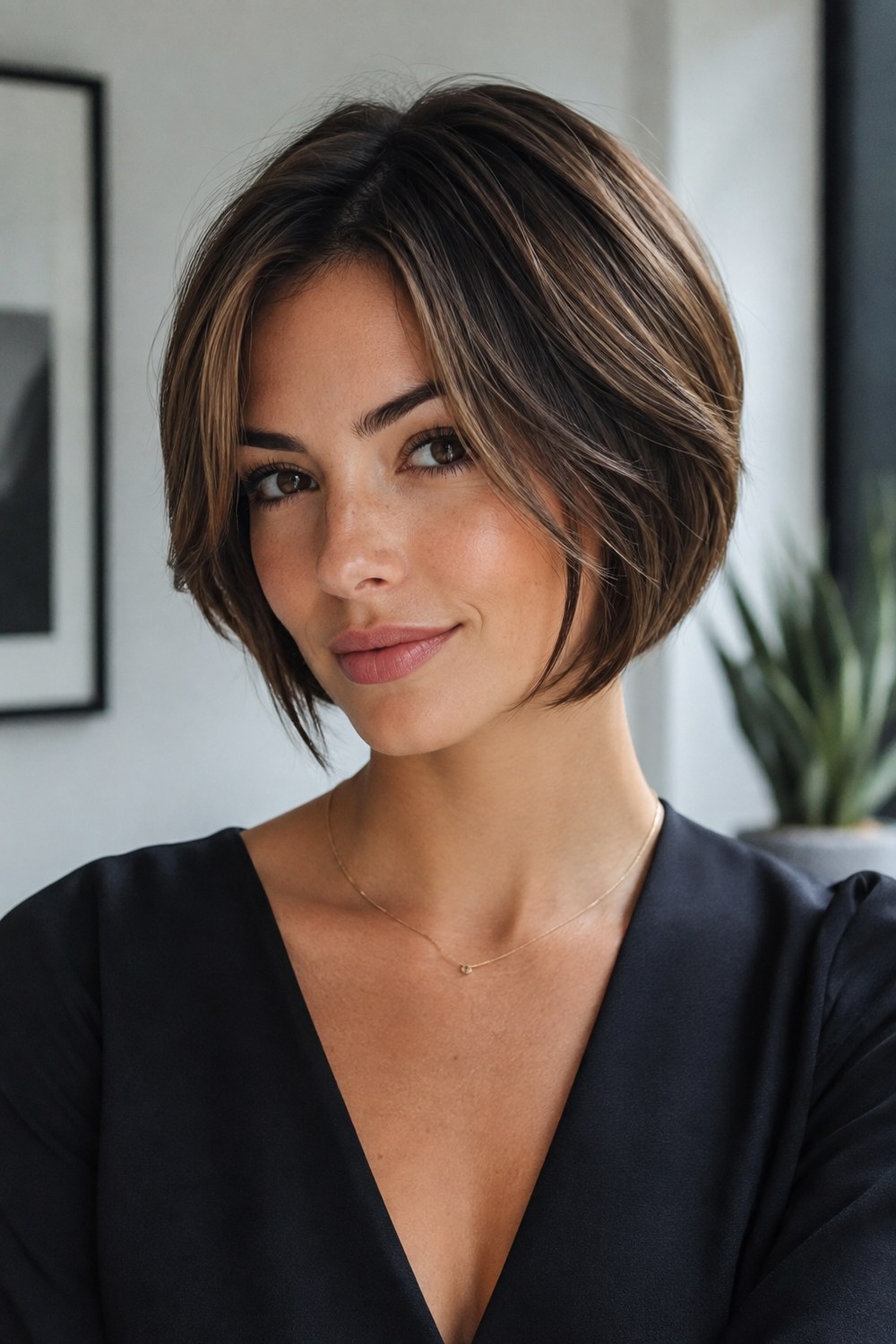
9. Rounded Pixie Bob with Curtain Fringe
Soft curtain fringe blends into rounded side volume for a gentle face-framing effect. The curved silhouette feels softer than a sharply angled pixie bob and works well when you want movement around the forehead and cheek area. Keep the fringe light so it separates naturally instead of forming a heavy block.
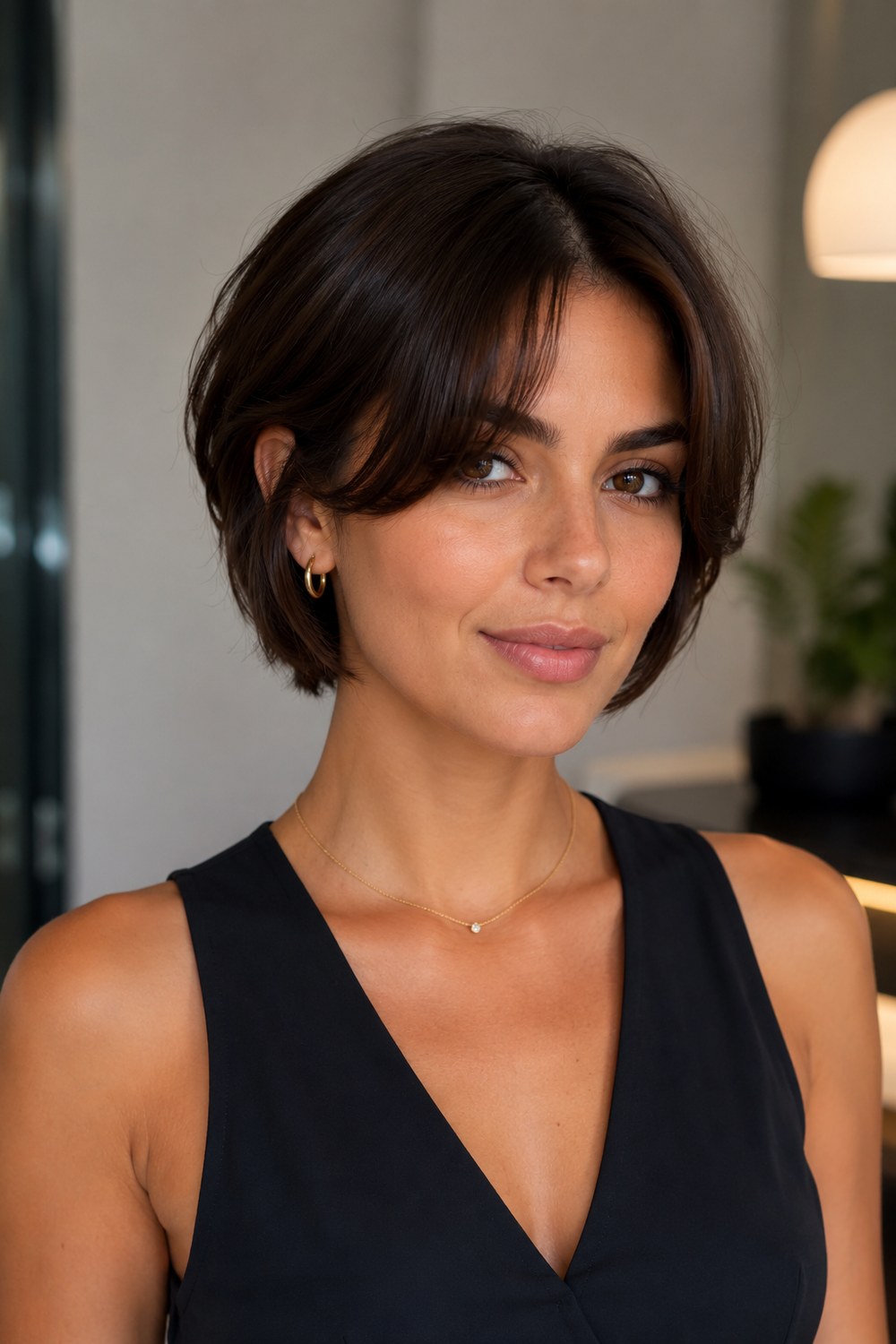
10. Layered Blonde Pixie Bob with Feathered Ends
Feathered ends and a soft side-swept fringe give this blonde pixie bob an airy, lightweight appearance. The layered finish adds movement around the crown and sides without creating an overly choppy outline. A small round brush can help shape the fringe and lift the front while blow-drying.
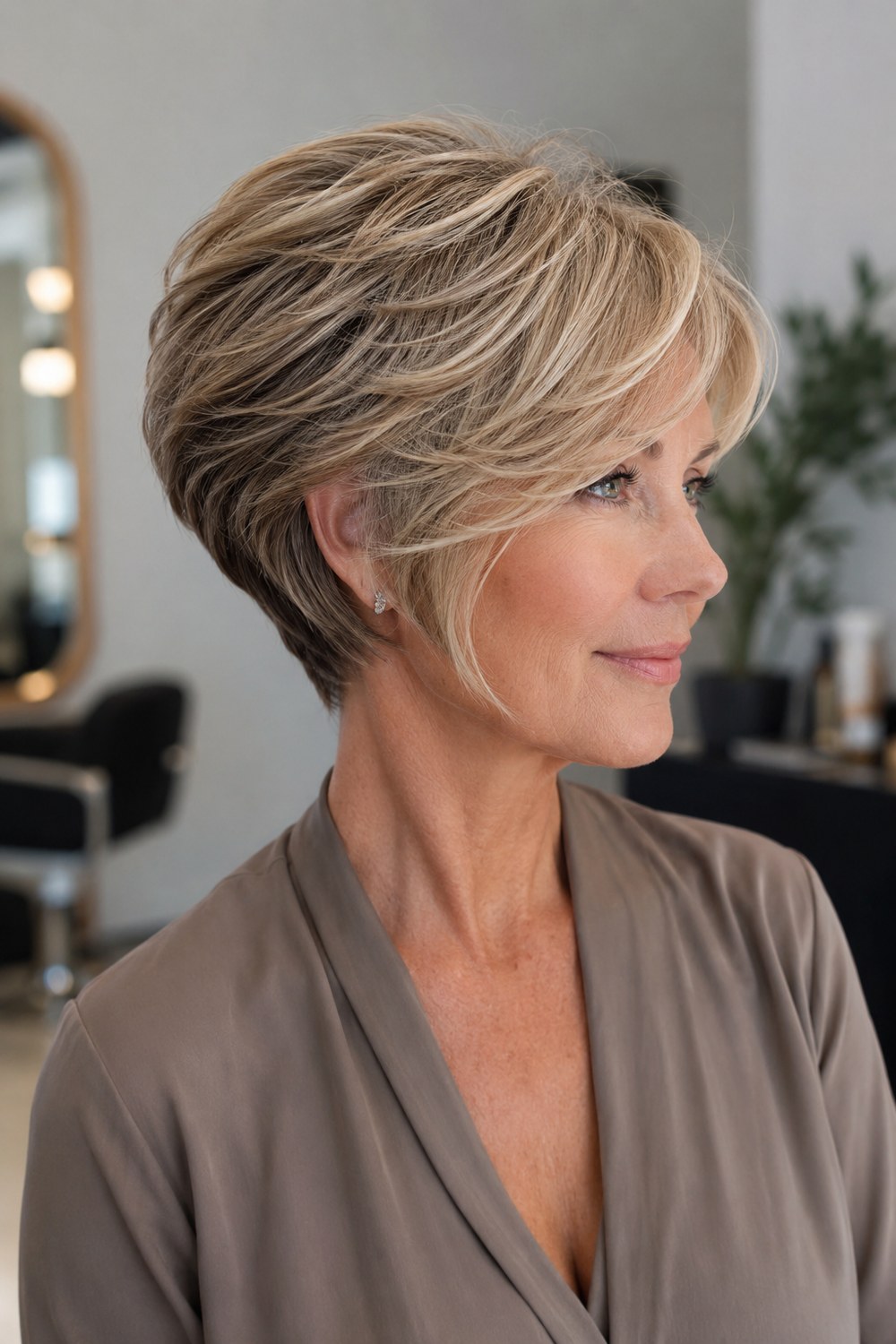
11. Stacked Pixie Bob with Long Front Pieces
A graduated nape builds shape and lift at the back while longer front sections frame the face. This stacked pixie bob offers a polished profile without sacrificing softness around the jawline. It is a useful option when you want volume at the back but prefer to keep some length in front.
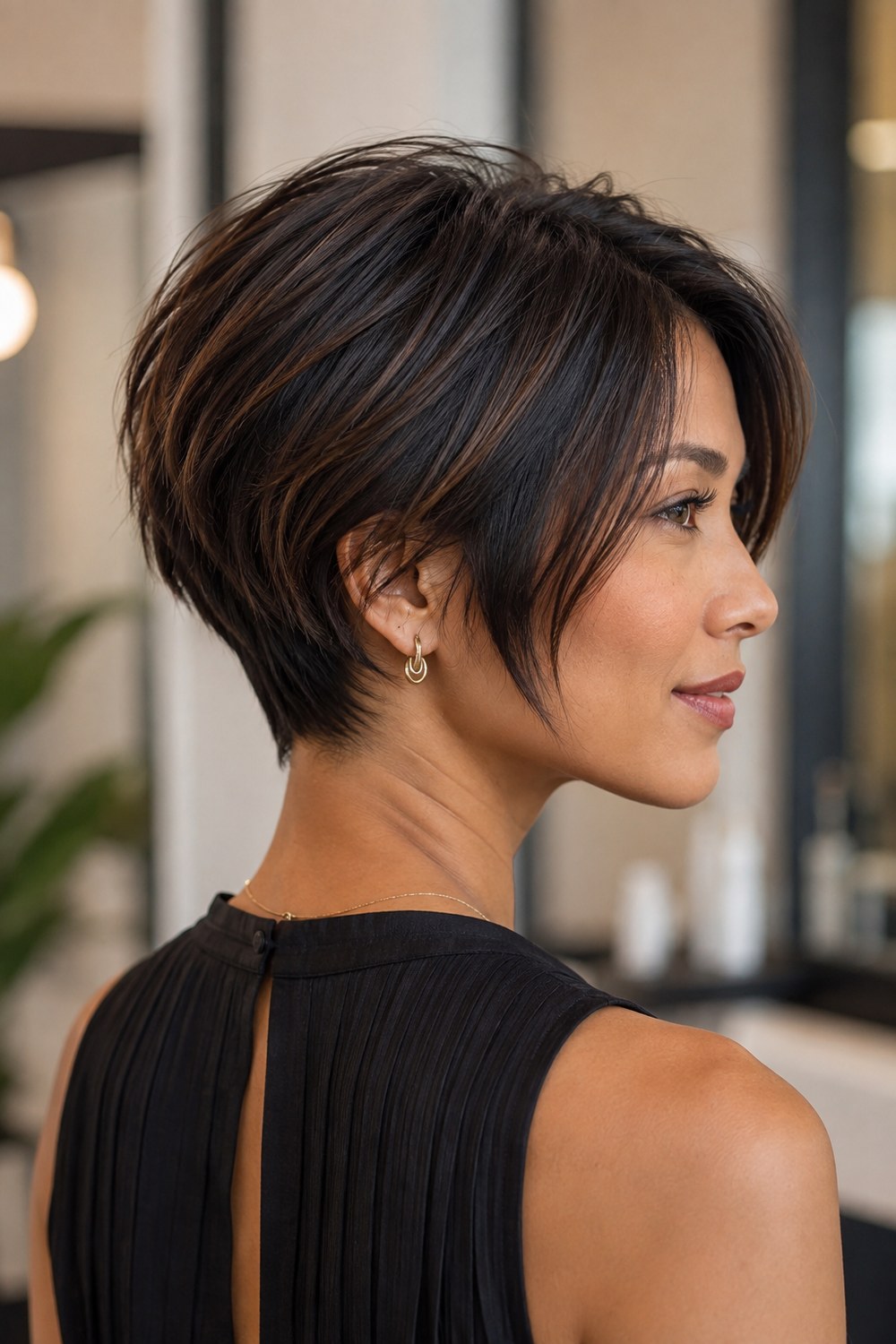
12. French-Inspired Pixie Bob with Wispy Fringe
Wispy fringe and soft layers make this short bob feel light and relaxed. The gentler edges can help soften angular facial features while still keeping the haircut compact. Subtle point-cutting through the ends prevents the perimeter from looking too rigid.
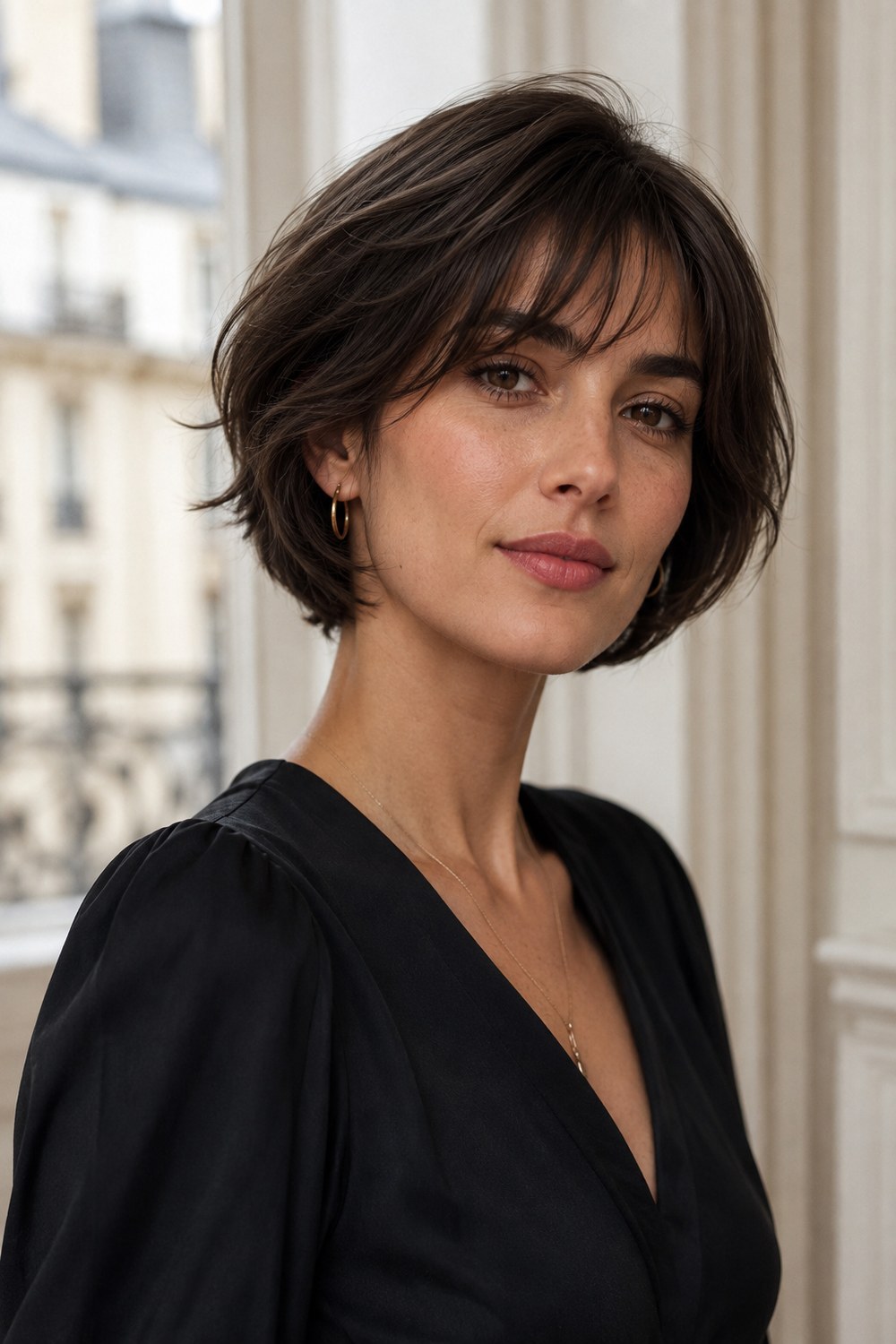
13. Ear-Length Silver Pixie Bob
An ear-length pixie bob creates a stronger cropped effect and keeps the neckline clearly exposed. The side-swept fringe adds softness to the shorter silhouette, while neatly tapered sides maintain a clean finish. This length is ideal if you want a true pixie feel with a little extra movement on top.
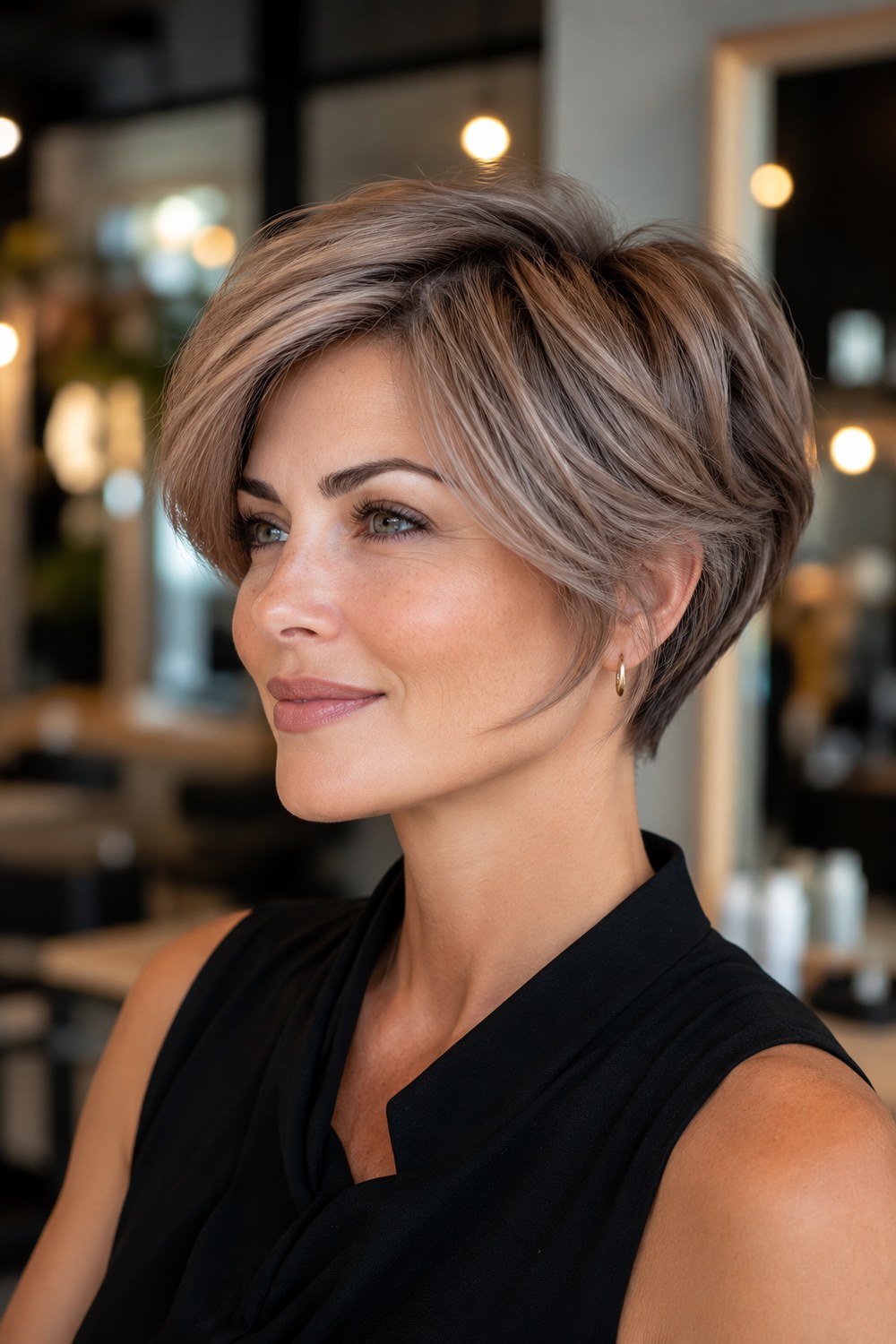
14. Softly Stacked Silver Pixie Bob
Internal layering helps this stacked pixie bob control fullness around the sides and nape. The rounded shape keeps the cut polished while preventing thick hair from becoming too bulky. Ask for careful weight removal rather than excessive thinning so the ends still look full.
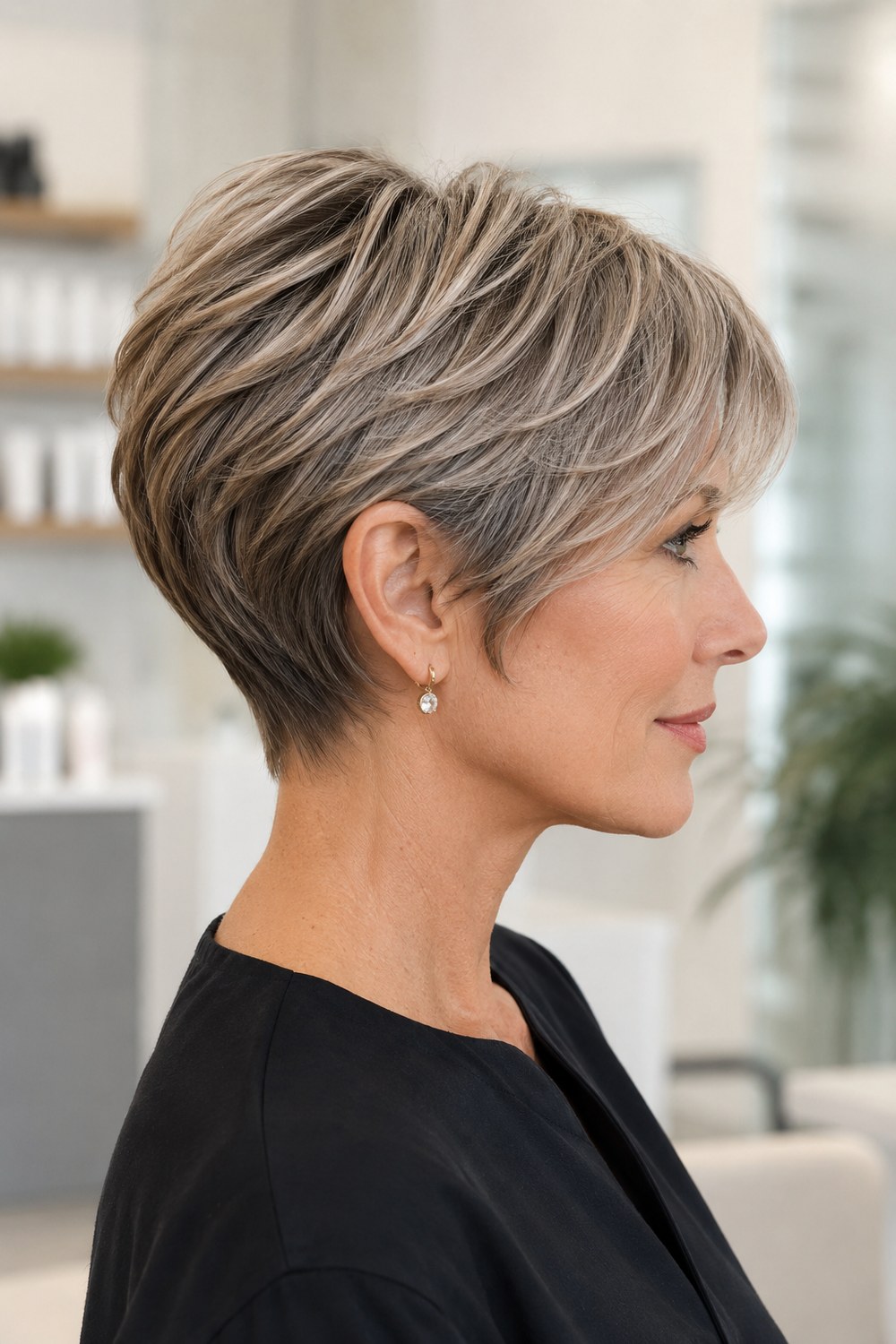
15. Modern Asymmetrical Pixie Bob with Diagonal Fringe
A long diagonal fringe creates strong direction across the face, while the shorter side is closely tapered for contrast. This modern asymmetrical shape looks defined without requiring the entire haircut to be extremely short. A smoothing cream can keep the longer fringe sleek and controlled.
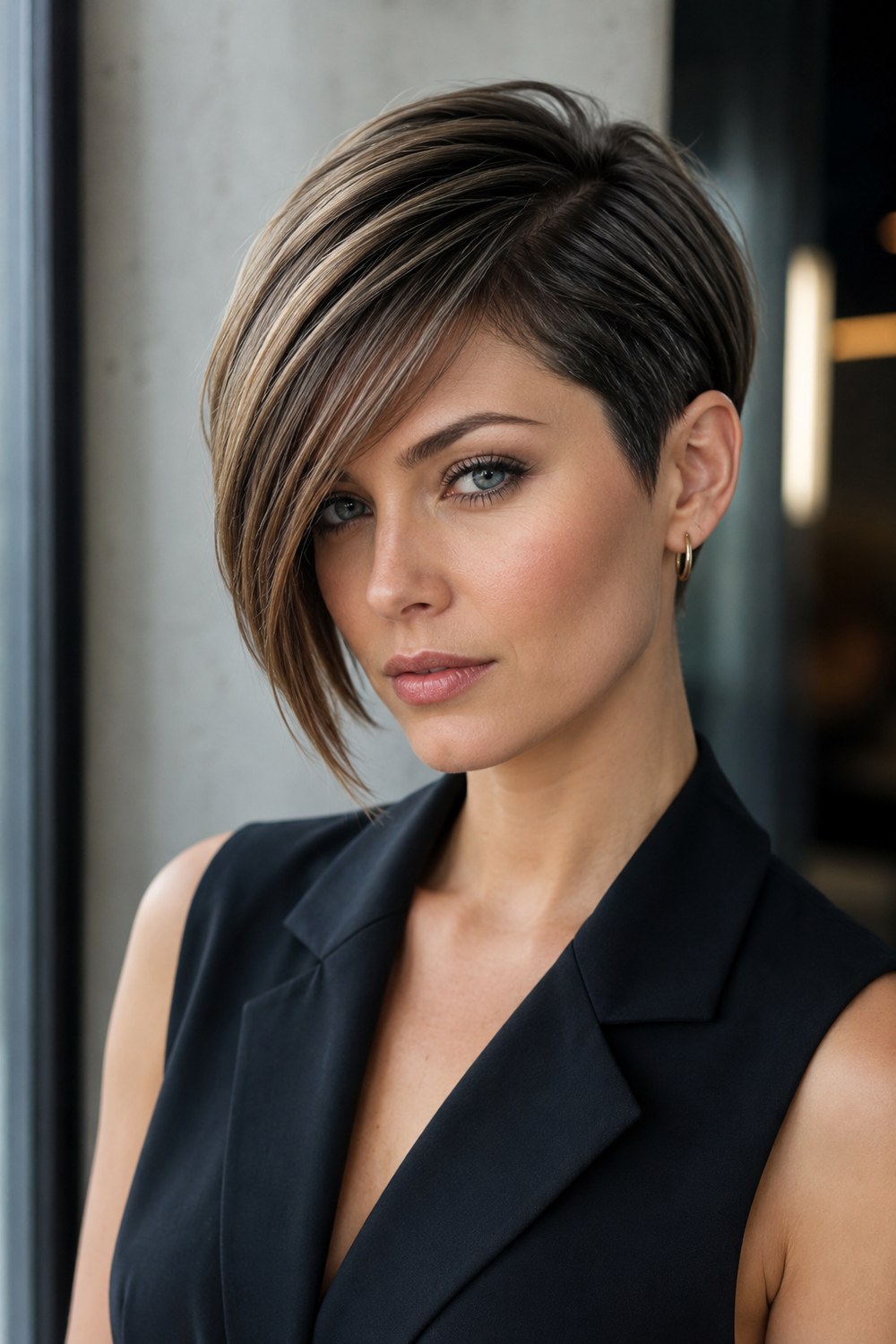
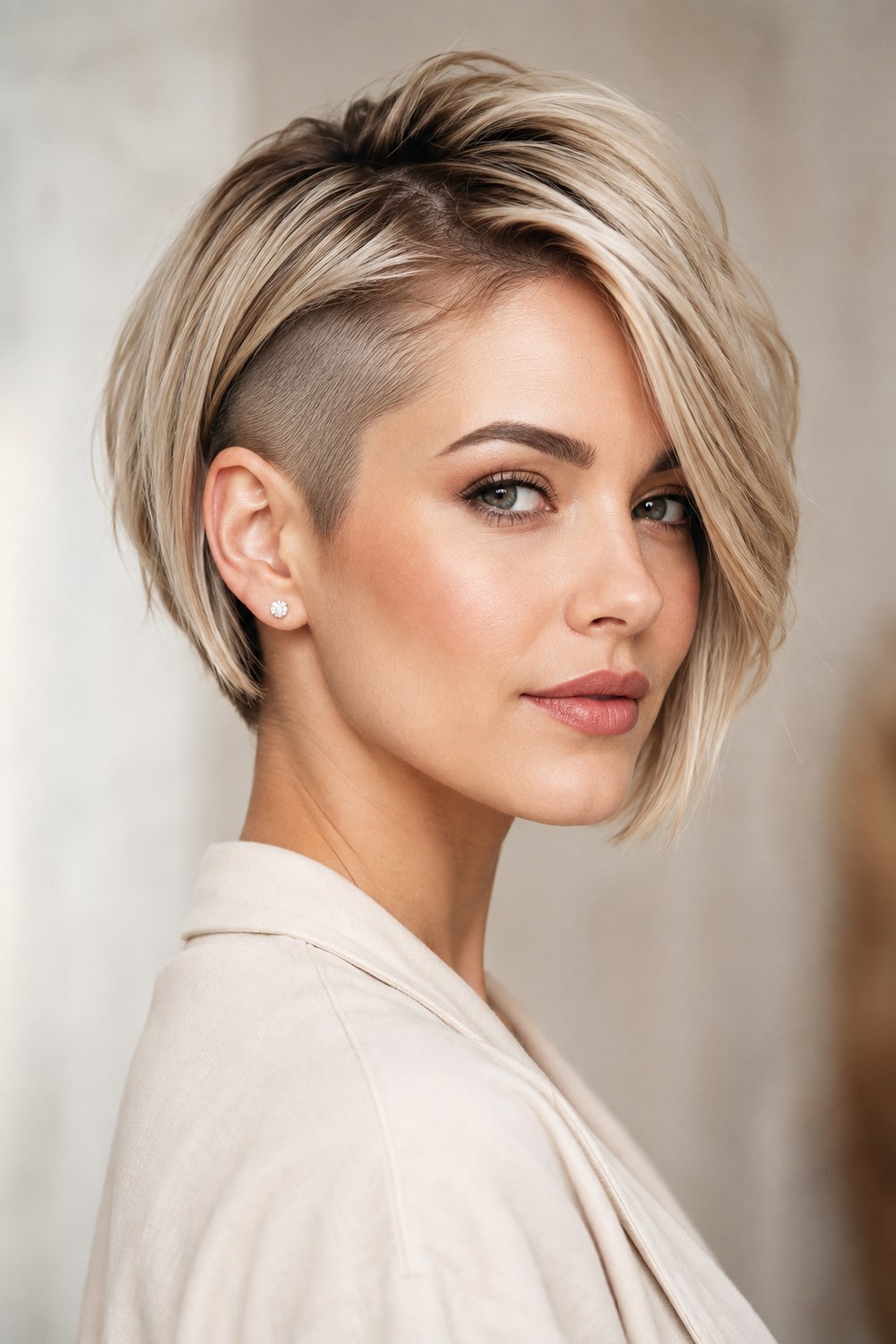
16. Blonde Undercut Pixie Bob
A closely shaved side creates a bold contrast with the longer swept layers on top. The undercut removes weight and makes the upper section appear more prominent, which works especially well with dense hair. Because the shaved section grows out quickly, this version usually needs more frequent maintenance.
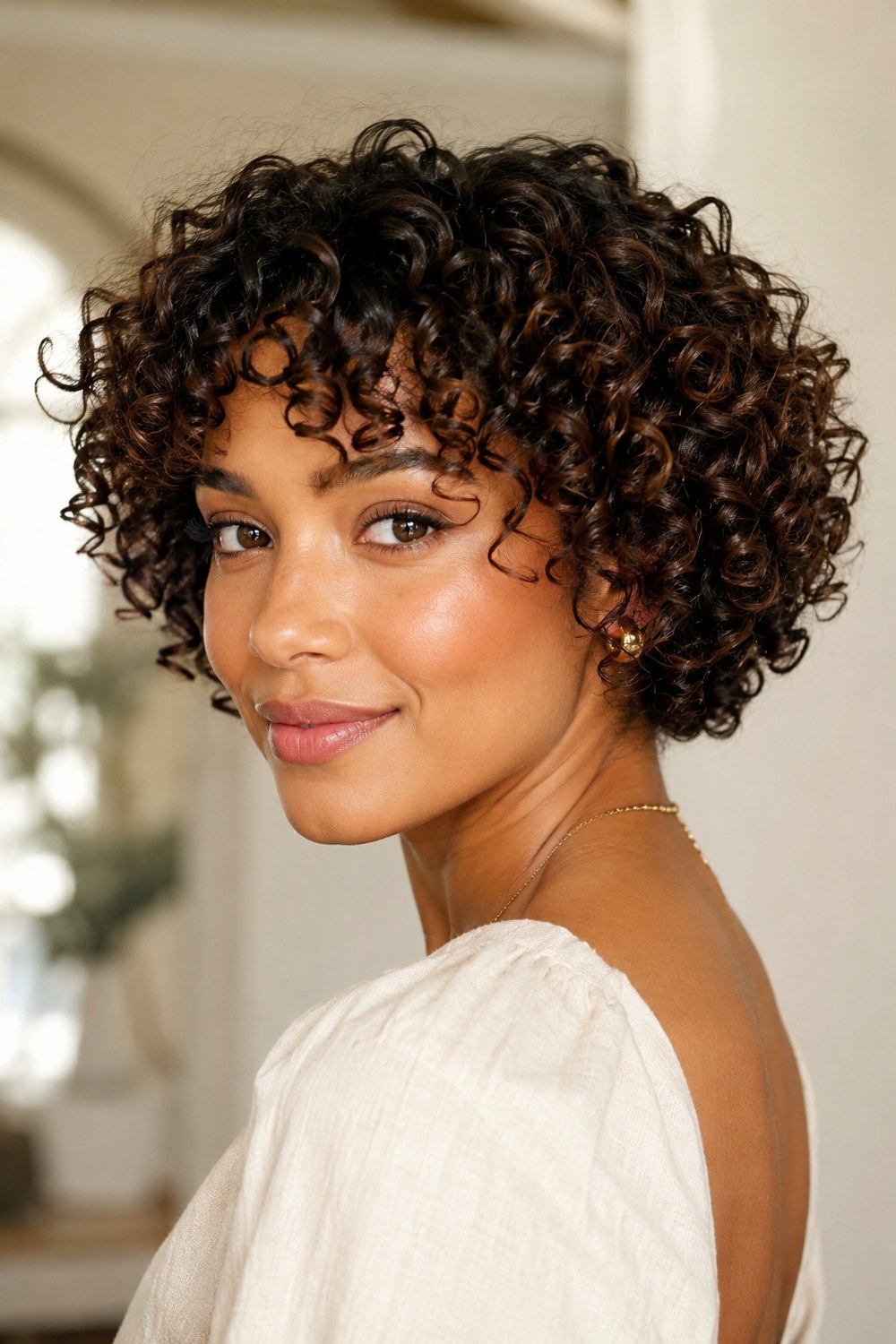
17. Soft Short Curly Bob
This short curly bob keeps enough length around the ear and jaw to create a softer finish than a very cropped pixie. Defined curls add natural movement, while the rounded outline helps the style remain balanced from the front and sides. Leaving a little extra length during the cut can help compensate for curl shrinkage.
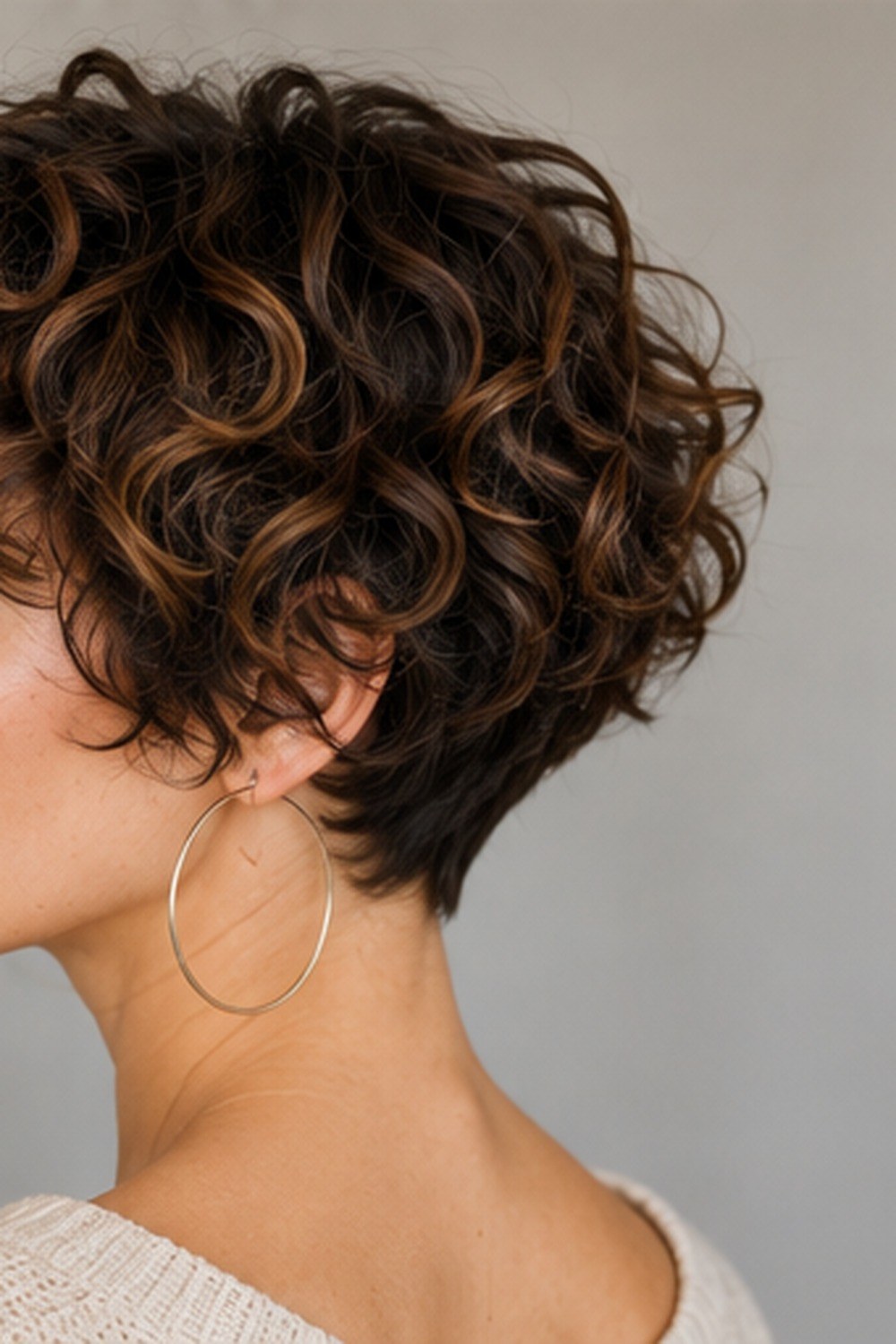
18. Curly Pixie Bob with a Tapered Nape
Layered curls create controlled fullness through the crown and sides while the tapered nape keeps the back neat. This shape allows natural texture to remain visible without letting the silhouette become overly bulky. A stylist experienced with curls can adjust the layers according to shrinkage and density.
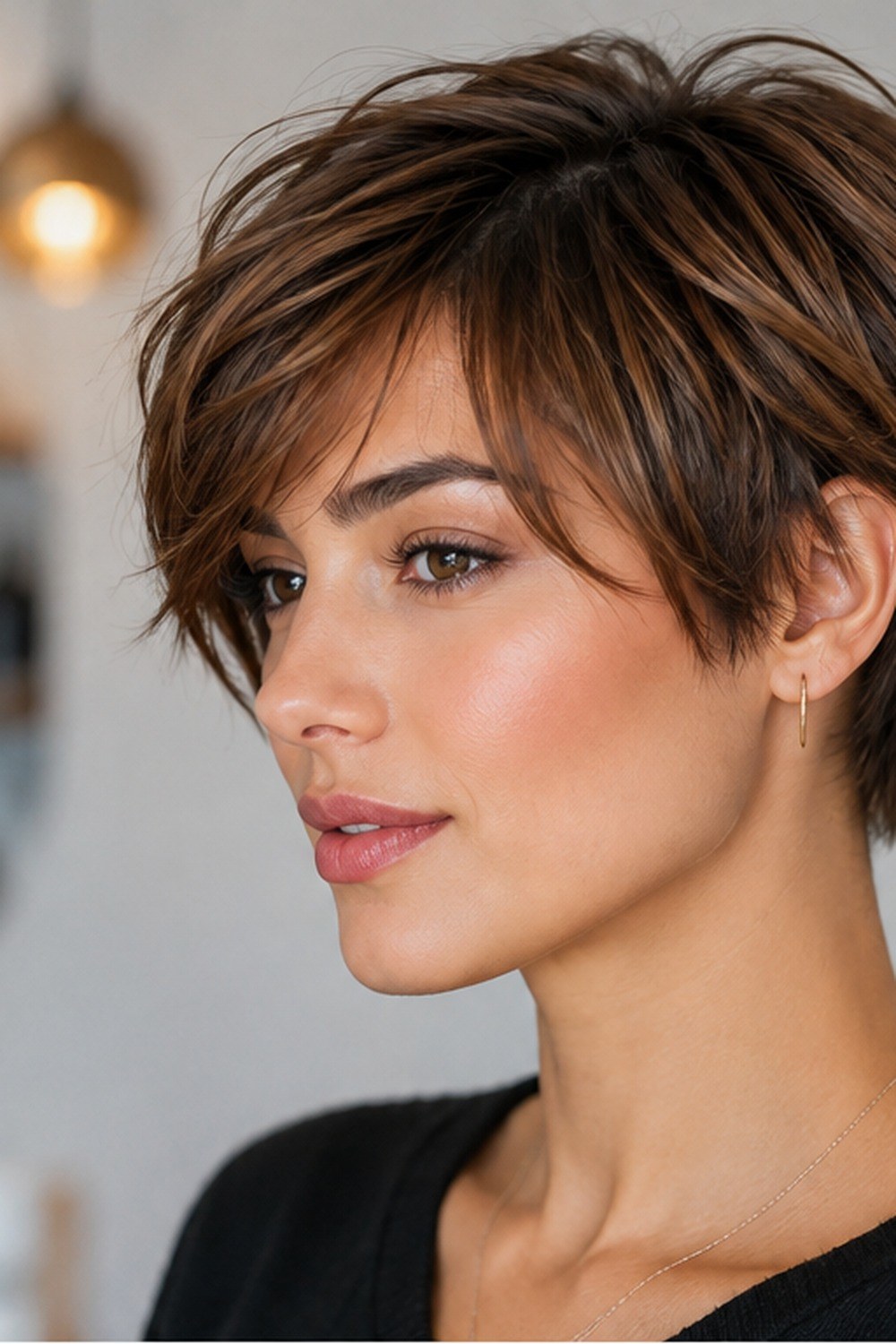
19. Warm Brown Highlighted Textured Pixie Bob
Warm brown highlights bring extra dimension to the textured layers of this pixie bob. The side-swept fringe softens the front, while a gently tapered nape keeps the back clean and manageable. This is a versatile option if you want texture and color without an extreme cut.
20. Tousled Choppy Pixie Bob
Choppy crown layers and longer side pieces create a casual, undone finish. The extra texture gives the haircut movement from multiple angles while still keeping the overall length short. Twist a few dry sections with your fingers and a small amount of styling paste to define the piecey effect.
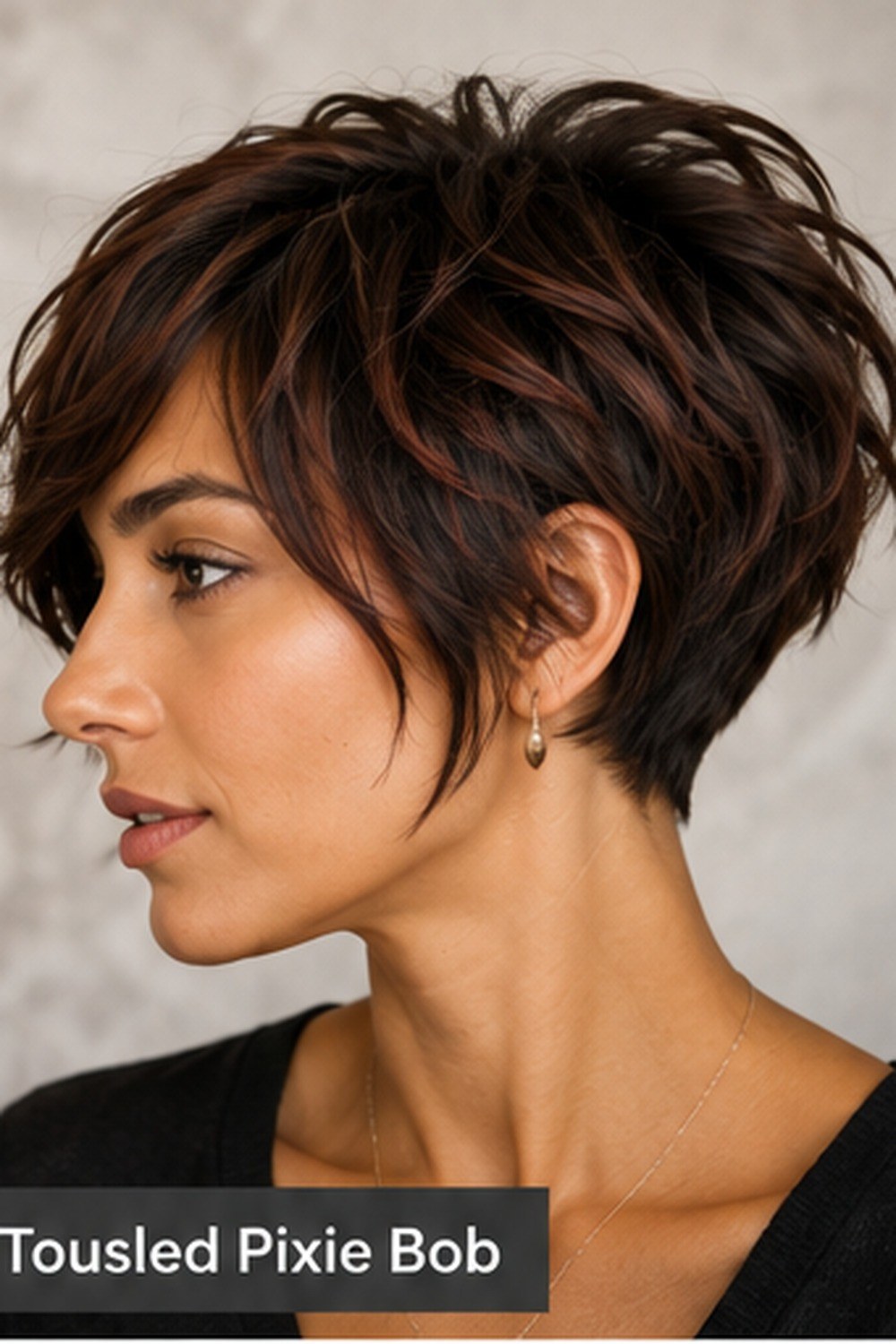
21. Layered Blonde Pixie Bob for Long Faces
Fuller sides and a side-swept fringe help create balance for a longer face shape. The layers add width through the sides rather than concentrating too much height at the crown. Keeping the silhouette soft and slightly rounded can make the proportions feel more balanced.
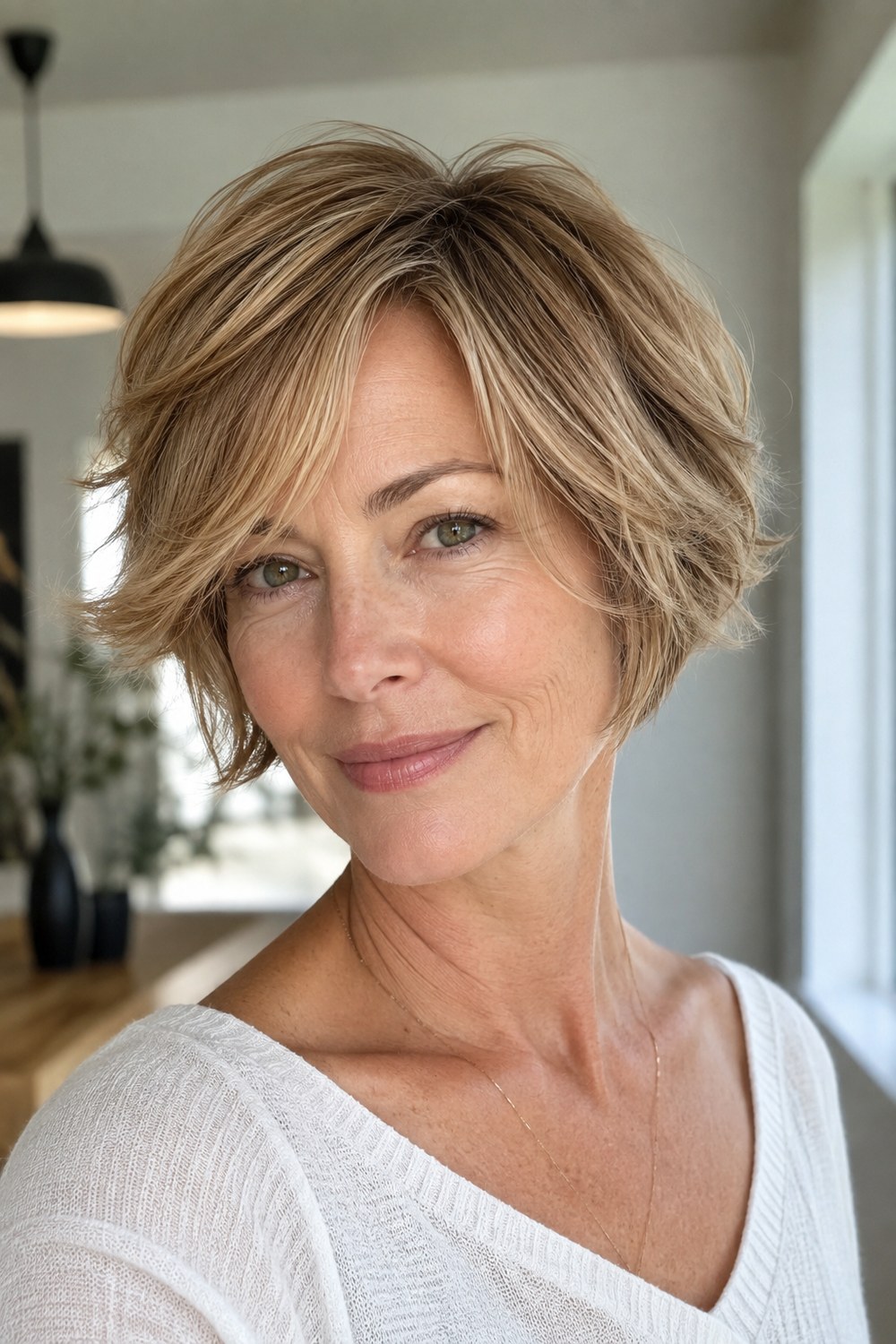
22. Rounded Brunette Pixie Bob for Heart-Shaped Faces
Jawline length and curtain fringe help balance a wider forehead with a narrower chin. The rounded brunette shape keeps some visual weight around the lower part of the face for a softer proportion. Blending the fringe into the side layers makes the transition look natural.
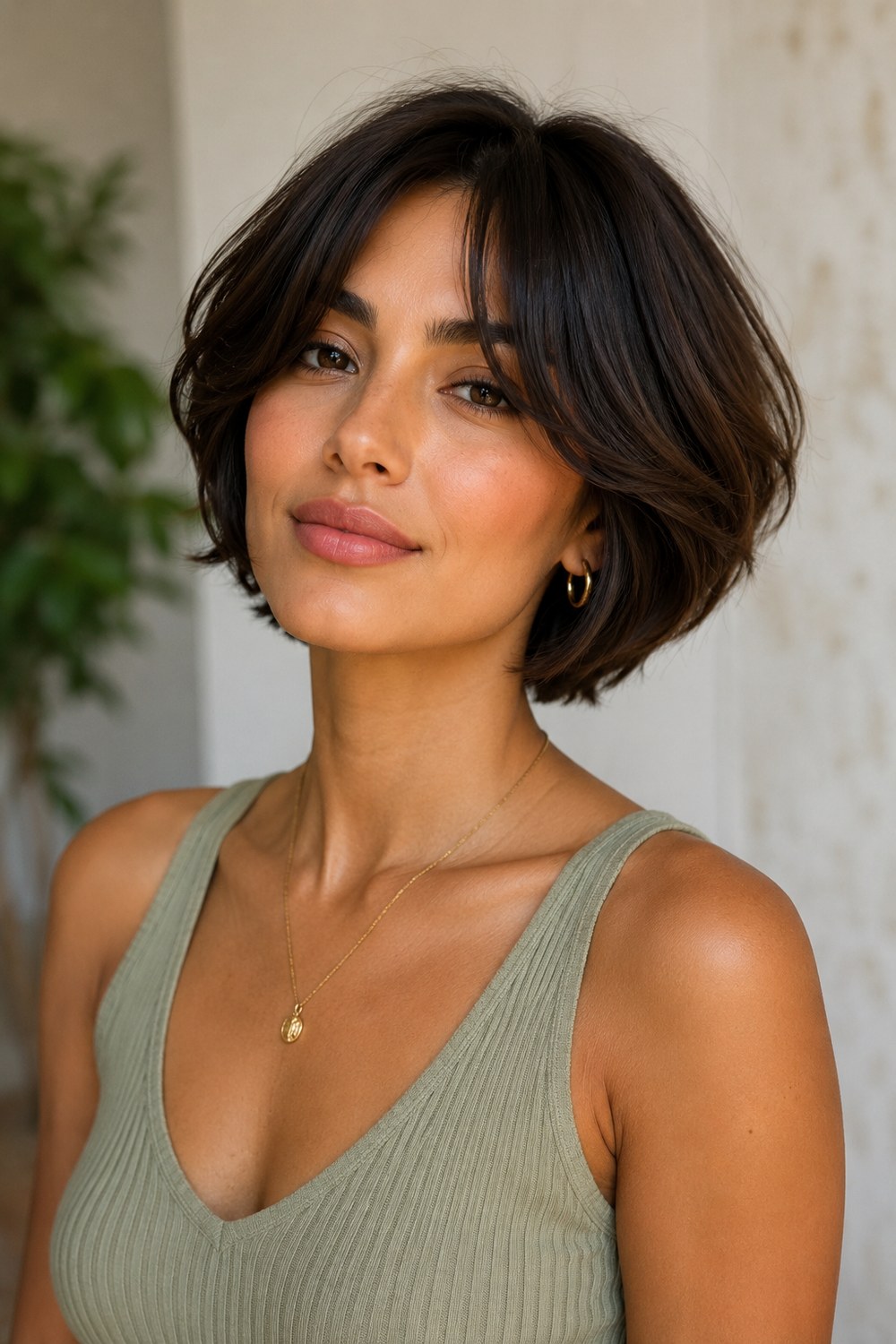
23. Tousled Wavy Pixie Bob
Airy layers allow natural waves to move freely instead of being forced into a rigid shape. The textured fringe follows the hair’s natural bend, creating an effortless finish that works well with light mousse or curl cream. Diffuse on low heat or let the hair air-dry to preserve the wave pattern.
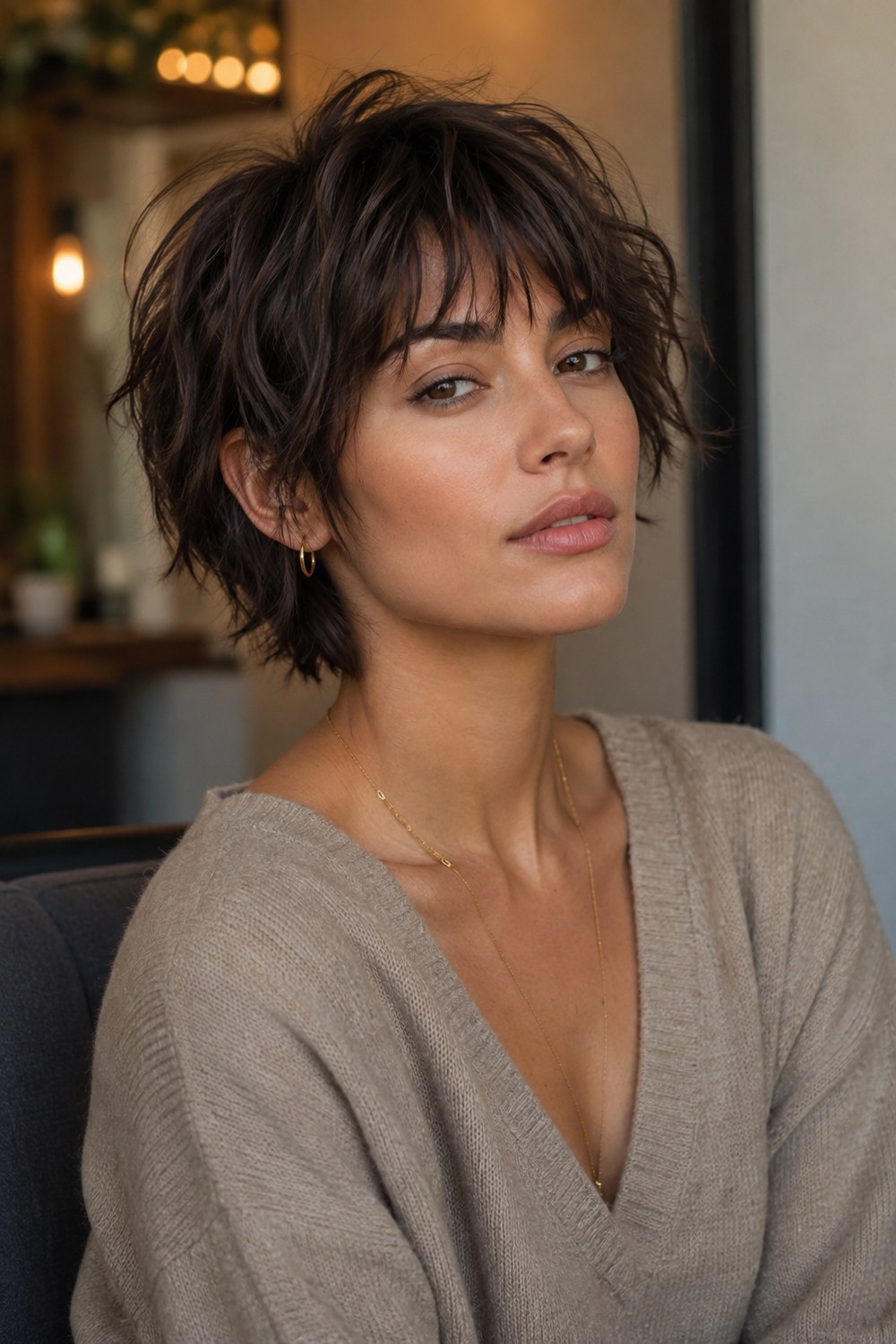
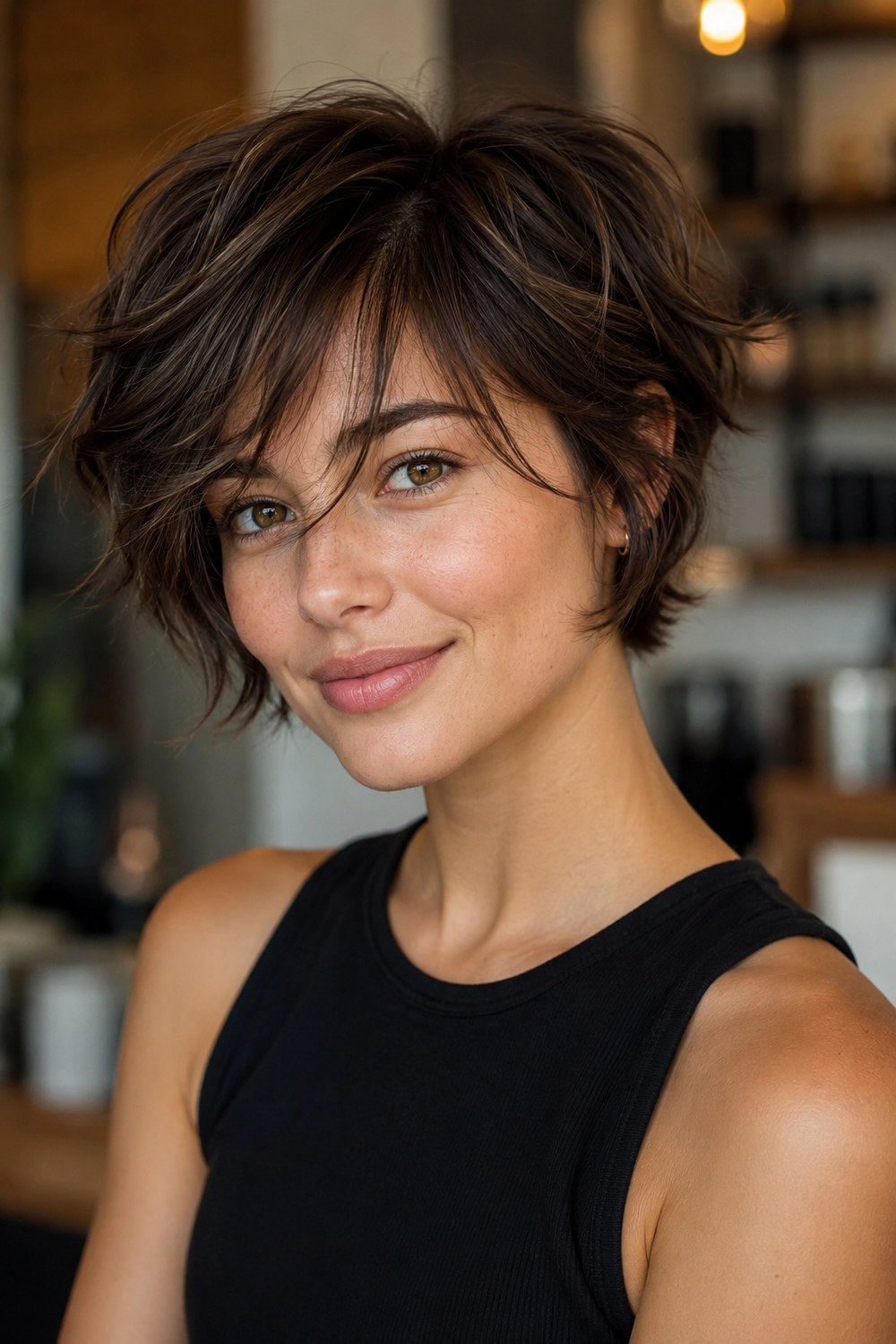
24. Classic Tapered Brunette Pixie Bob
This classic version keeps a longer crown and softly swept fringe while the nape is neatly shortened. The taper gives the haircut a clean outline without making it look as cropped as a traditional pixie. It is easy to part, tuck behind the ear, or style with gentle crown lift.
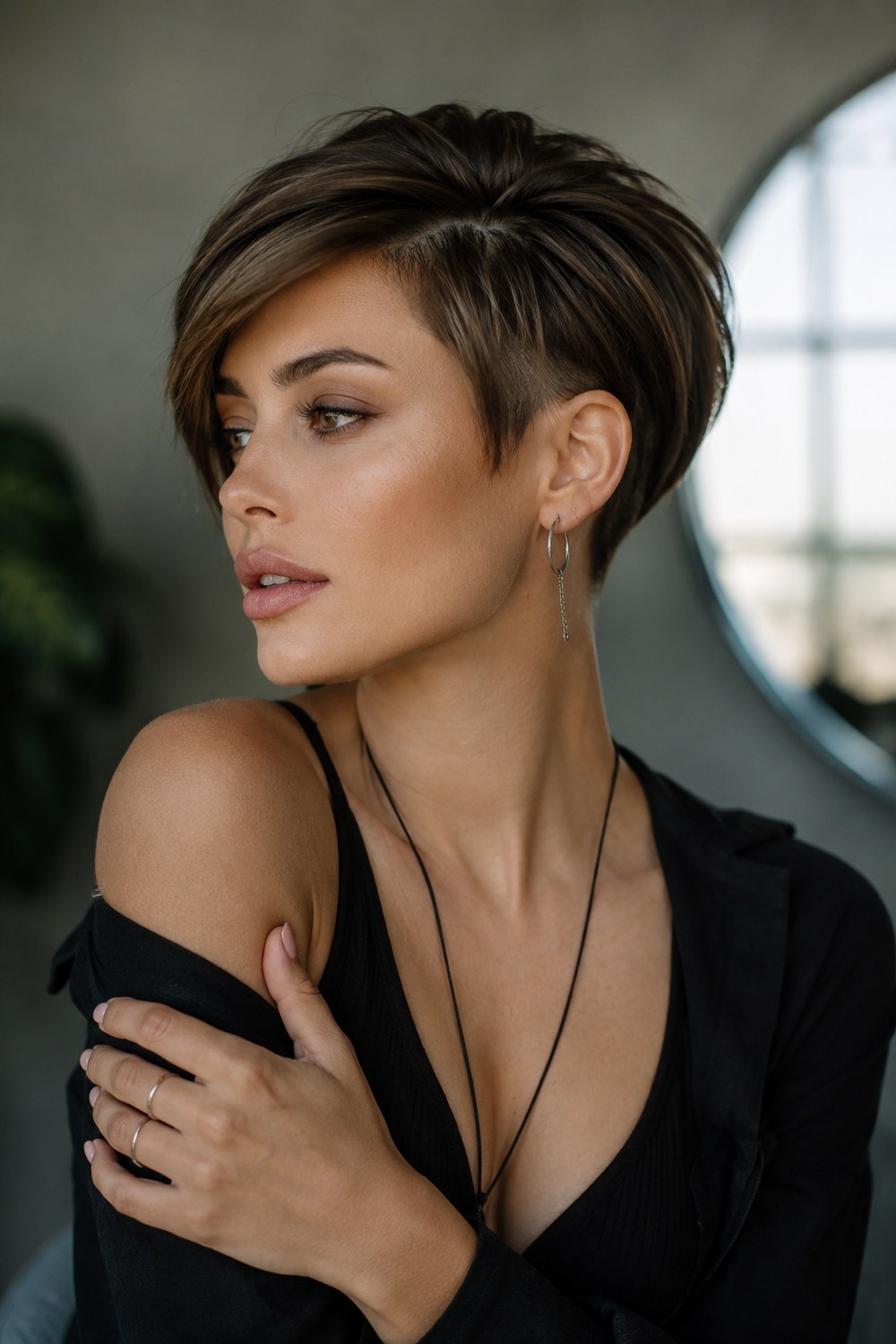
25. Dark Undercut Pixie Bob with Textured Top
A short shaved side contrasts with a longer textured top and side-swept styling. The undercut reduces bulk while the longer upper layers preserve movement and styling flexibility. This option works best if you are comfortable maintaining the shaved area more frequently than a standard pixie bob.
Choosing the Right Pixie Bob Shape
Your best pixie bob balances face shape, hair behavior, and the amount of styling you want to do. The cut’s length, layers, fringe, and volume placement can change how your features appear and how easily the style holds its shape.
Face Shape Considerations
For a round face, choose a slightly longer pixie bob with height at the crown and angled sides. A deep side part or sweeping fringe adds direction, while excessive width at the cheeks can make the face look fuller.
A square face often suits softened layers, wispy ends, and a side-swept fringe. These details reduce the appearance of sharp corners without hiding your natural structure. Avoid a rigid, jaw-length line if you want a gentler finish.
If you have an oval face, you can wear most pixie bob shapes. Try a blunt perimeter for a polished look, choppy layers for movement, or a short fringe for a more graphic style.
For a heart-shaped face, keep some length around the jaw and choose side-swept or curtain-style fringe. This helps balance a wider forehead with a narrower chin. A long face benefits from fuller sides, textured fringe, and less height at the crown.
Hair Texture and Density
Straight, fine hair usually benefits from a clean perimeter and restrained layering. A blunt or softly stacked shape can make the ends appear fuller, while too many layers may reduce visual density. Lightweight styling products help preserve movement without flattening the roots.
Wavy hair works well with a textured pixie bob that follows its natural bend. Ask for layers that remove bulk without creating uneven volume. Apply mousse or a light curl cream to damp hair, then let the shape air-dry or use a diffuser.
Thick hair may need internal layering or subtle debulking, particularly around the sides and nape. Curly hair requires a stylist who understands shrinkage; leave extra length if you want the finished cut to reach the jaw or neck.
Length and Fringe Options
An ear-length pixie bob creates the strongest cropped effect and keeps the neckline exposed. A chin-length version looks softer and offers more styling flexibility, including tucked sides and loose waves.
A short fringe gives the cut a modern, defined finish but requires frequent trims. A side-swept fringe is easier to grow out and suits many face shapes, while curtain fringe adds softness and blends into longer front layers.
Consider your daily routine before choosing the perimeter. A stacked nape creates shape and lift, an asymmetrical front adds visual interest, and a blunt line delivers a sharper, more structured appearance.
Styling and Maintaining Your Cut
Your pixie bob looks polished when you match your technique to its shape, use lightweight products, and protect the cut’s graduated layers. Regular trims preserve the back and sides, while simple adjustments help you manage texture, thickness, and natural growth.
Daily Styling Techniques
Start with towel-dried hair and apply a small amount of lightweight mousse or volumizing spray to the roots. Use a blow dryer with a concentrator nozzle, directing air downward for a smooth finish or lifting the roots with your fingers for added height.
For a sleek style, brush the longer front sections into place while they dry, then smooth the ends with a small flat iron. Keep the tool below 350°F (175°C) and move it quickly to reduce heat exposure.
For texture, work a pea-sized amount of styling paste through dry hair. Twist selected pieces with your fingers, concentrating on the crown and ends. If your hair has natural waves, use a diffuser on low heat and avoid brushing after drying.
Recommended Products and Tools
Choose products that support movement rather than weighing down the shorter layers.
- Fine hair: Use volumizing mousse or root-lifting spray.
- Thick hair: Try a lightweight smoothing cream to control bulk.
- Wavy hair: Apply curl cream, then scrunch and diffuse.
- Textured finishes: Use matte paste or flexible wax sparingly.
- Heat styling: Apply a heat protectant before using hot tools.
A small round brush can shape the front and crown, while a narrow flat iron refines longer pieces. A diffuser helps preserve waves, and a fine-tooth comb works well for precise parting without disturbing the overall texture.
Salon Visit Timing
Book a trim every six to eight weeks to maintain the graduated back, clean neckline, and balance between the pixie and bob lengths. If your style has a sharp asymmetry, undercut, or heavily textured sides, you may need an appointment closer to every four to six weeks.
Ask your stylist to reassess the weight at the back and around the ears during each visit. These areas can grow out quickly and change the haircut’s proportions.
Between appointments, avoid cutting the fringe or neckline yourself. A stylist can preserve the intended shape while adjusting the length to account for shrinkage, wave pattern, or changes in how your hair sits.
Frequently Asked Questions
What is the difference between a pixie bob and a traditional pixie cut?
A pixie bob combines the cropped shape of a pixie with some of the length and softness of a bob. It usually has longer sections around the front, sides, or nape, making it more versatile for styling. A traditional pixie cut is generally shorter around the sides and back with a more closely cropped silhouette.
Which face shapes suit a pixie bob haircut best?
A pixie bob can work well with most face shapes when the length, fringe, and layers are adjusted properly. Longer front sections and side-swept bangs can soften square or heart-shaped faces, while extra height at the crown can help balance round faces. For longer faces, fuller sides and less height on top usually create a more balanced look.
Can a pixie bob work well with straight hair?
Yes. Straight hair shows the structure of a pixie bob especially well, including the layered crown, clean neckline, and face-framing pieces. A blunt perimeter can make fine hair appear fuller, while soft layers can add movement without removing too much density.
Is a pixie bob suitable for curly or wavy hair?
Yes. Wavy and curly hair can give a pixie bob natural movement, volume, and texture. The cut should be shaped with the hair’s natural curl pattern and shrinkage in mind, so choosing a stylist experienced with textured hair can help achieve a more balanced result.
How do I style a pixie bob for a modern, textured look?
Apply a small amount of volumizing mousse or styling cream to damp hair and blow-dry while shaping the hair with your fingers. Once dry, use a small amount of matte paste or lightweight wax on the ends to create separation and definition. For naturally wavy or curly hair, scrunch the hair and use a diffuser on low heat.
How often should a pixie bob be trimmed?
Most pixie bob haircuts benefit from a trim every 6–8 weeks to maintain the shape, neckline, and balance between the shorter and longer sections. More precise styles, such as undercuts or asymmetrical pixie bobs, may need trimming every 4–6 weeks.
Can a pixie bob be customized for fine hair?
Yes. For fine hair, a fuller perimeter, subtle layering, and minimal thinning can help create the appearance of more volume. Lightweight volumizing products can also add lift without making the hair feel heavy.
Can a pixie bob work for thick hair?
Yes. Thick hair often benefits from internal layering or selective texturizing to remove excess bulk while keeping the overall shape full. Your stylist can adjust the weight around the sides, crown, and nape to make the haircut easier to manage.
Are bangs a good choice with a pixie bob?
Bangs can work very well with a pixie bob. Side-swept bangs create a softer look, curtain bangs blend naturally into longer front layers, and short fringe gives the haircut a more defined, modern finish. The best option depends on your face shape, hair texture, and styling routine.


2 Comments
Pingback: 25 Bixie Cut Ideas That Look Trendy and Effortless in 2026 - Hair Mora Beauty
Pingback: 24 Pixie Cut Baddie Hairstyles Trending Right Now