



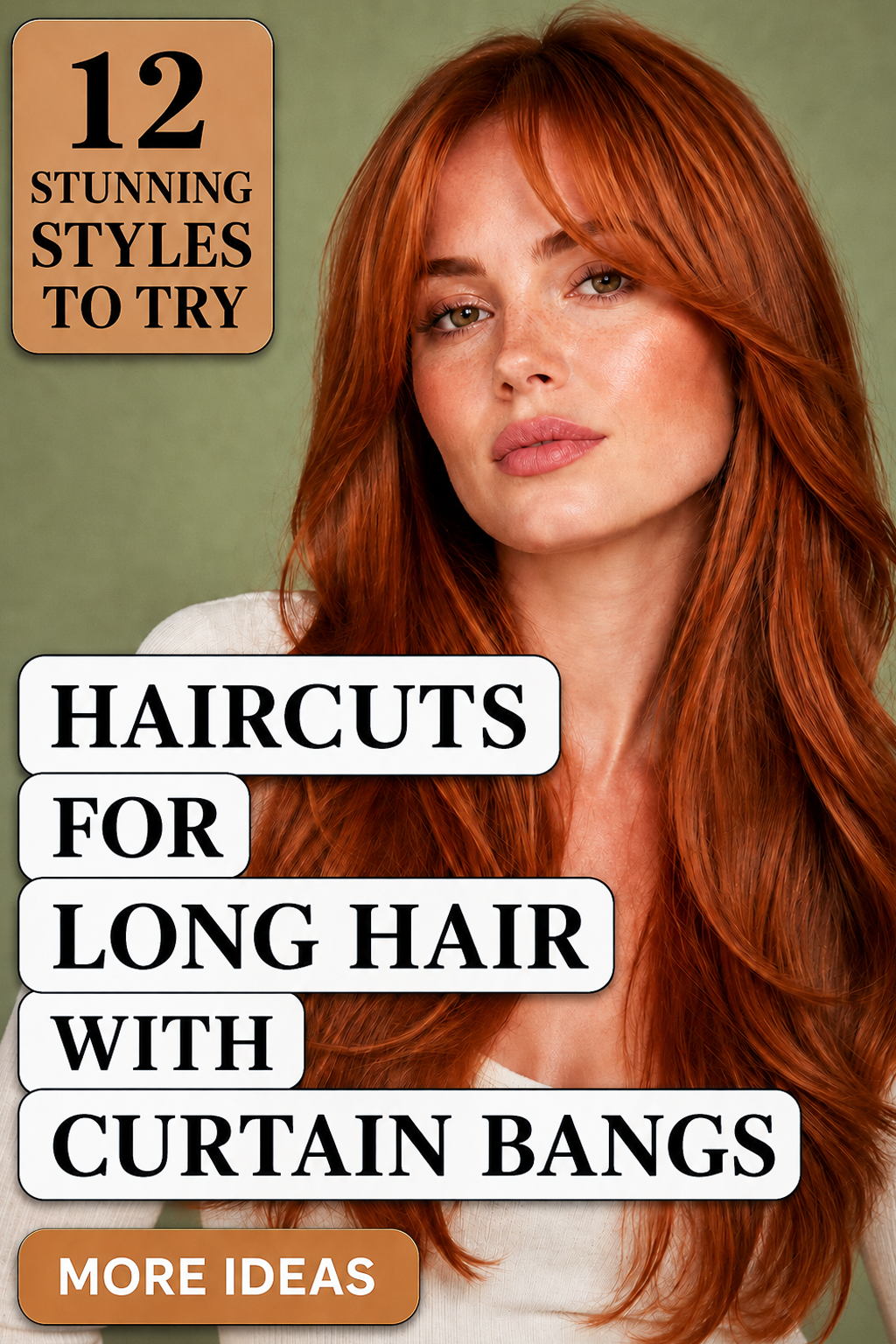
A haircut for long hair with curtain bangs gives you a noticeable change without sacrificing the length you have worked to grow. The fringe opens at the center, curves around the eyes and cheekbones, and gradually blends into the rest of the haircut. Because the sides remain longer than the middle, curtain bangs feel softer and more flexible than a solid straight-across fringe.
The most flattering version depends on your face shape, hair density, natural texture, and the amount of styling you want to do each morning. Fine hair often benefits from light, airy bangs and restrained layering, while thick hair may need invisible weight removal. Waves and curls require a longer starting point so the fringe can settle naturally after shrinkage.
Below are 12 curtain-bang looks for long hair, with guidance on which face shapes each style suits best. The focus is not just on hairstyle inspiration, but on choosing the right fringe length, width, and layering for your facial proportions.
Key Takeaways
- Keep the shortest center pieces long enough to split and sweep away from the face.
- Blend the outer edges of the bangs into cheekbone- or jaw-length layers.
- Choose the amount of layering according to your density, texture, and desired fullness.
- Dry curtain bangs first and direct them from side to side before shaping them away from the face.
1. Classic Long Layers With Soft Curtain Bangs
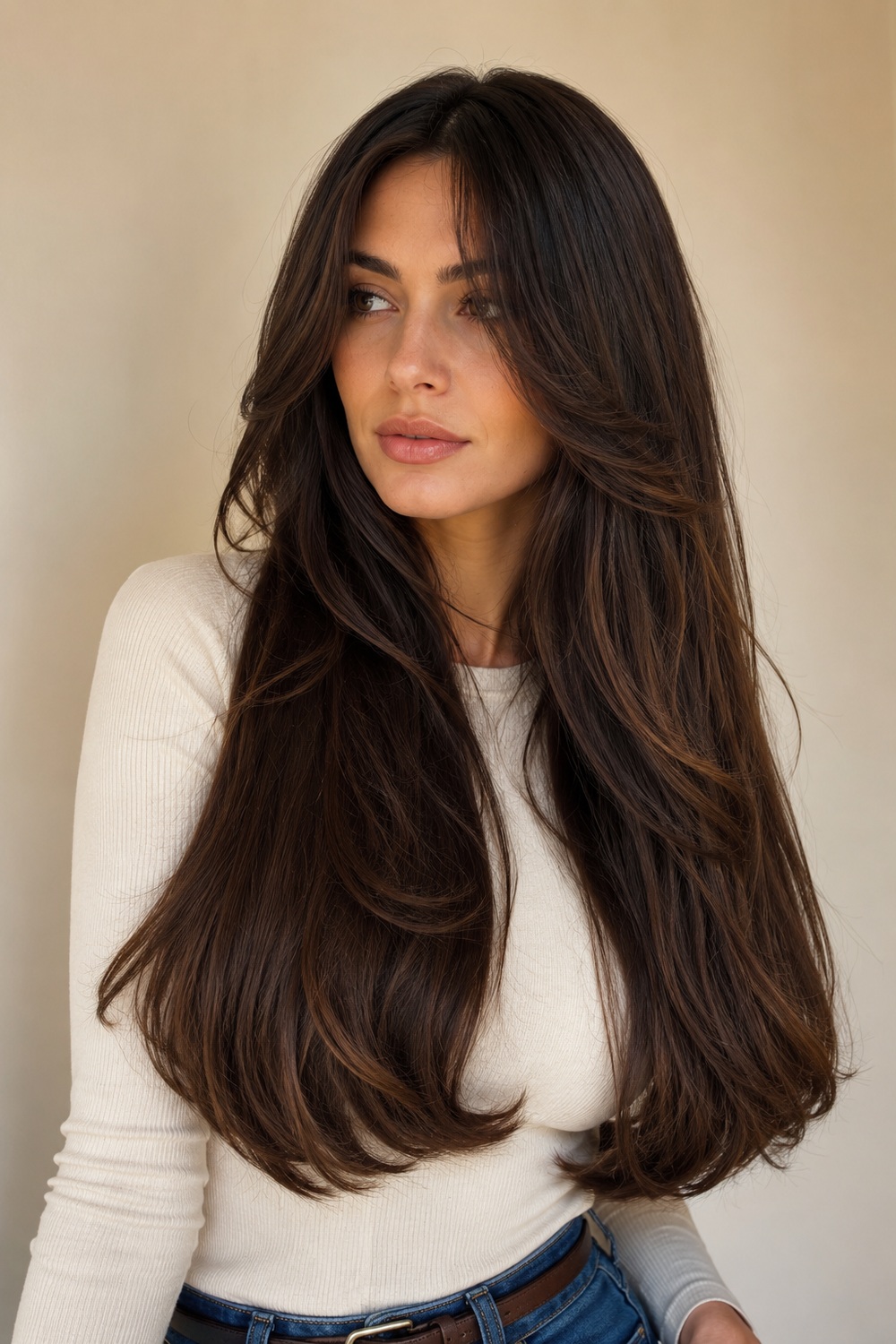

This classic combination is the safest starting point if you want movement while preserving fullness. Ask for curtain bangs that are slightly shorter near the center and gradually reach the cheekbones. Long layers should begin below the chin and continue through the ends, creating shape without producing a thin or overly feathered perimeter.
It suits straight to gently wavy hair and is especially useful for oval, round, and heart-shaped faces. Blow-dry the fringe forward first, move it from side to side to loosen the part, and then roll each half away from your face with a medium round brush.
2. Airy Curtain Bangs With a Voluminous Blowout
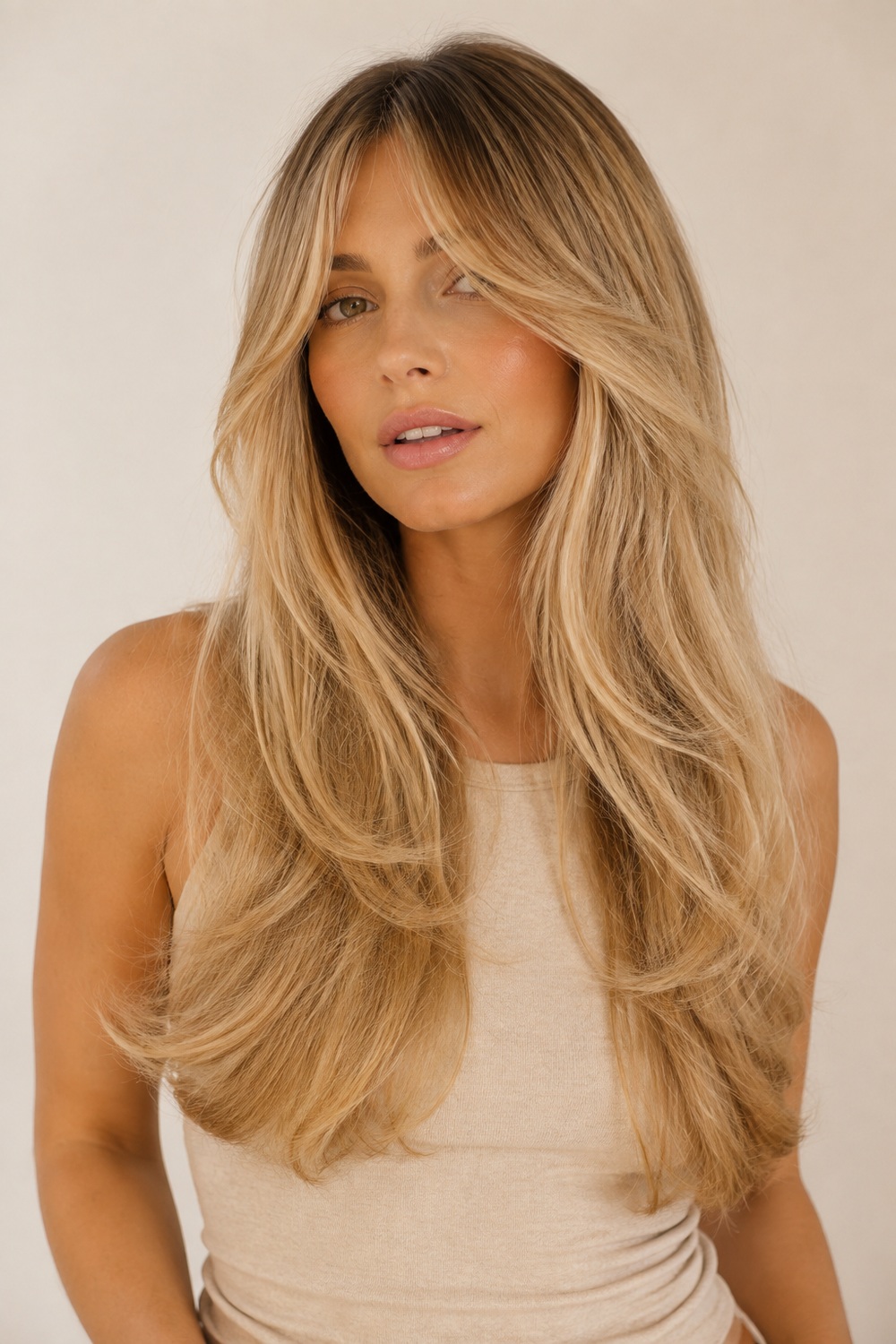
Airy curtain bangs create a light, lifted frame instead of a heavy fringe. They work beautifully with long feathered layers and a bouncy blowout, because the curve of the bangs continues through the sides. Ask the stylist to keep the center near eyebrow length and taper the sides toward the upper cheekbones.
Use a volumizing mousse at the roots and dry the bangs with a round brush. Large rollers placed away from the face help the front layers cool in a soft C-shape. This look is ideal for medium-density hair that holds volume without needing excessive product.
3. Sleek Straight Hair With Polished Curtain Fringe
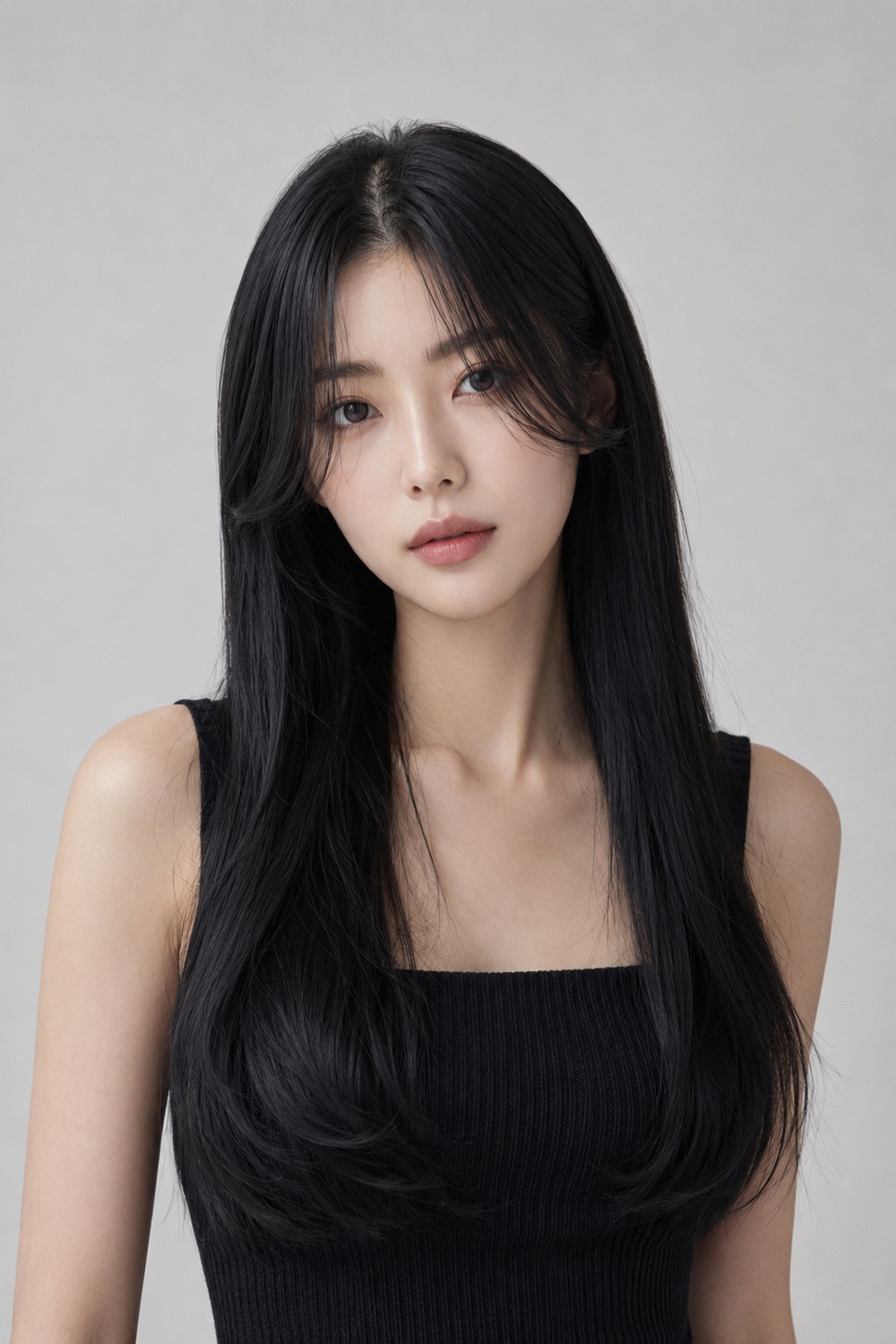
Straight hair shows every line in a haircut, so the transition between the fringe and the lengths should look seamless. A gentle U-shaped perimeter prevents very long hair from appearing boxy, while subtle front pieces allow the curtain bangs to melt into the sides.
Ask for minimal surface layering if thickness at the ends is important to you. Smooth the hair with a heat protectant and direct the flat iron slightly inward rather than pulling it poker-straight. A tiny amount of serum on the ends adds polish without separating the fringe.
4. Wavy Long Hair With Textured Curtain Bangs
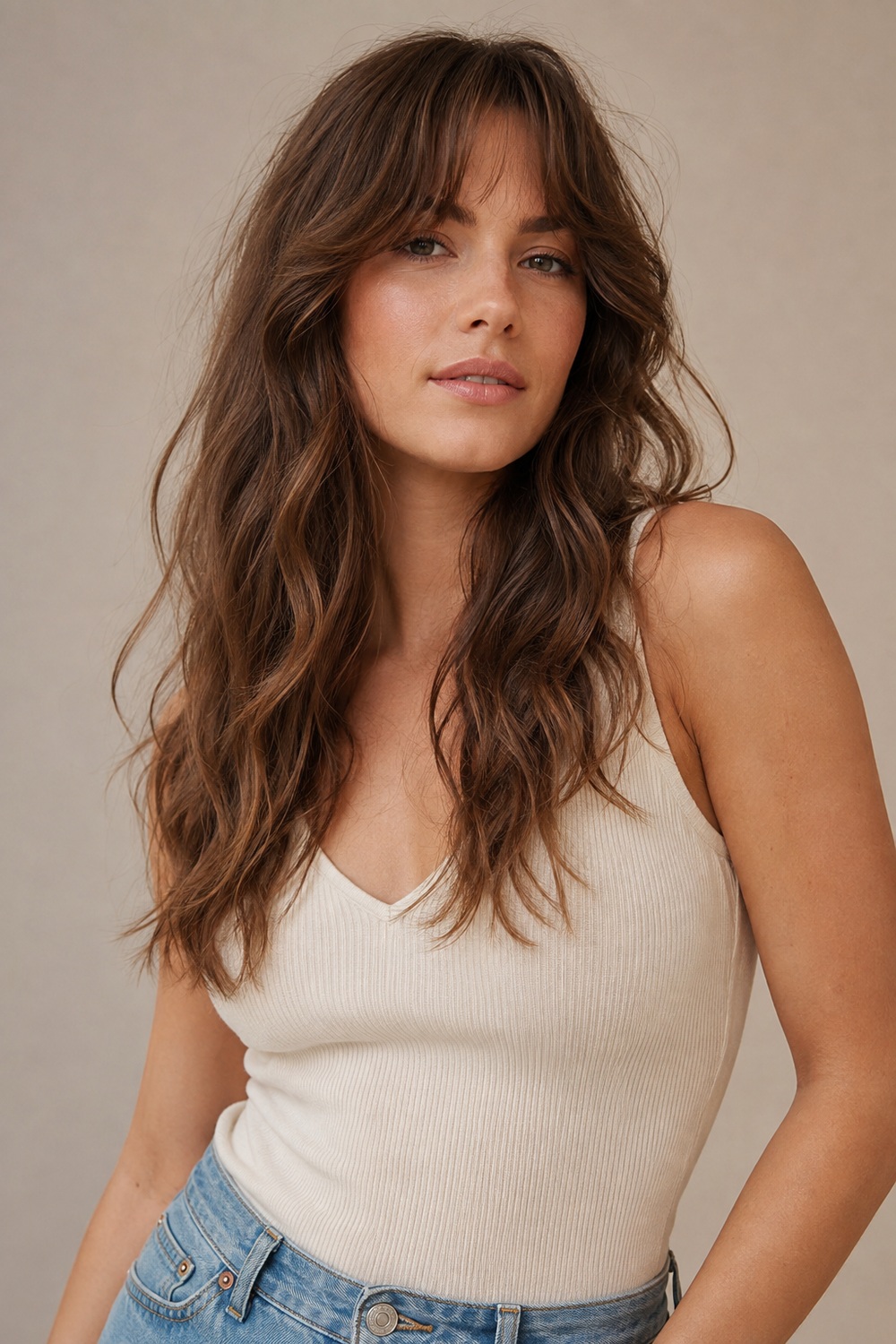
Natural waves give curtain bangs an effortless, lived-in finish. The fringe should be long enough to follow the wave pattern rather than spring above the eyebrows. Ask for soft point-cutting at the ends and blended layers that release weight around the face while keeping the lower lengths full.
Apply a lightweight wave cream to damp hair, twist each side of the fringe away from your face, and let it air-dry. If the bangs fall unevenly, refine only the front with a round brush or low-heat tool. Avoid heavy oils near the roots.
5. Curly Long Hair With Center-Opening Bangs
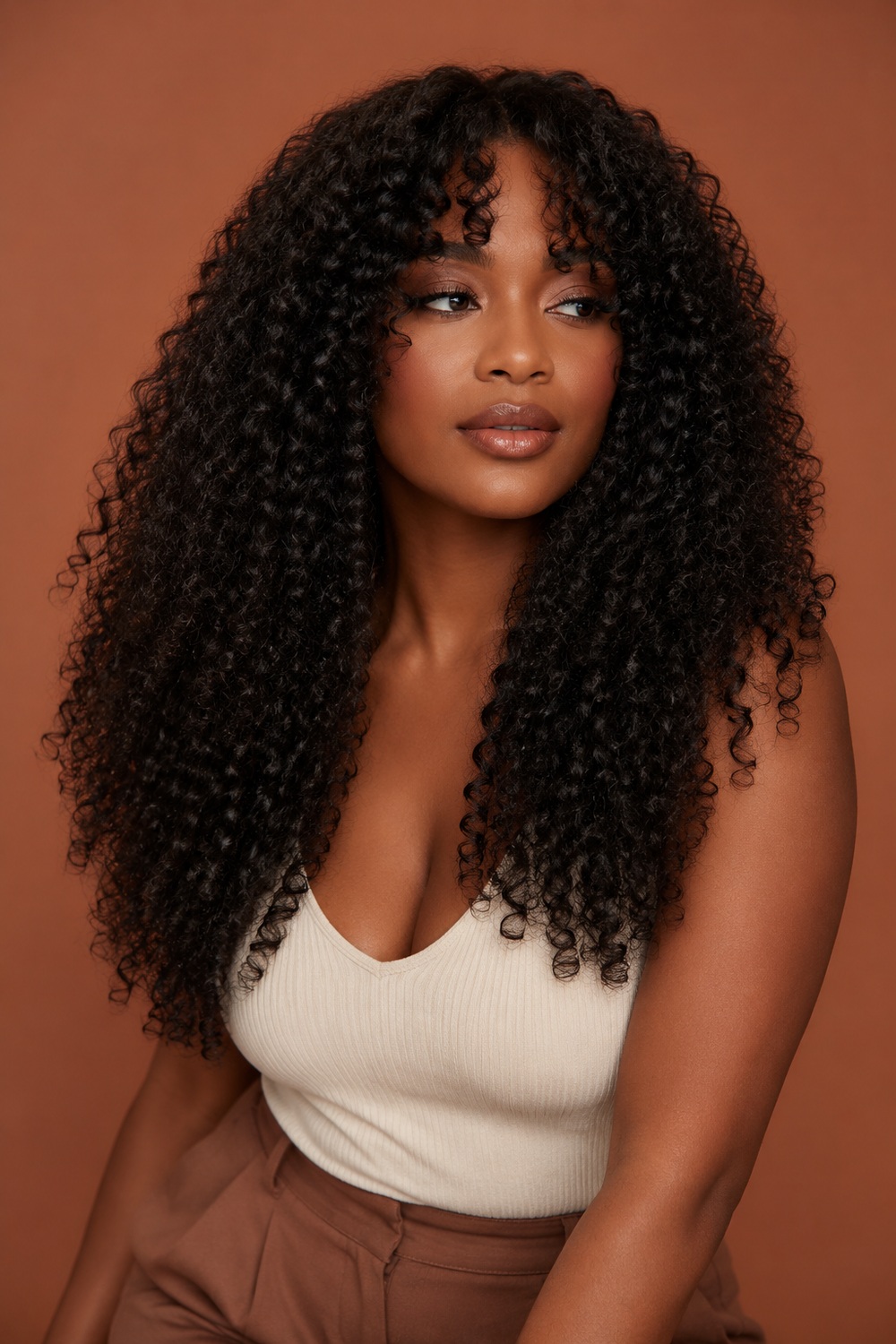
Curly curtain bangs should be customized curl by curl. A dry or nearly dry cut helps the stylist account for shrinkage and prevents the center from becoming unexpectedly short. The outer pieces can fall between the cheekbones and jaw so the fringe connects naturally to rounded long layers.
Use leave-in conditioner followed by a light curl cream, then scrunch rather than brush. Diffuse on low heat or air-dry with the center part gently set in place. This version frames the eyes while keeping the overall silhouette soft, full, and balanced.
6. Butterfly Layers With Bottleneck Curtain Bangs
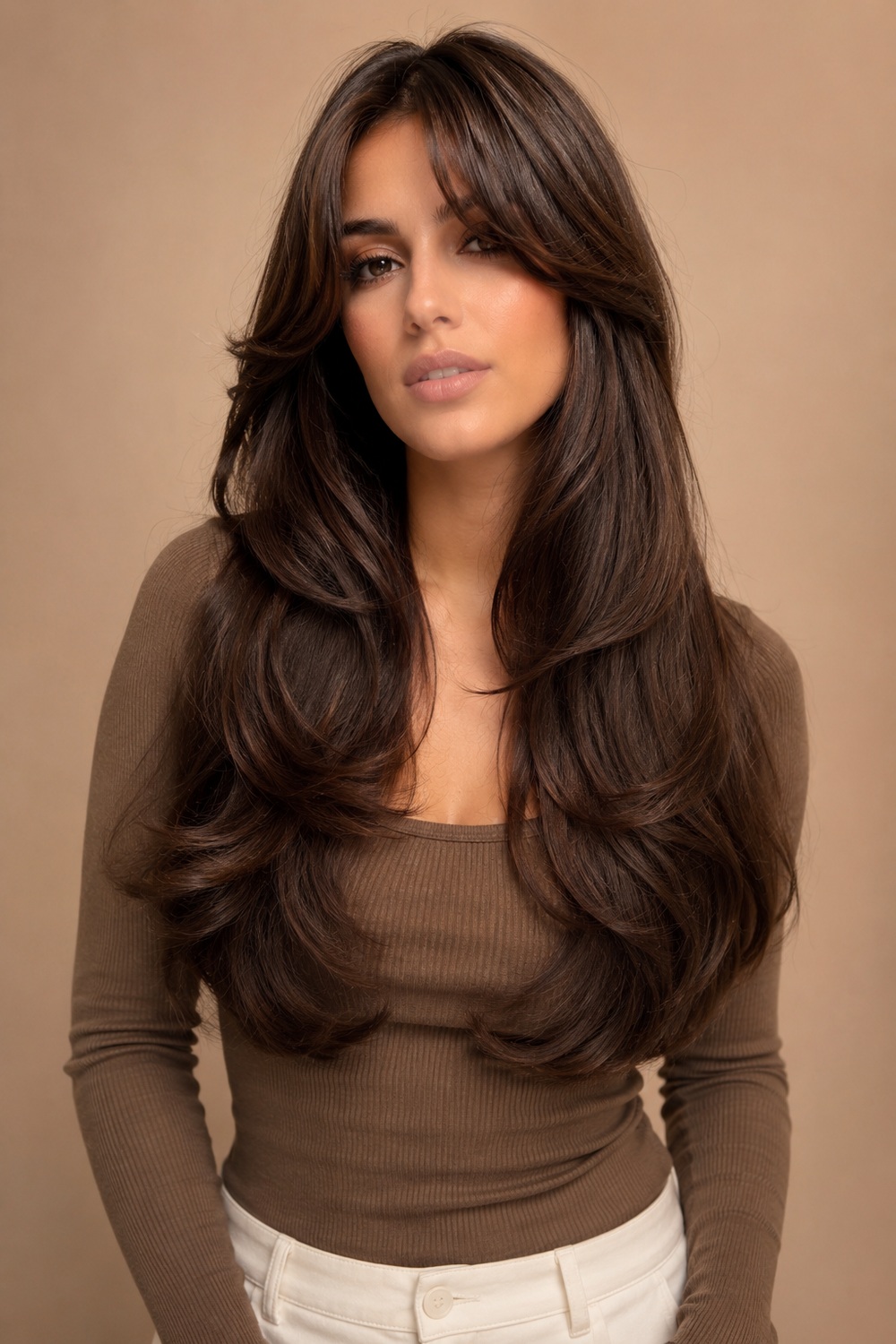
Butterfly layers create two visual lengths: shorter, face-framing pieces that add lift and long lower layers that maintain drama. Bottleneck curtain bangs are narrow and slightly shorter in the center, then widen and lengthen toward the cheekbones. Together, they deliver maximum movement around the face.
This cut works especially well on medium to thick hair. Ask the stylist to preserve a strong baseline so the ends do not become wispy. Style the front sections away from the face and alternate the direction of the lower layers for a fuller, more modern finish.
7. Copper Long Hair With Feathered Curtain Bangs
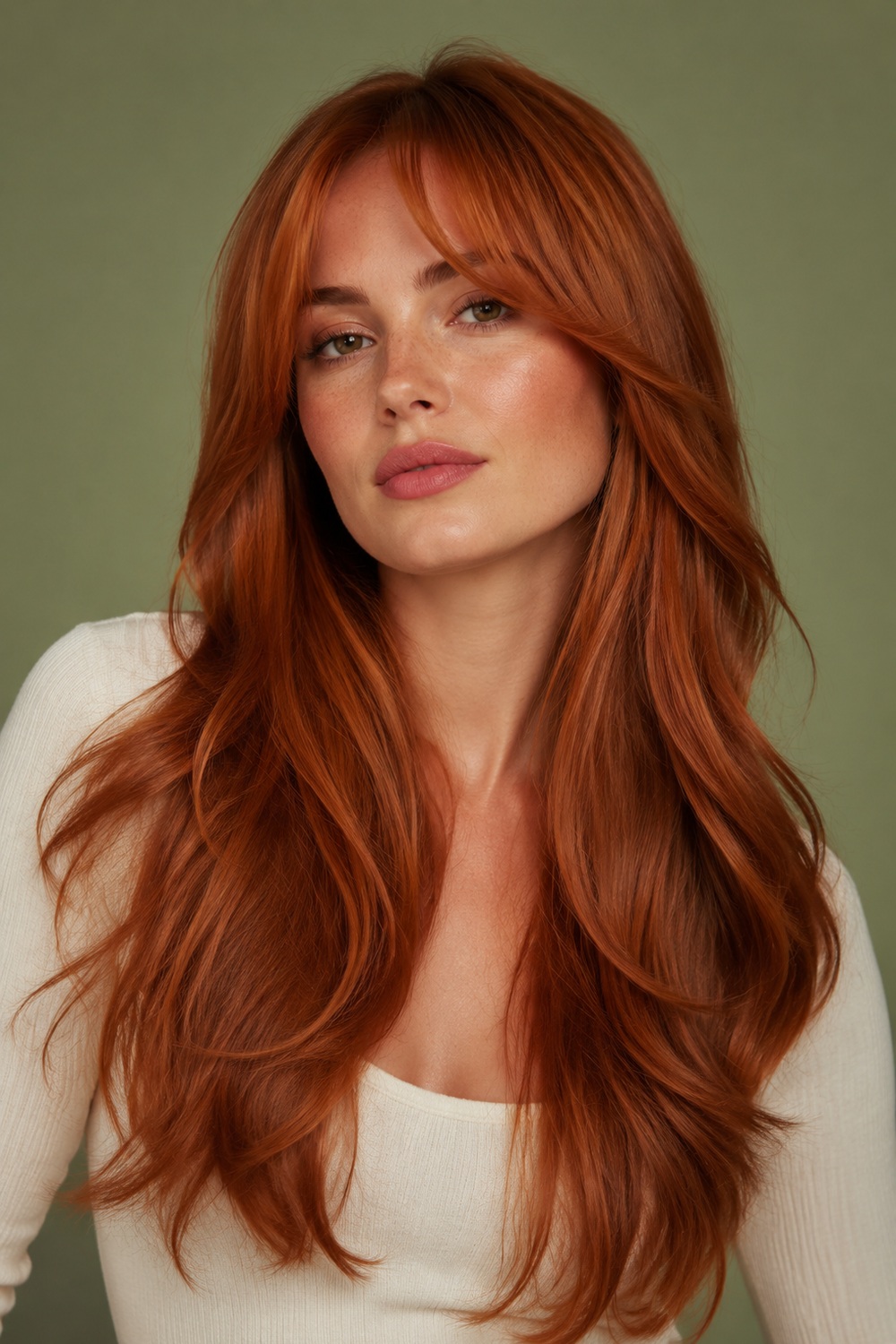
Feathered curtain bangs have fine, tapered ends that move easily and blend into long layers. On copper or auburn hair, the variation in tone makes every layer more visible. Ask for soft texture rather than aggressive thinning, particularly if the hair is prone to dryness or frizz.
A color-safe shampoo, weekly conditioning mask, and heat protectant help maintain both shine and shape. Use a large curling iron through the lengths, leaving the ends slightly straighter, then brush the waves out for a smooth editorial finish.
8. Fine Long Hair With Wispy Curtain Bangs
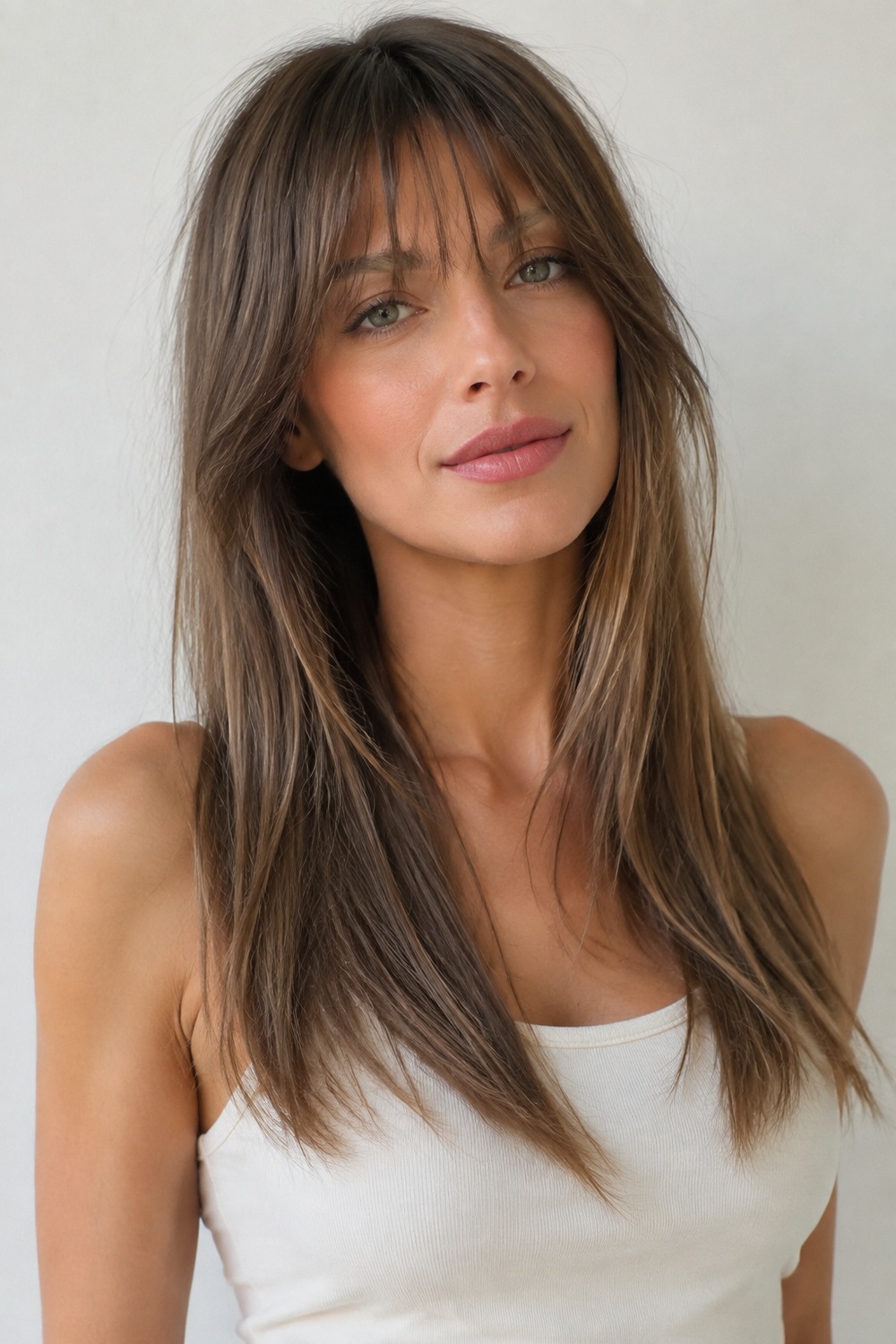
Fine hair can wear curtain bangs successfully when the fringe section is kept narrow. Taking too much hair from the crown may reduce volume through the sides, so ask for a light triangular section and minimal long layering. Invisible internal layers can provide movement while preserving a dense-looking perimeter.
Use a small amount of root spray and dry the fringe immediately after washing. A medium roller can hold the curve while the hair cools. Skip thick creams and heavy oils, which can collapse fine bangs or make the separated pieces look greasy.
9. Thick Long Hair With Extended Curtain Bangs
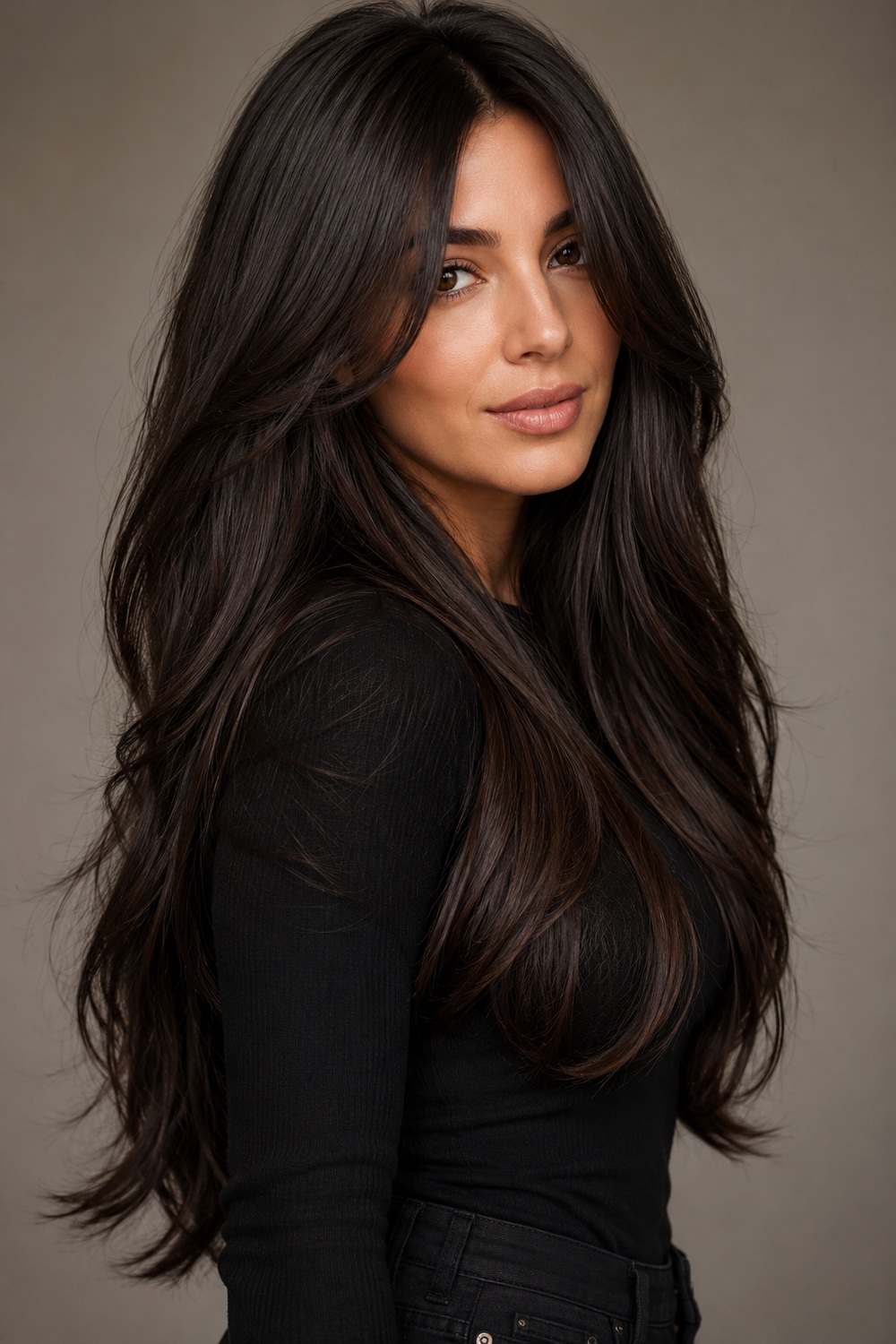
Extended curtain bangs are a practical choice for thick hair because they remove bulk around the face without requiring a short fringe. The shortest point can begin near the cheekbones, with the sides blending toward the jaw and collarbone. Internal layers reduce weight while keeping the outside shape polished.
Ask your stylist to avoid over-thinning the ends, which may cause frizz and uneven regrowth. Work in sections when blow-drying, direct airflow downward, and finish with a flexible smoothing cream. The longer bang length also makes ponytails and buns easier.
10. Long Hair in a Ponytail With Curtain Bangs
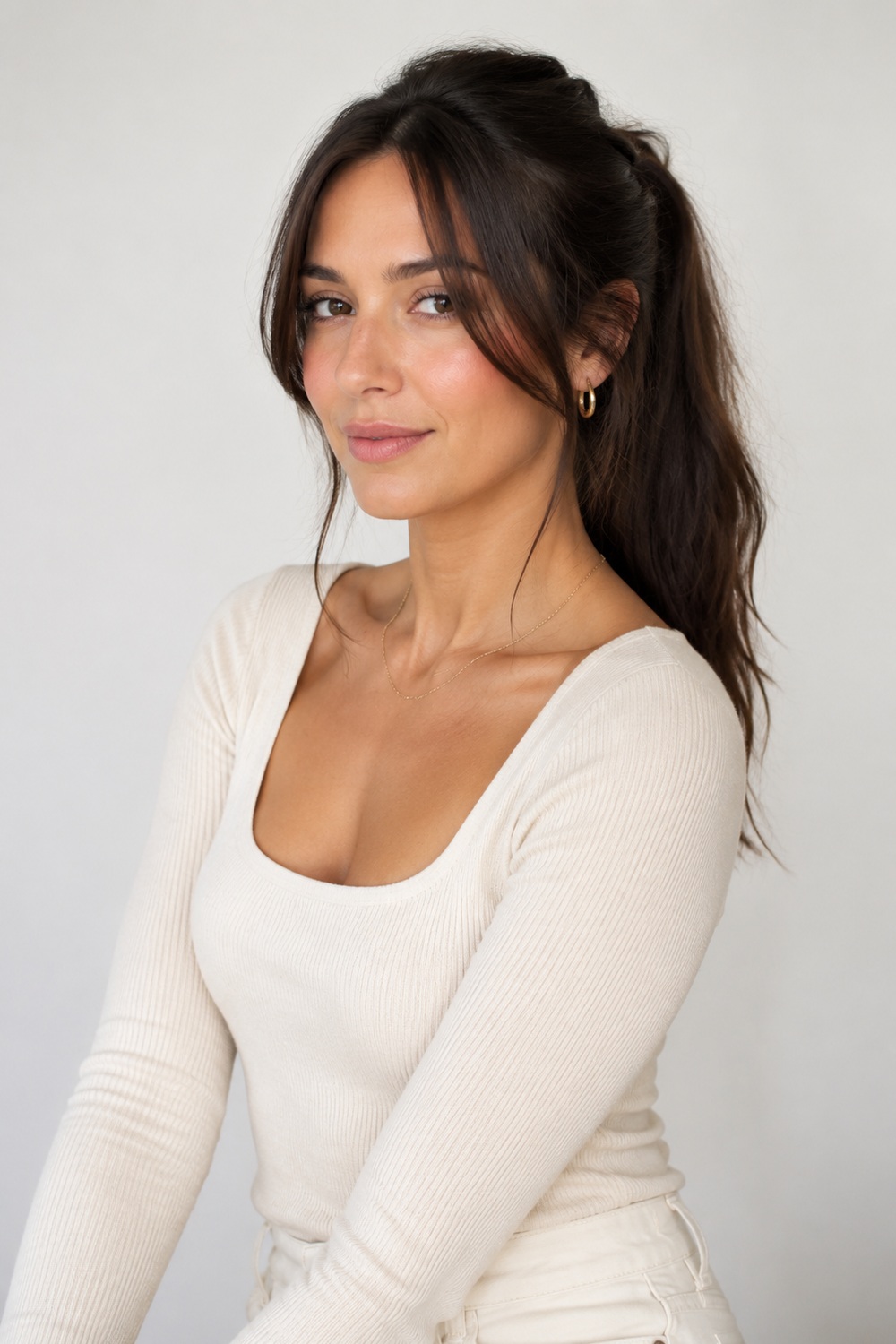
Curtain bangs make a simple ponytail look intentional because they keep softness around the face. This is a useful option on second- or third-day hair when the lengths need to be pulled back but you still want a polished frame. Leave the fringe and a pair of fine side pieces loose before securing the ponytail.
Refresh the bangs with a little water or dry shampoo, then reshape them with a brush. Wrap a small section of hair around the elastic and loosen the crown slightly for balance. Keep the ponytail secure but not painfully tight to reduce tension at the hairline.
11. Balayage Long Hair With Highlighted Curtain Bangs
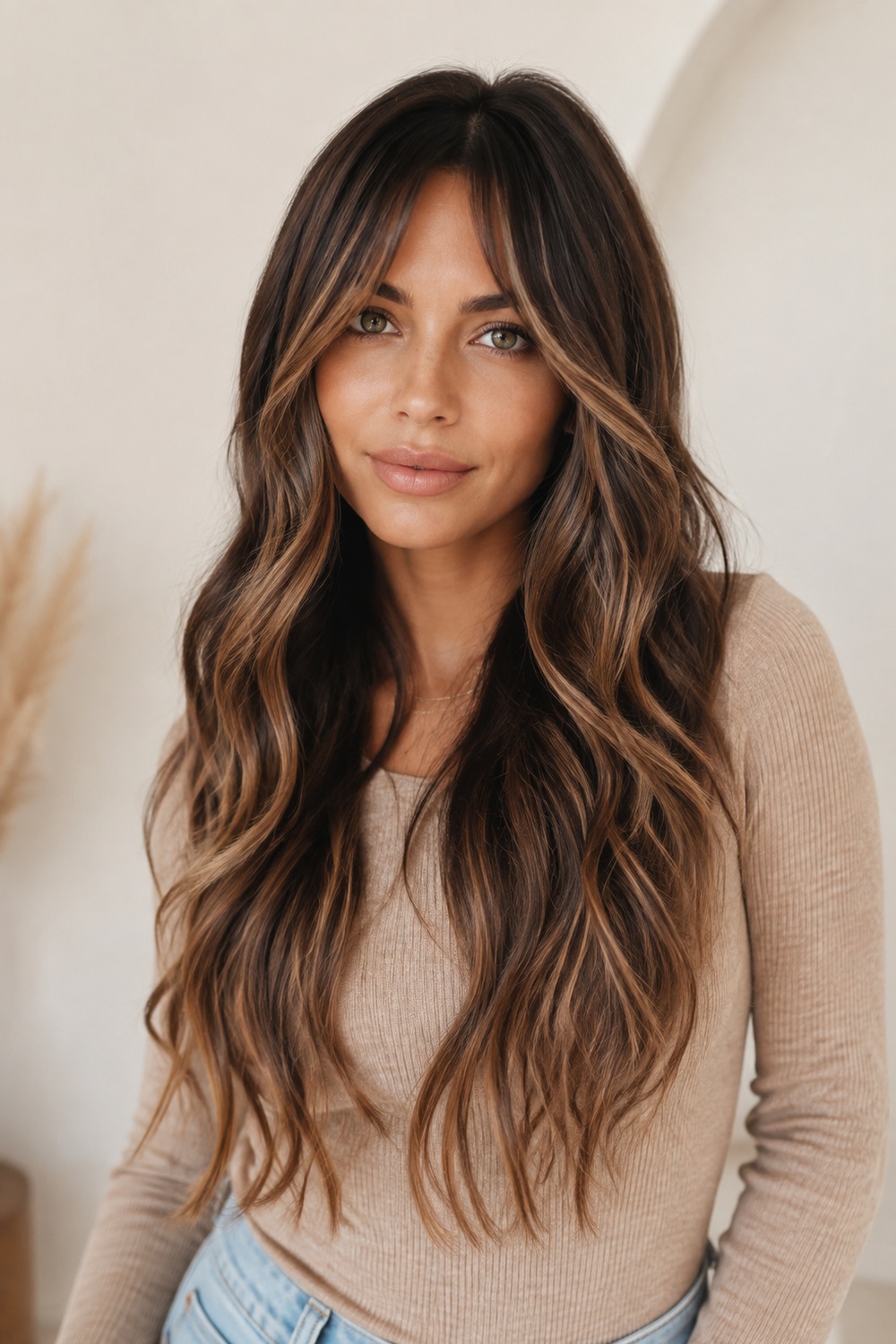
Strategic color can emphasize the curve of curtain bangs and make long layers look more dimensional. Ask for delicate brightness around the temples and through the outer edges of the fringe, with a softer root to avoid a harsh grow-out line. The lightest pieces should follow the face frame rather than form a solid stripe.
Caramel and honey tones suit many warm brunette bases, while beige or mushroom shades work well on cooler hair. Use a color-protecting routine and a gloss between major appointments to keep the highlighted fringe shiny and blended.
12. Long Silver Hair With Elegant Curtain Bangs
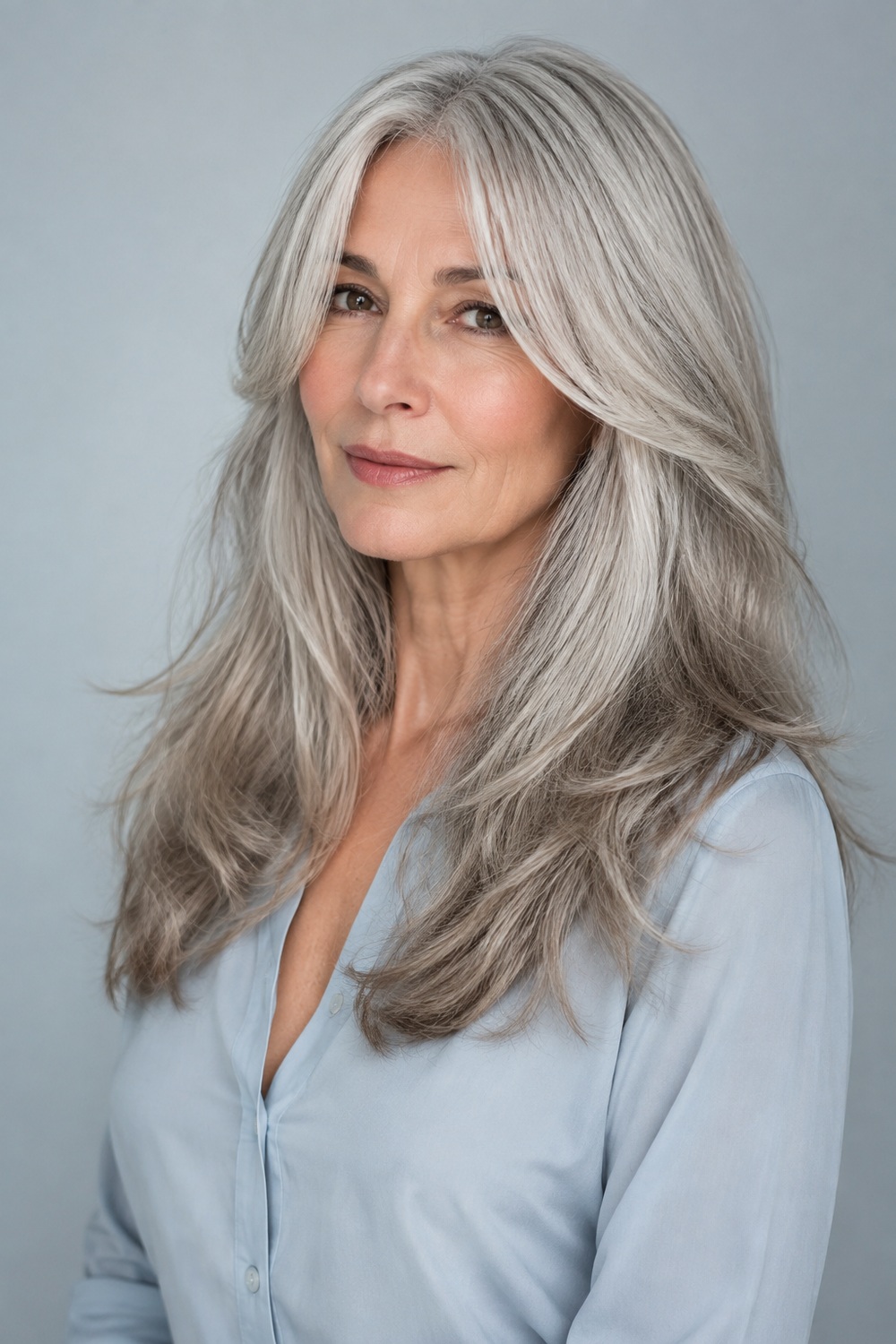
Curtain bangs are not limited to one age group. On long silver or gray hair, a soft center-opening fringe can brighten the face and add movement without looking severe. Keep enough weight in the bangs to prevent flyaways, but avoid a dense block that hides the eyes.
Long, restrained layers maintain fullness and allow the natural color variation to show. Use a moisturizing heat protectant, moderate heat, and an occasional violet-toned product only when unwanted yellow tones appear. A smooth blowout highlights the shine of healthy silver hair.
How to Choose Curtain Bangs for Your Face Shape
Round face: Choose longer center pieces and sides that reach below the cheekbones. The vertical opening through the middle and the length at the sides can create a more elongated effect. Avoid a very wide, rounded fringe that adds visual width across the cheeks.
Square face: Soft, feathered curtain bangs can reduce the appearance of strong angles around the forehead and jaw. Let the outer edges curve past the cheekbones and blend into rounded layers instead of ending in a blunt horizontal line.
Heart-shaped face: A curtain fringe can balance a wider forehead and narrower chin. Keep the center light and allow the sides to become fuller near the cheekbones or jaw. Bottleneck bangs are another flattering variation because they narrow near the center and widen gradually.
Oval or long face: Most curtain-bang lengths work on an oval face. For a longer face, consider a fuller center section that begins near the eyebrows, since added coverage can visually shorten the forehead. Extremely long, flat pieces may emphasize length.
Best Curtain Bangs for Each Face Shape
Dry the bangs first while they are still damp, then shape each side away from the face with a round brush. Keep products light so the fringe stays soft and movable.
Maintenance and Salon Tips
- Bring reference photos showing the bang length and how the fringe blends into the surrounding layers.
- Tell your stylist about cowlicks, natural texture, glasses, and how short you are comfortable cutting the center pieces.
Frequently Asked Questions
Are curtain bangs good for very long hair?
Yes. They create shape around the face while allowing the rest of the hair to remain long. The best result comes from connecting the outer edges of the fringe to face-framing layers rather than leaving a visible gap.
Do curtain bangs require daily styling?
They often need a few minutes of reshaping, especially after sleep or in humid weather. Longer curtain bangs are more forgiving and can be pinned back, tucked behind the ears, or blended into an updo.
Can fine hair have curtain bangs?
Yes, but the stylist should use a narrow fringe section and avoid removing too much hair from the crown. Wispy curtain bangs and subtle internal layers preserve fullness better than heavy feathering.
What length should curtain bangs be?
A common starting point is eyebrow length in the center with the sides reaching the cheekbones. If you prefer low maintenance, begin closer to the cheekbones so the bangs can be tucked away easily.
Can curly hair wear curtain bangs?
Yes. The fringe should be assessed in its natural curl pattern and cut longer to account for shrinkage. Dry cutting and curl-by-curl refinement usually provide the most predictable shape.
How do I grow out curtain bangs?
Let the center pieces lengthen, shift to a slightly off-center part when needed, and ask for periodic blending into cheekbone- and jaw-length layers. Small trims control bulk while preserving progress.
Final Thoughts
The best haircut for long hair with curtain bangs feels balanced from the fringe to the ends. Choose a bang length that fits your styling routine, then use face-framing pieces and thoughtful layer placement to create a smooth transition. Whether your hair is straight, wavy, curly, fine, thick, highlighted, or naturally silver, a customized curtain fringe can refresh your look while keeping your long length.


