



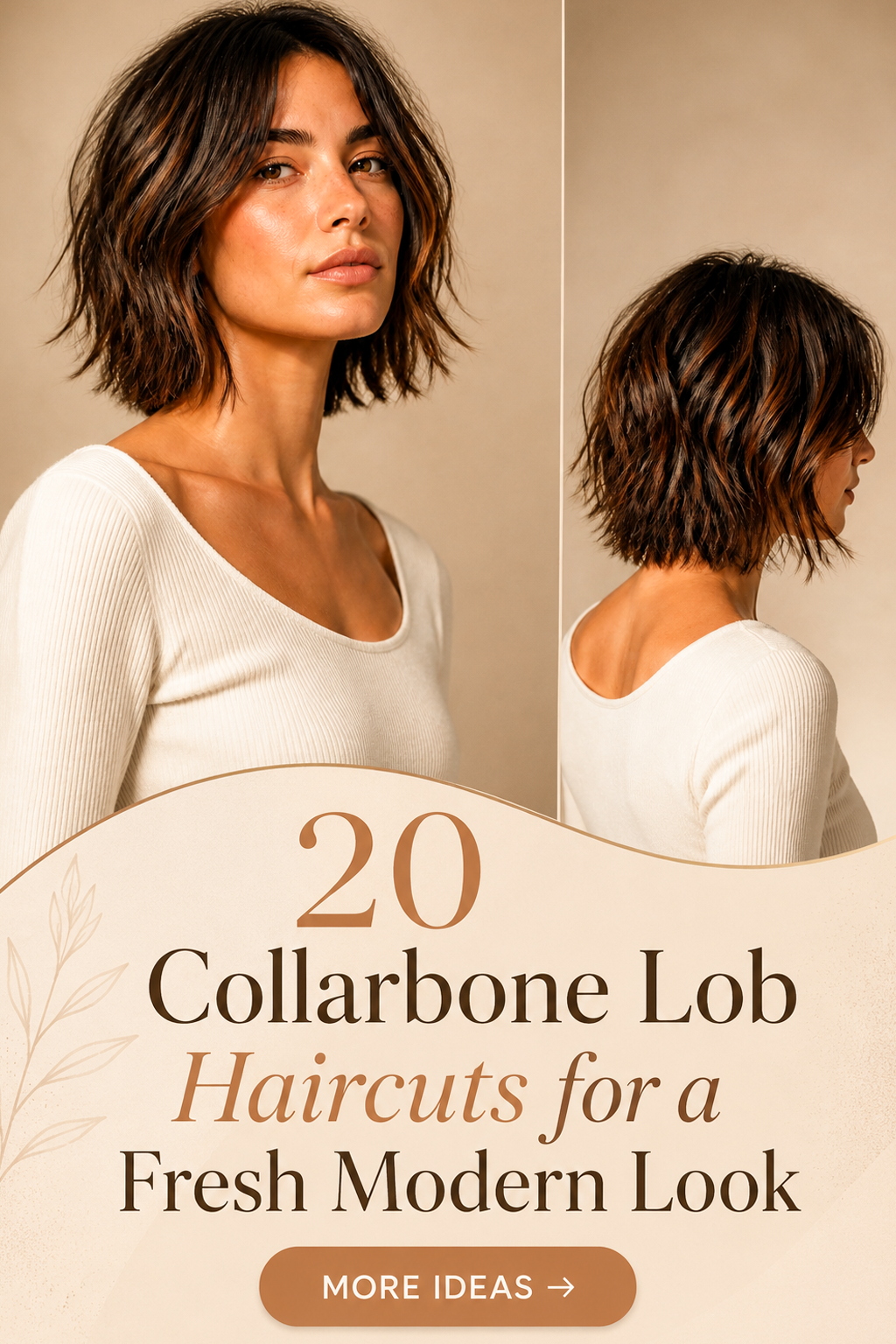
The collarbone lob has become one of the most requested haircuts at salons, and it’s easy to see why. This length hits right at the collarbone, giving you the effortless movement of longer hair combined with the low-maintenance charm of a shorter cut. It flatters nearly every face shape, works with straight or curly textures, and offers endless styling options — from sleek and polished to tousled and beachy.
Whether you want something classic, edgy, or romantic, there’s a version of the collarbone lob for you. Below are 20 fresh takes on this timeless cut, each explained in detail so you can find the one that matches your hair type, lifestyle, and personal style.
1. Classic Blunt Collarbone Lob
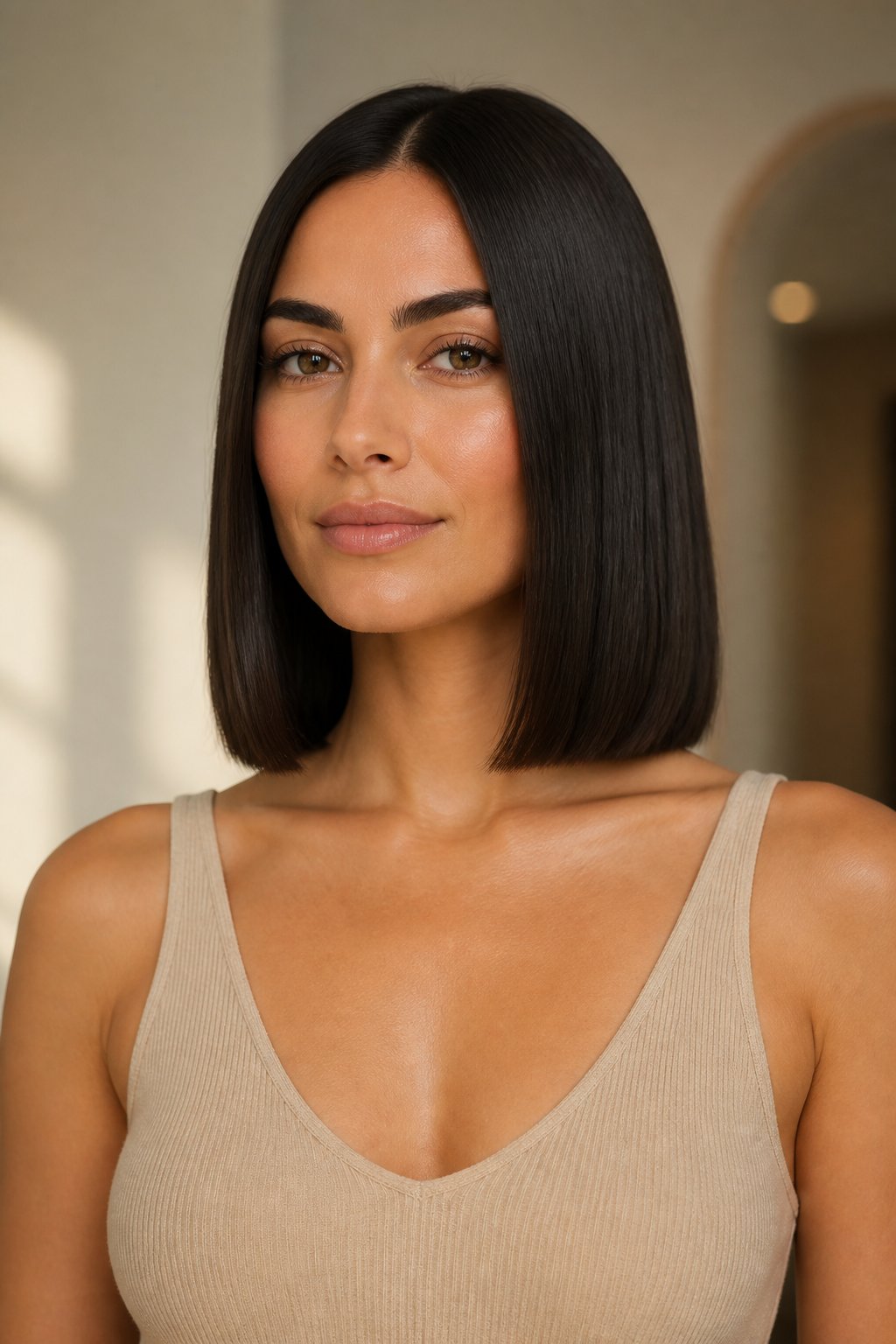

The blunt collarbone lob is a clean, one-length cut with no layers, ending precisely at the collarbone. It creates a bold, graphic silhouette that instantly looks polished and intentional, making it a favorite among people who want a sharp, modern statement without extra styling effort.
This cut works especially well on medium to thick hair, where the blunt line shows off density and a smooth, glossy finish. Fine hair also benefits because the uniform length creates the illusion of extra fullness at the ends. For more volume inspiration, explore these messy hairstyles for fine hair.
Styling is simple: a round brush blowout or a flat iron pass gives it a sleek, mirror-like finish, while a light sea-salt spray adds subtle texture for a more relaxed everyday look.
2. Layered Collarbone Lob
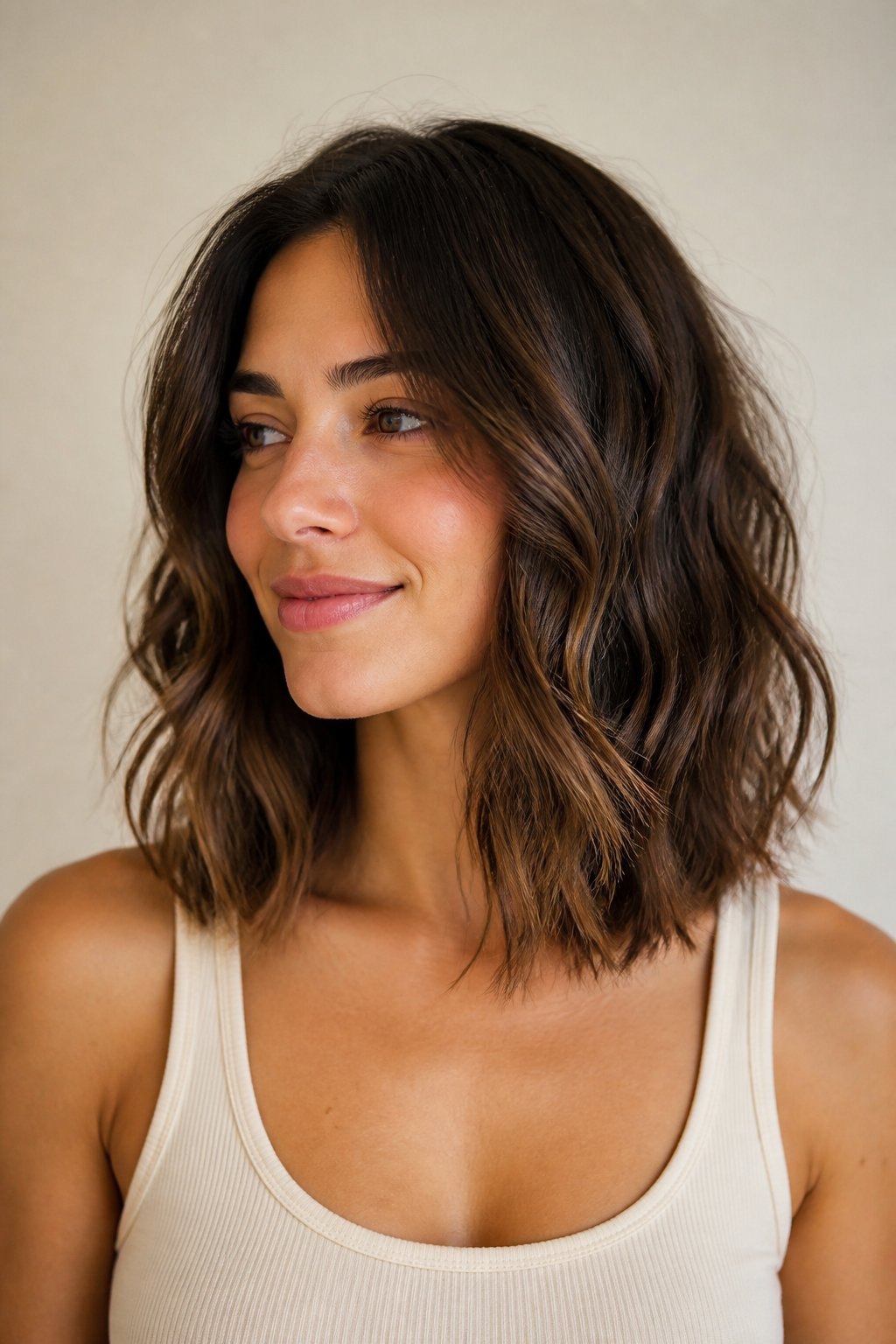
Adding soft layers throughout a collarbone lob introduces movement and bounce that a one-length cut can’t achieve. The layers are usually kept subtle, starting around the cheekbone, so the shape still reads as a lob rather than shorter, choppy pieces.
This version is ideal for people with naturally wavy or curly hair, since the layers help distribute volume and prevent a triangular, bottom-heavy shape. It also works beautifully on thick hair that needs some weight removed for easier styling.
To style, use a curling wand on alternating sections for soft waves, then run fingers through with a texturizing spray to break up any uniformity and keep the layers looking natural.
3. Wavy Beach Lob
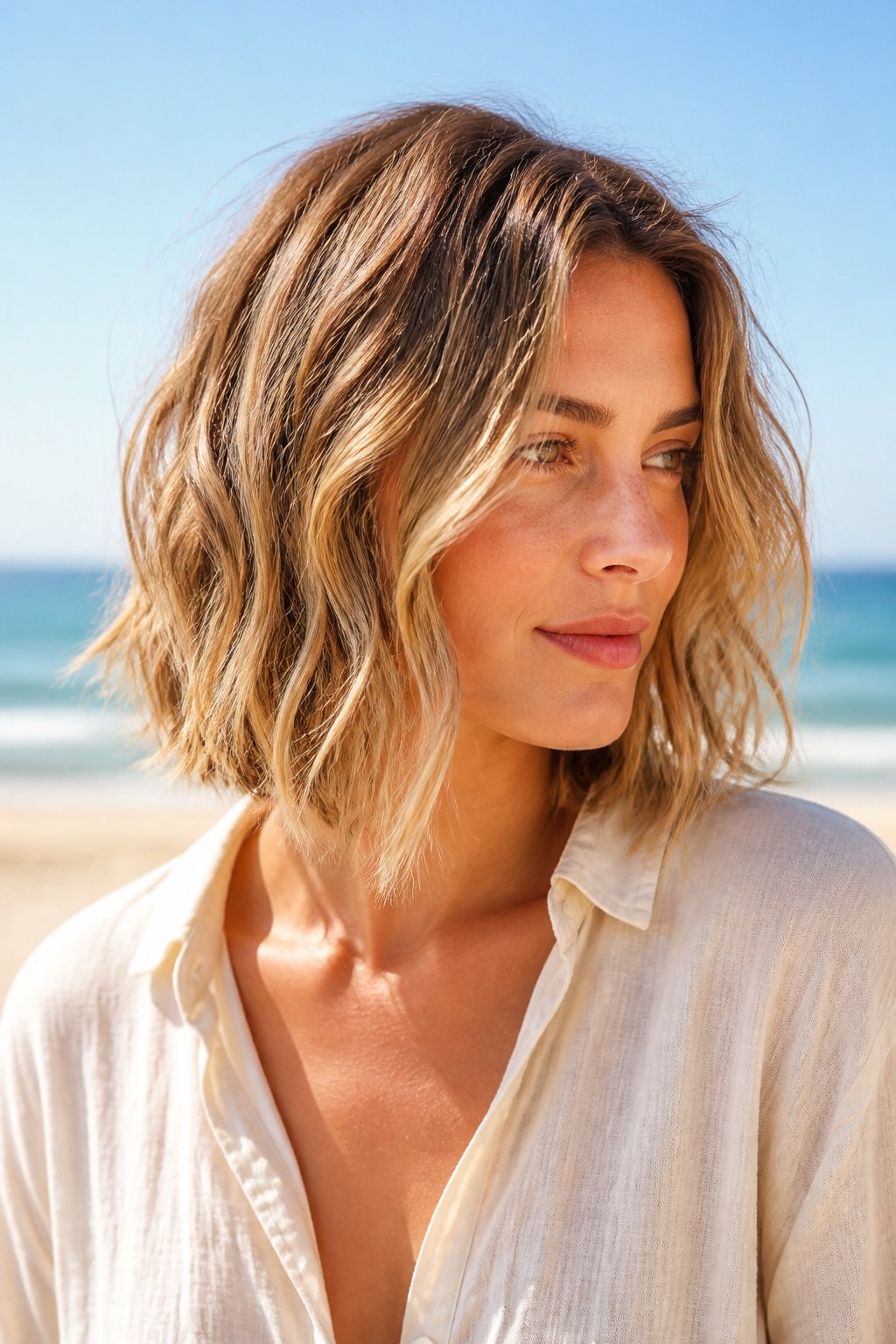
The beach lob leans into loose, undone waves that look like you just left the ocean. It’s typically cut with slightly angled ends so the waves fall naturally without needing precise styling every day.
This style suits fine to medium hair particularly well, since the waves add the appearance of extra texture and volume. It’s also a low-fuss option for anyone who prefers air-drying over daily heat styling.
A texturizing sea-salt spray applied to damp hair, scrunched and air-dried, delivers the effortless beachy finish. For more definition, a 1-inch curling wand used on random sections keeps the waves looking organic rather than uniform.
4. Collarbone Lob with Curtain Bangs
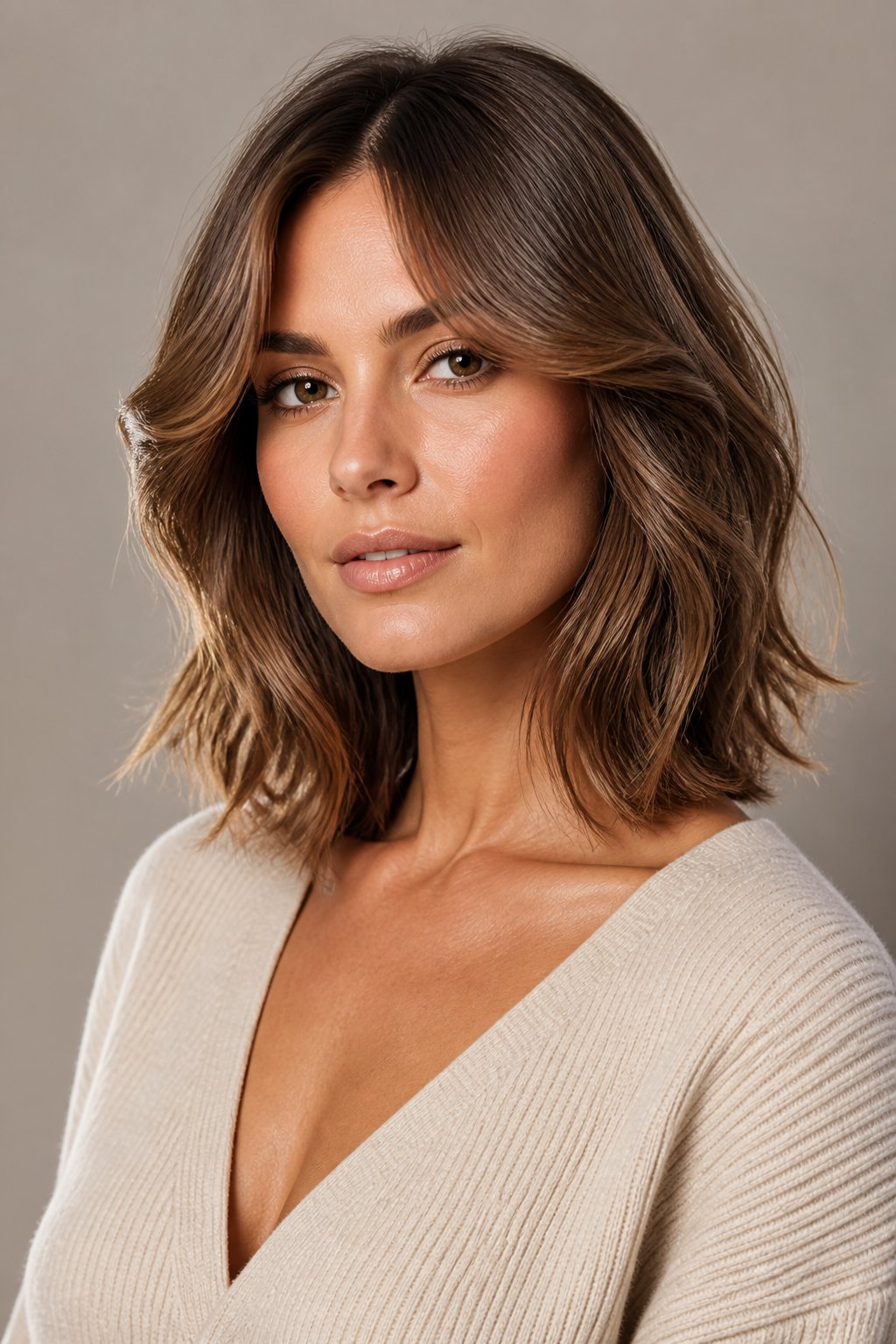
Curtain bangs split down the middle and sweep back toward the temples, framing the face on both sides. Paired with a collarbone lob, they soften the overall silhouette and draw attention to the eyes and cheekbones.
This combination flatters most face shapes, especially round or square faces, because the bangs create diagonal lines that add the illusion of length. It also works well for anyone wanting a trendy update without committing to a full fringe.
Styling involves blow-drying the bangs with a round brush to create that signature outward flip, then finishing the lengths with a light wave or sleek straight look depending on the occasion.
5. Side-Parted Sleek Lob
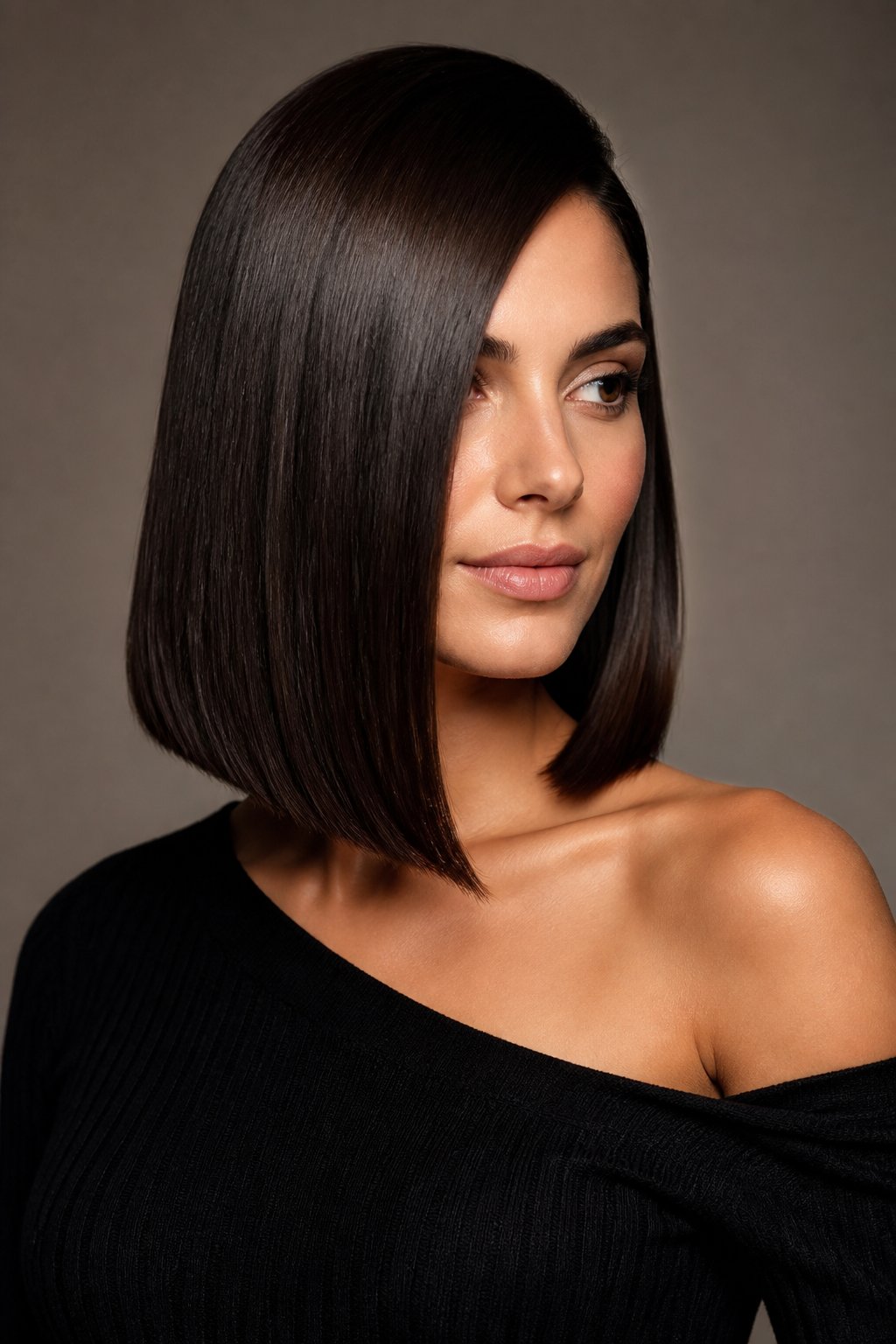
A deep side part paired with a completely straight, glass-like finish gives the collarbone lob a sophisticated, editorial edge. The asymmetry of the part adds visual interest even though the cut itself is simple.
This style is best suited to hair that takes well to flat-ironing, and it particularly flatters oval and heart-shaped faces by emphasizing one side of the face over the other.
To achieve the sleek finish, apply a heat protectant, blow-dry straight with a paddle brush, then flat iron in small sections. A drop of smoothing serum on the ends locks in shine and prevents flyaways.
6. Textured Choppy Lob
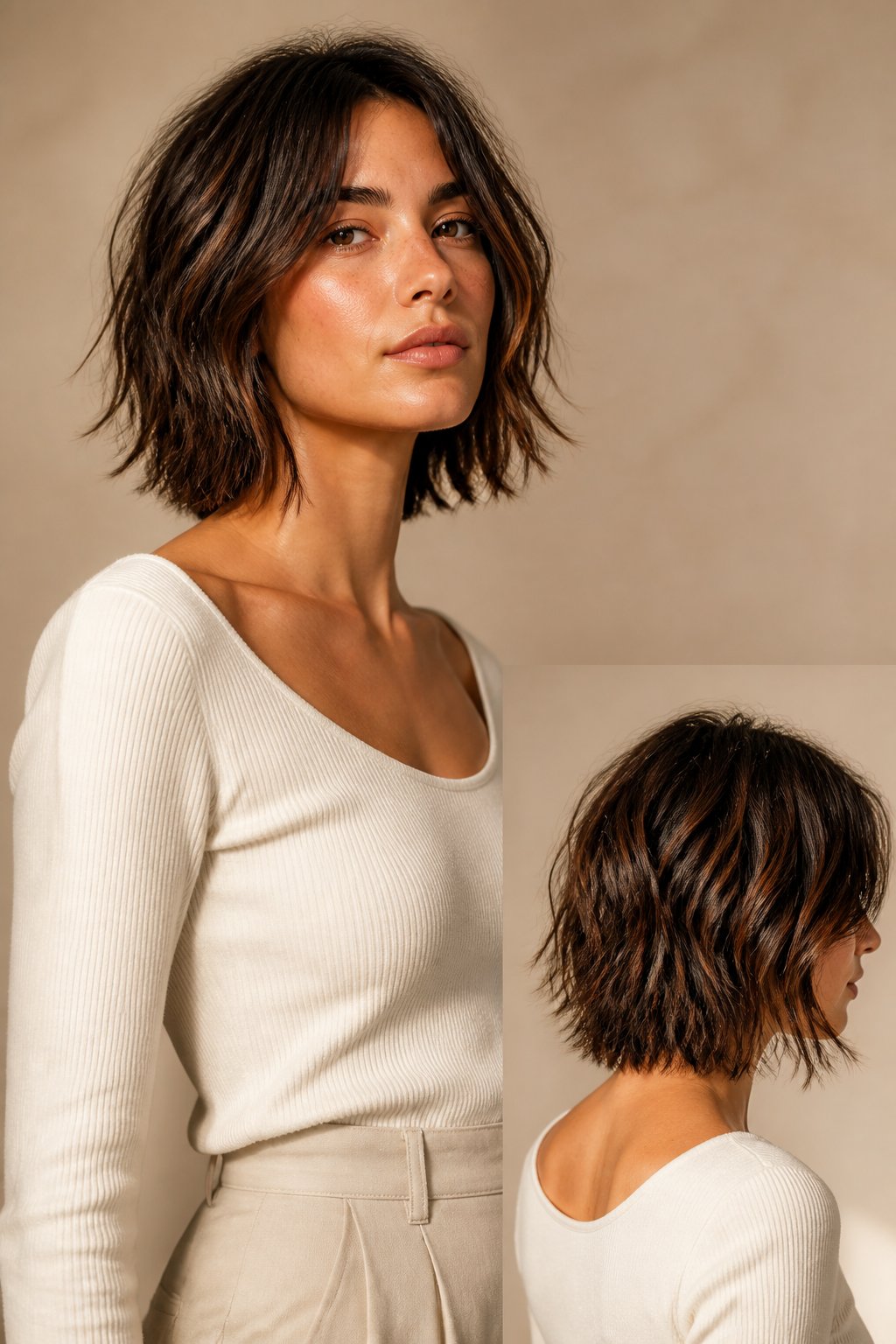
The choppy lob uses razor-cut or point-cut ends to create a piecey, undone texture rather than smooth, rounded lines. It gives the haircut an edgier, more casual attitude compared to blunt or classic layered versions.
This texture works particularly well on thick or coarse hair, since the choppy ends help reduce bulk and add movement. It’s also a great low-commitment way to experiment with an edgier look without going shorter.
Styling typically involves a texturizing paste or wax worked through dry hair to separate pieces and enhance the choppy effect, finished with a light-hold spray to maintain definition throughout the day.
7. Collarbone Lob with Face-Framing Layers
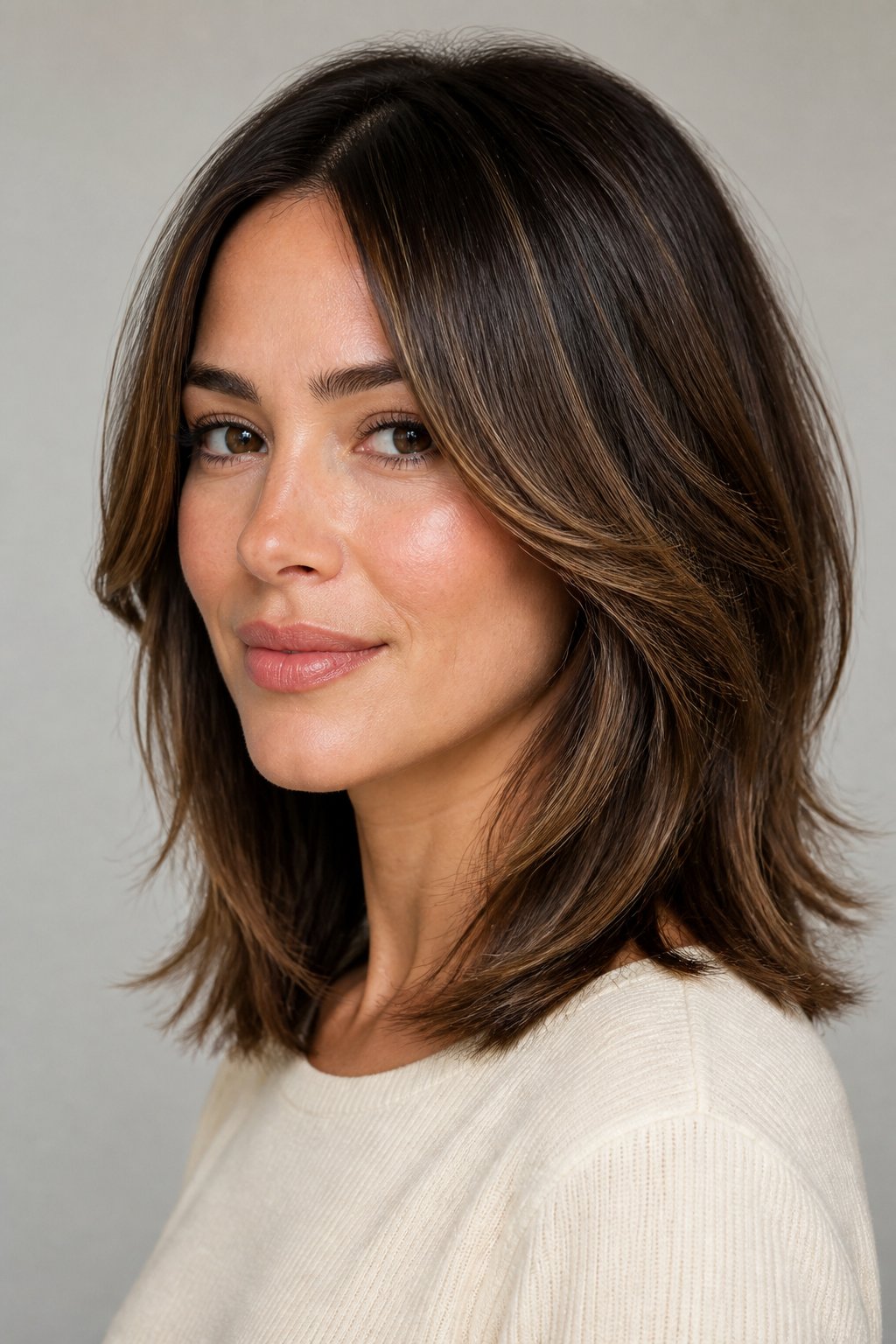
Face-framing layers are cut shorter around the front, gradually blending into the main length at the collarbone. They highlight the cheekbones and jawline while keeping the rest of the cut relatively simple.
This style is especially flattering for round or square faces, as the shorter front pieces create soft diagonal lines that elongate the face. It also adds dimension for people with naturally straight, one-texture hair.
To style, curl the face-framing pieces slightly inward or outward using a small-barrel iron, then blend the rest of the hair with loose waves or a smooth blowout for a cohesive finish.
8. Ash Blonde Collarbone Lob
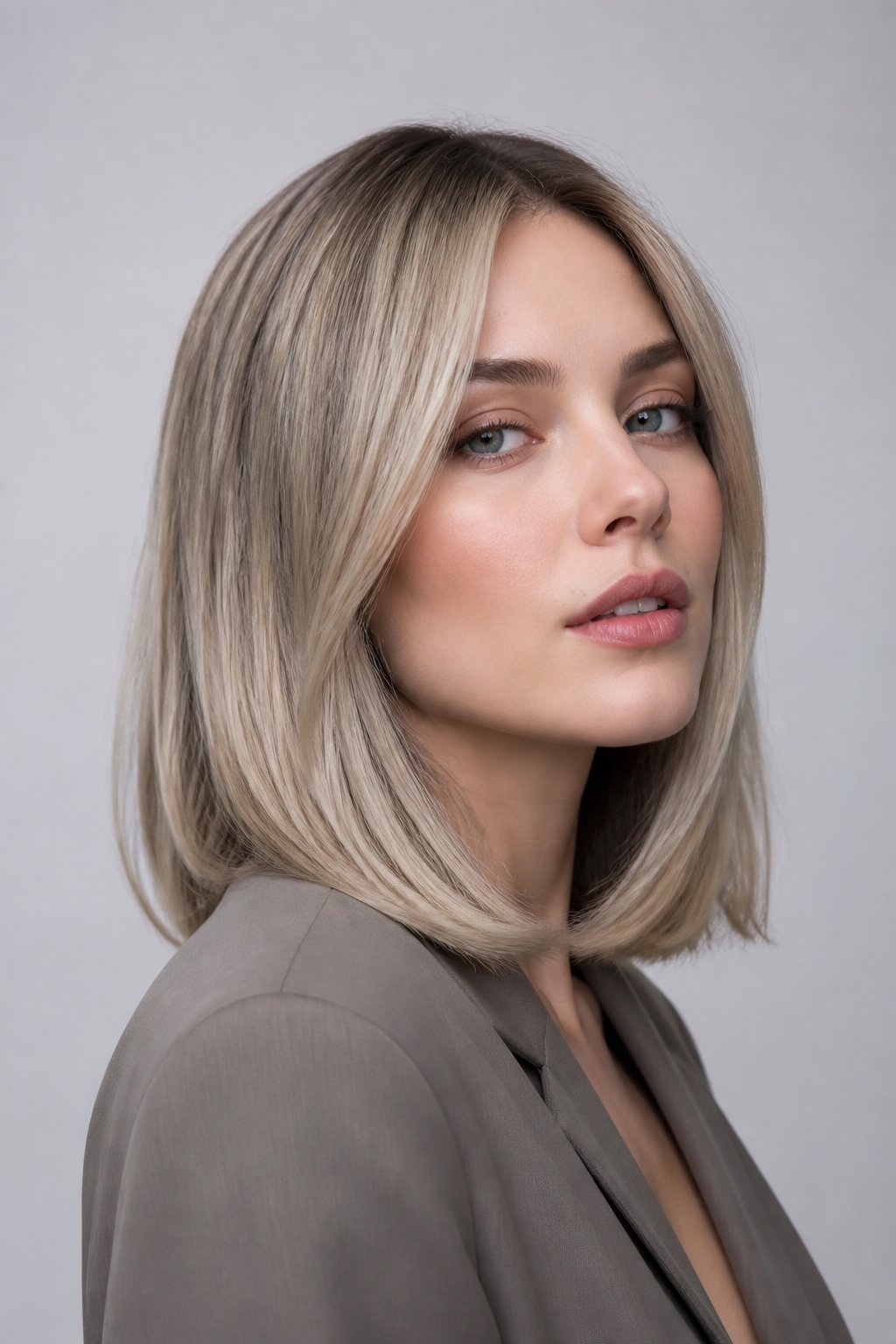
Combining a cool-toned ash blonde with the collarbone lob length creates a fresh, contemporary look that reads as both edgy and elegant. The muted tone softens the overall color and pairs beautifully with cooler skin undertones.
This shade works best when maintained with purple-toning shampoo to prevent brassiness, and it tends to look most vibrant on hair with healthy, well-conditioned ends since lighter colors show damage more easily.
Because ash tones can dry hair out, regular deep conditioning treatments are recommended, along with heat protectant before any styling to preserve both the color vibrancy and hair health.
9. Balayage Collarbone Lob
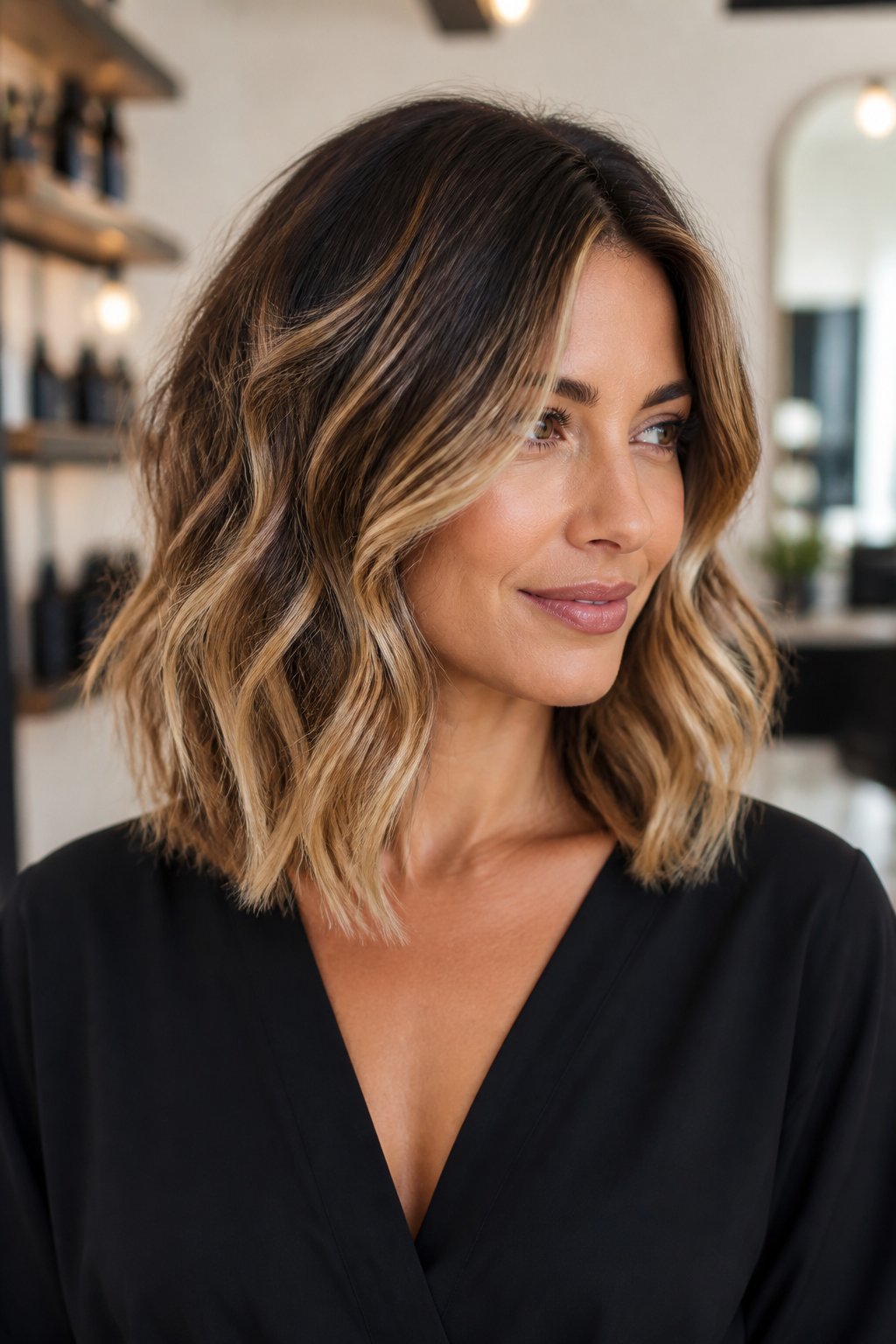
Balayage adds hand-painted, sun-kissed highlights that grow out naturally without harsh regrowth lines. On a collarbone lob, the shorter length means the highlights are more concentrated, creating a bright, dimensional finish.
This coloring technique suits nearly any base color and works particularly well on wavy or textured hair, where the dimension catches the light differently with every movement of the waves.
Styling with loose curls or beachy waves enhances the color placement beautifully, since the highlighted pieces become more visible as the hair moves and separates throughout the day.
10. Curly Collarbone Lob
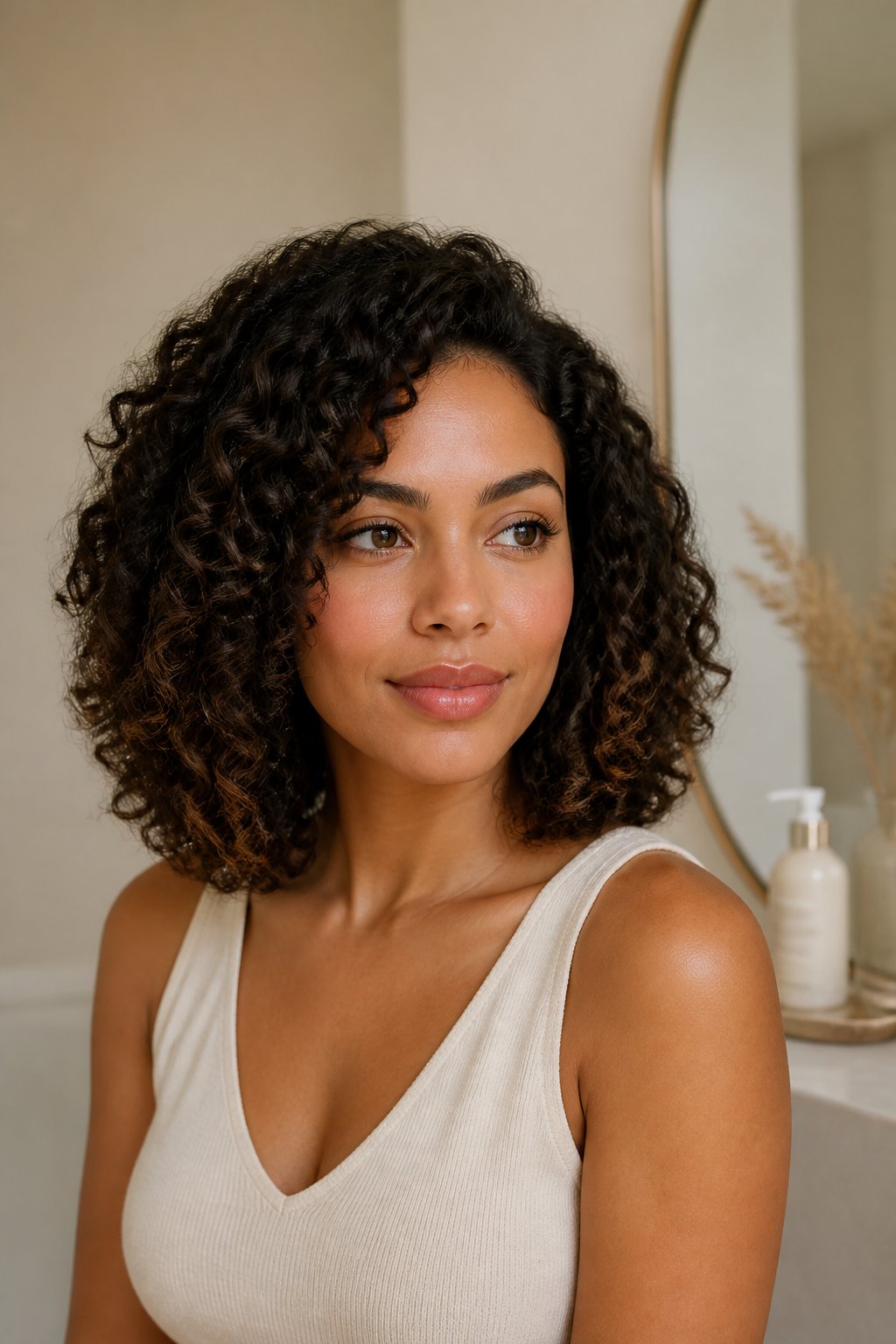
For naturally curly hair, the collarbone lob is cut using techniques like the curl-by-curl method to account for shrinkage and ensure even, symmetrical shape once the curls settle into their natural pattern.
This cut celebrates natural texture rather than fighting it, and it’s an excellent option for anyone transitioning away from heat styling or chemical straightening in favor of embracing their curl pattern.
Styling focuses on hydration: a leave-in conditioner and curl cream applied to soaking-wet hair, scrunched and air-dried or diffused, help define curls while minimizing frizz and preserving the cut’s shape.
11. Collarbone Lob with Micro Bangs
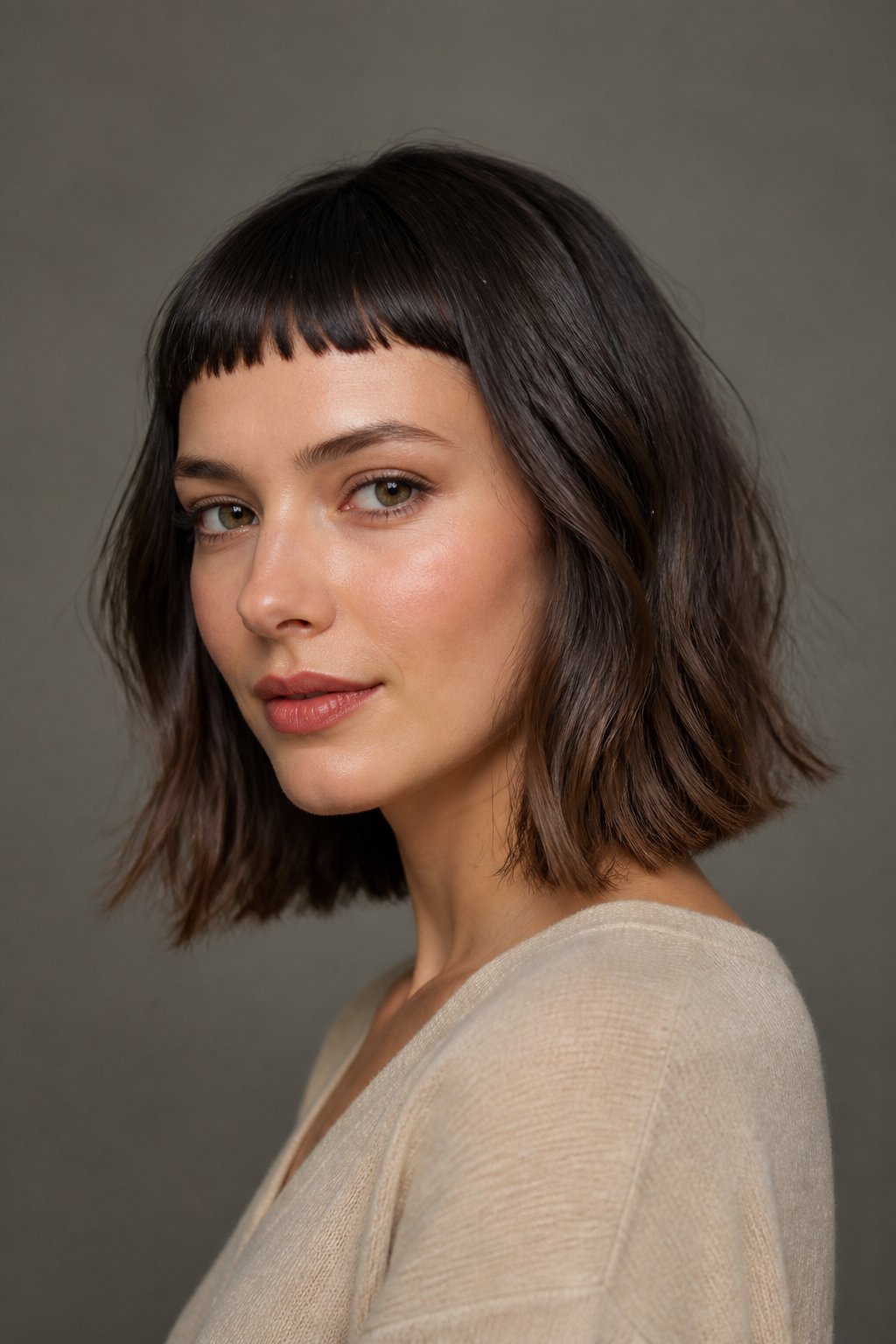
Micro bangs sit high on the forehead and are cut very short, creating a bold, statement-making contrast against the longer collarbone length. It’s a daring pairing that instantly modernizes the overall silhouette.
This combination works best for those with an oval or heart-shaped face and a good amount of forehead space, since the short bangs draw significant attention to the upper face.
Because micro bangs require frequent trims to maintain their shape, they’re typically styled dry with a small round brush for slight texture, while the lob length is left loose or lightly waved.
12. Asymmetrical Collarbone Lob
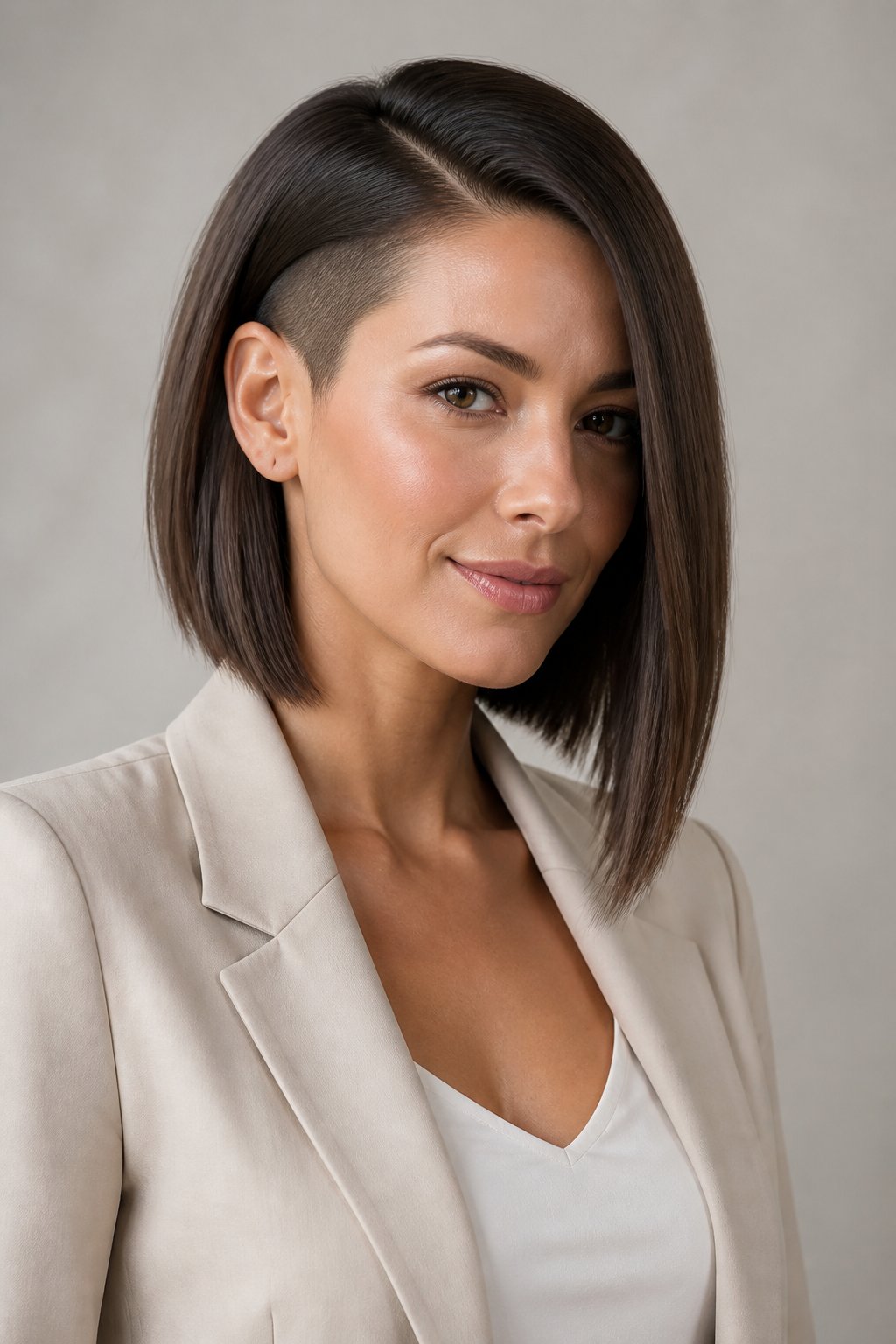
An asymmetrical lob features one side cut slightly longer than the other, creating a dynamic, angled silhouette. This subtle imbalance gives an otherwise classic haircut a more contemporary, fashion-forward edge.
It flatters most face shapes and is especially striking on straight hair, where the clean lines of the angle are most visible. It can also be paired with an undercut on the shorter side for extra edge.
Styling is straightforward: a flat iron or blowout emphasizes the sharp angle, while a bit of shine serum keeps the ends looking crisp and intentional rather than uneven.
13. Collarbone Lob with Highlights
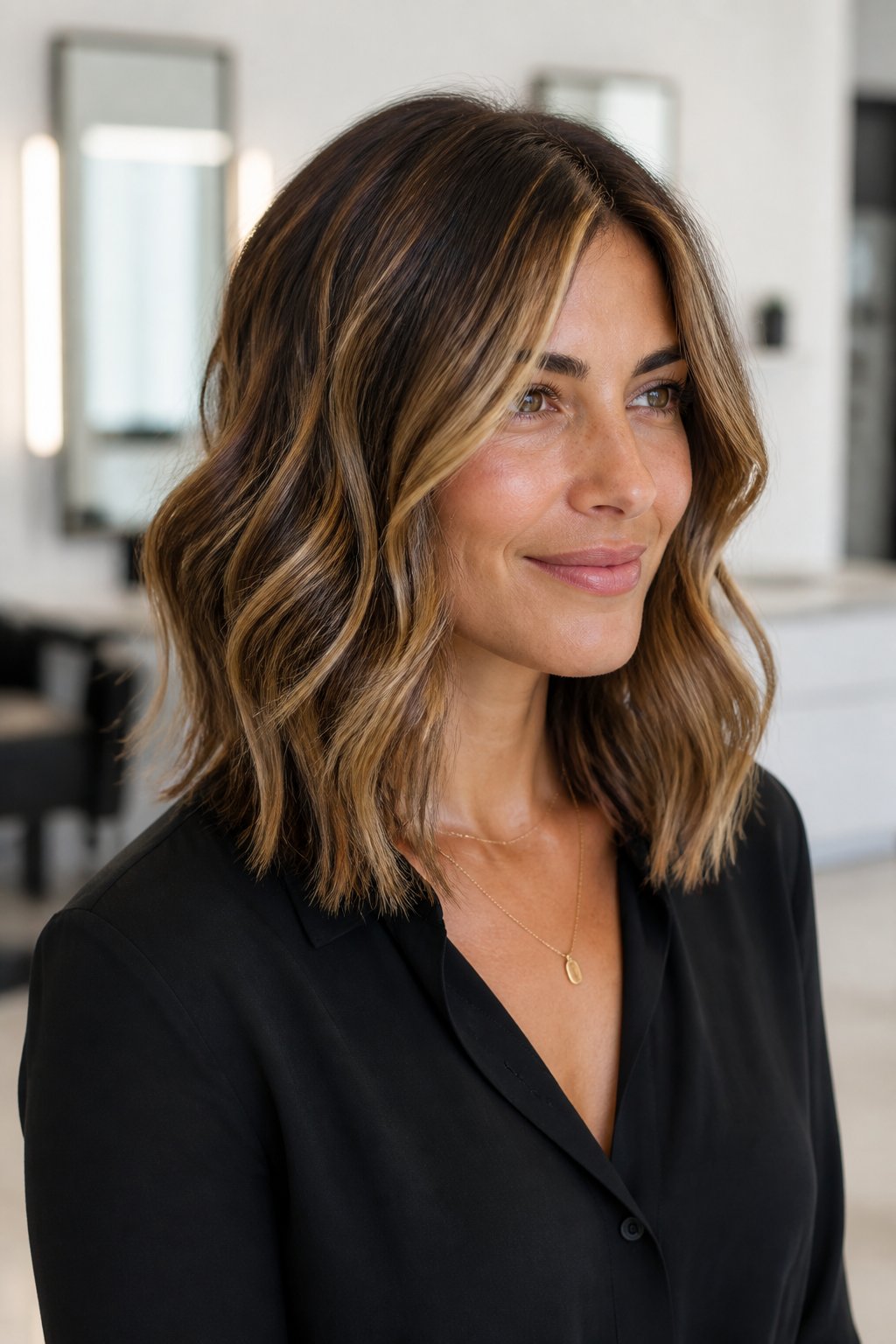
Traditional foil highlights placed throughout a collarbone lob create consistent, evenly distributed brightness rather than the more graduated look of balayage. This gives the hair a fuller, more dimensional appearance overall.
This style works well for anyone wanting a noticeable color change that still looks natural, and it’s particularly effective on darker base colors where the contrast makes the highlights pop.
To maintain vibrancy, color-safe shampoo and regular gloss treatments are recommended, and styling with waves or curls helps showcase the highlight placement throughout the layers.
14. Sleek Straight Collarbone Lob
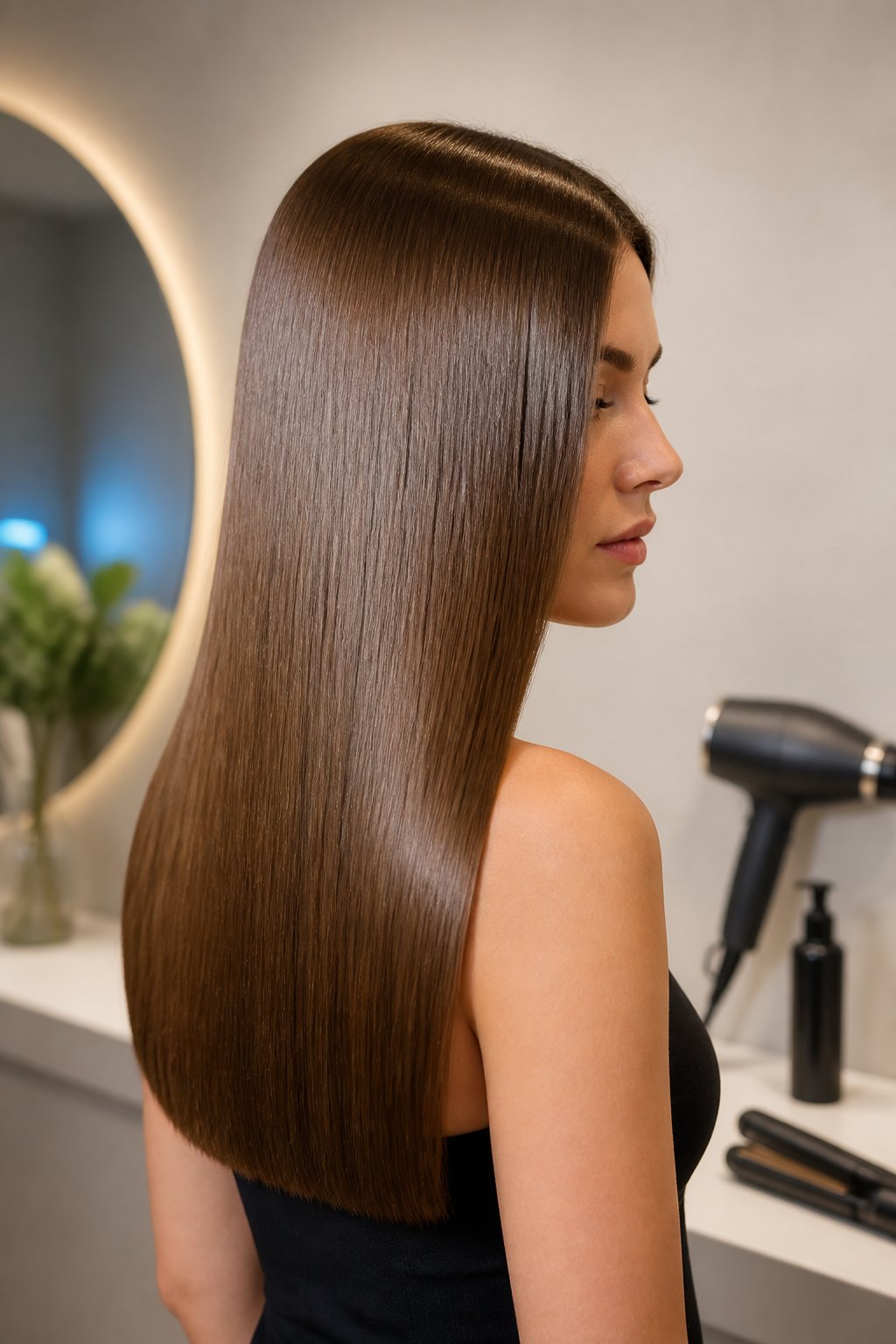
This version relies entirely on precision cutting and a glass-smooth, straight finish to make its statement. There’s no texture or waves involved — just clean lines and high shine from root to tip.
It’s best suited to naturally straight or slightly wavy hair types, since heavily curly hair would require more frequent heat styling to maintain the pin-straight look, which can affect hair health over time.
A ceramic flat iron, a lightweight smoothing serum, and a final blast of cool air from the blow dryer help lock in the sleekness and add a glossy, mirror-like shine.
15. Collarbone Lob for Fine Hair
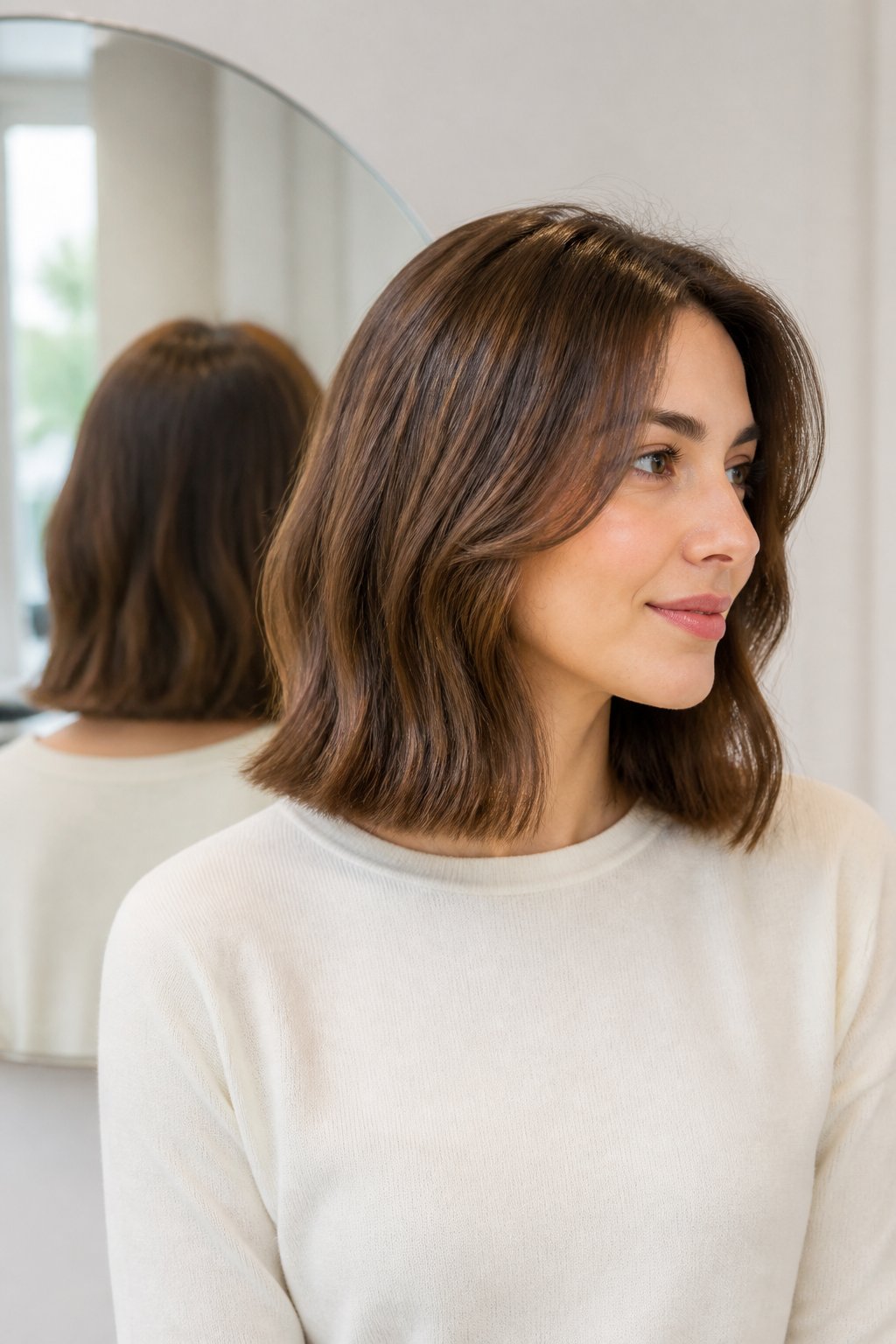
For fine hair, the collarbone lob is typically cut with minimal to no layering, since removing weight can make thin hair look even sparser. A blunt or slightly angled line adds the illusion of thickness instead.
This approach maximizes the appearance of density, and it pairs well with subtle waves or curls, which naturally create the look of added volume and body throughout the hair.
Volumizing mousse applied at the roots before blow-drying upside down helps lift fine hair, while a light-hold texturizing spray adds grip without weighing the strands down.
16. Collarbone Lob for Thick Hair
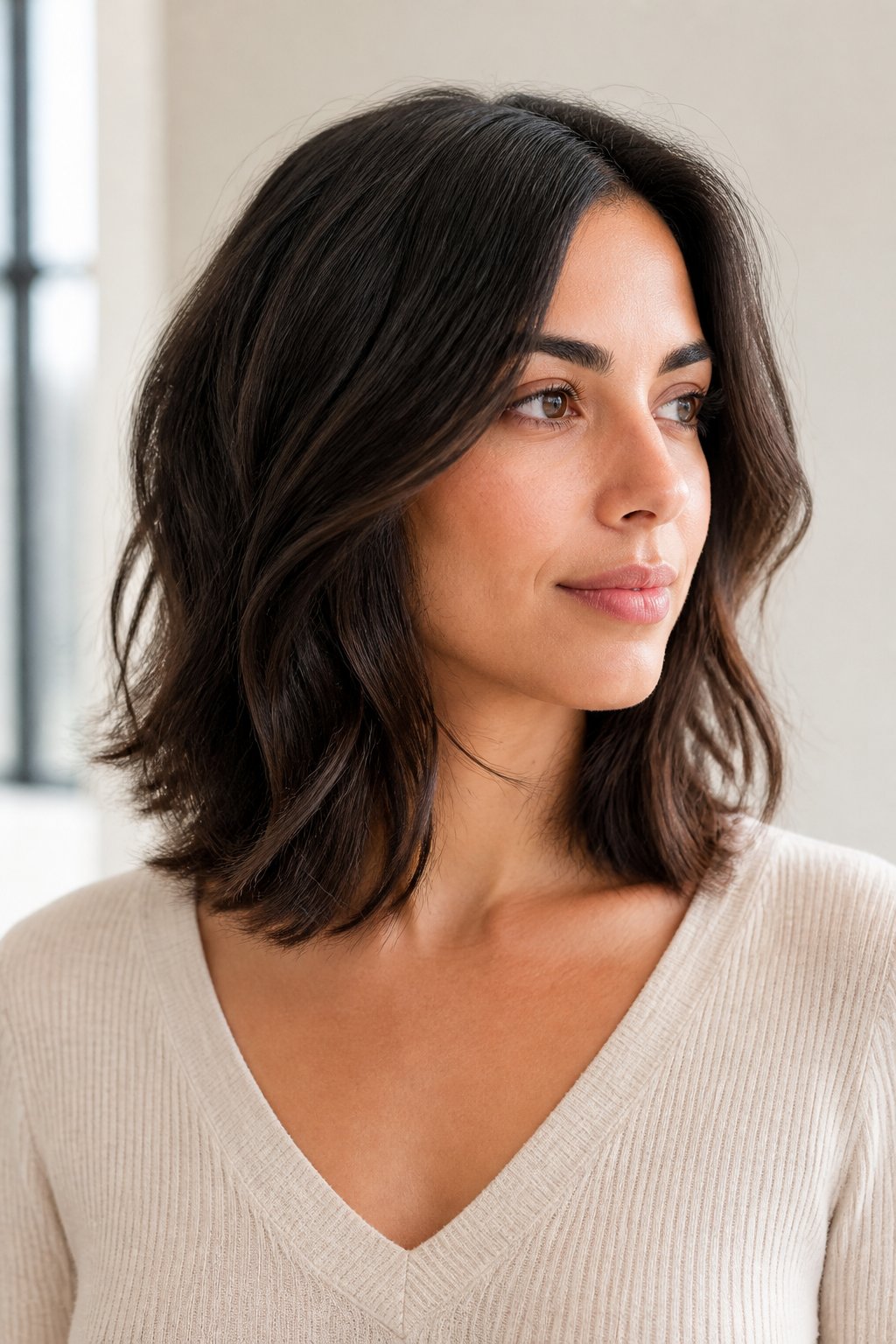
Thick hair benefits from strategic layering within the collarbone lob to remove bulk and prevent a heavy, triangular shape. Internal layers keep the outline smooth while reducing weight from underneath.
This cut helps thick hair feel lighter and more manageable day-to-day, and it also dries faster than longer lengths, which is a welcome bonus for anyone with naturally dense or coarse strands.
A lightweight smoothing cream helps control frizz without adding extra heaviness, and diffusing or air-drying tends to work best to avoid overloading the hair with excess heat styling.
17. Collarbone Lob with Side Bangs
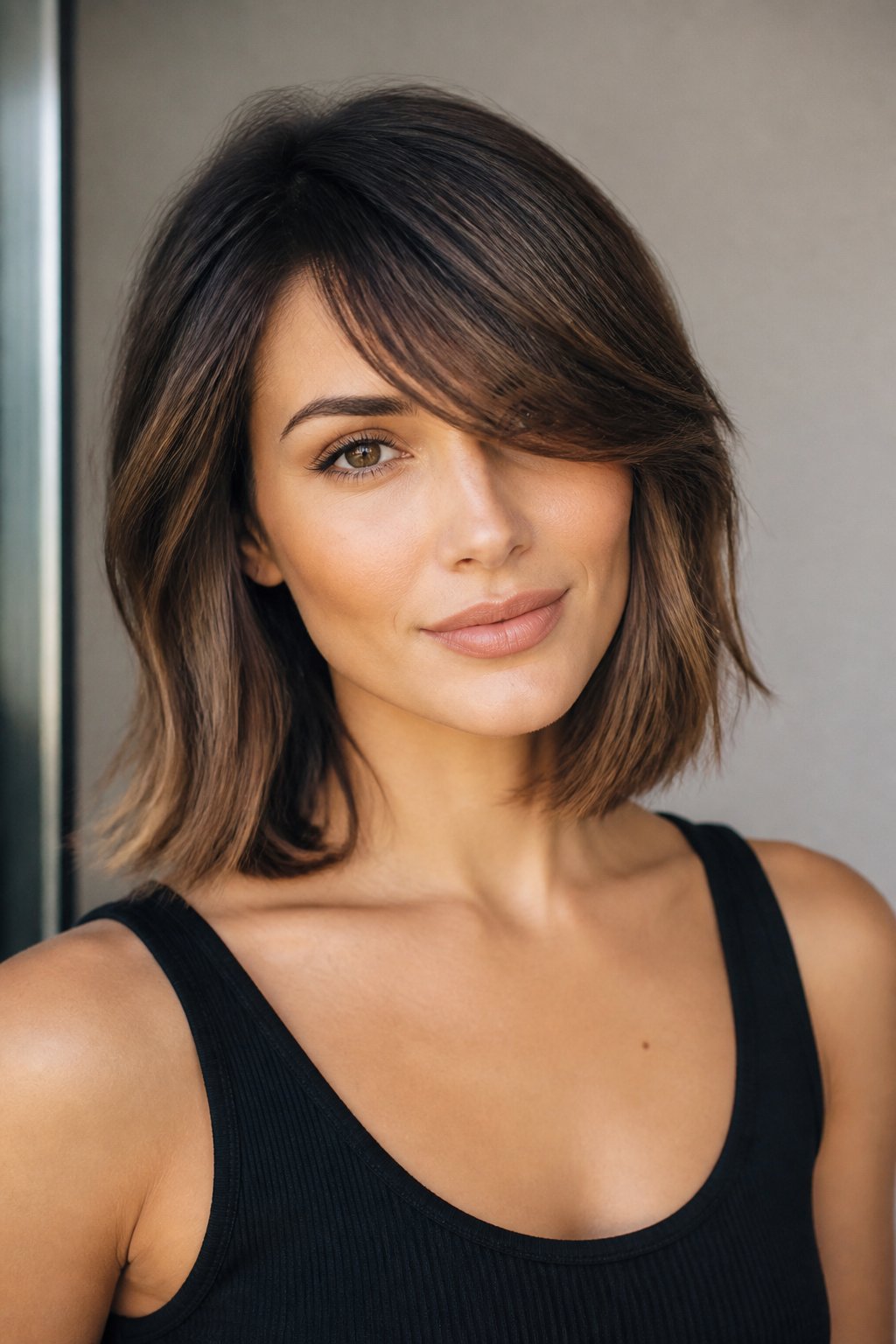
Side-swept bangs are longer than a full fringe and blend into the rest of the hair, sweeping across the forehead toward one side. Combined with a collarbone lob, they create a soft, romantic frame for the face.
This pairing flatters nearly every face shape, particularly square or angular faces, since the diagonal line of the bangs softens harsher features and adds a touch of femininity.
Styling involves blow-drying the bangs to the side with a round brush for a soft curve, while the rest of the hair can be left straight, wavy, or curled depending on preference.
18. Piecey Collarbone Lob
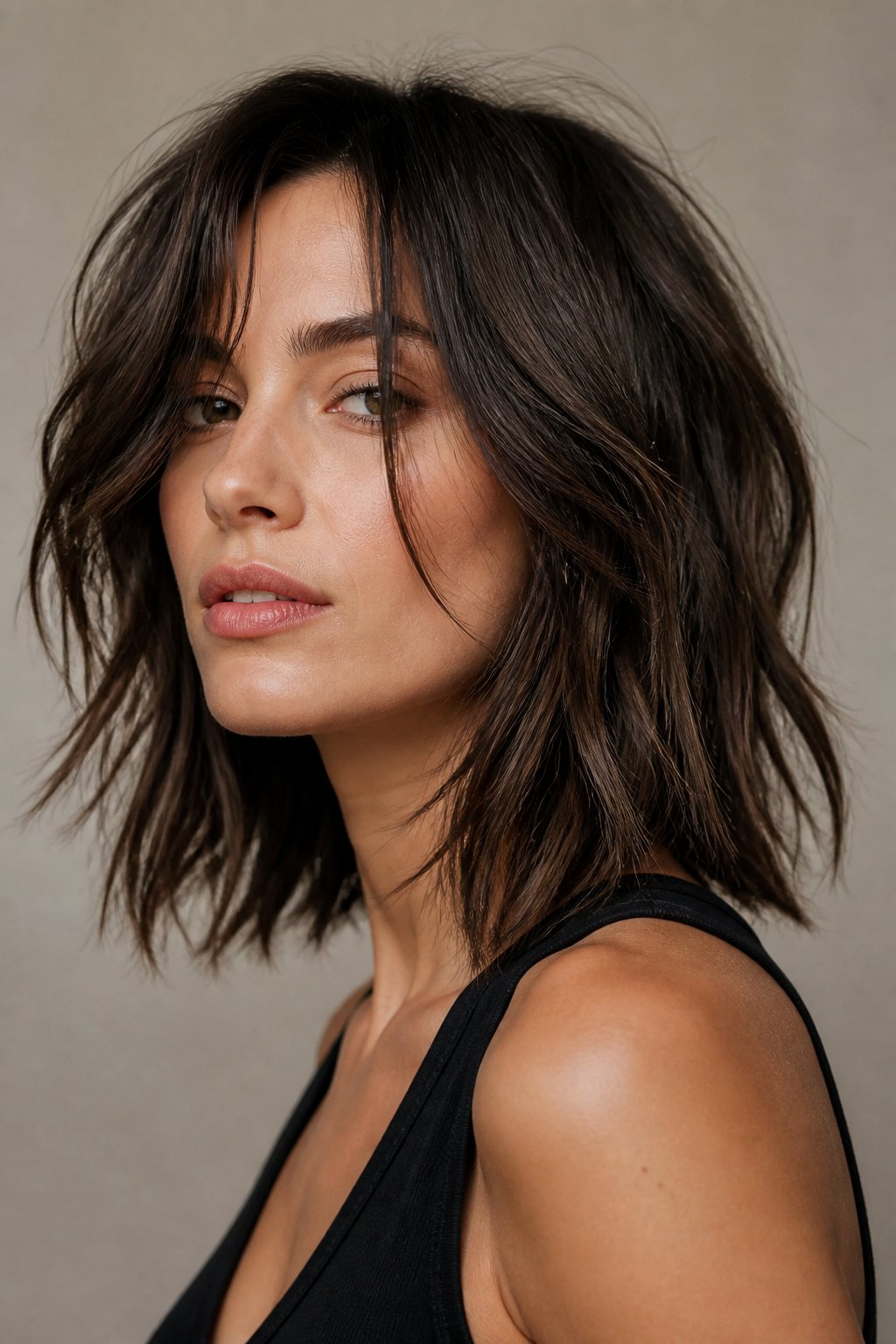
The piecey lob emphasizes individual strands and clumps rather than a uniformly blended shape. Cut using point-cutting techniques, it creates natural-looking separation that gives the hair an undone, effortlessly cool quality.
This style suits medium to thick hair particularly well, since the texture holds up better with more density. It’s also a popular choice for those who prefer a slightly grungy, editorial aesthetic.
A texturizing paste worked through dry ends helps separate pieces further, while avoiding heavy oils or serums keeps the look matte and textured rather than sleek and shiny.
19. Collarbone Lob with Undercut Layers
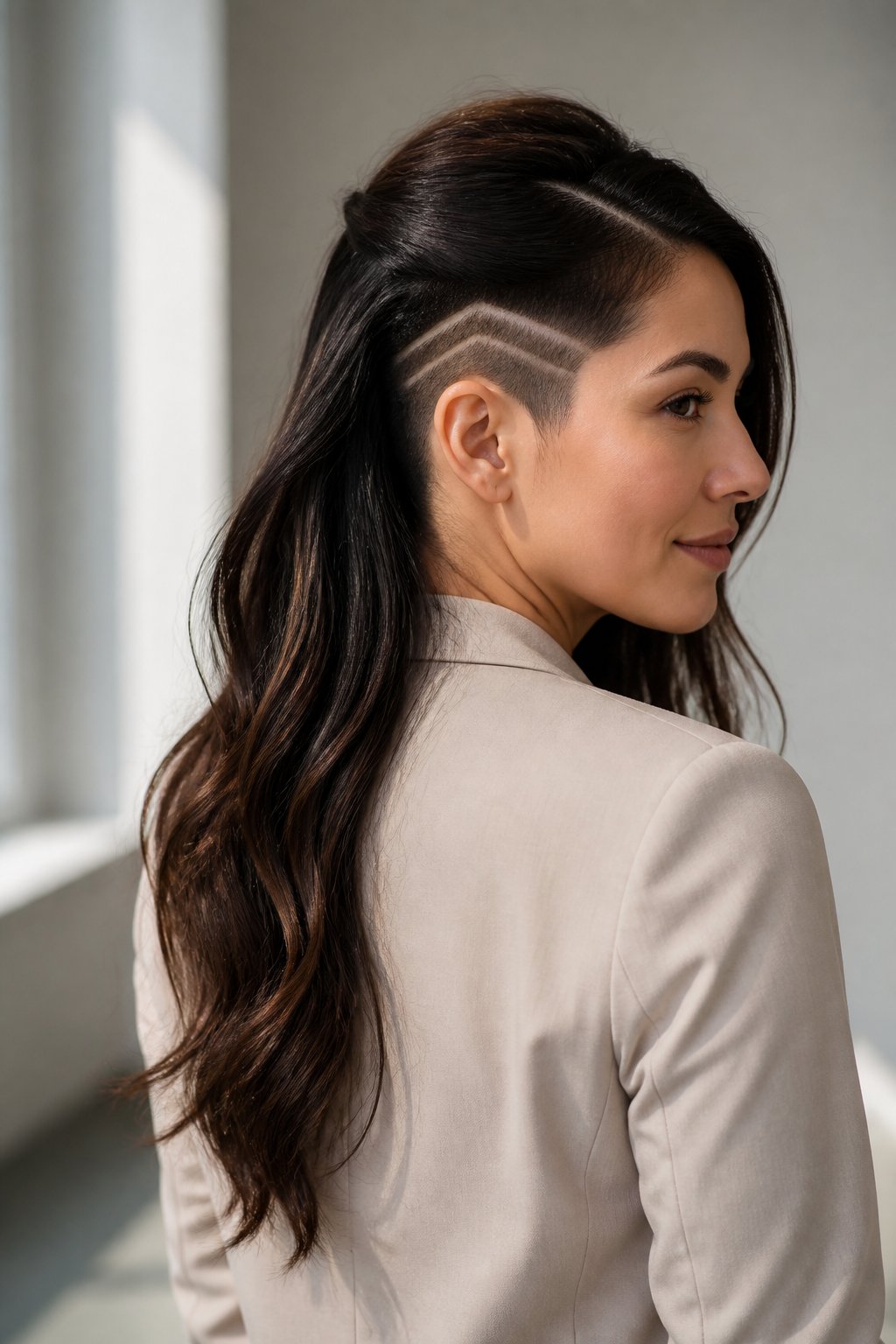
Hidden undercut layers are shaved or cut very short beneath the top layer of hair, adding an edgy secret detail that’s only visible when the hair is pulled back or styled a certain way.
This version appeals to those wanting a bold personal statement while still maintaining a professional, everyday-appropriate look on the surface, since the undercut can be concealed or revealed at will.
Styling usually keeps the top layer smooth or wavy to cover the undercut, though half-up styles or braids can be used to intentionally show off the shaved detail underneath.
20. Modern Shag Collarbone Lob
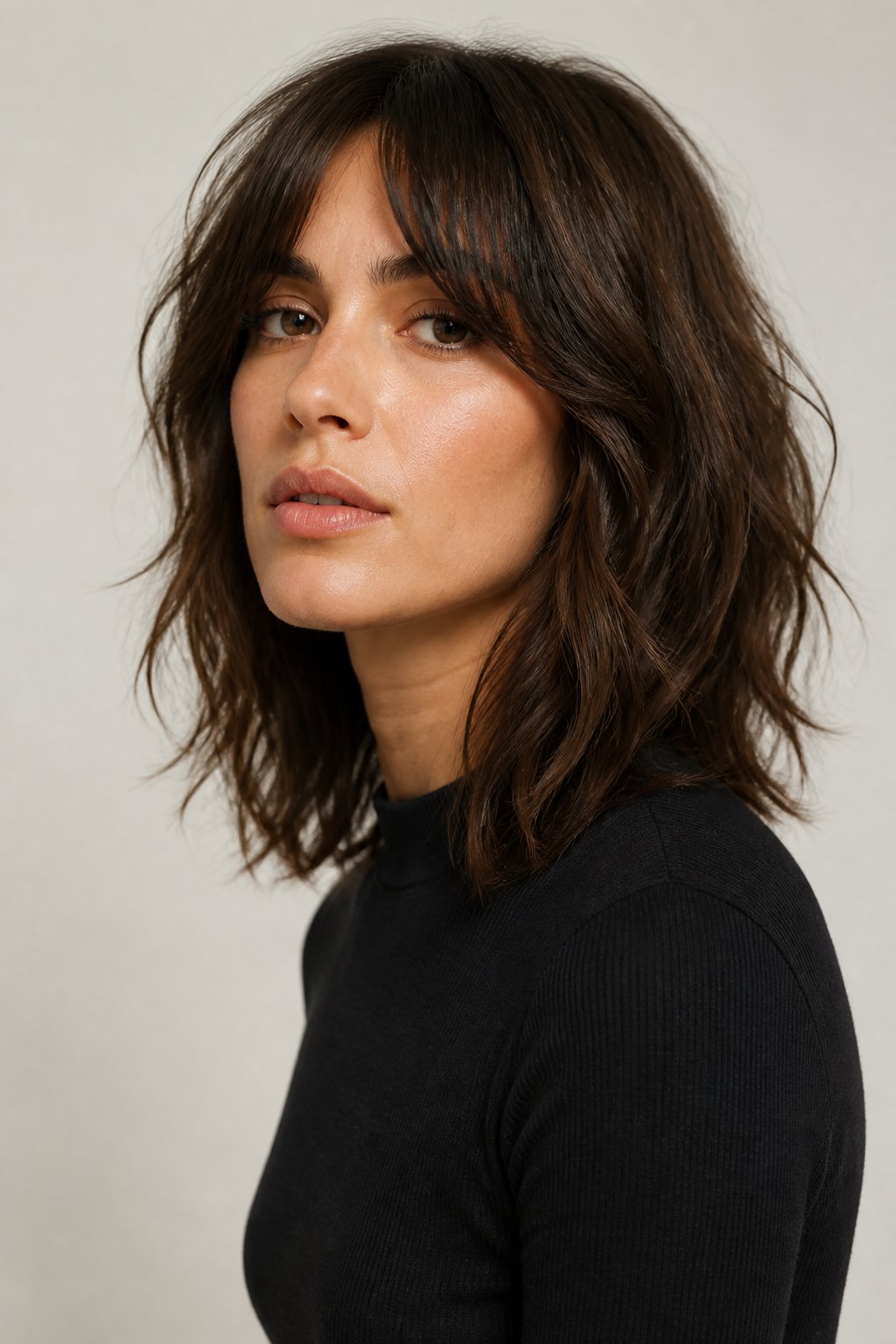
The shag lob combines heavy, choppy layers with a slightly messy, rock-and-roll finish. Face-framing pieces, wispy ends, and curtain bangs create plenty of texture, movement, and dimension.
This haircut suits most hair types, but wavy and curly hair make the style stand out even more. Natural waves and curls enhance the shag’s tousled, effortless character and give the haircut extra volume.
For styling, apply a texturizing spray to damp hair and use a diffuser to enhance the natural texture. Once your hair dries, work a small amount of lightweight wax through the ends to create the piecey, lived-in finish that defines a modern shag lob.
Key Takeaways
- The collarbone lob offers a versatile length that suits nearly every face shape and hair type, including fine, thick, straight, wavy, and curly hair.
- Your choice of layers makes a major difference. Blunt cuts create the appearance of thicker hair, while layered cuts add movement and remove excess bulk from dense hair.
- Curtain bangs, side bangs, micro bangs, and other face-framing details help you customize the haircut to suit your face shape.
- Balayage, foil highlights, ash tones, and other color techniques can give the same collarbone lob a completely different look.
- Each version requires a different styling routine. Sleek lobs usually need more heat styling, while wavy and curly styles often require less daily effort.
FAQ
Q: Who does a collarbone lob suit best?
A collarbone lob suits almost every face shape and hair type. Your stylist can customize the cut with layers, bangs, or added texture to complement fine, straight, thick, wavy, or curly hair.
Q: How often should I trim a collarbone lob?
Plan a trim every 6 to 8 weeks to maintain the shape and keep the ends looking fresh. If you choose a blunt or precision-cut lob, you may need trims a little more often to keep the edges sharp.
Q: Is a collarbone lob good for growing out longer hair?
Yes. A collarbone lob works well as a transitional haircut because it gives you a fresh new look without removing too much length. You can also style it in several ways while your hair continues to grow.
Q: Does a collarbone lob work with curly or coily hair?
Yes. A skilled stylist can shape a collarbone lob around your natural curl pattern and account for shrinkage during the cut. This approach helps the curls fall naturally while keeping the overall shape balanced.
Q: Which collarbone lob requires the least maintenance?
Beachy, wavy, and textured collarbone lobs usually require the least daily styling. These cuts embrace natural movement and texture, so you can achieve a stylish look without creating a perfectly sleek finish every day.


