
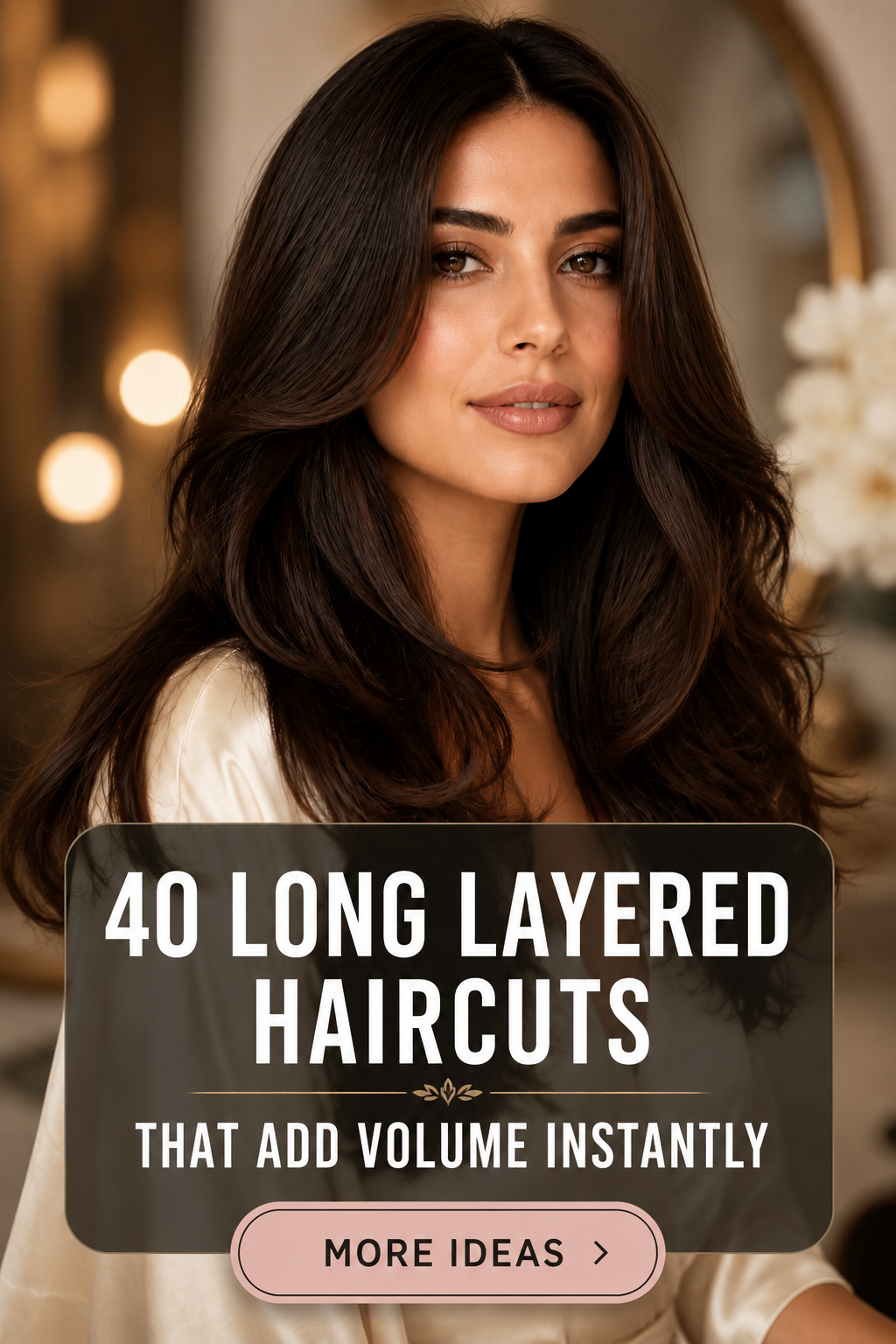
Long hair can look luxurious, but its weight often pulls the roots downward and leaves the overall shape feeling flat. A well-planned layered haircut changes that balance by creating movement, lift, and softness while allowing you to keep the length you have worked hard to grow.
The best long layered haircuts do more than add visible texture. They can frame the face, encourage natural waves, reduce unwanted bulk, and make everyday styling easier. The final result depends on where the shortest layer begins, how much density is removed, and how smoothly the sections blend.
Below are 40 fresh long layered haircut ideas for fine, thick, straight, wavy, and curly hair. Each option includes practical guidance so you can choose a style that suits your texture, maintenance routine, face shape, and preferred level of volume.
What Makes Long Layered Hair Look Fuller?
Layers do not create new strands, but they change how existing hair falls. When all the weight sits at the bottom, the roots can appear flat and the ends can look heavy. Strategic layering redistributes that weight and allows the upper sections to lift more naturally.
Shorter pieces around the crown create stronger height, while longer internal layers add movement without making the haircut look obviously stepped. Face-framing layers can also produce the impression of fullness by adding curves and dimension around the cheeks, jawline, and collarbone.
The most flattering result protects the perimeter while removing only the weight that prevents movement. Fine hair usually needs restrained layering, whereas thick hair can handle deeper internal shaping. Curly hair requires special attention to shrinkage and the way each curl settles after drying.
40 Long Layered Haircut Ideas Worth Saving
1. Softly Blended Classic Layers
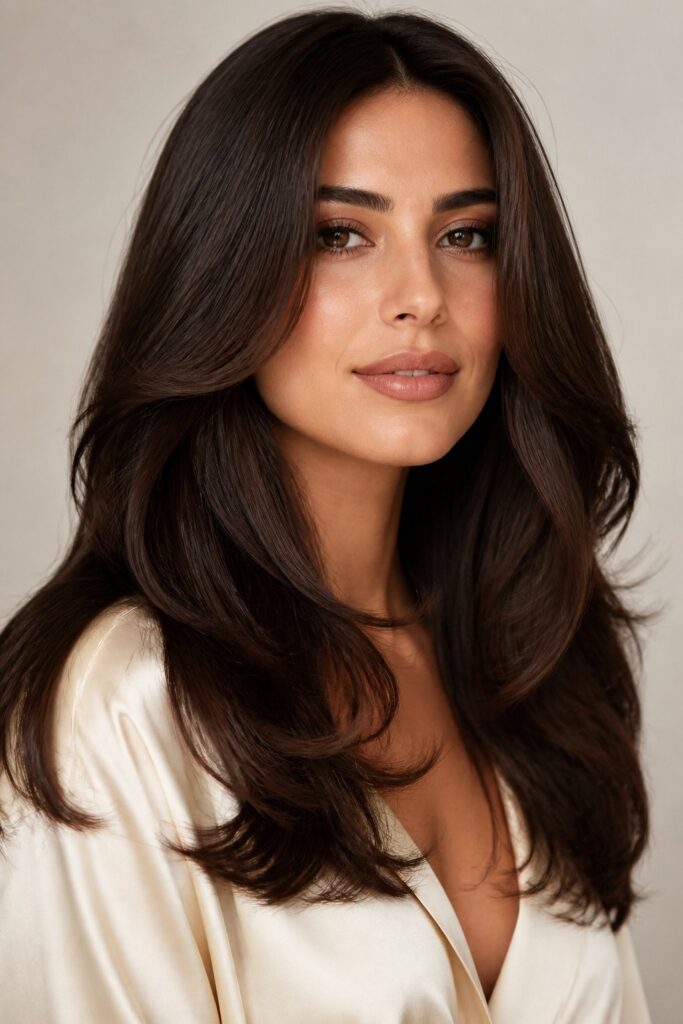
Softly blended layers begin through the mid-lengths and flow gradually into the ends.
This cut keeps the overall silhouette polished and full.
Ask your stylist to preserve a strong bottom line and use long, seamless sections.
2. Sculpted Face-Framing Layers
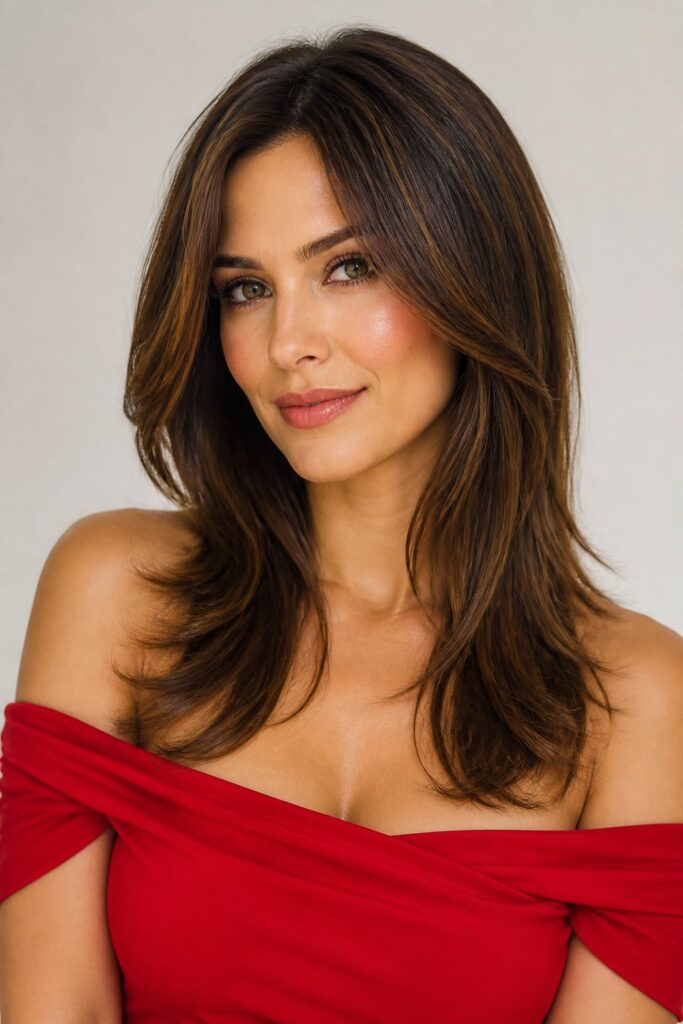
Face-framing layers concentrate movement around the front while leaving most of the back length untouched.
These pieces draw attention to the eyes and cheekbones while softening the jaw.
For a subtle result, begin the shortest layer below the chin.
3. High-Volume Butterfly Layers
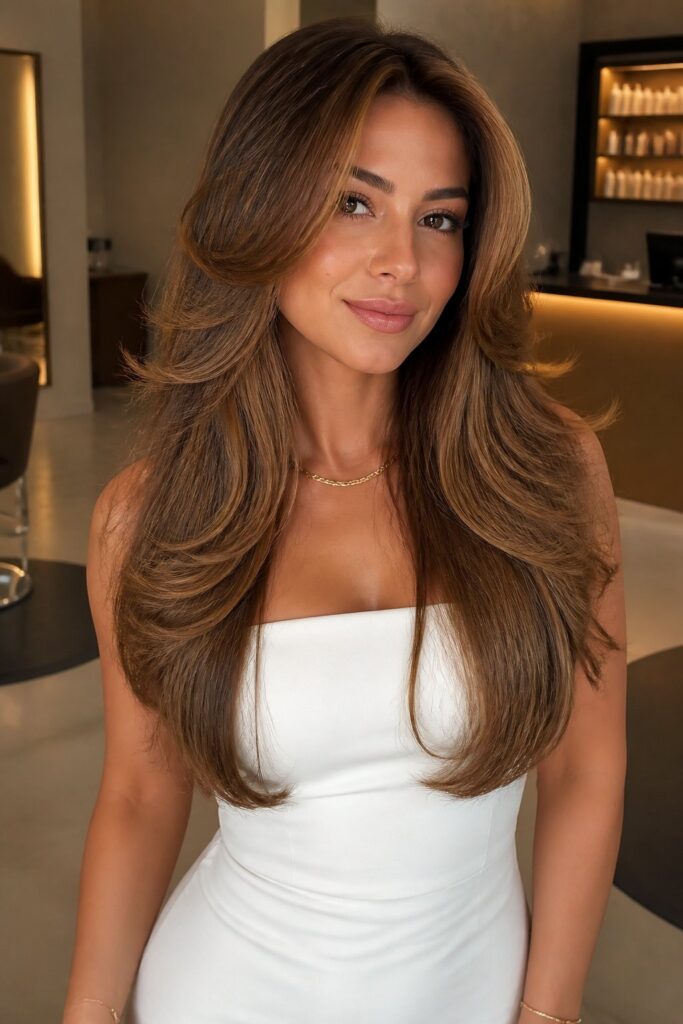
Butterfly layers combine shorter sections around the crown and face with long flowing lengths underneath.
This haircut looks especially glamorous after a round-brush blowout.
Because the contrast between lengths is noticeable, smooth blending is essential.
4. Curtain Fringe With Flowing Layers
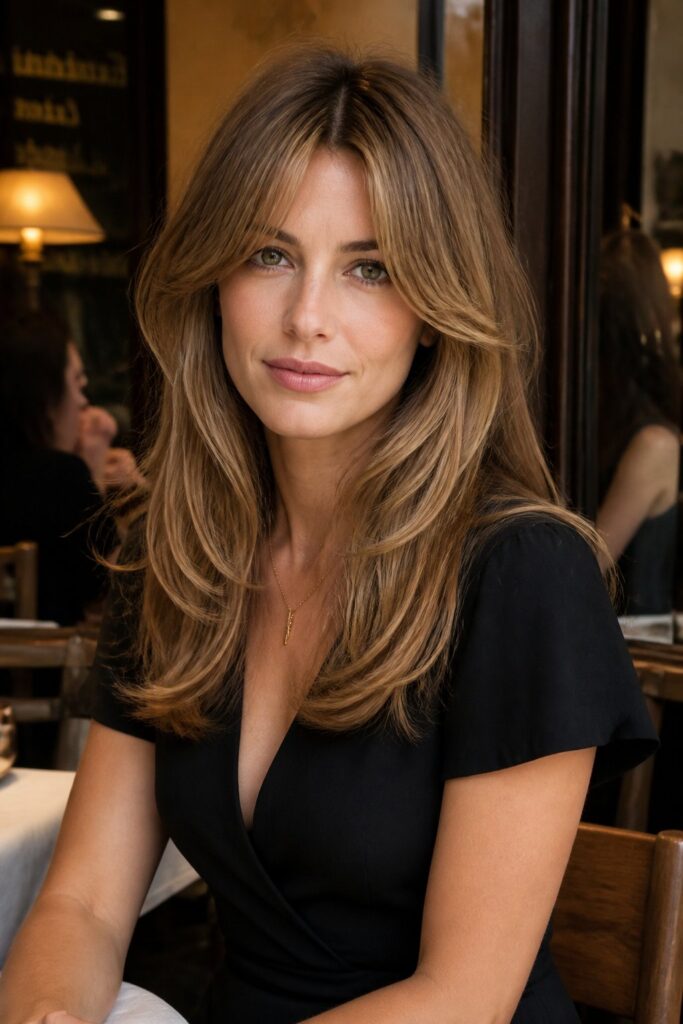
Curtain fringe opens through the center and gradually blends into longer face-framing layers.
The shape creates movement around the forehead and cheekbones without hiding the face.
Style the fringe away from the face using a round brush or large roller.
5. Airy Feathered Layers
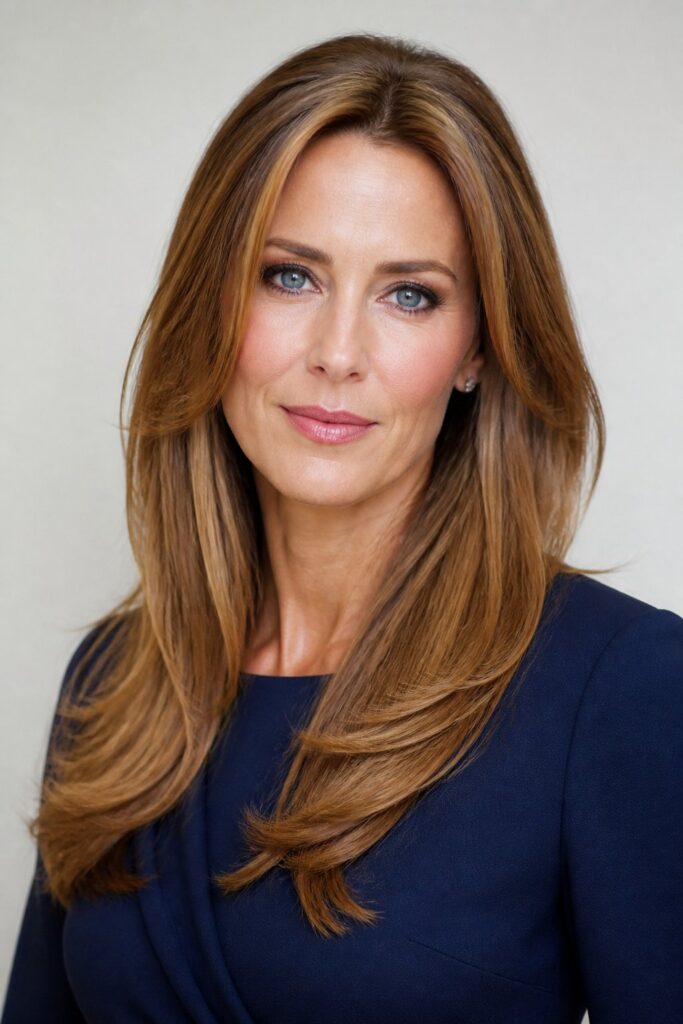
Feathered layers have tapered ends that sweep lightly away from the face.
This style is especially effective on straight hair that tends to fall in one flat sheet.
A smooth blowout or gentle flat-iron bend will highlight the feathered sections.
6. Rounded U-Shaped Layers
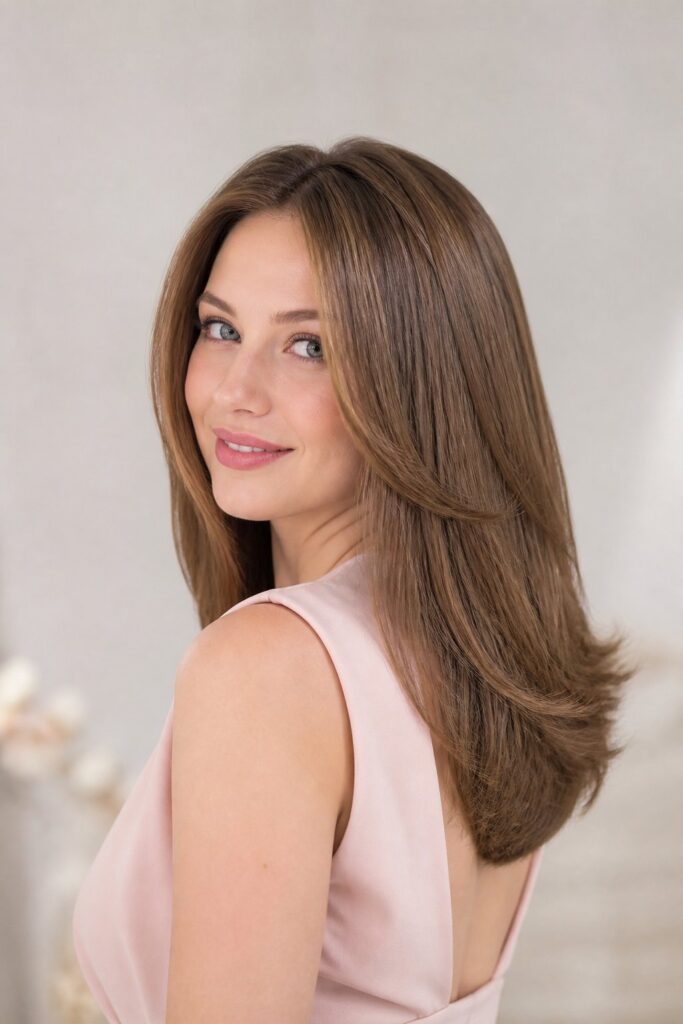
A U-shaped cut forms a soft curve across the back, with the center remaining slightly longer than the sides.
This outline is less dramatic than a V-cut and often makes the ends appear thicker.
The U-shape is ideal for anyone growing long hair who wants polish without losing too much length.
7. Dramatic V-Shaped Cascading Layers
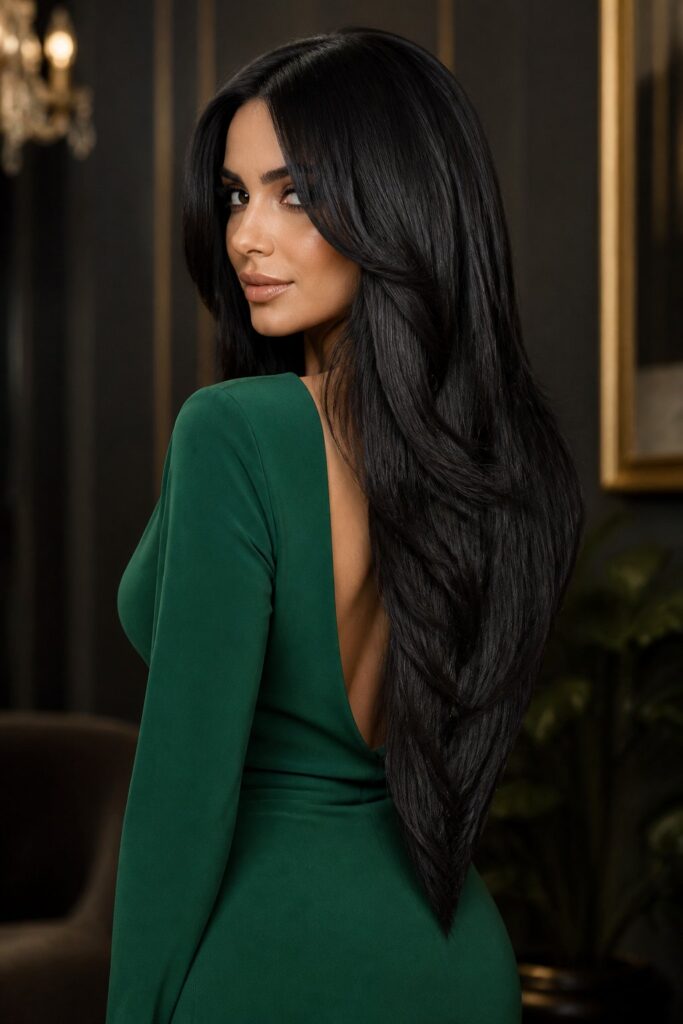
A V-shaped haircut narrows toward a point in the center of the back.
This style gives long hair a more dramatic silhouette than a rounded cut.
Discuss how deep you want the V to be before cutting.
8. Invisible Internal Layers
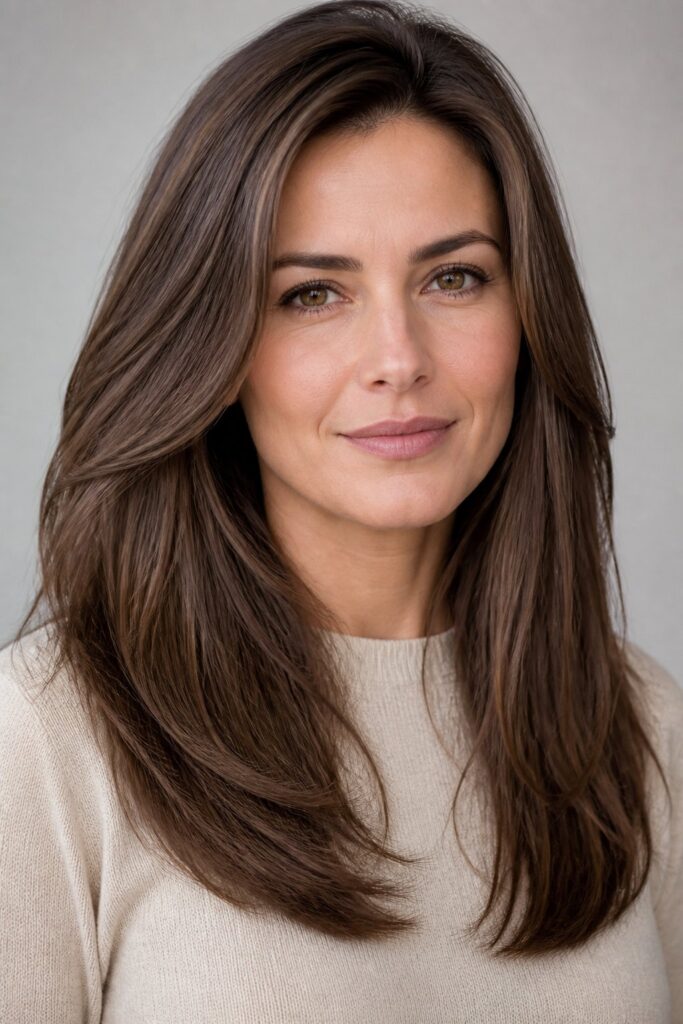
Invisible layers are cut inside the haircut rather than displayed as obvious shorter sections.
This technique can improve movement, reduce heaviness, and help the roots lift while preserving a smooth outer surface.
Choose a stylist experienced in internal layering because precision matters.
9. Density-Saving Layers for Fine Hair
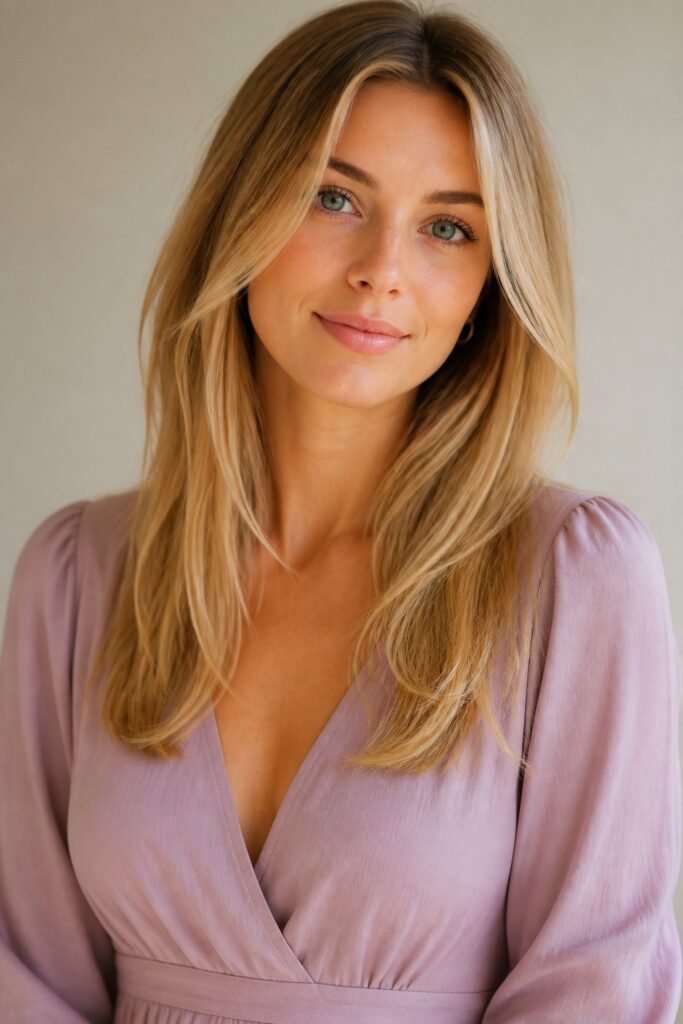
Fine hair benefits from long, restrained layers that create movement without sacrificing the bottom line.
A strong perimeter makes the ends appear fuller, while a few carefully placed internal sections prevent the style from hanging flat.
Ask your stylist to start conservatively and avoid aggressive thinning shears.
10. Weight-Removing Layers for Thick Hair
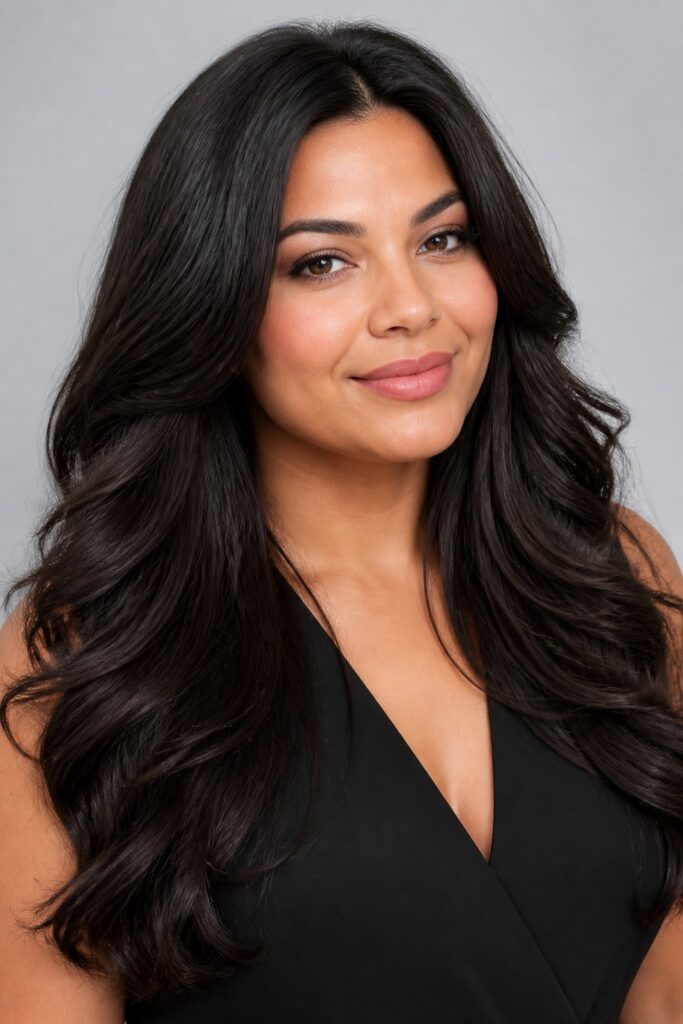
Very thick long hair can feel heavy, bulky, and difficult to dry.
The reduced bulk allows waves and curls to form more easily and makes blow-drying faster.
Ask for strategic weight removal rather than repeated thinning at the surface.
11. Sleek Layers for Straight Hair
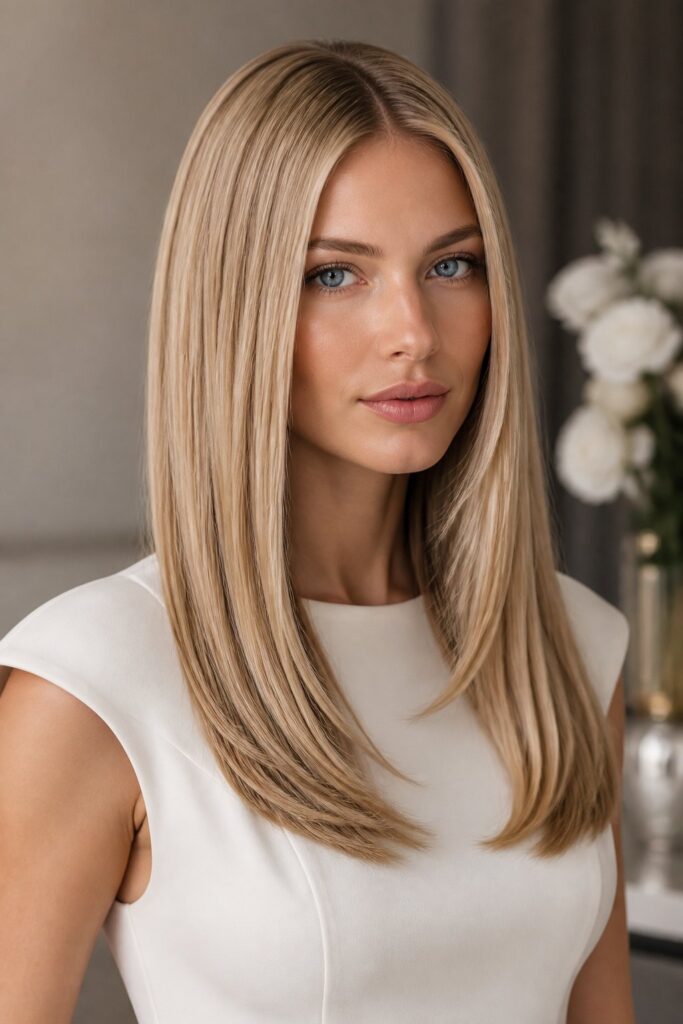
Straight hair often reveals every line in a haircut, so the layers should be smooth and carefully blended.
The shape becomes more visible when the ends are curved slightly inward or outward.
This is a practical option for low-maintenance routines because it still looks polished when air-dried.
12. Wave-Enhancing Long Layers
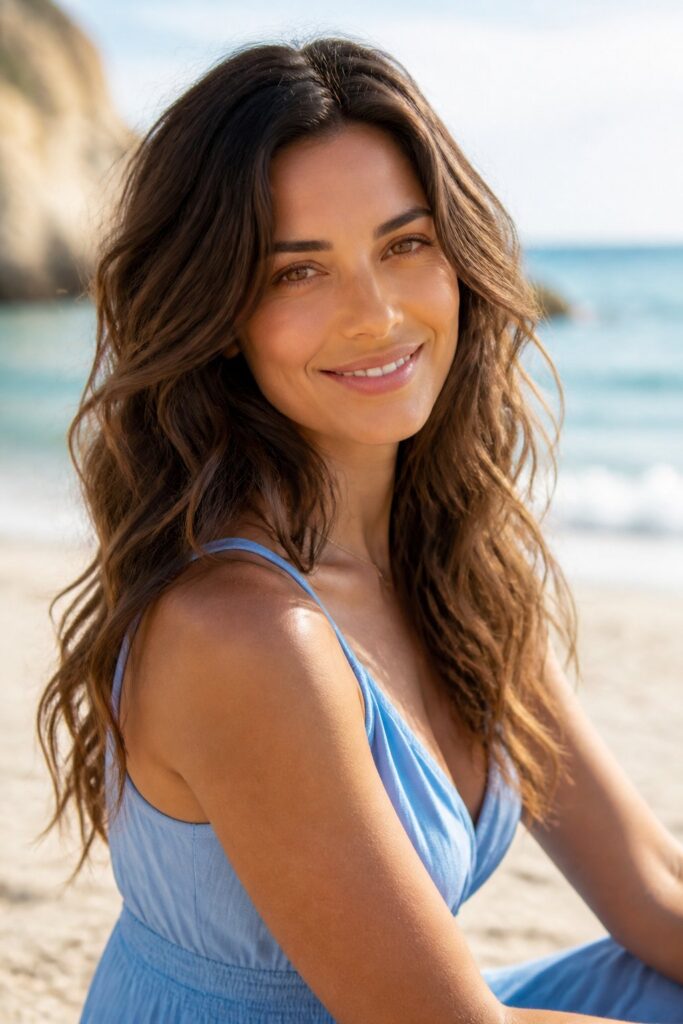
Natural waves can disappear under the weight of long, one-length hair.
The result feels relaxed and dimensional rather than overly styled.
Apply lightweight mousse to damp hair and scrunch gently before air-drying or diffusing.
13. Curl-Shaping Rounded Layers
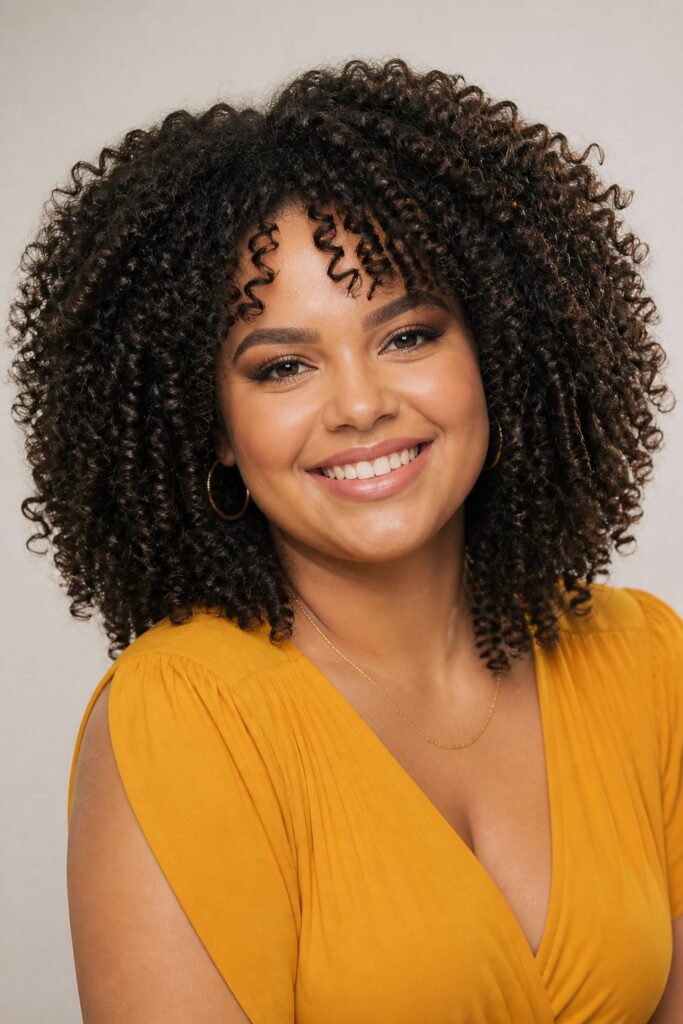
Long curly hair needs layers that follow its natural spring, shrinkage, and density.
The right structure encourages definition around the crown and sides while keeping the overall length balanced.
A dry, curl-by-curl cutting method often provides the most predictable result.
14. Wispy Bangs With Delicate Layers
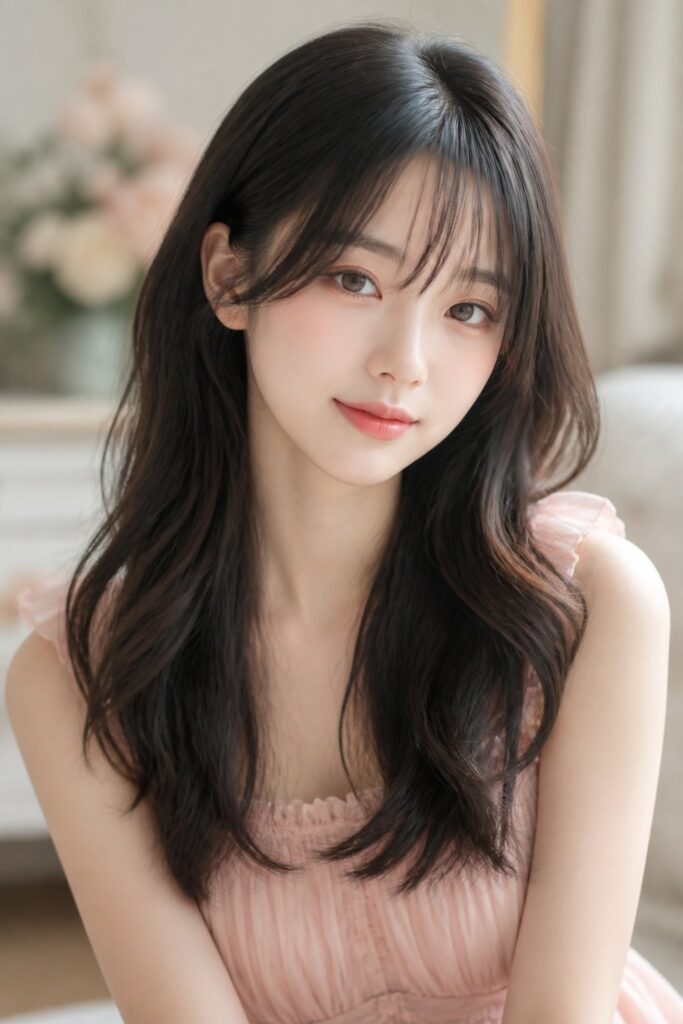
Wispy bangs create a light, transparent frame across the forehead and blend softly into longer layers.
The airy fringe pairs beautifully with loose waves, romantic curls, and soft blowouts.
Keep the bangs light if your hair is fine, and ask for slightly longer outer pieces that connect to the face frame.
15. Side-Swept Fringe With Long Layers
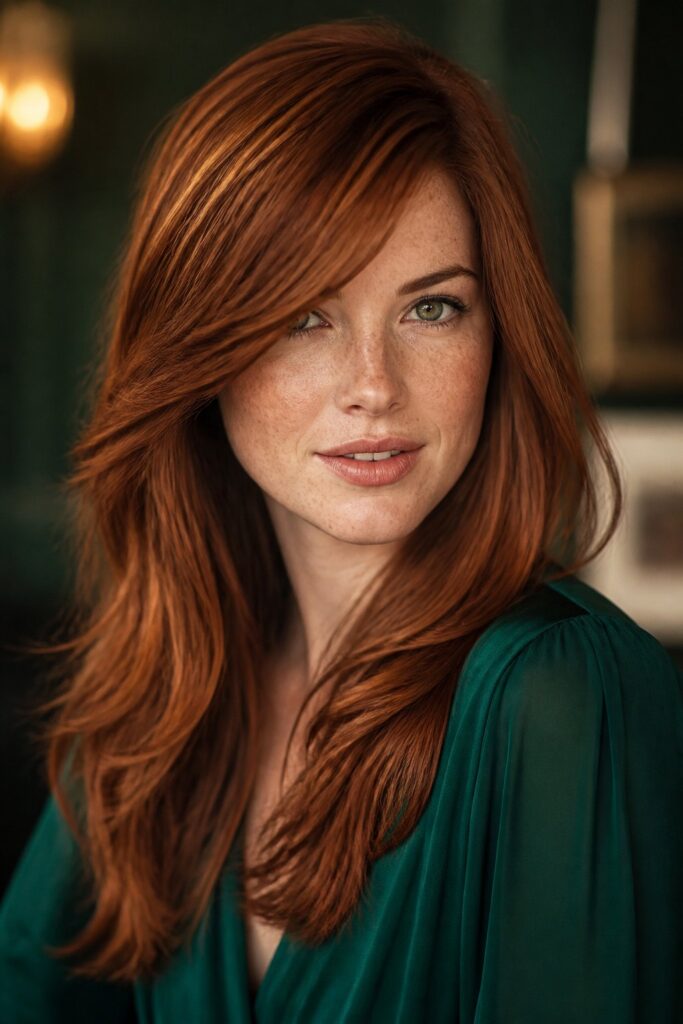
A side-swept fringe introduces diagonal movement across the face and blends naturally into cheekbone or jaw-length layers.
This shape is flattering for people who prefer an off-center part or want to balance angular features.
Ask for enough length to change the part when desired.
16. Bold Blunt Bangs With Flowing Lengths
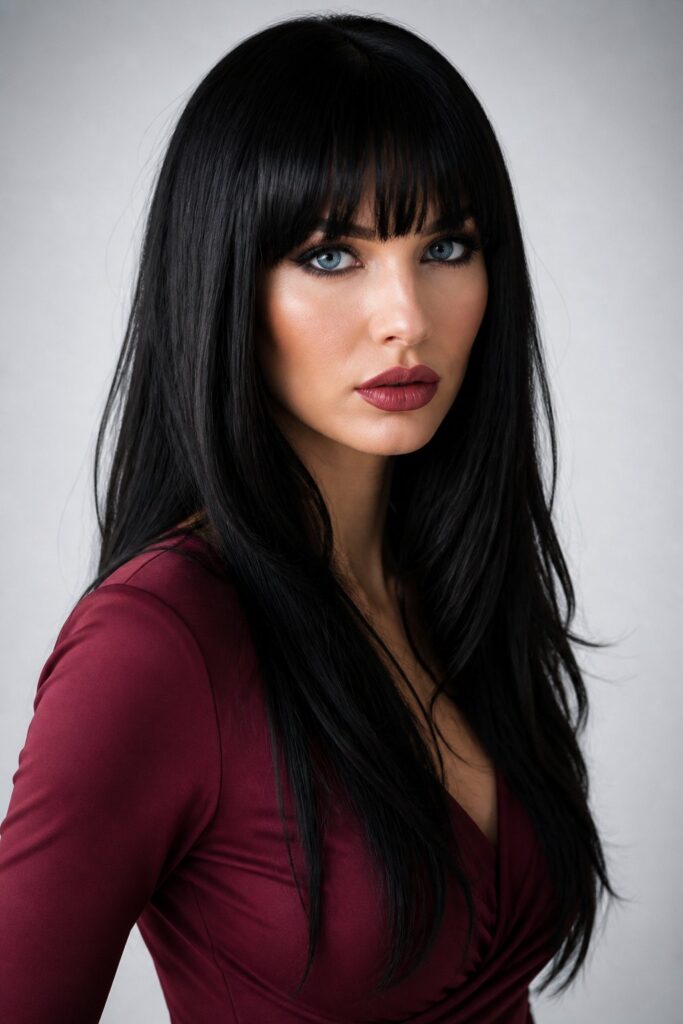
Blunt bangs create a clear contrast against long, soft layers.
This combination can visually shorten a long forehead and create a stylish, editorial effect.
Blunt bangs require regular trims and daily attention, especially on hair that grows quickly or separates easily.
17. Relaxed Textured Long Shag
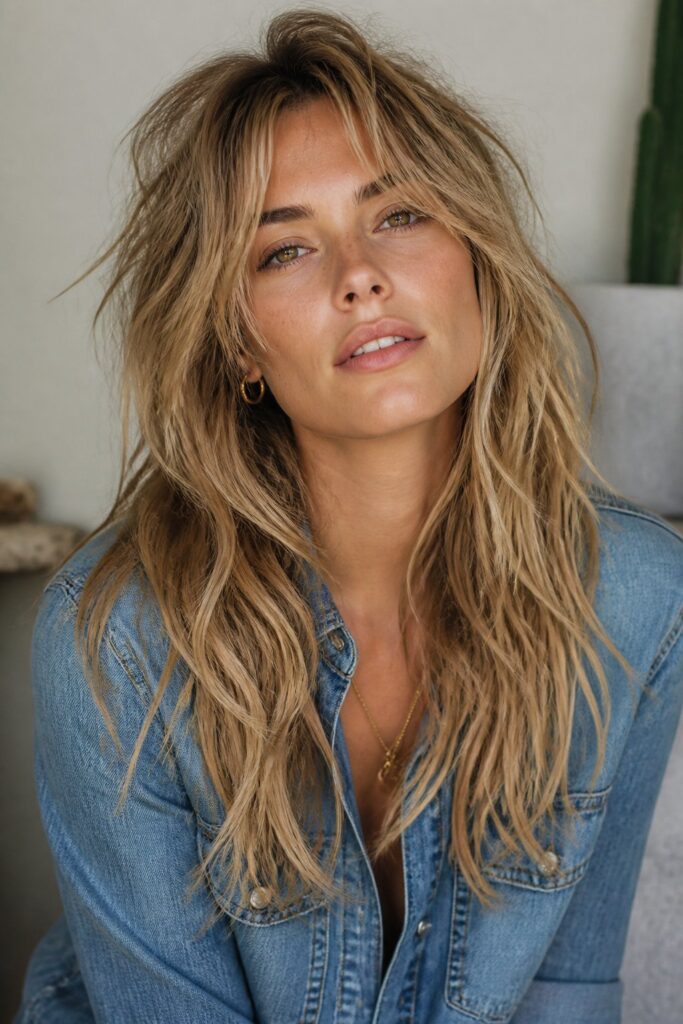
The long shag uses shorter crown layers, textured mid-lengths, and lighter ends to create effortless volume.
The crown gains lift while the lower sections remain loose and mobile.
Use a curl cream, mousse, or dry texture spray instead of smoothing every section.
18. Soft Shag-Inspired Layers
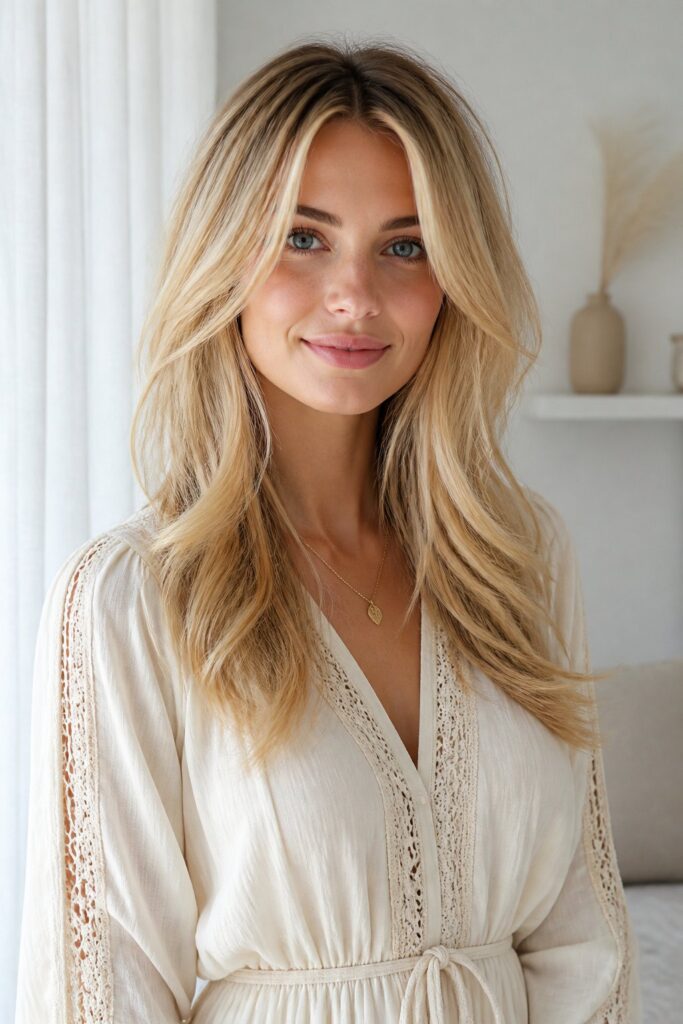
A soft shag offers the volume of a traditional shag without extreme choppiness.
This version is easier to wear for work, special occasions, and everyday styling.
Request gradual transitions and avoid very short crown pieces.
19. Long Wolf-Inspired Cut
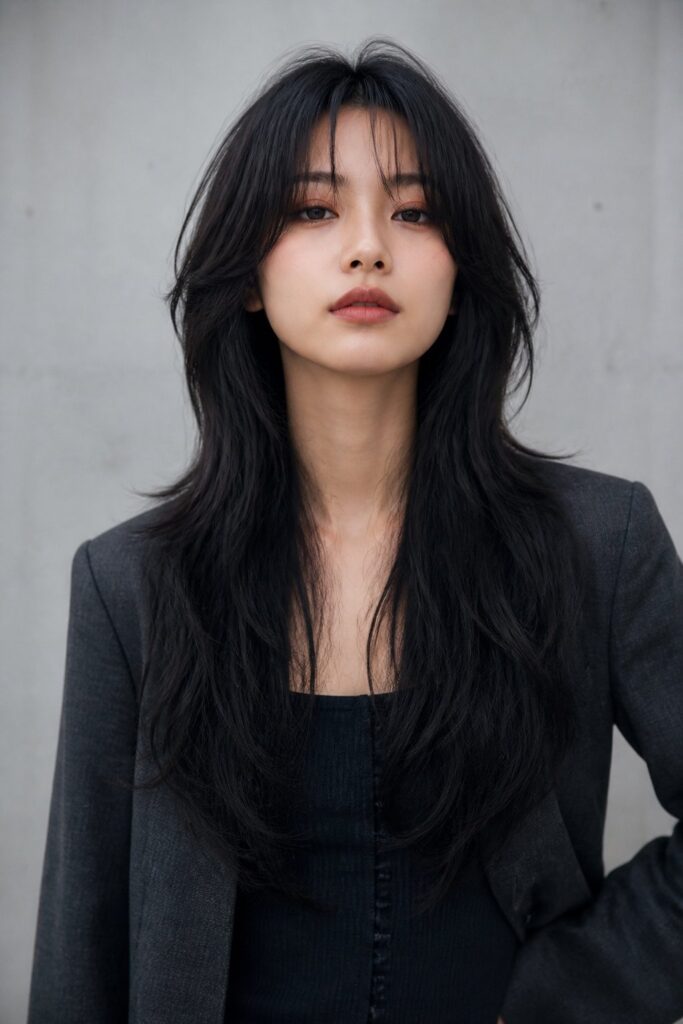
The long wolf cut combines short, noticeable crown layers with extended lengths underneath.
This haircut suits hair that naturally holds wave or texture.
Bring several reference images because wolf cuts vary widely in intensity.
20. Nineties-Style Rounded Face Layers
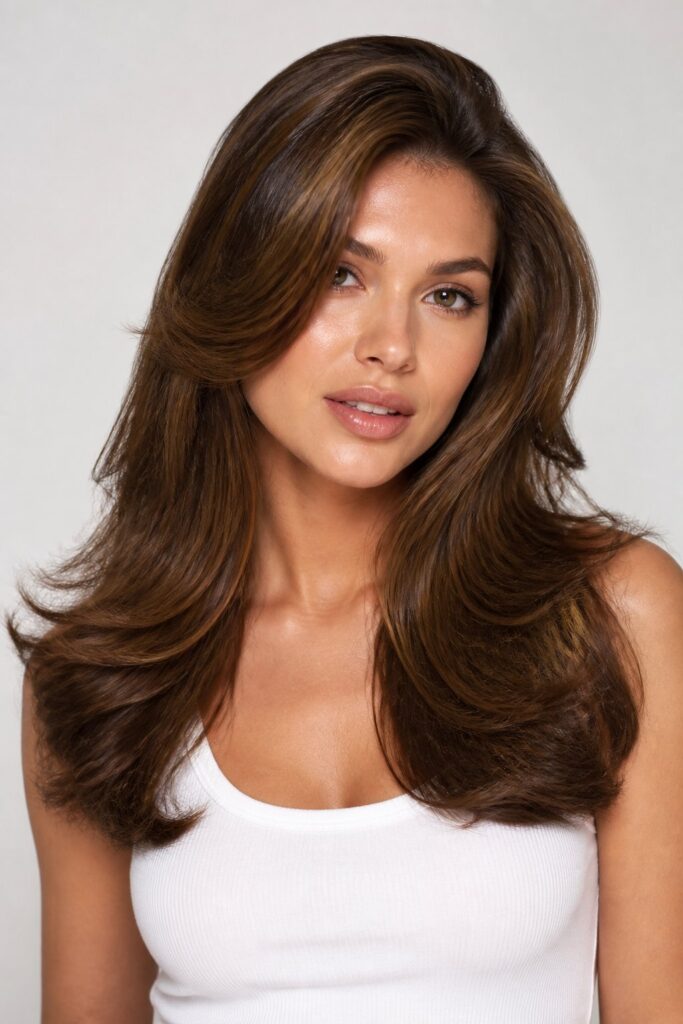
Nineties-inspired layers curve dramatically away from the cheeks and create a full, polished frame around the face.
These layers add width through the sides and make long hair feel glamorous without shortening the overall length.
Use large rollers after blow-drying to help the curve last.
21. Outward-Flipped Layered Ends
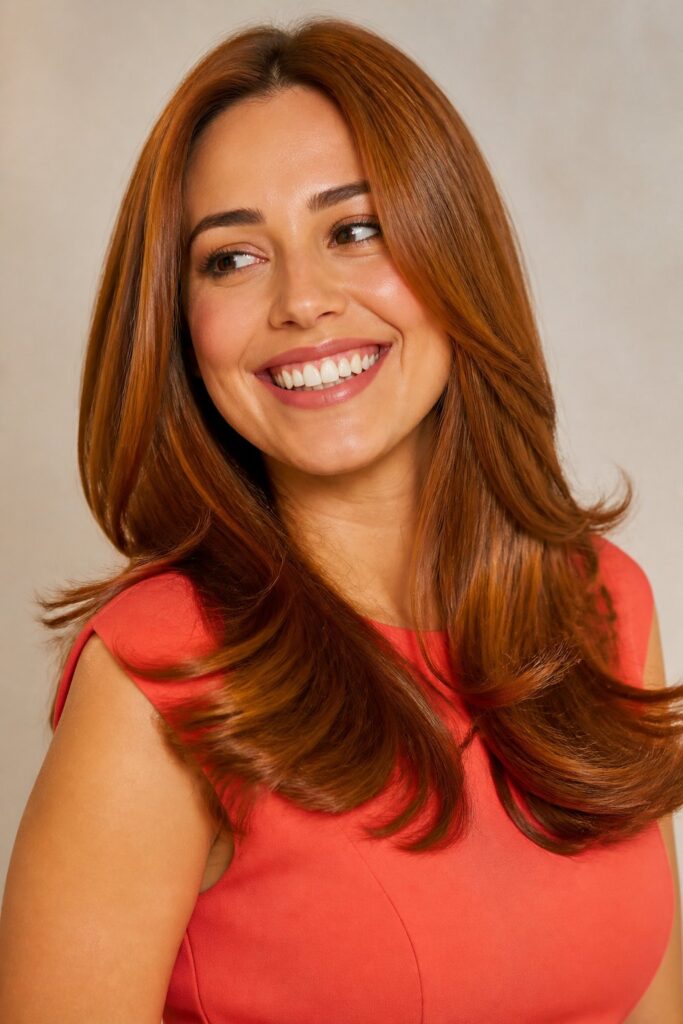
Outward-flipped ends give long layers a playful retro finish.
The flip creates extra width and movement through the lower half of the haircut.
Create the shape using a round brush or straightener, then allow the ends to cool before touching them.
22. Symmetrical Layers With a Center Part
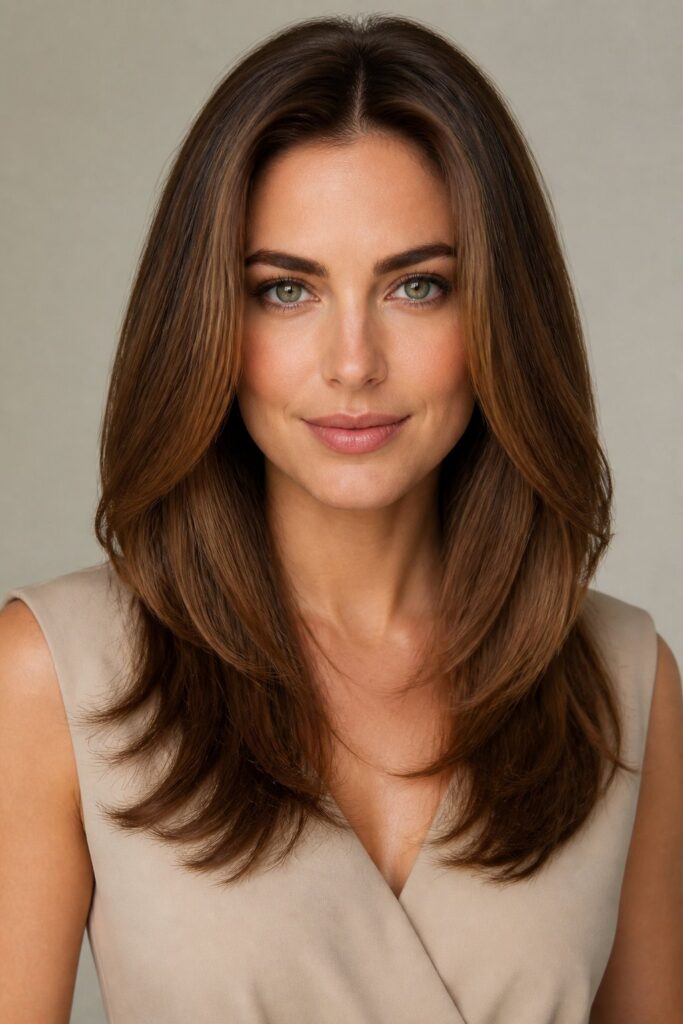
A center part gives face-framing layers equal movement on both sides.
This arrangement can make the hairstyle appear balanced and polished in photographs.
To prevent the roots from falling flat, lift each front section away from the scalp while drying.
23. Glamorous Layers With a Deep Side Part
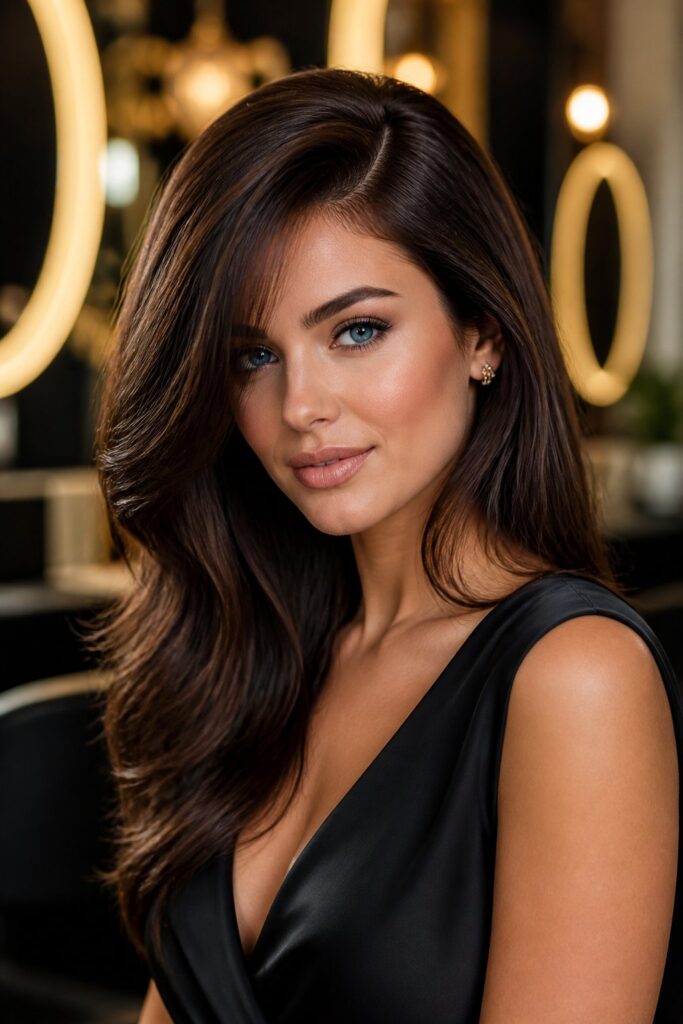
A deep side part instantly shifts more hair to one side and creates natural root lift.
The heavier side sweeps across the forehead and highlights the movement of the face-framing pieces.
This styling method works well for special occasions and can soften angular features.
24. Lifted Crown Layers
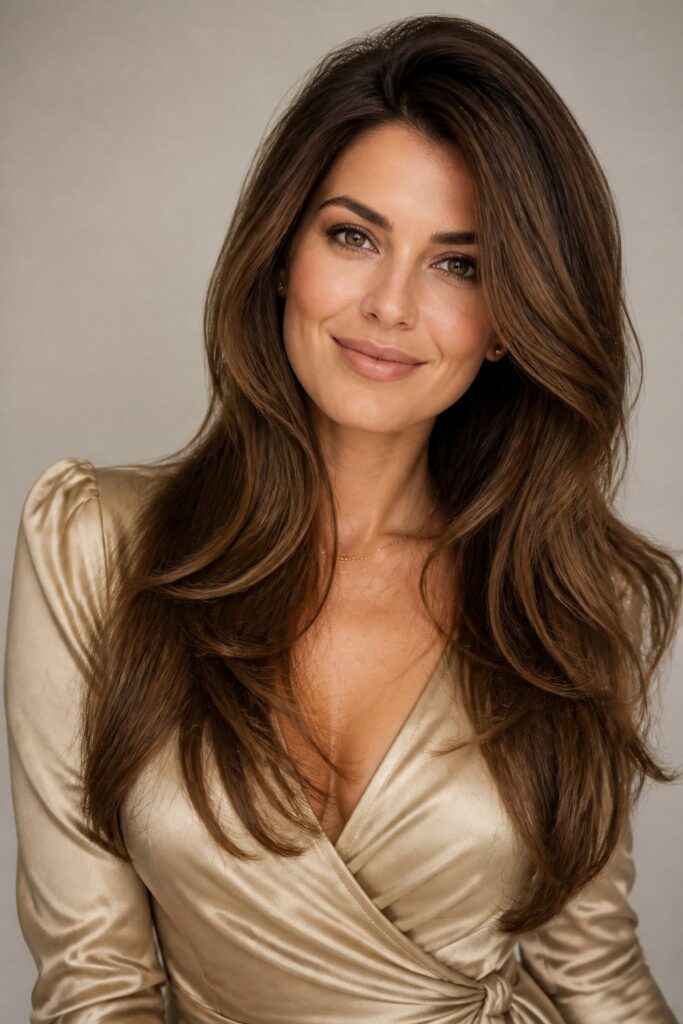
Crown layers are placed high enough to help the top sections stand away from the head.
The pieces must remain long enough to merge into the lower lengths.
Explain how much daily styling you are willing to do before choosing the length.
25. Waterfall Cascading Layers
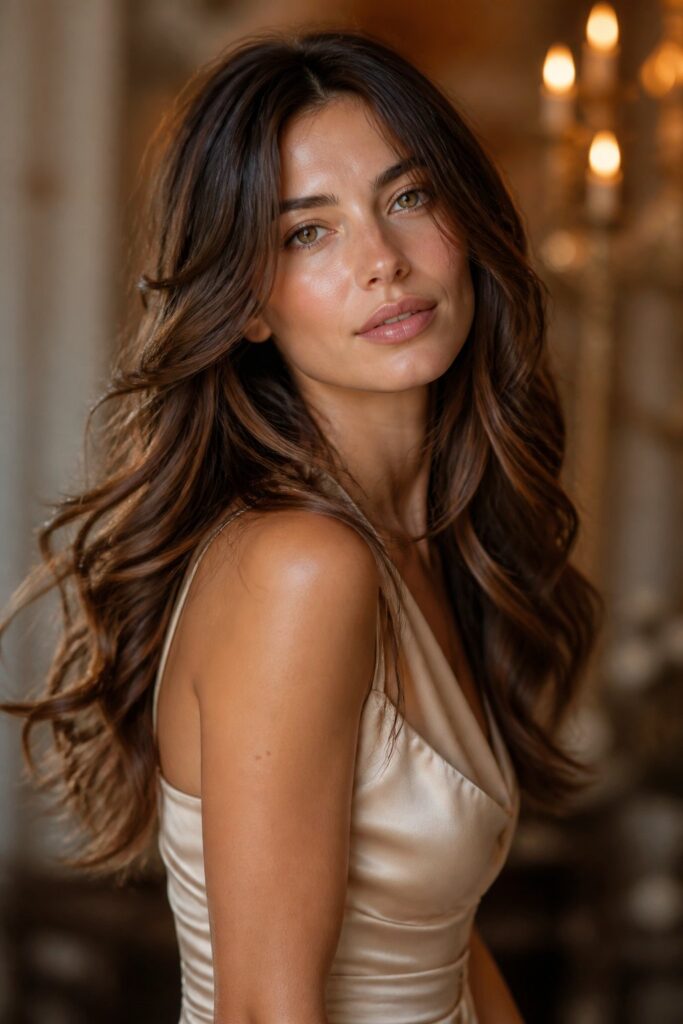
Waterfall layers progress smoothly from shorter front sections to longer pieces through the back.
When curled, each layer falls over the next and produces beautiful depth.
This style suits medium to thick hair and looks attractive with balayage or highlights.
26. Modern Choppy Long Layers
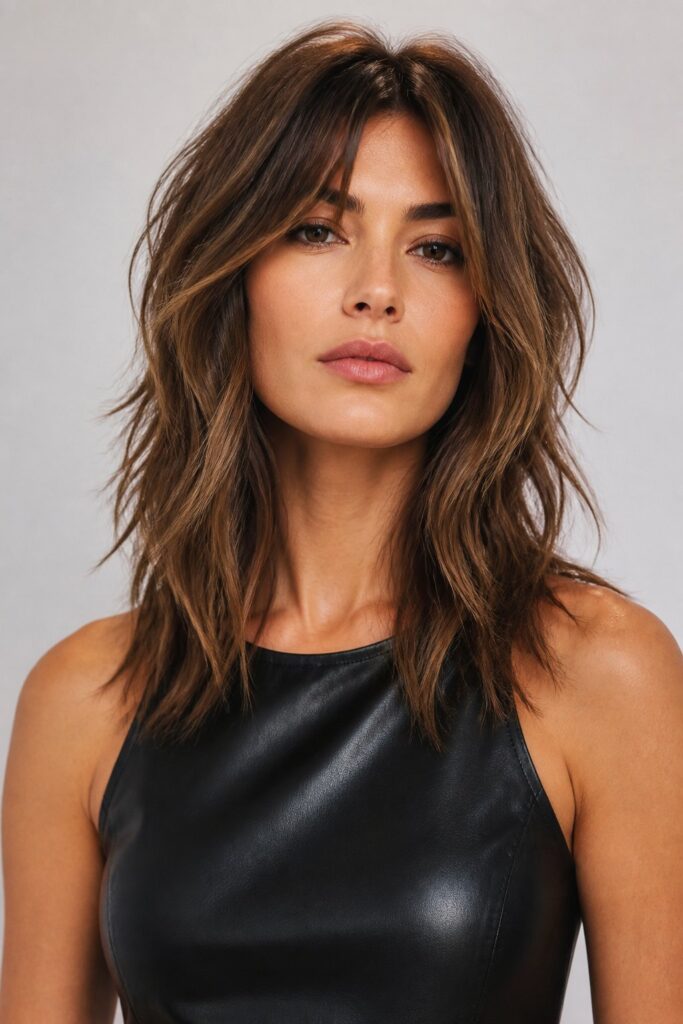
Choppy layers create visible separation and a less formal finish.
This shape can reduce heaviness and make long hair feel more energetic.
Use a small amount of texture cream or spray to emphasize the pieces.
27. Defined Piecey Layers
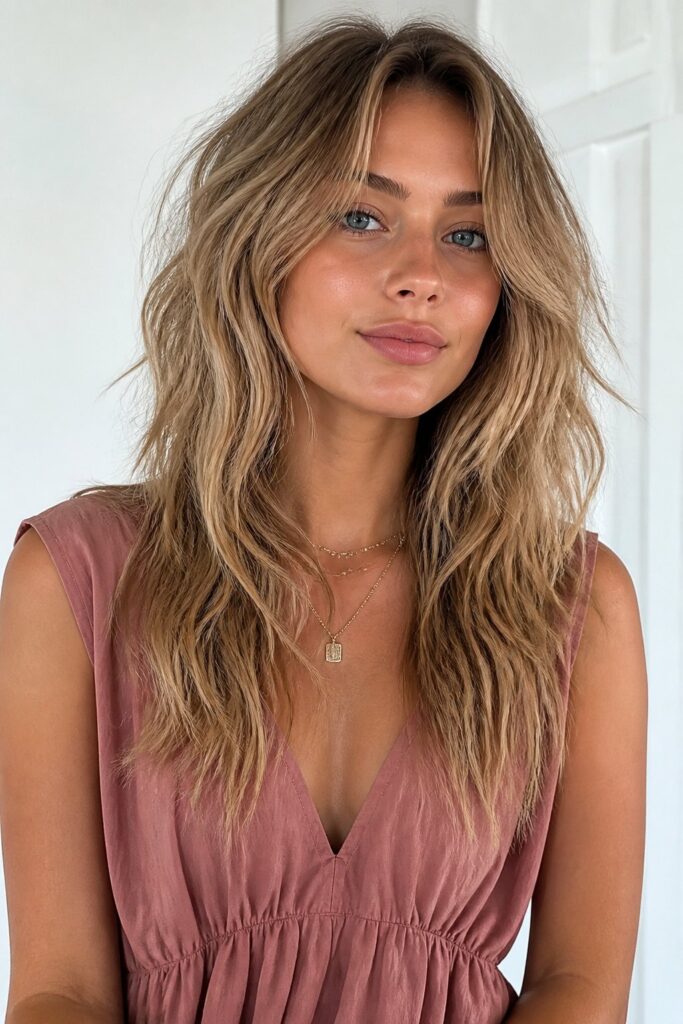
Piecey layers are styled so selected strands stand out from the surrounding hair.
A tiny amount of lightweight styling cream can separate the ends while keeping them flexible.
This finish works best on hair that already has layered structure, such as a shag, wolf cut, or choppy style.
28. Rounded Blowout Layers
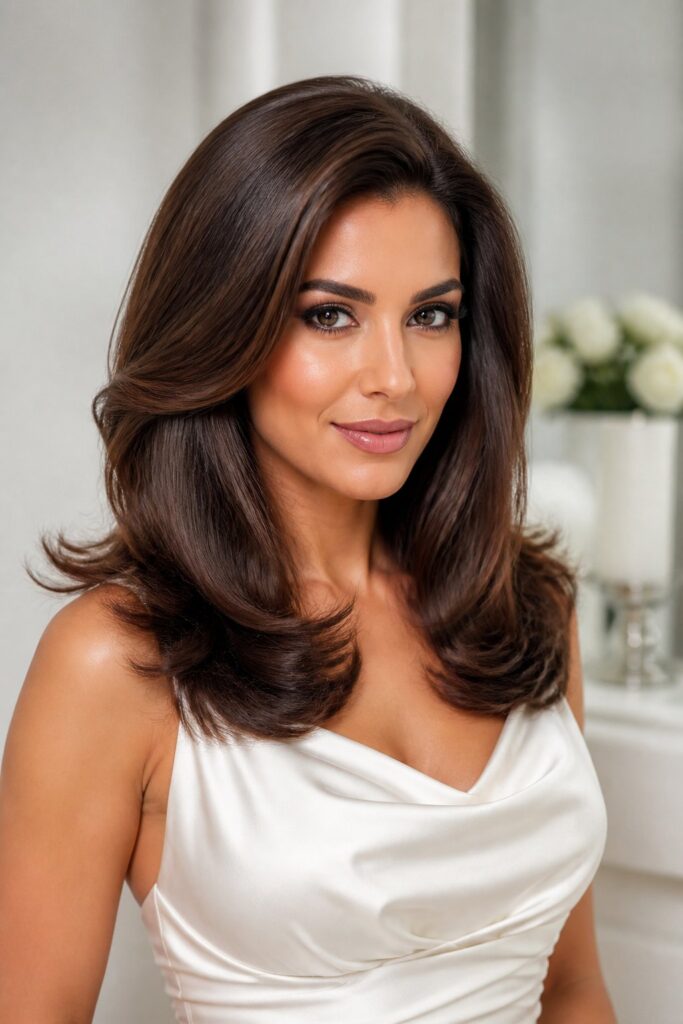
Rounded blowout layers curve gently inward and create a smooth, full silhouette.
The inward curve makes the lower lengths appear thicker and helps the layers sit neatly together.
Use a large round brush and a concentrator nozzle to control airflow.
29. Beachy Layers With Loose Waves
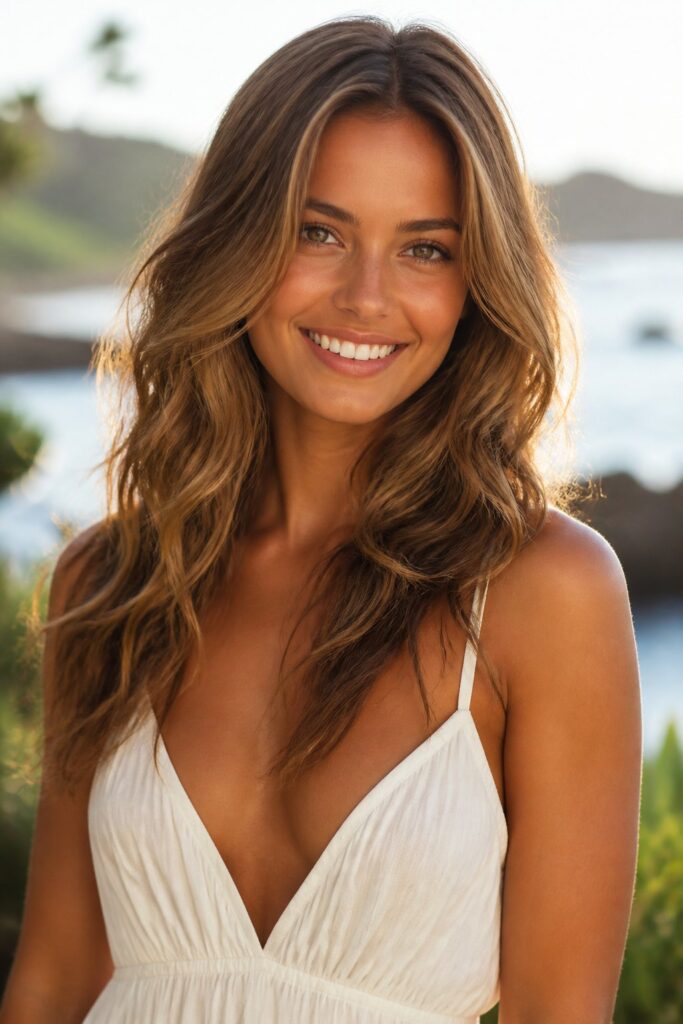
Loose beach waves reveal the different lengths in a layered haircut by allowing each section to move independently.
Alternating the direction of each curl produces a natural finish and prevents the style from forming one heavy pattern.
Apply a light texturizing spray and loosen the waves with your fingers after they cool.
30. Soft Glamour Curls
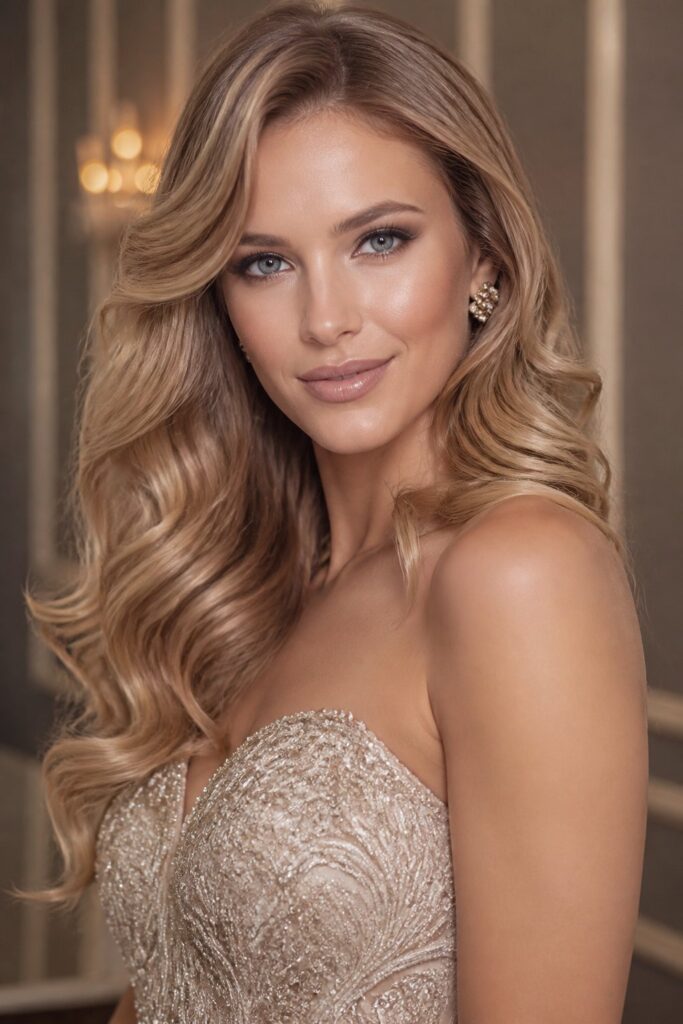
Large, soft curls add fullness throughout long layered hair and make every section easier to see.
A larger curling barrel creates smooth bends and elegant movement.
This style is ideal for weddings, parties, and photographs because the layers reflect light at different angles.
31. Salon-Style Bouncy Blowout
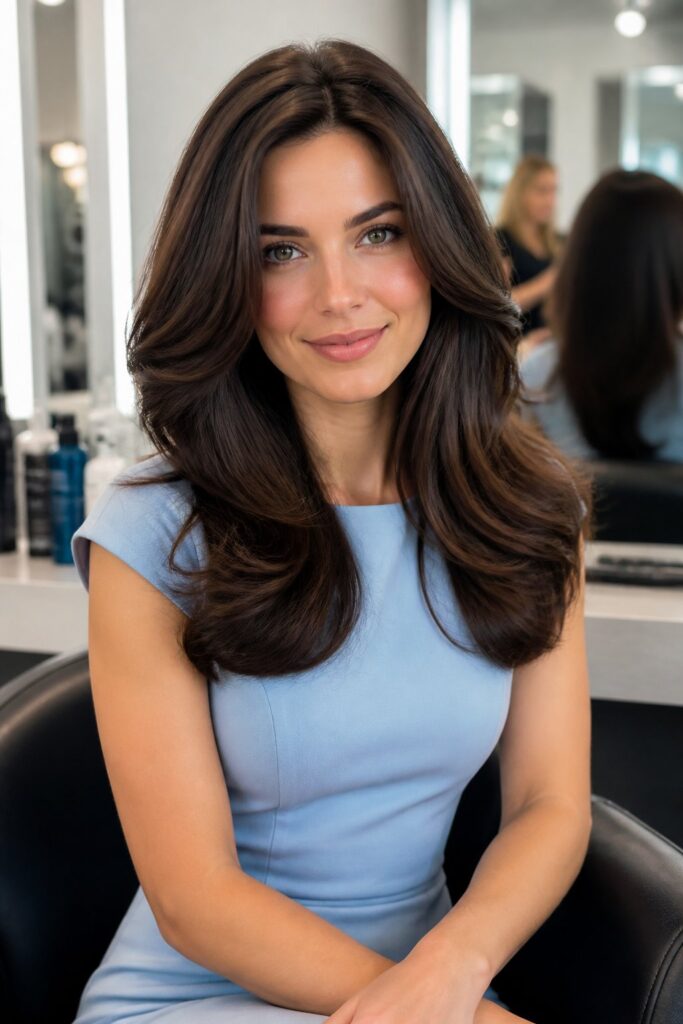
A bouncy blowout showcases long layers through root lift, curved ends, and movement around the face.
Lift the roots first, then shape the mid-lengths and ends with a round brush.
Work in manageable sections and allow each one to cool before releasing it.
32. Dimensional Balayage With Long Layers
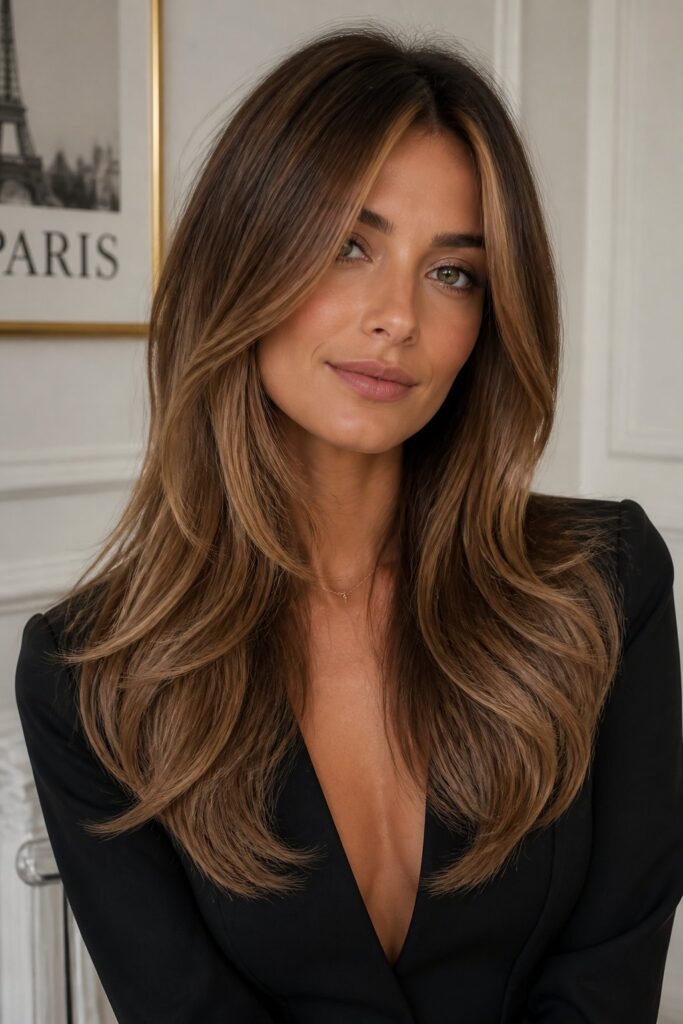
Balayage can make layered movement more visible by placing lighter tones through selected sections.
Brighter pieces around the face draw attention to the framing, while softer highlights through the ends create depth.
Ask your colorist and stylist to coordinate the placement.
33. Highlighted Face-Framing Layers
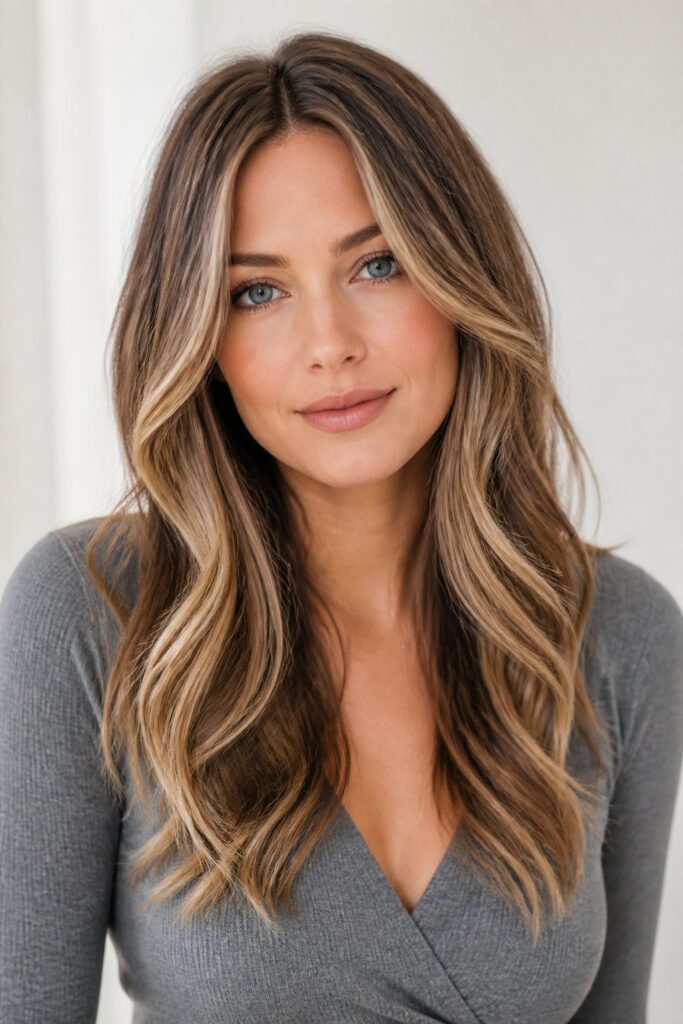
Strategic highlights around the face can make shorter layers appear brighter, more defined, and more dimensional.
Soft blended ribbons create a natural effect, while brighter money pieces produce stronger contrast.
Consider the maintenance schedule before choosing a very bold placement.
34. Lengthening Layers for Round Faces
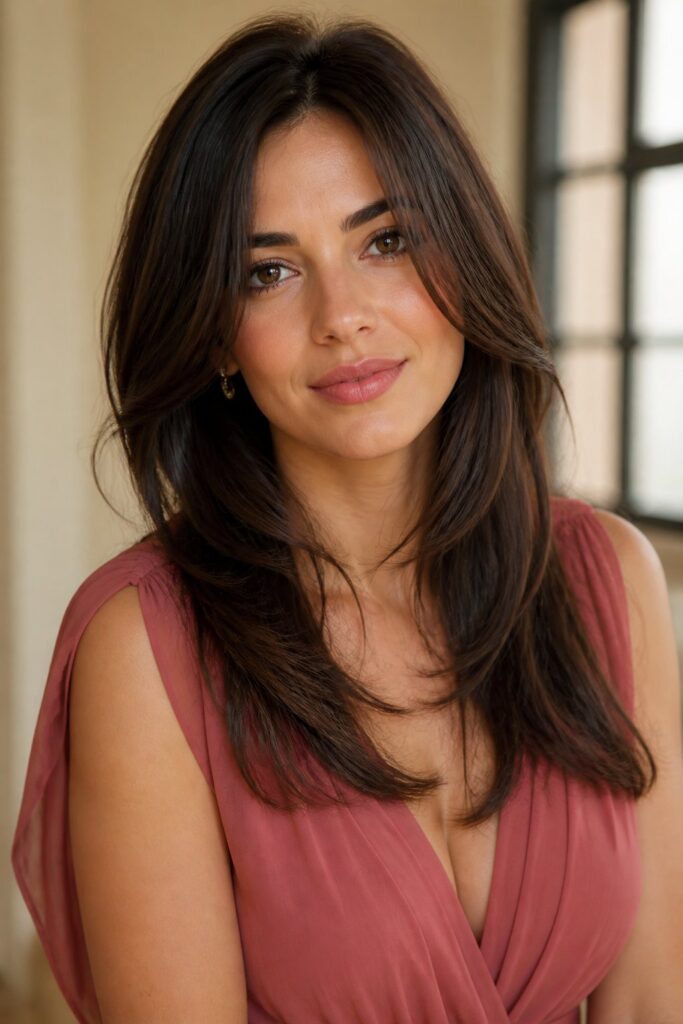
Round faces often look balanced with layers that begin below the widest part of the cheeks.
Volume should be concentrated below the chin or at the crown rather than directly beside the cheeks.
Ask for face-framing sections that fall past the jaw and blend into the collarbone.
35. Versatile Layers for Oval Faces
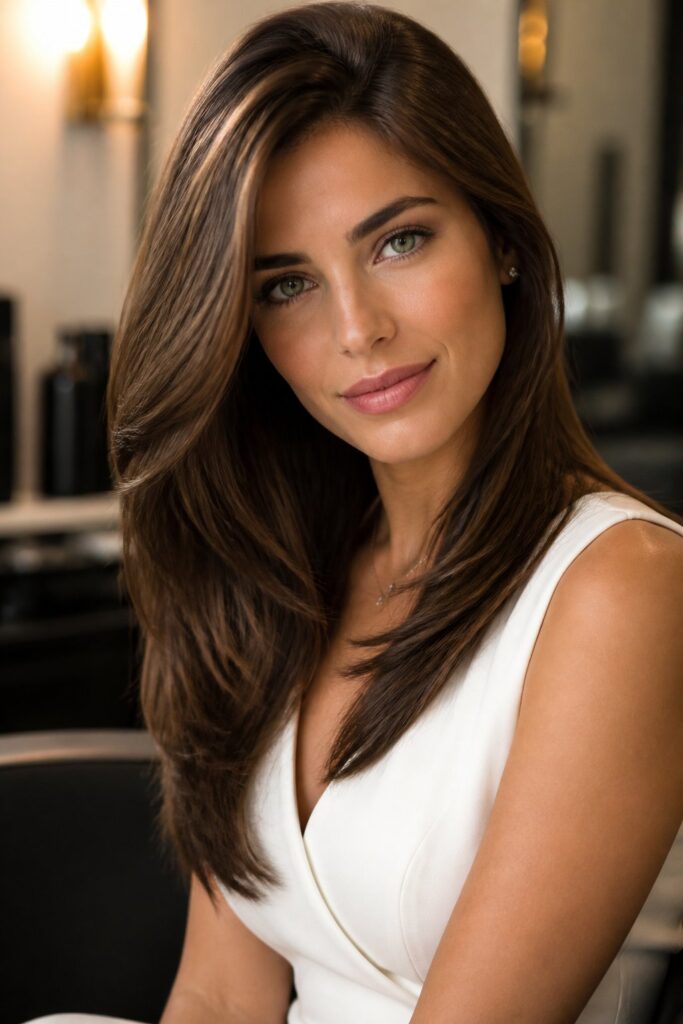
Oval faces can wear most long layered styles because their proportions are naturally balanced.
The best choice depends more on texture and styling preference than correction.
Use this flexibility to experiment, but still protect your hair density.
36. Softening Layers for Square Faces
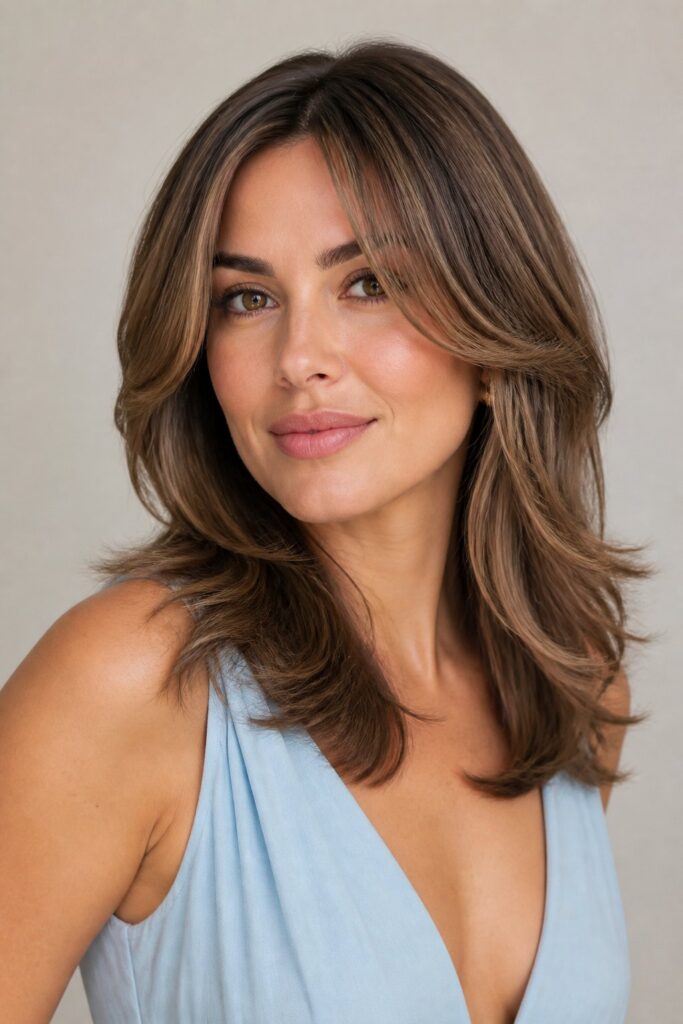
Square faces often benefit from curved layers around the cheekbones and jaw.
Loose waves, feathered ends, and curtain fringe can introduce rounded lines without hiding the structure of the face.
Avoid placing a thick layer exactly at the widest part of the jaw.
37. Balancing Layers for Heart-Shaped Faces
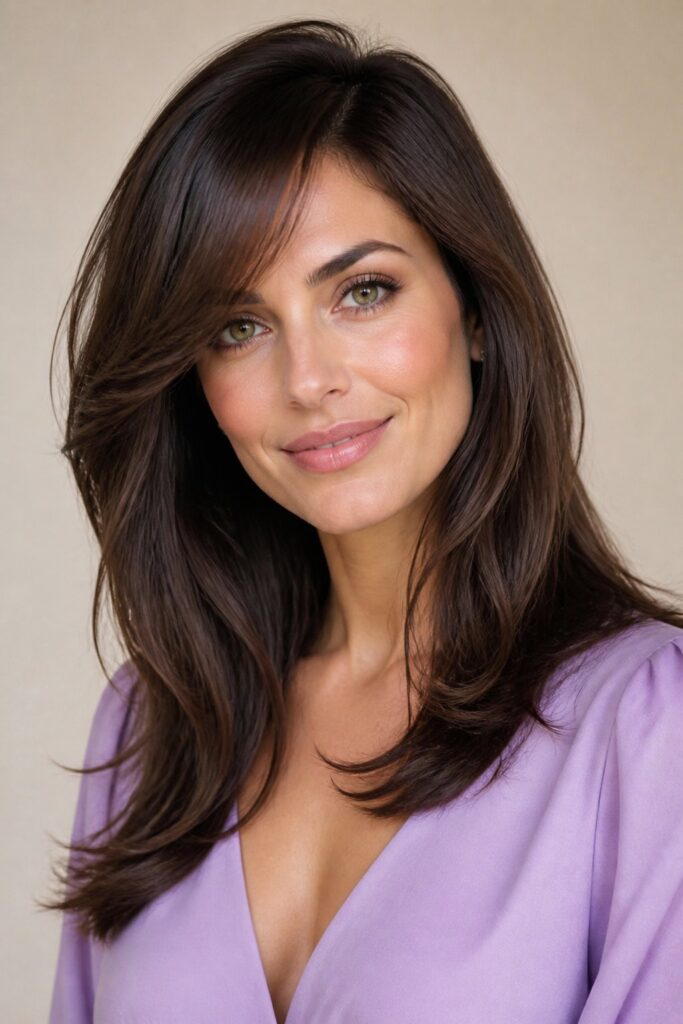
Heart-shaped faces are wider through the forehead and narrower near the chin.
Side-swept fringe can soften the forehead, while longer face-framing sections create movement around the lower face.
Ask for the most visible layers to begin near the jawline.
38. Refined Long Layers for Women Over 40
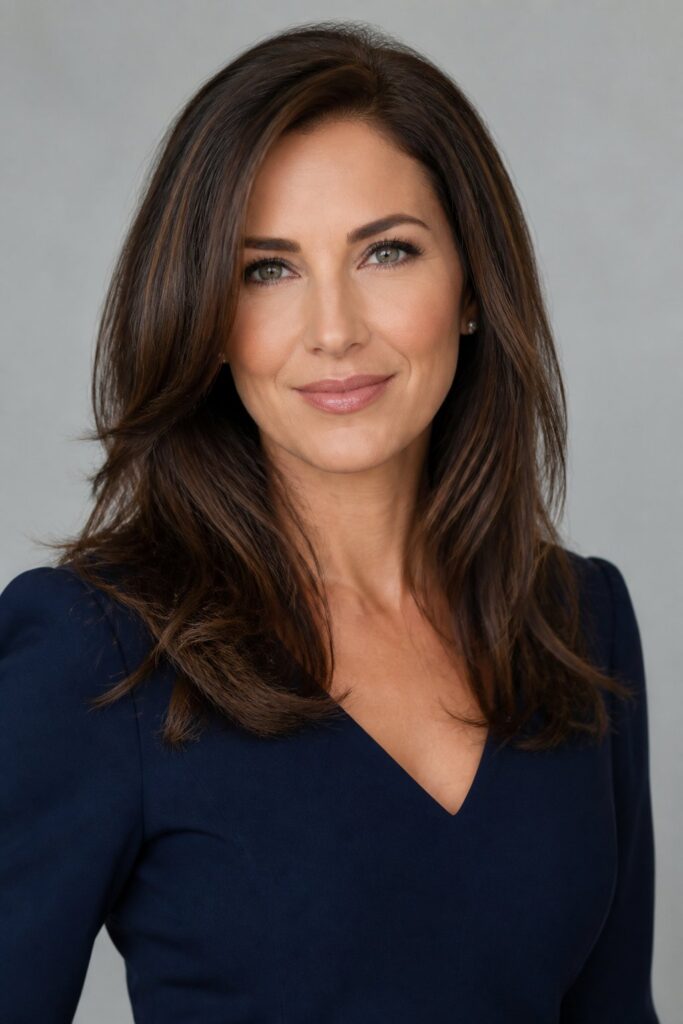
Soft long layers can refresh the hair without making it feel overly trendy.
Healthy-looking ends are especially important because damaged or thin sections can make long hair appear tired.
Choose a cut that works with your current texture and available styling time.
39. Elegant Long Layers for Women Over 50
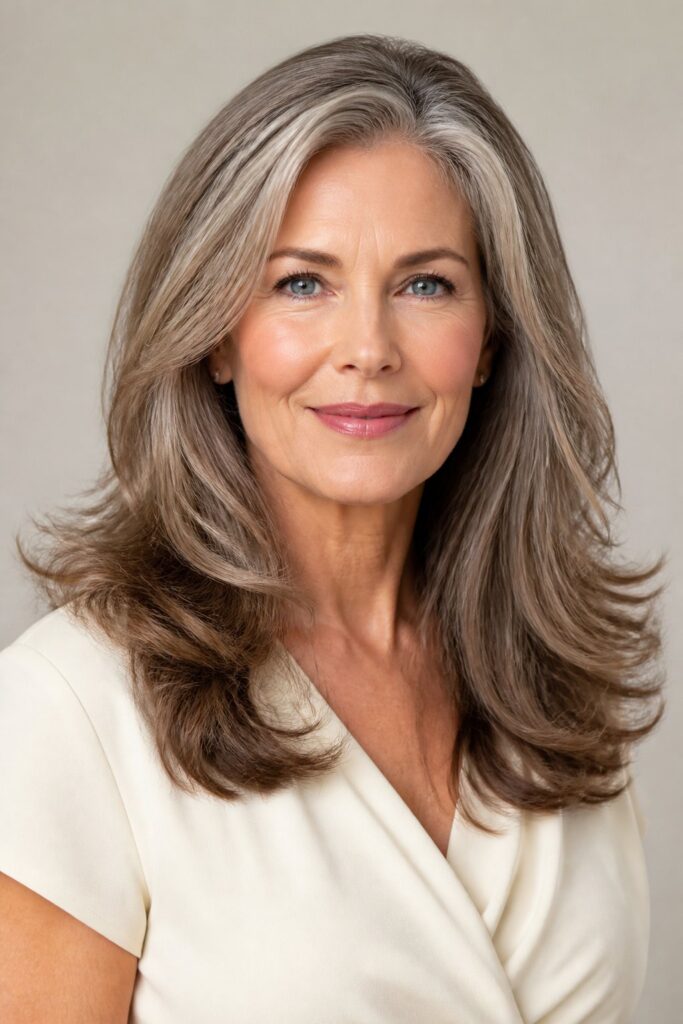
Long hair can remain stylish at every age when the shape supports its changing density and texture.
Collarbone-level framing can brighten the face and remain easier to maintain than very short pieces.
Reassess the layering plan during each salon visit because texture may change.
40. Waist-Length Cascading Layers
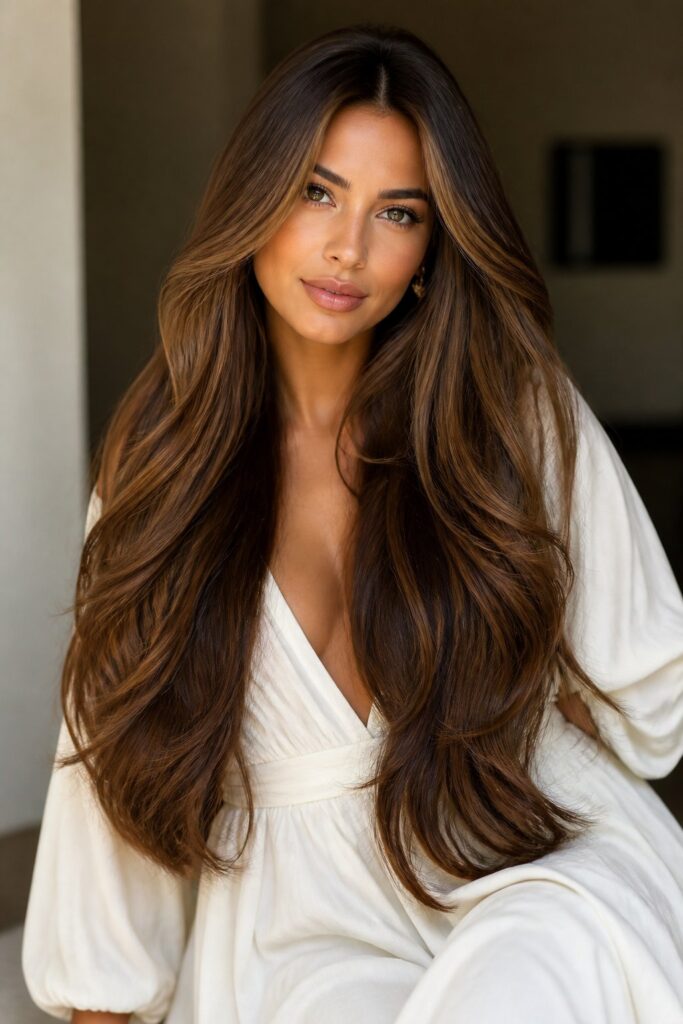
Waist-length hair can become extremely heavy, causing flat roots and making styling difficult.
The shortest sections should remain relatively long so the lower perimeter stays full.
Because very long hair takes years to grow, remove weight slowly across several appointments.
What to Discuss During Your Salon Consultation
During your consultation, avoid requesting only “long layers,” because that phrase can describe many different shapes. Explain whether your main goal is crown lift, face framing, curl definition, easier styling, or reduced bulk. A clear priority helps the stylist decide where the layers should begin.
Discuss how much length you want to preserve, how often you heat-style, whether you normally air-dry, and how frequently you wear ponytails or updos. These daily habits matter because very short front or crown pieces may behave differently when the hair is tied back.
A useful request is: “Please keep the perimeter full, preserve my overall length, remove heaviness through the inside, and begin the face-framing layers near my chin.” Reference photographs from the front, side, and back will make your expectations even clearer.
Easy Ways to Make Long Layers Look Bouncier
Build Root Volume First
Lasting fullness begins at the roots.
Work in smaller sections so the airflow reaches the roots directly.
Fine hair should use minimal product, while thick hair may need stronger control through the mid-lengths.
Shape the Front Away From the Face
Directing the front layers backward opens the face and makes the haircut appear fuller.
Use a medium or large round brush and roll each front section away from the cheeks.
Avoid repeatedly touching the layers while they are warm.
Protect the Ends While Styling
Layered ends are more exposed to heat, friction, and dryness, so they require careful protection.
Condition the mid-lengths and ends regularly, but keep rich masks away from fine roots.
Finish with only a small amount of serum or lightweight oil.
Layering Mistakes That Can Ruin the Result
Over-Layering Fine Hair
Fine hair can lose its fullness when too many short layers are added.
Ask the stylist to make gradual changes and evaluate the result before removing additional density.
Heavy thinning shears are rarely the best solution for already delicate ends.
Cutting Crown Layers Too Short
Very short crown pieces may stand apart from the rest of the haircut and create a disconnected shelf.
The transition between the crown and lower lengths should remain gradual, even in butterfly or wolf-inspired cuts.
Show your stylist exactly how high you want the volume to begin.
Ignoring Curl Shrinkage
Curly hair may become several inches shorter after drying, so wet length can be misleading.
A curl-conscious stylist should examine the natural pattern and ideally refine the shape when the hair is dry.
Do not stretch curls while deciding the final outline.
When Should Long Layers Be Refreshed?
Most long layered haircuts benefit from a trim every eight to twelve weeks. This schedule keeps the face frame intentional, protects the ends, and prevents the layered shape from becoming heavy or uneven as it grows.
Book sooner when bangs fall into the eyes, the roots lose lift, the ends feel dry, or the shortest sections no longer connect smoothly to the longer hair. Dramatic butterfly, shag, and wolf cuts often need more frequent reshaping than invisible layers.
Low-maintenance blended layers may grow out attractively for longer. Ask your stylist for a realistic schedule based on your hair’s growth rate, heat-styling habits, density, and the amount of contrast built into the cut.
Frequently Asked Questions
Can long layers make thin hair look fuller?
Yes, subtle long layers can create movement while maintaining density through the ends. Keep a strong perimeter and avoid excessive short layers or heavy thinning.
Which long layered haircut creates the most volume?
Butterfly layers, crown layers, long shags, and wolf-inspired cuts create the strongest lift. For easier maintenance, choose softly blended crown layers or a gentle shag.
Where should the shortest face-framing layer begin?
Cheekbone layers look bold, chin-length pieces add softness, and collarbone layers create subtle movement. Choose the placement according to your features, hair density, and styling routine.
Are long layers suitable for very thick hair?
Yes, internal layers can reduce bulk, shorten drying time, and improve movement in thick hair. The outer perimeter should remain full to prevent weak, frizzy, or uneven-looking ends.
Will layers improve natural waves?
Yes, layers can release excess weight and help natural waves appear more defined and bouncy. Use lightweight mousse and avoid heavy creams that may flatten the texture.
What is the easiest long layered haircut to maintain?
Long blended layers with face-framing pieces below the chin are usually the easiest to manage. Invisible internal layers are also low maintenance and grow out smoothly.
A Fuller Look Without Losing Your Length
The right long layered haircut can add bounce, shape, and fullness without sacrificing your length. Choose a style that supports your natural texture, protects the ends, and fits your daily routine.
Save the ideas that match your hair type and discuss the layer placement clearly with your stylist. Thoughtful cutting and regular maintenance can make long hair look lighter, healthier, and more dynamic.

1 Comment
Pingback: 40 Hair Color Ideas Trending in 2026: Professional Guide to Shades, Techniques, and Maintenance – Hair Mora Beauty