
You’ll find 40 hair color ideas that balance on-trend boldness with wearable, polished finishes so you can pick a look that truly fits your lifestyle and skin tone.
Expect warm, personalized tones, refreshed blondes, and controlled pops of color paired with modern techniques that prioritize hair health and long-lasting shine.
This guide breaks down 40 shades organized by category, the creative influences behind them, the techniques pros use to get those looks, and clear tips for upkeep so your color stays vibrant without constant salon visits.
40 Hair Color Ideas for 2026
Bold & Monochrome Statements
Single, saturated shades applied all over for maximum, cohesive impact.
1. Bold Monochromes
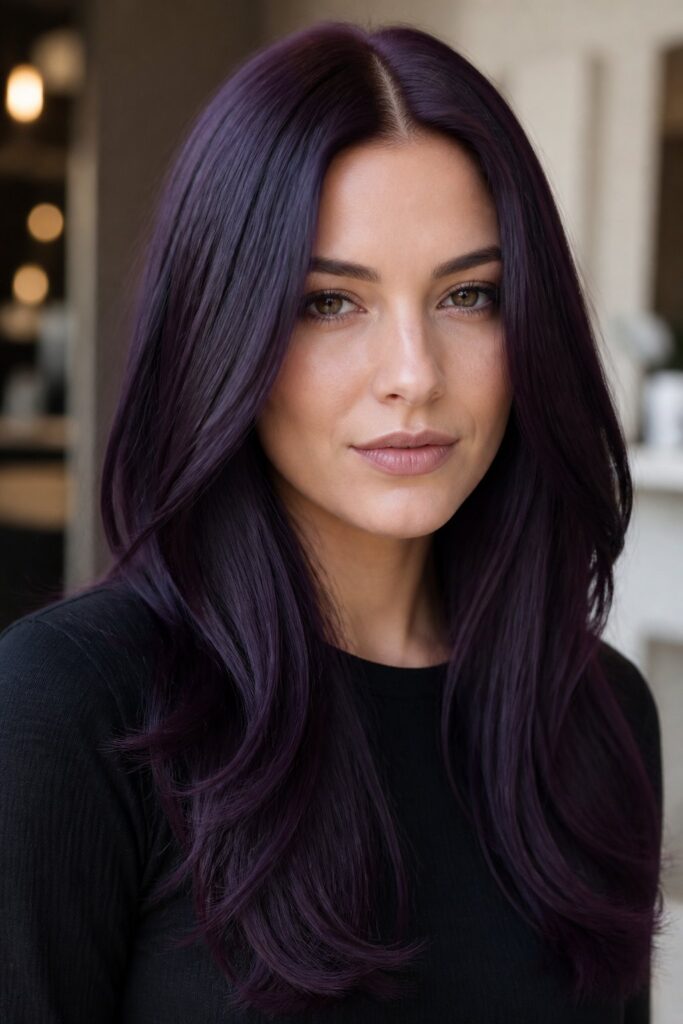
Bold monochromes center on single, saturated shades applied all over for maximum impact. Think deep espresso browns, true raven blacks with blue undertones, and rich aubergine purples. These colors demand even coverage and often require pre-lightening on darker bases to reach full vibrancy.
Maintenance matters: plan on root touch-ups every 4–8 weeks for intense tones and use color-depositing shampoos to refresh hue between salon visits. Ask your stylist for a gloss or demi-permanent layer to add shine without extra lift.
Styling and hair health both play a role. Use bond-repair treatments after any lightening, and include weekly protein or keratin masks if you wear heat tools frequently. Bold monochromes reward commitment with a polished, cohesive look that photographs consistently.
2. Blue-Black Raven
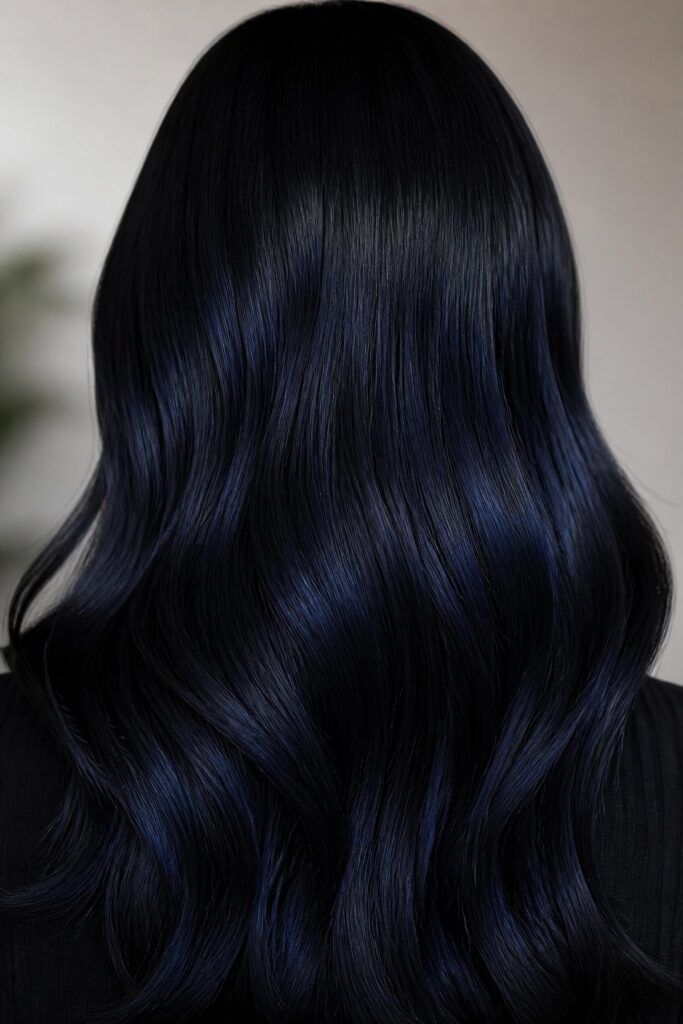
Blue-Black Raven layers a cool, near-black base with a subtle blue reflect for a glossy, dramatic finish that reads sophisticated rather than harsh. It suits cool and neutral undertones best.
Refresh the blue cast with a blue-toning gloss every 6–8 weeks, and use a violet- or blue-based color-safe shampoo sparingly so the cool tone doesn’t turn purple.
3. Deep Burgundy Wine
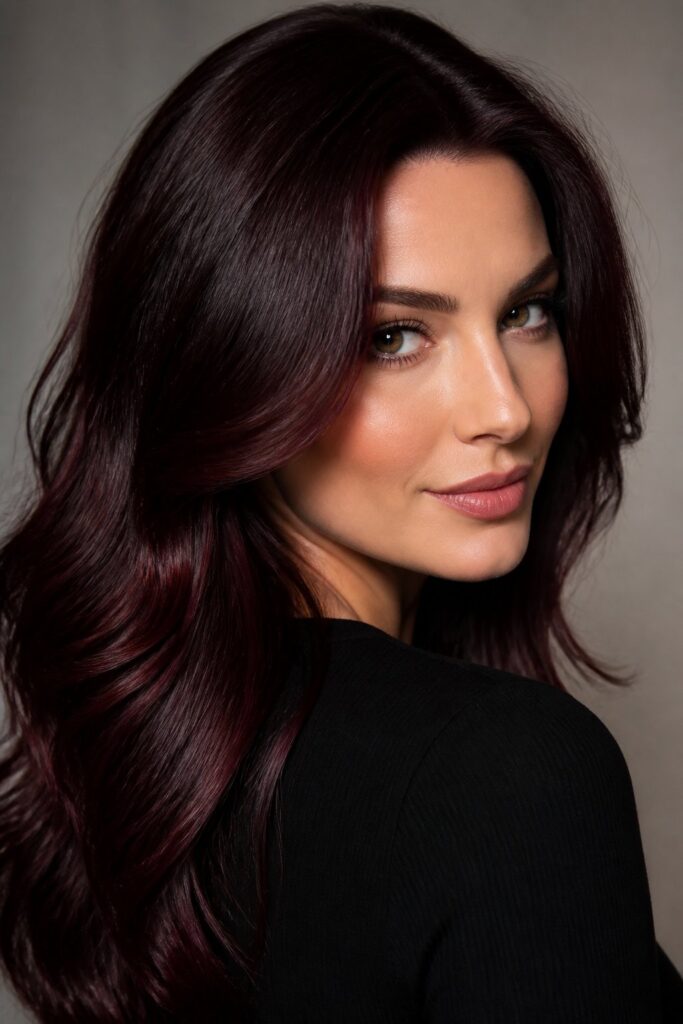
Deep Burgundy Wine blends near-black with a wine-red undertone that only reveals its depth in direct light. It’s a low-drama way to add richness to dark hair without full commitment to red.
Because the base is close to natural dark levels, root touch-ups can stretch to 8–10 weeks. A weekly red-toned mask keeps the wine reflect from fading to plain brown.
For fuller and more dimensional hair inspiration, explore these 40 Long Layered Haircuts That Add Volume Instantly.https://hairmorabeauty.com/40-long-layered-haircuts-that-add-volume-instantly/
4. Espresso Brown Velvet
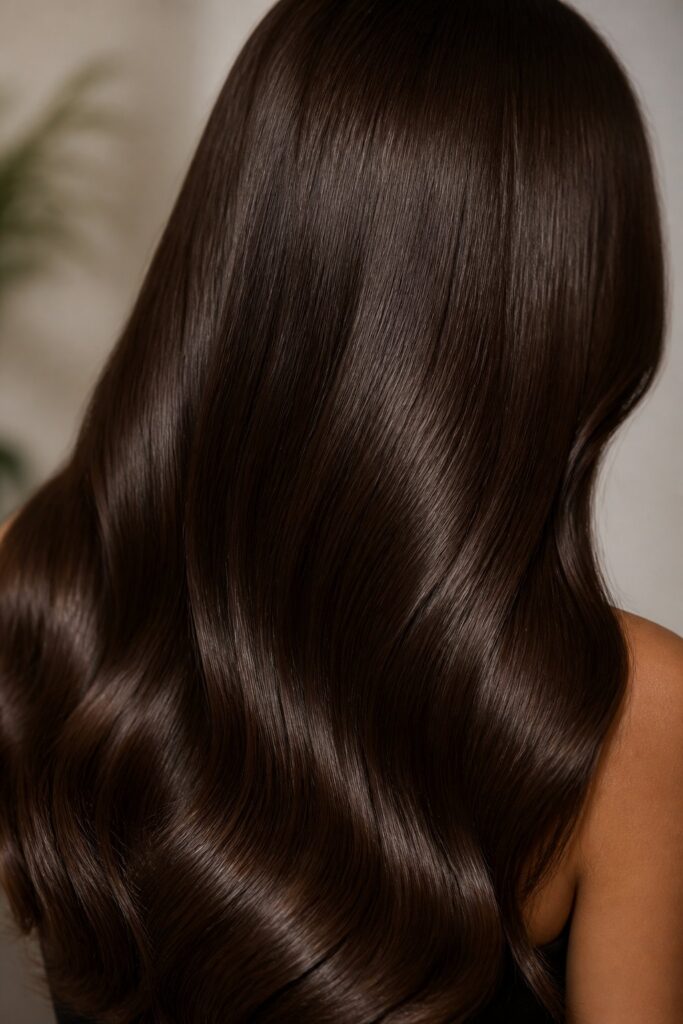
Espresso Brown Velvet is a warm-neutral, ultra-glossy dark brown designed to look like a single seamless block of color, achieved with a demi-permanent glaze over natural or lightly lifted brown.
This shade is genuinely low maintenance since it sits close to many natural bases; a monthly gloss keeps the velvet shine from dulling, and heat protectant preserves the glassy finish.
Pastel & Cool Tones
Muted, desaturated pastels that lean into soft, lived-in transitions.
5. Soft Pastels
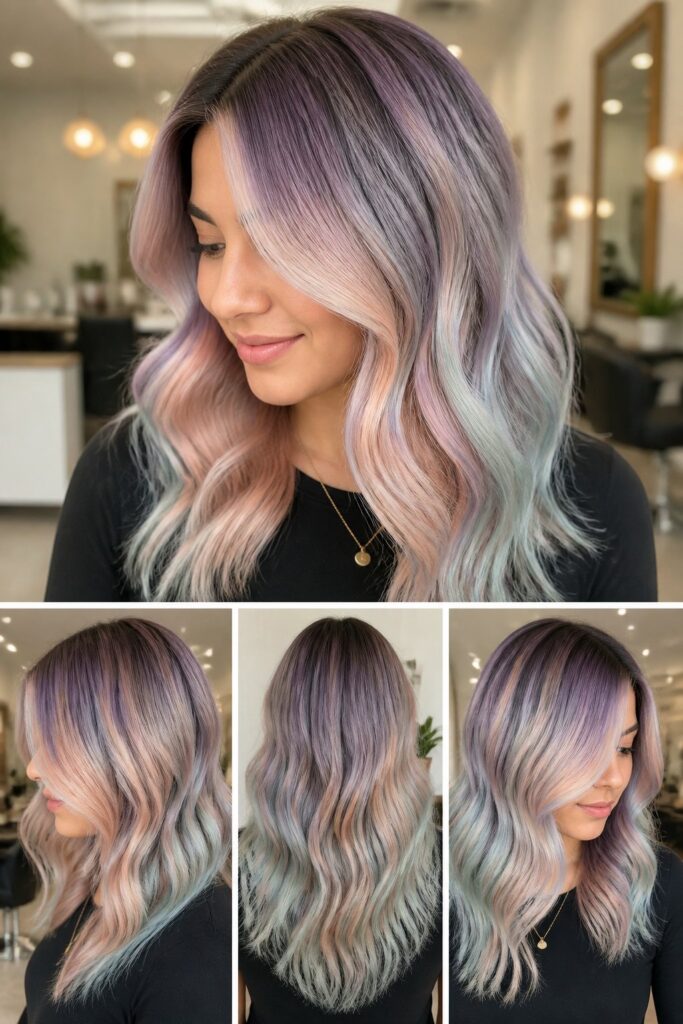
Soft pastels in 2026 favor muted, slightly desaturated tones — think dusty lavender, buttercream peach, and seafoam with gray undertones. These shades work best on pre-lightened hair and benefit from a slightly lived-in root or shadow root to extend time between touch-ups.
You’ll need a clear upkeep plan: pastel pigments fade quickly, so schedule toning sessions every 3–6 weeks or use a pastel-tint conditioner at home. Ask for a protective gloss and softened ends during your salon appointment to reduce patchiness as the color fades.
Pastels pair well with textured cuts and face-framing balayage because the softer transitions hide regrowth. If you’re cautious about commitment, try a pastel peekaboo panel instead of full-head application.
6. Buttercream Peach
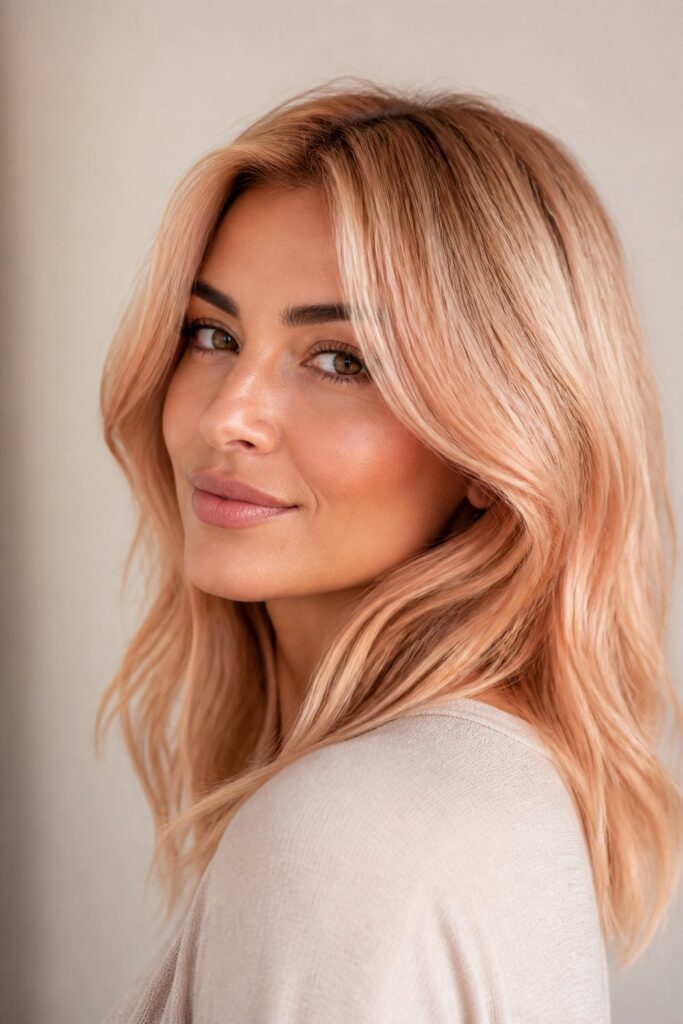
Buttercream Peach softens a warm blonde base with a whisper of peachy pastel, giving warmth without looking overtly pink or orange. It flatters warm and olive undertones especially well.
Expect toning refreshes every 4–5 weeks, since warm pastels shift toward plain blonde as they fade. A peach-tinted conditioner at home extends vibrancy between visits.
7. Seafoam Mint
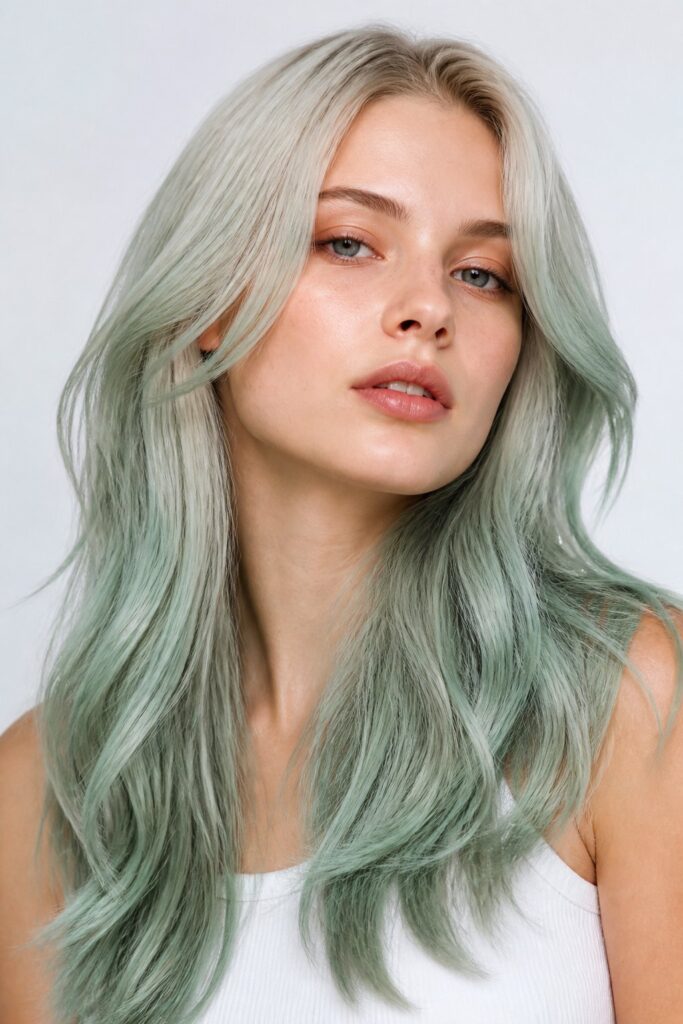
Seafoam Mint pairs a pale, ashy blonde base with a cool, gray-green tonal wash for an ethereal, oceanic finish that reads more sophisticated than a bright mint would.
This shade needs pre-lightening to a very pale level, then careful green-toner application. Use color-safe, sulfate-free shampoo and expect a fresh toning session every 3–4 weeks.
8. Cotton Candy Pink
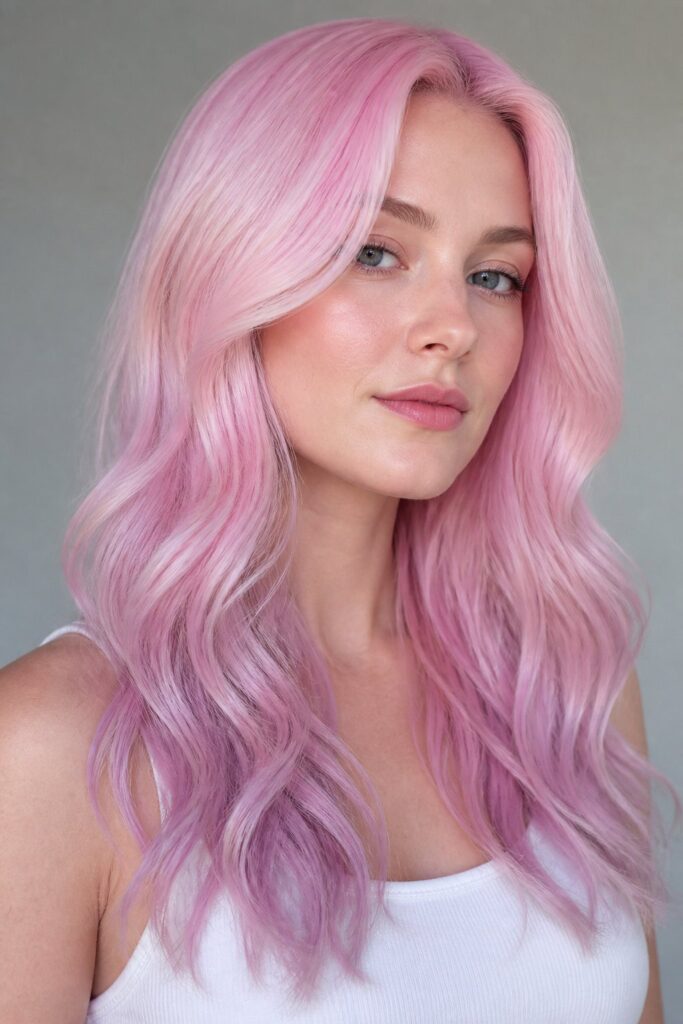
Cotton Candy Pink combines soft baby pink with a hint of lilac at the ends for a dreamy, blended pastel that works well on pre-lightened blonde or white hair.
Pink fades fastest of all pastels, so plan on a pink-tint conditioner every wash and a salon refresh every 3–5 weeks to keep it from washing out to pale yellow.
Statement & Reflective Hues
Metallic and pearlescent finishes that play with light and movement.
9. Bioluminescent Hues
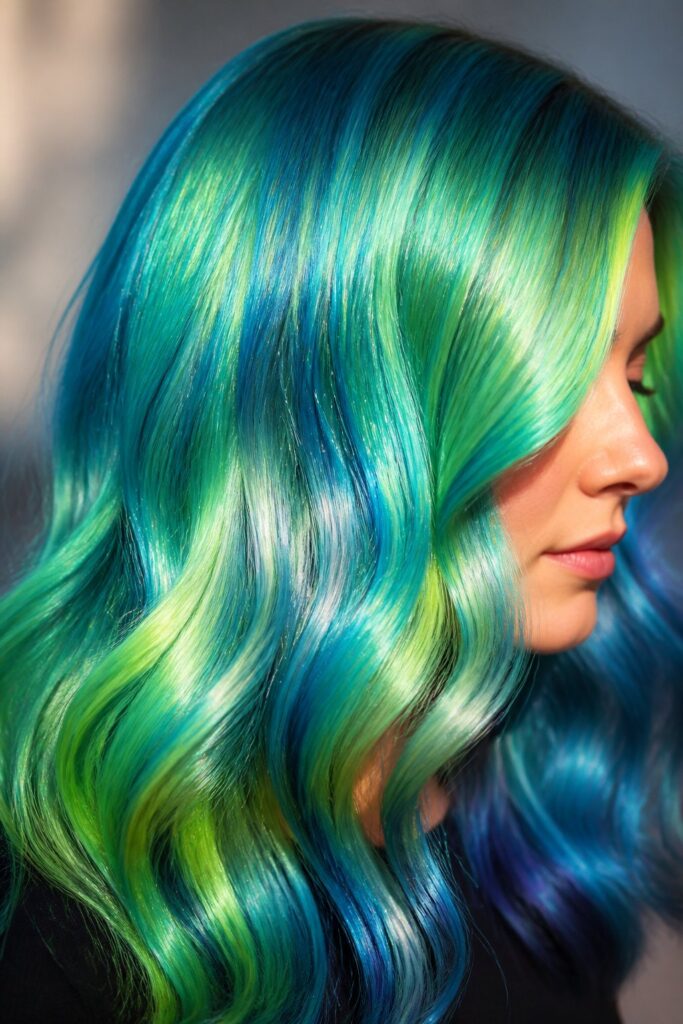
Bioluminescent hues mimic a natural glow — neon-adjacent colors tempered with metallic or pearlescent finishes. Common options include teal with iridescent shimmer, lime infused with a gold reflect, and electric blue softened by silver highlights. The result reads luminous rather than purely fluorescent.
Creating these shades often requires multi-step color work: careful pre-lightening, layering with metallic or gloss mixes, and a sealing treatment to lock in shimmer. Expect higher maintenance: color-safe metallic shampoos, sulfate-free care, and monthly glosses to sustain the reflective quality.
These hues excel in controlled light and styled environments; they photograph dramatically and perform well under LED or outdoor sunlight. Budget time for professional refreshes to keep the reflective effect intact.
10. Electric Blue Shimmer
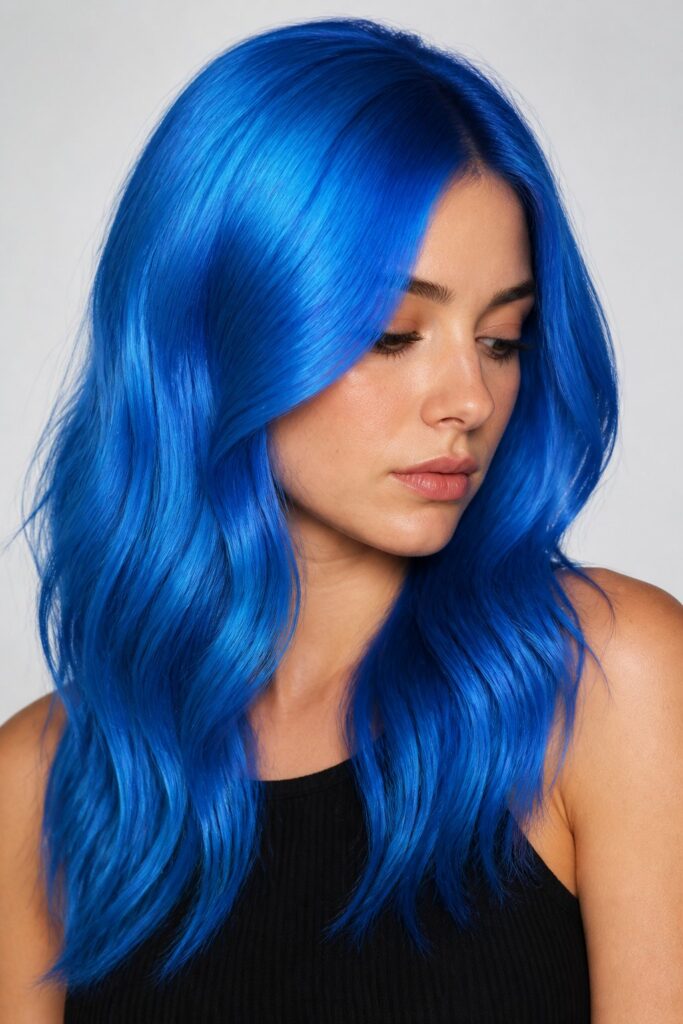
Electric Blue Shimmer is a saturated, true-blue base finished with a pearlescent glaze that catches light without looking flat or matte. It requires a fully pre-lightened, near-white canvas.
Because vivid blue fades to teal and then green, plan on a toning refresh every 3–4 weeks and use cool, sulfate-free water when washing to slow the shift.
11. Neon Lime Reflect
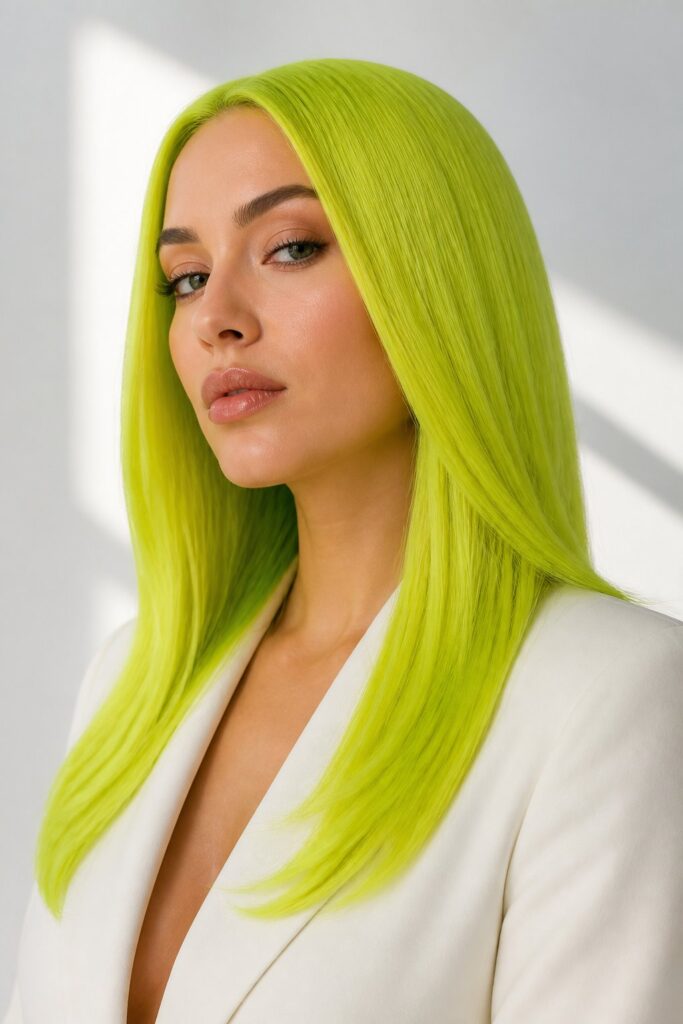
Neon Lime Reflect tempers a bright chartreuse with a soft gold shimmer so it reads as vibrant rather than harsh, ideal for statement panels or full-head placement on very light bases.
This is a high-maintenance shade: expect weekly color-depositing conditioner use and a professional refresh every 3 weeks to keep the lime from fading to a dull yellow.
12. Holographic Opal
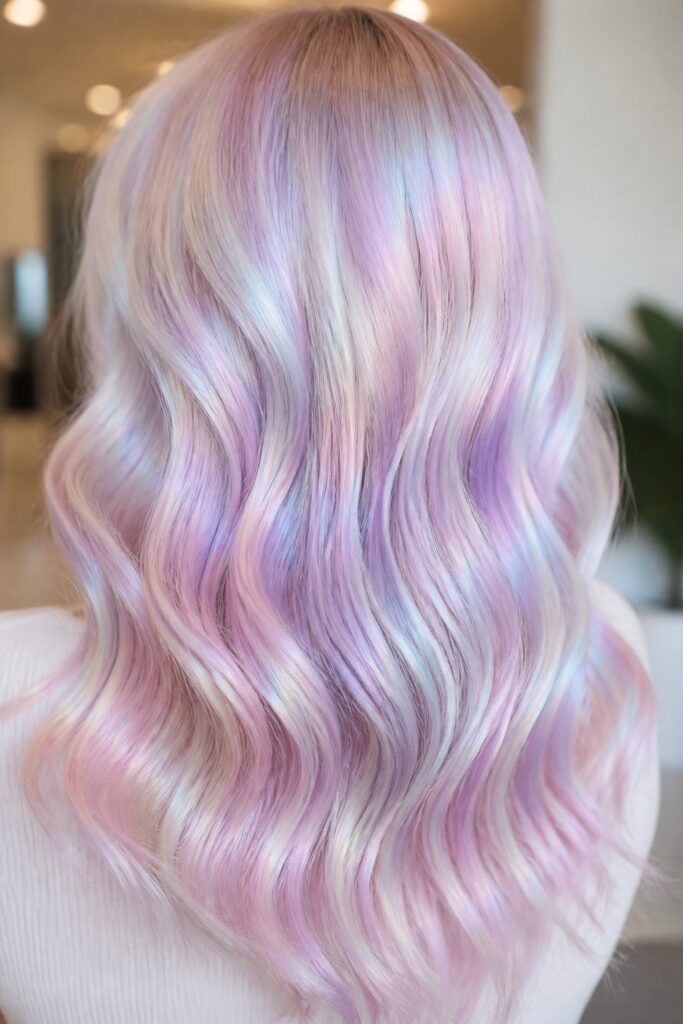
Holographic Opal shifts between soft pink, lilac, and blue depending on the light, achieved by layering multiple translucent pastel glazes over a platinum base for an iridescent effect.
This look needs a very healthy, pre-lightened foundation and monthly glaze refreshes; bond-repair treatments are essential given the multiple lightening passes required to achieve the base.
Reds & Coppers
Rich, dimensional reds that prioritize glossy depth over flat, single-tone color.
13. Cherry Cola Red
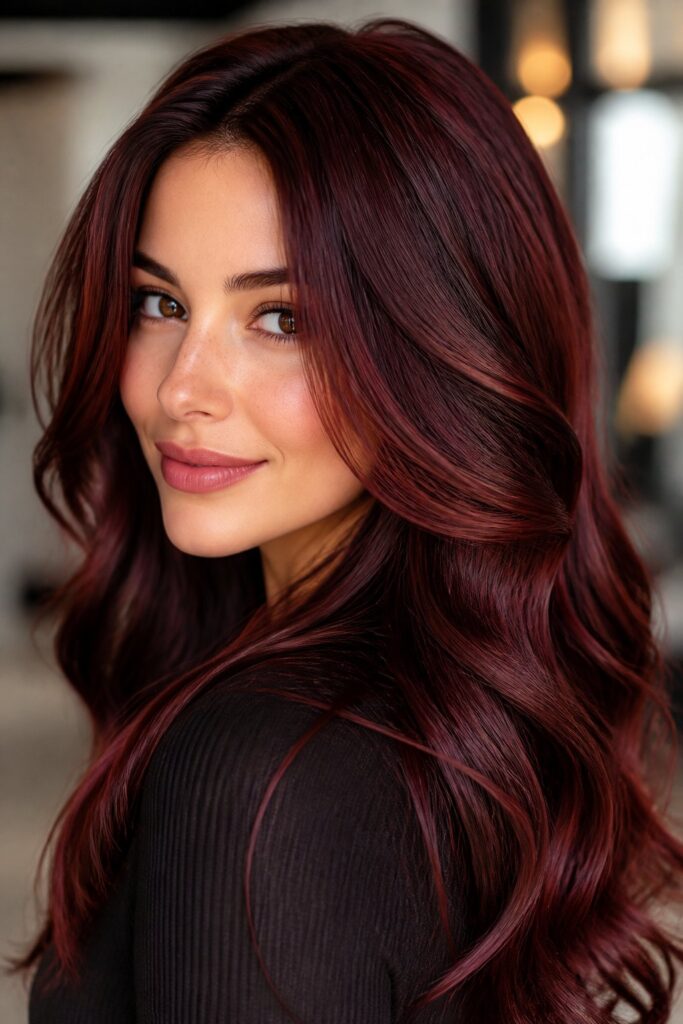
Cherry Cola Red combines deep brown-red base tones with vibrant cherry highlights to create a rich, multi-dimensional red. You get a near-brown foundation that hides roots and adds longevity, while cooler cherry streaks provide pop and movement.
Maintain this shade with sulfate-free shampoo and a color-depositing conditioner formulated for reds. Schedule gloss refreshes every 6–8 weeks; reds fade faster than brunettes, so short touch-ups on the top layers keep the look vivid.
If you have warm undertones, boost the cherry warmth slightly; if you’re cool-toned, favor blue-based cherries to avoid an orange cast.
14. Burnt Sienna Copper
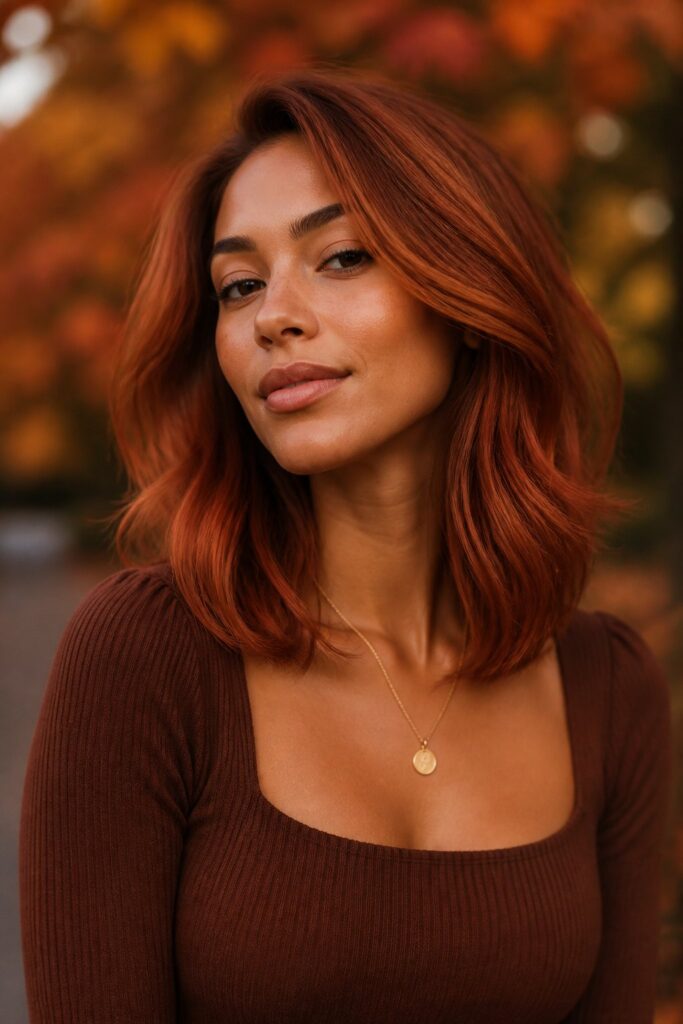
Burnt Sienna Copper is a warm, earthy red-orange inspired by autumn foliage, blended through mid-lengths and ends for a natural gradient that flatters warm and golden skin tones.
Copper fades to brass quickly, so use a copper-toned mask weekly and book a gloss every 5–6 weeks to keep the burnt-orange depth from washing out.
15. Ginger Spice
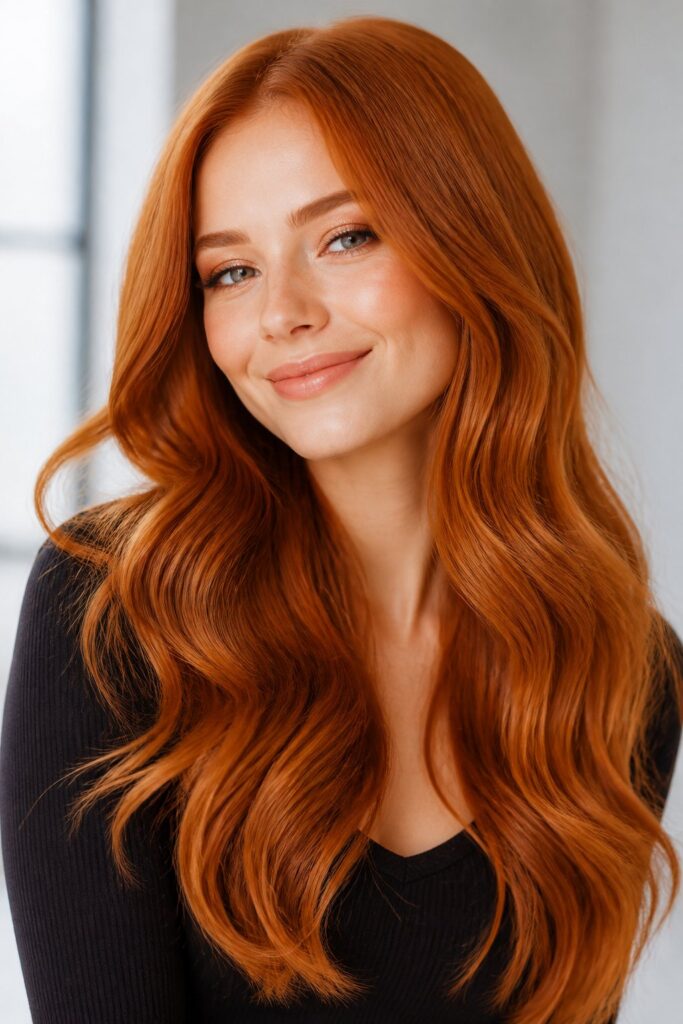
Ginger Spice is a bright, natural-looking strawberry-orange that reads as an enhanced natural redhead rather than a fashion color, ideal for warm undertones and fair to medium skin.
Because it’s a permanent-leaning formula, root touch-ups run every 5–7 weeks; a weekly protein mask keeps strands strong since red pigment molecules are larger and can be drying.
16. Black Cherry
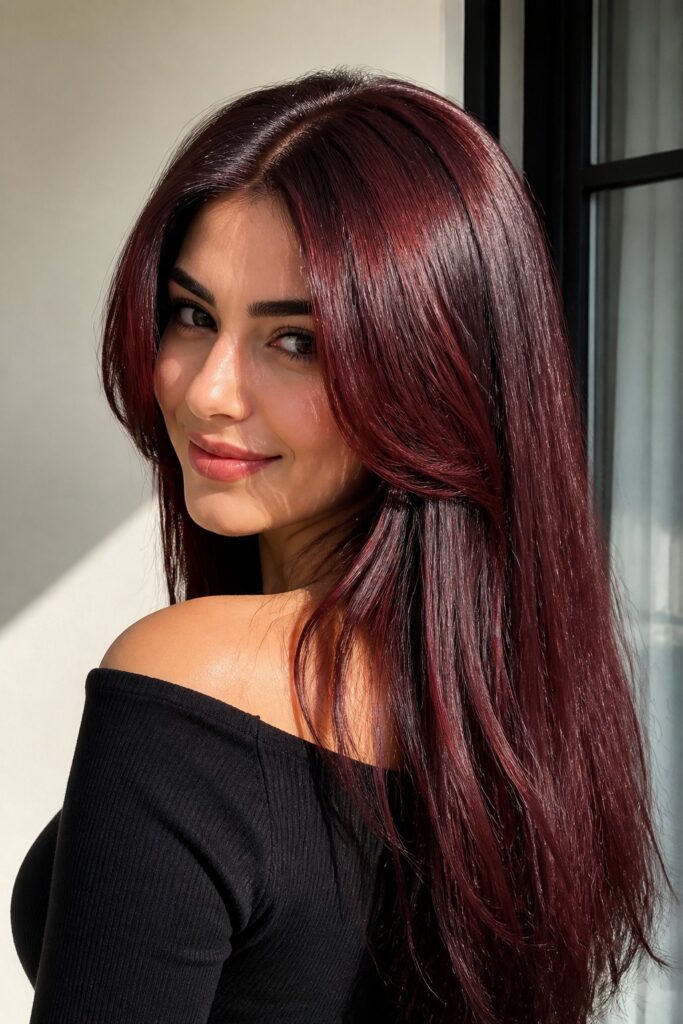
Black Cherry deepens a near-black base with a translucent cherry-red glaze visible mainly in sunlight, giving a moody, dramatic red that still reads as brunette indoors.
This is one of the lower-maintenance reds: root touch-ups every 8–10 weeks, with a red-toned gloss every couple of months to keep the cherry glow from fading to plain black.
17. Molten Copper
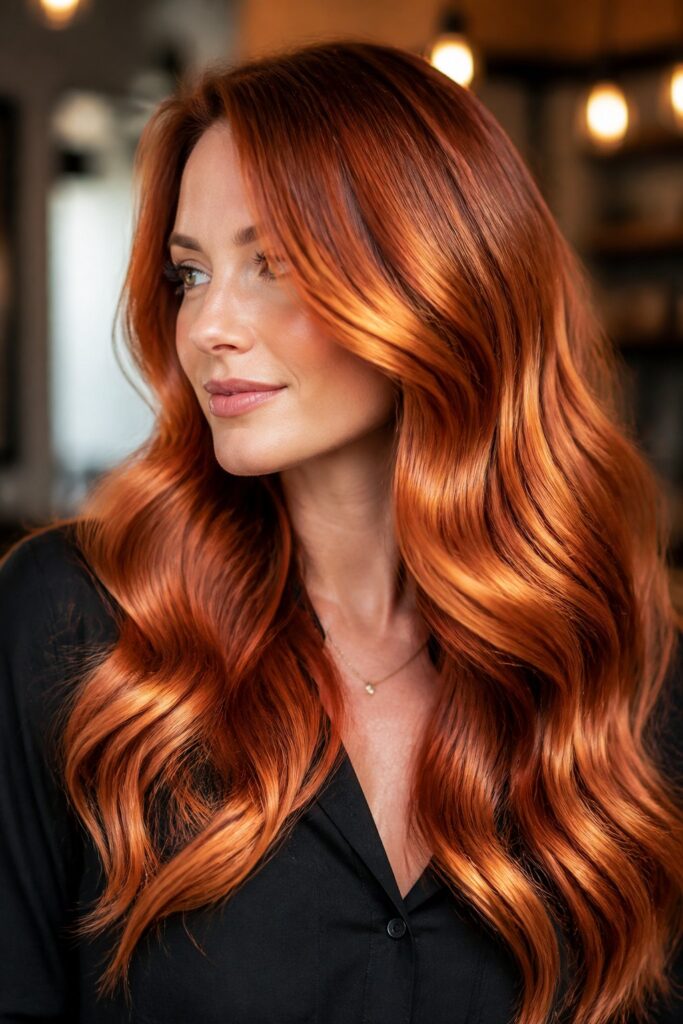
Molten Copper is a high-shine, saturated copper applied all-over or through a balayage for a look that mimics liquid metal, best suited to medium-depth bases that don’t require heavy lifting.
Expect a gloss refresh every 4–5 weeks and daily use of a copper-pigmented conditioner, since this vivid a copper is one of the fastest-fading reds.
Blonde Variations
From icy pastels to warm honeys, blonde remains the most customizable category.
18. Icy Lavender
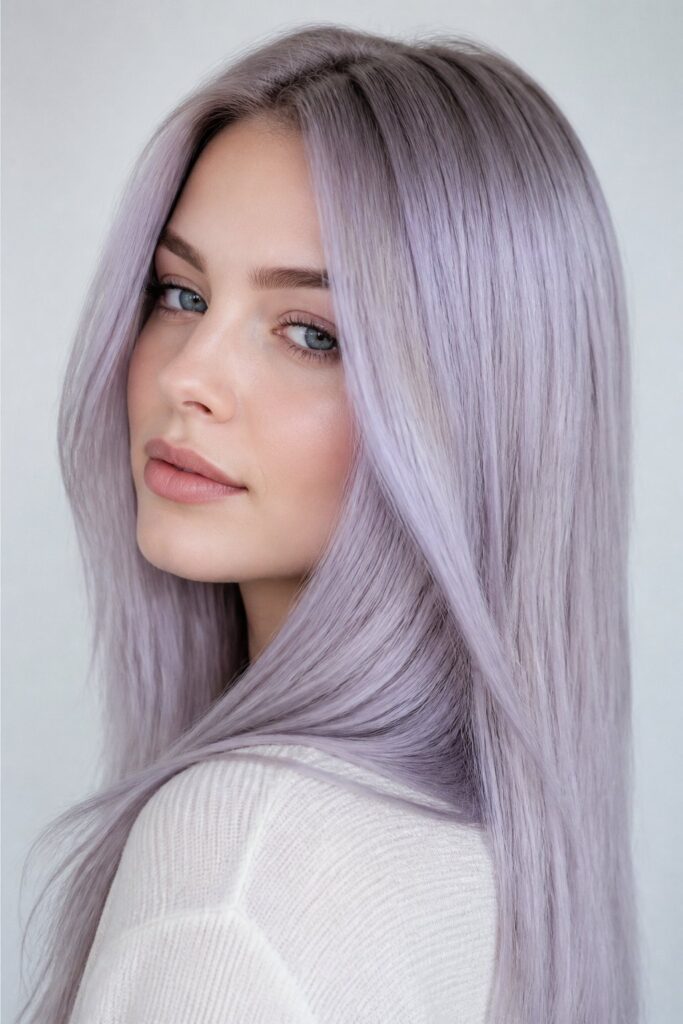
Icy Lavender pairs a pale, almost silvery blonde base with a soft lavender tonal finish for a cool, high-contrast pastel. Pre-lightening to a level 9–10 is usually necessary, followed by a violet-lilac toner to reach that icy, slightly metallic sheen.
Use purple shampoo sparingly to prevent warmth from creeping in, and rely on a low-pH conditioning mask to restore the hair cuticle after bleaching. Expect color-depositing masks every 1–2 weeks to refresh the lavender without full reprocessing.
Icy Lavender suits neutral to cool skin tones best; add a touch of ash to the root area if you want softer regrowth.
19. Teddy Bear Blonde
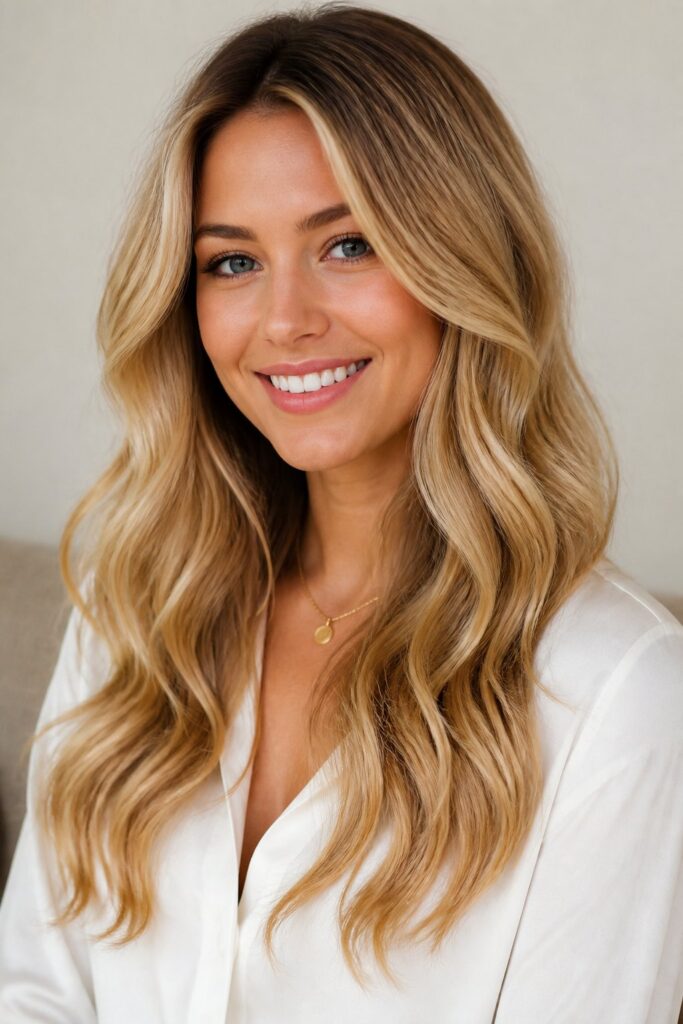
Teddy Bear Blonde is a warm, honey-toned blonde with soft caramel roots that grows out gracefully, mimicking a natural sun-kissed base rather than an obviously colored one.
Because the root shadow is intentional, touch-ups stretch to 10–12 weeks; a monthly warm-toned gloss keeps the honey tones from turning brassy.
20. Honeycomb Blonde
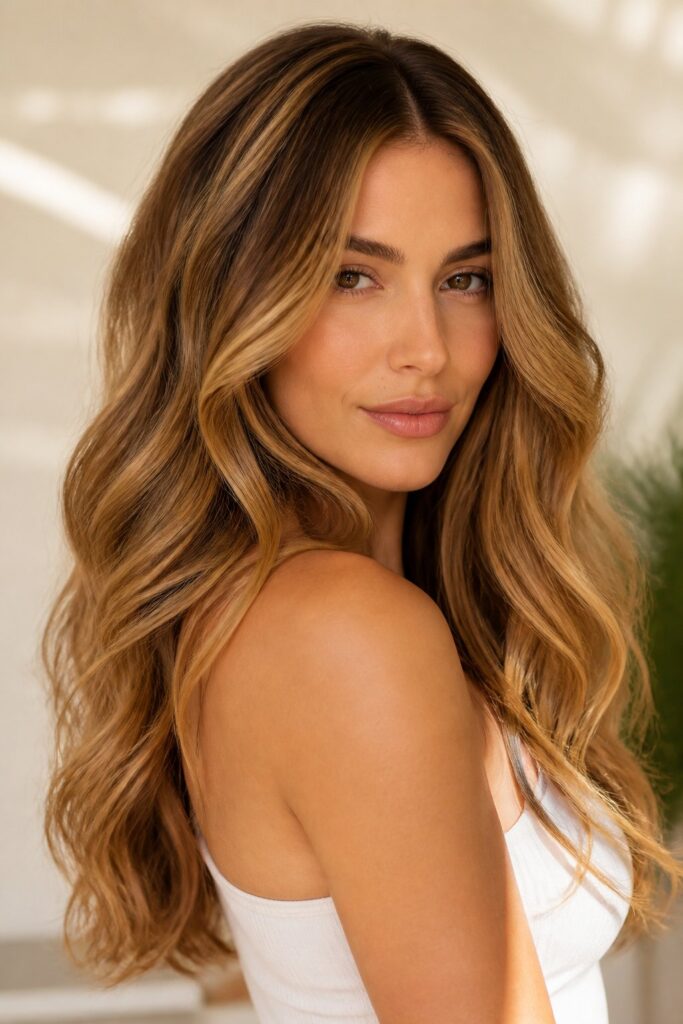
Honeycomb Blonde layers golden and amber highlights through a warm base for a dimensional, sun-drenched effect that works especially well on medium to dark starting hair.
A gloss every 6–8 weeks maintains the golden depth, and a weekly warm-toned mask prevents the highlights from fading to a flat, pale yellow.
21. Butterscotch Blonde
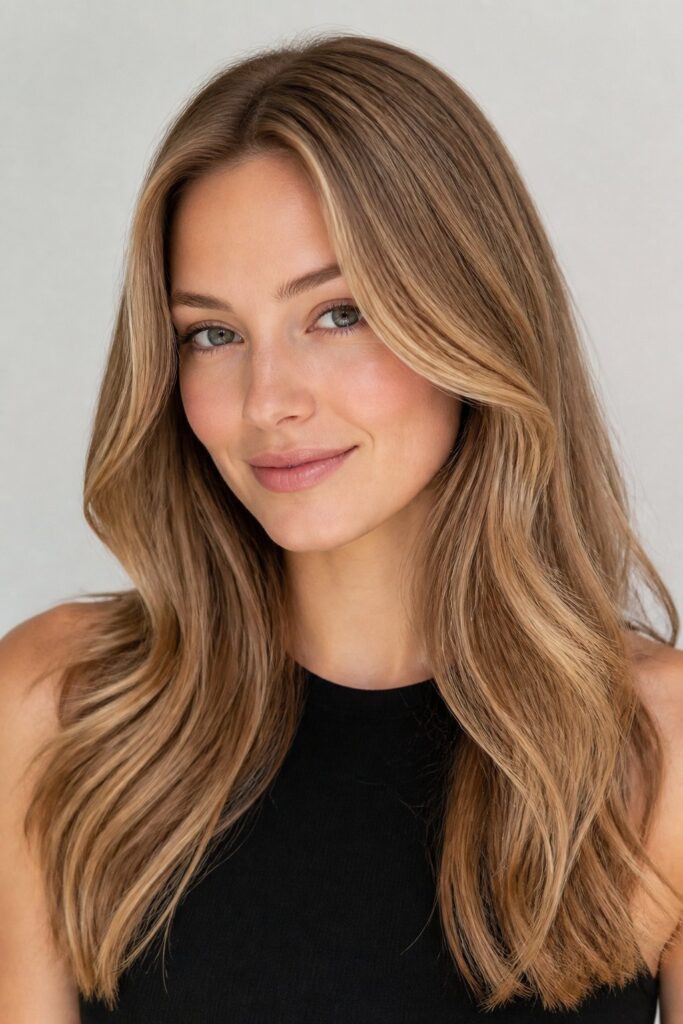
Butterscotch Blonde combines a rich caramel base with buttery highlights for a deep, warm blonde that reads more sophisticated than a standard golden blonde.
This shade is relatively low maintenance thanks to its depth; root touch-ups every 8–10 weeks and occasional glazing keep the butterscotch tone even.
22. Platinum Ice
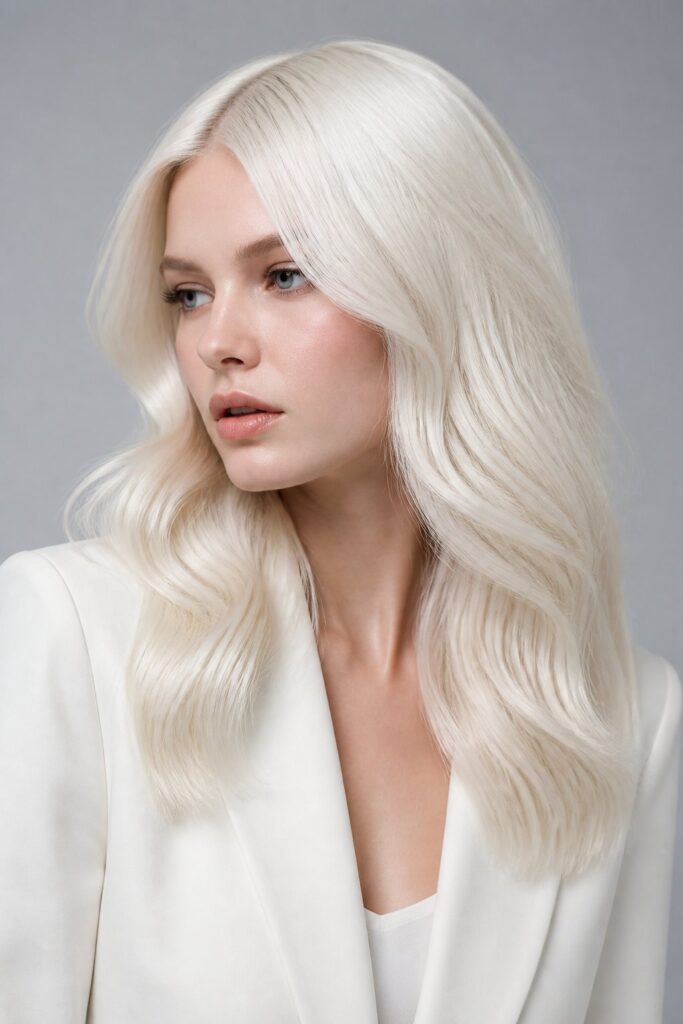
Platinum Ice is the coolest, brightest blonde on this list — a near-white base toned to eliminate all yellow undertones for a striking, editorial finish.
This is a high-commitment shade: root touch-ups every 3–4 weeks, weekly purple treatments, and consistent bond-repair care are essential to keep hair healthy at this level of lift.
23. Golden Vanilla
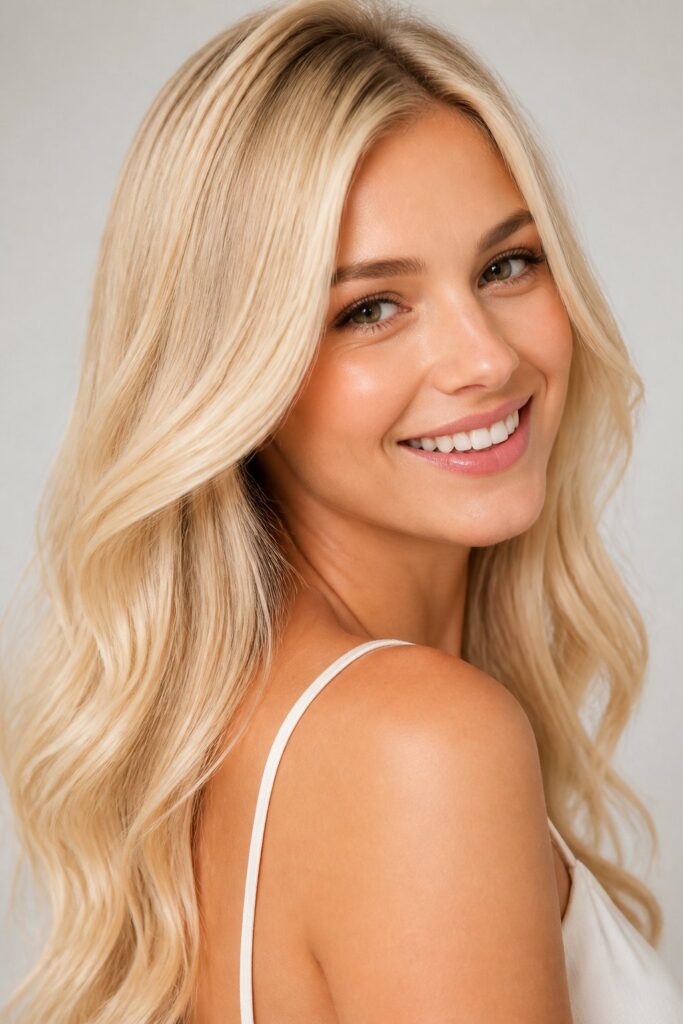
Golden Vanilla softens platinum with a warm, creamy undertone, giving a bright blonde that still looks warm and wearable rather than stark.
Touch-ups every 6–8 weeks and a monthly warm-gloss treatment keep the vanilla cast from cooling down to a plain pale blonde.
24. Champagne Blonde
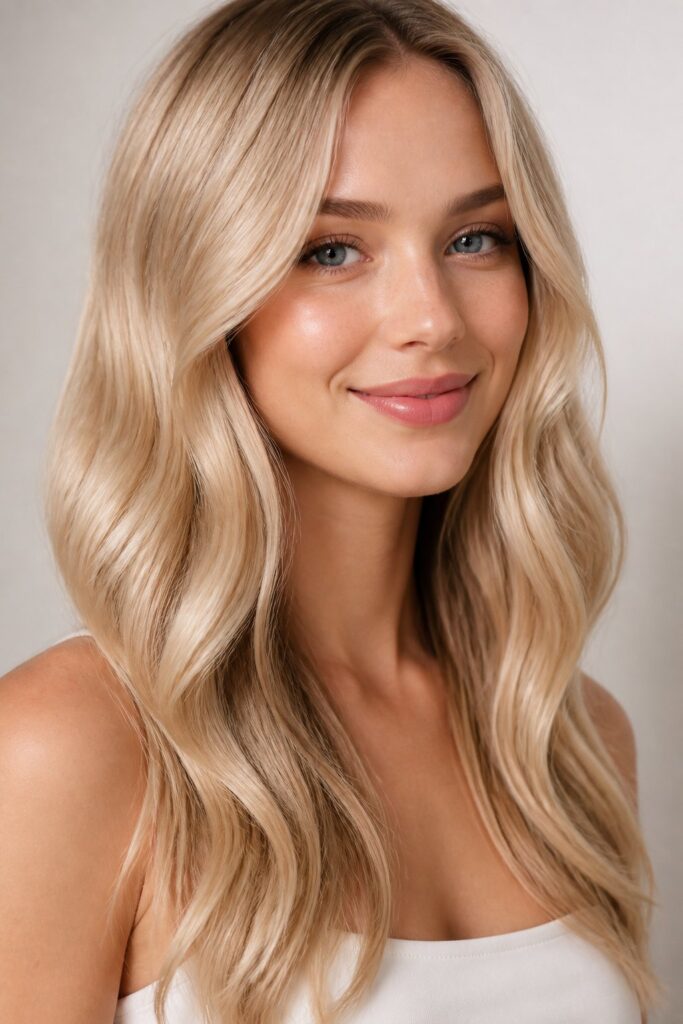
Champagne Blonde blends beige and gold in equal measure for a neutral, slightly shimmery blonde that flatters nearly every skin tone.
Because it sits between warm and cool, it’s forgiving as it grows out; a gloss every 8 weeks maintains the subtle shimmer.
Rose & Warm Fusions
Pink, copper, and gold blended together for a luminous, face-framing glow.
25. Rose Gold Fusion
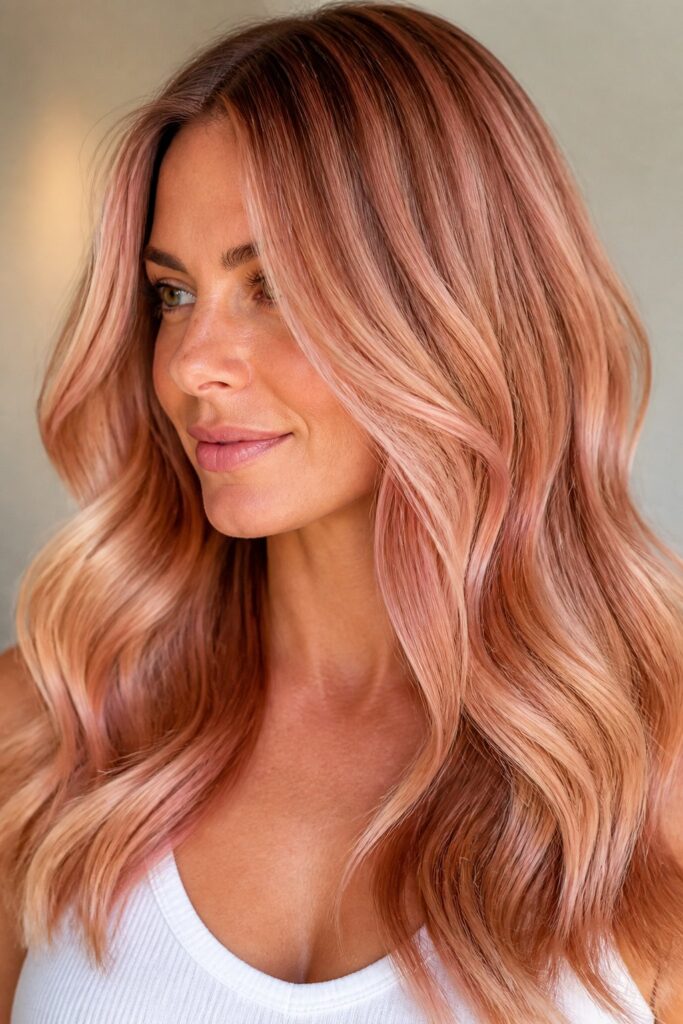
Rose Gold Fusion blends warm copper, soft pink, and golden blonde to achieve a luminous, face-framing glow. You’ll typically see a sun-kissed blonde base with rose-toned babylights and copper lowlights for depth.
Preserve the pink component with a tinted conditioner and protect the hue from heat and chlorine. Ask for a warm gloss at your appointment to lock in the pink-gold shimmer.
If you prefer lower upkeep, request strategically placed highlights rather than full-head color to delay noticeable regrowth.
26. Strawberry Blonde
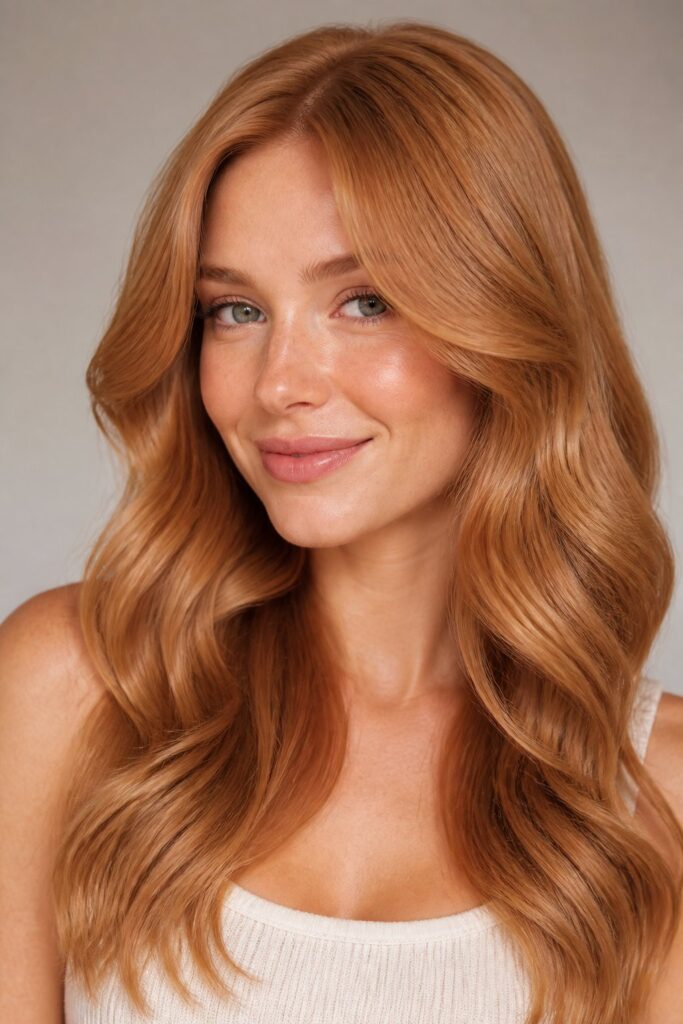
Strawberry Blonde blends golden blonde with a soft red-pink undertone for a warm, romantic shade that works beautifully on fair to medium warm skin.
Expect a gloss every 5–6 weeks to keep the strawberry tone from fading to plain blonde, plus a weekly red-toned conditioner at home.
27. Peach Copper
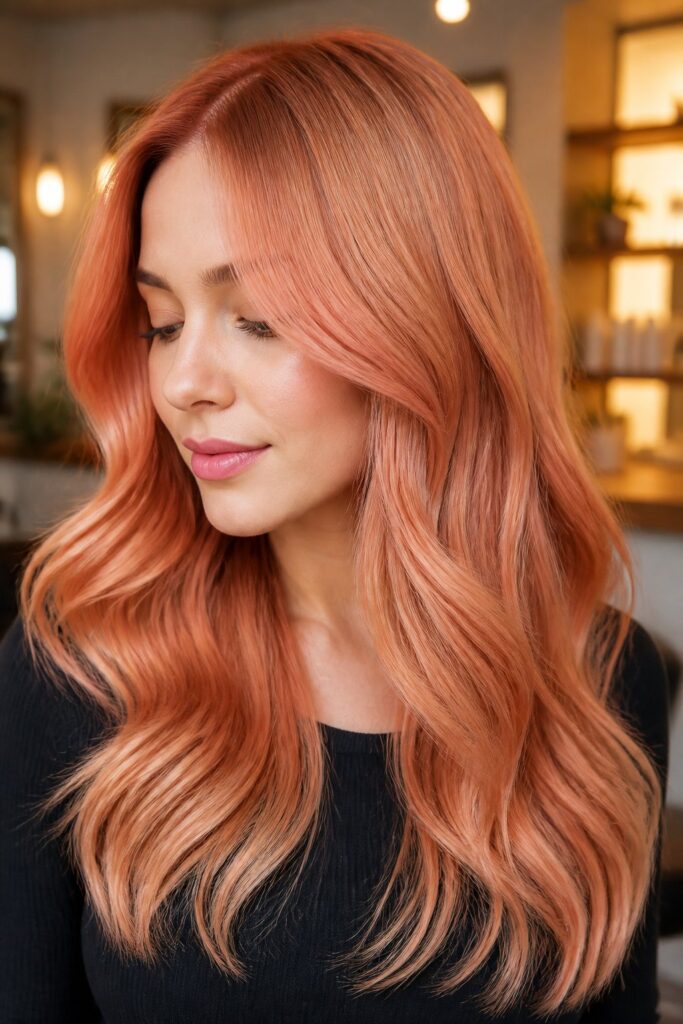
Peach Copper softens a copper base with a peachy-pink undertone for a warm, fruity finish that’s brighter than traditional copper but softer than pastel pink.
Toning sessions every 4–6 weeks keep the peach cast fresh; a copper-pigmented mask at home slows the drift toward plain orange.
Brunette Dimension
Multi-tonal browns that add depth without straying far from a natural base.
28. Blended Bronze
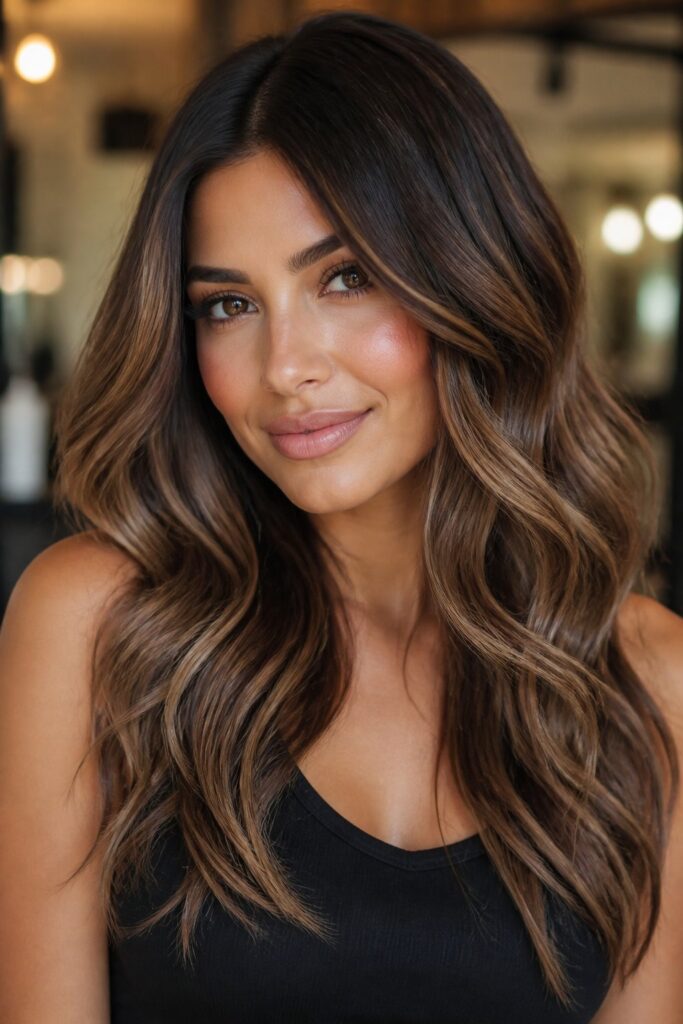
Blended Bronze is a multi-dimensional brunette that mixes ash-brown roots, warm bronze mid-lengths, and subtle caramel balayage. The goal is a natural transition and glossy finish, so stylists use hand-painted balayage and shadow-rooting techniques.
This style thrives on gloss treatments and occasional babylight refreshes rather than frequent all-over coloring. Use a shine serum and color-safe cleanser to maintain the bronze reflection.
Blended Bronze works well on medium to dark hair and suits warm or olive undertones; add cooler babylights if you want a more neutral effect.
29. Charcoal Brunette
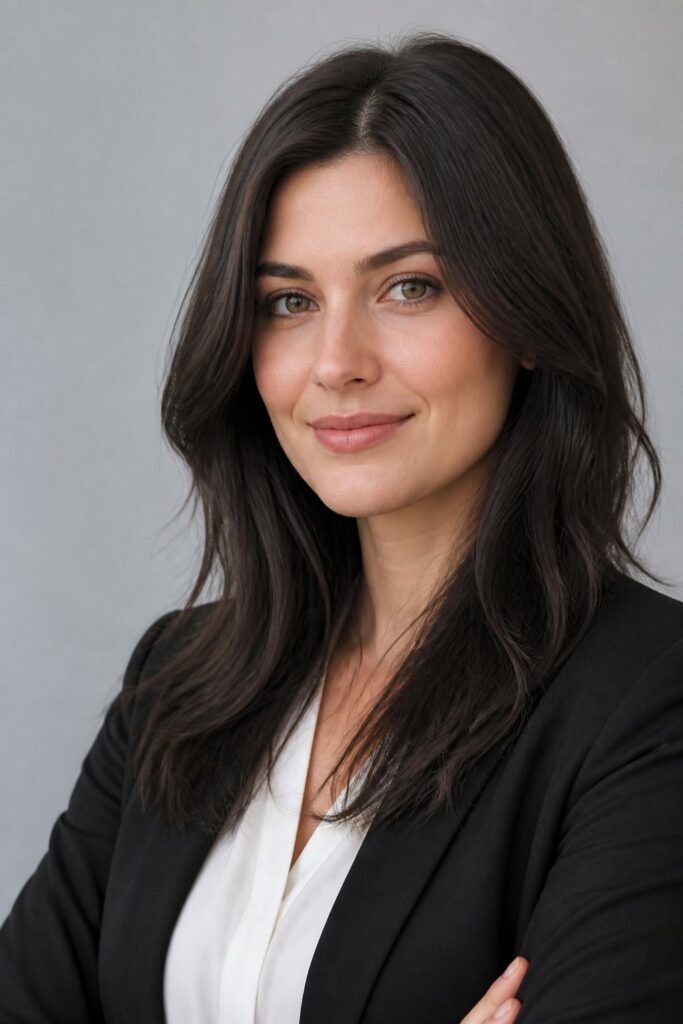
Charcoal Brunette is a cool, smoky dark brown with a hint of gray undertone, giving a moody, matte finish that suits cool and neutral skin tones.
Low maintenance by design: root touch-ups every 8–12 weeks, with an ash-toned gloss every couple of months to keep the smoky effect from warming up.
30. Chestnut Dimension
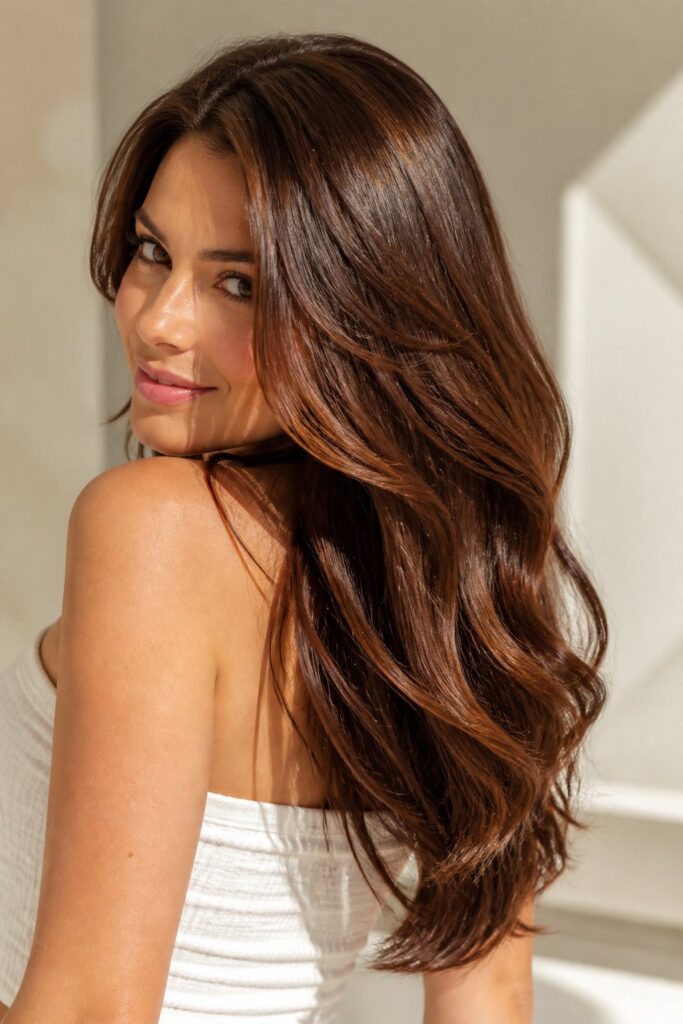
Chestnut Dimension layers warm reddish-brown tones through a medium base for a rich, glossy brunette with visible movement in sunlight.
A warm gloss every 6–8 weeks maintains the chestnut depth; weekly conditioning masks keep the reddish tones from fading to flat brown.
31. Caramel Balayage Brunette
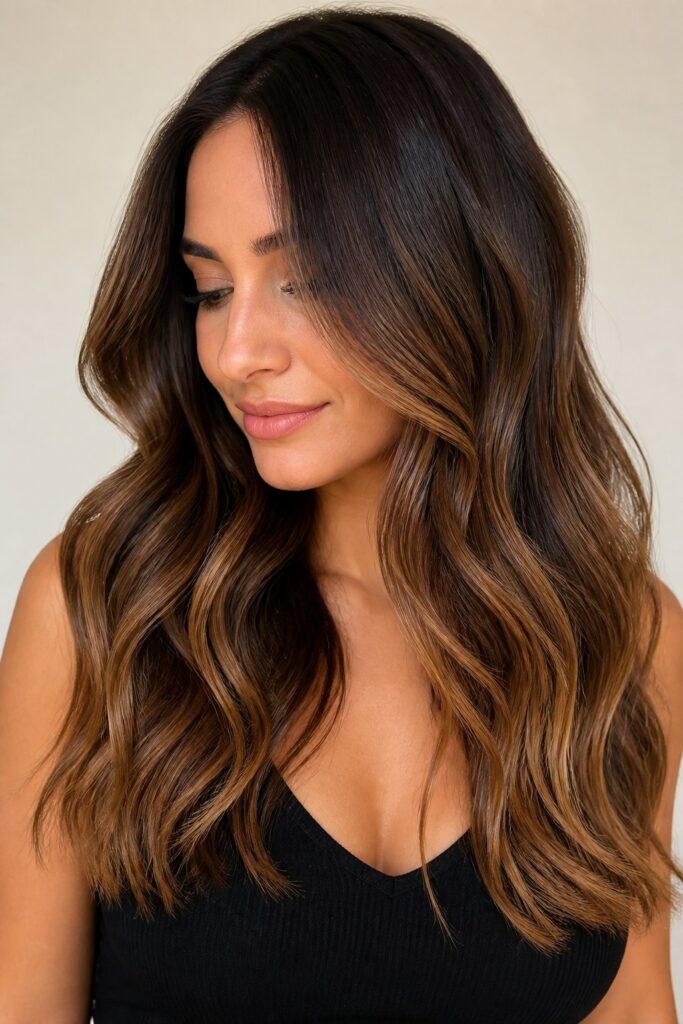
Caramel Balayage Brunette hand-paints warm caramel highlights through a brown base, concentrated toward the ends for a sun-kissed, low-maintenance dimensional look.
Because balayage grows out softly, touch-ups can stretch to 10–14 weeks; a gloss every 2 months keeps the caramel tones glossy rather than dull.
32. Chocolate Mocha
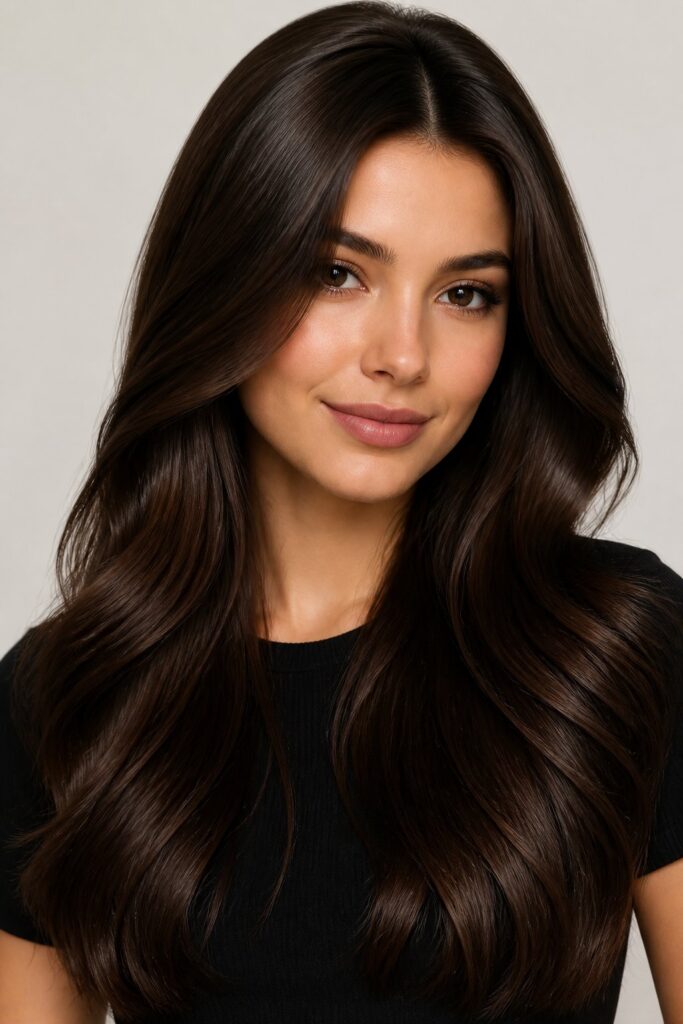
Chocolate Mocha combines a deep brown base with subtle warm undertones for a rich, glossy, coffee-inspired brunette that photographs beautifully.
This is a fairly low-maintenance shade close to many natural bases; a monthly gloss preserves the chocolate shine and prevents fading to a dull, ashy brown.
33. Ash Brown Smoke
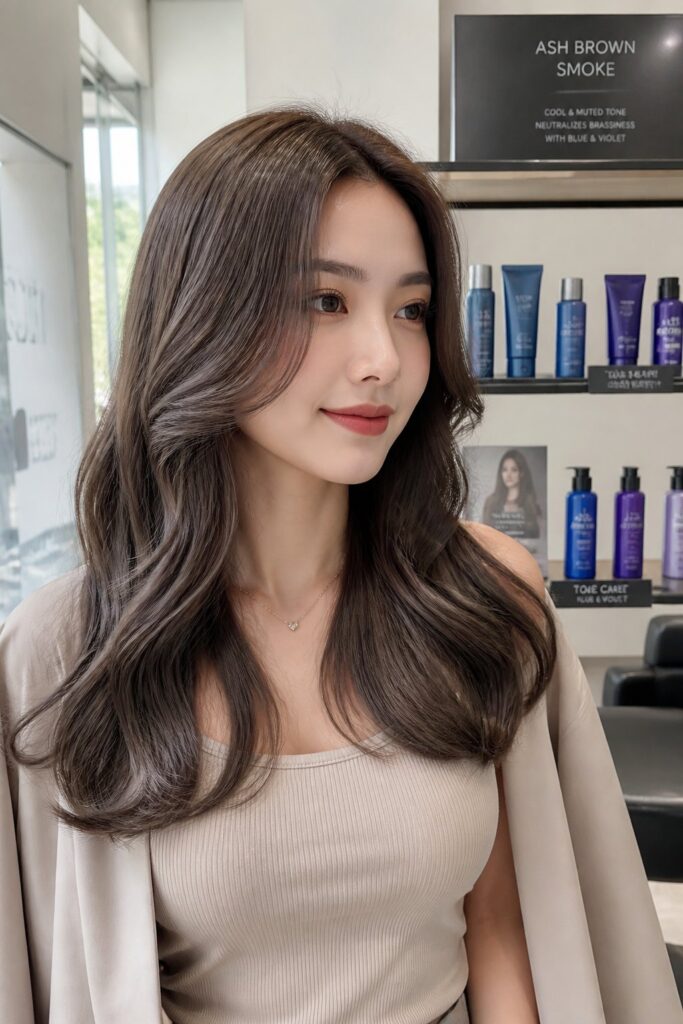
Ash Brown Smoke neutralizes warmth from a brown base for a cool, muted finish that’s especially popular for covering brassiness in previously colored hair.
Use a blue- or violet-toned shampoo occasionally to maintain the ash cast, and schedule a toning refresh every 6–8 weeks.
Creative Placement & Finishes
Techniques and placements that turn color into a graphic, architectural statement.
34. Money Piece Contrast
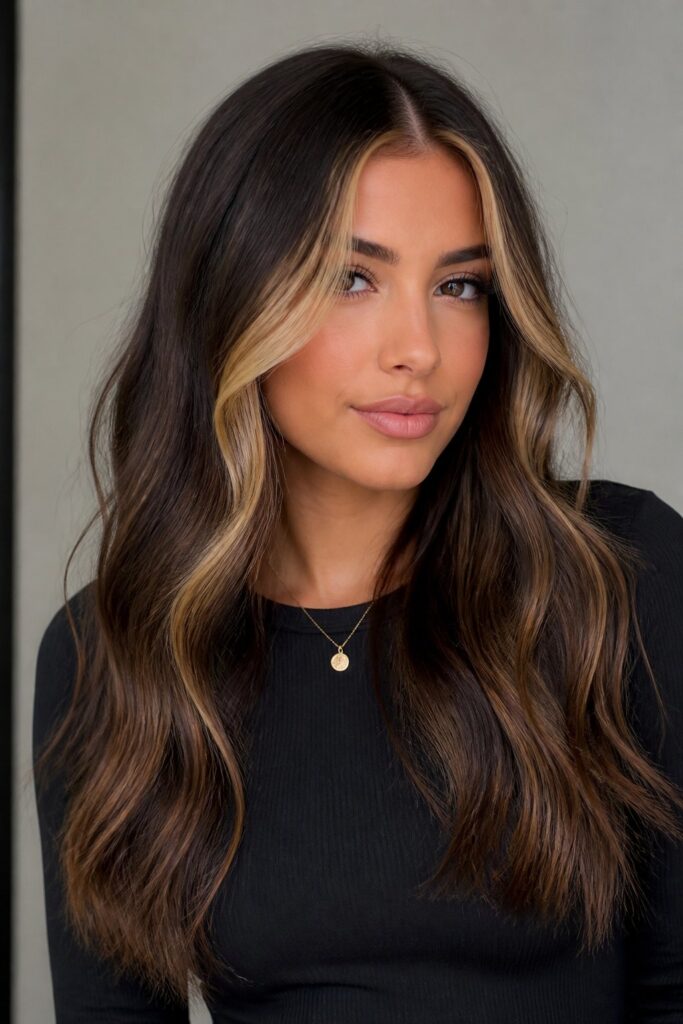
Money Piece Contrast frames the face with two bold, brightened panels against a darker base, offering high impact with minimal overall processing.
Because only the panels are lightened, touch-ups are quick and infrequent — typically every 10–12 weeks — making this one of the lowest-maintenance statement looks.
35. Underlayer Peekaboo
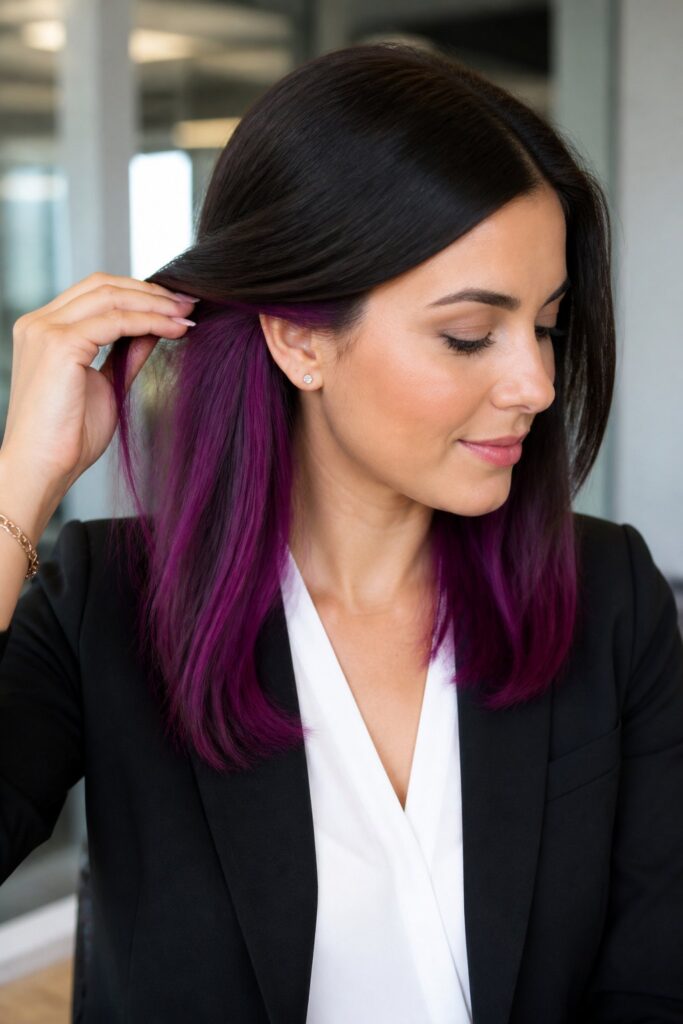
Underlayer Peekaboo hides a vivid or contrasting color underneath the top layer of hair, revealing it only when styled up or with movement — ideal for workplaces with dress-code limits.
Since the color is hidden day-to-day, it holds its vibrancy longer between salon visits, with refreshes typically needed every 8–10 weeks.
36. Face-Framing Panel
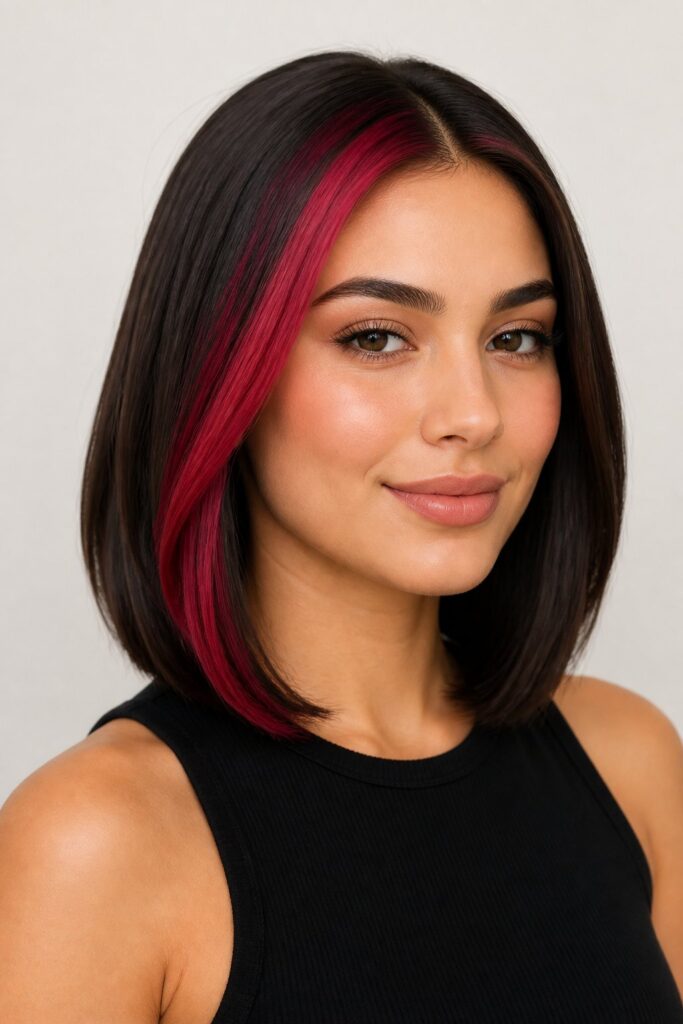
Face-Framing Panel places a single bold streak along the front hairline for a graphic, modern accent that pairs well with any base color.
This placement is easy to maintain at home with a pigment-depositing gloss between the every-8-week salon refresh.
37. Sunset Ombre
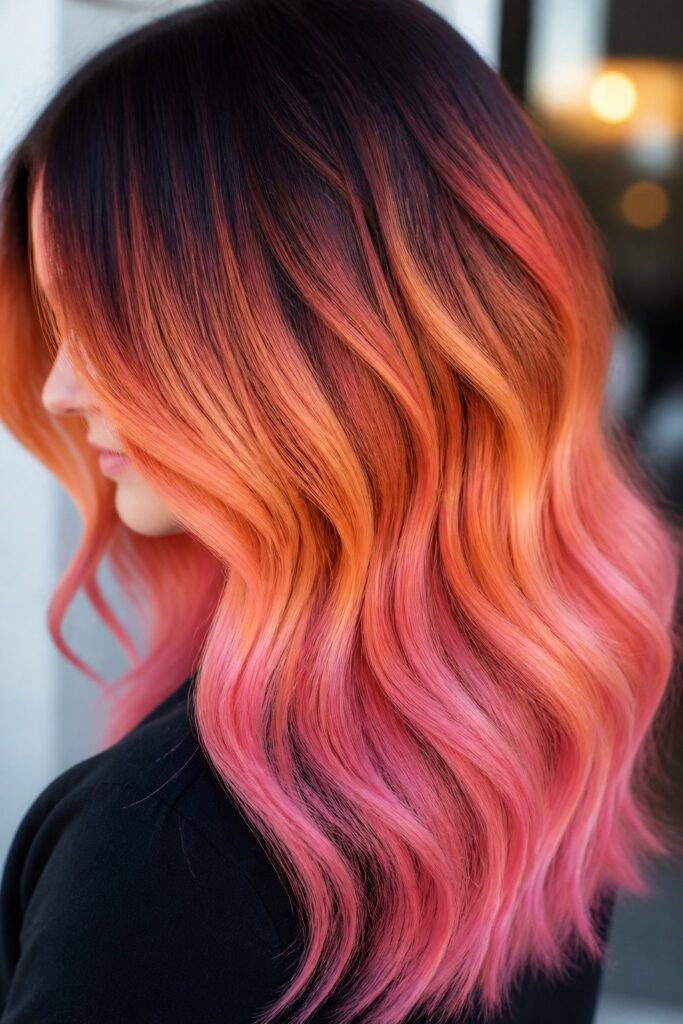
Sunset Ombre graduates from a deep root through amber, orange, and soft pink toward the ends, mimicking a gradient sky for a bold, blended statement.
Because the transition is gradual, regrowth is barely noticeable; expect a toning refresh on the ends every 6–8 weeks to keep the gradient crisp.
38. Two-Tone Split Dye
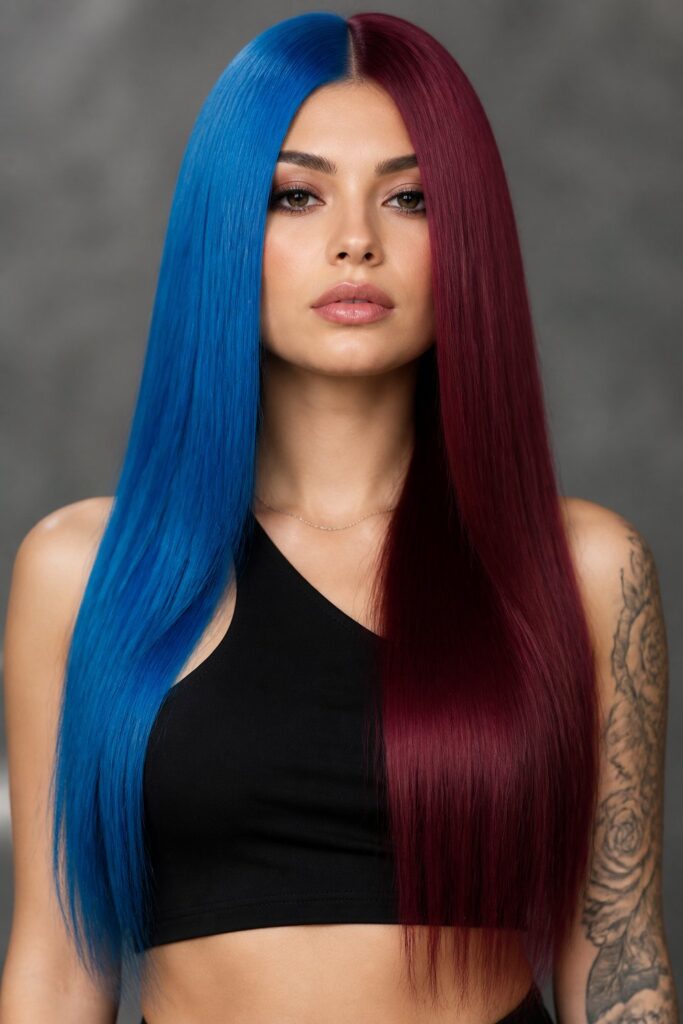
Two-Tone Split Dye divides hair into two contrasting solid colors, often down a center or side part, for a maximalist, editorial statement.
This is high maintenance on both colors independently; plan on refreshing each shade every 4–6 weeks and using separate color-safe products for each half.
39. Metallic Silver Chrome
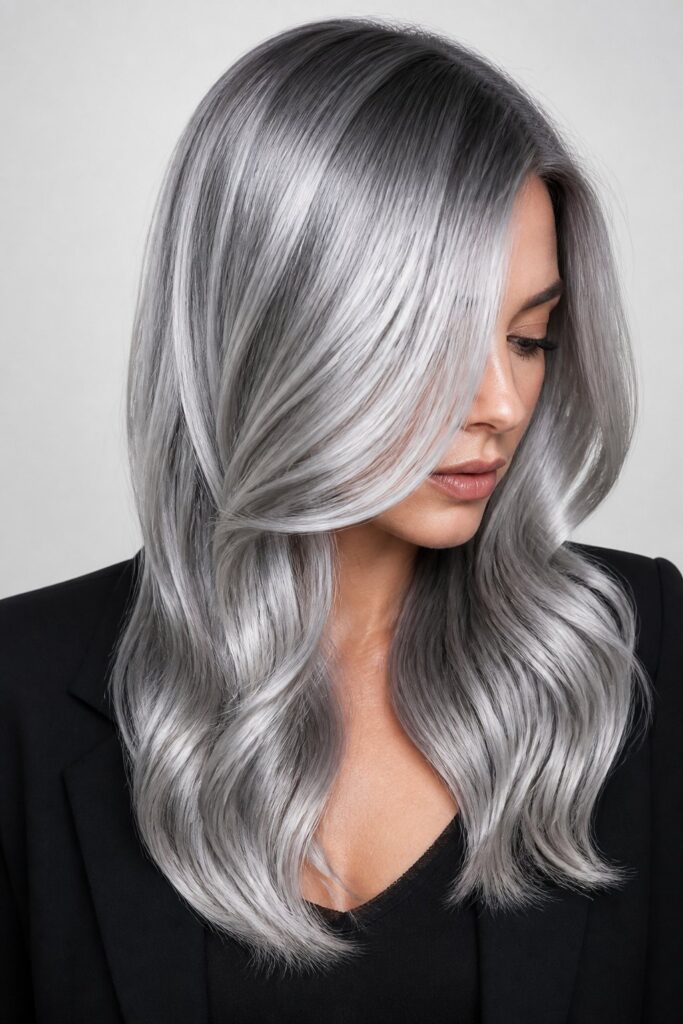
Metallic Silver Chrome achieves a mirror-like, cool gray finish through full pre-lightening and a chrome-toned glaze, popular as both a full-head and placement option.
Expect root touch-ups every 3–4 weeks and a chrome-toning treatment monthly, alongside consistent bond-repair care given the lightening required.
40. Amber Honey Glow
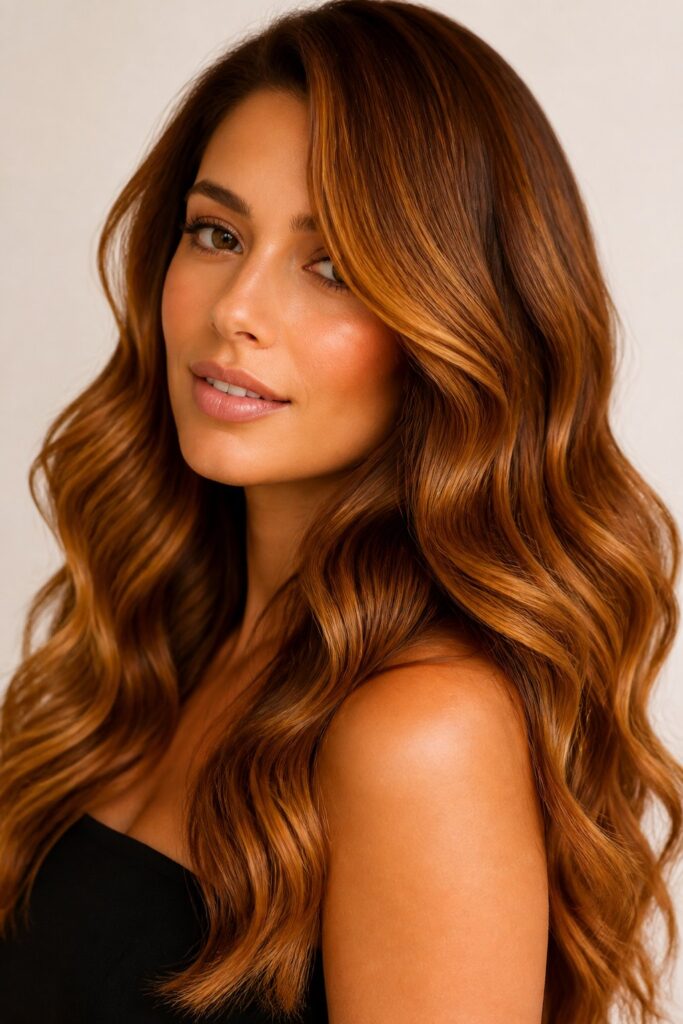
Amber Honey Glow blends deep amber with golden honey tones for a warm, radiant finish that works as an all-over color or a dimensional balayage.
A warm gloss every 6–8 weeks keeps the amber-honey balance from fading toward plain gold, and heat protectant preserves the glow.
Influences Driving This Year’s Hair Color Trends
Warmth, personalization, and bold shine shape the year’s palette. Expect inspiration from fashion runways, celebrity color shifts, and fast-moving social platforms to guide what you ask your colorist for.
Runway Inspirations
Designers are sending color cues that favor nostalgic silhouettes and strong, saturated blocks of tone. You’ll see 1970s-inspired hues — burnt sienna, chestnut brunettes, and amber blondes — paired with modern finishes like next-generation shine and piecey texture.
Runway shows also push contrast and graphic placement. Think bold roots, face-framing panels, and chunky color blocking that translates into salon techniques such as controlled balayage and painted panels.
If you prefer subtlety, look for “lived-in” interpretations: softer blends, low-maintenance grow-outs, and warm dimensional tones that retain runway polish without daily upkeep.
Celebrity Transformations
Celebrities continue to accelerate trends by choosing dramatic and wearable shades in equal measure. High-profile changes — bright copper on pop stars, teddy-bear blonde on actors, and charcoal brunettes on models — are already showing up in salon requests you’ll hear this year.
Those looks often come with professional glossing treatments and color-corrective processes that preserve hair health. When you copy a celebrity shade, expect a multi-step service: consultation, customized color formula, and follow-up toning to match your skin tone and lifestyle.
Social Media Viral Styles
Short-form video platforms amplify micro-trends that move from niche to mainstream within weeks. You’ll notice trends like pastel accents, lived-in brunettes, and chunky face-frames go viral after a single tutorial or celebrity endorsement, then appear across salon menus.
Creators also share DIY maintenance tips and product recommendations, which influence what clients bring to appointments. To get a trending look that lasts, combine the viral reference with professional color services and a realistic at-home care plan.
Techniques Elevating Color Innovation
These methods focus on depth at the root, seamless multi-tonal blends, and bold geometric placement to give you modern, wearable color with long-lasting movement and lower-maintenance regimens.
Shadow Rooting
Shadow rooting anchors color with a deliberately darker root that softens grow-out and adds depth. You get a natural transition between scalp and mid-lengths, which reduces visible regrowth and extends salon intervals.
When requesting shadow roots, specify how soft or defined you want the demarcation. Ask for a root tone within one to two levels darker than your mid-lengths for subtle depth, or two to three levels darker for more contrast and dimension.
Maintenance is minimal: refresh the root every 8–12 weeks, or stretch it further with glosses and toners. This technique also protects fragile ends by keeping heavy lift away from them, so it pairs well with bond-repair treatments and glossing services.
Multi-Tonal Balayage
Multi-tonal balayage layers several complementary shades with hand-painted strokes to create natural, dynamic movement. You get face-framing brightness and cool-to-warm shifts that read differently in sunlight and indoor light.
Plan the palette around three to five tones: a base, two midlights, and one or two accents. Tell your colorist which tones you want emphasized — warm honey, cool ash, or a smoky neutral — so they can place highlights to suit your hair texture and parting.
Expect a session length of 2–4 hours depending on saturation and placement. Touch-ups focus on toning rather than full re-lightening, so you can preserve hair integrity and maintain shine with regular bond-building treatments.
Color Blocking
Color blocking uses solid, high-contrast sections — panels, fringe, or underlayers — to create architectural color statements. You get instantly noticeable shapes and movement without full-head processing.
Choose placement that flatters your face: a bold panel behind the ear, a money piece at the face, or a contrasting underlayer. Decide on edge sharpness — soft blended edges for a wearable look or crisp lines for a graphic finish.
Color-blocked pieces require targeted upkeep: refresh only the blocks that fade, typically every 6–10 weeks for vivid pigments. Use pigment-depositing conditioners and cool-water washes to preserve hue between salon visits.
Maintenance and Upkeep for Lasting Vibrancy
Maintain color vibrancy with the right products, targeted at-home habits, and scheduled professional touch-ups. Prioritize sulfate-free cleansers, heat protection, cool water rinses, and a salon plan for refreshes to keep tone and health consistent.
Recommended Products
Use a sulfate-free color-safe shampoo and a high-protein conditioner to protect pigment and strengthen hair. Look for ingredients like ceramides, argan oil, and panthenol; avoid sodium lauryl sulfate and alcohol-heavy formulations that strip color.
Add a color-depositing conditioner or mask matched to your shade to refresh tone between appointments (red and copper tones benefit most). Use a thermal protectant spray before any heat styling to prevent color fade from heat and UV exposure.
Invest in a weekly deep-repair mask if your hair underwent lightening. For fine colored hair, choose lightweight leave-ins; for thick or dry hair, pick richer oils or creams. Replace products every 9–12 months to ensure active ingredients remain effective.
Home Care Tips
Wash hair no more than two to three times per week to slow pigment loss. When you do wash, use cool or lukewarm water; hot water opens the cuticle and accelerates fading. Pat hair dry with a microfiber towel to reduce friction and breakage.
Limit heat styling to preserve color and hair integrity. If you must blow-dry or flat-iron, use the lowest effective temperature and always apply a heat protectant. Rinse with a final cool-water shot to seal the cuticle and lock in shine.
Protect color from sun and chlorine. Wear a hat or use UV-protection sprays when outdoors. Before swimming, wet hair with fresh water and apply a leave-in conditioner or wear a swim cap; this reduces chlorine absorption and color stripping.
Professional Touch-Ups
Schedule tone refreshes every 6–10 weeks for permanent colors and every 4–6 weeks for high-maintenance reds and pastels. Ask your stylist about low-ammonia or demi-permanent glazes for mid-cycle tone correction without full re-dyes.
Book regular trims every 8–12 weeks to remove color-faded ends and keep the shape. Bring pictures and note the details of your last service (products used, developer strength) so your colorist can reproduce or adjust your shade accurately.
Discuss glossing, root-smudging, or shadow-root techniques to extend time between full appointments. These options maintain a natural grow-out and reduce the frequency of aggressive lightening services.
Frequently Asked Questions
This section answers practical questions about specific 2026 color trends, formulas, and techniques you can ask your stylist. Expect guidance on warm tones, wearable brightness, low-maintenance options, and age-friendly looks.
What are the top hair color trends for women in 2026?
Warm shades such as caramel blonde, burnt sienna, golden honey, and dimensional browns are leading the trends.
Glossy, multi-tonal color that complements natural hair and skin undertones is especially popular.
What is the most trending hair color in 2026?
Muted warm brown is one of the biggest hair color trends, followed by charcoal brunette and black cherry.
Face-framing money pieces are also popular for adding brightness without coloring the full head.
Which 2026 hair color trends work best for brunettes?
Charcoal brunette, burnt sienna, black cherry, and soft low-contrast balayage suit brunette hair beautifully.
A tonal gloss can add shine, refresh the color, and reduce unwanted brassiness.
Which 2026 hair color trends are most popular for blondes?
Teddy bear blonde, honeycomb blonde, caramel, and butterscotch highlights are popular warm blonde choices.
Babylights and money pieces add brightness while keeping the roots natural and easy to maintain.
What highlight and balayage techniques are trending in 2026?
Soft hand-painted balayage, fine babylights, money pieces, and blended root shadows are highly popular.
Sheet foiling and lived-in root blends also provide natural brightness with lower maintenance.
What are the best 2026 hair color trends for women over 40?
Caramel, soft amber, muted brunette, and subtle face-framing highlights create a soft, youthful appearance.
Root smudging, gloss treatments, and bond-protecting services help maintain shine and healthy-looking hair.

1 Comment
Pingback: 35 Face-Framing Layers That Transform Your Look – Hair Mora Beauty