
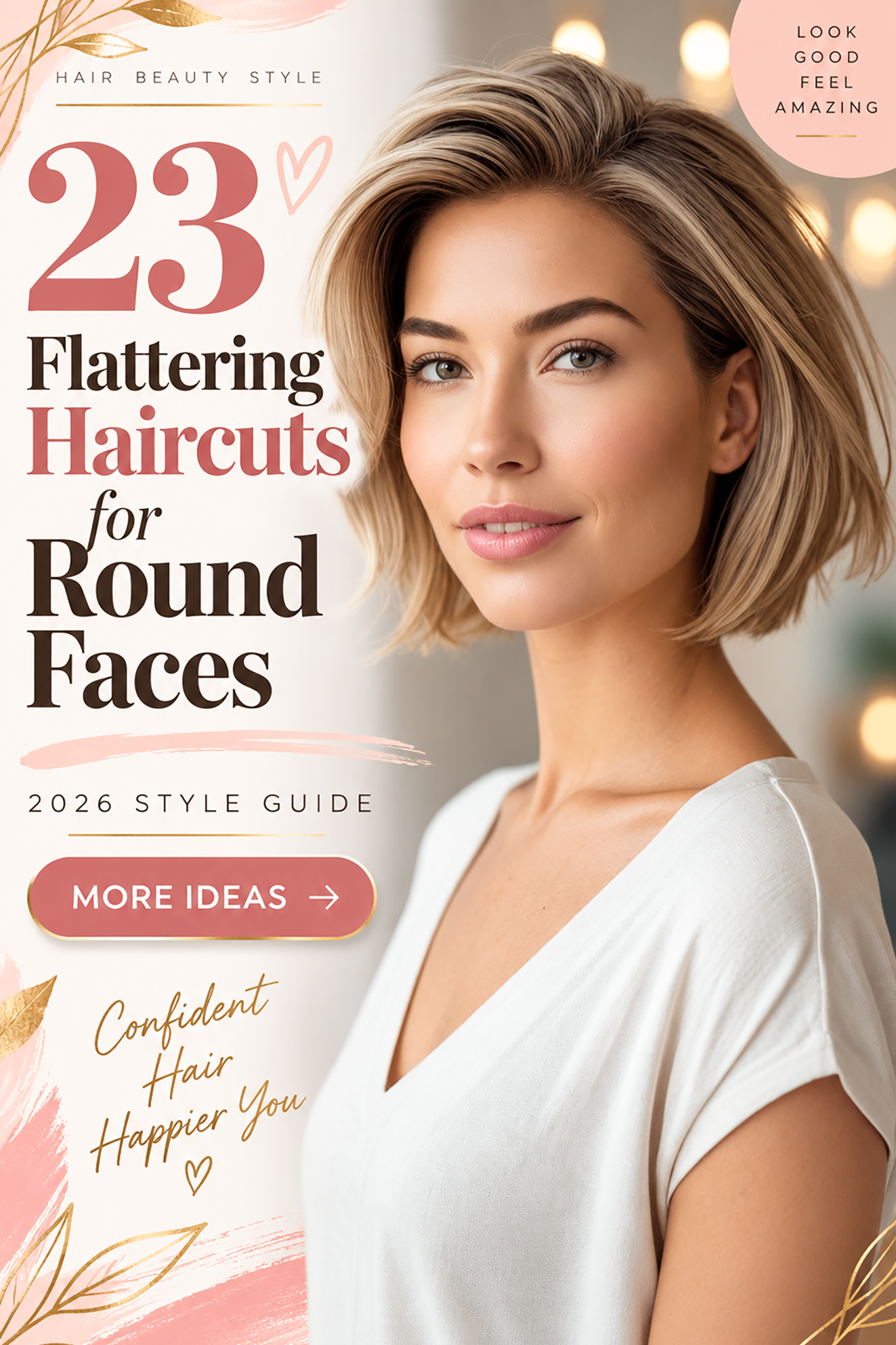
A round face shape reads as soft curves, balanced width and height, and a jawline with gentle definition rather than sharp angles. The right haircut doesn’t change that geometry; it works with it, adding vertical movement, lift, or diagonal lines that shift how the eye travels across your features. That’s the difference between a cut that looks good on the page and one that feels right on you.
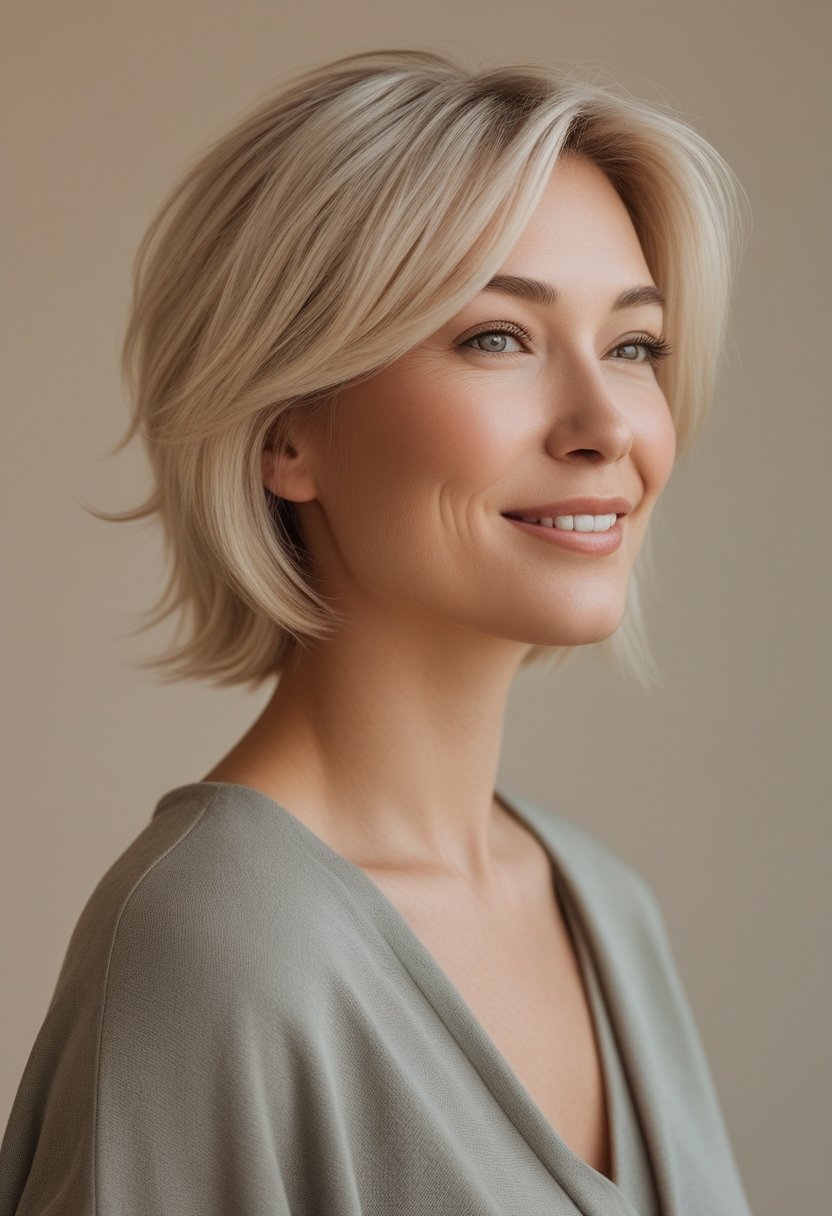
This guide covers 23 haircuts for round faces, organized by length, so you can see exactly how texture, parting, and layer placement change the outcome. A layered lob with a deep side part stands out as the most consistently flattering haircut for round faces because it combines chin-to-collarbone length with face-framing movement that most stylists can adapt to fine, thick, straight, or curly hair. Shorter pixies and longer shags each bring their own advantages depending on how much definition, volume, or low-maintenance styling you want day to day.
Every cut below comes with the hair texture it suits best, the visual effect it creates, and phrasing you can bring straight into your next consultation.
Key Takeaways
- Vertical layers, crown lift, and diagonal parting create balance for a round face shape without requiring you to avoid any particular length.
- Short pixies, bobs, lobs, shags, and long layered styles all offer round-face-friendly variations once texture and part placement are adjusted.
- Matching the cut to your natural hair texture, whether fine, thick, wavy, or curly, determines how well the shape holds between salon visits.
What Makes a Cut Work With a Round Face Shape?
A cut works with a round face shape when it introduces vertical lines, lifts volume at the crown instead of the cheeks, and uses parting or fringe to break up width with diagonal movement. These three principles guide nearly every recommendation in this guide, and understanding them helps you communicate clearly with a stylist instead of just pointing at a photo.
Create Length With Vertical Lines and Strategic Layers
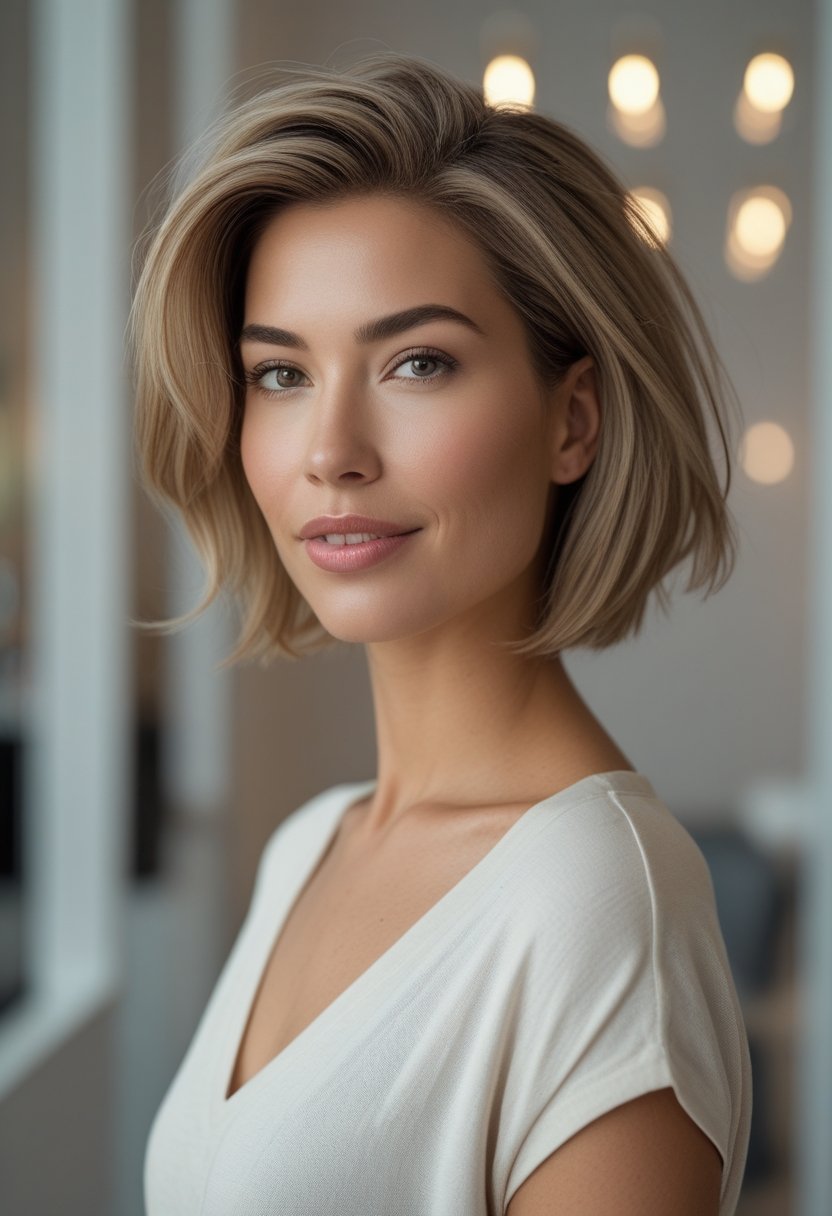
Face-framing layers that run vertically along the cheeks and jaw draw the eye up and down rather than side to side. Longer front pieces, cut to graze the chin or below, do the same job without sacrificing overall length. Stylists often layer from the cheekbone down so the movement stays soft instead of choppy.
Place Volume at the Crown, Not at the Cheeks
Root lift and crown volume add height above the face, which balances fuller cheeks by extending the vertical line of the head. Volume concentrated at the sides or jaw does the opposite, widening the silhouette right where a round face already has fullness. A blowout with a round brush focused at the roots, or a cut with built-in crown layers, keeps lift where it counts.
Use Parts and Fringe to Introduce Soft Diagonal Definition
A deep side part or off-center part creates an asymmetrical line that softens the symmetry of a round face. Curtain bangs, wispy fringe, or side-swept bangs extend that diagonal down toward the cheekbones. A middle part or full, blunt bangs can flatten this effect, so most stylists reserve those for faces with more angularity.
Short Cuts That Create Height and Definition
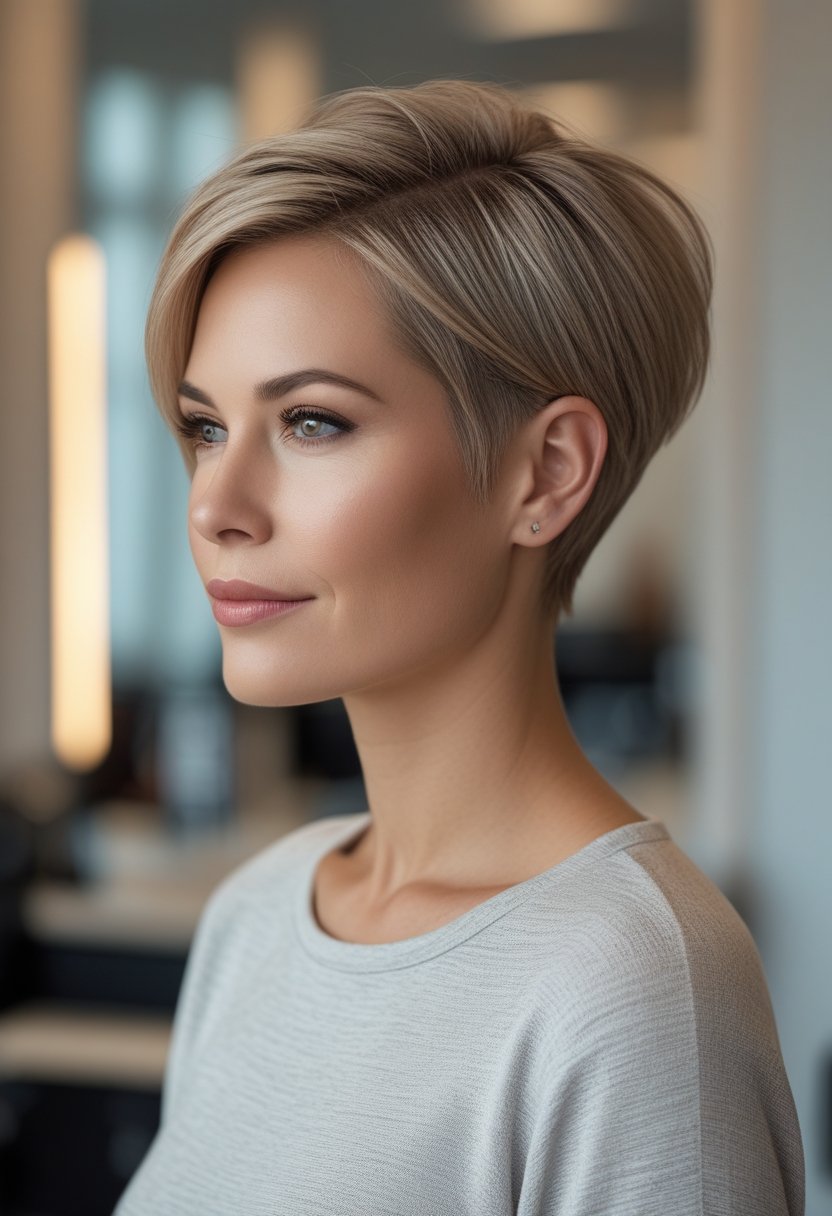
Short haircuts for round faces rely on crown height, textured perimeters, and asymmetry to avoid the boxy or overly rounded silhouette that a blunt, one-length crop can create. Pixies, pixie bobs, and short layered bobs each achieve this differently depending on how the layers are stacked and where the length falls.
1. Textured Pixie With Side-Swept Bangs
Best for fine to medium hair, a textured pixie adds volume at the crown while side-swept bangs introduce a diagonal line across the forehead. The choppy texture through the top prevents the cut from reading as too rounded itself. Ask your stylist for “point-cut layers on top with a side-swept fringe.”
2. Layered Pixie Bob With a Deep Side Part
This hybrid suits thick or coarse hair that needs a bit more length to look intentional. The deep side part immediately breaks symmetry, and layers through the bob length keep the ends from flaring outward. Request “a pixie bob with graduated layers and a deep side part.”
3. Tapered Pixie With Crown Lift
Straight, fine hair holds this shape especially well since the tapered sides stay close to the head while the crown is left longer for lift. The contrast between short sides and lifted top elongates the whole face. Say “tapered sides, longer through the crown for lift.”
4. Side-Swept Pixie With Longer Front Pieces
Longer front pieces that sweep across the brow soften the forehead and cheekbone area, working well for wavy or straight hair alike. This variation gives more styling flexibility than a fully cropped pixie. Ask for “longer face-framing pieces left at the front, short layers everywhere else.”
5. Soft Shaggy Pixie With Feathered Bangs
Feathered bangs and shag-style layers suit textured or naturally wavy hair, since the piecey ends rely on movement rather than a sleek finish. The feathering keeps the bangs from sitting heavy across the forehead. Request “a shaggy pixie with feathered, textured bangs.”
6. Asymmetrical Pixie Bob With an Undercut
An undercut beneath a longer top layer works for thicker hair that needs weight removed without losing length on top. The asymmetry through the bob perimeter adds an angular line that a symmetrical round face benefits from. Ask for “an undercut pixie bob, asymmetrical through the front.”
Bob and Lob Ideas With Balancing Lines
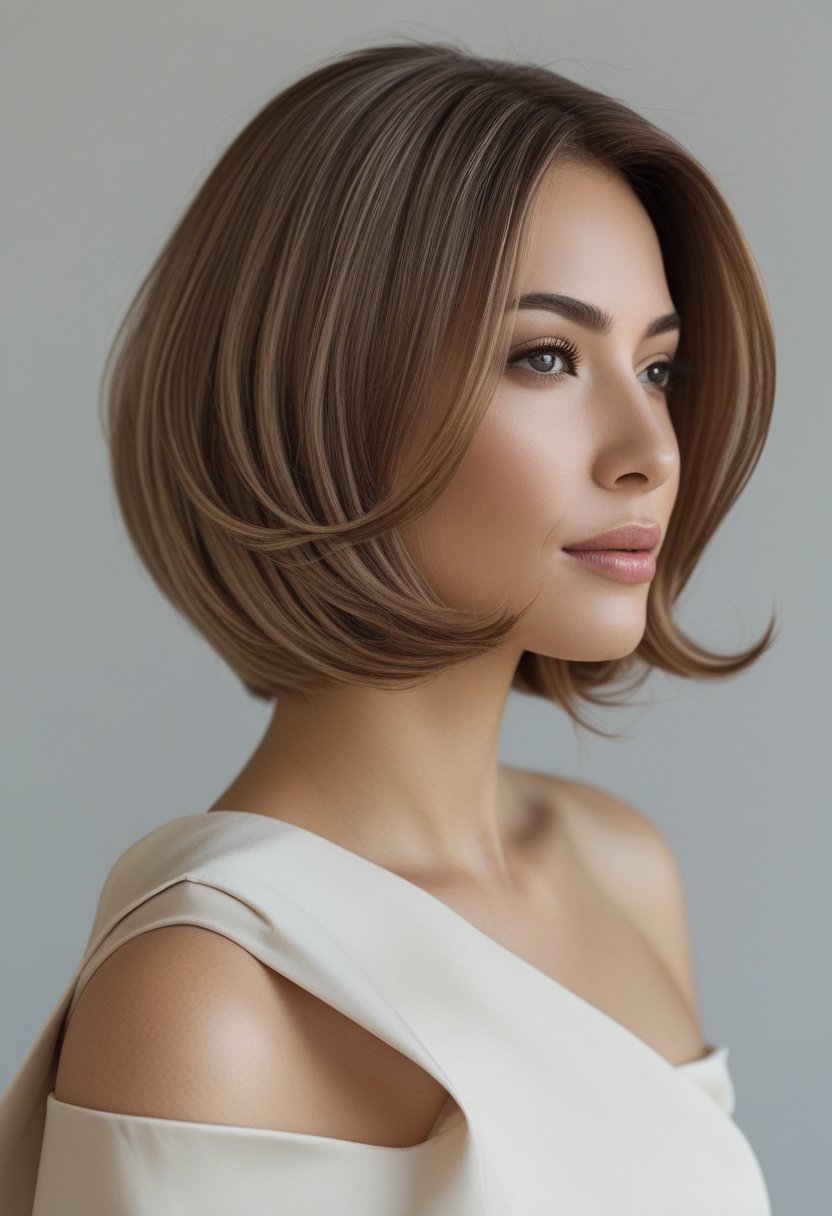
Bobs and lobs remain some of the most reliable haircuts for round faces because chin-to-collarbone length naturally elongates the lower face, and a bob is one of the most consistently recommended shapes for slimming the appearance of a round face according to this bob haircut roundup. The distinction between similarly named cuts, like a French bob versus an angled bob, comes down to where the weight sits and how blunt the perimeter line is.
7. Short Angled Bob With a Deep Side Part
An angled bob is cut longer in the front and shorter in the back, creating a diagonal line along the jaw that works well for straight or lightly wavy hair. Paired with a deep side part, the asymmetry does double duty. Request “an angled bob, longer at the front, deep side part.”
8. Chin-Length French Bob With Wispy Fringe
A French bob sits shorter and more uniform than an angled bob, typically hitting right at the chin with a rounded perimeter, and it pairs with wispy, textured fringe rather than a blunt one. This distinguishes it clearly from an angled bob: the French version is symmetrical and softer through the ends, while the angled bob is asymmetrical and more graphic. Fine to medium hair holds the shape best. Ask for “a French bob with soft, wispy fringe, not blunt.”
9. Textured Wavy Bob With Loose Waves
Loose waves through a bob add volume at the mid-lengths and ends rather than at the cheek line, which keeps the style from widening the face. This works naturally on wavy or curly textures. Request “a textured bob styled with loose waves, layers through the ends.”
10. Sleek Blunt Bob With an Off-Center Part
A blunt bob with a sharp, one-length perimeter can work for a round face when paired with an off-center part instead of a middle part. The off-center line prevents the blunt shape from emphasizing symmetry. Straight, thick hair holds this cleanest. Ask for “a blunt bob, off-center part, no fringe.”
11. Inverted Bob With Face-Framing Length
An inverted bob is stacked shorter in the back and longer in the front, with the front pieces often left several inches longer to frame the jaw. This vertical drop at the front is what separates it from a standard bob. Works well on medium to thick hair. Request “an inverted bob with extended face-framing length at the front.”
12. Shoulder-Grazing Layered Lob
A layered lob differs from a textured lob mainly in how the layers are cut: a layered lob has visible, structured layering throughout, while a textured lob relies on point-cutting and razoring for a piecier, less defined layer line. The layered version suits thicker hair that needs weight removal; the textured version suits fine hair that needs the illusion of density. Ask for either “a layered lob with structured layers” or “a textured lob with point-cut ends” depending on your hair’s thickness.
Medium-Length Layers and Shags With Easy Movement
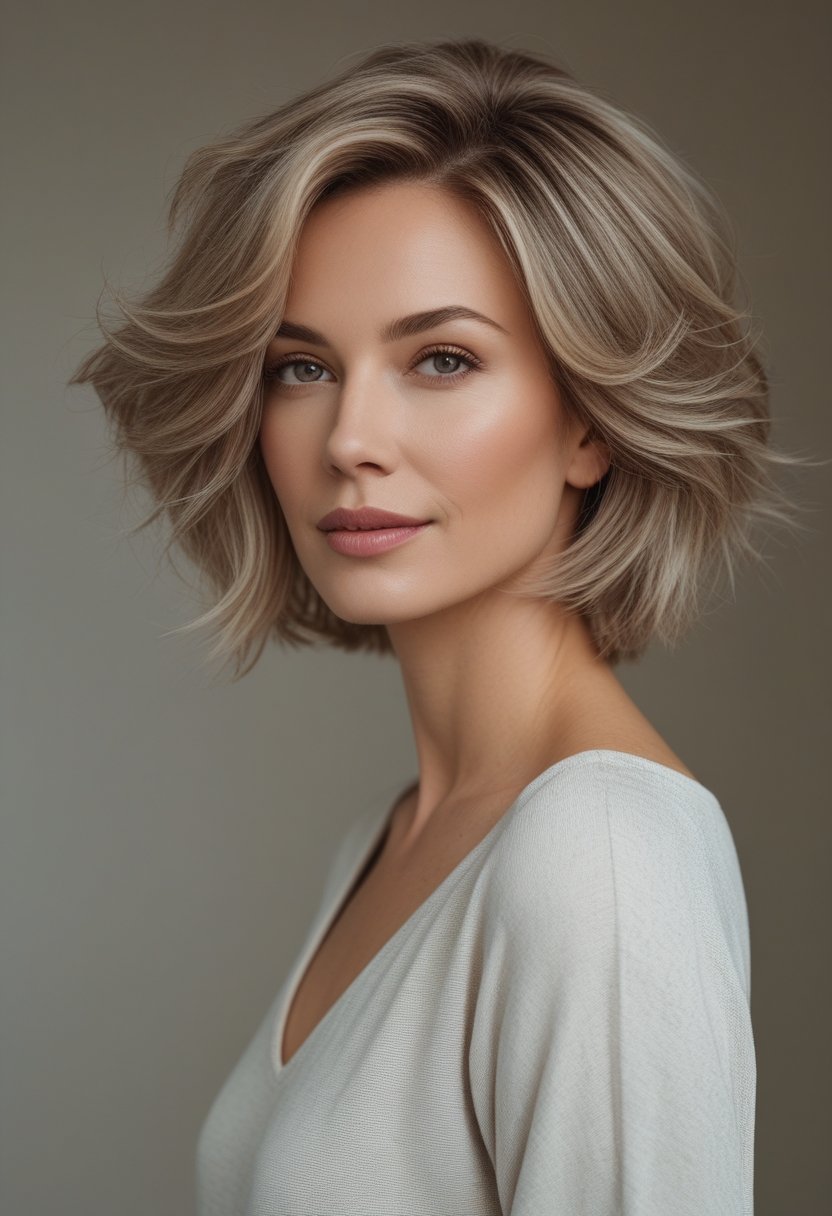
Medium-length shags and layered cuts add airy movement through the mid-lengths, which keeps a round face from looking flat while avoiding the heaviness of a blunt one-length style. Curtain bangs show up across several of these cuts because they extend face-framing layers down through the cheek area, and a shoulder-length cut with internal layers ranks among the most versatile options for 2026 according to this round face style breakdown.
13. Collarbone Lob With Curtain Bangs
This length sits just below the shoulder, and curtain bangs parted down the middle create two soft diagonal lines framing each side of the face. Works on straight, wavy, or curly hair since the bangs can be styled with a texture spray for definition. Ask for “a collarbone lob with curtain bangs, light layers throughout.”
14. Soft Shag With Airy Layers
A soft shag distributes layers evenly for movement without heavy texturizing, making it more wearable day to day than a choppier shag. Airy layers reduce bulk at the sides, which helps thick or coarse hair especially. Request “a soft shag, airy layers, minimal texturizing at the ends.”
15. Shag With Curtain Bangs and Flipped Ends
Flipped ends, where the perimeter kicks outward rather than curving under, add width at the jaw level in a way that reads as intentional movement rather than heaviness. Combined with curtain bangs, this shag suits medium to thick hair with some natural wave. Ask for “a shag with flipped ends and curtain bangs.”
16. Butterfly Cut With Face-Framing Pieces
The butterfly cut uses heavily layered sections around the face that fan outward like wings, creating dramatic face-framing without cutting the overall length short. This cut works best on hair with enough length to show the layering, generally past the shoulders. Request “a butterfly cut with heavy face-framing layers, keep the length long.”
17. Shoulder-Length Layers With Side Fringe
A straightforward layered cut at shoulder length, paired with a side fringe instead of a full bang, offers a lower-maintenance alternative to a shag while still introducing diagonal movement. Suits straight and wavy hair equally well. Ask for “shoulder-length layers with a side fringe, no heavy texturizing.”
Long Styles That Keep Length While Adding Shape
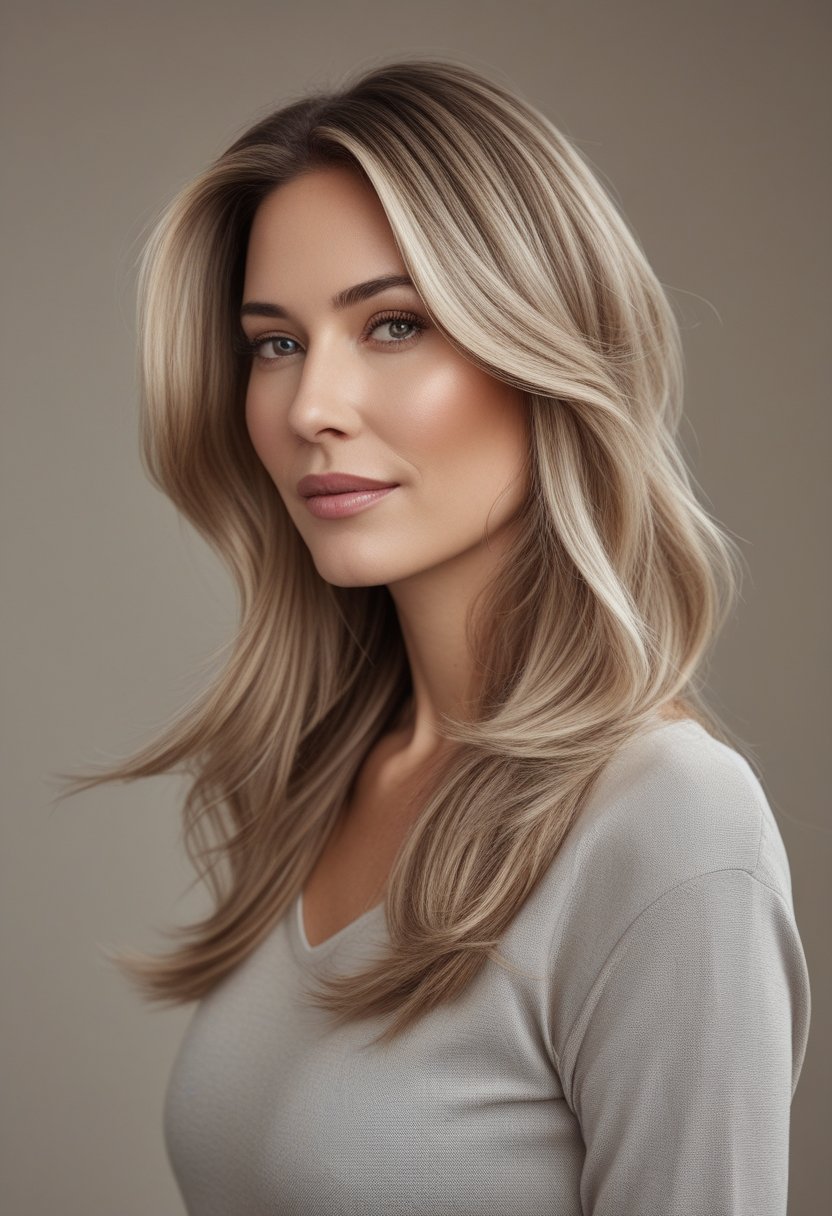
Long hair keeps its elongating effect on a round face as long as layers are added to prevent the ends from reading as one heavy, rounded mass. Layered hair tends to be more flattering than a one-length cut for a round face shape because the layers create vertical flow, a point echoed in this medium-length styling guide on face-framing layers and movement.
18. Long Layered Hair With a Center Part
Center parts typically get reserved for less symmetrical face shapes, but with strong, face-framing layers cut around it, a center part can work on a round face by drawing a single strong vertical line down the middle. Best on straight to wavy hair with enough length past the shoulders for the layers to show. Request “long layers with a center part, face-framing pieces starting at the cheekbone.”
19. Long Layers With Wispy Bangs
Wispy bangs, thinner and more textured than a full fringe, soften the forehead without adding width. Paired with long layers, this suits fine to medium hair that can’t support a heavier bang. Ask for “wispy, textured bangs with long layers throughout.”
20. Straight Hair With Curtain Bangs
Straight hair shows off the clean line of curtain bangs particularly well, since there’s no competing texture to disrupt the part. This works at any length past the chin. Request “curtain bangs, parted down the middle, blended into long layers.”
21. Long Wavy Layers With Soft Waves
Soft waves through long layers add volume at the mid-lengths and ends, which balances a round face without concentrating fullness near the cheeks. This suits naturally wavy hair or straight hair styled with a curling iron. Ask for “long layers cut to enhance natural wave, texture spray for definition.”
22. Curly Layered Cut With Soft Bangs
Curly hair benefits from layers cut dry so the stylist can see how each curl falls, paired with soft, longer bangs that sit above the brow rather than blunt across the forehead. Coarse or tightly coiled textures hold shape best with this approach. Request “a dry cut with layers, soft curly bangs left long.”
23. Long Shag With Textured Ends
A razored, long shag distributes weight throughout the ends rather than at one blunt line, creating volume and texture that works for thick, coarse hair without excess bulk. Razoring at the perimeter helps the ends move rather than sit heavy. Ask for “a long shag, razored ends, heavy layering throughout.”
How Should You Adapt the Cut for Your Hair Texture?
Hair texture determines how any of these 23 cuts will actually sit, hold shape, and need maintenance between appointments. Fine hair needs strategic layer placement to avoid looking thin, while thick or coarse hair often needs weight removed so the shape doesn’t bulk outward at the cheek line.
Best Options for Fine or Thin Hair
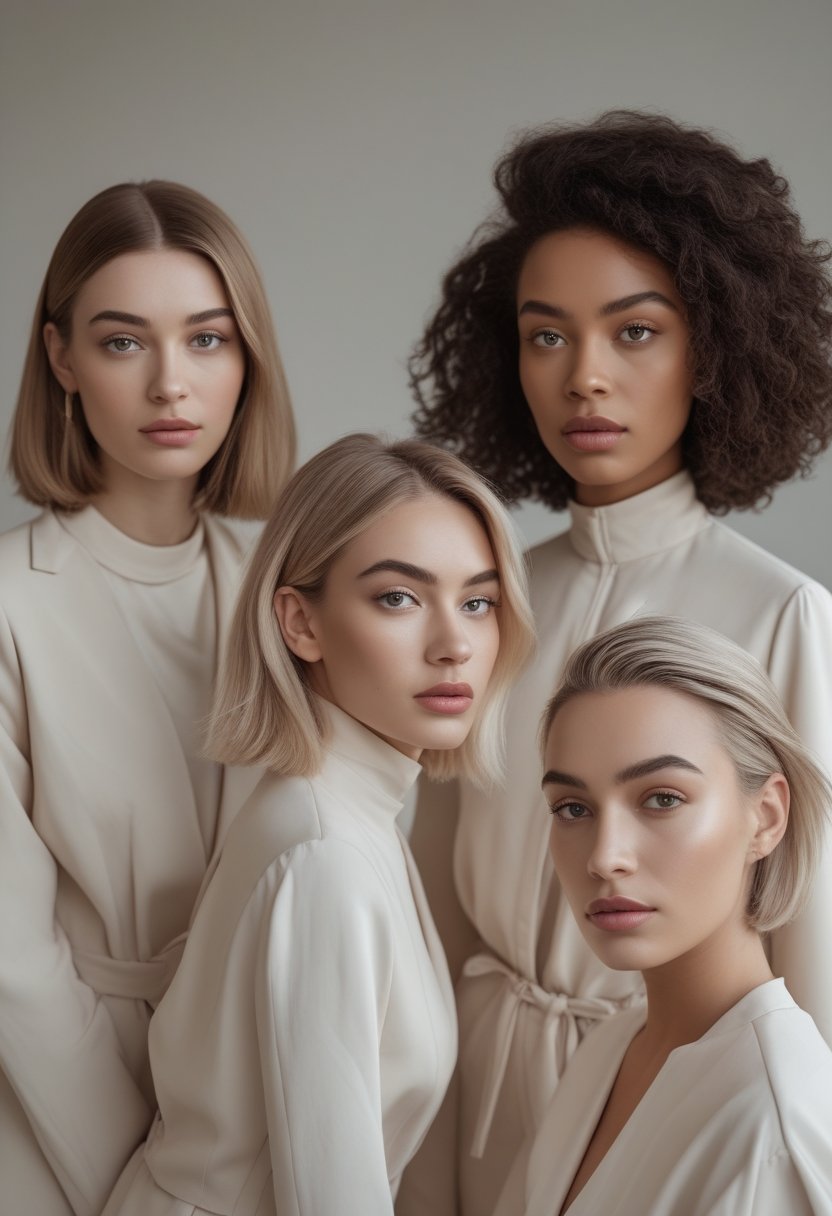
Fine hair benefits from blunt perimeters at shorter to medium lengths, since too many layers can make thin hair look wispy rather than textured. A French bob, pixie bob, or lob with minimal internal layering holds density better than a heavily layered long cut. A volumizing mousse applied at the root before blow-drying adds lift without weighing the ends down.
Best Options for Thick or Coarse Hair
Thick or coarse hair carries layers well and often needs them to prevent a triangular, bottom-heavy silhouette. Shags, butterfly cuts, and layered lobs remove bulk while keeping shape. A lightweight smoothing cream on damp hair controls frizz without flattening the crown volume this hair type naturally holds.
How to Keep Waves and Curls Light Around the Face
Curl cream applied to damp hair, scrunched rather than raked through, keeps waves and curls defined without adding width at the jawline. Diffusing on a low, warm setting preserves curl pattern while lifting the roots. Face-framing layers should be cut slightly shorter on curly hair than on straight hair, since curls shrink upward as they dry.
When a Sleek Finish or Lived-In Texture Makes More Sense
A sleek, blow-dried finish suits bobs and lobs with a strong perimeter line, since the smoothness shows off the cut’s shape clearly. Lived-in texture, achieved with a texturizing spray on second or third-day hair, suits shags and pixies where movement matters more than precision.
Color, Parting, and Styling Details That Change the Effect
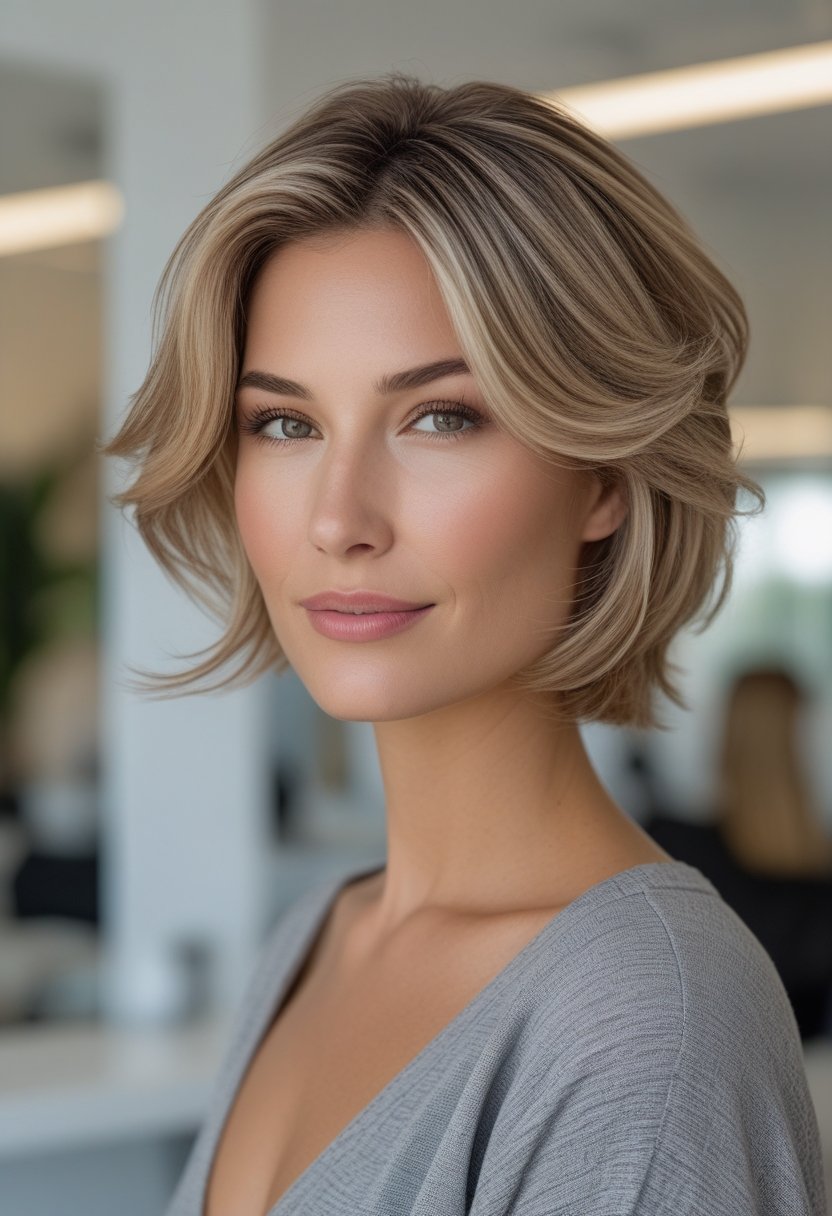
Color placement and parting choice can reinforce or undercut the balancing effect of a haircut just as much as the cut itself. Face-framing highlights and a well-chosen part work alongside layers rather than as an afterthought.
Use Face-Framing Color for Soft Dimension
Balayage highlights placed just around the face add subtle vertical brightness that echoes the effect of face-framing layers. Shadow roots keep the grow-out low-maintenance, particularly useful on longer cuts where root touch-ups would otherwise be frequent. A blonde lob or copper-toned bob both use this principle, brightening the perimeter rather than the crown.
Choose a Part Based on Your Preferred Finish
A deep side part creates the most immediate asymmetry and pairs well with bobs, lobs, and pixies. An off-center part offers a subtler version of the same effect, useful for those who want less daily styling commitment. A center part works only when layers are cut specifically to frame each side.
Build Lift and Hold Without Making Hair Stiff
Mousse at the root, worked through while hair is damp, builds crown lift without weighing hair down. A lightweight shine serum on the ends adds polish without stiffness. Heavy styling cream near the roots flattens the lift these cuts depend on, so it works best reserved for the mid-lengths and ends only.
Protect the Shape Between Salon Visits
Heat protectant before any hot tool use preserves the integrity of layers and prevents split ends that blur a clean perimeter line. Trims every 8 to 10 weeks keep shorter cuts like pixies and bobs from losing their shape as they grow out. Longer layered cuts can stretch to 10-12 weeks between trims since the grow-out blends more naturally.
Choosing a Shape That Feels Like You
The most flattering haircut for a round face shape is the one that matches your hair texture, your styling routine, and the specific proportions you want to highlight. Every cut in this guide works through the same principles: vertical movement, crown lift, and diagonal parting or fringe.

Where you land among short, medium, or long comes down to upkeep. Short cuts need trims roughly every two months to hold their line; long layered styles offer more flexibility between appointments. Bring specific language from this guide, like “deep side part” or “face-framing layers starting at the cheekbone,” directly into your consultation so your stylist can translate the idea into the cut that suits your density and natural texture.
Frequently Asked Questions
What is the best haircut for a round, chubby face?
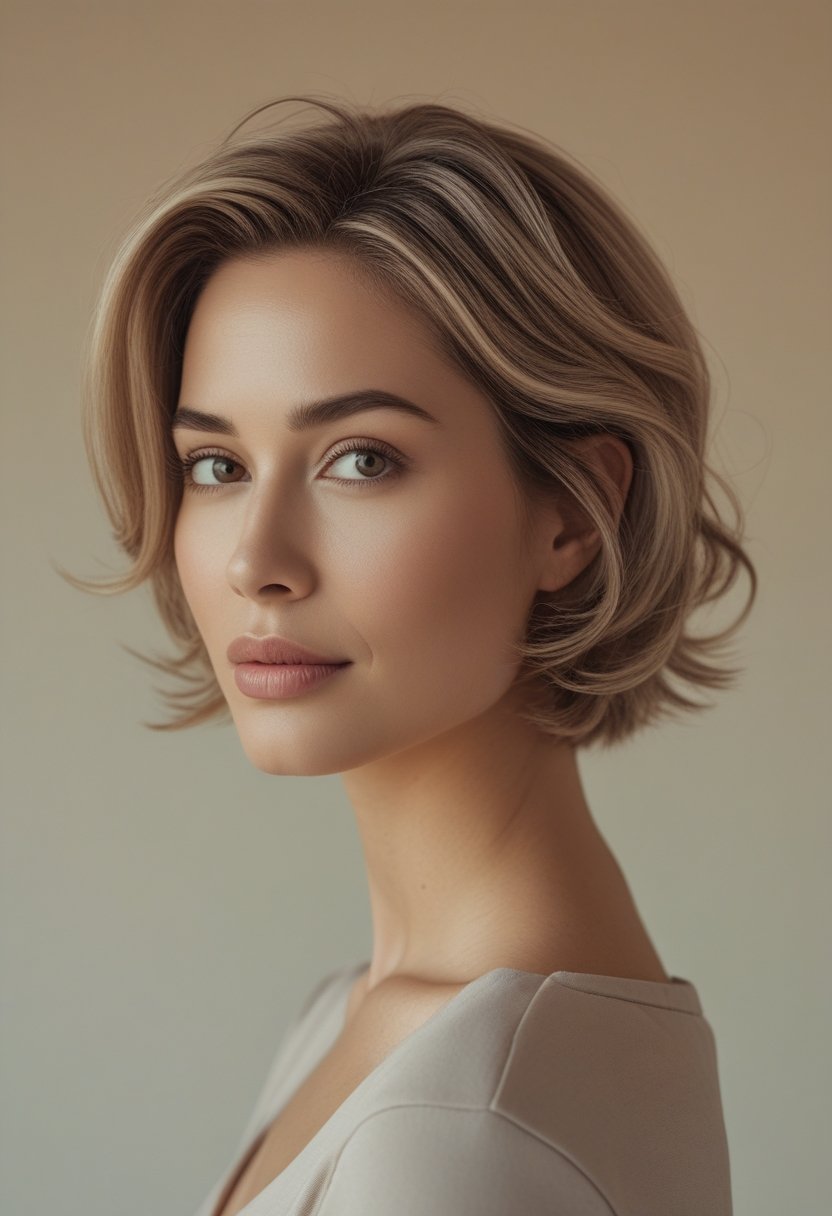
A layered lob or angled bob with a deep side part works well for fuller cheeks, since the length elongates the lower face while the layers add vertical movement. Volume concentrated at the crown rather than the sides helps balance overall proportions. Avoid one-length, blunt cuts that hit right at the widest point of the cheek.
Do round faces look better with long or short hair?
Both lengths work well for a round face shape when layers and parting are handled correctly. Long layered hair naturally elongates the face, while short cuts like pixies rely on crown height and asymmetry to achieve a similar balancing effect.
Are curtain bangs flattering on a round face?
Curtain bangs are one of the most consistently recommended styles for round faces because they create soft diagonal lines on either side of the face. They work across straight, wavy, and curly textures with minor adjustments to how they’re cut and styled.
What haircut gives fine hair volume without widening a round face?
A French bob or pixie bob with minimal internal layering adds the appearance of density without excess width, since fine hair holds a blunt perimeter better than heavy layering. Volumizing mousse applied at the root supports crown lift, which reinforces the balancing effect.
Can a blunt bob work for a round face?
A blunt bob can work when paired with an off-center part rather than a middle part, which breaks up the symmetry a blunt cut otherwise emphasizes. Straight, thick hair holds this shape most cleanly.
What should I ask my stylist for if I want a low-maintenance cut for a round face?
Request a shoulder-length lob or soft shag with internal layers rather than a heavily textured or precision-cut style, since these grow out more evenly. Ask for “internal layers, not visible step layers” to keep the shape wearable between trims scheduled 10 to 12 weeks apart.
