



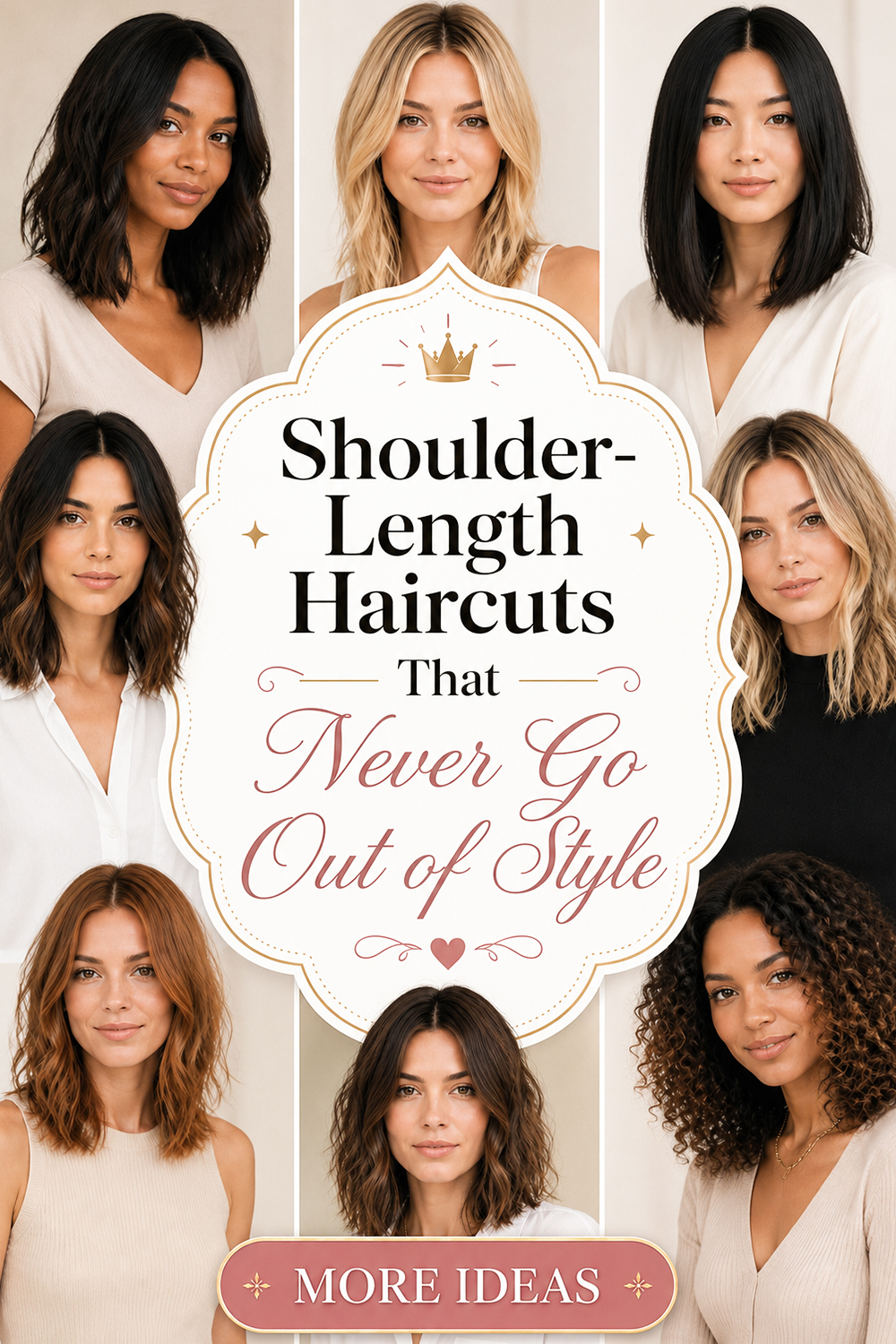
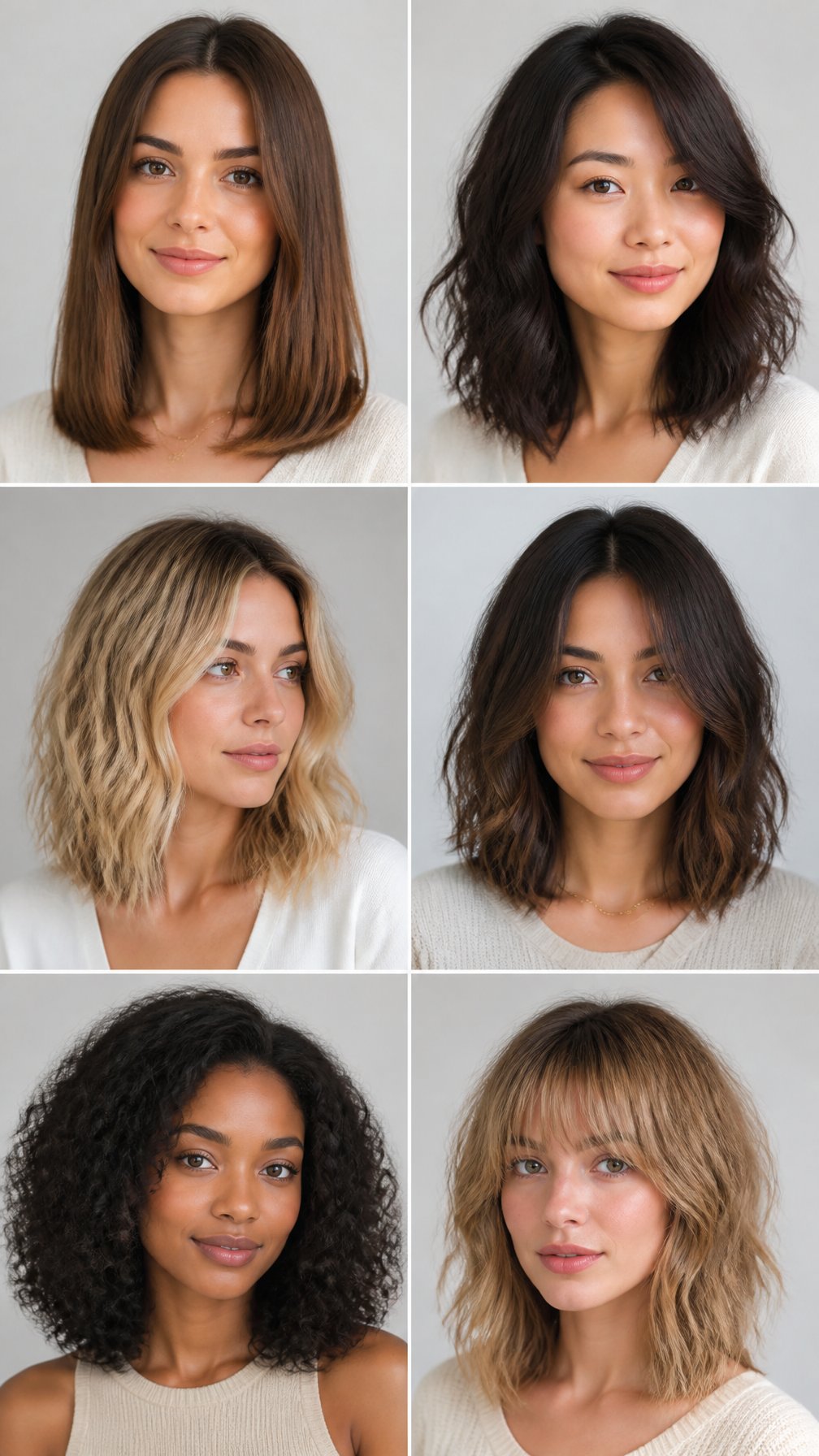
Shoulder-length hair gives you the best of both worlds: enough length to pull into a quick updo and enough shape to wear down with effortless movement. These shoulder-length haircuts give you timeless options that flatter every face shape, align with modern trends, and work with a range of textures and lifestyles.
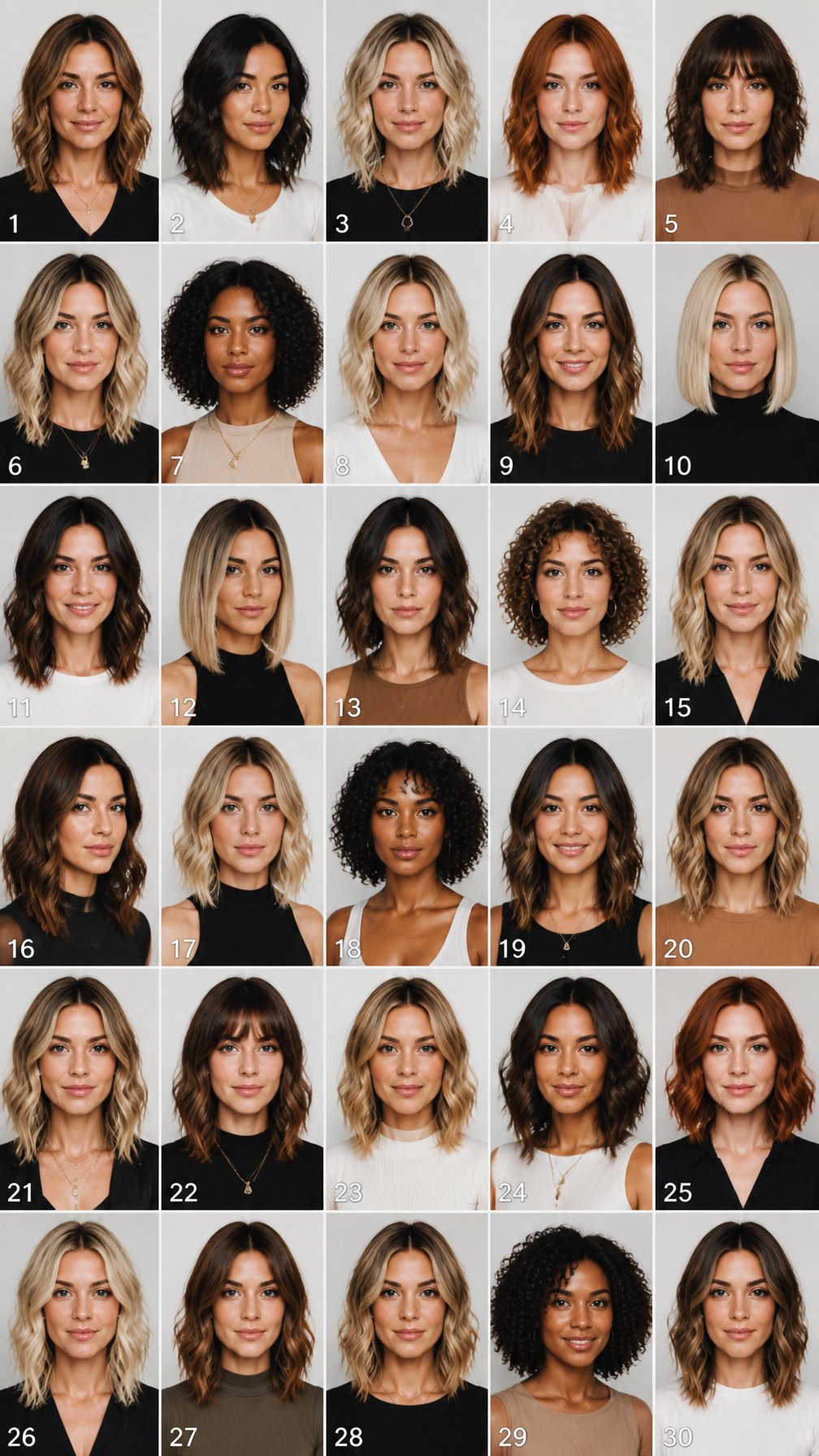

You’ll find classic cuts updated with contemporary details, celebrity-inspired looks you can actually wear every day, and low‑maintenance styles that keep hair healthy and polished. Follow the styling, color, and care tips in this post to pick a shoulder-length cut that suits your life and makes mornings simpler.
Face Shapes and Flattering Styles
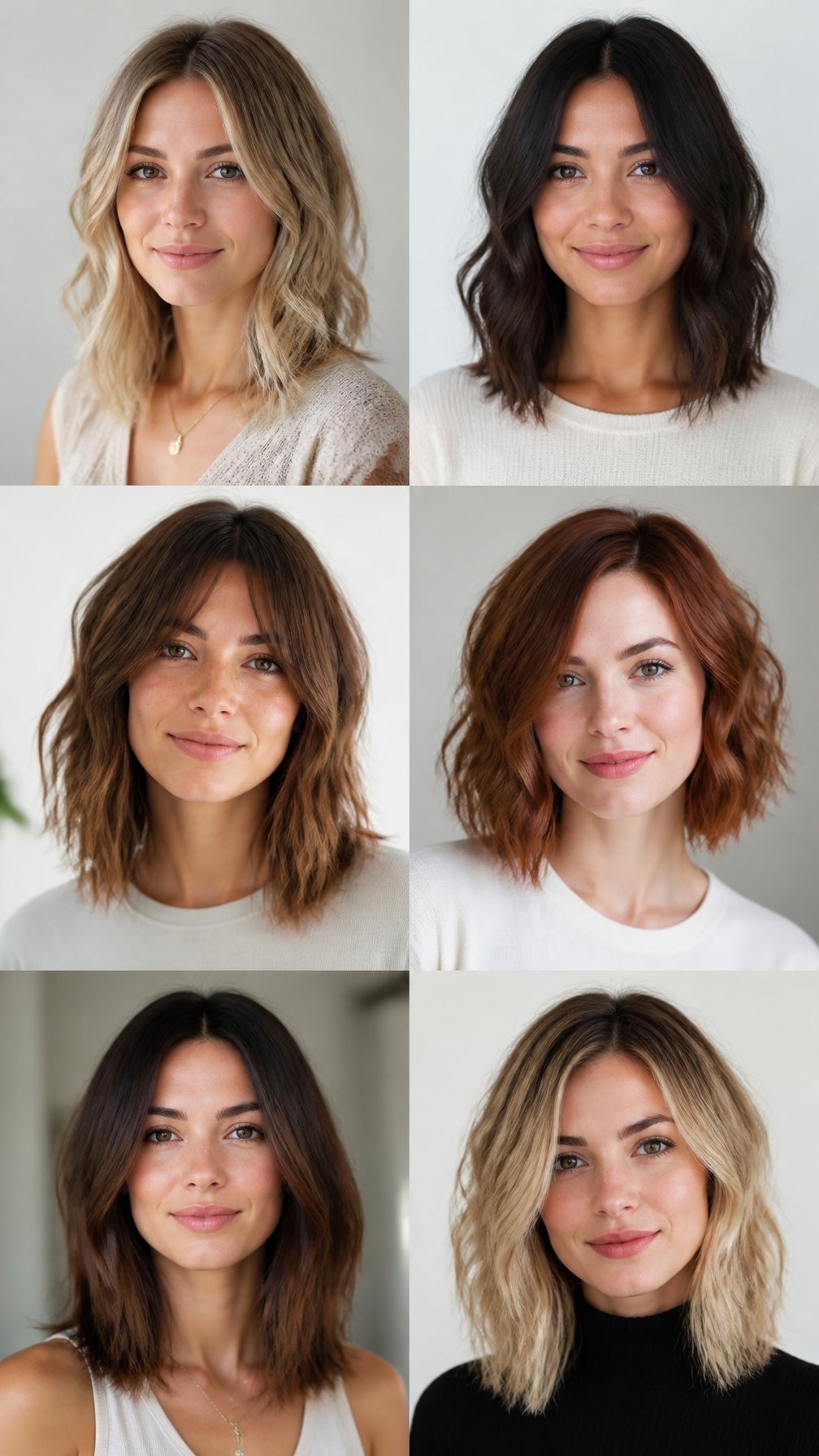
Choose cuts that balance your proportions, highlight your best features, and work with your natural texture. Focus on length, layer placement, and where volume sits to create symmetry and draw attention to your favorite facial areas.
Round Faces
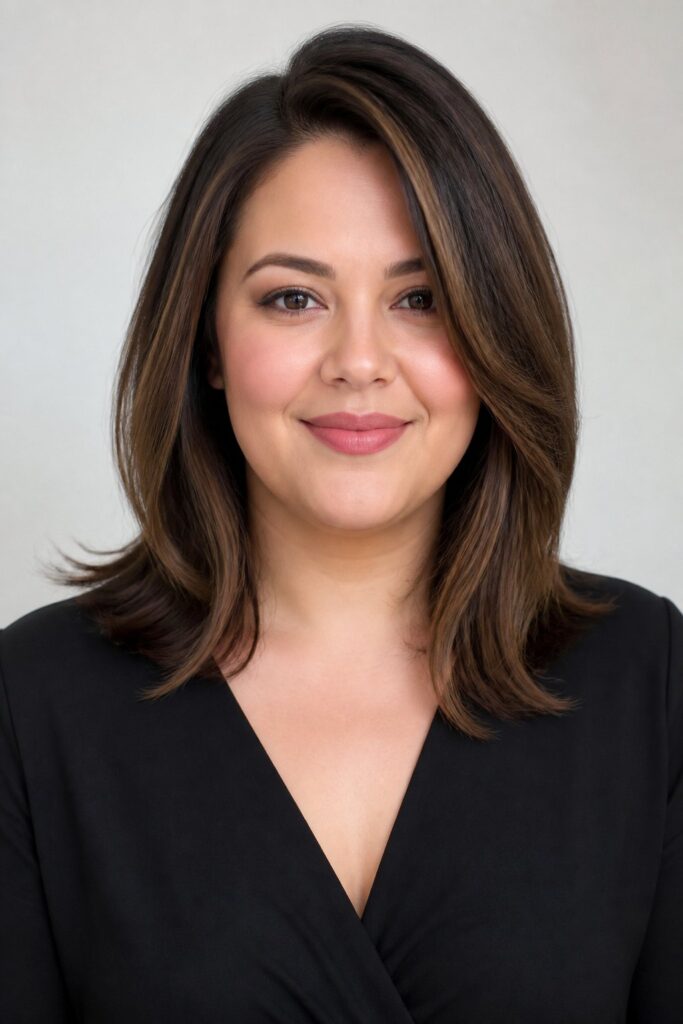

For round faces, create the illusion of length and reduce width. Ask for shoulder-length cuts with long layers that start below the chin; layers that begin at collarbone length help elongate your face. A deep side part and face-framing pieces that graze the collarbone break up roundness and add vertical lines.
Avoid full, blunt ends that sit at the widest part of your face; they emphasize roundness. Instead, opt for soft, graduated ends or an asymmetrical lob to shift the focus downward. Styling tip: blow-dry with a round brush to add lift at the roots and smooth ends, or use a flat iron to create a subtle bend that adds vertical definition.
Oval Faces
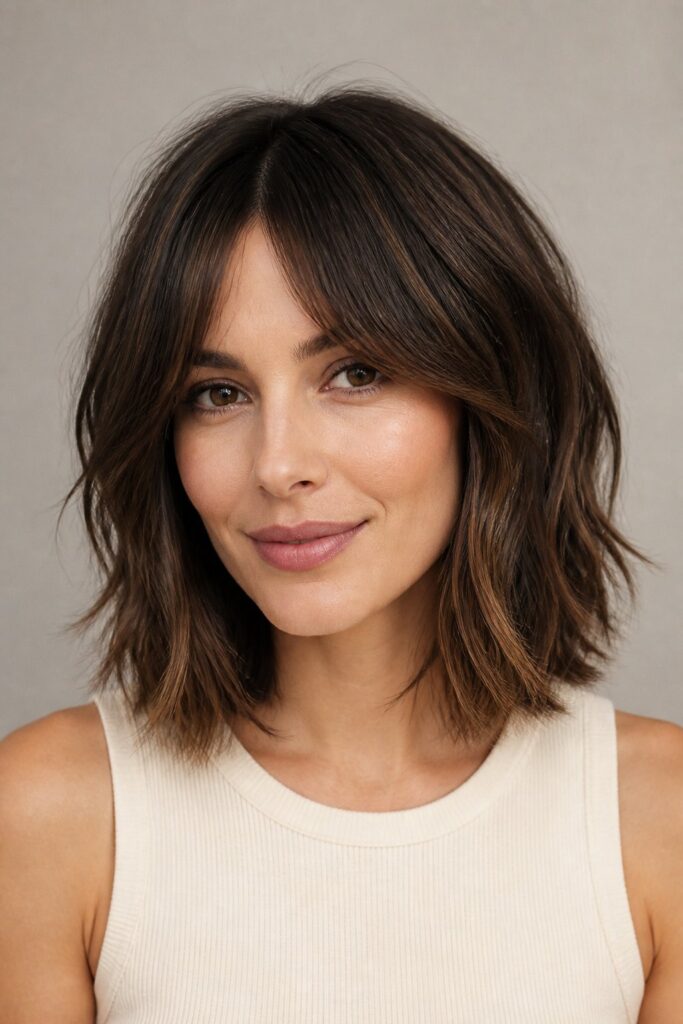
Oval faces suit most shoulder-length styles, so prioritize proportion and personal style. Maintain balance by keeping some weight around the jawline—blunt lobs, soft blunt cuts, or shoulder-length shags all work well for oval shapes. Face-framing layers can accentuate cheekbones without shortening the overall length.
If you want to highlight your features, add textured ends or curtain bangs to emphasize eyes and brows. Avoid excessive volume at the crown, which can make your face appear shorter; instead, place volume at the mid-lengths or ends. For low maintenance, choose a cut that follows your natural part and texture so styling time stays short.
Square Faces
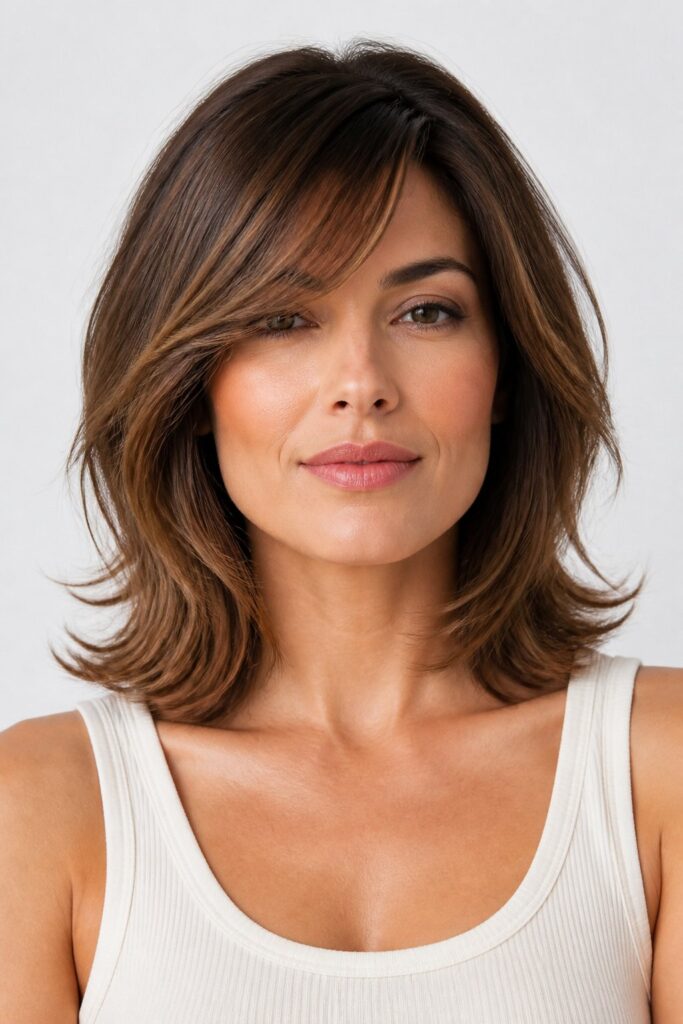
Soften a strong jawline with shoulder-length cuts that add movement and reduce angularity. Long, wispy layers that start above or at the jaw create soft lines around your face. A shoulder-length shag or layered lob with rounded ends helps diffuse sharp corners.
Incorporate side-swept bangs or a deep side part to break the horizontal line of the jaw and draw the eye diagonally. Steer clear of blunt, chin-length cuts that sit directly on the jaw—they emphasize squareness. Styling tip: use a round brush or curling iron to create inward or outward bends that soften edges and add a gentle, feminine silhouette.
Modern Classic Cuts
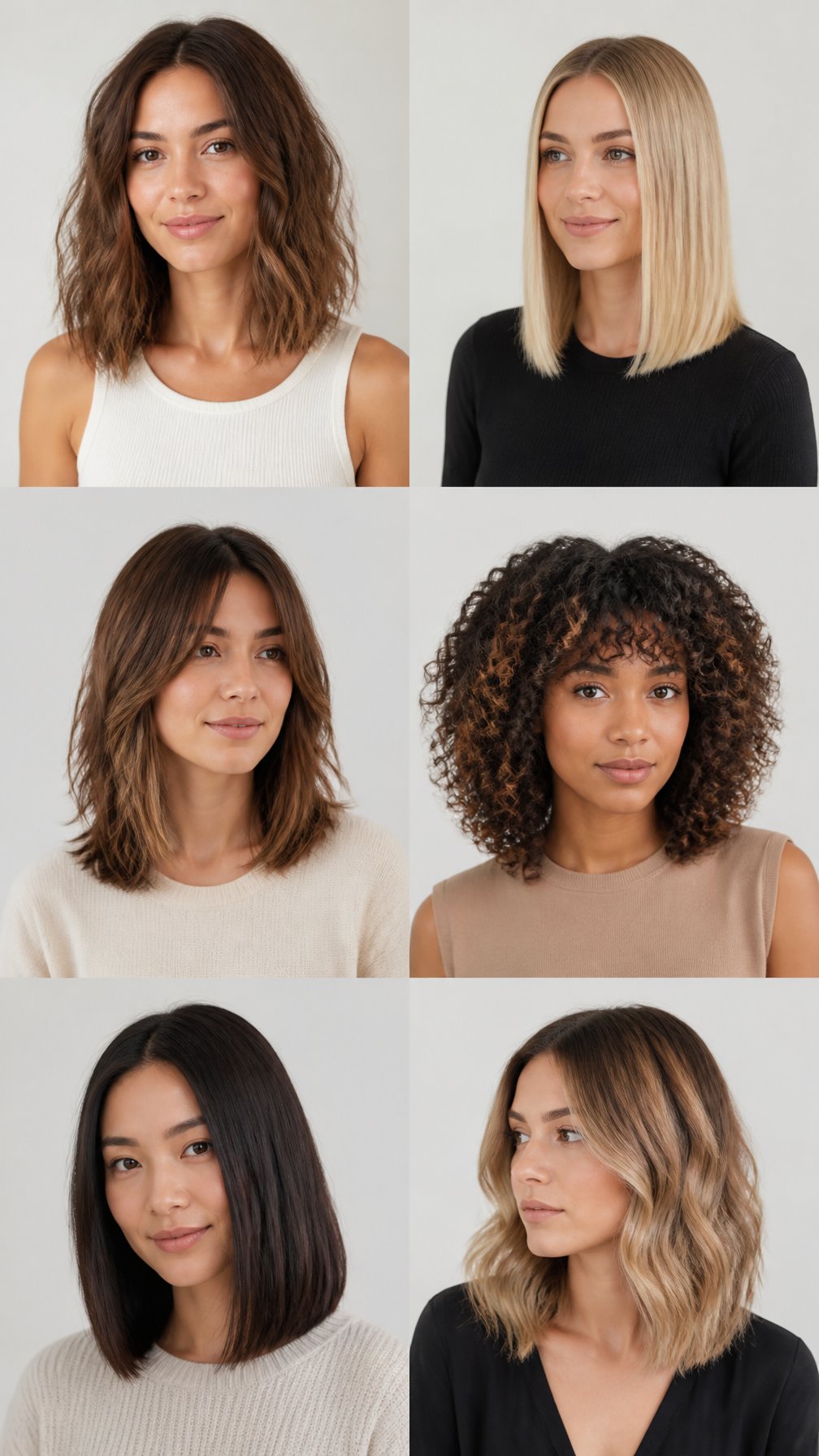
These styles balance timeless proportions with modern texture and movement. Each option offers clear styling benefits and suits a range of face shapes and hair types.
Blunt Bob
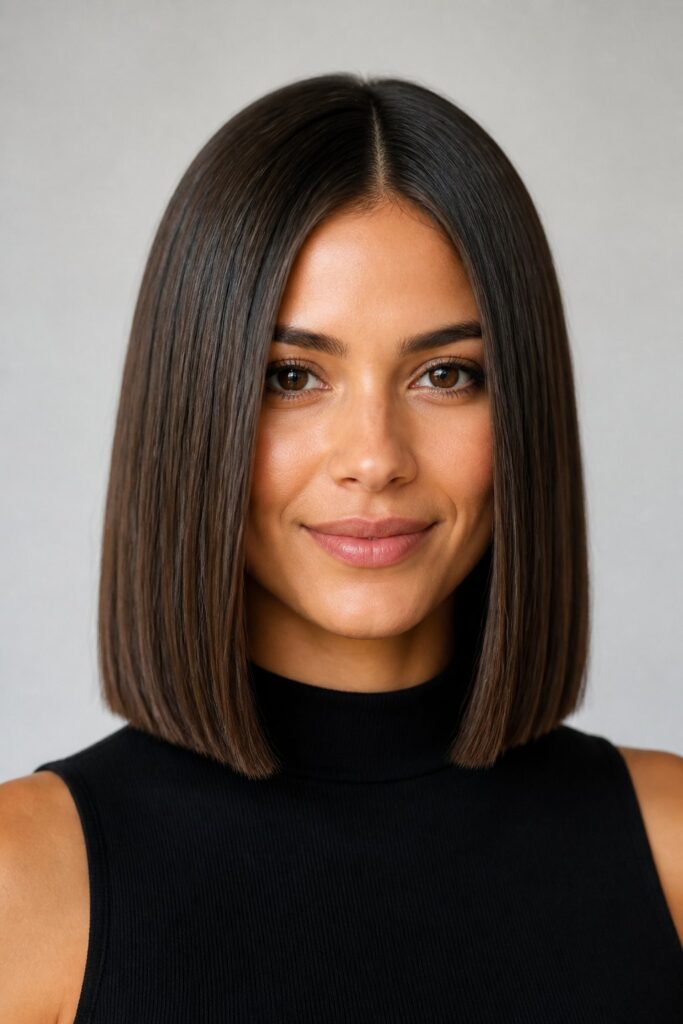
A blunt bob that hits at the shoulder creates a clean, architectural silhouette that flatters square, oval, and heart-shaped faces. Ask your stylist for a precision cut with the ends trimmed straight across; this maximizes perceived density and gives a polished finish with minimal daily shaping.
Styling is straightforward. Use a heat protectant and blow-dry with a round brush for smoothness, or use a flat iron for a sleek look. For low maintenance, add a subtle undercut or long layers at the back to reduce bulk without sacrificing the blunt edge.
Maintenance: schedule trims every 6–8 weeks to keep the line crisp. If your hair is very fine, consider a slightly shorter length or internal texturizing to avoid a limp appearance.
Textured Layers
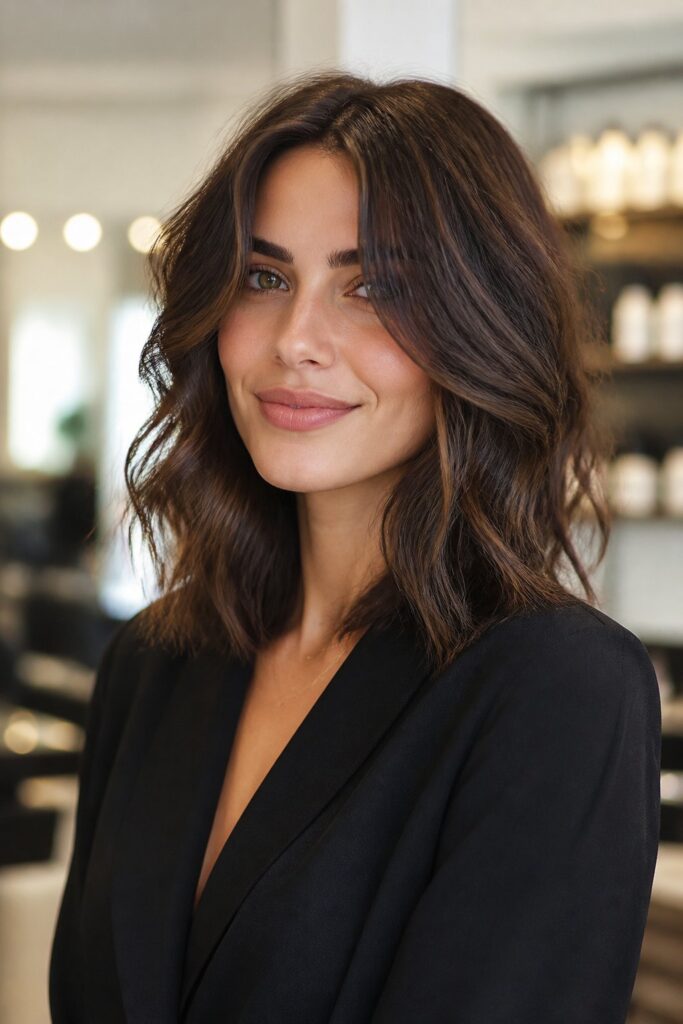
Textured layers introduce movement and dimension while preserving shoulder-length versatility. Request face-framing layers that start near the chin and longer internal layers to maintain length but remove weight.
This cut works well for thick hair because it disperses bulk, and it benefits fine hair by creating the illusion of volume when styled. Ask for point cutting or slide cutting rather than heavy razoring to prevent frizz and retain shape.
For styling, apply a lightweight mousse or sea-salt spray to damp hair and diffuse for natural lift. Finish with a few quick passes of a curling iron on random sections to enhance texture. Trim every 8–12 weeks, depending on how quickly your layers lose their shape.
Soft Waves
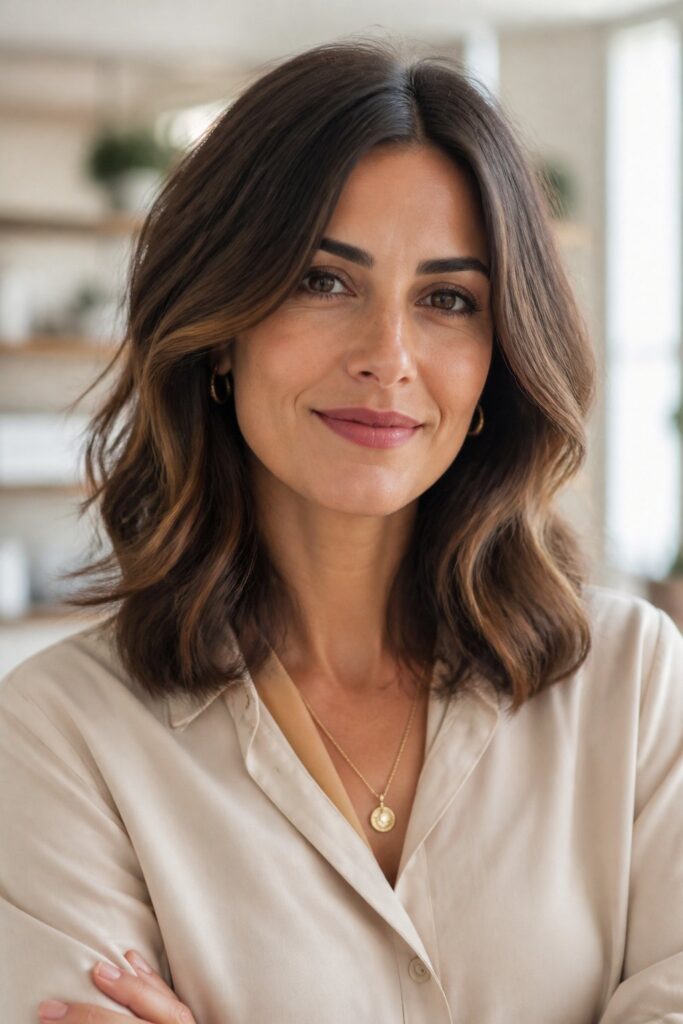
Soft waves give shoulder-length hair an effortless, modern-classic appeal that suits casual and work settings. This effect is achieved by cutting slightly longer front pieces and keeping the overall weight balanced so the waves form easily without collapsing.
To create the look, use a 1- to 1.25-inch curling iron or a flat iron to bend sections away from the face. Alternate the curl directions and gently comb through the hair with your fingers or a wide-tooth comb for lived-in softness. Use a flexible-hold spray to preserve movement but avoid stiffness.
This style adapts to most textures; for straight hair, apply texturizing spray and blow-dry with a diffuser for better hold. For naturally curly hair, ask for long layers that encourage shaped curls rather than a triangular silhouette.
Choppy Ends
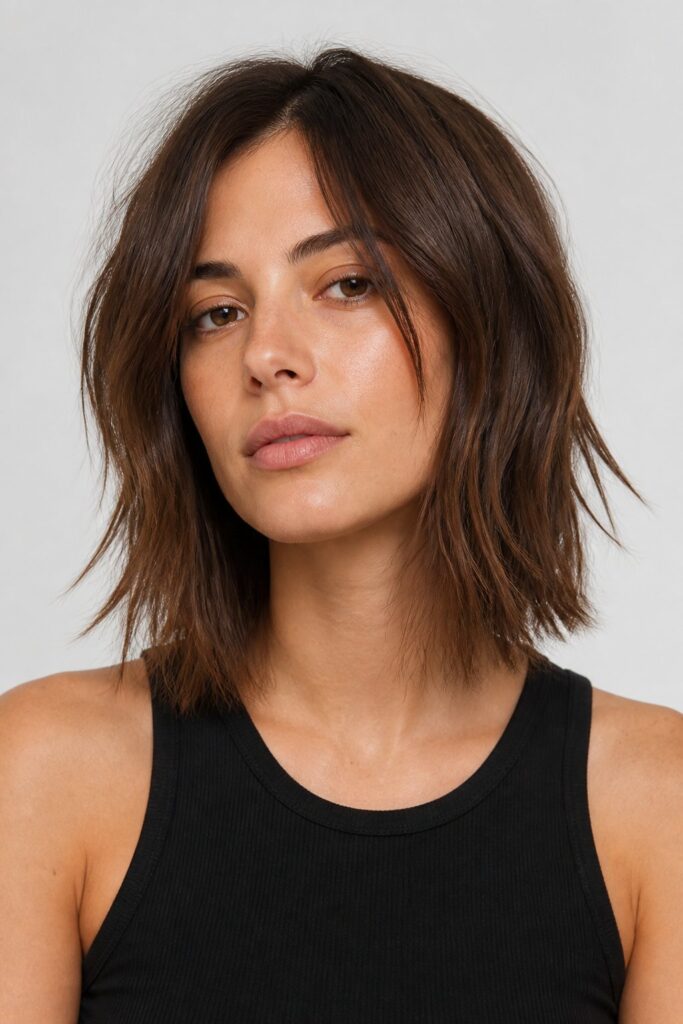
Choppy ends deliver an edgy, modern finish on shoulder-length hair by introducing uneven, slightly jagged tips. Ask your stylist for blunt mid-lengths with deliberate point cuts at the ends to create separation and an airy finish.
This approach works especially well if you want a contemporary look without losing overall length. It increases perceived texture and makes casual styling—like tousling with salt spray—more effective. Avoid over-thinning, which can make the choppy effect look sparse.
Styling is low-effort: scrunch a texturizing paste through damp hair and air-dry, or use a small-barrel curling iron to add selective bends. Plan on trims every 8–10 weeks to preserve the intentional irregularity and prevent split ends from softening the choppy effect.
Inspiration from Celebrity Trends
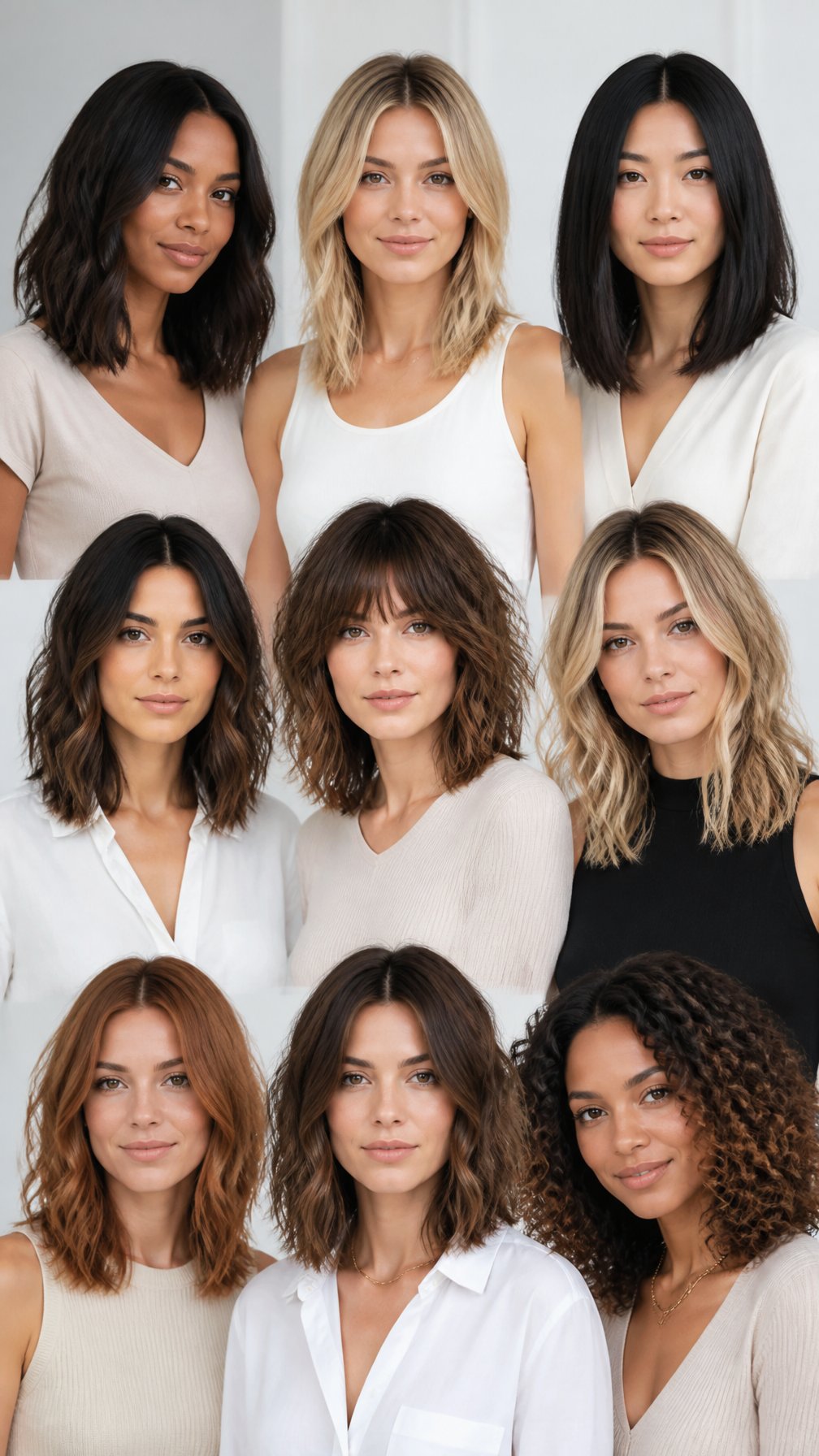
Celebrities show you how shoulder-length cuts work with texture, color, and styling. Expect examples from red carpet glamour, vintage icons, and high-fashion runways that you can adapt to your hair type and lifestyle.
Red Carpet Looks
Celebrities often favor shoulder-grazing styles that translate well to formal events and everyday life. You can copy a sleek, center-parted lob with a glossy finish to complement formal attire, or opt for soft, volumized waves like those worn by Hailey Bieber for a modern, effortless look. These looks pair well with subtle face-framing layers to highlight cheekbones and jawlines.
Pay attention to parting and shine products when recreating red carpet hair. A precision blowout and a light serum will keep strands smooth without weighing them down. If you want more movement, ask your stylist for long layers that still read as a single-length cut when straightened.
Iconic Vintage Styles
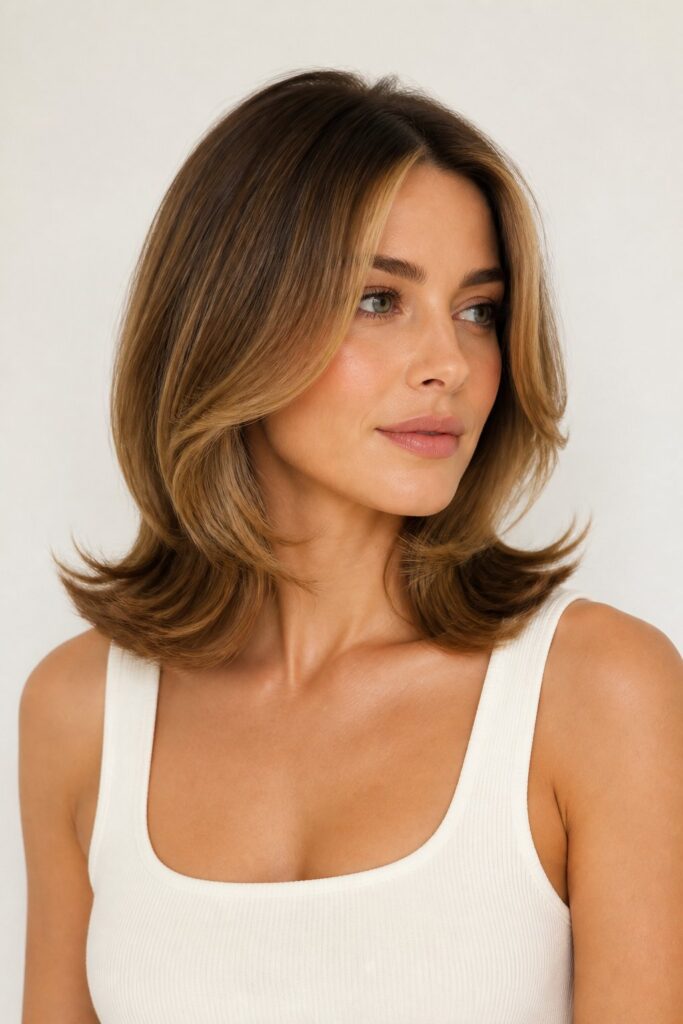
Vintage shoulder-length cuts offer timeless silhouettes you can modernize for everyday wear. Think 1960s flipped ends for a playful bounce, or 1970s feathered layers for softly distributed volume around the face. You can adapt these by reducing the heaviness of the original shape and adding contemporary texturizing techniques.
Color and styling can update vintage shapes: subtle balayage softens the line between layers, and a flat-iron curl can mimic the original set without requiring hours. Request face-framing graduation from your stylist to keep the retro vibe fresh and wearable for current trends.
Runway-Inspired Cuts
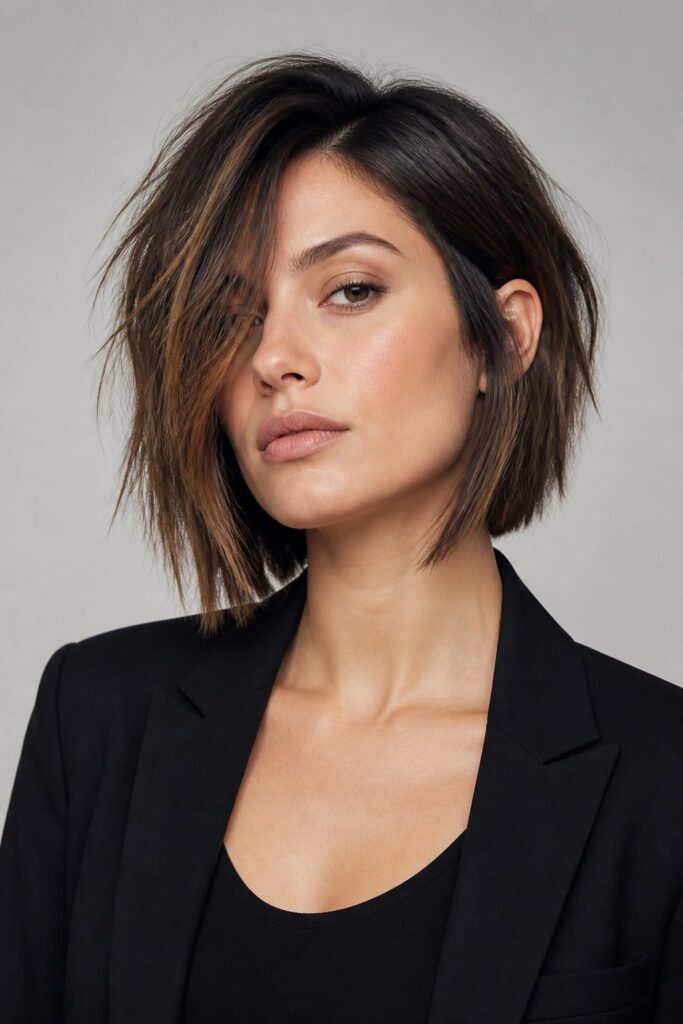
When adapting runway hair, focus on the element you like most—shape, texture, or color—and translate it to a shoulder-length version. Bring photos to your stylist and discuss how much daily styling you are willing to do; this will determine whether the look is practical for your routine.
Styling Options for Everyday Wear
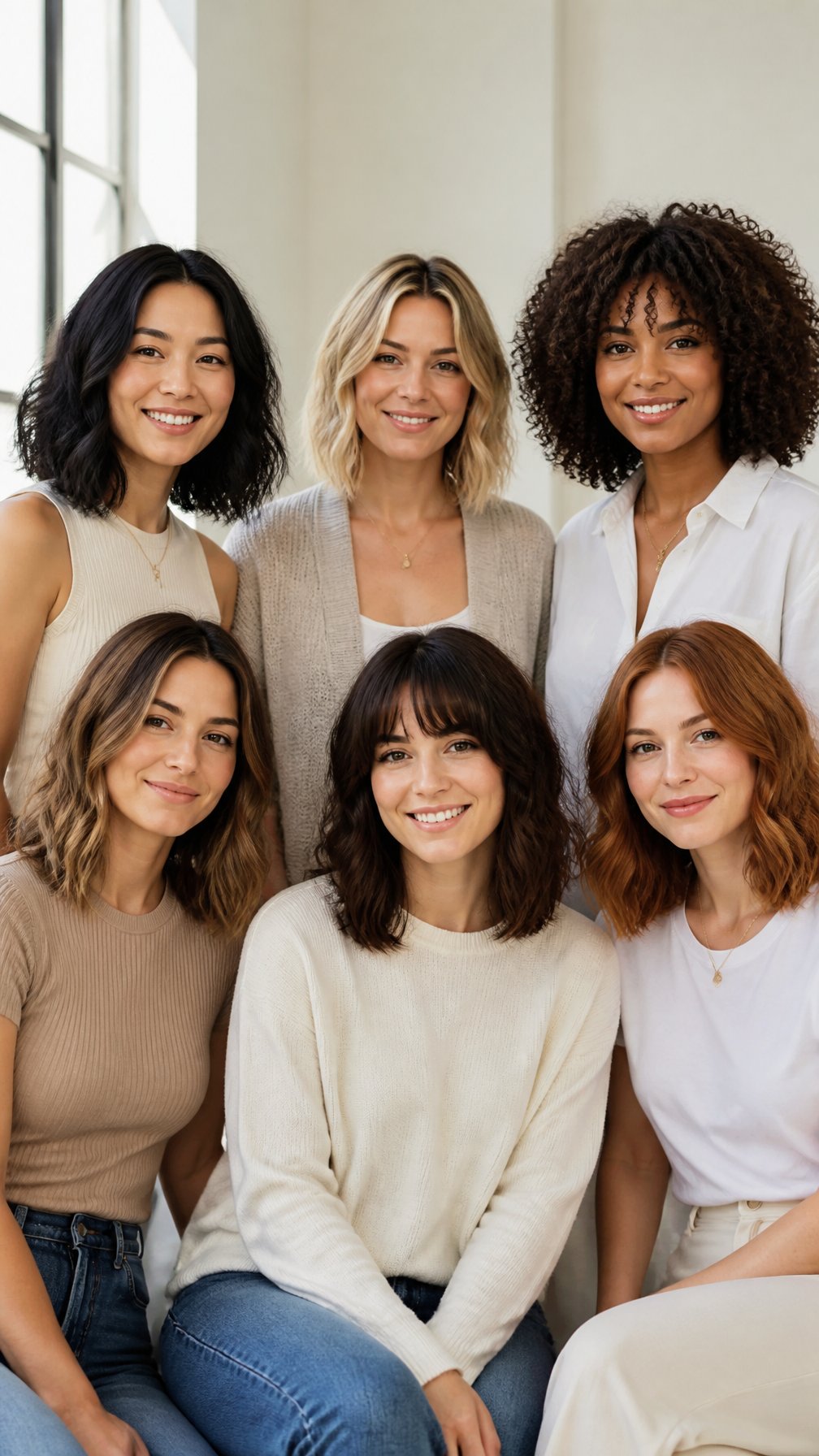
These looks keep your shoulder-length cut practical and polished. Each style emphasizes quick steps, minimal tools, and adaptable finishing touches so you can get out the door faster while still looking put together.
Straight and Sleek
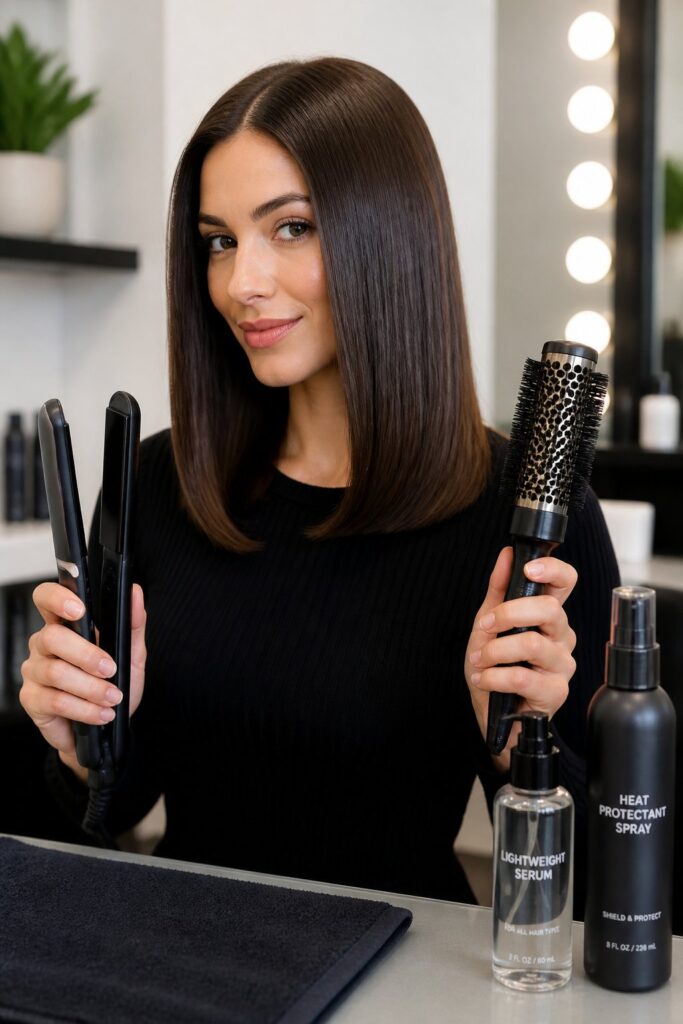
Keep your hair smooth by starting with a heat-protectant spray on damp hair. Blow-dry with a medium round brush, directing the airflow downward to flatten the cuticle and reduce frizz.
Use a flat iron set to the lowest effective temperature for your hair type—300–350°F for fine, 350–410°F for thick hair. Work in 1-inch sections and glide the iron slowly for a glossy finish. If you have blunt ends, slightly tuck them under with the iron to emphasize the shoulder-length line.
Finish with a lightweight serum on mid-lengths and ends to add shine without heaviness. To maintain the look between washes, refresh the roots with dry shampoo and a quick pass of the flat iron over any pieces that have lost their shape.
Effortless Curls
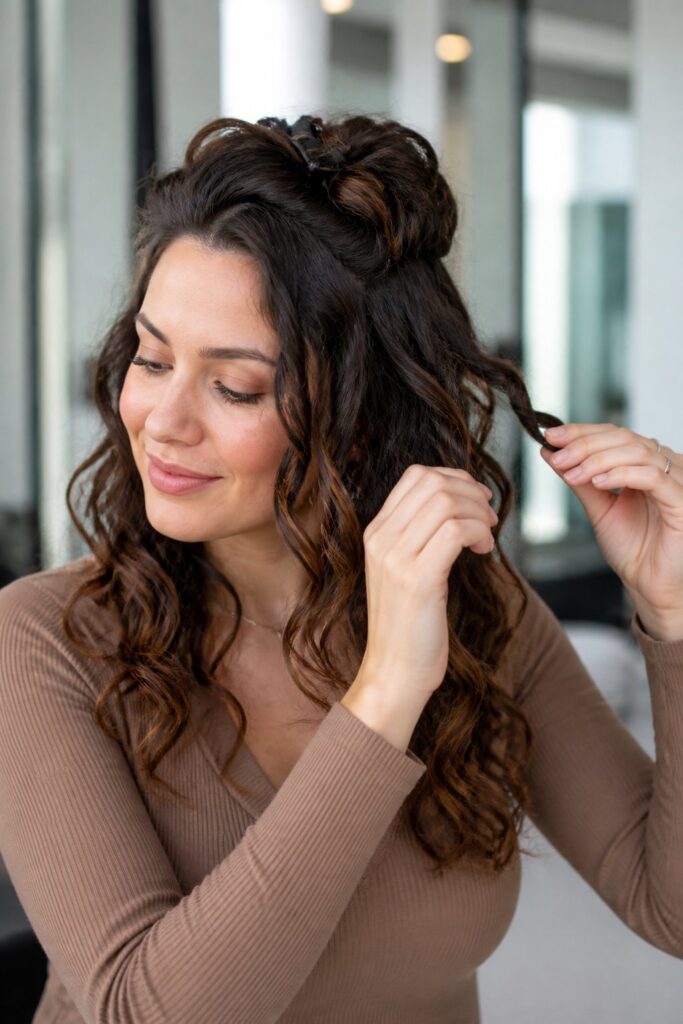
For soft, natural waves, apply a salt spray or light mousse to damp hair and scrunch while diffusing on low heat. For more defined curls, wrap 1- to 1.5-inch sections around a curling wand, alternating direction for a lived-in texture.
Pin the curls at the roots and allow them to cool for five minutes before releasing them; this preserves shape without stiffness. Use your fingers (not a brush) to separate and loosen the curls into waves. Smooth flyaways with a dab of cream through the ends to prevent frizz and keep movement.
Set the style with a flexible-hold spray that allows touch-ups during the day. If you want longer-lasting volume, tease lightly at the crown and apply a few strategic hairpins behind the ears to hold shape without visible hardware.
Half-Up Styles
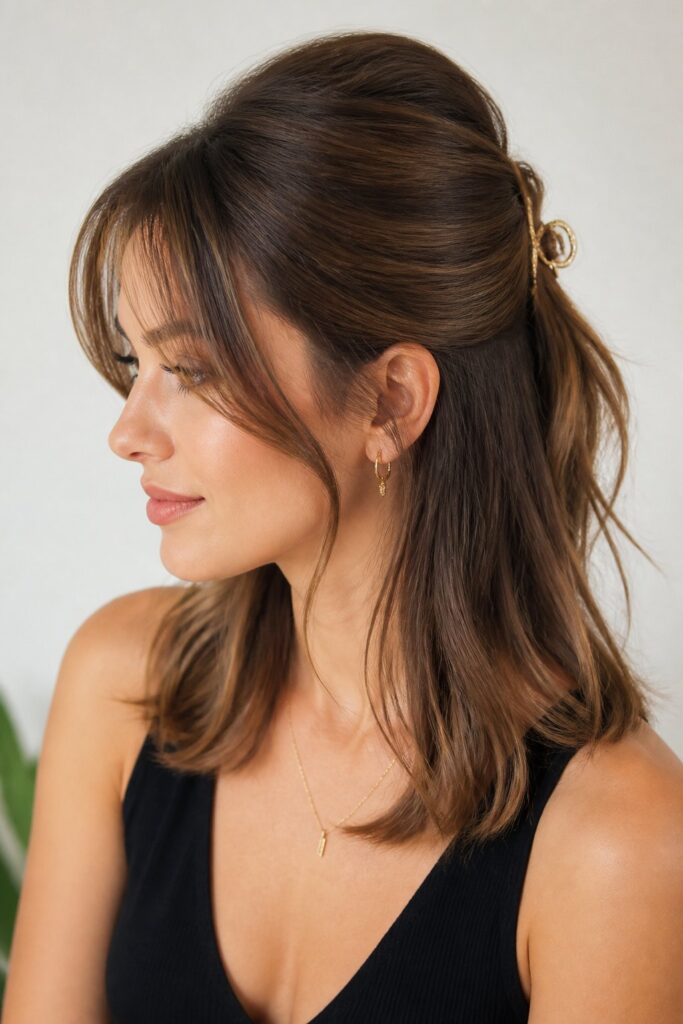
Half-up styles add polish while keeping hair off your face. Lightly backcomb the hair at the crown for lift; then gather the top section and secure it with a small elastic or clip. Leave 1–2 face-framing pieces out for softness.
Try a half knot by looping the top section into a loose twist and tucking the ends under before pinning. For a sleeker option, smooth the top section with a flat brush and secure with a clear elastic, then hide the elastic with a wrapped strand. Add a barrette or small claw for quick glam.
Adjust hold and texture based on your day: use a matte texturizer for casual looks or a light shine spray for evening. These styles work well with bangs, curtain fringe, or layered ends and take under five minutes with practice.
Color Techniques to Elevate Your Haircut
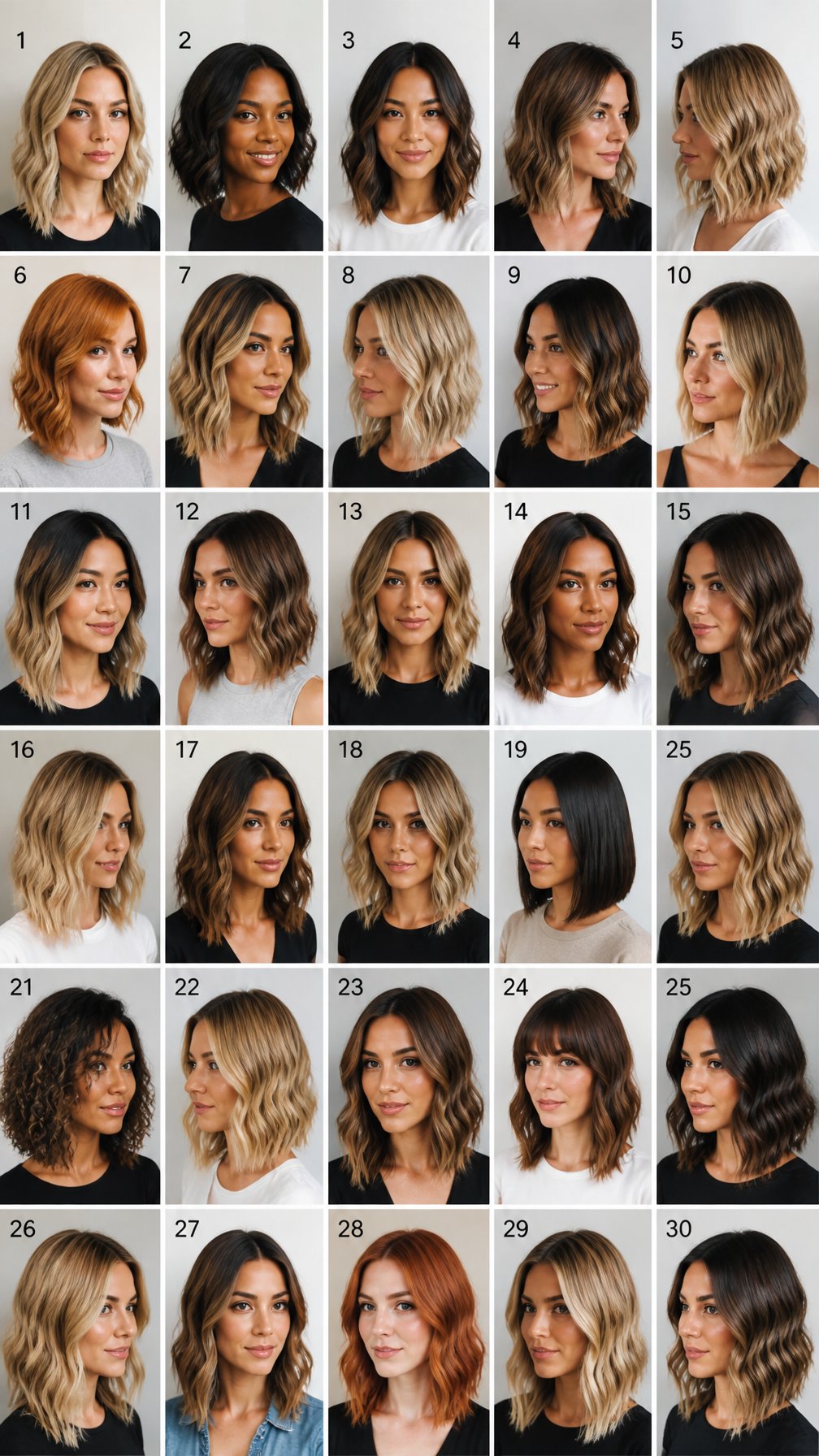
These color methods add dimension, brighten your face, and complement your shoulder-length shape. Each technique focuses on placement and maintenance to match your lifestyle and texture.
Balayage Highlights
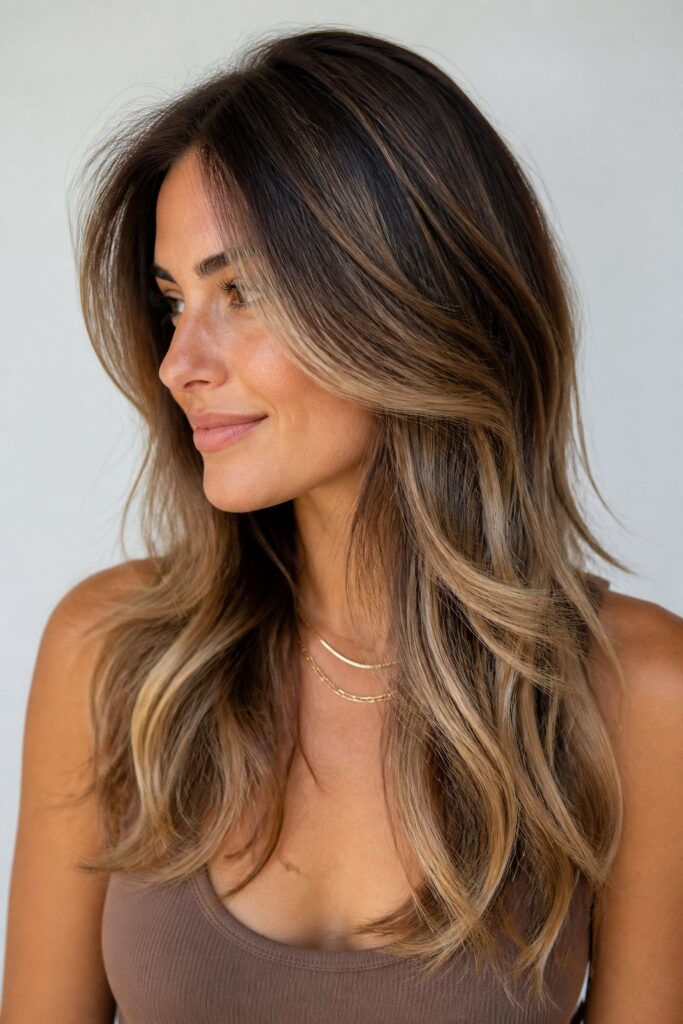
Balayage uses hand-painted, graduated highlights that start softer near the roots and intensify toward the ends. Ask your stylist for face-framing placement and a mid-length-to-ends focus so the color enhances movement in layers without frequent root touch-ups.
Choose tones that contrast subtly with your base—warm honey on brunettes, buttery blonde on light brunettes, or muted caramel on darker hair—to keep the effect natural. For fine hair, request thinner, more frequent painted pieces to create the illusion of density. For thick or curly hair, wider, chunkier strokes preserve depth and avoid a stripy look.
Maintenance is low compared with full highlights. Expect a refresh every 4–6 months for tone and a gloss service every 6–8 weeks to tame brassiness. Bring photos of color depth and fade patterns so your stylist matches your ideal grow-out.
Subtle Ombre
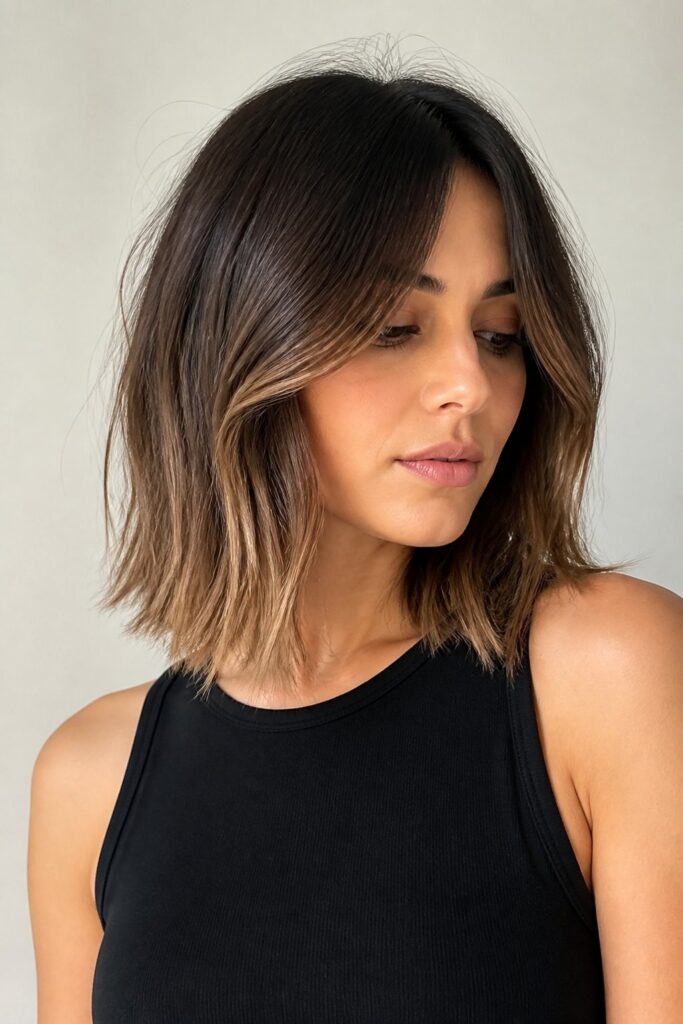
Subtle ombre creates a soft transition from your natural root color to a slightly lighter shade at the ends. Aim for a lift of one to three levels so the effect looks soft rather than dramatic, which suits shoulder-length cuts because it emphasizes ends and movement.
Request a blurred melt between the mid-lengths and tips—use balayage-like painting or fine foils to avoid hard lines. If you wear bangs or face-framing layers, have the stylist feather the transition higher around the face to keep continuity. Lighter ends add apparent weightlessness to blunt or lob silhouettes.
Care involves using color-safe shampoo, a weekly bond-repair mask if lightening was significant, and a toner touch-up every 8–12 weeks to preserve the soft gradient. Ask for a swatch of the target end tone to set realistic expectations.
Face-Framing Money Pieces
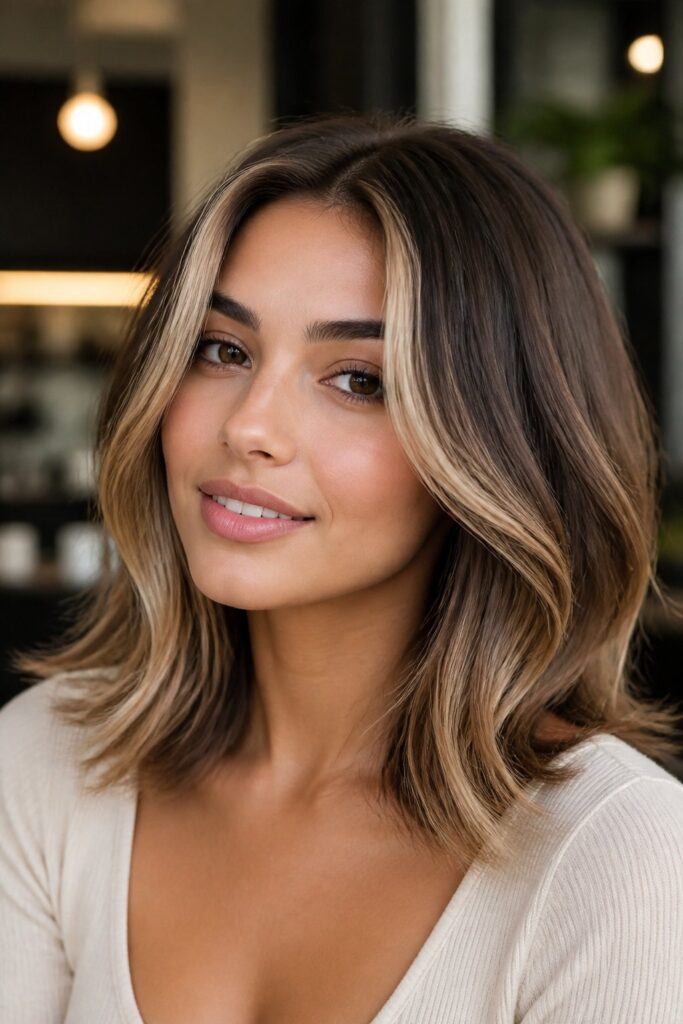
Money pieces are brighter, high-contrast strands placed at the front hairline to instantly brighten your complexion and draw attention to your face. Pick a shade one to three levels lighter than your base for a natural pop, or go bold with pastel or champagne tones if you want high-impact framing.
Placement matters: position pieces to align with cheekbones and jawline so they lift your face visually. For layered shoulder-length cuts, keep the pieces slightly longer than the shortest layers to avoid chopping the highlight into disconnected bits. For curly hair, use gentler lightening and add a glaze to help preserve the curl pattern.
Maintenance is moderate: use toner every 6–8 weeks and color-safe products with UV protection at home. If you prefer low upkeep, opt for less lift and warmer tones that age gracefully between salon visits.
Low-Maintenance Ideas
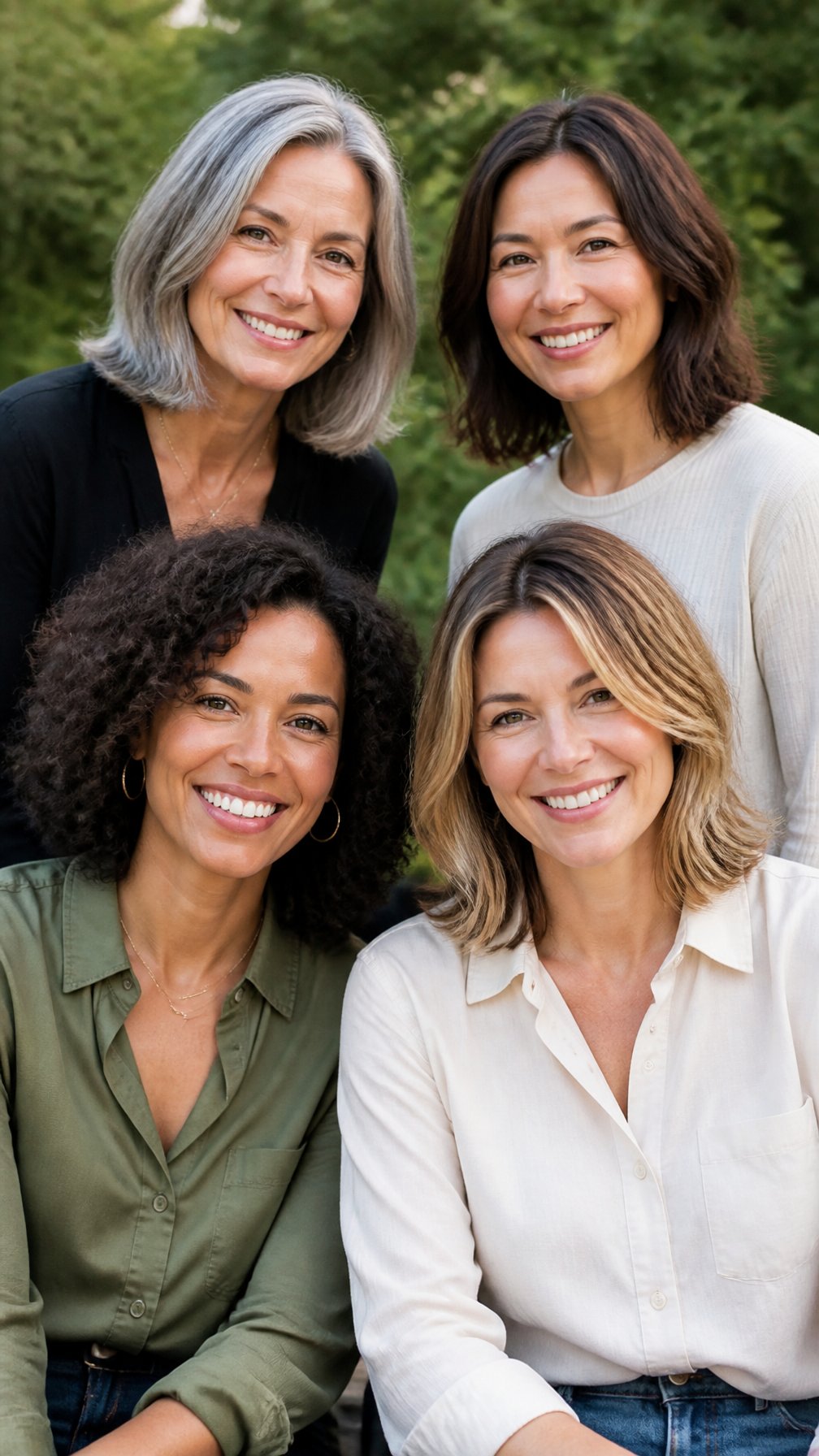
Choose cuts that reduce daily styling time and require only basic tools or minimal product. Focus on shapes that sit well when towel-dried and styles that work with your hair’s natural texture.
Wash-and-Go Cuts
Pick a blunt lob, long bob with subtle layers, or a one-length shoulder cut to simplify mornings. These shapes create consistent weight so your hair falls predictably after towel-drying, letting you skip heat styling most days.
Work with your stylist to set the perimeter and remove excess bulk—ask for internal thinning if your hair is dense, or light layering if it’s fine. For product, use a pea-sized amount of leave-in cream on the mid-lengths and ends; add a dime-sized amount of styling gel or mousse at the roots only when you need extra hold.
Routine: shampoo two to three times per week, condition from the mid-shaft to the ends, and use a clarifying shampoo occasionally if you use heavy products. Dry by scrunching or blotting; finish by finger-combing to preserve the cut’s natural fall.
Air-Dry-Friendly Styles
Embrace a textured shoulder-length shag, soft layers with face-framing pieces, or a slightly razored lob to encourage natural movement and texture. These cuts dry into shape without brushing, providing lived-in volume and separation.
Enhance air-dry results with lightweight texturizing spray or a sea-salt mist applied to damp hair; distribute with fingers rather than a comb. If you have waves or curls, use a curl cream and diffuse gently on low heat only when needed to speed drying and reduce frizz.
Schedule trims every 8–12 weeks to maintain the shape; regular maintenance prevents uneven weight that forces daily styling. Keep a wide-tooth comb, small paddle brush, and one microfiber towel on hand for quick touch-ups and gentler drying.
Tips for Healthy, Shoulder-Length Hair
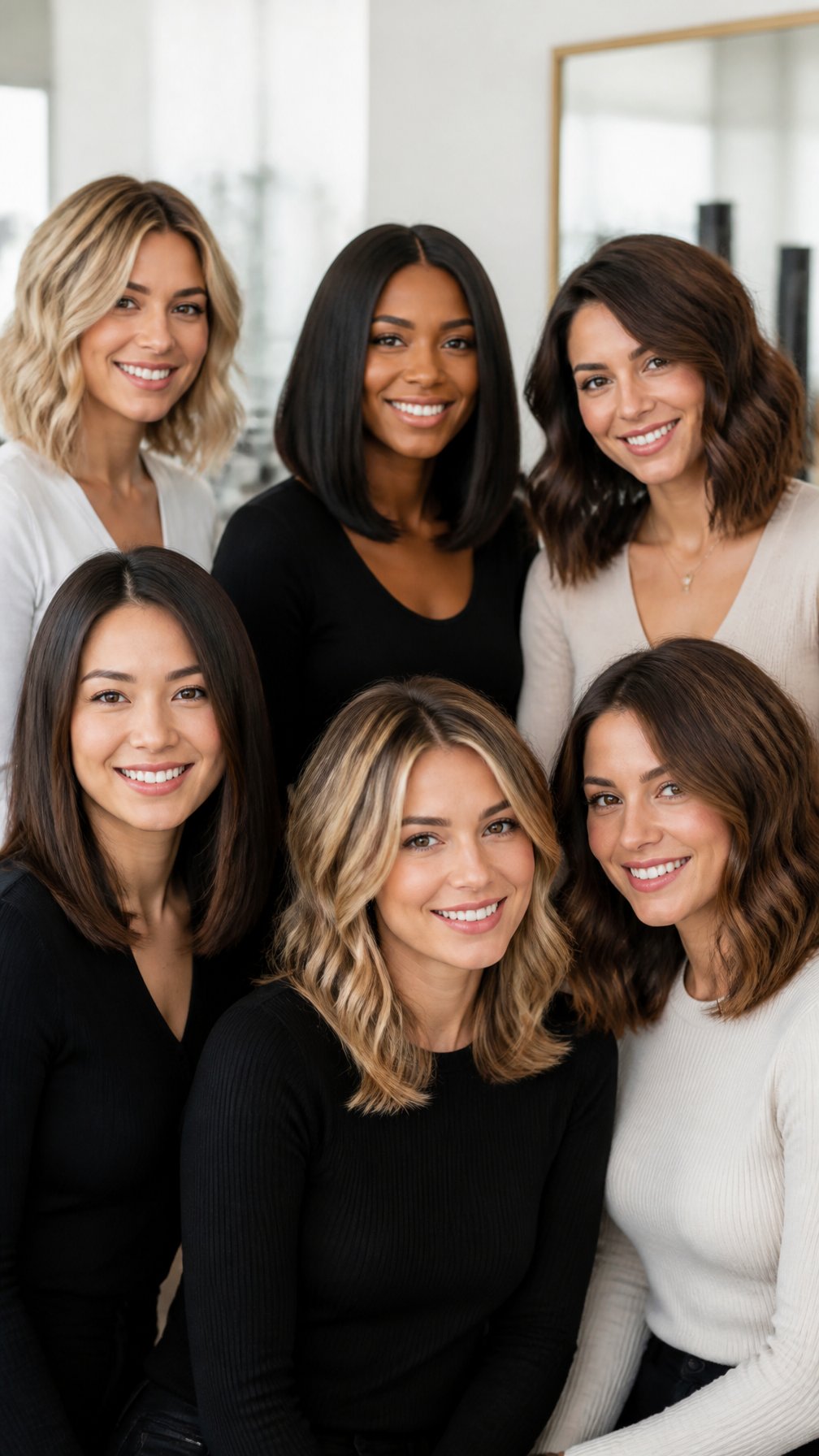
Schedule regular trims every 8–12 weeks to prevent split ends and maintain your shape. Small trims preserve the cut’s movement and make styling easier.
Use a sulfate-free shampoo and a lightweight conditioner to protect your natural texture. Focus conditioner on mid-lengths and ends to avoid weighing down roots.
Protect hair from heat by applying a heat protectant before blow-drying or using styling tools. Lower heat settings and quick passes reduce damage while still creating polished results.
Limit washing to two to four times per week based on oiliness and activity level. Dry shampoo can extend styles between washes without stripping natural oils.
Incorporate a weekly deep-conditioning mask or an oil treatment if your hair feels dry. Choose products with protein or natural oils suited to your hair porosity.
Brush gently with a wide-tooth comb or a paddle brush designed to detangle wet hair. Start at the ends and work upward to minimize breakage.
Balance protein and moisture in your routine to avoid brittle or limp hair. If your hair feels stiff, add moisture; if it stretches excessively or breaks, add protein.
Protect hair from sun and chlorine with a hat, a UV-protective spray, or a pre-swim conditioner. Rinse and condition after swimming to restore moisture and remove chemicals.
Track changes after product or routine shifts and adjust gradually. Small, consistent habits produce the healthiest shoulder-length results.
Frequently Asked Questions
You’ll find clear answers about timeless shoulder-length cuts, low-maintenance options for straight hair, layering for thin hair, age-related effects, 2026 trends versus classics, and how to modernize dated features. Each answer gives practical, actionable guidance you can discuss with your stylist.
What are the most timeless medium-length haircuts that suit most face shapes?
A blunt lob that grazes the shoulders flatters round, oval, and heart-shaped faces by creating clean lines and the illusion of length.
Longer bobs with slight inward curves at the ends work well for square and angular faces because they soften jawlines.
Soft, face-framing layers add movement without shortening length, making them a safe pick if you want versatility.
Ask your stylist to customize length and part placement to balance your forehead and chin proportions.
Which low-maintenance shoulder-length haircuts work best for straight hair?
A blunt shoulder-length cut kept one length requires minimal styling and air-dries smoothly on straight hair.
A long, subtle A-line bob (slightly shorter in back) adds shape while still allowing easy upkeep.
Textured ends with a lightly razored finish hide grow-out and reduce the need for frequent trims.
Keep maintenance lower by choosing a color close to your natural shade and using a lightweight smoothing serum.
What are the best medium-length haircuts with layers for thin hair?
Thin hair benefits from short or medium-length layers that start around chin level to boost volume at the crown.
A layered lob with ends styled slightly inward creates the visual illusion of thicker strands.
Feathered layers and a blunt perimeter combine fullness at the ends with lift at the roots.
Avoid too many long, disconnected layers that can make hair look stringy and emphasize thinness.
Does shoulder-length hair typically make someone look older or younger?
Shoulder-length hair does not inherently make someone look older or younger; the overall effect depends on the cut, texture, and styling.
Soft layers, face-framing pieces, and a shoulder-grazing lob tend to create a fresher, more modern look.
Severe blunt cuts or heavy bangs can read older if not adapted to your features.
Discuss texture, color, and parting options with your stylist to achieve the look you want.
Which medium-length hairstyles are trending in 2026, and how do they differ from classic cuts?
In 2026, undone texture, natural movement, and lived-in color dominate; think shags with softer layers and personalized bangs.
These trends favor versatility and low-effort styling over the perfectly polished lob of earlier years.
Classic cuts like the blunt lob remain popular but now include texturizing at the ends and less rigid precision.
Stylists mix vintage references—soft shag elements, curtain bangs—with modern tailoring to each client’s hair density and face shape.
What haircut features tend to look dated, and how can they be updated for a modern look?
Overly helmet-like layers, excessively feathered ’90s-style layers, and severe micro-bangs often read as dated.
To modernize them, soften lines, add movement with subtle layering, or convert heavy bangs into curtain or piecey bangs.
Replace high-contrast, blocky color with blended, natural-looking tones and avoid extreme razoring near the roots.
Ask for controlled texturizing and strategic weight removal so your cut moves but keeps a contemporary silhouette.


