

Curly hair can lose moisture quickly, leaving curls dry, rough, or frizzy. You can improve softness and definition by using gentle products, adding moisture regularly, and handling your hair with care.
Use a gentle, sulfate-free shampoo, condition regularly, and apply moisturizing products while your curls are wet. The following tips will help you dry, style, and protect your curls according to their needs.
1. Detangle Without Breaking Curl Clumps
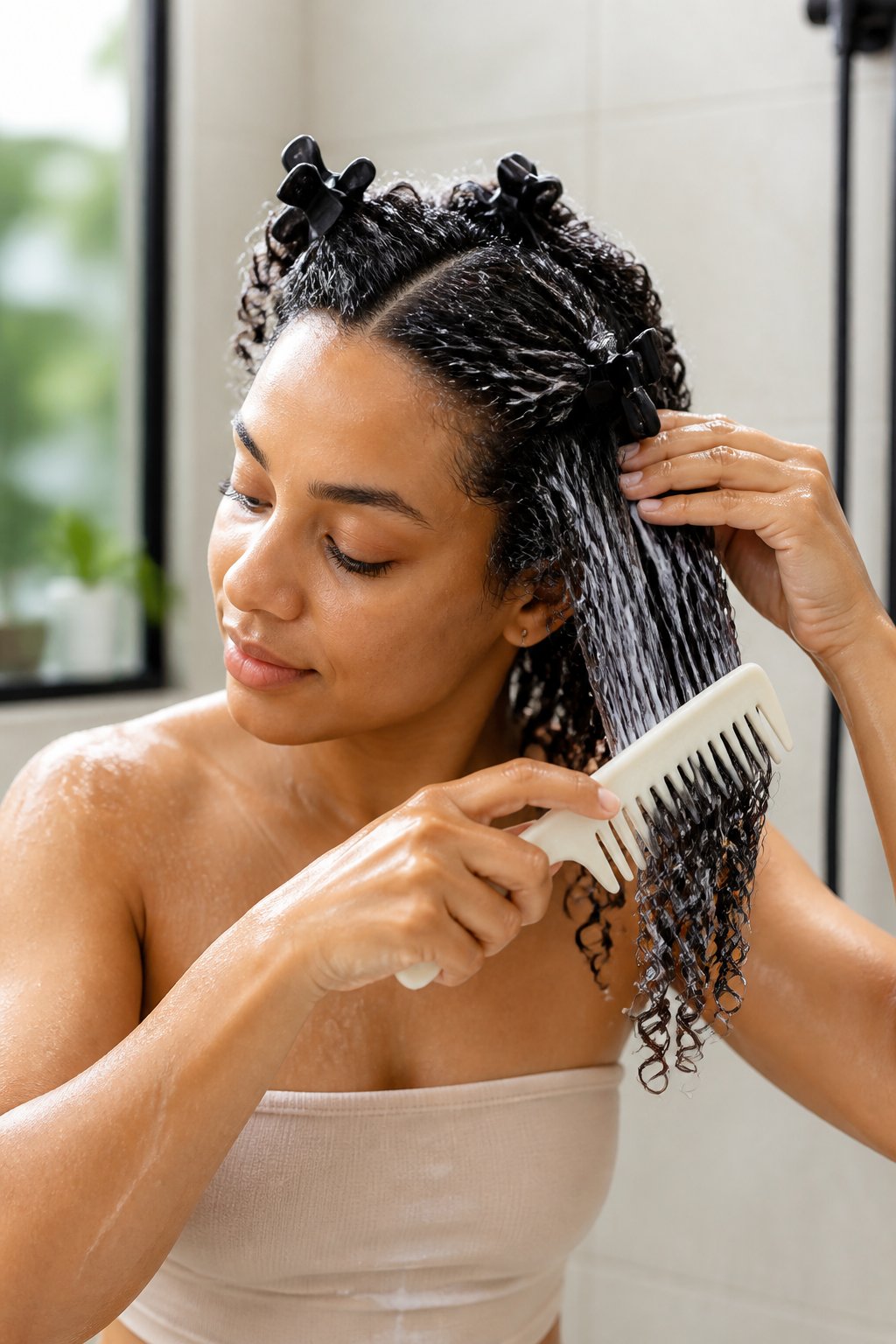
Detangle while your conditioner remains in your hair. Start at the ends and move toward the roots with your fingers, a wide-tooth comb, or a detangling comb. Add more water or conditioner if the tool catches.
Work in small sections rather than forcing the comb through your entire head. Hold each section near the roots to limit pulling on your scalp, and use a detangler if your conditioner does not provide enough slip.
Rinse gently when the knots are gone. Leave a small amount of conditioner behind if your hair needs extra softness, but rinse more fully if your curls become heavy or your scalp gets oily quickly.
2. When to Use a Deep Conditioner or Hair Mask
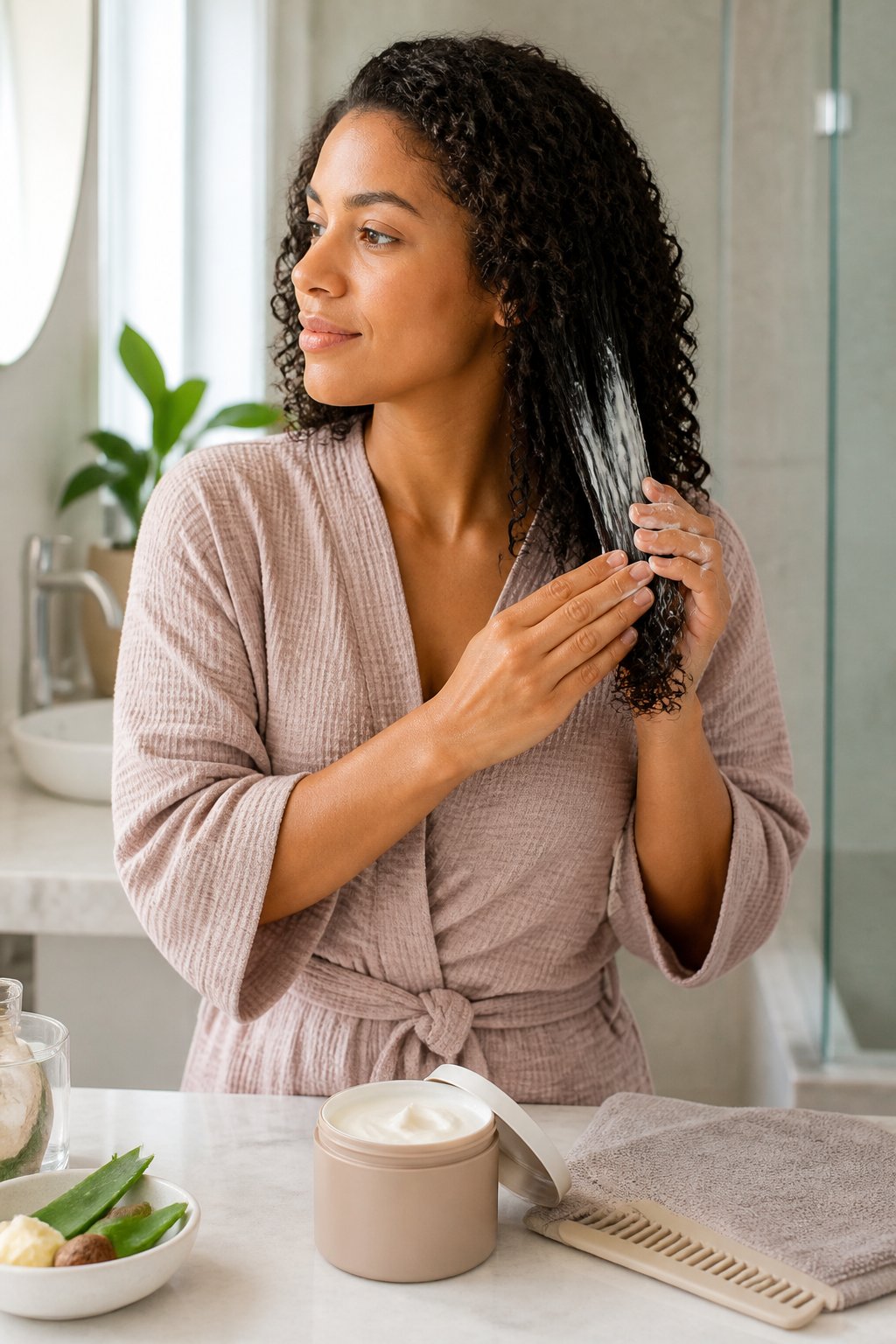
Use a deep conditioner or hair mask when your curls feel rough, tangled, brittle, or unusually dull. Apply it after shampooing, focusing on the middle lengths and ends rather than your scalp. Leave it on for the time listed on the label, then rinse with cool or lukewarm water.
Look for lighter moisturizing ingredients such as aloe vera, glycerin, panthenol, or small amounts of shea butter. If your hair becomes greasy or loses volume, use less product or shorten the treatment time. Most curls need deep conditioning about once every one or two weeks, not every wash.
Avoid layering a mask with several heavy creams and oils. A buildup-prone routine can make curls feel dry even when they contain product, because the coating may prevent water from reaching the hair.
3. Balance Moisture With Protein
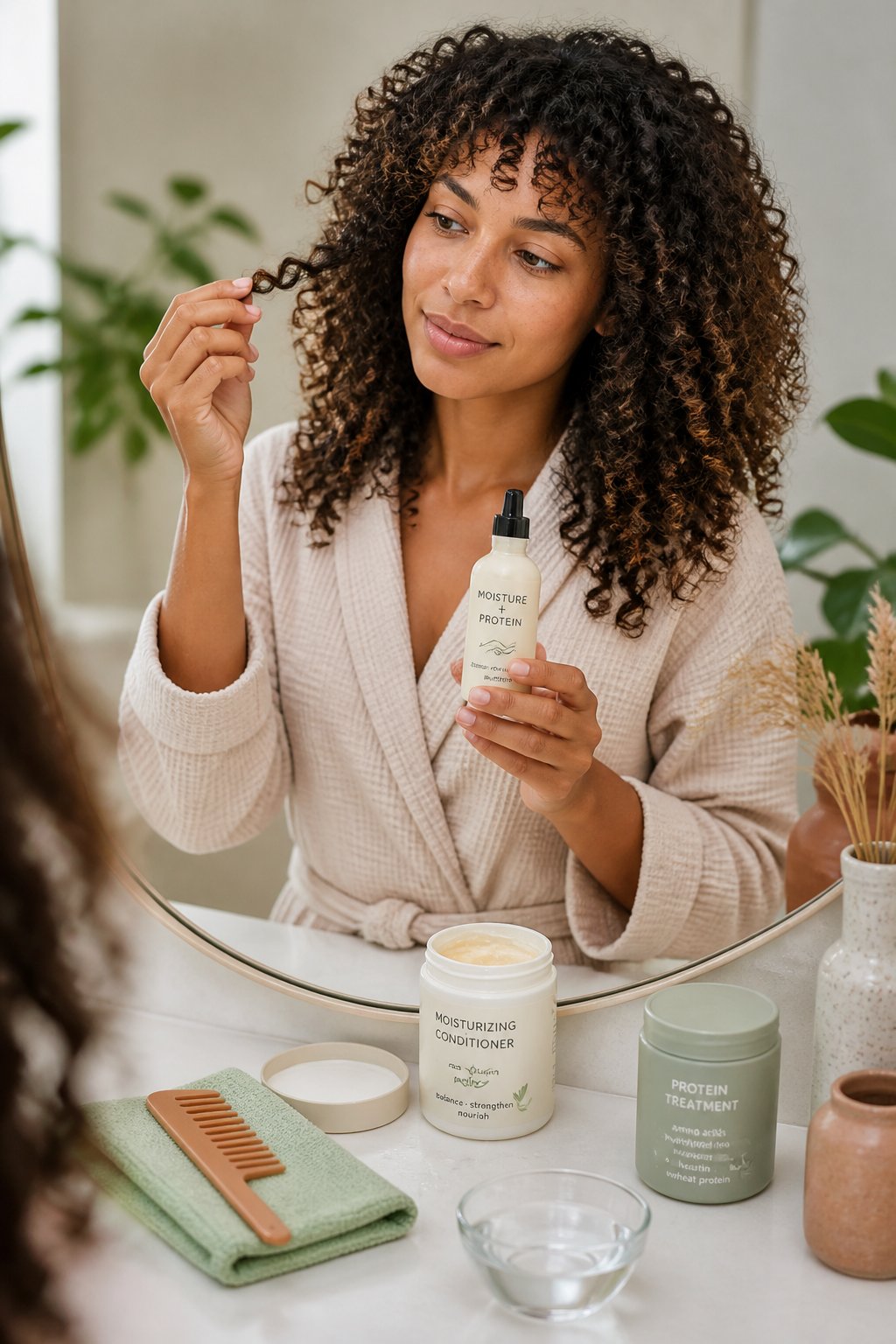
Moisture helps curls feel soft and flexible, while protein can help weak strands feel stronger. Choose a treatment with amino acids, hydrolyzed rice protein, keratin, or wheat protein when your hair breaks easily, feels overly stretchy when wet, or has damage from heat and chemical services.
Use protein treatments less often than moisturizing treatments, such as every four to eight weeks, depending on your hair’s response. Follow the product directions and rinse thoroughly. If your curls feel stiff, rough, or tangled afterward, pause protein and use a simple moisturizing conditioner.
Do not assume every dry-feeling curl needs more moisture. Hair can feel dry because of buildup, damage, hard water, or too much protein. Change one product at a time so you can identify what helps.
4. Use Humectants Wisely in Changing Humidity
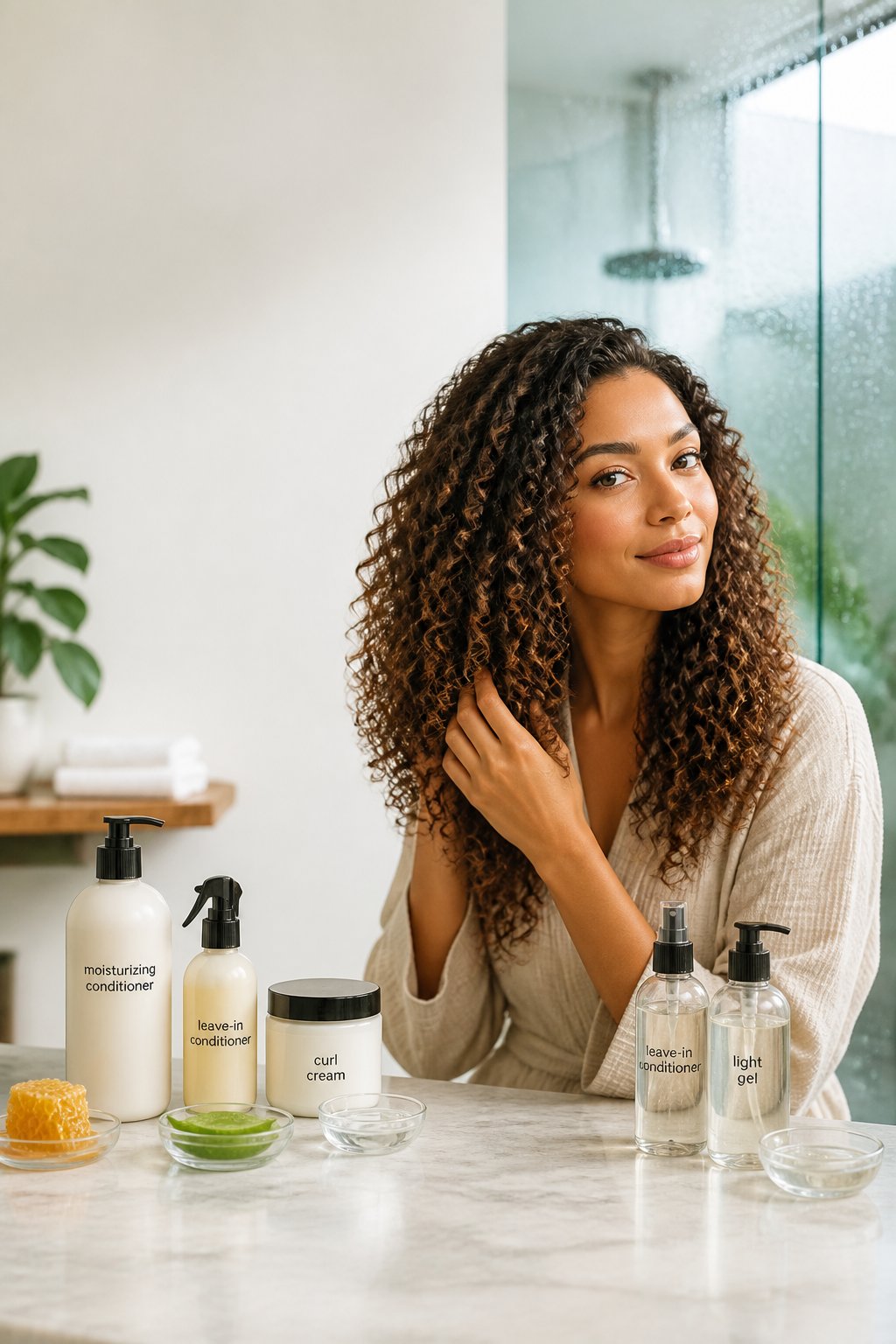
Humectants attract water. Common examples include glycerin, honey, and aloe vera. They can help curls feel softer and look more defined when the air has moderate humidity and your hair already has enough water.
Humidity can change how humectants behave. In very dry air, they may draw moisture from the hair instead of the air. In very humid weather, they may attract too much water, which can increase frizz or make curls lose their shape.
Use a leave-in conditioner or styling product with humectants after washing. If your hair becomes puffy in humid weather, choose a lower-humectant formula and add a light gel or cream that helps hold your style. In dry weather, layer a moisturizing conditioner under your styler, and avoid relying on glycerin alone.
5. Seal in Softness With Emollients and Oils
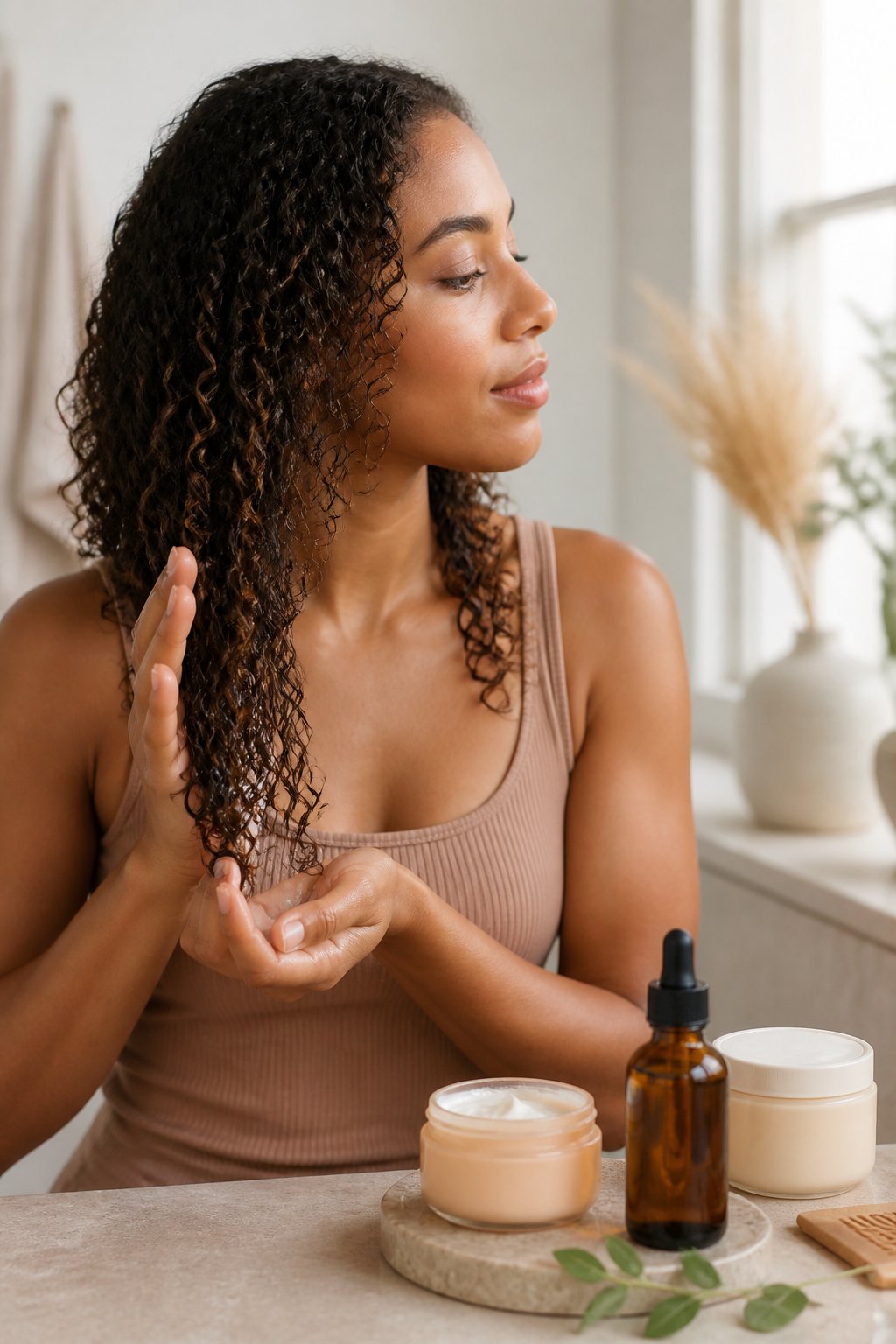
Emollients smooth the hair surface and make curls feel softer. Look for shea butter, argan oil, jojoba oil, and other lightweight oils in conditioners, creams, and masks.
Apply these products to wet or damp hair after a water-based conditioner or leave-in. This helps spread the product evenly and can reduce roughness without leaving your curls stiff. Fine hair may need only a small amount of jojoba or argan oil, while thick, coarse hair may tolerate richer shea butter.
Use hair oil sparingly on the ends, especially after styling. Oil does not add water to dry hair; it mainly helps slow moisture loss and improve slip. Too much can weigh down curls, attract buildup, or make hair look greasy.
6. Know Which Ingredients May Not Suit Your Hair
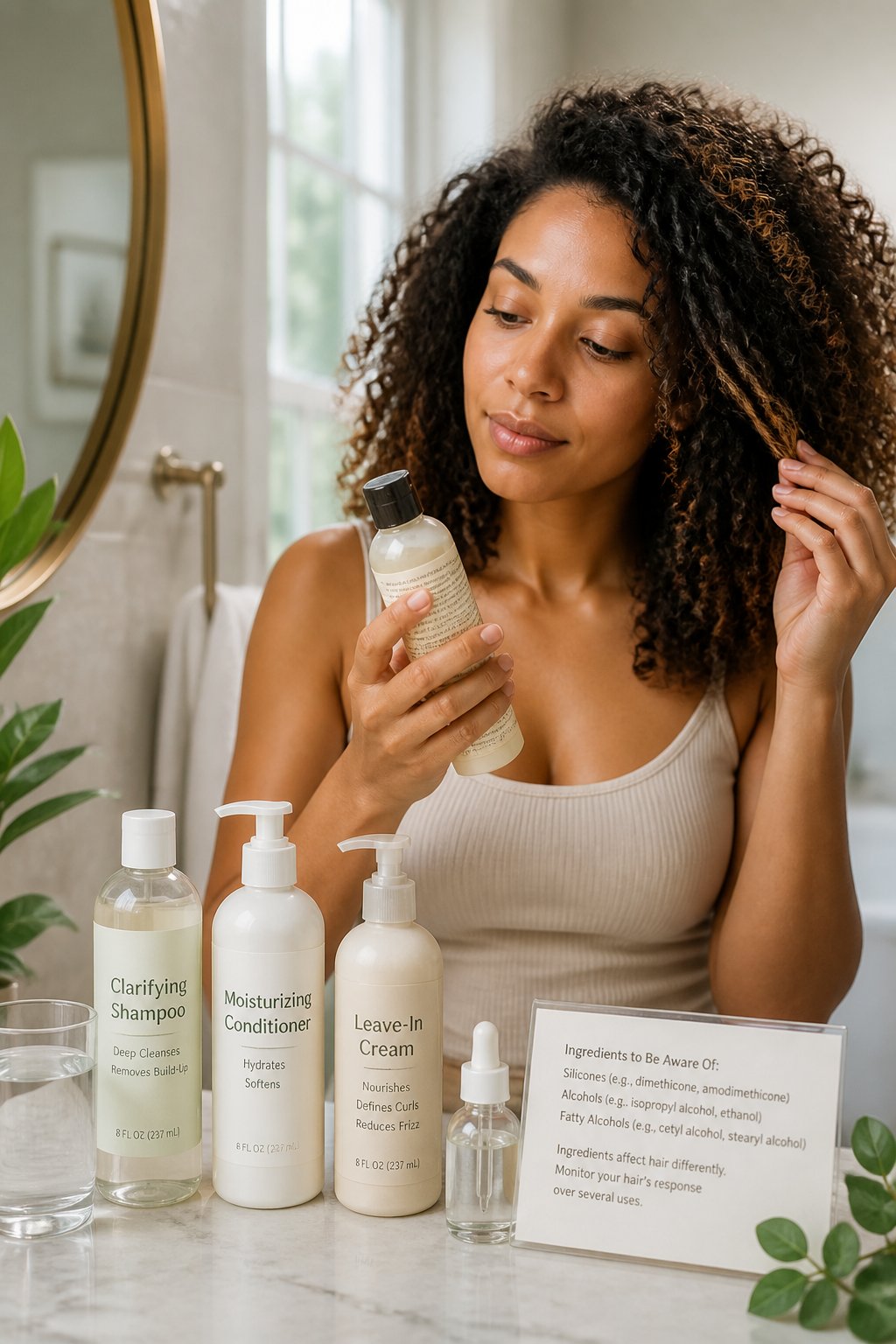
No ingredient works well for every curl pattern. Silicones can reduce friction, add shine, and protect against humidity, but some non-water-soluble types may build up. If your hair feels coated or limp, use a clarifying shampoo occasionally or choose water-soluble silicones.
Avoid treating every alcohol as drying. Short-chain alcohols, such as denatured alcohol, may feel drying in some formulas, especially near the top of the ingredient list. Fatty alcohols, including cetyl and stearyl alcohol, help soften and thicken conditioners.
Watch how your hair responds after several uses. If a product causes stiffness, flakes, dullness, or increased dryness, stop using it and return to a simple conditioner and leave-in routine.
7. Layer Leave-In and Styling Products
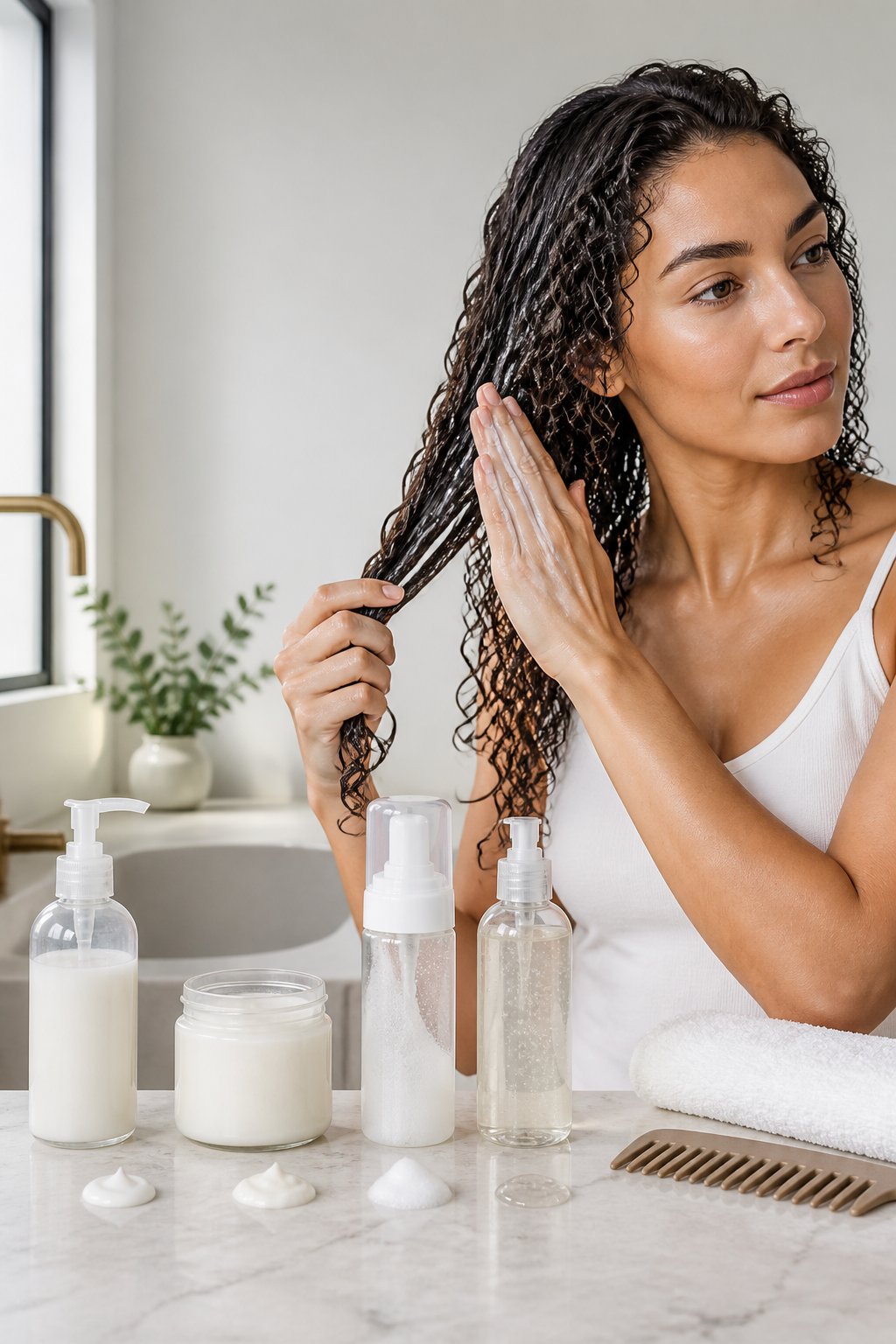
Start with a small amount of water-based leave-in conditioner on clean, wet hair. Focus on the middle lengths and ends, then add more only if your hair still feels rough or tangled. A leave-in conditioner helps reduce friction and gives styling products a smoother base.
Next, apply a curl cream or styling cream if your curls need extra moisture and softness. Use less product on fine hair and more on thick, coarse, or very dry hair. Spread each product with praying-hands motions, then gently rake through small sections with your fingers.
Follow with mousse or gel when you need stronger hold, more curl definition, or better frizz control. Layering works best when you use thin amounts; too much product can leave curls heavy, sticky, or dull.
8. Match Hold and Weight to Your Texture
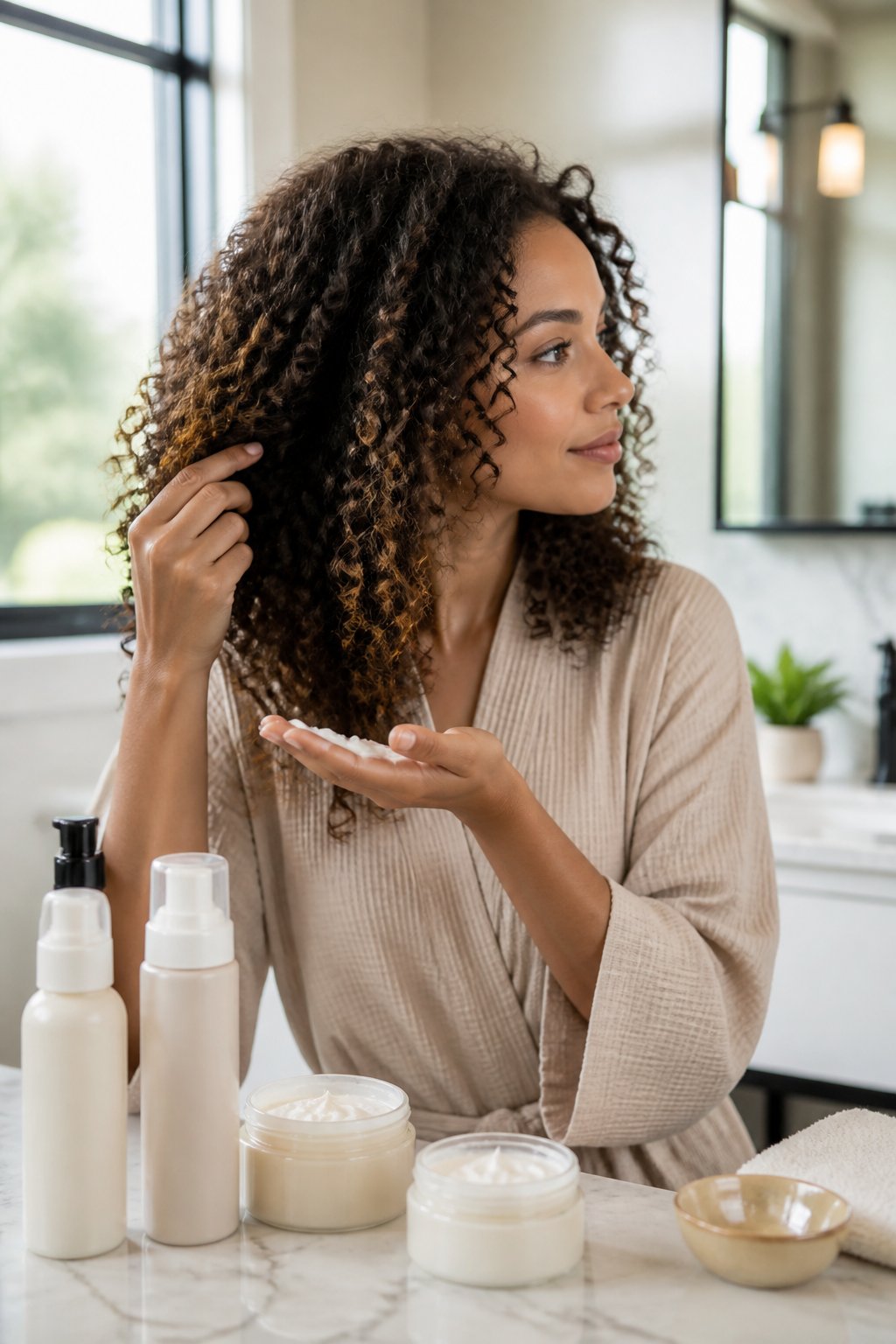
Choose products based on how your hair feels after washing. Fine curls often respond well to a lightweight leave-in conditioner and mousse. These products can add shape without flattening your roots or making soft curls limp.
Thick or coarse curls may need a richer curl cream beneath a stronger-hold gel or mousse. This combination helps retain moisture while keeping defined curls in place. If your hair feels coated, greasy, or stiff, reduce the amount of cream before changing your entire routine.
For frizzy curls, focus on even coverage rather than adding several products. A light leave-in conditioner can improve slip, while a firm styling product helps protect the curl pattern as it dries. Test one new product at a time so you can identify what works.
9. Scrunch Without Disrupting Your Pattern
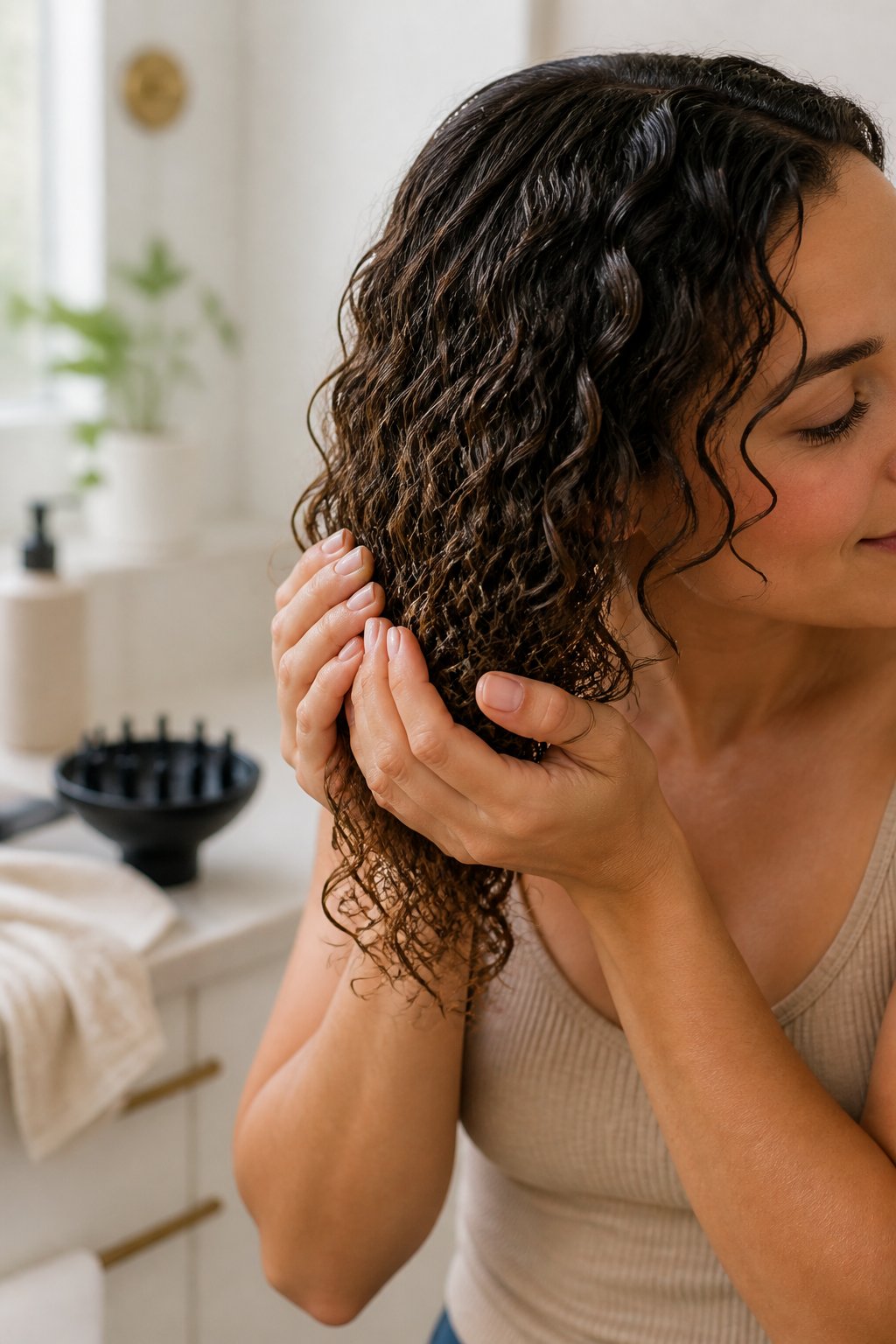
After applying products, cup the ends of your hair in your palms and scrunch upward toward your scalp. Repeat around your head, using gentle squeezes instead of rough rubbing. This motion encourages curl formation and removes excess water without pulling apart the pattern.
Use a microfiber towel or a soft cotton T-shirt to blot your hair if it drips heavily. Press and scrunch; do not twist, brush, or rub the curls. Rough handling can separate curl clumps and create frizz before your hair dries.
Let your hair air-dry or use a diffuser on low heat and low airflow. Keep your hands away from the curls until they are fully dry. If a styling product leaves a firm cast, gently scrunch the dry hair to soften it without losing definition.
10. Use a Microfiber Towel or Cotton T-Shirt
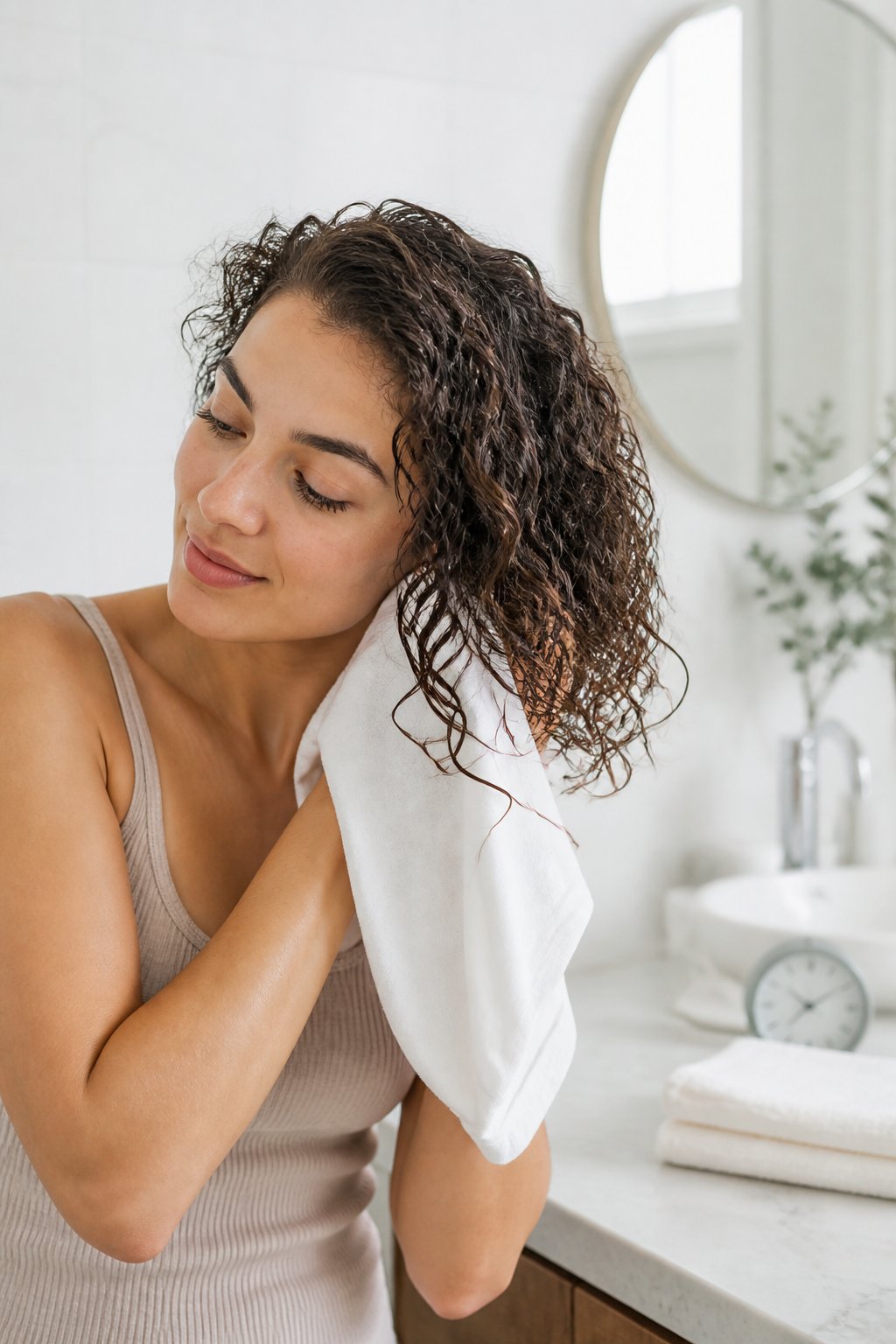
After washing, gently squeeze out excess water with your hands. Then wrap your hair in a microfiber towel or a clean cotton T-shirt. These fabrics create less friction than a rough bath towel, which can disturb curl patterns and increase frizz.
Press and scrunch your hair instead of rubbing it. Work from the ends toward the roots to help curls keep their shape. Leave the towel or shirt on for about 10–20 minutes, then apply your styling products if you have not already done so.
Avoid twisting your hair tightly or leaving it wrapped until it becomes fully dry. Take it down while it still feels damp, arrange your curls, and let them air-dry when possible.
11. Diffuse With Low Heat and Low Airflow
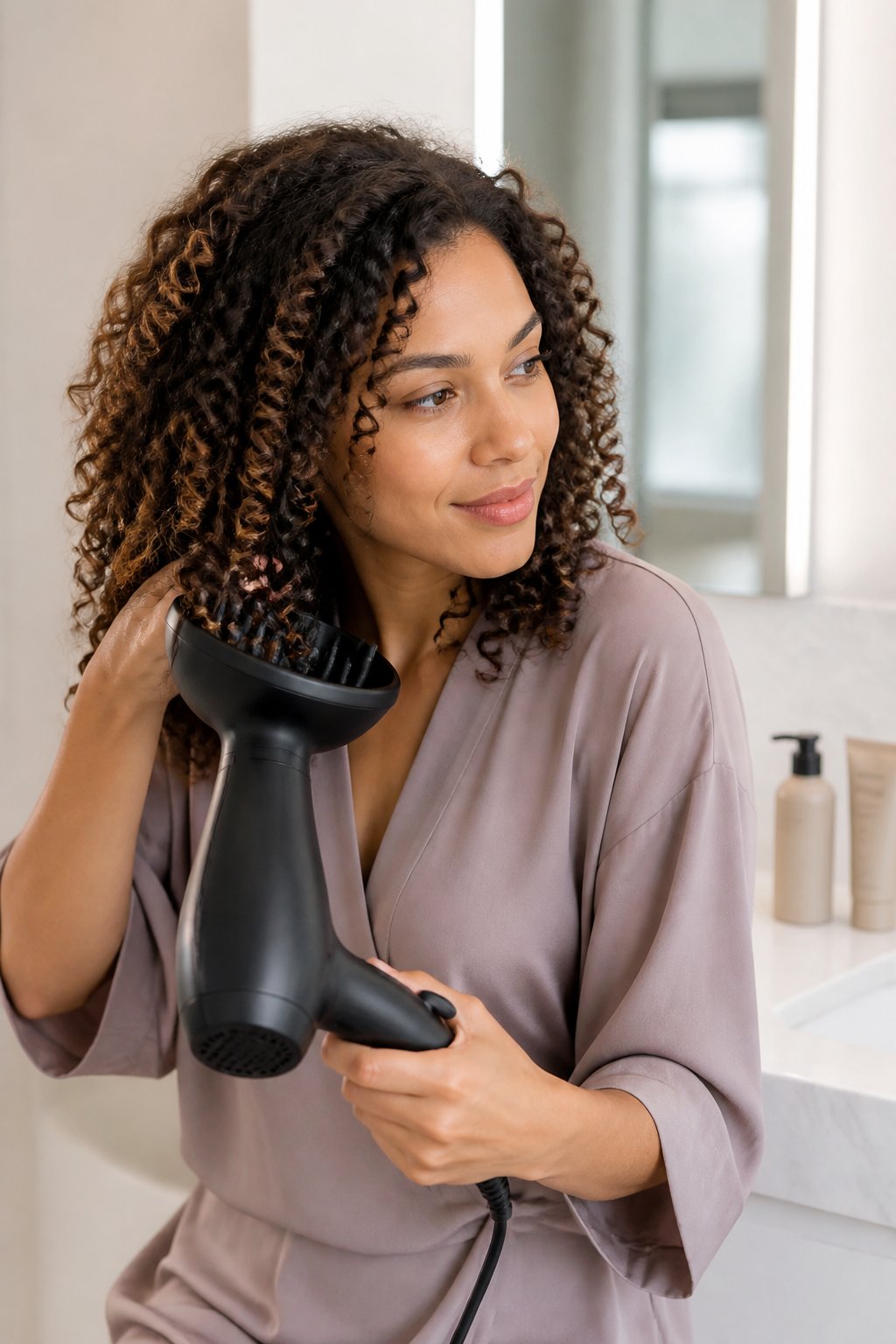
A diffuser can reduce drying time while supporting your natural curls. Apply your usual leave-in conditioner and curl product first, then gently place sections of hair into the diffuser bowl.
Use low heat and low airflow, especially if your hair feels dry or breaks easily. Start with the diffuser a few inches from your scalp, and hold it in one spot for only a short time before moving to another section. This limits concentrated heat.
Try not to touch or rearrange your curls while they dry. Excess handling can create frizz and weaken definition. Stop when your hair is about 80–90% dry, then let the rest air-dry.
12. Use Heat Protectant Before Hot Tools
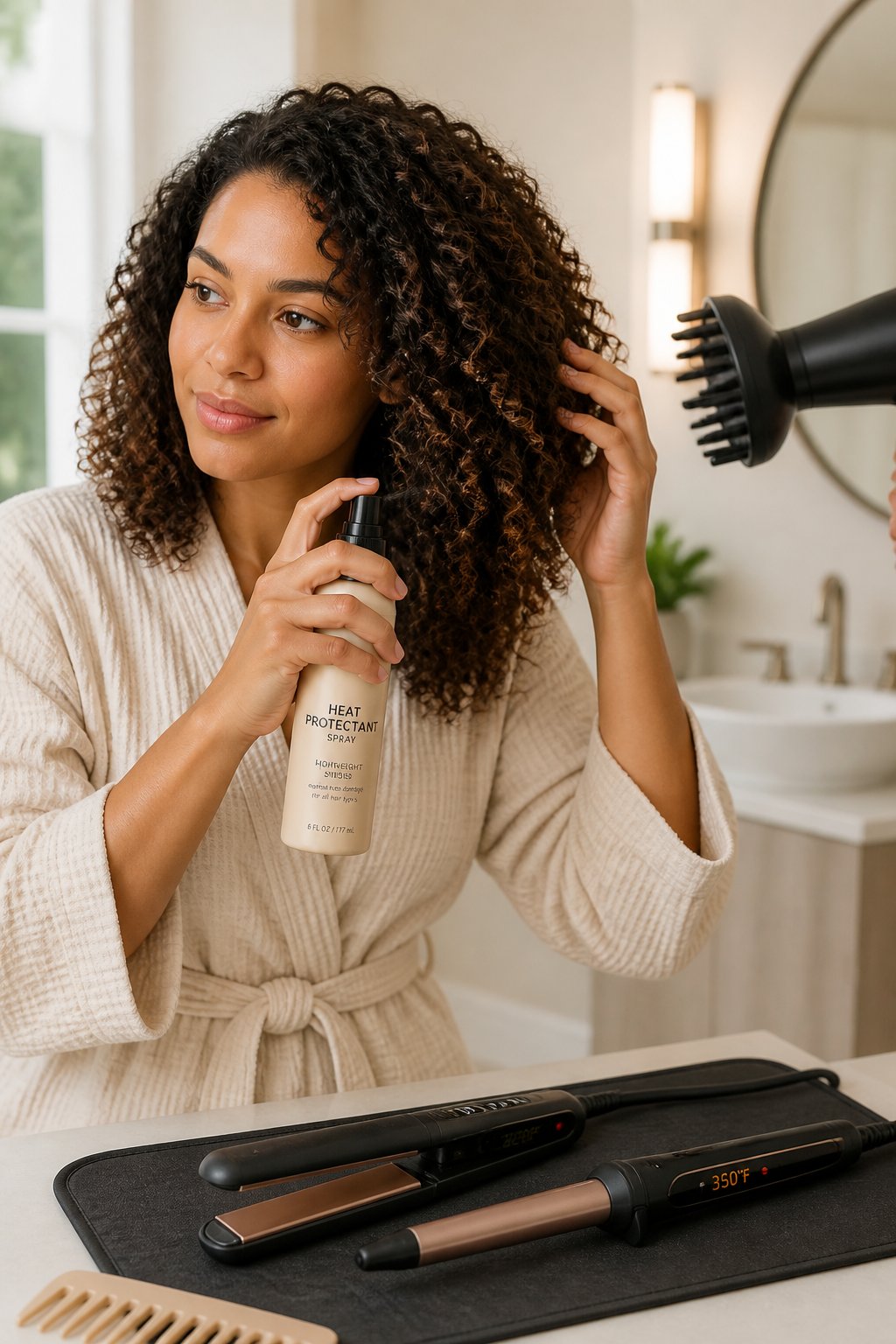
Apply a heat protectant before using a blow dryer, flat iron, or curling iron. Choose a product labeled for heat protection, and spread it evenly through damp or dry hair according to the directions.
Keep hot tools at the lowest temperature that works for your hair. Fine or fragile curls usually need less heat than thick, coarse hair. Use a comb attachment or brush gently, and avoid passing a flat iron over the same section more than once.
Limit heat styling to reduce dryness and changes to your curl patterns. When you use a blow dryer, keep it moving and focus on drying rather than making every strand completely straight.
13. Care for Wavy and Loose Curl Textures
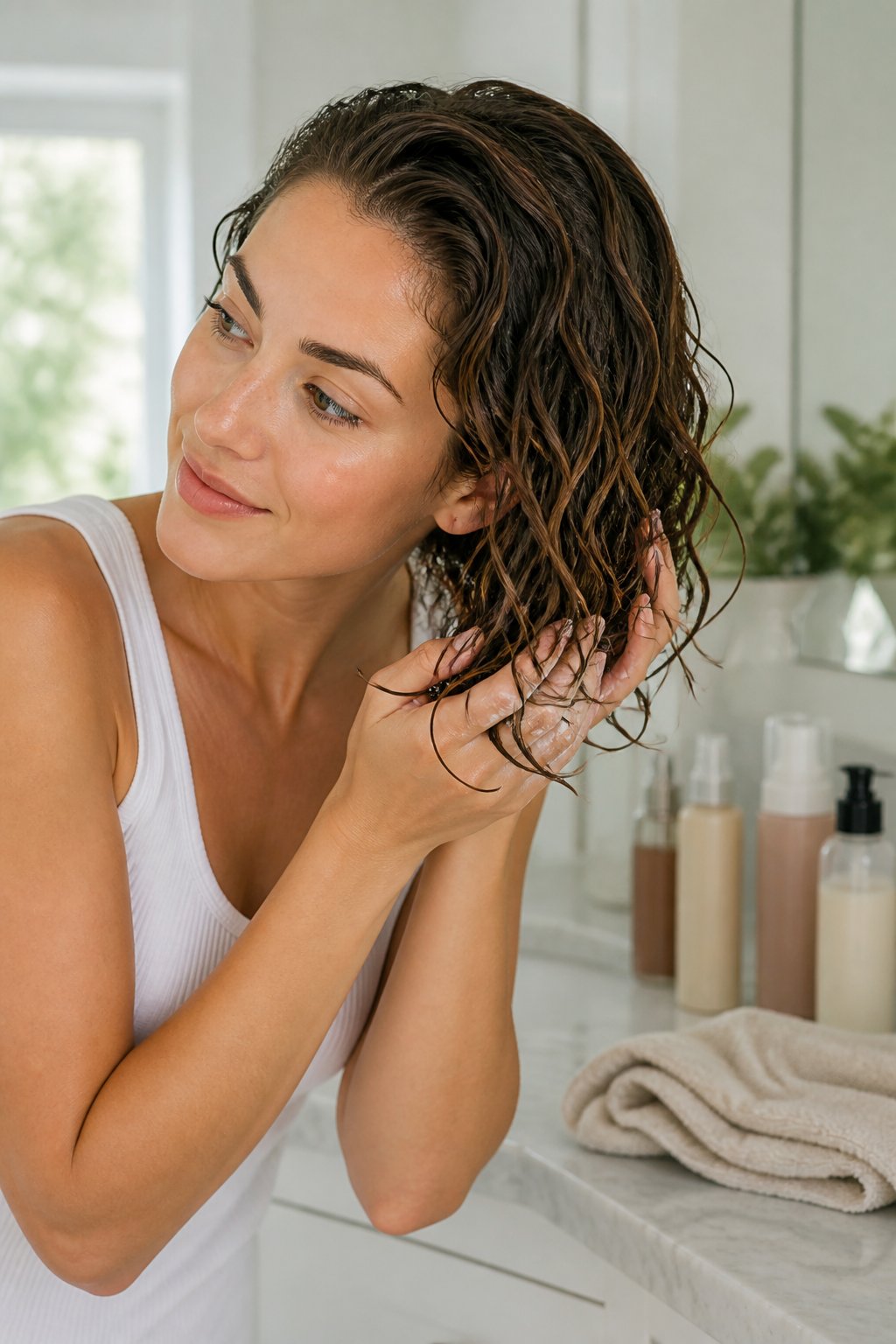
Wavy hair and loose curls can lose volume when you apply too much cream or oil. Use a gentle cleanser, a light conditioner, and a small amount of leave-in spray. Apply styling products to soaking-wet hair, then scrunch to form waves or ringlets.
Choose mousse or a lightweight gel when you want lift and flexible hold. In humid weather, use gel to help control frizzy hair. In dry or cold weather, add a small amount of curl cream to damp ends, but avoid coating your roots.
Clarify when your hair feels coated, limp, or difficult to wet. After washing, squeeze out water with a microfiber towel or cotton T-shirt. Avoid rough rubbing, which can separate the curl pattern and increase frizz.
14. Support Coily and Kinky Hair With Richer Moisture
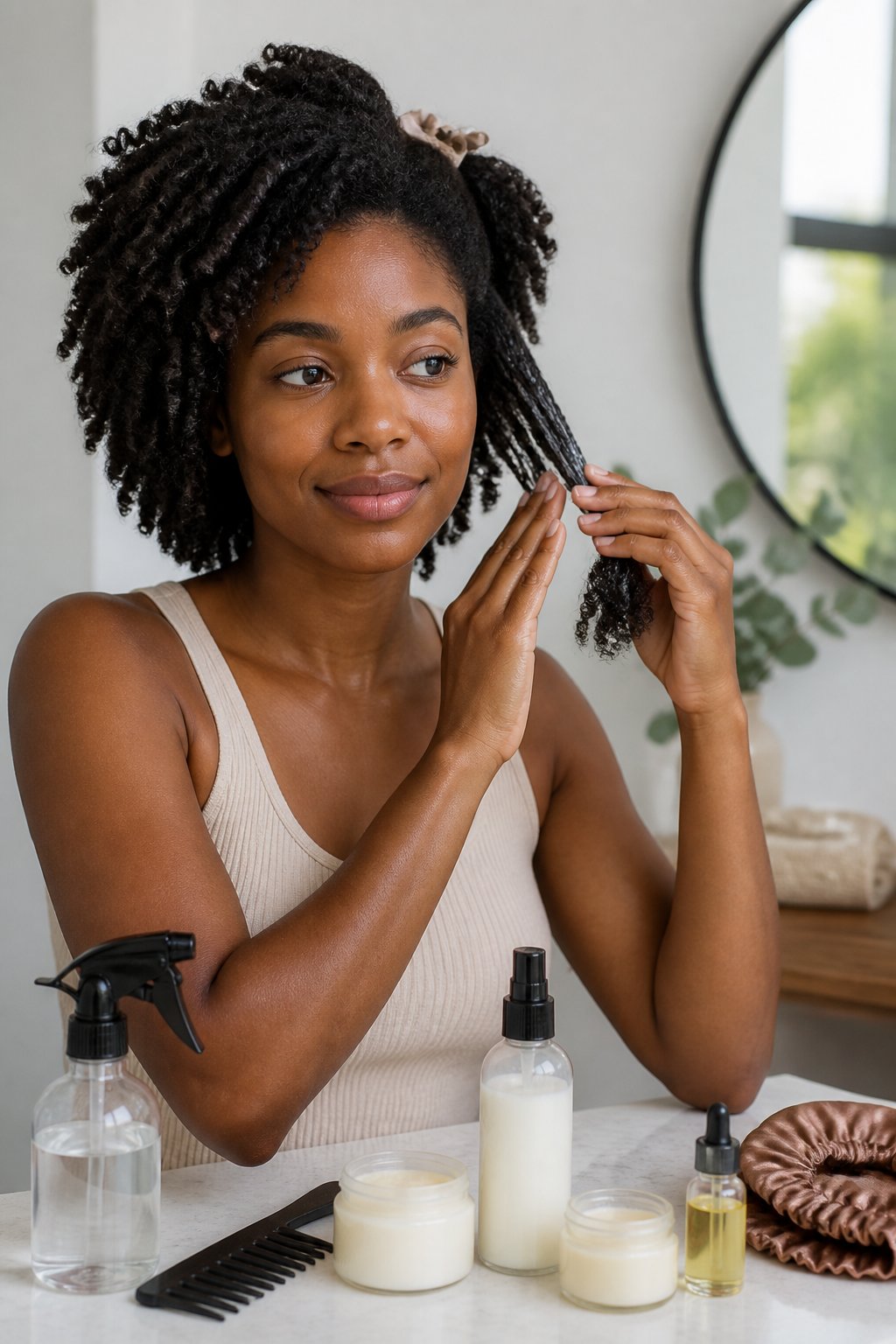
Coily hair and kinky hair have bends that can make it harder for natural oils to travel from the scalp to the ends. Cleanse your scalp regularly, then use a rich conditioner with water to soften textured hair. Detangle in sections with your fingers or a wide-tooth comb.
Apply leave-in conditioner while your hair remains wet. Follow with a curl cream or styling butter, then use gel if you need stronger definition. Seal especially dry ends with a few drops of a light oil, rather than covering your whole scalp.
Dry air, wind, and indoor heat can remove moisture quickly. Protect your hair with a satin or silk bonnet at night, and refresh with water plus a small amount of leave-in conditioner. Do not pull tight styles, which can stress your roots.
15. Spot the Difference Between Dryness and Buildup
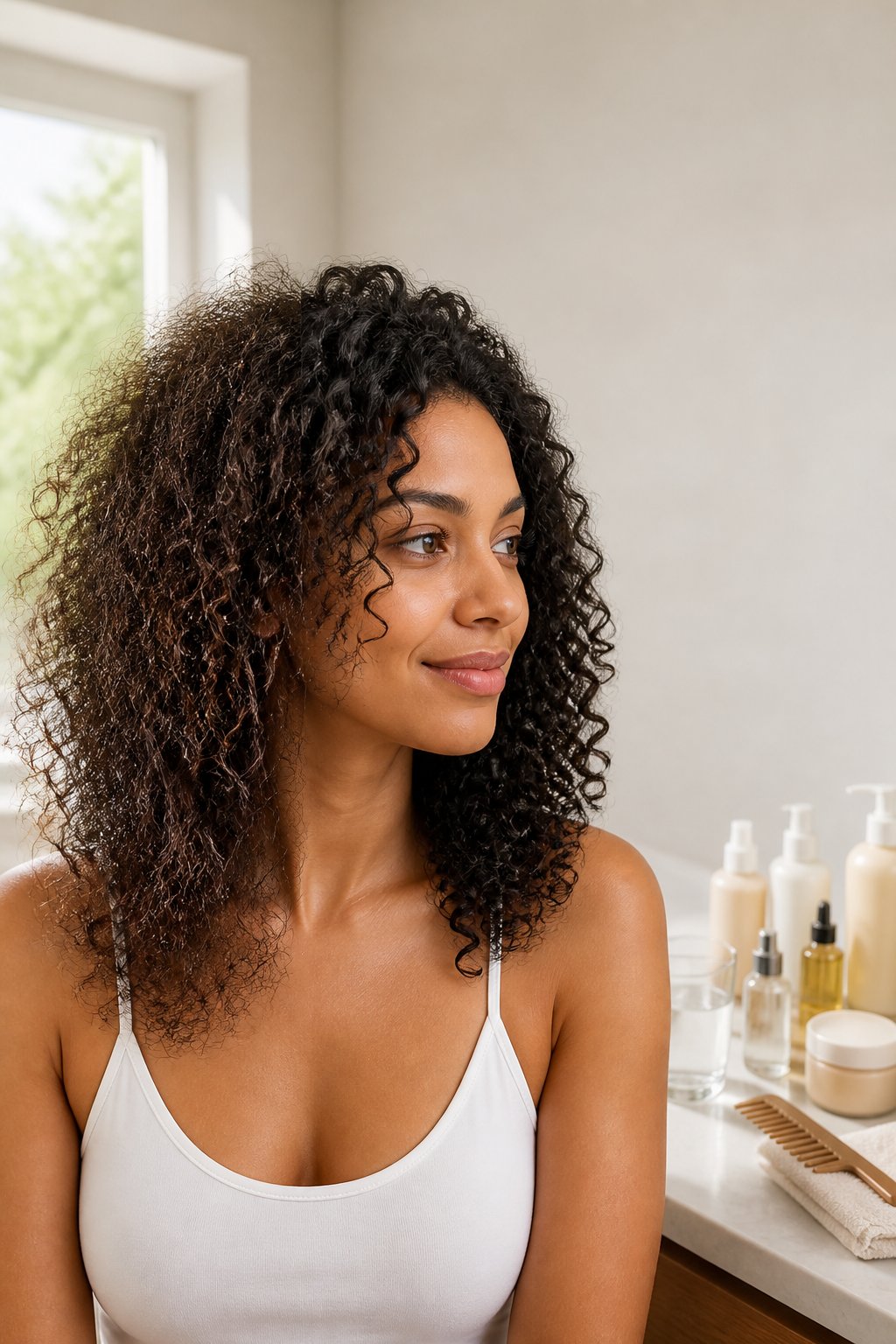
Dry hair usually feels rough, looks dull, and tangles easily. Your curls may absorb water quickly but still feel stiff after conditioning. Add water-based hydration, reduce harsh cleansing, and protect your ends from friction.
Buildup often makes hair feel waxy, heavy, or greasy. Your curls may look flat even after styling, and water may sit on the surface instead of soaking in. Styling creams, oils, dry shampoo, and hard-water minerals can all contribute.
Use a clarifying shampoo when buildup appears, then follow with a deep conditioner. If your scalp burns, flakes heavily, or stays itchy, stop adding products and seek advice from a medical professional. Weather can change the balance, so adjust product amounts instead of changing everything at once.
16. Refresh Definition Without a Full Wash
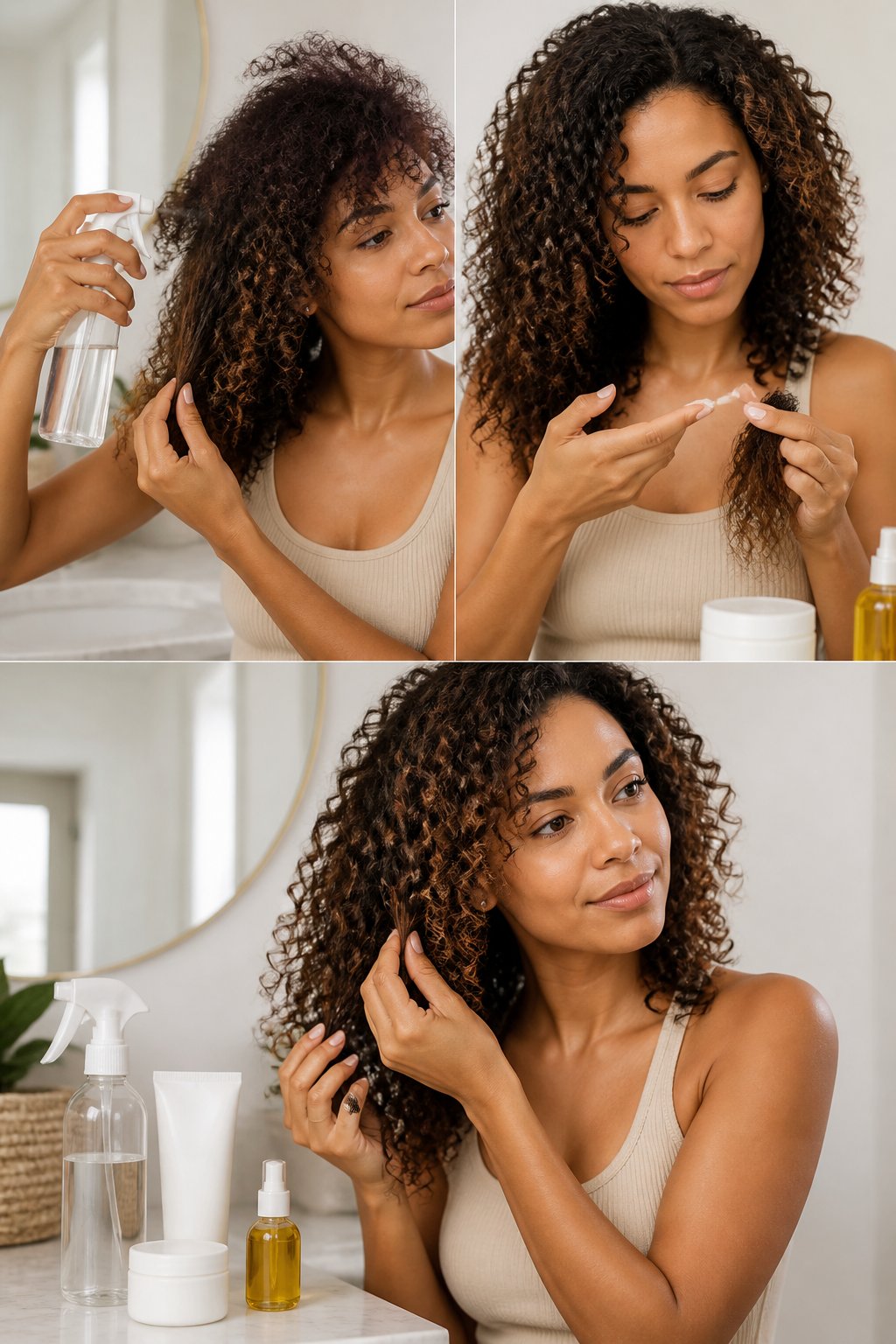
Start with dry or slightly damp hair. Mist a curl refresher spray over flattened areas, then gently scrunch upward. If you do not have a spray, mix water with a small amount of leave-in conditioner in a clean spray bottle. Use enough to soften the hair, not soak it.
Separate curls with your fingers instead of brushing through them. Add a pea-sized amount of leave-in conditioner to dry ends, then scrunch again. For stubborn frizz, smooth one or two drops of hair oil over the outer layer after the hair dries. Too much oil can weigh down curls and cause buildup.
Refresh only where needed. Rewetting your entire head every day can make styling take longer and may leave some hair dry if you keep adding product without cleansing.
17. Trim Damage Before Split Ends Travel
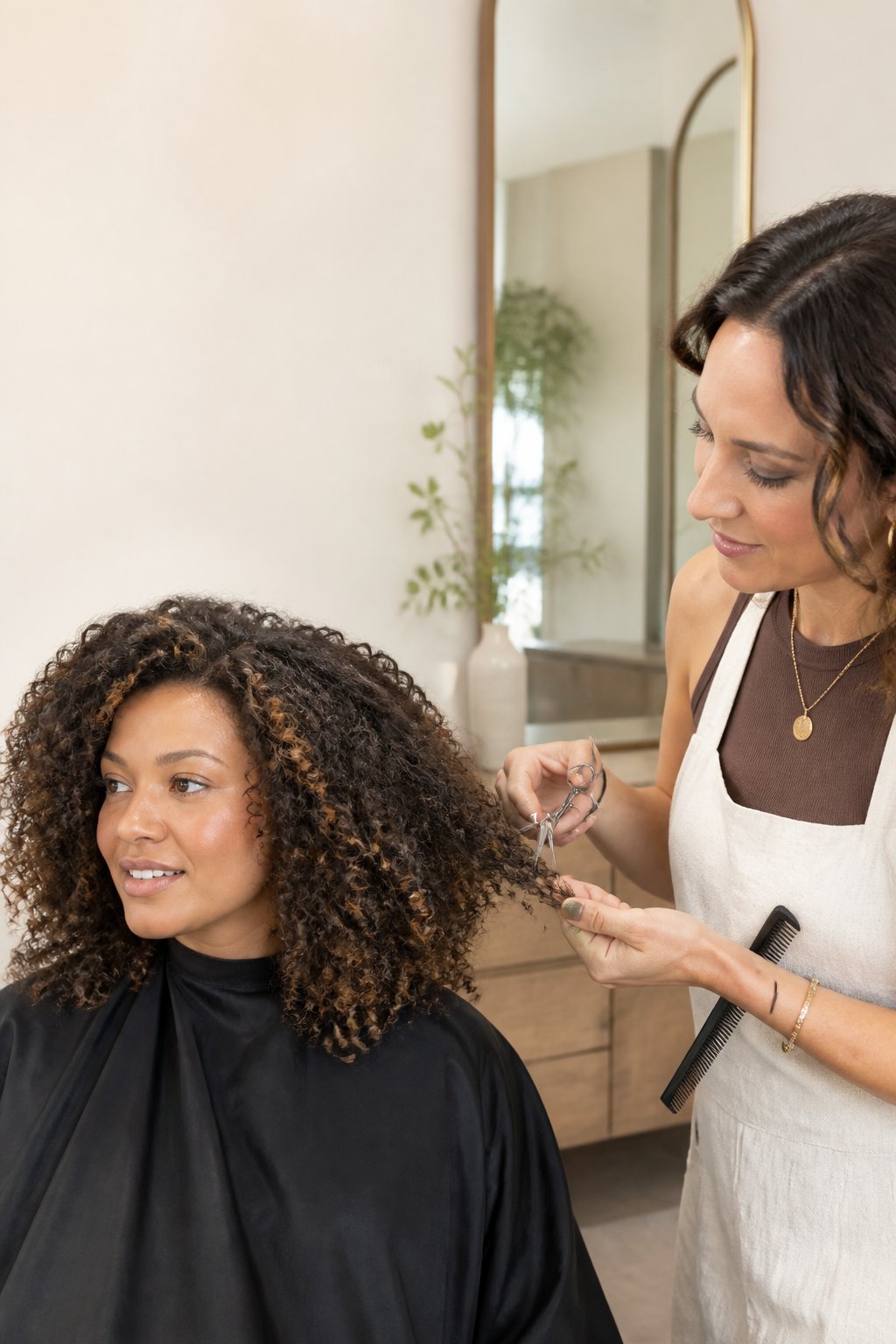
Check your ends in bright light every few months. Split ends may look like tiny forks, feel rough, or tangle more easily than the rest of your hair. Once a strand splits, conditioner and hair oil can make it feel smoother, but they cannot repair the split.
Ask for a small trim when you see repeated splitting, white dots, or rough ends. Curly hair can appear shorter when dry, so discuss how you want the shape checked and how much length removed. Regular, small trims may help prevent damaged ends from traveling farther up the strand.
Protect your ends between trims with leave-in conditioner and gentle styling. Detangle from the ends upward with wet, conditioned hair, and avoid pulling through knots. Use heat sparingly and apply heat protection when you diffuse or use another hot tool.
18. Fix Curls That Feel Rough or Look Dull
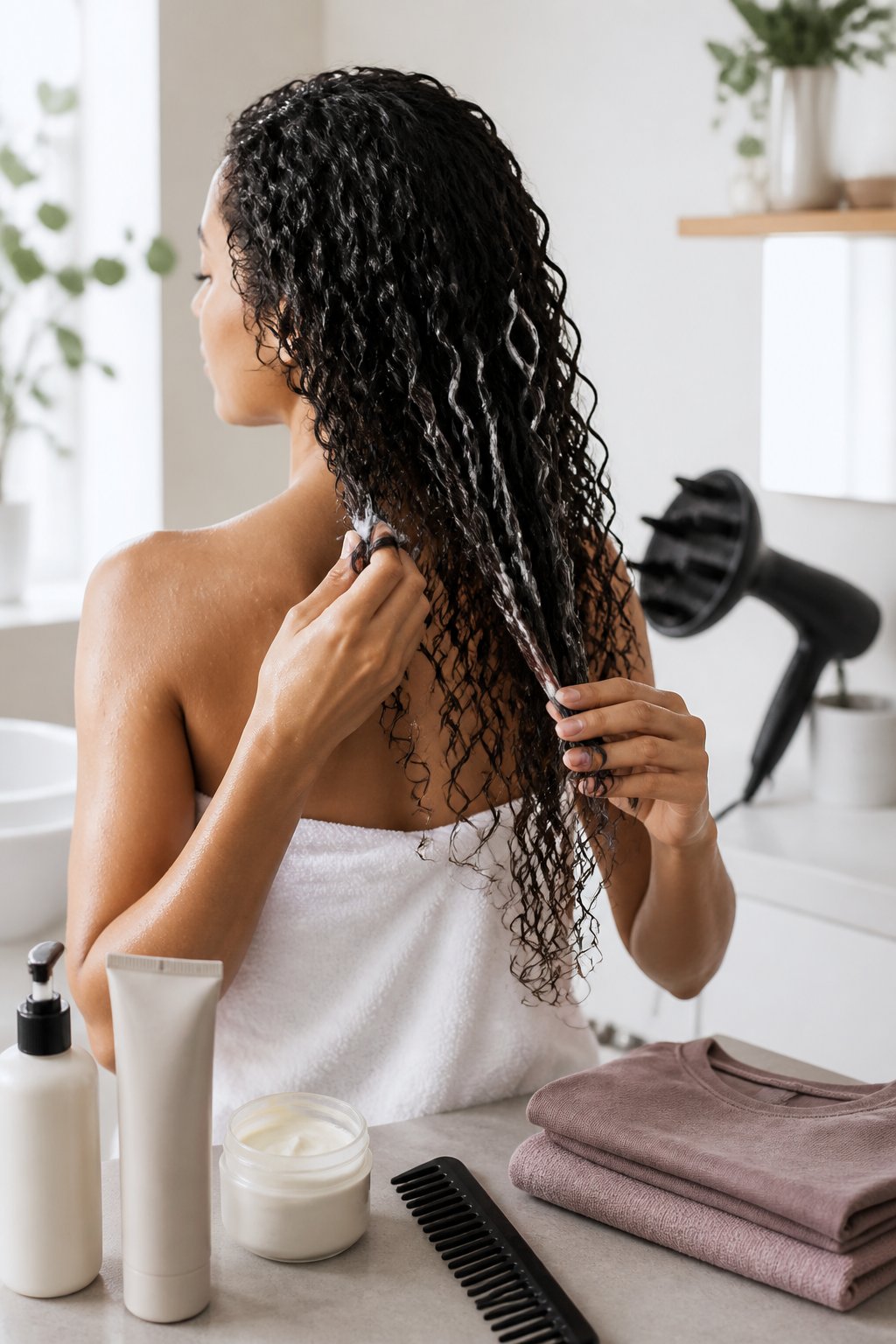
Wash with a hydrating shampoo when your scalp feels oily or dirty, but avoid shampooing your lengths aggressively. Apply conditioner from mid-length to ends, then detangle with your fingers or a wide-tooth comb while your hair remains wet.
Use a deep conditioning treatment once a week if your curls feel rough, brittle, or hard to manage. Follow the product directions, since leaving a treatment on much longer than recommended may not improve results. If your hair feels weak and stretchy, alternate moisture treatments with a light protein treatment.
Apply leave-in conditioner to soaking-wet hair, then add gel or curl cream. Scrunch gently, and let your hair air-dry or use a diffuser on low heat. Avoid brushing dry, frizzy hair, and dry your curls with a microfiber towel or soft cotton shirt instead of rubbing them.
19. Prevent Overwashing and Overstyling
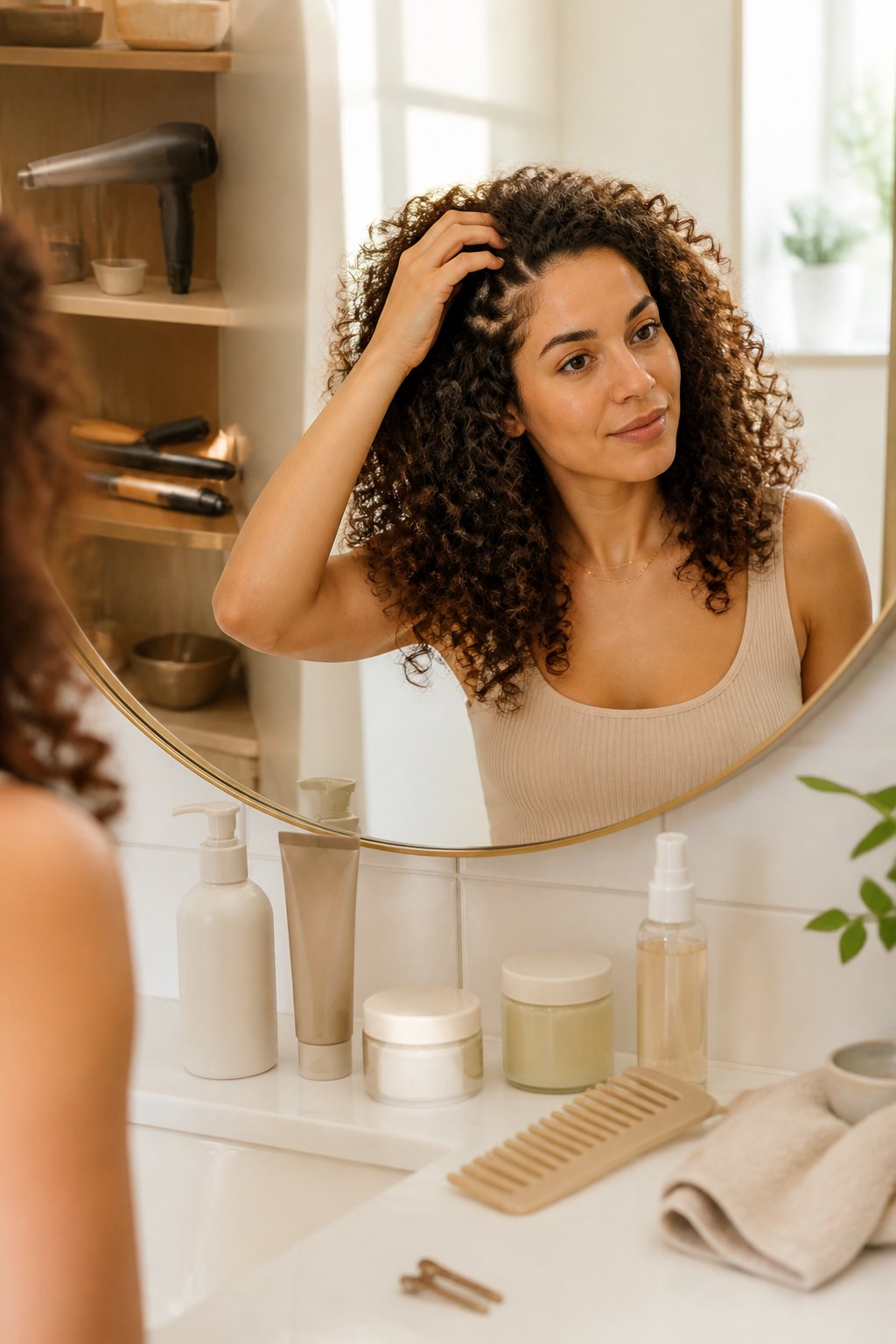
Wash based on your scalp’s needs rather than a fixed schedule. If your scalp stays comfortable, you may wash every few days. Frequent washing can remove too much natural oil, while infrequent washing can allow buildup that makes curls dull and limp.
Choose gentle cleansers and use clarifying shampoo only when you notice heavy buildup from oils, gels, or creams. After clarifying, follow with conditioner or a deep conditioning treatment. Brands such as Curlsmith offer products for different curl needs, but check the ingredients and choose what suits your hair.
Limit flat irons, curling irons, bleaching, and high-heat blow-drying. Use heat protectant when you apply heat, and keep the temperature low or medium. Avoid tight styles that pull on wet curls, since repeated tension can contribute to breakage and weaker-looking curls.
20. When to See a Dermatologist or Curl Specialist
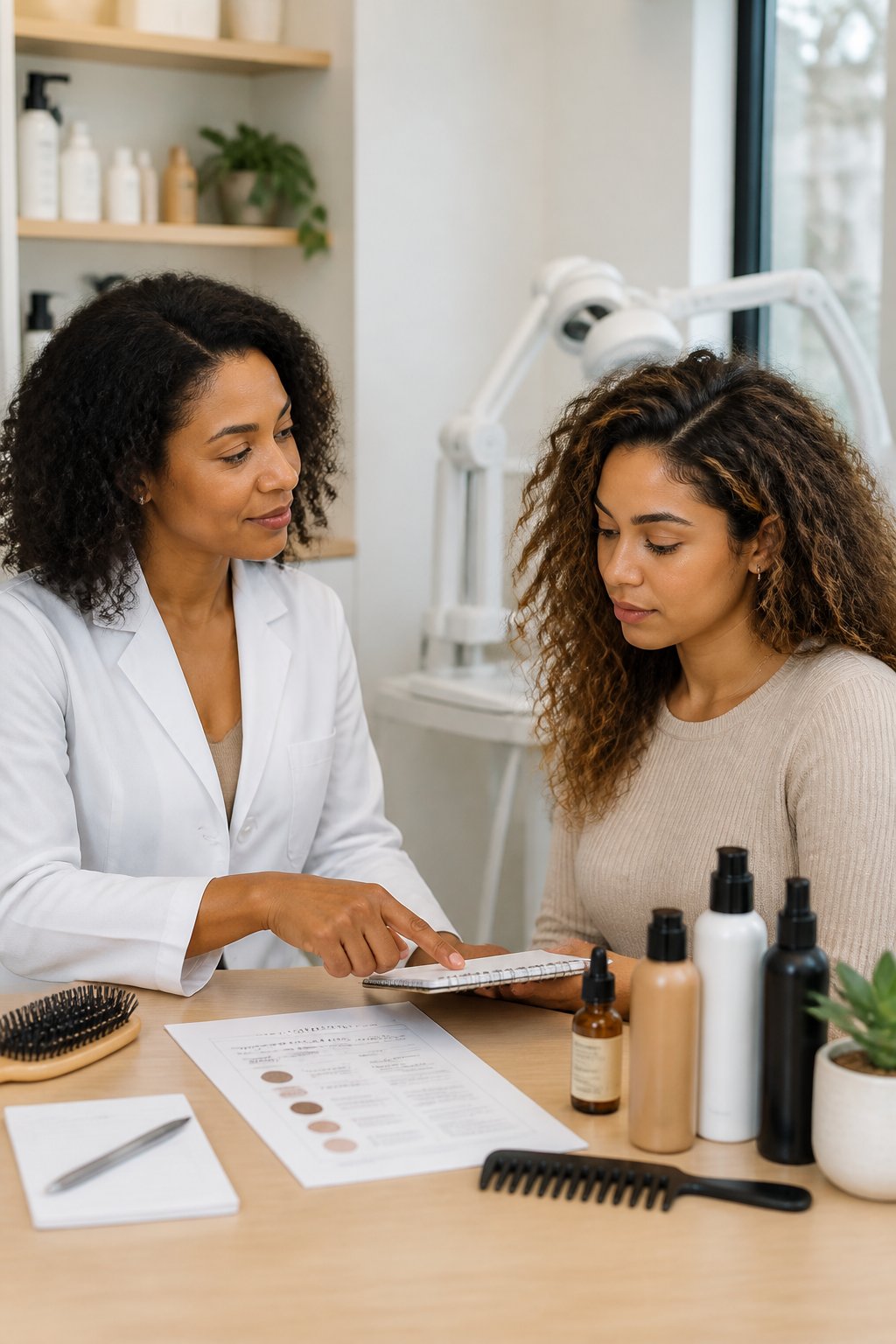
See a dermatologist if dryness continues despite gentle care, or if you have itching, redness, scaling, sores, pain, or sudden hair loss. These signs may point to a scalp condition rather than a simple moisture problem. A dermatologist can check for issues such as eczema, psoriasis, or contact irritation.
Book a curl specialist if you cannot identify why your curls remain frizzy, tangled, or uneven. Choose someone experienced with curly textures and ask for a consultation before cutting or applying chemical treatments. Bring a list of products and describe your washing, drying, and styling routine.
Seek help after damage from bleach, relaxers, or repeated heat if your hair snaps easily or develops many split ends. A professional can suggest a safer trim, moisture plan, and styling routine to support healthier curls.
Frequently Asked Questions
How can I hydrate dry, frizzy curly hair naturally?
Start with a gentle wash and apply conditioner while your hair is soaking wet. Use your fingers or a wide-tooth comb to distribute it from the mid-lengths to the ends, then rinse with cool or lukewarm water.
Apply a small amount of water-based leave-in conditioner to damp hair. Seal in moisture with a light styling cream or gel if needed. Avoid brushing dry curls, using rough towels, and applying frequent heat, as these habits can increase frizz and dryness.
What is the best beginner routine for healthy curly hair?
Wash your scalp with a gentle, moisturizing shampoo about once or twice a week. Adjust the schedule if your scalp becomes oily, itchy, or coated with buildup.
Condition after every wash, detangle from the ends upward, and rinse well. Apply leave-in conditioner to wet hair, followed by a curl cream or gel. Scrunch with a cotton T-shirt or microfiber towel, and avoid touching your curls frequently while they dry.
Should I air-dry curly hair or use a diffuser?
Both methods can work. Air-drying uses no heat, but your hair stays wet longer, which may flatten the roots or cause curls to lose shape.
A diffuser can dry curls faster when used with low heat and low airflow. Move it gently between sections and stop when your hair is about 80-90% dry, then allow it to finish air-drying. Apply a heat protectant before diffusing.
How often should I wash curly hair to prevent dryness?
Many people with curly hair do well washing once or twice a week. Your ideal schedule depends on scalp oil, exercise, sweat, product use, and flaking.
Wash sooner if your scalp feels itchy, oily, or coated with buildup. If your hair feels rough after washing, use a gentler shampoo, focus it on the scalp, and condition the lengths thoroughly.
Which products help curly hair stay moisturized without feeling greasy?
Choose products with water or aloe vera near the top of the ingredient list. Lightweight leave-in conditioners, curl milks, and soft-hold gels often provide moisture without weighing curls down.
Use oils and thick butters sparingly, especially on fine hair. Apply products to wet or very damp hair, start with a small amount, and add more only if your curls still feel dry.
What are the best at-home treatments for dry curly hair?
Use a moisturizing deep conditioner once a week or whenever your hair feels rough and brittle. Apply it after shampooing, cover your hair if the label recommends it, and rinse thoroughly.
You can also refresh curls with a water mist and a small amount of leave-in conditioner. Avoid relying on kitchen ingredients such as lemon juice or baking soda, as they can irritate the scalp or make hair feel drier.
