
Fine and thin hair can look flat, oily, or fragile when heavy products and rough handling weigh it down. The right routine keeps your strands clean, lightly conditioned, and protected while creating natural-looking lift.
Use a lightweight shampoo and conditioner, apply conditioner mainly to your ends, and add volume with strategic blow-drying and low-weight styling products. Your hair density, strand size, scalp health, and damage level all affect which techniques work best, so small adjustments can make a noticeable difference.
Key Takeaways
- Choose lightweight hair care products that support volume without buildup.
- Use gentle washing, drying, and styling habits to reduce breakage.
- Adjust your routine to your hair density, strand size, and scalp needs.
Know Your Strand Size, Density, and Damage Risks
Fine hair has a small strand diameter, while thin hair has fewer strands across the scalp. You may have fine hair with normal density, low-density hair with thick strands, or both fine and thin hair; each situation needs a different routine.
Fine Hair Versus Low Hair Density
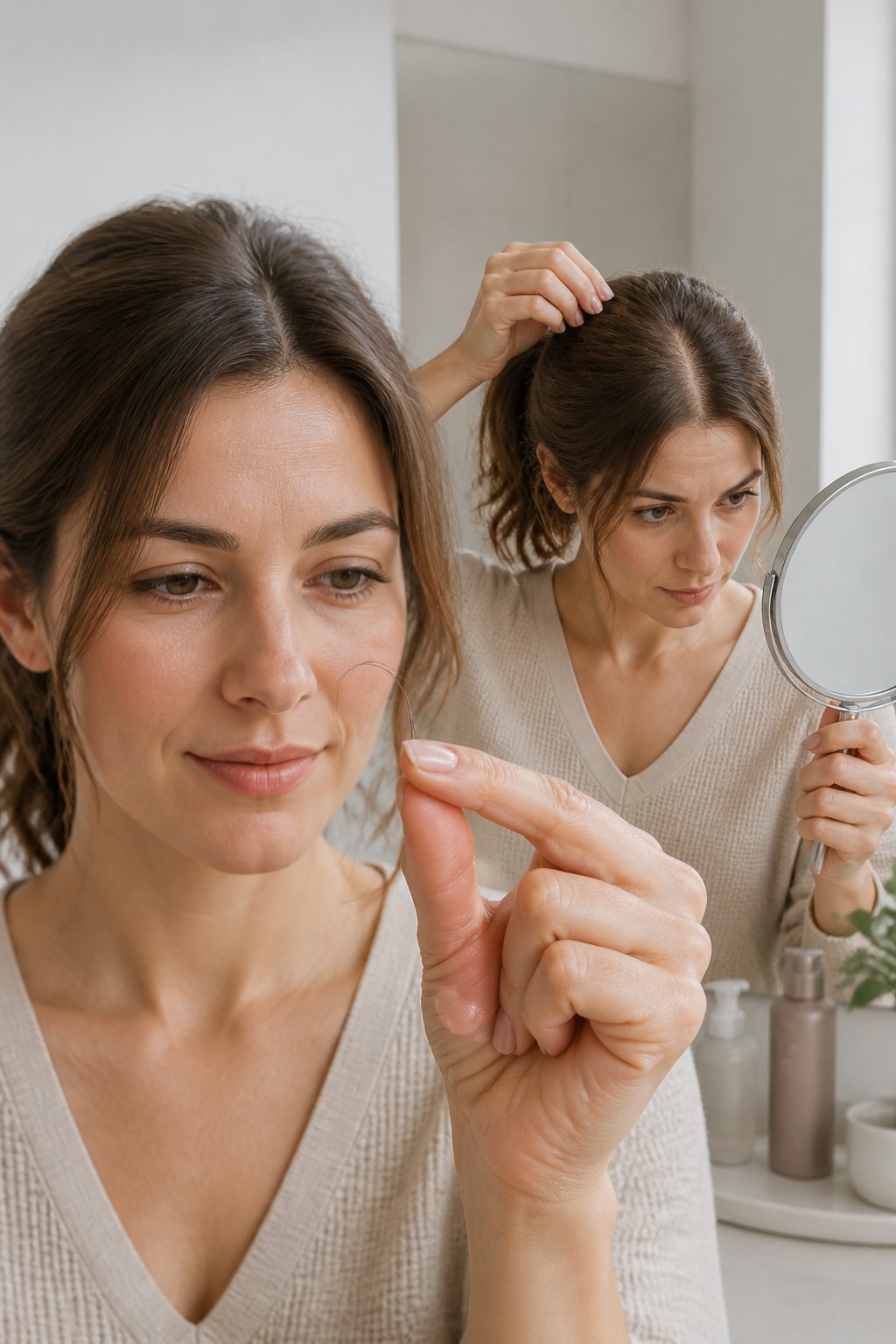
Check strand size by rolling one clean, dry strand between your fingers. If you can barely feel it, your hair is likely fine. A full head of fine hair can still look dense and cover the scalp well.
Check hair density by examining your part and crown in bright, indirect light. Visible scalp, a widening part, or a smaller ponytail can indicate low density, although lighting, wet hair, and tightly pulled styles can create the same appearance. Compare current photos with older ones rather than judging from one day.
Your hair can show both traits. Fine, low-density hair often needs lightweight cleansing, conditioner from mid-lengths to ends, and products that add volume without coating the roots. Avoid assuming that every fine strand signals hair loss.
Why Oil, Frizz, and Flat Roots Appear Faster
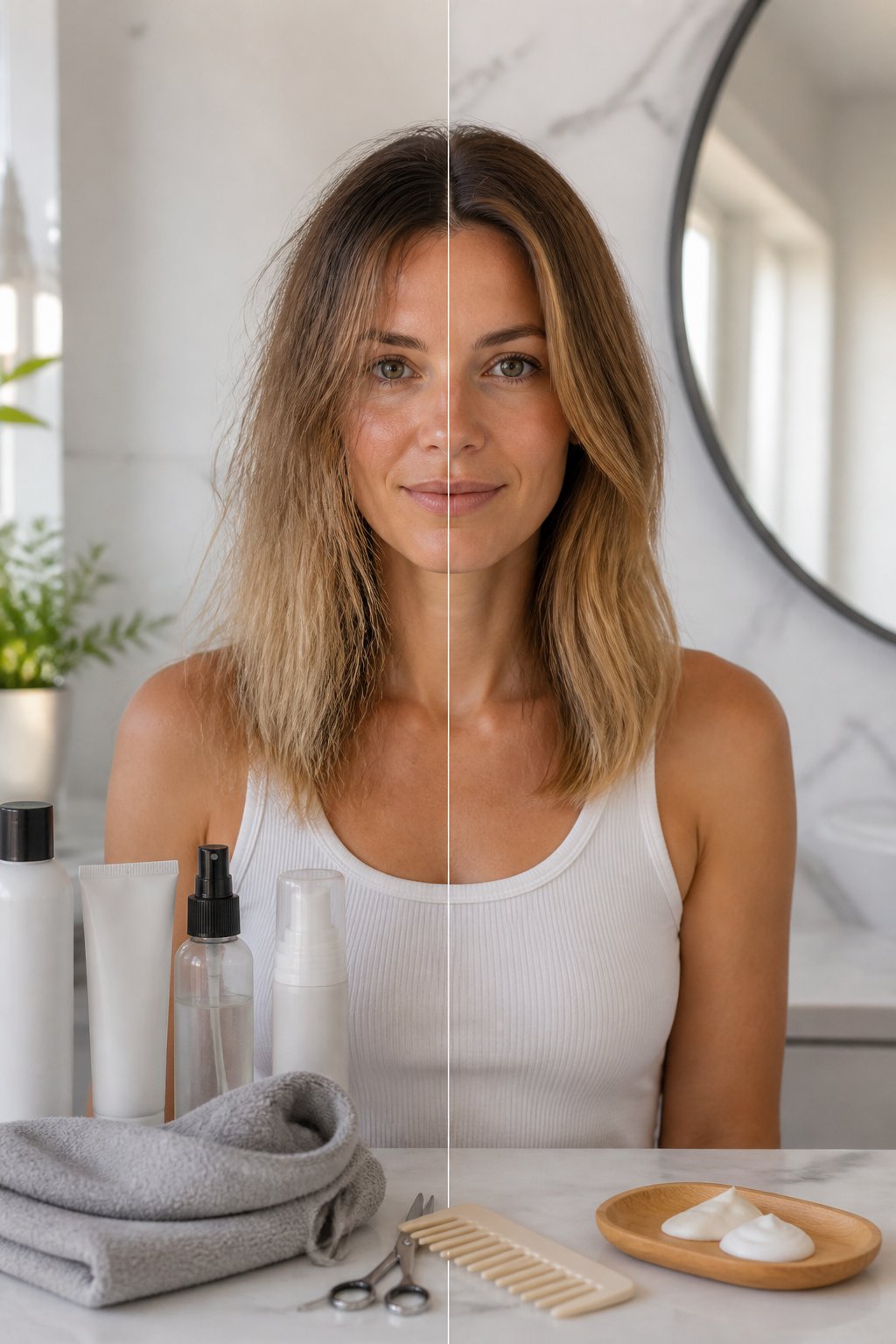
Fine hair has less surface area per strand, so a small amount of oil, sweat, conditioner, or styling residue can make the roots look flat. Apply shampoo mainly to the scalp, rinse thoroughly, and place conditioner only on the lengths and ends. Use dry shampoo sparingly and wash it out after repeated use to reduce buildup and scalp irritation.
Frizz often signals raised or uneven sections of the hair cuticle, especially after chemical processing, friction, or heat. Damaged hair loses moisture more easily and can develop split ends, which make the ends look thinner. Detangle gently from the ends upward, limit high heat, use a heat protectant, and dry with a soft towel instead of rubbing.
Lightweight mousse or a root-lifting spray can add shape without the heaviness of oils, waxes, and dense creams. Regular trims remove split ends but cannot increase hair growth or change your natural strand diameter.
When Thinning Hair or Hair Loss Needs Medical Advice
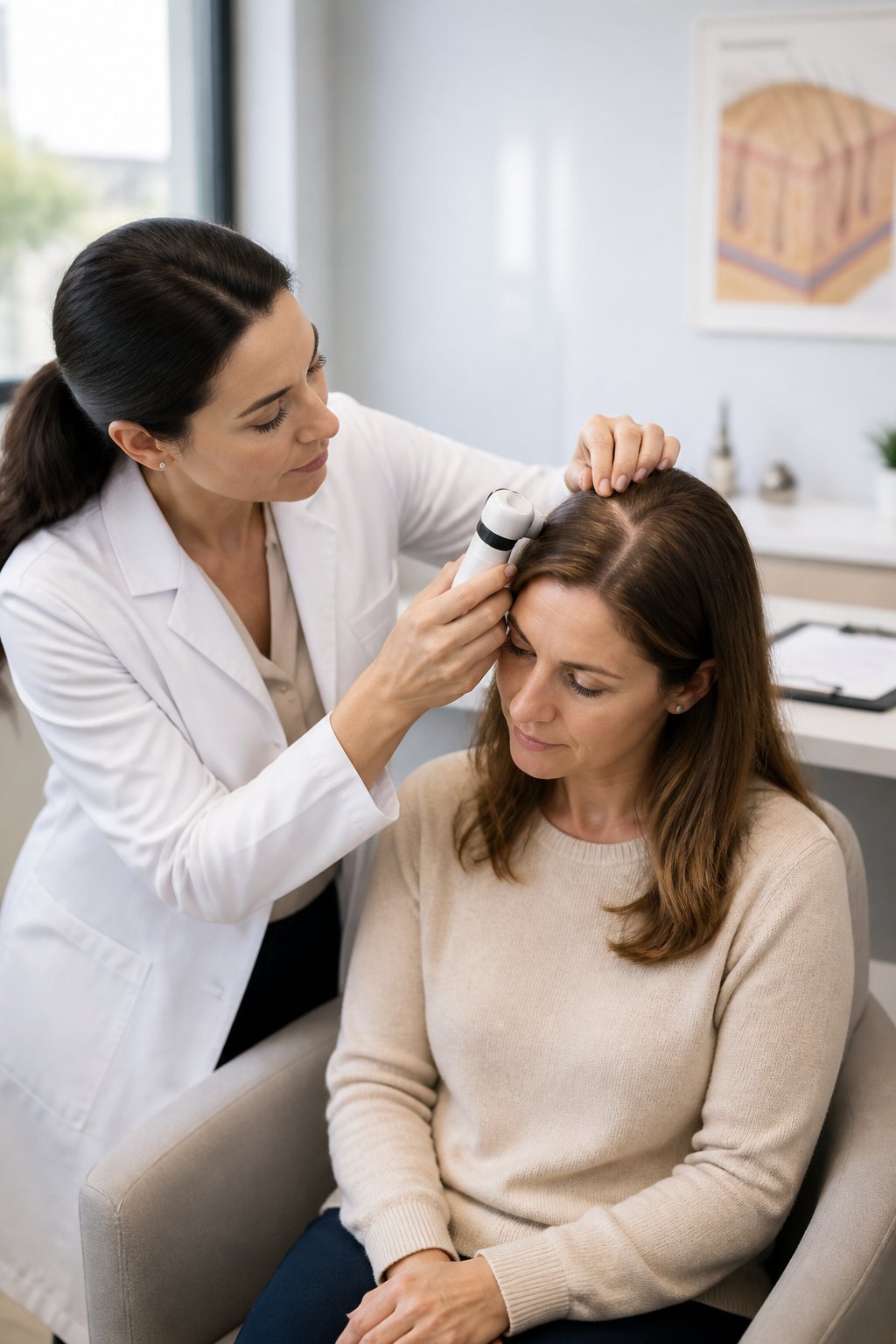
Seek medical advice if you notice sudden shedding, a rapidly widening part, clearly thinner areas, bald patches, scalp pain, intense itching, redness, or scaling. Contact a clinician if hair loss continues for several months, follows an illness or major stress, or affects your eyebrows or body hair.
A normal shedding pattern can change temporarily, but persistent hair thinning may relate to genetics, hormonal changes, medication, thyroid disorders, iron deficiency, nutritional problems, or scalp conditions. A dermatologist can examine your scalp, review your history, and order targeted tests when appropriate.
Avoid relying on supplements or hair-growth products without identifying the cause. Minoxidil can help some forms of hereditary hair loss, but you should discuss its suitability, side effects, and correct use with a healthcare professional.
Build a Lightweight Wash and Conditioning System
Fine strands can become oily at the roots while feeling dry or fragile through the lengths. Use a lightweight cleanser for scalp care, remove buildup periodically, and apply conditioning products only where your hair needs hydration.
Choose a Volumizing Shampoo for Your Scalp
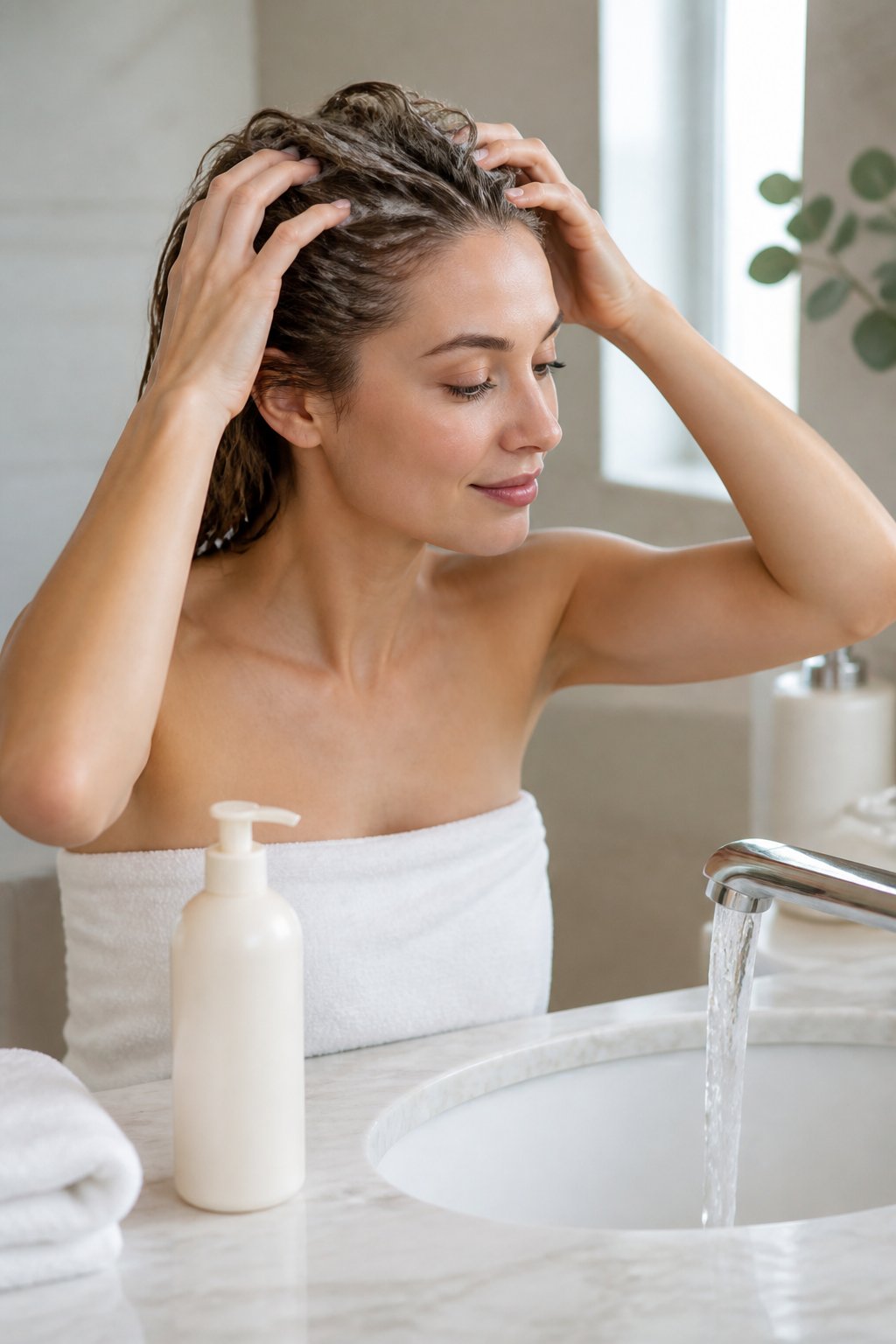
Choose a volumizing shampoo for fine hair that cleans your scalp without leaving a dense coating on the strands. Look for a lightweight cleanser and apply it mainly to your roots, where oil, sweat, and styling residue collect. Massage with your fingertips rather than your nails, then rinse thoroughly.
Your washing frequency depends on oil production, exercise, and styling habits. Many people with fine hair wash every two or three days, but you may need a different schedule. If your scalp feels greasy, itchy, or coated, wash sooner; if your lengths feel dry, reduce shampoo contact with the ends.
Avoid assuming that “volumizing” means harsh. A cleanser that strips too much oil can leave your scalp uncomfortable and make the lengths more prone to tangling and breakage. Use lukewarm water and rinse until your hair feels clean but not squeaky.
Use Clarifying Washes to Remove Product Buildup
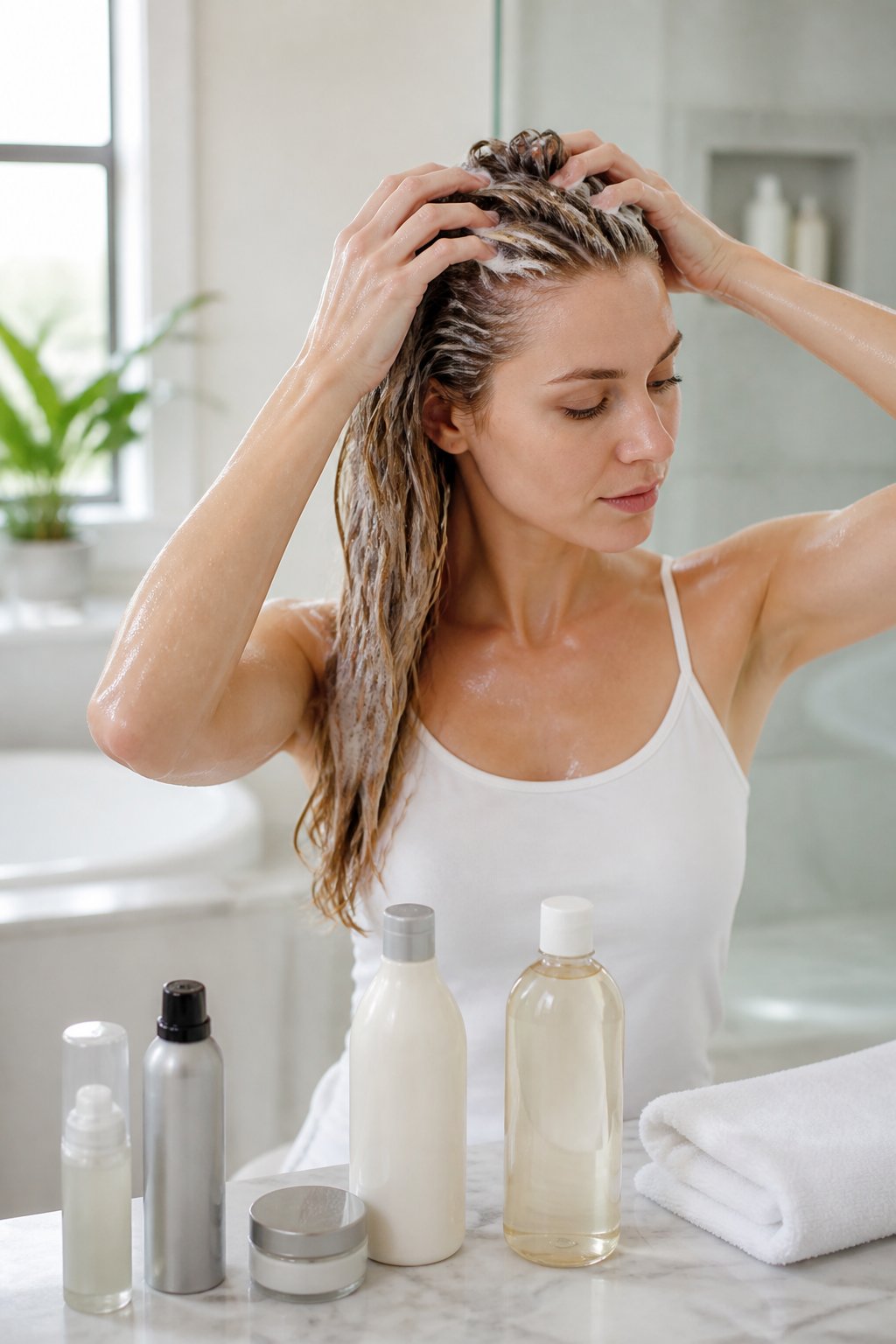
A clarifying shampoo can remove product buildup from mousse, hairspray, dry shampoo, and styling creams. This matters because residue can make fine hair look dull, limp, or greasy even after regular washing. Use a clarifying wash occasionally rather than automatically using it every week.
You may need it more often when you use several styling products, swim regularly, or have hard water. If your hair feels dry or your scalp becomes irritated afterward, reduce use and switch back to a gentle shampoo. Apply the clarifier to the scalp and let the lather move through the lengths as you rinse instead of scrubbing the ends.
Follow with a light conditioning formula when your hair feels rough. Clarifying shampoo does not make hair thicker, and frequent use can remove too much moisture from delicate strands.
Condition Mid-Lengths and Ends Without Flattening Roots
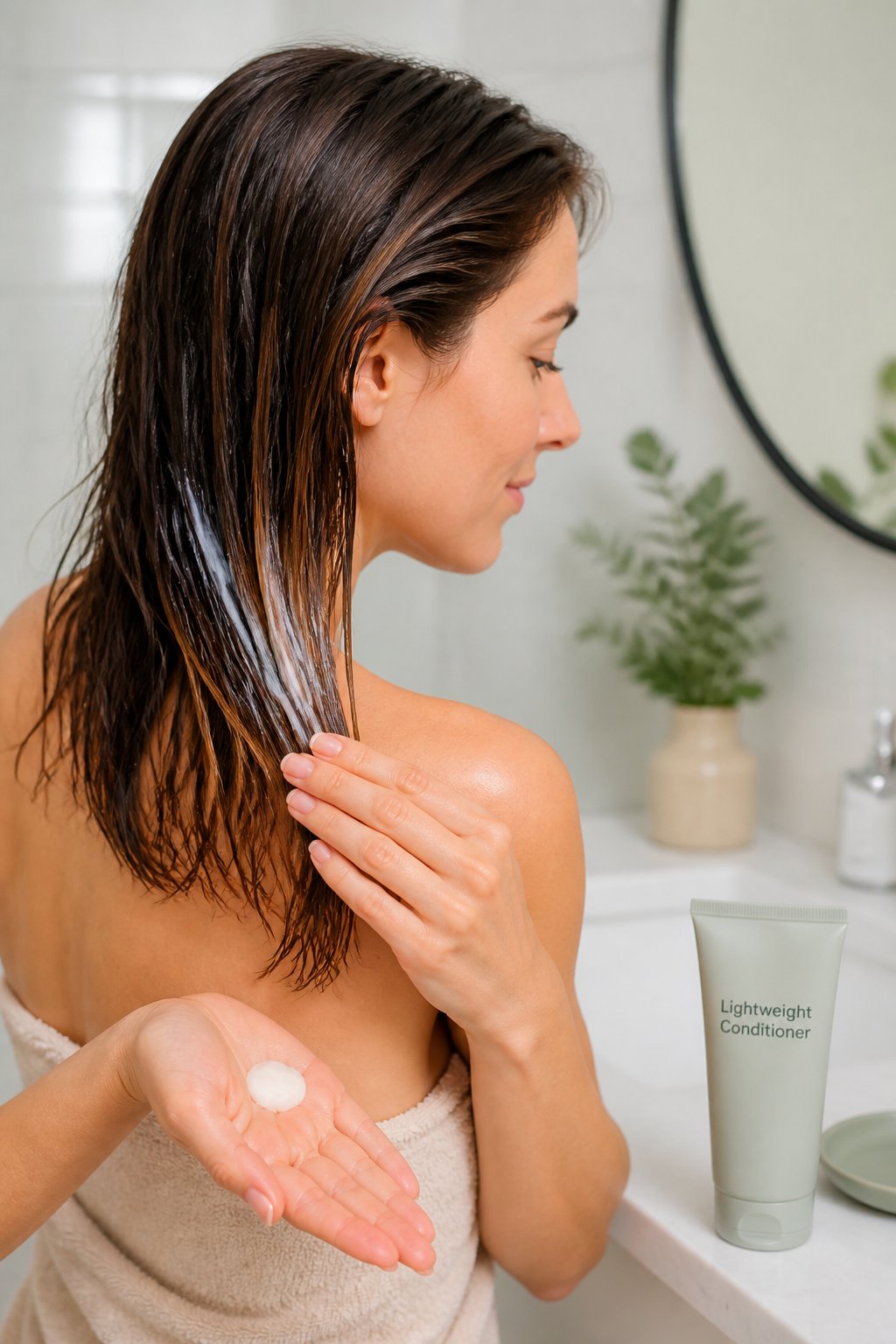
Apply conditioner from the mid-lengths to the ends, leaving the scalp and roots mostly free of product. Fine hair often needs hydration to reduce tangling and breakage, but heavy formulas can make it appear flat soon after washing.
Choose a rinse-out conditioner labeled lightweight, volumizing, or suitable for fine hair. Start with a small amount—about the size of a pea for short hair or a small coin for longer hair—and add more only if the ends remain rough. Leave it on for the time stated on the label, then rinse thoroughly.
Use a lightweight leave-in conditioner only on dry or tangled areas. Avoid layering it with heavy oils, coconut oil, or shea butter unless your hair tolerates them well; these ingredients can weigh down fine strands or create buildup when used heavily.
Refresh Between Washes With Dry Shampoo
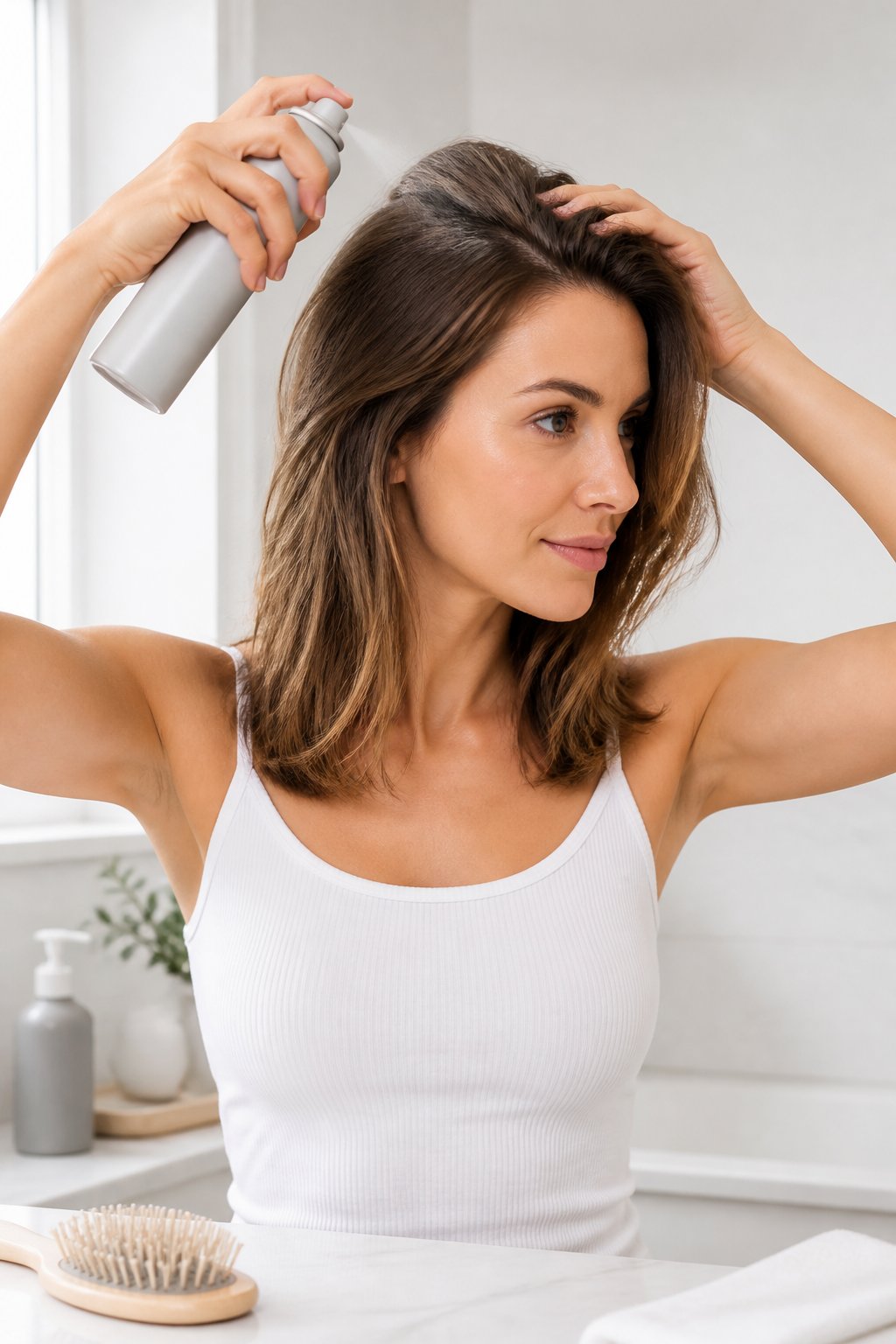
Use dry shampoo on dry roots to absorb excess oil and extend the time between washes. Apply a small amount at the scalp, wait one or two minutes, then massage or brush it through. This allows the powder or spray to absorb oil instead of sitting visibly on the surface.
For added lift, apply dry shampoo before your roots become very greasy. Use it sparingly around the hairline and part, where excess product can cause irritation or a dull, powdery finish. Do not treat it as a substitute for cleansing.
Wash your hair after repeated dry-shampoo applications—usually after one to three uses, depending on the product and your scalp. Regular cleansing removes residue and supports comfortable scalp care.
Create Lift With Strategic Styling and Drying
Fine strands gain visible fullness when you place lightweight products at the roots, dry them in the right direction, and use controlled heat. Choose formulas that add volume without leaving heavy oils, waxes, or thick coatings behind.
Apply Volumizers at the Roots
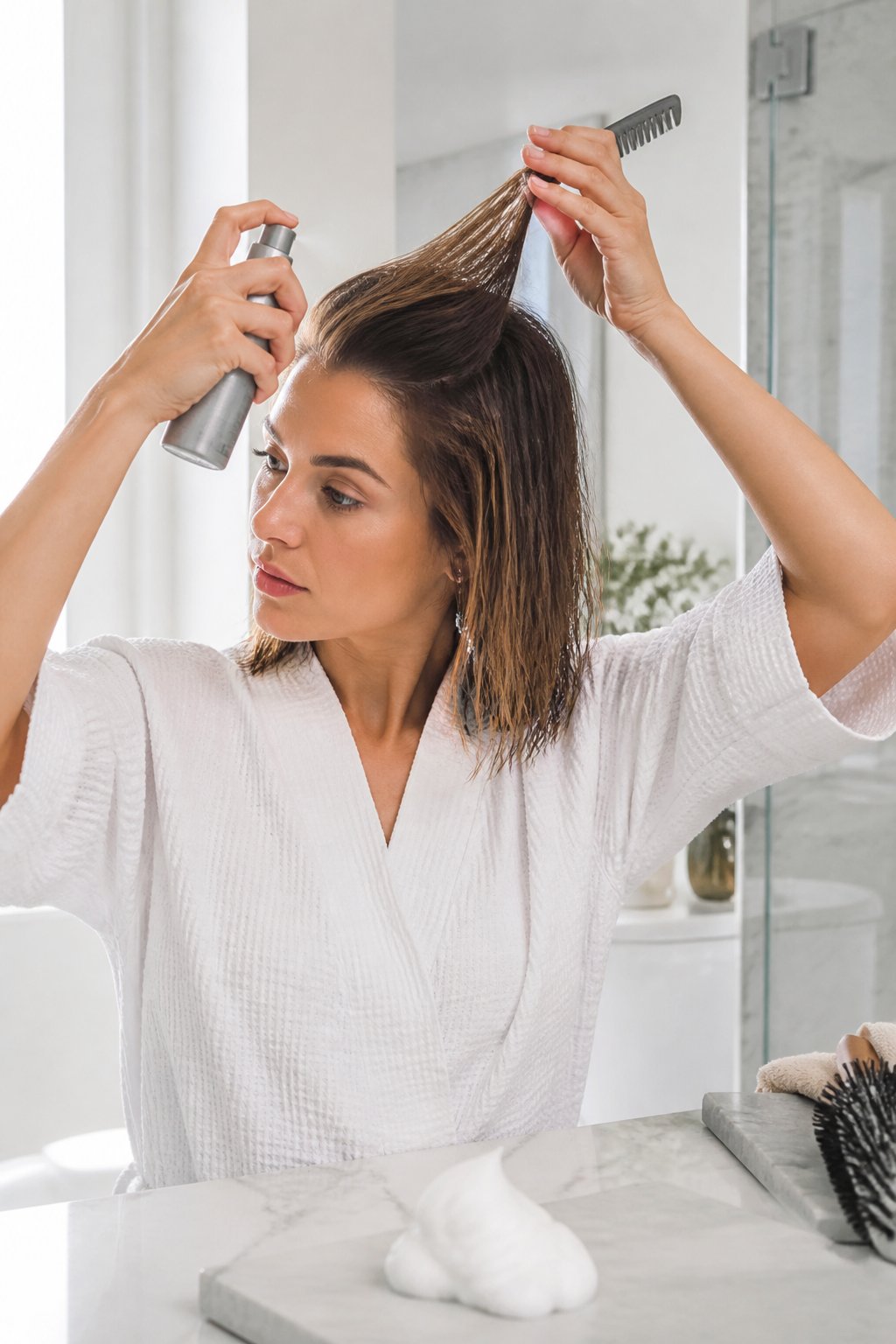
Start with towel-dried hair and remove excess water gently. Apply a volumizing mousse or lightweight volume spray directly to the roots, then distribute the remaining product through the mid-lengths with a comb or your fingers. Avoid applying rich creams, oils, or heavy leave-in products near the scalp, because they can flatten fine hair.
Use less product than you think you need. A golf-ball-sized amount of mousse usually suits shoulder-length hair, while shorter hair may need only a small palmful. If you use a root-lift spray, divide your hair into sections and spray underneath each section rather than coating only the surface.
Let the product sit for a minute before drying. This gives the styling polymers time to spread evenly and reduces the risk of stiff, concentrated patches.
Blow-Dry for Lasting Root Lift
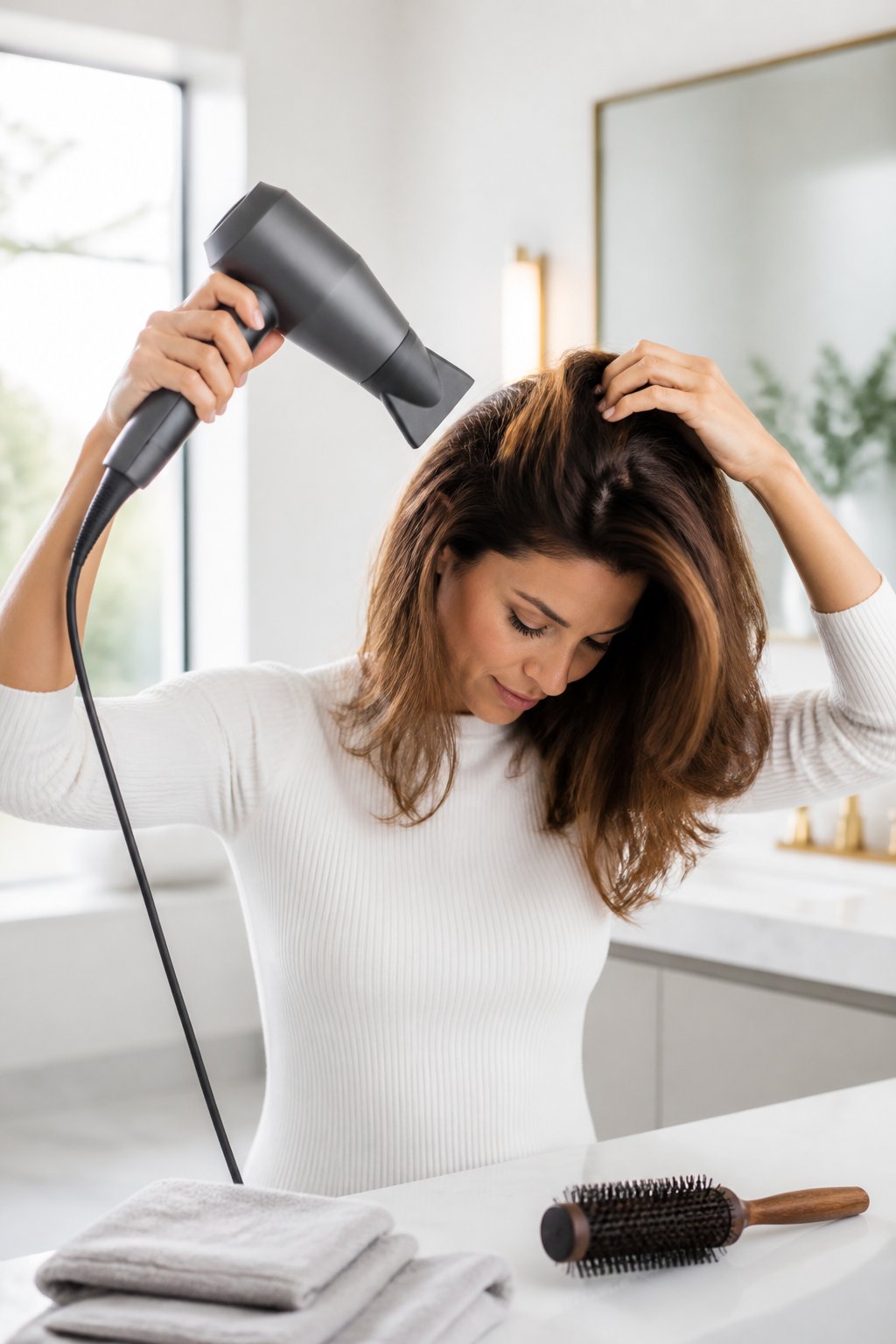
Blot your hair with a microfiber towel, then let it air-dry until it is about 75% dry. Wet hair stretches more easily, so reducing moisture before brushing can help limit pulling and breakage.
Begin by lifting the roots with your fingers while directing the dryer’s airflow toward them. For extra root lift, dry the opposite side of your part first, then move your hair back into place after it cools. You can also blow-dry with your head tilted forward, but finish with the airflow directed downward to smooth the cuticle and improve shine.
Use a round brush only when your hair is mostly dry. Choose a diameter that matches the shape you want, keep sections moderate rather than thick, and allow each lifted section to cool around the brush before releasing it.
Choose Flexible Hold and Texture Products
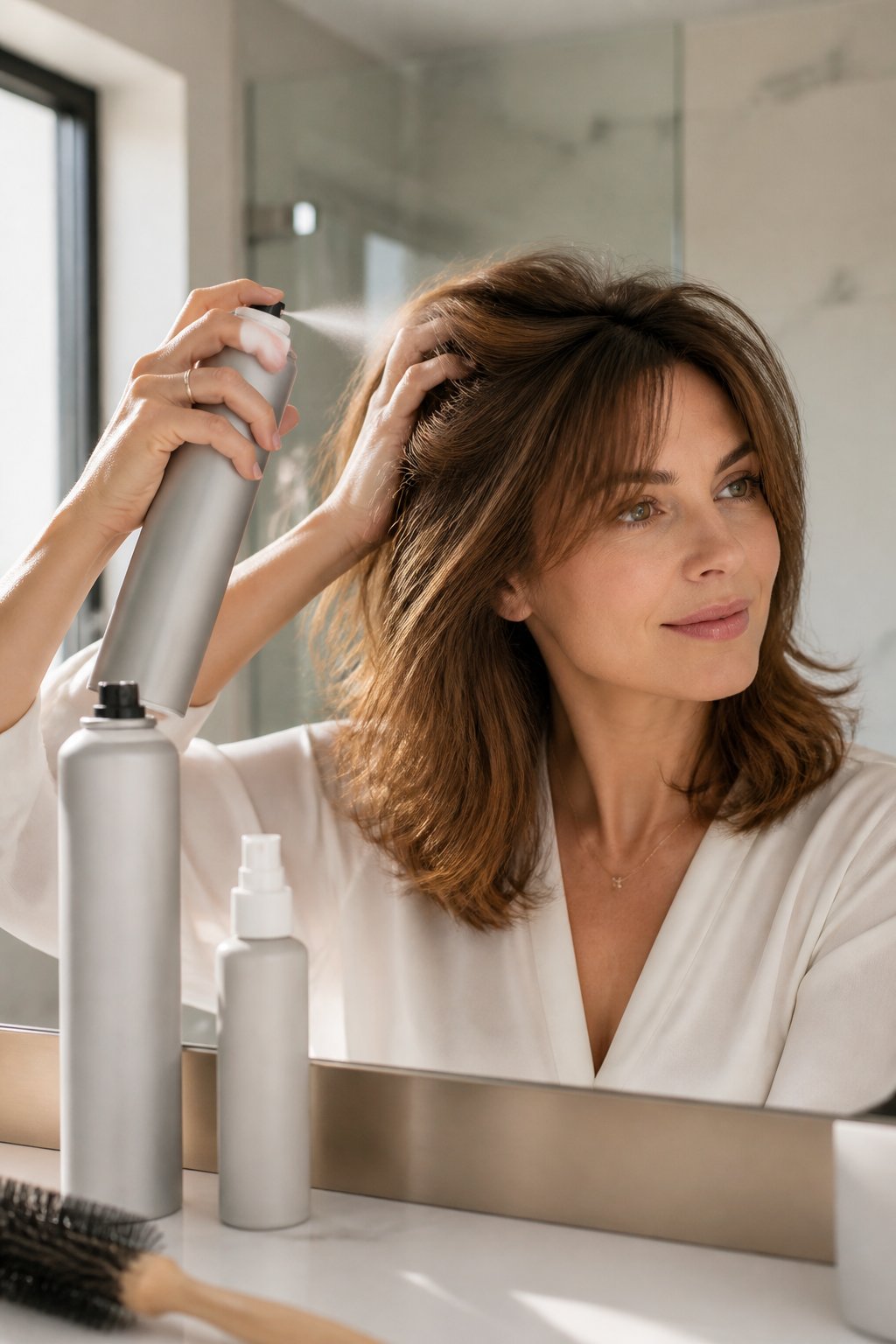
Select hairspray and texture products that create movement instead of a hard shell. Formulas containing flexible polymers can help hold volume while allowing your hair to bend and move. Apply hairspray in short bursts beneath the top layers, focusing on the roots and areas that collapse first.
A lightweight texture spray can add grip and separation, especially after a blow-dry. Spray it sparingly through the mid-lengths and ends, then lift sections with your fingers. Avoid repeatedly layering dry shampoo, texture spray, and hairspray without washing, since combined residue can make fine hair dull, rough, and flat.
For a softer finish, brush through the hair after the hairspray dries. Stop adding product once your hair feels coated or loses shine.
Protect Fine Strands During Heat Styling
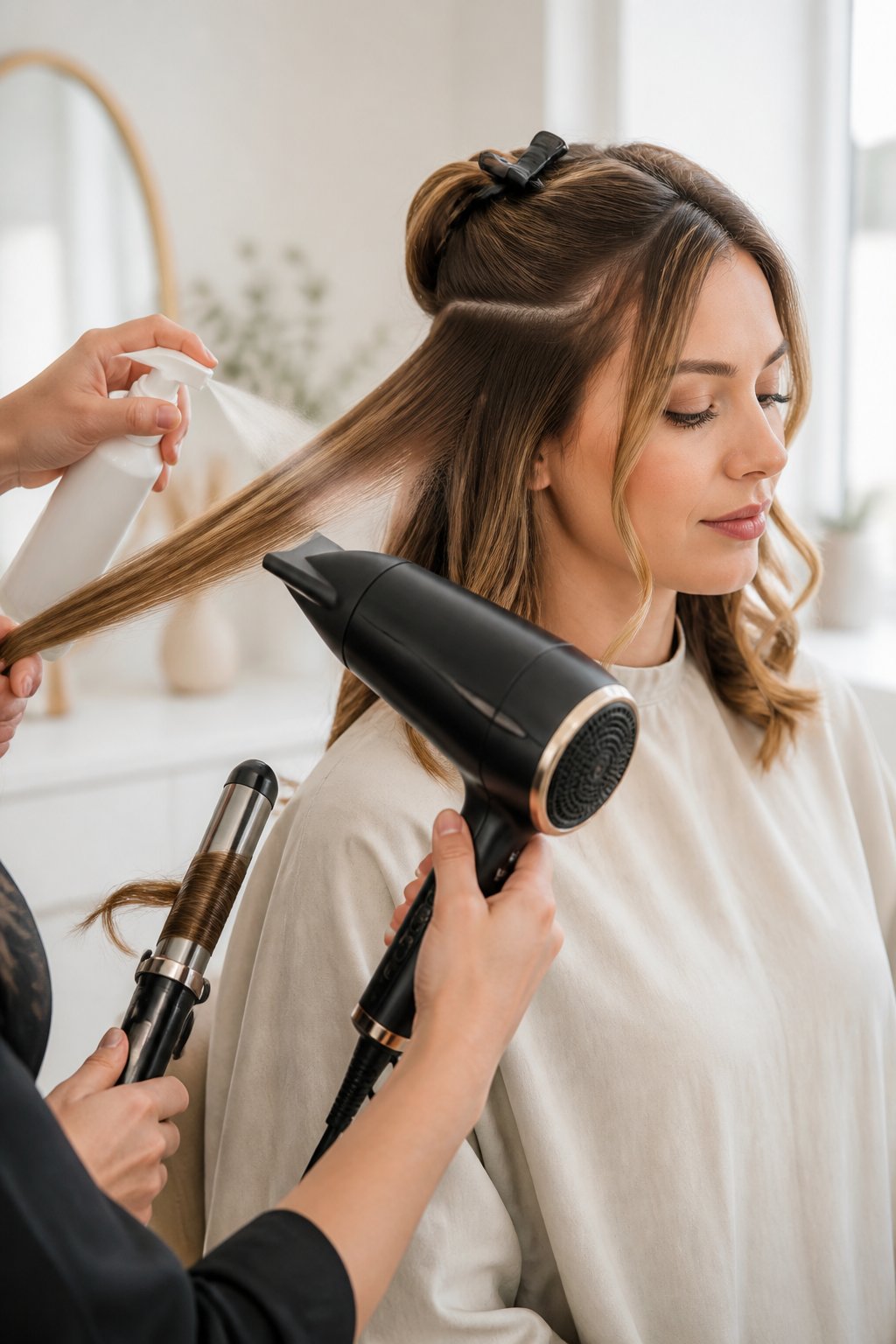
Apply a heat protectant to damp or dry hair according to the product directions before using a dryer, iron, or curling iron. Work in sections so the product reaches the strands that will contact the tool, but avoid saturating the roots with a heavy formula.
Use the lowest temperature that shapes your hair effectively. Fine hair often responds to moderate heat, and holding an iron in place for too long can cause more damage than using a slightly higher setting briefly. Keep the dryer moving, use a nozzle to control airflow, and maintain a small gap between the nozzle and your hair.
For curls, wrap smaller sections around the curling iron for a short time, then let them cool before brushing. Heat protectants reduce heat-related stress but cannot eliminate heat damage, so limit hot-tool sessions and use rollers or overnight styling when practical.
Support Scalp Health and Stronger-Looking Lengths
Fine strands benefit from a clean, calm scalp and carefully targeted conditioning. Choose treatments for a specific concern, keep strengthening products lightweight, and reduce friction whenever your hair is wet or tangled.
Use Scalp Treatments Only When They Match Your Needs
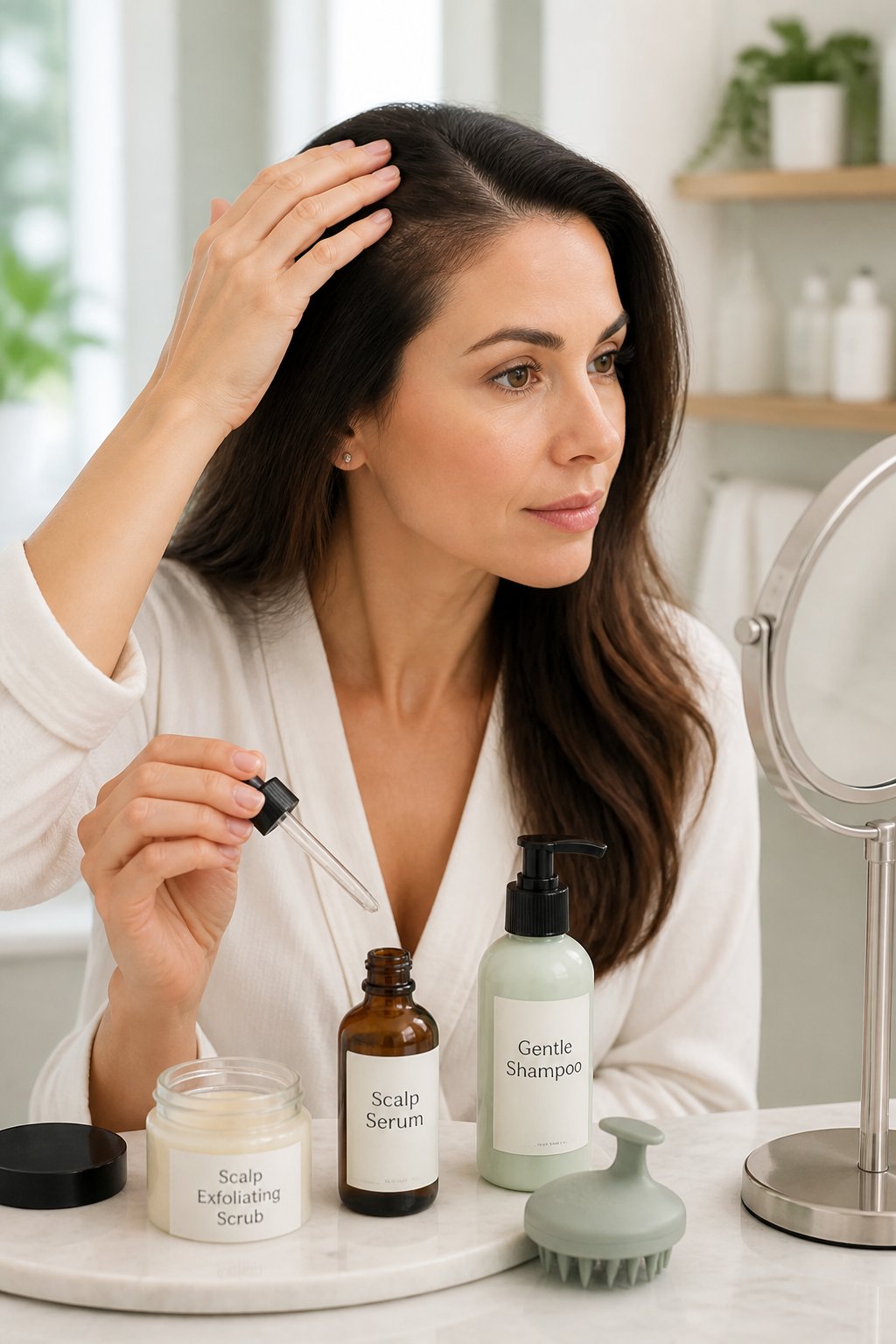
Start by identifying the problem: oiliness, flakes, irritation, or visible thinning require different approaches. A gentle scalp exfoliator or scrub can remove product residue and dead skin, but use it occasionally and avoid scrubbing hard. Stop if it causes burning, persistent redness, or increased sensitivity.
For pattern hair loss, topical minoxidil has stronger clinical support than cosmetic scalp serums. Caffeine, peptides, biomimetic peptides, red clover extract, and pea sprout extract appear in products marketed for thinning, but evidence and formulations vary. A scalp serum containing these ingredients may support a healthier-feeling scalp, but it cannot replace medical evaluation for sudden, patchy, or rapidly progressing loss.
Add Targeted Bond and Moisture Care
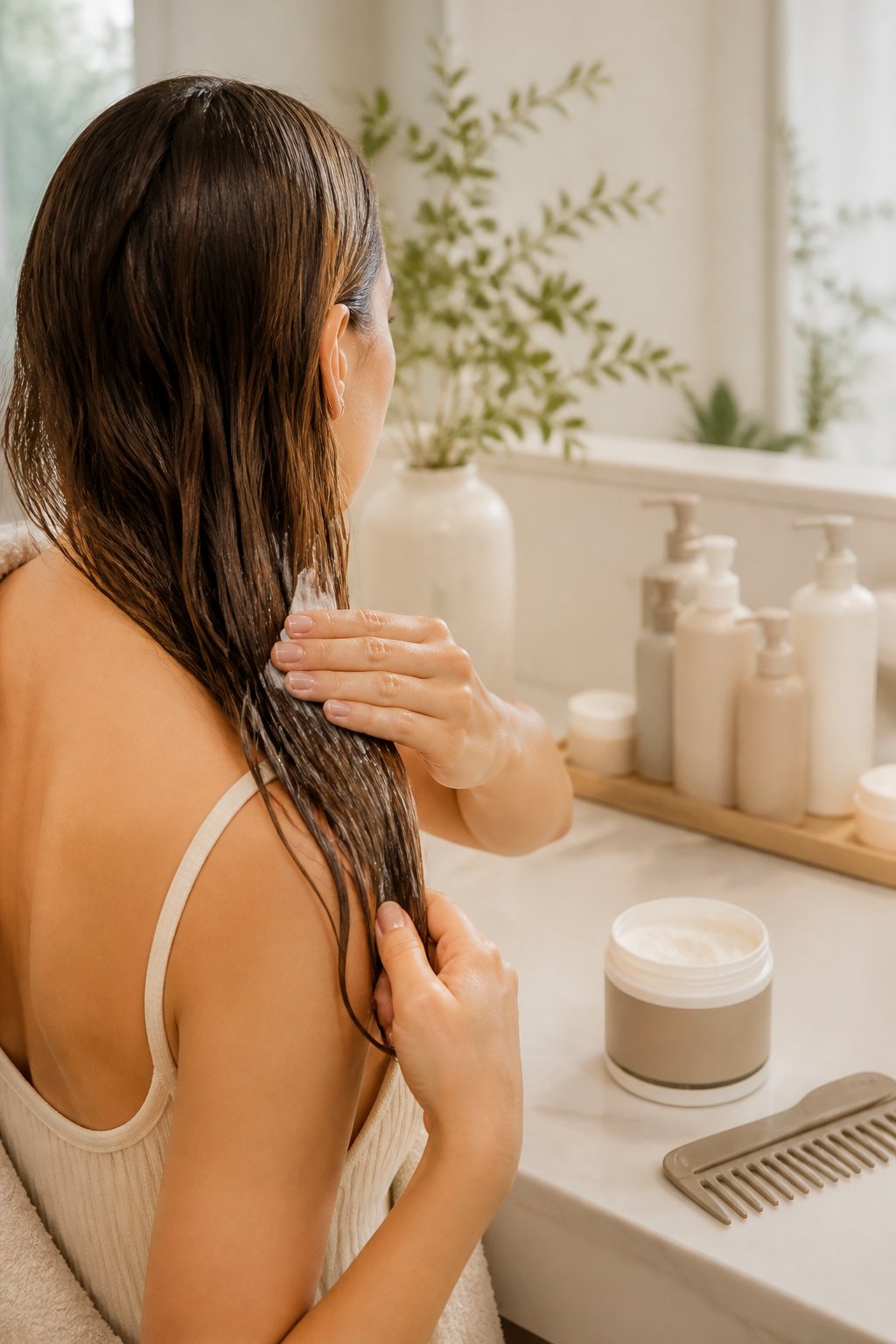
Use a deep conditioning mask when your lengths feel rough, dry, or difficult to detangle—usually once weekly rather than at every wash. Look for lightweight humectants such as glycerin, amino acids, or low molecular weight hyaluronic acid, which can improve softness without leaving as much residue as heavy creams.
Bond-building products such as Olaplex or K18 may help hair that has suffered chemical or heat damage, but they do not increase follicle density. Protein and hydrolysed keratin can temporarily improve strength and reduce the feel of porosity; excessive use may leave fine hair stiff or brittle. Alternate strengthening care with moisture, and apply masks mainly from the mid-lengths to the ends.
Select Lightweight Oils and Serums Carefully
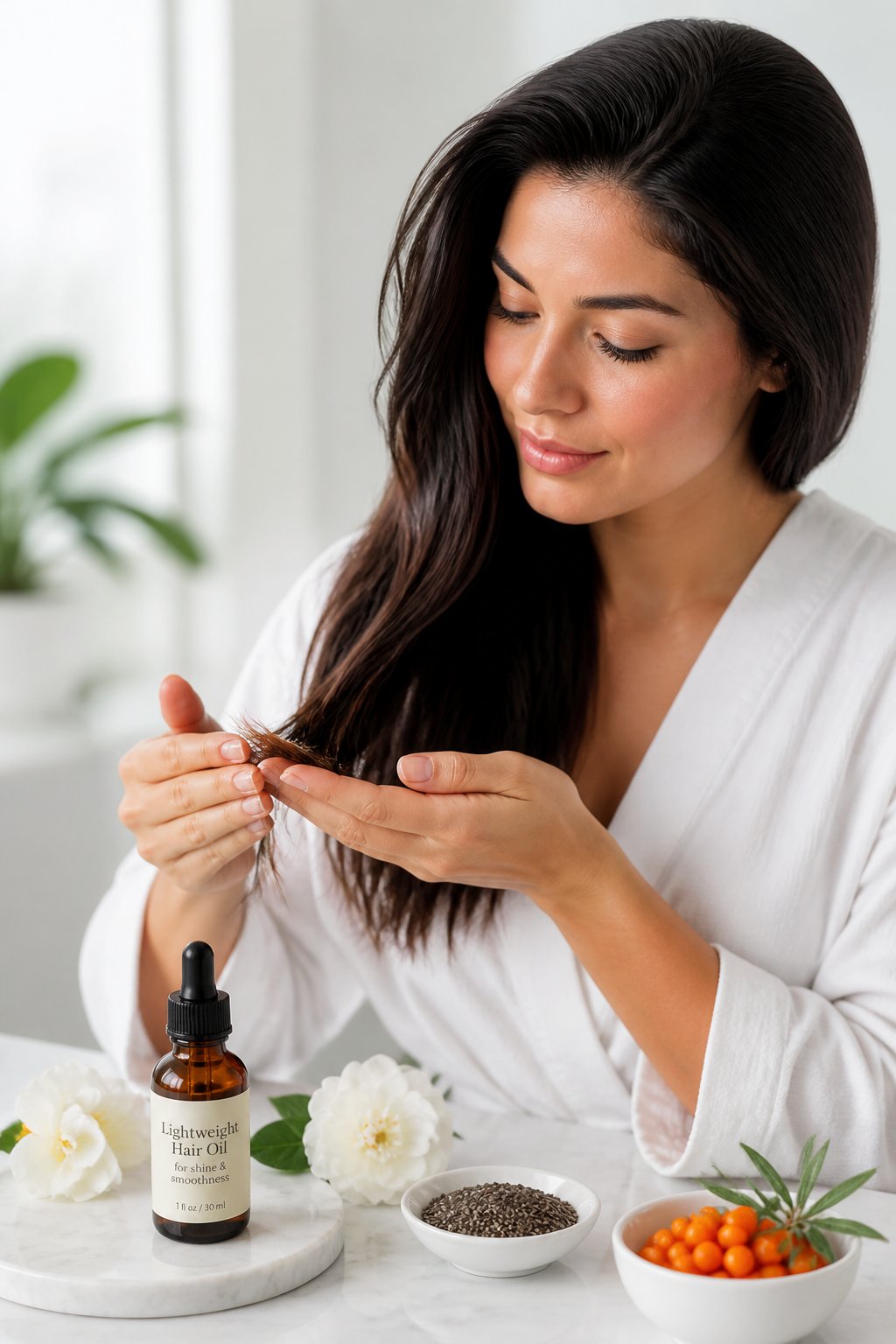
Choose a hair oil for fine hair with a light texture and use only one or two drops on damp or dry ends. French camellia, chia seed, and sea buckthorn oils can add slip and shine, while castor oil feels much heavier and may flatten roots or create buildup. Keep oils away from the scalp unless a clinician has recommended them for a specific condition.
A lightweight shine oil or silicone-based serum can reduce surface friction and make ends look smoother without changing hair density. Apply it between your palms first, then press it over the last few inches of hair. Avoid layering oil over dry shampoo, styling powder, or scalp exfoliator residue, because the combination can leave fine hair limp and difficult to cleanse.
Handle Wet Hair Gently to Limit Breakage
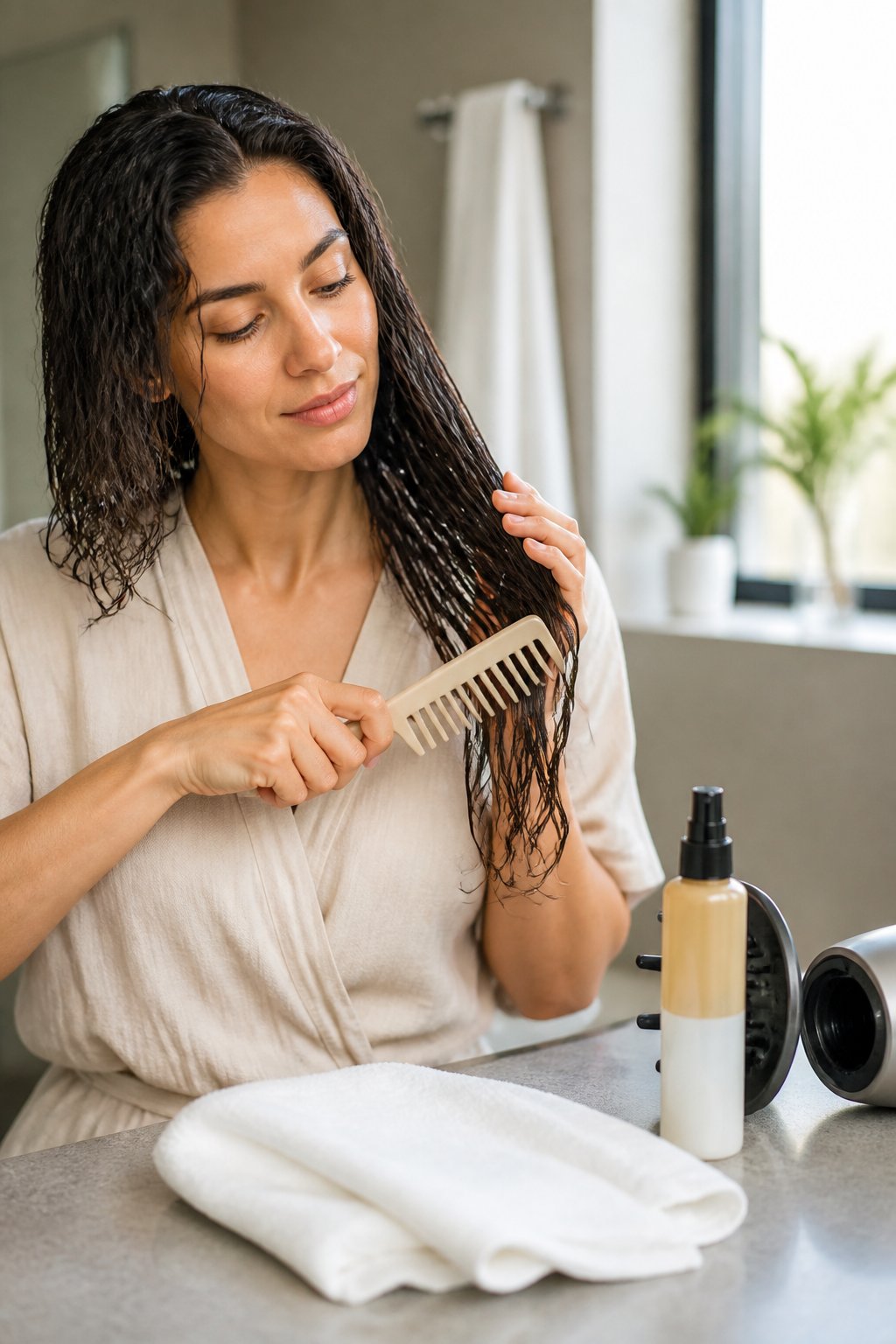
Wet hair stretches more easily, so remove excess water by pressing your hair in a microfiber towel or soft T-shirt instead of rubbing it. Apply a lightweight detangler, then separate knots with your fingers before using a wide-tooth comb. Work from the ends upward while supporting the section near your roots.
Let your hair become partly dry before brushing or using a blow-dryer, and keep heat at a moderate setting with a heat protectant. Avoid tight ponytails, rough elastic bands, and sleeping with wet hair, since repeated pulling and friction can increase breakage. Detangle before styling, but do not force a comb through a resistant knot.
Maintain Results With Low-Damage Habits
Small adjustments help your fine hair routine preserve length, reduce breakage, and maintain volume. Regular trims, gentle detangling, low-tension accessories, and timely product changes can prevent damaged hair from becoming harder to manage.
Schedule Regular Trims and Gentle Detangling
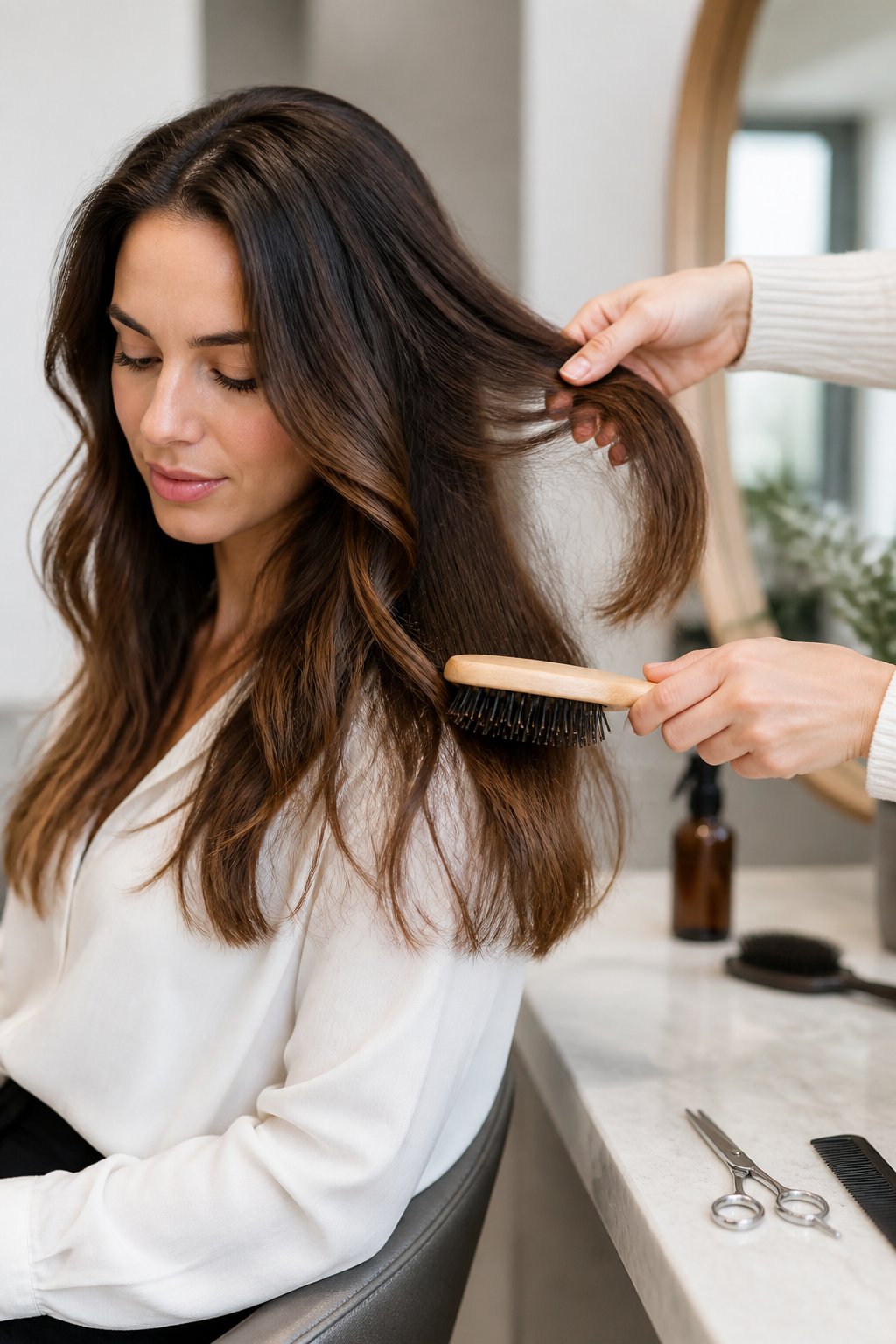
Book regular trims about every six to eight weeks, or sooner if your ends split quickly. Trimming cannot increase hair growth, but it removes split ends before they travel farther up the shaft and make the hair appear thinner.
Detangle when your hair is partly dry rather than soaking wet, when strands stretch more easily. Start at the ends and work upward in short sections. Hold the hair above the section you are brushing to reduce pulling at the roots.
Choose a brush with flexible bristles, such as a soft boar bristle brush or a gentle detangling brush. A brush such as La Bonne Brosse may suit you if it glides through your hair without snagging, but the design matters less than using light pressure and stopping when you meet resistance.
Reduce Tension From Tools and Accessories
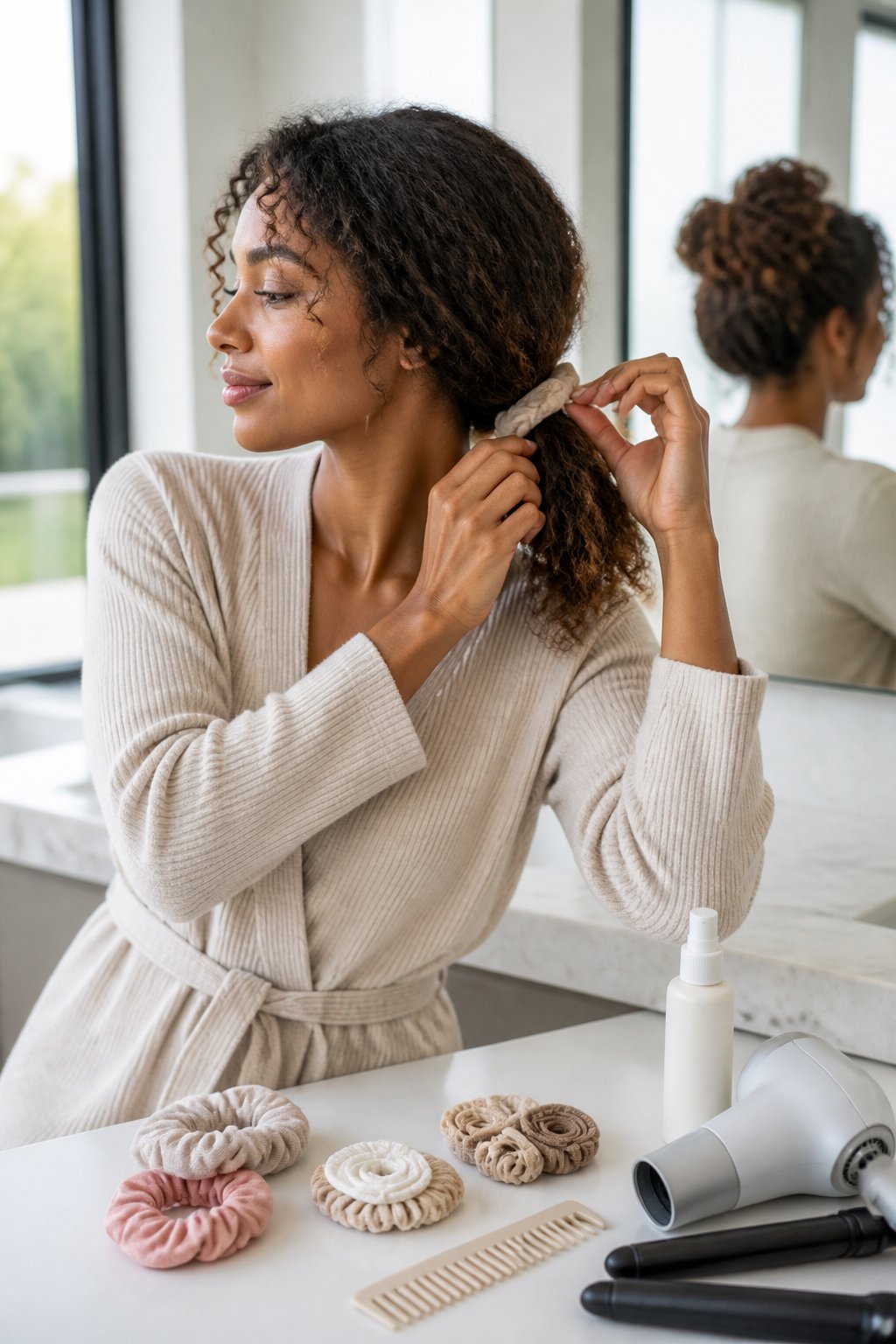
Repeated tension can cause breakage around the hairline and crown. Wear loose ponytails, buns, and braids, and rotate their placement instead of securing your hair in the same spot each day.
Choose smooth silk hair ties or fabric-covered elastics without exposed metal. Remove them by loosening the hair first rather than pulling the tie through knots. Avoid sleeping with tightly secured styles, especially when your hair feels fragile.
Limit heat styling to the lowest effective temperature and apply heat protectant before using a dryer, iron, or curler. Air-dry your hair until it is mostly dry, then finish briefly with the dryer to reduce heat damage. Rollers can provide shape without exposing your strands to direct heat.
Adjust Your Routine When Hair Feels Limp or Brittle
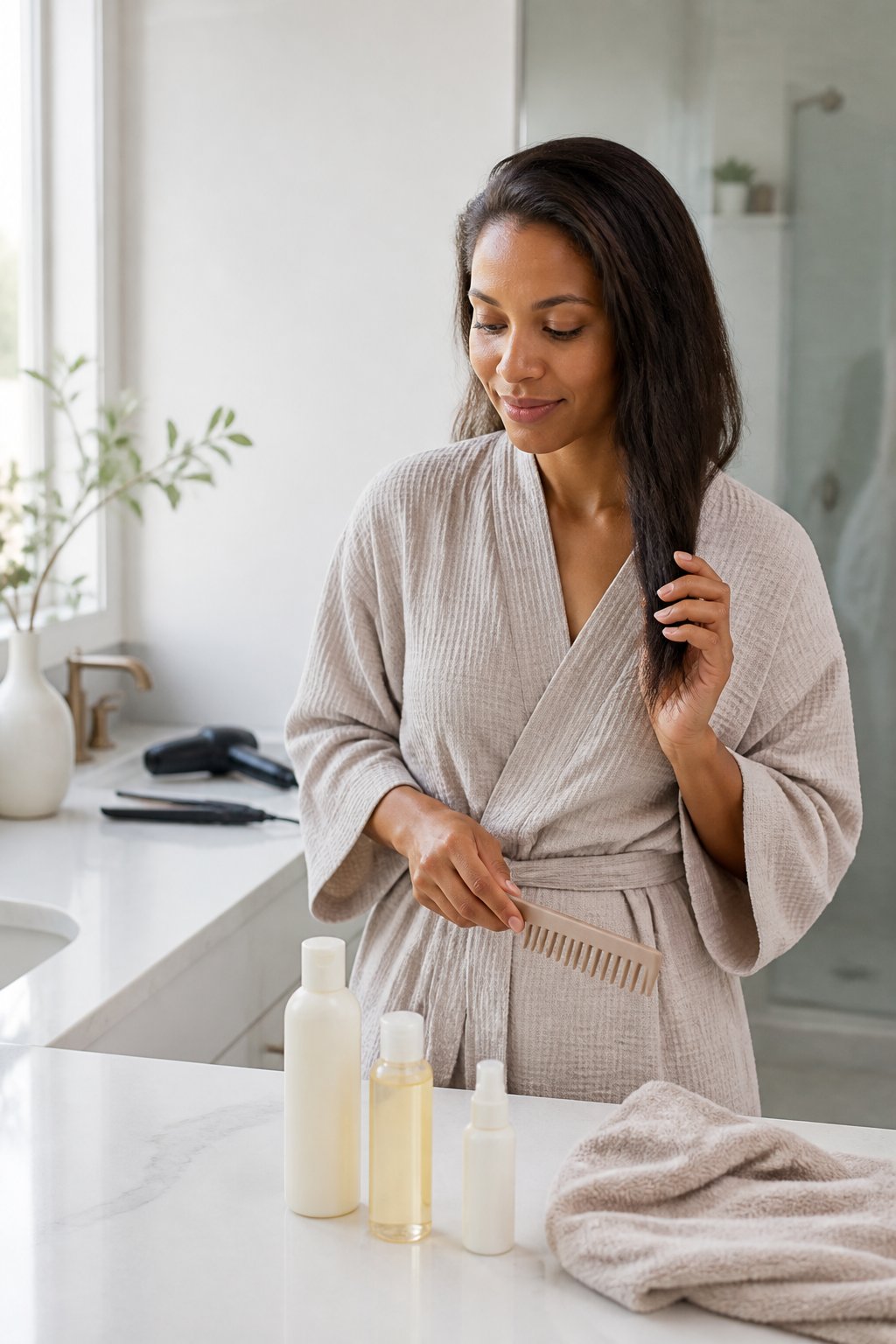
Limp hair often signals excess product, oil, or conditioner near the roots. Apply conditioner from the mid-lengths to the ends, use a lightweight formula, and clarify occasionally when buildup makes your hair flat. Avoid layering oils, waxes, heavy creams, and multiple protein products.
Brittle hair needs less friction and heat, not simply more styling product. Reduce hot tools, use a gentle shampoo, and add a light conditioner or leave-in treatment to the ends. If a protein treatment makes your hair stiff, stop using it and restore moisture gradually.
Biotin supplements do not reliably improve hair growth when you are not deficient. If you notice sudden shedding, widening parts, or persistent thinning, consult a healthcare professional rather than relying on cosmetic changes alone.
Frequently Asked Questions
Fine, thin hair benefits from lightweight cleansing, limited product buildup, gentle handling, and root-focused styling. Your routine should add moisture to the lengths while keeping heavy formulas away from the scalp.
What is the best daily routine for fine, thin hair?
Start by detangling gently with a flexible-bristle brush, working from the ends upward. Avoid pulling wet hair, which stretches more easily and can break.
Apply a lightweight leave-in conditioner or detangler from the mid-lengths to the ends if needed. Keep oils, creams, and rich conditioners away from your roots unless a dermatologist recommends a specific scalp treatment.
Let your hair air-dry until it is mostly dry before using a blow-dryer. Apply heat protectant, then dry the roots with a low or medium setting while lifting them with your fingers or a round brush.
Which products help fine hair look fuller without weighing it down?
Choose a volumizing shampoo, lightweight conditioner, root-lifting spray, or mousse. Look for water-based formulas and apply conditioner only from the mid-lengths to the ends.
Dry shampoo can absorb oil and provide temporary texture on non-wash days. Remove it after one to three uses in a row to reduce buildup and possible scalp irritation.
Avoid applying heavy oils, waxes, pomades, thick creams, and frequent protein treatments unless your stylist or dermatologist recommends them. These products can coat fine strands and make them appear flatter.
How often should fine, thin hair be washed and conditioned?
Many people with fine hair wash it two or three times per week, but your schedule should depend on oiliness, exercise, sweat, scalp health, and styling-product use. Wash more often if your scalp feels greasy, itchy, or coated.
Use a clarifying shampoo occasionally, such as once weekly, if you use dry shampoo or styling products regularly. Do not use it more often than needed because excessive cleansing can dry the hair and scalp.
Condition after each shampoo, but use a small amount on the mid-lengths and ends. Fine hair may need more frequent washing if oil accumulates quickly; washing less often does not reliably reduce oil production.
What styling techniques create volume for thin hair?
Apply mousse or root-lifting spray to damp roots, then dry your hair with the roots directed upward or against their usual growth pattern. A short cool-air finish can help set the shape.
Use rollers on mostly dry hair for volume with less direct heat. Place each roller at a right angle to the scalp and secure it near the roots.
A deep side part or slightly uneven part can create the appearance of greater density. For hairspray, lift small sections and spray underneath rather than coating the entire top layer.
Can natural treatments make fine hair appear thicker?
Natural treatments cannot permanently increase the diameter or number of hair strands. Scalp massage may feel soothing, but evidence that oils or massage significantly increase hair growth remains limited.
If you use an oil, choose a small amount and patch-test it first. Keep it away from the lengths if it makes your hair greasy, and wash it out thoroughly to prevent buildup.
Rice-water rinses and botanical treatments may temporarily improve texture for some people, but they can also cause dryness or stiffness. Stop using any treatment that causes itching, redness, or increased breakage.
What salon treatments are suitable for fine, thinning hair?
Ask your stylist for a haircut that preserves density, such as blunt or lightly layered ends. Excessive thinning or texturizing can make the perimeter look sparser.
A professional blowout, root-focused styling, or temporary volumizing service can add visible lift without permanently changing the hair. Color techniques such as subtle highlights or lowlights may create visual dimension, but chemical processing can increase dryness and breakage.
If you notice widening part lines, sudden shedding, bald patches, or rapid density loss, schedule a medical evaluation rather than relying on salon treatments. A dermatologist can assess possible causes and discuss evidence-based options such as minoxidil when appropriate.
