
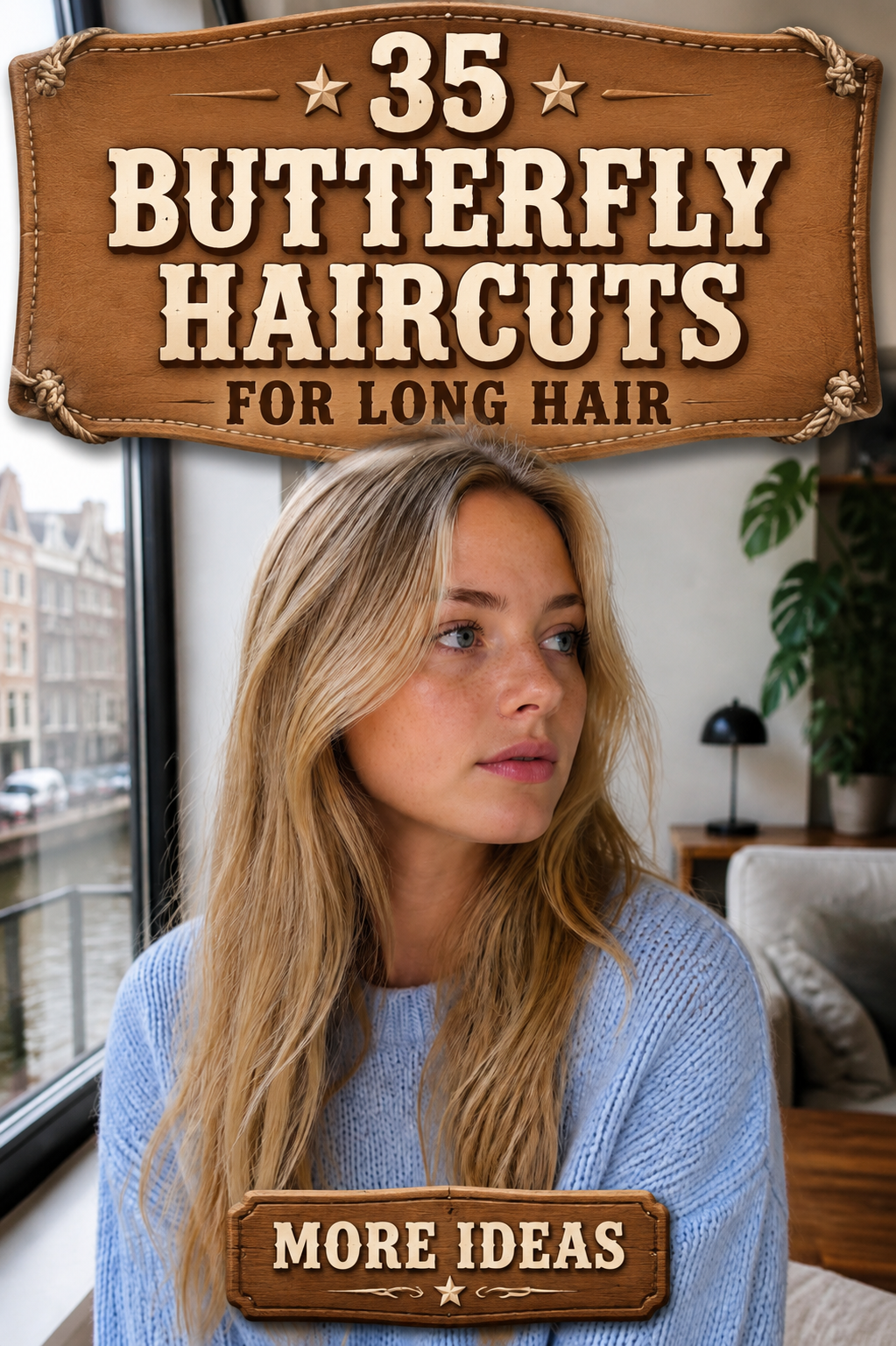
Butterfly haircuts for long hair are a stylish way to add shape and movement without giving up your overall length. The cut combines shorter face-framing pieces with longer cascading layers, creating softness around the face and a lighter, more balanced shape through the ends.
Because the layer placement can be adjusted, this haircut works with straight, wavy, curly, fine, and thick hair. You can keep the effect subtle, add curtain bangs, create extra crown volume, or style the layers into a dramatic blowout.
Below, you’ll find 35 butterfly haircut variations based on texture, face framing, bangs, color, volume, and styling so you can compare different looks and find the version that suits your hair best.
What Is a Butterfly Haircut?
A butterfly haircut is a layered hairstyle that creates the appearance of two different lengths. The shorter layers frame the face and add lift near the top, while the longer layers preserve the overall length.
Unlike a traditional long layered cut, the butterfly haircut places more emphasis on movement around the cheeks, jawline, and crown. This makes the hair look lighter and more dimensional.
The haircut can also create the illusion of shorter hair from the front. When the longest sections are tied back, the face-framing pieces may resemble a bob or shoulder-length haircut.
The final result depends on how the layers are cut and styled. Soft blending creates a natural finish, while stronger contrast produces a more dramatic butterfly effect.
1. Classic Butterfly Haircut
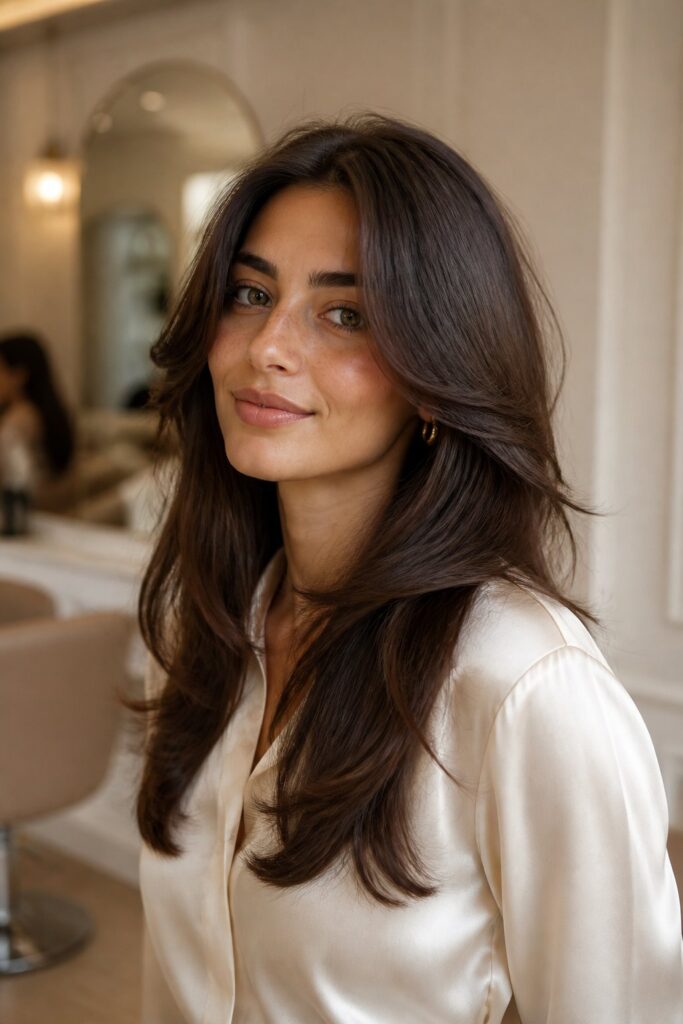
The classic butterfly haircut combines short face-framing layers with long, cascading sections through the back. It creates a balanced shape that feels fresh without sacrificing length.
The shorter pieces usually begin near the cheekbones or chin. These layers open the face and add noticeable movement around the front.
Longer layers continue through the middle lengths and ends. This prevents the hair from looking heavy while keeping the overall silhouette full.
A round-brush blowout is one of the best ways to style this cut. Directing the front sections away from the face enhances the signature butterfly-wing shape.
2. Soft Butterfly Layers
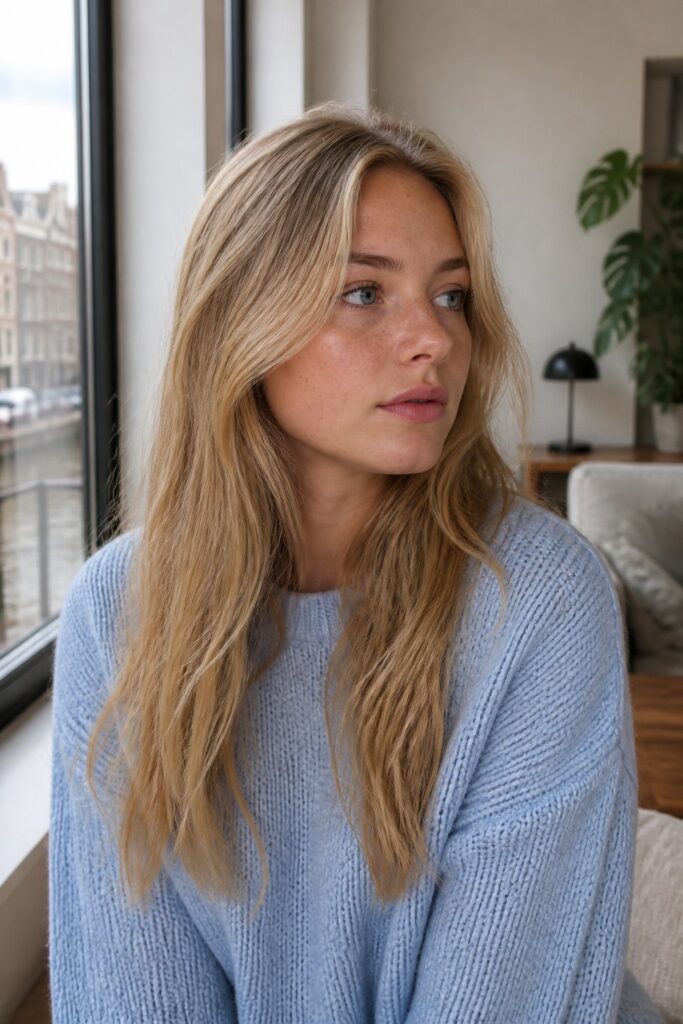
Soft butterfly layers are ideal for anyone who wants a subtle change. The difference between the shortest and longest sections is gentle rather than dramatic.
This version adds shape without making the haircut look heavily layered. It is particularly suitable for people trying layers for the first time.
The soft blending allows the hair to grow out naturally. It also requires less frequent trimming than sharper, more structured butterfly cuts.
A lightweight mousse or volumizing spray can enhance the movement. The haircut also looks attractive when air-dried with a little natural texture.
3. Butterfly Haircut with Curtain Bangs
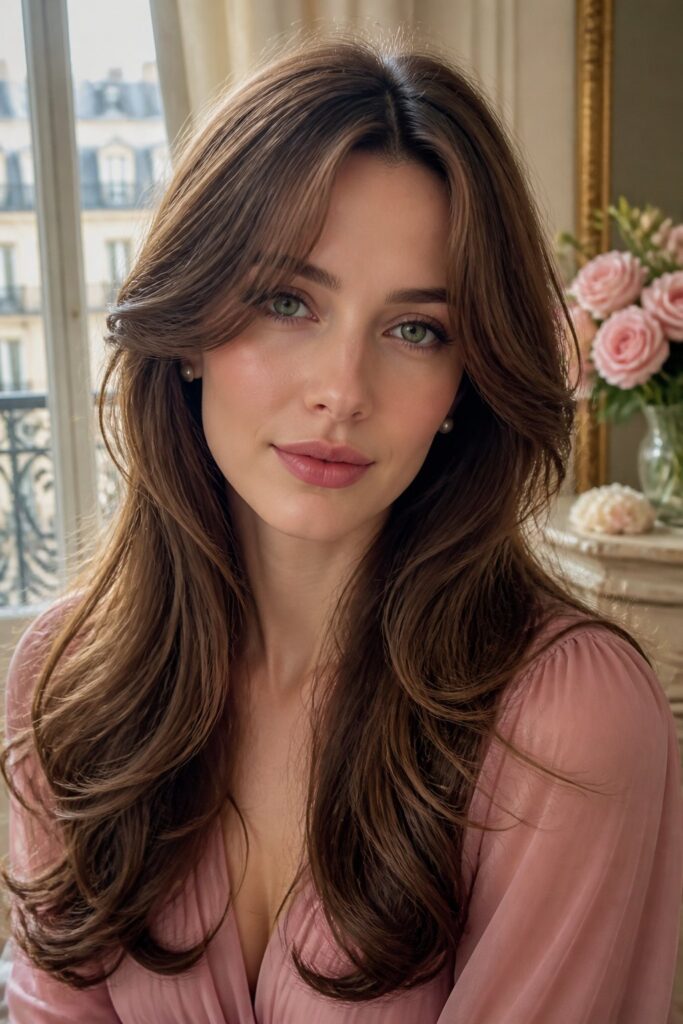
Curtain bangs blend beautifully with a butterfly haircut because both styles sweep away from the face. Together, they create a soft and romantic frame.
The bangs usually part near the center and gradually lengthen toward the cheekbones. They then merge into the shorter butterfly layers.
This style highlights the eyes and cheekbones without covering too much of the face. It can also help soften a longer forehead.
For the best finish, blow-dry the bangs away from the face with a round brush. A gentle outward curve will connect them smoothly to the remaining layers.
4. Voluminous Butterfly Blowout
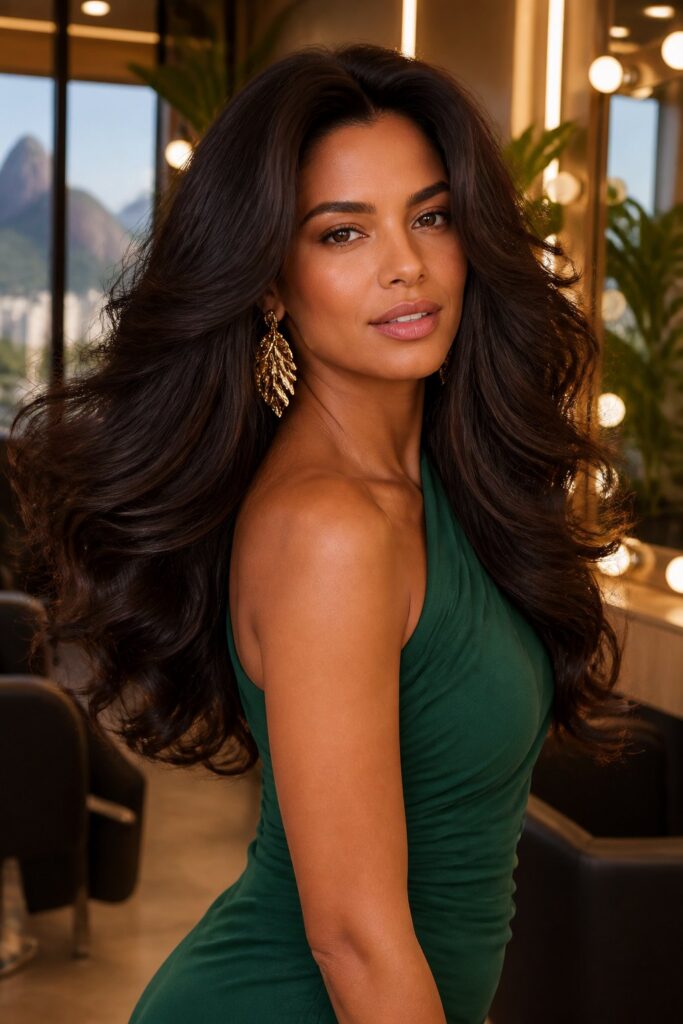
A voluminous butterfly blowout gives the haircut its most dramatic appearance. The roots are lifted, the shorter layers are curved outward, and the ends fall in soft waves.
This style creates fullness around the crown and face. It works especially well on medium-density or thick hair that can hold volume.
Large Velcro rollers can help maintain the shape after blow-drying. Allowing the hair to cool completely before removing them improves longevity.
Finish with a flexible-hold hairspray rather than a stiff formula. The layers should remain soft, touchable, and full of movement.
5. Extra-Long Butterfly Haircut
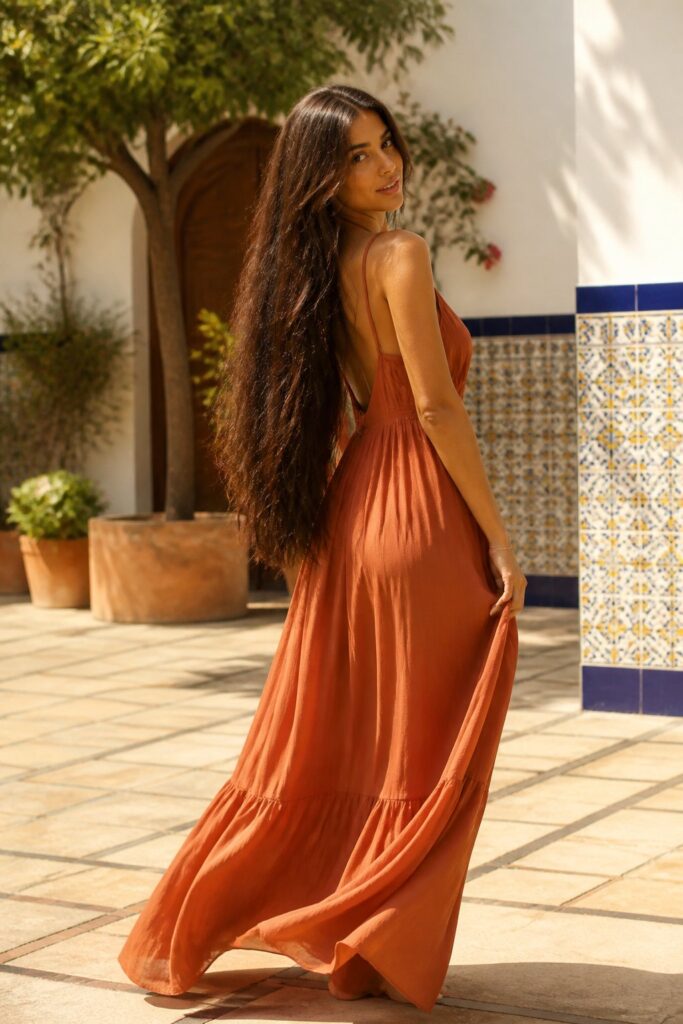
An extra-long butterfly haircut is perfect for hair that reaches the waist or lower back. It adds shape while preserving the dramatic length.
The shorter front layers stop the hair from appearing flat. They also create movement near the shoulders and collarbone.
Long internal layers can reduce heaviness without making the ends look thin. This is especially useful for very dense hair.
Regular conditioning treatments are important for this style. Healthy ends make the long layers look smoother, fuller, and more polished.
6. Butterfly Layers with a Center Part
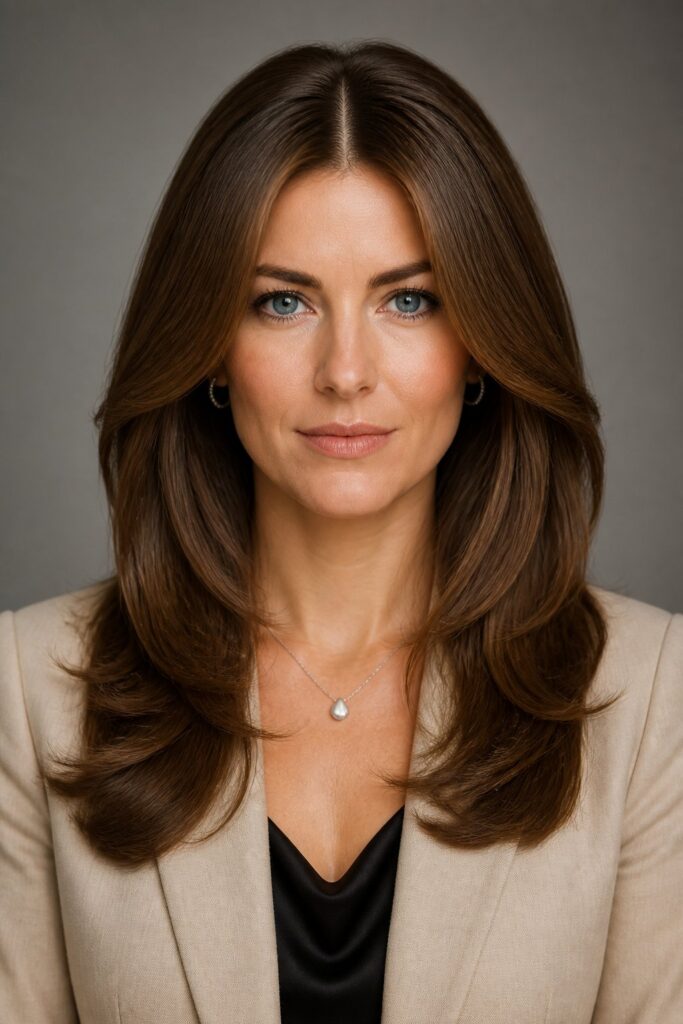
A center part gives butterfly layers a symmetrical and balanced appearance. The front pieces frame both sides of the face evenly.
This version works particularly well when the shortest layers begin around the cheekbones. The result is polished, modern, and easy to style.
A center part can also emphasize facial symmetry. However, a small amount of root volume helps prevent the hair from looking too flat.
Use a round brush to direct the front layers outward. Keep the roots smooth while adding gentle movement through the ends.
7. Side-Parted Butterfly Haircut
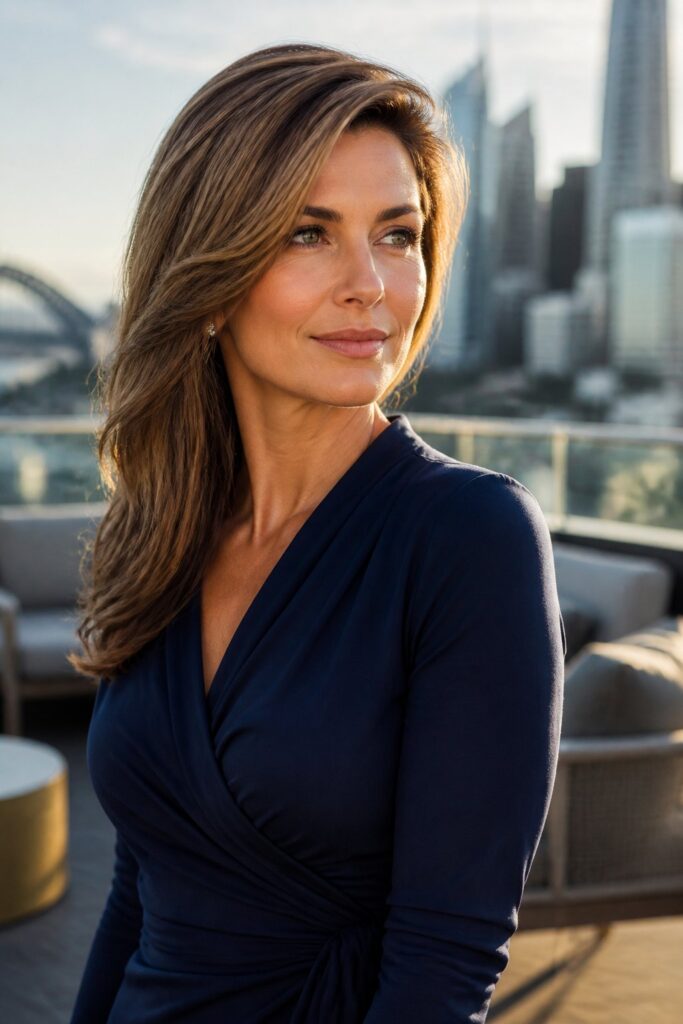
A side part adds instant volume and creates a softer, more dramatic shape. The heavier side naturally falls across the forehead and blends into the layers.
This style can make fine hair appear fuller near the crown. It also creates an elegant asymmetrical frame around the face.
The opposite side can be tucked behind the ear to highlight the cheekbone and jawline. This makes the haircut look polished without requiring complicated styling.
Switching the part occasionally can increase root lift. It may also prevent the hair from becoming too flat in one direction.
8. Face-Framing Butterfly Layers
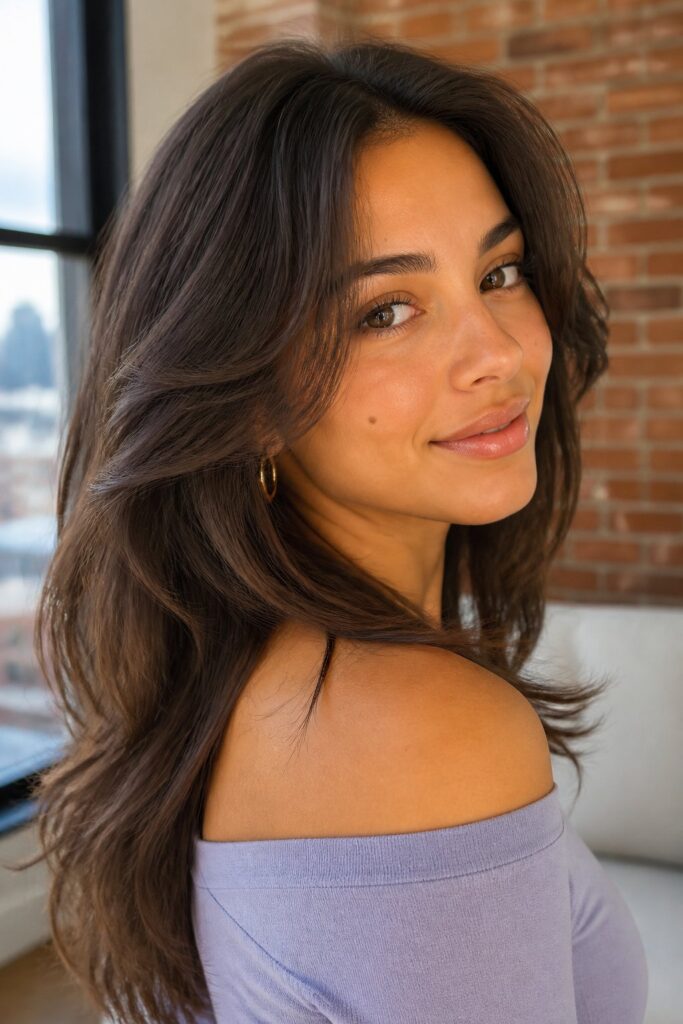
Face-framing butterfly layers concentrate most of the movement around the front. The back remains long, full, and softly layered.
The shortest section can begin near the cheekbones, chin, or collarbone. The right starting point depends on the feature you want to highlight.
Cheekbone-length layers draw attention to the eyes, while chin-length layers emphasize the jawline. Collarbone layers create a softer, lower-maintenance result.
This style works well on many hair textures. A quick blow-dry or loose wave is often enough to make the front layers stand out.
9. Butterfly Haircut for Fine Hair
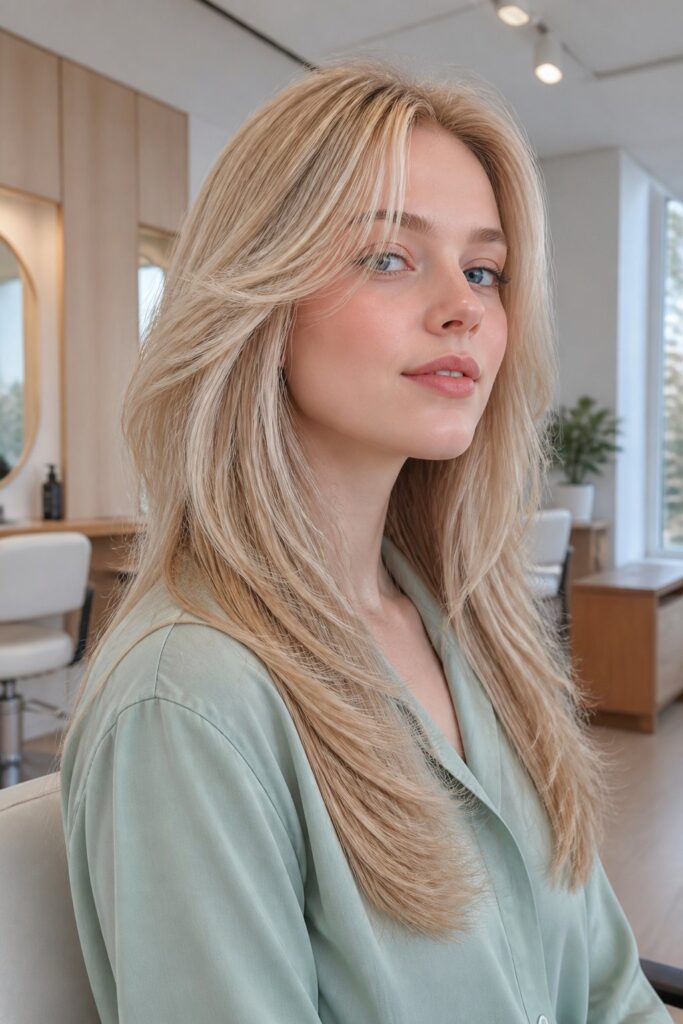
A butterfly haircut can add volume to fine hair when the layers are carefully placed. The goal is to create movement without removing too much density.
Long, blended layers are usually more flattering than multiple short sections. A strong perimeter can help the ends appear thicker.
The crown may benefit from a few subtle layers for lift. However, excessive thinning can make fine hair look sparse.
Use lightweight volumizing products and avoid heavy oils. A root-lifting spray can add fullness without weighing the hair down.
10. Butterfly Haircut for Thick Hair
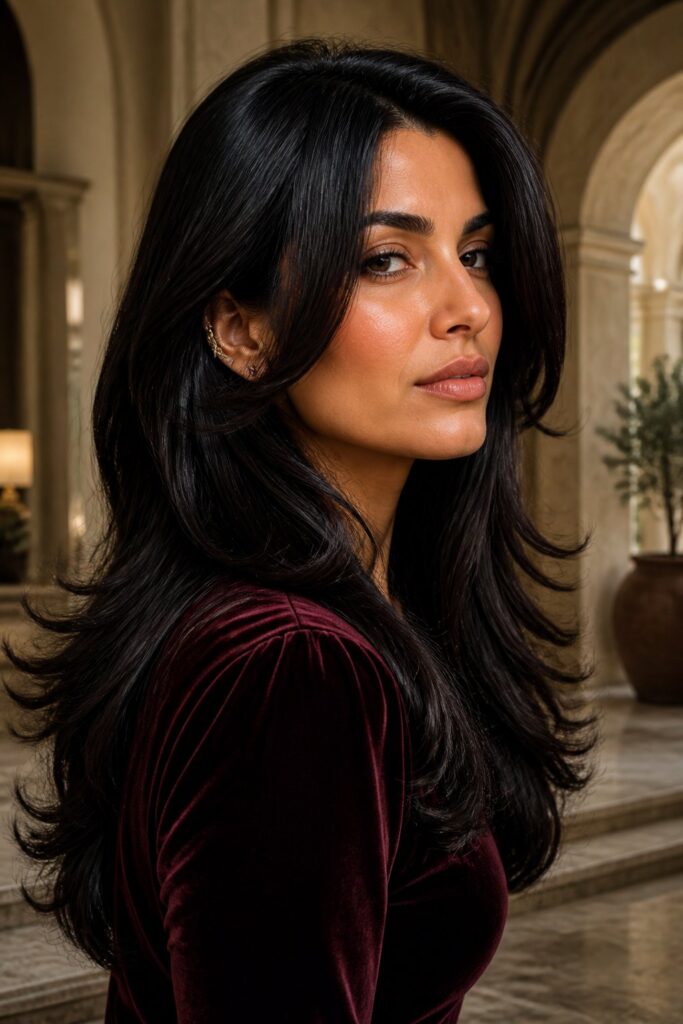
Thick hair often benefits from the weight removal of a butterfly haircut. Internal layers can make the hair feel lighter and easier to manage.
The shorter pieces add movement near the face, while the longer layers reduce bulk through the middle lengths. This creates a more balanced shape.
A skilled stylist can remove heaviness without making the ends look thin. The result should still feel full and healthy.
A smoothing cream can control frizz and improve definition. Apply it mainly through the middle lengths and ends.
11. Wavy Butterfly Haircut
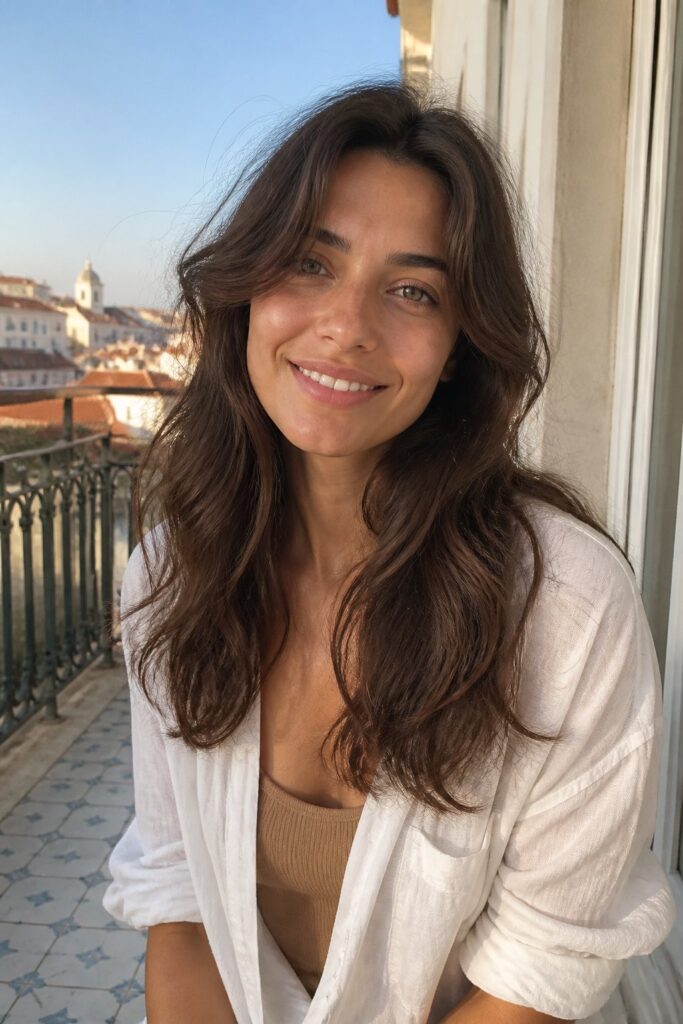
Natural waves make butterfly layers look soft and effortless. The different lengths encourage the hair to form with greater movement.
This version often requires less heat styling because the texture already creates volume. The haircut can look polished even when air-dried.
Longer layers help prevent wavy hair from becoming too wide or uneven. Face-framing pieces add shape without disturbing the natural pattern.
Apply a lightweight mousse to damp hair and scrunch gently. A diffuser can enhance the waves while reducing frizz.
12. Curly Butterfly Haircut
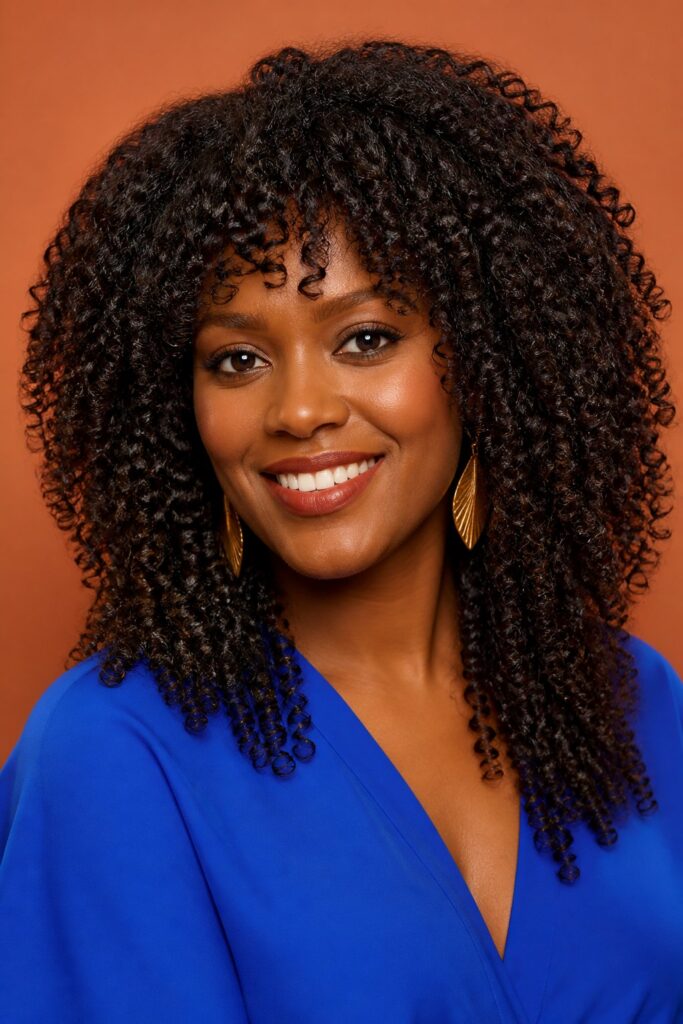
A curly butterfly haircut uses carefully placed layers to create a rounded, balanced silhouette. The shorter curls frame the face, while the longest curls preserve length.
The placement of each layer should consider curl pattern and shrinkage. Curly hair may appear significantly shorter after drying.
A dry haircut can help the stylist see where each curl naturally falls. This often leads to a more accurate and flattering result.
Use curl cream or gel on wet hair to define the layers. Dry with a diffuser on low heat for a soft, controlled finish.
13. Straight Butterfly Haircut
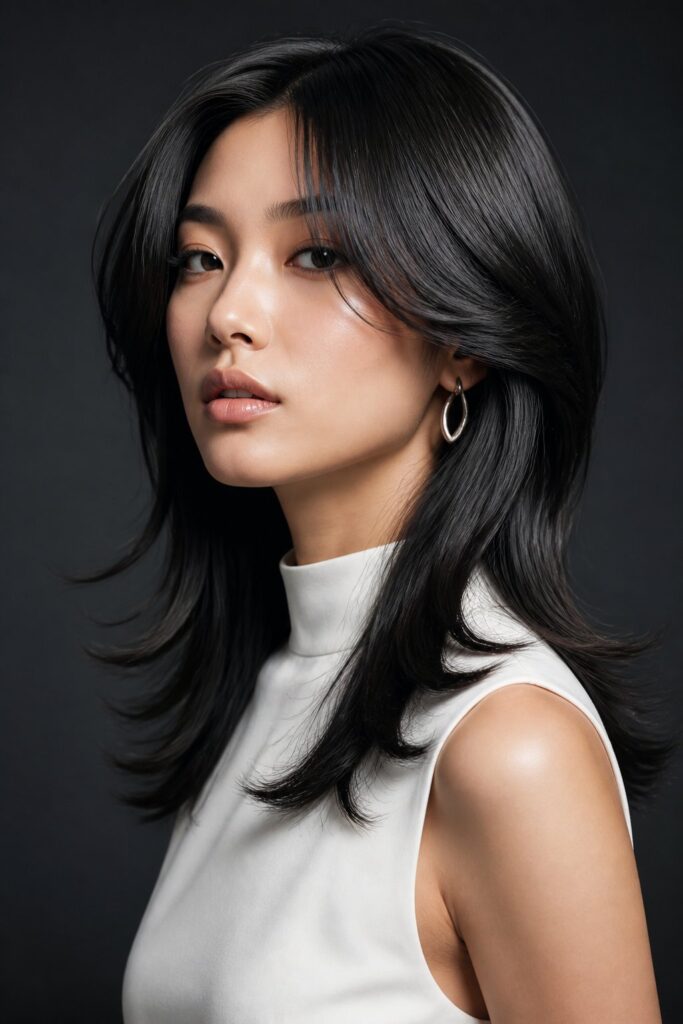
Straight hair clearly displays the structure of a butterfly haircut. The transitions between the short and long layers are easy to see.
A smooth finish gives the haircut a sleek, editorial appearance. The layers can be styled inward, outward, or left naturally straight.
This version works best when the ends remain healthy and polished. Uneven or damaged ends may make the layers appear disconnected.
Apply heat protectant before blow-drying or straightening. Finish with a lightweight shine serum to emphasize the shape.
14. Feathered Butterfly Layers
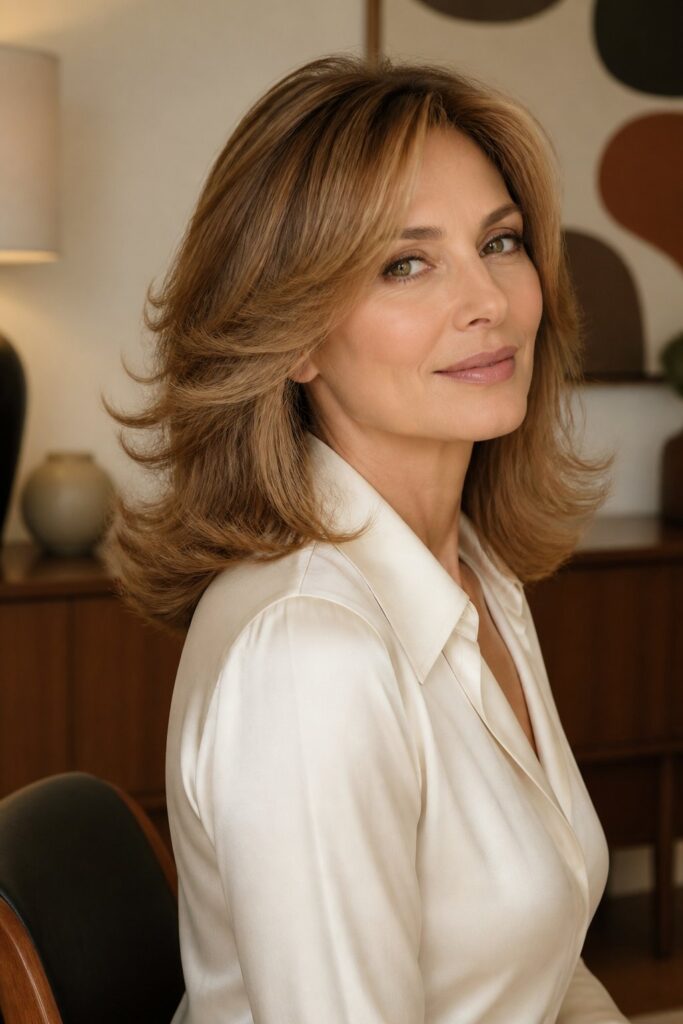
Feathered butterfly layers have soft, wispy ends that curve away from the face. The style feels light, airy, and full of movement.
It draws inspiration from classic feathered haircuts but keeps the length modern and wearable. The layers should blend smoothly rather than appear choppy.
This style works especially well with a bouncy blowout. A large round brush helps create the outward sweep.
Use a flexible-hold spray to keep the feathers in place. Avoid stiff products that make the hair look overly structured.
15. Butterfly Cut with Wispy Bangs
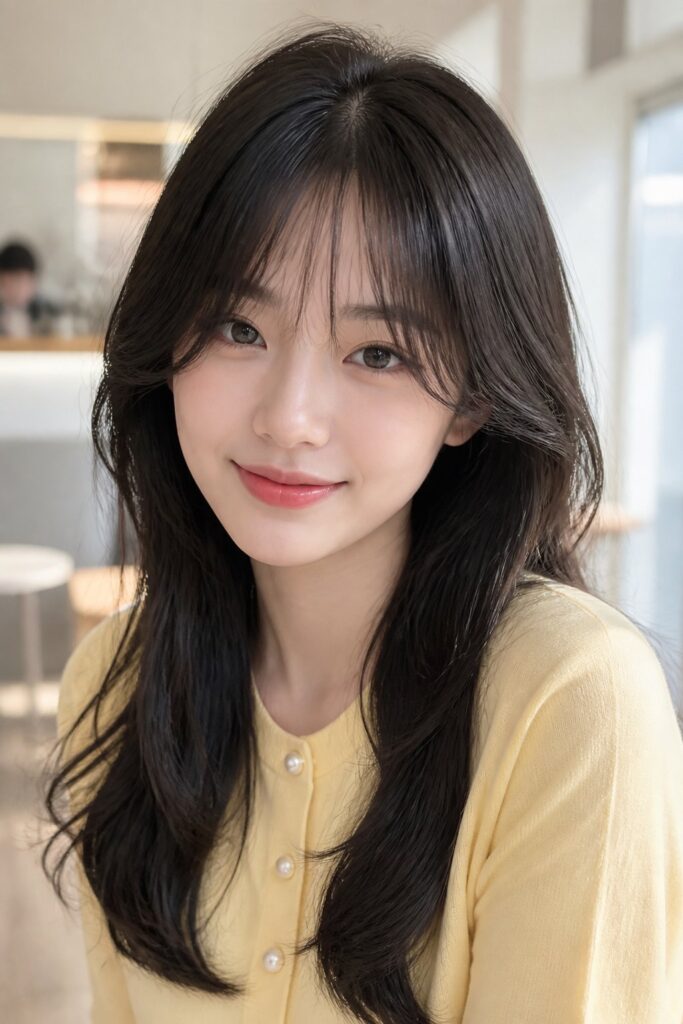
Wispy bangs add softness to a butterfly haircut without creating a heavy fringe. They lightly cover the forehead and draw attention to the eyes.
The bangs blend into the shorter face-framing layers. This creates a delicate transition from the forehead to the cheekbones.
This style is easier to grow out than full blunt bangs. It also suits people who want a subtle change around the face.
Use minimal product on the fringe. Too much oil or styling cream can make wispy bangs separate or look greasy.
16. Butterfly Haircut with Long Curtain Bangs
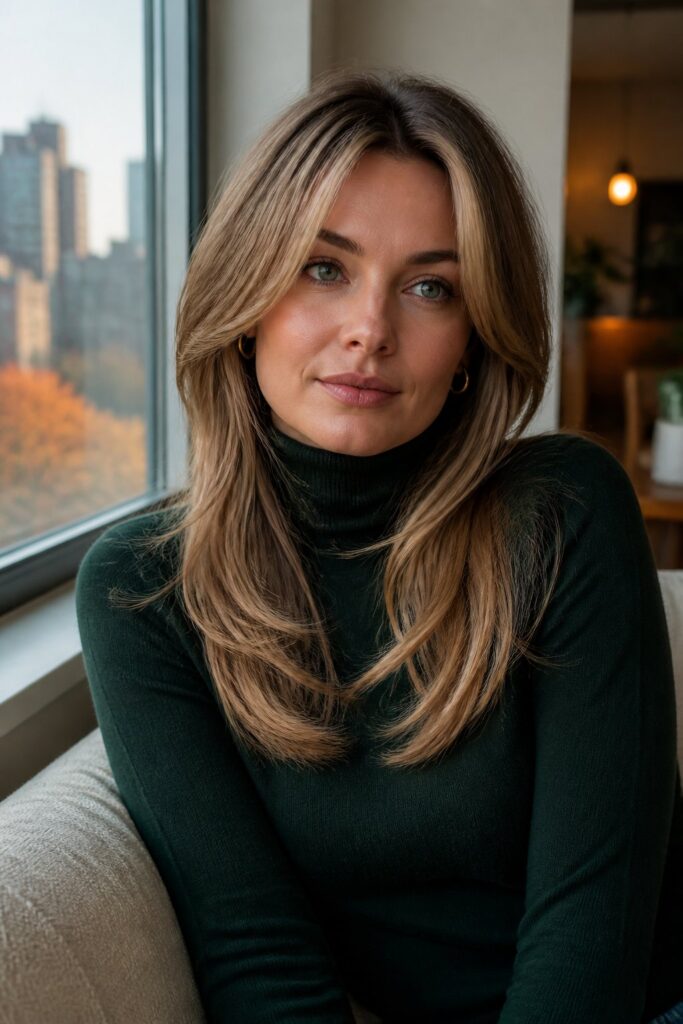
Long curtain bangs are a low-maintenance addition to butterfly layers. They usually begin around the cheekbones or jawline.
Because they are longer, they blend easily into the haircut. They also grow out more gracefully than short bangs.
This style creates softness around the face without requiring frequent trims. It is suitable for both center and slightly off-center parts.
Use a large round brush to sweep the bangs outward. Keep the curve loose for a natural and modern finish.
17. Butterfly Haircut with Chin-Length Layers
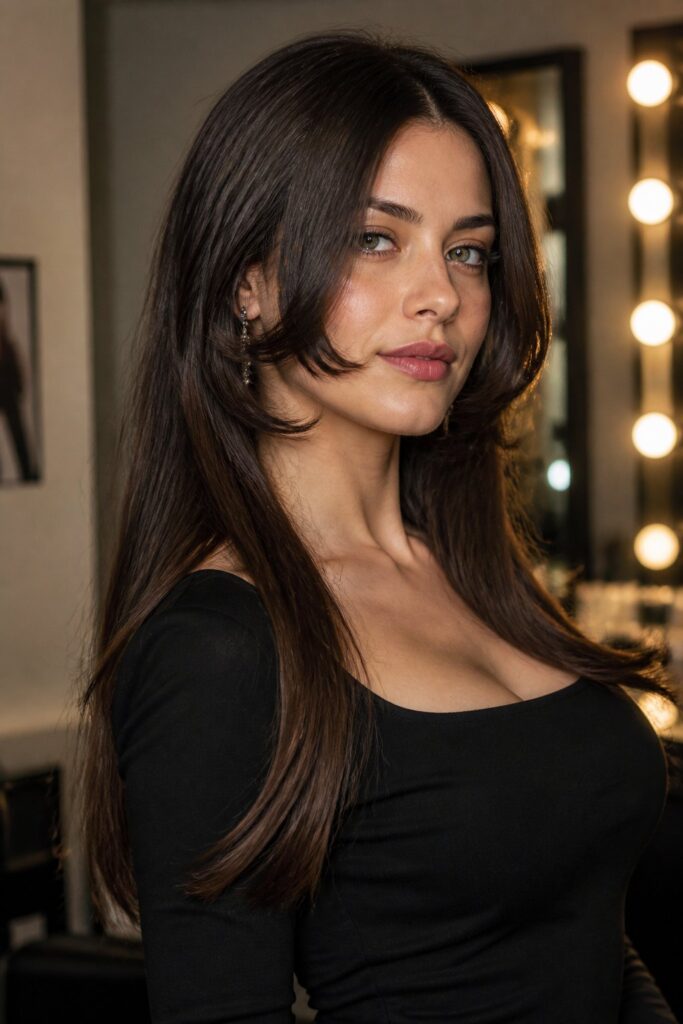
Chin-length front layers create a noticeable frame around the lower face. They add definition and make the haircut appear more dramatic.
The contrast between these shorter pieces and the long back sections creates the illusion of two separate hair lengths.
This style is particularly effective when the front layers are curled away from the face. The movement highlights the jawline and neck.
When the longer hair is tied back, the front sections can resemble a short bob. This makes the haircut especially versatile.
18. Collarbone Butterfly Layers
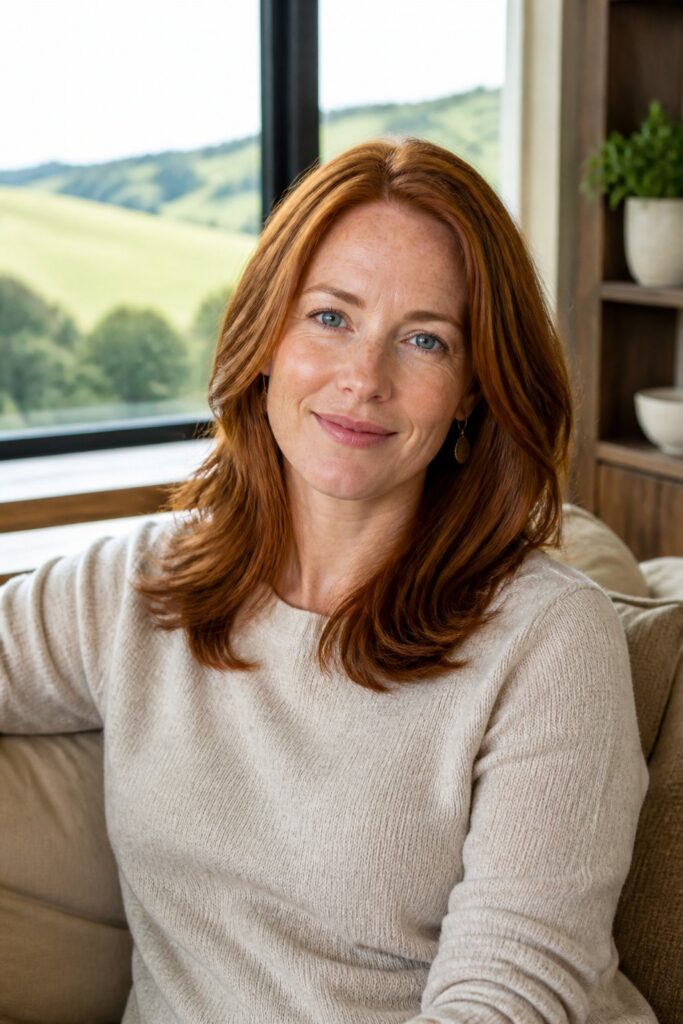
Collarbone-length layers are soft, practical, and easy to maintain. They add movement without creating a strong contrast.
This version is ideal for anyone who frequently wears ponytails, buns, or braids. The front sections are long enough to be styled back.
The layers reduce heaviness around the shoulders while preserving fullness through the ends. They also grow out naturally.
Add a loose bend through the middle lengths for a relaxed finish. The haircut can also be worn straight with minimal styling.
19. Butterfly Haircut with Flipped Ends
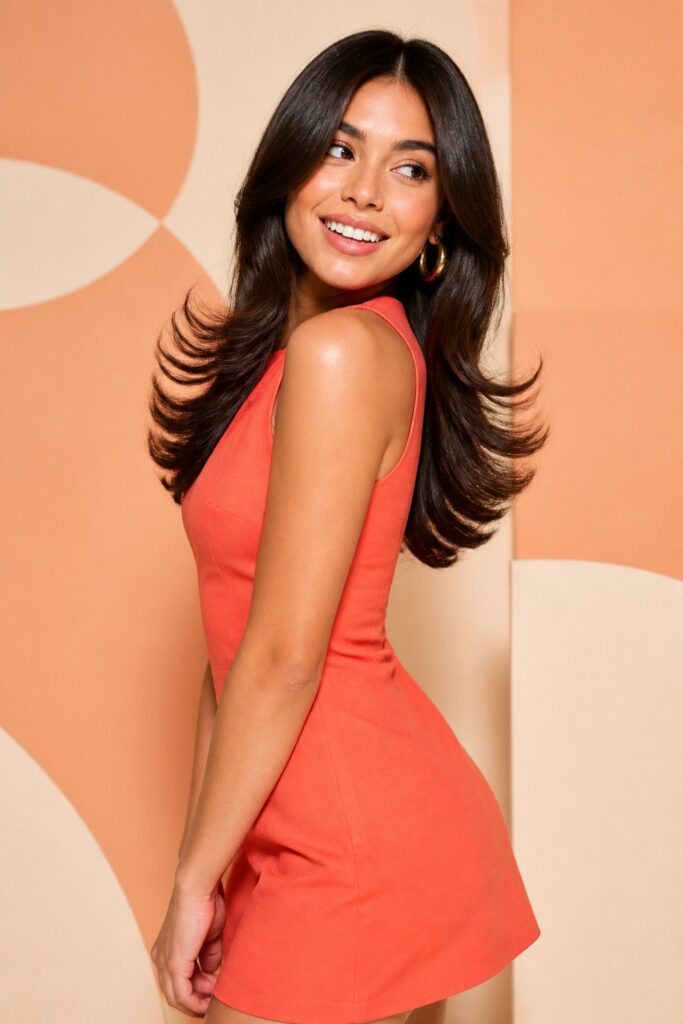
Flipped ends give butterfly layers a playful, retro-inspired finish. Each section is curved outward to make the haircut appear lighter.
The outward movement emphasizes the different lengths. It also creates extra width and volume around the shoulders.
This style works best on straight or slightly wavy hair. The layers should be smooth and clearly defined.
Use a round brush or flat iron to flick the ends outward. Finish with light hairspray to hold the shape.
20. Butterfly Haircut with Inward-Curved Ends
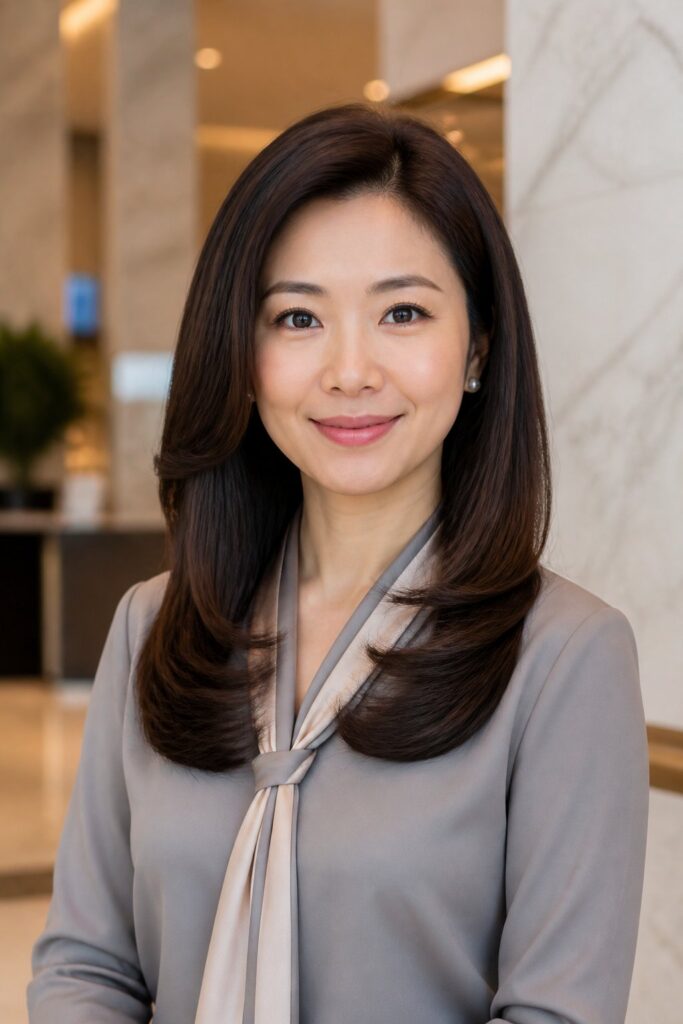
Inward-curved ends create a softer and more polished version of the butterfly haircut. The layers gently follow the shape of the face and shoulders.
This style looks smooth, elegant, and controlled. It is a strong choice for professional or formal occasions.
The inward curve can also make the hair appear fuller at the ends. It works particularly well on straight or relaxed textures.
Direct the round brush inward while drying. A smoothing serum will help reduce flyaways and enhance shine.
21. Messy Butterfly Haircut
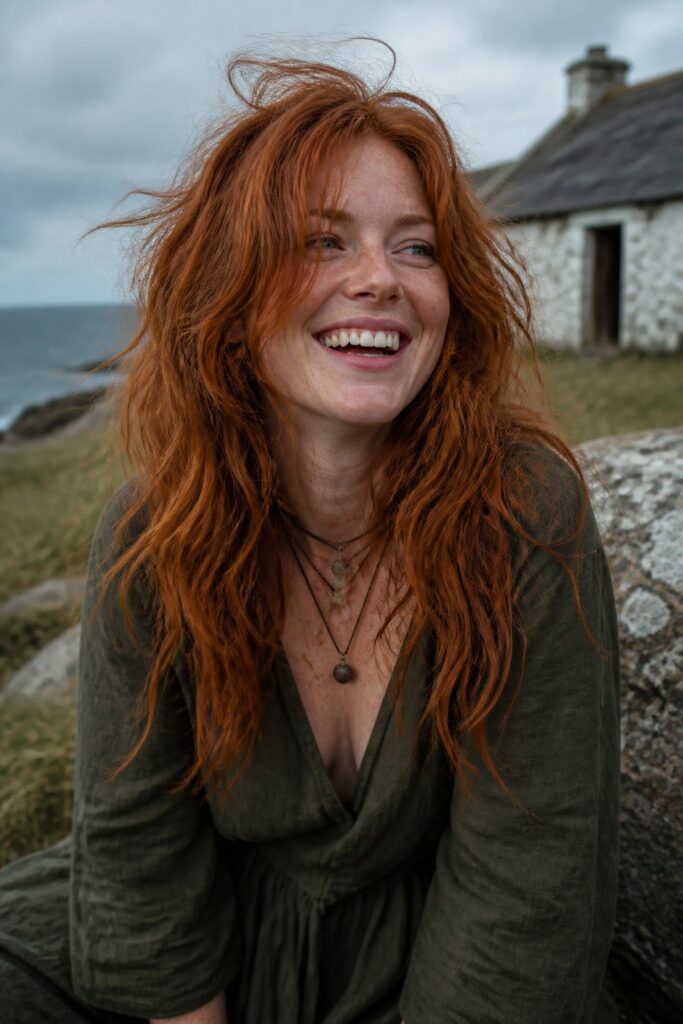
A messy butterfly haircut has loose volume, tousled ends, and an intentionally undone finish. It looks relaxed while still showing the layered shape.
This version is ideal for naturally wavy or textured hair. It does not require every layer to appear perfectly smooth.
The softness makes the style suitable for everyday wear. It also grows out well because the finish is not overly precise.
Apply texture spray and separate the layers with your fingers. Avoid overbrushing, which can reduce the natural movement.
22. Sleek Butterfly Haircut
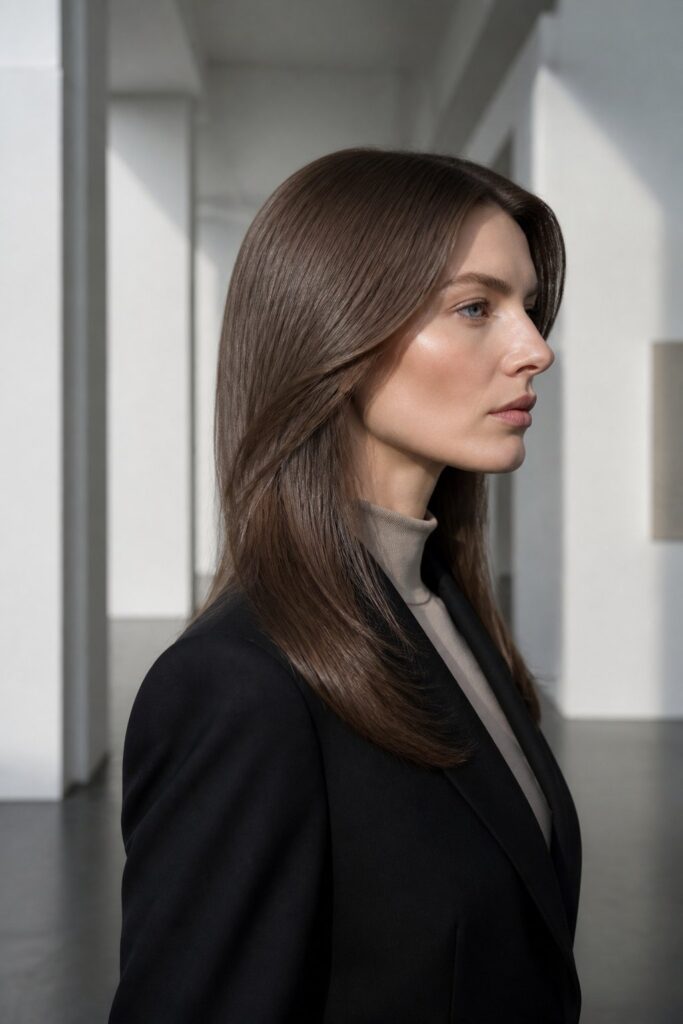
A sleek butterfly haircut combines polished roots with smooth, defined layers. It has a refined and minimalist appearance.
The layers remain visible because of their shape rather than through volume or waves. This creates a sophisticated finish.
This version requires more attention to heat protection and frizz control. Split ends may also be more noticeable on smooth hair.
Use a blow-dryer with a concentrator nozzle for control. Finish with a small amount of anti-frizz serum.
23. Butterfly Layers with Balayage
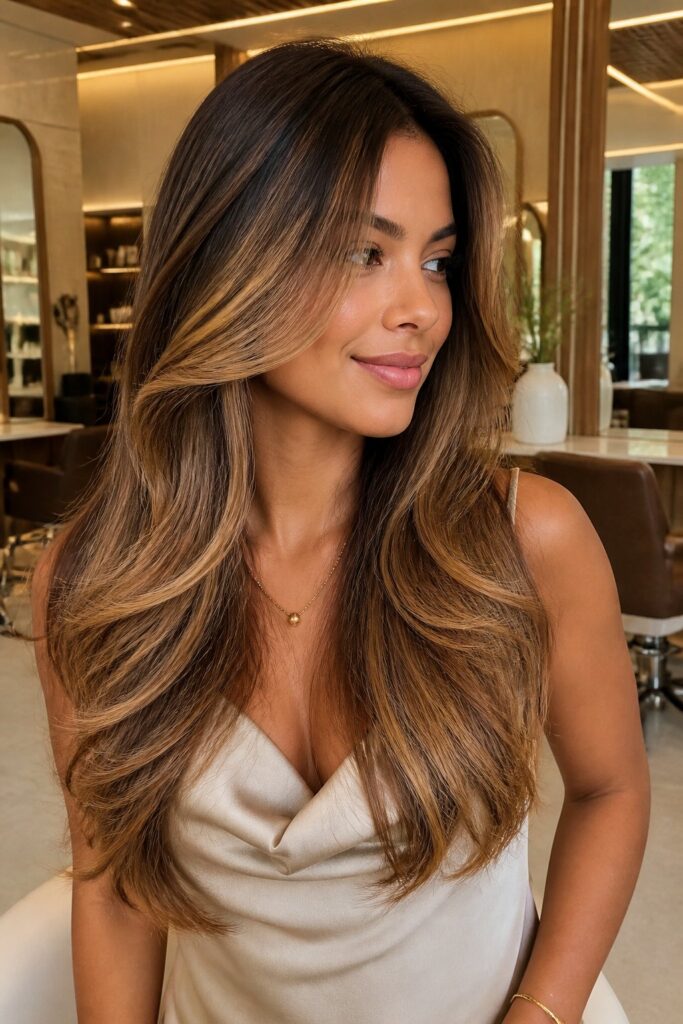
Balayage can make butterfly layers look more dimensional. The lighter pieces highlight movement through the middle lengths and ends.
Face-framing brightness draws attention to the shorter front sections. This makes the butterfly effect more noticeable.
Caramel, honey, beige blonde, and soft copper tones all work beautifully. The best shade depends on the natural base color.
Ask for blended placement rather than harsh stripes. A soft transition helps the color grow out naturally.
24. Brunette Butterfly Haircut
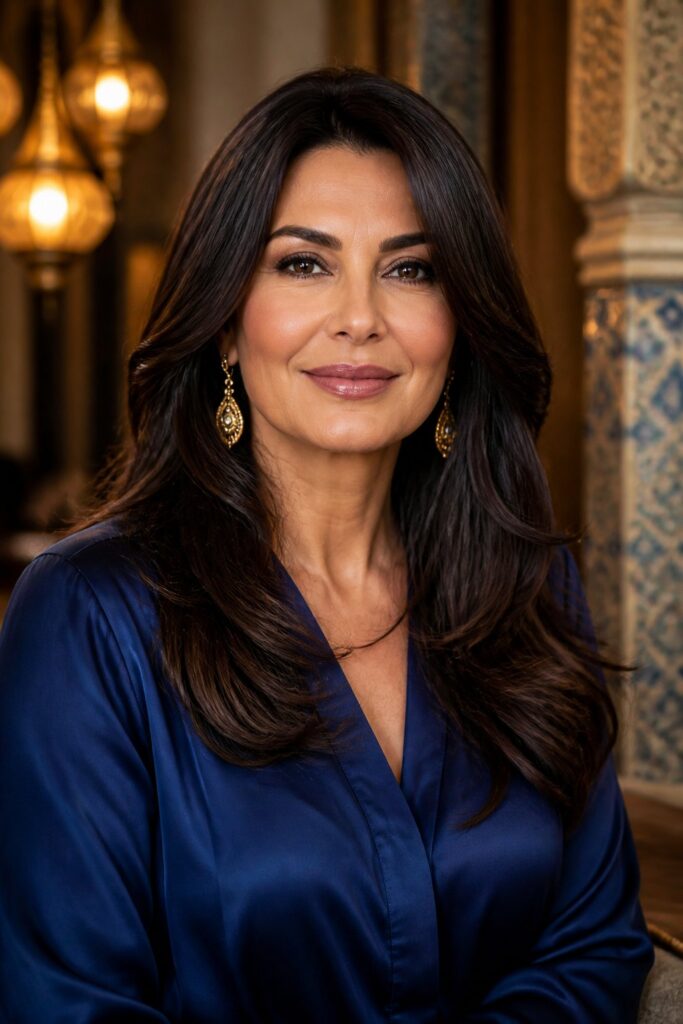
Rich brunette tones give butterfly layers a glossy and luxurious appearance. Chocolate, espresso, chestnut, and mocha are all flattering choices.
Darker colors can make the haircut look fuller and smoother. Subtle lowlights add depth without making the style appear overly highlighted.
The movement in the layers prevents a solid brunette shade from looking flat. Shine is especially important for this version.
Use color-safe shampoo and regular conditioning treatments. A gloss treatment can refresh the depth and finish.
25. Blonde Butterfly Layers
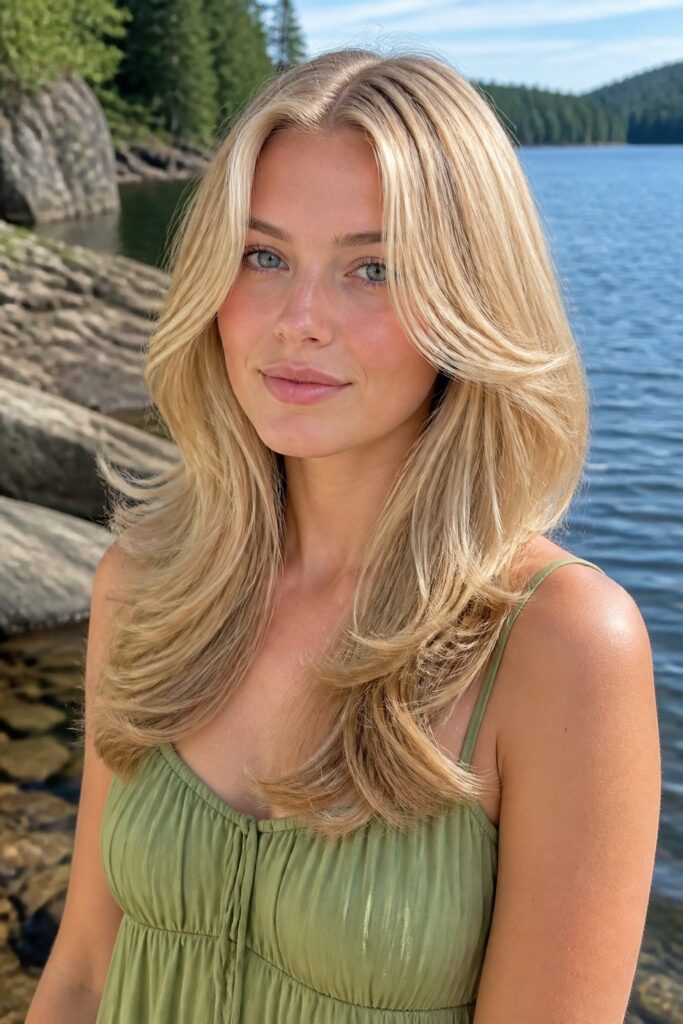
Blonde tones can make butterfly layers look more defined by creating contrast between the shorter face-framing pieces and the longer lengths. Soft highlights or dimensional blonde placement can also emphasize the movement of the haircut.
For more shade-specific inspiration, explore our 20+ Stunning Blonde Butterfly Haircut Ideas for Long Hair, including honey, ash, beige, icy, balayage, and other blonde variations.
26. Copper Butterfly Haircut
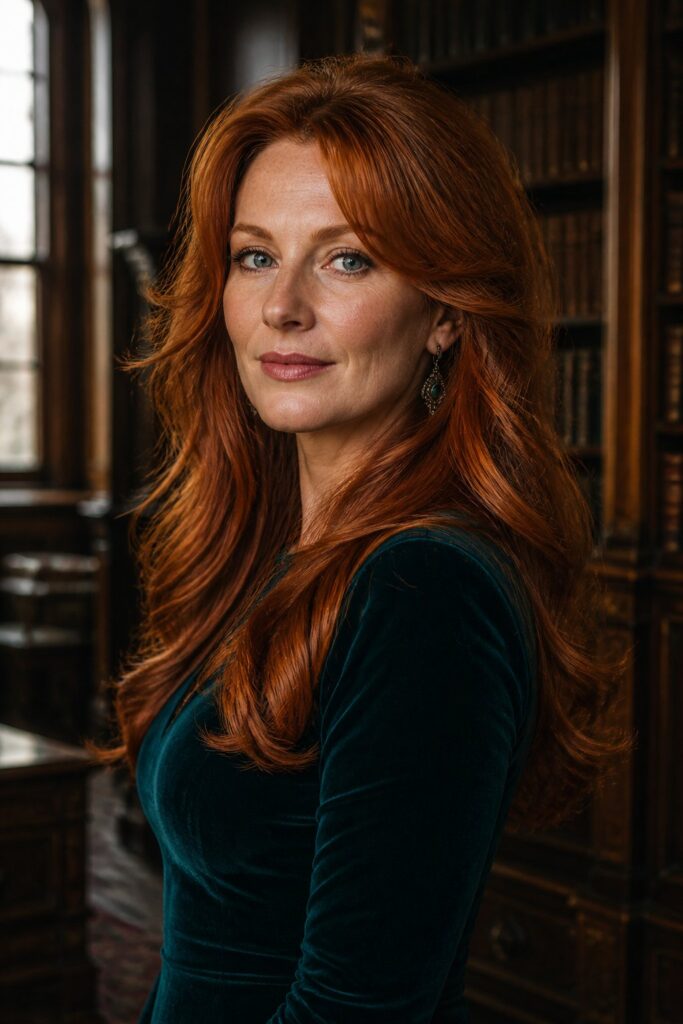
Copper hair gives butterfly layers warmth, brightness, and personality. The color makes the movement appear vivid and eye-catching.
Deep auburn creates a rich and sophisticated result. Lighter copper or strawberry shades feel softer and more playful.
The layered shape helps reflect light across the hair. This makes the color look dimensional instead of flat.
Copper shades can fade quickly, so color-safe products are important. Washing with cooler water can also help preserve the tone.
27. Butterfly Haircut with Face-Framing Highlights
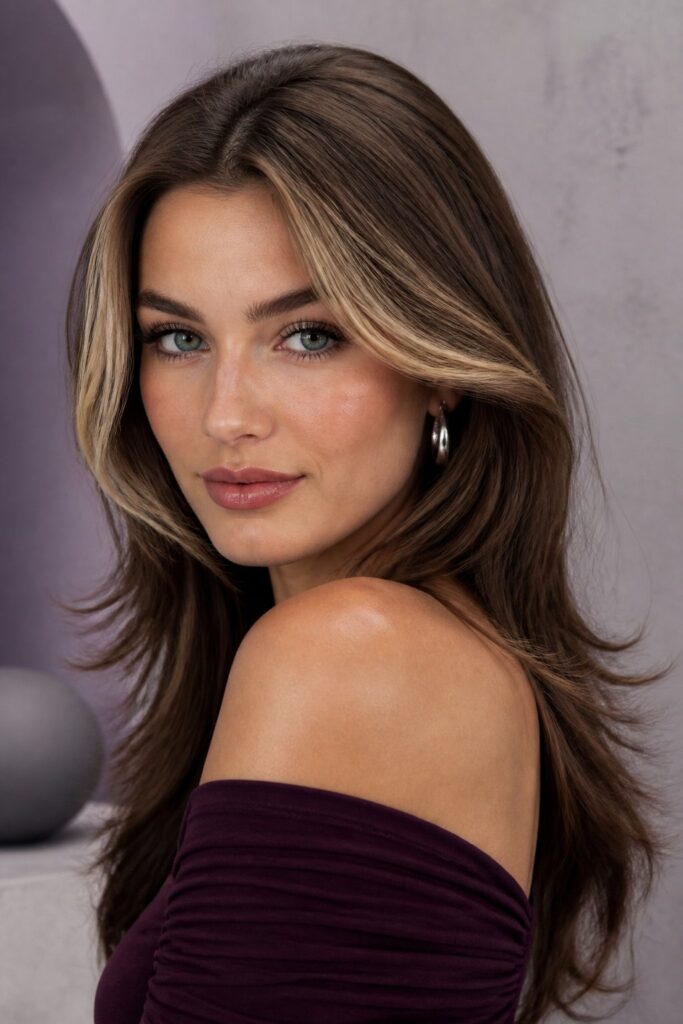
Face-framing highlights brighten the shortest sections around the face. They emphasize the cheekbones, jawline, and movement of the haircut.
The highlights can be subtle and blended or bold and contrasting. Both approaches work when the placement follows the layers.
Caramel tones suit darker hair, while beige blonde creates a softer contrast. Copper pieces add warmth and brightness.
Keep the highlights concentrated around the front rather than throughout the entire head. This helps maintain a natural, dimensional result.
28. Low-Maintenance Butterfly Cut
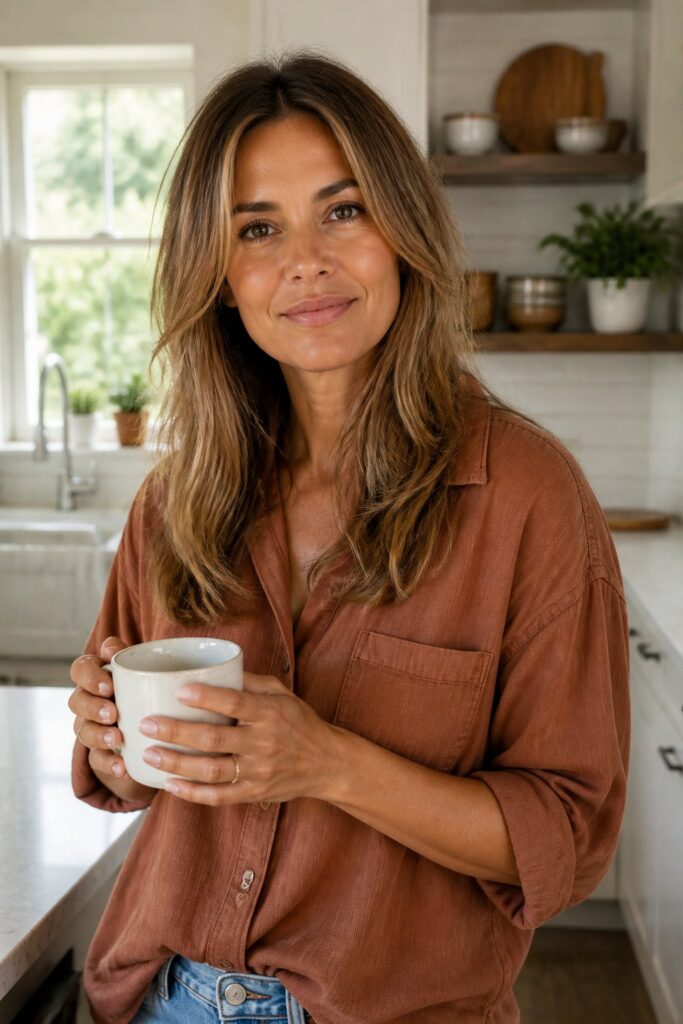
A low-maintenance butterfly haircut uses longer layers that blend smoothly into the overall length. The shortest sections usually begin near the collarbone.
This reduces the need for frequent trims and daily blow-drying. It also allows the layers to grow out without looking awkward.
The haircut works well for busy lifestyles and people who prefer simple styling. It can air-dry naturally with a small amount of smoothing product.
Choose soft transitions instead of dramatic steps between lengths. This will keep the shape flexible and easy to maintain.
29. Dramatic Butterfly Layers
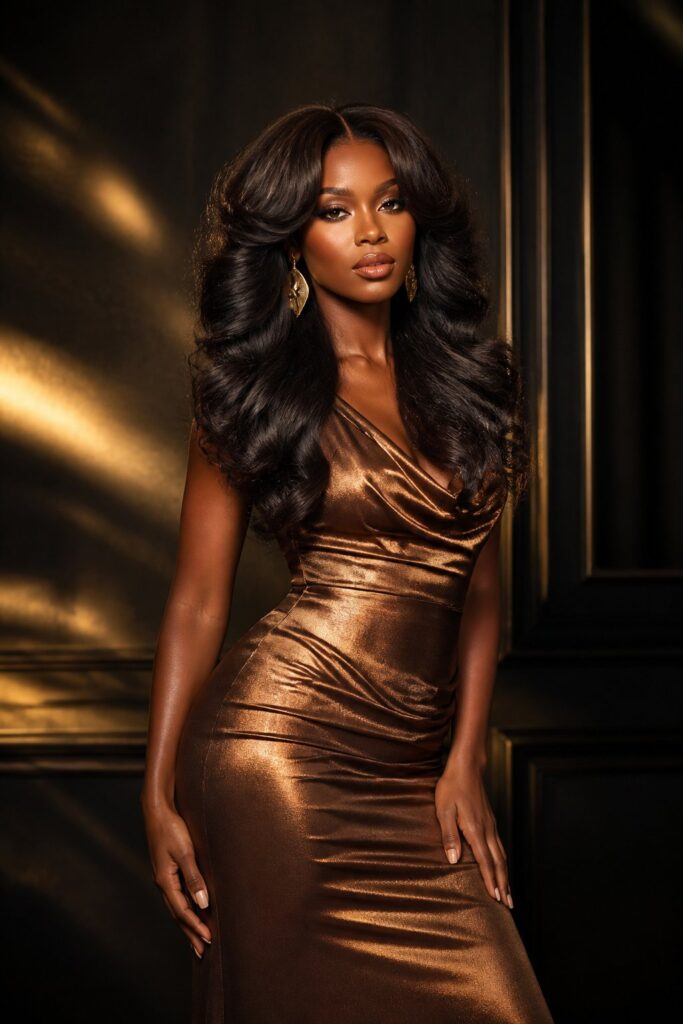
Dramatic butterfly layers create a strong difference between the short front sections and the long back. The result is bold, full, and highly styled.
This version works best on medium-density or thick hair. It needs enough fullness to support the shorter layers.
The haircut looks especially striking after a professional blowout. Large curls or rollers enhance the separation between each layer.
Regular trims help maintain the contrast. Without shaping, the dramatic effect may soften as the layers grow.
30. Subtle Butterfly Haircut
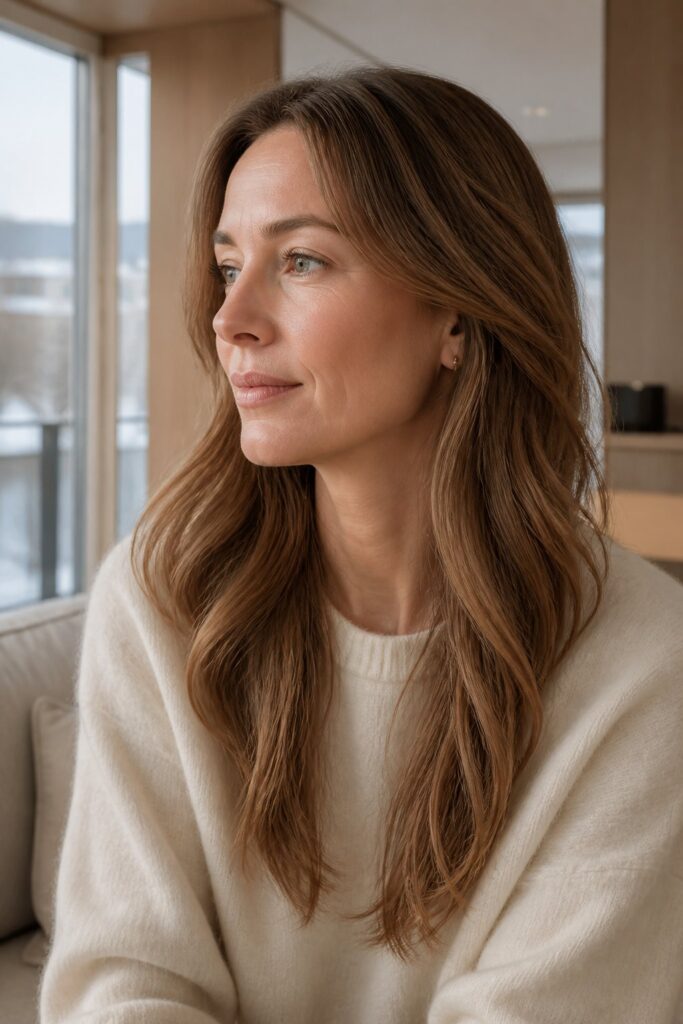
A subtle butterfly haircut keeps the layers long and carefully blended. The overall appearance remains natural and understated.
It adds movement without significantly changing the length or density. This makes it suitable for conservative styles or first-time layering.
The front sections often begin below the chin or near the collarbone. This creates softness without an obvious step.
Loose waves can make the layers more visible. The haircut also looks polished when worn straight.
31. Butterfly Haircut for Round Faces
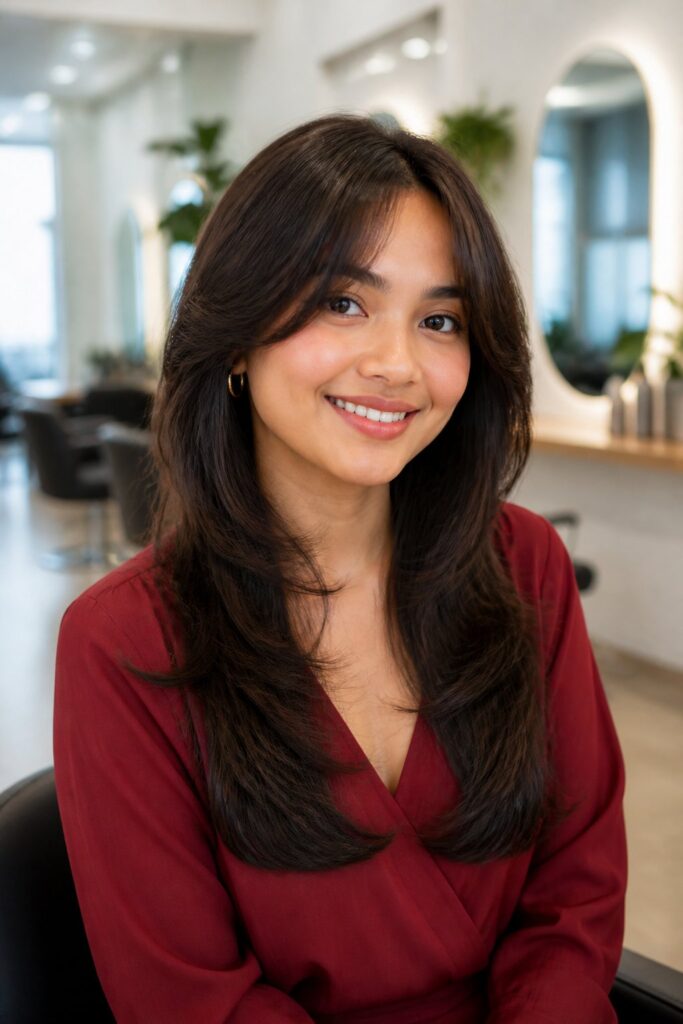
A butterfly haircut can flatter a round face when the layers create gentle vertical movement. Longer front sections help visually lengthen the face.
The shortest layers should usually begin below the chin. This keeps fullness away from the widest part of the cheeks.
Volume near the crown can add balance, but it should remain soft and natural. Too much height may look overly styled.
Loose movement below the jawline creates a flattering frame. Long curtain bangs can also help elongate the face.
32. Butterfly Haircut for Oval Faces
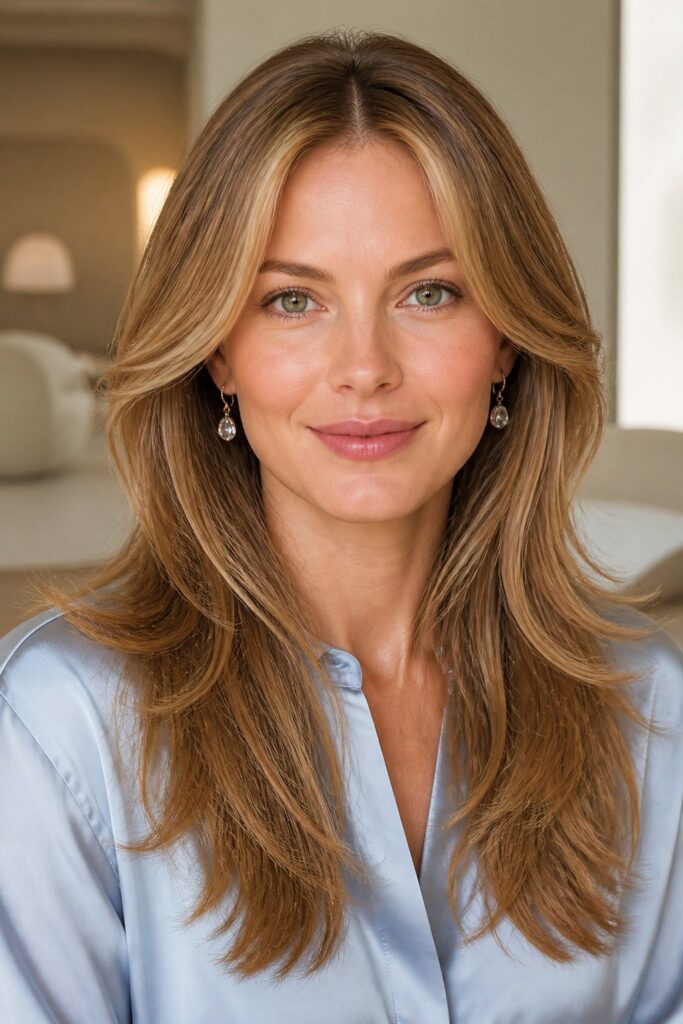
Oval faces can wear almost every variation of the butterfly haircut. Their balanced proportions allow flexibility in layer placement.
Cheekbone-length sections highlight the eyes and facial symmetry. Chin-length pieces draw attention to the jawline and lips.
Both center and side parts work well. The choice depends more on hair texture and personal preference than face shape.
A soft blowout can emphasize the layers without overwhelming the features. This creates an elegant and balanced finish.
33. Butterfly Haircut for Square Faces
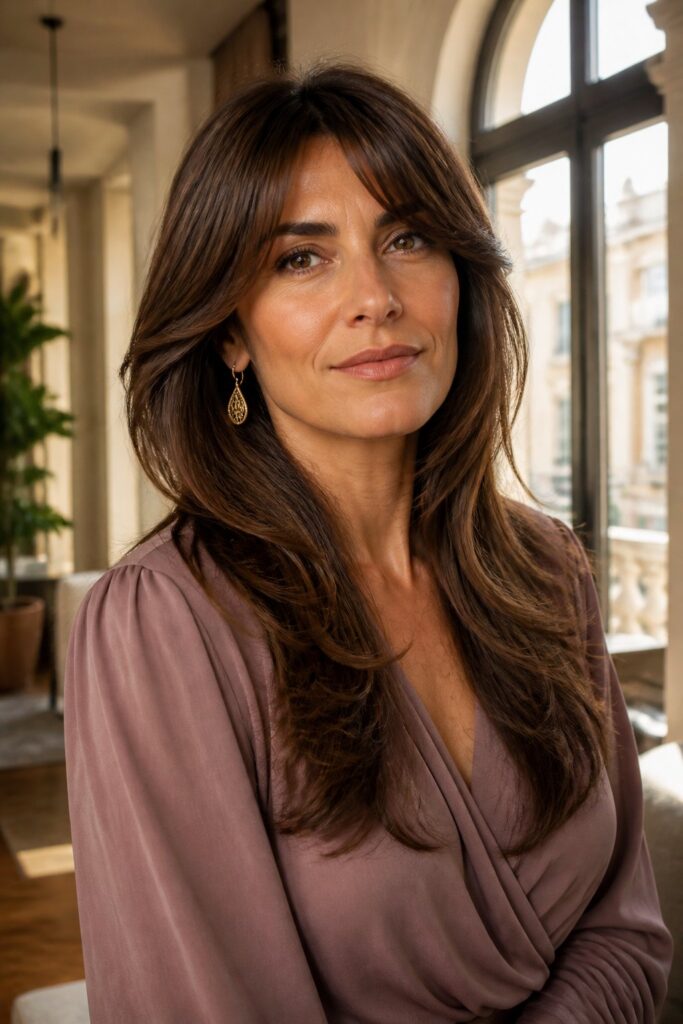
A butterfly haircut can soften the strong angles of a square face. The key is to use curved, sweeping layers rather than blunt lines.
Face-framing pieces should move gently away from the jaw. This prevents the haircut from emphasizing width in the lower face.
Curtain bangs can soften the forehead, while longer layers add vertical movement. Feathered ends create an especially flattering effect.
Avoid heavy pieces ending directly at the jawline. Softer transitions below the chin usually create better balance.
34. Butterfly Haircut for Heart-Shaped Faces
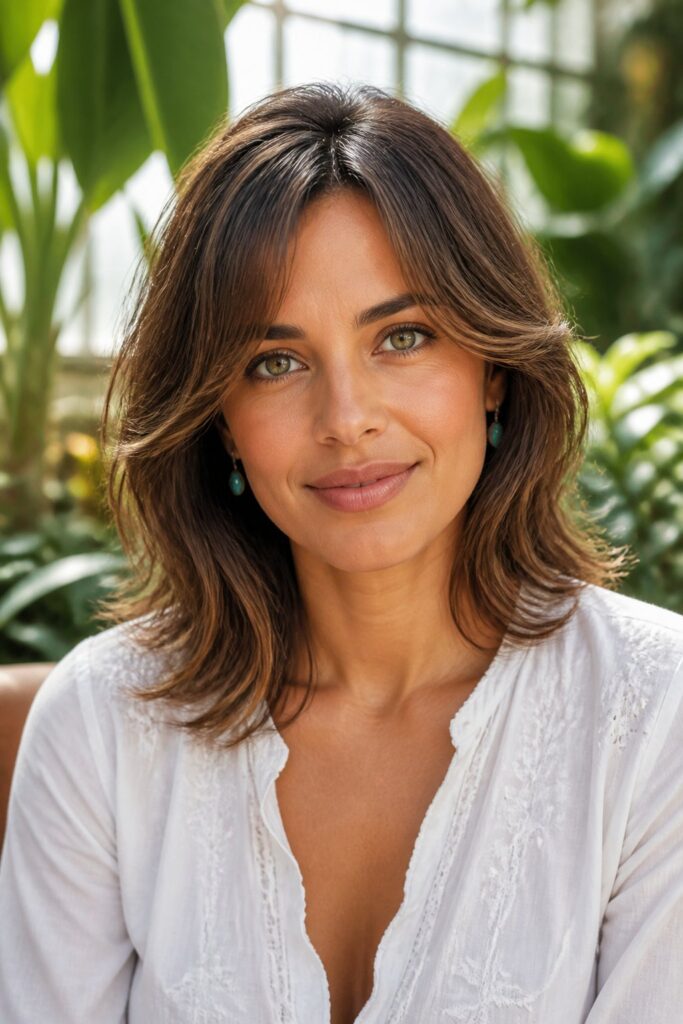
Heart-shaped faces often have a wider forehead and a narrower chin. Butterfly layers can help create balance by adding movement lower down.
Jaw-length or collarbone-length pieces bring softness to the lower half of the face. They also reduce attention at the forehead.
Long curtain bangs can blend the upper and lower sections. A gentle side part may also create a flattering frame.
Keep crown volume controlled and focus movement through the ends. This creates a balanced and feminine silhouette.
35. Butterfly Haircut with a Glamorous Blowout
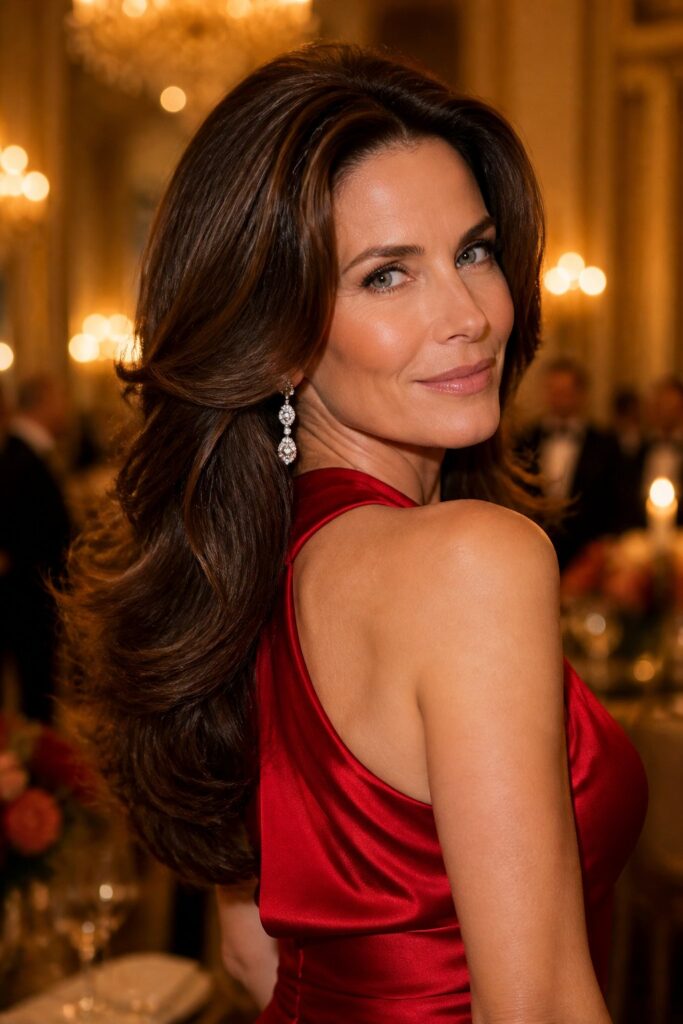
A glamorous blowout is one of the most beautiful ways to style butterfly layers. It adds volume, shine, and flowing movement.
The roots are lifted, the shorter pieces sweep away from the face, and the longer ends fall in soft curves.
This style is ideal for weddings, dinners, celebrations, and photoshoots. It gives long hair a polished, luxurious appearance.
Use a large round brush and rollers for the fullest result. Finish with flexible hairspray so the hair remains soft and touchable.
How to Style a Butterfly Haircut
Start by applying heat protection to damp hair. This step is essential when using a blow-dryer, hot brush, curling iron, or flat iron.
Add volumizing mousse or root-lifting spray near the crown. Keep heavier products away from the roots to avoid flattening the style.
Use a medium or large round brush to blow-dry the layers away from the face. Work in sections and allow each part to cool before releasing it.
Large rollers can improve volume and shape. Once removed, separate the layers gently with your fingers rather than brushing them flat.
Common Butterfly Haircut Mistakes to Avoid
Avoid cutting too many short layers, especially if the hair is fine. Excessive layering can make the ends appear thin and uneven.
Do not ignore natural texture. Straight, wavy, and curly hair require different cutting techniques and layer placement.
Be clear about how much length you want to preserve. The butterfly haircut should create movement without removing more hair than expected.
Regular trims are important. Damaged ends can make even a well-cut layered style look dry or disconnected.
Best Products and Tools
A lightweight heat-protection spray should be used before every hot-tool session. This helps prevent dryness and breakage.
Volumizing mousse and root-lifting spray can add fullness without creating stiffness. Use a small amount to avoid buildup.
A large round brush, blow-dryer with a concentrator nozzle, and Velcro rollers are useful for creating the classic butterfly shape.
Finish with flexible-hold hairspray or a lightweight serum. The goal is to maintain movement while controlling flyaways.
How to Maintain a Butterfly Haircut
Most butterfly haircuts benefit from a trim every eight to twelve weeks. More dramatic face-framing layers may require shaping sooner.
Use a shampoo suitable for your scalp and hair type. Apply conditioner mainly to the middle lengths and ends.
A weekly mask can help maintain softness, particularly on colored or heat-styled hair. Healthy ends make the layers appear fuller.
Avoid overusing hot tools and heavy oils. Both can reduce the airy movement that makes the haircut distinctive.
Frequently Asked Questions
What is the difference between a butterfly haircut and regular long layers?
A butterfly haircut uses more noticeable face-framing layers around the cheeks, chin, or collarbone while keeping the longest sections intact. Regular long layers are usually distributed more evenly throughout the hair.
How long should hair be for a butterfly haircut?
Butterfly layers work particularly well on hair that reaches below the shoulders because there is enough length to create contrast between the shorter front pieces and the longer sections.
Where should the shortest butterfly layers start?
The shortest layers can begin around the cheekbones, chin, or collarbone. The best starting point depends on your face shape, hair density, and how dramatic you want the layered effect to look.
Can a butterfly haircut be low maintenance?
Yes. Longer, softly blended butterfly layers can grow out naturally and usually require less styling than highly dramatic or heavily feathered versions.
Can you get a butterfly haircut without bangs?
Yes. Bangs are optional. Face-framing layers alone can create the signature butterfly shape, while curtain or wispy bangs can be added for extra softness around the face.
What should I ask my stylist for?
Ask for long cascading layers with shorter face-framing pieces, movement around the crown and front, and enough length and density left through the ends.
How often should a butterfly haircut be trimmed?
A trim every eight to twelve weeks is usually enough to maintain the shape. More dramatic face-framing layers may need reshaping slightly sooner.
Final Thoughts
A butterfly haircut is one of the best ways to refresh long hair without sacrificing length. Its combination of short face-framing layers and long flowing sections creates softness, volume, and movement.
The style can be adapted for straight, wavy, curly, fine, or thick hair. It also works with a variety of bangs, colors, parts, and styling methods.
Choose subtle layers for an easy, natural result or dramatic layers for a bold transformation. Curtain bangs, highlights, flipped ends, and glamorous blowouts can further personalize the look.
The best butterfly haircut is one that works with your natural texture, suits your lifestyle, and keeps enough fullness through the ends.

1 Comment
Pingback: 20+ Stunning Blonde Butterfly Haircut Ideas for Long Hair