
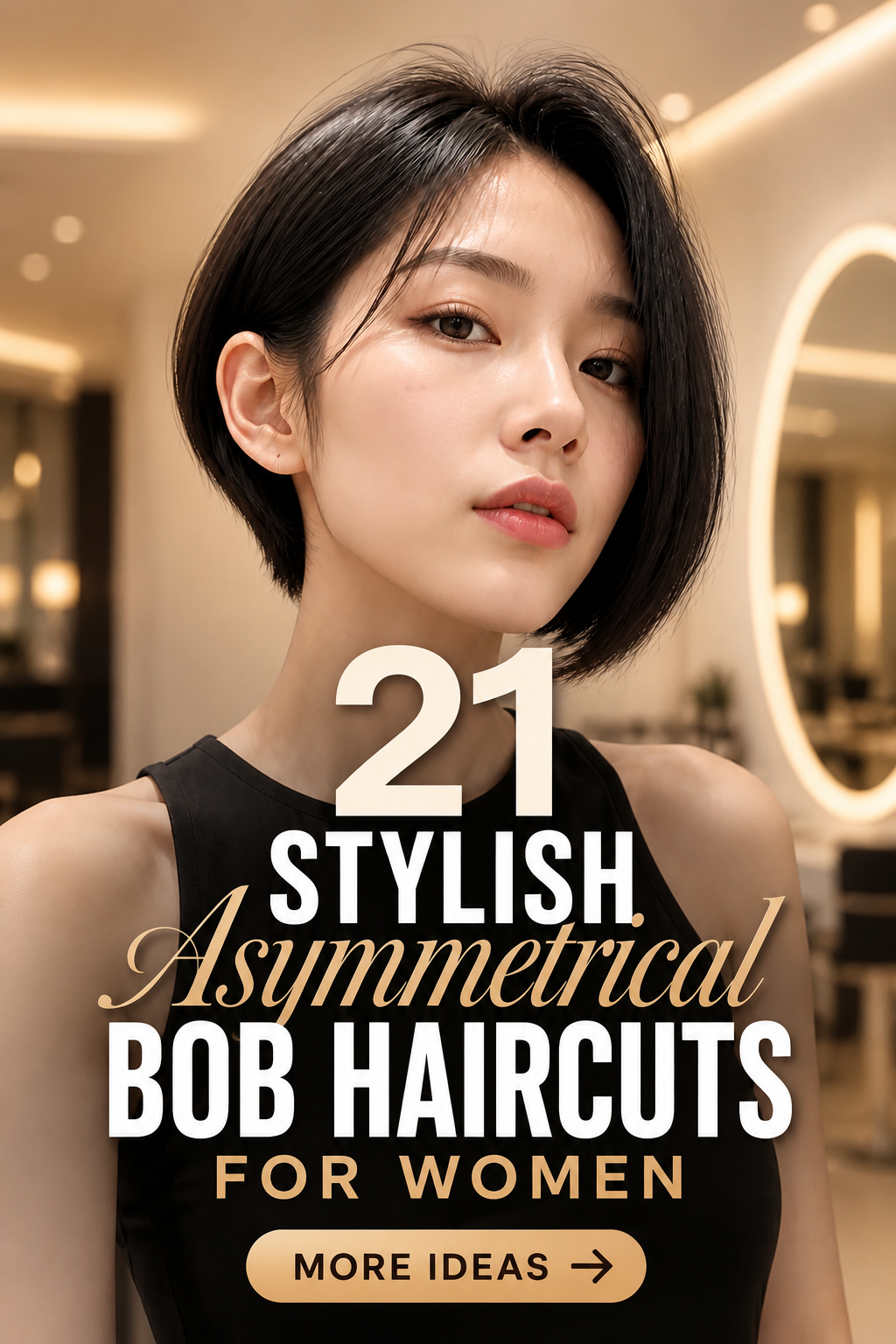
21 Stylish Asymmetrical Bob Haircuts for Women for a Bold and Modern Look
An asymmetrical bob gives the classic bob haircut a fresh and fashionable update. It features one side that is longer than the other, creating a flattering diagonal shape around your face. You can keep the difference in length soft and subtle or choose a bold contrast for a more dramatic appearance.
Asymmetrical bob haircuts work with short, medium, and shoulder-length hair. You can wear your cut sleek and polished, soft and layered, or tousled with natural movement. The uneven shape highlights your cheekbones, defines your jawline, and adds interest without requiring an overly complicated hairstyle.
You will find classic asymmetrical cuts, angled and inverted shapes, layered options, and edgy versions with undercuts. This guide also covers flattering styles for fine, thick, straight, wavy, and curly hair, along with practical styling and maintenance advice.
Classic Asymmetrical Bob Shapes and Their Key Features
Asymmetrical bobs come in several lengths and shapes. The main difference between each variation comes from the angle, the amount of layering, and how noticeably one side extends beyond the other.
Understanding these basic shapes can help you choose a haircut that suits your face, hair texture, and daily styling routine.
1. Classic Asymmetrical Bob
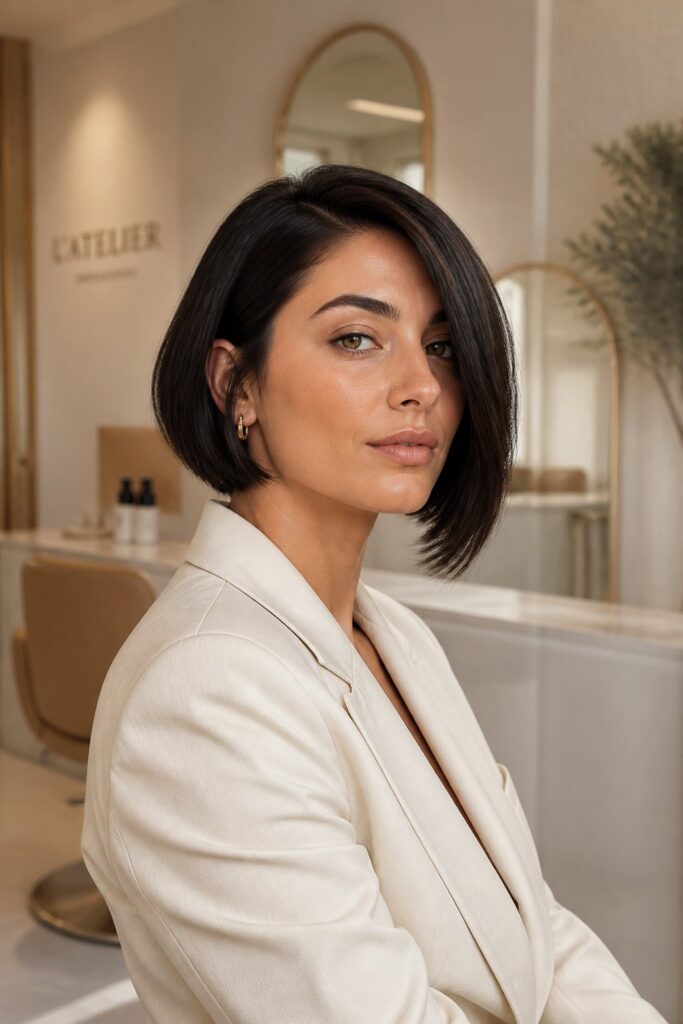
A classic asymmetrical bob usually falls between the chin and jawline. One side remains slightly longer than the other, creating a clean shape without looking too extreme.
This haircut often includes minimal layering so the uneven perimeter stays visible. You can wear it with a side part to emphasize the longer section or with a center part for a softer effect.
Common features of a classic asymmetrical bob include:
- Chin-length or jaw-length shape
- One side slightly longer
- Clean and controlled outline
- Minimal visible layering
- Suitable for straight or lightly wavy hair
This version is ideal if you want a modern haircut that still looks polished and wearable in professional settings.
2. Short Asymmetrical Bob
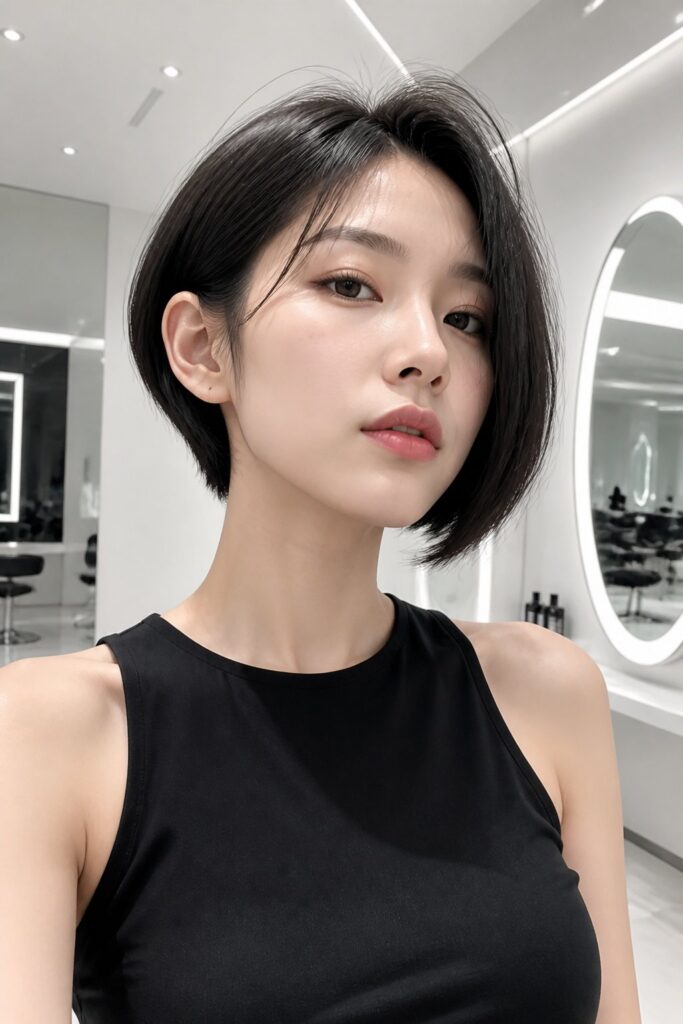
A short asymmetrical bob sits above or directly along the jawline. The shorter length makes the uneven sides easier to notice and creates a sharp, confident appearance.
Your stylist may taper the back or add light graduation to prevent the cut from looking too heavy. The longer side can fall near the chin, while the shorter side may be tucked neatly behind the ear.
This haircut works well if you prefer:
- Easy daily styling
- A lightweight shape
- A visible difference between both sides
- A clean neckline
- A bold but manageable short haircut
Regular trims keep the outline sharp and stop the shorter side from losing its shape.
3. Long Asymmetrical Bob
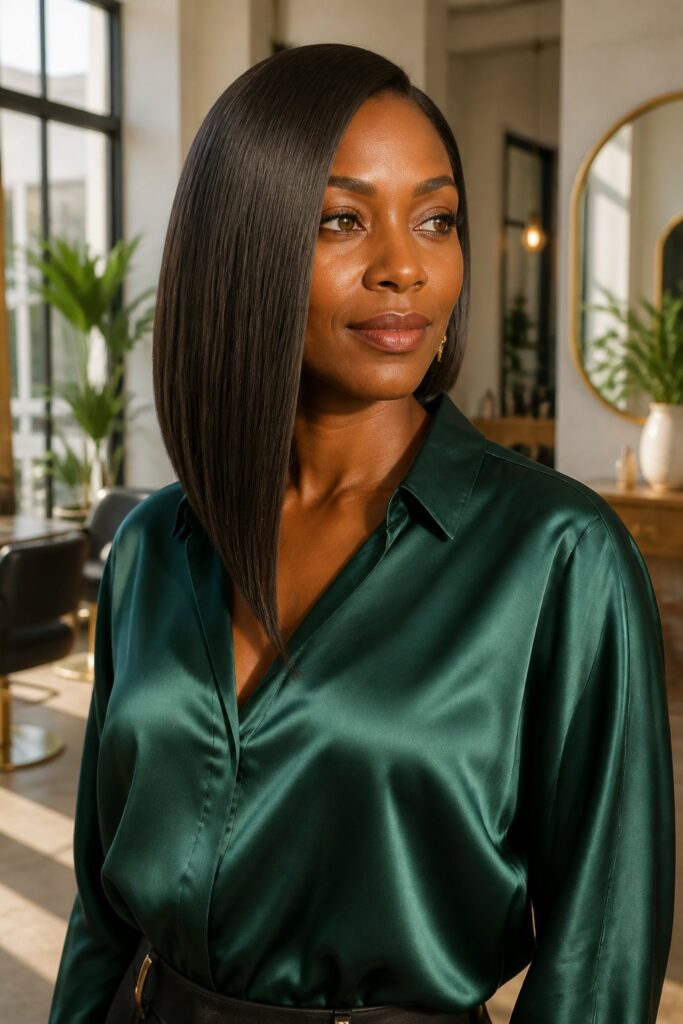
A long asymmetrical bob, often called an asymmetrical lob, falls between the shoulders and collarbone. One side extends lower, while the other stays closer to the shoulder.
This longer variation gives you more styling flexibility. You can wear it straight, curled, waved, or tied into a low ponytail.
A long asymmetrical bob is a good choice if you want an uneven haircut without losing too much length. The diagonal shape can also make a round face appear longer and more defined.
4. Blunt Asymmetrical Bob
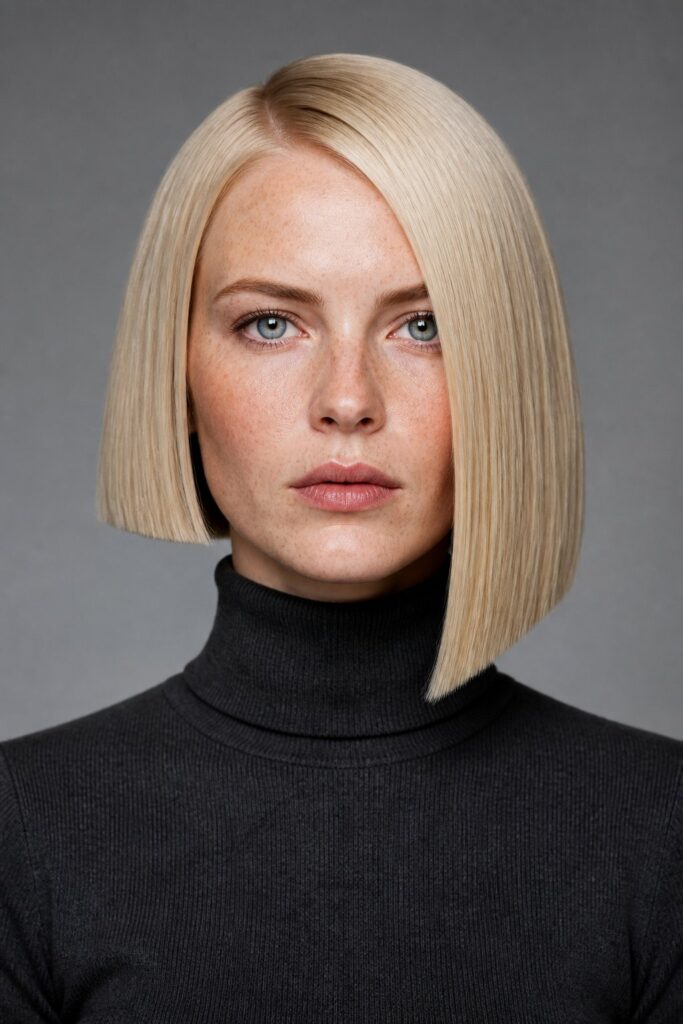
A blunt asymmetrical bob has a strong, solid baseline with little or no visible layering. The ends look thick, even though the two sides remain different in length.
This structure gives fine hair a fuller appearance. It also creates a sleek and modern outline when styled straight.
Key traits of a blunt asymmetrical bob:
- One-length perimeter
- Thick-looking ends
- Sharp diagonal shape
- Minimal layering
- Best suited to straight or straightened hair
Because every edge is visible, this haircut needs regular trimming to maintain its precise finish.
5. Sleek Asymmetrical Bob
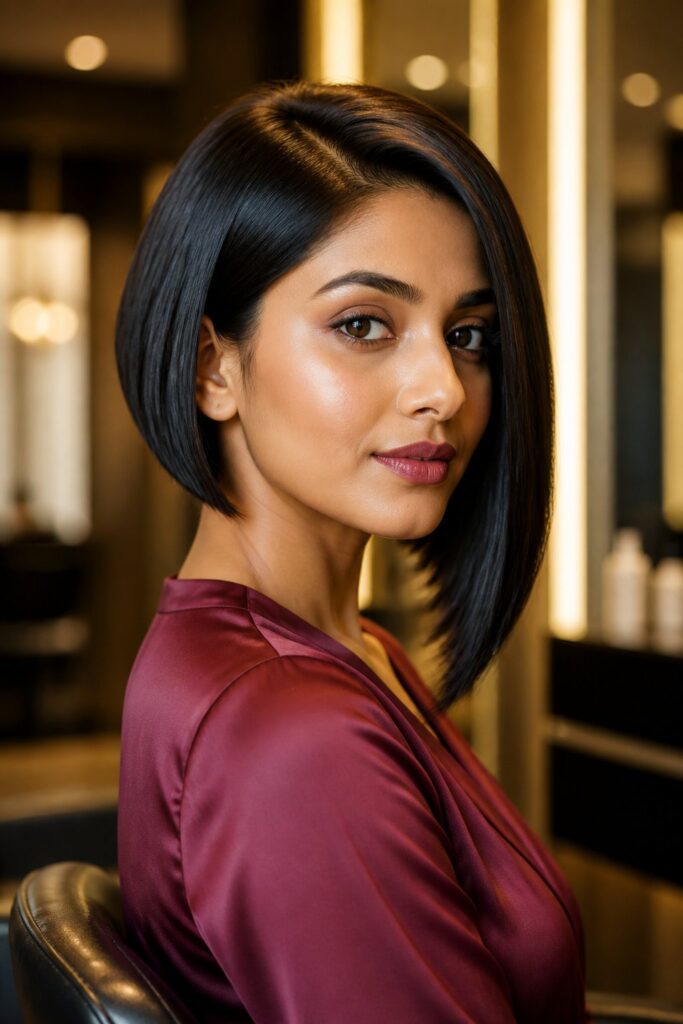
A sleek asymmetrical bob focuses on smooth strands, clean lines, and a glossy finish. The hair lies close to the head, allowing the uneven length to stand out clearly.
You can wear it with a deep side part for extra drama or choose a softer part to keep the look understated.
To style it, blow-dry the hair in sections and use a flat iron only where necessary. Finish with a lightweight serum to control flyaways without making the hair look flat.
Angled, Inverted, and Sculpted Asymmetrical Bobs
Angles and graduation can make an asymmetrical bob look more structured. These techniques create movement from the back toward the front and help shape the haircut from every side.
6. Angled Asymmetrical Bob
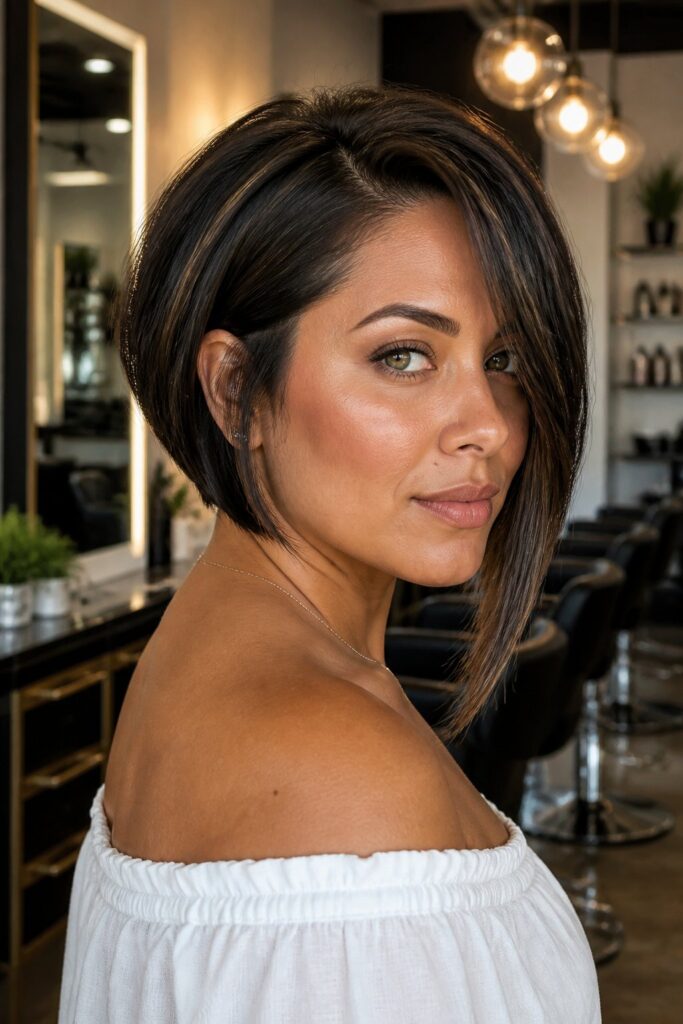
An angled asymmetrical bob is shorter at the back and gradually becomes longer toward the front. One front section then extends farther than the other, creating an additional diagonal line.
The combination of two angles gives the haircut a sharp and contemporary appearance.
Main characteristics include:
- Shorter back section
- Longer front pieces
- One side more extended
- Visible diagonal line from the profile
- Best for straight or slightly wavy hair
This style can elongate round faces and bring more definition to the jawline.
7. Inverted Asymmetrical Bob
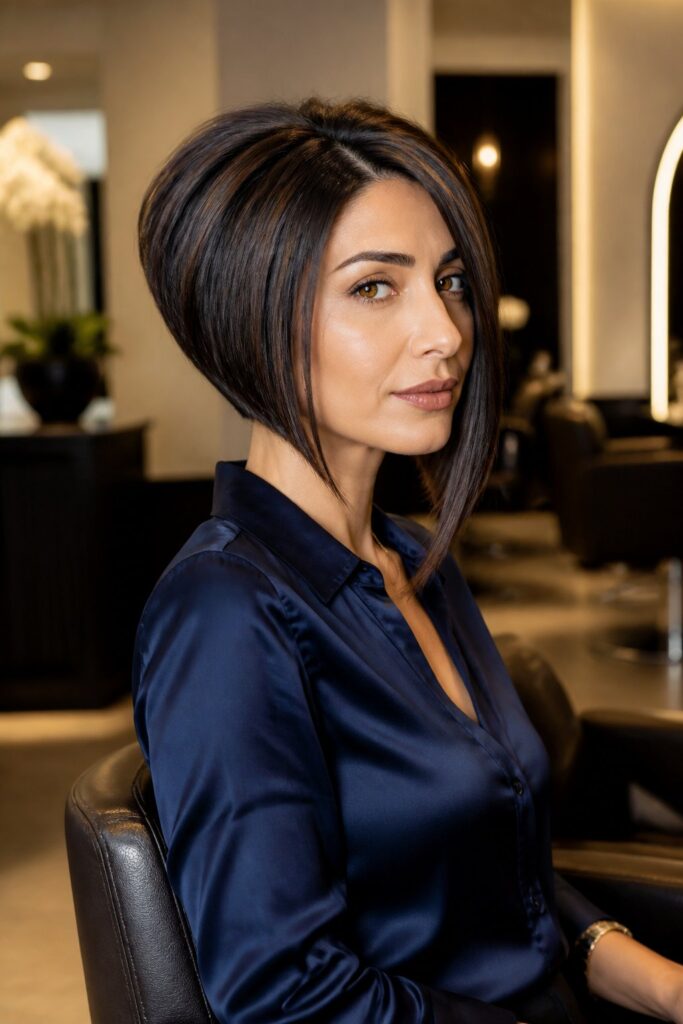
An inverted asymmetrical bob includes graduated layers at the back and longer sections around the face. The back appears rounded and lifted, while the front looks sleek and angular.
This shape creates natural volume near the crown and works particularly well for hair that tends to fall flat.
You can choose a subtle inverted shape for an elegant result or a more dramatic angle for a bolder haircut.
8. Stacked Asymmetrical Bob
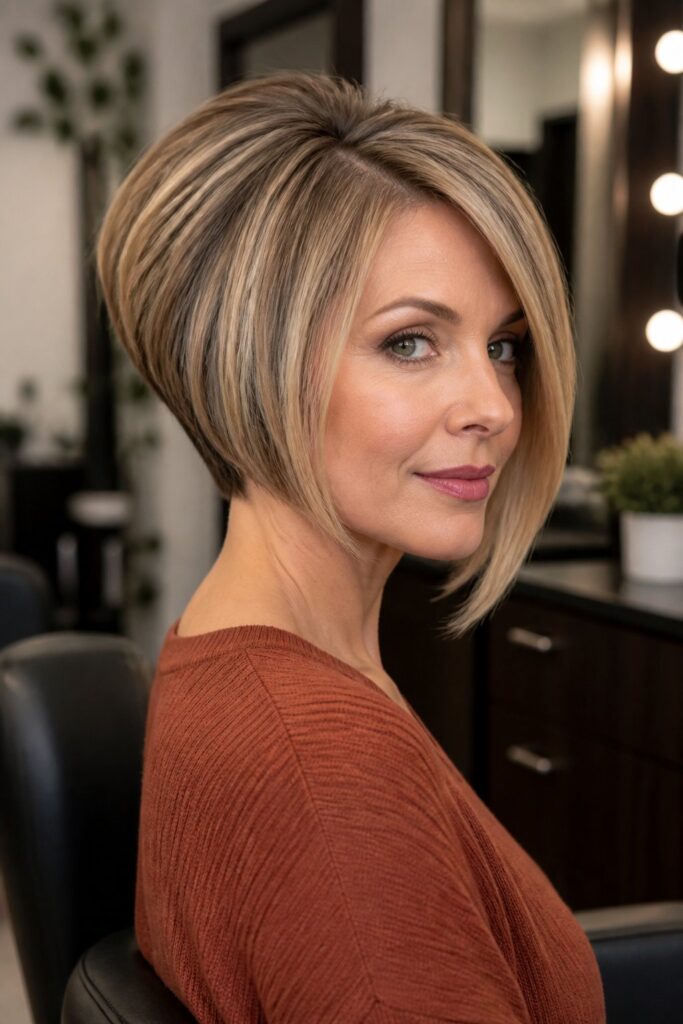
A stacked asymmetrical bob uses short, graduated layers through the back. These layers sit on top of one another and create fullness around the crown.
The front remains longer, with one side extending farther than the other. This contrast makes the back appear rounded and the front more sharply defined.
A stacked asymmetrical bob is especially useful if you have:
- Fine or flat hair
- Low volume at the crown
- A preference for a shaped neckline
- Straight or lightly wavy texture
Blow-dry with a round brush to lift the back and curve the ends inward.
9. Rounded Asymmetrical Bob

A rounded asymmetrical bob curves gently under the chin. Instead of creating a harsh straight edge, the ends bend inward and follow the natural shape of the face.
One side remains longer, but the overall silhouette feels soft and balanced.
This haircut can add fullness around the sides and soften strong facial angles. It works well for fine to medium hair and can be styled with a smooth blowout.
10. Sculpted Asymmetrical Bob
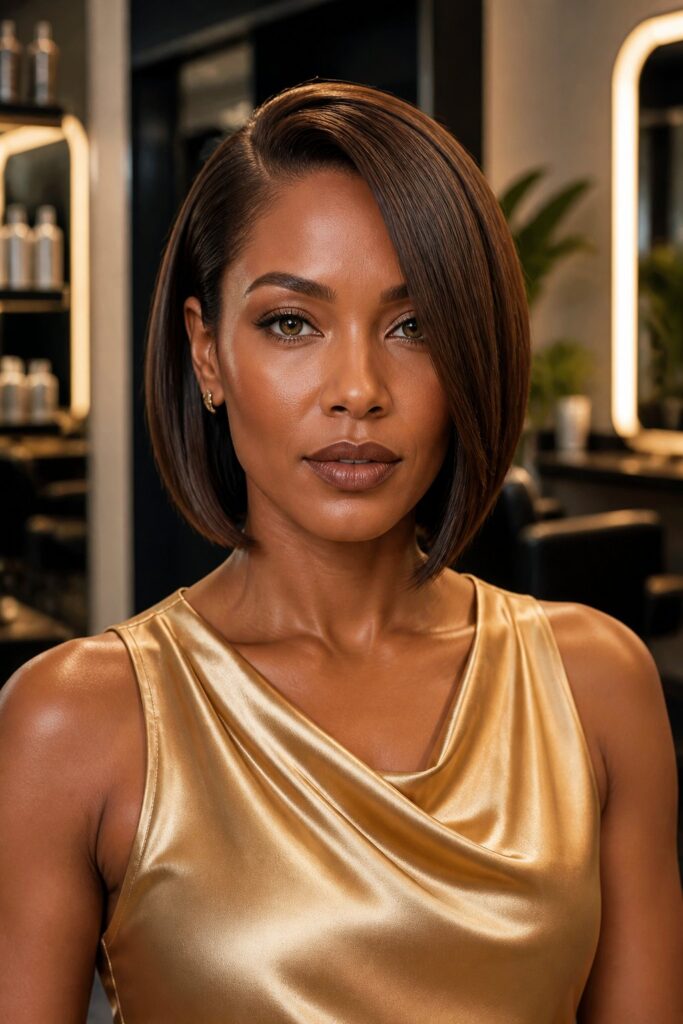
A sculpted asymmetrical bob has a carefully shaped back, crown, and front. The cut is designed to maintain a controlled silhouette from every angle.
Your stylist may use internal graduation, hidden layering, and precise cutting around the neckline. The longer front side creates the asymmetry without disturbing the smooth overall shape.
This version is ideal if you prefer a neat, professional haircut with a modern feature.
Layered and Textured Asymmetrical Bob Options
Layers change how an asymmetrical bob moves. They can remove bulk, create volume, soften sharp edges, and make the haircut easier to style.
The amount of layering should depend on your hair density. Fine hair usually needs fewer layers, while thick hair can handle more internal shaping.
11. Layered Asymmetrical Bob
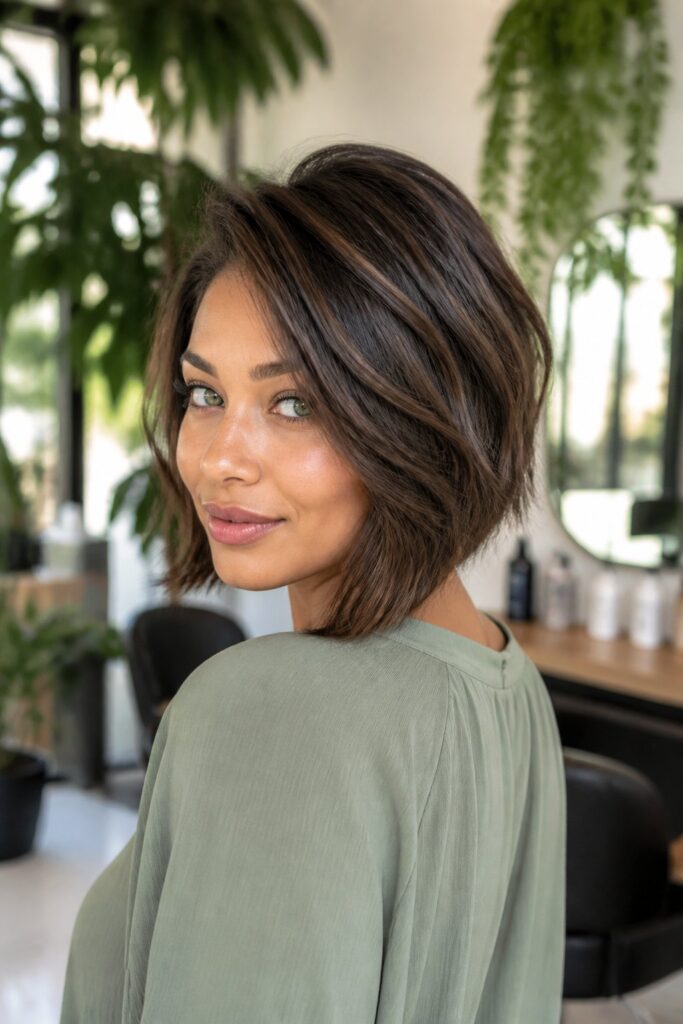
A layered asymmetrical bob includes blended lengths throughout the haircut. The layers create movement while the uneven sides maintain the main structure.
Light crown layers can add lift, while face-framing pieces soften the longer side.
This style is suitable if you want:
- More movement through the hair
- Less weight around the ends
- A softer asymmetrical outline
- Styling flexibility
- A cut that works straight or wavy
Avoid removing too much hair near the perimeter if your strands are fine.
12. Choppy Asymmetrical Bob
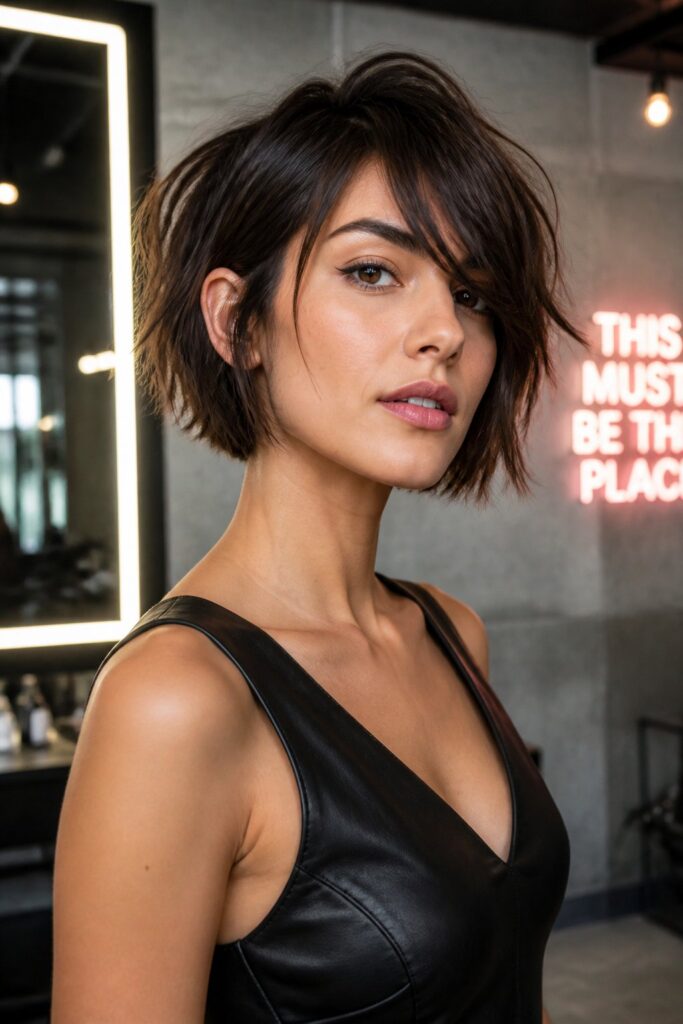
A choppy asymmetrical bob uses uneven, separated layers to create an edgy finish. The ends look intentionally irregular instead of perfectly smooth.
This texture makes the haircut appear lighter and more youthful. It also helps straight hair hold waves and bends more easily.
Use a small amount of styling paste or texture spray to separate the layers. Apply product mainly through the mid-lengths and ends to avoid flattening the roots.
13. Shaggy Asymmetrical Bob
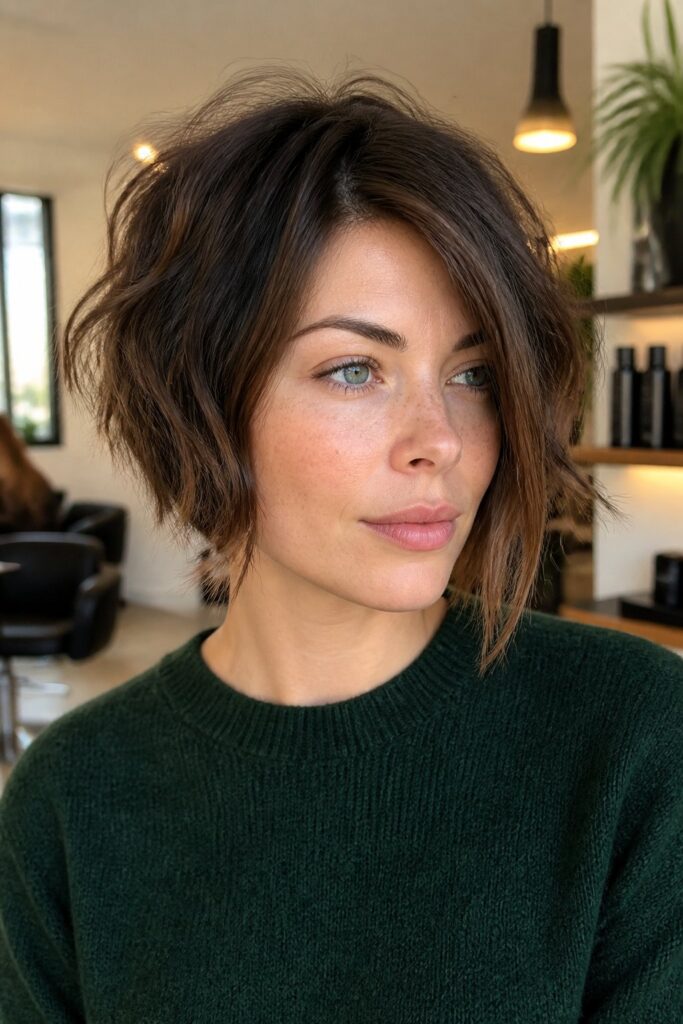
A shaggy asymmetrical bob includes more layering through the crown, sides, and ends. The overall shape looks relaxed and slightly undone.
The longer side still frames the face, but the difference in length feels softer because of the textured finish.
Choose a shaggy asymmetrical bob if you:
- Like natural movement
- Want volume around the crown
- Prefer relaxed styling
- Have wavy or lightly curly hair
- Do not want a highly polished outline
This haircut can work for both thick and fine hair when the layers are adjusted carefully.
14. Tousled Asymmetrical Bob
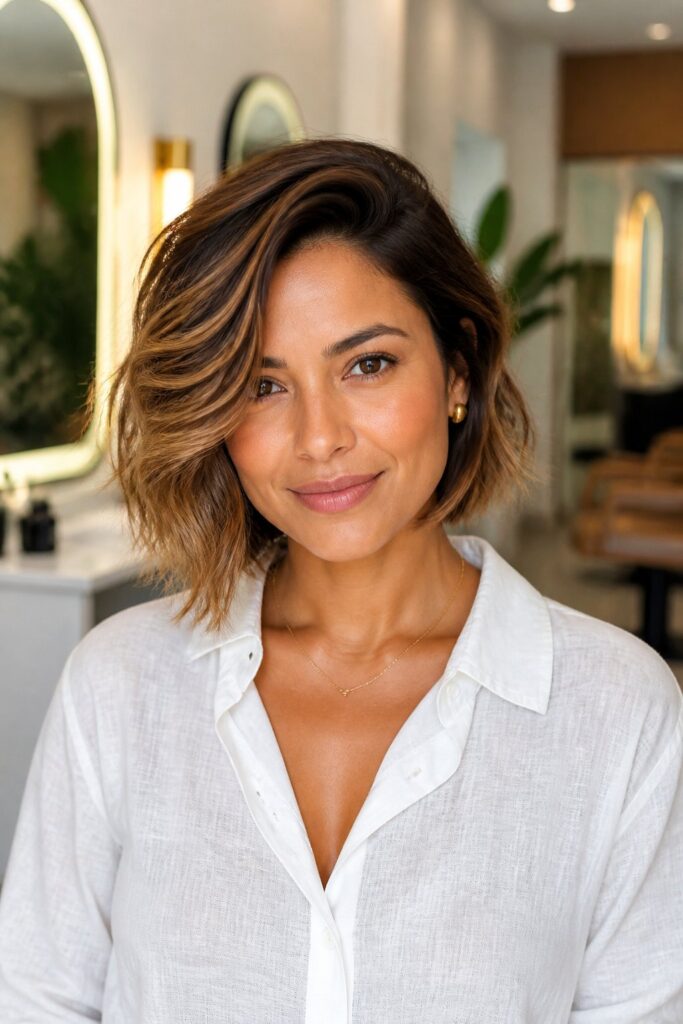
A tousled asymmetrical bob focuses on loose bends and soft separation. The cut often includes long, blended layers that move naturally when styled.
You can create this finish with a curling iron or flat iron. Alternate the direction of each wave and keep the ends slightly straight for a modern result.
A light texture spray helps define the uneven shape without making the hair stiff.
15. Asymmetrical Bob With Side-Swept Bangs
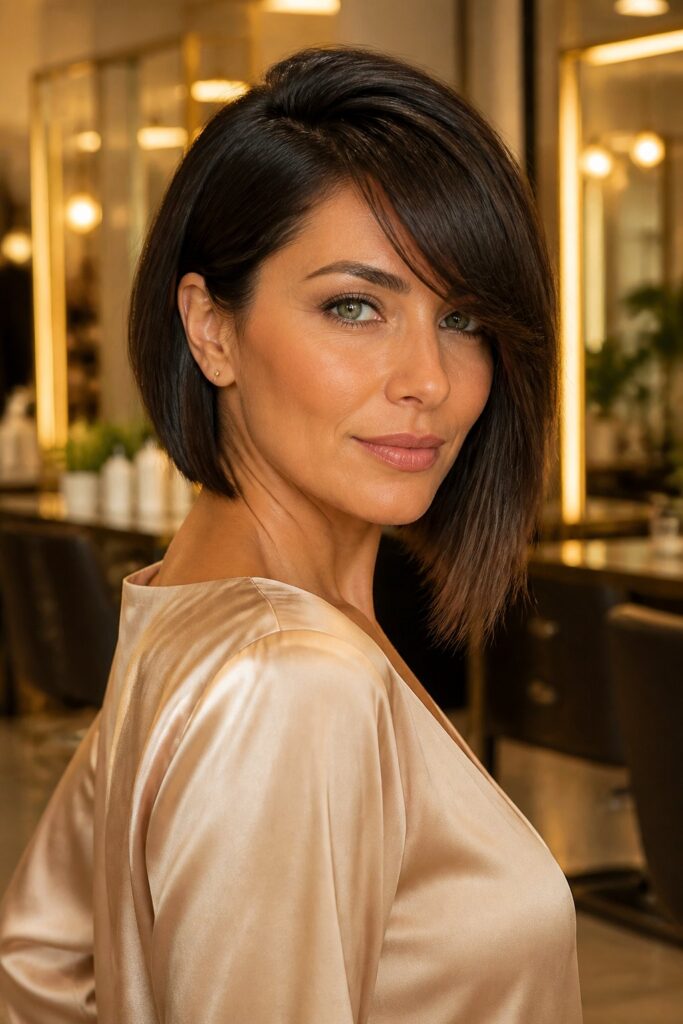
Side-swept bangs blend naturally into the longer side of an asymmetrical bob. They create a smooth diagonal line from the forehead toward the jaw.
This combination can soften a broad forehead and highlight the eyes and cheekbones.
The bangs should be long enough to move easily and blend into the front layers. Blow-dry them with a round brush to keep them lifted and controlled.
16. Asymmetrical Bob With Curtain Bangs
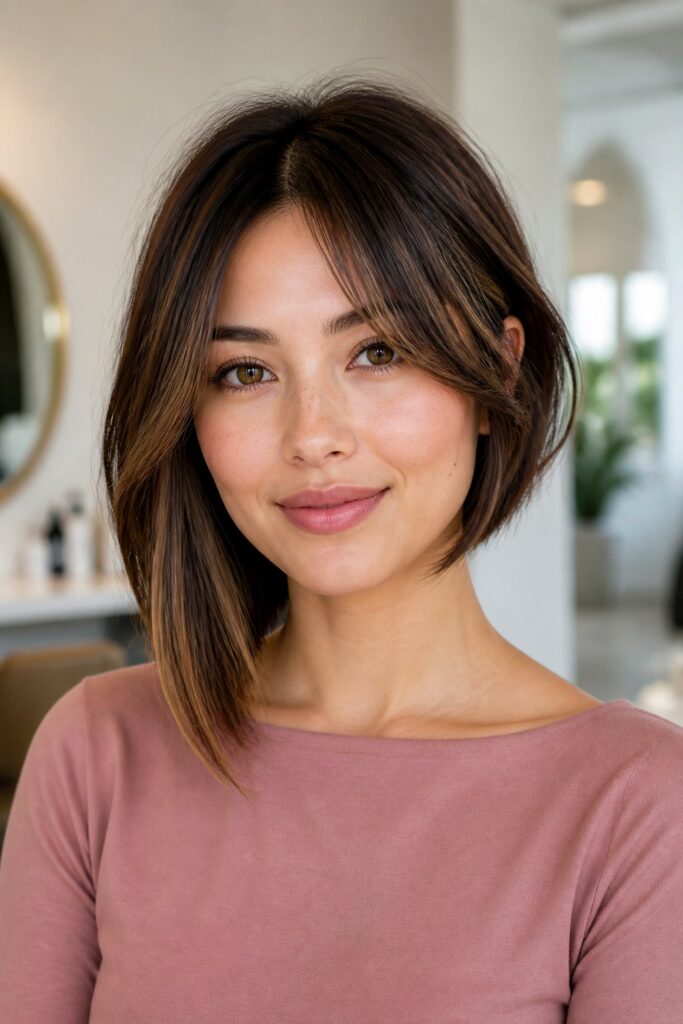
Curtain bangs part near the center and frame both sides of the face. They add softness to the strong uneven outline of an asymmetrical bob.
This style works particularly well with a long bob or layered shape. The bangs can remain cheekbone-length and blend gradually into the longer front pieces.
Curtain bangs help balance the haircut while keeping the main asymmetrical feature visible.
Creative Asymmetrical Bobs for a Bolder Look
You can make an asymmetrical bob more distinctive with short sections, shaved details, strong color contrast, or pixie-inspired shaping.
These variations need more maintenance, but they create a haircut that feels highly personalized.
17. Asymmetrical Pixie Bob
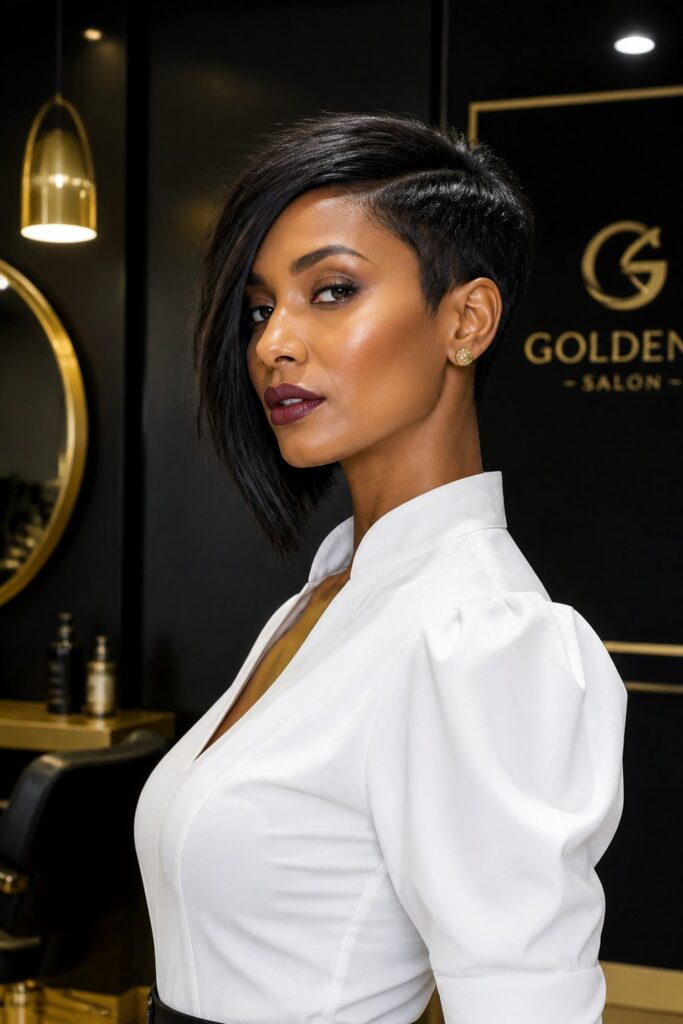
An asymmetrical pixie bob combines the cropped shape of a pixie with the longer front section of a bob. The back and one side stay short, while the opposite side remains long enough to frame the face.
You can wear this haircut sleek, textured, or slightly messy. Short crown layers create volume, while the tapered sections keep the neckline neat.
Best suited for:
- Fine to medium hair
- Oval, heart, and square face shapes
- Women who prefer short styling time
- Those who want a bold front section
A trim every four to six weeks keeps the pixie-bob shape controlled.
18. Asymmetrical Bob With an Undercut
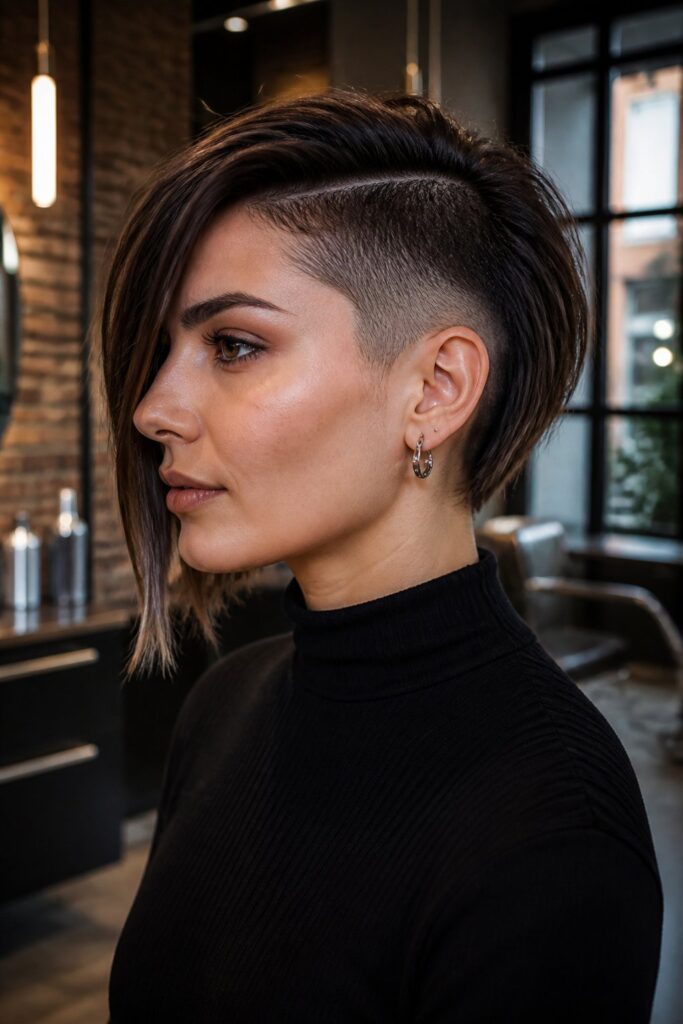
An undercut bob features closely cropped or shaved hair beneath the longer top section. The undercut may sit at the nape or along one side.
You can keep it hidden under the longer hair or expose it by tucking the hair behind your ear.
This haircut works well for thick hair because the undercut removes excess weight. It also gives the bob a sharper and more modern appearance.
Consider these points before choosing an undercut:
- It needs frequent trimming.
- Growing it out requires patience.
- It changes the density of your haircut.
- It can be subtle or highly visible.
- It works best when carefully placed.
19. Deep Side-Part Asymmetrical Bob
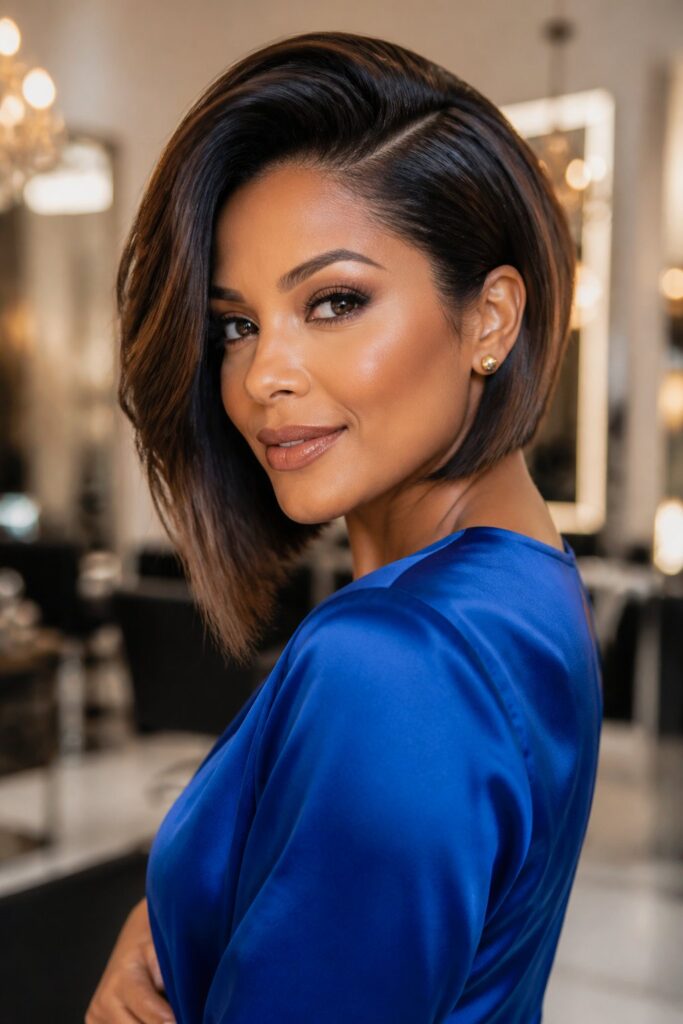
A deep side part naturally increases the difference between the two sides. More hair falls toward the longer section, adding volume and making the angle look stronger.
This styling choice works with straight, wavy, layered, and curly asymmetrical bobs.
Apply a small amount of volumizing product at the roots and blow-dry the hair away from the part for additional lift.
20. Highlighted Asymmetrical Bob
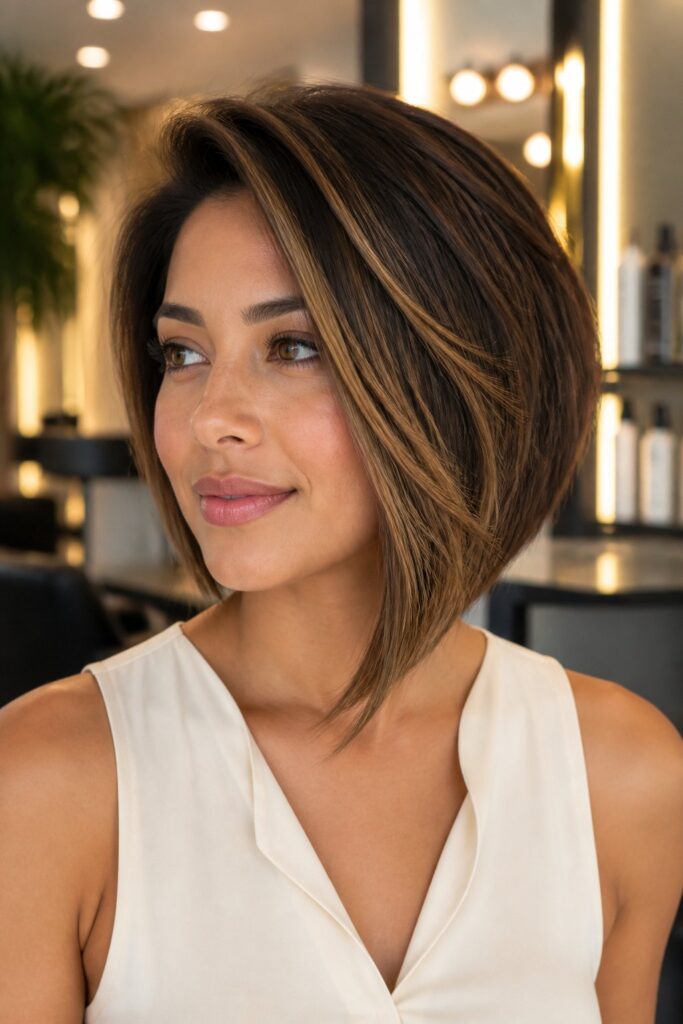
Highlights can make the uneven layers and lengths more visible. Lighter strands placed around the face draw attention toward the longer side.
Balayage creates a blended effect, while brighter face-framing highlights produce more contrast.
Popular color choices include:
- Caramel highlights on brown hair
- Beige blonde pieces
- Ash-toned ribbons
- Copper accents
- Soft honey balayage
The color placement should follow the shape of the haircut rather than covering it evenly.
21. Two-Tone Asymmetrical Bob
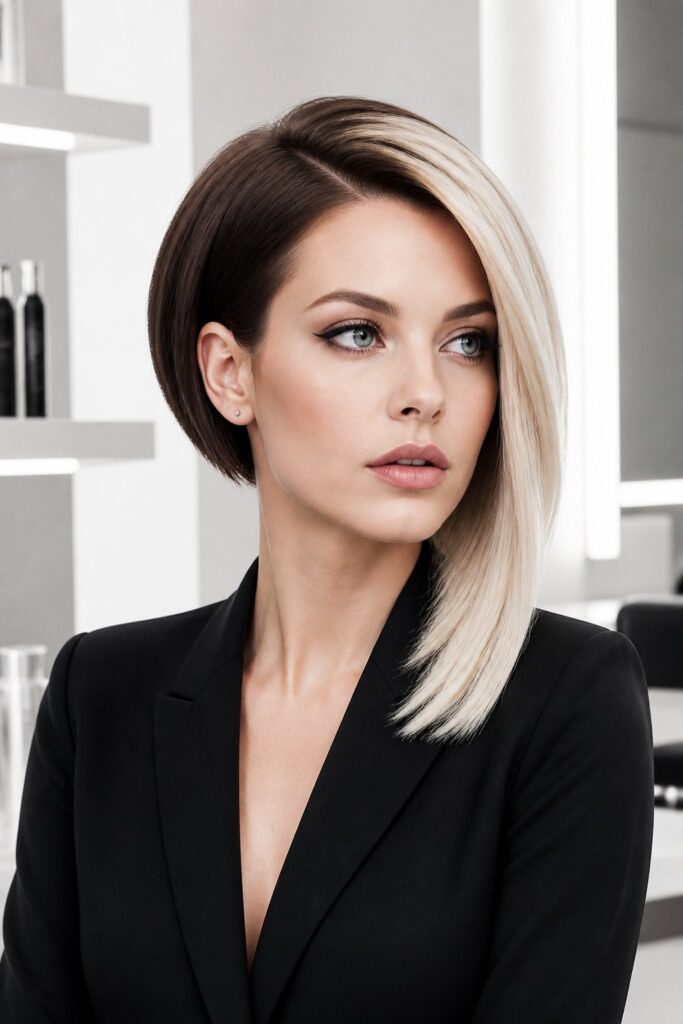
A two-tone asymmetrical bob uses contrasting shades to highlight different sections of the haircut. You can color the shorter side darker and the longer side lighter or add a contrasting panel underneath.
For a subtle look, choose two shades from the same color family. For a bold result, combine strong contrasting tones.
Common combinations include:
- Black and platinum blonde
- Brown and caramel
- Burgundy and bright red
- Dark brown and copper
- Black and silver
Color contrast makes every line more visible, so both the cut and color require regular maintenance.
Comparing Popular Asymmetrical Bob Styles
The best haircut depends on your hair type, preferred length, and desired level of maintenance.
| Asymmetrical Bob Style | Best For | Main Feature |
| Classic asymmetrical bob | Straight or slightly wavy hair | Subtle uneven length |
| Blunt asymmetrical bob | Fine hair | Thick, solid-looking ends |
| Long asymmetrical bob | Women keeping more length | Shoulder or collarbone shape |
| Stacked asymmetrical bob | Fine or flat hair | Volume through the back |
| Layered asymmetrical bob | Medium or thick hair | Soft movement |
| Choppy asymmetrical bob | Straight or wavy hair | Separated textured pieces |
| Curly asymmetrical bob | Natural curls | Uneven shape with bounce |
| Undercut asymmetrical bob | Thick hair | Reduced bulk underneath |
| Pixie asymmetrical bob | Short-hair lovers | Cropped back with long front |
| Sleek asymmetrical bob | Straight hair | Smooth and precise finish |
Asymmetrical Bobs for Different Hair Textures
Your natural texture affects how clearly the asymmetrical line appears. The right cutting technique can create shape without making daily styling difficult.
Best Asymmetrical Bobs for Fine Hair
Fine hair usually benefits from a strong perimeter. A blunt asymmetrical bob or a lightly stacked variation can make the ends look thicker.
Keep layering minimal. Too many short layers may remove density and make the haircut appear thinner.
For additional volume:
- Use lightweight mousse at the roots.
- Blow-dry with a round brush.
- Create a slight bend at the ends.
- Avoid heavy oils and thick creams.
- Keep the cut above the shoulders.
A clean diagonal line can make fine hair appear fuller without requiring heavy styling.
Asymmetrical Bobs for Thick Hair
Thick hair can become wide or bulky in a short bob. Internal layers help remove weight while preserving the visible outline.
Your stylist may use point cutting, slide cutting, or hidden graduation underneath the top section.
A long asymmetrical bob, textured bob, or undercut version can make thick hair feel lighter and easier to manage.
Use smoothing cream before blow-drying and work in sections to maintain control.
Asymmetrical Bobs for Straight Hair
Straight hair shows the uneven length clearly, making it ideal for blunt, sleek, angled, and inverted bobs.
A precise cut is important because uneven or damaged ends become more noticeable on smooth hair.
You can style the ends completely straight or turn them slightly inward with a round brush.
Wavy Asymmetrical Bob Options
Natural waves soften the diagonal shape and create an effortless finish. Long layers can support the wave pattern without making the hair too wide.
Keep the length between the chin and collarbone for balanced movement.
Apply a lightweight curl cream or styling spray, then scrunch the hair while it dries. Avoid brushing once the waves are fully dry.
Curly Asymmetrical Bob Options
A curly asymmetrical bob highlights natural bounce and volume. The stylist should shape the cut according to how the curls sit when dry.
Shorter crown layers add lift, while longer sections near the jaw prevent the haircut from becoming triangular.
For styling:
- Apply curl cream to damp hair.
- Use a diffuser on low heat.
- Avoid separating curls too much.
- Keep longer pieces around the face.
- Trim the haircut according to curl shrinkage.
The difference in length may appear softer on curly hair, but it still creates an attractive and distinctive shape.
Choosing an Asymmetrical Bob for Your Face Shape
The angle and length of the haircut can be adjusted to complement different facial features.
Round Face
Choose a long or angled asymmetrical bob that falls below the chin. The diagonal line and longer front section can make the face appear more elongated.
Avoid excessive width around the cheeks.
Square Face
Soft layers, waves, and side-swept bangs can balance a strong jawline. Keep the longer side near or below the chin to create a softer outline.
Heart-Shaped Face
A chin-length asymmetrical bob adds fullness around the lower part of the face. Curtain bangs or side-swept bangs can balance a wider forehead.
Oval Face
Oval faces can wear most asymmetrical bob variations. You can choose a short, blunt, stacked, curly, or dramatically angled shape.
Long Face
Choose a chin-length or wavy asymmetrical bob. Volume at the sides can help create balance, while extremely long front pieces may make the face appear longer.
Styling and Maintaining an Asymmetrical Bob
The uneven outline needs regular care to stay intentional. How often you trim your haircut depends on its length and structure.
Short, pixie-inspired, blunt, and undercut bobs usually need trimming every four to six weeks. Longer and softly layered versions may last six to eight weeks.
Keep these maintenance tips in mind:
- Use heat protectant before hot tools.
- Apply lightweight products to fine hair.
- Use smoothing cream on coarse or thick hair.
- Trim split ends before they affect the shape.
- Avoid placing too much product near the roots.
- Follow the haircut’s natural angle when blow-drying.
For sleek styling, dry the hair in small sections and direct the longer side toward the face.
For a tousled finish, add loose bends through the mid-lengths and separate them with your fingers.
For curls and waves, use a diffuser or allow the hair to air-dry while maintaining the natural pattern.
Frequently Asked Questions
What is an asymmetrical bob?
An asymmetrical bob is a haircut in which one side is intentionally longer than the other. The length difference can be subtle or very dramatic.
Is an asymmetrical bob still stylish?
Yes, asymmetrical bobs remain stylish because they combine a classic haircut with a modern uneven shape. They can also be customized for different hair textures and face shapes.
Which face shape suits an asymmetrical bob?
Most face shapes can wear an asymmetrical bob. The stylist should adjust the length, angle, bangs, and layering to suit your facial features.
Is an asymmetrical bob good for fine hair?
Yes, a blunt or stacked asymmetrical bob can make fine hair look fuller. Minimal layering helps keep the ends thick and strong.
Can thick hair be cut into an asymmetrical bob?
Yes, thick hair works well with internal layers, textured ends, or an undercut. These techniques remove bulk while maintaining the haircut’s shape.
Does an asymmetrical bob work with curly hair?
Yes, curly hair can look beautiful in an asymmetrical bob. The cut should follow the natural curl pattern and account for shrinkage.
How often should an asymmetrical bob be trimmed?
Most asymmetrical bobs need trimming every four to eight weeks. Shorter and more precise versions usually need more frequent appointments.
Can I wear bangs with an asymmetrical bob?
Yes, side-swept, curtain, wispy, and blunt bangs can complement an asymmetrical bob. Side-swept bangs blend especially well with the longer section.
Is an asymmetrical bob difficult to maintain?
It is generally easy to manage, but the uneven outline requires regular trimming. Sleek and blunt versions may need more styling than textured or wavy cuts.
Can an asymmetrical bob be tied back?
A long asymmetrical bob can usually be tied into a low ponytail. Shorter sections may need clips or pins to stay in place.

2 Comments
Pingback: 17 Best Bob Haircuts for Oval Faces That Look Chic and Flattering – Hair Mora Beauty
Pingback: 35 Italian Bob Haircut Ideas for a Chic, Timeless Look – Hair Mora Beauty