



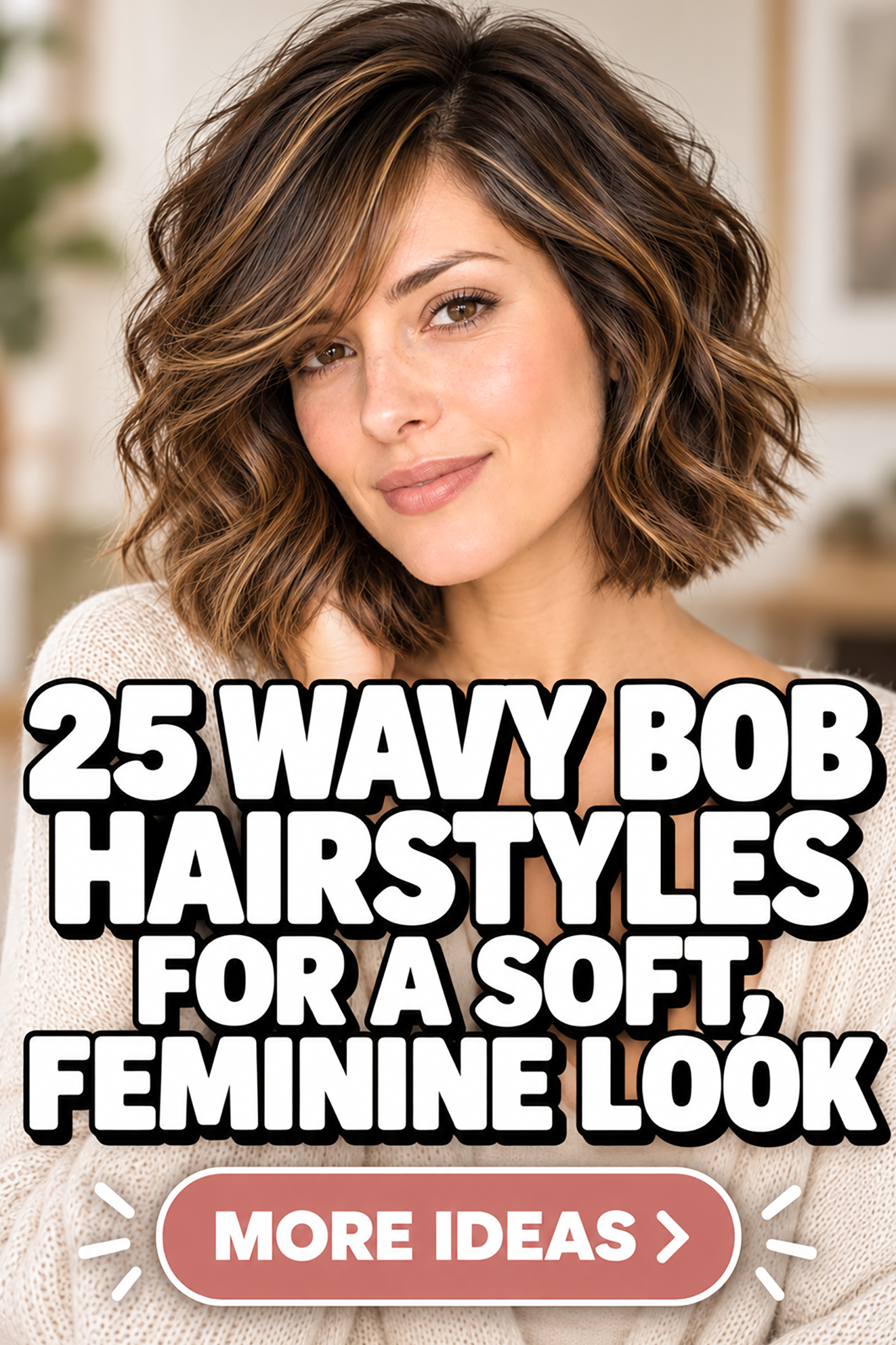
A wavy bob is one of those cuts that photographs beautifully and still works on a Tuesday morning with wet hair and five minutes to spare. The soft bend at the ends catches light, adds movement, and hides the fact that you didn’t do much to it at all. That’s the appeal, and it’s also why so many women bring in a photo that looks nothing like what grows out of their own scalp.
The truth about a wavy bob is that the haircut matters as much as the wave itself. A bob haircut built for naturally wavy hair looks different from one designed for straight or fine strands that need help holding a bend. The best results come from matching the cut, the layering, and the styling routine to your own hair texture and daily habits, not just copying a photo. Whether you have loose waves that need light layering, thick hair that needs weight removed, or straight hair that only holds a curl with a wand, there’s a version of this cut that will work with what you’ve got instead of against it.
This roundup walks through 25 distinct wavy bob looks, organized by how they wear day to day, plus the specifics on face shape, wave pattern, and hair density that turn an inspiration photo into a haircut you can actually recreate and maintain.
Key Takeaways
- A flattering wavy bob depends on matching length, layering, and part placement to your face shape and natural wave pattern.
- Some wavy bobs air-dry beautifully with the right products, while others need a curling wand or flat iron to get the same look as the photo.
- Small maintenance habits, like trims and lightweight styling products, keep waves soft and bouncy instead of flat or frizzy between salon visits.
How to Choose a Wavy Bob That Flatters You
The most flattering wavy bob balances four things: your face shape, your natural wave pattern, your hair’s density, and how much time you actually want to spend styling it. Get those four right and almost any version of this cut looks intentional rather than accidental.
Match the Length and Part to Your Face Shape
An oval face has room to wear nearly any bob length or part placement without much adjustment. A round face benefits from a slightly longer bob that sits below the chin, paired with a side part that breaks up width and adds visual length.
A heart-shaped face looks balanced with a jaw-skimming bob and soft, face-framing waves that widen near the chin to offset a narrower jawline. A square face softens beautifully with rounded ends and a deep side part, which draws the eye diagonally instead of emphasizing a strong jaw. For a long face, a chin-length or slightly shorter bob with a center part and fuller sides adds width where it’s needed most.
Choose Layers Based on Your Wave Pattern
Loose, 2A to 2B waves generally need less internal layering, since the bend is already soft and doesn’t require thinning to move. Tighter, more defined 2C to 3A waves often benefit from more layers to prevent bulk from stacking up underneath.
Naturally wavy hair with an S-pattern tends to look best with layers that start around the cheekbone, letting the wave do the work without cutting away too much shape. Curly hair cut into a bob shape usually benefits from a stylist trained in dry cutting, so the natural curl pattern can be considered before the final layering is shaped.
Balance the Cut With Your Hair Density
Fine or thin hair looks fuller with blunt, weight-heavy ends rather than heavy layering, which can make it look wispy. Medium-density hair has the most flexibility and handles both blunt and layered wavy bobs well.
Thick hair often needs internal layers or point-cutting to prevent a bottom-heavy, triangular silhouette, especially at chin length. Root volume also plays a role here: thicker hair typically holds root lift on its own, while fine hair needs a volumizing product or a strategic part to fake it.
Easy Everyday Wavy Bob Ideas
These five wavy bobs are the ones you can wear to work, run errands in, and still feel put-together without much daily effort. Each version leans on a slightly different level of layering and finish, from a no-fuss classic shape to a deliberately undone, tousled texture.
Classic Wavy Bob
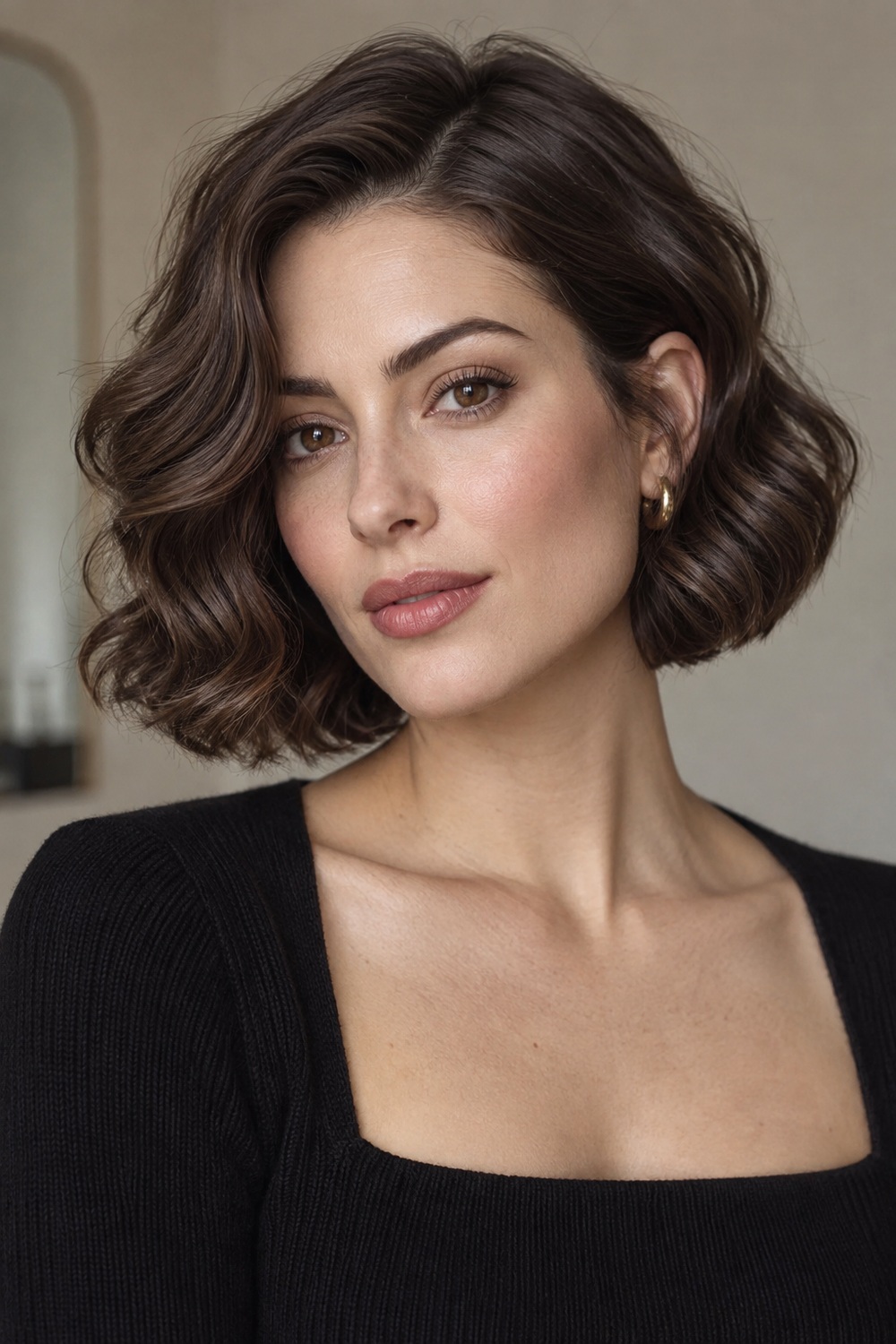

The classic wavy bob sits at the chin or just below it, with soft, uniform waves and minimal layering throughout. It’s one of the most versatile options on this list and can flatter a wide range of face shapes, which is likely why stylists describe it as an “effortless, polished look that still feels modern.
This cut air-dries well on naturally wavy hair and needs only a light mousse to hold its shape.
Soft Wavy Bob With Light Layering
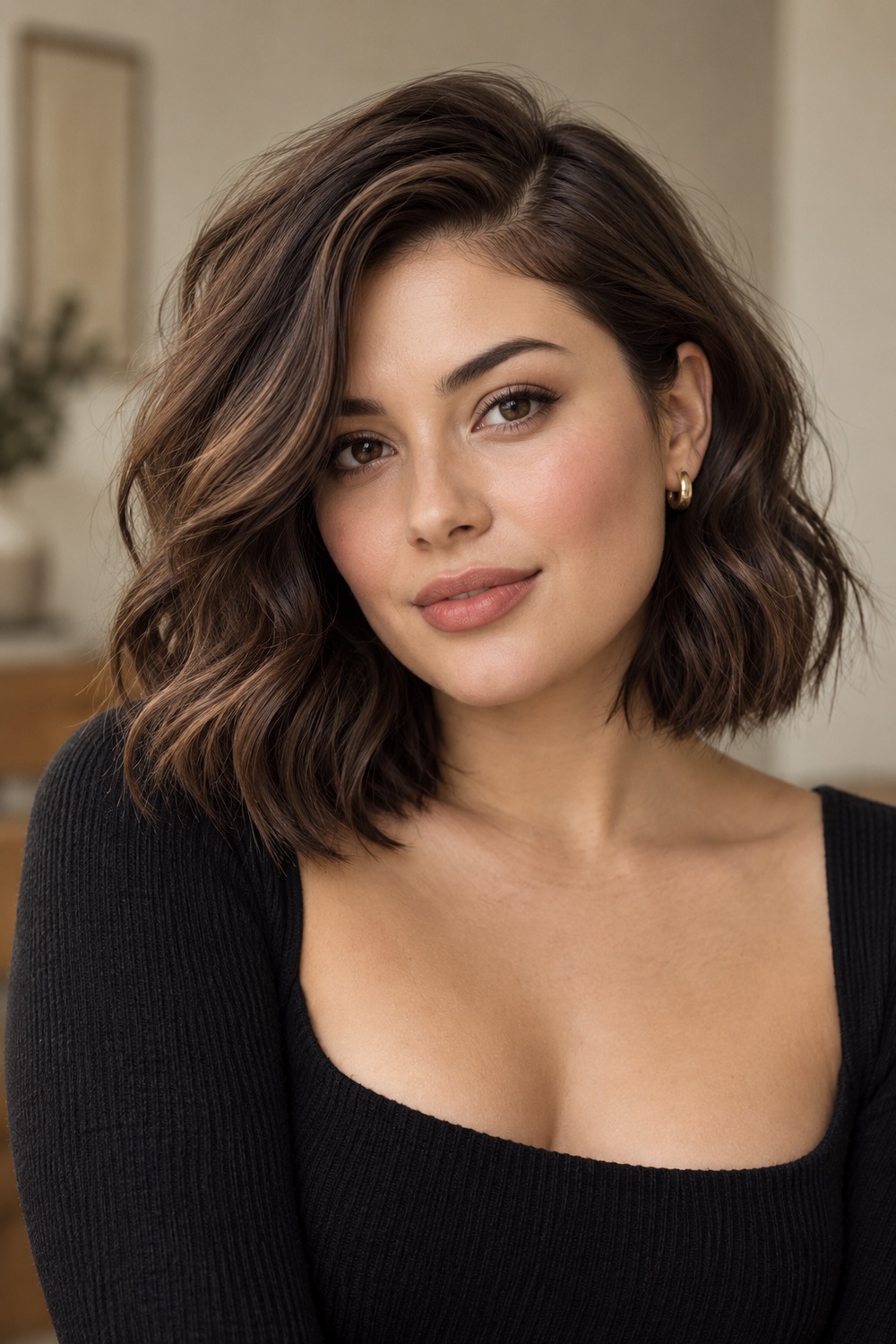
Light layering around the ends keeps this bob’s fullness intact while adding just enough movement to avoid looking blunt or heavy. It works particularly well on medium-density hair with a natural 2A to 2B wave pattern, since the layers enhance the bend instead of fighting it.
Textured Wavy Bob With Tousled Ends
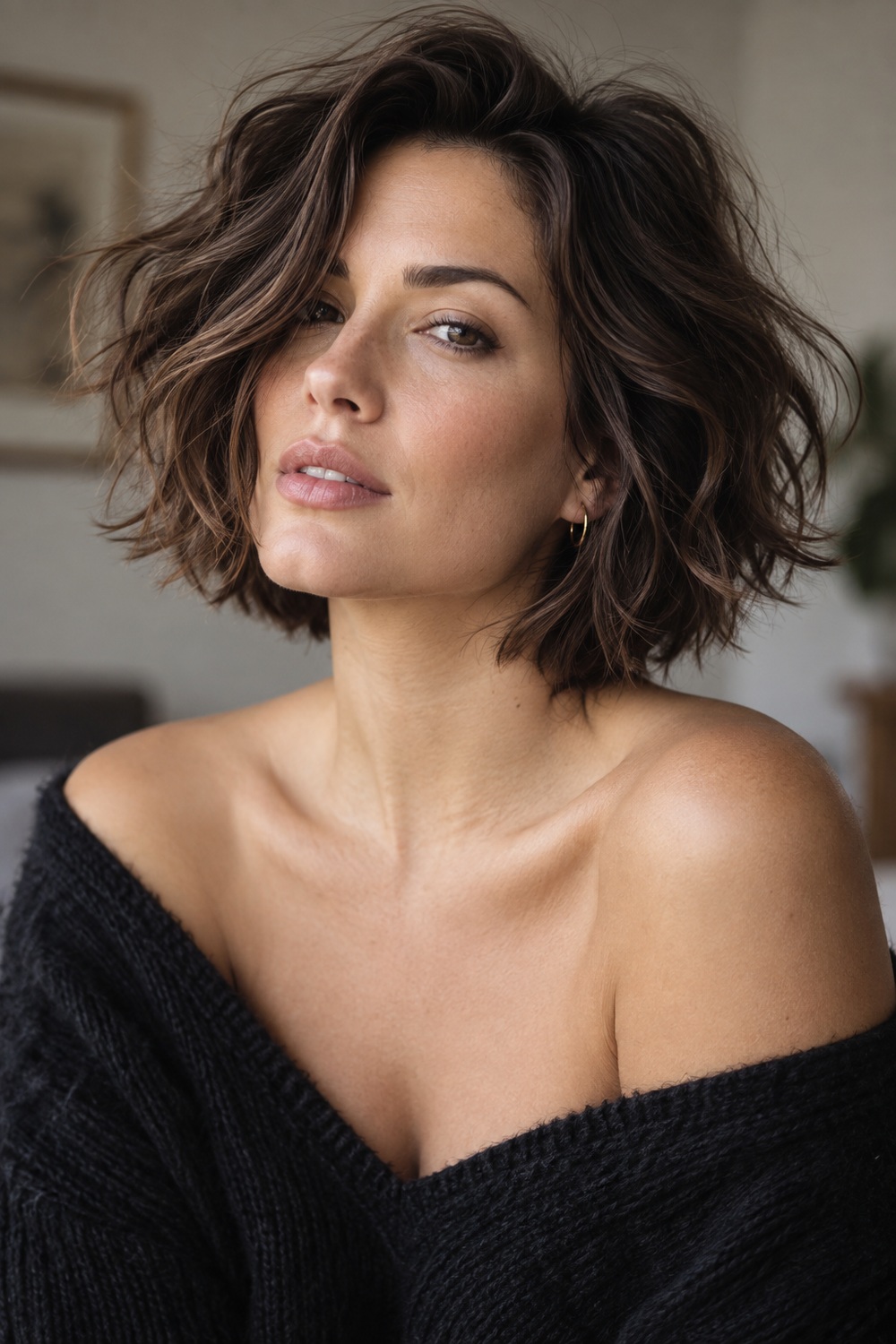
Point-cut, textured ends give this bob a piecey, undone finish that looks good slightly messy. It suits thicker hair that needs some weight removed and pairs well with a texturizing spray for definition.
Beachy Bob With Relaxed Waves
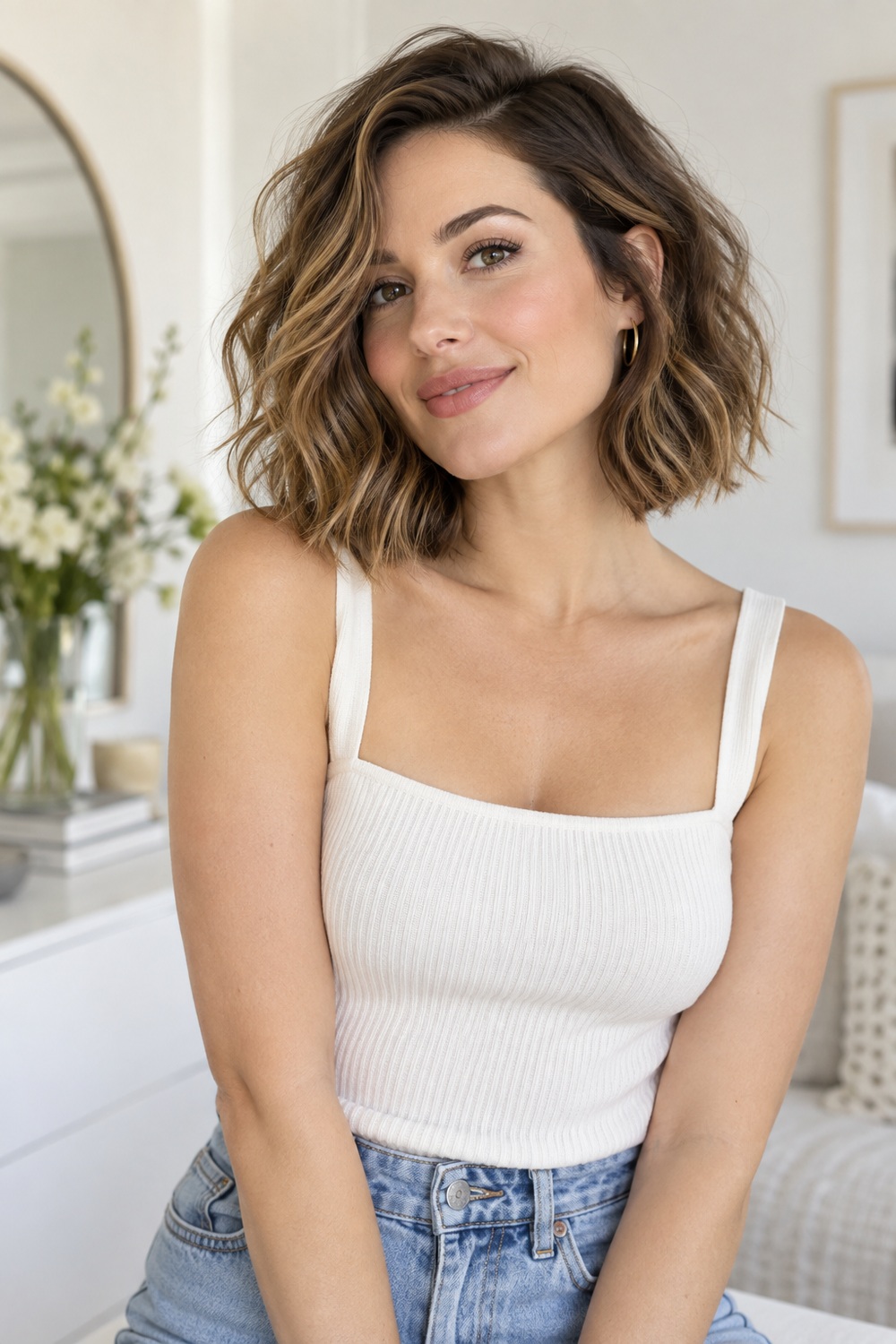
Beach waves on a bob read casual and sun-warmed, with loose, irregular bends rather than uniform curls. A sea salt spray applied to damp hair, then air-dried or diffused, gets you most of the way there without a curling tool.
Blunt Wavy Bob With Soft Bends
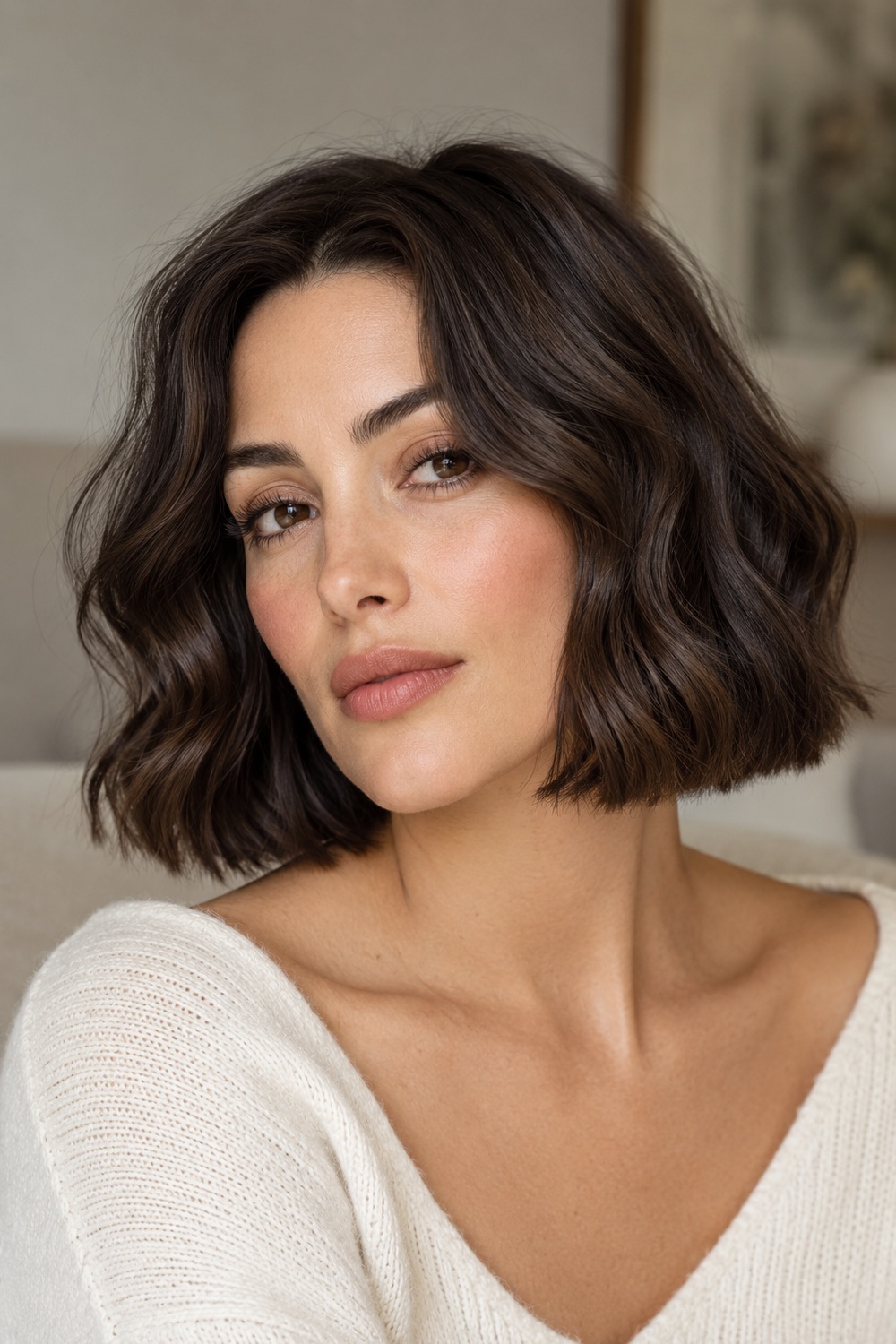
Blunt ends paired with soft, gentle waves create a fuller, denser-looking finish that’s ideal for fine to medium hair. The straight-across line at the bottom preserves visual weight that layering would otherwise soften away.
Short, Chic Cuts That Show Off Natural Movement
Shorter wavy bobs put natural texture front and center, since there’s less length for waves to relax out of shape by midday. These cuts range from a rounded, classic silhouette to a stacked shape built for extra crown lift.
Chin-Length Bob With Loose Waves
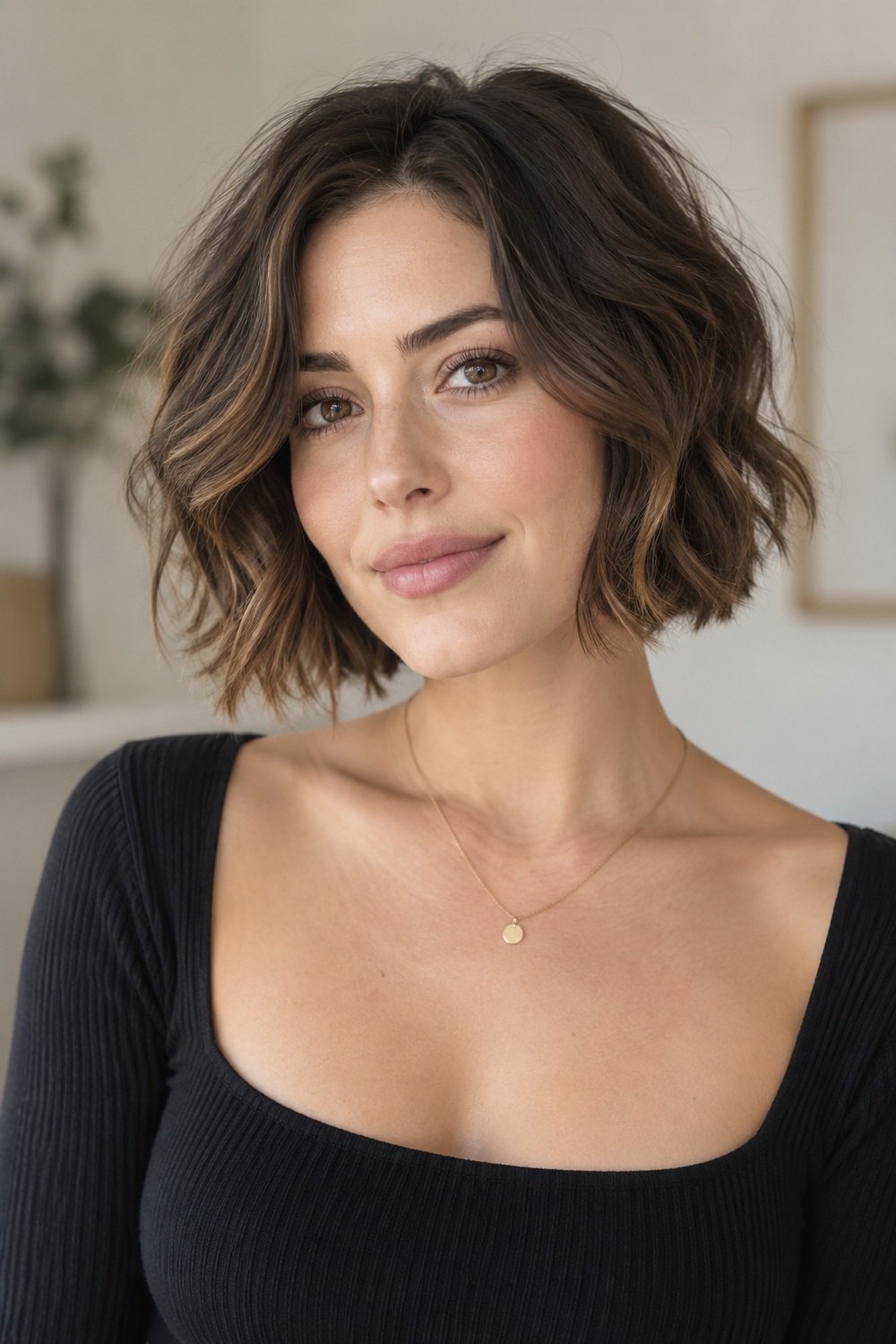
A chin-length bob with loose waves is one of the most wearable versions of this cut and can work across “most face shapes and ages,” according to this breakdown of wavy bob ideas. It suits 2A to 2C wave patterns best and typically needs nothing more than a curl cream on damp hair before air-drying or diffusing.
Jaw-Length French Bob
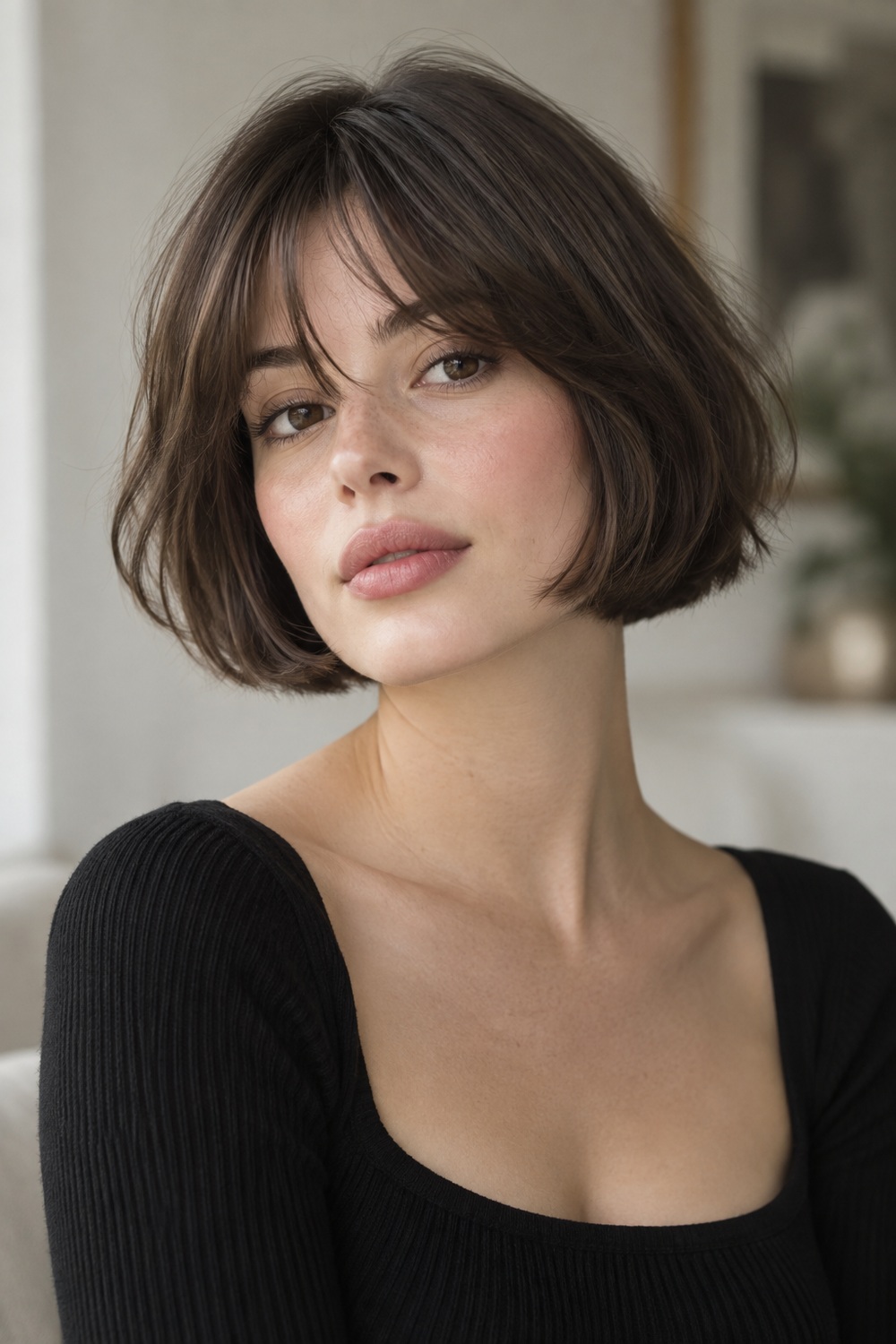
The jaw-length French bob has a slightly rounded shape with soft, wispy ends and often pairs with curtain bangs. It looks best on oval and heart-shaped faces and holds up well on naturally wavy or straight-but-textured hair.
Rounded Bob With Gentle Texture
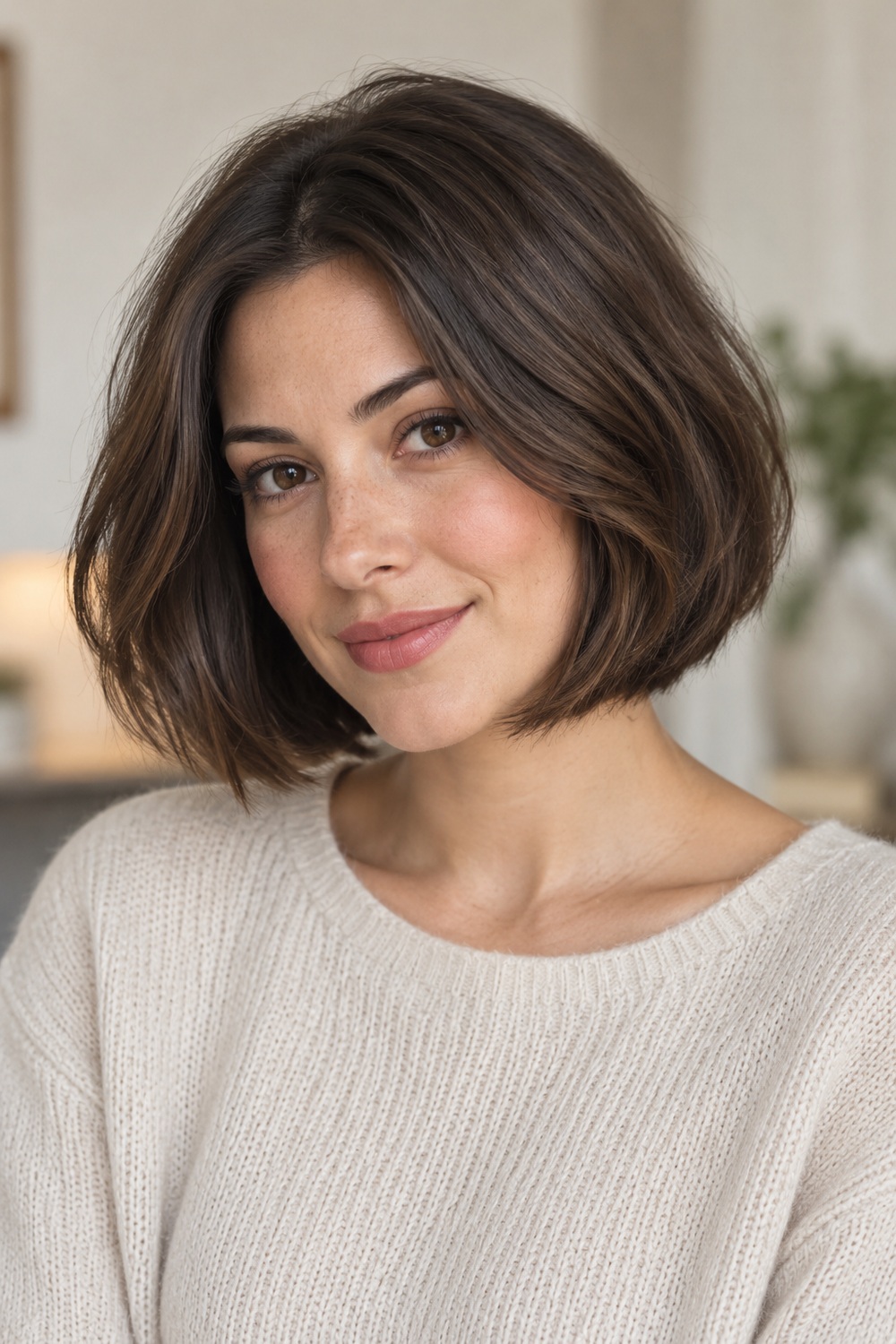
A rounded bob keeps a soft, curved perimeter with light texturizing throughout rather than heavy layers. It’s a forgiving shape for square faces, since the roundness offsets a stronger jawline.
Short Bob With a Deep Side Part
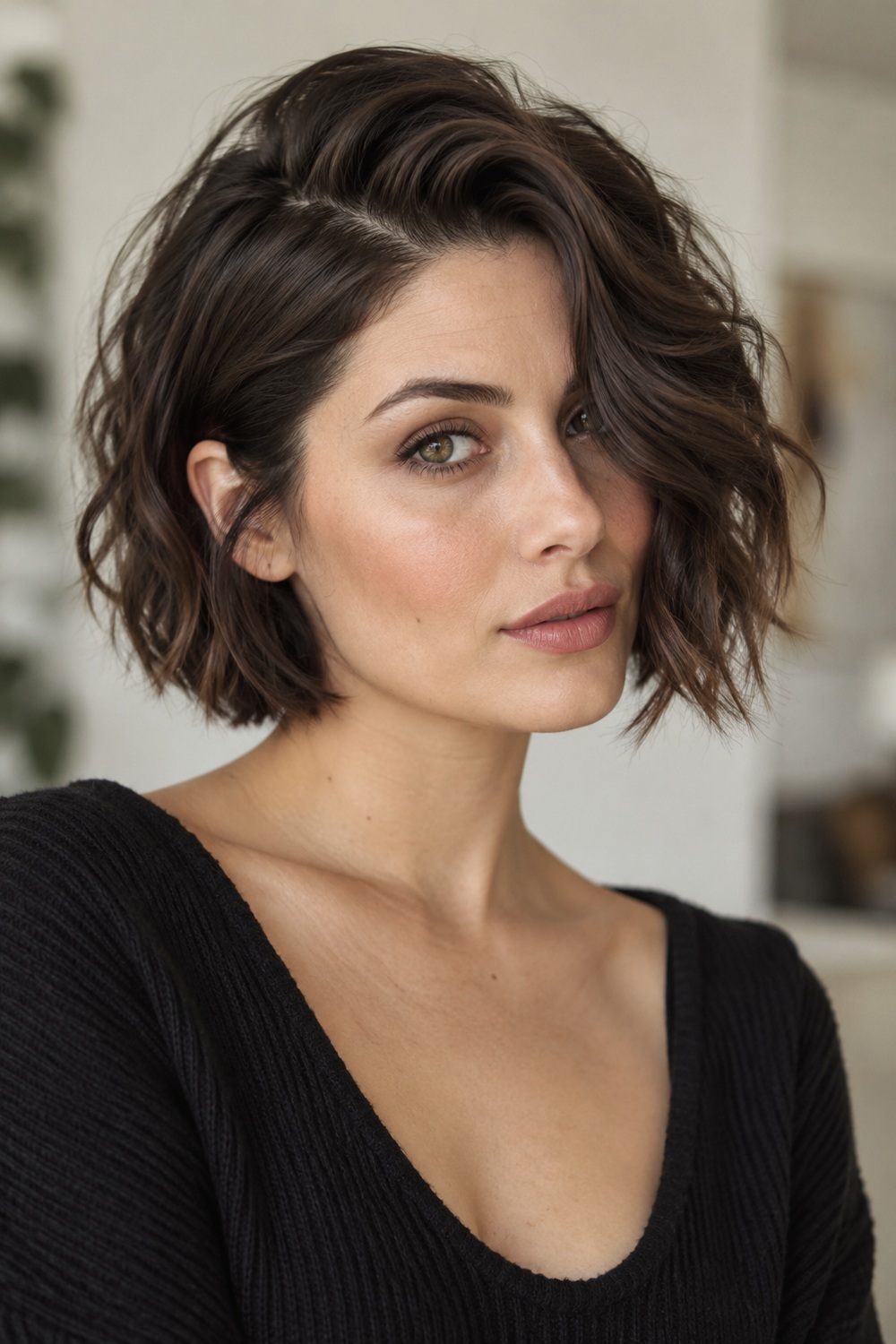
Shifting to a deep side part instantly adds root volume on one side and creates asymmetry that makes a short bob look more dynamic. This works especially well for fine hair that needs help faking fullness at the crown.
Stacked Wavy Bob With Crown Lift
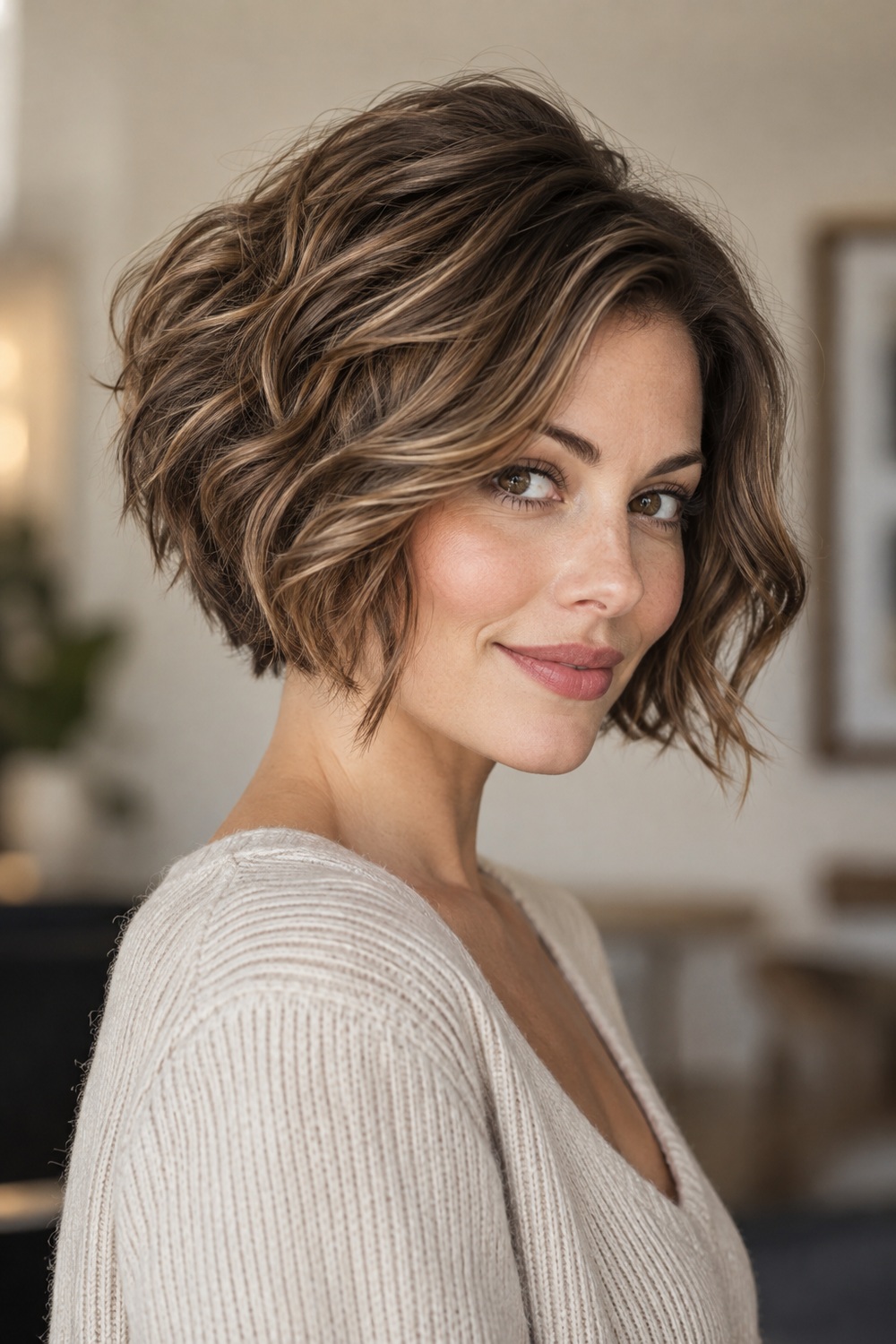
Graduated, stacked layers at the back build height and movement, particularly on fine to medium hair that falls flat without structure. This shape needs a bit more upkeep to maintain the graduation as hair grows out.
Face-Framing Bobs With Bangs and Layers
Bangs and face-framing layers change how a wavy bob interacts with your features, softening a strong jawline or drawing attention to the eyes. The looks below range from soft curtain bangs to a fuller, shaggier fringe with more texture.
Bob With Curtain Bangs
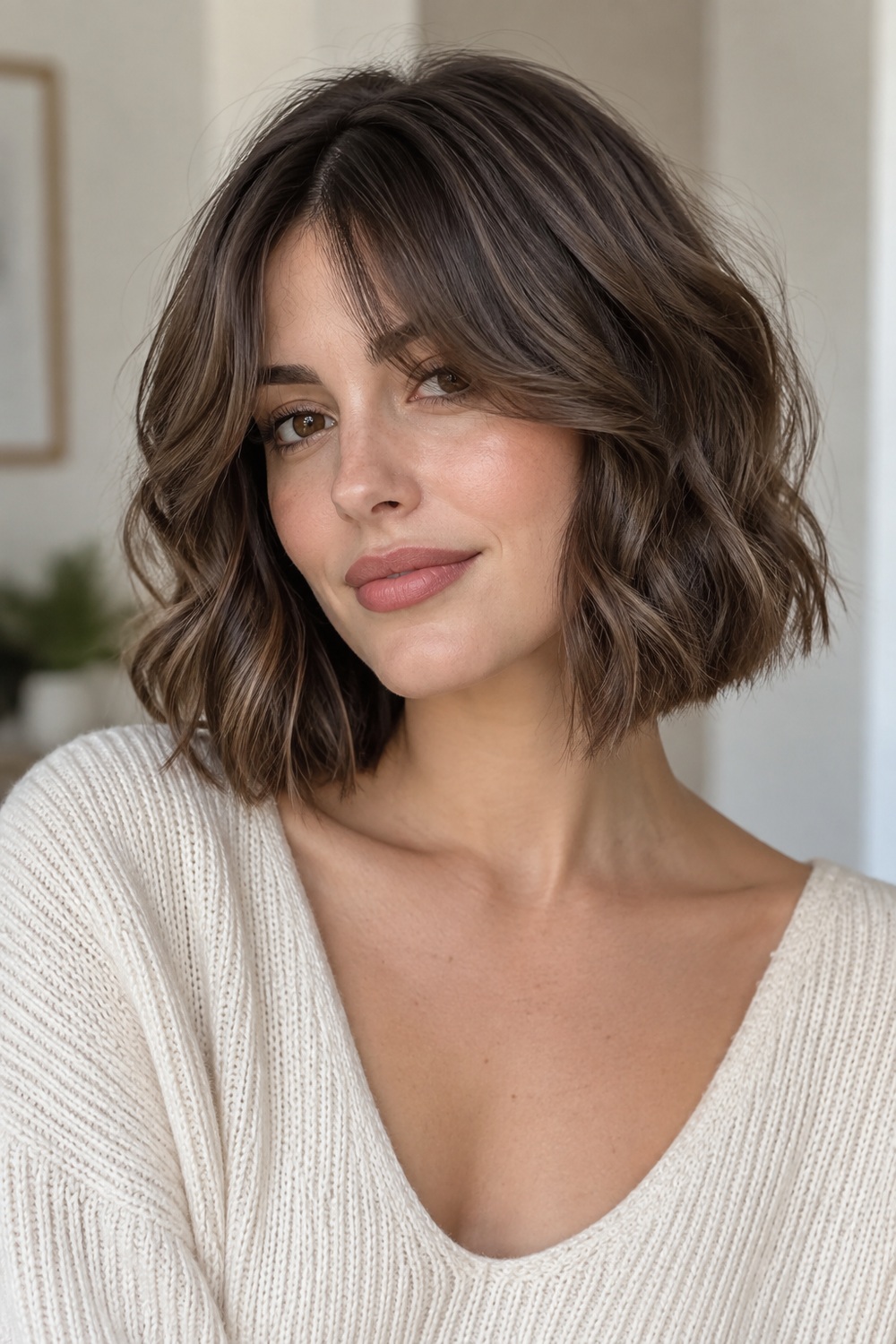
Curtain bangs part naturally in the center and blend into the rest of the bob, softening the forehead without a hard line. They work on nearly every face shape and grow out more gracefully than a full, blunt fringe.
Layered Wavy Bob With Face-Framing Pieces
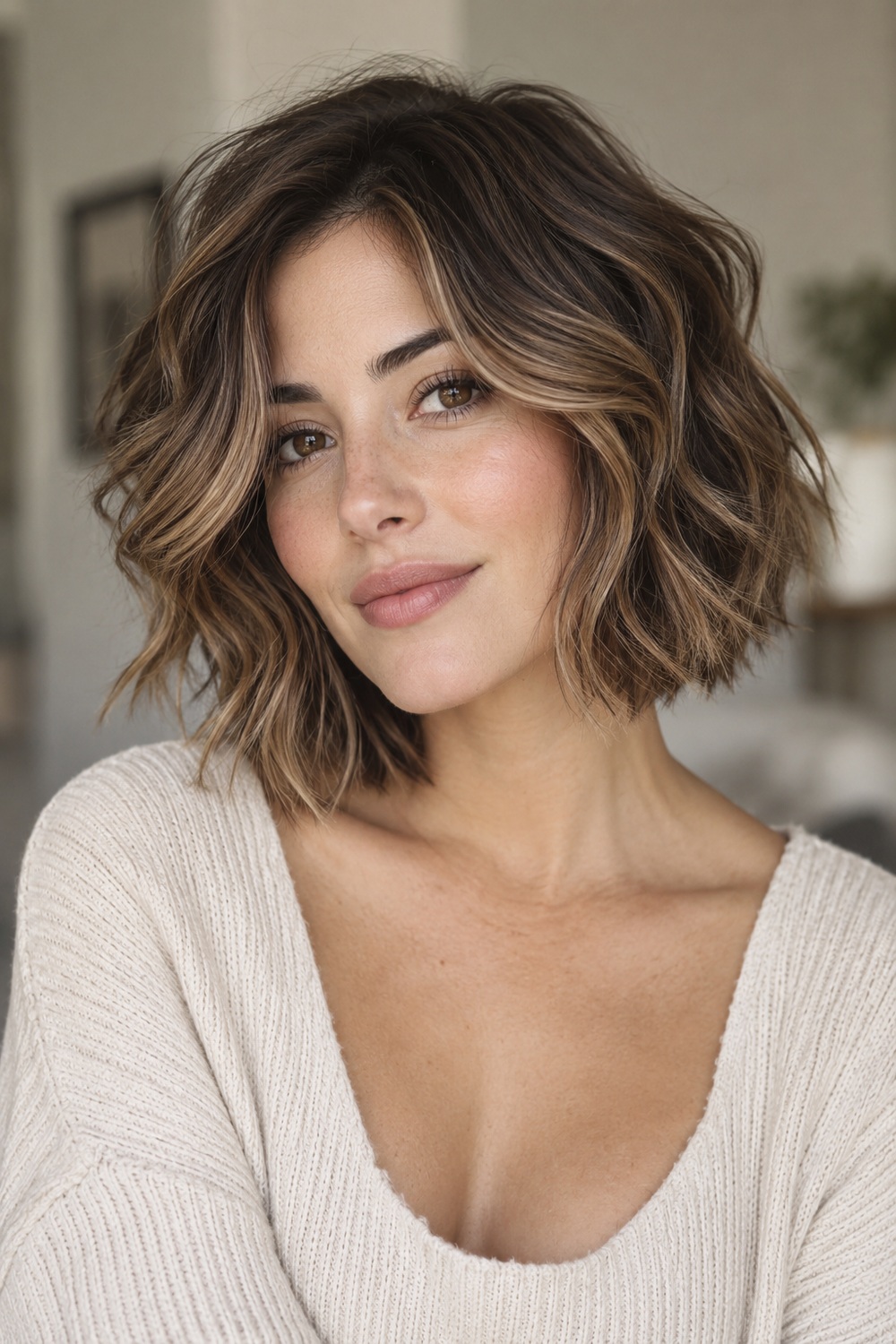
Longer pieces cut around the cheekbones highlight the eyes and cheekbones while the rest of the bob stays fuller underneath. This shape works well for oval and longer face shapes, since the shorter framing pieces visually shorten the face, a detail echoed in this look at layered bobs with bangs.
Shaggy Wavy Bob With Curtain Fringe
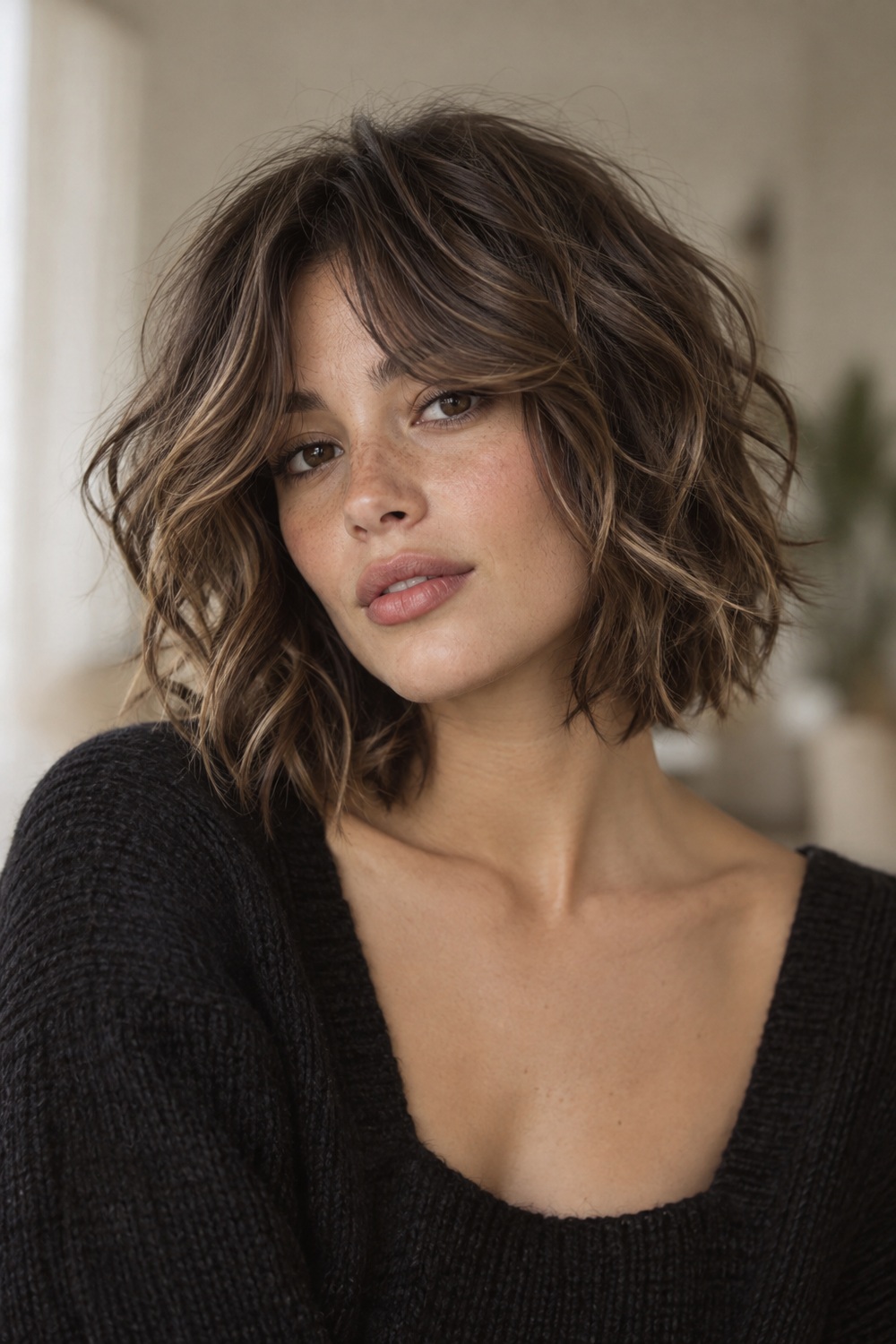
A shaggy bob combines feathered, textured layers throughout with soft curtain fringe up front for a lived-in, undone look. It’s a strong choice for thicker hair that wants movement without bulk.
Wavy Bob With Wispy Bangs
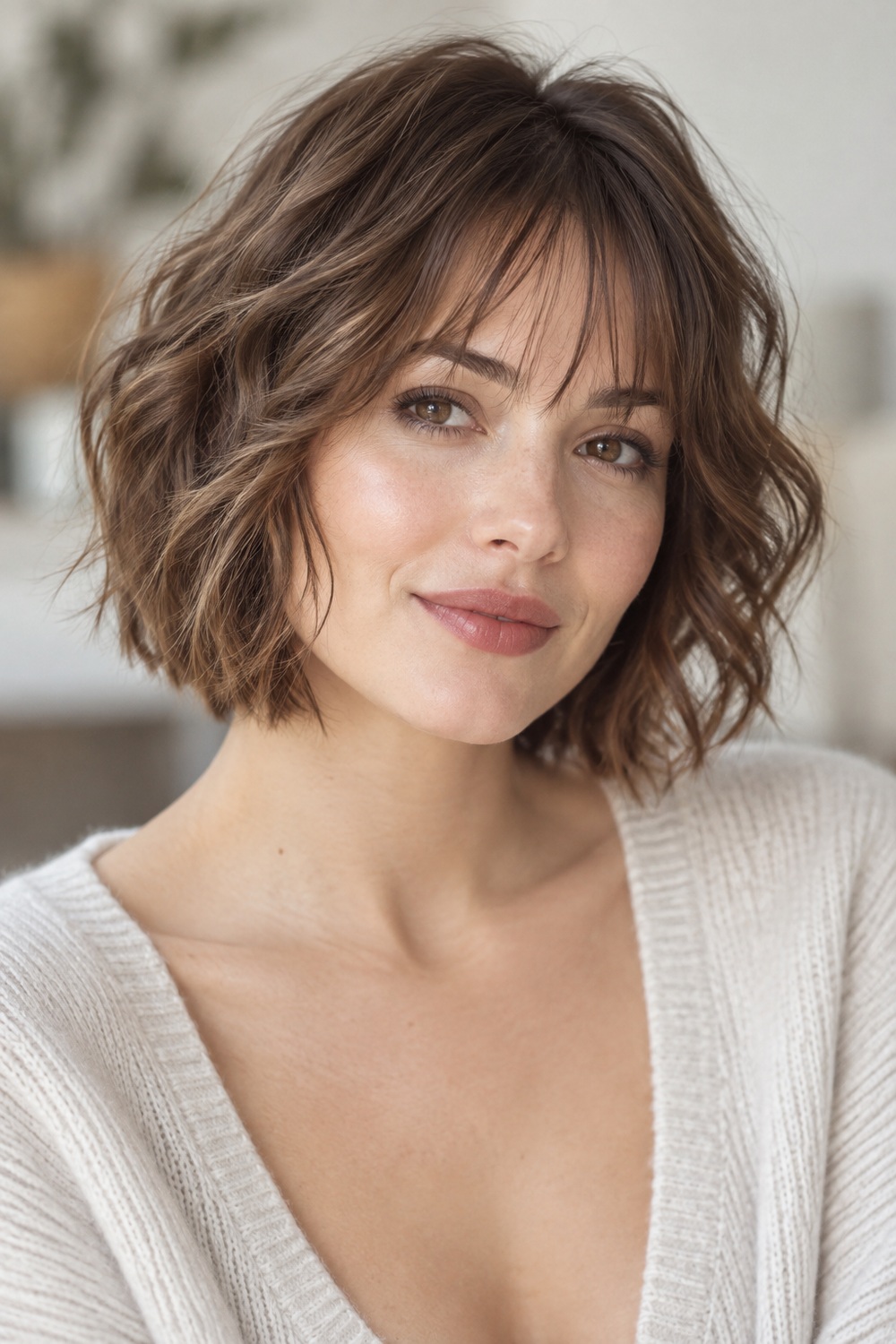
Wispy bangs are thinner and more piecey than a full fringe, letting some forehead show through for a lighter effect. They suit fine hair especially well, since a heavier fringe can look overwhelming on finer strands.
Feathered Wavy Bob With Side Fringe
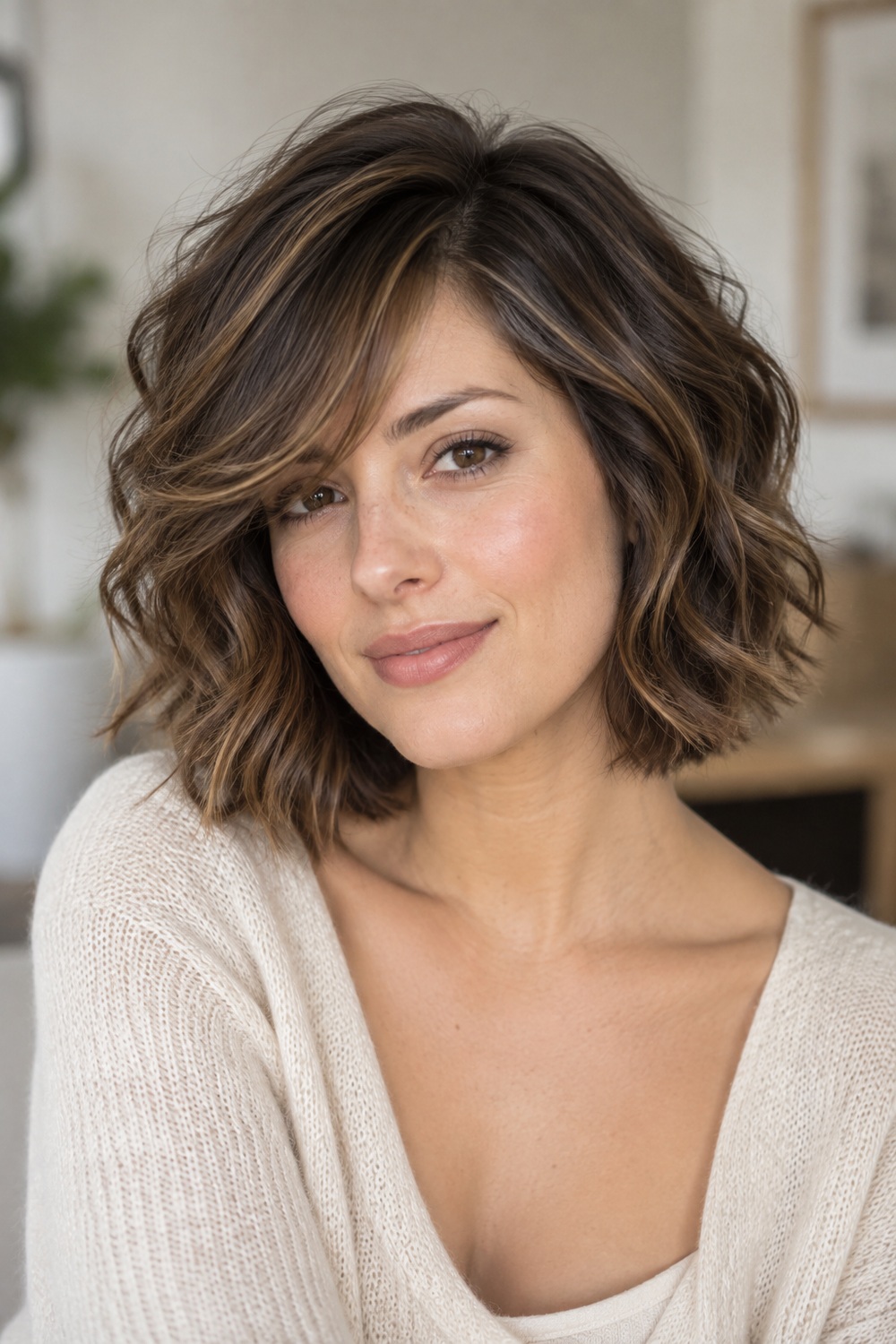
A side fringe swept alongside feathered layers creates gentle asymmetry and works nicely with a deep side part. This combination adds root lift on one side while keeping the rest of the cut soft and face-framing.
Modern Shapes for More Definition and Volume
These five wavy bobs use angles, inversion, and graduation to build shape and volume rather than relying on waves alone. They tend to suit thicker or medium-density hair that can hold a more structured silhouette.
Angled Wavy Bob With Longer Front Pieces
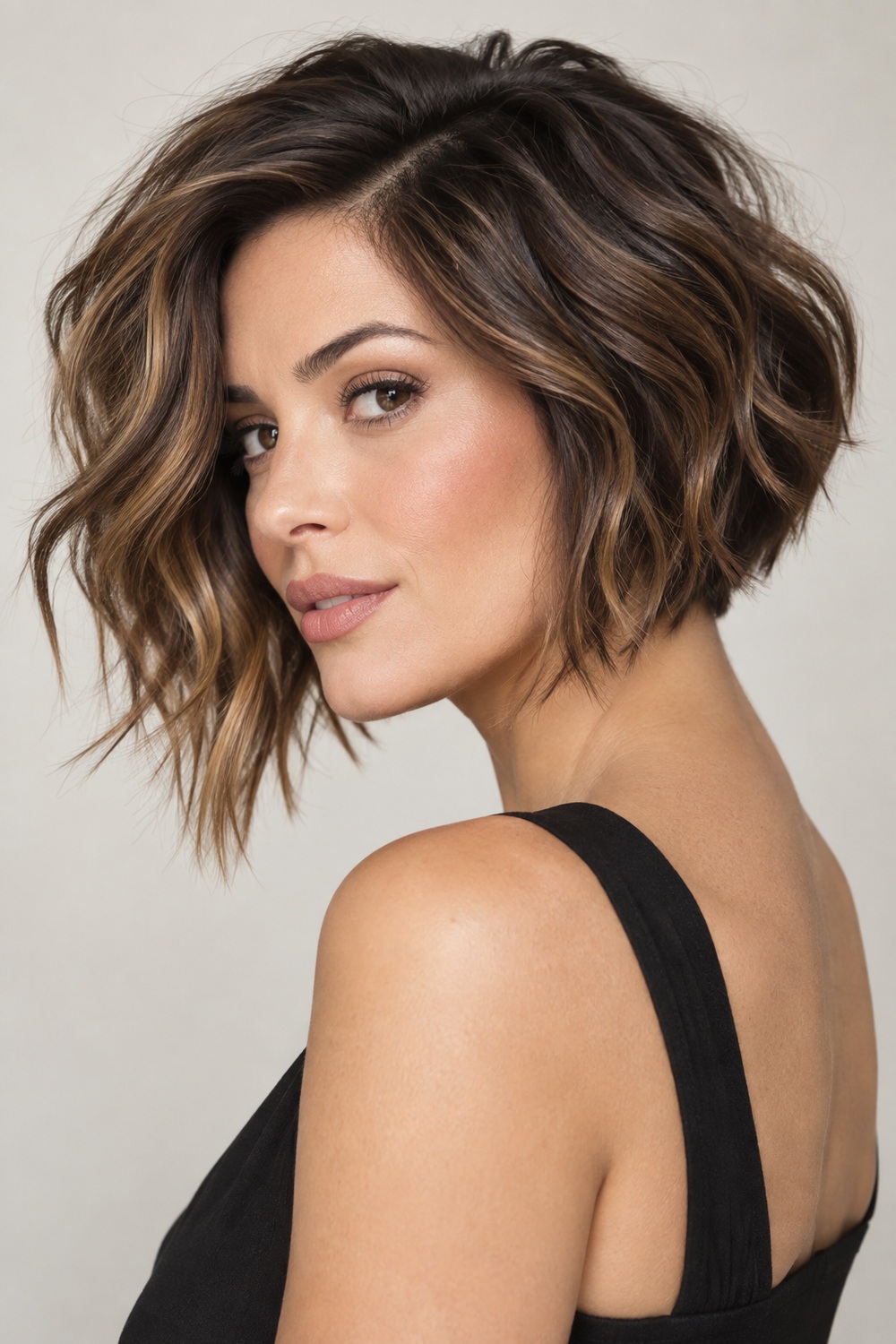
An angled bob is cut shorter in the back and longer toward the front, creating a strong diagonal line that flatters round and square faces. The longer front pieces also give waves more length to move and swing.
Inverted Bob With Soft Curls
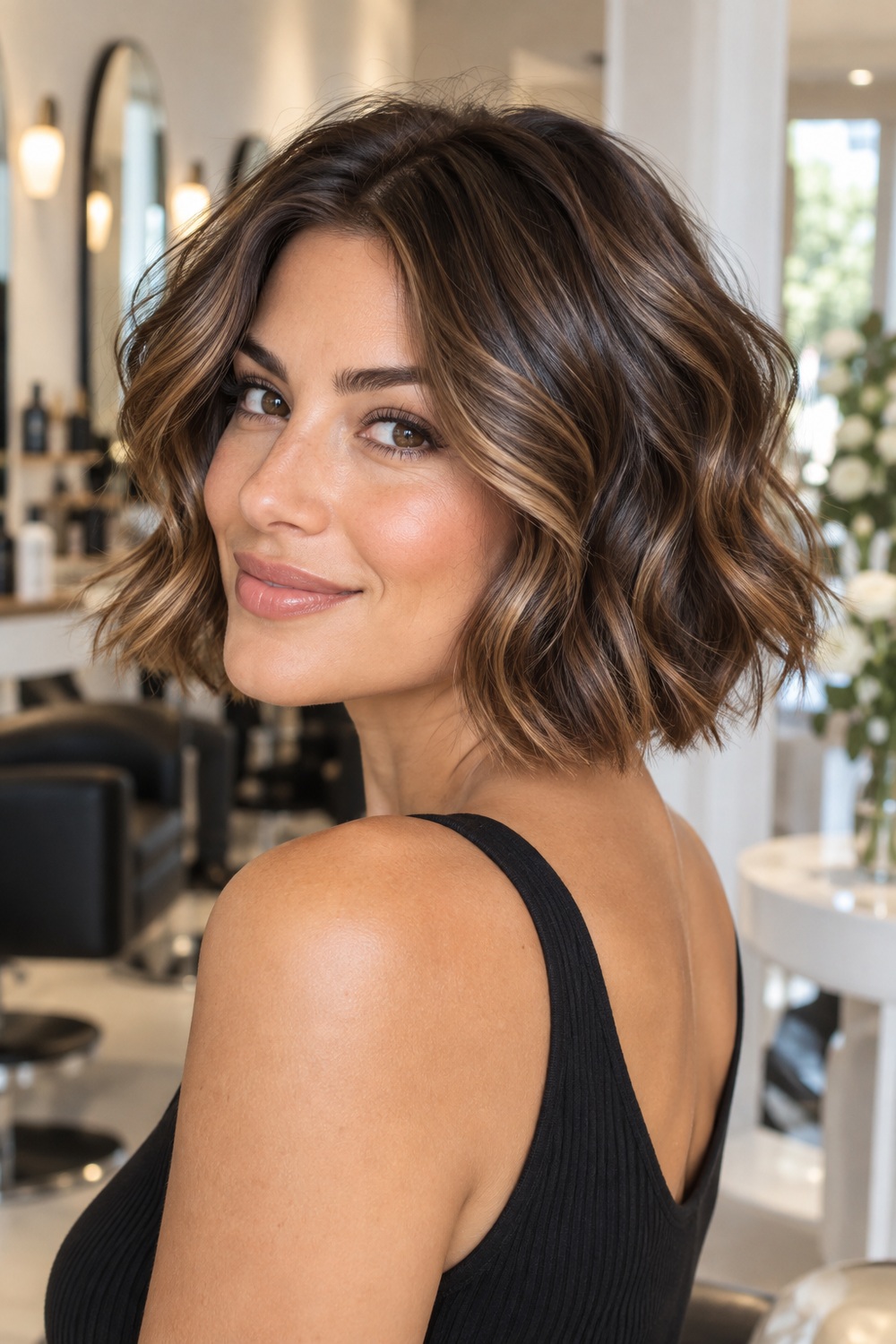
An inverted bob stacks fuller layers at the crown and tapers shorter at the nape, and soft curls on top keep the shape from looking too severe. This works well on fine hair that needs the illusion of density at the back.
Asymmetrical Bob With a Side Sweep
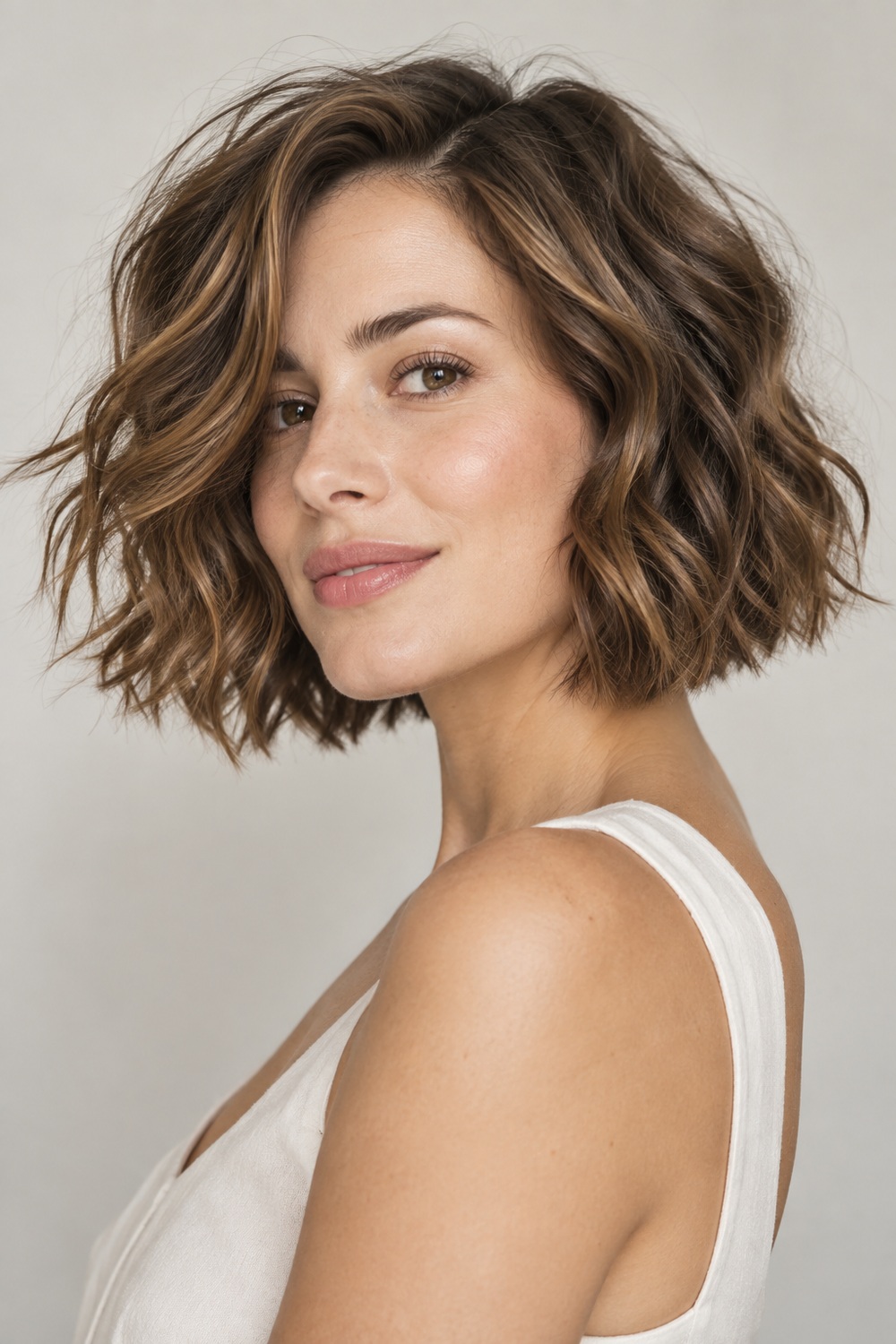
An asymmetrical bob is cut noticeably longer on one side, paired with a deep side part for a modern, sweeping effect. It suits medium to thick hair and looks strongest with defined, polished waves rather than loose texture.
Graduated Wavy Bob With Volume at the Crown
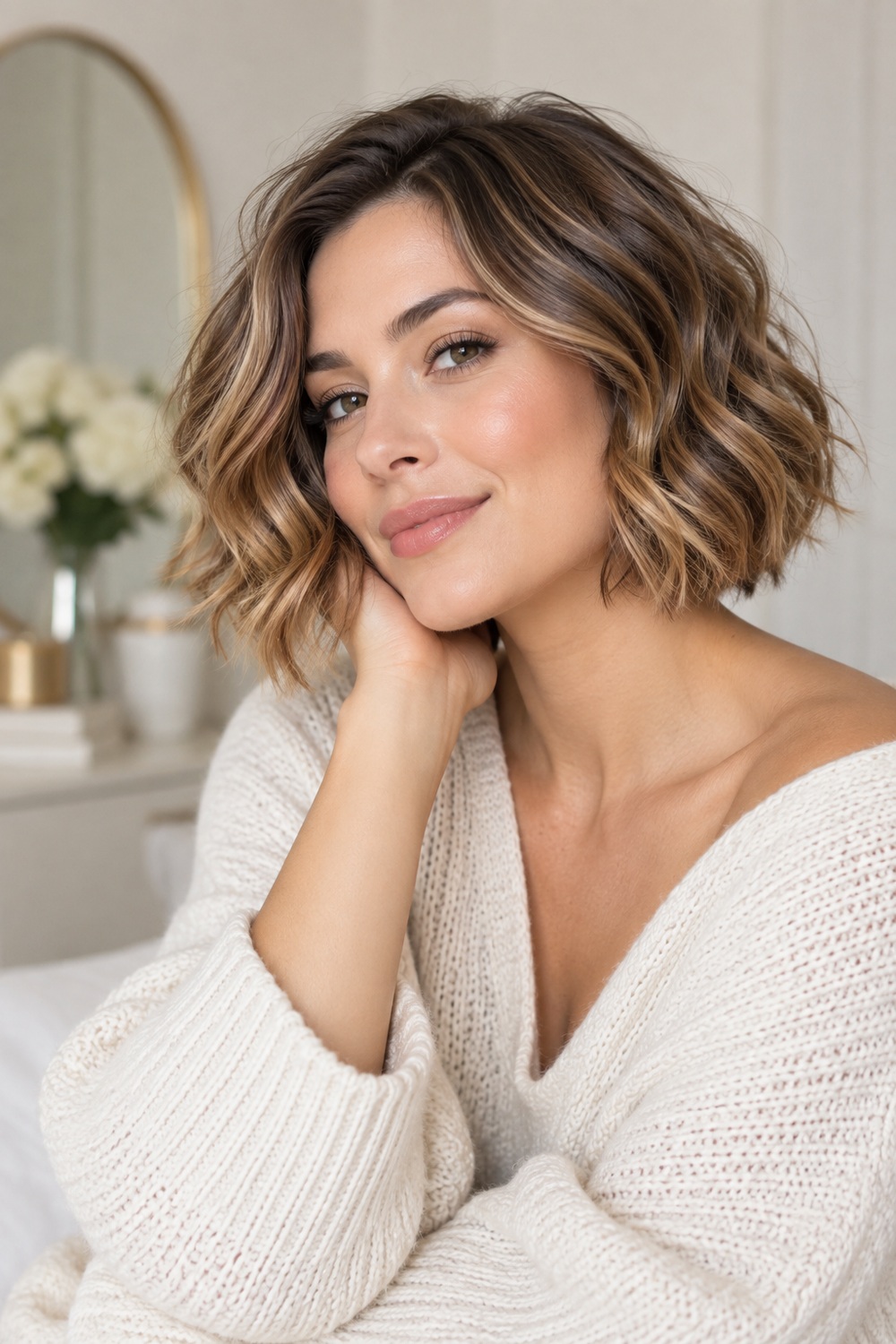
Graduated layers build volume specifically at the crown while keeping the perimeter fuller, which helps thick hair avoid a heavy, bottom-weighted look. This shape holds root lift particularly well on naturally wavy or curly hair.
Textured Bob With a Strong Perimeter
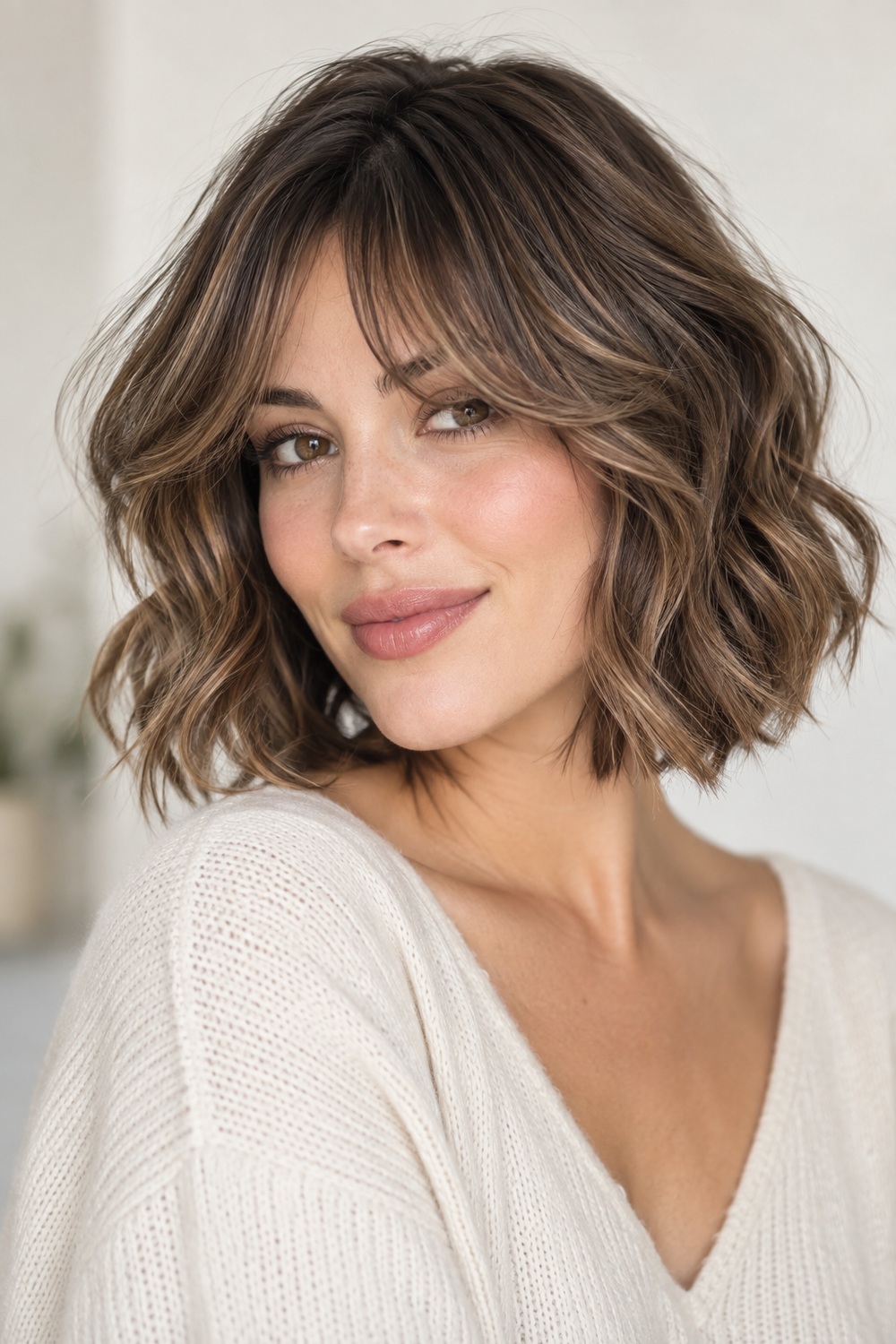
A textured bob combines internal layering with a clean, strong outer line, giving it shape without looking undone at the edges. It’s a good middle ground for someone who wants texture but isn’t ready for a fully shaggy cut.
Color and Finish Ideas That Bring Waves to Life
Color placement can make waves look more defined without changing the cut itself, since highlights and lowlights catch light differently as hair moves. The five finishes below range from warm brunette tones to a sleek, glossy blonde.
Chocolate Brown Wavy Bob With Caramel Ribbons
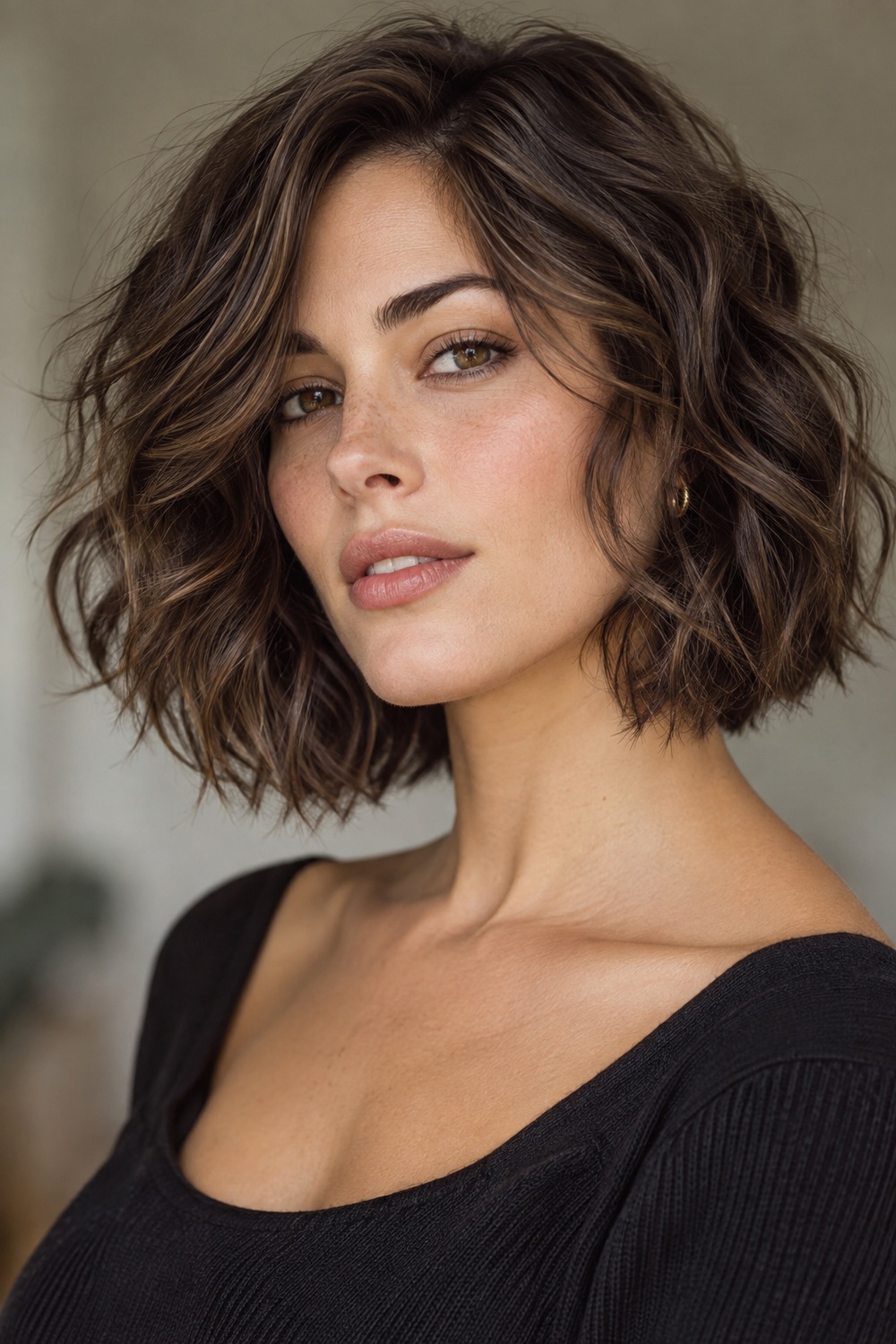
Fine caramel ribbons woven through a chocolate brown base catch the light along each wave, adding dimension without a dramatic color change. This combination works across many skin tones and grows out without creating a harsh visible regrowth line.
Brunette Bob With Honey Blonde Face Framing
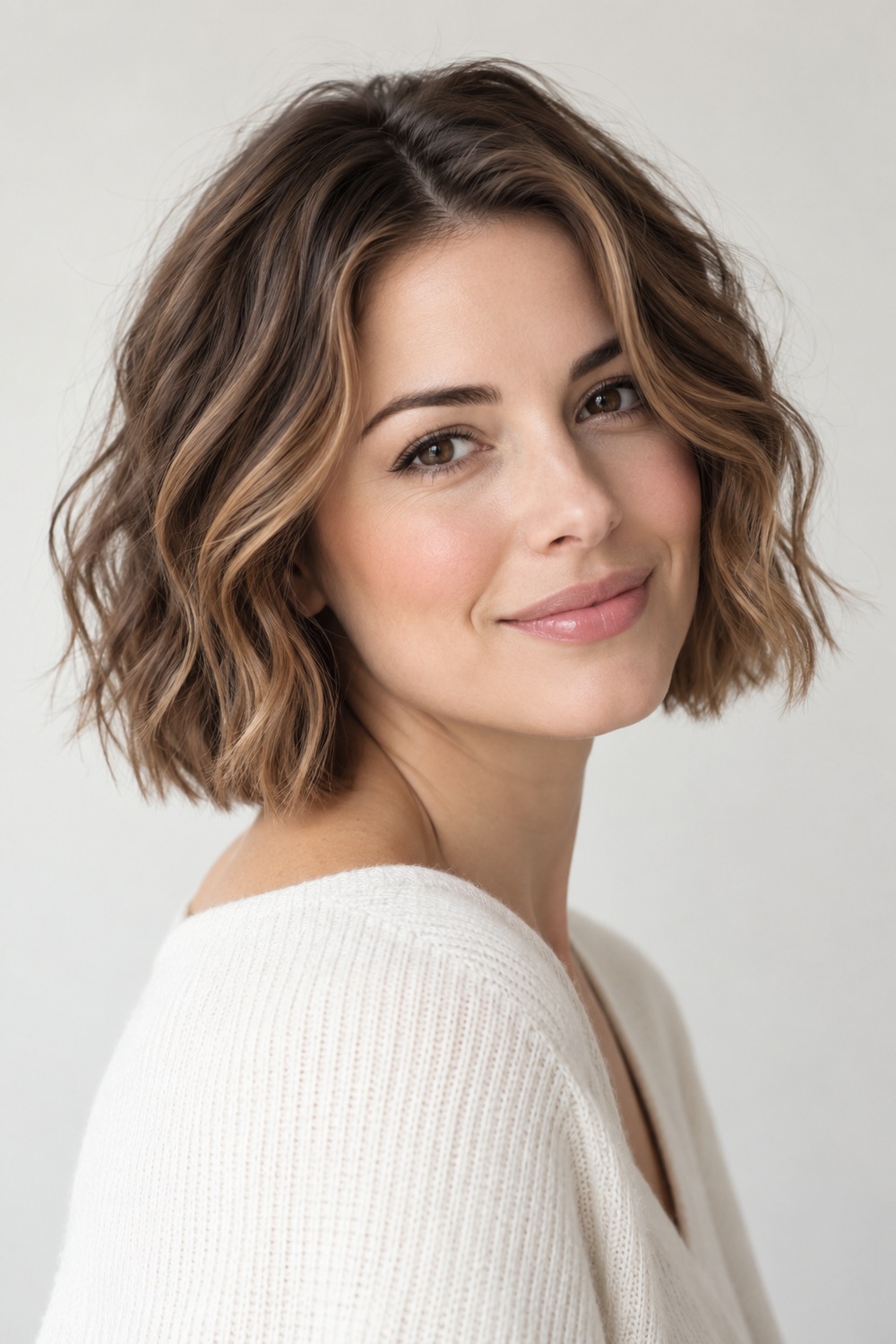
Honey blonde highlights placed only around the face brighten your features while keeping the rest of the bob a deeper brunette. It’s a lower-maintenance take on balayage because the brightest pieces are concentrated around the face, making targeted touch-ups easier.
Golden Blonde Bob With Beachy Texture
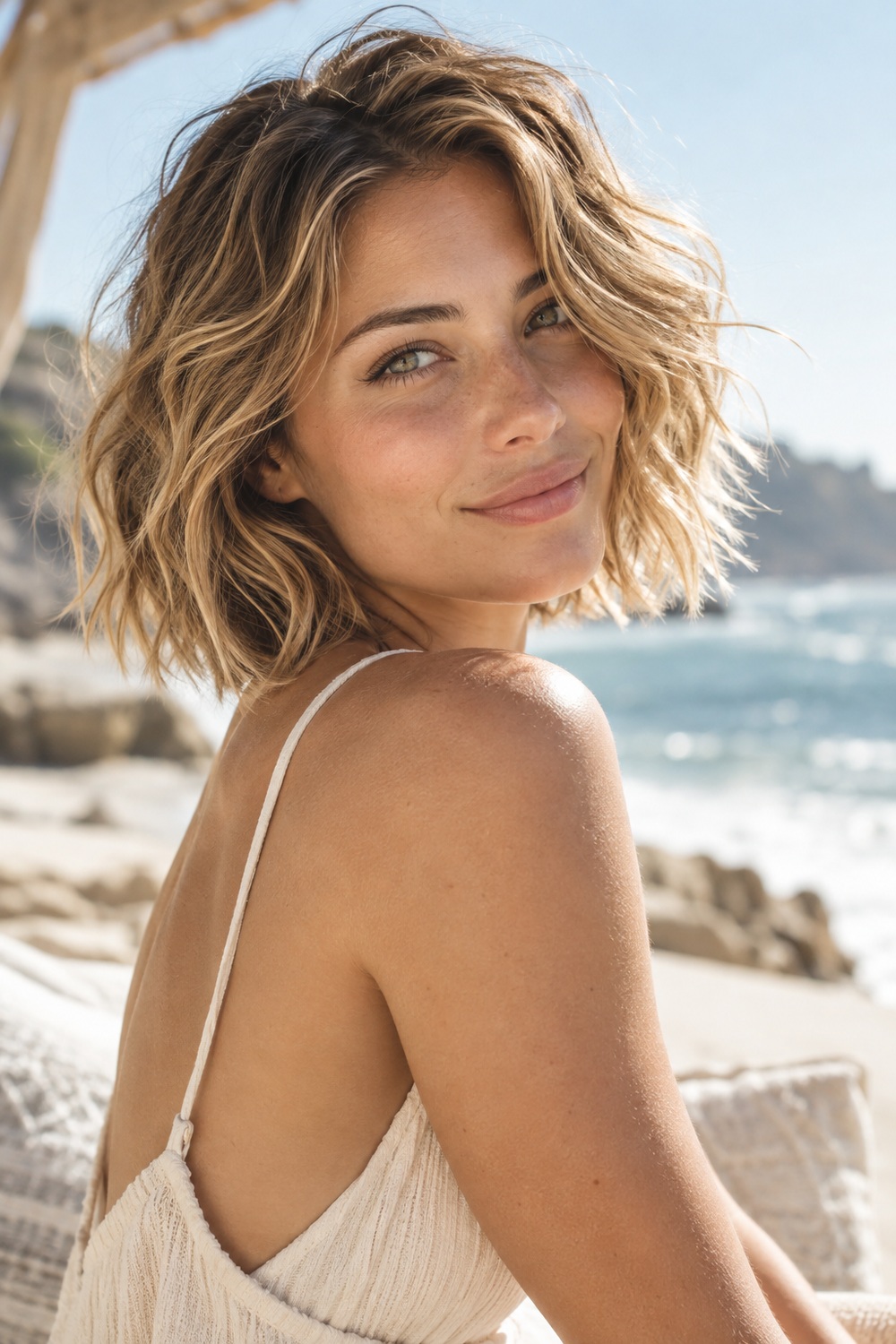
A golden blonde base paired with beachy texture gives a sun-warmed, lived-in look that pairs naturally with loose waves. This finish tends to suit warmer skin tones and looks best air-dried with a texturizing product.
Caramel Balayage on a Soft Wavy Bob
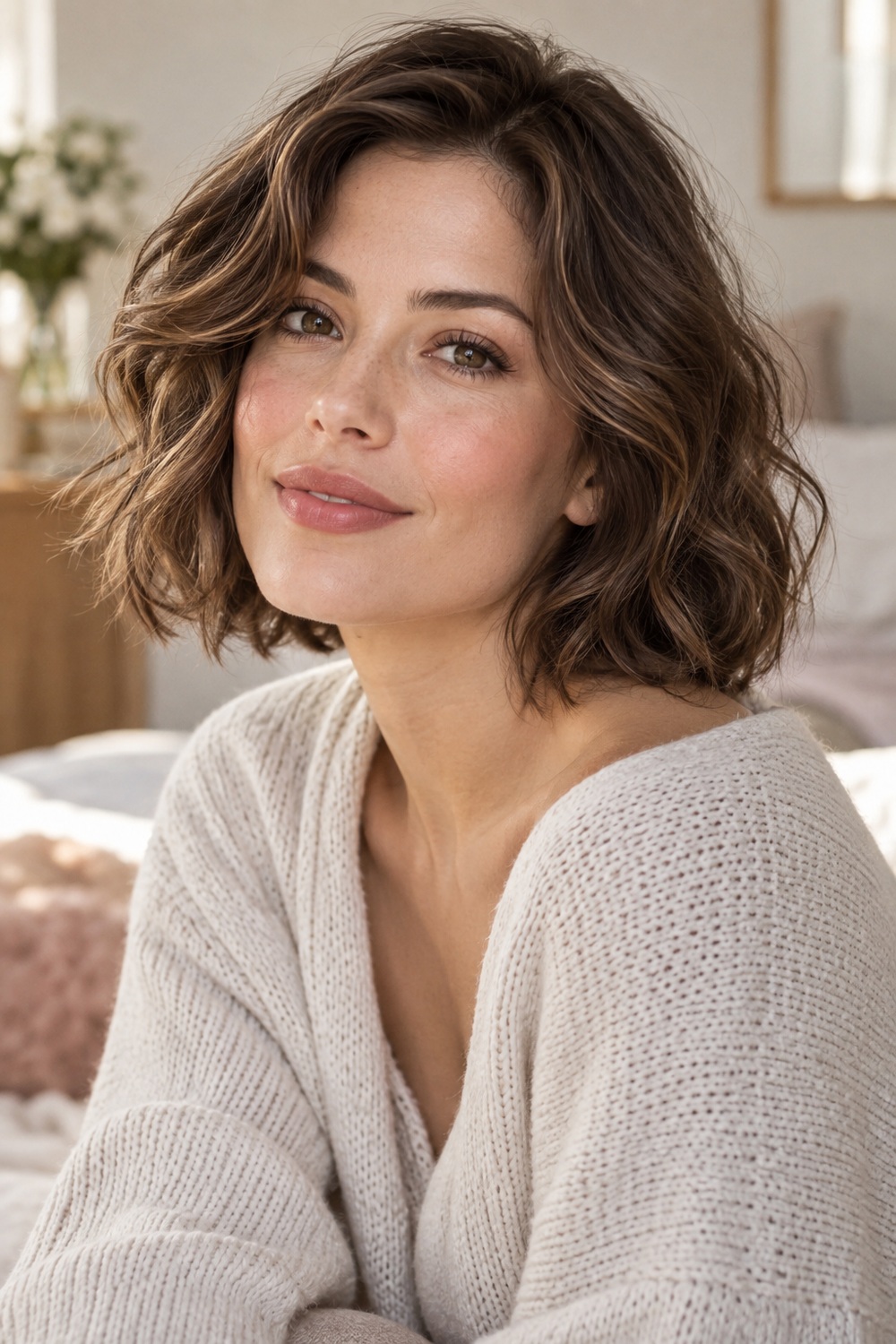
Balayage is hand-painted rather than applied with traditional foils, creating a soft, graduated color that moves naturally with the waves instead of showing hard lines. It’s a popular pairing for a wavy bob because the graduated color mimics the graduated shape of the waves themselves.
Sleek Wavy Bob With a Glossy Finish
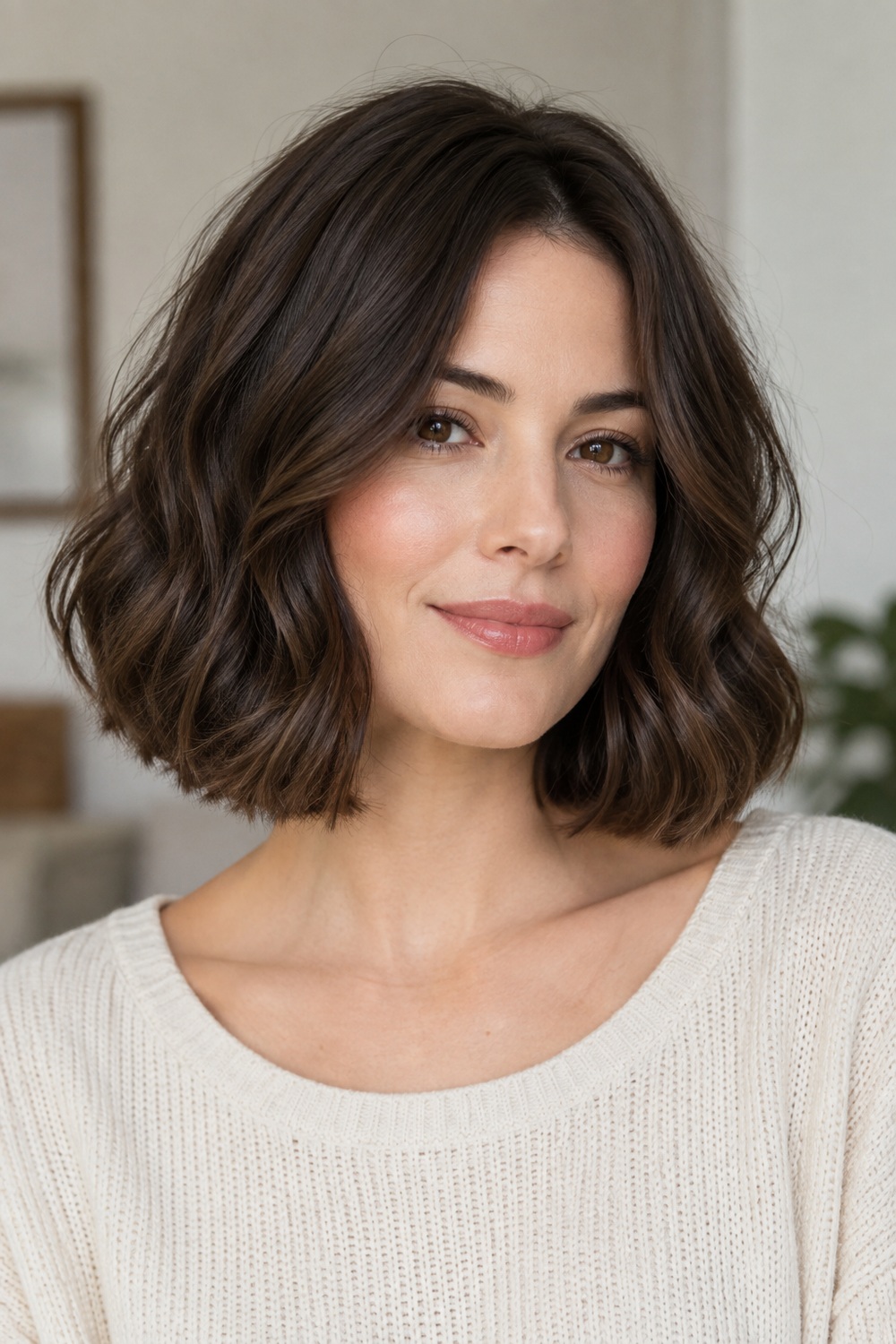
A single-process color with a glossing treatment creates a sleek, reflective finish that makes even simple waves look polished. This works well for anyone who prefers a more uniform color over multi-tonal highlights.
How to Style a Wavy Bob Without Making It Stiff
A wavy bob stays soft when you use lightweight products applied to damp hair and let the natural wave pattern do most of the work. Overloading fine or medium hair with heavy creams or too much hairspray is the most common reason a wavy bob ends up looking crunchy or helmet-like instead of touchable.
Enhance Natural Waves With Air-Drying and Diffusing
Apply a lightweight mousse or curl cream to soaking-wet hair, scrunch upward, and either air-dry or finish with a diffuser on low heat. This method preserves natural texture better than brushing hair out while wet, which stretches and loosens the wave pattern.
Create Loose Waves With Heat Tools
A curling wand or flat iron gives you control over wave size and placement when natural texture is inconsistent or your hair is straight. Always apply a heat protectant first, and alternate the direction of each section for a more natural, less uniform result.
Build Texture and Root Volume With Lightweight Products
A volumizing mousse at the roots and a texture spray through the mid-lengths add lift without weighing fine hair down. Save richer styling creams for thicker or coarser waves that need more control to stay defined.
Refresh Second-Day Waves With Minimal Effort
Dry shampoo at the roots absorbs oil and restores lift, while a light mist of texture spray or water revives waves that have relaxed overnight. A flexible hairspray, rather than a stiff-hold formula, keeps the finish soft enough to touch and reshape by hand.
Keep Your Wavy Bob Soft Between Salon Visits
Regular trims and the right amount of product keep a wavy bob looking soft rather than flat, frizzy, or overgrown. Most of the upkeep between appointments comes down to protecting root volume and knowing how much product is actually needed.
Prevent Flat Roots and Heavy Ends
Root volume fades fastest when heavy conditioner or styling cream is applied too close to the scalp, so keep richer products focused from mid-length down. A dry shampoo applied the night before, not just the morning of, gives roots more lift by the time you style.
Preserve Definition Without Overusing Product
A little goes further than you’d expect: start with a dime-sized amount of curl cream or mousse and add more only if needed. Reapplying dry product to already-styled waves tends to build up and flatten the very texture you’re trying to preserve.
Know When to Book a Trim or Bang Refresh
A trim every 8 to 10 weeks keeps blunt or textured ends from splitting and losing their shape, especially on a shorter bob where growth shows quickly. Bangs, particularly curtain or wispy styles, often need a mid-cycle refresh around the four-week mark to stay out of your eyes without looking blunt.
Finding the Wavy Bob That Feels Like You
The right wavy bob comes down to choosing a shape that matches your natural wave pattern and face shape, then styling it in a way you’ll actually keep up with. A gorgeous reference photo is a starting point, not a guarantee, since the same cut can look completely different depending on your hair’s density and texture.
Bring a photo to your consultation, but talk through your hair type and how much time you spend styling on a typical morning. A good stylist will adjust the layering, length, and part placement to fit what you’re working with, so the finished cut looks like the inspiration photo once it’s on your own head.
Frequently Asked Questions
What is the best bob cut for naturally wavy hair?
A chin-length bob with light layering tends to work best for naturally wavy hair, since it lets the wave pattern show without heavy thinning that can cause frizz. Curly or tightly waved hair often benefits from a cut done dry, so the stylist can see exactly how each section falls before trimming.
What wavy bob length is most flattering for an older woman?
A jaw-length to chin-length wavy bob can be especially flattering on an older woman because it softens the jawline and adds fullness around the face. Adding soft layers or curtain bangs can further lighten the look around the eyes and cheekbones.
Should a wavy bob have layers or blunt ends?
Blunt ends preserve fullness and work best on fine hair, while layers help prevent bulk and a triangular silhouette on thick or tightly waved hair. Medium-density hair generally has the flexibility to wear either option well.
Can I get a wavy bob if my hair is straight and fine?
Straight, fine hair can absolutely wear a wavy bob with the help of a curling iron, flat iron, or heatless waving method like a wave spray and flexi-rods overnight. The cut itself stays the same; the wave becomes something you create rather than something that grows in naturally.
How do I style a wavy bob without using a curling iron?
Heatless waves come from braiding damp hair overnight, twisting sections before bed, or using flexi-rods, then releasing the next morning and finger-combing through a little styling cream. This approach works especially well for naturally wavy hair that just needs enhancement rather than a fully created curl pattern.
What bob haircut trends are popular in 2026?
Soft, textured wavy bobs with face-framing layers and curtain bangs remain popular choices in 2026, alongside graduated and stacked shapes that add volume at the crown. Warmer color placements, like caramel balayage and honey blonde face-framing, continue to pair well with these softer, more textured cuts.


