



Long hair with bangs can completely change the shape of a hairstyle while keeping the overall length intact. From soft curtain bangs and wispy fringe to blunt, bottleneck, and side-swept styles, there are plenty of ways to create a fresh look.
The right bang style depends on the effect you want. Some options create softness around the face, while others add structure, contrast, or a stronger statement to long hair.
Below, explore trendy long-hair-with-bangs ideas featuring different fringe shapes, textures, layers, and finishes so you can compare the looks and find inspiration for your next haircut.
Key Takeaways
- Choose bangs that complement your face shape.
- Match layers and fringe to your hair texture.
- Use simple styling and regular trims to maintain your look.
Choosing a Bang Style for Your Face Shape
Face shape can help guide your choice of bangs, but it should not be the only factor. Hair texture, density, forehead length, and how much daily styling you prefer are also important.
In this article, the focus is on comparing different bang styles and overall looks. More detailed face-shape recommendations are best considered separately when choosing the final fringe length and placement.
Curtain Bangs
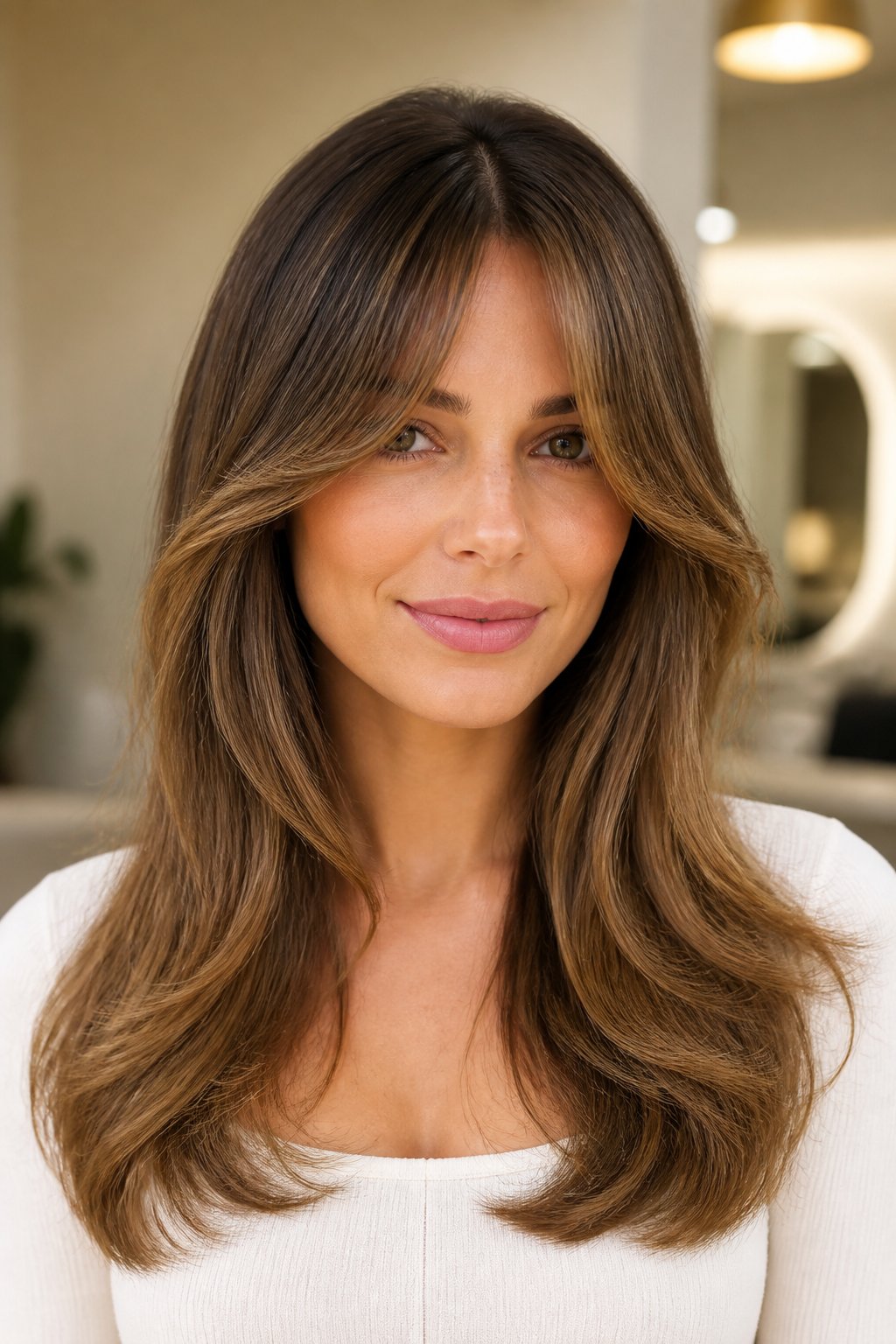

Curtain bangs create a soft, parted fringe that blends easily into long hair. Their longer outer edges connect naturally with face-framing layers, making them one of the most versatile bang styles.
They can be worn subtle and blended or styled with more volume for a noticeable curtain effect. A round brush or large roller can help direct the sides away from the face.
Blunt Fringe
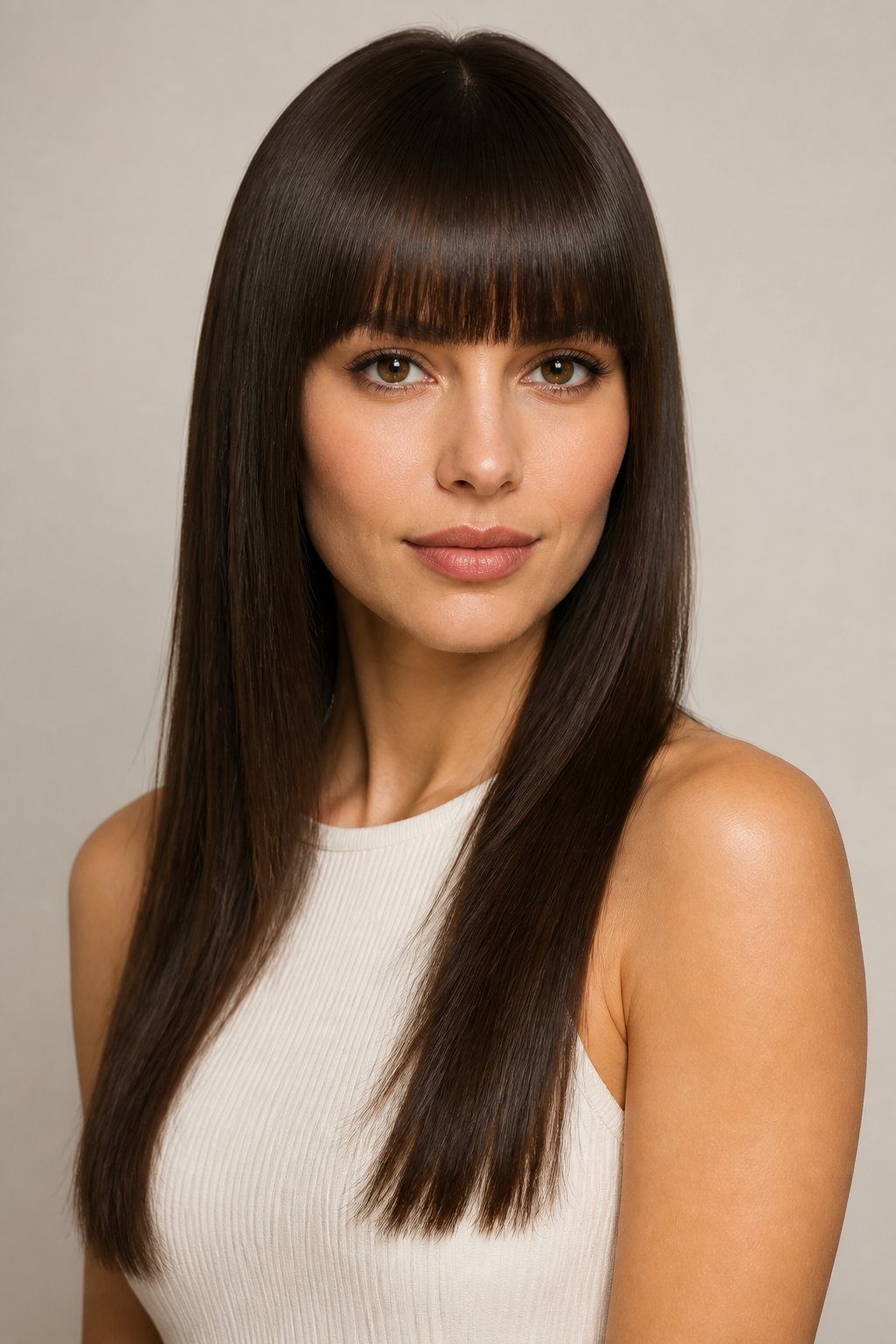
Blunt bangs create a clear horizontal line across the forehead. They suit oval and long faces because the strong line can make the face look shorter and add structure. A full, eyebrow-skimming fringe gives long, straight hair a clean and polished shape.
Blunt bangs create a clean, defined line across the forehead and give long hair a stronger, more structured look. They work especially well when you want the fringe to stand out rather than blend softly into the rest of the haircut.
Your hair should have enough density to keep the edge full. Straight or gently wavy hair usually needs the least styling. Humidity, cowlicks, and natural waves can change the line, so plan on frequent trims to maintain the shape.
Side-Swept Bangs
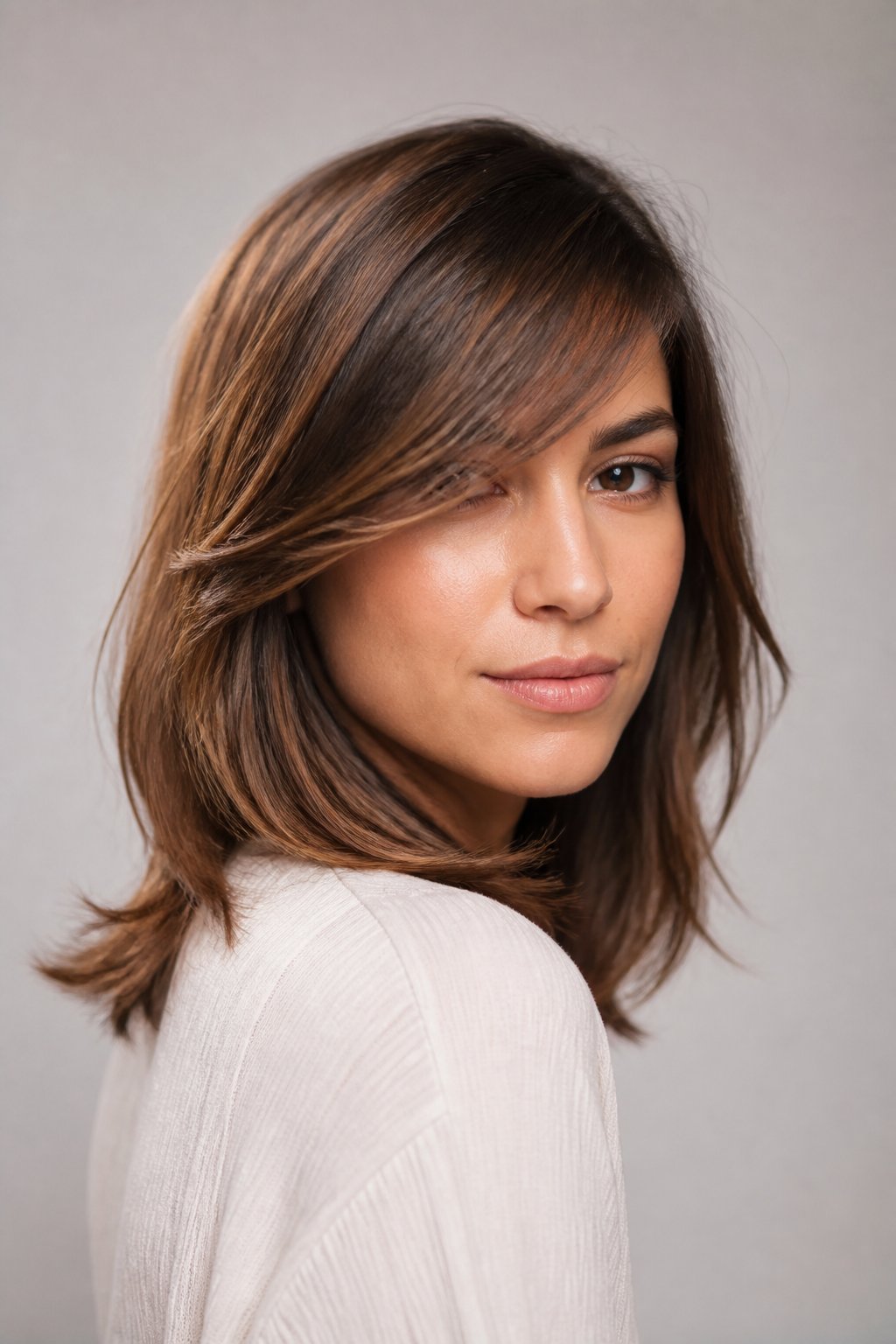
Side-swept bangs fall diagonally across the forehead and blend into the rest of your haircut. They can soften square faces by breaking up strong horizontal and angular lines. On round faces, a longer side-swept shape adds a diagonal line that can make the face look more defined.
For a heart-shaped face, start the sweep near the brow and let the longer side reach the cheekbone or jaw. This placement can balance the forehead and add width near the lower half of the face. Oval faces can use short or long side-swept bangs, depending on the desired level of coverage.
Style them with a small round brush while directing the hair to one side. A light styling cream can control flyaways without making the fringe stiff. This option also gives you a simple way to grow out your bangs.
Wispy Bangs
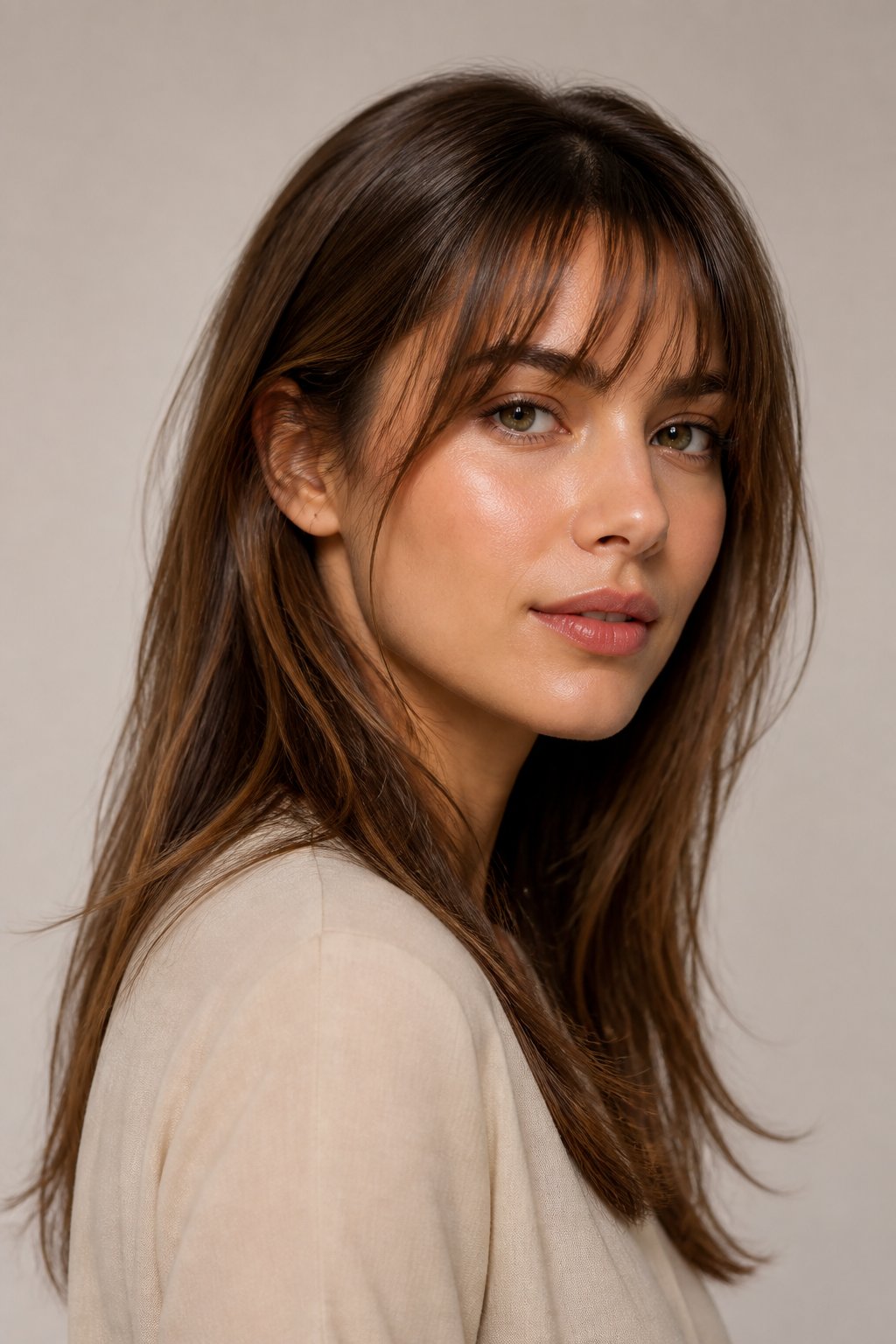
Wispy bangs use fewer, finely textured strands than a full fringe. Their light appearance suits heart-shaped and oval faces, where soft pieces can frame the forehead without hiding too much of it. They also work well when you want a change but prefer a less solid line.
If you have a round face, ask for wispy bangs that are slightly longer at the sides. This creates face-framing lines instead of adding width across the forehead. For a square face, light texture can soften the brow area, especially when the bangs blend into long layers.
Wispy bangs suit straight, wavy, and fine hair, but thick hair may need careful thinning. Use a small brush and low heat to shape them, then finish with a light spray. Avoid heavy products, which can separate the strands and make the bangs look oily.
Matching Length, Layers, and Fringe
Your best result comes from balancing three elements: overall length, layer placement, and bang shape. Match each choice to your hair’s texture, density, styling routine, and face-framing goals.
Soft Layers for Movement
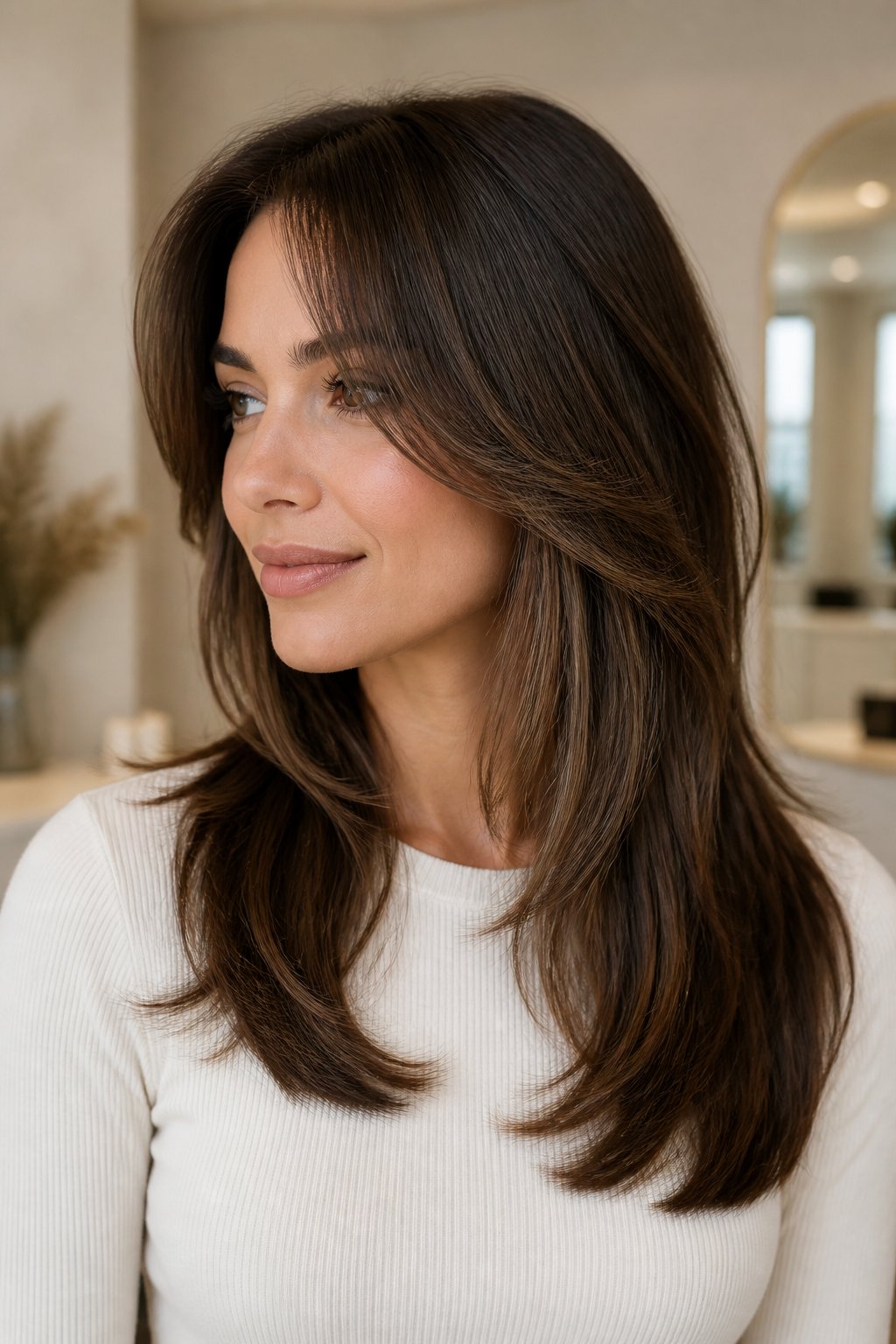
Soft layers add movement while keeping your length intact. Ask for longer layers that begin below the chin or around the shoulders. This placement creates shape without making the ends look thin.
You can pair soft layers with curtain bangs, wispy bangs, or long side-swept fringe. These styles blend into the front layers and grow out smoothly. They work especially well on straight, wavy, and medium-density hair.
If your hair is fine, avoid too many short layers. A stylist can use subtle internal layers instead, which add lift without removing too much weight. For thick hair, longer graduated layers can reduce bulk and help the hair fall more evenly.
Face-Framing Pieces
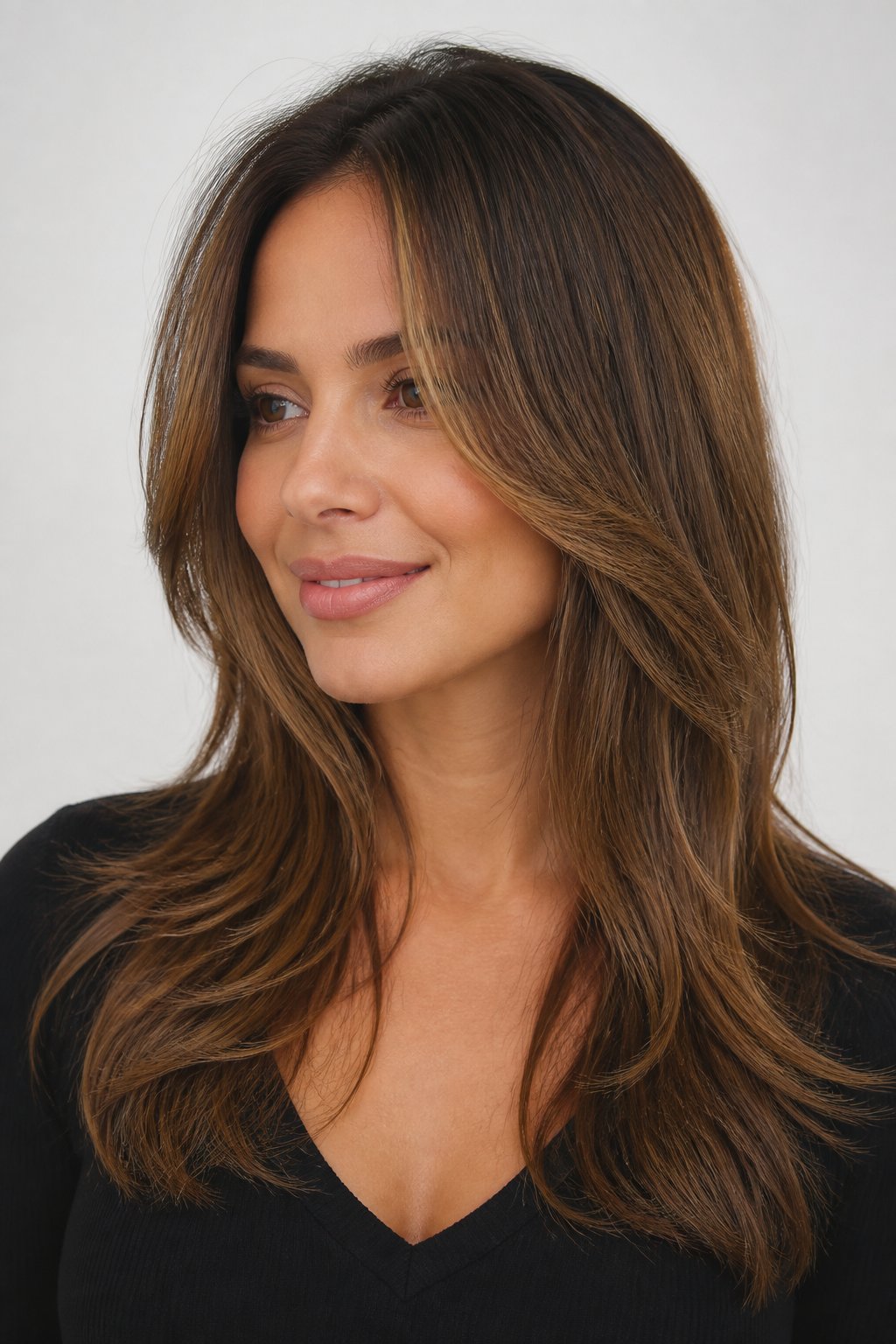
Face-framing pieces guide attention toward your eyes, cheekbones, and jawline. The shortest piece should match the area you want to highlight. For example, cheekbone-length pieces create shape near the eyes, while jaw-length layers soften the lower face.
Curtain bangs suit many long hairstyles because they part near the center and blend into the sides. You can keep them longer for easier styling or choose a shorter center for a more defined look.
Your stylist should connect the fringe to the front layers rather than cutting it as a separate block. This creates a smoother transition and gives you more styling options, including wearing the bangs forward, parted, or swept aside.
One-Length Ends
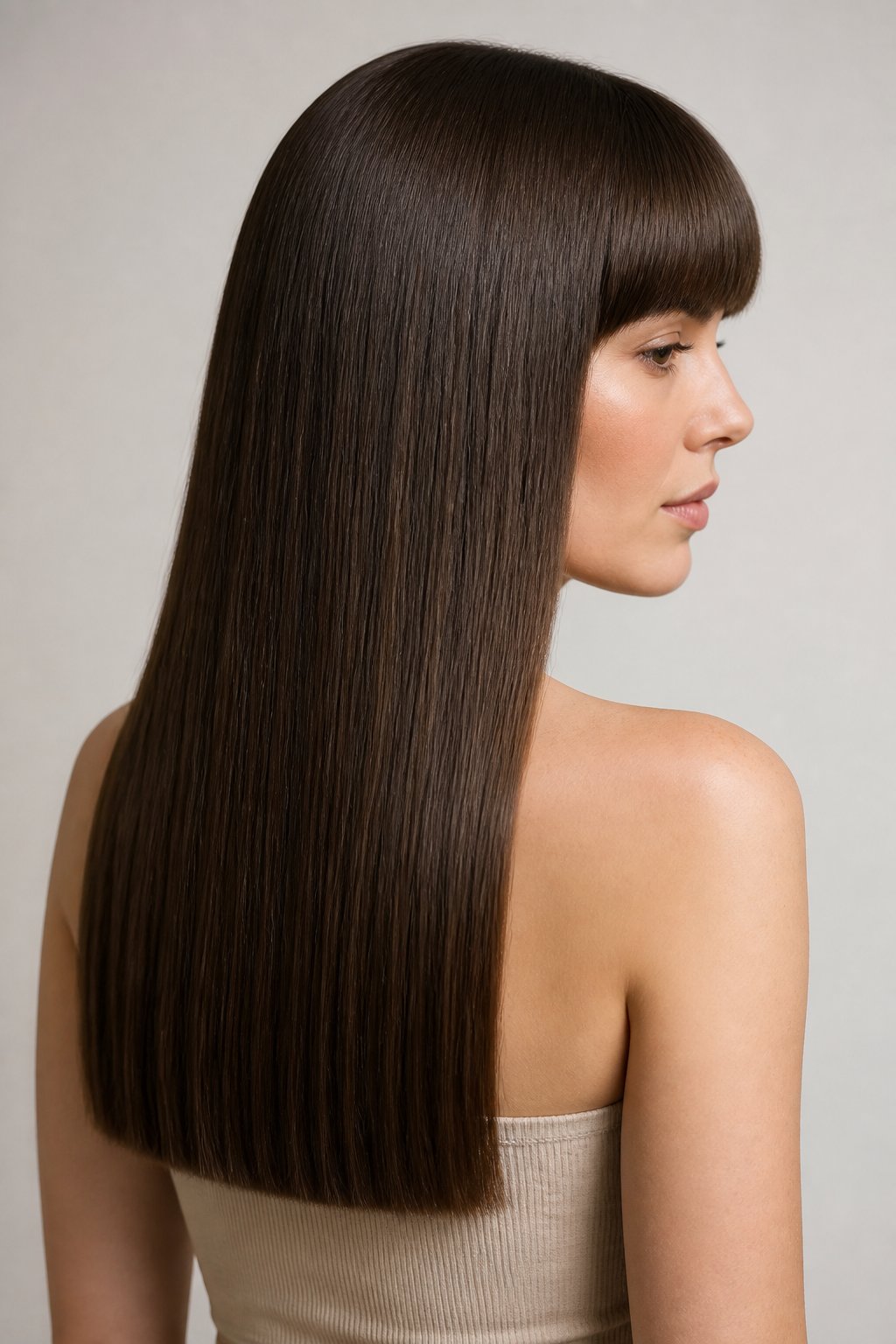
One-length ends give long hair a clean, solid outline. This shape works well if you want to protect the appearance of thickness or prefer a simple styling routine. You can add bangs without layering the rest of the hair.
Blunt ends pair well with full, straight-across bangs for a sharp look. For a softer result, choose wispy bangs or long curtain fringe. The contrast between solid ends and light fringe creates structure without making the haircut look heavy.
This shape suits straight hair especially well, though you can wear it with waves. If your hair is thick or coarse, ask for light internal weight removal rather than visible layers. That keeps the perimeter strong while improving movement.
Shag-Inspired Texture
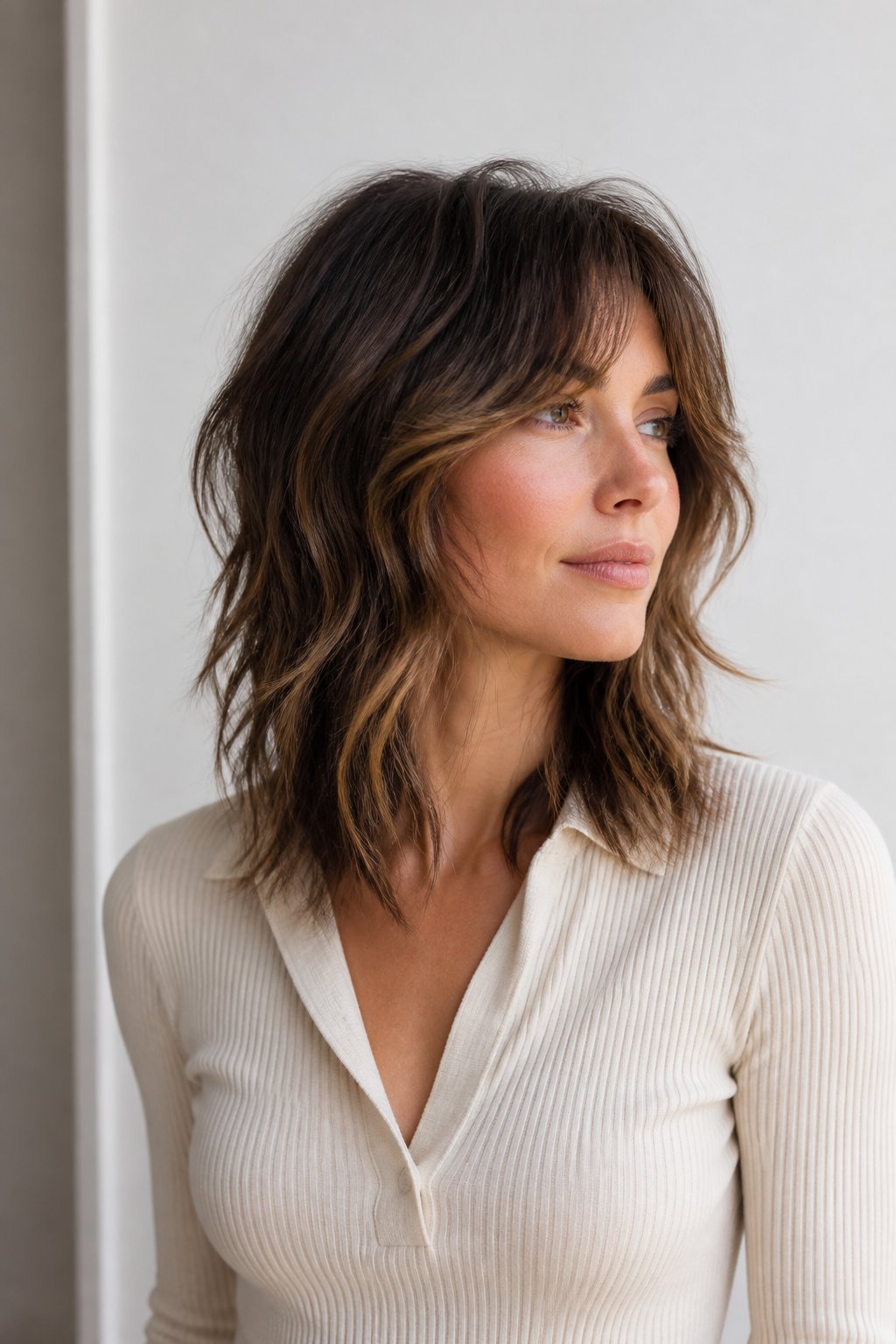
Shag-inspired layers create visible texture, volume, and a less uniform outline. The cut usually includes shorter layers around the crown, face-framing pieces, and bangs that blend into the sides.
You can choose a softer version with long curtain bangs and blended layers, or a stronger version with choppy ends and shorter fringe. The softer option needs less daily styling, while the sharper version shows more texture and separation.
This shape works well with naturally wavy or thick hair because the layers support movement. Straight hair may need a texturizing spray, curling wand, or diffuser to show the cut’s shape. Ask your stylist to preserve enough length at the ends if you do not want a highly layered finish.
Popular Looks for Straight Hair
Straight hair shows off clean lines, smooth layers, and carefully shaped bangs. You can choose a sleek cut for a sharp finish, feathered pieces for movement, or a full fringe for a bold frame around your eyes.
Sleek Long Layers
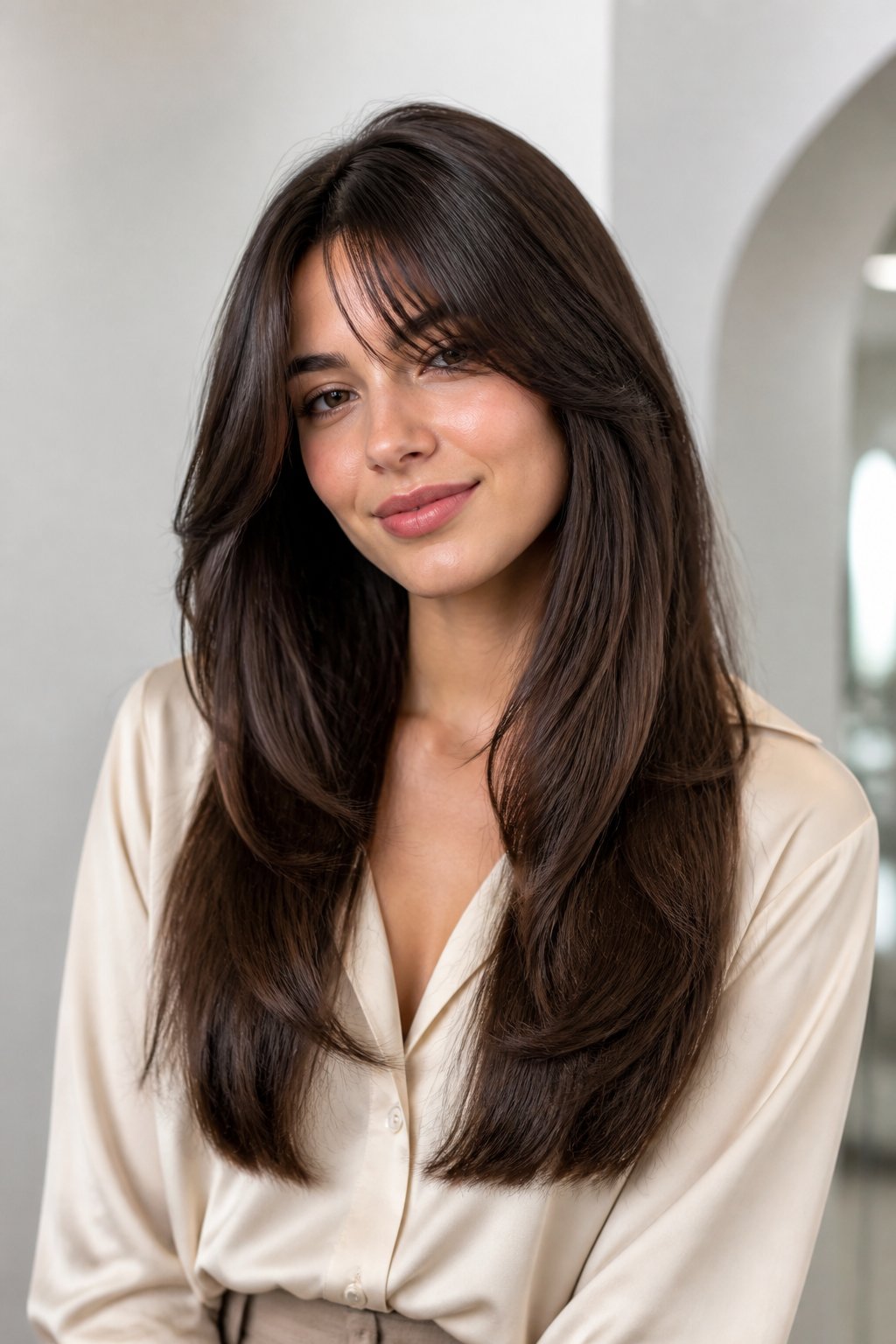
Sleek long layers add shape without taking away much length. Ask your stylist to place the shortest layers below your chin or around your collarbone. This keeps the ends full while adding gentle movement around your face.
Pair the cut with curtain bangs or long, side-swept bangs for a softer look. A center part creates balance, while a slightly off-center part adds more volume near the roots. Use a heat protectant before blow-drying, then smooth each section with a round brush or flat iron.
This style works well when you want polished hair that remains easy to wear. Trim the layers every 8 to 12 weeks to keep the ends neat and prevent the shape from looking uneven.
Feathered Fringe
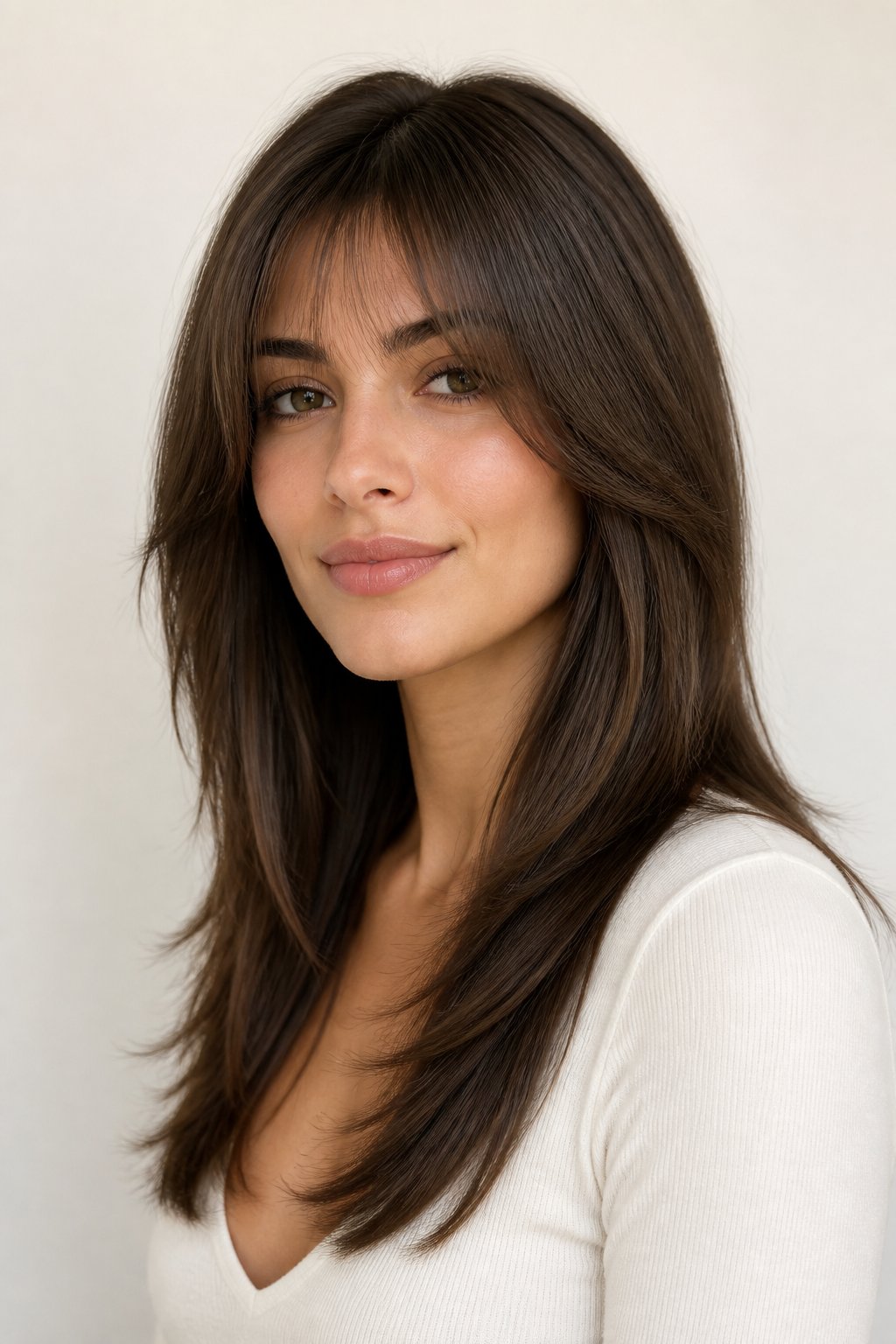
A feathered fringe uses light, tapered ends that blend into face-framing layers. It gives straight hair movement without creating a heavy line across your forehead. Ask for bangs that start near the center of your forehead and become longer toward your cheekbones.
You can wear the fringe parted in the middle or swept slightly to one side. Blow-dry the bangs forward first, then direct them away from your face with a small round brush. This method helps create a soft bend instead of a flat finish.
Feathered bangs suit you if you want a relaxed style that grows out smoothly. They also work well with long layers, subtle U-shaped ends, or a few shorter pieces around the jaw.
Polished Full Fringe
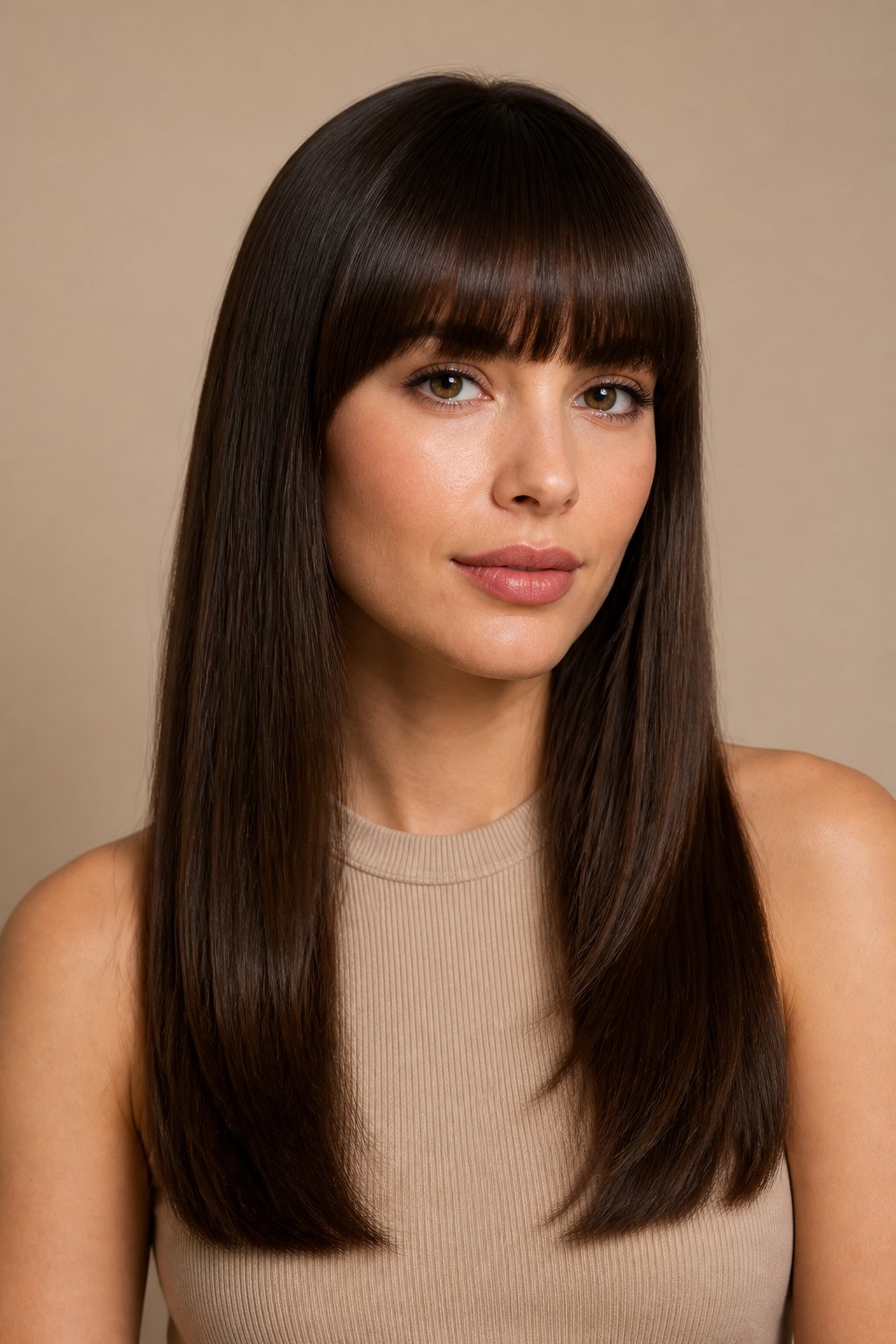
A polished full fringe creates a strong, neat frame for your face. The bangs usually sit at or just above the eyebrows, while the remaining hair stays long and straight. Ask your stylist to check the fringe while your hair sits in its natural position, since straight bangs can appear shorter after drying.
Use a fine-tooth comb and a small brush to keep the fringe smooth. Apply only a small amount of lightweight styling cream to control flyaways without making the bangs greasy. Wash the fringe more often than the rest of your hair if oil builds up near your forehead.
This look suits oval and heart-shaped faces especially well, though your stylist can adjust the width and length to fit your features. Regular trims every 3 to 4 weeks help maintain its clean edge.
Flattering Options for Wavy and Curly Textures
Long hair with bangs can highlight your natural texture when the cut matches your curl pattern and styling routine. Layer placement, bang length, and moisture control help you create shape without adding unwanted bulk or frizz.
Curly Fringe
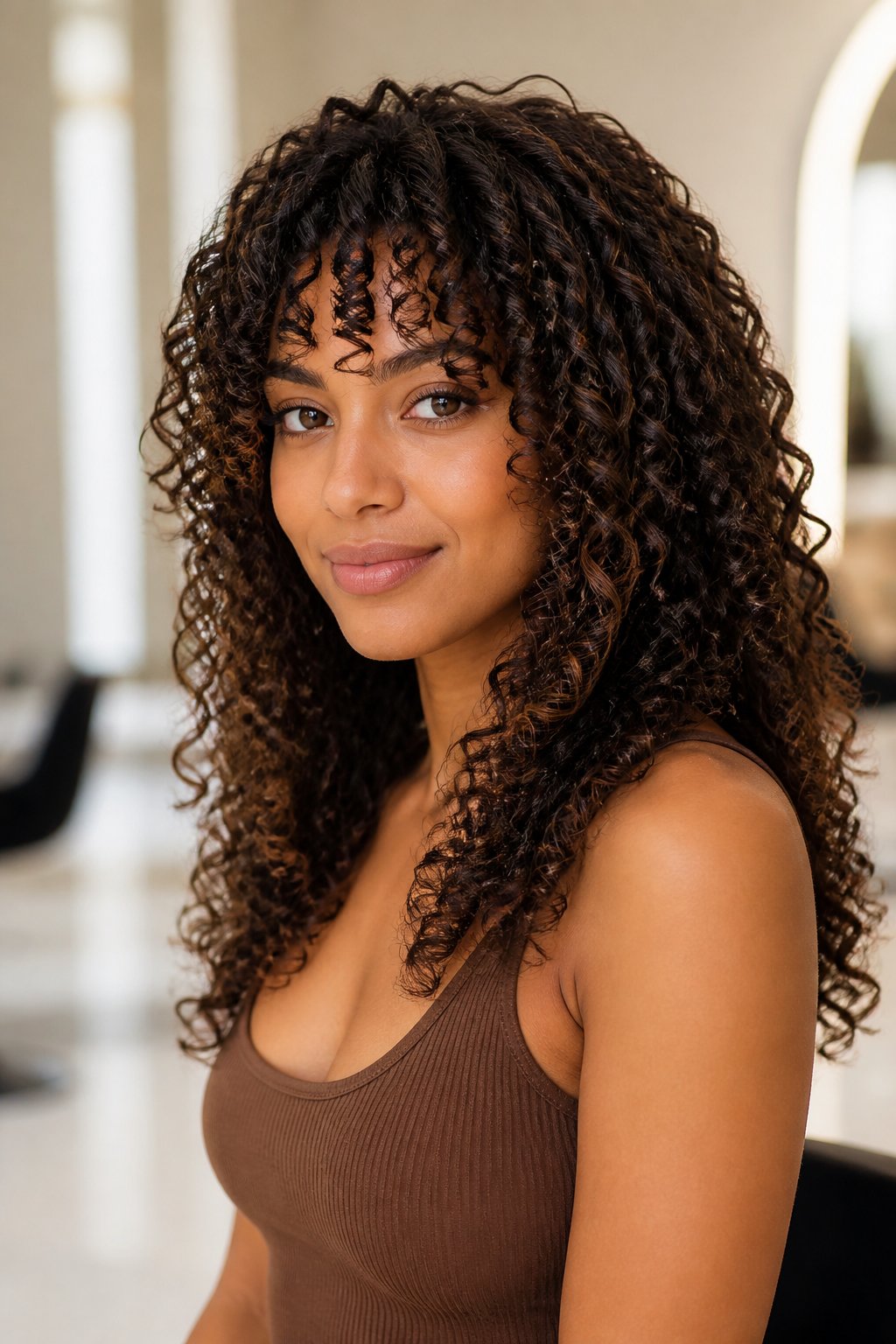
A curly fringe works best when you cut it with your natural curl pattern in mind. Ask your stylist to shape the bangs while dry or nearly dry, since curls can shrink as they dry. Start with a longer length if you feel unsure; you can always shorten the fringe later.
Soft layers around your face help the bangs blend into long curls. Use a lightweight leave-in conditioner and curl cream, then gently scrunch your hair. Let it air-dry or use a diffuser on low heat. Avoid brushing the bangs when dry, as this can separate the curl and create frizz.
Air-Dried Waves
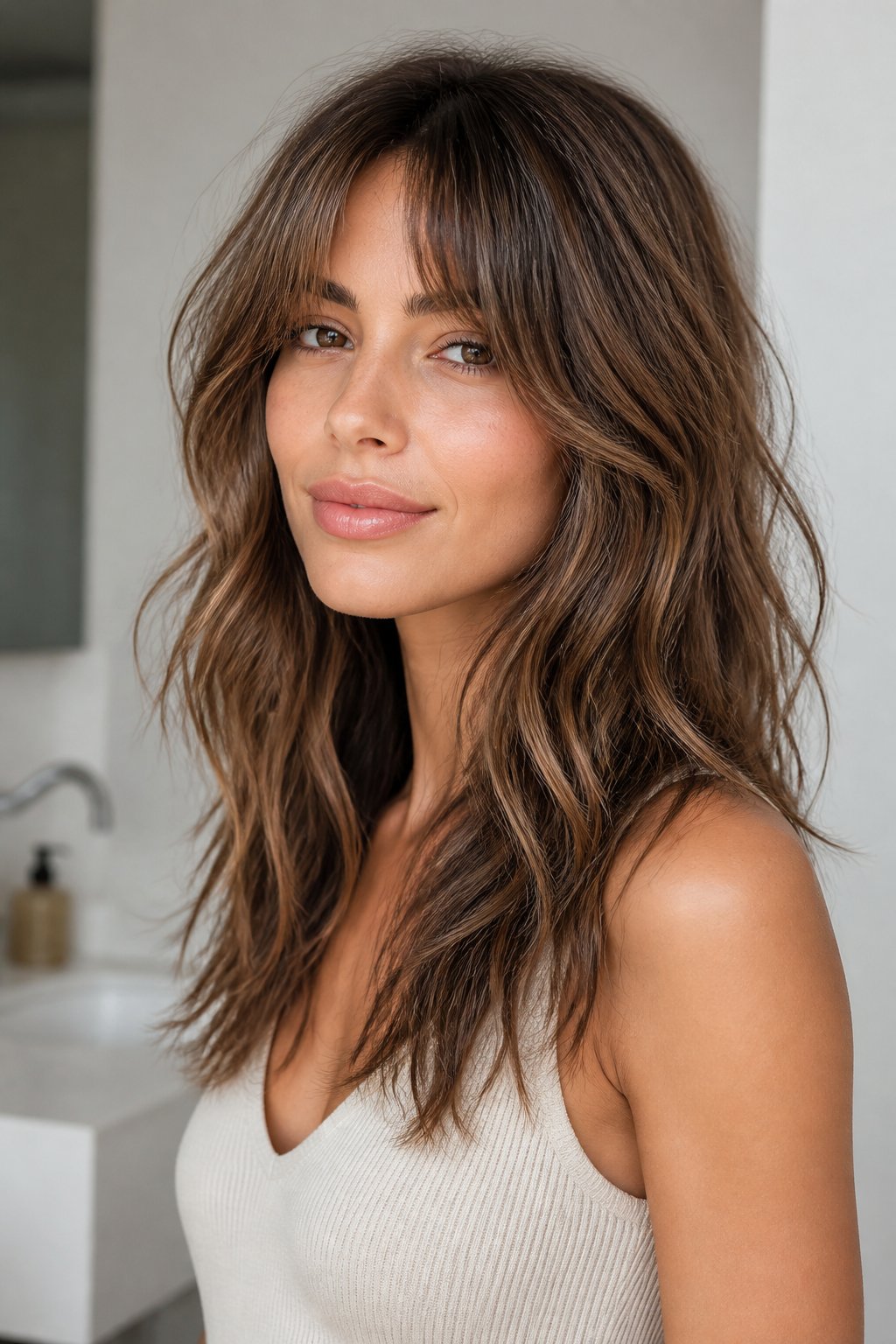
Air-dried waves pair well with long, blended layers and lightly textured bangs. Long layers remove excess weight and help your waves form without making the ends look thin. A stylist can adjust the layers to suit your hair’s thickness and wave pattern.
After washing, apply a small amount of mousse or wave cream to damp hair. Shape your bangs with your fingers, then gently scrunch the lengths. Let your hair dry without repeatedly touching it. If the fringe dries unevenly, use a small round brush or flat iron only on the problem areas.
Textured Curtain Fringe
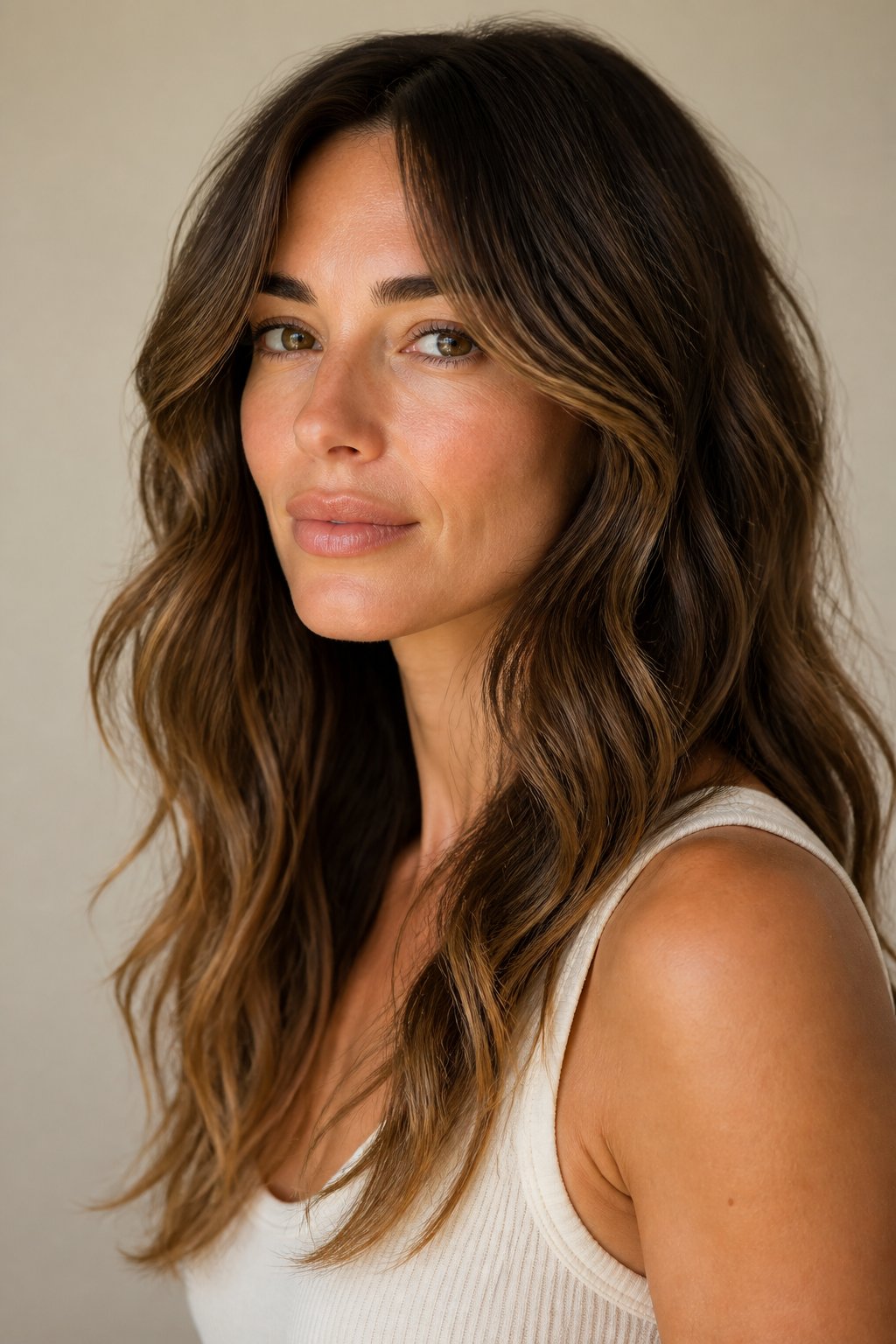
Textured curtain fringe gives long, wavy hair a soft frame around your face. The shortest pieces usually sit near the cheekbones, while the sides blend into longer layers. This shape works well when you want movement without a solid, heavy bang.
Ask for light texture rather than excessive thinning, especially if your hair is fine or prone to frizz. Style the fringe away from your face with a round brush, or twist each side while damp and let it dry naturally. A small amount of styling cream can define the waves while keeping the finish flexible.
Styling Techniques for Everyday Wear
You can create polished, natural-looking styles by controlling root volume, directing your fringe, and limiting heat damage. Choose methods that suit your hair texture, bang length, and the amount of time you have.
Blow-Drying for Volume
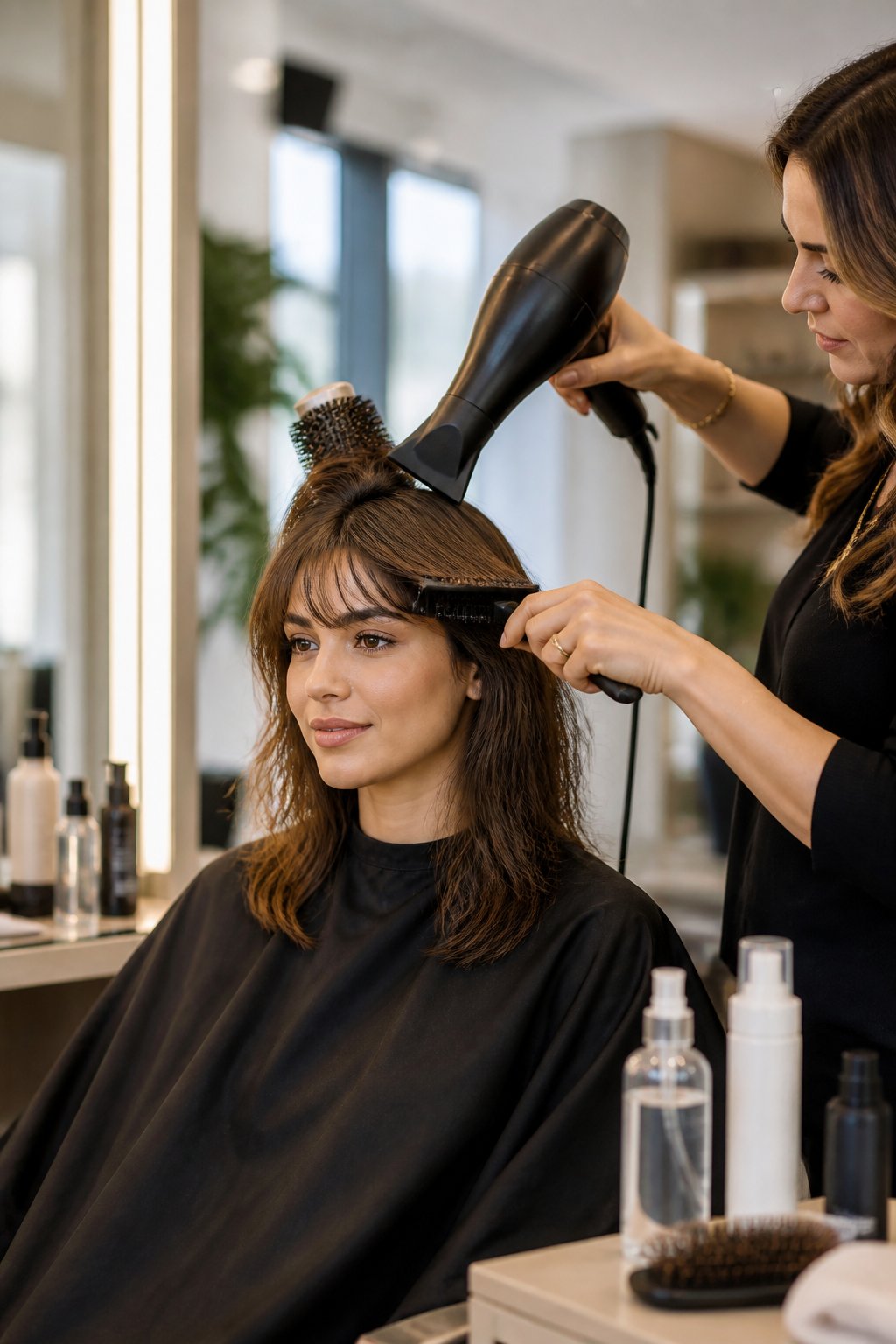
Start with towel-dried hair and apply a heat protectant from mid-lengths to ends. Use a small amount of lightweight mousse at the roots if your hair tends to fall flat. Avoid heavy creams near your bangs, as they can make the fringe separate or look oily.
Dry your bangs first, while they are still damp. Use a flat brush to move them left and right across your forehead as you blow-dry. This helps prevent a strong part and creates a softer shape. Finish with cool air to help set the style.
For the rest of your hair, lift sections at the roots with a round brush. Direct the airflow from the roots toward the ends to smooth the cuticle and reduce frizz. Keep the dryer moving and use medium heat to protect your hair.
Heatless Styling Methods
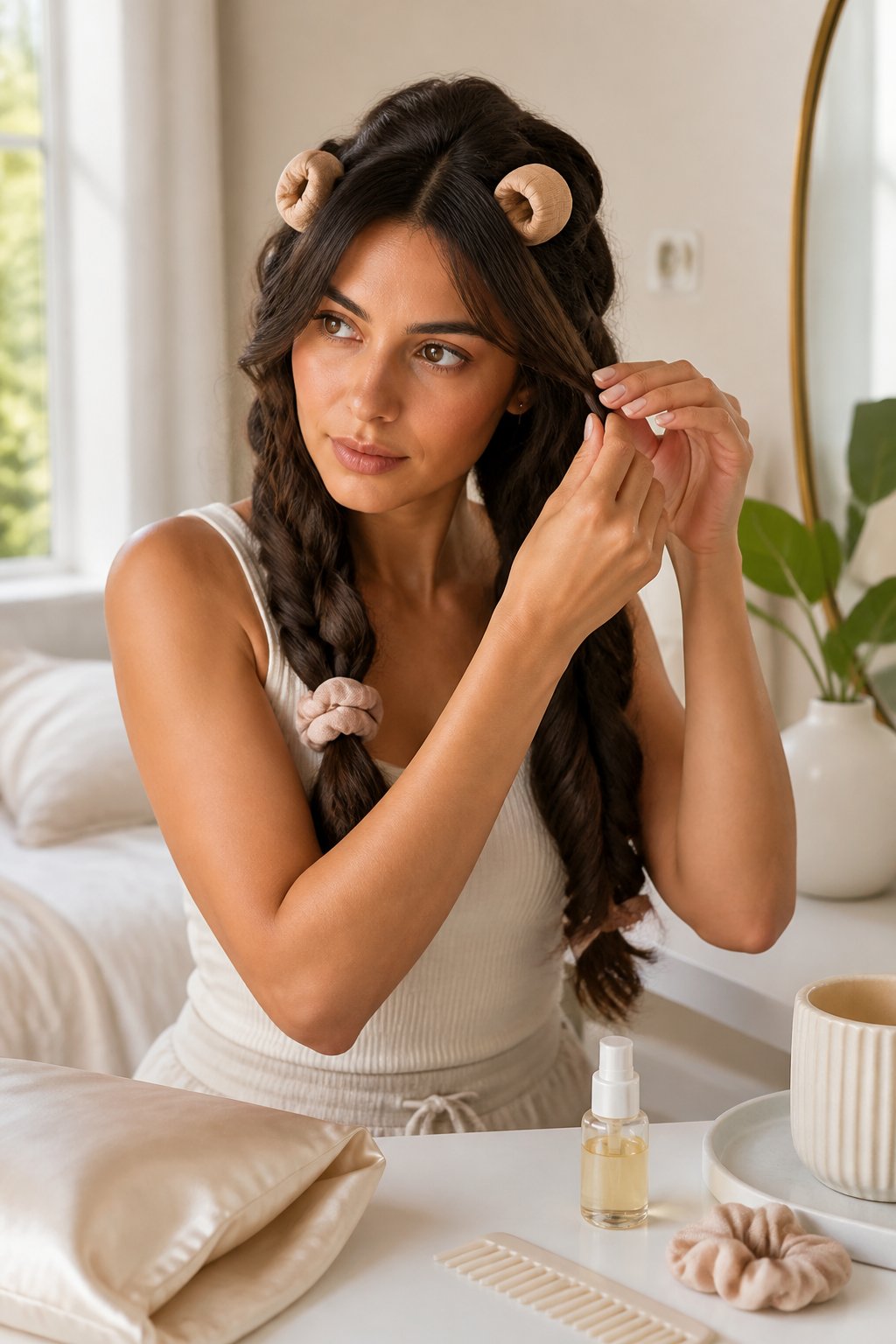
For loose waves, divide slightly damp hair into two or four sections. Twist or braid each section, then let your hair dry fully before releasing it. Use larger sections for soft waves and smaller sections for more defined texture.
You can shape curtain or wispy bangs with two small rollers placed away from your face. Leave them in while your hair dries, then remove them gently and separate the fringe with your fingers. Do not brush dry waves, which can create unwanted puffiness.
A loose, high bun can add gentle bends to long hair. Secure it with a soft scrunchie to avoid dents and tension. Sleep on a satin or silk pillowcase if possible, and use a small amount of smoothing serum on the ends after styling.
Using Round Brushes and Rollers
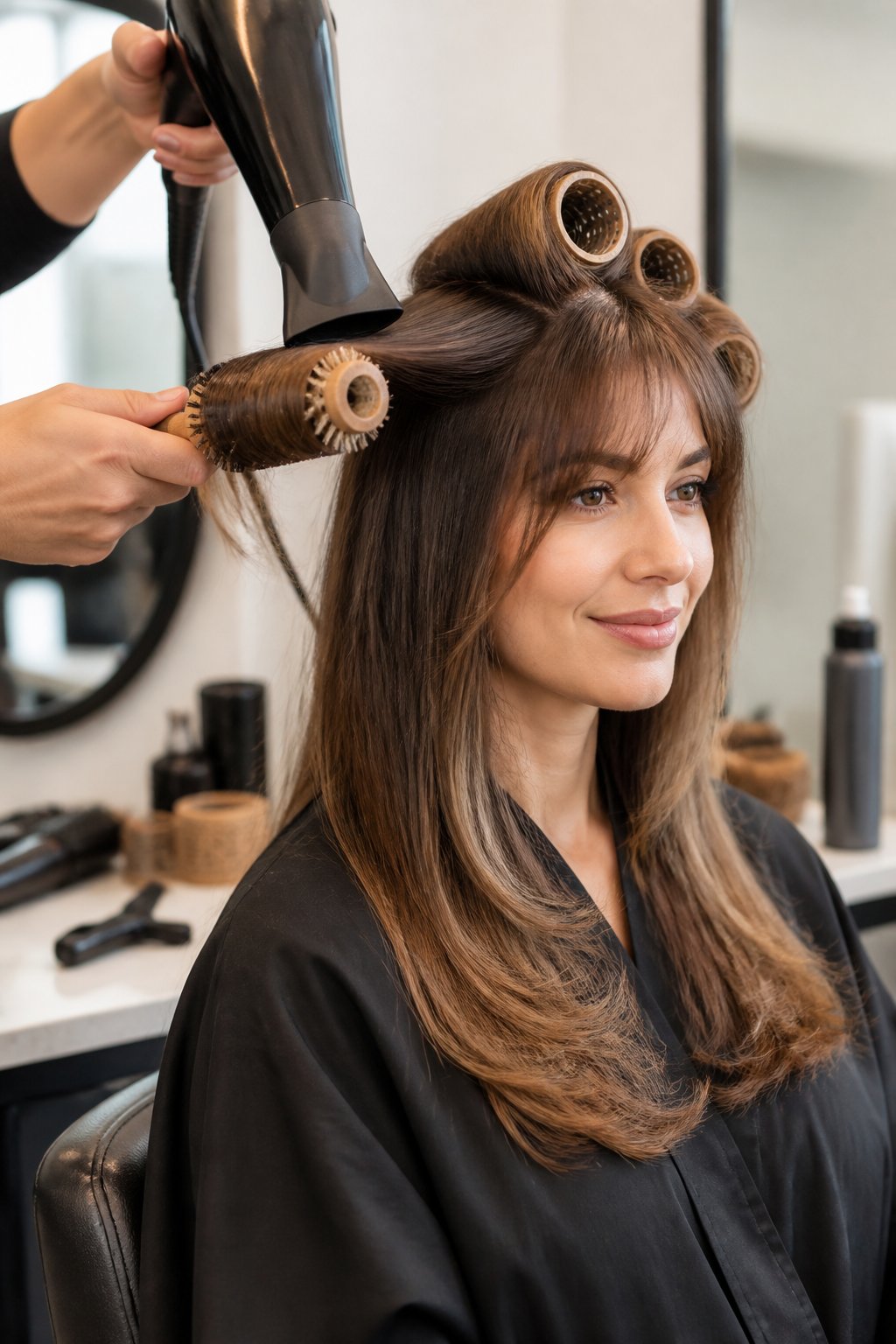
Choose a round brush based on your hair length and the result you want. A medium brush gives bangs shape without making them too curved, while a larger brush creates smoother movement through long layers. Smaller brushes can catch short fringe but may produce a tighter bend.
Wrap each section around the brush, keeping the hair taut without pulling hard. Aim the dryer down the hair shaft and roll the ends under or away from your face. Let each section cool on the brush for a few seconds before releasing it.
For longer-lasting lift, place Velcro or foam rollers at the roots and through the front layers. Roll sections away from your face, leave them until the hair cools, and remove them without tugging. Finish with light hairspray rather than a heavy product.
Maintenance and Salon Planning
Your fringe needs more frequent shaping than your long layers, while growing it out requires small adjustments to keep the cut balanced. Clear styling preferences and specific length requests also help your stylist create bangs that suit your hair texture, face shape, and daily routine.
Trim Timing
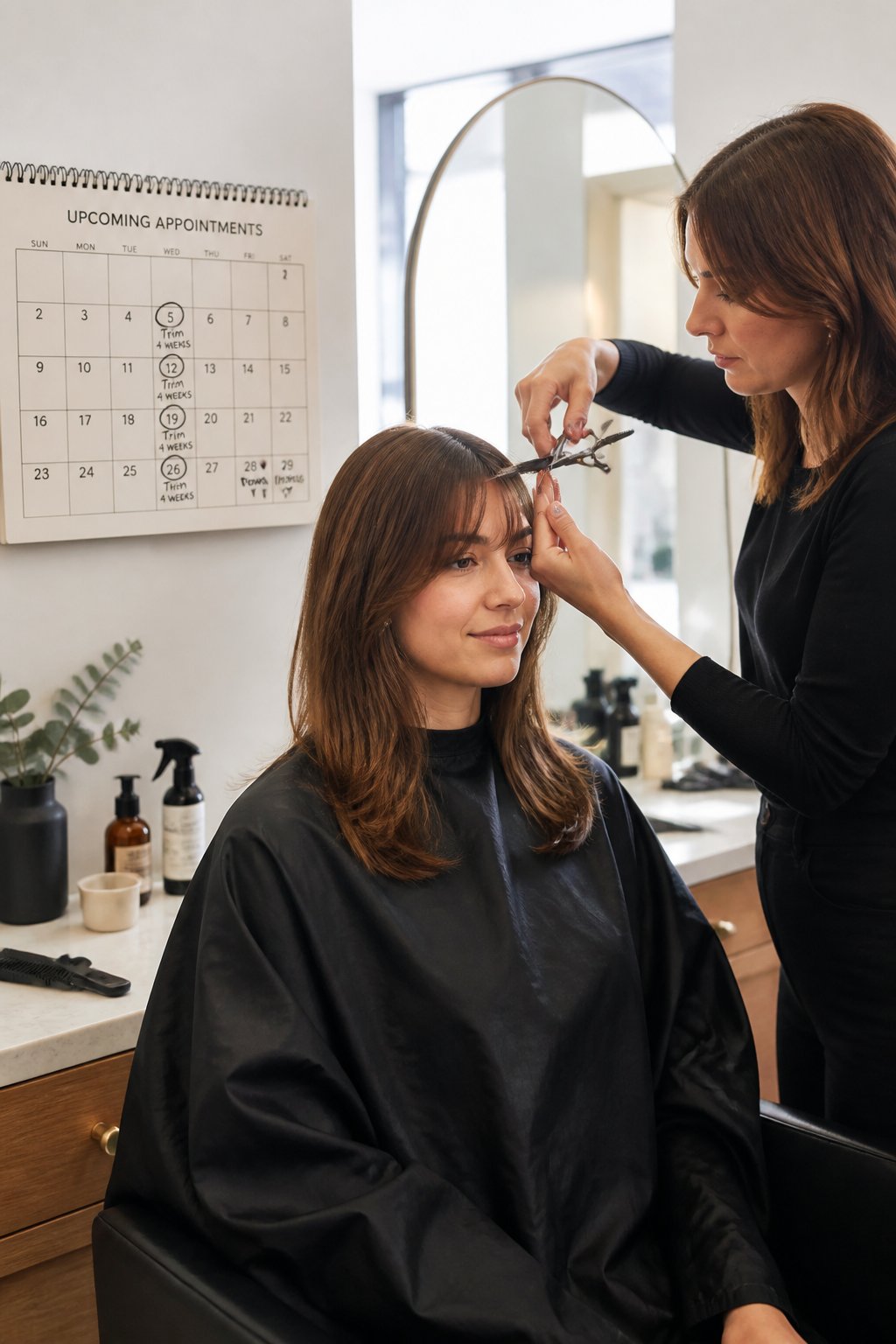
Plan a bang trim every 4–6 weeks to maintain the intended length and shape. Blunt bangs may need attention closer to the four-week mark because uneven growth shows quickly. Curtain, side-swept, and wispy bangs can often last six to eight weeks when you prefer a softer, longer look.
Ask your salon whether it offers a low-cost bang trim between full appointments. Keep your regular haircut appointment every 8–12 weeks to remove split ends and refresh layers. Your hair may need earlier shaping if you use heat often, have dry ends, or wear a strongly layered style.
Book appointments before busy periods, such as holidays or major events. Schedule a trim at least one week before an important occasion so you have time to adjust to the new length.
Growing Out Fringe
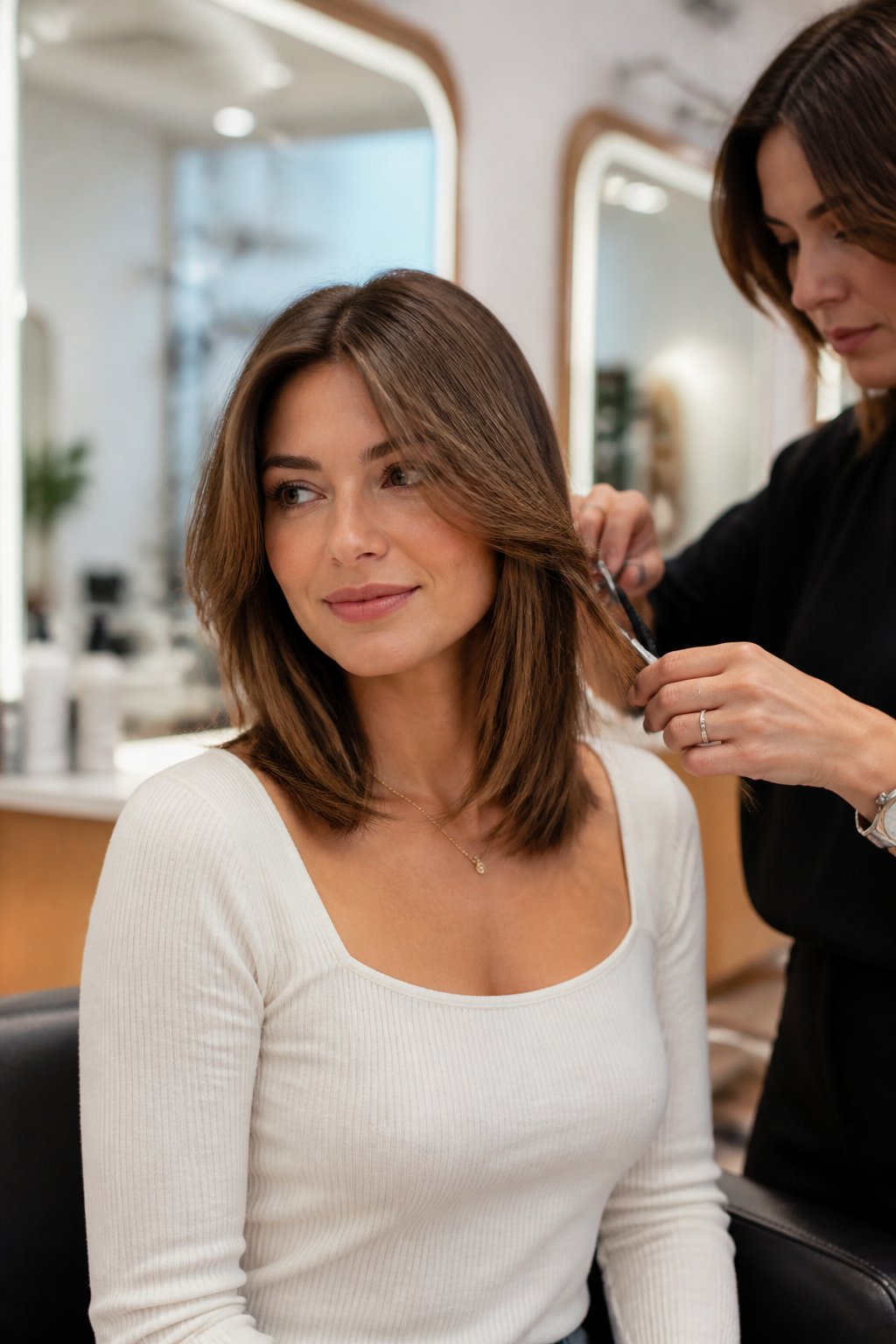
Growing out bangs works best with gradual changes. Ask your stylist to blend the fringe into face-framing layers instead of cutting all the new length at once. This keeps the transition smooth and prevents a heavy section near your forehead.
Use small styling changes as the bangs grow. A round brush can direct them away from your face, while a center or side part can help disguise uneven lengths. Light, flexible-hold products may control flyaways without making the hair stiff.
Avoid cutting the fringe yourself, especially when it reaches an awkward length. Book shaping appointments every 8–10 weeks so your stylist can remove bulk, refine the edges, and connect the bangs to the rest of your haircut.
Communicating With Your Stylist
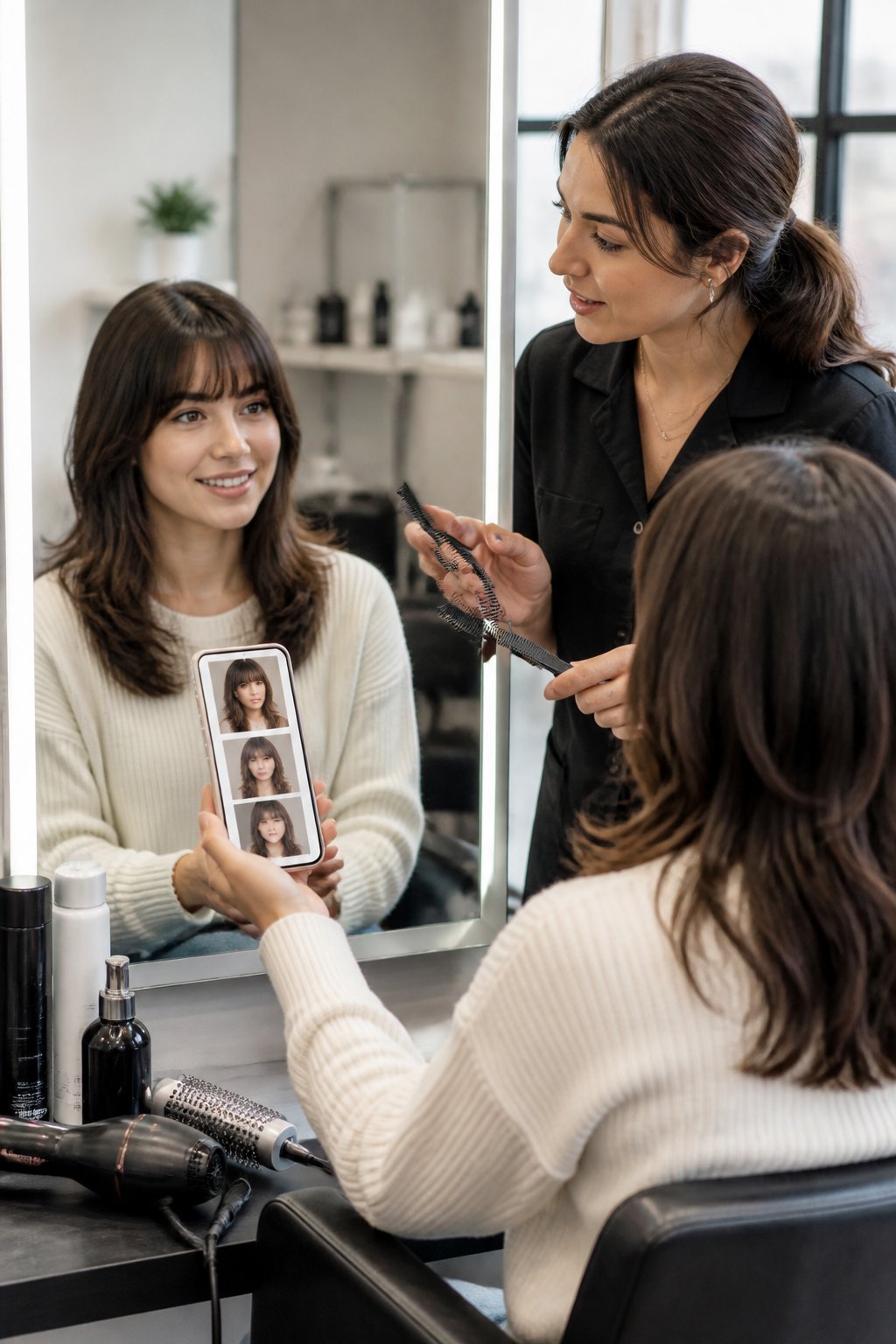
Bring two or three photos that show the bang length, part, and overall shape you want. Tell your stylist how much time you spend styling your hair, whether you use heat tools, and how your hair behaves when it dries naturally.
Use precise requests. You might ask for curtain bangs that reach your cheekbones, side bangs that blend into long layers, or wispy ends that do not look blunt. Mention any cowlicks, curls, oily roots, or glasses that affect how the fringe sits.
Ask your stylist to explain the maintenance schedule before cutting. Confirm the shortest point, the expected grow-out shape, and which products or tools you need. If you feel unsure, request a conservative cut first; your stylist can remove more length later.
Color Ideas That Enhance Dimension
The right color placement can make long hair with bangs look fuller and more shaped. Choose tones that suit your skin undertone, natural depth, and styling routine.
Face-Framing Highlights
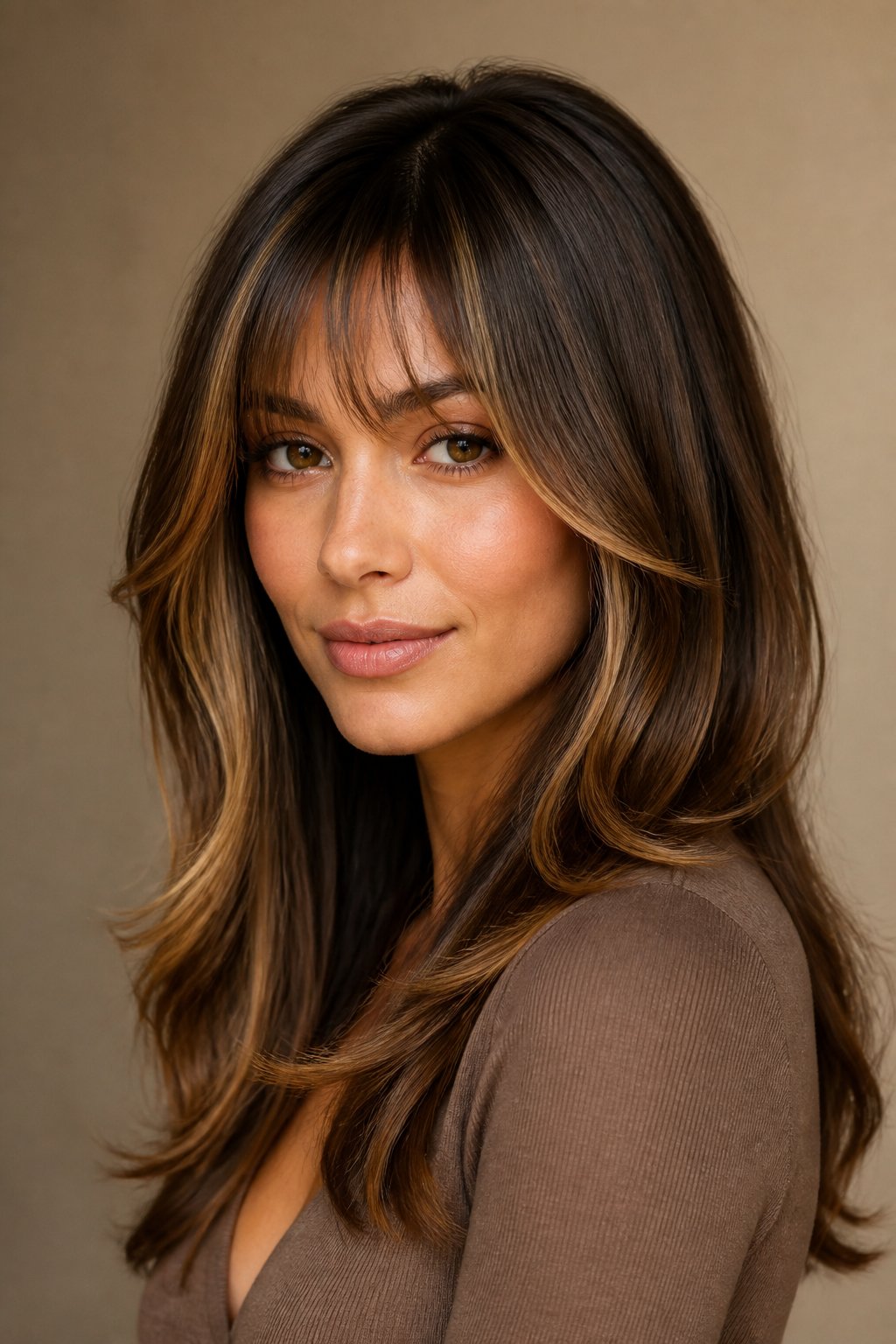
Face-framing highlights brighten the strands around your face and help your bangs stand out. Ask your stylist for fine highlights near the temples, along the cheekbones, and through the front layers. Keep the pieces near your roots soft if you want easier grow-out.
For a natural result, choose a shade one or two levels lighter than your base color. Warm brown hair can suit caramel or honey tones, while cool brown hair often works well with beige or ash shades. If you have blonde hair, soft golden or pearl highlights can add contrast without looking harsh.
Place a few lighter pieces through the bangs, but avoid making every strand the same color. This preserves depth and keeps the fringe from looking flat.
Balayage Blends
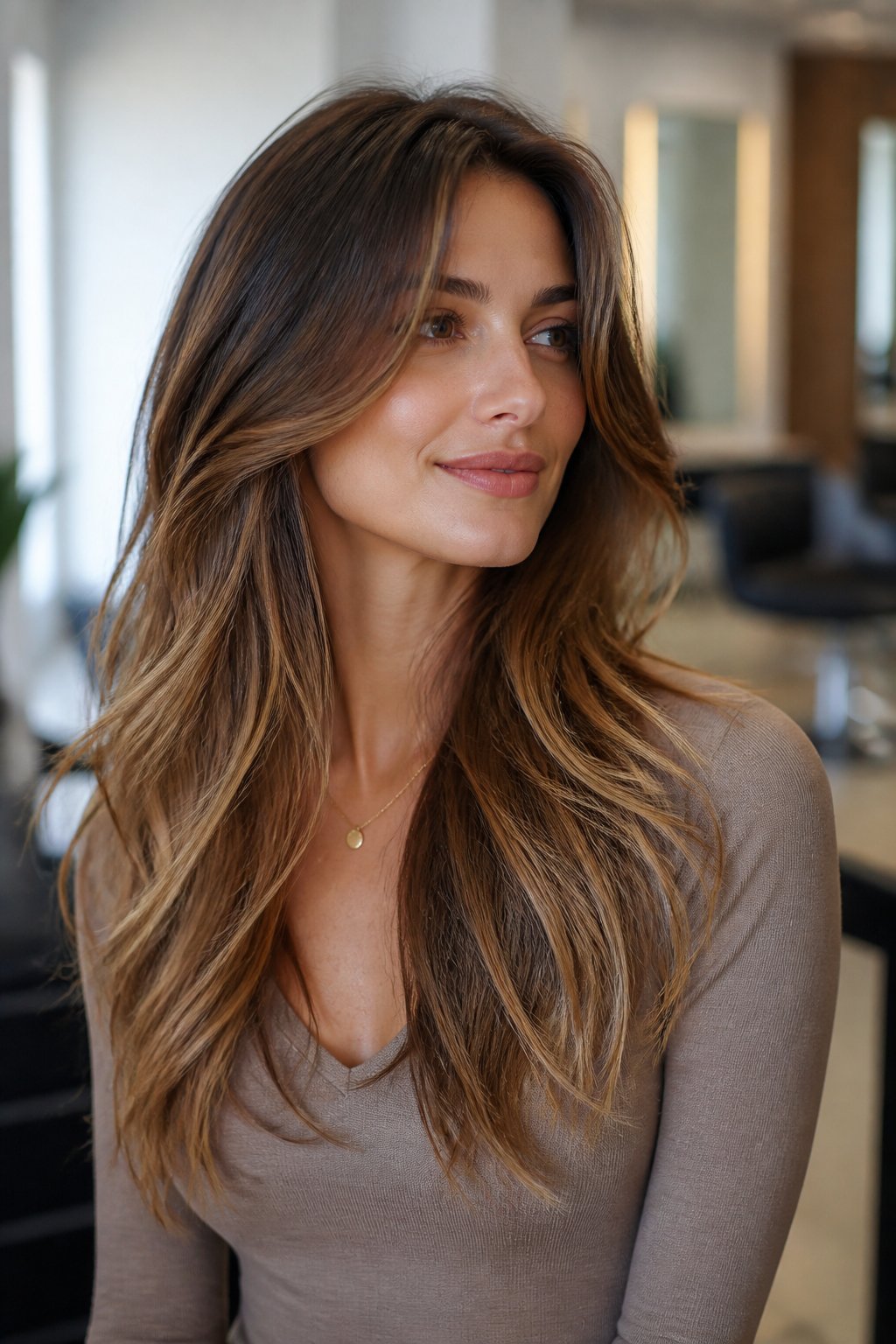
Balayage creates a gradual shift from a darker root area to lighter mids and ends. This technique works well with long layers because the color follows the movement of the haircut. It can also add visible contrast to curtain bangs and side-swept fringe.
Ask for lighter tones through the lower half of your hair, with a few blended pieces starting higher around the face. Caramel, copper, and warm beige suit many medium-brown bases. Ash beige, mushroom brown, and soft mocha can work better with cooler coloring.
Your stylist should keep the transition soft rather than creating a sharp line. Use a color-safe shampoo and limit hot-water washing to help the lighter ends retain their tone.
Glossy Single-Process Color
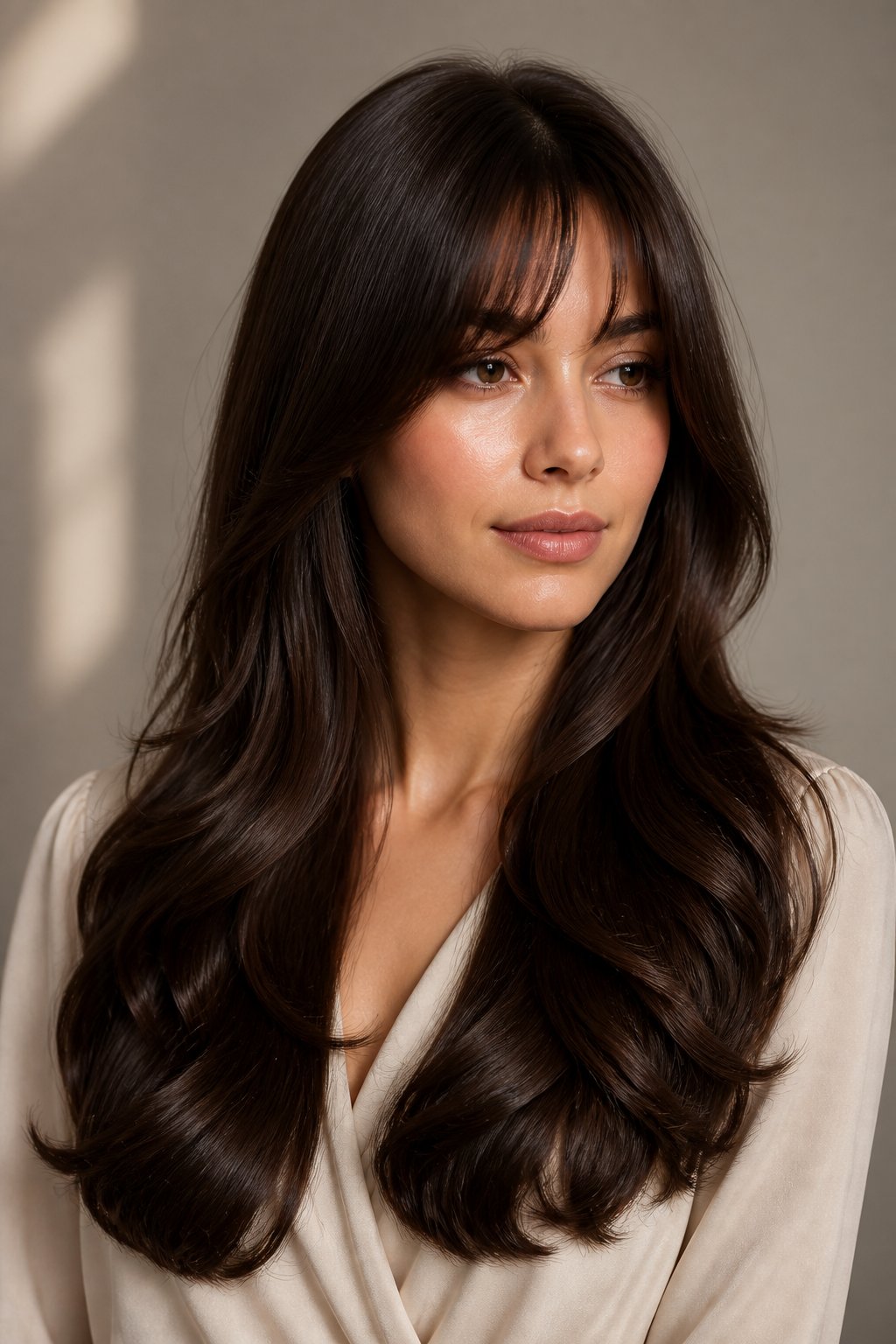
A single-process color gives your hair an even, polished appearance while adding shine. It can make long hair look healthier when the ends appear dull or faded. Choose a shade close to your natural color for a subtle change, or go one to two levels deeper for stronger contrast.
Rich brunette shades, such as espresso or chocolate brown, create a smooth base for layered cuts and bangs. Copper and auburn tones add warmth, while deep black-brown shades give the style a sharper finish. A clear gloss can boost shine without changing your color.
Ask your stylist about a demi-permanent formula if you want softer regrowth. It gradually fades and usually creates less noticeable contrast at the roots.
Frequently Asked Questions
What are some popular bang styles for long hair?
Curtain, wispy, blunt, bottleneck, side-swept, and longer face-framing bangs can all work with long hair. Each creates a different level of softness, structure, and contrast.
Can bangs make long hair look more styled without cutting the length?
Yes. Adding bangs can change the appearance of the front of the haircut while leaving most of the length untouched.
Are wispy or blunt bangs better for a softer look?
Wispy bangs usually create a lighter, softer effect, while blunt bangs make a stronger and more defined statement.
Can long hair with bangs work with straight, wavy, and curly textures?
Yes. The length, density, and shape of the fringe can be adjusted to suit different textures.
Do bangs have to connect with layers?
No. Bangs can be worn with one-length hair, but blending them into face-framing or long layers often creates a smoother transition.
Which bang style is easiest to grow out?
Longer curtain, bottleneck, and side-swept bangs are generally easier to blend into the rest of the hair as they grow.
Can I change the look of my bangs without getting another haircut?
Yes. Changing the part, adding volume, sweeping the fringe to one side, or blending it into longer pieces can create a different appearance.


