







If your hair looks greasy soon after washing, you may wonder whether you should shampoo it daily or try to stretch wash days. Your oil level, hair texture, length, activity, and styling habits all affect the best routine.
You may need to wash oily hair daily or every other day, depending on how quickly your scalp becomes greasy and how comfortable it feels. Daily washing does not automatically harm your hair, but harsh shampoo, hot water, and rough scrubbing can cause dryness or irritation.
You can build a routine that keeps your oily scalp clean without stripping your hair. Learn how to adjust your schedule, wash effectively, manage sweat between washes, and recognize signs that need medical advice.
Key Takeaways
- Wash oily hair when your scalp feels greasy or dirty.
- Adjust washing frequency for your hair texture and activity.
- Seek medical advice for persistent itching, redness, or scaling.
Recommended Wash Schedule for Oily Hair


Your wash schedule should match your scalp’s oil production, hair texture, and activity level. Daily washing may suit very oily hair, while washing every other day can work when scalp oil and buildup remain manageable.
When Daily Shampooing Makes Sense
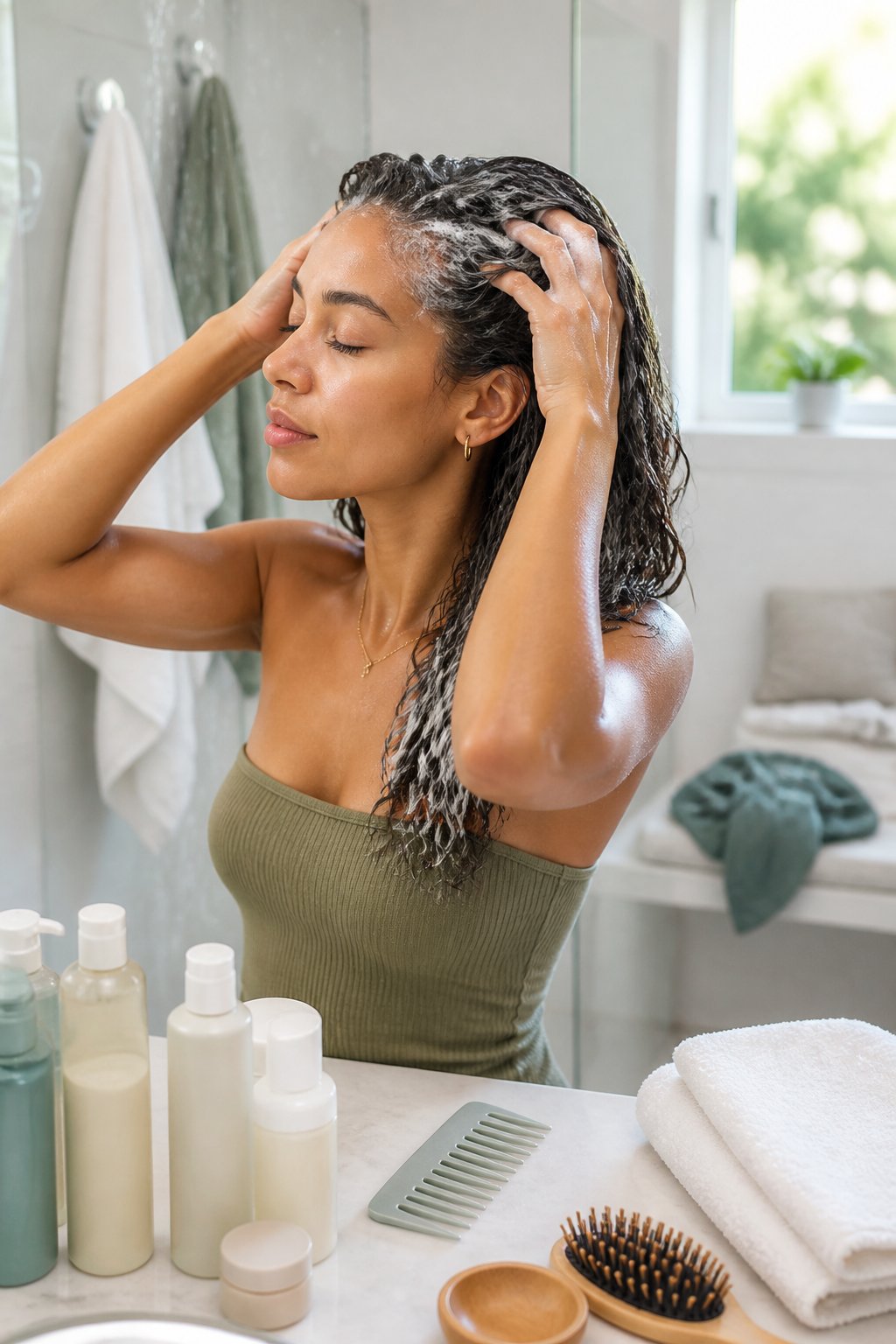
You may need to wash oily hair daily if your roots look greasy within 24 hours. Daily shampooing can also help when excess sebum causes scalp odor, an itchy scalp, or visible buildup.
Choose a gentle shampoo and apply it mainly to your scalp. Massage with your fingertips, rinse well, and use conditioner only on your mid-lengths and ends. Avoid harsh scrubbing, very hot water, and repeated shampooing unless one wash fails to remove the oil.
Daily washing makes sense when you exercise often, work in heat, wear headwear for long periods, or sweat heavily. If your hair becomes dry, rough, or dull, reduce washing to every other day or switch to a milder formula.
When Every Other Day Is Enough
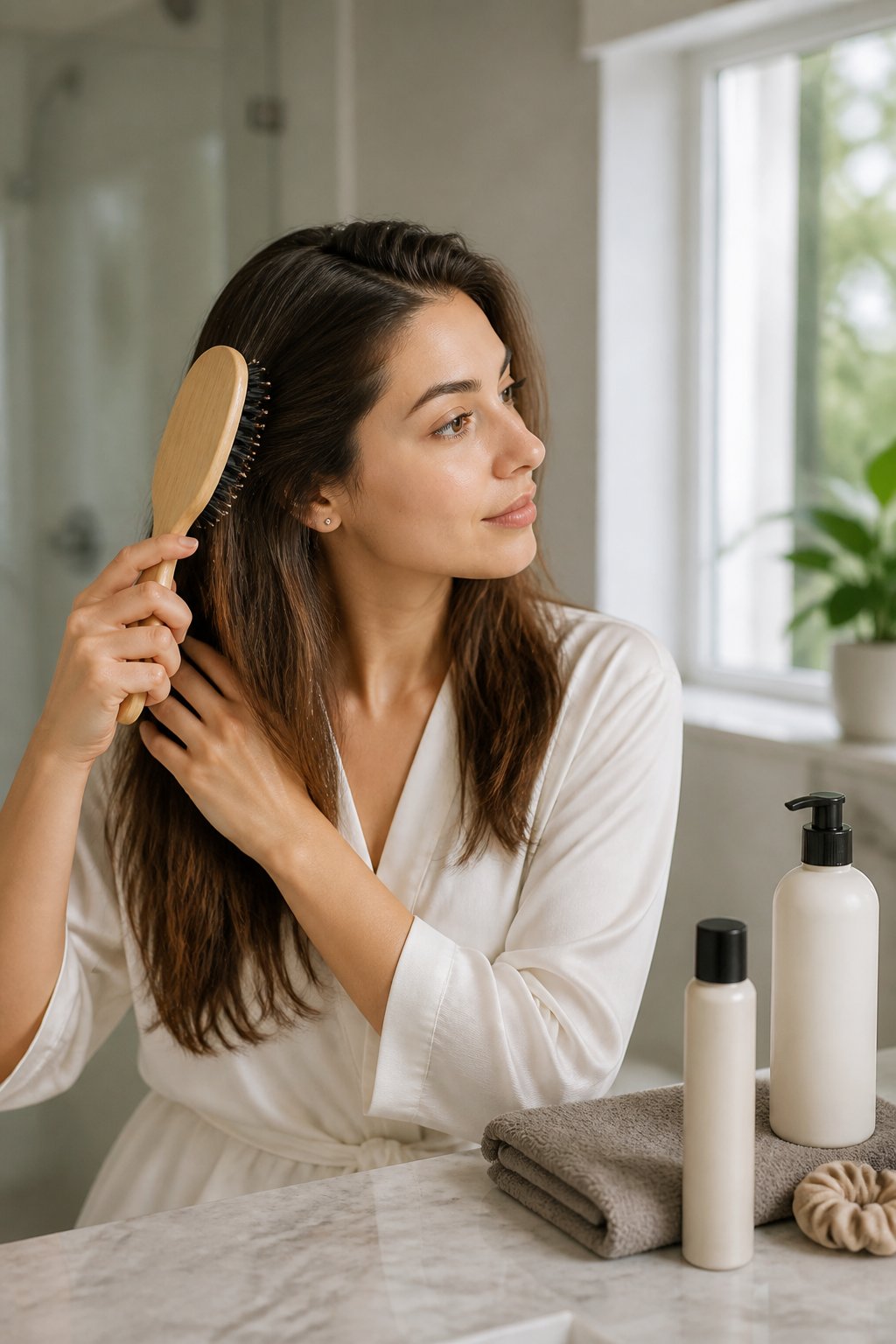
Washing every other day suits many people with oily scalps that become greasy after 36 to 48 hours. This schedule removes scalp oil before it leads to noticeable odor or buildup without washing hair more often than needed.
On non-wash days, brush gently and avoid applying heavy oils, waxes, or thick styling products near your roots. Dry shampoo can absorb some oil, but use it as a short-term aid rather than a replacement for regular shampooing.
Your hair texture also affects the schedule. Fine, straight hair often shows scalp oil faster, while thick, wavy, or curly hair may look clean longer. Adjust your routine after changes in weather, exercise, stress, or product use.
Signs Your Scalp Needs Washing

Wash your hair when your scalp feels greasy, sticky, itchy, or uncomfortable. A noticeable scalp odor, flattened roots, or oil that spreads down the hair also signals that shampooing may help.
You may need to wash sooner after sweating during exercise or spending time in hot, humid conditions. Sweat itself is not the same as scalp oil, but it can mix with sebum, styling products, and skin cells to create buildup.
If your scalp feels tight or your lengths become brittle after washing, use less shampoo on the ends and apply conditioner there. Persistent itching, heavy flakes, redness, soreness, or unusual odor may require advice from a dermatologist rather than a change in wash frequency.
Why Your Scalp Produces Excess Oil
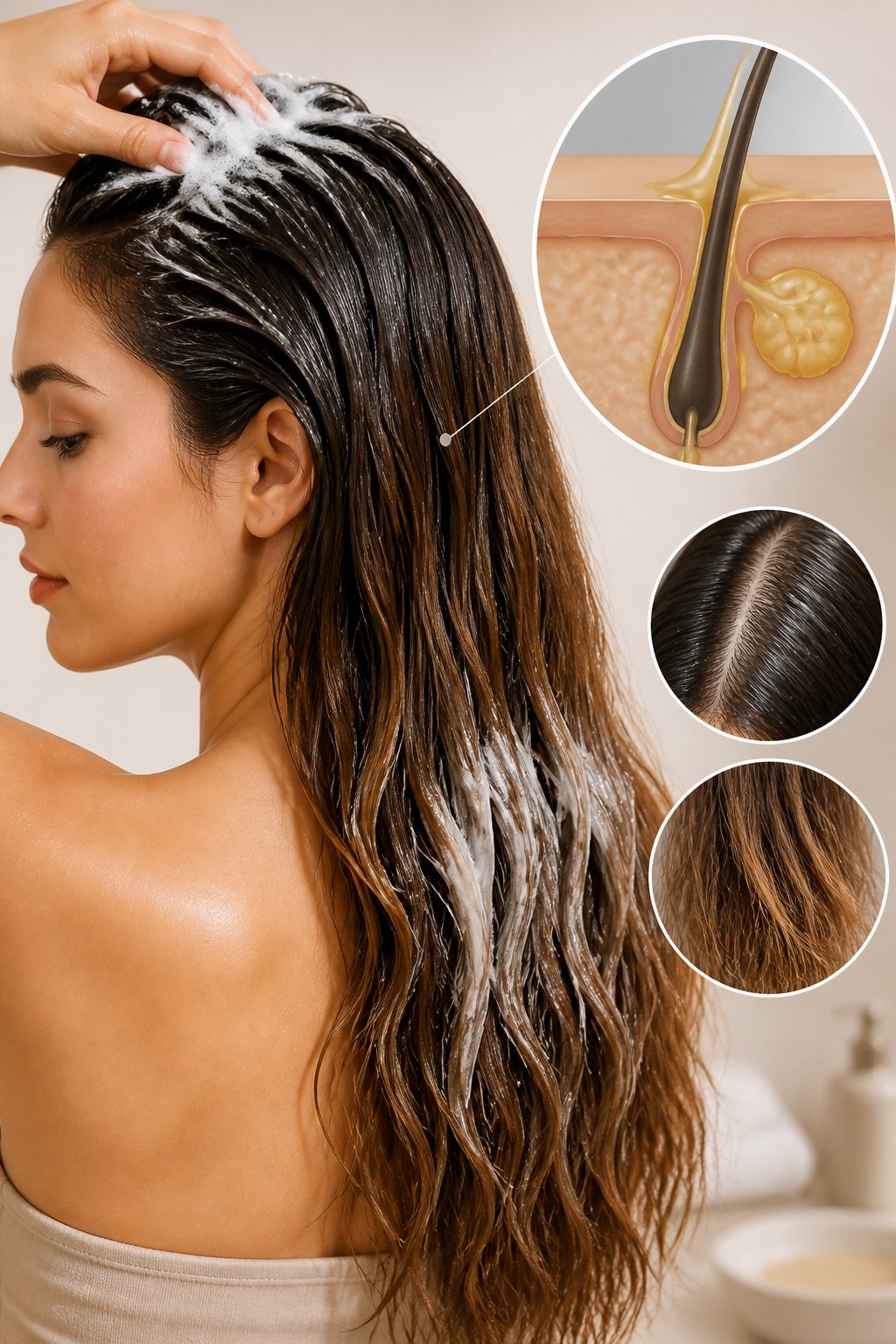
Your scalp’s oil level depends on sebum production, genetics, hair structure, and hormone activity. Puberty, stress, and some medical conditions can also increase oil production or make greasy roots more noticeable.
Genetics, Hair Type, and Oil Distribution

Genetics can affect the size and activity of your sebaceous glands. If oily hair runs in your family, you may naturally produce more sebum and need more frequent washing.
Your hair type also affects how oil looks and spreads. Straight, fine hair lets sebum travel down the hair shaft more easily, so it may appear oily quickly. Thick, curly, or textured hair can keep oil near the roots, while the ends remain dry. This explains why you may have oily roots and dry ends at the same time.
Hormonal Changes and Medical Contributors

Androgens, a group of hormones, can stimulate sebaceous glands. During puberty, rising androgen levels often increase oil production and may cause greasy hair or acne. Hormonal changes related to the menstrual cycle, pregnancy, or stopping and starting hormonal birth control can also affect your scalp.
Conditions such as polycystic ovary syndrome (PCOS) may cause higher androgen activity and excess sebum in some people. Stress can influence hormone signals and may worsen oiliness, though it does not affect everyone in the same way. If sudden oiliness occurs with irregular periods, increased facial hair, severe acne, or scalp inflammation, speak with a health professional.
Adjusting Frequency for Hair Texture and Length
Your scalp’s oil production sets the main washing schedule, but texture and length affect how quickly oil spreads and how much moisture your hair needs. Fine, straight hair may need frequent washing, while thick or tightly curled hair often needs fewer shampoo days.
Fine, Thin, and Straight Hair
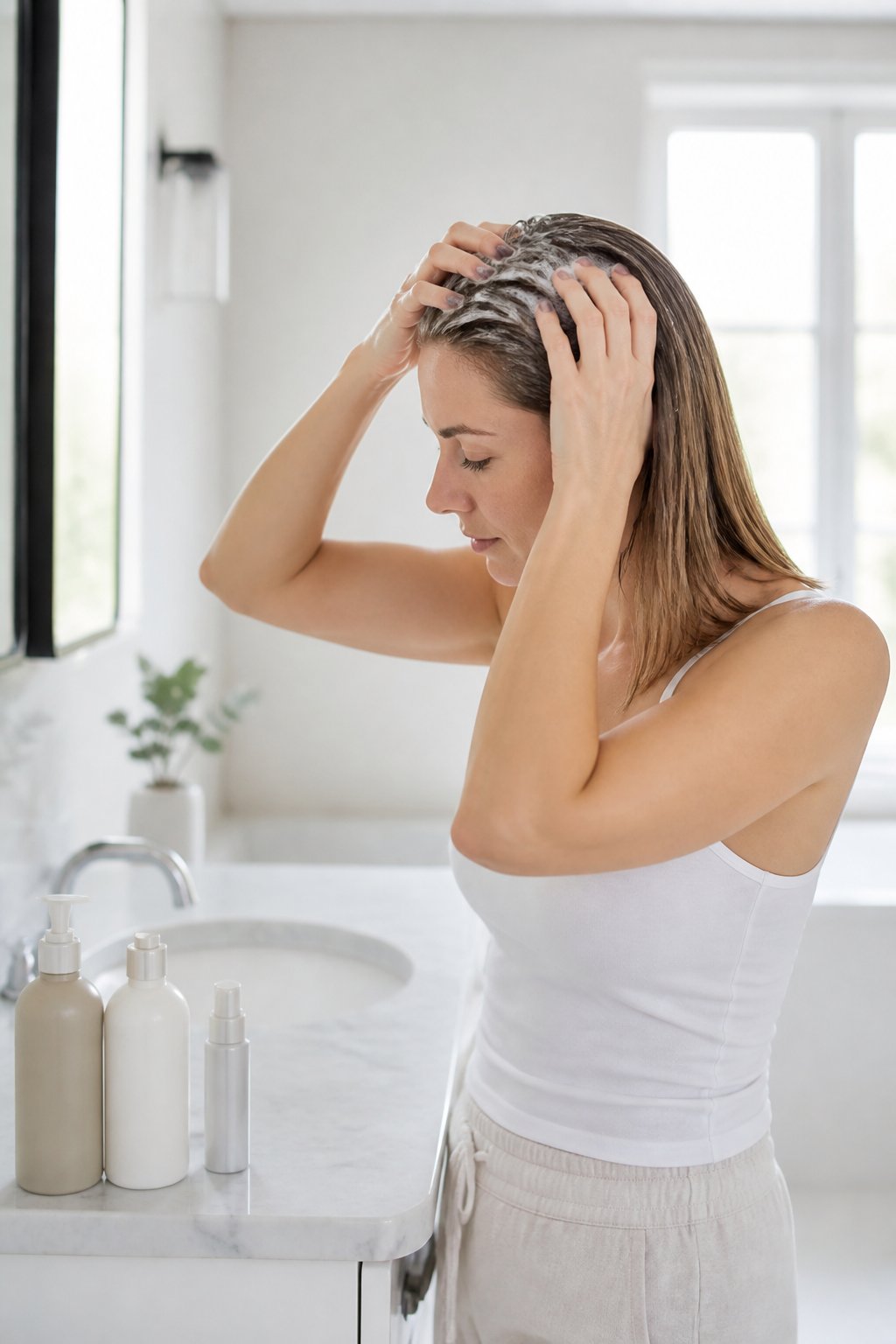
Fine hair has a smaller diameter, so oil can make it look flat or greasy quickly. If you have thin oily hair or straight hair, start by shampooing every one to two days. You may need to wash daily if your scalp becomes oily, itchy, or uncomfortable within 24 hours.
Apply shampoo mainly to your scalp, where oil collects. Let the lather rinse through your lengths instead of scrubbing the ends. Use a lightweight conditioner from the mid-lengths down, and avoid heavy oils or thick styling products near the roots.
If daily washing causes dryness, try every other day and use a gentle shampoo. Dry shampoo can help between washes, but it does not replace regular cleansing.
Thick, Coarse, Curly, and Black Hair
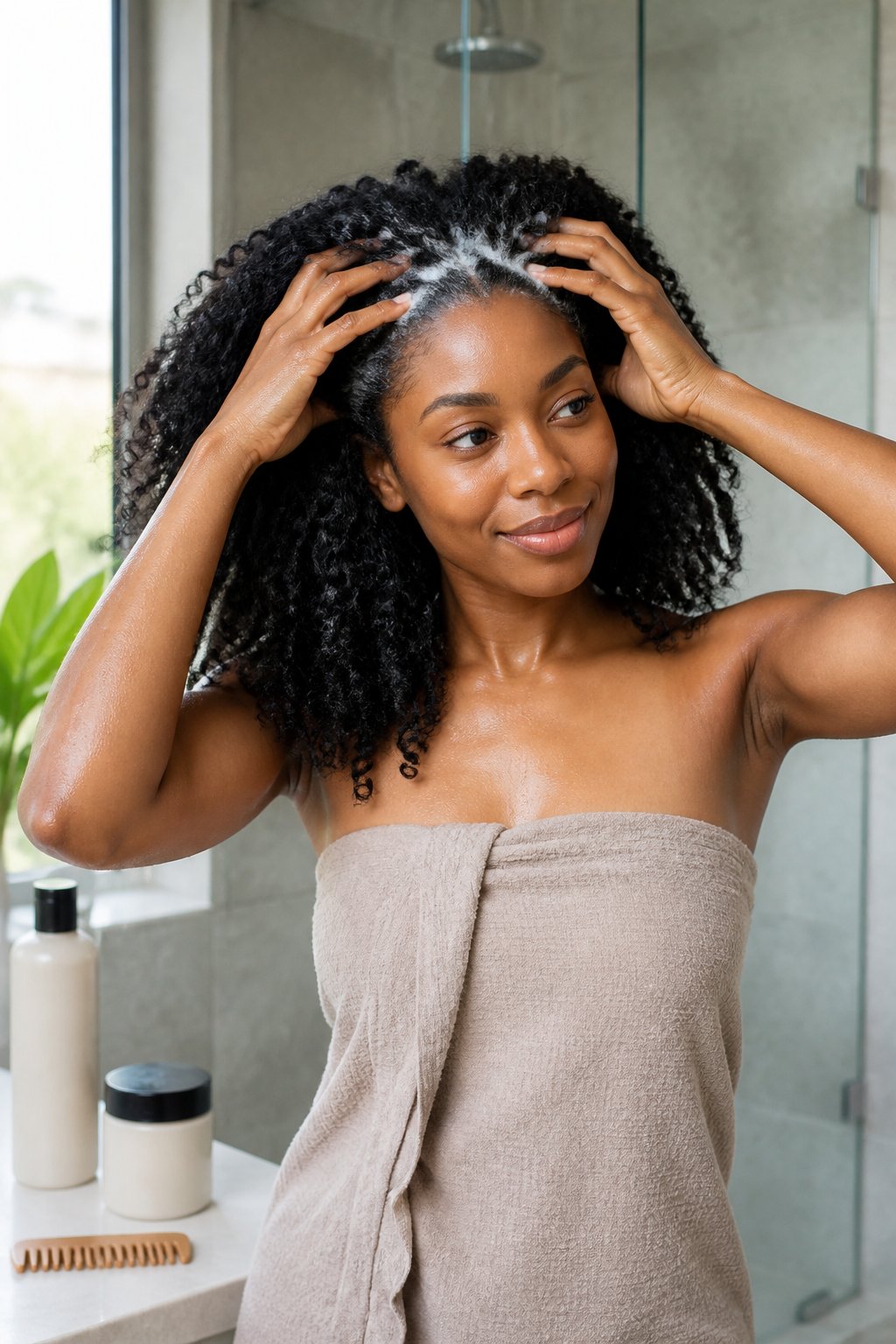
Thick, coarse, curly, and Black hair often needs less frequent shampooing because scalp oil moves slowly along bends and dense strands. You may begin with one or two shampoo days per week, then adjust for sweat, product buildup, or scalp discomfort.
Curly hair can become dry when washed too often. Use a moisturizing shampoo and apply conditioner generously through the lengths. If your scalp becomes oily before your next wash, cleanse the scalp more often while keeping shampoo off the ends as much as possible.
Avoid extending wash days when you notice itching, flakes, odor, or heavy buildup. A clean scalp matters even when your hair texture remains dry.
Long Hair and Dry Ends
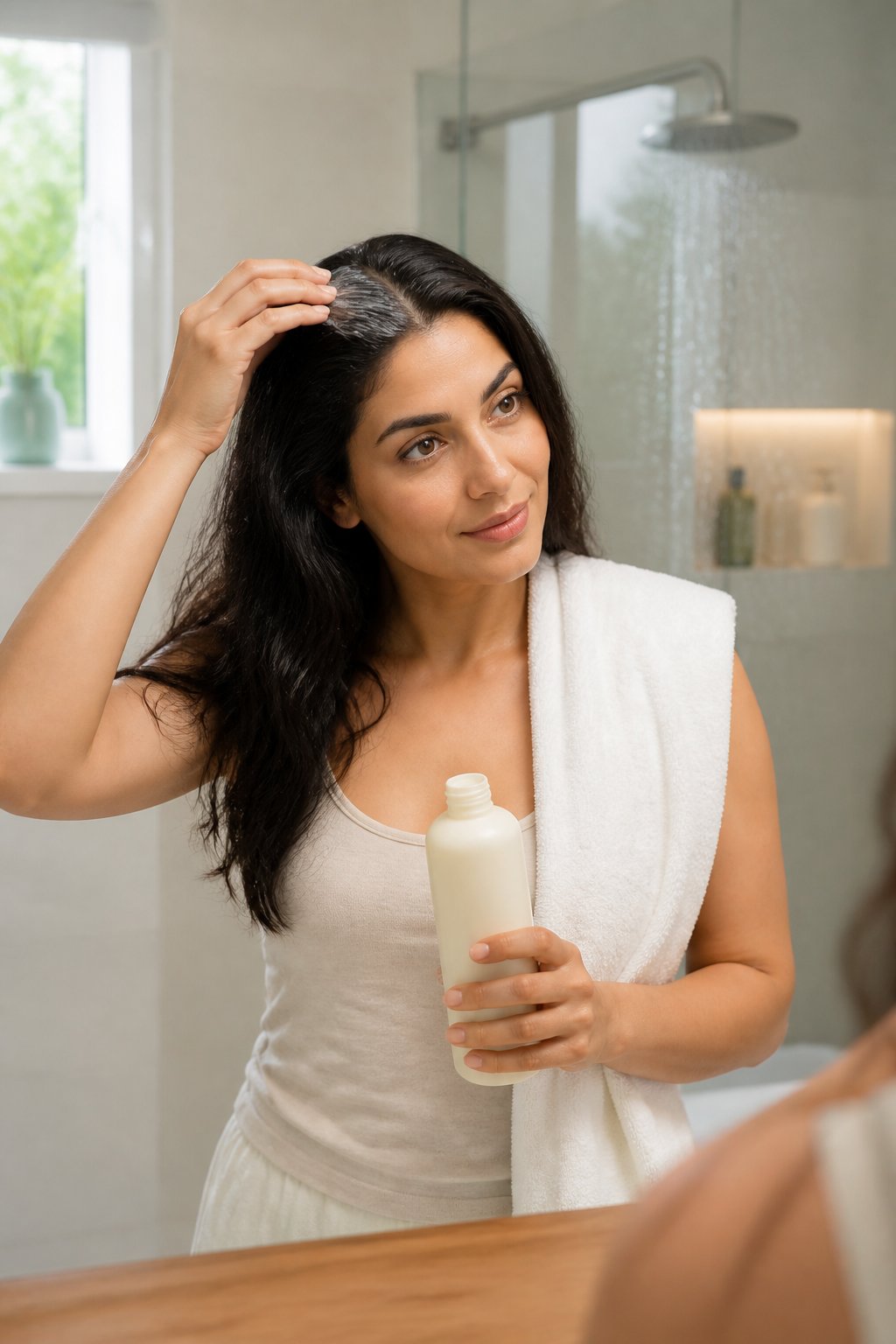
Hair length does not change how much oil your scalp produces, but long hair gives that oil more distance to travel. Your roots may look oily while your ends remain dry, brittle, or prone to breakage.
Choose your wash frequency based on your scalp, then protect the lengths. Shampoo your roots and use conditioner on the lower half of your hair, especially the last few inches. Rinse with lukewarm water and handle wet hair gently.
If your ends feel rough after frequent washing, reduce shampoo contact with them rather than leaving an oily scalp unwashed. A small amount of leave-in conditioner can help manage dryness without adding heavy product to your roots.
Daily Washing, Overwashing, and Common Myths
Washing oily hair daily does not automatically increase oil production. However, harsh cleansing, poor technique, and skipped washes can cause dryness, irritation, or buildup that makes your scalp and hair feel worse.
Does Shampooing Daily Increase Oil Production?

Daily shampooing does not reliably make your scalp produce more oil. Your oil production mainly depends on hormones, genetics, age, and scalp health. You may notice more oil after skipping washes, but this usually reflects accumulated sebum rather than your scalp suddenly changing its oil output.
If your roots look greasy within 24 hours, daily washing may suit you. Choose a gentle shampoo, apply it mainly to your scalp, and rinse it thoroughly. You do not need to scrub the hair lengths because shampoo can remove their natural oils and leave them rough.
Avoid delaying washes simply because you heard that your scalp will “train” itself to produce less oil. There is limited evidence for this claim. Adjust your routine based on visible oil, itching, odor, exercise, and styling-product use.
When Frequent Cleansing Causes Dryness

Frequent washing can cause dryness when you use strong shampoos, very hot water, or rough scrubbing. You may notice tightness, flakes, frizz, split ends, or scalp irritation. These signs do not always mean you should stop washing; they may indicate that you need a milder product or better technique.
Use lukewarm water and massage shampoo gently with your fingertips. Apply conditioner from the middle of your hair to the ends, keeping it away from oily roots. If daily washing leaves your scalp uncomfortable, try washing every other day while monitoring oil and irritation.
If you have persistent redness, burning, thick scaling, or painful areas, consult a health professional. Dandruff or seborrheic dermatitis may need a medicated shampoo rather than fewer washes.
Why Skipping Washes Can Worsen Buildup

Skipping washes allows sebum, sweat, dead skin, dry shampoo, and styling products to collect on your scalp. This buildup can make your roots look flat and greasy. It may also cause itching, odor, scalp pimples, or flakes along the hairline.
If you use dry shampoo, treat it as a temporary oil absorber, not a replacement for shampoo and water. Wash your scalp when it feels coated or uncomfortable, especially after heavy sweating. A regular cleansing schedule helps remove buildup without requiring aggressive scrubbing.
For dandruff or seborrheic dermatitis, washing often enough with an appropriate medicated shampoo can help control flakes and excess oil. Follow the product directions, since some treatments need several minutes on the scalp before rinsing.
How to Wash an Oily Scalp Effectively
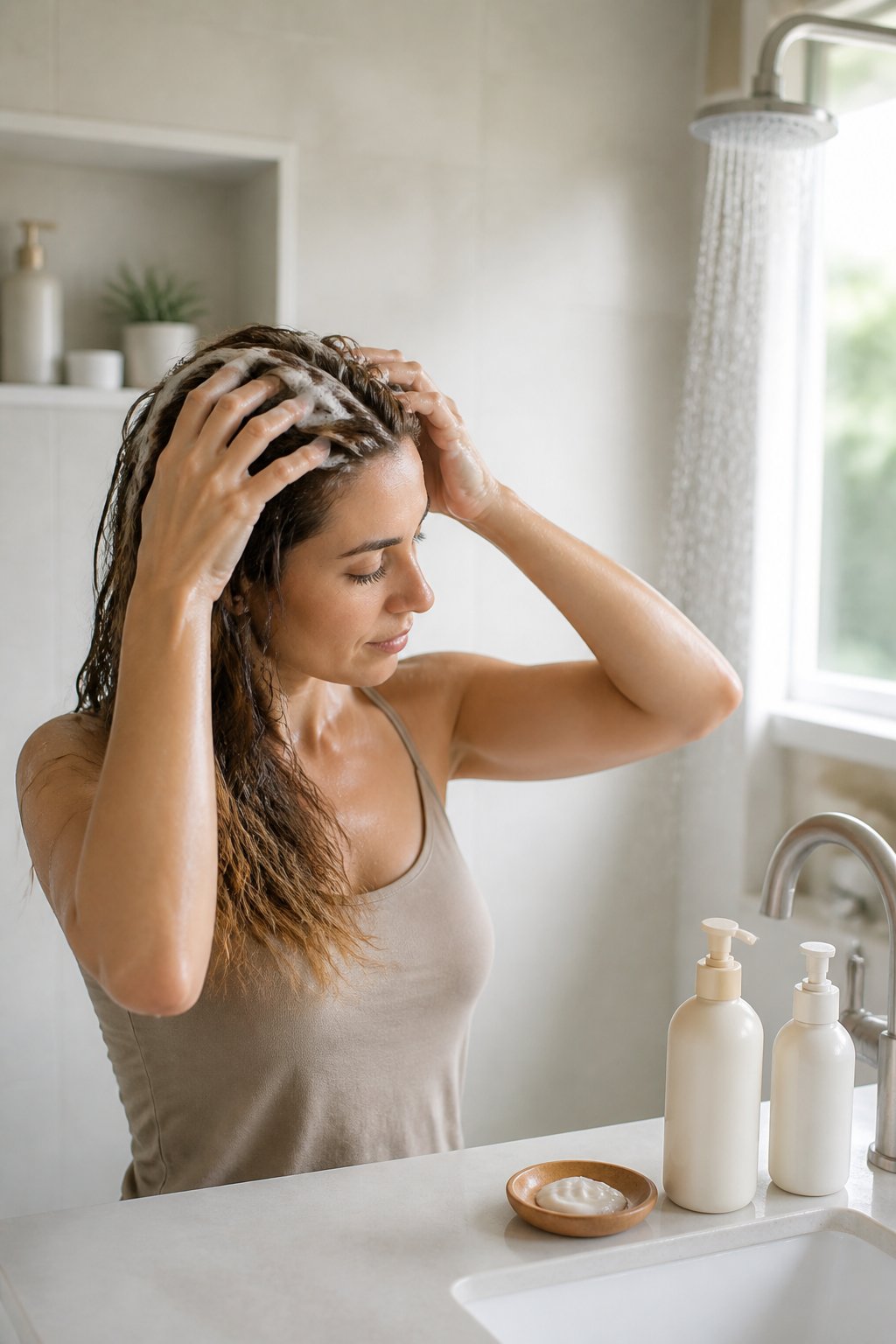
Wash based on how quickly your scalp becomes greasy, often every one to two days. Use a mild shampoo on the scalp, keep conditioner on the lengths, and add clarifying shampoo only when product buildup or excess residue becomes a problem.
Apply Shampoo to the Scalp and Conditioner to the Ends
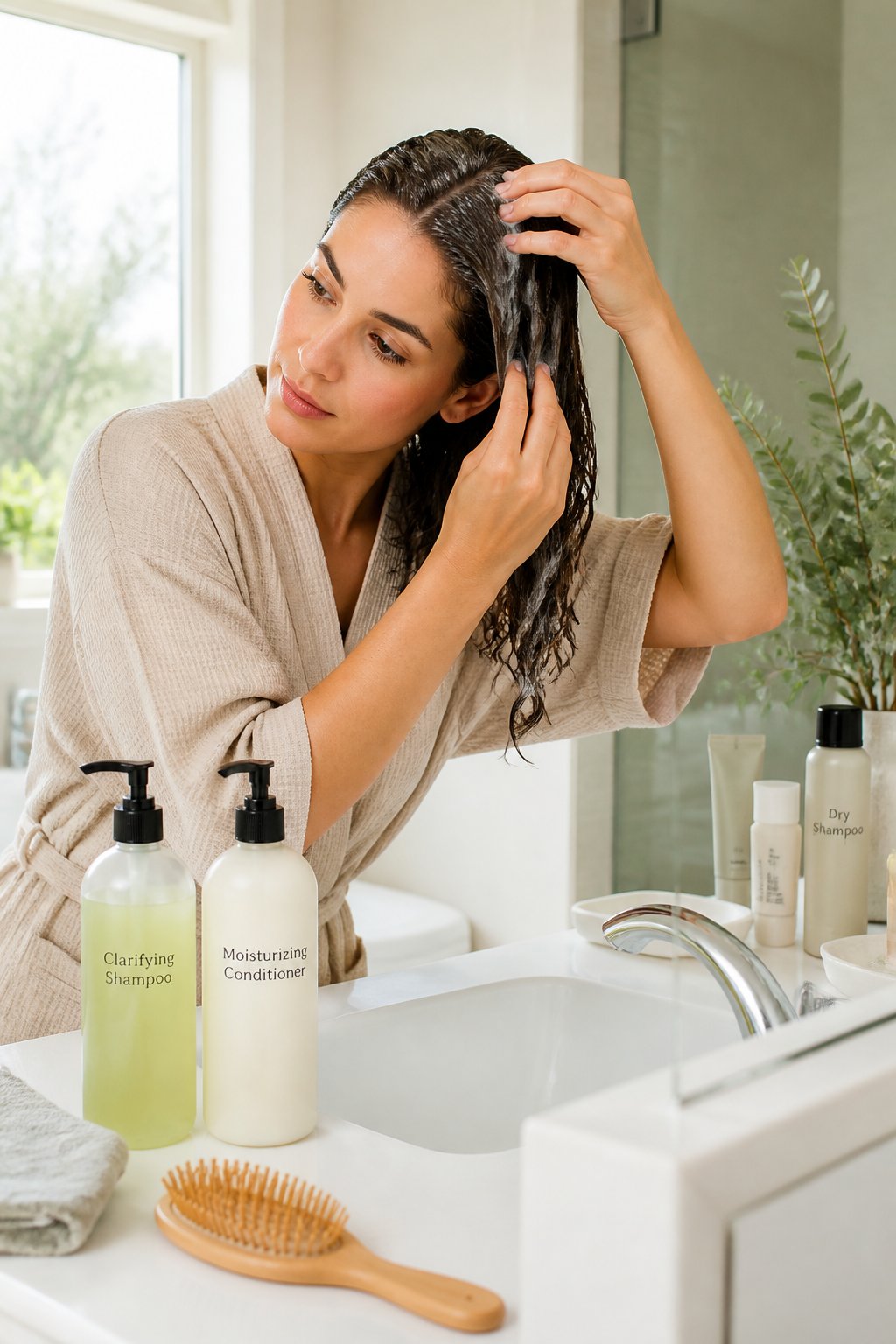
Apply shampoo mainly to your scalp, where oil, sweat, and dead skin collect. As you rinse, the lather will pass through the lengths and clean them without extra scrubbing. Vigorous rubbing can increase tangles, dryness, and hair breakage.
Apply conditioner from the middle of your hair to the ends. Keep it away from the roots, especially if your hair becomes greasy quickly. Leave it on for the time listed on the label, then rinse thoroughly with lukewarm or cool water.
Use a wide-tooth comb on conditioned hair if you need to detangle it. Start at the ends and move upward. This reduces pulling, which can worsen breakage and make split ends more noticeable. Avoid heavy oils, waxes, and thick creams near the scalp.
Managing Sweat, Workouts, and Between-Wash Oil

Your wash schedule should match your sweat, activity level, scalp condition, and hair texture. You can wash after heavy workouts, use dry shampoo between washes, and reduce oil with simple hair care habits.
Deciding Whether to Wash After a Workout

Wash your hair after a workout if your scalp becomes very sweaty, oily, itchy, or develops an odor. Sweat leaves salt and residue behind, and rinsing with water may not remove oil or product buildup. If you have an oily scalp or dandruff, washing after intense exercise can help keep the scalp clean.
You may not need shampoo after light activity that causes little sweating. Let your hair dry, then check your roots. If they feel comfortable and do not look greasy, wait until your next planned wash.
Use a gentle shampoo when you wash often. Massage it into your scalp with your fingertips, not your nails, and rinse well. Apply conditioner mainly to your mid-lengths and ends to avoid making oily roots heavier.
Using Dry Shampoo Without Creating Buildup

Dry shampoo can absorb oil between washes, but it does not clean away sweat, dirt, or scalp odor. Use it only when your scalp is dry. Applying it to wet, sweaty hair can trap moisture and create a heavy coating.
Spray or sprinkle a small amount at the roots, keeping the product several inches from your scalp. Wait a minute, then massage or brush it through. Add more only if needed.
Avoid using dry shampoo for several days without washing. Repeated use can cause product buildup, flakes, itching, or tenderness. Wash your hair with regular shampoo when your roots feel coated or your scalp becomes uncomfortable. If you notice persistent redness, scaling, or itching, seek medical advice.
Simple Habits That Keep Roots Fresher

After exercise, blot your scalp and hairline with a clean towel instead of rubbing. Let your hair dry fully, and change out of a sweat-soaked hat, headband, or shirt soon after your workout.
Keep brushes, combs, pillowcases, and hats clean. These items can transfer oil and styling products back onto freshly washed hair. Avoid touching your roots often, since your hands can add oil and spread it through your hair.
Choose lightweight styling products and apply them away from the scalp. If your roots become oily by midday, wash more often rather than forcing a long gap between washes. Your scalp may need daily or alternate-day cleansing when you sweat heavily.
When Oily Hair May Need Medical Advice
Oily hair often improves with a suitable washing routine, but oiliness can also occur with scalp conditions. Persistent itching, heavy dandruff, scalp inflammation, or unusual hair loss deserves medical attention.
Dandruff, Persistent Itching, and Seborrheic Dermatitis
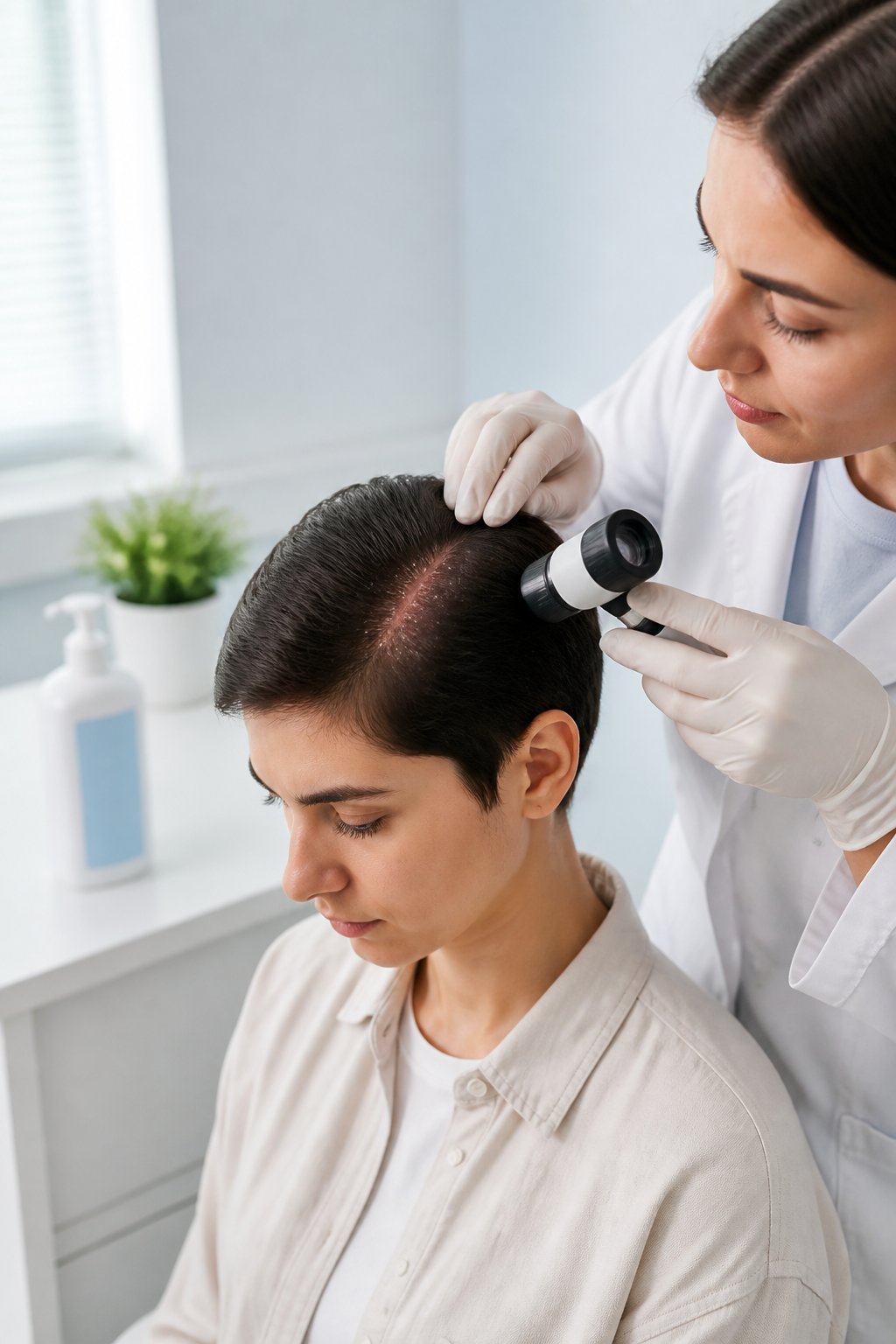
Mild dandruff may cause small, white flakes without other symptoms. Persistent flakes, greasy yellow scales, redness, burning, or an intensely itchy scalp may point to seborrheic dermatitis, a common condition linked to oilier areas of the skin.
Avoid scratching, which can worsen scalp irritation and cause small breaks in the skin. An anti-dandruff shampoo containing ingredients such as zinc pyrithione, ketoconazole, selenium sulfide, or salicylic acid may help. Follow the product directions and give the shampoo enough contact time before rinsing.
See a dermatologist if symptoms continue after several weeks of proper use, spread beyond your scalp, or cause pain, sores, or fluid. A dermatologist can confirm the cause and recommend prescription treatment when needed.
Hair Shedding, Hair Loss, and Scalp Inflammation

Washing oily hair does not usually cause permanent hair loss. You may notice more strands during washing because loose hairs collect between wash days, but sudden increases in shedding need attention.
Contact a medical professional if you develop patchy hair loss, widening part lines, thinning at the temples, broken hairs, or bald spots. Redness, swelling, tenderness, pus, or painful bumps can signal scalp inflammation or infection.
Hair growth can also change because of stress, illness, hormonal shifts, or low levels of nutrients such as iron or zinc. Do not begin high-dose supplements without medical advice. Blood tests may help identify a deficiency, but supplements will not treat every cause of hair shedding.
When to See a Dermatologist

Make an appointment with a dermatologist if oily hair occurs with persistent itching, thick scaling, redness, pain, sores, or noticeable hair loss. Seek care sooner if symptoms worsen quickly or affect your eyebrows, ears, face, or other areas.
The American Academy of Dermatology recommends professional evaluation for unexplained hair loss and ongoing scalp problems. Your dermatologist may review your washing and styling habits, examine your scalp, and check for conditions such as seborrheic dermatitis, psoriasis, infection, or contact irritation.
Bring a list of shampoos, medicines, supplements, and recent health changes. Mention when the symptoms began and whether hair shedding follows illness, major stress, weight loss, or dietary changes.
Frequently Asked Questions
You can wash oily hair as often as needed to keep your scalp clean, including daily if necessary. Your schedule should reflect your oil levels, hair texture, exercise, product use, and any scalp condition.
Is It Bad to Wash Oily Hair Every Day?
No. Daily shampooing is usually safe if your scalp becomes greasy within a day, you exercise often, or you use styling products. Use a gentle shampoo, massage your scalp with your fingertips, and rinse well.
If your hair feels dry, rough, or brittle, wash less often or choose a milder shampoo. Apply shampoo mainly to your scalp rather than the full length of your hair.
How Many Times a Week Should I Shampoo Oily Hair?
Start with shampooing every other day, or about three to four times a week. If your scalp looks greasy, feels itchy, or develops buildup before the next wash, daily shampooing may suit you better.
If your hair stays comfortable and clean for two days, you can wash every two to three days. Do not force a longer gap if it causes discomfort or heavy buildup.
Can Washing Oily Hair Daily Cause Hair Loss or Damage?
Daily washing does not directly cause hair loss. Hair shedding often becomes more noticeable on wash days because loose hairs leave the scalp at once.
Frequent washing can cause dryness, irritation, or breakage if you use harsh products, very hot water, or rough handling. Choose a gentle shampoo and avoid scrubbing the hair lengths.
Should Men With Oily Hair Wash Their Hair More Often?
Men with oily hair do not need a different rule based only on gender. You may need to wash daily or every other day if your scalp becomes oily quickly, you sweat often, or you use wax, gel, or pomade.
Massage shampoo into the scalp and rinse thoroughly. If oil, flakes, or itching continues despite regular washing, consider a dandruff shampoo or speak with a dermatologist.
How Often Should I Use Conditioner If My Hair Gets Oily Quickly?
Use conditioner after each shampoo if your hair feels dry, tangled, or rough. Apply it from the middle of your hair to the ends, and keep it away from your scalp and roots.
If your hair becomes greasy soon after washing, use less conditioner or apply it every second wash. Fine hair may need a lightweight formula.
How Should I Wash Oily Hair If I Also Have Dandruff?
Use an anti-dandruff shampoo as directed on its label. Common active ingredients include ketoconazole, zinc pyrithione, selenium sulfide, and salicylic acid.
Apply the shampoo to your scalp and leave it on for the listed contact time before rinsing. Avoid scratching, and seek medical advice if severe itching, redness, thick scales, or ongoing dandruff persists.


