



Dark chocolate brown gives you a rich fall color with depth, warmth, and a polished finish. You can choose a deep espresso base, a softer cocoa shade, or a subtle mahogany variation to complement your skin tone and personal style.
The best dark chocolate brown shade for you depends on your undertone, natural hair color, maintenance preferences, and desired level of contrast. Explore glossy all-over color, caramel accents, soft balayage, and fall-inspired cherry tones that add dimension without overwhelming your look. Strategic cuts and textured styling can also make the color’s depth more visible.
Key Takeaways
- Choose a brown base that complements your undertone and natural color.
- Add subtle highlights or blended tones for visible dimension.
- Protect rich brunette color with gentle products and regular gloss treatments.
Choosing The Right Base Tone
Your ideal dark chocolate brown depends on your natural hair color, skin undertone, and how much warmth or depth you prefer.
Choose a shade that complements your complexion while keeping the brunette finish rich, glossy, and easy to maintain.
Espresso Melt With Cocoa Ribbons

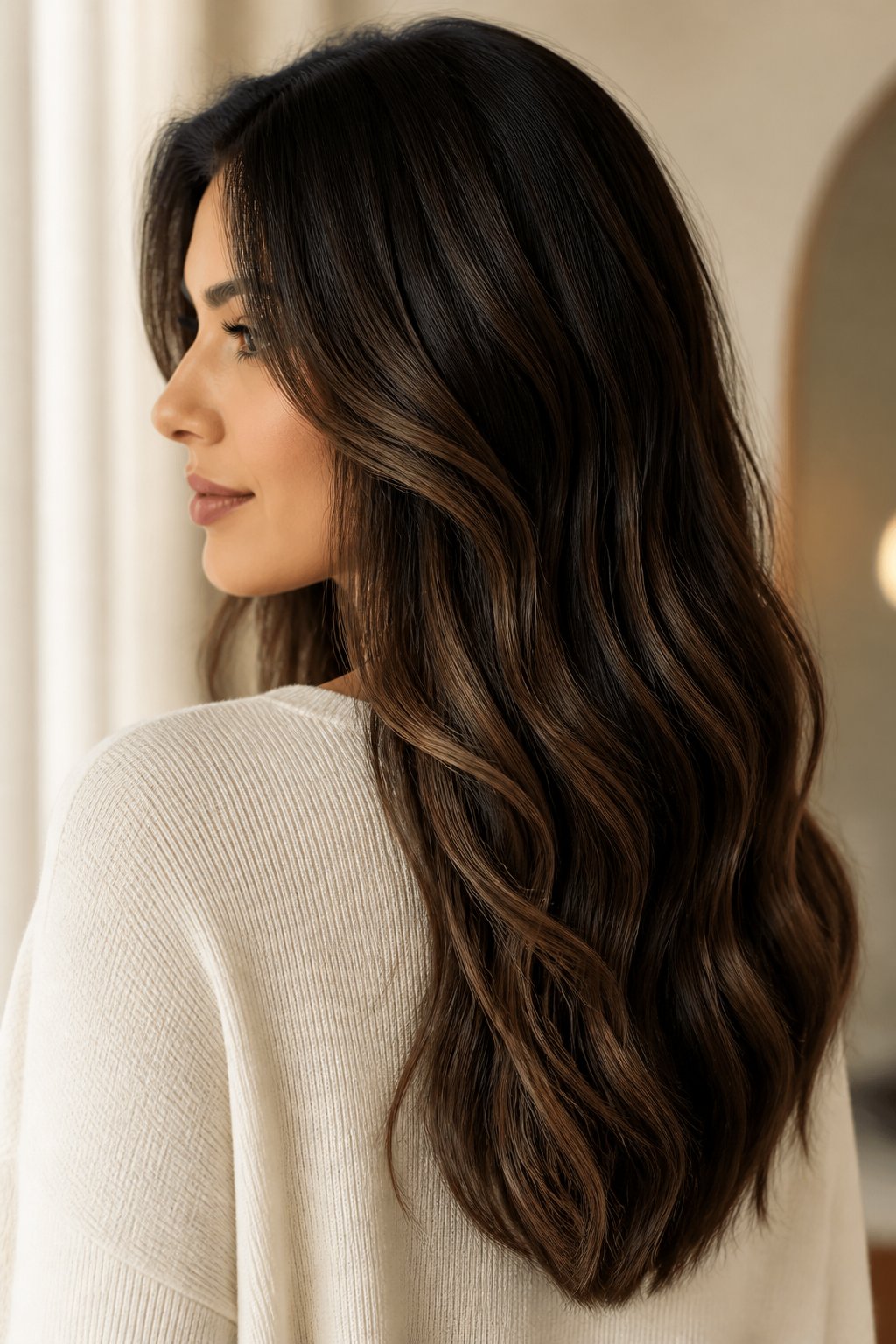
A deep espresso base blended with soft cocoa ribbons creates rich dimension without making the hair look heavily highlighted.
The subtle contrast works beautifully on medium to dark hair and gives waves and layers a soft, polished finish.
Neutral Dark Chocolate With Soft Dimension
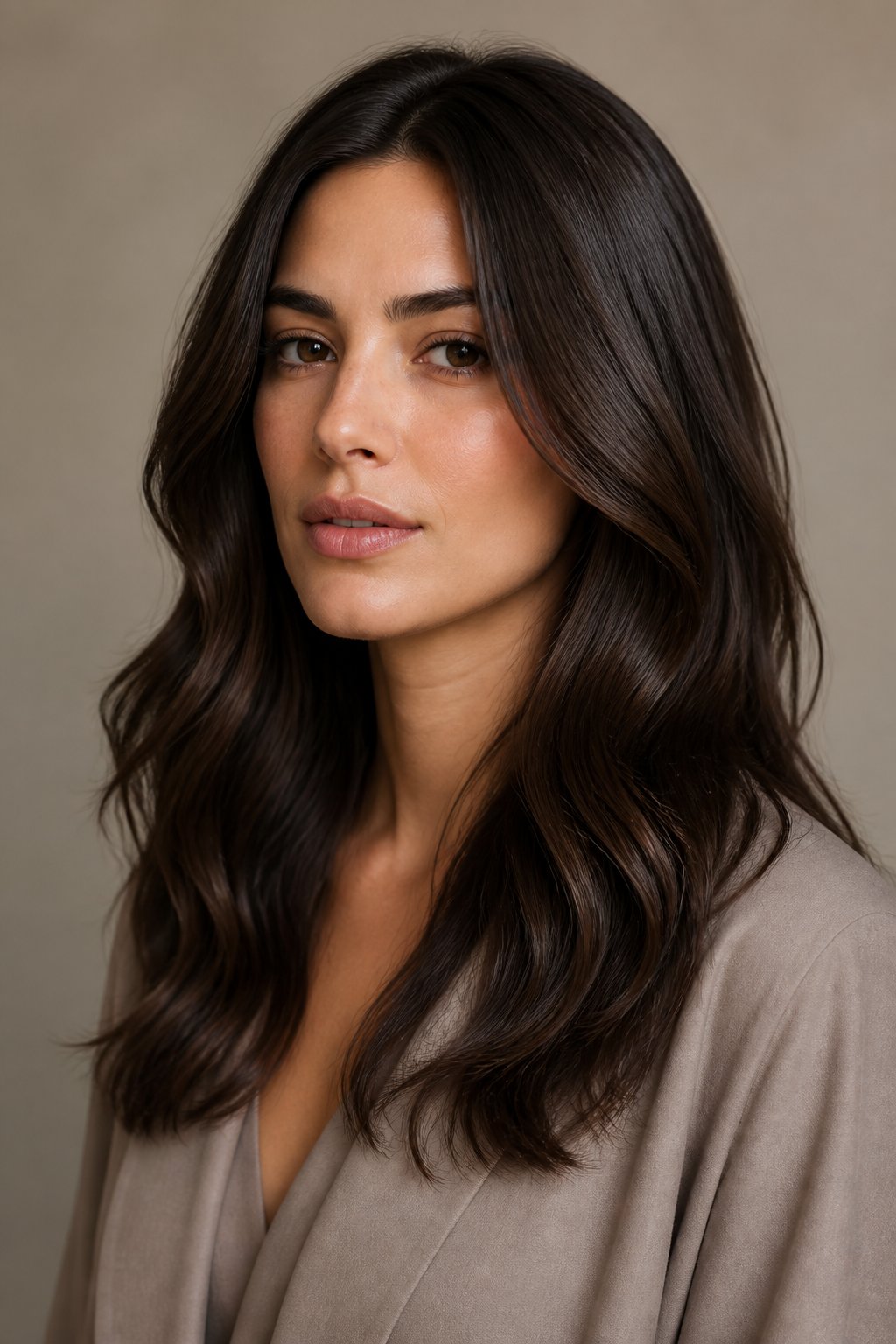
Neutral dark chocolate balances warm and cool brown tones, making it a versatile option for many complexions.
Soft lowlights or subtle face-framing pieces can add depth while keeping the overall color natural and low-maintenance.
Cool Bittersweet Brown With Ashy Ends
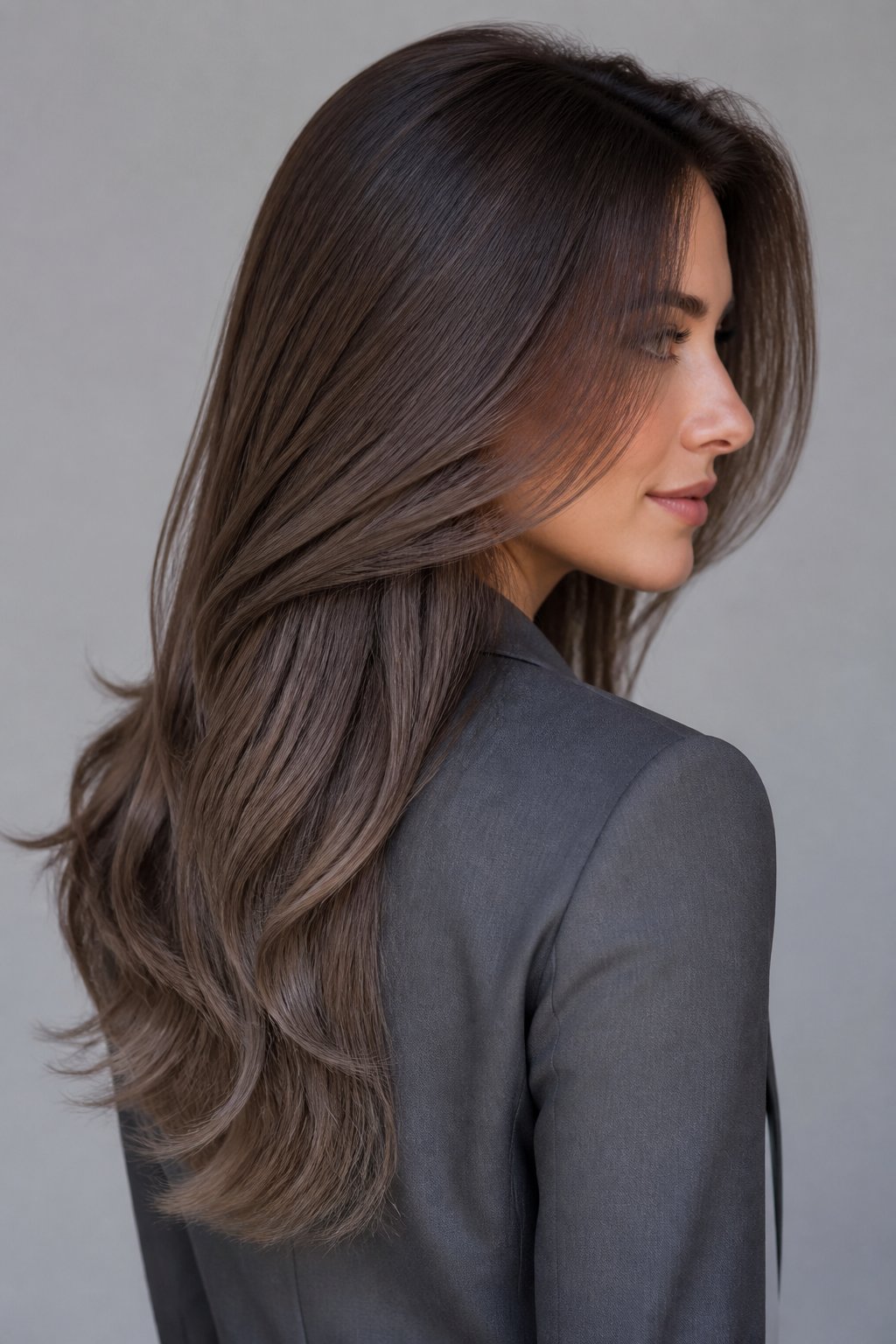
Cool bittersweet brown combines deep cocoa with muted ash tones for a sophisticated brunette finish.
Slightly lighter ashy ends add dimension and work especially well for anyone who wants dark hair without strong red or golden tones.
Warm Truffle Brown With Golden Reflects
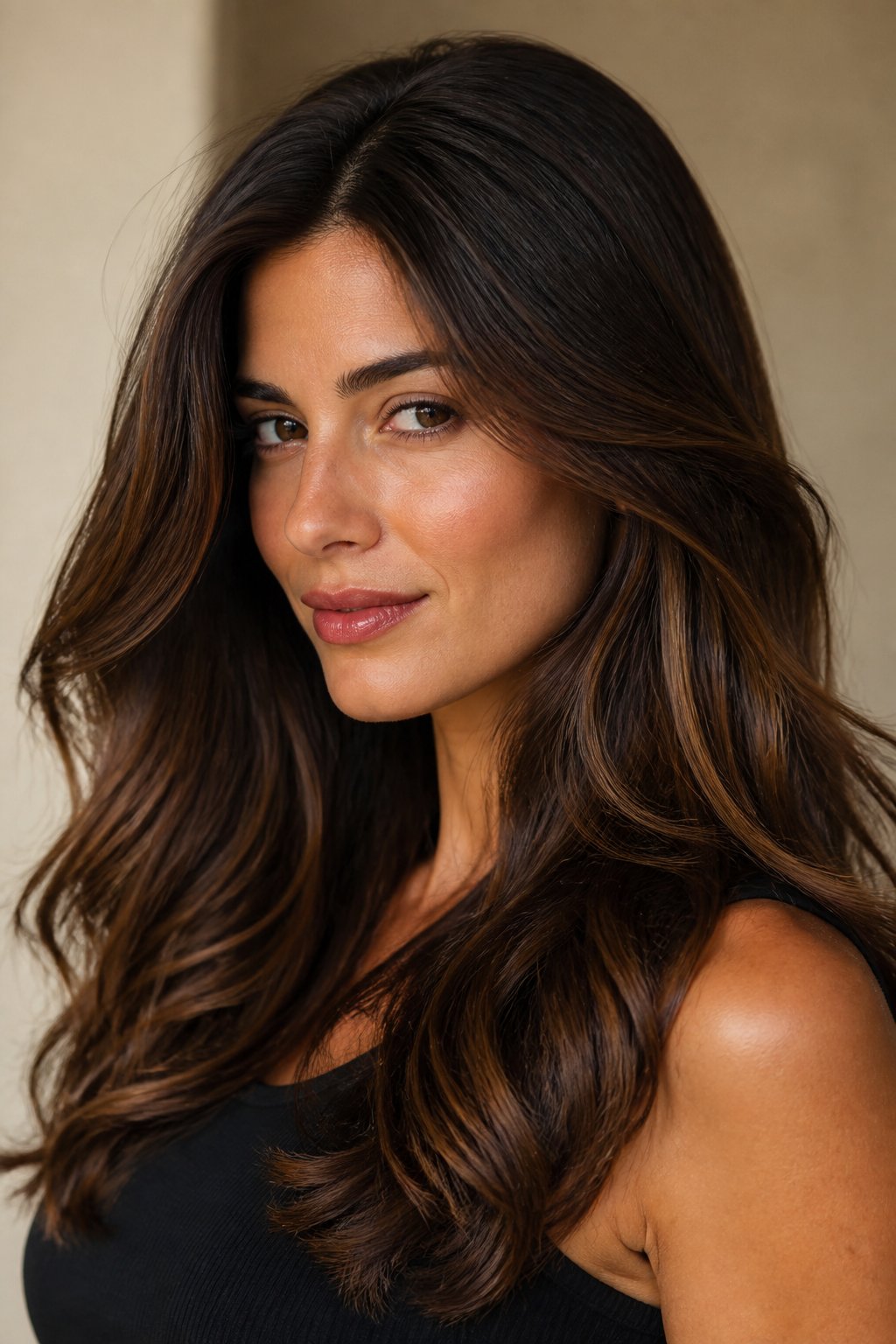
Warm truffle brown pairs a rich chocolate base with subtle golden or caramel reflects that become more visible in natural light.
This shade flatters warm and olive undertones while giving dark brunette hair a soft, radiant appearance.
True Chocolate Brown With Balanced Undertones
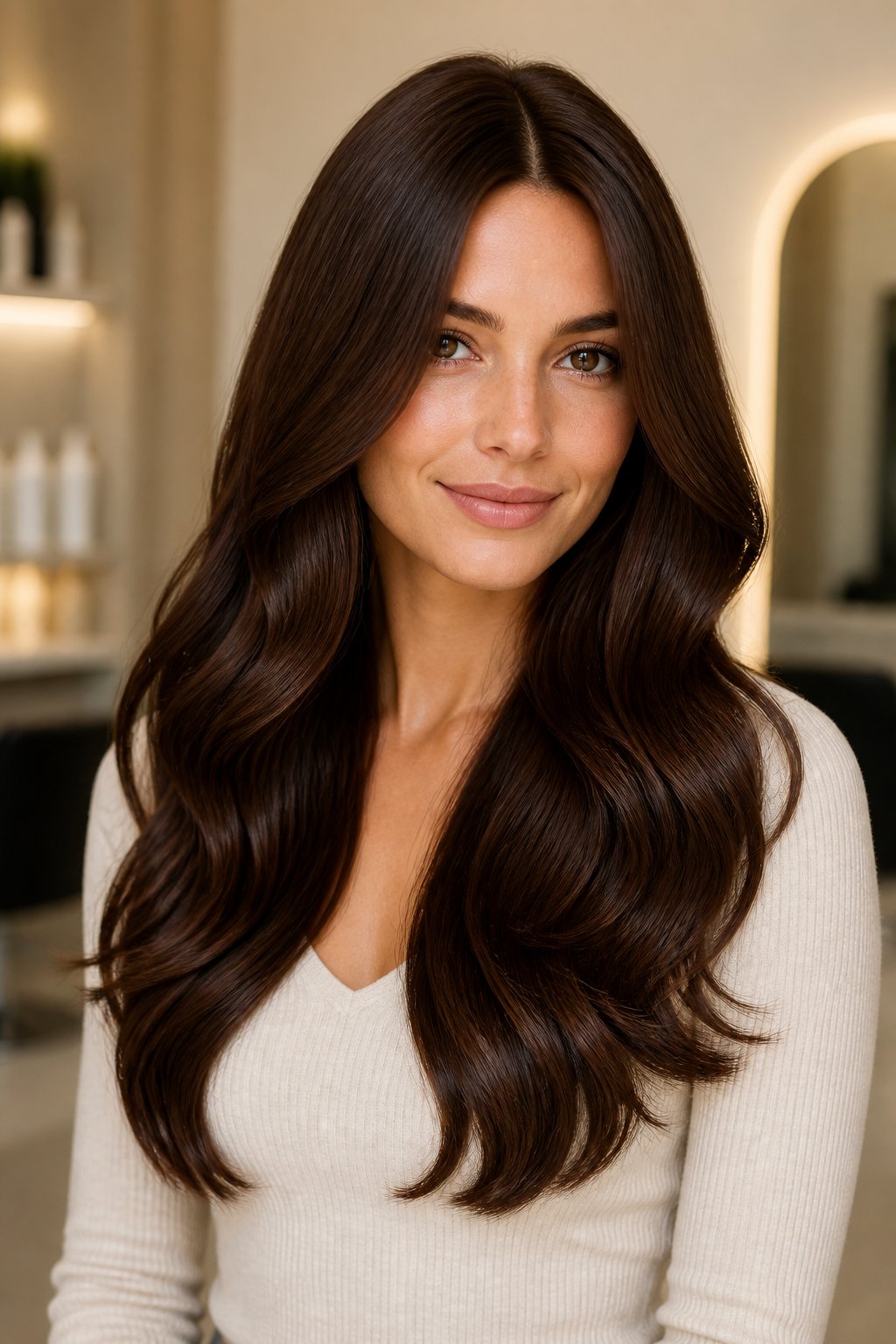
True chocolate brown combines neutral, red, and golden pigments to create a classic medium-dark brunette shade.
The balanced undertones keep the color rich and glossy without making it appear overly warm or too cool.
Dimensional Highlight Ideas
Highlights can bring movement and brightness to dark chocolate brown hair without taking away from its rich brunette base.
Choose mocha, caramel, cinnamon, hazelnut, or toffee tones depending on the level of contrast you prefer.
Mocha Balayage On Deep Brown Hair
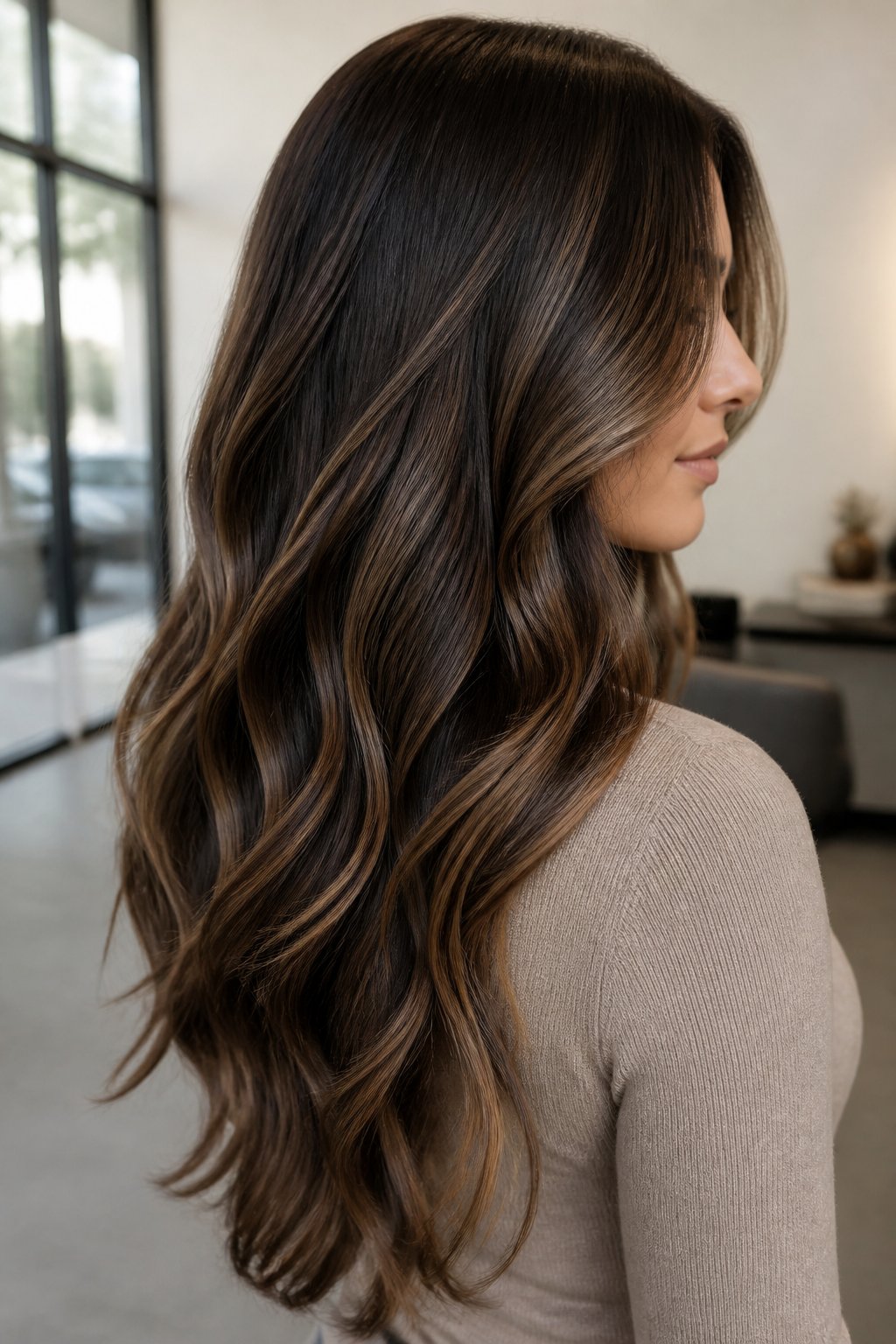
Mocha balayage adds soft medium-brown ribbons through a deep chocolate base while keeping the roots darker.
The blended placement creates an easy grow-out and looks especially beautiful on long layers, waves, and curls.
Cinnamon Micro-Highlights Through Chocolate Brown
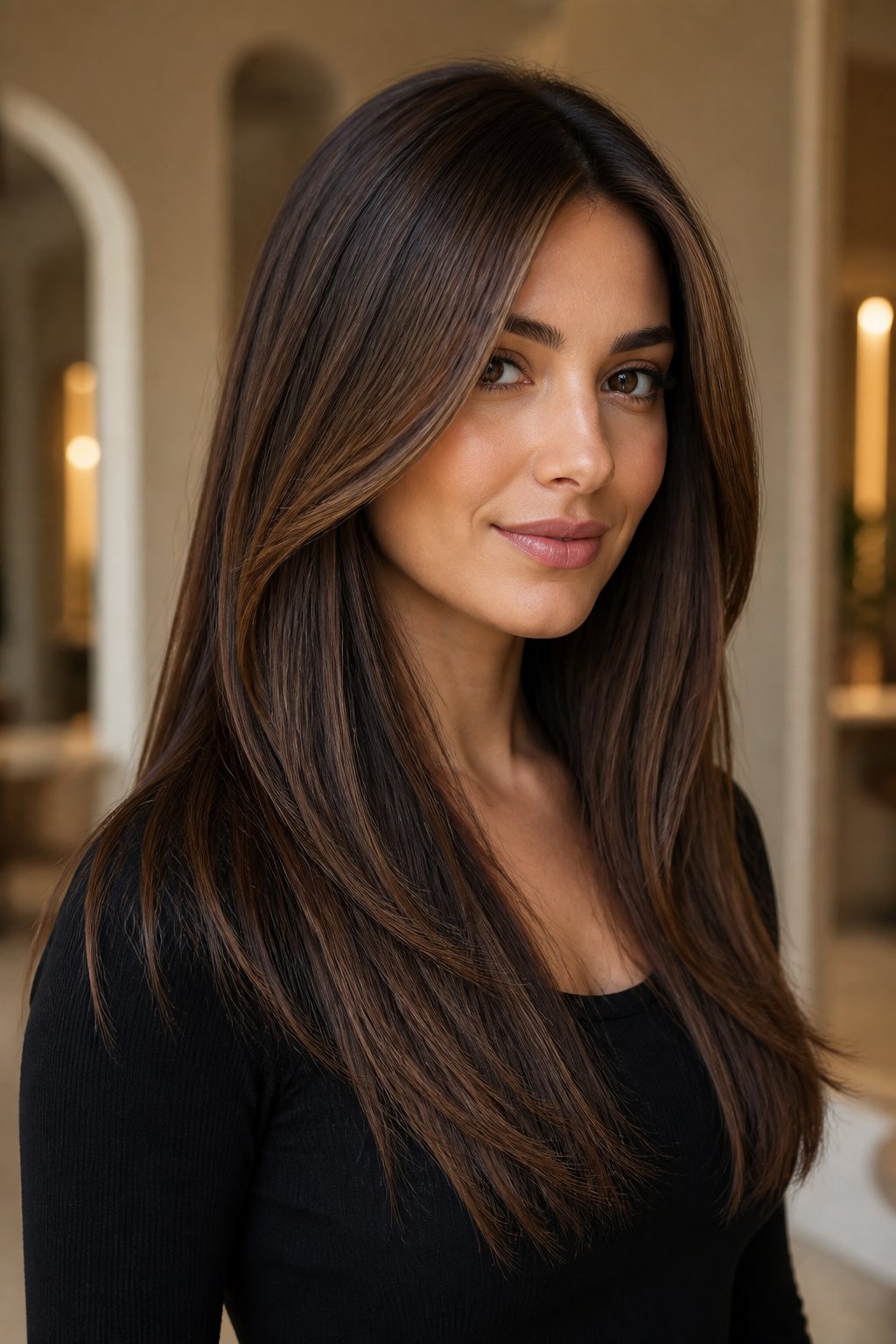
Fine cinnamon highlights introduce soft warmth without creating a heavily highlighted appearance.
The delicate strands add dimension around the face and can also make curls and textured hair look more defined.
Toffee Face Frame With a Dark Base
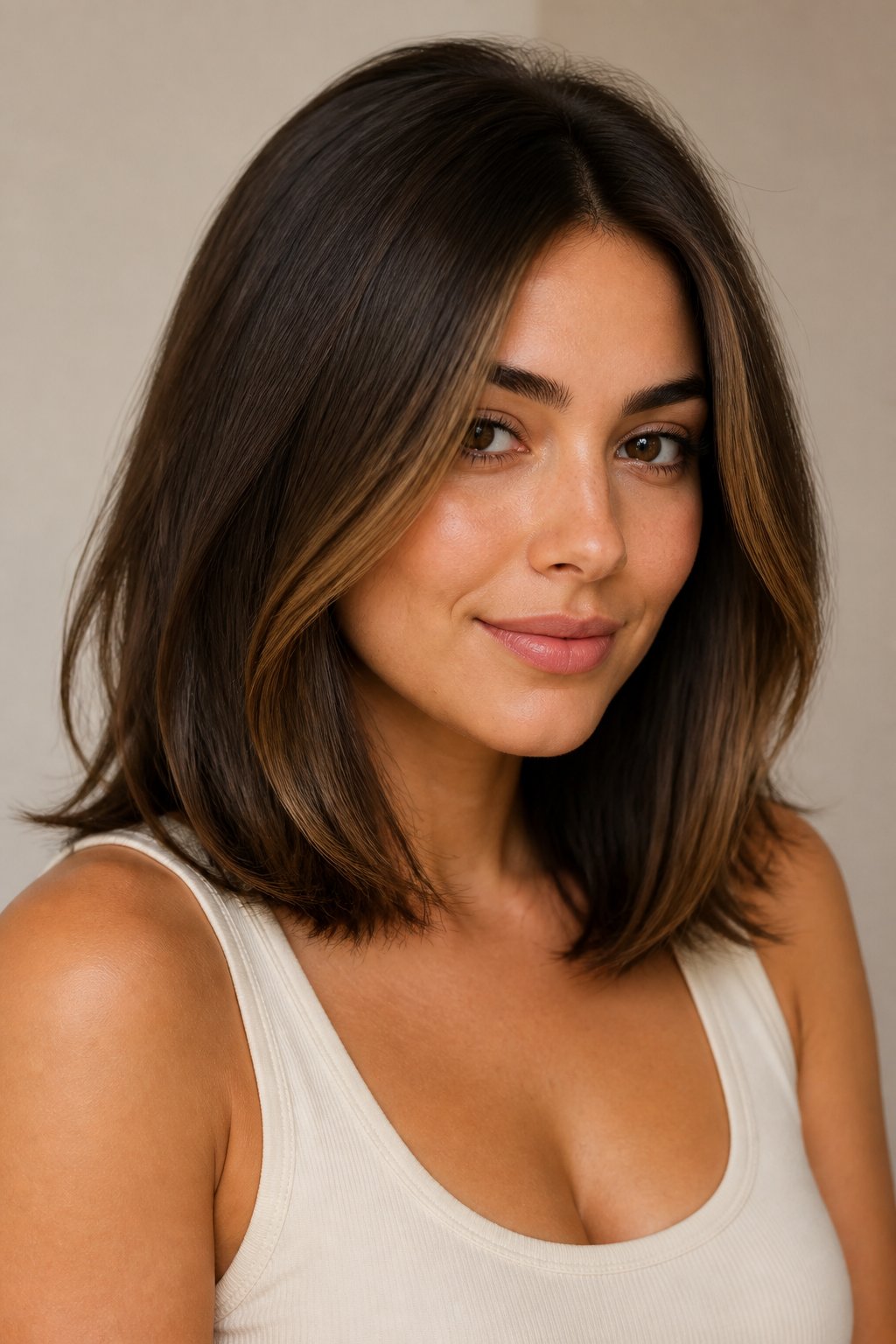
A toffee face frame places lighter pieces around the hairline while leaving most of the chocolate brown base untouched.
This creates noticeable yet wearable brightness and works beautifully with bobs, lobs, layers, and long hair.
Hazelnut Babylights For Subtle Brightness
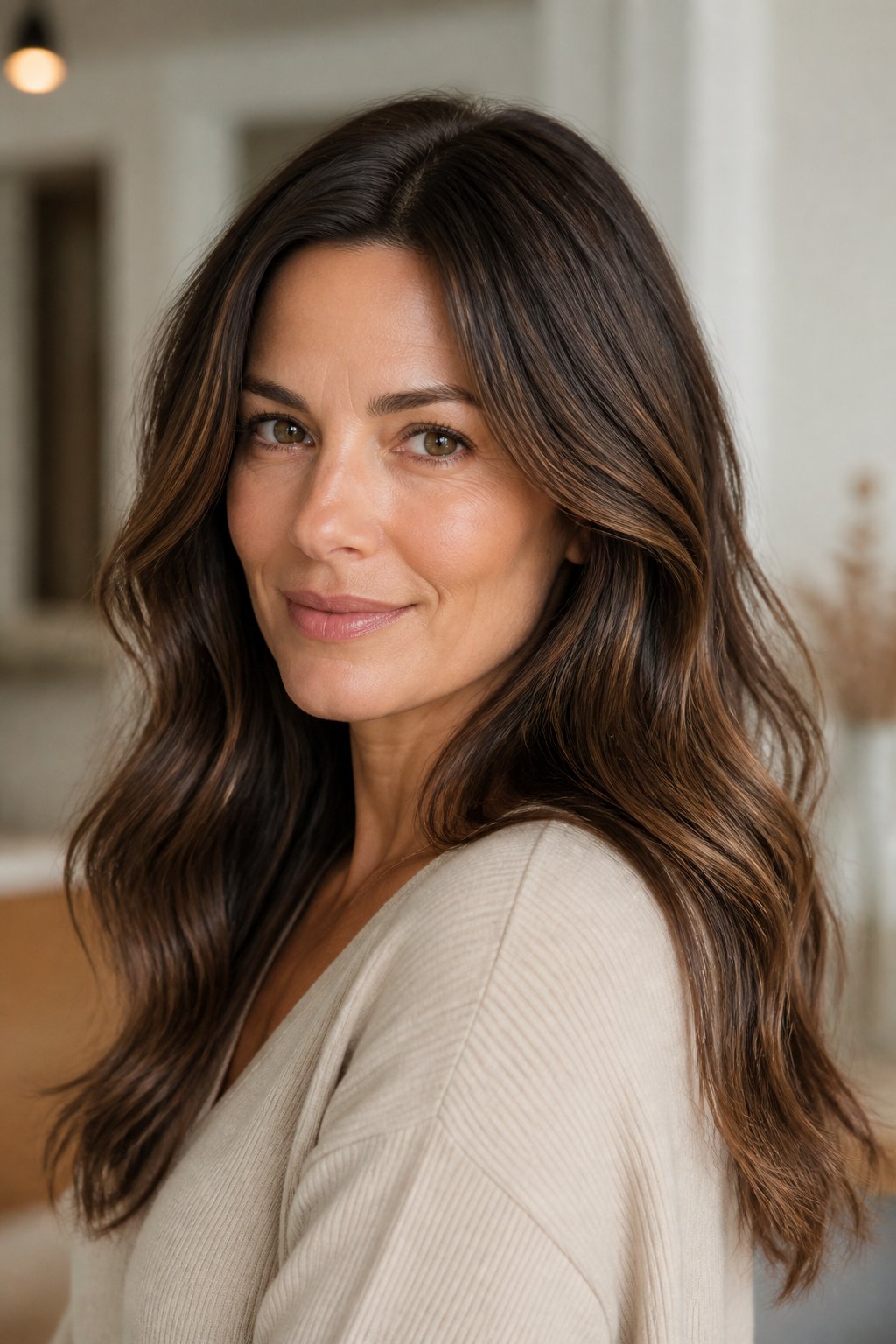
Hazelnut babylights use very fine beige-brown highlights to brighten the surface of dark chocolate hair.
They remain subtle indoors but become more visible in natural light, giving the hair a softly illuminated finish.
Caramel Ribbons On Rich Cocoa Brown
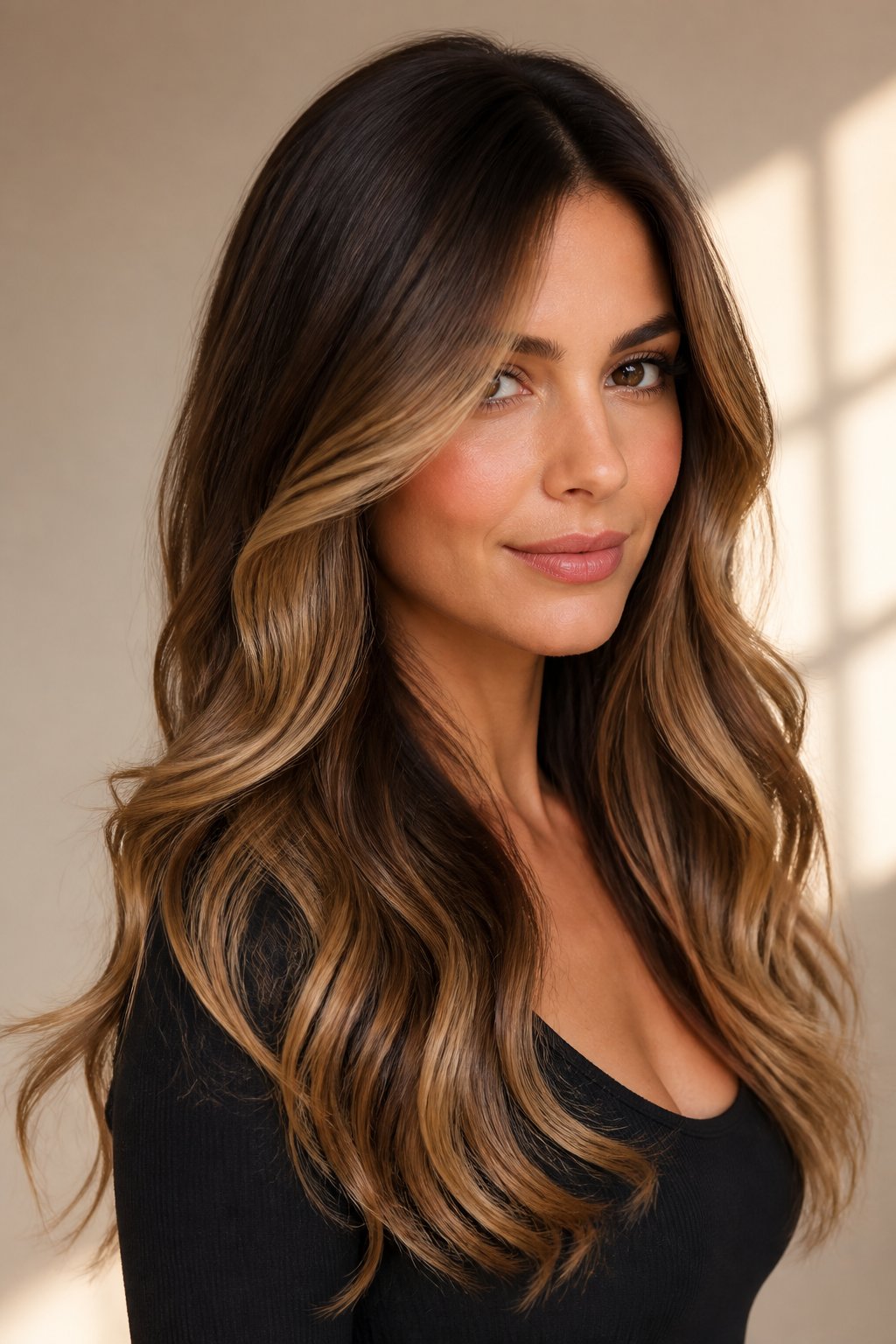
Caramel ribbons add warm, flowing highlights through a rich cocoa-brown base for stronger dimension.
They look especially flattering on layered, wavy, and curly hairstyles because the lighter pieces follow the hair’s movement.
Low-Maintenance Color Blends
Low-maintenance brunette shades use soft transitions that allow natural roots to grow out without creating obvious lines.
These blends are ideal if you want dimensional chocolate hair without frequent salon appointments.
Chocolate Brown Root Smudge
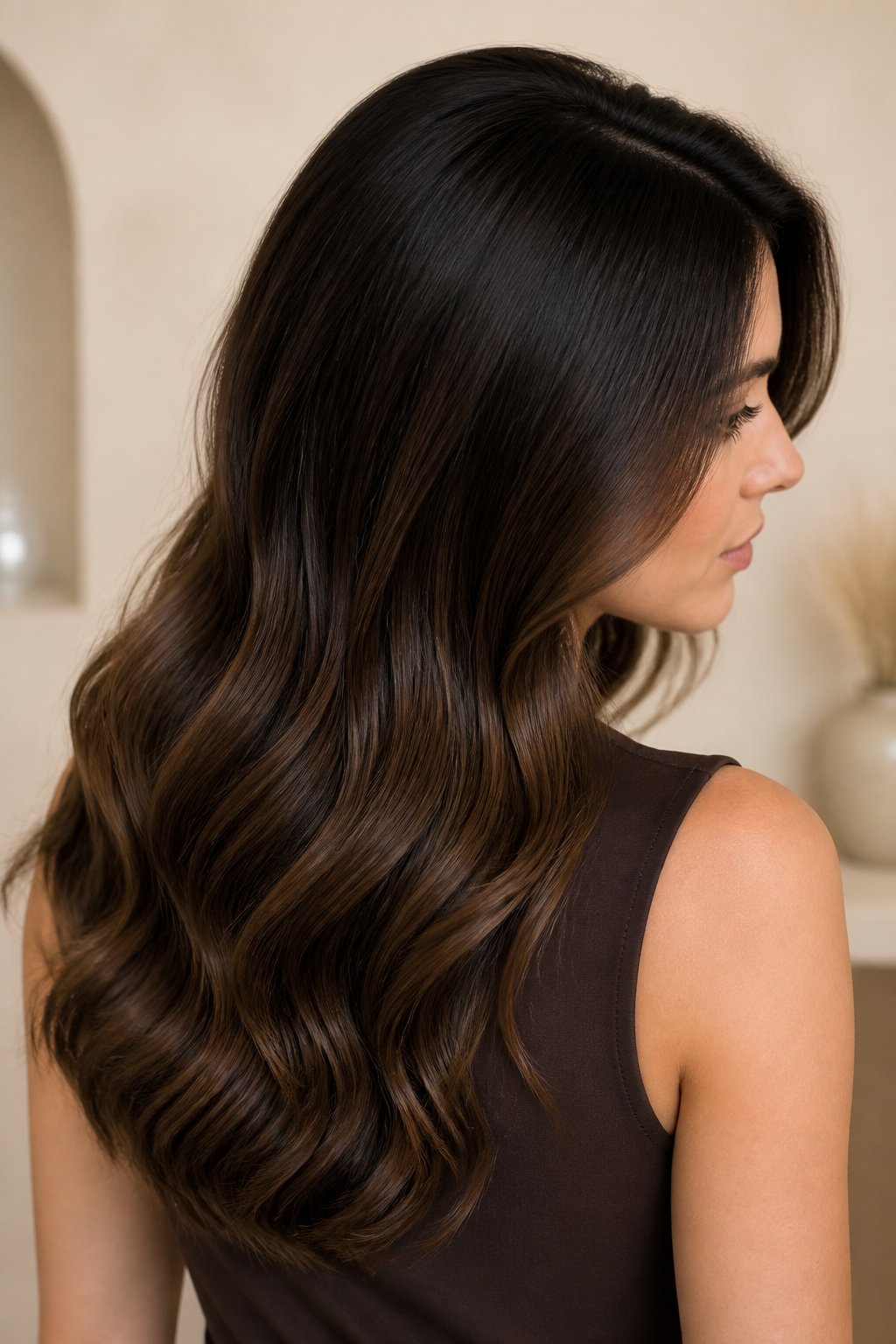
A chocolate brown root smudge softly blends natural roots into darker cocoa lengths for a seamless transition.
The technique makes regrowth less noticeable while keeping the overall brunette shade rich and polished.
Dark Brown Shadow Root With Mocha Lengths
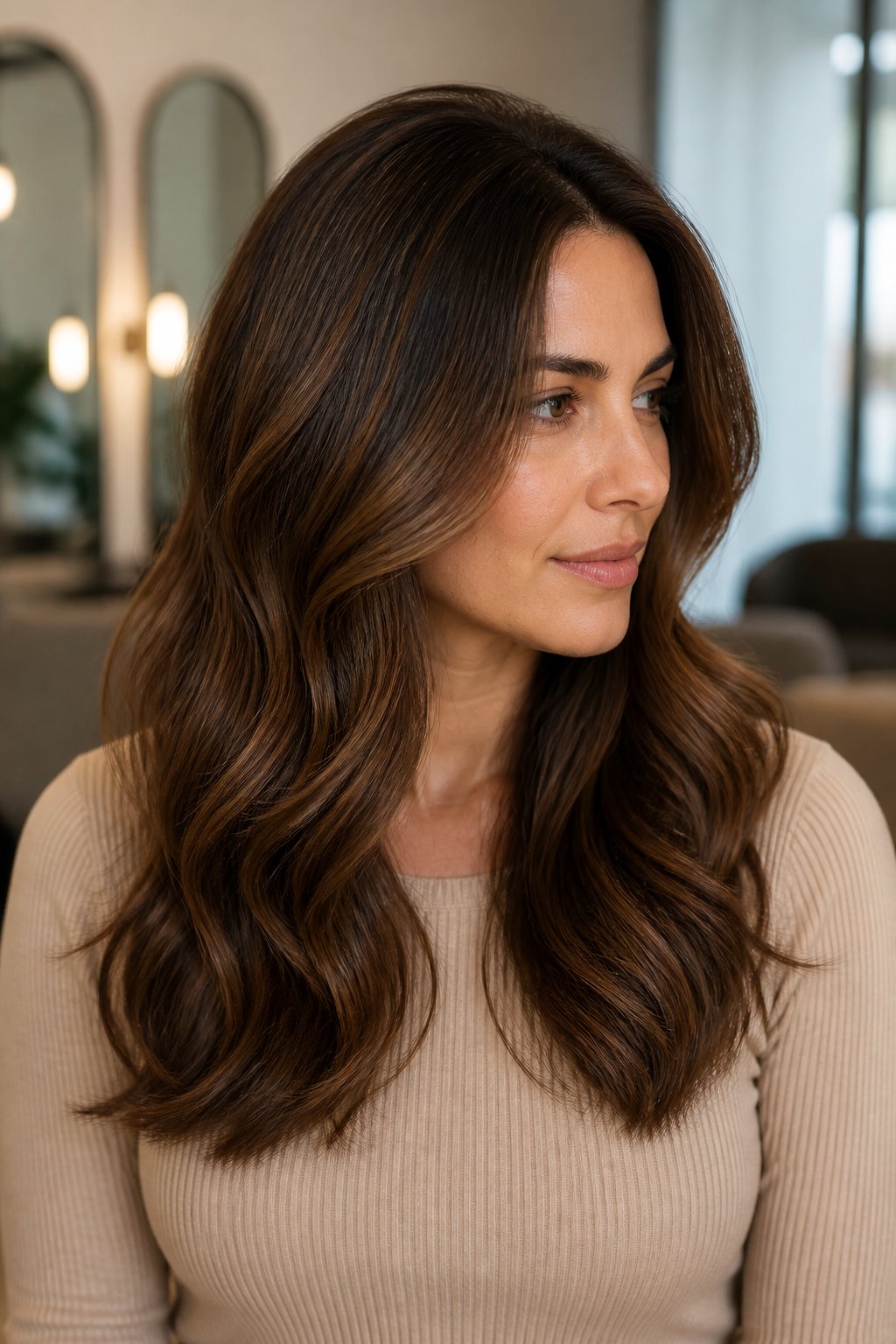
A dark shadow root combined with mocha lengths adds subtle contrast without creating a harsh color line.
It is a great option if you want noticeable dimension while keeping your root maintenance simple.
Soft Ombre From Espresso To Milk Chocolate
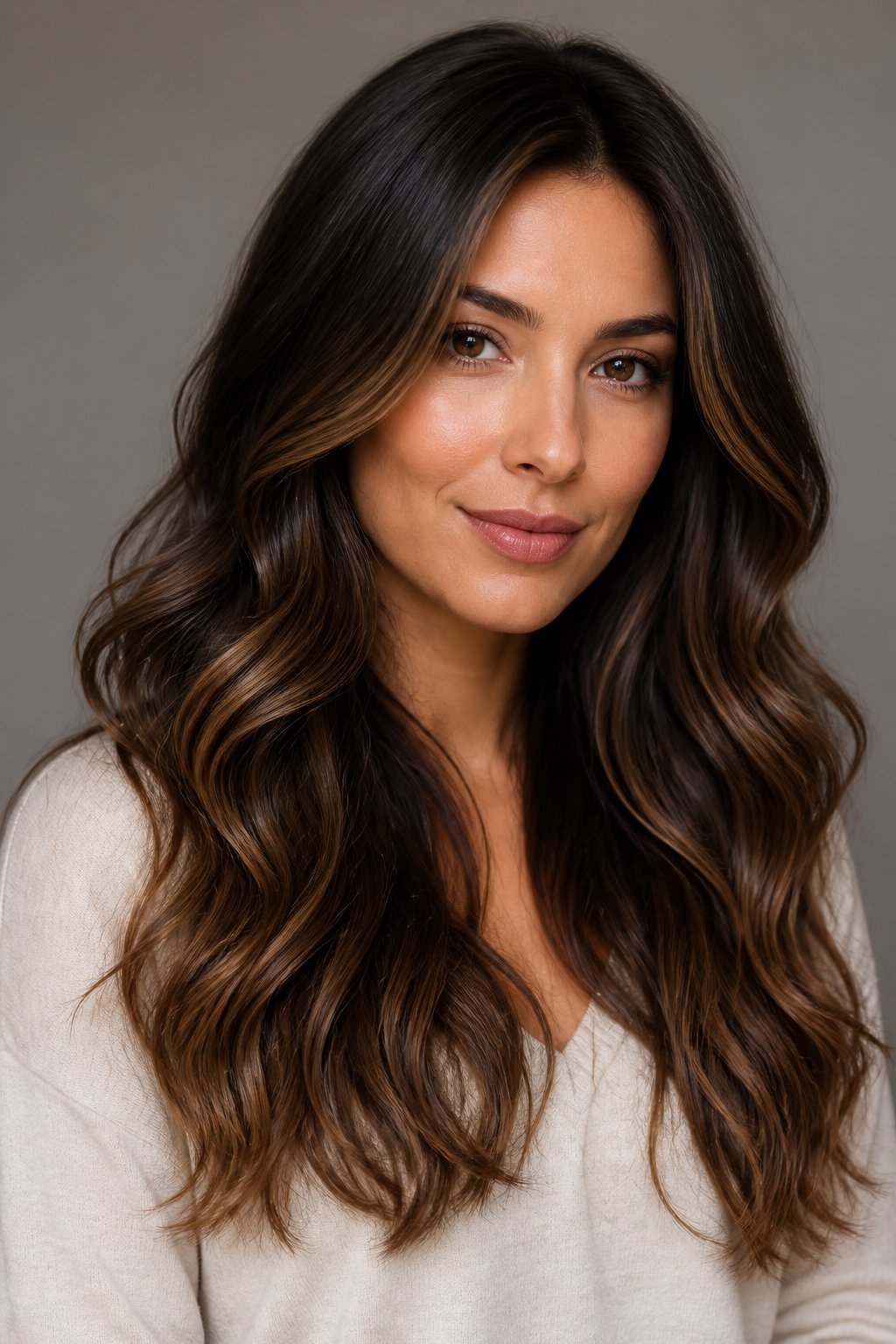
This soft ombre gradually transitions from deep espresso roots to lighter milk chocolate ends.
The smooth blend adds brightness through the lengths while maintaining the overall richness of brunette hair.
Lived-In Brunette With Melted Ends
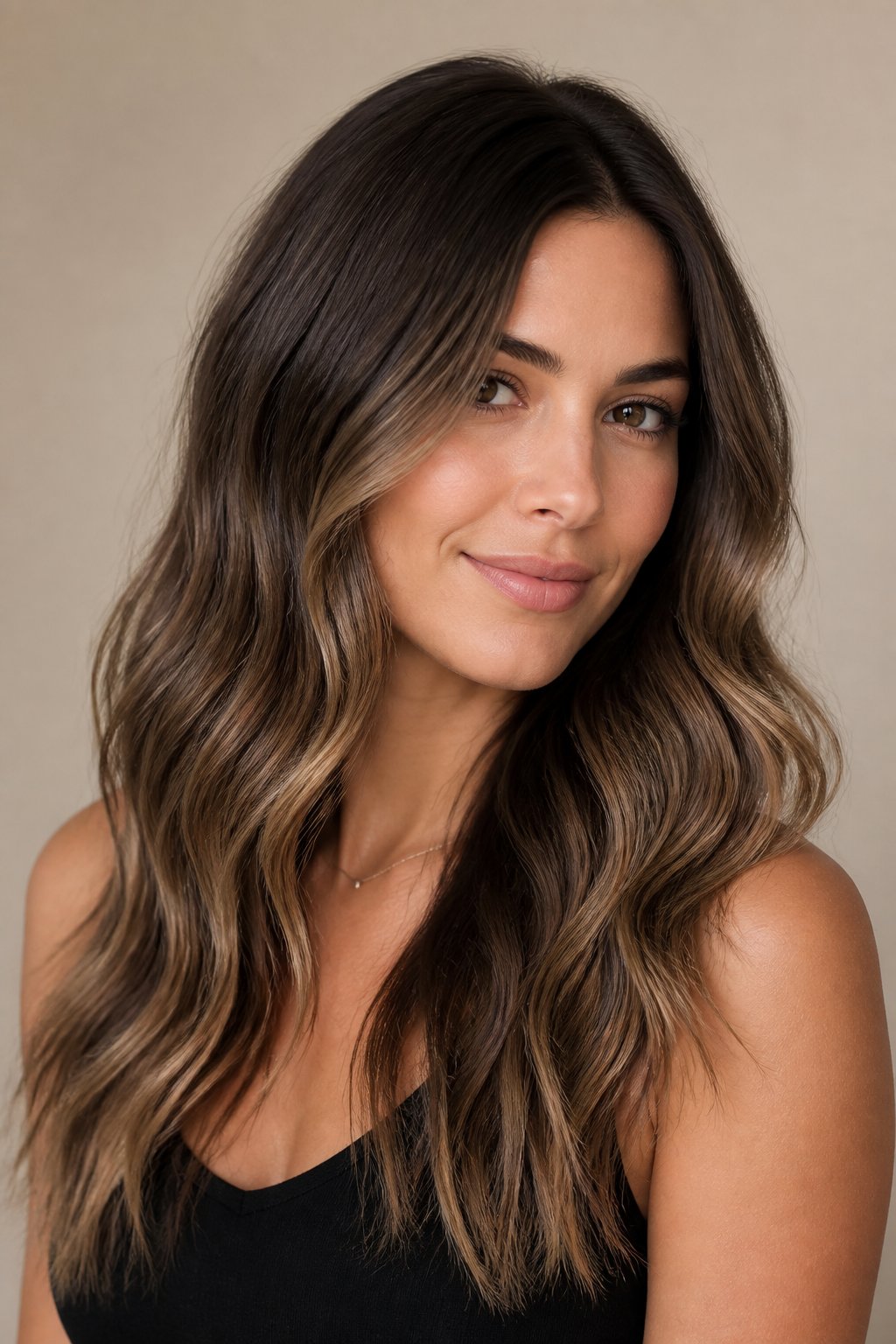
A lived-in brunette keeps the roots deep while mocha, chestnut, or caramel pieces gradually brighten the ends.
The low-contrast placement gives the hair movement and dimension without requiring frequent touch-ups.
Glossy One-Tone Dark Chocolate Brown
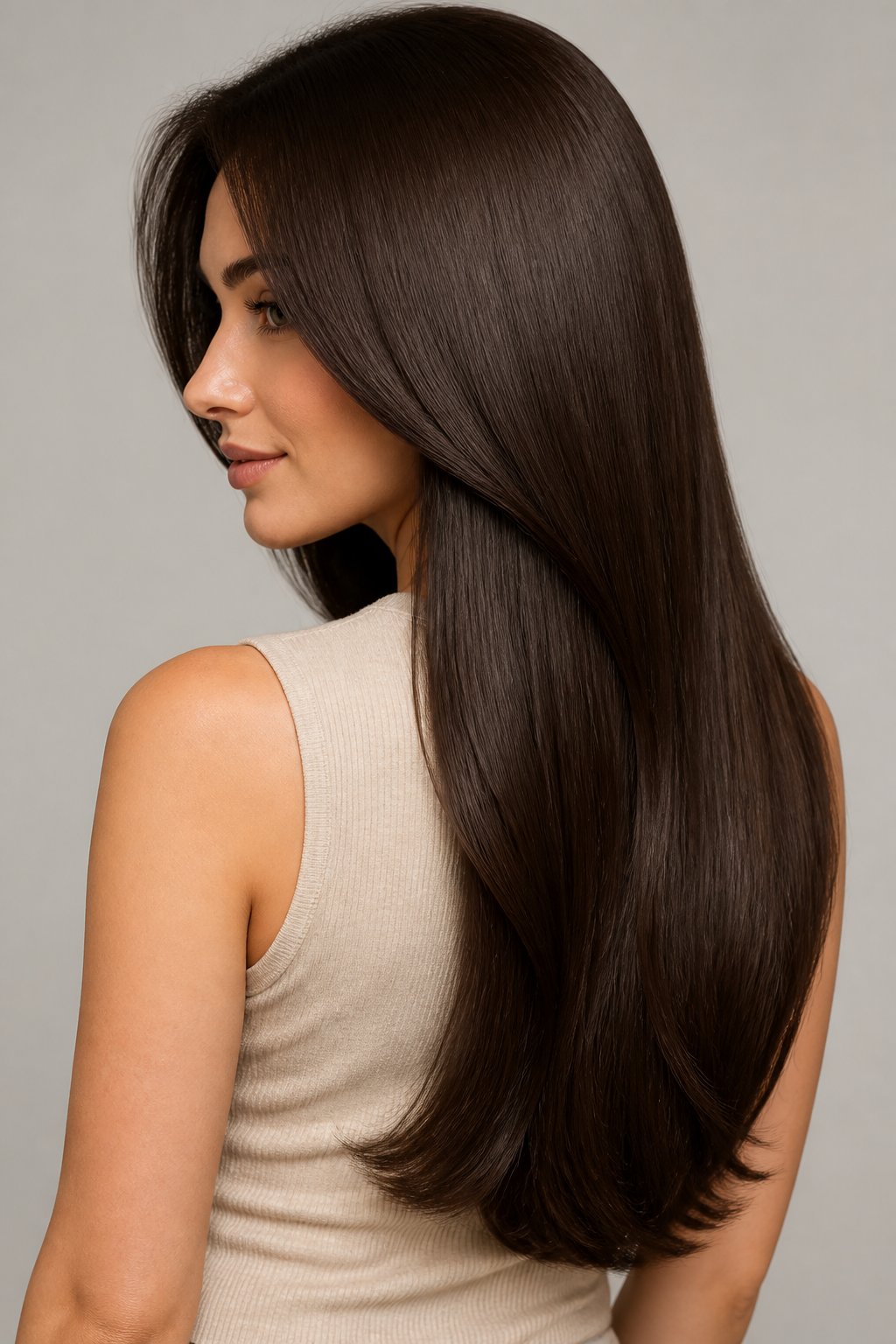
A single dark chocolate shade creates a sleek and polished brunette finish from roots to ends.
This simple look is ideal if you prefer rich, glossy color without highlights, balayage, or dramatic contrast.
Bold Fall-Inspired Variations
Fall-inspired chocolate brown shades gain extra depth from subtle red, copper, plum, and mahogany undertones.
These variations keep the brunette base dark while adding seasonal warmth and dimension.
Cherry Cola Chocolate Brown
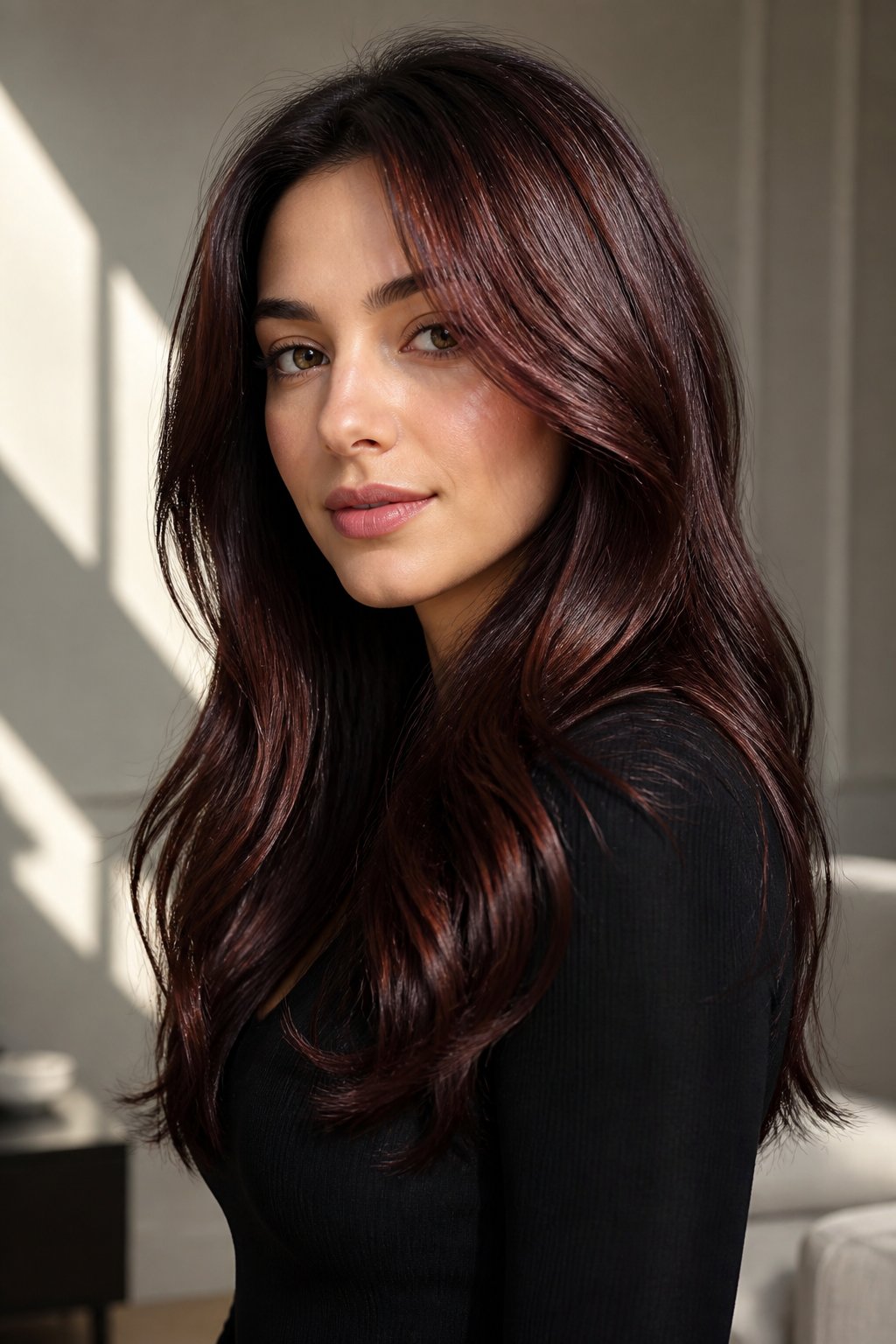
Cherry cola brown combines deep chocolate with soft red and berry undertones for a rich fall-inspired shade.
It appears mostly brunette indoors but reveals a beautiful cherry reflection when exposed to brighter light.
Mahogany Chocolate Brown
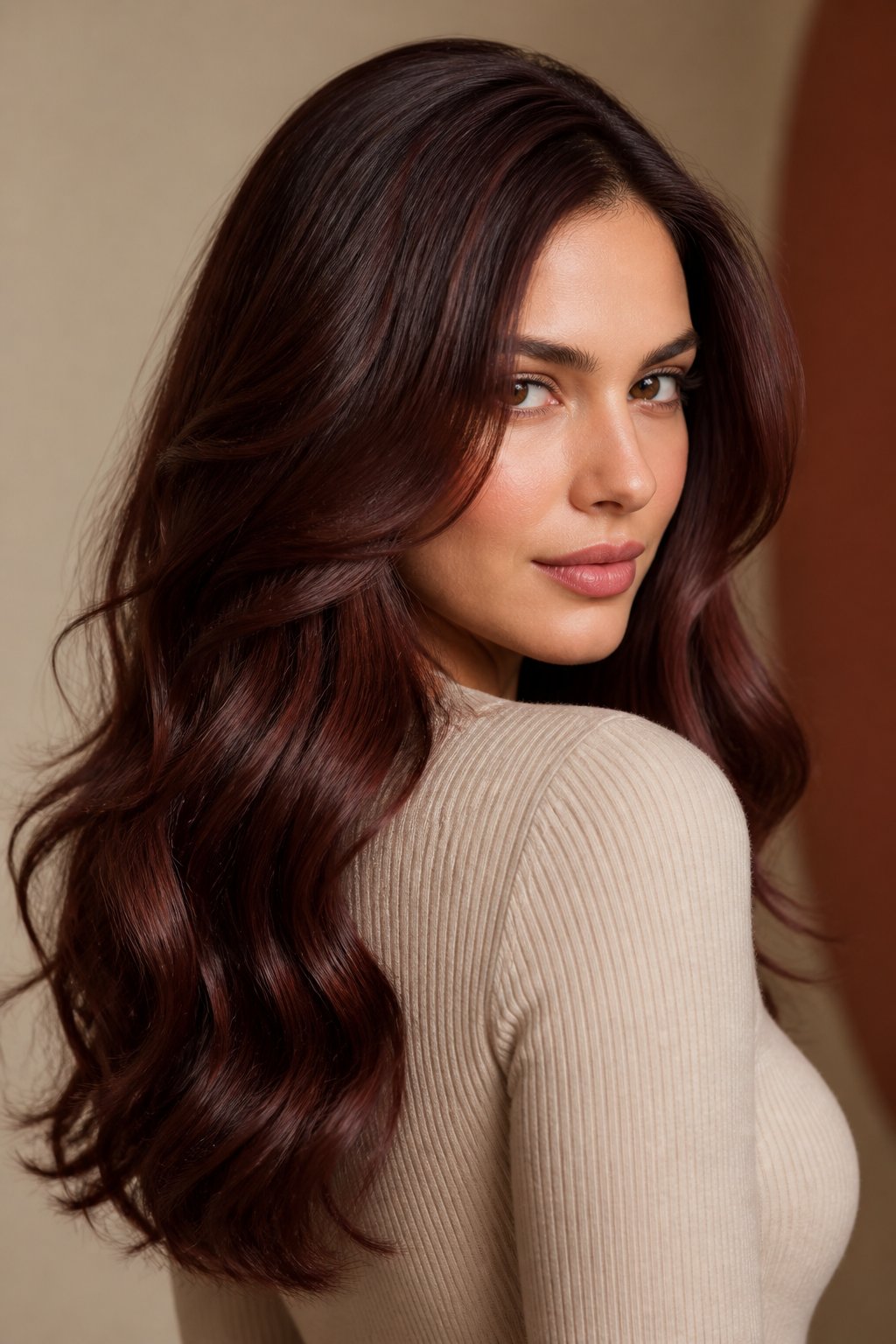
Mahogany chocolate brown blends dark brunette with warm red and subtle violet undertones.
The result looks richer than standard brown while remaining sophisticated, wearable, and perfect for fall.
Plum-Tinted Dark Cocoa
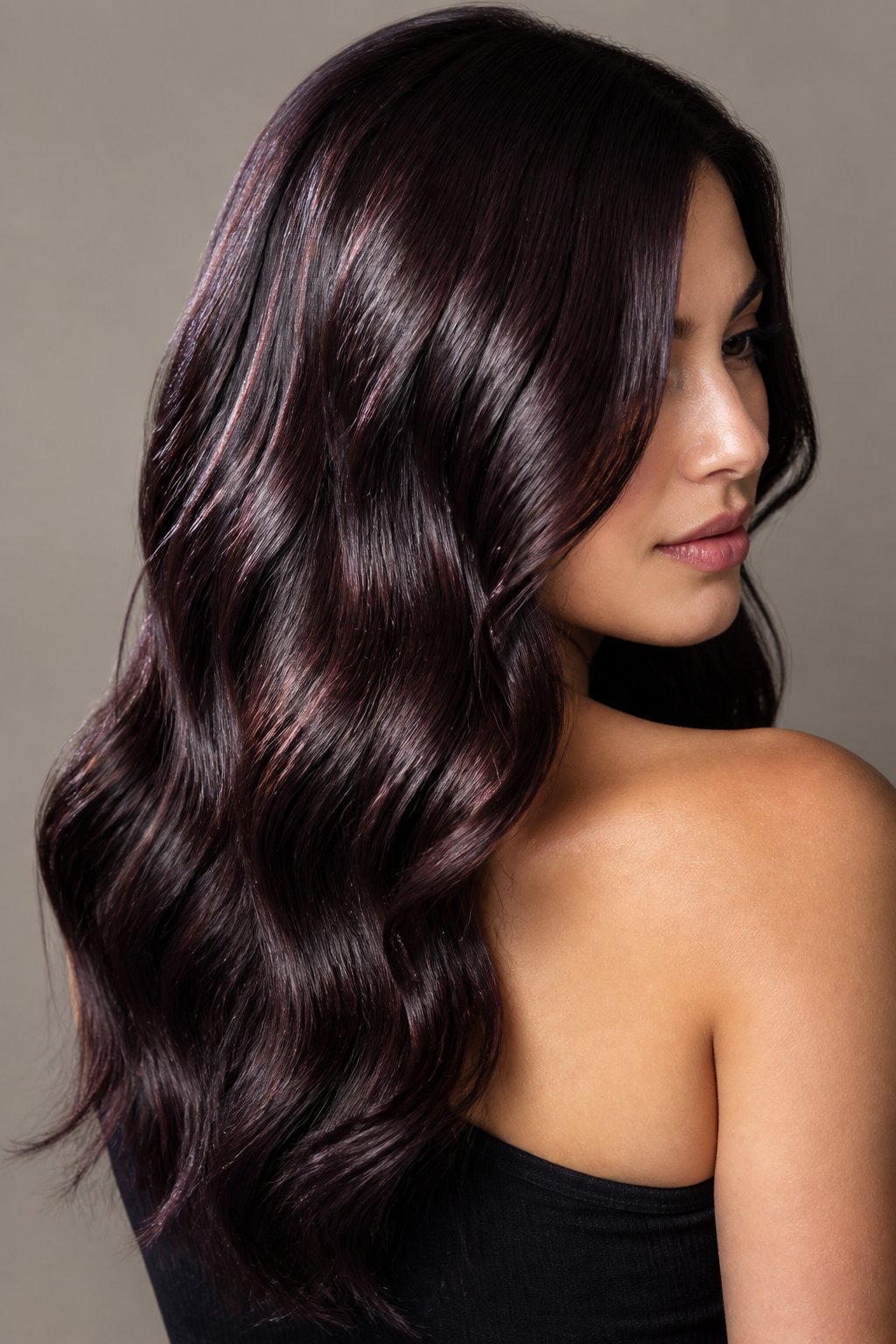
Plum-tinted dark cocoa adds a restrained purple reflection to a very deep chocolate brown base.
The cool berry tone becomes more noticeable in direct light, creating a unique but elegant brunette finish.
Copper-Infused Chocolate Brown
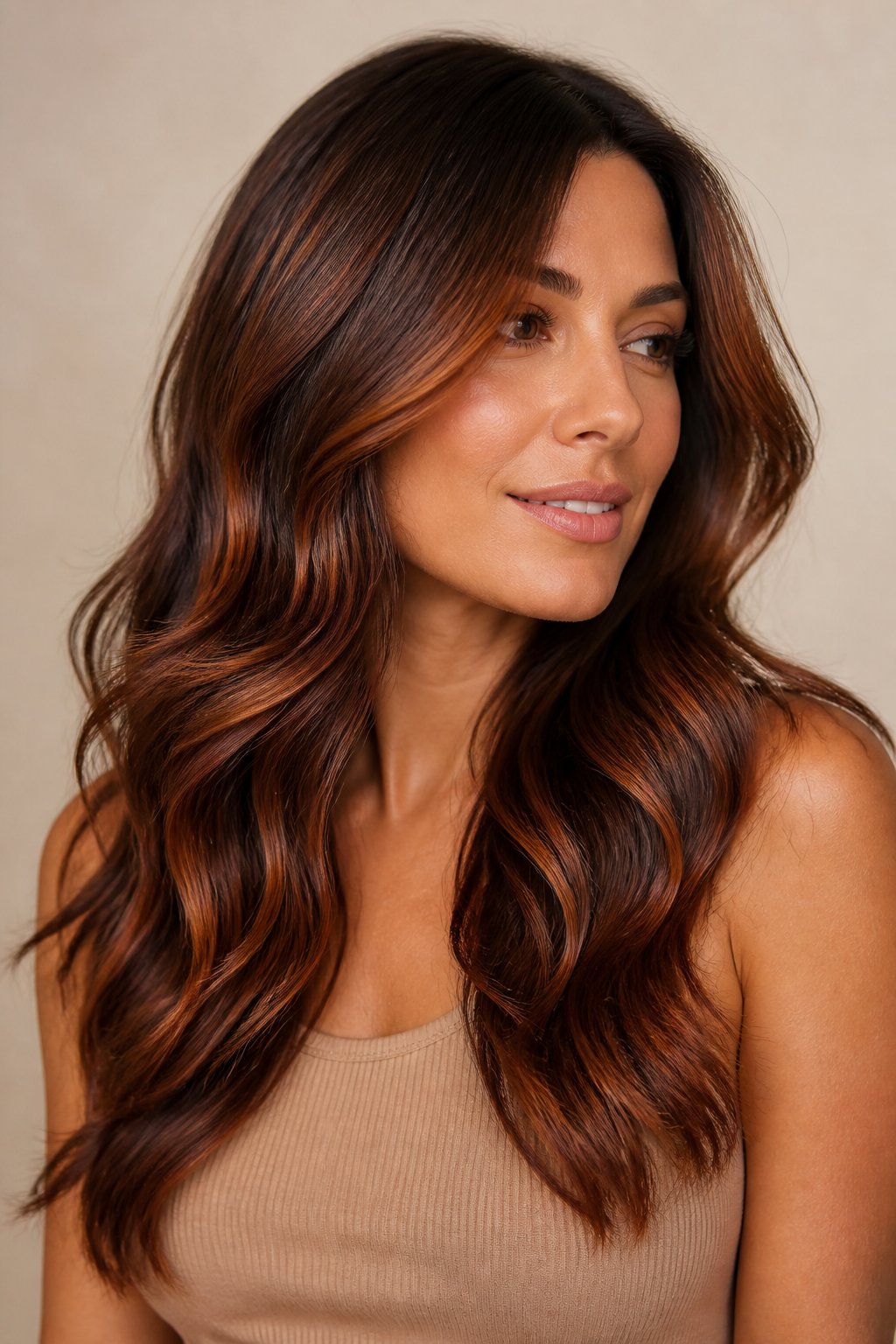
Copper-infused chocolate brown combines a deep brunette base with warm copper ribbons or subtle highlights.
Placing the copper around the face and outer layers adds autumn warmth without overpowering the dark chocolate color.
Burgundy Brown With Cocoa Depth
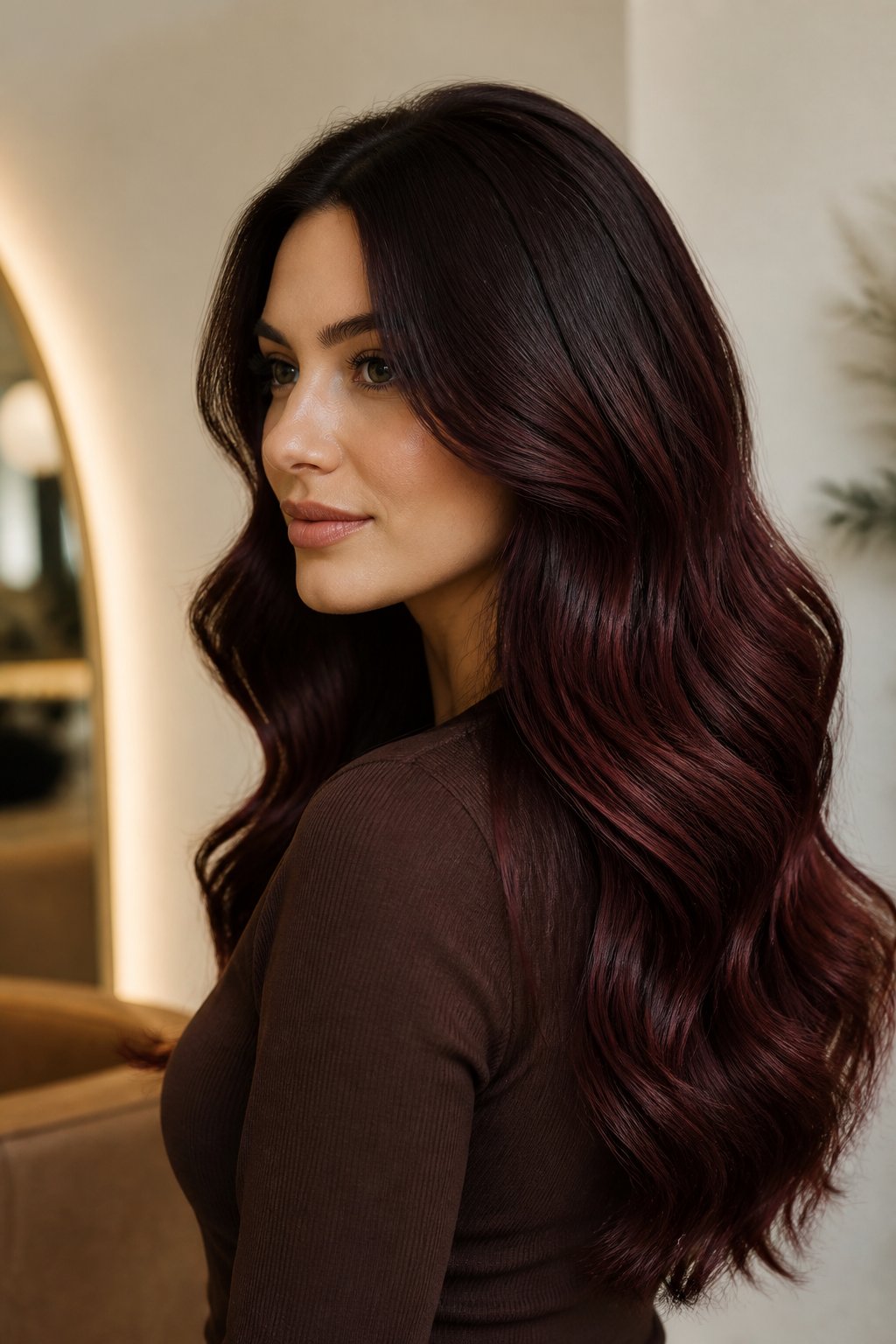
Burgundy brown mixes deep cocoa with muted red-violet and wine-colored tones for a richer statement.
The shade remains dark indoors while revealing beautiful burgundy dimension in brighter natural light.
Cuts And Textures That Showcase Depth
The right haircut can make dark chocolate brown hair look more dimensional by allowing different tones to catch the light.
Layers, bobs, curls, and textured styles are especially effective for showing off highlights and glossy brunette depth.
Long Layers With Mocha Dimension
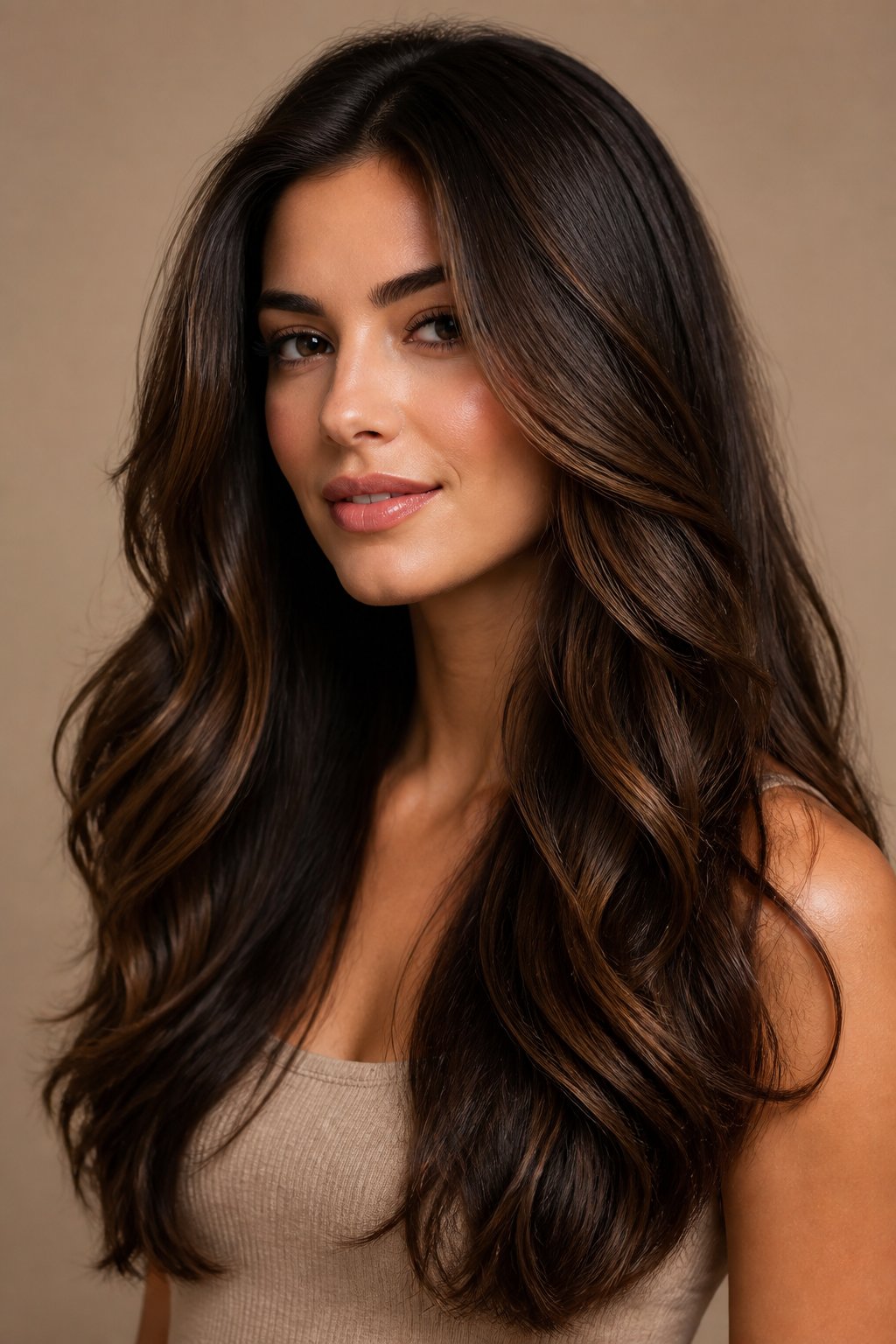
Long layers give dark chocolate brown hair extra movement while subtle mocha ribbons keep the color from appearing heavy.
The lighter pieces catch the light as the layers move, creating soft and natural-looking dimension.
Blunt Bob In Reflective Chocolate Brown
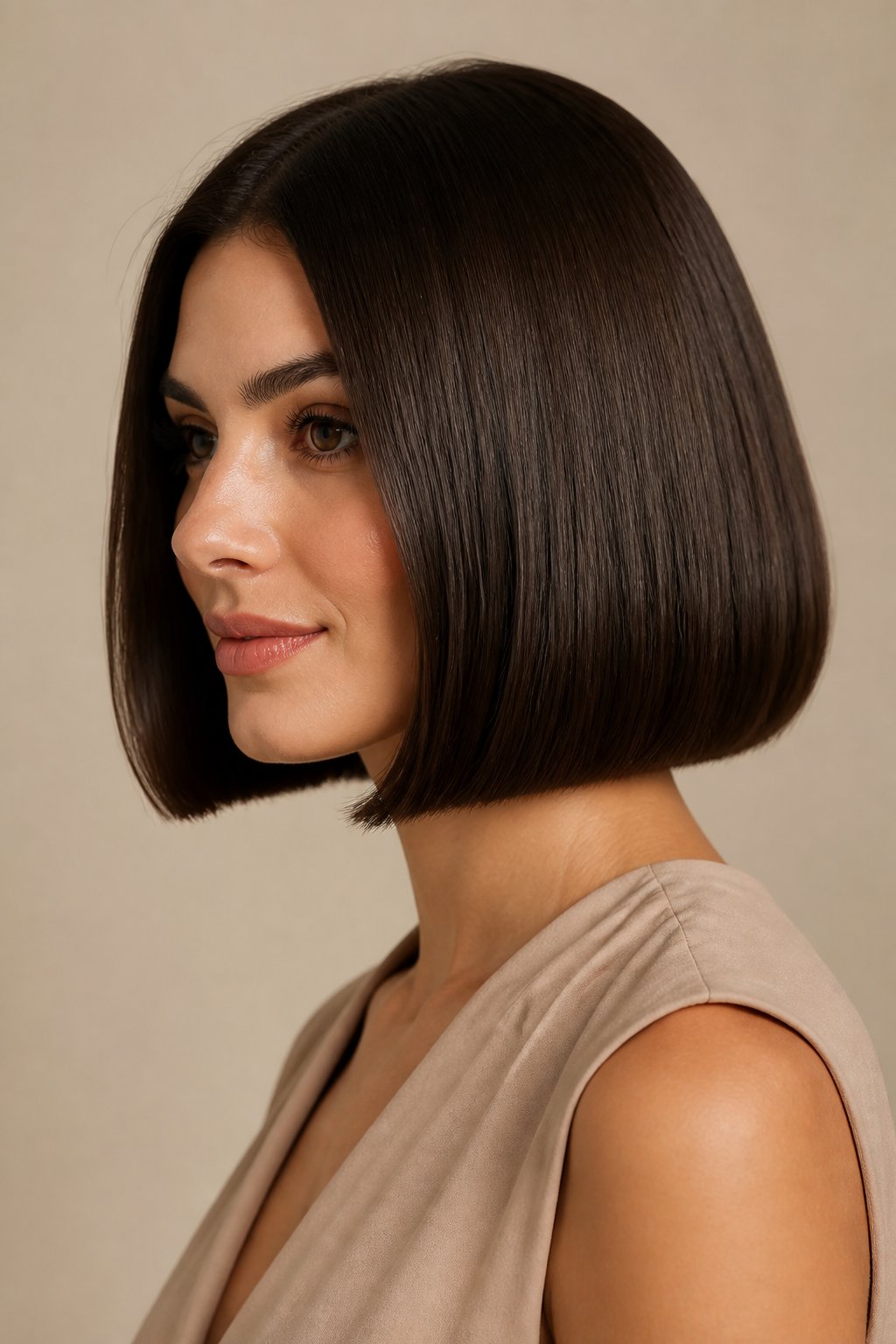
A blunt bob gives dark chocolate brown hair a sleek, structured, and highly polished appearance.
The smooth surface reflects light evenly, making a glossy chocolate shade look especially rich and healthy.
Textured Lob With Caramel Accents
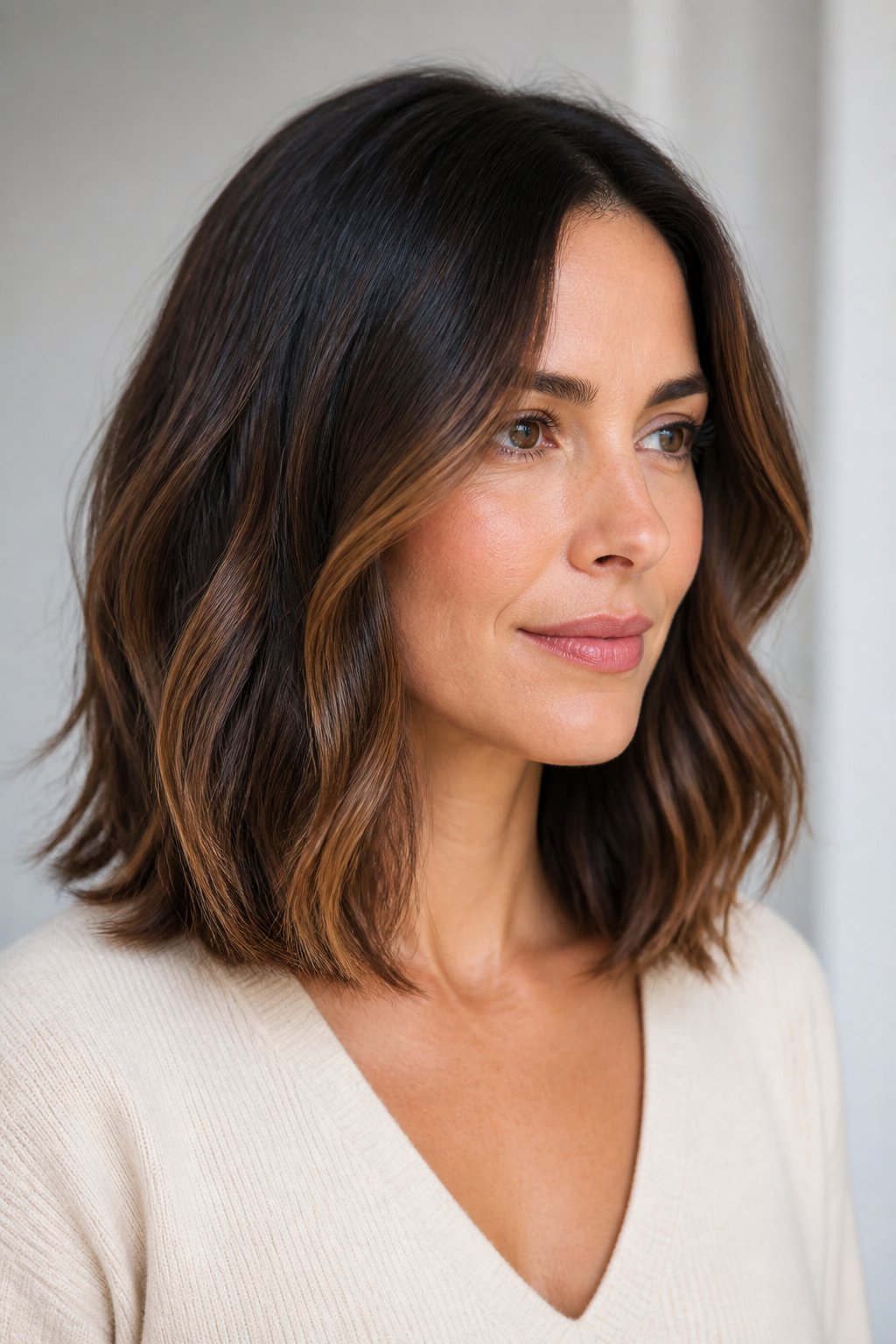
A textured lob combines soft movement with restrained caramel accents around the face and lower layers.
The look works well on straight, wavy, and lightly curly hair while keeping the brunette base dominant.
Curly Chocolate Brown With Painted Highlights
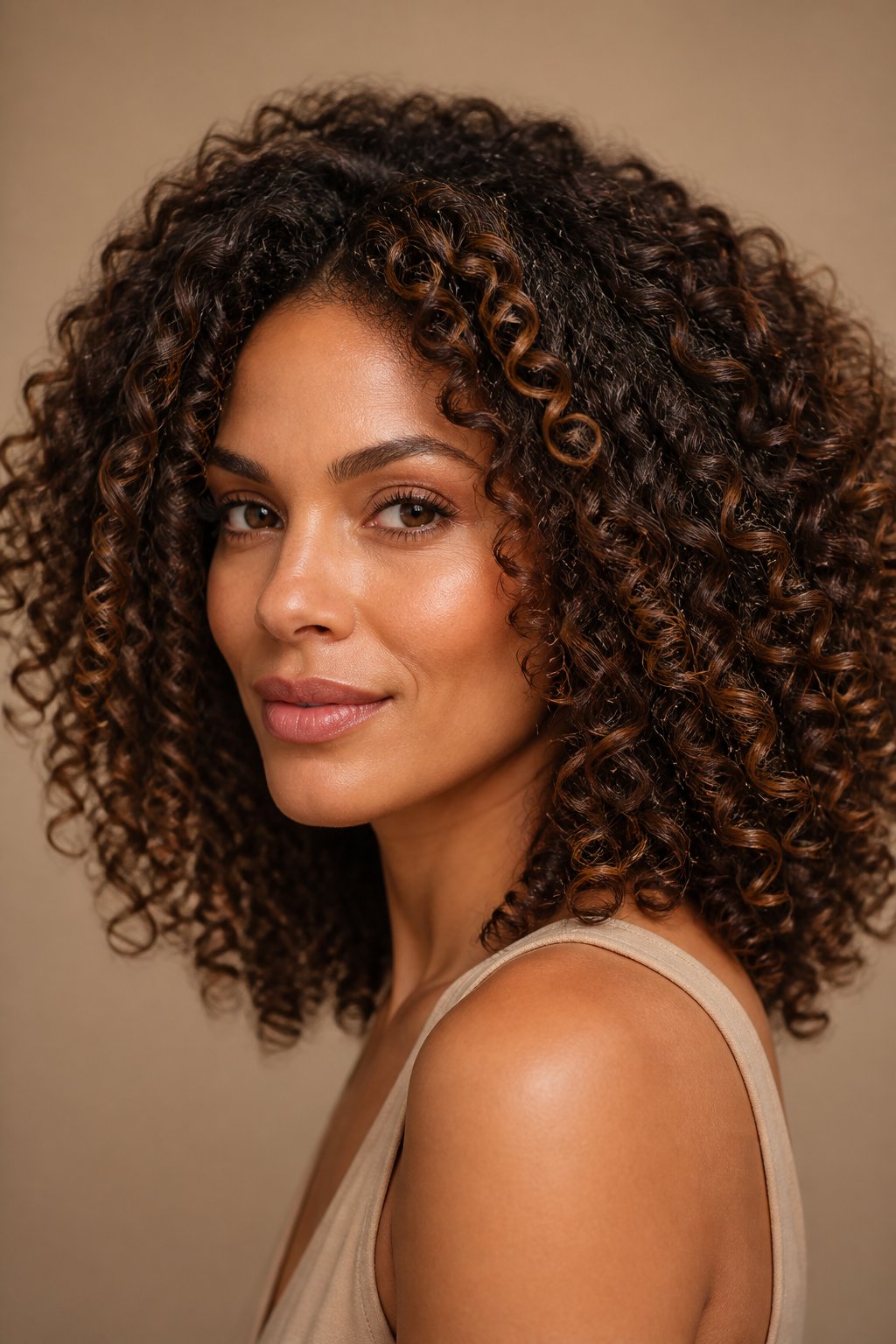
Hand-painted cocoa or caramel highlights add dimension to selected curls while maintaining a deep chocolate base.
Following the natural curl pattern keeps the color blended and prevents the highlights from looking striped or harsh.
Curtain Bangs With a Toffee Face Frame
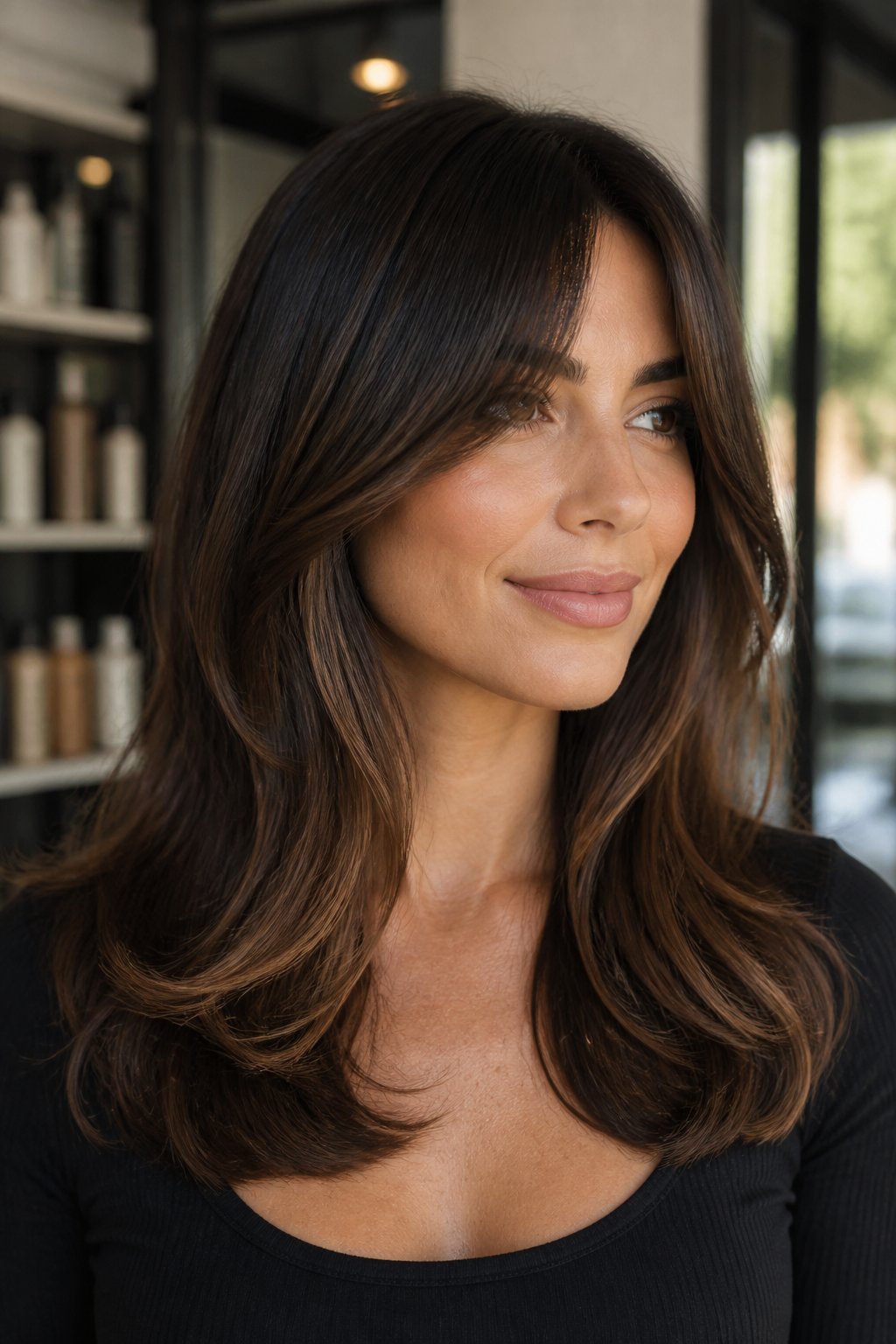
Curtain bangs paired with soft toffee face-framing pieces can brighten the eyes and cheekbones.
Keeping the lighter color close to the chocolate base creates a seamless, flattering, and naturally dimensional finish.
Maintaining Rich Brunette Color
Keep dark chocolate brown hair glossy by using sulfate-free shampoo, lukewarm water, heat protection, and regular conditioning.
Refresh the shade with a brunette gloss when the color starts losing shine, and limit excessive heat styling to help prevent fading.
Frequently Asked Questions
You can pair dark chocolate brown with subtle autumn highlights, layered lowlights, or a gloss to create depth without losing its rich base. Proper preparation, controlled lightening, sulfate-free products, and regular salon maintenance help preserve the shade on straight, naturally black, or previously blonde hair.
What highlights look best with dark chocolate brown hair for fall?
Caramel, chestnut, and muted copper highlights complement dark chocolate brown in fall. Ask for fine balayage pieces or face-framing ribbons rather than thick, high-contrast sections.
For a cooler result, choose neutral mocha or cocoa highlights. Keep the lightest pieces close to your natural undertone so the color remains balanced as it fades.
How can I add dimension to dark chocolate brown hair without going too light?
Use chocolate-toned lowlights, espresso gloss, or subtle mocha balayage. These techniques create separation between sections while keeping the overall color deep.
Your stylist can also add a few strategically placed highlights around the face and through the midlengths. Limit the lift to one or two levels lighter than your base for a restrained effect.
Does dark chocolate brown hair suit straight hair?
Yes. Straight hair reflects light clearly, which can make a dark chocolate shade appear especially glossy. A blunt cut, long layers, or subtle face-framing pieces can show the color’s depth.
Ask your stylist for a clear gloss after coloring if you want added shine. Regular trims also keep straight hair from making dry ends more noticeable.
Can dark chocolate brown hair work on naturally black hair?
It can, although the result may appear subtle indoors. On naturally black hair, a dark chocolate gloss or demi-permanent color can add warm brown reflection without significant lightening.
For a visibly brown result, your stylist may need to lift the hair first. A strand test can show whether your hair develops unwanted red or orange tones during the process.
How can blondes transition to a dark chocolate brown shade for fall?
Your stylist may need to replace missing warm pigments before applying the final brown shade. This process, often called filling, helps prevent a hollow, green, or overly dull result on lightened hair.
Bring reference photos and discuss whether you want a permanent color, demi-permanent gloss, or softer root transition. A gradual shift through medium brown can feel more natural if you are moving from very light blonde.
What is the best way to maintain dark chocolate brown hair color?
Wash with lukewarm water and a color-safe, sulfate-free shampoo. Reduce frequent heat styling, apply a heat protectant, and use a conditioning mask once a week.
Schedule a gloss every four to eight weeks when the color loses shine or warmth. Protect your hair from prolonged sun exposure and rinse it after swimming to reduce fading and unwanted tonal changes.
25 Dark Chocolate Brown Hair Color Ideas for Fall 2026 to Inspire Your Next Look
Dark chocolate brown gives you a rich fall color with depth, warmth, and a polished finish. You can choose a deep espresso base, a softer cocoa shade, or a subtle mahogany variation to complement your skin tone and personal style.
The best dark chocolate brown shade for you depends on your undertone, natural hair color, maintenance preferences, and desired level of contrast. Explore glossy all-over color, caramel accents, soft balayage, and fall-inspired cherry tones that add dimension without overwhelming your look. Strategic cuts and textured styling can also make the color’s depth more visible.
Key Takeaways
- Choose a brown base that complements your undertone and natural color.
- Add subtle highlights or blended tones for visible dimension.
- Protect rich brunette color with gentle products and regular gloss treatments.
Choosing The Right Base Tone
Your ideal dark chocolate brown depends on the balance of warmth, depth, and contrast you want. Consider your natural hair color, skin undertone, maintenance preferences, and whether you want visible dimension or a polished single shade.
Espresso Melt With Cocoa Ribbons
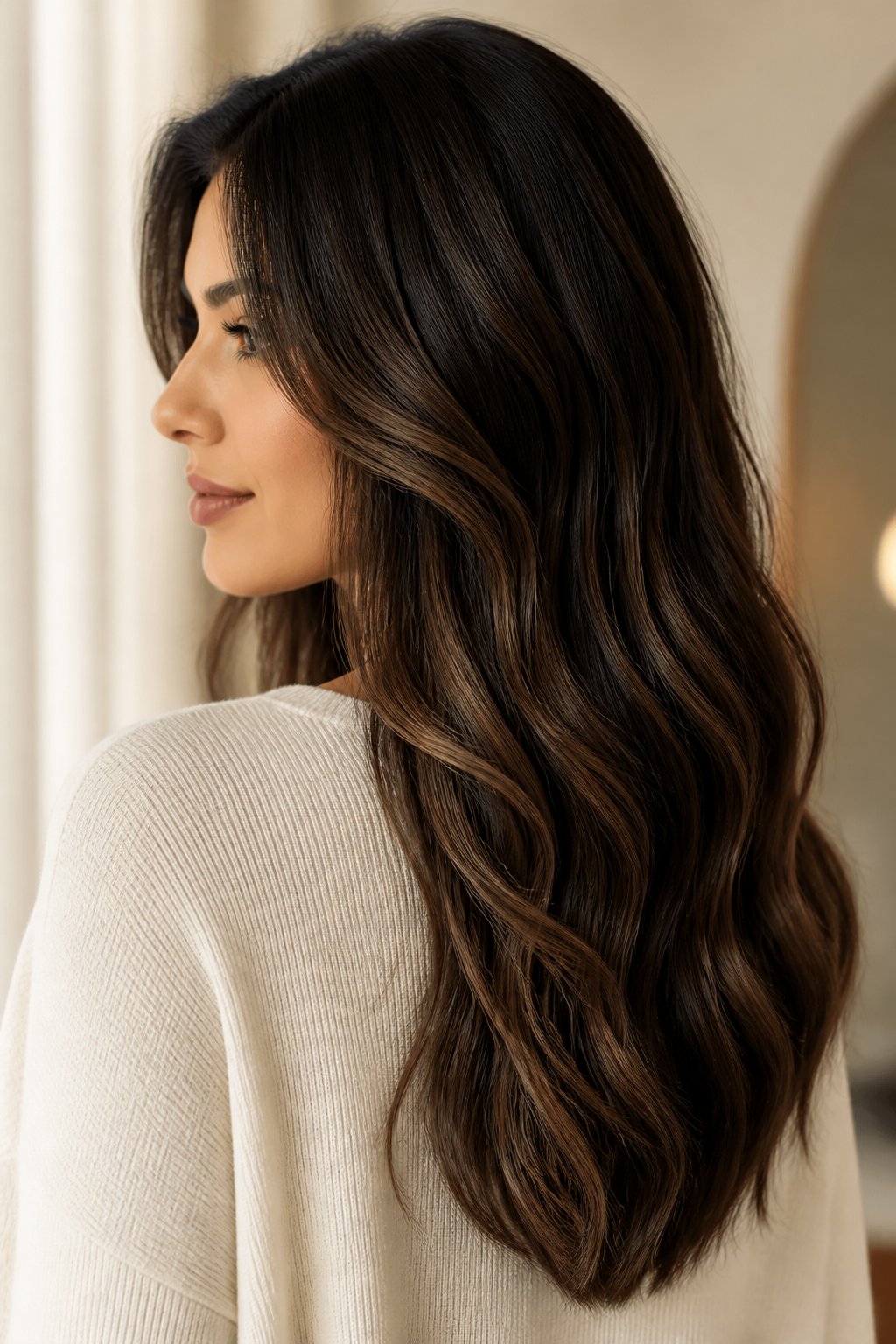
An espresso melt starts with a deep brown root and gradually transitions into softer cocoa lengths. The darker base creates a rich, grounded look, while fine cocoa ribbons keep the color from appearing flat.
Ask your colorist for a seamless root shadow and hand-painted highlights placed through the mid-lengths and ends. Keep the ribbons only one or two levels lighter than the base for a refined finish. This approach works well if you want noticeable movement without a high-contrast balayage.
The technique suits medium to deep natural hair especially well because it limits lightening. Use a sulfate-free cleanser and a moisturizing mask to help preserve the gloss. Refresh the tone with a clear or brown gloss when the lengths begin to look dull.
Neutral Dark Chocolate With Soft Dimension
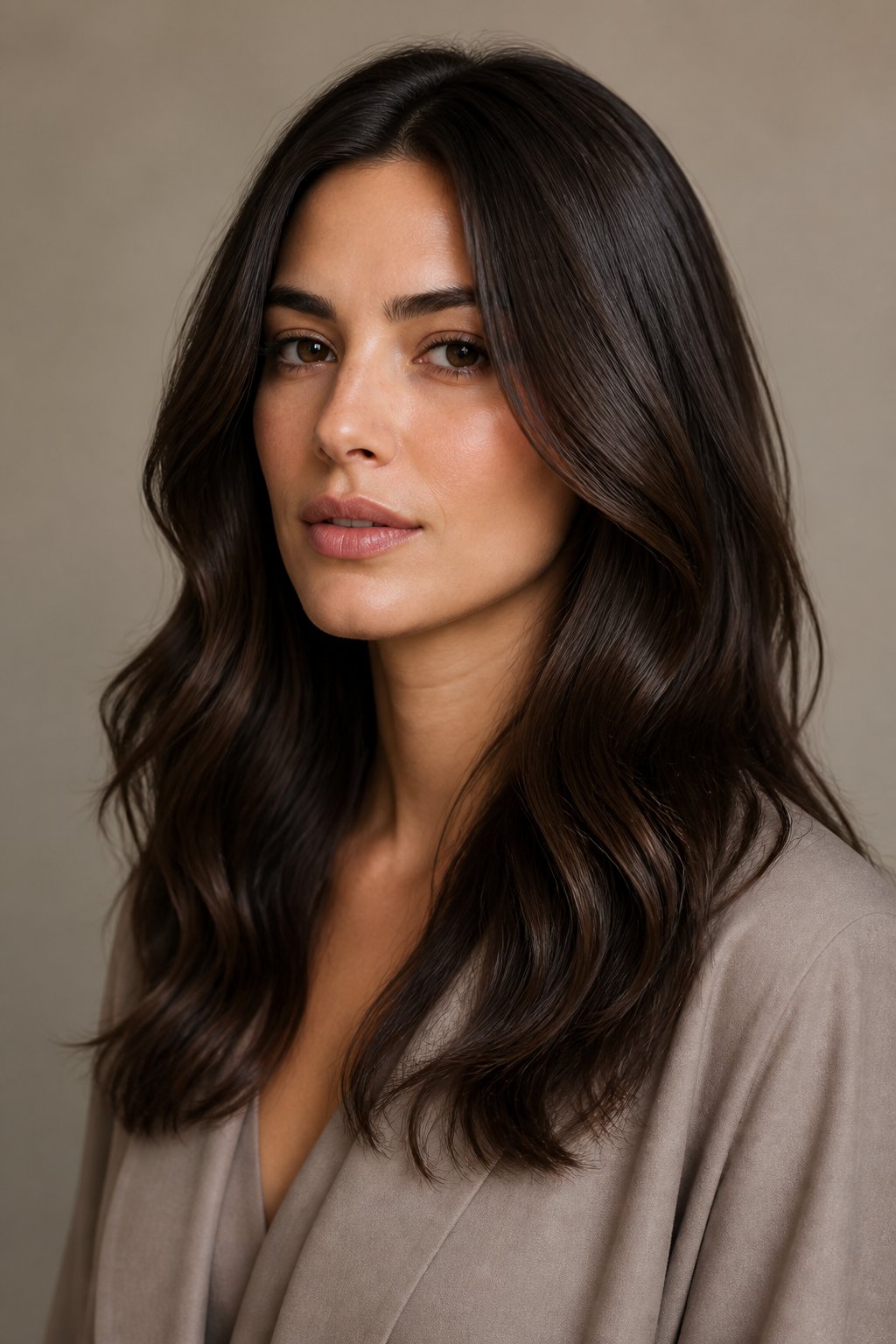
Neutral dark chocolate sits between warm and cool brown, making it a flexible choice when you do not want obvious red, gold, or ash tones. Subtle tonal variation gives the hair depth while keeping the finished color polished.
Request a medium-to-deep chocolate base with delicate lowlights and slightly lighter face-framing pieces. Your colorist can adjust the formula toward beige, cocoa, or muted brown depending on your natural hair and skin undertone. Keep the contrast restrained if you prefer a low-maintenance result.
This shade can flatter both warm and cool complexions because it avoids strong undertones. It also grows out gently when the color stays close to your natural level. A gloss every several weeks can restore shine without significantly changing the shade.
Cool Bittersweet Brown With Ashy Ends
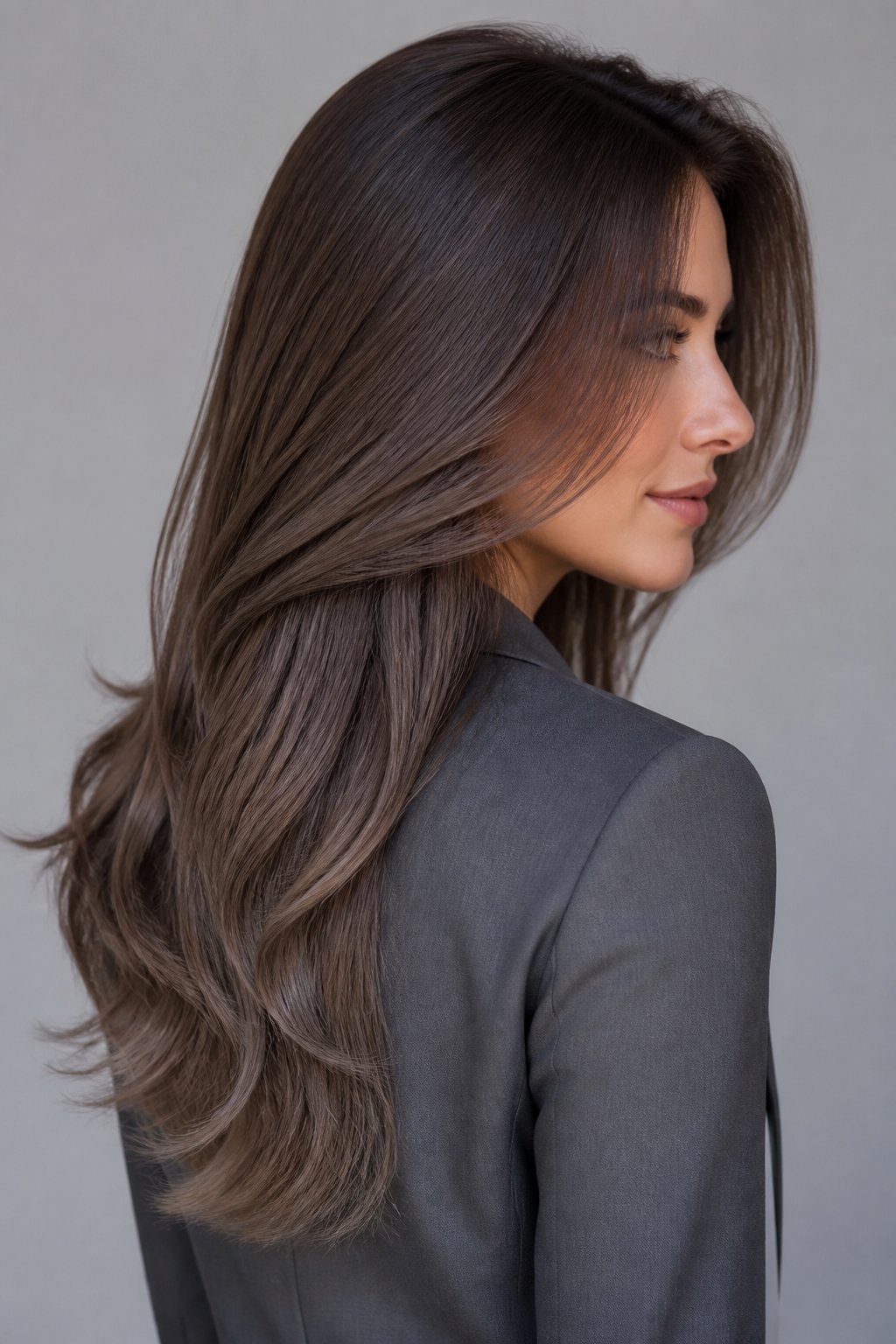
Cool bittersweet brown combines deep cocoa with muted ash undertones. It gives you a sophisticated, low-red finish, while ashy ends create a slightly lighter effect that adds shape to long or layered hair.
Tell your colorist if your hair tends to reveal orange or red during lightening. They may use a neutralizing formula with blue or violet pigments, depending on the unwanted tone. Avoid taking the ends too light, since excessive contrast can make the result look disconnected from the darker roots.
This option suits neutral and cool undertones particularly well, especially when you want a dark shade without visible warmth. Ash tones can fade or become dry-looking on porous hair, so alternate gentle cleansing with regular conditioning. Use toning products only as directed to avoid an overly gray finish.
Warm Truffle Brown With Golden Reflects
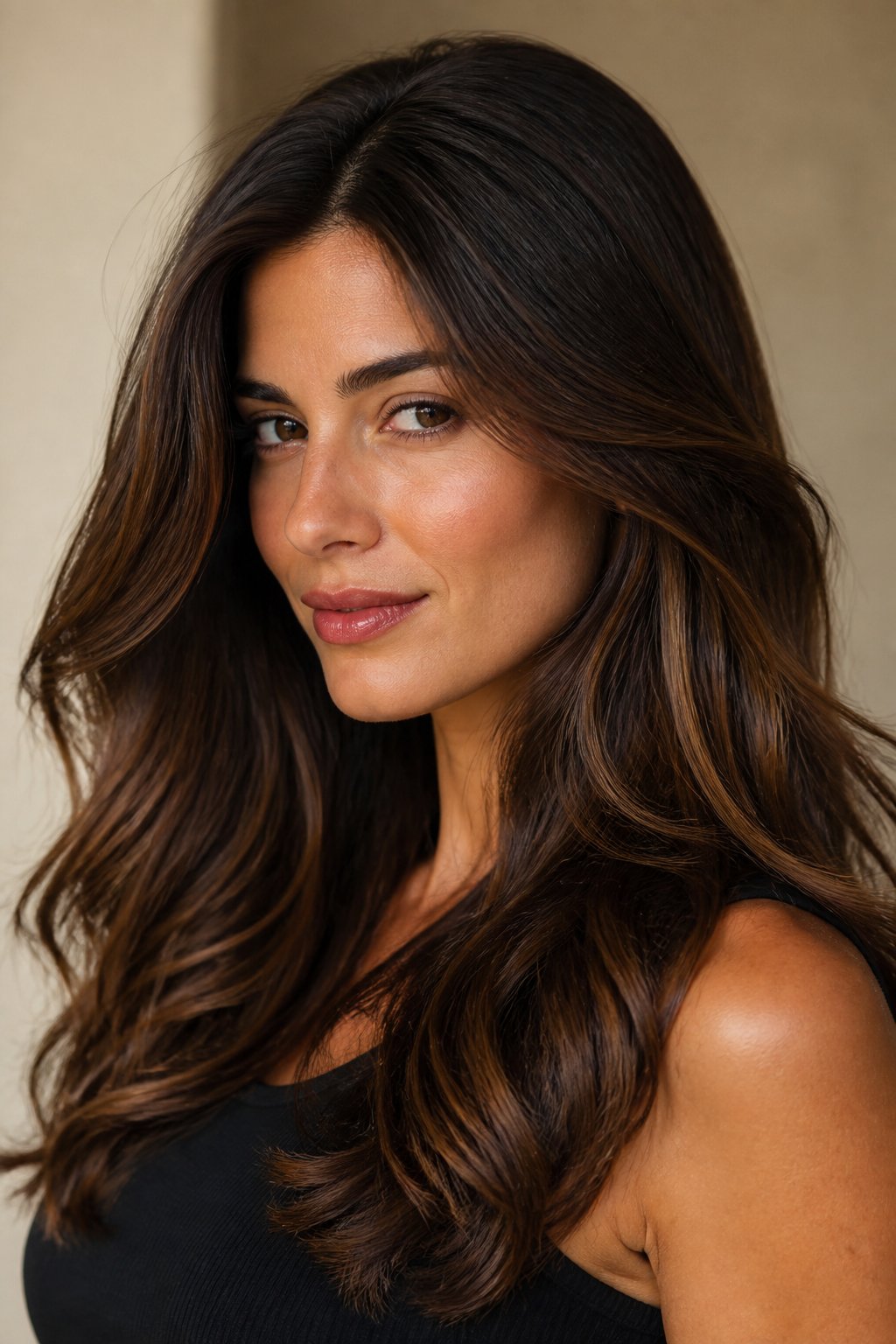
Warm truffle brown blends a dark chocolate base with subtle golden or caramel reflects. The warm accents become more visible in natural light, giving your hair dimension without turning the overall color blonde.
Choose this option if your natural hair already shows golden, chestnut, or auburn tones. Ask for fine highlights through the front layers and ends rather than broad pieces. Keeping the highlights close to the base maintains the dark-chocolate appearance and makes regrowth less noticeable.
Warm reflects can complement warm or olive undertones, while a neutral formula can soften the effect for neutral skin. Protect the color from fading with a color-safe cleanser and heat protection. If the gold becomes too strong, your colorist can rebalance it with a neutral brown gloss.
True Chocolate Brown With Balanced Undertones
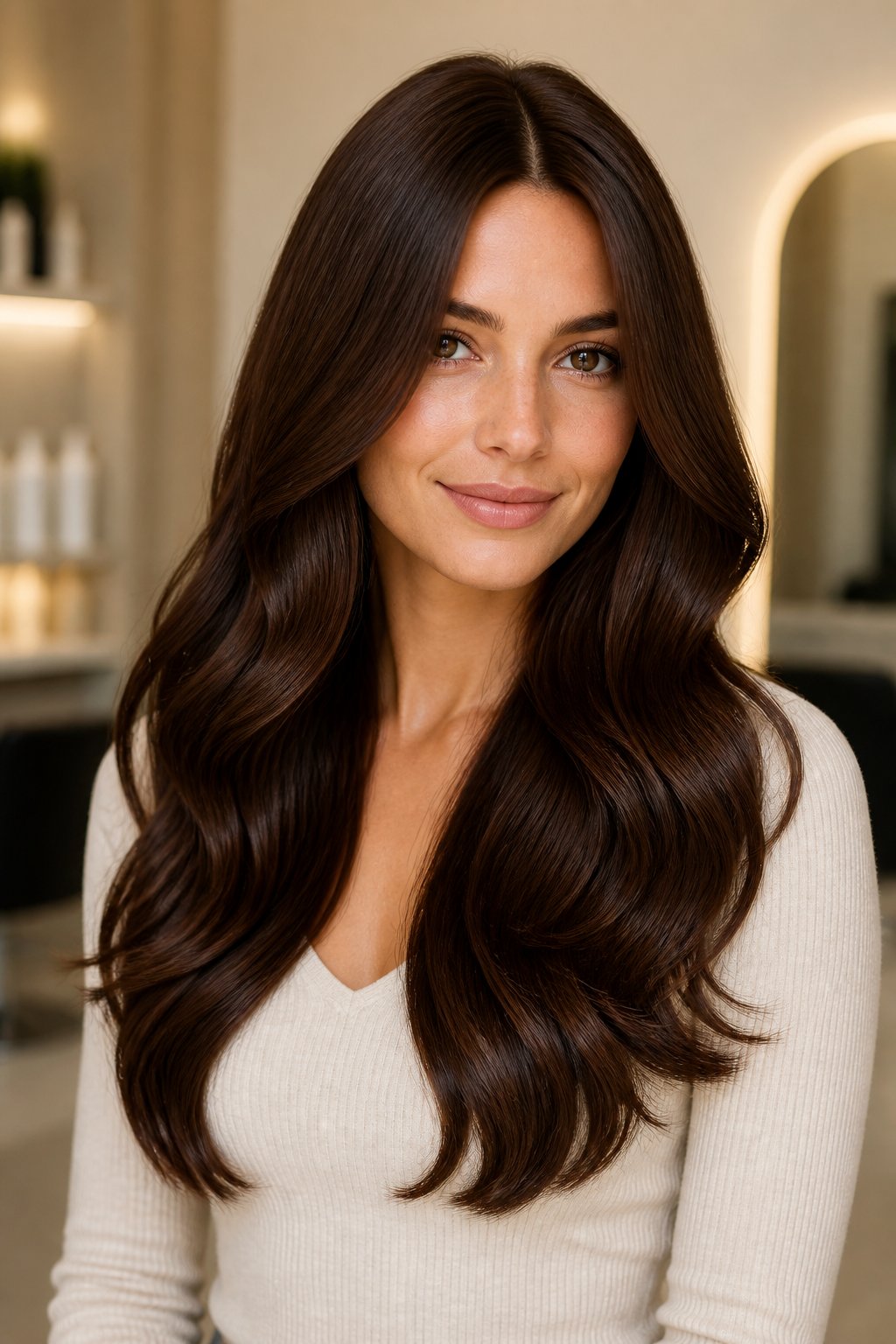
True chocolate brown uses a carefully balanced mix of red, gold, and neutral pigments to create a classic medium-dark brunette. It gives you a solid, glossy appearance while retaining enough tonal complexity to avoid looking harsh.
This choice works well if you want one dependable shade rather than highlights or a dramatic gradient. Ask your colorist to match the depth to your complexion and natural roots. A slightly lighter formula can brighten the face, while a deeper version creates a more dramatic contrast.
Balanced chocolate brown generally offers straightforward upkeep because it does not rely on strong ash or copper tones. Schedule a gloss when the color loses reflectivity, and apply conditioner to the mid-lengths and ends. If your hair has previous color, your stylist may need to adjust the formula for an even result.
Dimensional Highlight Ideas
Dark chocolate brown looks richer when you pair it with carefully placed lighter tones instead of creating strong contrast throughout the hair. You can choose warm mocha, cinnamon, toffee, hazelnut, or caramel highlights based on your undertone, maintenance preferences, and desired level of brightness.
Mocha Balayage On Deep Brown Hair
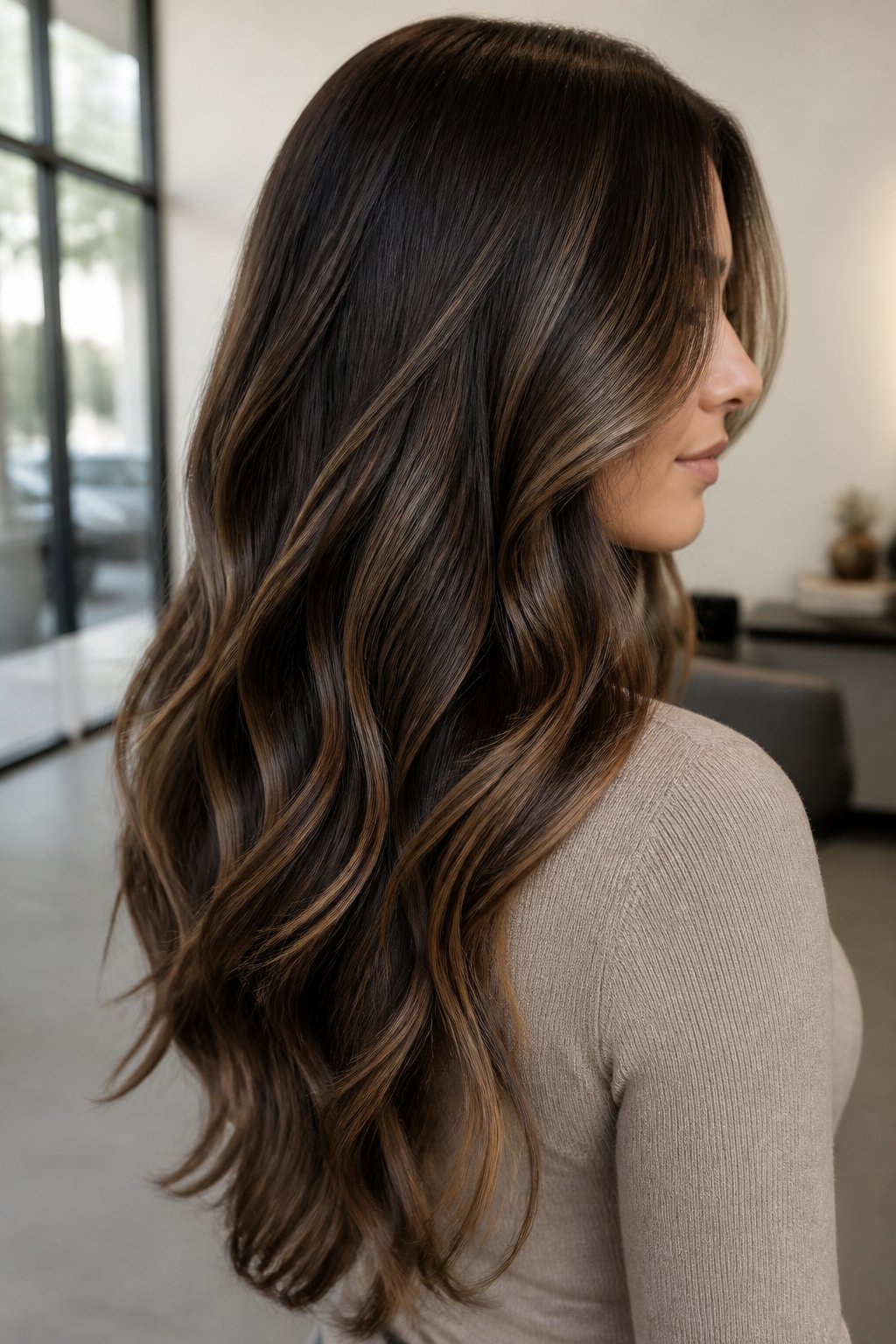
Mocha balayage blends medium brown and soft espresso tones through a deep chocolate base. Your colorist can paint the lightener from the mid-lengths downward, keeping the roots dark for a softer grow-out and a natural-looking finish.
Ask for neutral or slightly cool mocha shades if you want to avoid orange tones. This combination suits olive, neutral, and cool undertones, while a warmer mocha gloss can complement golden skin. The balayage works especially well on long layers, waves, and curls because the varied tones become visible as the hair moves.
Keep the lightened pieces glossy with a color-safe shampoo and a weekly moisturizing mask. A toner or brunette gloss every several weeks can refresh the mocha shade and maintain separation between the highlights and your dark base.
Cinnamon Micro-Highlights Through Chocolate Brown
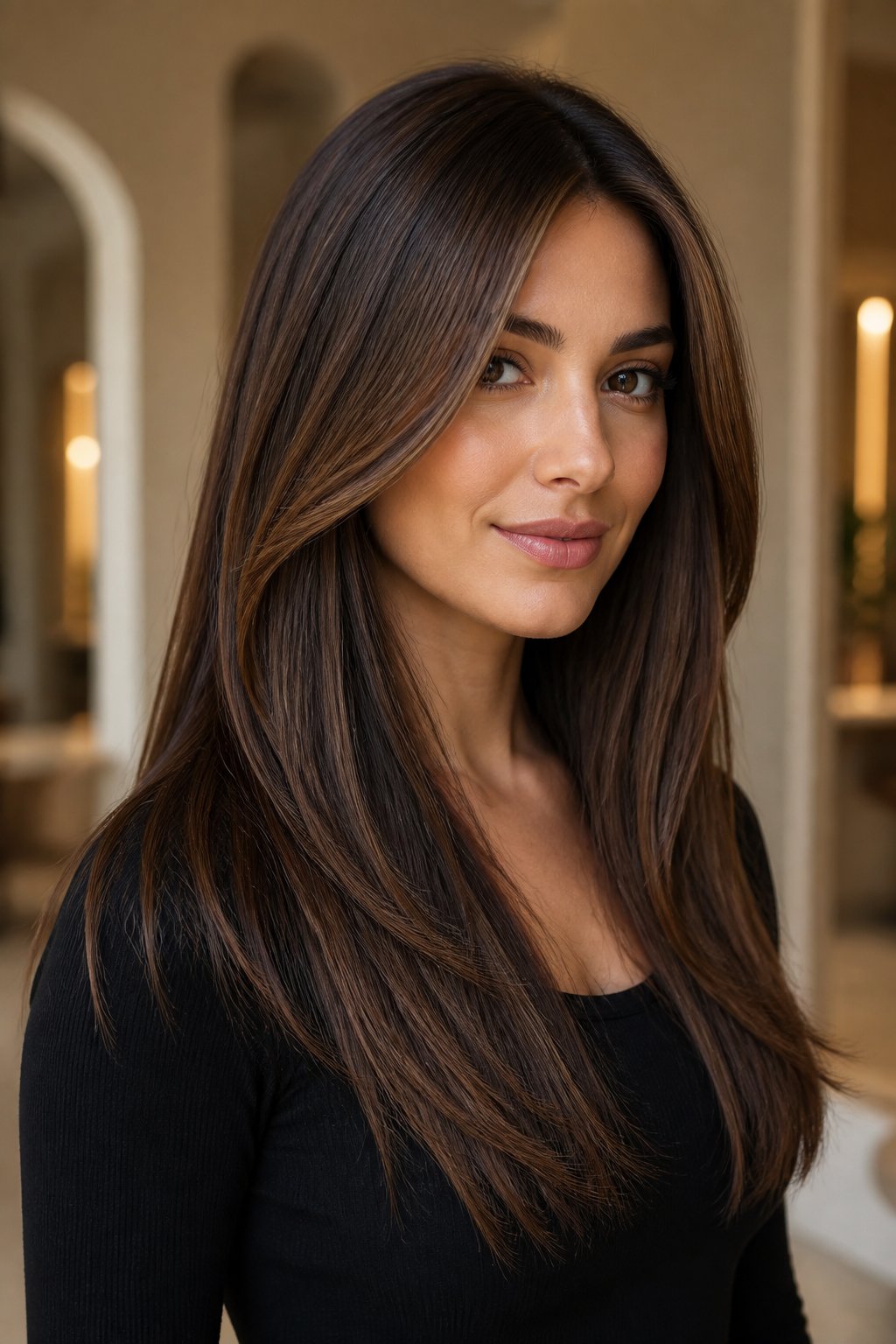
Cinnamon micro-highlights add fine, warm strands without making your hair look heavily highlighted. Your colorist can place narrow sections throughout the crown, sides, and lower lengths, using slightly brighter pieces around the face for balance.
This technique works well when you want visible warmth but prefer a blended result. Cinnamon tones suit warm and neutral undertones, particularly when the shade matches the natural warmth in your eyes or complexion. On straight hair, the fine highlights create subtle contrast; on textured hair, they emphasize curl definition.
Request a soft cinnamon glaze rather than a bright copper finish if you want a refined fall color. Because the highlights remain narrow, they generally require less upkeep than bold panels, although your ends still need regular conditioning after lightening.
Toffee Face Frame With a Dark Base
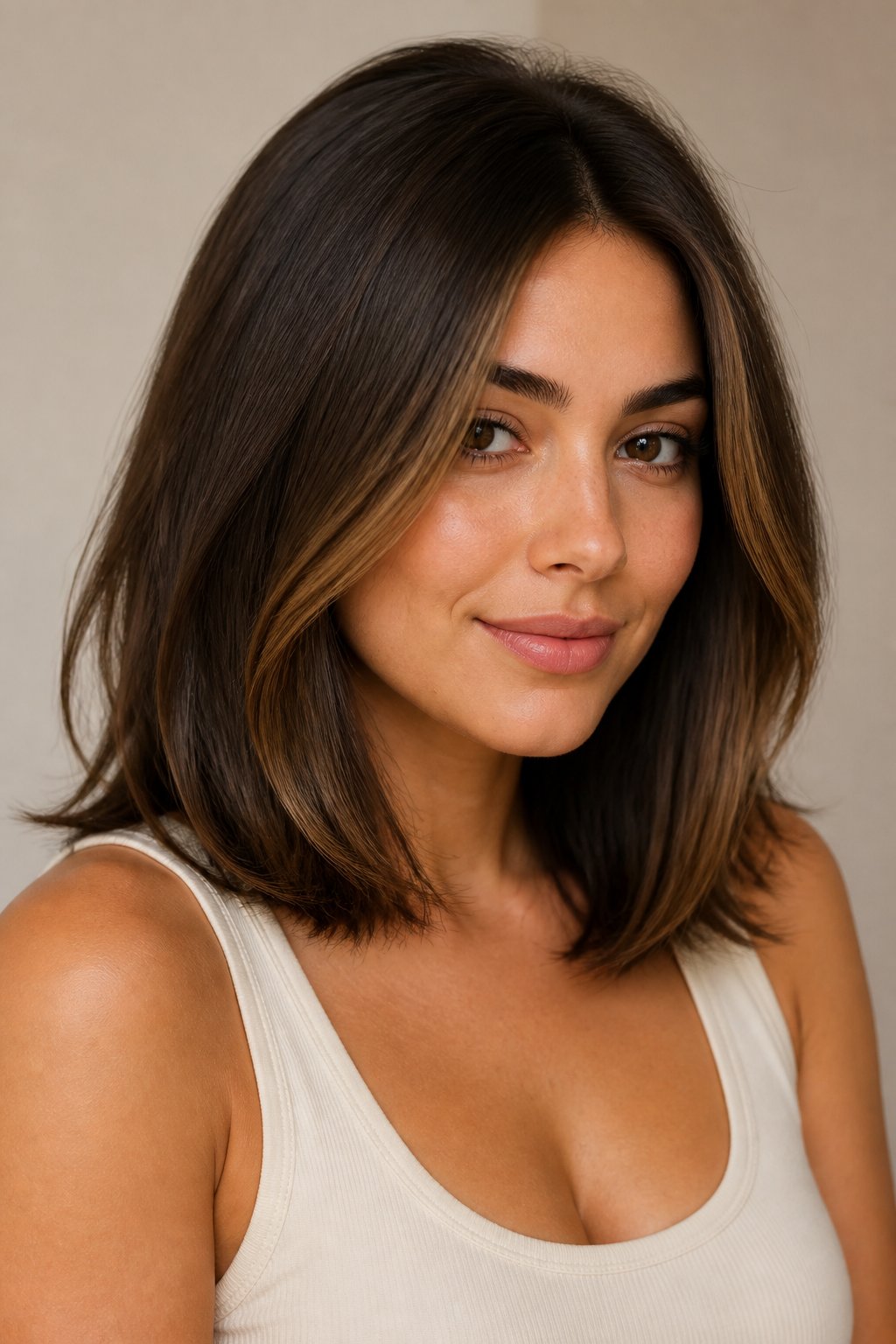
A toffee face frame places two or more lighter pieces around your hairline while leaving most of the dark chocolate base intact. The colorist can begin the highlights near the cheekbones or jawline, depending on whether you want brightness higher around your eyes or lower near your face.
Choose a medium toffee tone for a noticeable but wearable contrast. A slightly muted shade creates a softer effect than pale blonde, especially against deep brown hair. Ask your colorist to blend the upper edges so the face frame does not look like a sharp stripe.
This placement suits bobs, lobs, layers, and long hair. It also gives you a lower-commitment way to try lighter color because only a small section receives lightener. Use a tinted gloss when the toffee begins to look dull or overly warm.
Hazelnut Babylights For Subtle Brightness
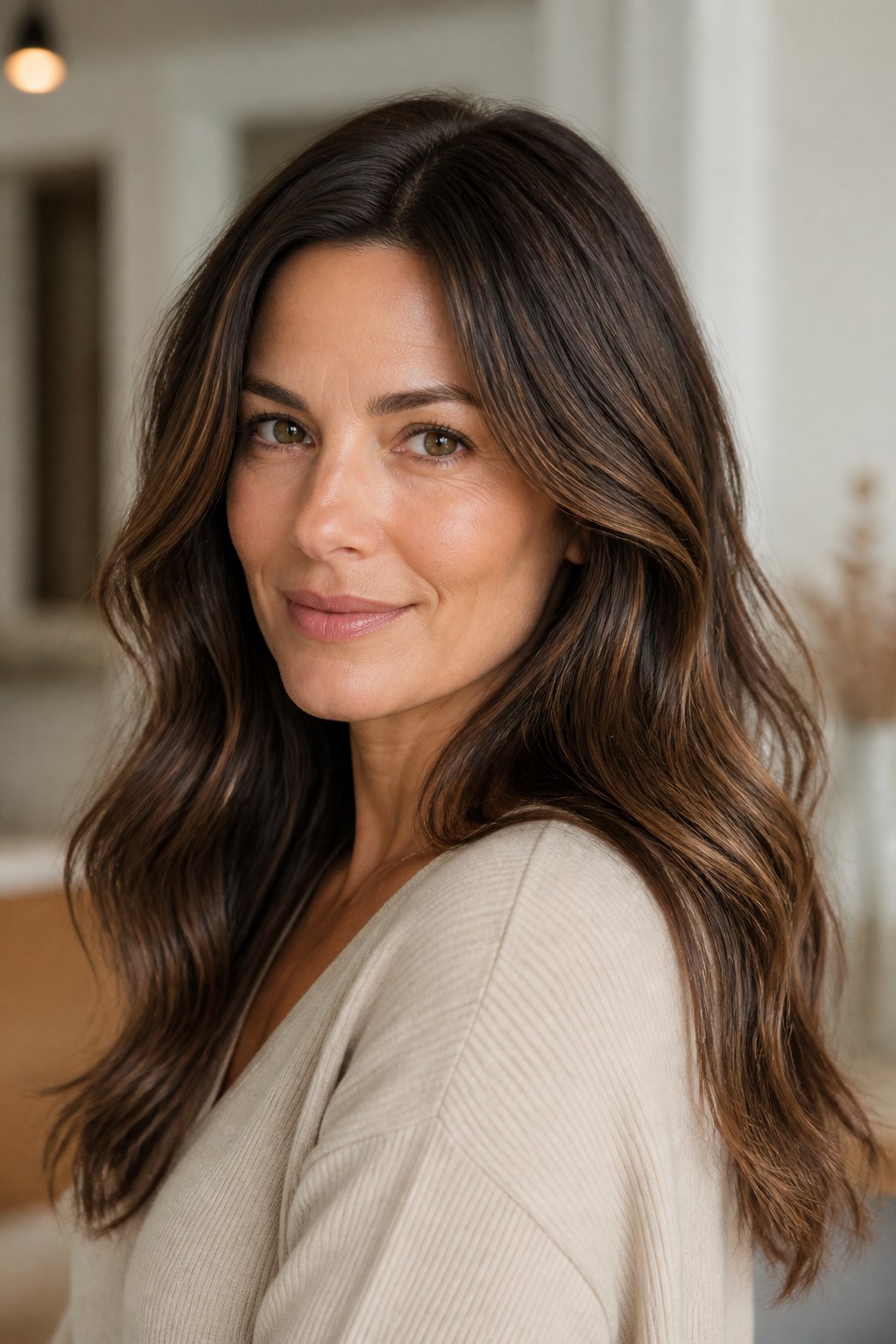
Hazelnut babylights use very fine highlights in a beige-brown or warm neutral shade. They create delicate brightness across the surface while preserving the depth of your chocolate brown base. Your colorist can concentrate them around the part, temples, and upper layers for a softly illuminated effect.
This option suits you if you want dimension that looks understated in indoor light but becomes clearer outdoors. Hazelnut tones work across many undertones, though your colorist may adjust the formula warmer or cooler to match your skin and natural hair.
Babylights can require detailed application, particularly on dense or long hair, because the sections remain small. Protect the result with sulfate-free products, moderate heat styling, and regular trims. A clear or lightly tinted gloss can keep the fine highlights reflective without darkening them.
Caramel Ribbons On Rich Cocoa Brown
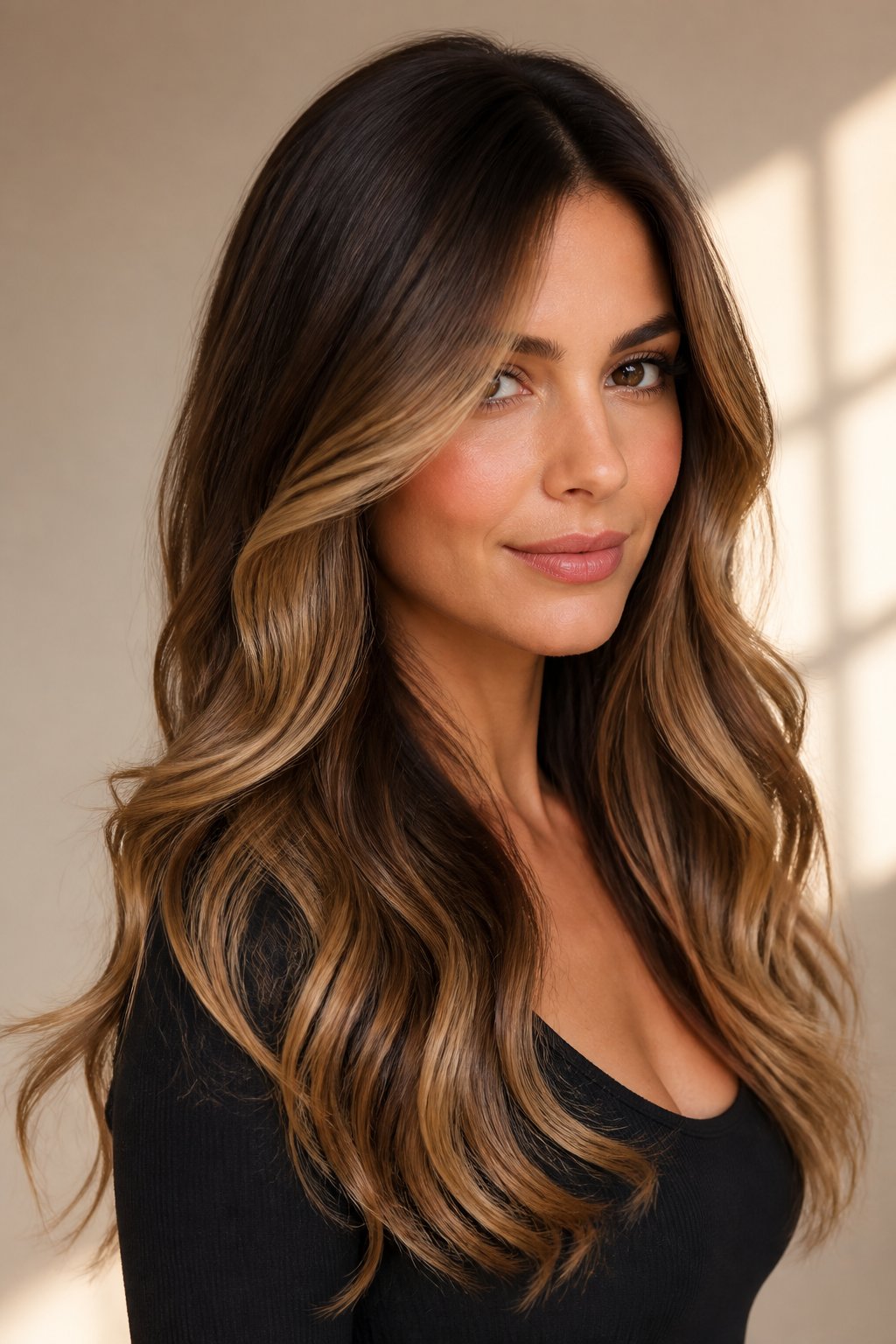
Caramel ribbons create broader, flowing sections through a rich cocoa-brown base. Your colorist can place them through the mid-lengths and ends, then add a few shorter pieces near the front to connect the brightness with your face.
Use golden caramel for a warm, sunlit result or choose beige caramel for a more neutral finish. The technique works particularly well with long layers, loose waves, and curly cuts because the ribbons follow the hair’s movement instead of sitting in one solid block.
Because these sections are wider than babylights, they produce stronger contrast and may need more careful toning as they fade. Ask for a blended root and a demi-permanent gloss to soften regrowth. Apply a heat protectant before styling and use a nourishing mask to maintain smooth, reflective ends.
Low-Maintenance Color Blends
Low-maintenance brunette color depends on soft transitions, carefully placed warmth, and a finish that fades evenly. These options reduce visible regrowth while giving you control over shine, contrast, and salon upkeep.
Chocolate Brown Root Smudge
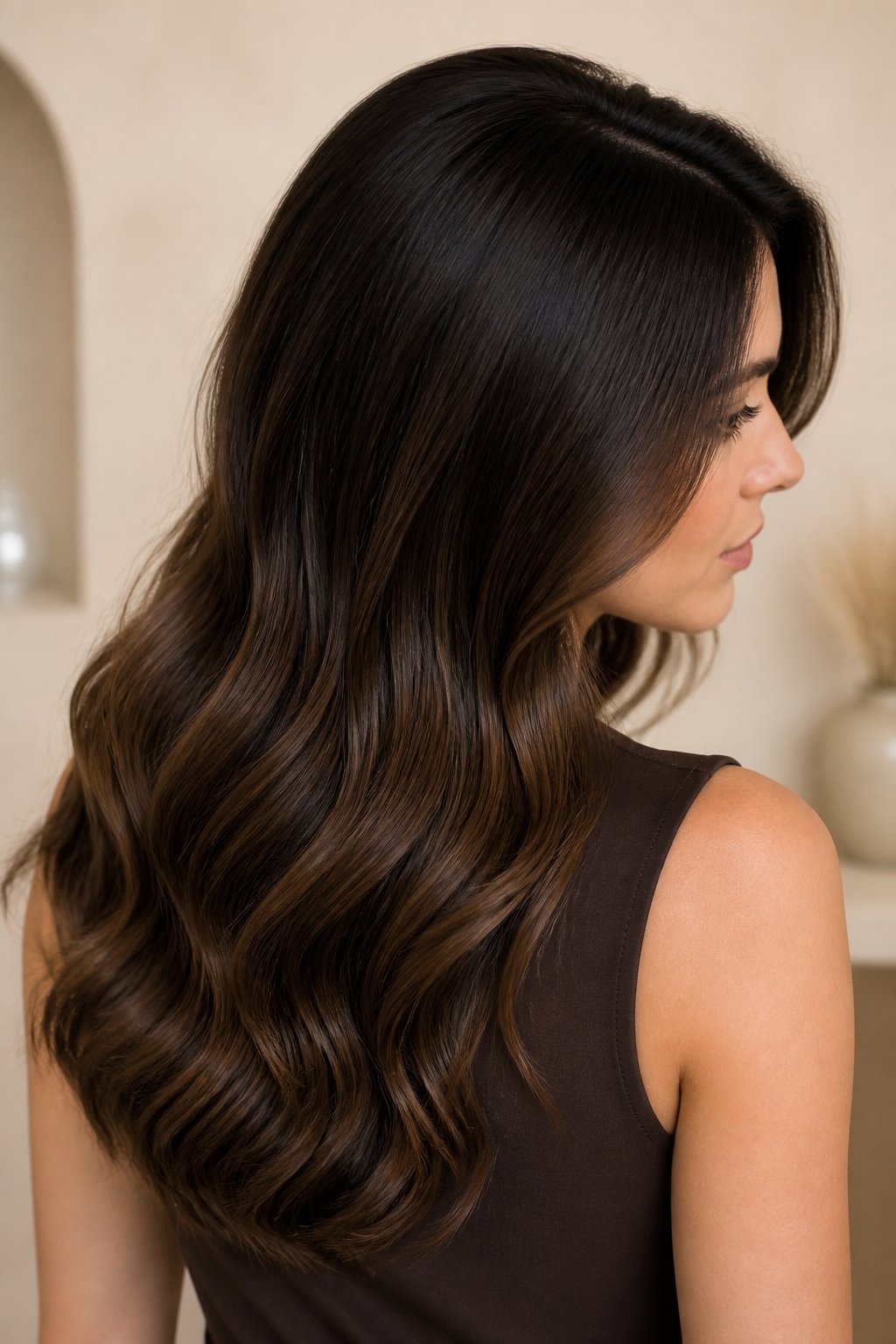
A chocolate brown root smudge blends your natural roots into a dark cocoa base, creating a softer boundary than a single-process color. Your stylist can match the smudge closely to your natural depth or make it slightly richer for a polished fall look.
This technique works well when you want subtle dimension without obvious highlights. Ask for the color to fade gradually through the first few inches of hair, then continue into medium chocolate lengths. The result looks especially natural on medium to dark brown hair.
To maintain the tone, use a sulfate-free color-safe shampoo and wash with lukewarm water. A gloss every 8–12 weeks can refresh shine without rebuilding the entire root area.
Dark Brown Shadow Root With Mocha Lengths
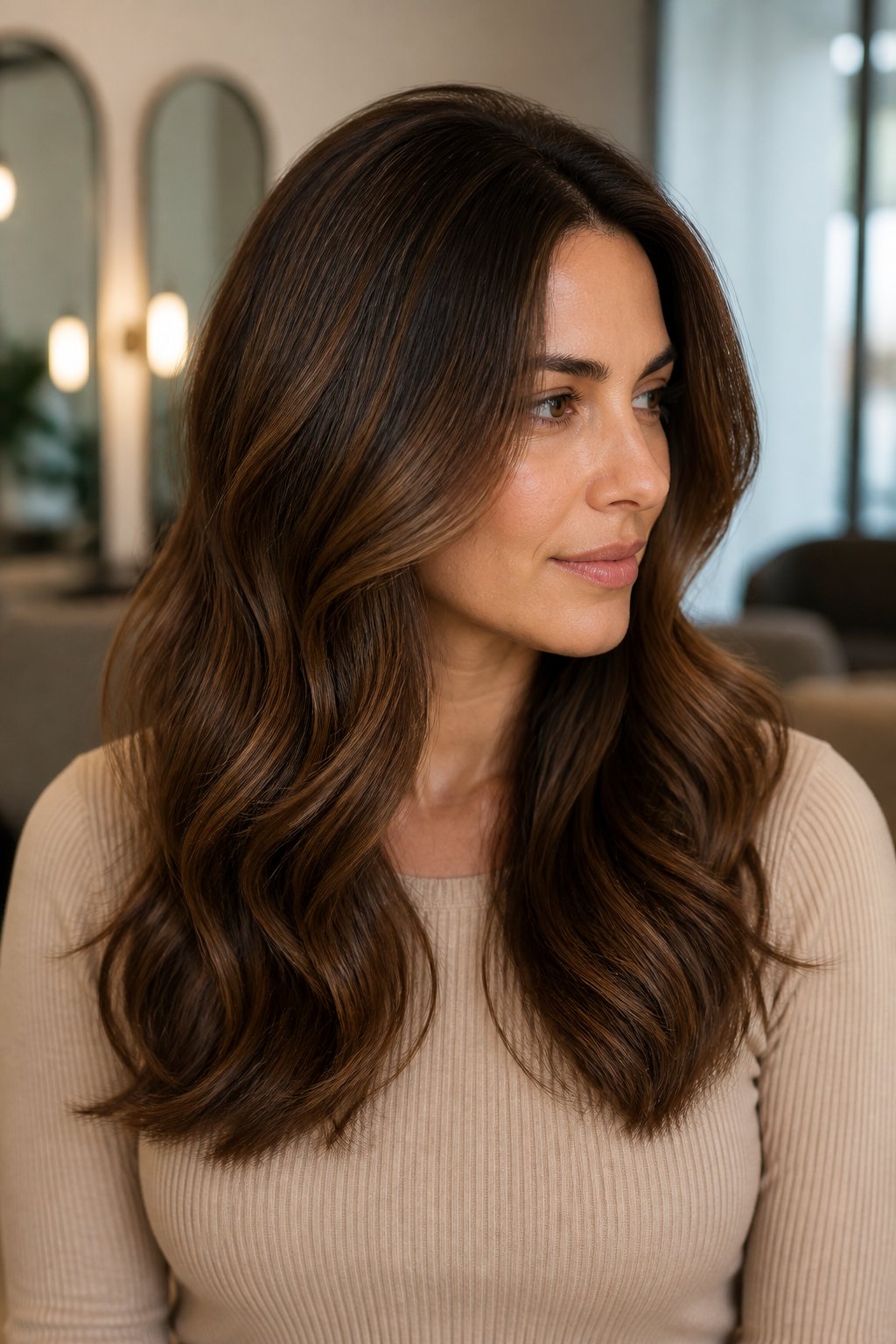
A dark brown shadow root keeps the area around your part and hairline deep while mocha lengths add controlled warmth. The contrast should remain low, with the root only one or two levels darker than the mid-lengths.
This blend suits you if you want visible color change without frequent root appointments. Mocha tones can include neutral brown, soft cocoa, or a muted caramel-brown finish. Your stylist should choose the undertone based on your complexion and existing hair color.
Ask for a diffused transition rather than a distinct horizontal line. Since the darker root disguises early regrowth, you can usually maintain the look with occasional glossing and regular conditioning for the lighter lengths.
Soft Ombre From Espresso To Milk Chocolate
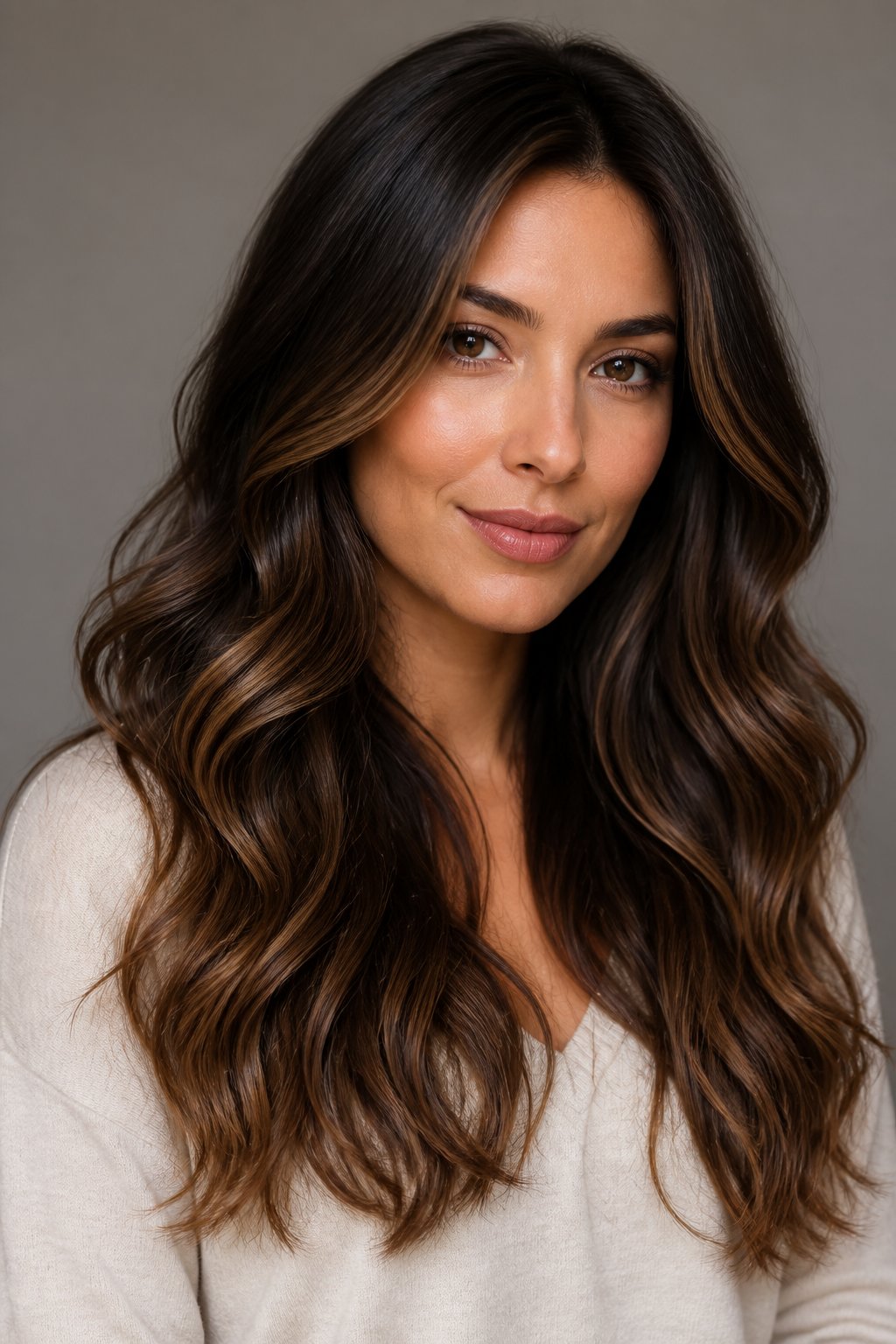
An espresso-to-milk-chocolate ombre creates a gradual shift from deep brown roots to lighter brown ends. Keep the transition blended through the mid-lengths so the color does not appear divided into two blocks.
This option works best when the ends are lightened only enough to show contrast. Your stylist can add a few fine pieces around the face, but excessive lightening may increase dryness and make the color harder to maintain.
Use a weekly moisturizing mask and apply heat protection before blow-drying or styling. A tinted brown conditioner can help prevent the lighter ends from becoming dull or overly warm between salon visits.
Lived-In Brunette With Melted Ends
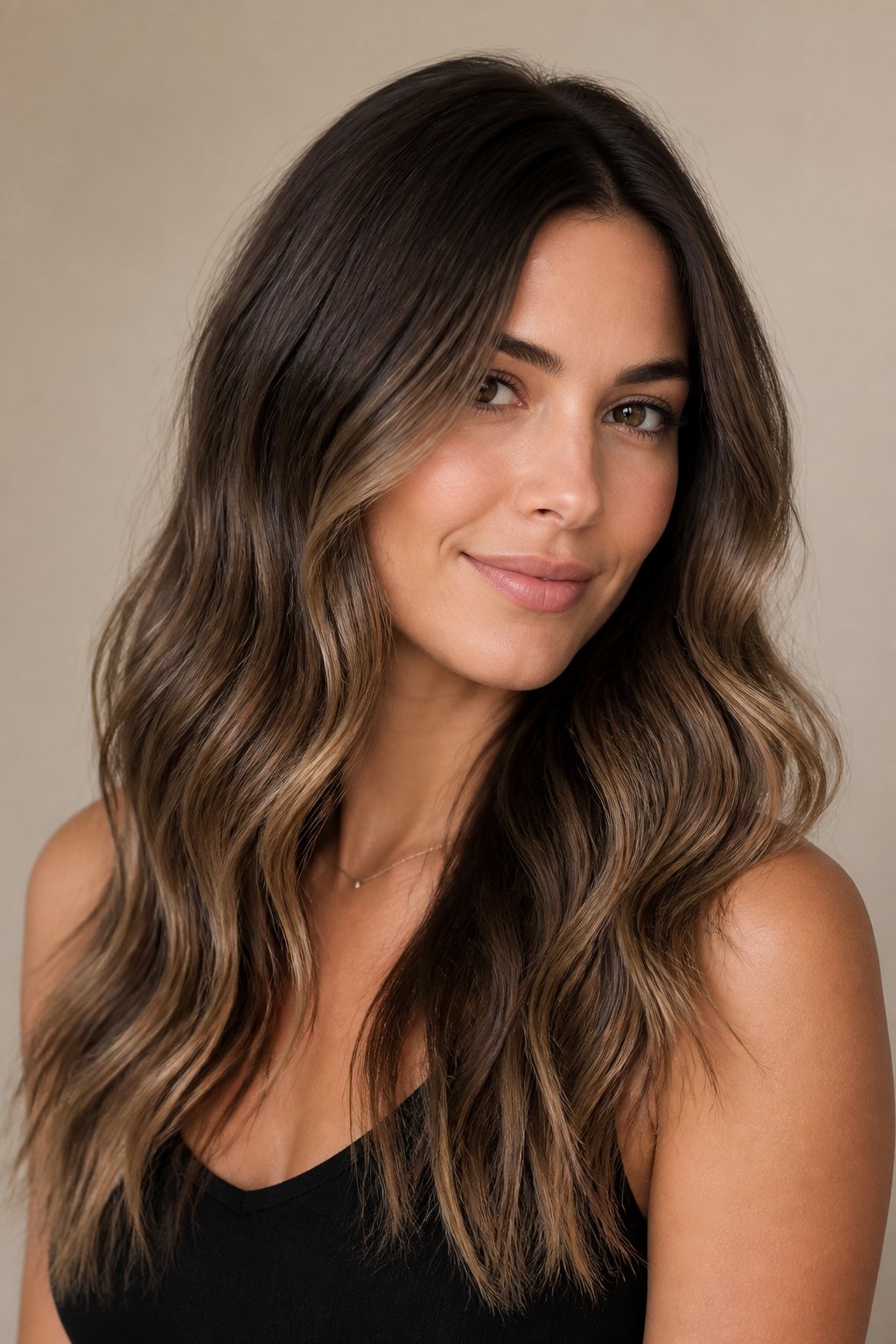
A lived-in brunette combines a deep brown foundation with delicate lighter pieces that melt toward the ends. The brightness should concentrate below the cheekbones and through the lower lengths, leaving the top comparatively natural.
This placement gives you movement without requiring frequent foil appointments. You can choose neutral mocha, soft chestnut, or subtle caramel tones, depending on how much warmth you want. For a restrained fall finish, ask for low-contrast pieces no more than two or three levels lighter than your base.
Request a toner that keeps the ends balanced and avoids strong orange or yellow tones. Trim dry ends regularly, because uneven texture can make blended color look less polished.
Glossy One-Tone Dark Chocolate Brown
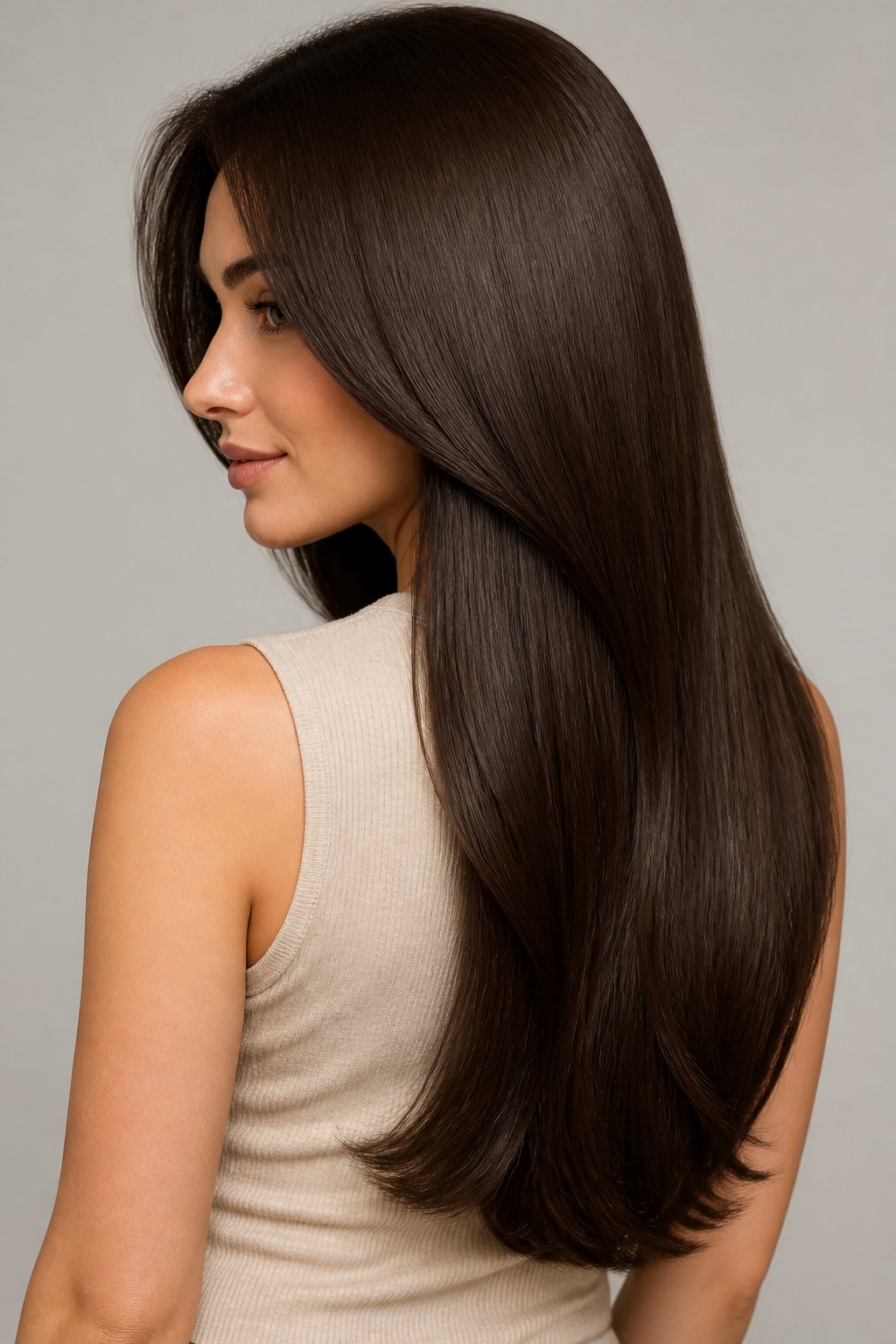
A one-tone dark chocolate brown shade offers the simplest upkeep when you prefer a uniform, polished finish. The color can lean neutral, cool cocoa, or warm chocolate, but your stylist should keep the formula consistent from roots through ends.
This choice suits naturally dark hair because it enhances depth without requiring extensive lightening. If your ends feel porous, they may absorb color more deeply than the roots, so your stylist may use a lighter formula or apply it for less time on those areas.
Refresh the shade with a demi-permanent gloss every 6–10 weeks. Limit clarifying shampoo to occasional use, and apply a lightweight shine serum to keep the surface reflective without weighing down your hair.
Bold Fall-Inspired Variations
Fall-friendly dark chocolate shades gain depth from red, plum, copper, and mahogany pigments. You can choose a subtle tint for a low-maintenance change or a stronger variation that makes the color more noticeable in natural light.
Cherry Cola Chocolate Brown
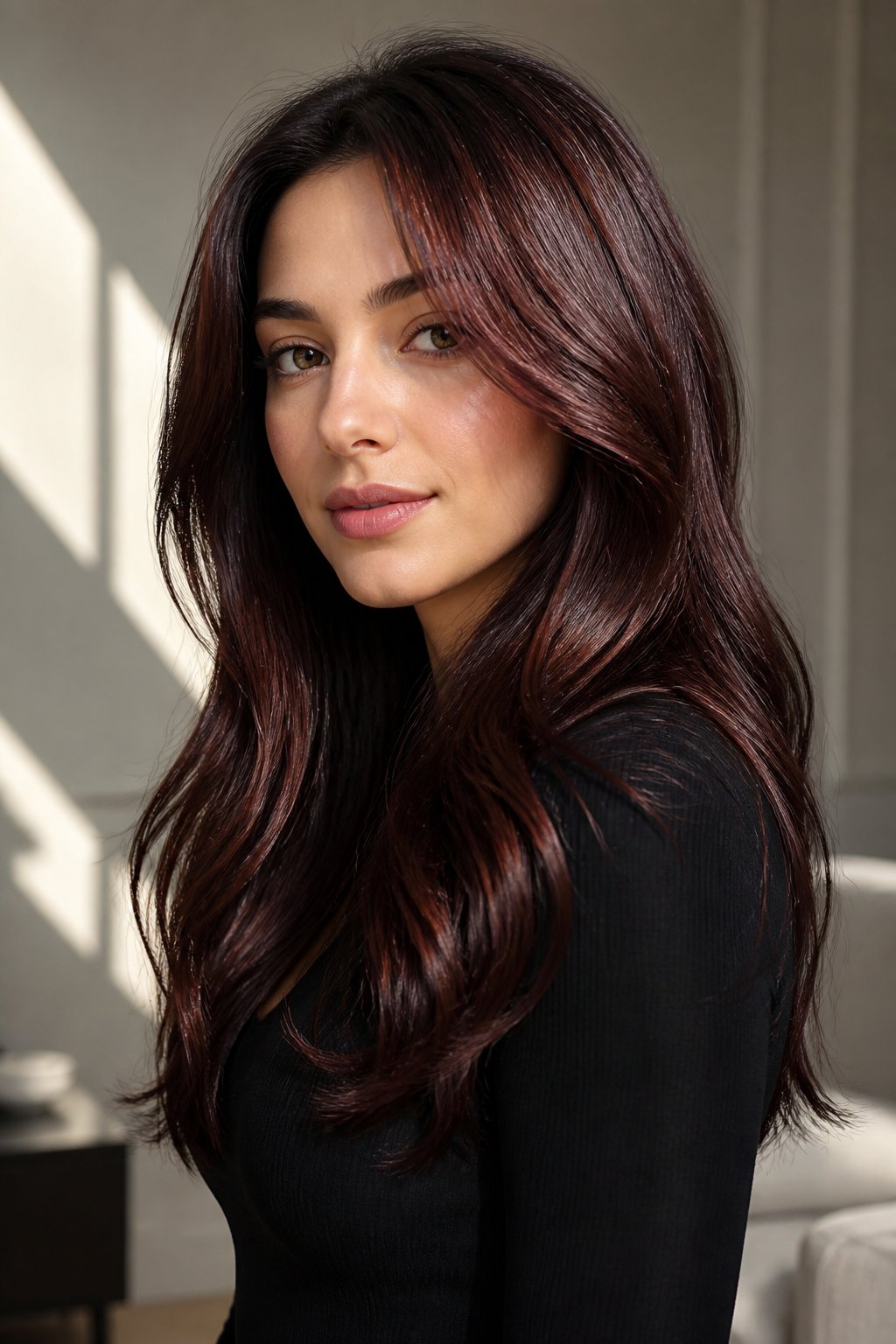
Cherry cola chocolate brown combines a deep cocoa base with muted red and berry undertones. The result looks predominantly brunette indoors, while sunlight reveals a soft cherry tint. This option suits you if you want visible warmth without moving into bright red hair.
Ask your colorist for a dark brown base with translucent red-violet gloss. A demi-permanent formula can refresh existing brunette hair and fade gradually, while pre-lightened pieces may show the cherry tones more clearly. Keep the red balanced; too much vibrant pigment can shift the look toward burgundy.
Use a color-safe shampoo and wash with cool or lukewarm water to help preserve the red tones. A tinted gloss between salon appointments can restore shine and prevent the color from looking flat.
Mahogany Chocolate Brown
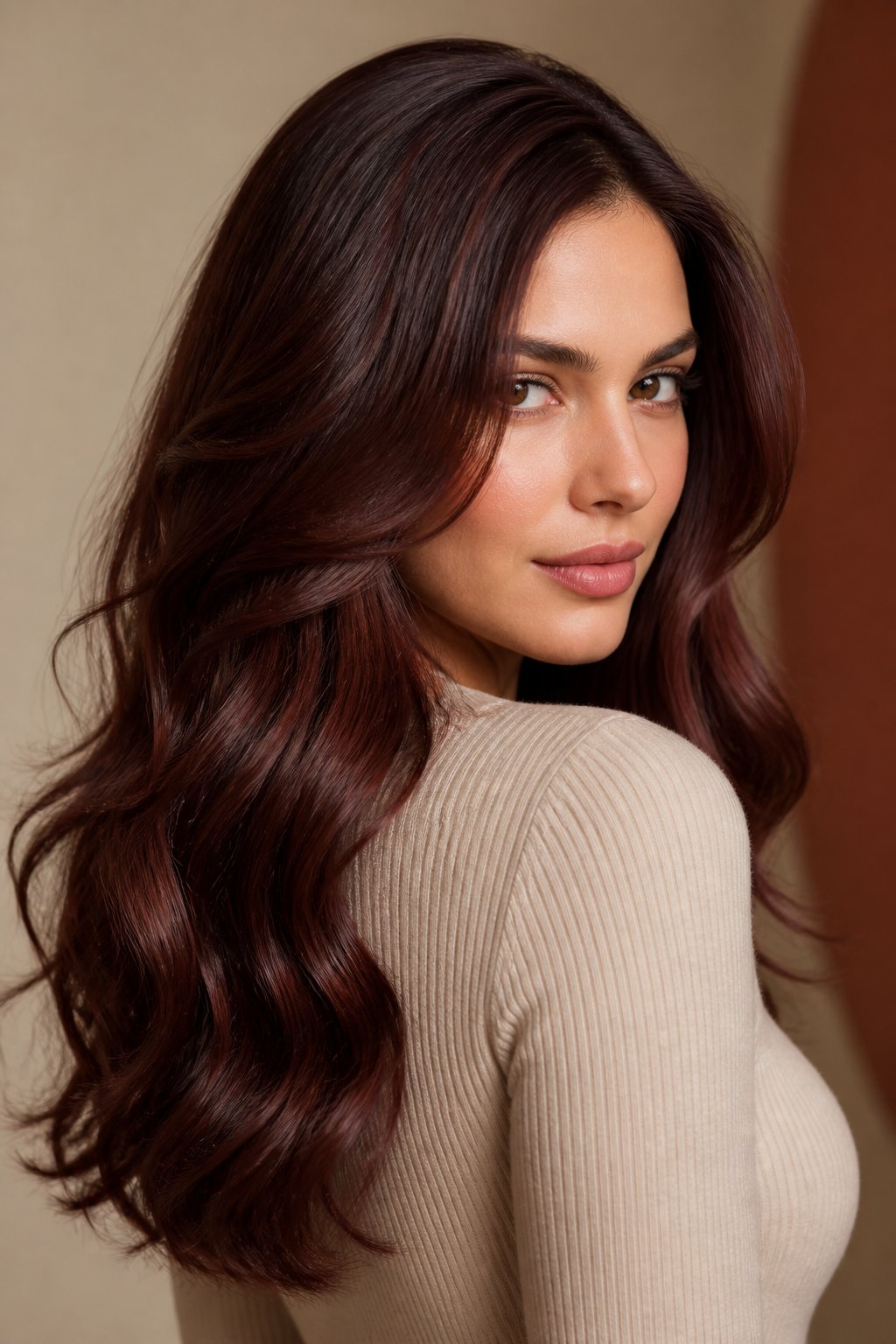
Mahogany chocolate brown blends dark brown with warm red and subtle violet pigments. It creates a polished fall shade that looks richer than standard brunette but remains sophisticated and wearable. The color works especially well on medium-to-dark brown hair because it adds dimension without requiring an extreme lift.
You can keep the mahogany effect understated by concentrating it around the mid-lengths and ends. For a stronger result, apply the tone evenly from roots to tips, especially if your hair has been previously lightened. Tell your colorist whether you prefer warm mahogany or a cooler red-brown finish.
This shade benefits from regular glossing because red pigments can fade unevenly. Use a moisturizing mask weekly, particularly if your hair required lightening, and protect it from heated tools with a thermal protectant.
Plum-Tinted Dark Cocoa
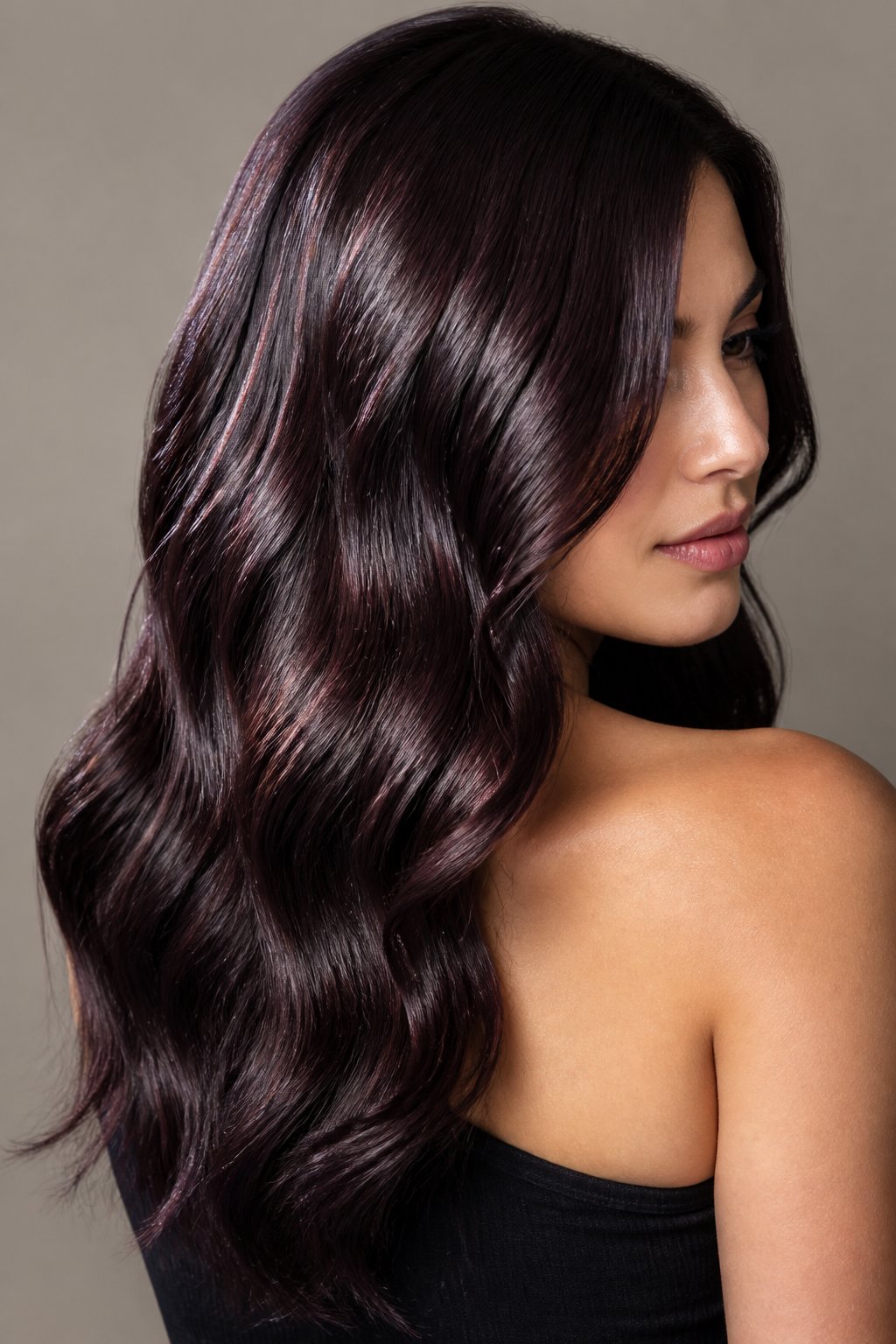
Plum-tinted dark cocoa adds a restrained purple cast to a near-black chocolate brown. The cool berry undertone becomes most visible in direct light, giving your hair dimension without creating a bright fashion color. It can also help balance excessive orange or yellow warmth in previously colored brunette hair.
Request a dark cocoa base with a soft plum toner rather than a highly saturated purple. Your colorist may need to lighten selected sections first if you want the plum to show clearly. On naturally very dark hair, the effect may appear mainly as a reflective violet sheen.
Choose this variation if you prefer cooler fall color. Purple-toning products can help maintain the shade, but avoid overusing them because they may make the hair look dull or overly ashy.
Copper-Infused Chocolate Brown
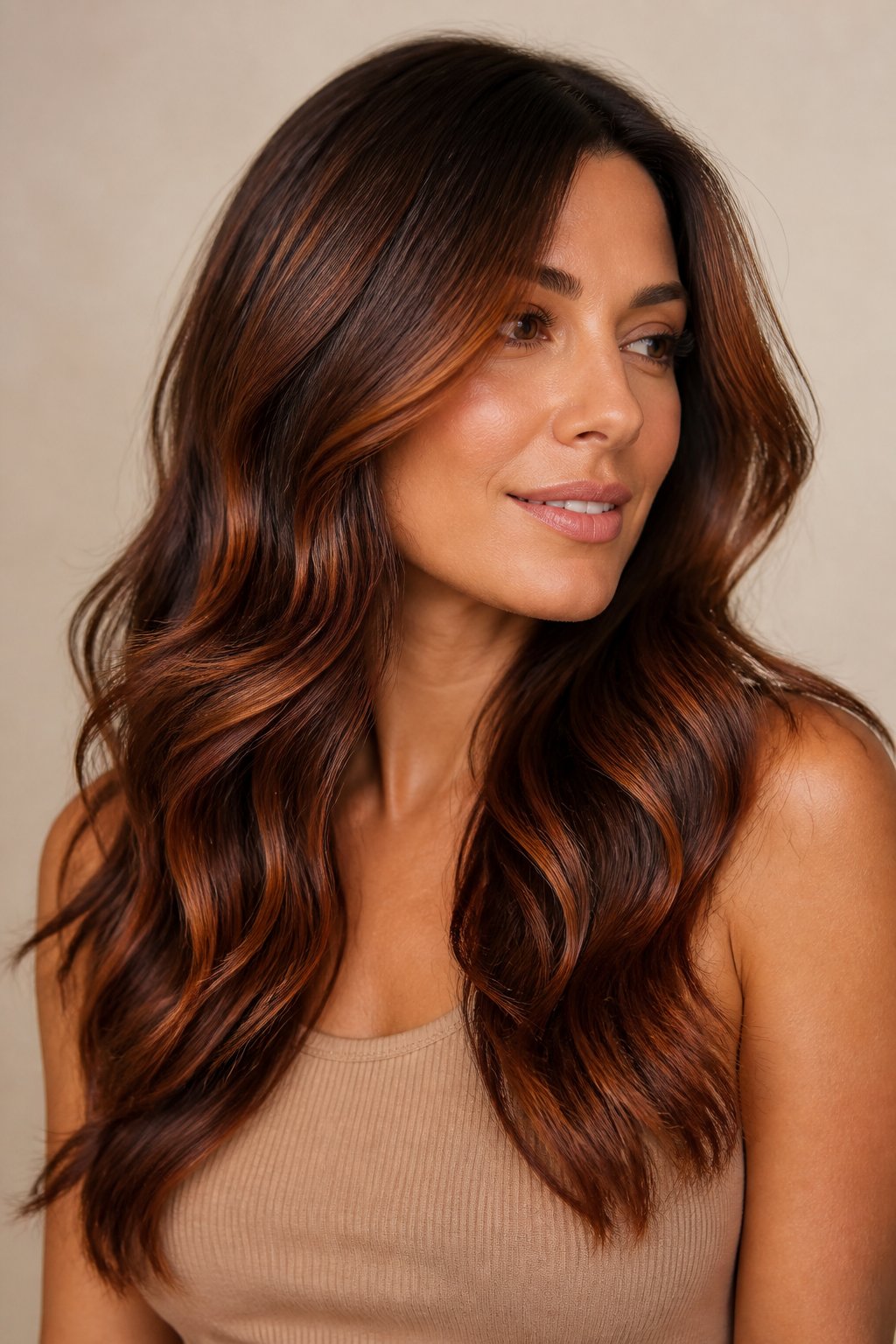
Copper-infused chocolate brown pairs a deep brunette foundation with warm copper ribbons. The copper can appear as fine highlights, balayage pieces, or a subtle all-over glaze. This approach gives you fall warmth while keeping the overall color dark and grounded.
For a natural result, place copper through the face-framing sections and the outer layers of your haircut. A darker root keeps regrowth less noticeable, while lighter copper ends add movement to waves and layered styles. If your hair is very dark, your colorist may need to lift selected strands before applying the copper tone.
Copper fades faster than the brown base, so wash less frequently when possible and use products designed for color-treated hair. A copper gloss can revive faded brightness without requiring a full color service.
Burgundy Brown With Cocoa Depth
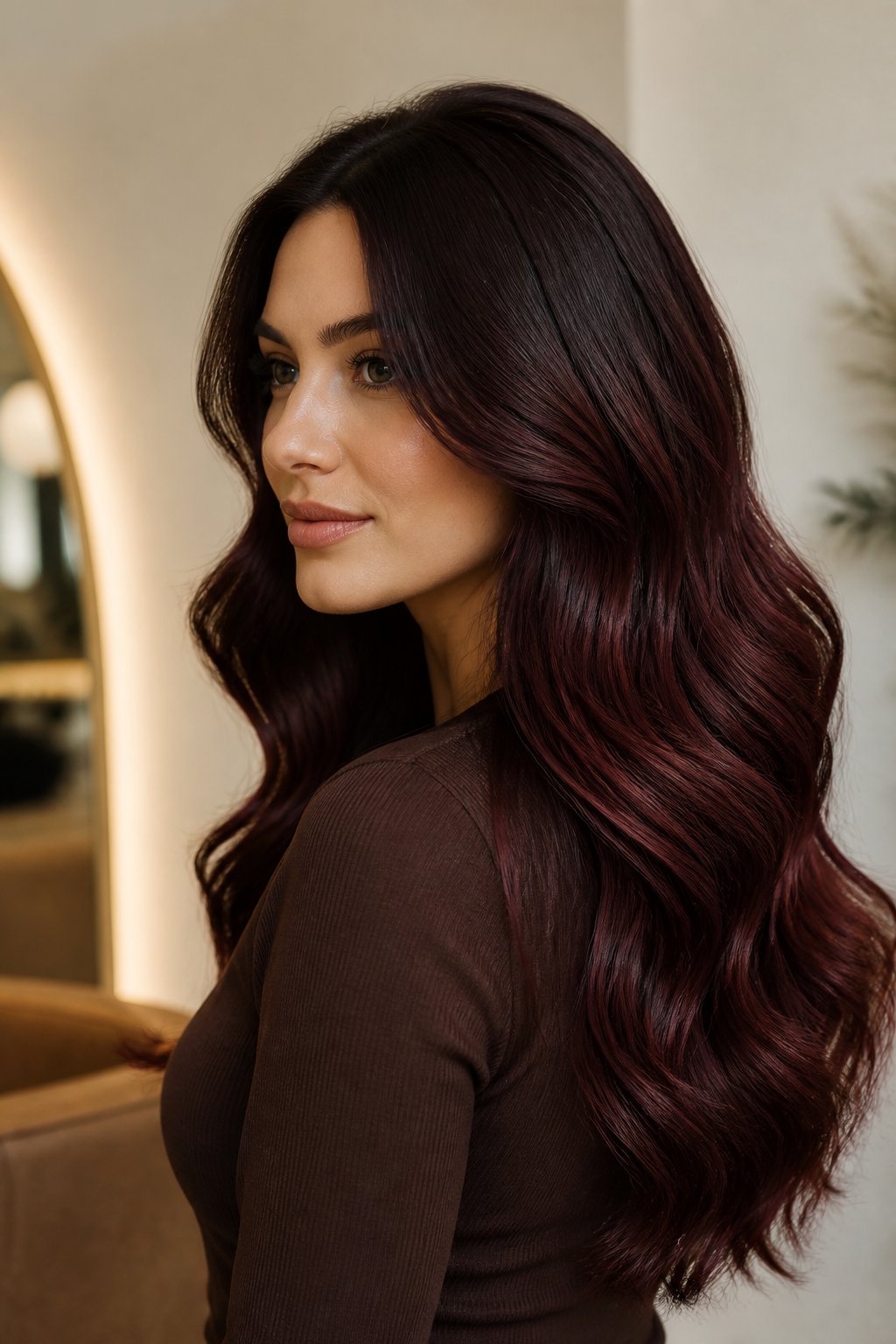
Burgundy brown with cocoa depth combines red-violet color with a dark chocolate foundation. It offers a more noticeable statement than cherry cola while remaining darker and more muted than vivid burgundy. The final result can look brown indoors and reveal wine-colored dimension under bright light.
Ask for cocoa roots and deeper burgundy through the lengths if you want contrast with softer regrowth. An all-over burgundy-brown formula creates a more uniform finish, but it may require more frequent refreshing as the red-violet pigments fade.
This shade looks especially defined on glossy, smooth hair, so include conditioning treatments in your routine. Use a gentle cleanser, limit hot-water washing, and schedule a tinted gloss when the burgundy begins to lose intensity.
Cuts And Textures That Showcase Depth
Cut structure, surface texture, and carefully placed highlights determine how dark chocolate brown color reflects light. Choose the shape that suits your hair density, natural pattern, face shape, and preferred maintenance level.
Long Layers With Mocha Dimension
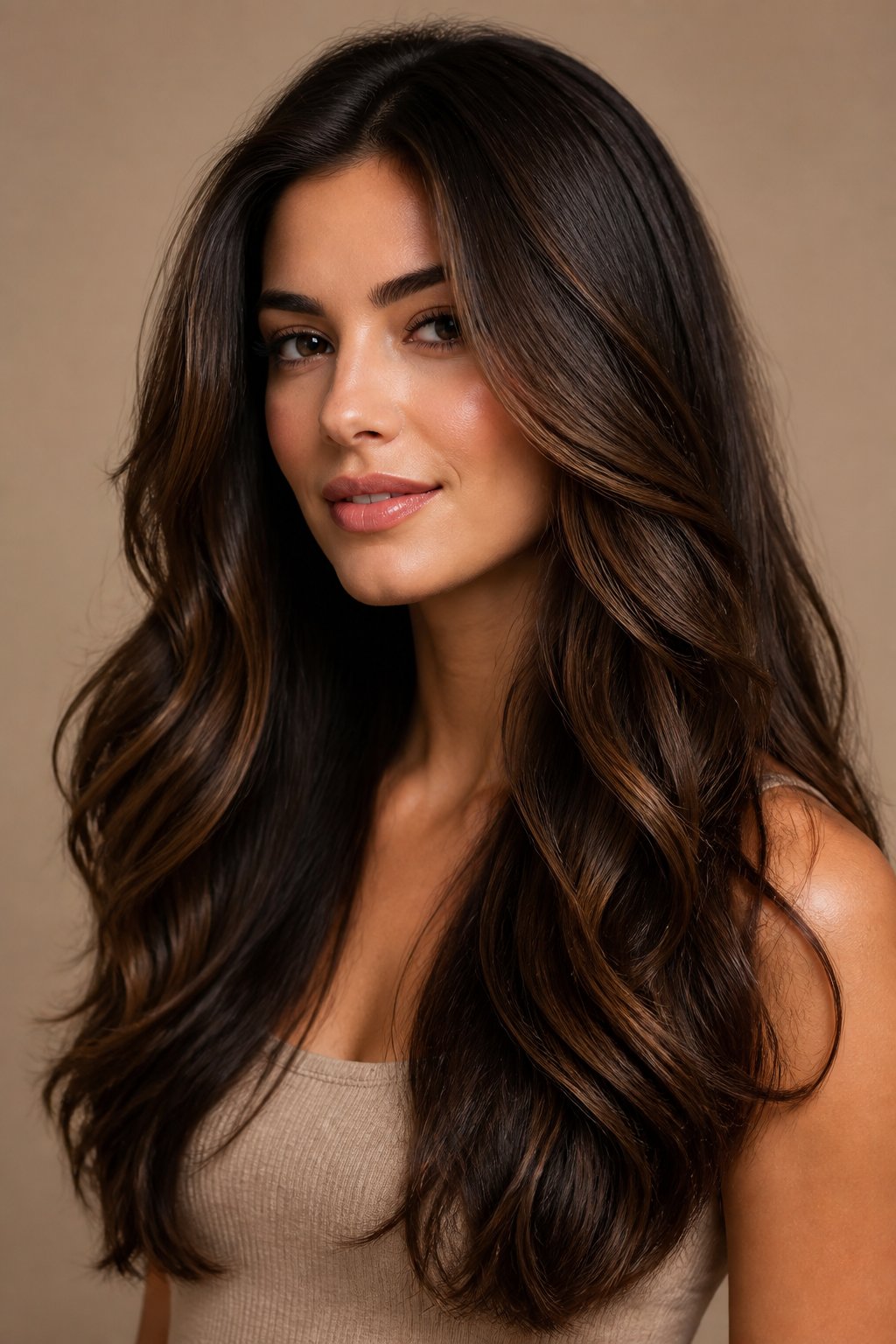
Long layers keep dark chocolate brown hair from looking heavy, especially when you have thick or wavy hair. Ask for blended layers beginning below the cheekbones or chin, depending on how much movement you want around your face.
A deep chocolate base paired with subtle mocha ribbons creates dimension without making the color look striped. Place the lighter pieces through the mid-lengths and ends, with a few finer sections near the crown. This placement helps the layers catch light as they move.
Use a smoothing cream for straighter hair or a curl-enhancing product for waves. Trim the ends every eight to 12 weeks to preserve the shape and prevent the lighter sections from looking dry.
Blunt Bob In Reflective Chocolate Brown
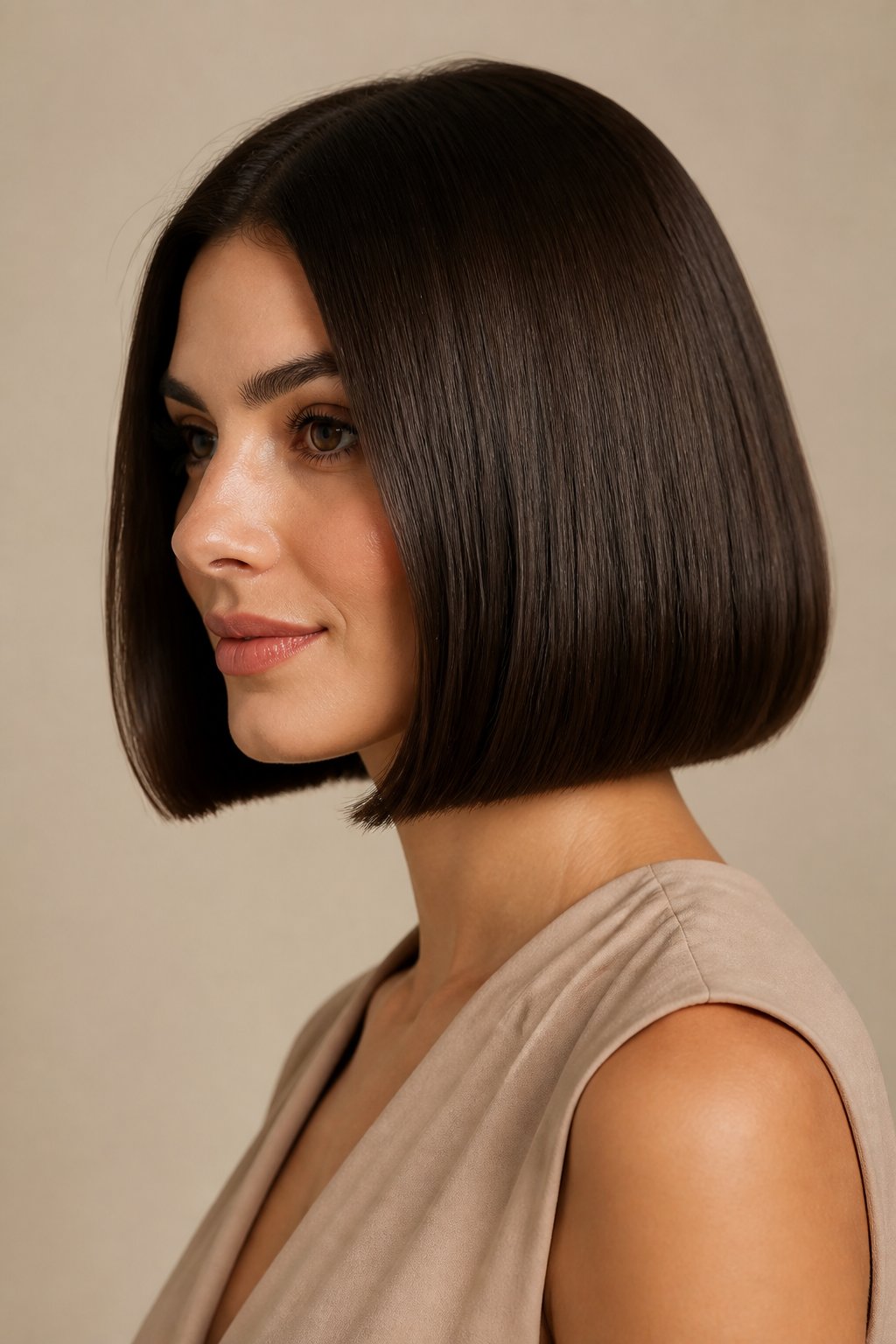
A blunt bob gives dark chocolate brown color a precise, polished finish. Keep the perimeter mostly one length, landing at the jaw, chin, or just above the shoulders. Your stylist can make small internal adjustments if you need movement without weakening the strong outline.
A single chocolate shade works particularly well on straight or softly wavy hair because the clean surface reflects light evenly. Ask for a gloss in a neutral or slightly warm brown tone to enhance shine without creating an obvious color shift.
If your hair tends to puff or frizz, use a heat protectant and a smoothing brush while blow-drying. A blunt bob requires regular shaping; schedule trims about every six to eight weeks to maintain its crisp edge.
Textured Lob With Caramel Accents
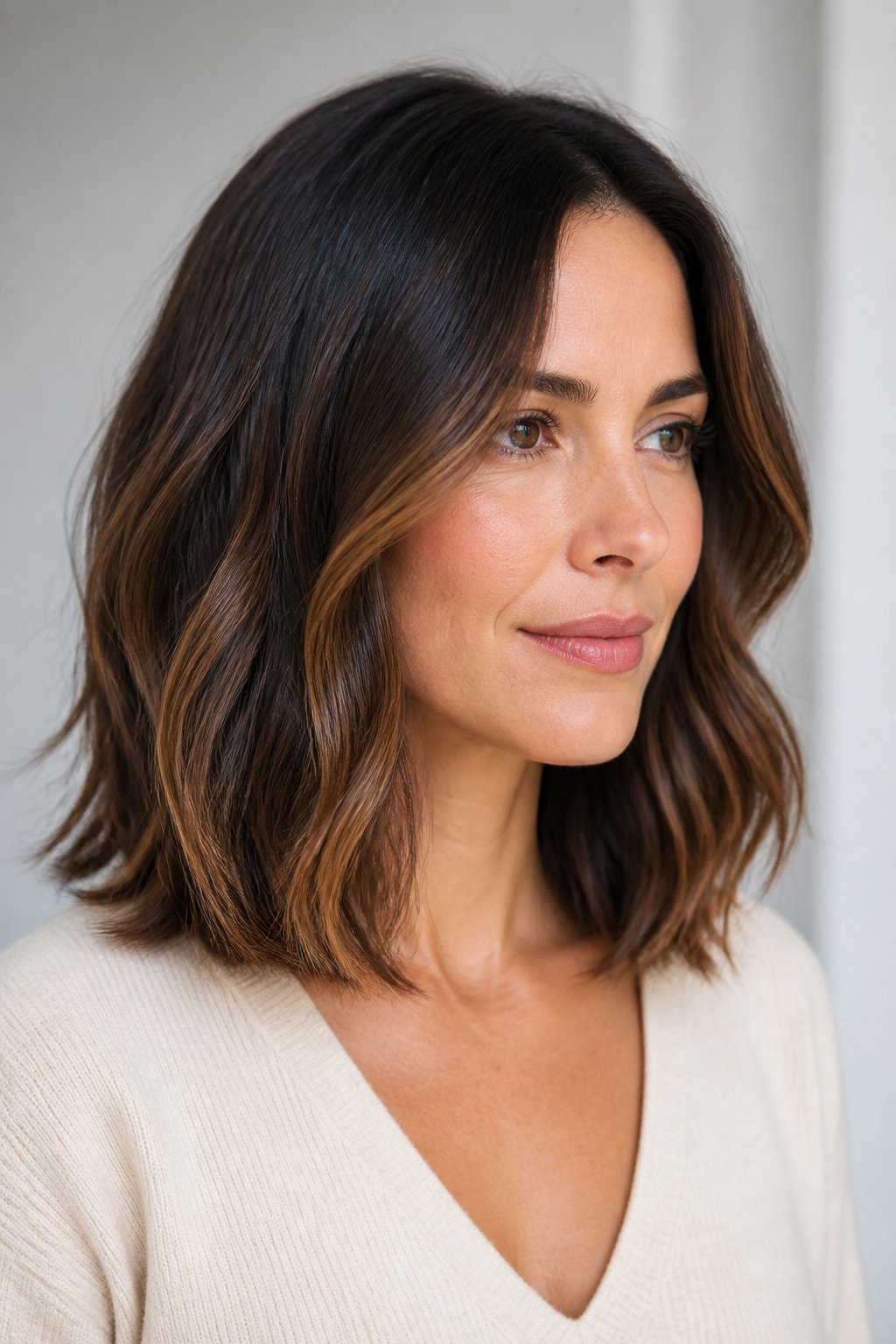
A textured lob offers more flexibility than a short bob while retaining a defined shape. Request collarbone-length layers with softened ends, particularly if your hair is fine to medium in density. Light texturizing can add movement, but excessive thinning may make the ends appear sparse.
Keep the main color a deep chocolate brown and add restrained caramel accents around the face and through the lower layers. A few low-contrast pieces create visible separation without changing the brunette character of the style.
This cut suits straight, wavy, and lightly curly textures. Use a lightweight mousse for volume, then finish with a small amount of serum on the ends. Refresh the caramel pieces and gloss every 10 to 14 weeks, depending on how quickly your hair grows.
Curly Chocolate Brown With Painted Highlights
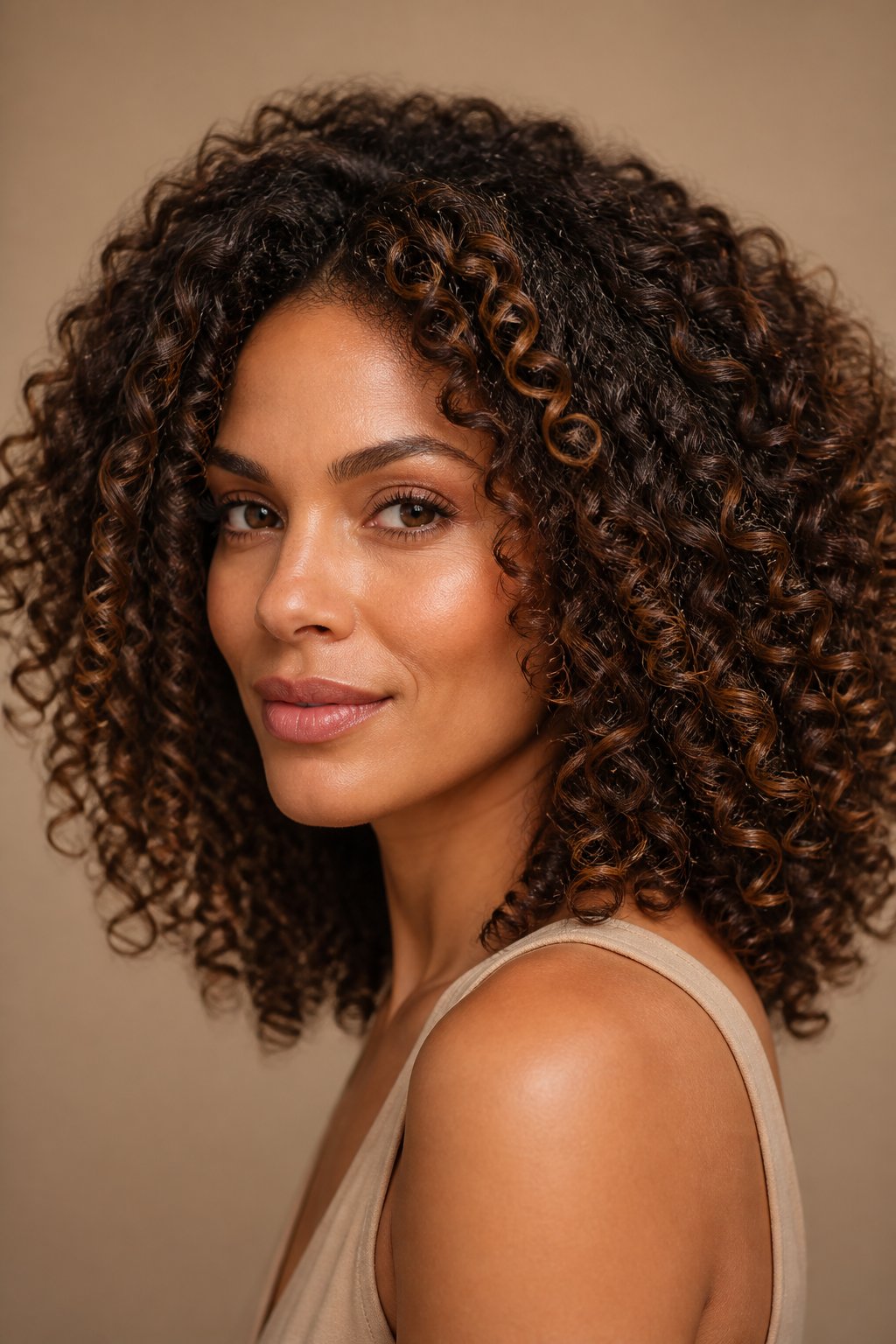
Curly hair shows color across changing curves, so painted highlights can add depth without creating rigid lines. Maintain a rich chocolate brown base, then place warm cocoa or subtle caramel accents on selected curls around the crown, temples, and ends.
Ask your stylist to assess your curl pattern in its natural state before deciding on placement. Highlights should follow the shape of individual curls rather than form uniform bands. This approach preserves dimension when your hair contracts and expands.
Use a sulfate-free cleanser, a moisturizing conditioner, and a leave-in product suited to your porosity. Apply color-safe curl cream while your hair remains wet, then air-dry or use a diffuser on low heat. Refresh the gloss when the brown begins to look dull.
Curtain Bangs With a Toffee Face Frame
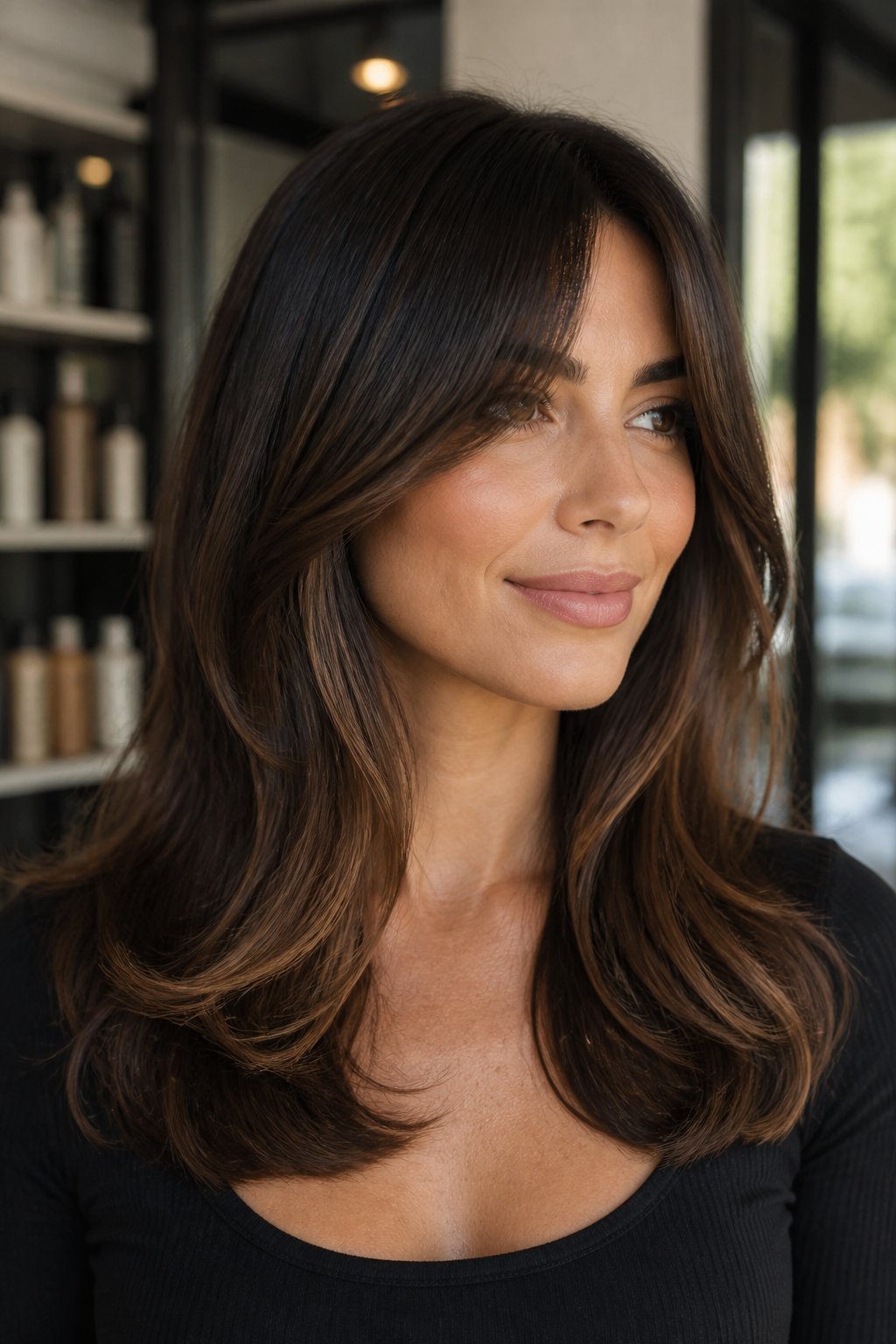
Curtain bangs add movement around your eyes and cheekbones while a toffee face frame brightens a dark chocolate base. Ask for the shortest point to sit near the bridge of your nose or cheekbone, with longer pieces blending into the rest of your haircut.
Keep the face-framing color narrow and softly graduated. Toffee tones work best when they remain close enough to the brown base to look integrated rather than sharply contrasted. Your stylist can use a demi-permanent gloss to soften the result and improve tonal balance.
Style the bangs with a round brush, directing each side away from your face. If your hair is wavy, shape the fringe with a diffuser and flexible-hold cream instead of forcing it straight. Trim the bangs every four to six weeks to keep the opening and length controlled.
Maintaining Dark Chocolate Brown Hair
Keep dark chocolate brown hair rich and glossy by using a sulfate-free, color-safe shampoo, lukewarm water, and heat protection before styling. A weekly conditioning mask can also help prevent dryness and fading.
Refresh your brunette shade with a gloss every 4–8 weeks, depending on how quickly the color loses shine. Regular trims and gentle styling will help keep your chocolate brown hair looking healthy and polished.
Frequently Asked Questions
1. What highlights look best with dark chocolate brown hair for fall?
Caramel, chestnut, muted copper, mocha, and cocoa highlights pair beautifully with dark chocolate brown hair. Fine balayage pieces and soft face-framing ribbons create dimension without making the color look too light.
2. How can I add dimension to dark chocolate brown hair without going too light?
Try chocolate lowlights, espresso gloss, subtle mocha balayage, or a few strategically placed highlights around the face and mid-lengths. Keeping the lighter tones only one or two levels above the base helps maintain a rich brunette look.
3. Does dark chocolate brown hair look good on straight hair?
Yes. Straight hair reflects light clearly, which can make dark chocolate brown look especially glossy and polished. Blunt cuts, long layers, and subtle face-framing pieces can help show off the color’s depth.
4. Can dark chocolate brown hair work on naturally black hair?
Yes. A dark chocolate gloss or demi-permanent color can add warm brown reflections to naturally black hair. For a more noticeable brown result, some lightening may be needed before applying the chocolate shade.
5. How can blondes transition to dark chocolate brown hair for fall?
Blonde hair may need warm pigments added before the final brown shade is applied. This helps prevent the finished color from looking dull, green, or hollow and creates a richer chocolate brunette result.
6. How do I maintain dark chocolate brown hair color?
Use lukewarm water, sulfate-free color-safe shampoo, heat protection, and a weekly conditioning mask. A gloss every four to eight weeks can help restore shine and keep the brunette tone looking fresh.


1 Comment
Pingback: 25 Chocolate Brown Hair Color Ideas for 2026 Trends