
Fine hair can hold plenty of style, but the wrong shape flattens it fast. A well-placed haircut changes how light bounces off your ends, how the crown sits, and how much weight your strands have to carry. That’s the whole game with fine hair: work with what it does naturally instead of fighting it.
A blunt-cut bob, lob, or shoulder-length cut with minimal layering makes fine hair look fuller because it keeps the ends thick and stops the hair from thinning out visually toward the bottom. Shorter and mid-length shapes also ask less of your strands, so they hold body longer between washes.
This list walks through 25 specific cuts, from cropped pixies to long one-length styles, with the shaping details that make each one work and the trade-offs worth knowing before you sit in the chair.
Key Takeaways
- Blunt perimeters and shorter-to-medium lengths generally hold more visual fullness than heavy layering or extra-long hair.
- Fine hair (thin strands) and thin hair (fewer strands) aren’t the same thing, and the best cut depends on which one you have.
- Small style requests, like a tapered nape or minimal internal layers, can matter as much as the overall haircut shape.
What Makes a Haircut Look Fuller on Fine Hair?
A haircut looks fuller when it keeps as much weight as possible at the ends and builds shape at the crown, instead of thinning hair out through the middle. The cuts that work best avoid heavy layering, use blunt lines, and pay attention to where your natural density already sits.
Why Do Blunt Ends Create the Look of Thickness?
Blunt ends stack hair on top of itself in one solid line, which reads as denser than ends that fade out into wispy layers. When a stylist cuts straight across instead of point-cutting or thinning, every strand ends at roughly the same length. That solid line tricks the eye into seeing a thicker curtain of hair, even though the strand count hasn’t changed.
When Do Layers Add Volume, and When Do They Remove It?
Short, strategic layers around the crown and face can lift hair and add movement, but long, heavy layers throughout the length often strip away the thickness fine hair needs at the ends. A few internal layers near the top of the head give roots something to push against, which creates lift. Layers that run the full length of the hair, especially face-framing pieces that go past the chin, thin out the ends and can make sparse spots more obvious.
What Is the Difference Between Fine Hair and Thin Hair?
Fine hair describes the width of each individual strand, while thin hair describes how many strands you have per square inch of scalp. Someone can have fine strands but a high density of them, or thicker strands with fewer of them overall. A cut that works for fine-but-dense hair, like soft layering, might not suit thin-and-sparse hair, which usually does better with a solid, blunt shape and shorter length.
Short Pixies and Crops
Short cuts remove length that would otherwise drag fine hair flat, letting the remaining hair stand up and hold shape with less effort. Cropped styles work especially well for thin density, since there’s less hair to support and more scalp coverage relative to length.
1. Textured Pixie
A textured pixie uses point-cutting at the ends to create soft, piecey texture without stripping bulk from the crown. The shorter length means gravity has less pull, so hair sits up rather than falling flat. Skip heavy thinning shears throughout, since they can leave fine hair looking sparse instead of textured.
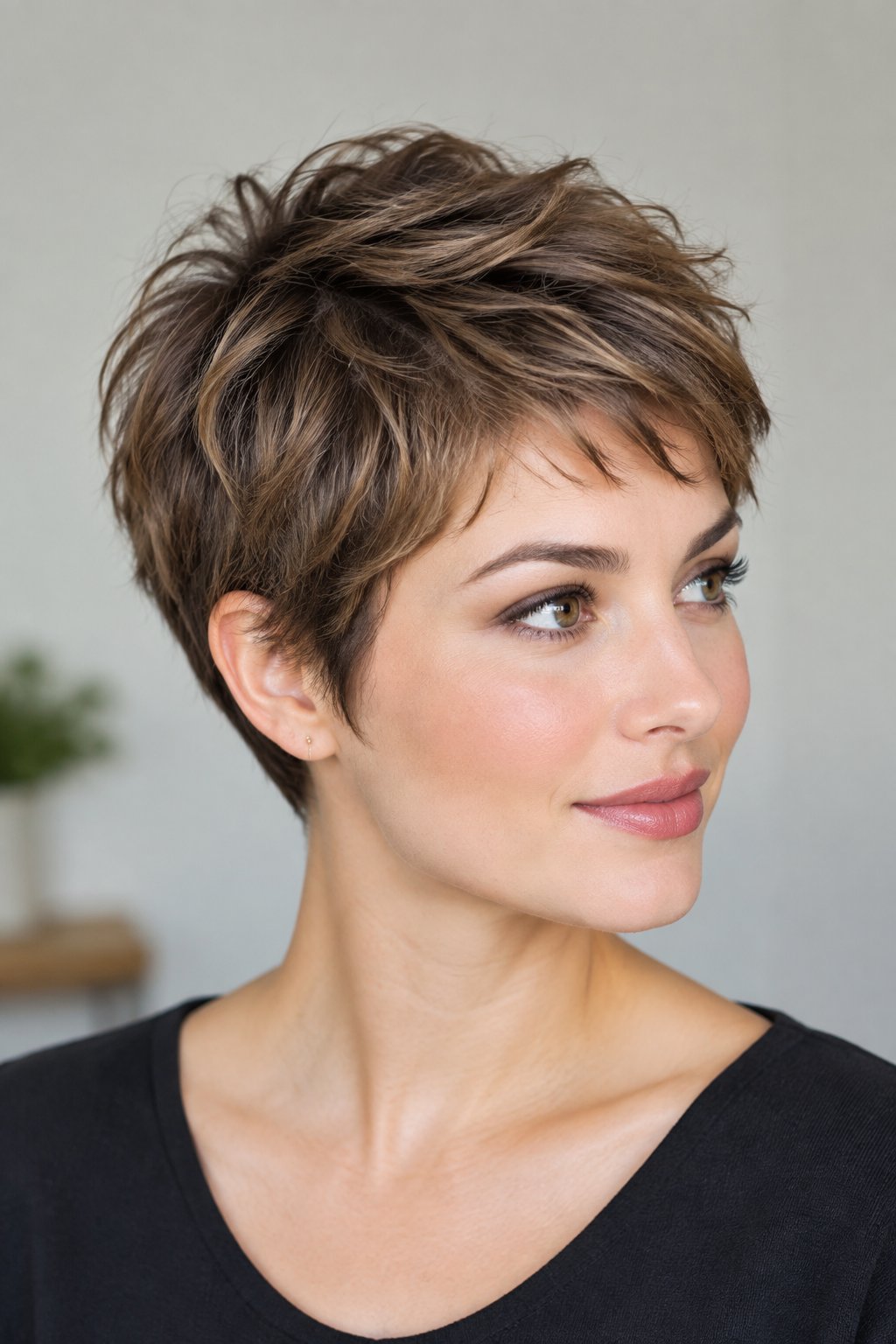
2. Long Pixie with a Side-Swept Fringe
This version keeps more length on top than a classic pixie, giving you room to sweep a fringe to the side and cover a thin hairline. The longer top layers can be pinned back or worn loose for a different look each day. Ask your stylist to keep the sides tapered close so the top reads full by comparison.
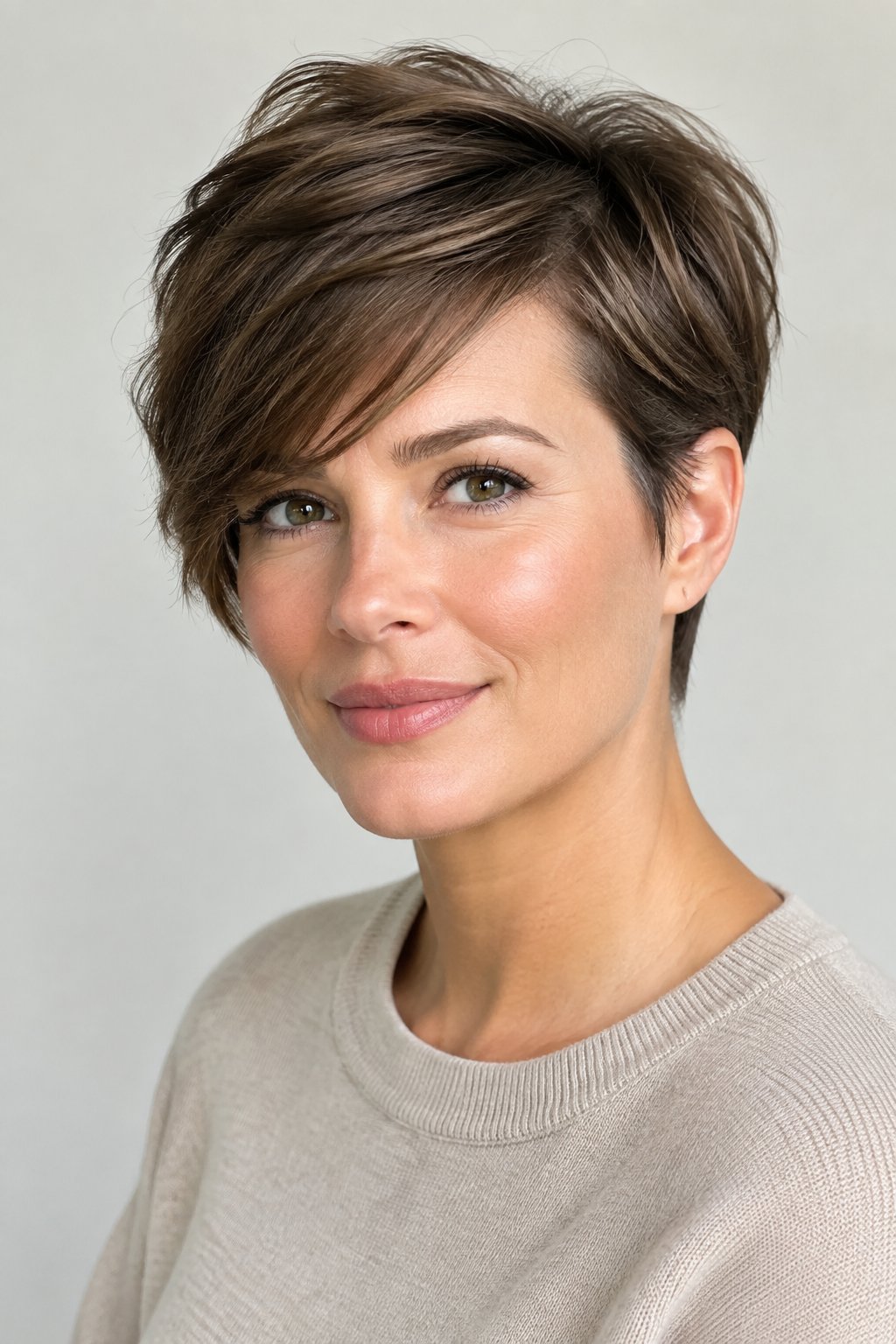
3. Bixie with Soft Crown Layers
A bixie sits between a bob and a pixie, usually grazing the jaw or just below it, with soft layers concentrated at the crown. Those crown layers lift the roots, while the rest of the cut stays close to one length. It suits wavy texture especially well, since the wave adds natural texture the cut doesn’t have to create alone.
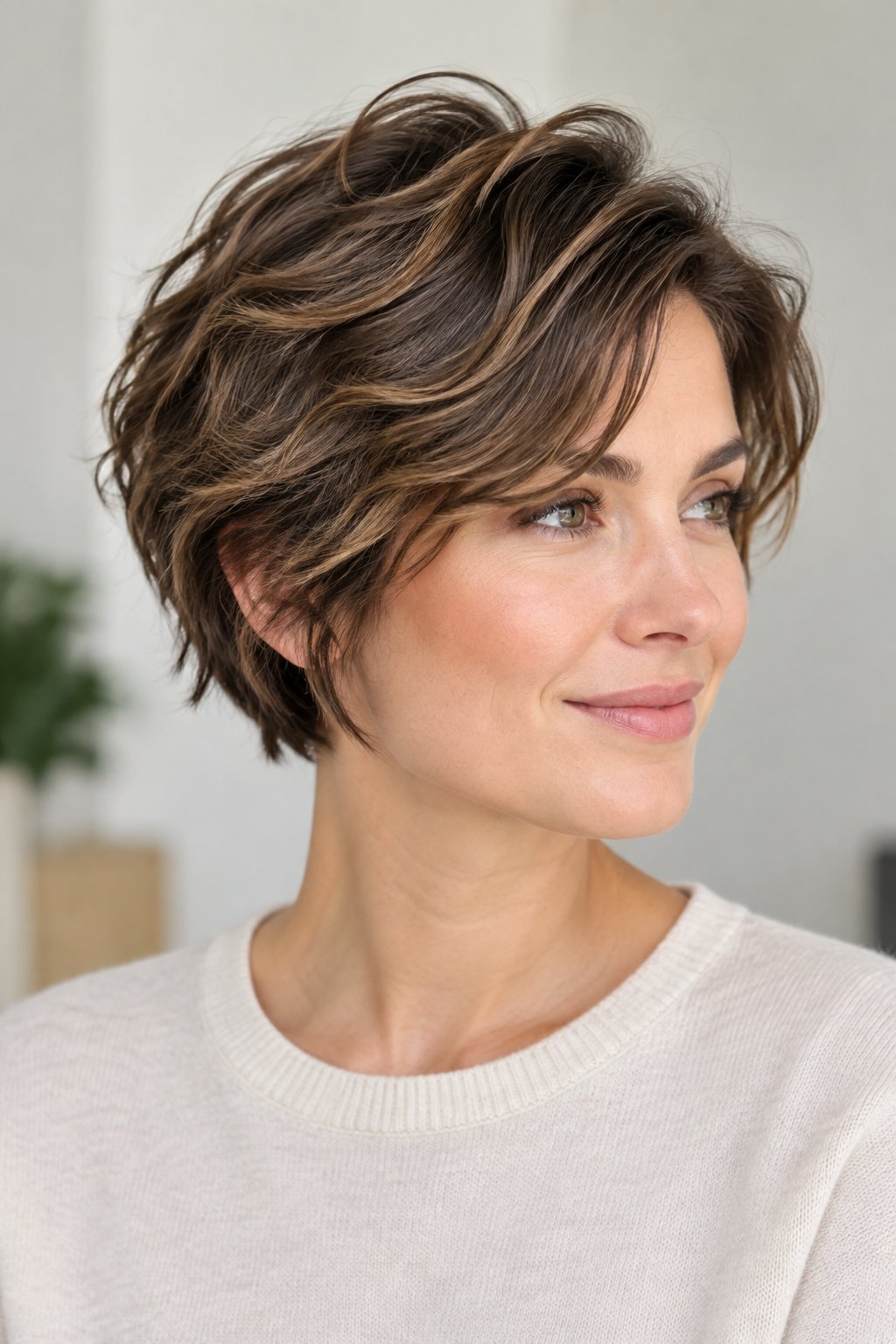
4. Tapered Crop with a Longer Top
Keeping the nape and sides short while leaving extra length on top makes that top section look noticeably denser by comparison. A classic tapered pixie with a clean, solid perimeter and closely tailored sides forces the longer layers to read as thicker. This works well for straight, fine hair because there’s minimal styling needed to keep the shape.
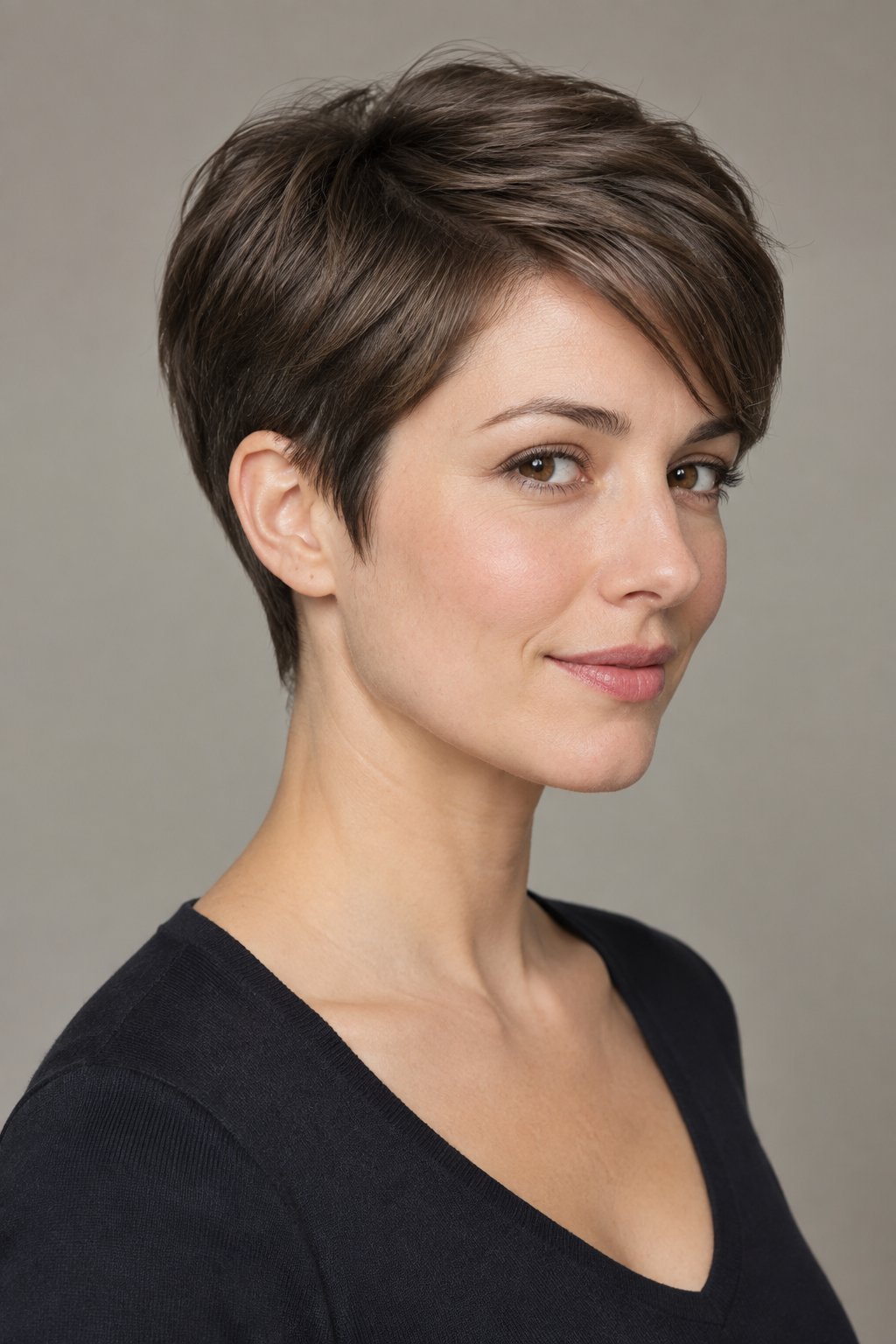
5. Curly Pixie with Shaped Layers
Curly fine hair benefits from a pixie that’s shaped rather than heavily layered, since curls already create their own volume and texture. A stylist should cut curl by curl or use a technique that respects each curl’s shrinkage, so the shape doesn’t end up lopsided once it dries. The caveat here: too much internal layering can break up curl clumps and make the pattern look thin and separated.
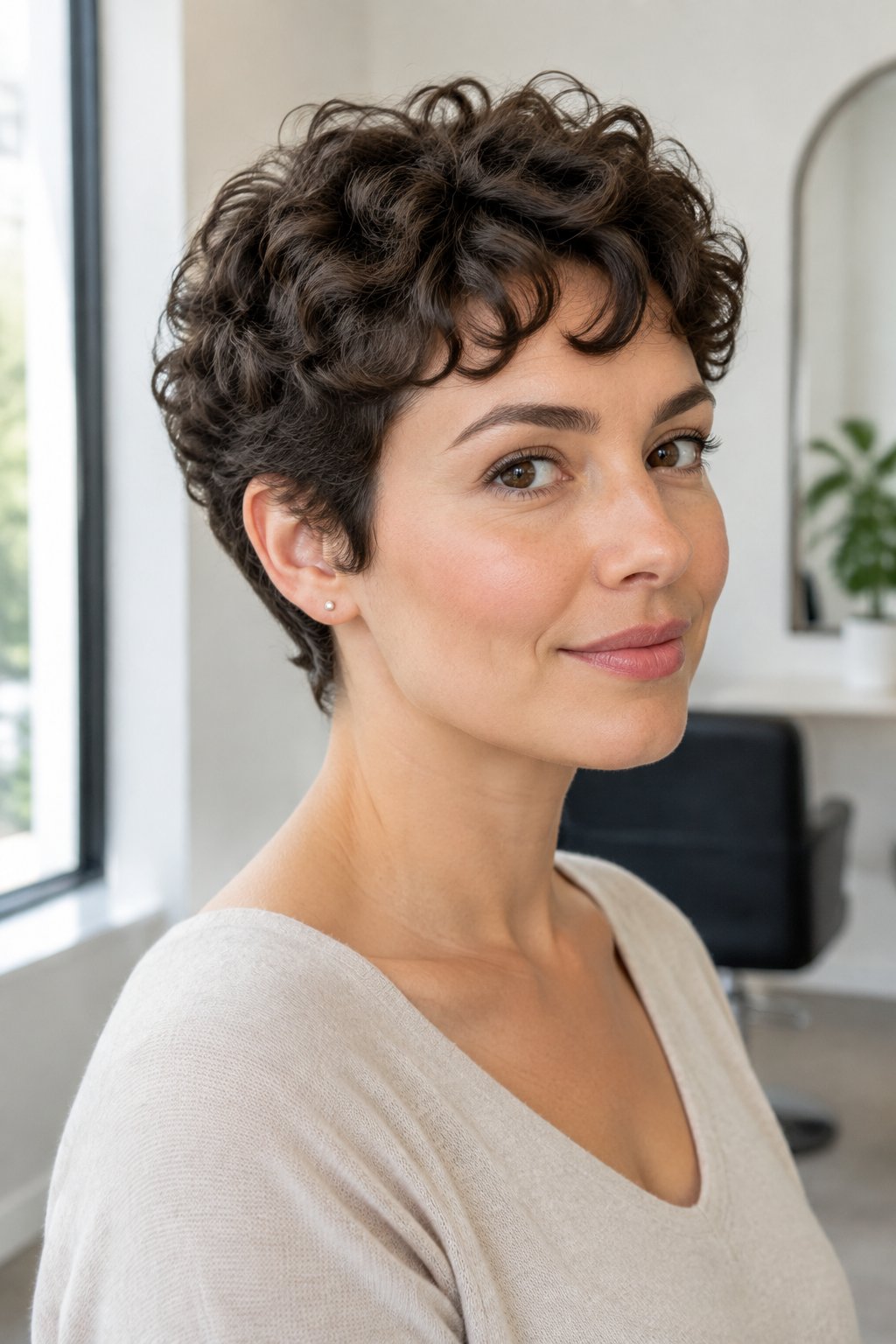
Bobs with Fuller-Looking Ends
Bobs are one of the most reliable lengths for fine hair because the shorter length keeps the ends thick without sacrificing versatility. The cuts below balance a solid perimeter with just enough internal shaping to avoid looking stiff.
6. Classic Chin-Length Blunt Bob
A chin-length blunt bob is cut in one solid line with no layering, which stacks the ends and makes them look considerably thicker. It works on straight hair especially well, since there’s no texture to soften the line. The trade-off is that this cut shows split ends and grow-out quickly, so it needs trims every 6 to 8 weeks to stay sharp.
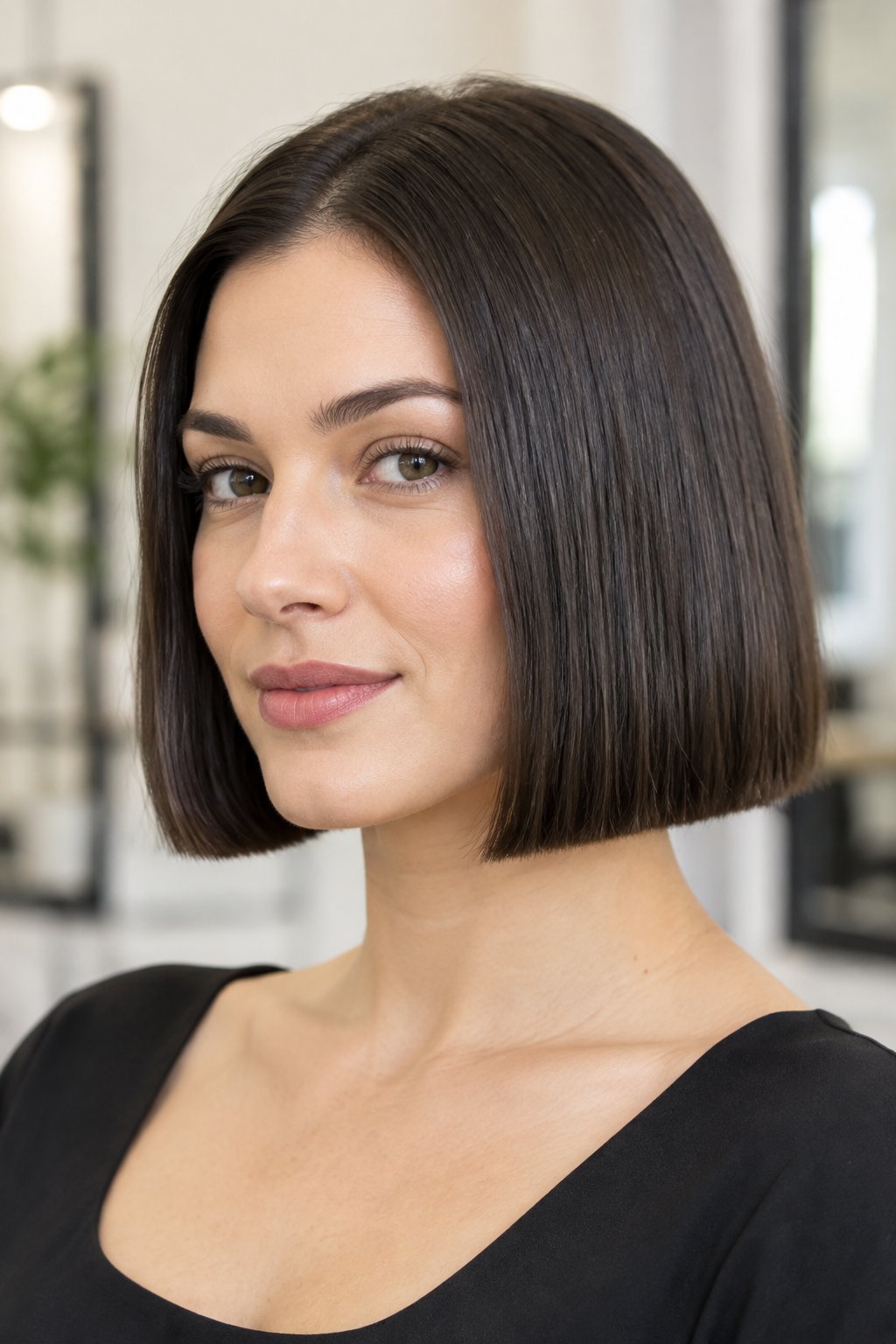
7. French Bob with a Soft Fringe
A French bob sits just above the chin with gentle internal layering that adds structure without thinning the ends too much, paired with a soft, textured fringe. The fringe and internal layering combination helps build shape while keeping length short enough to resist falling flat. Heat protectant matters here, since the shorter fringe often gets styled with a blow-dryer or round brush daily.
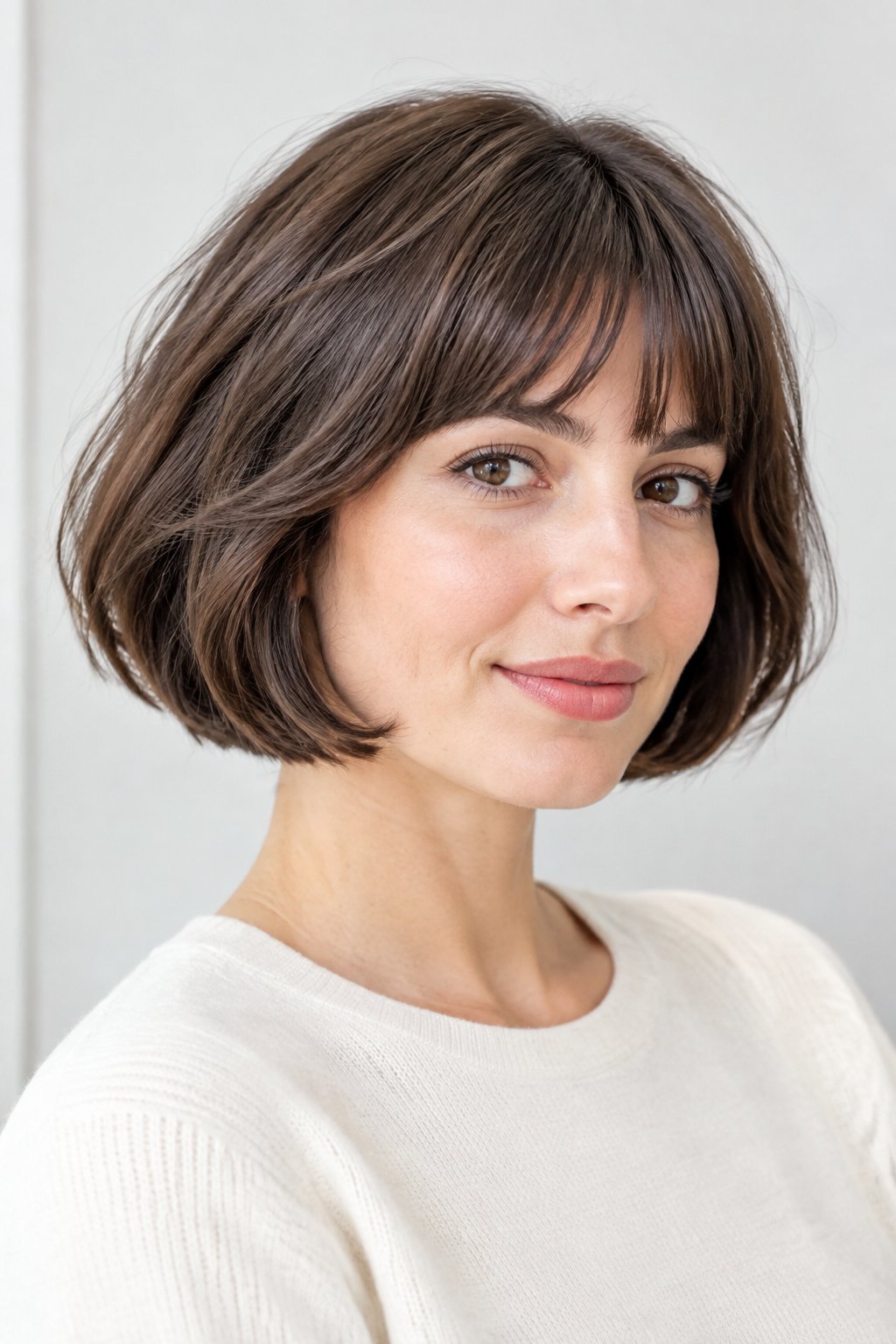
8. Jaw-Length Bob with a Side Part
Moving your part to the side instantly adds the illusion of volume at the root, since one side naturally has more lift than a centered part. This bob keeps a blunt, jaw-length perimeter so the ends stay thick. It’s a low-effort styling option for straight or slightly wavy fine hair.
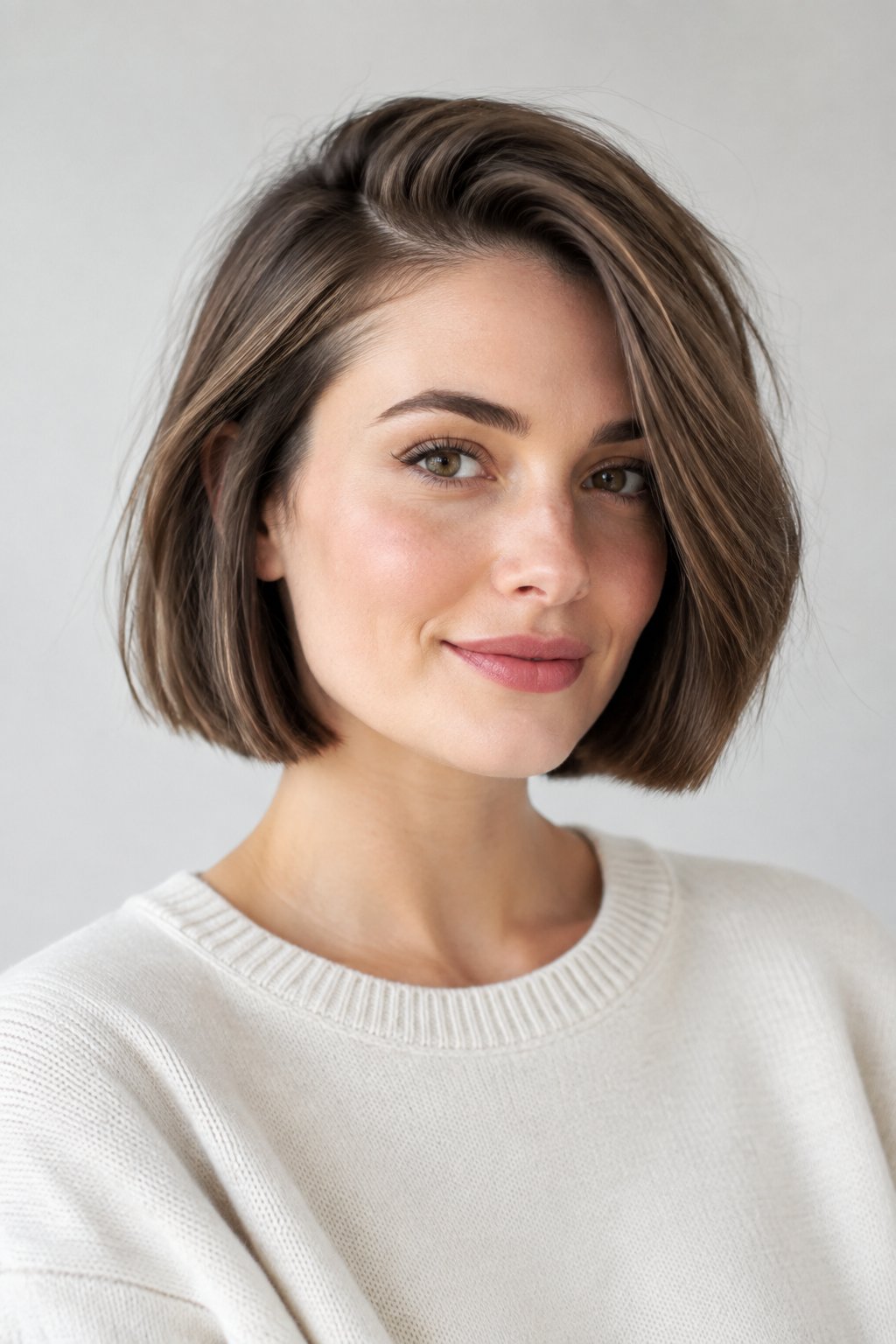
9. Rounded Bob with Subtle Interior Layers
A rounded bob curves slightly inward at the ends, and a few subtle interior layers near the crown add lift without disrupting that curved shape. This works well for fine hair with decent density, since the interior layers have enough strands to actually create movement. On thinner density, skip the interior layers and keep the perimeter solid instead.
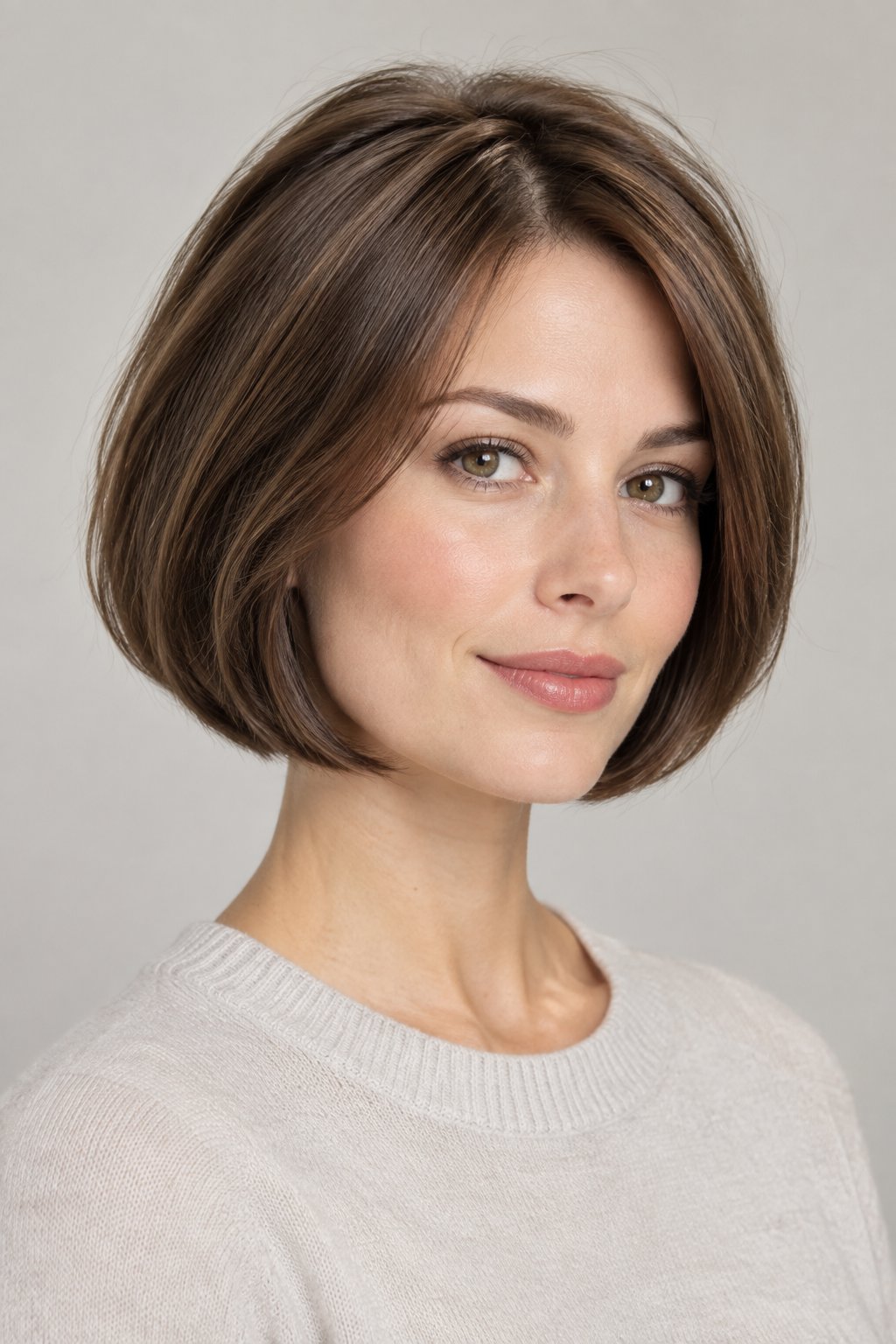
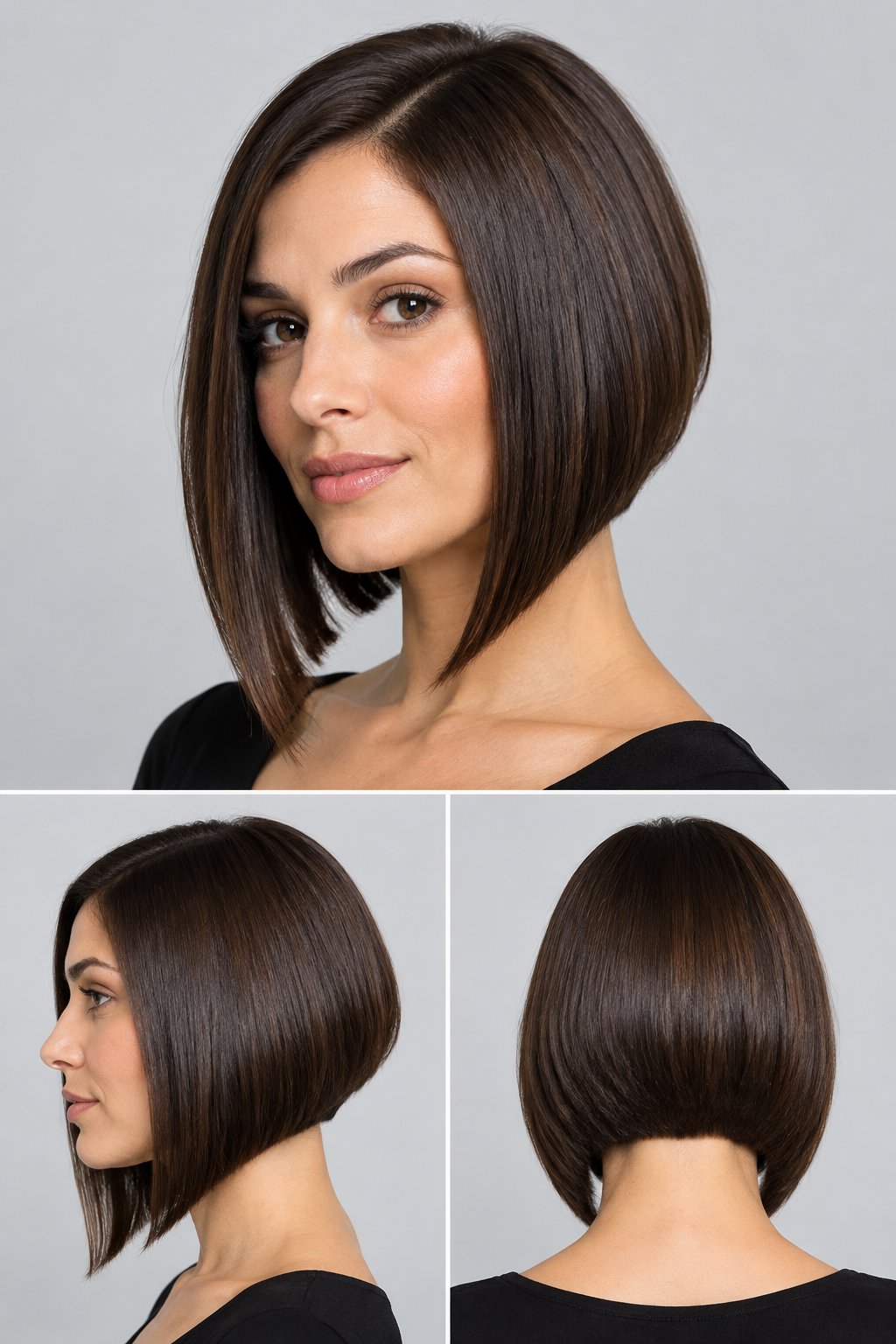
10. Angled Bob with a Solid Perimeter
An angled bob is longer in the front and shorter in the back, with a solid, unlayered perimeter throughout. The angle itself creates visual interest, so you don’t need layers to add shape. This cut grows out asymmetrically, meaning the back will look shorter than the front sooner, so more frequent trims keep the angle looking intentional.
Lobs That Keep Their Shape
The lob, or long bob, tends to hit at or above the collarbone, a length that gives fine hair enough weight to hold a shape while still keeping the ends looking full. A well-cut lob can make fine strands look healthier and more voluminous when the layering stays minimal.
11. One-Length Collarbone Lob
This lob is cut at a single length with no layering, letting the natural weight of the hair sit at the collarbone. The blunt ends look thick because every strand ends at the same point. It works best on straight to slightly wavy hair, since heavier waves or curls can make a one-length cut look uneven.
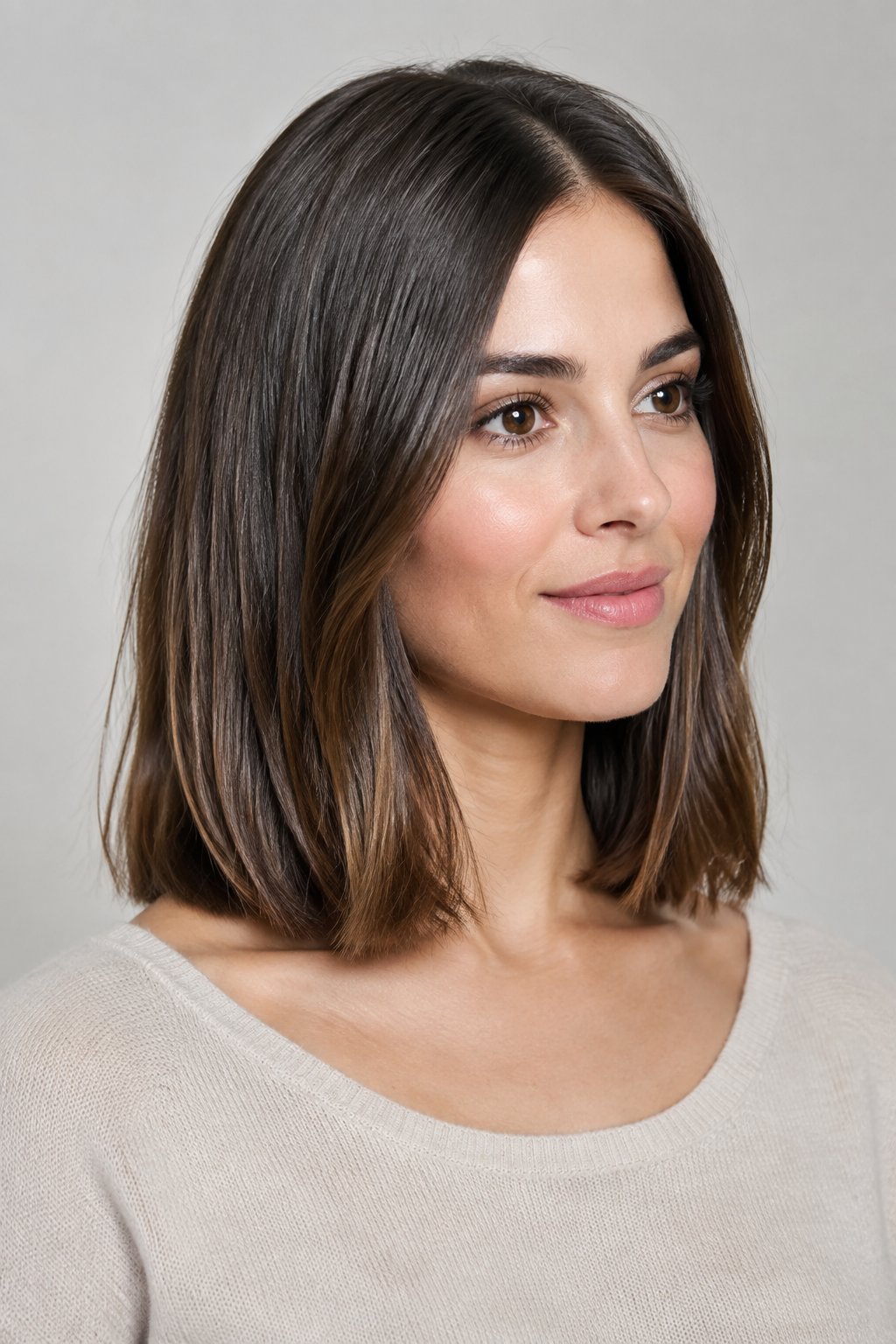
12. Blunt Lob with Curtain Bangs
Curtain bangs part in the middle and frame the face on both sides, adding fullness right where people look first. Paired with a blunt lob, this combination builds visual density at the face while keeping the rest of the cut solid. The bangs do require regular trims and some daily styling with a round brush to keep their curve.
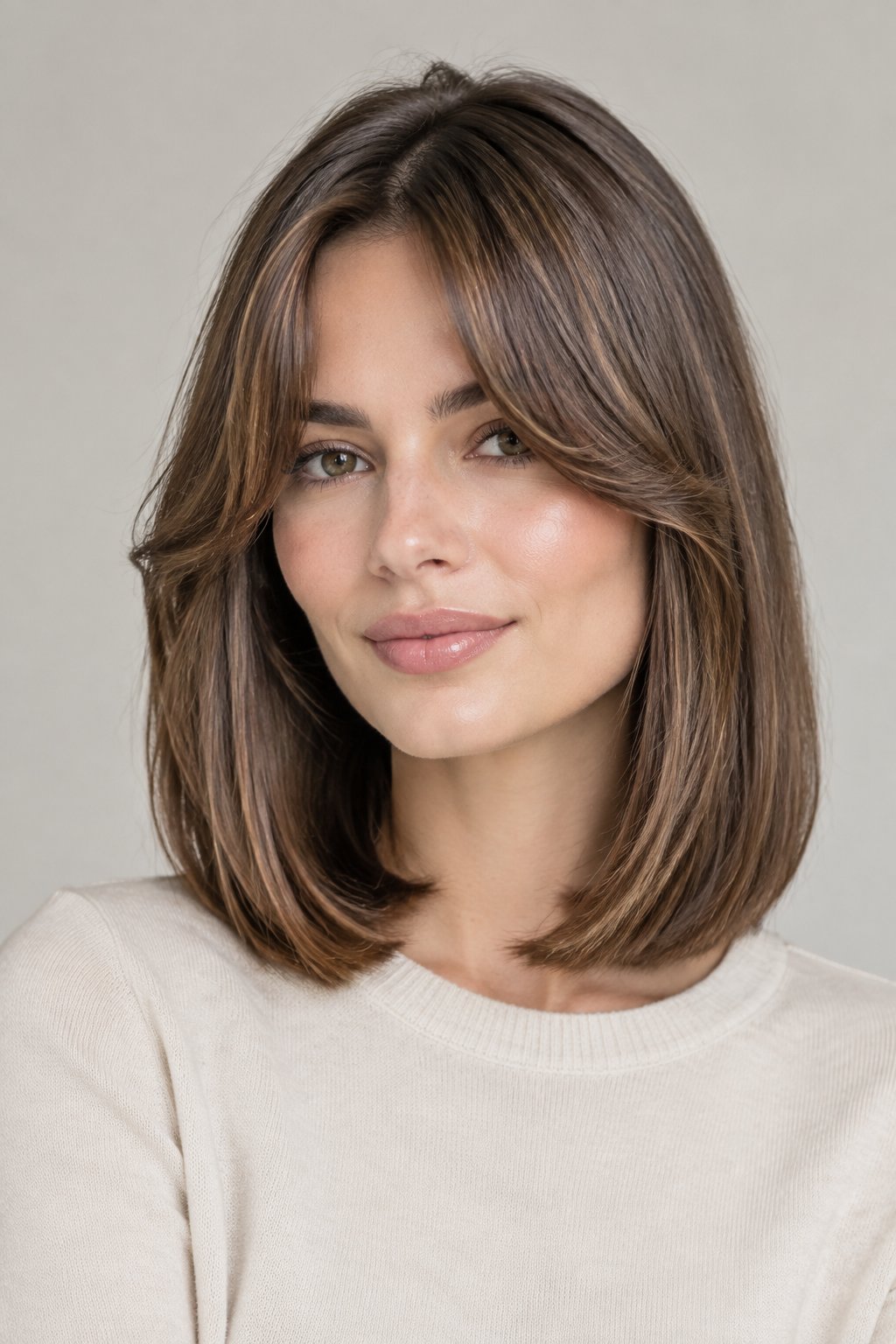
13. Wavy Lob with Minimal Layers
Waves add their own texture and lift, so this lob keeps layering to a minimum and lets the natural wave pattern do the work. A texturizing spray on damp hair enhances the wave without adding heaviness. Too much layering on wavy hair can break up the wave pattern and make ends look wispy instead of full.
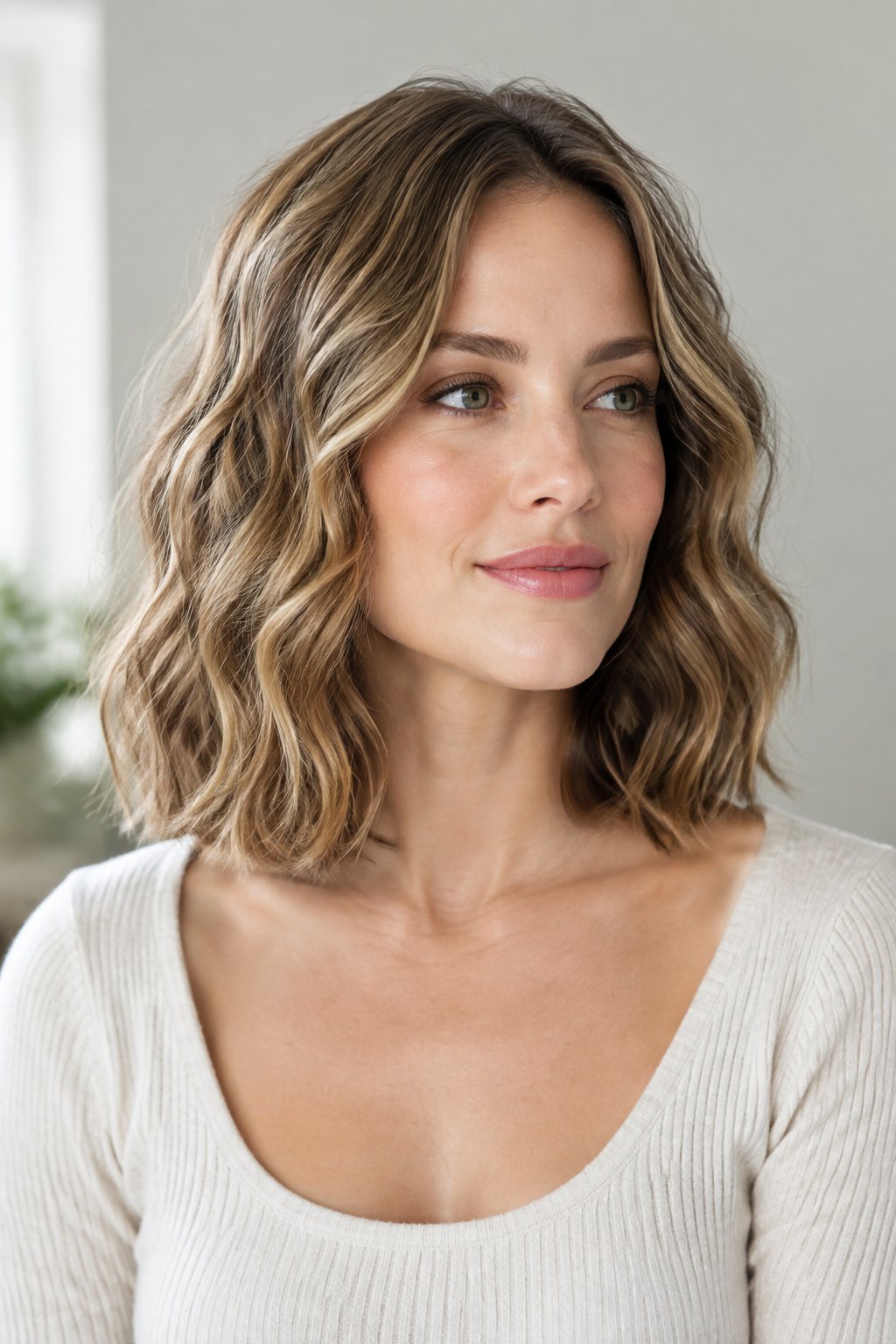
14. Asymmetrical Lob
An asymmetrical lob is longer on one side than the other, which draws the eye along a diagonal line and distracts from thin spots. It’s a striking option for straight hair, where the sharp line reads clearly. This cut needs a stylist who can balance the asymmetry carefully, since uneven cutting can look accidental rather than intentional.
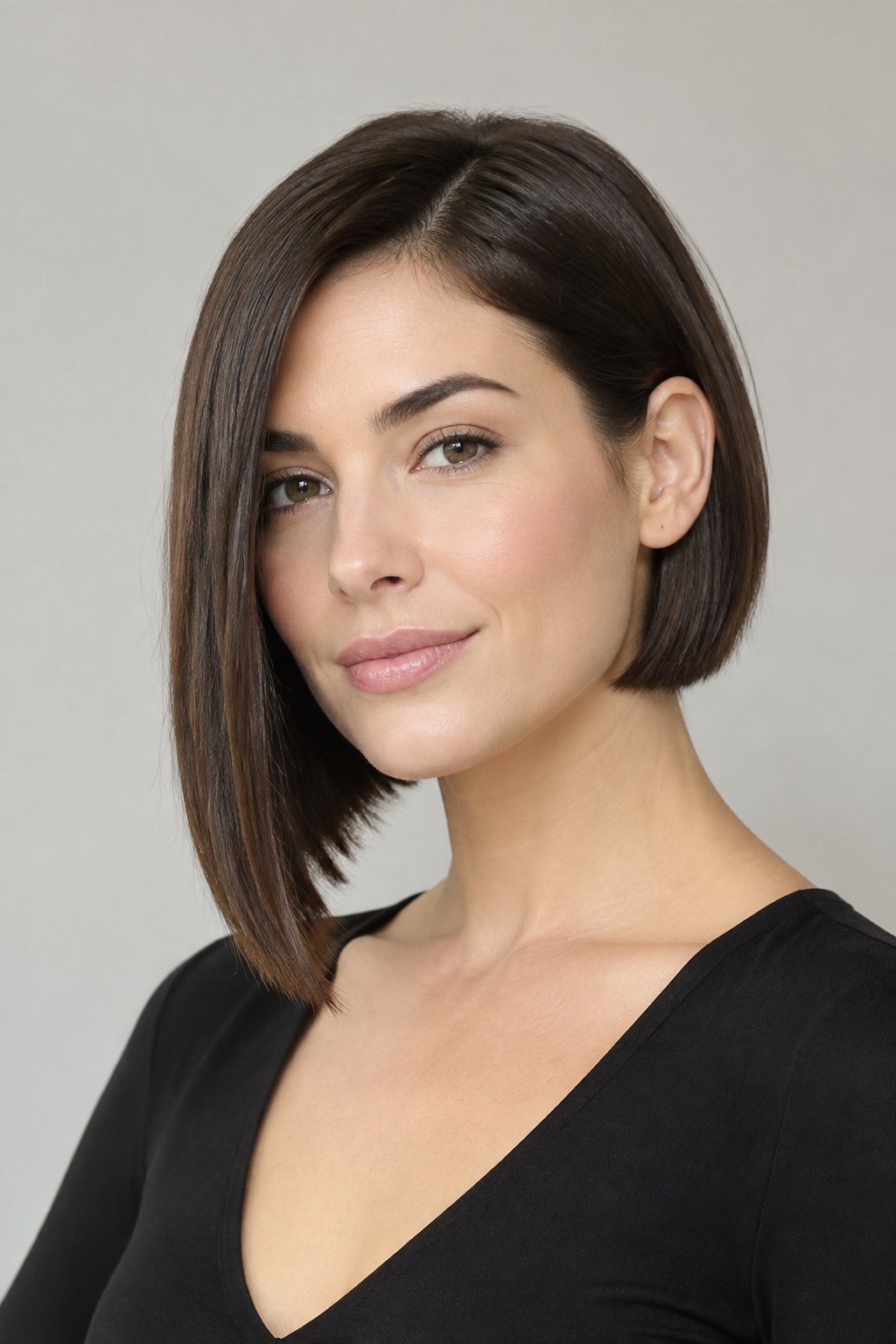
15. Side-Parted Lob with Face-Framing Pieces
A few longer pieces left around the face, combined with a deep side part, create lift at the root and softness near the jaw. This suits fine hair with wave or curl, since the texture holds the face-framing shape better than pin-straight hair does. Keep the face-framing pieces short enough that they don’t pull down and flatten against the cheek.
Shoulder-Length Cuts with Movement
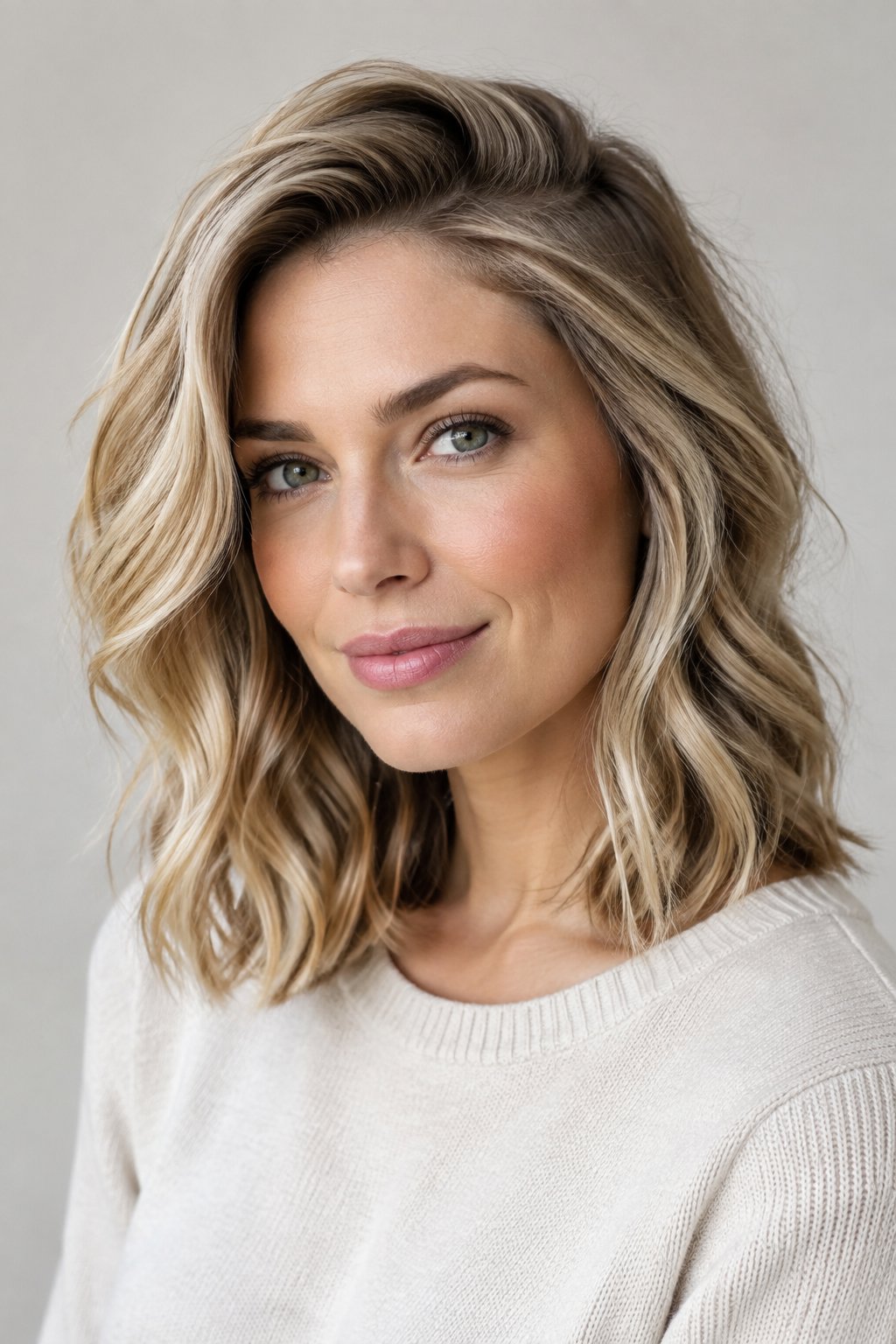
Shoulder-length hair sits in a useful in-between zone: long enough to pull back, short enough to avoid the flatness that comes with extra length. A shoulder-length blunt cut helps the ends look fuller while keeping the overall style light and easy to move.
16. Shoulder-Length Cut with Blunt Ends
This cut stops right at the shoulders with a straight, unlayered line, giving fine hair a strong bottom edge. The length is short enough to avoid the weight that drags long hair flat, but long enough to style in a low bun or half-up look. It’s one of the more forgiving cuts for fine hair that’s transitioning between short and long.
17. Soft Shag with a Full Perimeter
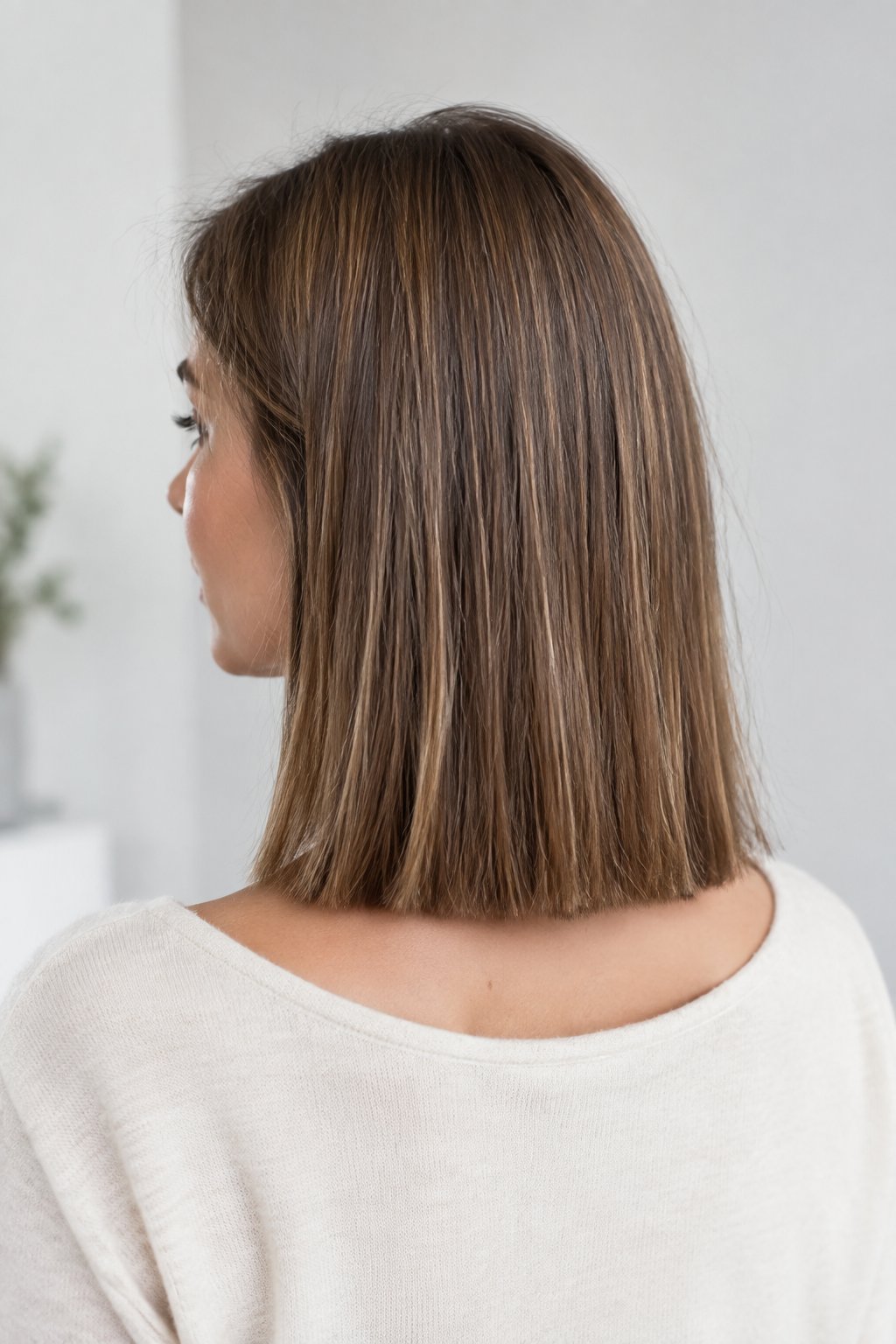
A soft shag adds face-framing layers and a bit of texture through the ends, but keeps the perimeter fuller than a classic heavily layered shag. This version works for wavy or curly fine hair, where the texture naturally fills in the shape. On straight hair, a texturizing spray or dry shampoo helps the shag hold its piecey look.
18. Medium Cut with Light Face-Framing Layers
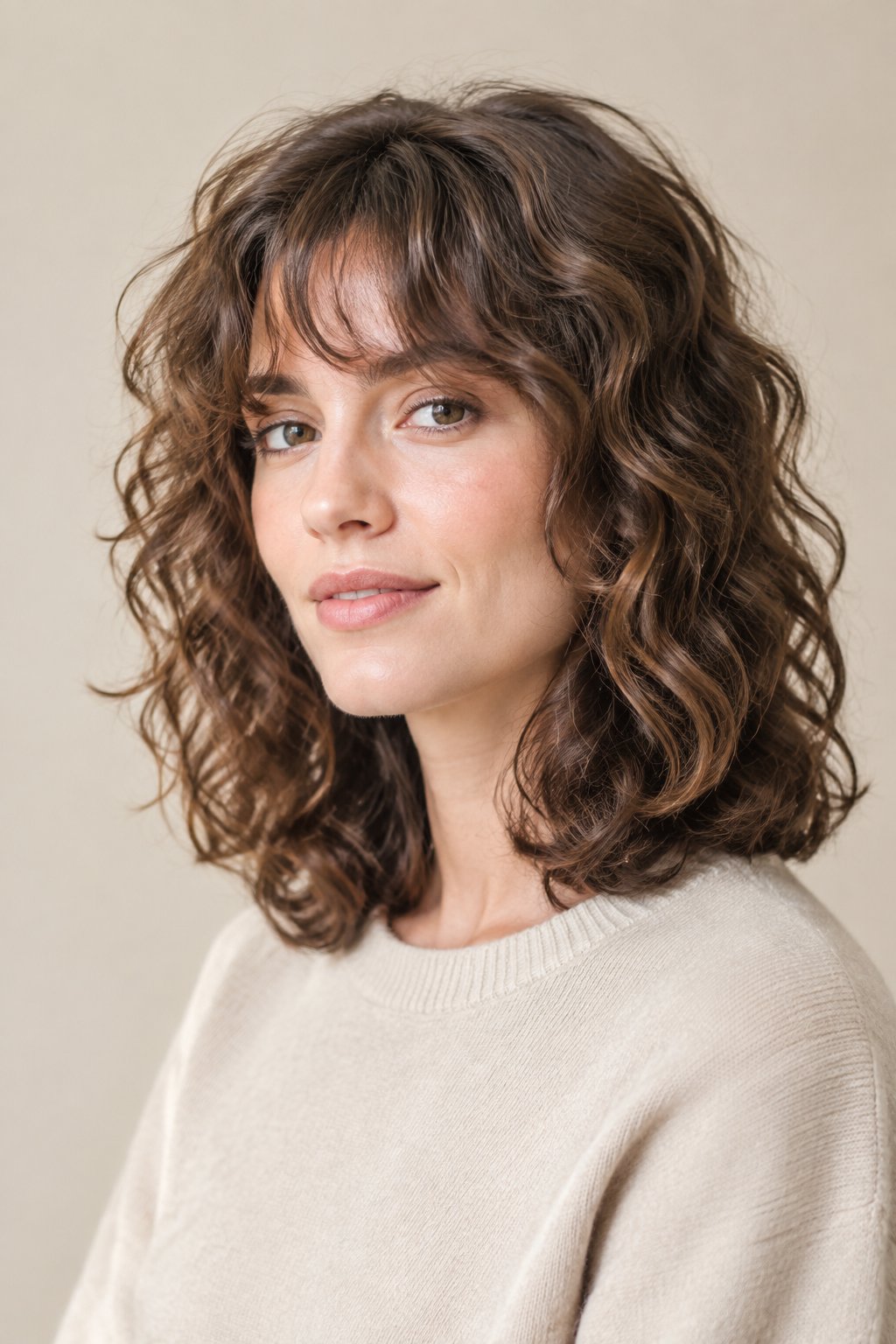
Light layers only around the face, rather than throughout the whole head, add movement near the jaw without thinning the back or crown. This is a good middle-ground request if you want some shape but worry that a fully layered cut will look sparse. Ask your stylist to keep these layers longer rather than short and choppy, which preserves more thickness.
19. Shoulder-Length Cut with Wispy Bangs
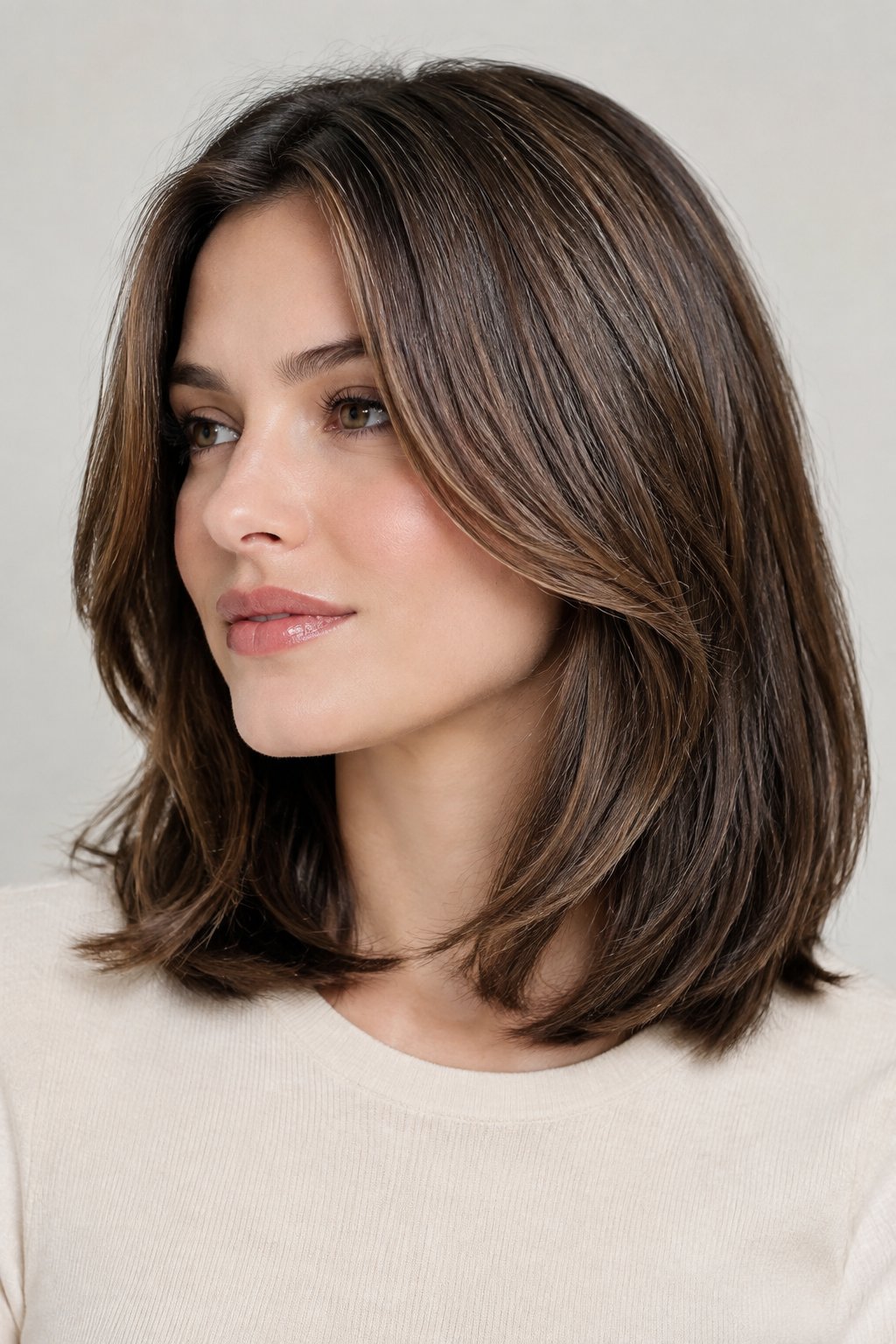
Wispy, textured bangs add fullness at the forehead and can soften a thin hairline, especially when they’re cut with a slight arch rather than straight across. This pairs well with a blunt shoulder-length cut behind them. Wispy bangs need trims every 3 to 4 weeks to stay wispy instead of growing into an awkward in-between length.

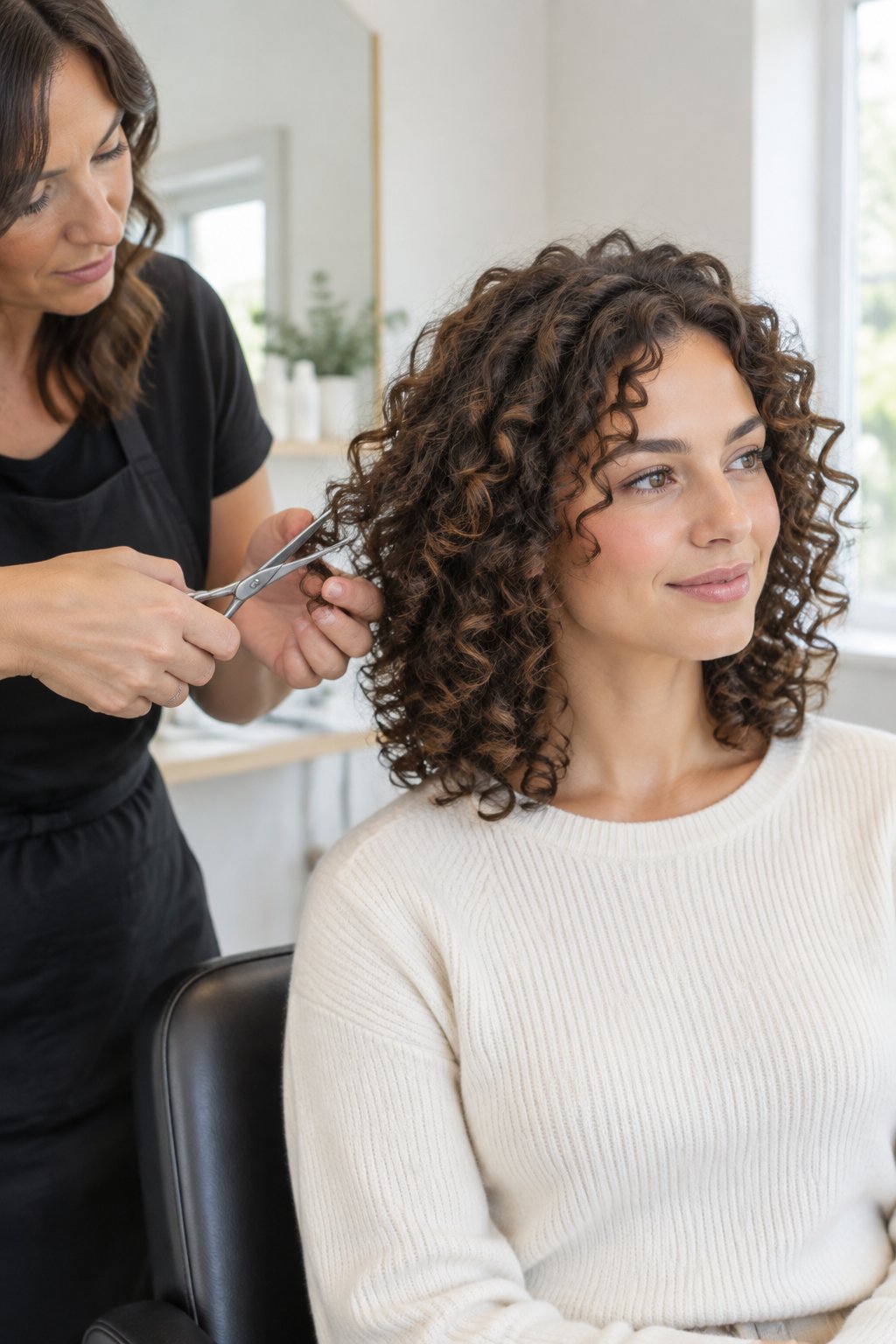
20. Curly Shoulder-Length Cut with Rounded Shaping
Curly hair at shoulder length benefits from rounded, shape-conscious cutting that follows the curl pattern rather than cutting straight across wet hair. This keeps curls looking full and bouncy rather than triangular. A dry cut, where the stylist trims curl by curl once hair is dry, tends to give the most accurate shape for curly, fine density.
Long Cuts That Preserve Density
Long hair is the hardest length for fine strands to hold up, since the extra weight pulls hair flat and can make ends look wispy. The cuts here focus on minimizing layers and keeping length manageable enough that the hair still looks intentional rather than tired.
21. Long One-Length Cut
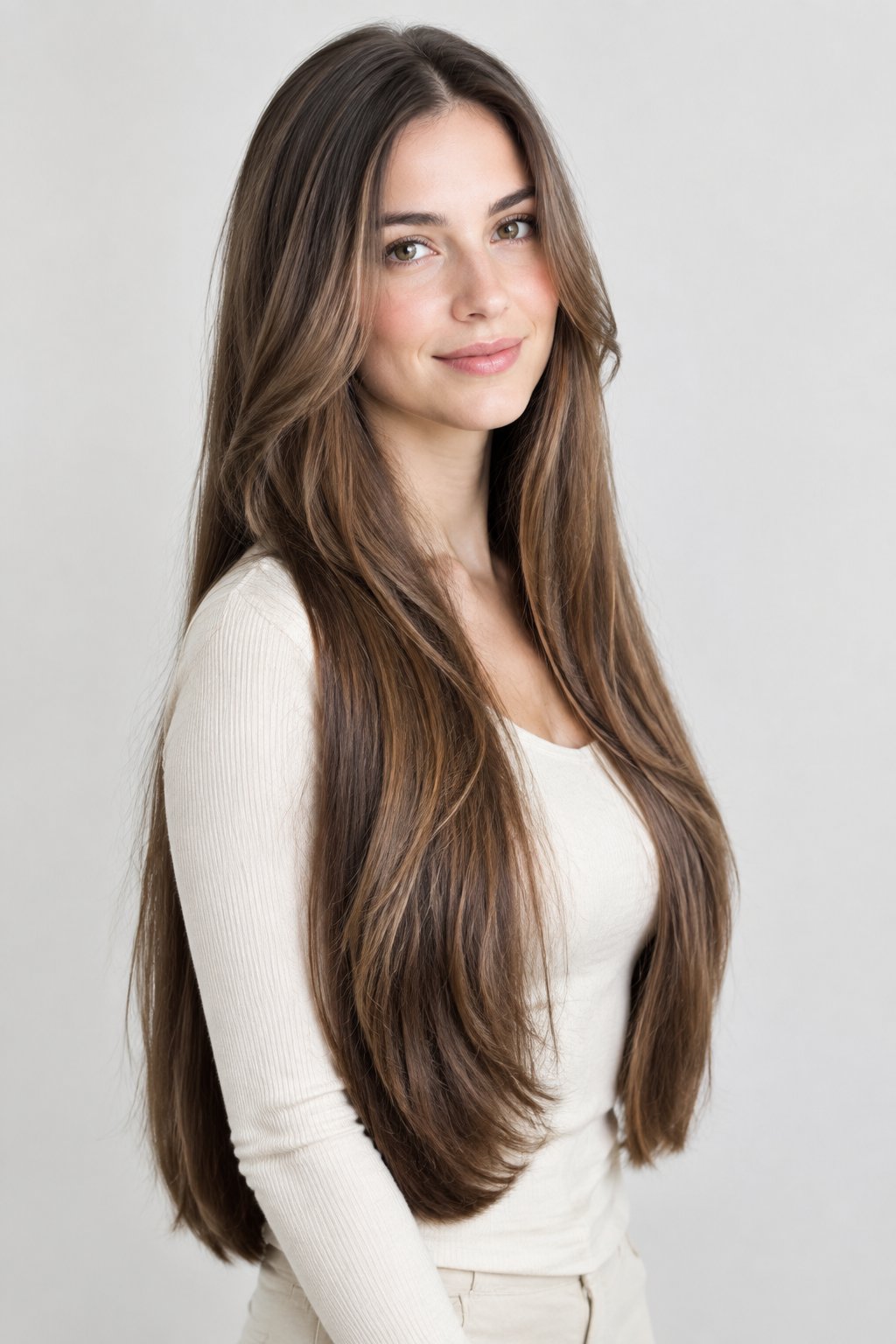
Cutting long hair at a single length, without any layers, keeps as much weight and thickness at the ends as possible. This is the most reliable way to keep long fine hair from looking stringy. The downside is styling versatility. Without layers, this cut has less built-in movement and relies on styling tools like a curling iron for texture.
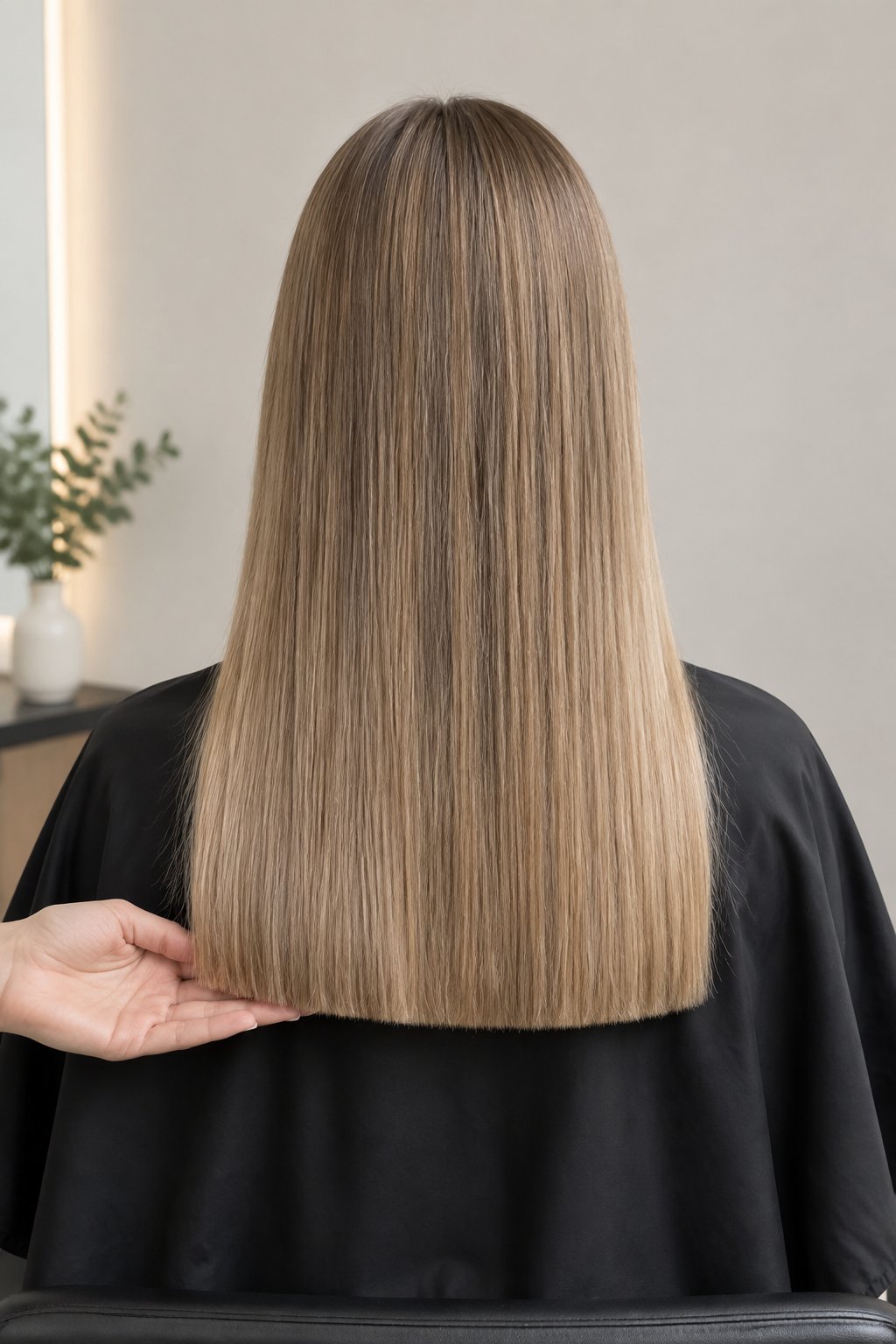
22. Long U-Shaped Cut
A U-shaped cut curves gently at the ends instead of cutting straight across, which softens the line while still keeping most of the length intact. It reads as fuller than a V-shaped cut, which tapers to a point and can make ends look thin. This shape suits straight to wavy hair best.
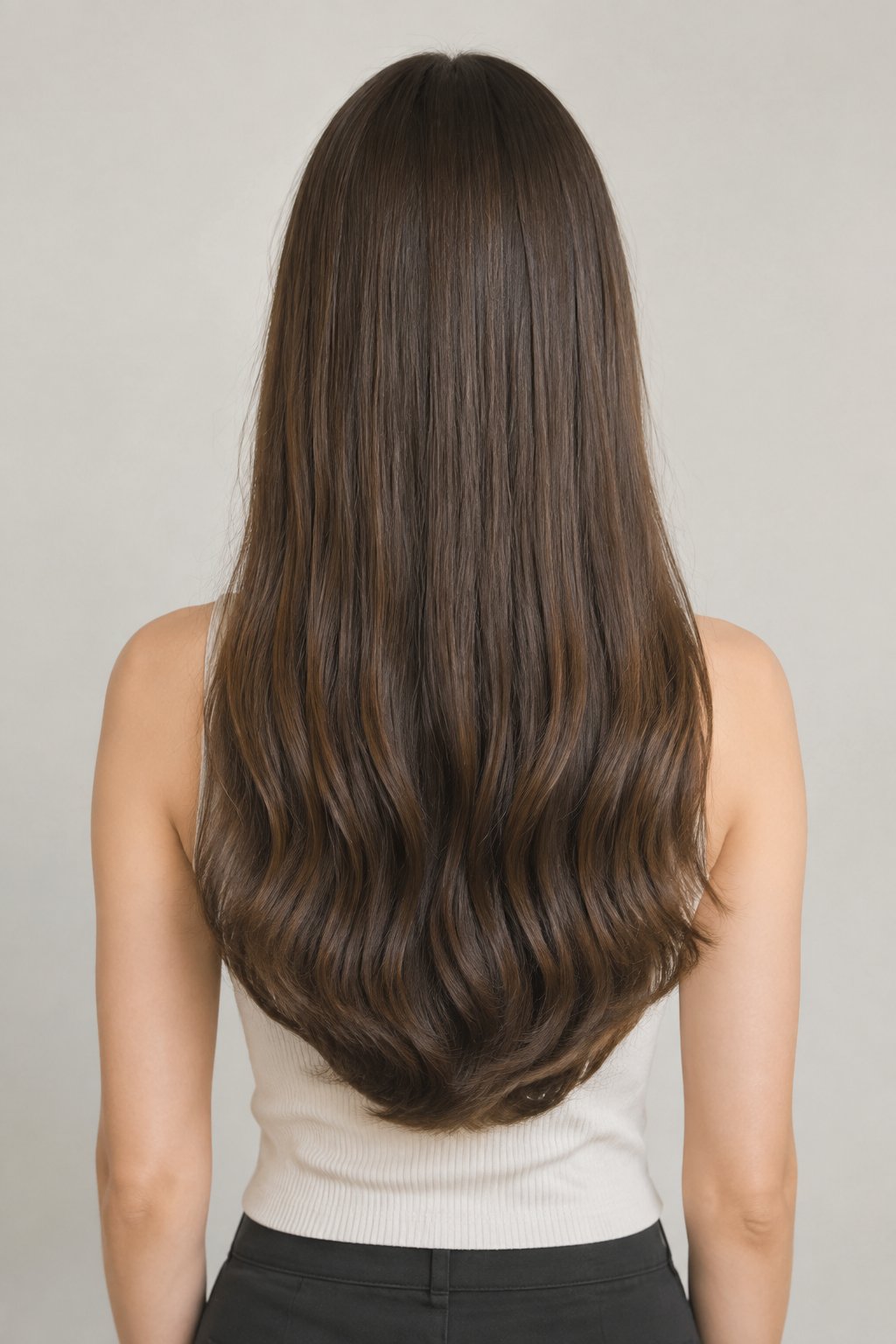
23. Long Cut with Subtle Invisible Layers
Invisible layers are cut very long and subtle, so they add slight movement without creating the stair-stepped look of traditional layering. This technique lets long hair move a little without sacrificing much thickness at the ends. It requires a stylist experienced with this specific technique, since heavy-handed layering defeats the purpose.
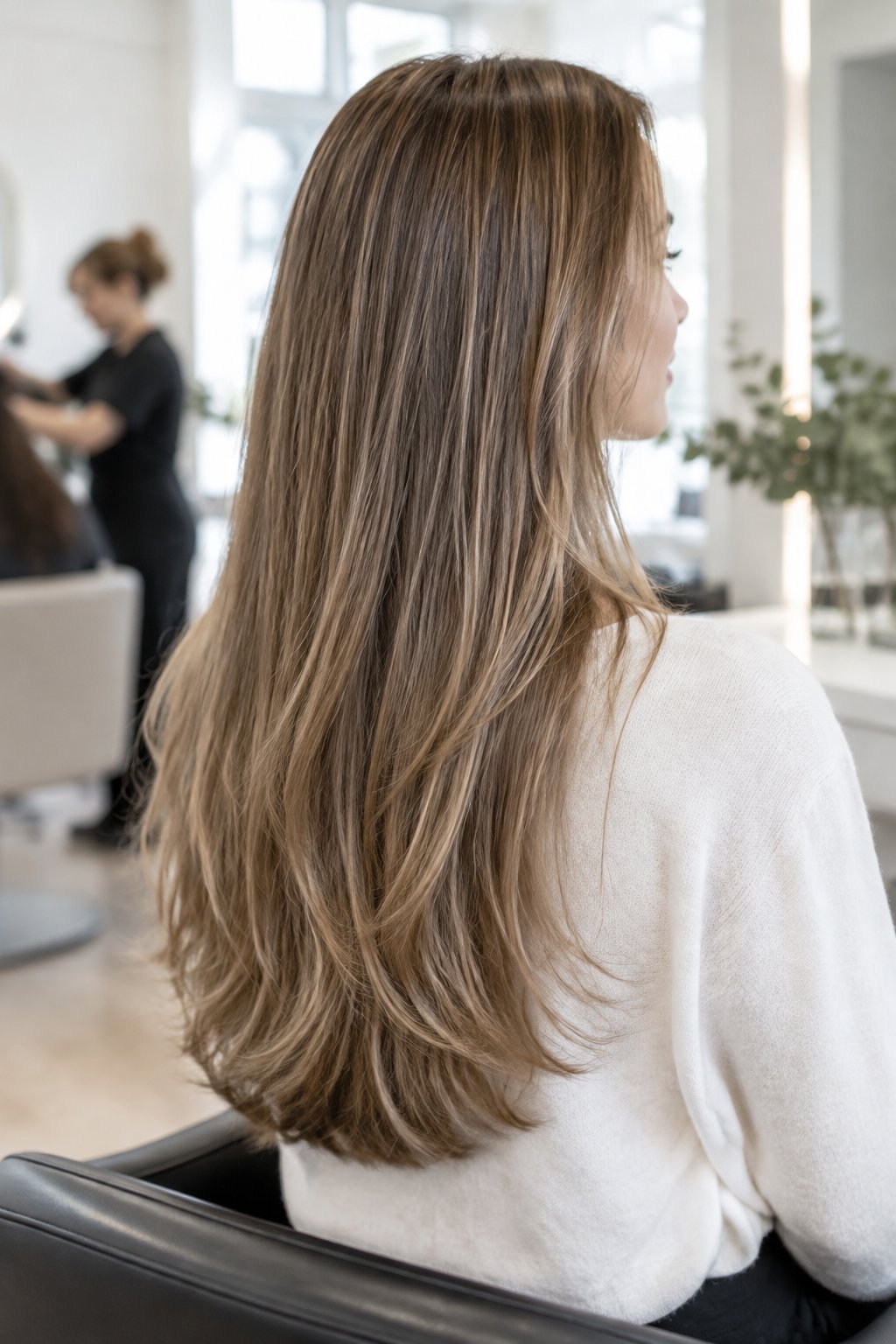
24. Long Cut with Curtain Bangs
Curtain bangs on long hair frame the face and create fullness up top, balancing out length that might otherwise pull the eye downward. They work on straight, wavy, and curly textures, though curly curtain bangs need extra length accounted for shrinkage. Regular trims keep them from growing out into awkward face-framing pieces.
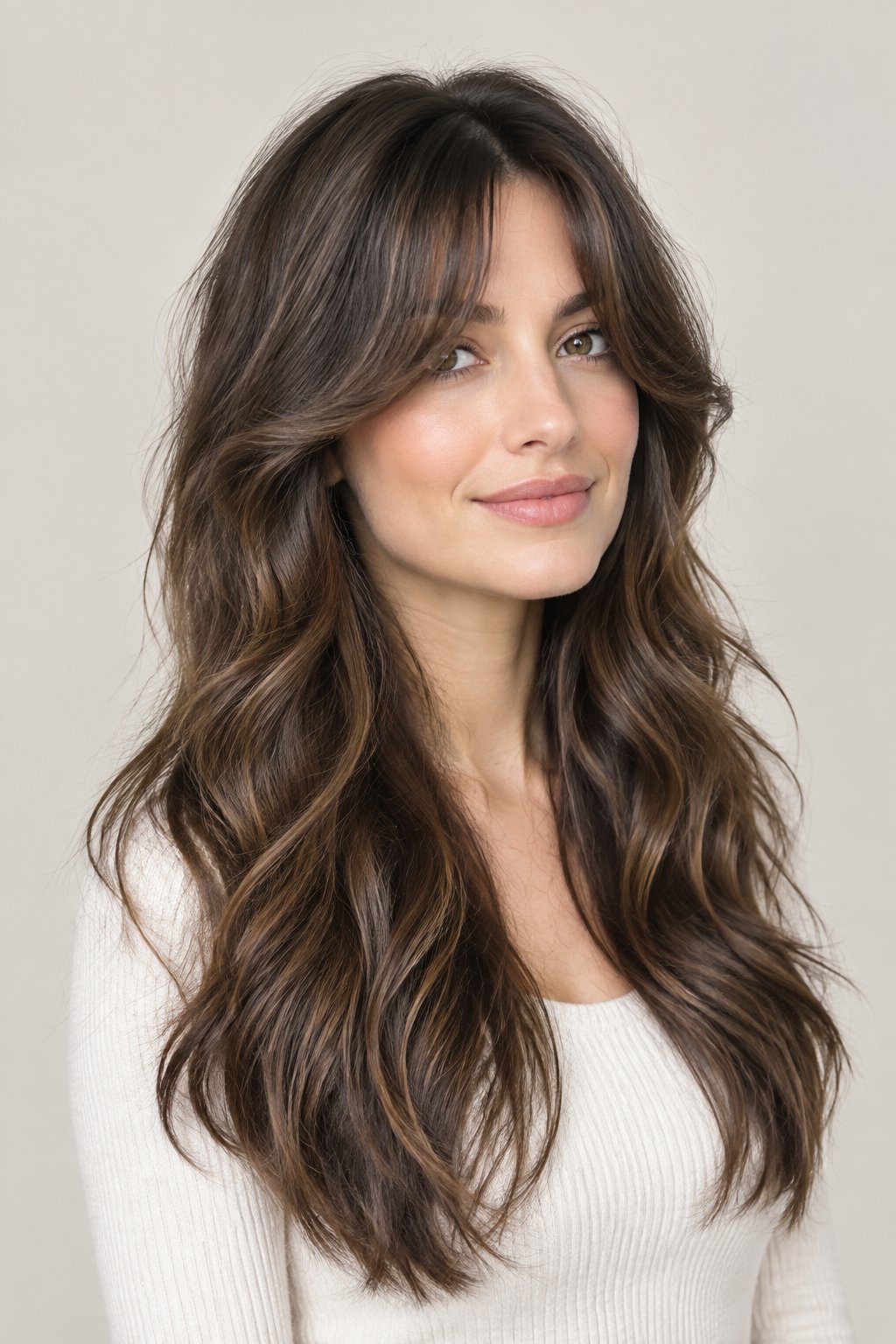
25. Long Cut with Light Face-Framing Layers
Keeping layers limited to a few pieces around the face, rather than layering the whole length, lets long hair keep most of its density while still getting some shape near the jaw and cheekbones. This is a good option for someone who wants long hair but is nervous about layers thinning it out. The caveat: on very fine, sparse hair, even light face-framing layers can look wispy if they’re cut too short.
How Do You Choose and Maintain the Right Cut?
The right cut for fine hair depends on your texture, how much time you spend styling, and how your stylist handles the ends. Getting this right at the consultation stage saves a lot of frustration later.
Match the Cut to Your Texture and Styling Routine
Straight fine hair usually needs a solid, blunt shape since it has no natural texture to fall back on, while wavy and curly fine hair can handle a bit more layering because the texture fills in gaps on its own. Think honestly about how much time you spend on hair each morning. A cut that needs a round brush and blow-dryer every day only works if that’s a routine you’ll actually keep up.
Ask Your Stylist to Protect Fullness at the Ends
Tell your stylist directly that you want to keep weight and thickness at the ends, and ask them to avoid thinning shears or heavy point-cutting throughout the length. Simple phrases help here: “blunt ends,” “minimal layering,” or “keep the perimeter solid” all communicate what you want clearly. If you want some layers, specify that you only want them at the crown or around the face, not throughout.
Use Lightweight Styling for Lift Without Buildup
Lightweight mousse or a root-lifting spray applied at the roots before blow-drying adds lift without weighing hair down the way heavier creams or oils can. Dry shampoo at the roots between washes also adds texture and grip, which helps fine hair hold a style longer. Avoid heavy serums or oils on the roots specifically, since they flatten fine hair fast, even if they work fine on the ends.
Choose the Shape That Keeps Your Hair Looking Full
The shortest path to fuller-looking fine hair is a cut with a solid, mostly blunt perimeter, kept between chin length and shoulder length. Shorter and mid-length cuts ask less of your strands, hold their shape longer between salon visits, and avoid the flattening that comes with extra length and heavy layering.
Layers still have a place, especially around the crown or face, but they work best in small, deliberate amounts rather than throughout the whole head. Whatever length or texture you’re working with, the details matter as much as the overall shape: a tapered nape, a side part, a few face-framing pieces cut to the right length. Bring a clear, specific request to your next appointment, and be honest with your stylist about your styling routine so the cut you leave with is one you can actually keep up.
Frequently Asked Questions
What haircut makes fine hair look thicker?
A blunt bob or lob with little to no layering tends to make fine hair look thickest, since it keeps weight stacked at the ends instead of thinning it out. Shorter lengths, from a pixie through shoulder length, generally hold this fullness better than long hair. The specific best choice depends on your hair’s density and texture.
Are layers or blunt cuts better for fine hair?
Blunt cuts are usually better for very fine or thin-density hair, since they preserve thickness at the ends. Light layers, limited to the crown or face-framing pieces, can add lift and movement without stripping too much bulk. Heavy layering throughout the length tends to work against fine hair rather than for it.
What are the best low-maintenance cuts for fine, straight hair?
A blunt bob, lob, or shoulder-length cut with a solid perimeter are among the most low-maintenance options for straight, fine hair. These shapes hold up well between washes and don’t require daily heat styling to look intentional. Adding a side part or subtle curtain bangs can boost fullness without adding extra styling steps.
Can long fine hair still look full?
Long fine hair can look full when it’s cut at one length with minimal layering, since a solid perimeter keeps the ends from looking thin and stringy. Techniques like invisible layers or a soft U-shaped hemline help add slight movement without sacrificing density. Long hair does require more upkeep and trims to avoid split ends dragging the look down.
Which volumizing haircuts work well for women over 50?
Chin-length bobs, textured pixies, and shoulder-length cuts with soft layers around the face tend to work well for women over 50 with fine hair, since these lengths lift easily and frame the face. A side part adds instant root lift, and blunt ends keep the overall shape looking dense. The same core rule applies at any age: less length and less layering usually mean more visual fullness.
