
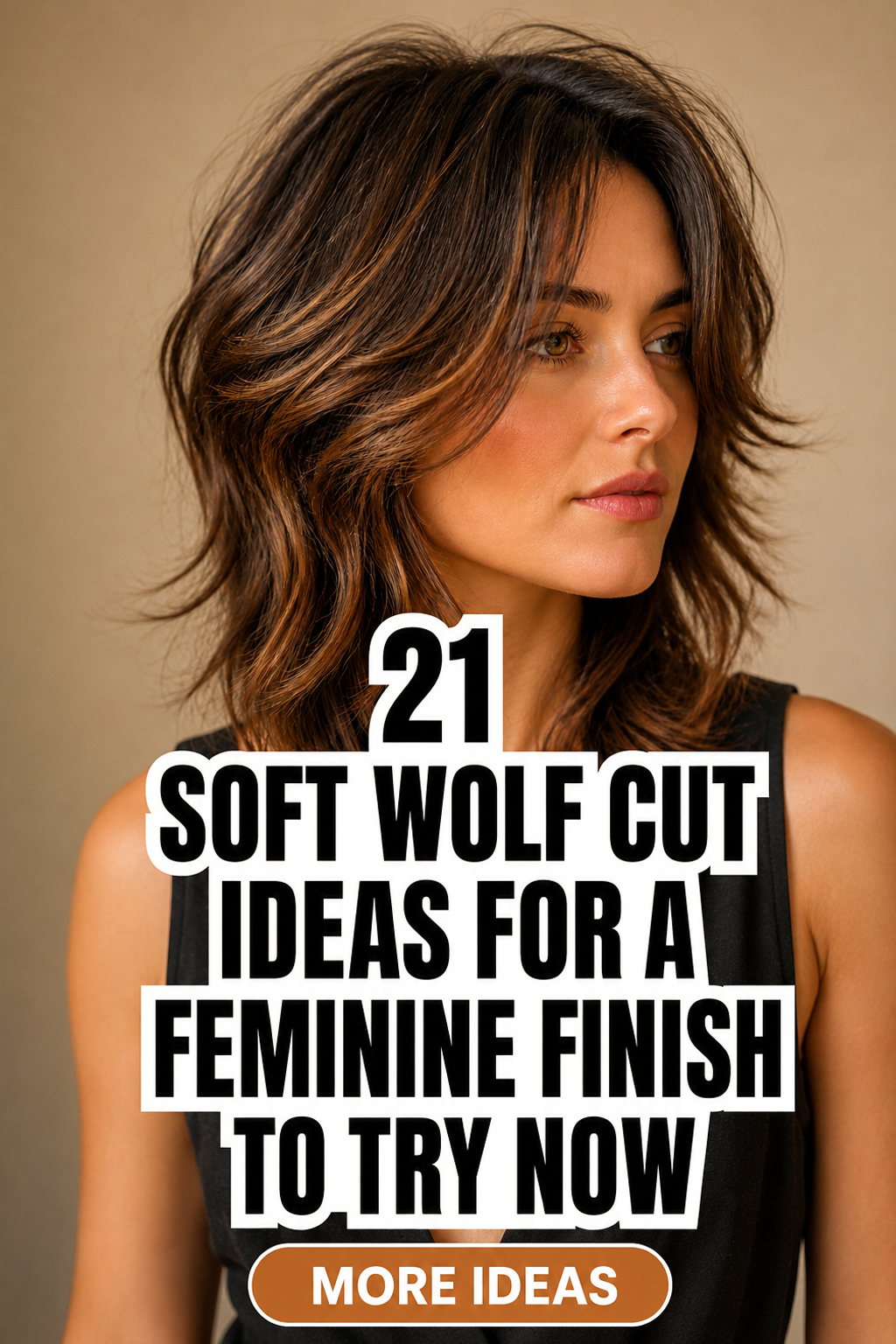
A soft wolf cut gives you layered shape, natural movement, and a feminine finish without the sharp contrast of a classic wolf cut. You can tailor this modern haircut to your length, texture, and face-framing goals.
From long, feathered layers to soft bangs and textured ends, these 21 ideas help you find a wolf cut hair style that feels balanced and easy to wear. You can keep your natural texture or add light styling for more definition.
If you prefer a shorter, edgier look, explore these 31 short wolf cut hairstyles for more inspiration.
Soft Wolf Cuts for Long and Medium Lengths
Long and medium hair gives a soft wolf cut enough length for movement while keeping the layers easy to style. You can adjust the crown volume, face-framing pieces, and ends to suit your hair texture and daily routine.
Long Wolf Cut With Face-Framing Layers
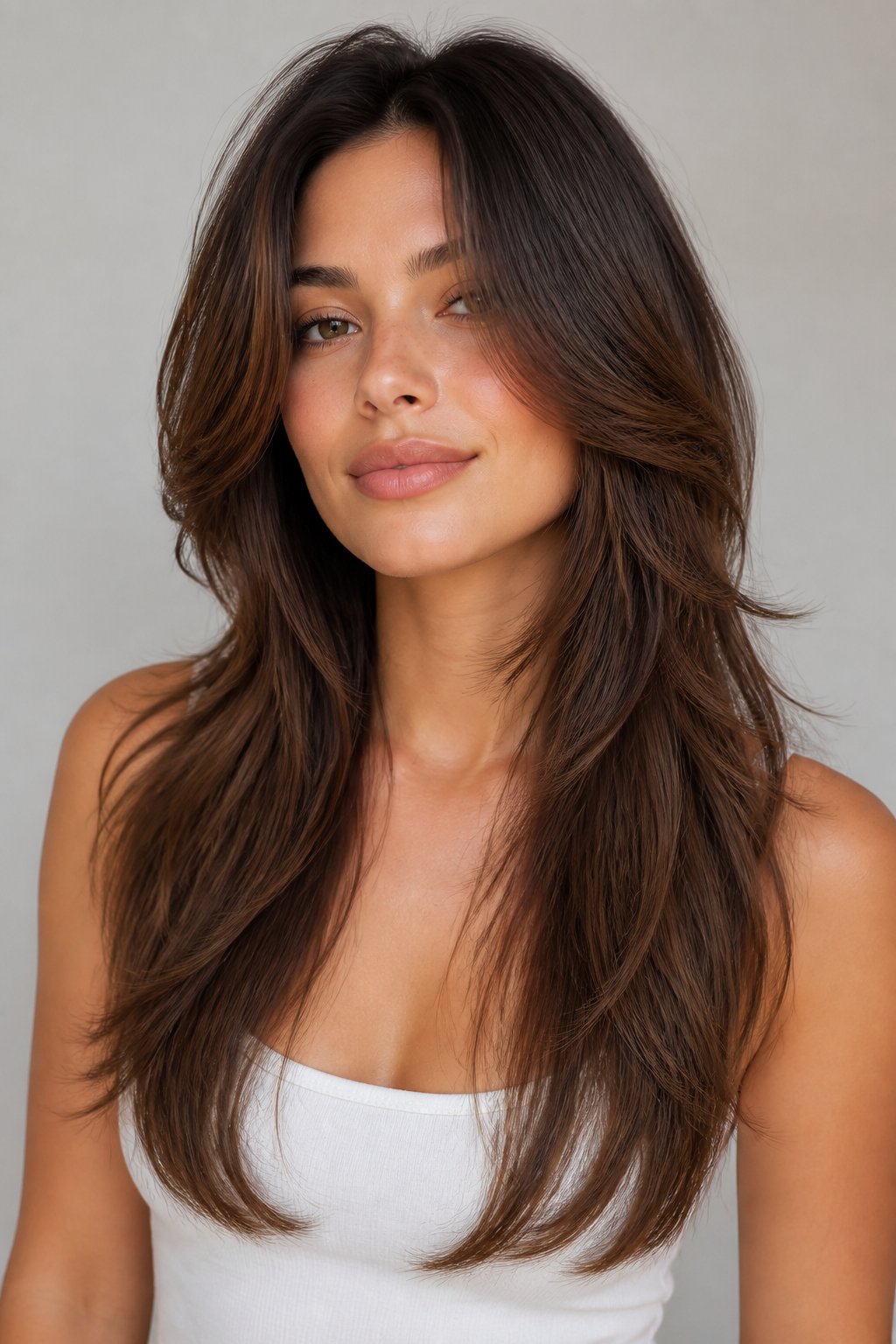
A long wolf cut with face-framing layers keeps most of your hair length while adding shape around your cheeks and jaw. Ask for the shortest layers to begin around your cheekbones or chin, based on the features you want to highlight.
Keep the transition from the crown to the long hair soft. Heavy contrast between short top layers and long ends can make the cut look more like a classic mullet than a feminine wolf cut.
This style works well if your hair feels flat through the front. Blow-dry the face-framing pieces away from your face with a round brush, then use a small amount of lightweight cream on the ends for separation.
Soft Waves With Feathered Ends
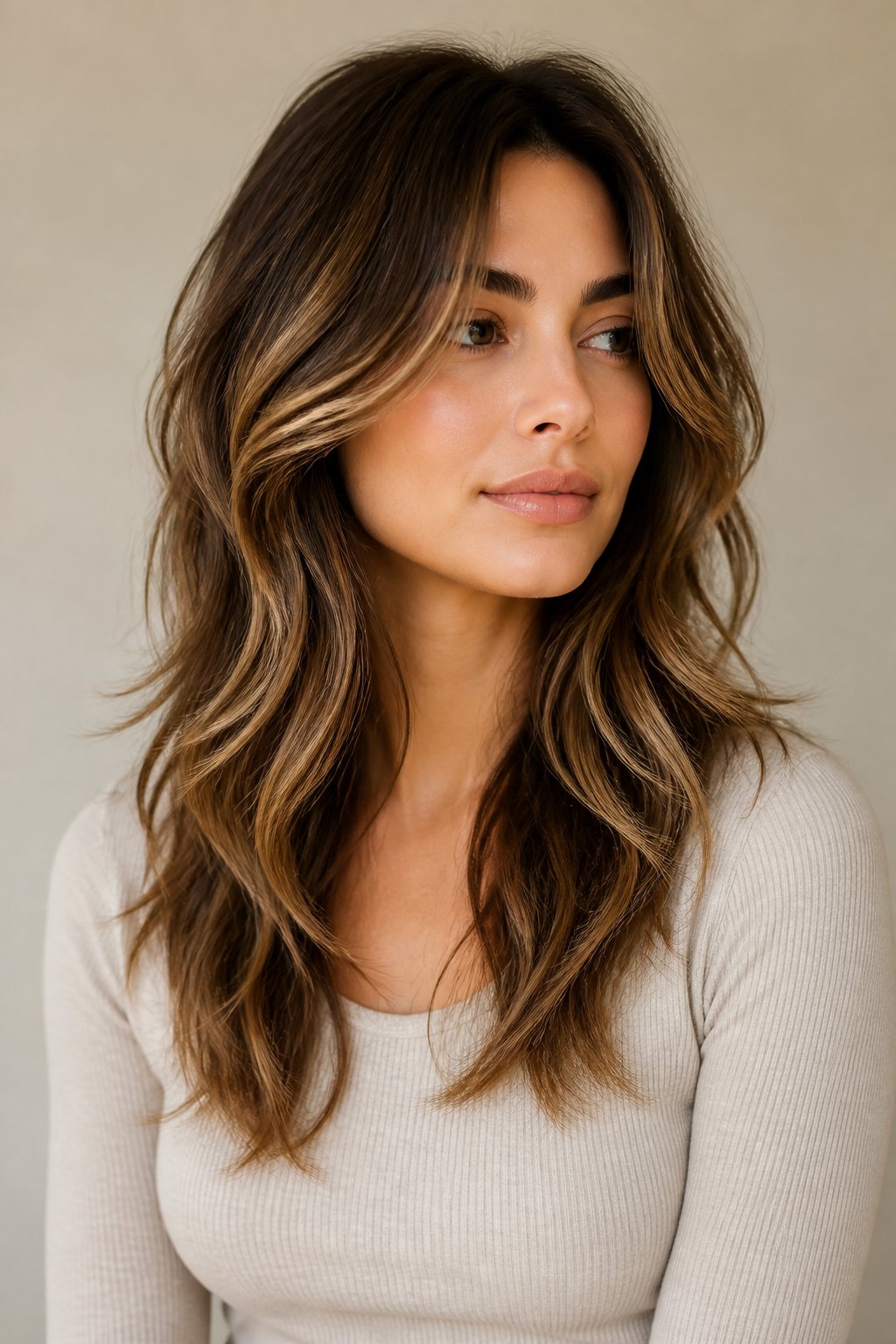
Soft waves and feathered ends give a medium or long wolf cut a relaxed finish. The layers should taper gradually instead of ending in blunt, thick lines.
Use a 1- to 1.25-inch curling iron to add loose bends through the middle and lower lengths. Leave the last inch of your ends straighter so the feathered layers stay visible.
For a softer result, brush through the curls after they cool. A flexible hairspray can hold the waves without making your hair stiff or reducing movement.
This option suits fine to medium hair because the feathered layers remove little weight. If you have very thick hair, ask your stylist to remove bulk carefully so the ends do not look too thin.
Layered Wolf Cut With Balayage
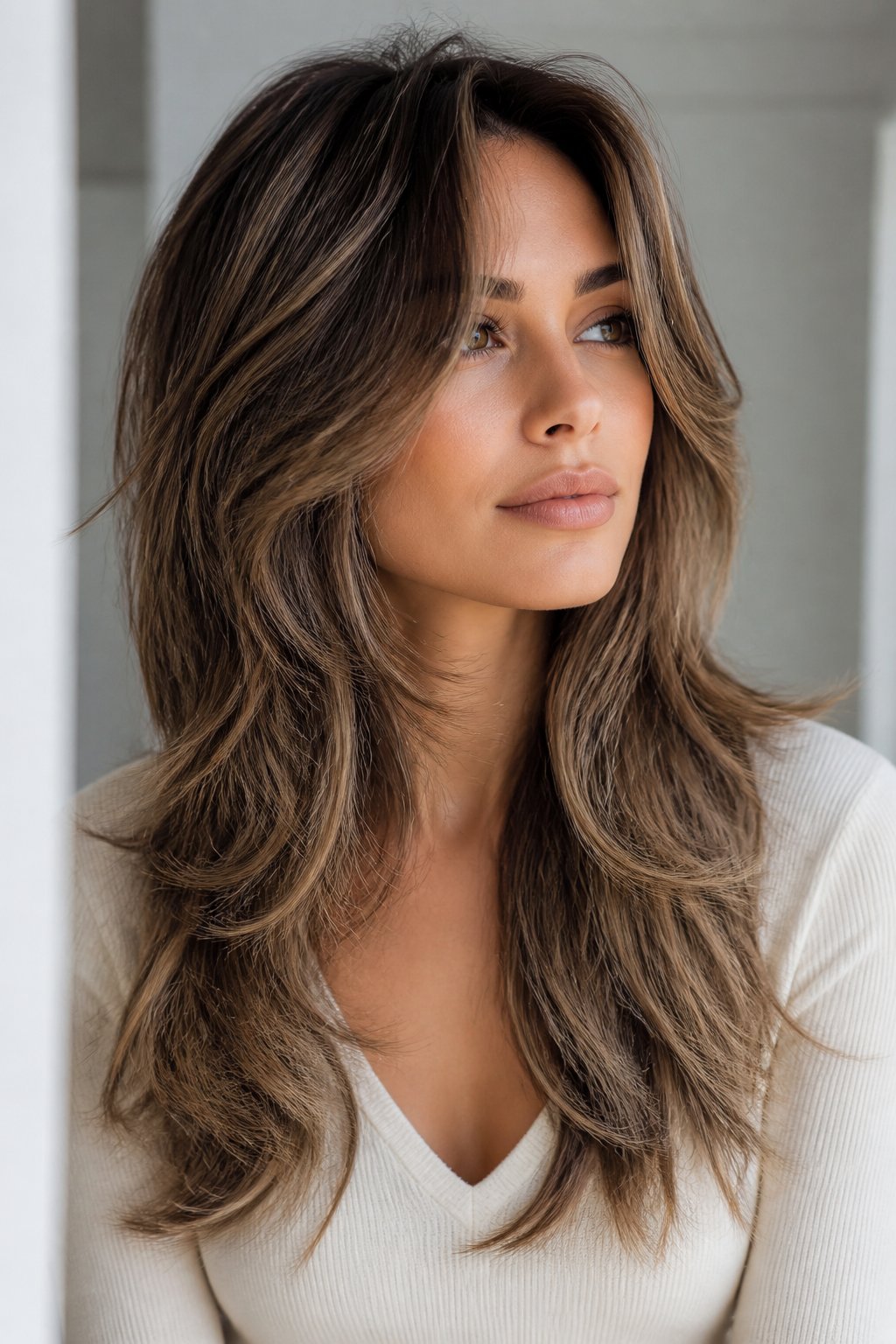
Balayage can make a layered wolf cut look softer because the color follows the movement of the hair. Place lighter pieces around your face and through the mid-lengths, not only at the ends.
A blended balayage works especially well with long hair because it avoids a harsh line as your roots grow. Choose shades within two or three levels of your natural base color for a natural-looking change.
Ask your colorist to paint brightness onto the surface layers and face-framing pieces. This placement helps the shorter layers stand out when you wear your hair in soft waves or a loose blowout.
Use a color-safe shampoo and heat protectant to help prevent dryness. Lightened feathered layers can become rough if you use hot tools without protection.
Tousled Waves With Curtain Fringe
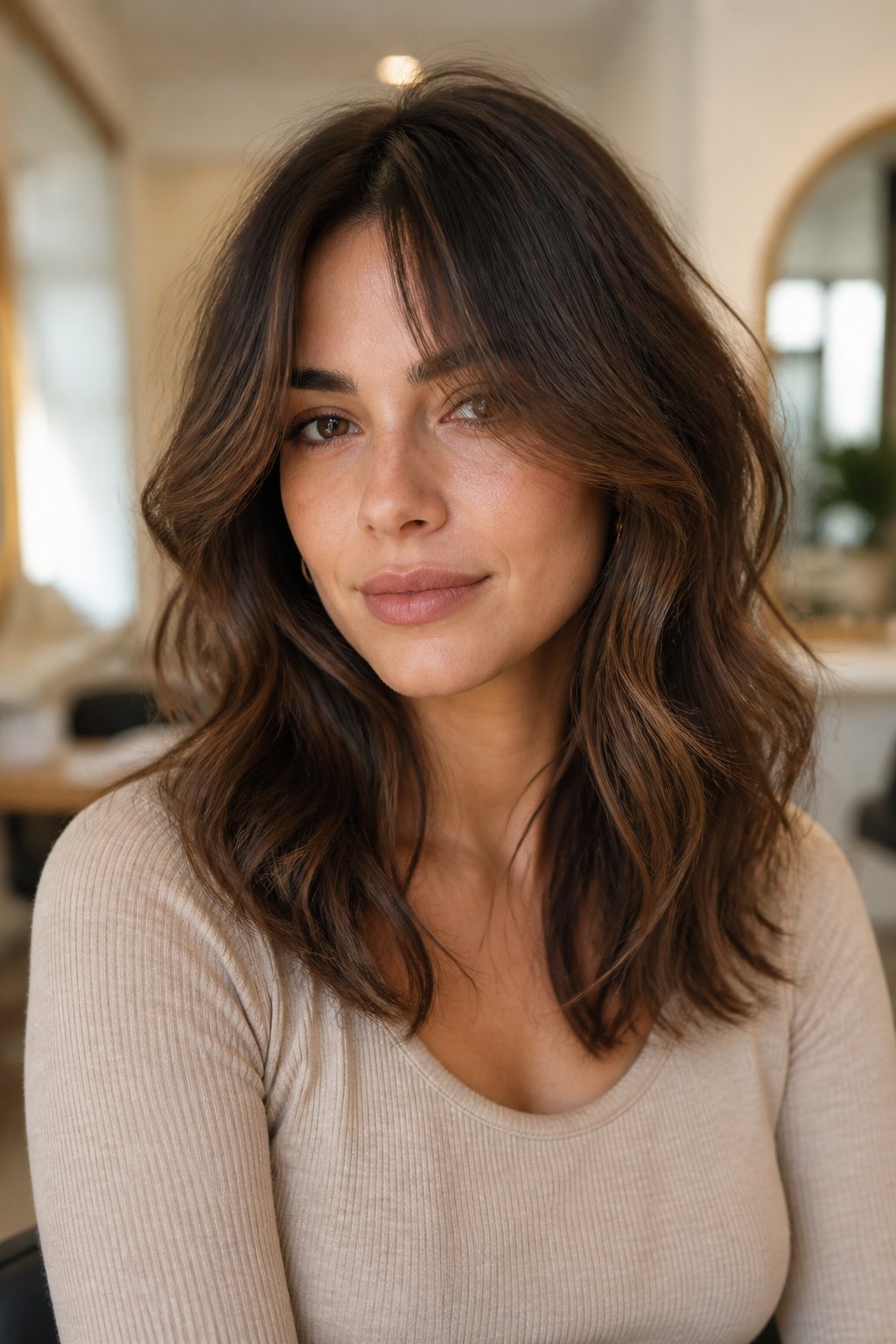
Tousled waves with a curtain fringe create a soft, balanced wolf cut for medium-length hair. The fringe parts near the center and sweeps out toward your temples, blending into the face-framing layers.
Keep the bangs longer than blunt fringe, usually from brow length to cheekbone length. This gives you more styling options and makes the grow-out process easier.
Dry the curtain fringe forward first, then direct each side away from your face. Add loose bends to the rest of your hair with a curling iron or flat iron, alternating the direction for a less uniform look.
Use texturizing spray mainly at the roots and mid-lengths. Too much spray on the ends can make the layered cut look dry rather than soft.
Straight Hair With Airy Choppy Layers
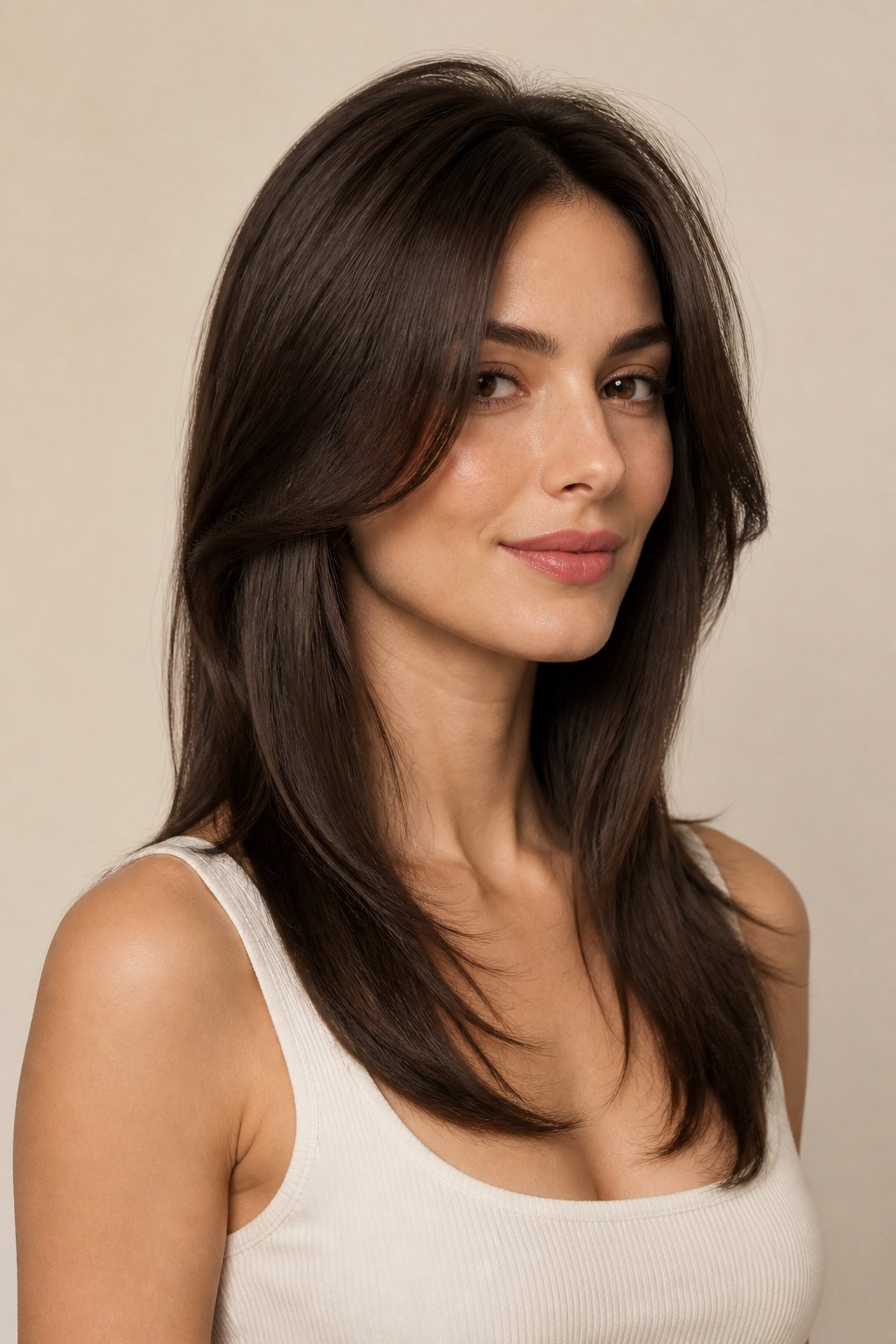
Straight hair can wear a soft wolf cut when the layers stay airy and lightly choppy. Your stylist should avoid thick, obvious steps between the crown and the ends.
Longer layers around the face prevent the cut from looking too sharp. The crown can have subtle lift, while the lower hair length stays full enough to look healthy.
Blow-dry your roots upward, especially at the crown, to keep the shape from falling flat. Then smooth the lengths with a paddle brush or flat iron at low heat.
Apply a small amount of serum only from the mid-lengths down. This adds shine and controls flyaways without flattening the light layers near your scalp.
Beachy Waves With Dark Roots
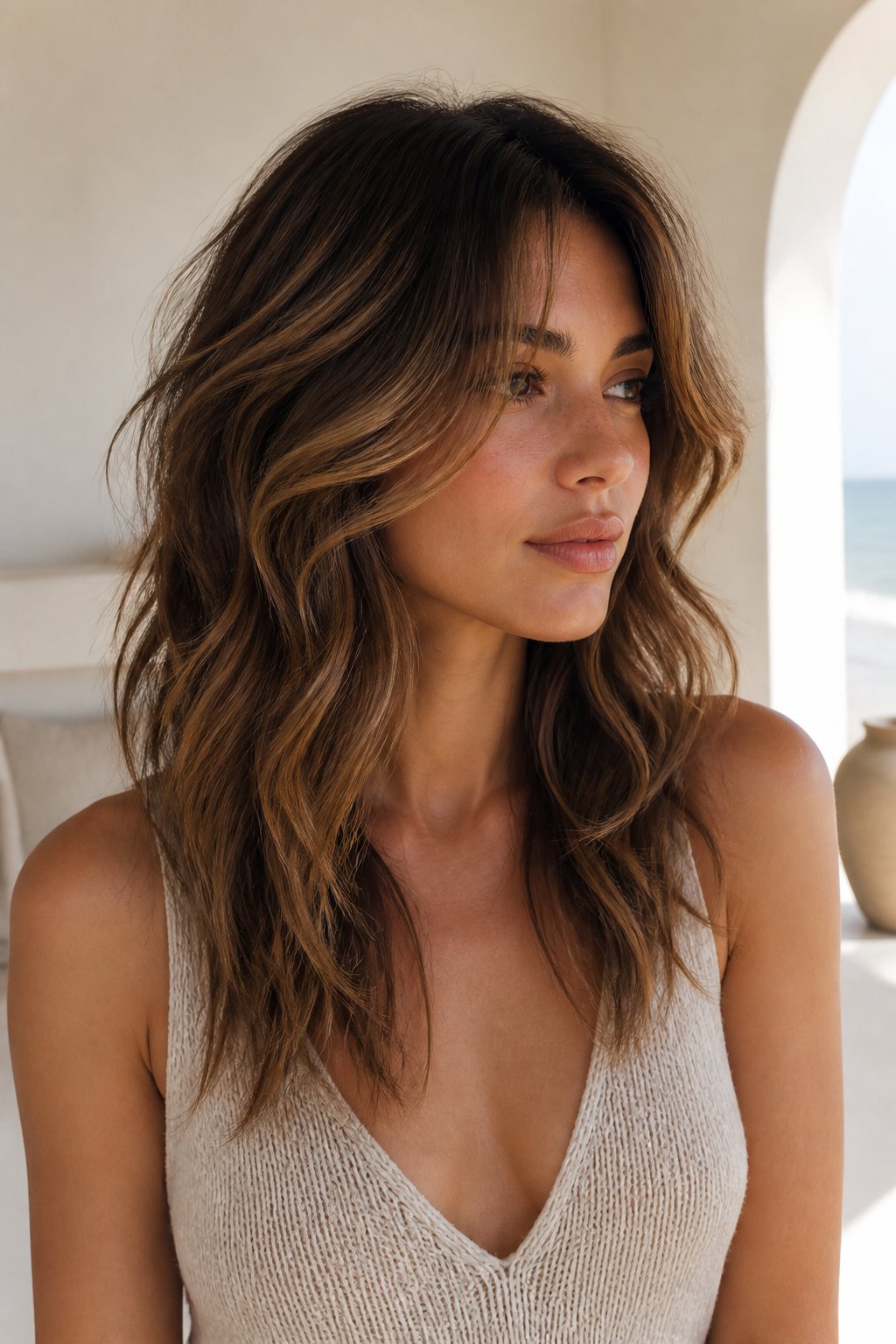
Beachy waves with dark roots give a soft wolf cut a low-maintenance color and style option. The darker base creates depth near your scalp, while lighter lengths show off the cut’s texture.
This look works well when you want color that grows out with less noticeable upkeep. Keep the root area close to your natural shade, then blend lighter color through the ends with balayage or fine highlights.
Create beachy waves by wrapping medium sections around a curling iron and leaving the ends out. Change the curl direction from section to section, then loosen the waves with your fingers.
A salt-free texture spray can add grip without making your hair feel overly dry. If your hair is already dry, use a light styling cream instead.
Soft Voluminous Layers for Long Hair
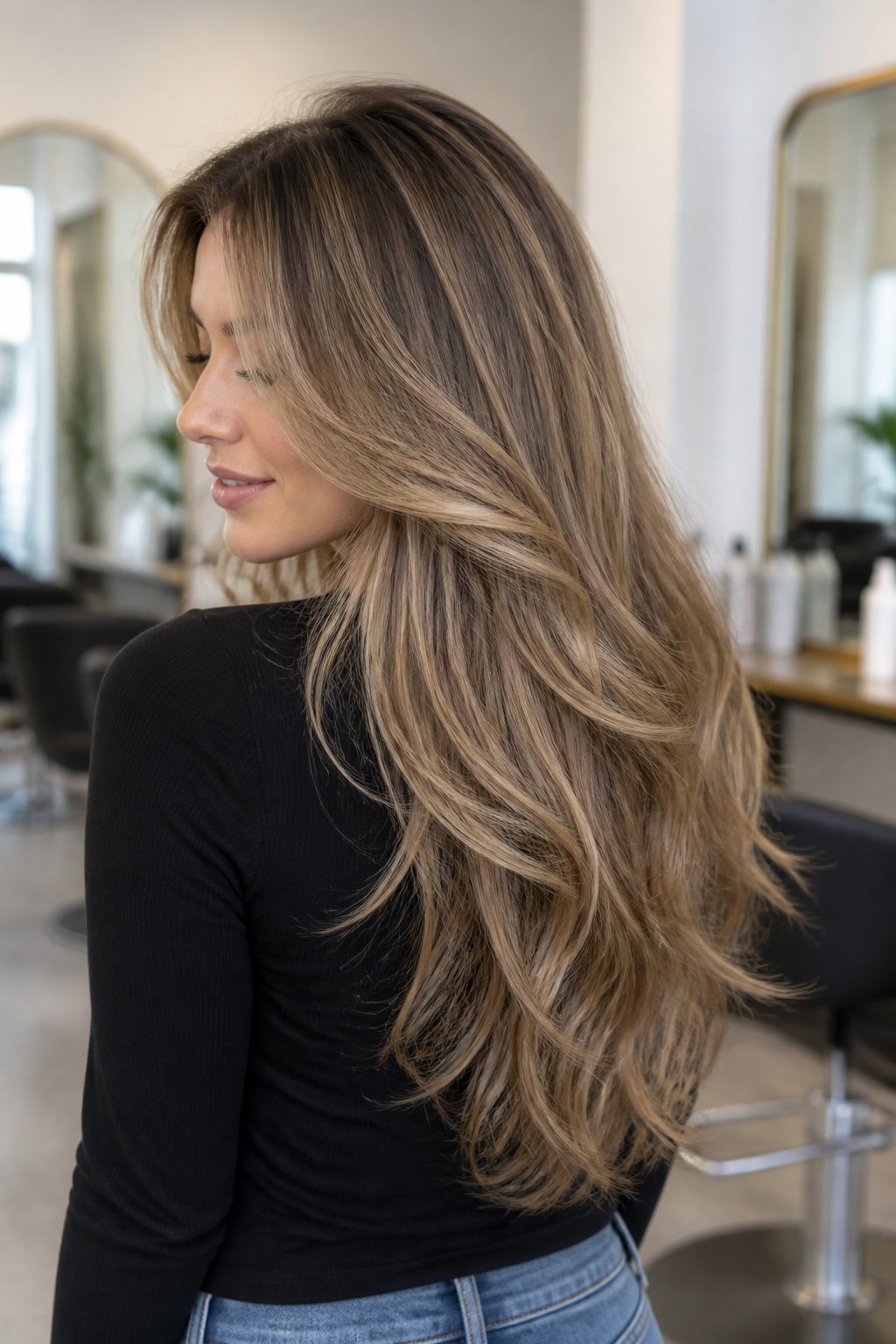
Soft voluminous layers for long hair focus on lift at the crown and movement through the ends. The layers should build gradually, so you keep a full-looking length instead of removing too much hair.
Ask for rounded layers near the top rather than short, heavily chopped pieces. This creates volume that looks softer and blends better with the lower lengths.
For styling, apply mousse or root-lifting spray to damp hair at the crown. Blow-dry with a round brush, lifting each section upward before guiding it back.
You can add soft waves through the lower layers for more body. Finish with a flexible hold spray, and avoid heavy oils near the roots so your volume lasts longer.
Soft Bangs and Face-Framing Variations
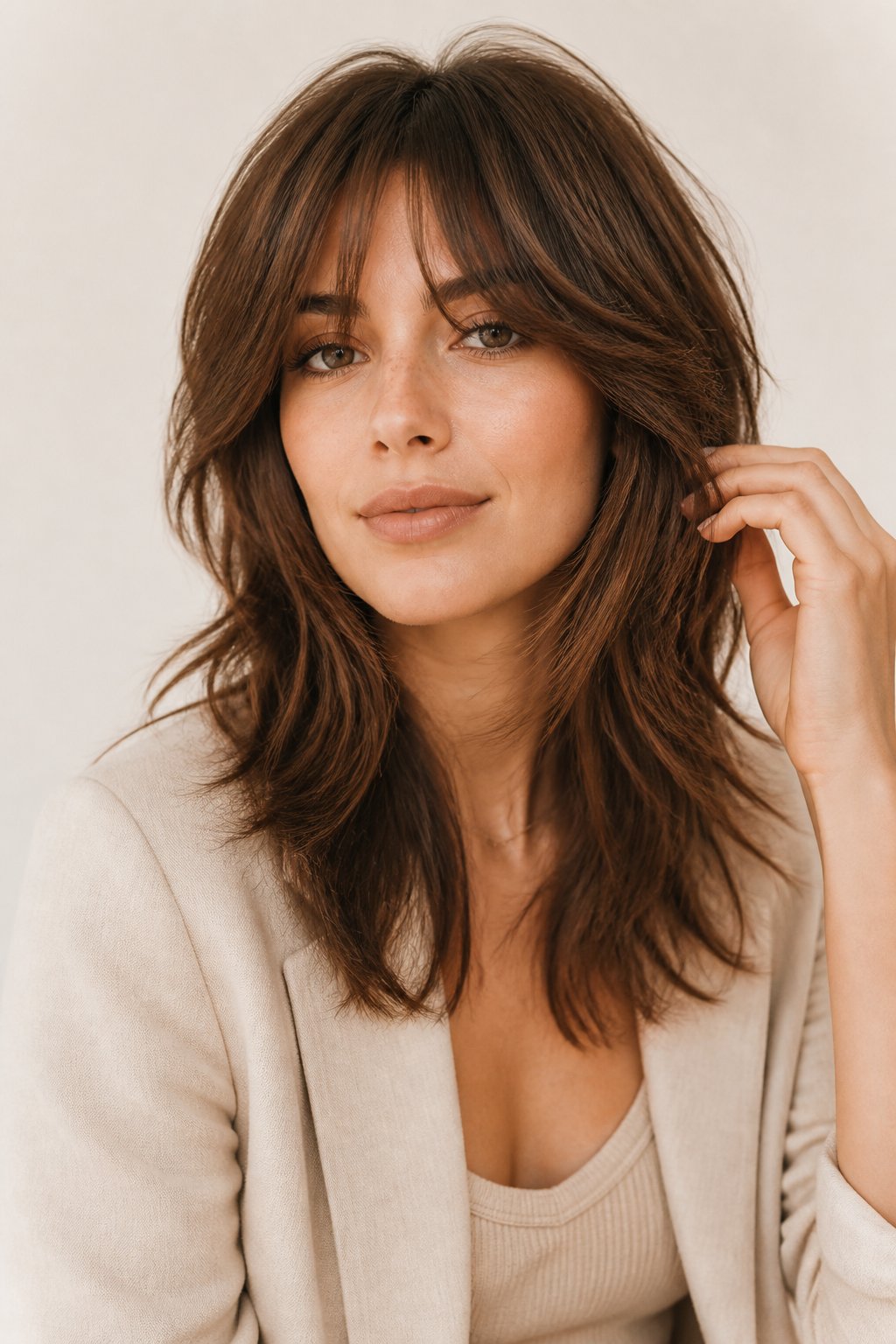
Soft bangs and face-framing pieces help a wolf cut look lighter and more feminine. Choose the fringe length and layer placement based on your face shape, hair texture, and daily styling routine.
Wolf Cut With Curtain Bangs
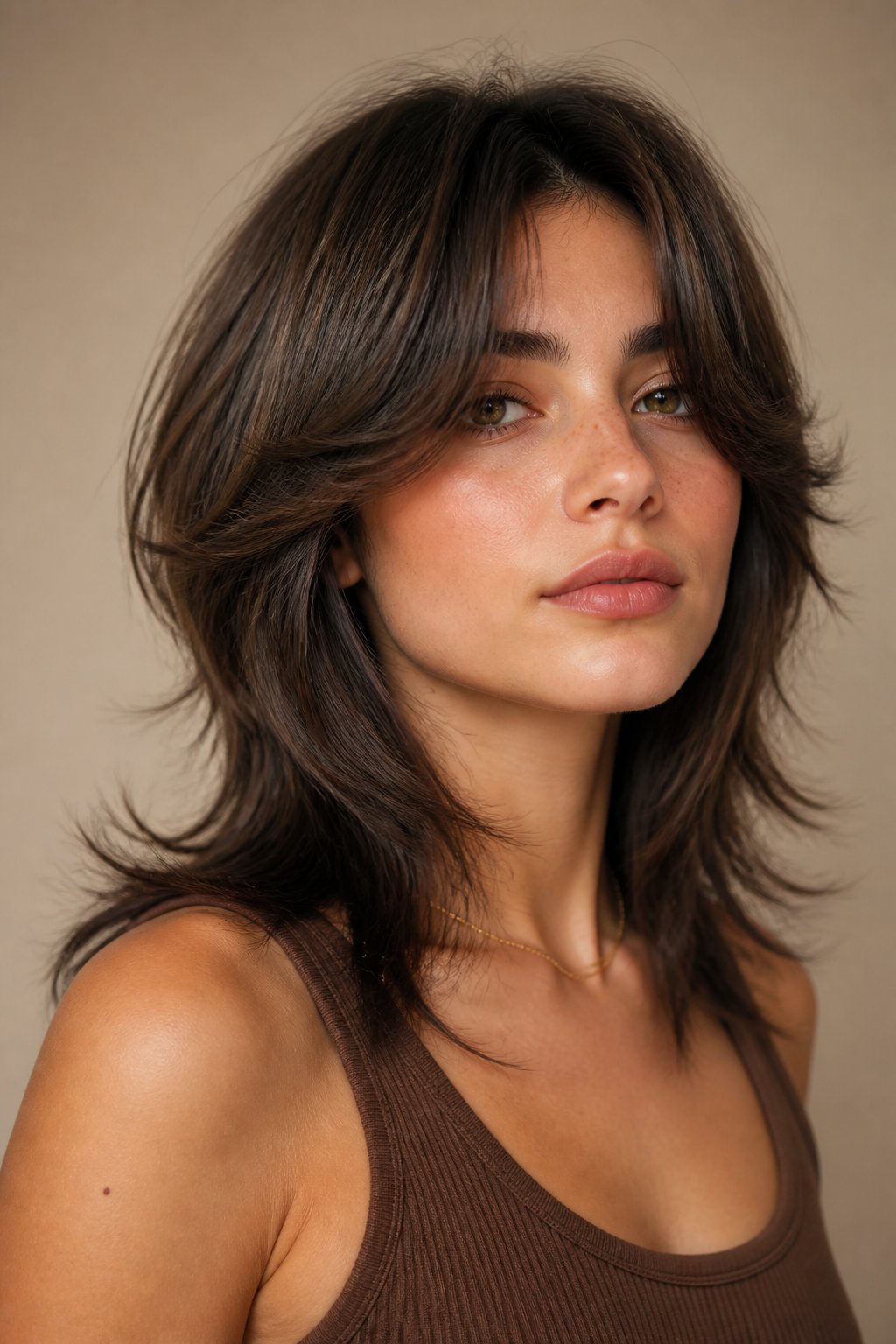
A wolf cut with curtain bangs creates an open, balanced frame around your face. The bangs part near the center and sweep outward, blending into the shortest face-framing layers.
Ask for curtain bangs that reach your cheekbones or jawline when dry. This length gives you a soft shape without hiding too much of your face.
Use a round brush or small roller to bend the bangs away from your face. A light styling cream helps separate the textured layers without making them stiff.
Best for: straight, wavy, or loose-curly hair that needs movement around the front.
Wispy Bangs With Soft Shaggy Layers
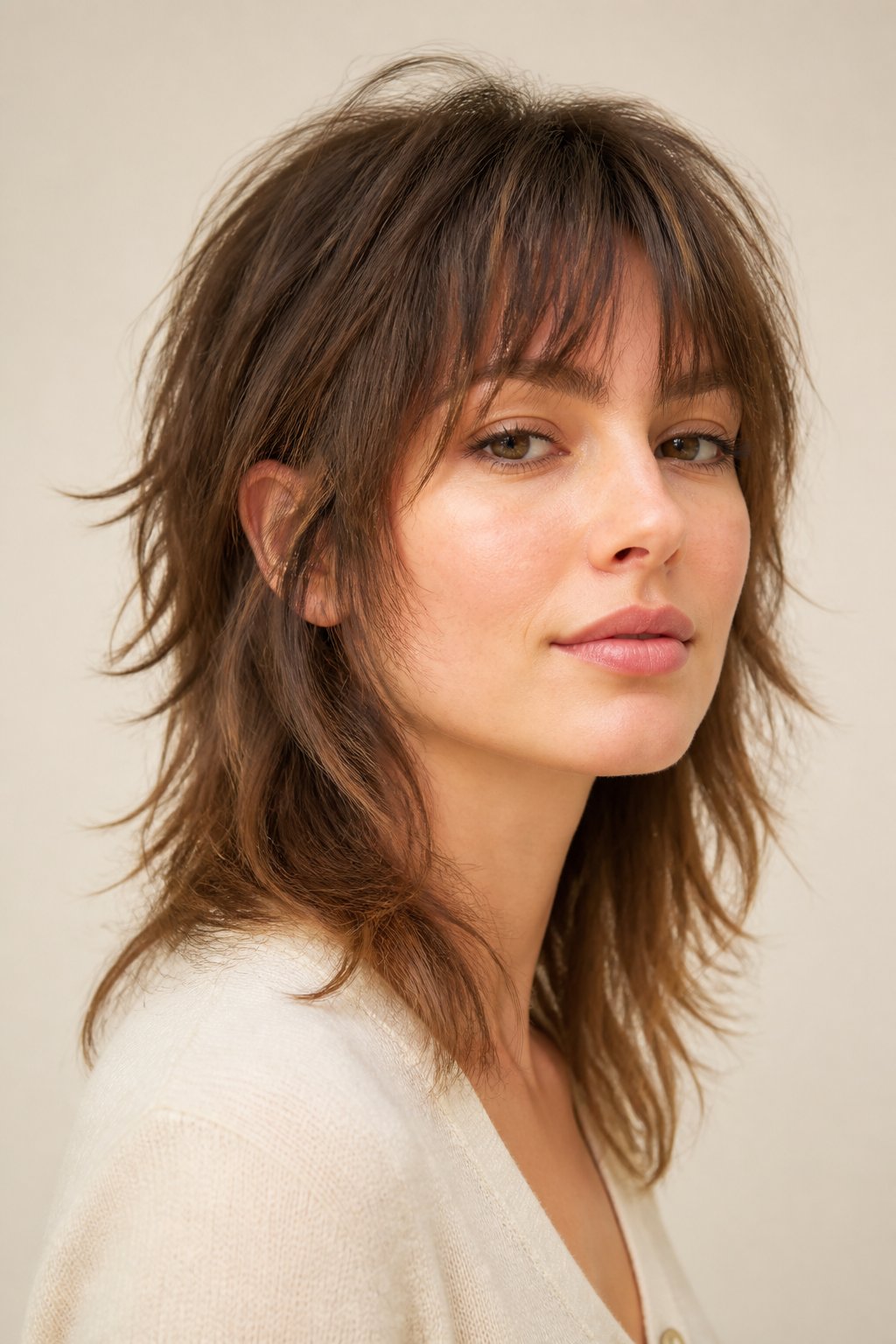
Wispy bangs use thin, uneven ends instead of a heavy straight line. They work well with soft shaggy layers because both features create an airy, relaxed finish.
Keep the fringe longer in the center and lightly tapered at the sides. Your stylist can connect it to cheekbone-length layers, which prevents the bangs from looking separate from the haircut.
This wolf cut with bangs suits fine to medium hair well. Avoid using too much wax or oil near the fringe, since it can make thin pieces look flat or stringy.
Side-Swept Fringe With Textured Layers
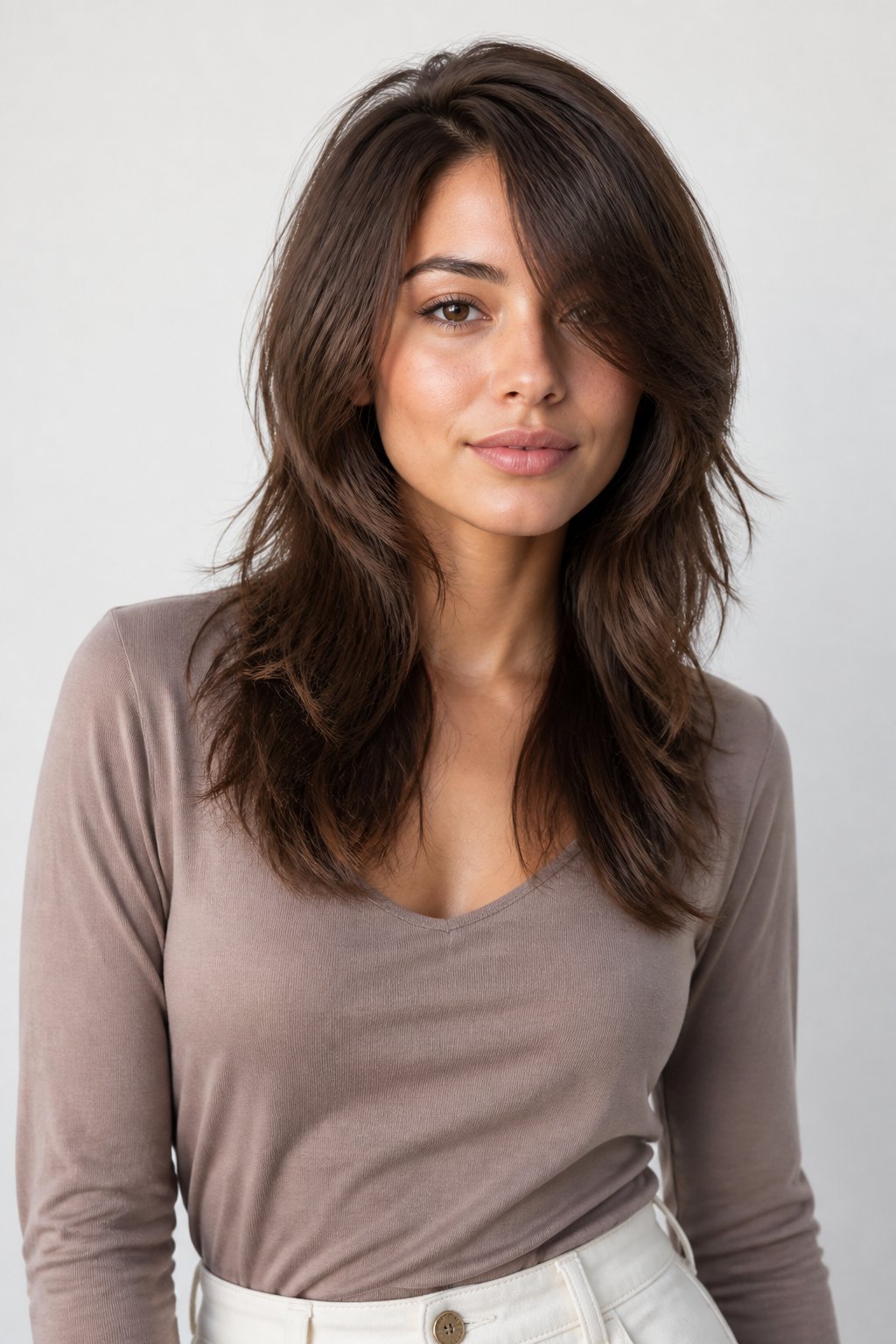
A side-swept fringe gives your soft wolf cut an angled shape. It starts at a side part and falls across part of your forehead before blending into longer layers.
This option works if you do not want bangs directly in your eyes. It also grows out more easily than a short, center-cut fringe.
Ask for textured layers through the crown and around the cheeks. Blow-dry the fringe in the direction you want it to sit, then use a small amount of flexible hairspray to hold it in place.
Styling tip: Switch your part slightly from side to side to keep the roots from falling flat.
Heart-Shaped Face Soft Wolf Cut
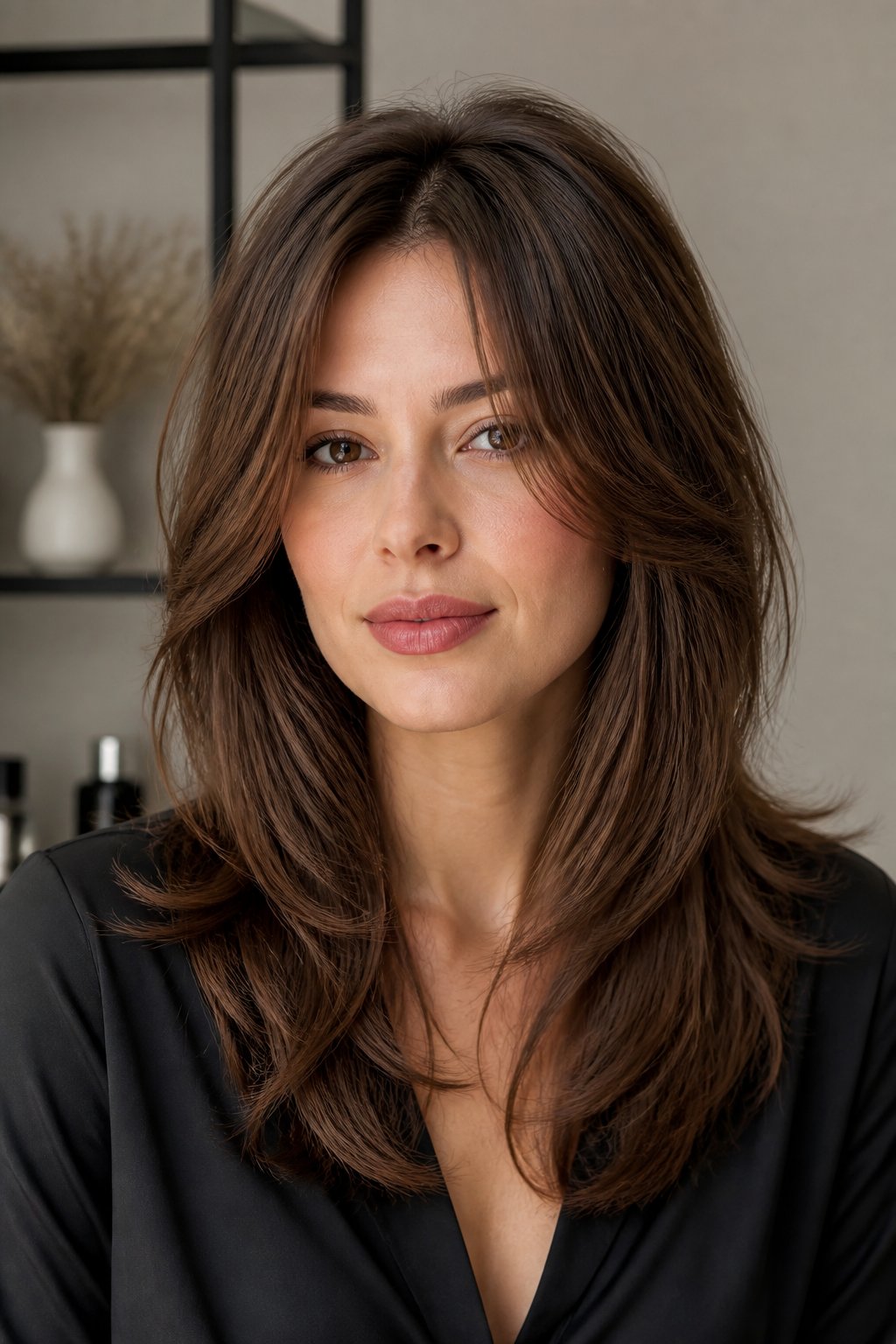
If you have a heart-shaped face, your forehead may appear wider than your chin. A soft wolf cut can balance this shape when you use longer bangs and layers near the jaw.
Choose curtain bangs that open below the brows rather than short, blunt bangs. Keep the face-framing pieces full around your cheekbones and jawline to add softness near the lower half of your face.
Avoid very short, heavy crown layers if you already have a lot of volume at the top. Your stylist can leave more length through the sides for a smoother shape.
Rounded Face-Framing Pieces
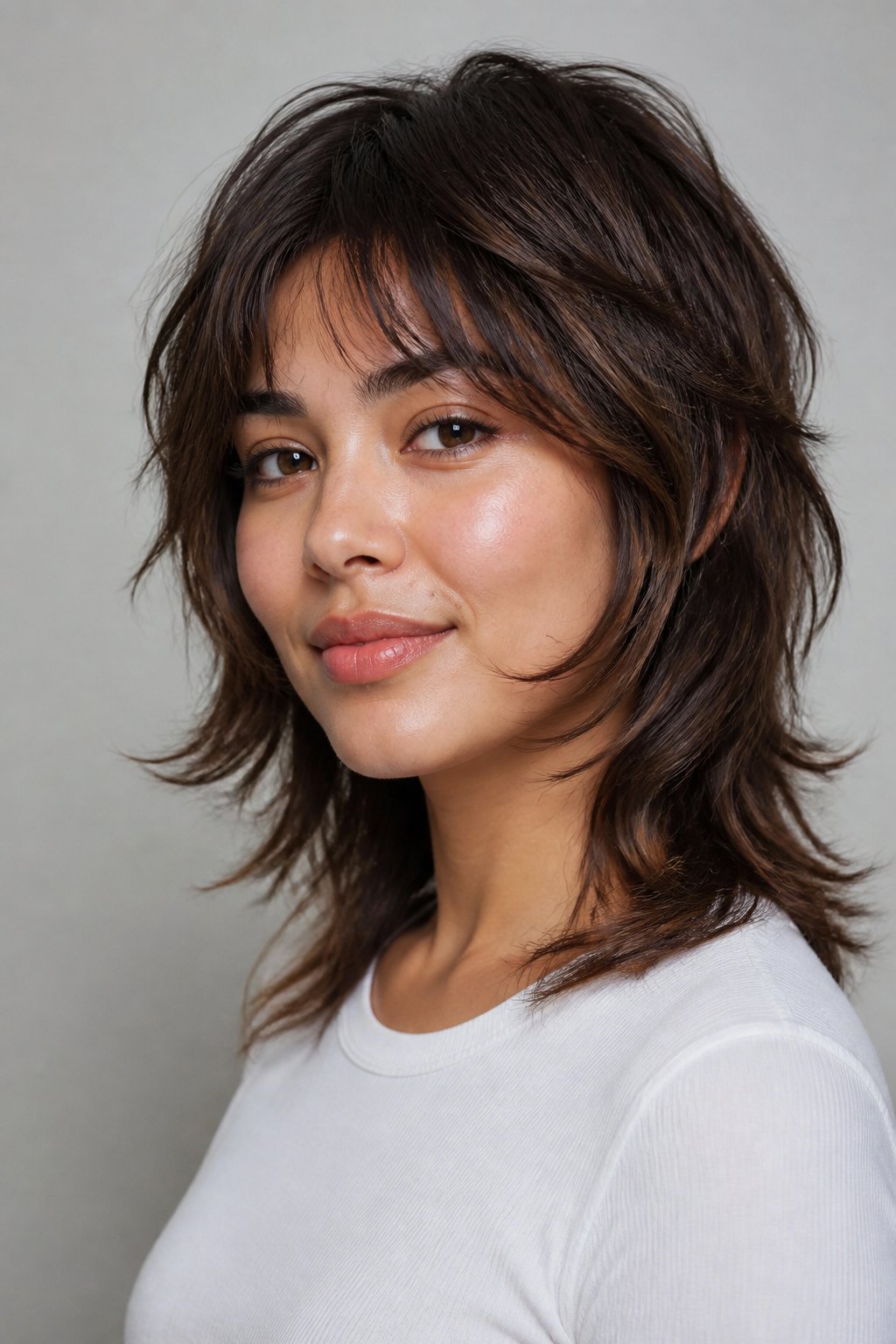
Rounded face-framing pieces curve gently from the cheekbones to the jaw. They soften the edges of a wolf cut while keeping the shaggy layers wearable.
For a round face, start the shortest pieces below the cheekbones. This keeps extra width away from the middle of your face and adds a longer vertical line.
Use a round brush to curve the ends inward or outward. A soft bend looks more natural than a tight curl and helps the pieces connect with the rest of your textured layers.
Ask your stylist for: long, blended layers with no blunt line at the chin.
Soft Wolf Cut With Delicate Baby Bangs
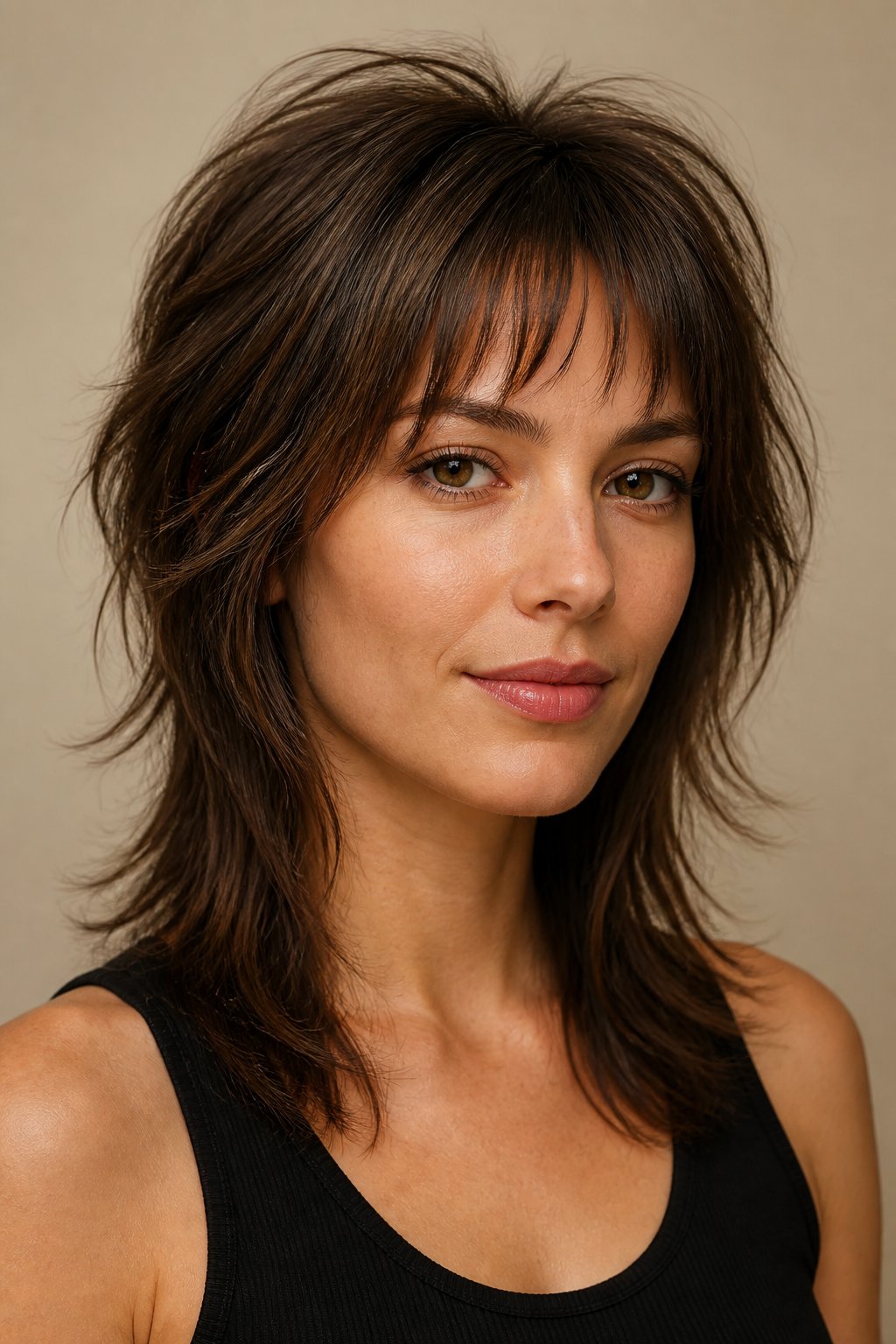
Delicate baby bangs sit well above the eyebrows but use a light, broken-up edge. They add detail to a soft wolf cut without creating the strong look of thick micro bangs.
Keep the fringe thin enough to show small spaces between the hairs. Pair it with longer face-framing pieces at the temples, which helps soften the short length.
This style needs regular trims because short bangs grow out quickly. You can air-dry them for a natural finish, but use a small flat brush if they separate or bend unevenly.
Baby bangs can highlight your brow area, so they work best when you feel comfortable showing more of your forehead.
Asymmetrical Wolf Cut With Long Fringe
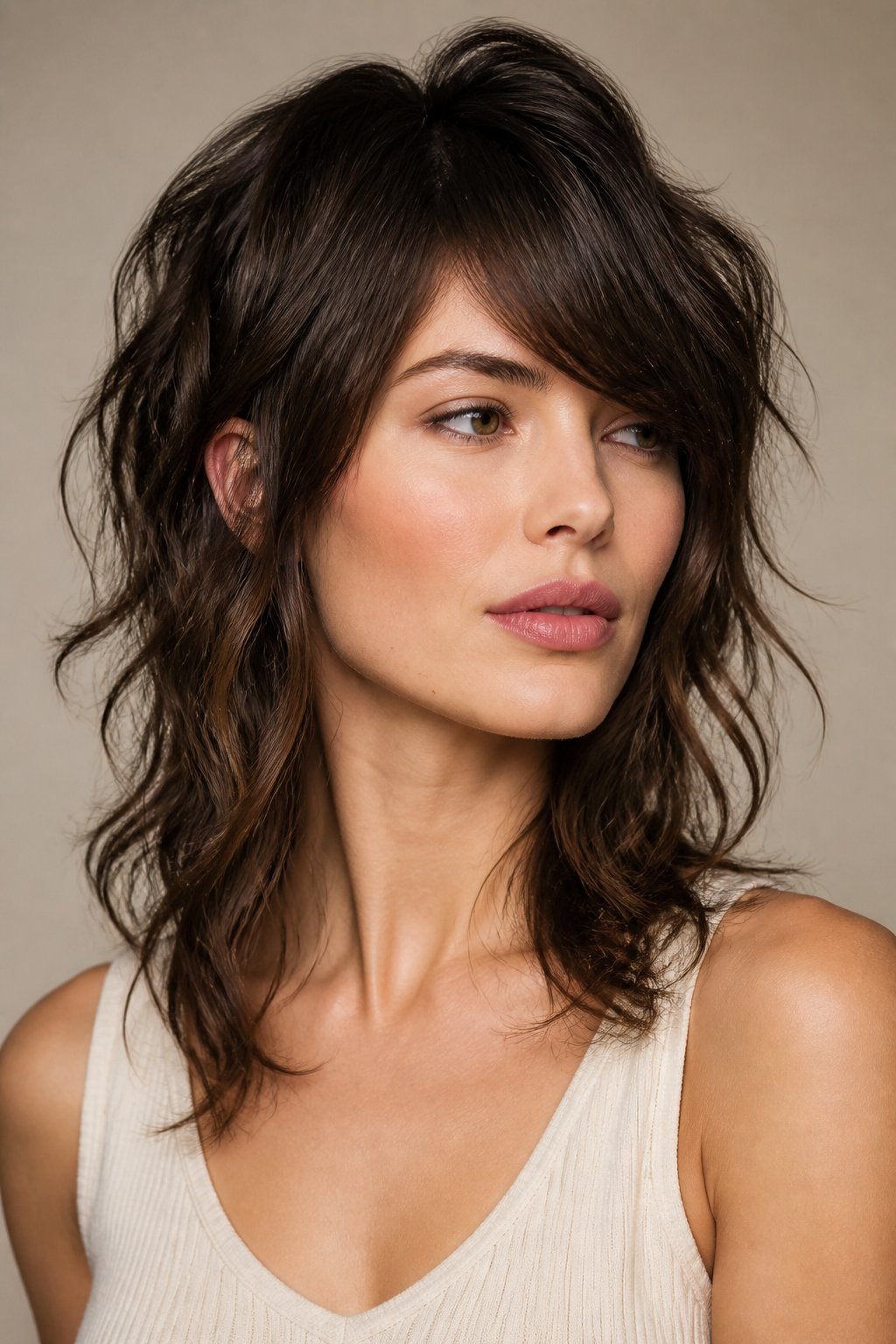
An asymmetrical wolf cut uses uneven lengths to create movement. A long fringe on one side adds softness and makes the cut feel less severe.
Keep one side of the fringe long enough to reach the cheekbone or jaw. The opposite side can blend into shorter layers, creating a clear but subtle difference.
This shape works especially well with natural waves because the texture makes the uneven lengths look intentional. Apply mousse to damp hair, then scrunch the ends to bring out the layered pattern.
Avoid cutting the contrast too sharply if you want a feminine finish. Soft transitions between the long fringe and textured layers keep the asymmetrical wolf cut balanced.
Texture-Led Looks for Every Hair Type
A soft wolf cut can work with many hair textures when the layers match your natural pattern. The right length, shaping, and styling method help you keep movement without making your hair hard to manage.
Curly Wolf Cut With Natural Volume
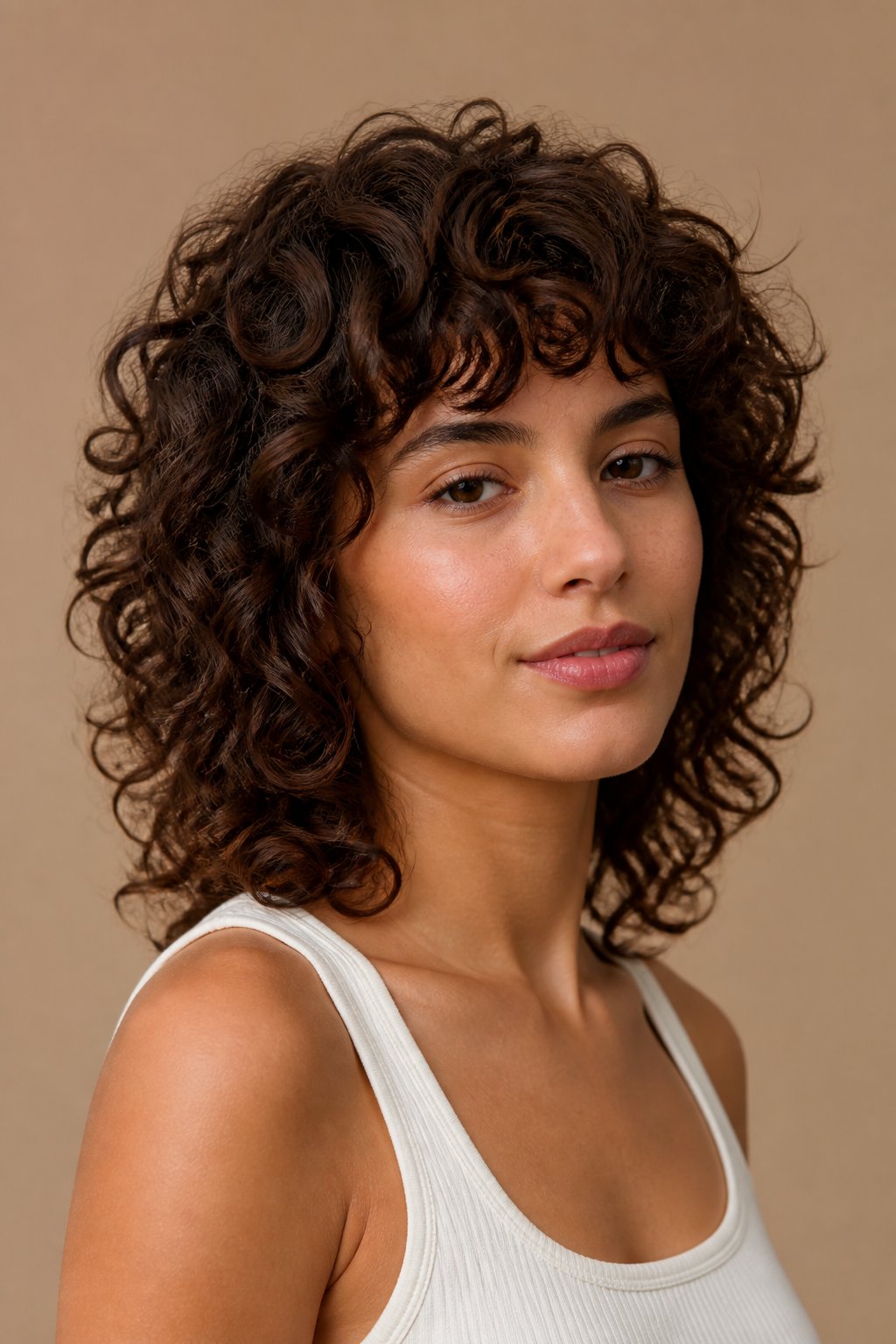
A curly wolf cut uses shorter layers at the crown and longer pieces around the face and neck. This shape lets your curls stack naturally, creating volume without heavy teasing or heat styling.
Ask for dry cutting or curl-by-curl shaping if your stylist uses that method. Curly hair can shrink as it dries, so this helps prevent layers from ending up shorter than you want.
Keep the top layers soft rather than sharply chopped. Very short layers may create a wide, uneven shape, especially with tight curls.
Use a light curl cream followed by gel or mousse for hold. Diffuse on low heat, or air-dry without touching your curls too much. Regular trims help keep split ends from making the shape look rough.
Wavy Hair Wolf Cut With Soft Definition
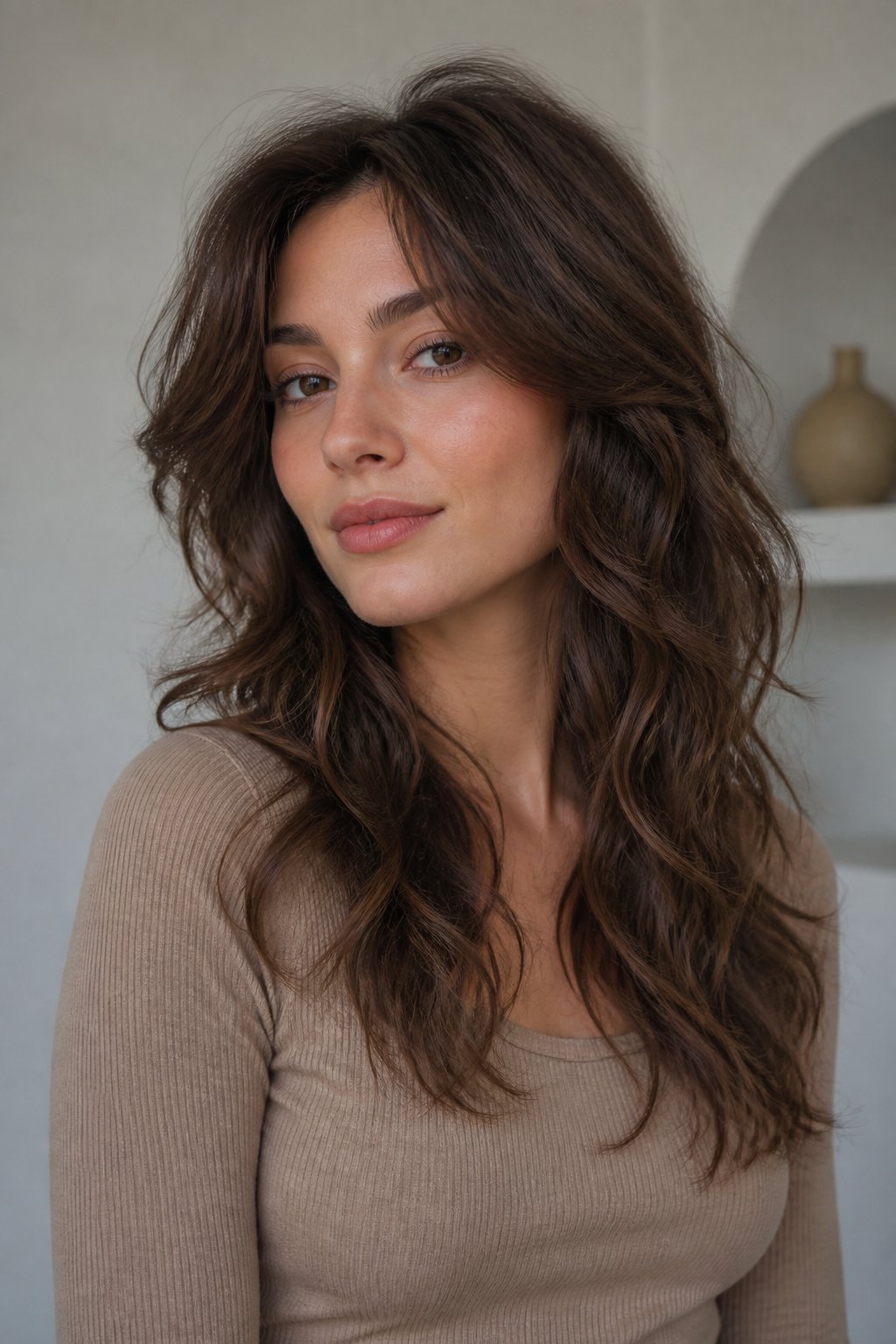
A wolf cut for wavy hair works best with blended layers that follow your natural waves. The cut adds lift at the top while keeping enough length through the ends, so your hair does not look thin or flat.
Choose face-framing layers that begin around your cheekbones or jaw. This placement gives natural waves a softer outline and keeps the style feminine.
Avoid too many short layers if your wavy hair gets puffy in humidity. Instead, ask for longer, connected layers that remove bulk while keeping the ends full.
For styling, apply a lightweight mousse to damp hair and scrunch upward. Let your waves dry partly, then use a wide-tooth comb only at the roots if you need more crown lift. A small amount of texture spray can add soft definition without making hair stiff.
Fine Hair Wolf Cut With Crown Lift
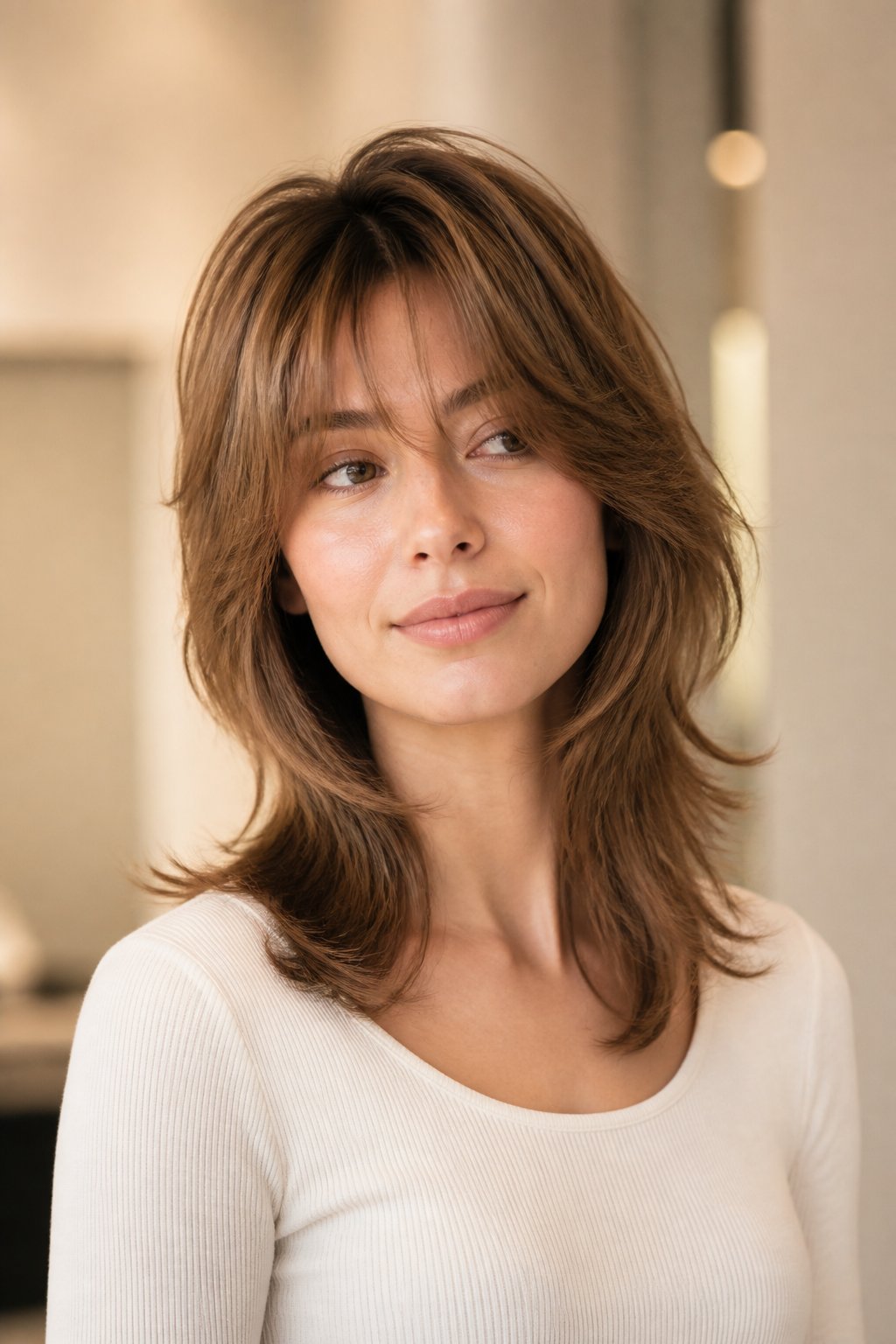
Fine hair needs a soft wolf cut with careful layering. Light layers near the crown can create the look of more volume, but heavily thinned ends can make fine hair appear sparse.
Keep the bottom perimeter fairly full. Your stylist can add subtle internal layers near the crown and face instead of cutting short, choppy pieces throughout your hair.
A shorter fringe or curtain bangs can also help build shape around your face. Keep bangs wispy but not too thin, since fine hair separates easily.
Use a root-lifting spray before blow-drying, then dry your crown in the opposite direction of your usual part. Skip heavy oils and thick creams, which can weigh fine hair down. Dry shampoo at the roots can refresh lift between wash days.
Thick Hair Wolf Cut With Weight Removal
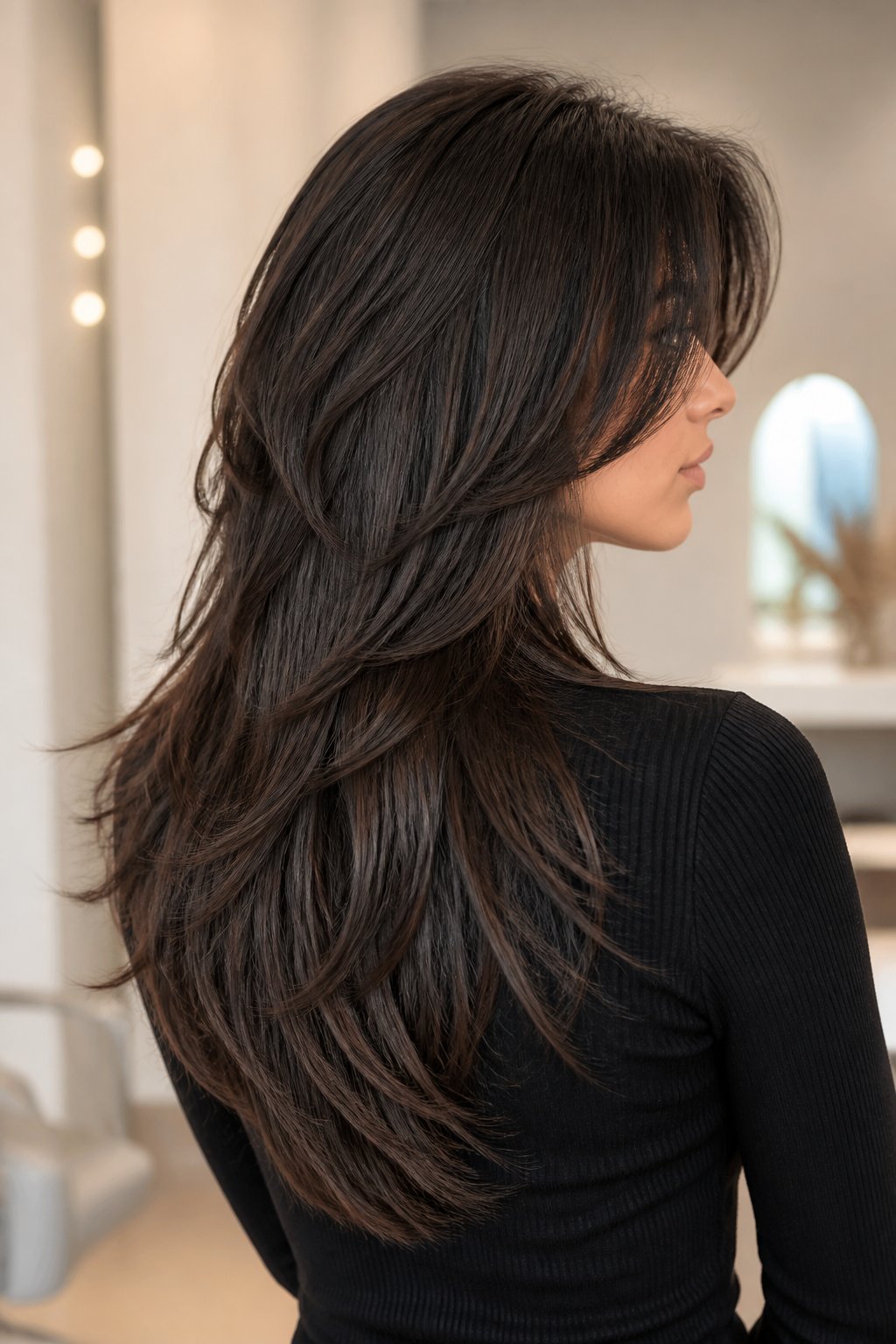
A wolf cut can make thick hair easier to wear because it removes weight from the middle sections. The goal is to reduce bulk while keeping the hair smooth and soft at the ends.
Ask for long layers, internal weight removal, and a shape that follows your head. Your stylist should avoid cutting too much bulk from only the bottom, since that can leave a heavy shelf near the crown.
Thick hair often benefits from longer face-framing pieces. They help the layers blend and prevent the cut from looking too wide around the cheeks.
Use a smoothing cream on damp hair, then blow-dry with a brush or diffuser based on your natural texture. If your hair expands in moisture, finish with a small amount of anti-humidity serum. Trim every 8 to 12 weeks to maintain the layers.
Natural Curls With Tapered Layers
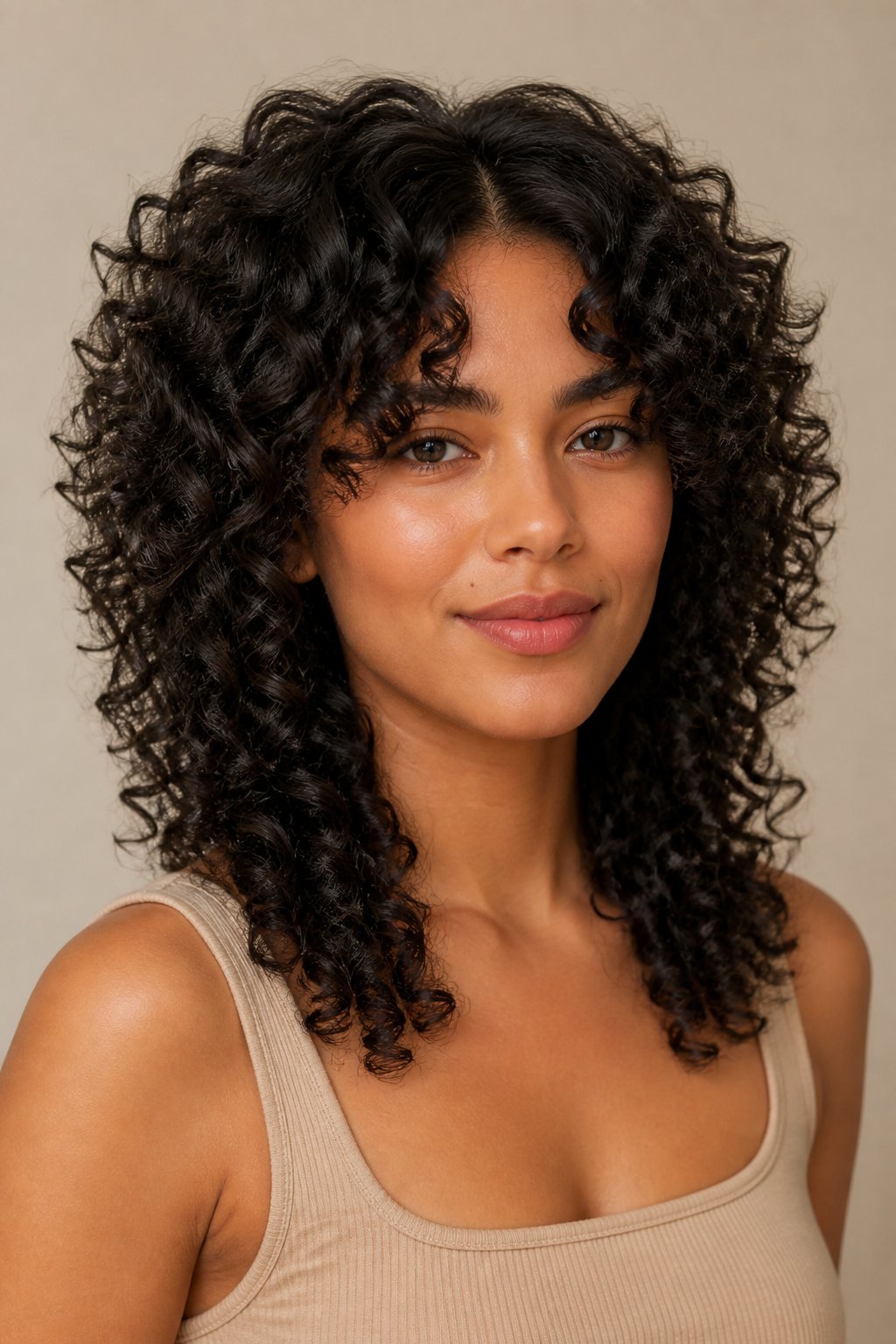
Natural curls can take on a soft wolf shape with tapered layers that gradually get longer from crown to ends. This creates a rounded silhouette instead of a sharp, bulky triangle shape.
Keep the tapered sides balanced with the crown. If the sides are cut too short, your natural curls may push outward and make the style look uneven.
Tell your stylist how you usually wear your part. A center part often gives even volume, while a side part can create more height on one side.
Moisture matters for this style. Use a leave-in conditioner, curl cream, and flexible-hold gel in small amounts. Refresh flattened curls with water and a little leave-in product rather than brushing dry hair, which can cause frizz and break up curl groups.
Messy Wolf Cut With Lived-In Texture
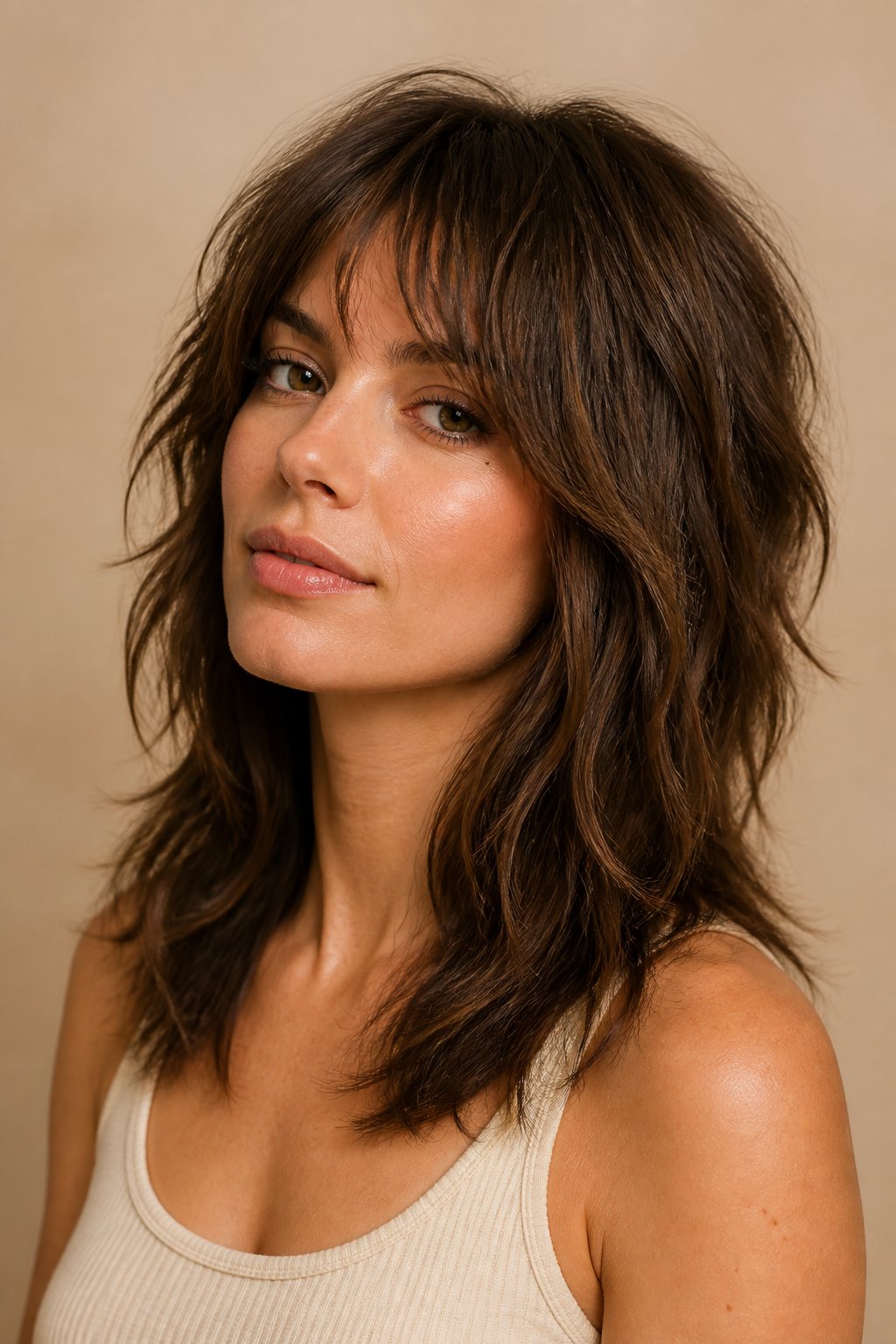
A messy wolf cut has loose layers, soft fringe, and uneven-looking texture that still feels controlled. It suits you if you want movement without a polished, smooth finish.
The best version does not rely on harsh razor cuts or extreme choppy ends. Ask for textured layers with soft blending, especially around the face and lower lengths.
Your natural texture can guide the final result. Straight hair may need styling product for separation, while wavy or curly hair can create a lived-in finish with less effort.
For an easy style, work a pea-sized amount of texturizing paste through dry mid-lengths and ends. Twist a few pieces away from your face, then leave the rest alone. Use dry shampoo at the roots when you want a slightly fuller, less freshly washed look.
Sleek Textured Wolf Cut for Straight Hair
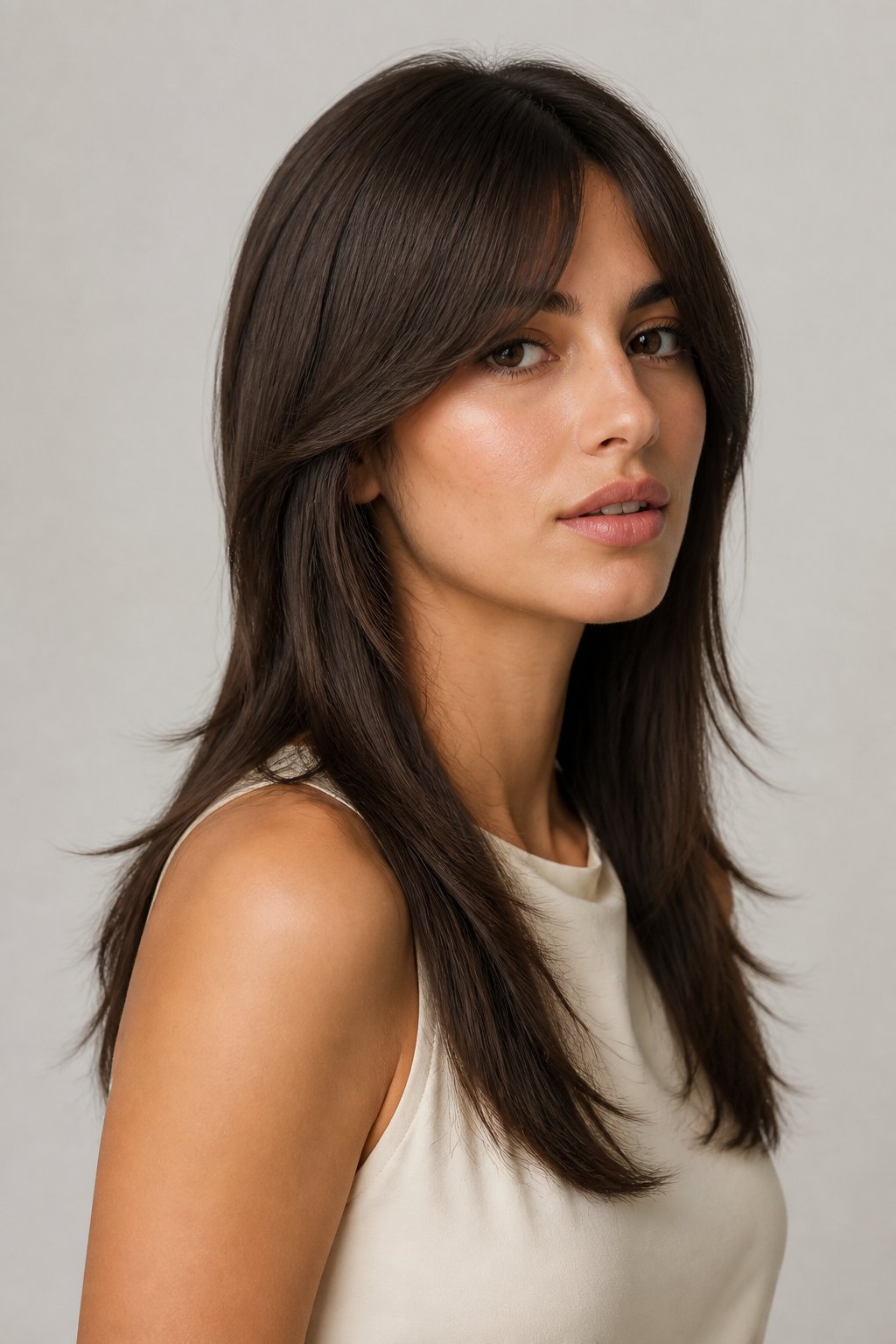
A textured wolf cut for straight hair needs visible layers because straight strands do not hide the cut as easily as curls or waves. Clean face-framing pieces and soft graduation at the crown keep the look sleek rather than flat.
Keep the layers long enough to blend when your hair lies straight. Very short, blunt layers can stick out and make the cut look disconnected.
Curtain bangs or a long side fringe work well with this shape. They add softness around your face and blend into the top layers without requiring much daily styling.
Blow-dry with a round brush for slight lift at the roots, then smooth the lengths with a flat brush. Use a light heat protectant and a small amount of shine serum on the ends. Avoid applying serum near your scalp, where it can reduce volume.
Color and Edgier Soft-Wolf Options
Color placement, soft shaggy layers, and controlled texture can make your wolf cut feel more personal. You can keep the shape feminine while adding contrast, depth, or a sharper detail.
Red Wolf Cut With Soft Layers
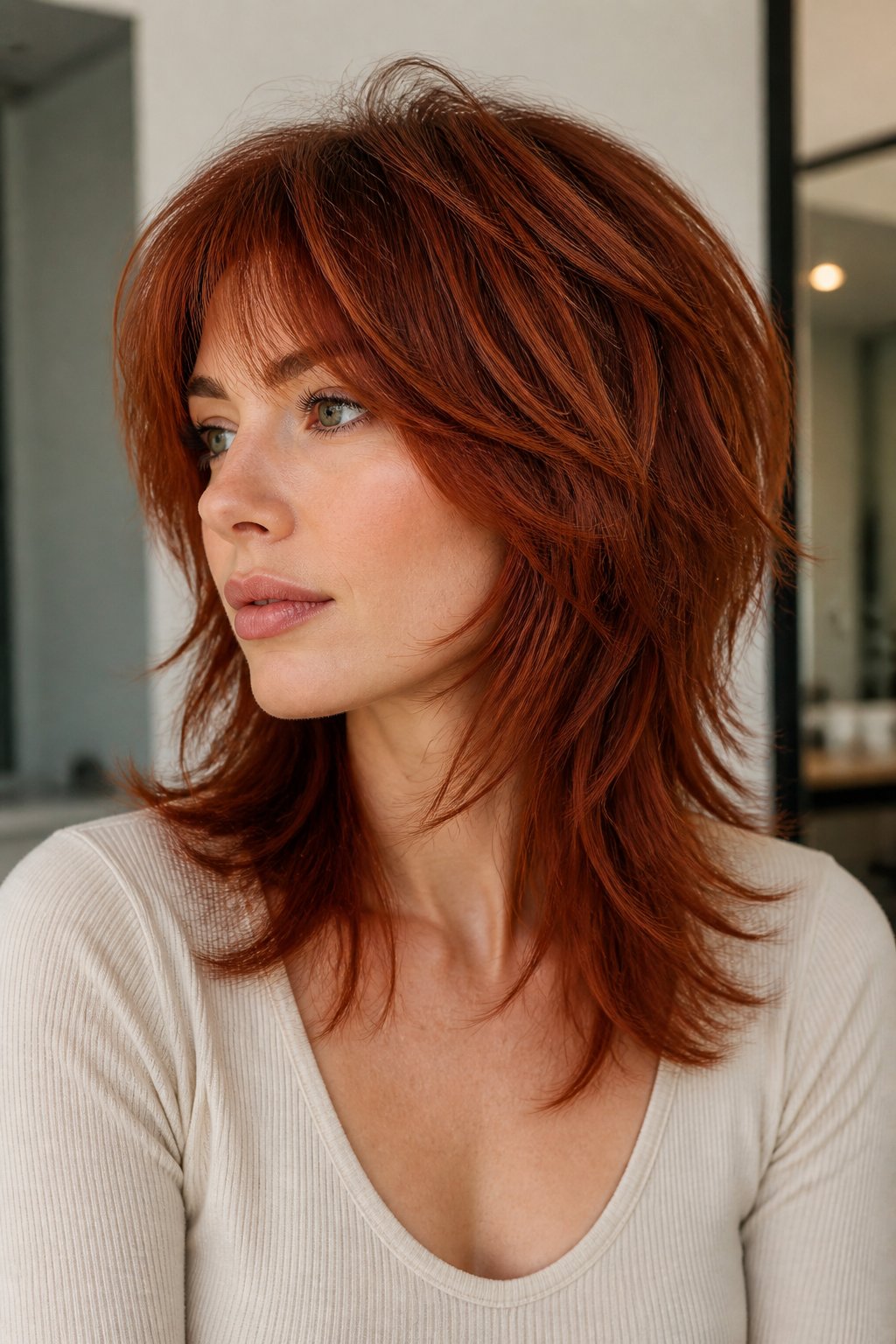
A red wolf cut brings attention to the layers without making the shape look harsh. Choose a shade that fits your skin tone, such as copper, auburn, cherry brown, or deep burgundy.
Ask for soft face-framing layers that begin near your cheekbones or jaw. These pieces break up solid red color and keep the cut light around your face.
For a lower-maintenance option, use a darker red root that blends into warmer mid-lengths and ends. This root shadow makes regrowth less noticeable.
Use color-safe shampoo and wash with cool water to help red tones last longer. A weekly color-depositing conditioner can refresh faded copper or red shades between salon visits.
Bold Highlights on a Shaggy Wolf Cut
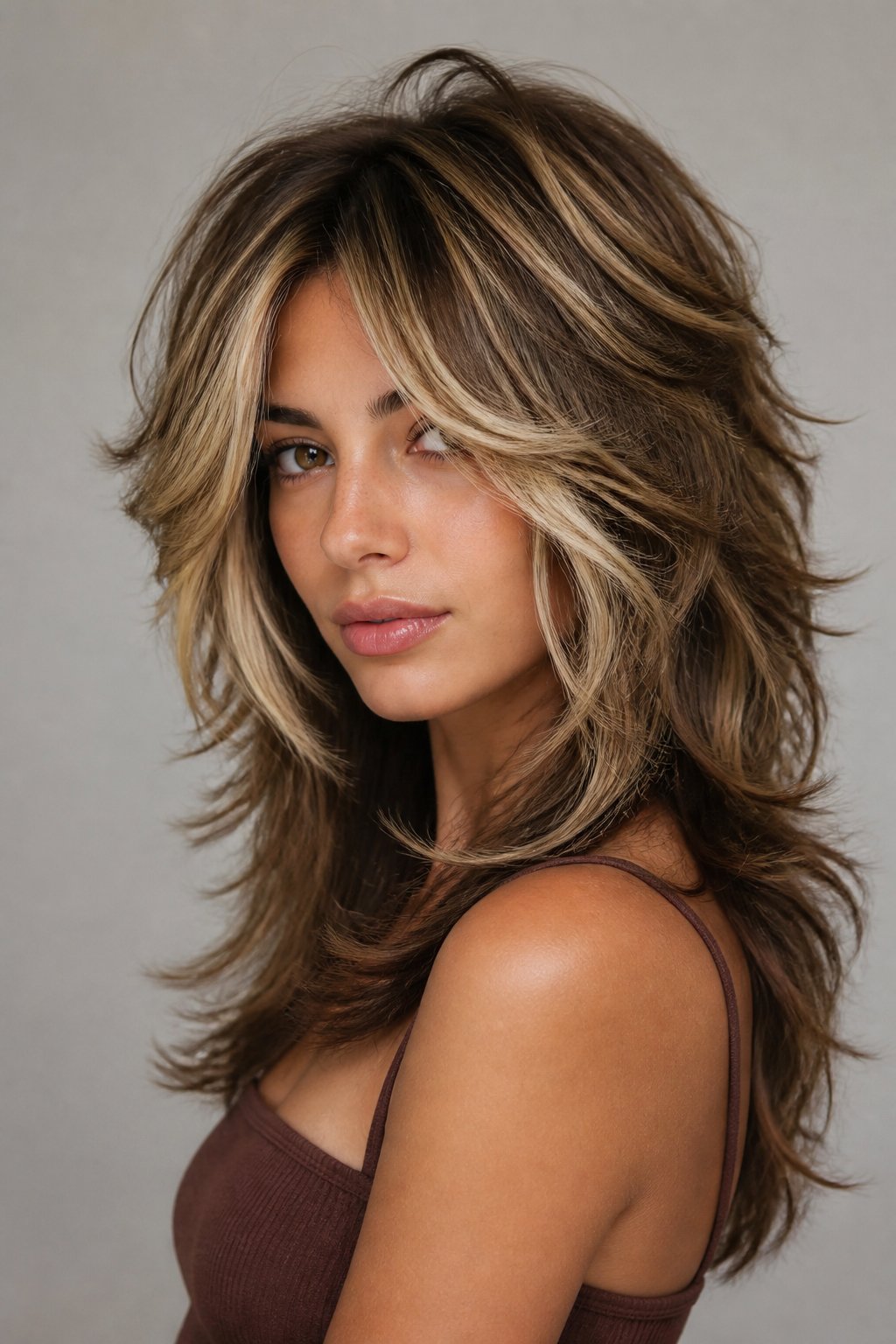
Bold highlights add clear contrast to shaggy layers and help the cut show more movement. You can place thicker blonde, caramel, or vivid-colored pieces through the crown and around the face.
Keep the highlights focused on the top layers if you want a softer effect. This placement adds brightness without lightening every section of your hair.
For a more noticeable look, ask for chunky face-framing highlights that start close to the roots. A bright money piece works well with a medium or long wolf cut.
Your stylist should blend the highlight edges into the lower layers. Strong color blocks can look uneven if they stop suddenly in the middle of the cut.
Soft Wolf Cut With an Undercut
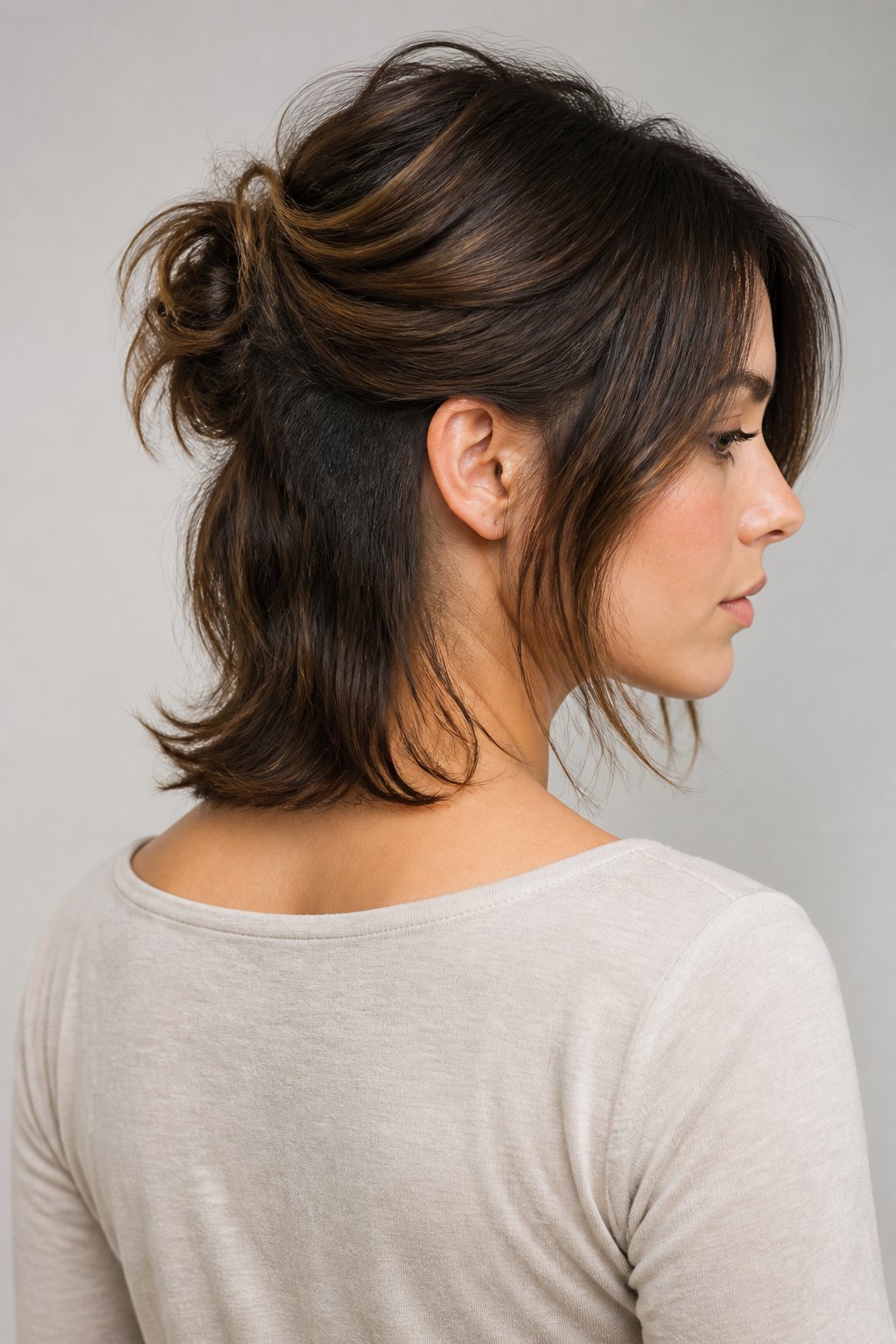
A wolf cut with undercut removes hair from one hidden area, usually beneath the crown or at the nape. You still get soft layers on top, but your hair feels lighter and less bulky.
This option works especially well if you have thick hair that becomes wide or heavy around the neck. The undercut lets the longer top layers fall with more movement.
Keep the undercut small if you want to hide it when you wear your hair down. You can show it by tying up the top layers in a half-up style.
Ask your stylist how often you will need trims. Most undercuts need cleaning up every three to six weeks to keep the line neat.
Classic Wolf Cut With a Feminine Finish
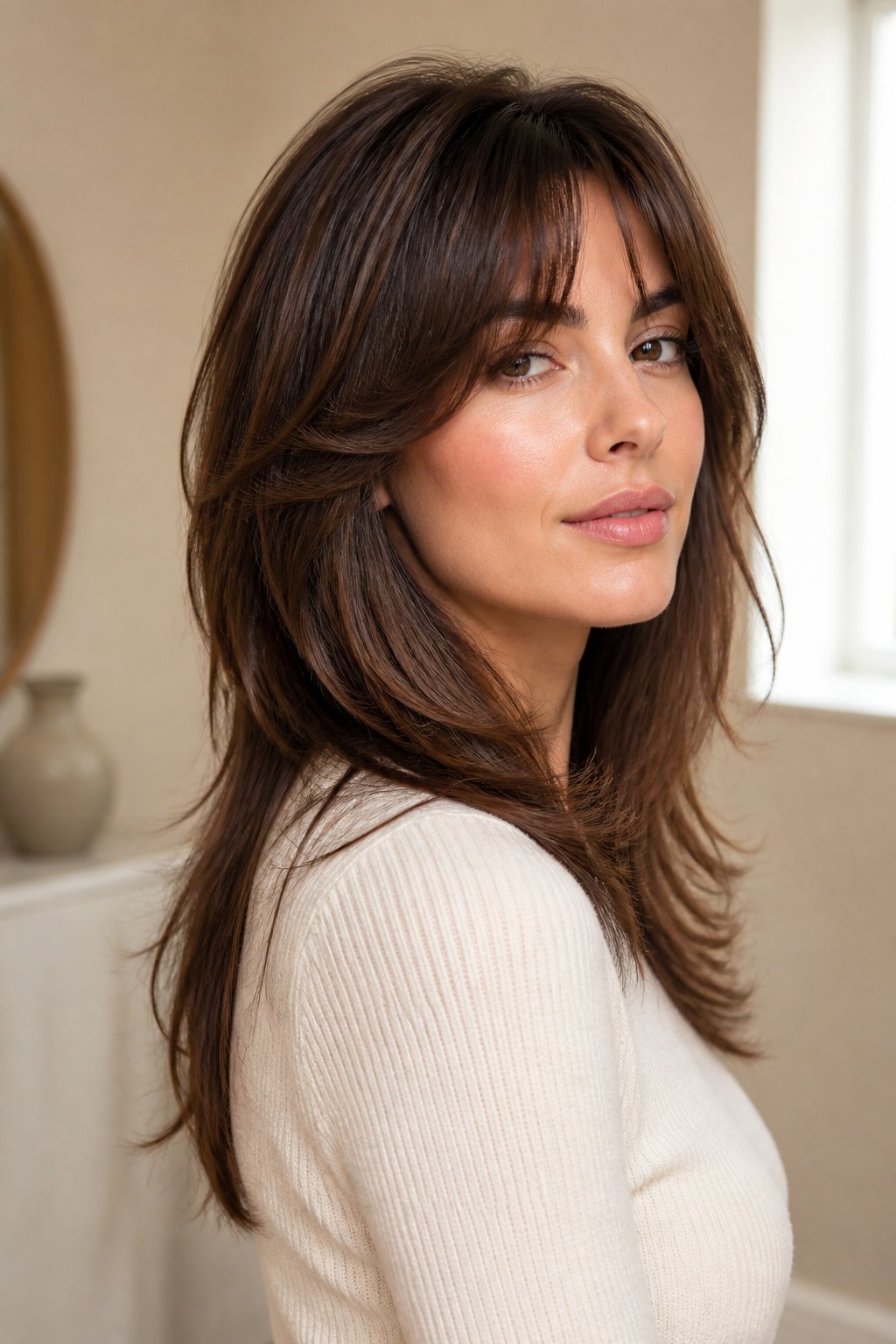
A classic wolf cut uses shorter layers at the crown and longer pieces through the back. For a feminine finish, keep the layer changes blended instead of sharp.
Request soft bangs, curtain bangs, or long fringe that connects to your face-framing layers. This creates a smoother line from your forehead to your cheekbones.
Avoid cutting the crown too short if you prefer a relaxed shape. Very short crown layers can add strong volume and make the cut look more dramatic.
You can style this version with a round brush or large curling iron. Bend the ends away from your face, then loosen them with your fingers for soft lift.
Textured Wolf Cut With Subtle Dimension
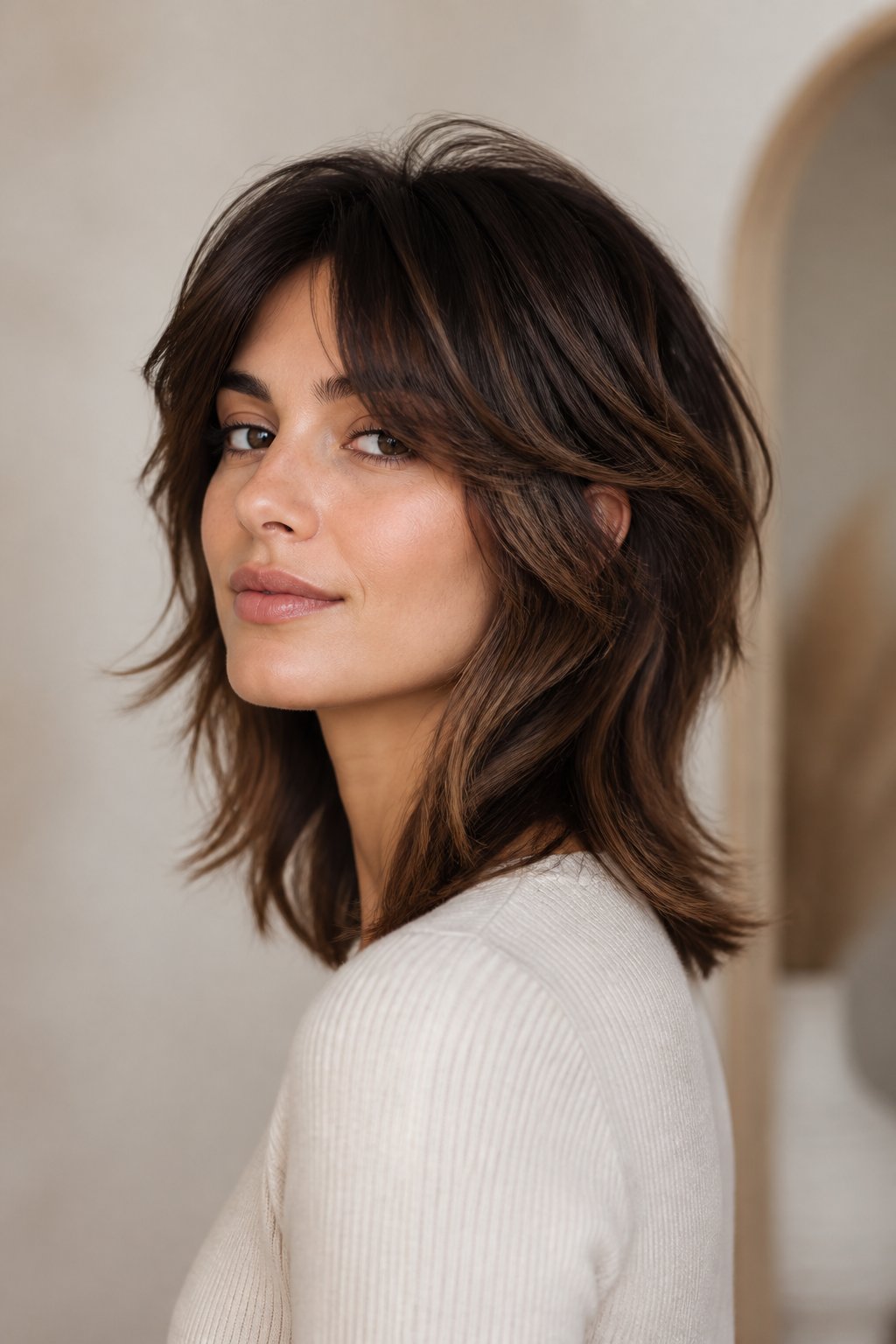
A textured wolf cut uses light internal layers to remove weight and create separation. Your stylist can add texture without leaving thin, broken-looking ends.
Subtle dimension works best when your color stays close to your natural shade. Think soft brown ribbons in brunette hair, beige blonde pieces, or warm lowlights in lighter hair.
Ask for color that follows the shape of the haircut. Fine highlights near the crown and ends can make the layers easier to see without creating strong stripes.
Use a small amount of texturizing spray on dry hair. Focus on the middle and ends, then scrunch gently to bring out the layered shape.
Soft Wolf Cut With Bright Face-Framing Color
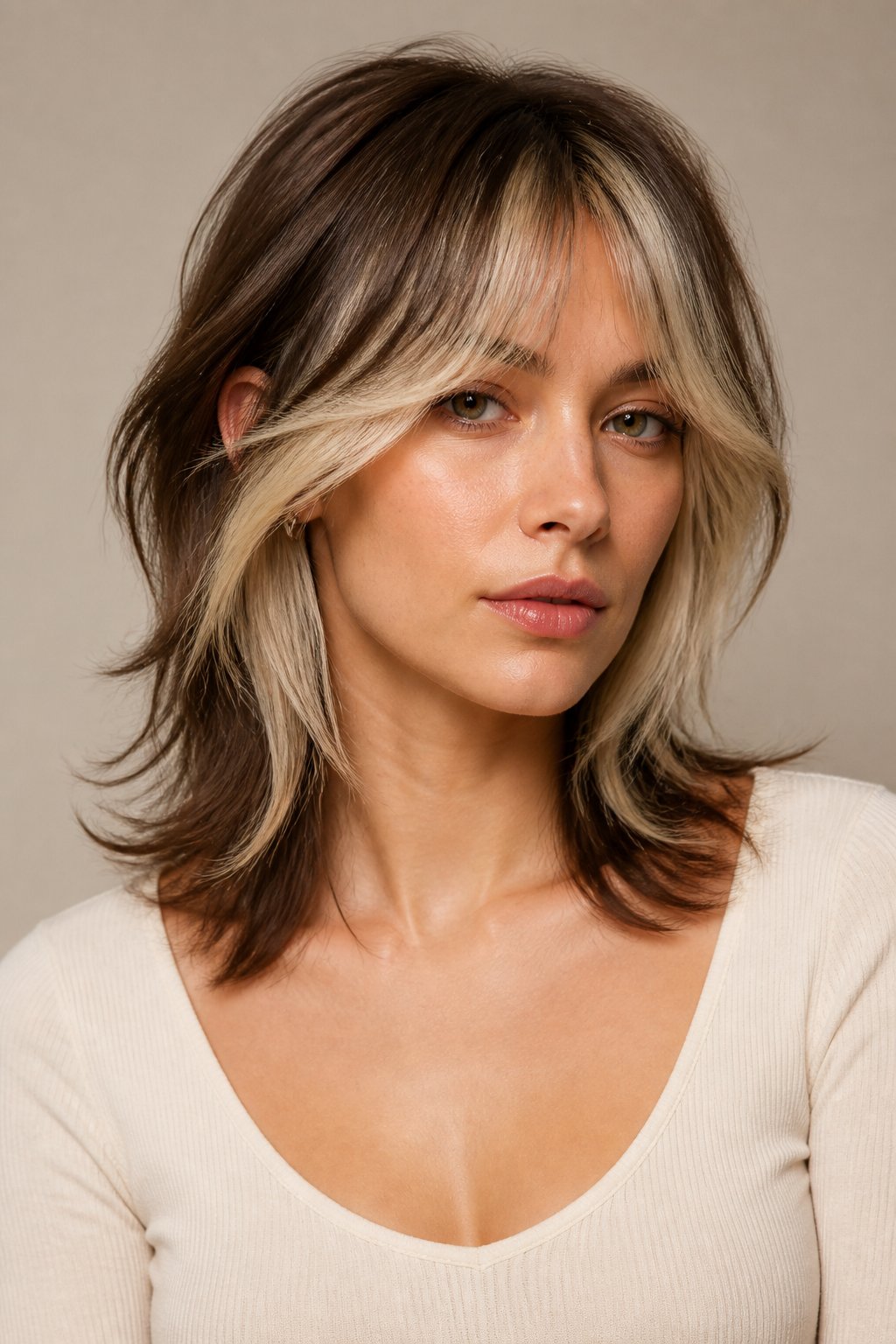
Bright face-framing color places the strongest shade around your hairline and front layers. You can choose platinum blonde, copper, pink, blue, or another color that fits your style.
Keep the rest of your hair closer to your natural color if you want the bright sections to stand out. This contrast makes the front pieces look intentional and keeps upkeep more manageable.
Place the color through the bangs and the first few face-framing layers. Thin sections give a softer result, while wider panels create a bolder look.
Bleached front pieces may need extra moisture because lightener can dry the hair. Use a heat protectant before styling and a conditioning mask once a week.
Edgy Layers With a Blended Silhouette
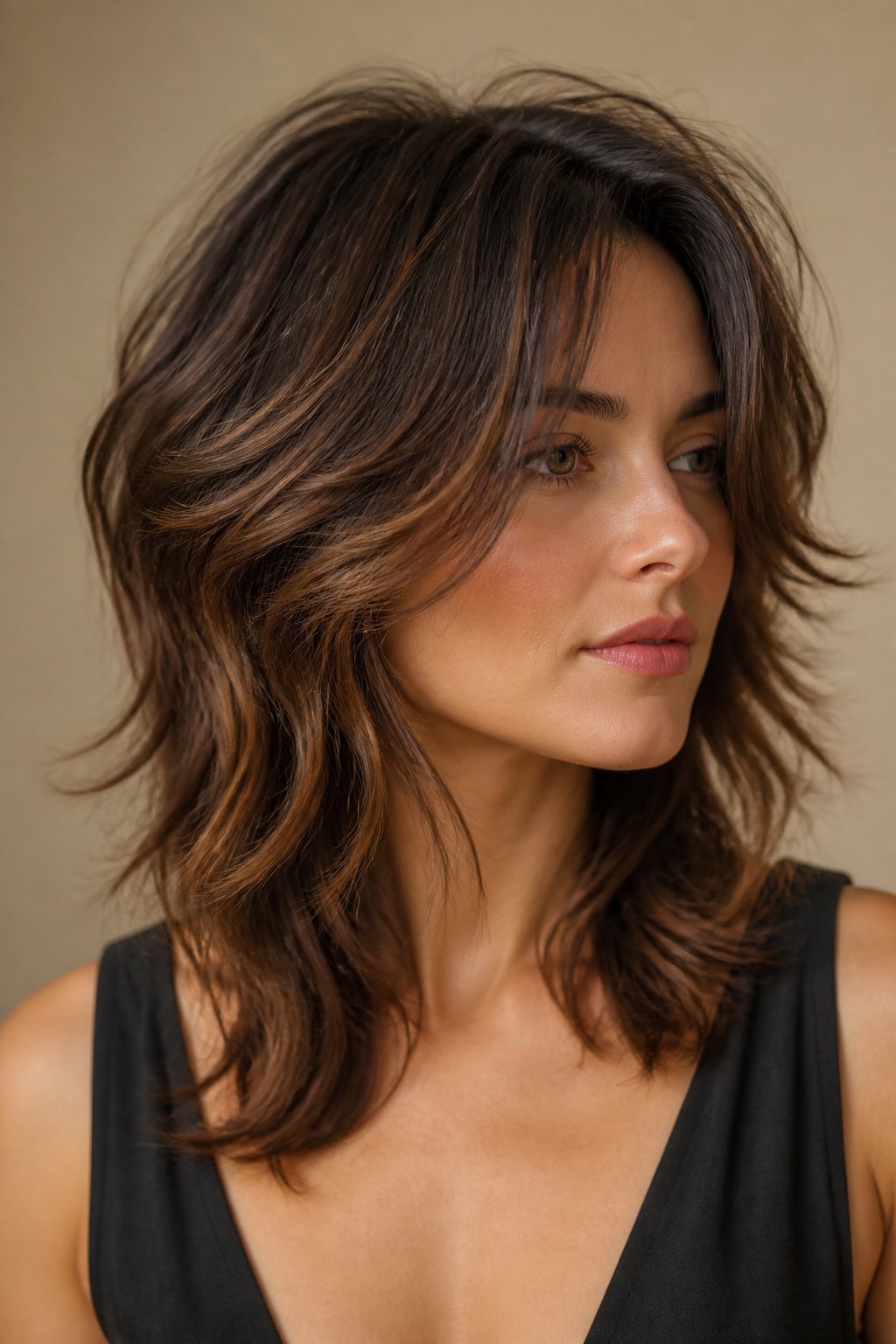
Edgy layers can still look soft when your stylist blends them into the full shape. The goal is visible texture at the ends, not large gaps between short and long sections.
Ask for short pieces around the crown, longer layers at the back, and tapered ends near the face. This keeps the wolf cut shape while preventing a heavy mullet-like line.
A razor or point-cutting method can create lighter ends, but fine hair needs a careful approach. Too much thinning can make your ends look sparse.
Style the cut with loose waves or a slightly messy blowout. Keep the roots lifted and the ends separated to show the edgy layers while maintaining a blended silhouette.
Choosing, Styling, and Maintaining the Cut
A soft wolf cut looks best when the layers suit your face shape, hair texture, and routine. Lightweight products and simple styling help keep the look soft and natural.
How to Match Layer Placement to Face Shape
Layer placement can change how the haircut frames your face.
For round faces, add crown height and keep face-framing layers below the cheeks.
For square faces, soft cheekbone and jaw-length layers can balance sharper angles.
For oval faces, most wolf cut styles work well. Longer faces usually look better with side volume and less height at the crown.
What to Ask Your Stylist
Bring reference photos that match your hair texture and desired length.
Ask for:
- Soft, blended layers
- Face-framing pieces
- Light crown volume
- Textured ends
- Curtain bangs or long fringe
Also tell your stylist how you normally style your hair. Fine hair usually looks fuller with fewer short layers.
Air-Drying for Natural Movement
Apply lightweight mousse or curl cream to damp hair.
Scrunch wavy or curly hair upward, while straight hair can be twisted slightly around the face for soft movement.
Avoid brushing while drying. For extra lift, clip the crown roots for 10–15 minutes and finish with light texturizing spray.
Creating Soft Waves With Heat Tools
Use a medium curling iron or wand to create loose waves, leaving the ends slightly straight.
Alternate curl directions for a more natural finish. A flat iron can also create soft bends.
Let the hair cool before separating the waves, then finish with light-hold hairspray.
Adding Grip Without Stiffness
Use texturizing spray at the roots and through the layers for extra volume and grip.
A small amount of sea salt spray can add texture, but avoid using too much on dry or color-treated hair.
Choose lightweight, flexible products instead of heavy waxes or strong gels.
Keeping Curtain Bangs Fresh Between Trims
Wash curtain bangs separately if they become oily between wash days.
Blow-dry them away from your face with a small round or flat brush.
If needed, use a flat iron on low heat. Trim curtain bangs every three to five weeks to maintain their shape.
Frequently Asked Questions
A soft wolf cut combines blended layers, light crown volume, and gentle face-framing pieces. It can be adapted for straight, wavy, curly, long, or short hair.
What is a soft wolf cut, and how does it create a feminine look?
A soft wolf cut uses blended layers with less contrast between the crown and ends.
Soft movement, wispy layers, and curtain bangs create a more feminine and balanced finish.
Is a soft wolf cut suitable for straight hair?
Yes. Light internal layers can add movement without making straight hair look thin.
A round-brush blow-dry or soft bends with a curling iron can add extra volume.
How can a soft wolf cut be adapted for long hair?
Keep the longest layers below the shoulders and add shorter face-framing pieces around the cheeks or chin.
Long crown layers and curtain bangs help maintain length while adding movement.
Does a soft wolf cut work well on short hair?
Yes. Short wolf cuts work well with bob or pixie-length hair when the layers are soft and blended.
Side-swept bangs or longer pieces around the ears can keep the style feminine.
Can curly hair be styled into a soft wolf cut?
Yes. Layers should follow the natural curl pattern to keep the shape balanced.
Avoid removing too much weight from the ends so the curls stay defined and full.
What styling products help maintain a soft wolf cut?
Use lightweight mousse or root-lifting spray for volume.
Texturizing spray adds separation, while a small amount of cream or hair oil can smooth dry or frizzy ends.
