



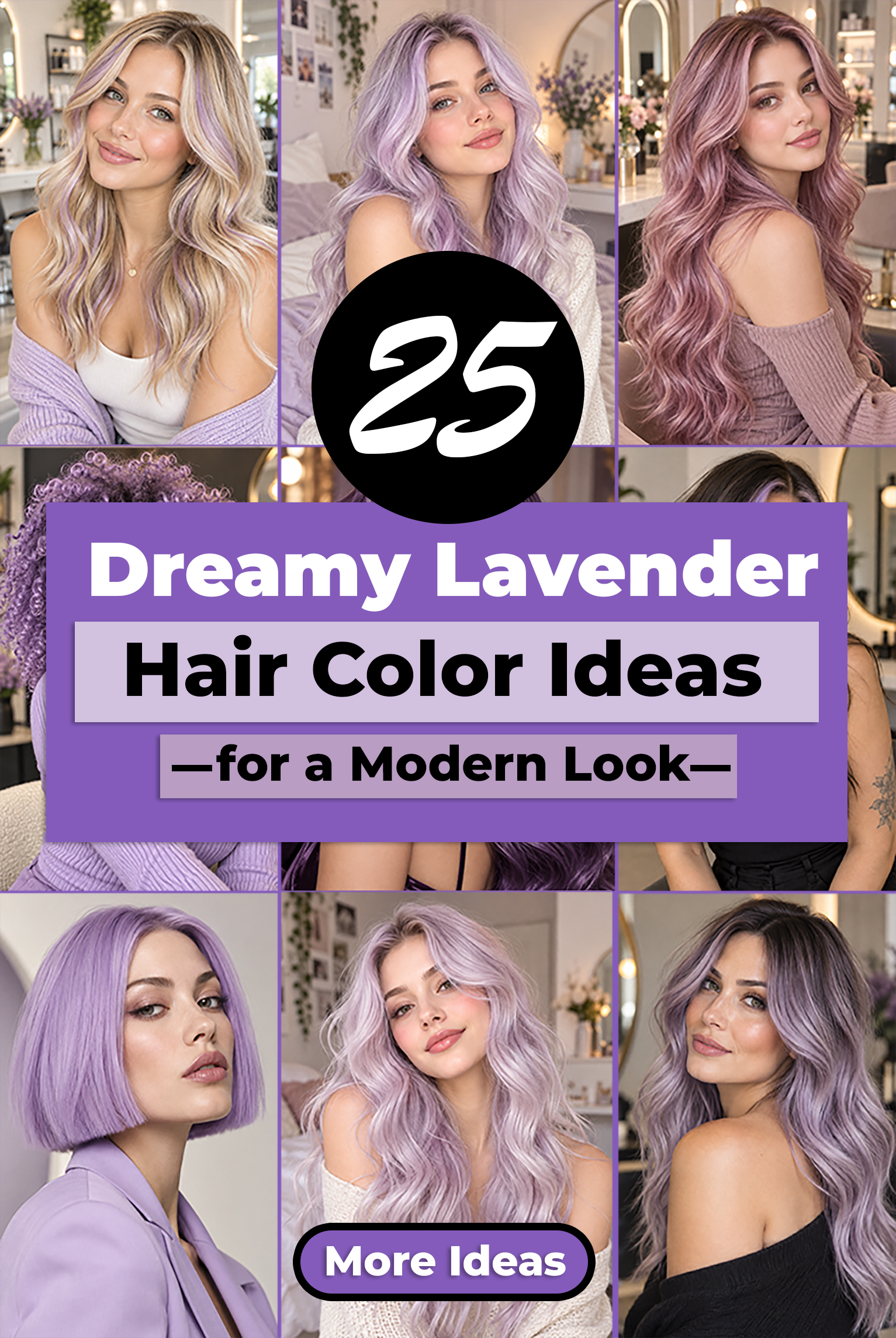
Lavender has quietly become one of the most requested shades in the color bar, and it’s easy to see why. Unlike other pastel trends that come and go, this collection of lavender hair color ideas spans everything from barely-there lilac washes to deep, smoky violet tones that can look surprisingly natural in the right light. It’s a color family with real range — soft and romantic on one end, edgy and dimensional on the other — which is exactly why it keeps showing up on salon mood boards season after season. Whether you’re drawn to a subtle hint of purple or a full head-turning transformation, there’s a version of lavender that can work with your base color, your maintenance schedule, and your personal style.
What Is Lavender Hair Color?
Lavender hair color sits in the pale-to-medium purple family, typically built on a base of cool violet with gray or blue undertones that keep it from leaning too pink or too saturated. It’s often used as an umbrella term, but lavender, lilac, violet, and pastel purple aren’t quite the same thing. Lilac tends to run slightly pinker and softer, violet is more saturated and jewel-toned, and pastel purple is simply a diluted, low-intensity version of any purple shade. Lavender falls somewhere in the middle — muted, a little gray, and unmistakably cool.
The exact result on your head depends heavily on your starting point. On pre-lightened or naturally blonde hair, lavender tends to look clean, pastel, and true to swatch. On darker hair, the same dye can shift into something smokier or more muted unless the hair is lifted first. That flexibility is part of the appeal: a colorist can customize lavender to be icy and silver-toned, warmer and dusty, pink-leaning, or deep and almost eggplant-like, all from the same base concept.
25 Lavender Hair Color Ideas
Below are 25 distinct takes on lavender, lilac, and pastel purple hair color, organized to give you a sense of the mood, upkeep, and base color each one works best with.
1. Soft Pastel Lavender Waves
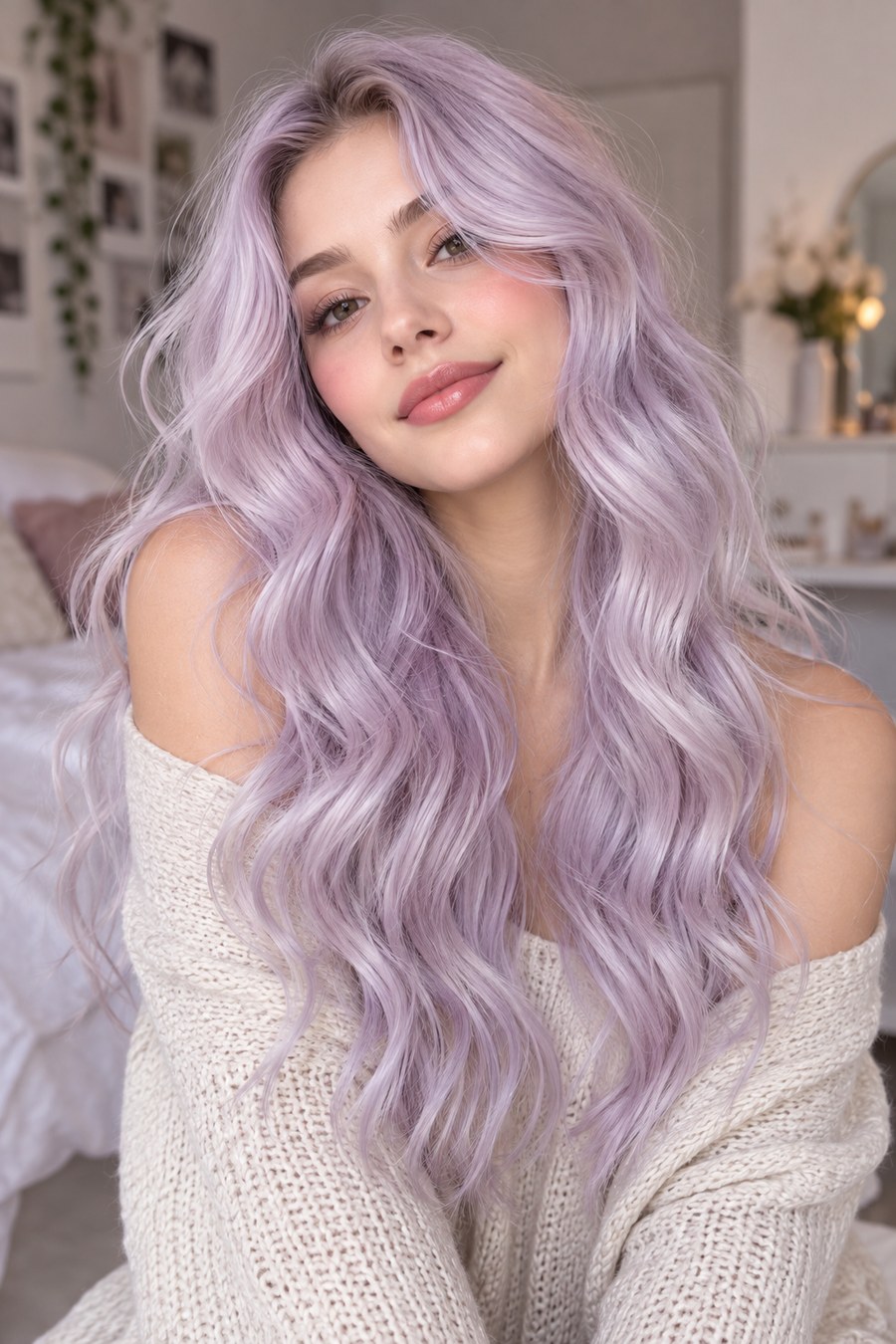

This is the lavender most people picture first: a pale, milky lilac that reads almost white-purple in daylight and slightly more lavender indoors. It photographs beautifully on loose waves, where the color moves with the hair and catches light differently at every bend. Because the shade is so light, it requires a fully lifted, near-white base — meaning most brunettes will need several lightening sessions before this tone will show true. Upkeep is moderate to high, since pastel shades fade fastest, but the payoff is a soft, dreamy finish that feels effortless rather than costume-like.
2. Smoky Lavender Balayage
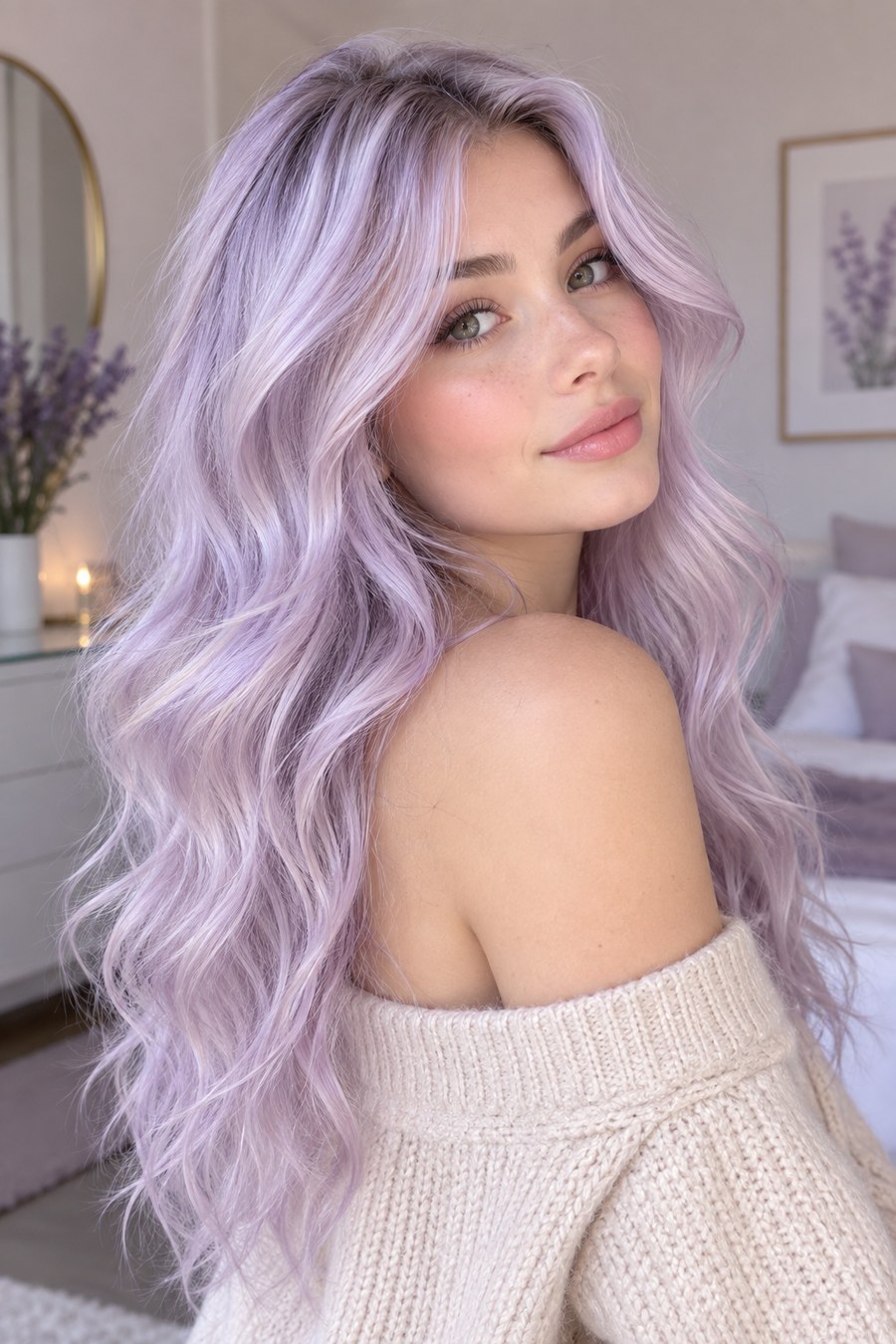
Smoky lavender balayage trades the crisp, saturated look of an all-over dye for something hand-painted and gradual. The colorist sweeps a muted, gray-toned lavender through the mid-lengths and ends while leaving the root area softer, so regrowth is far less noticeable than with a solid color. This version suits warm or cool skin tones alike because the smokiness tempers the purple, keeping it from looking too bright or artificial. It’s a strong option for anyone who wants a noticeable color change without committing to a high-maintenance root schedule.
3. Lavender Blonde
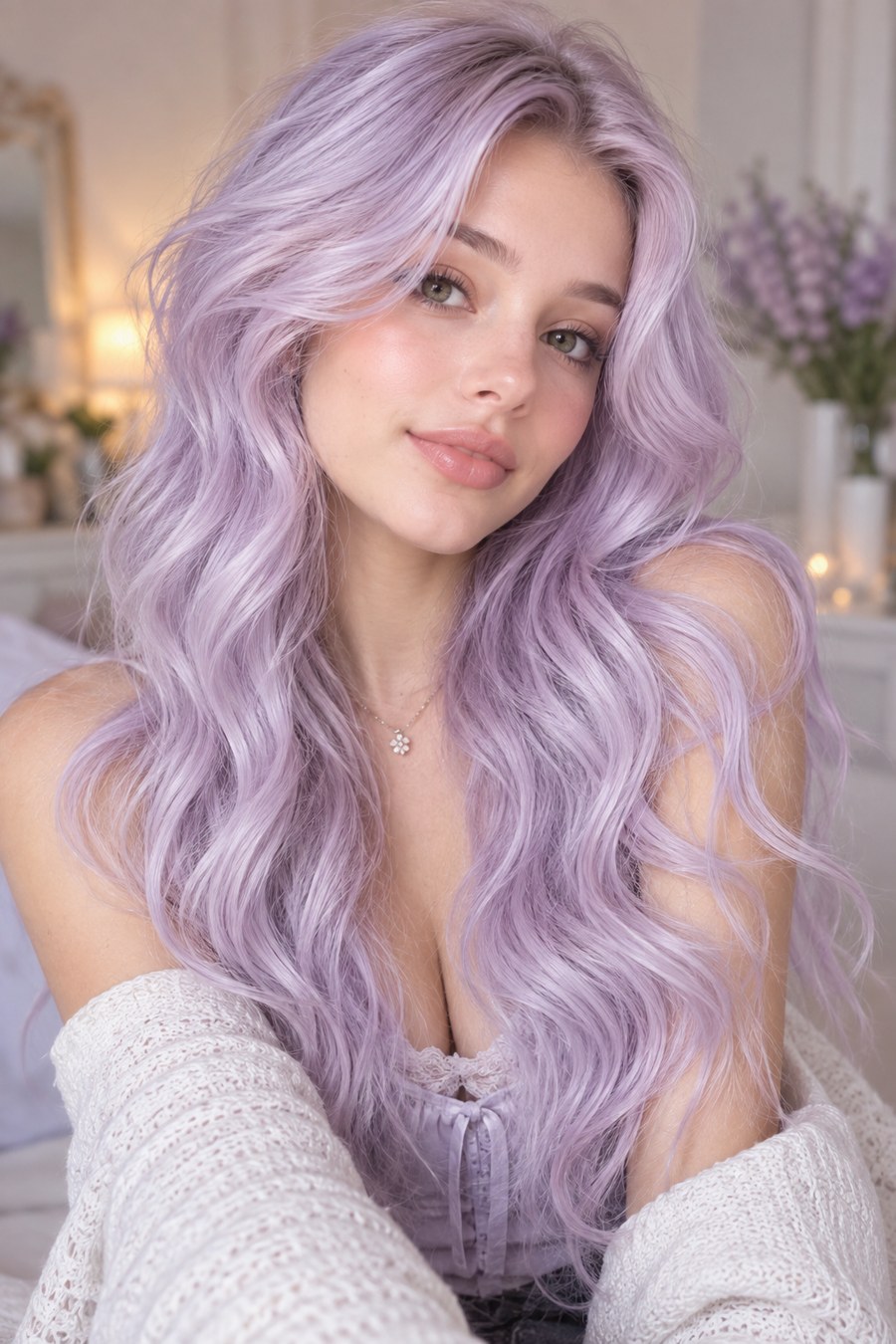
Lavender blonde blends a soft violet tint into a blonde base rather than covering it completely, so the hair still reads as blonde from a distance but shifts into a lilac cast up close or in certain lighting. It’s one of the more low-commitment ways to try lavender, since the underlying blonde does most of the work and only a glaze or toner is needed to shift the tone. This works particularly well on cool or neutral blondes, where the violet pigment has less warmth to fight against.
4. Lavender Hair With Dark Roots
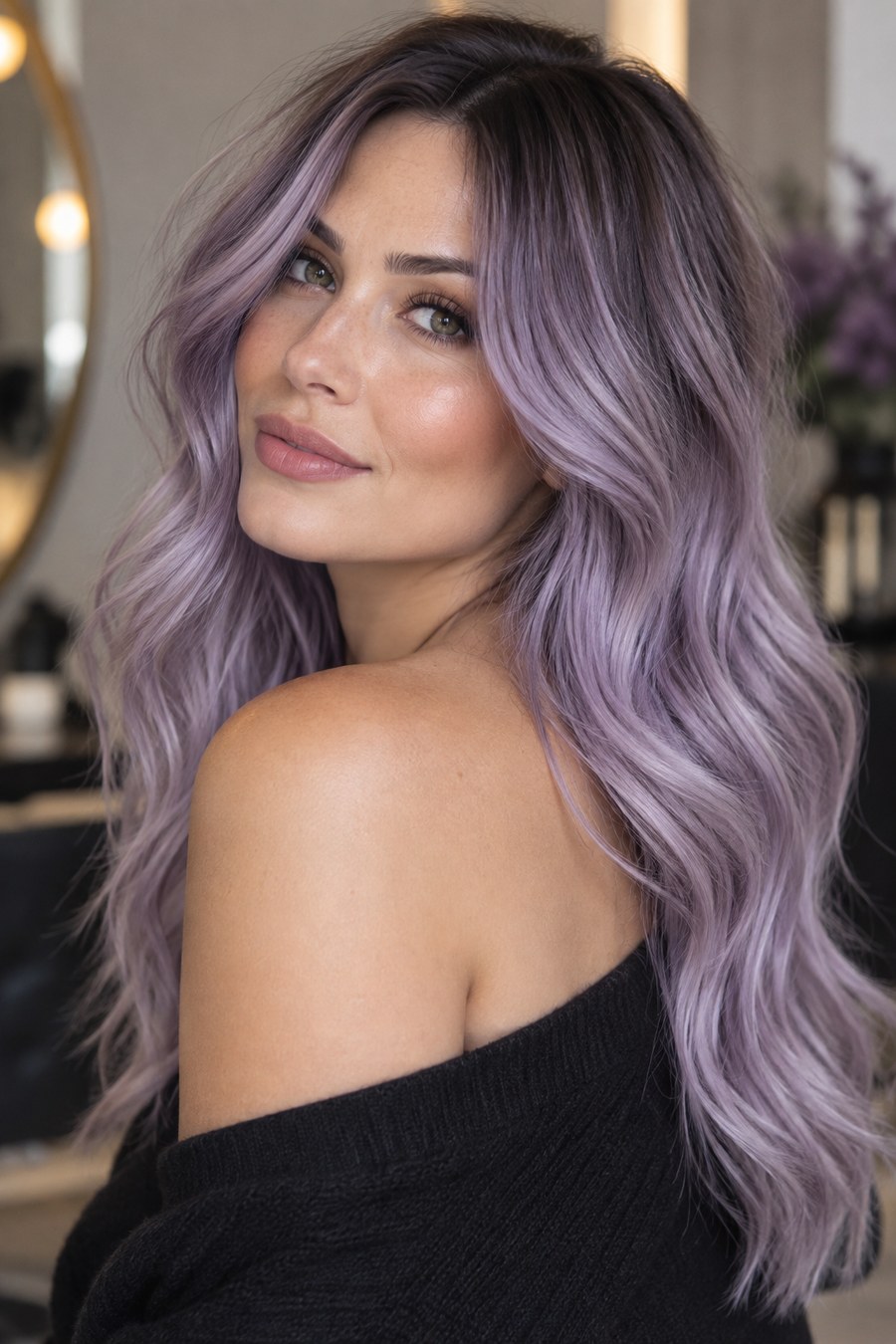
Pairing lavender with visibly dark roots creates instant contrast and a lived-in, rock-and-roll edge. The natural or deepened root color is left untouched for a few inches before the lavender takes over, which means less frequent salon visits since the grow-out actually looks intentional. This combination flatters longer hair especially well, giving the eye a clear transition point rather than a flat, single-tone effect. It’s a good choice for anyone who likes bold color but doesn’t want to be back in the chair every month.
5. Silver Lavender Hair
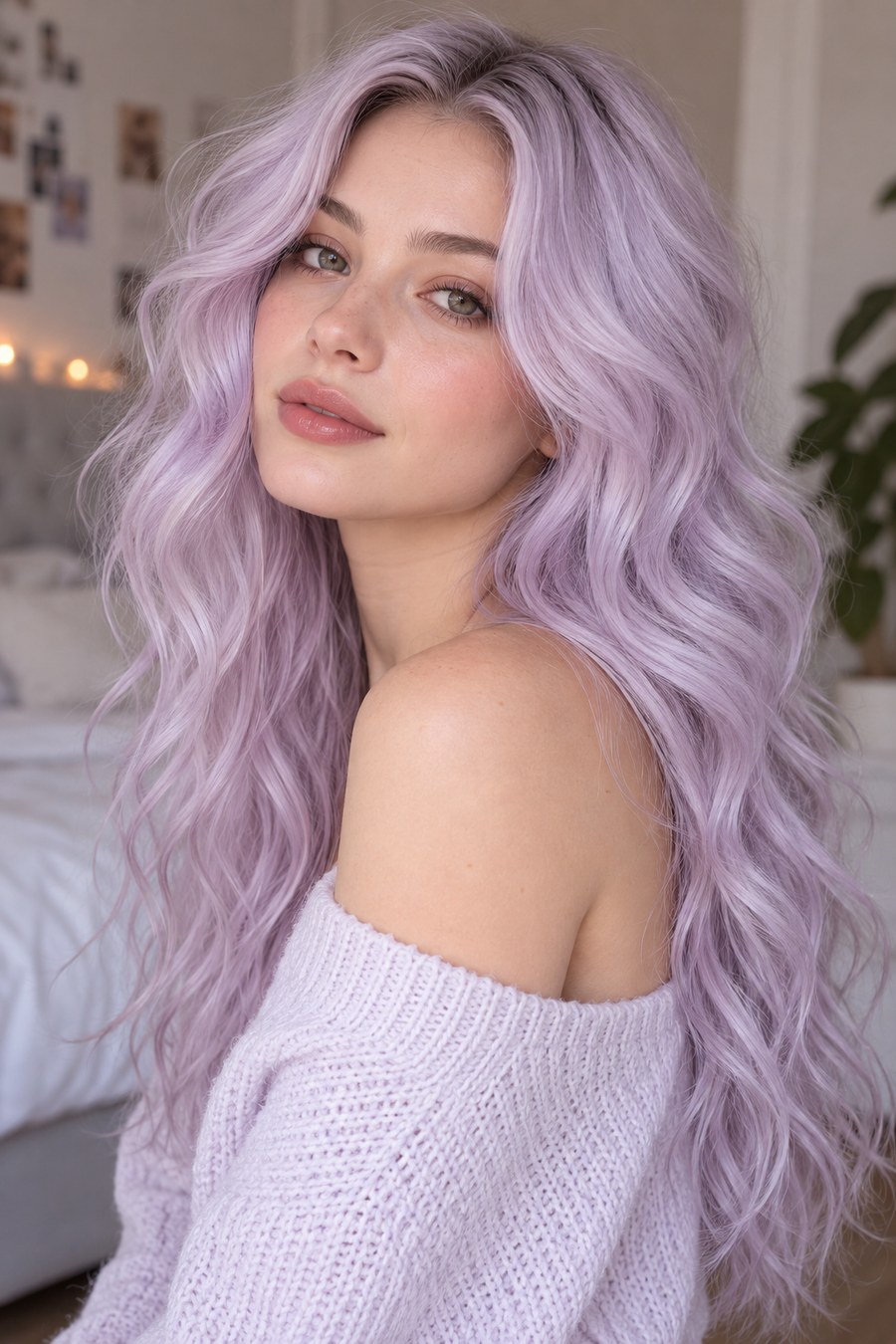
Silver lavender leans cooler and icier than a standard lilac, with enough gray mixed into the base to mute the purple into something closer to a frosted, metallic finish. It tends to look most striking on very light, pre-toned blonde hair, since any warmth left in the strands will pull the color toward mauve instead of silver. Maintenance is on the higher end — toners fade quickly and need refreshing every few weeks to keep the ash tone from turning yellow or warm underneath.
6. Dusty Lavender Layers
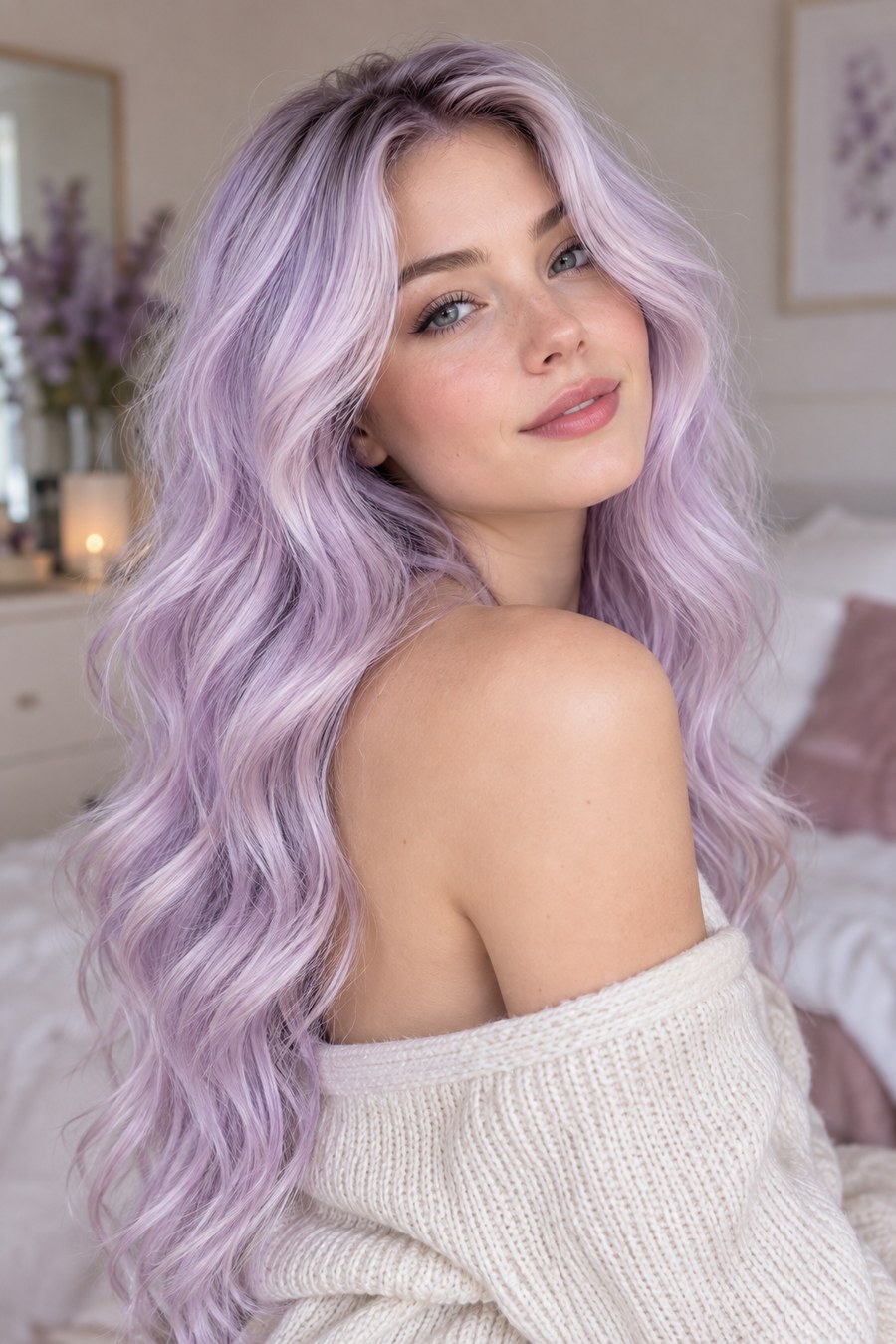
Dusty lavender has a slightly faded, vintage quality, as if the color has already been softened by a few washes. It’s achieved by mixing a small amount of ash or beige into the violet base, which knocks back the brightness and gives the finished color a muted, almost lived-in look right from the start. Layered cuts help this shade shine because each layer catches a slightly different depth of tone. It’s a forgiving option for regrowth, since the muted starting point ages gracefully rather than looking patchy.
7. Lilac Face-Framing Highlights
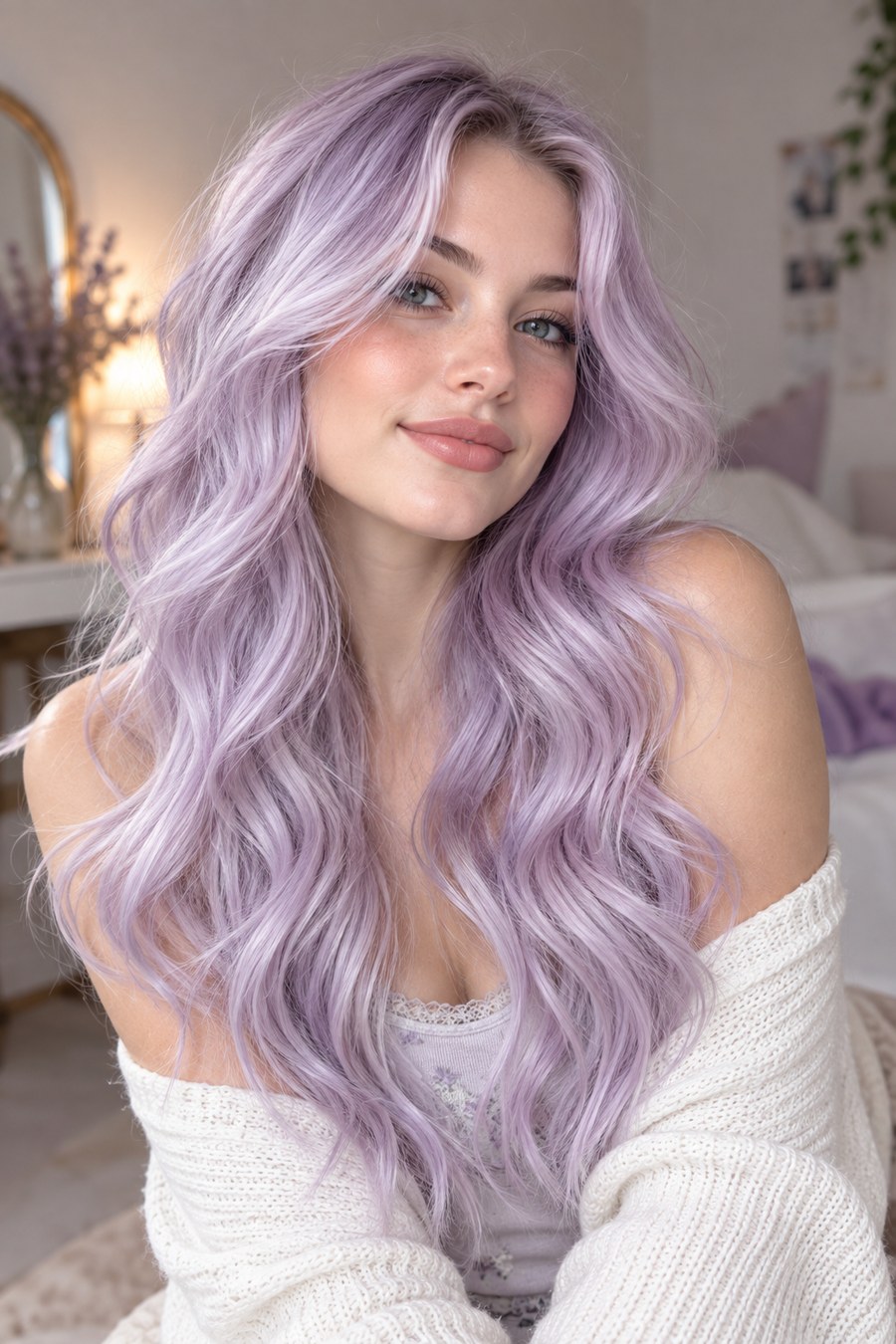
This look keeps the overall hair in a soft lavender family while placing lighter lilac pieces around the face. The brighter front sections create a subtle framing effect and help the color feel more dimensional instead of completely uniform. It works especially well on long, softly waved hair because the lighter pieces move naturally around the cheekbones and jawline. The contrast is gentle rather than dramatic, making it a polished option for anyone who wants a noticeable but still blended lavender finish.
8. Lavender Ombre
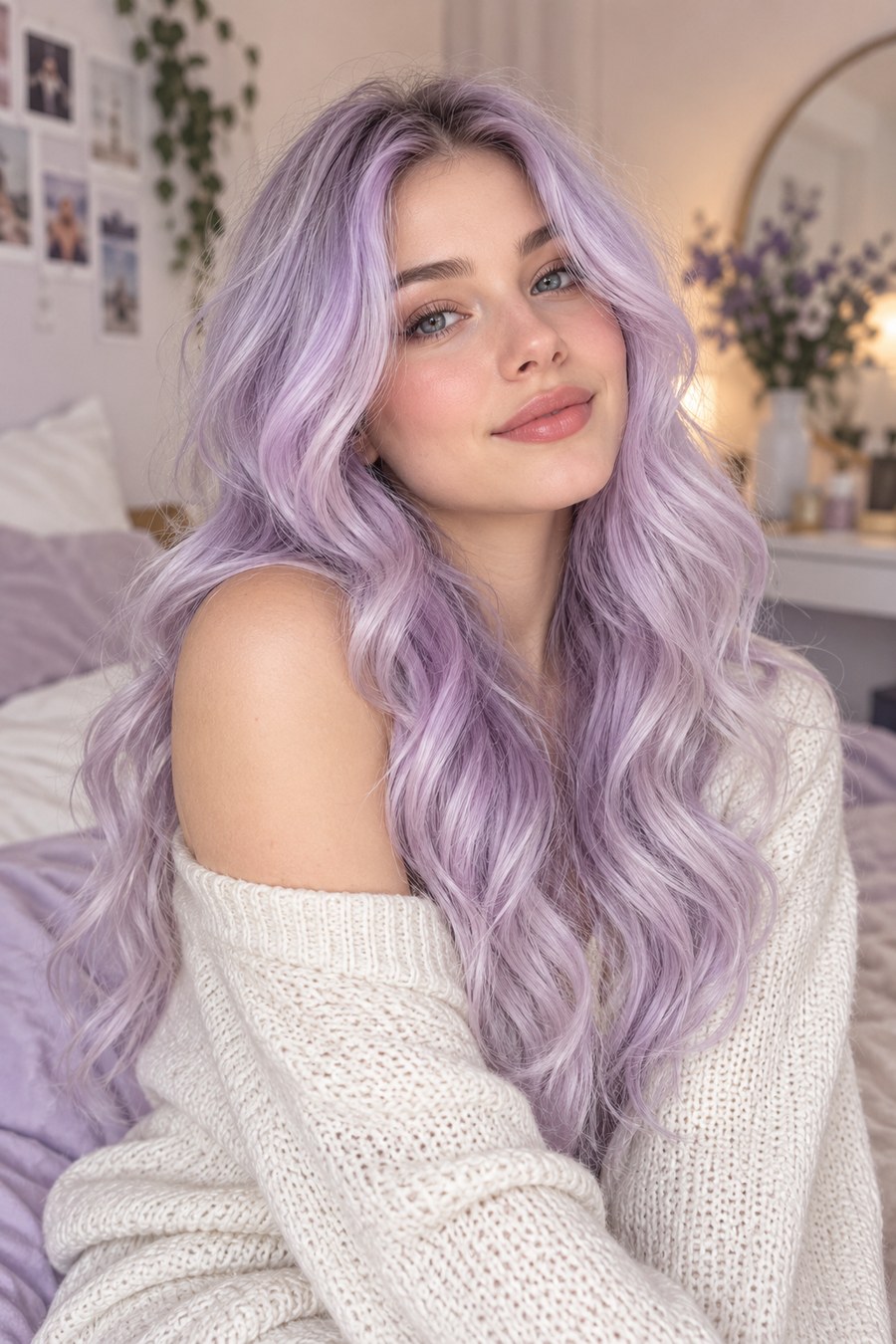
This lavender ombre uses a soft tonal transition rather than a sharp contrast. The color appears slightly deeper near the roots and gradually becomes lighter and airier through the mid-lengths and ends. Loose waves make the shift in tone easier to see because each bend catches the light differently. The result feels soft and wearable while still giving the hair a clear sense of depth. On naturally darker hair, some pre-lightening may be needed to achieve a similarly clean pastel finish through the lengths.
9. Cool Lilac and Lavender Blend
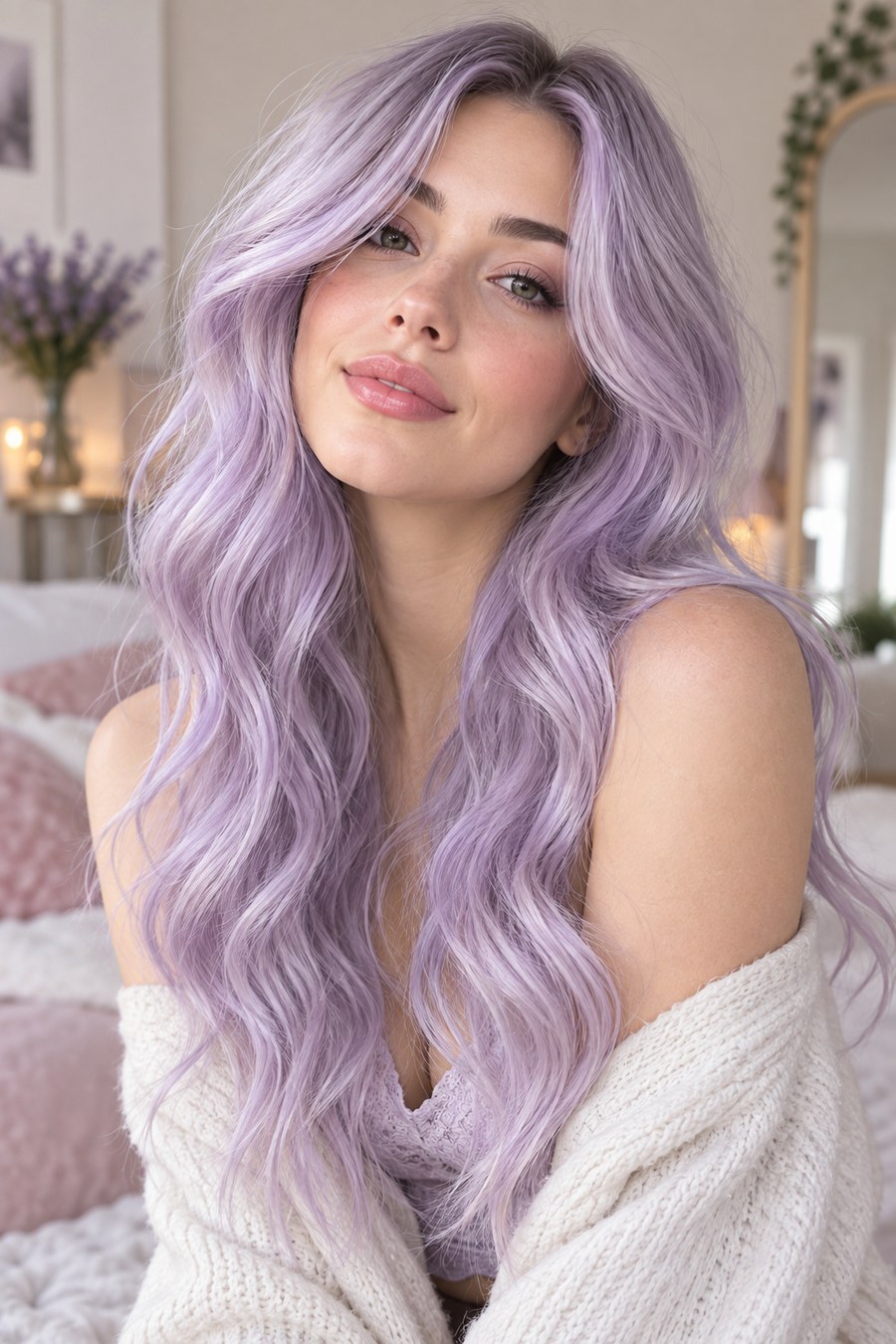
This cool lilac-and-lavender blend combines slightly different purple tones to keep the color from looking flat. Pale lilac pieces brighten the overall look, while soft lavender through the deeper sections adds enough contrast to define the waves. The variation is subtle, so the finish remains cohesive and polished rather than striped. This type of tonal blend works especially well on long, wavy hair, where movement naturally reveals the lighter and deeper ribbons of color from different angles.
10. Soft Violet-Lavender Waves
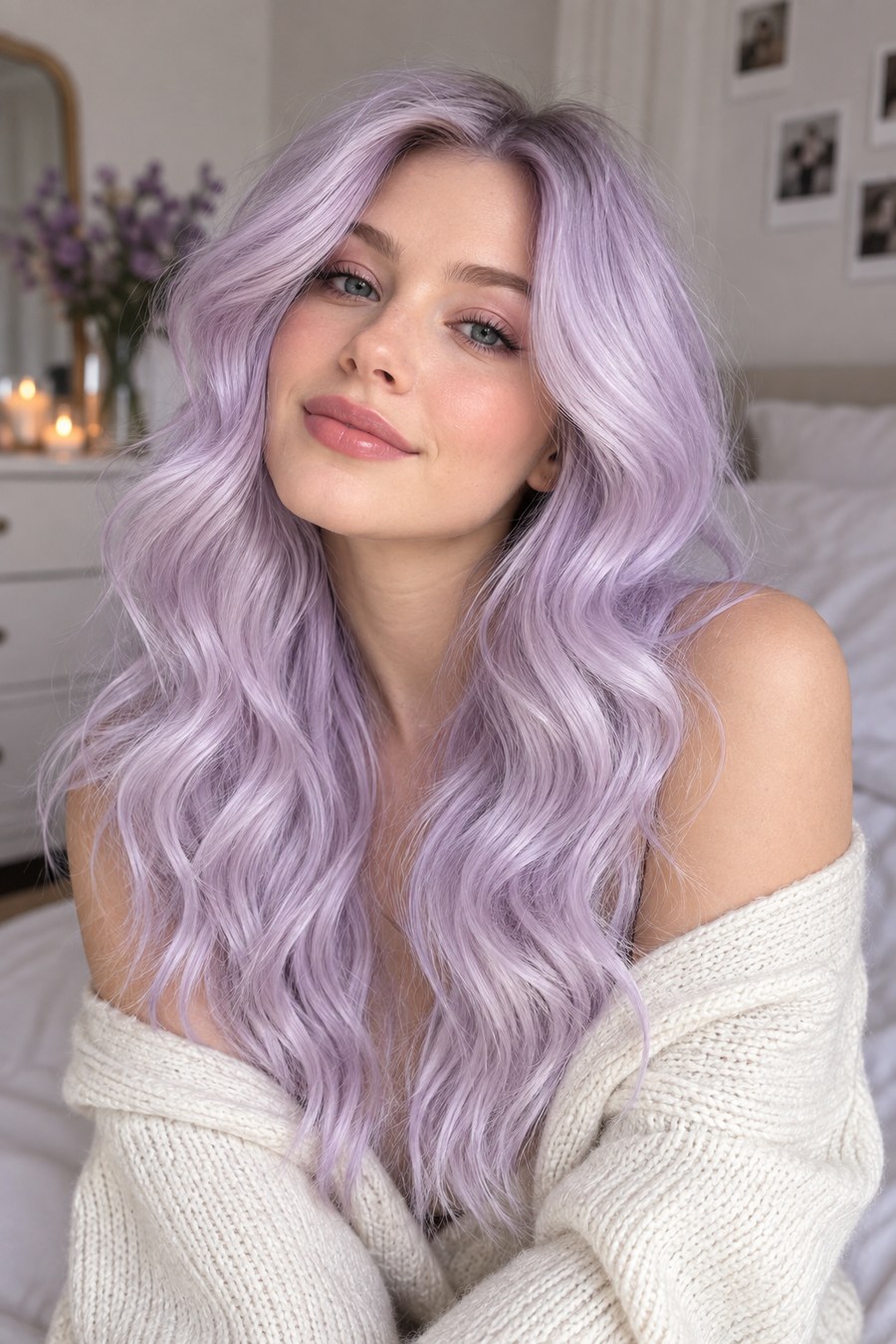
Soft violet-lavender waves sit between pale pastel lavender and a more saturated purple. The shade has enough violet depth to remain visible in different lighting, but it still keeps the airy, muted quality that makes lavender so wearable. Long waves emphasize the tonal movement and give the color a glossy, dimensional finish. This is a good middle-ground choice for someone who wants more presence than a very pale pastel without moving into a deep jewel-toned purple.
11. Icy Lavender Blonde
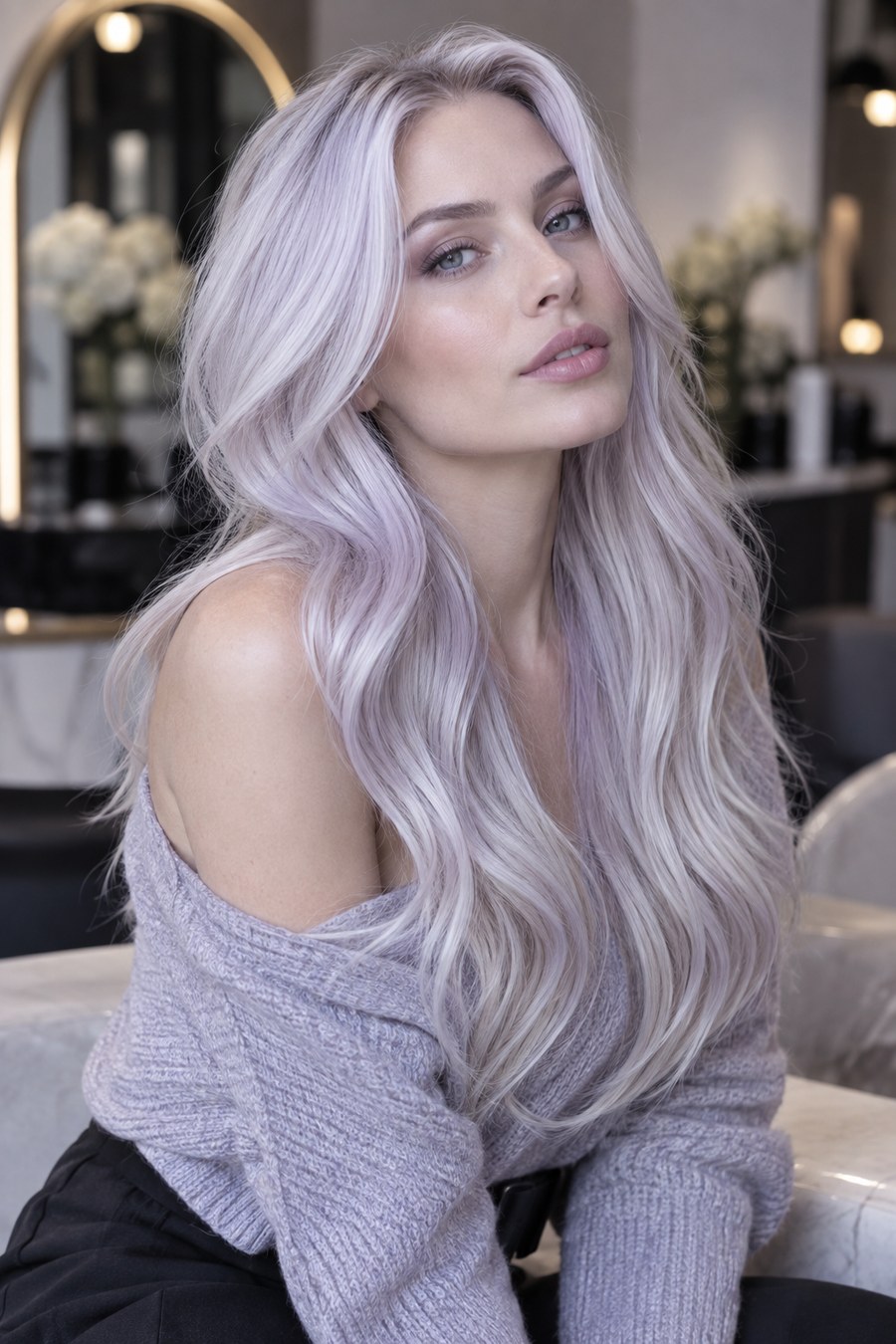
Icy lavender blonde pushes the color toward its coolest, most crystalline version — pale, almost silvery, with just enough violet to keep it from reading as plain platinum. It demands a very light, well-conditioned base to avoid brassiness fighting through the toner. This shade can look especially harmonious with cool or neutral undertones, although a colorist can adjust the violet-to-silver balance to complement warmer complexions as well. Expect frequent toning appointments, as the ashy pigment is notoriously quick to fade compared to warmer color families.
12. Lavender Money Pieces
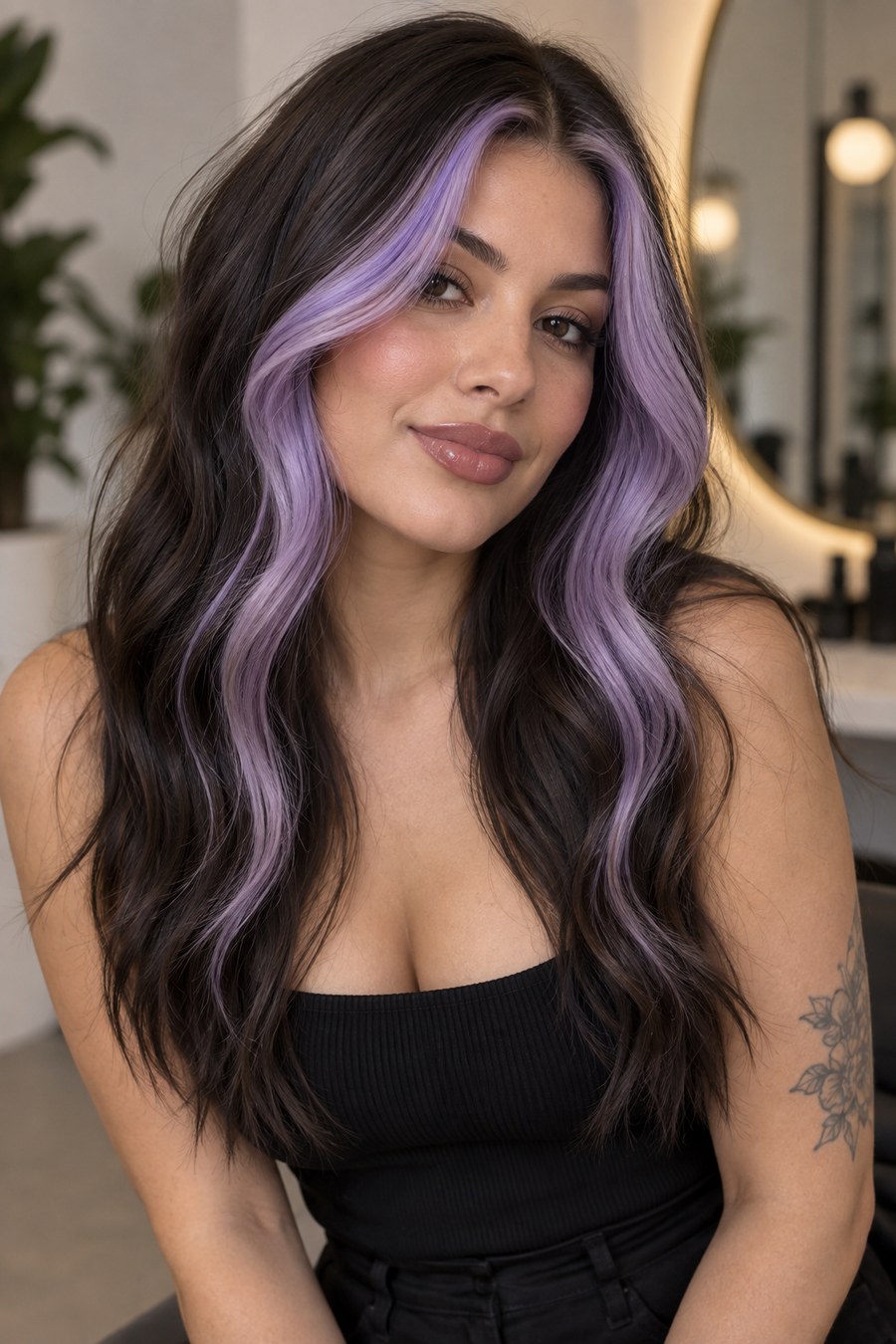
Money pieces are the two bold, face-framing panels that sit just below the part line, and lavender is a particularly eye-catching color to use for them. Because the rest of the hair stays its natural or base color, this is a lower-commitment way to add a strong pop of purple without a full-head process. The panels also fade somewhat gracefully, since a slightly lighter or softer lavender still looks intentional rather than in need of an immediate refresh. It suits shorter and longer lengths alike.
13. Lavender Bob
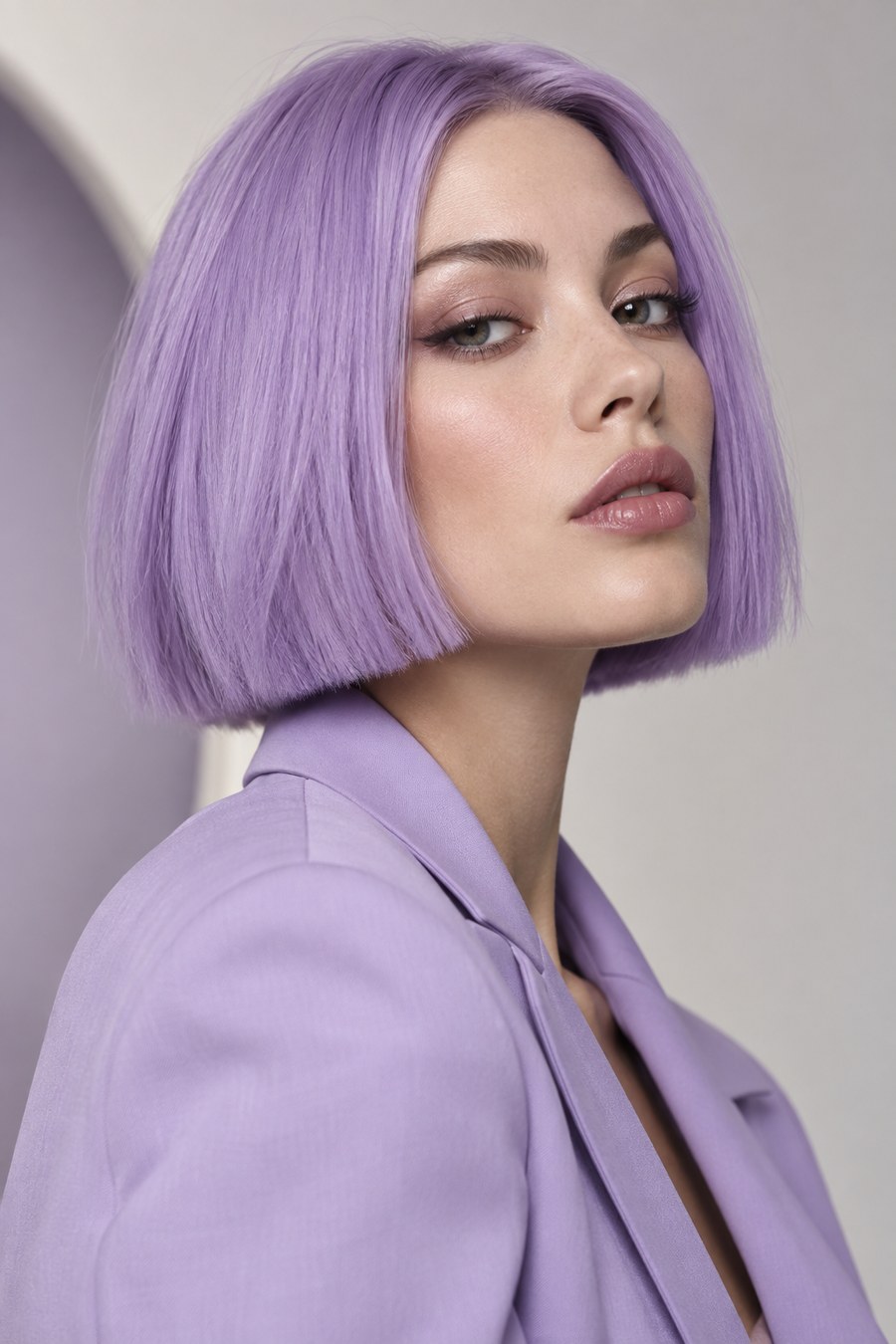
A blunt or slightly layered bob in lavender feels modern and graphic, since the shorter length keeps the color dense and even from root to tip with less room for gradient fading. This cut-and-color combination tends to look best on straight to slightly wavy textures, where the sharp lines of the bob stay visible. Root touch-ups are more frequent on shorter styles simply because regrowth is more noticeable at that length, so this is a look for people comfortable with regular salon visits.
14. Lavender Highlights on Dark Hair
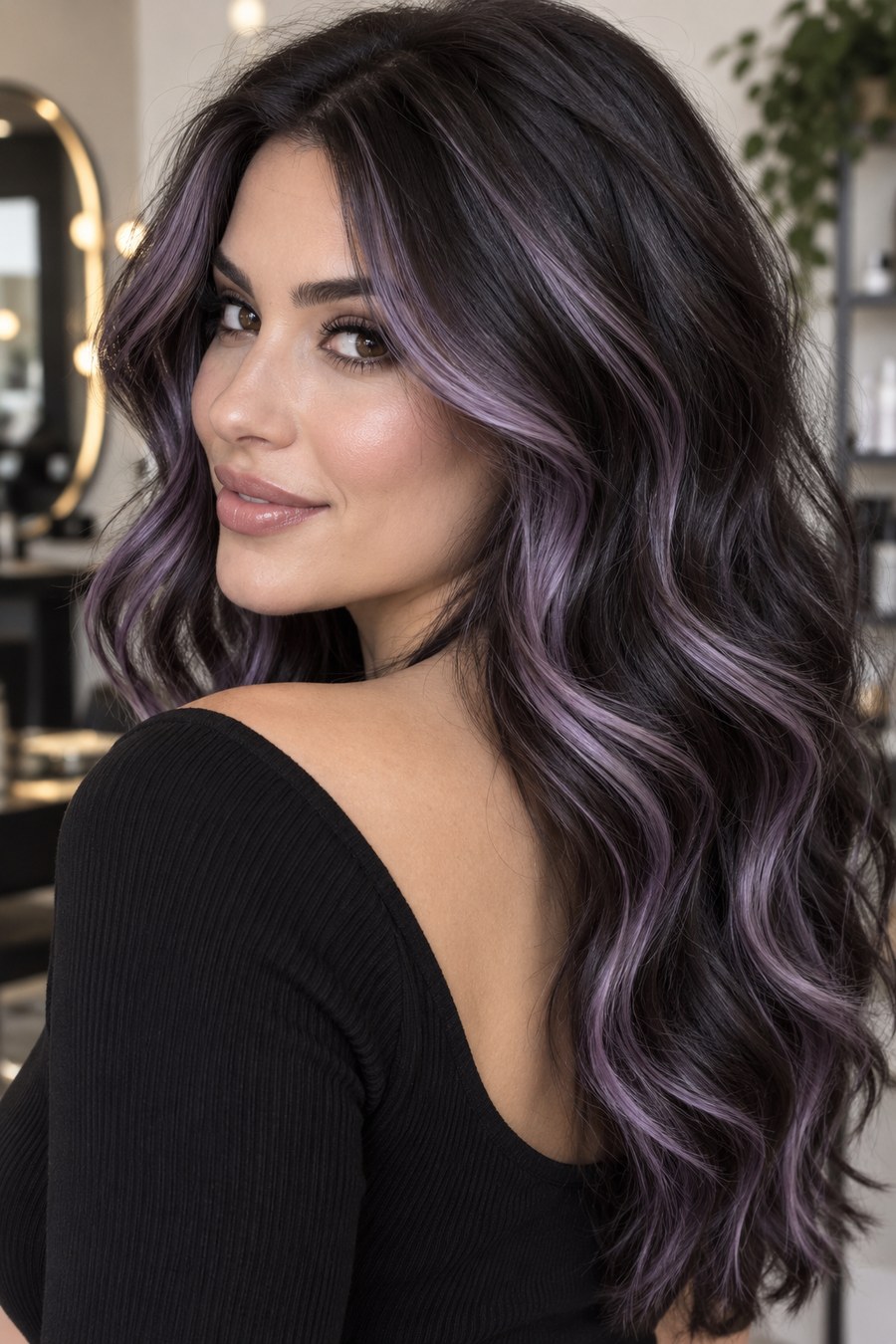
Adding lavender highlights to dark hair, rather than lightening the whole head, keeps most of the natural depth intact while still introducing color through select pieces. The highlighted strands typically need to be lifted first, so this isn’t a no-bleach option, but the overall commitment is lower than an all-over lavender transformation. The result tends to look dimensional rather than flat, since the dark base and lighter lavender pieces play off each other under different lighting.
15. Muted Mauve Lavender
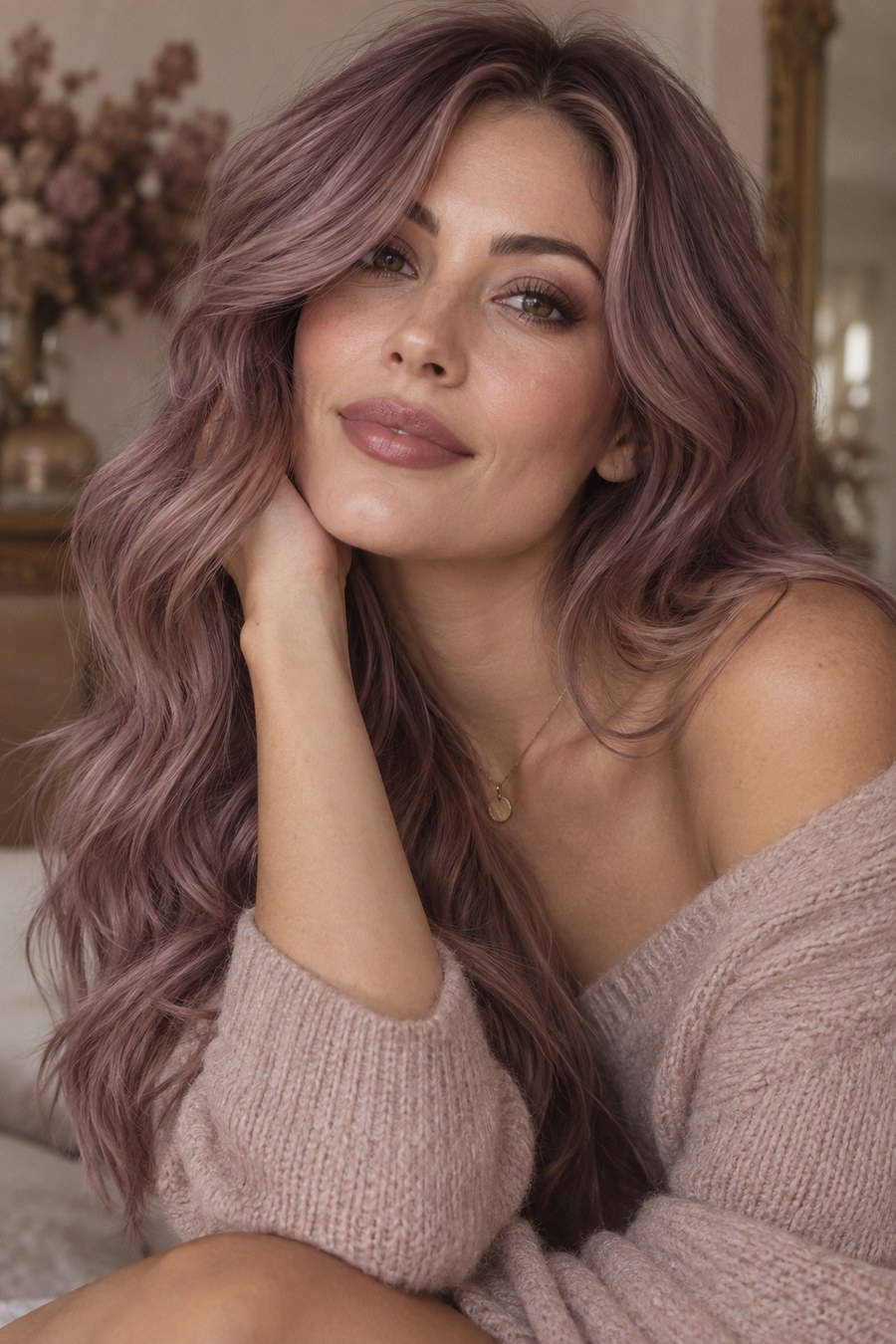
Muted mauve lavender sits right at the intersection of purple and pinkish-brown, giving a warmer, earthier take on the usual cool lavender palette. It’s a flattering middle ground for people who like the idea of purple hair but find true lilac too stark against their skin tone. The muted quality also means the color fades more subtly, often shifting toward a soft rosy brown rather than an obvious pastel washout. It pairs well with medium to warm skin undertones in particular.
16. Lavender and Silver Balayage
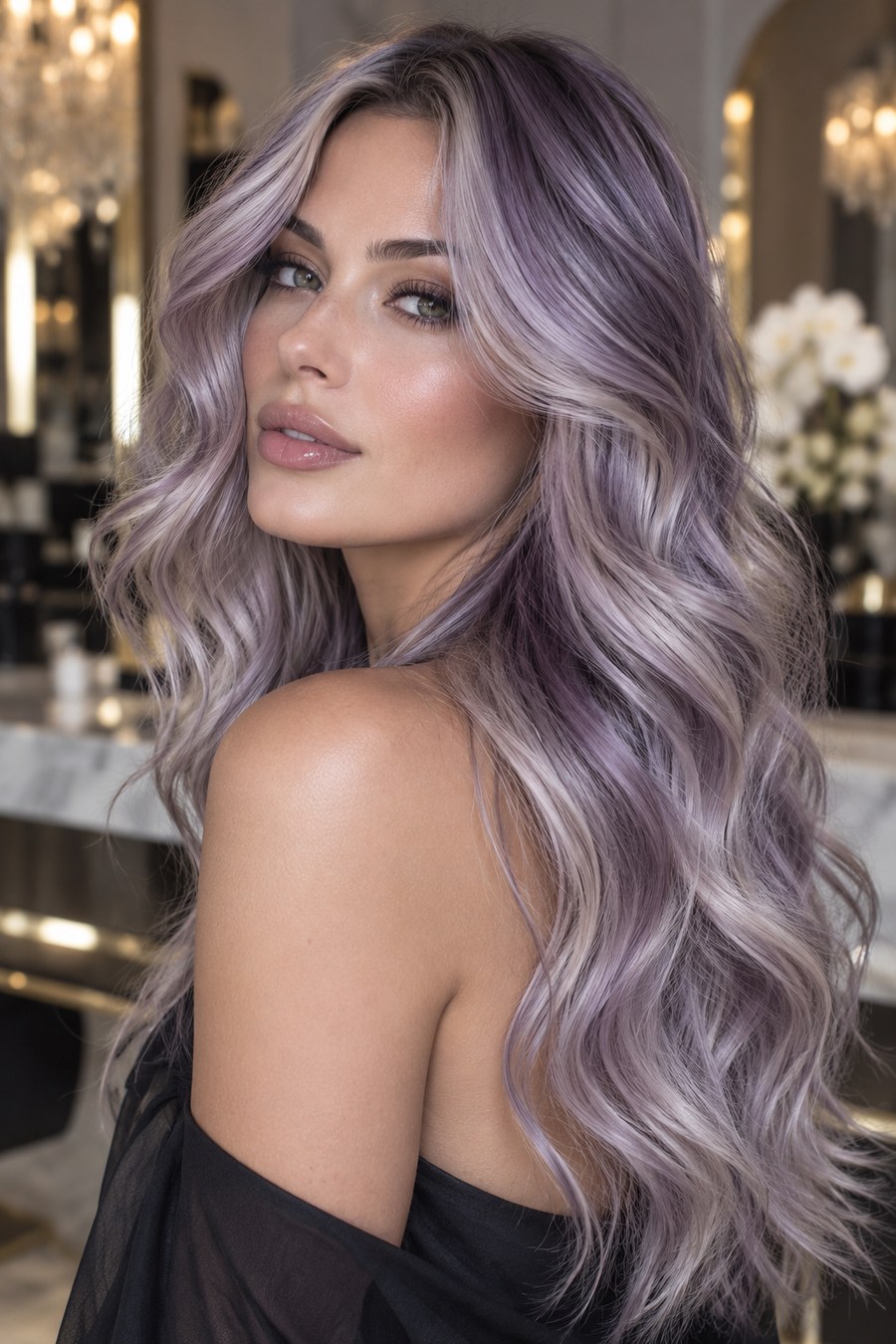
This combination hand-paints both lavender and silver-gray tones through the hair, creating a multidimensional, almost holographic effect as the two cool colors catch light differently. It works best on lighter bases, since both silver and lavender need a clean, pre-lightened canvas to look true rather than muddy. The blended placement also means regrowth is less jarring, since the roots simply transition into a softer version of the same cool palette rather than a stark line.
17. Rich Violet-Lavender Waves
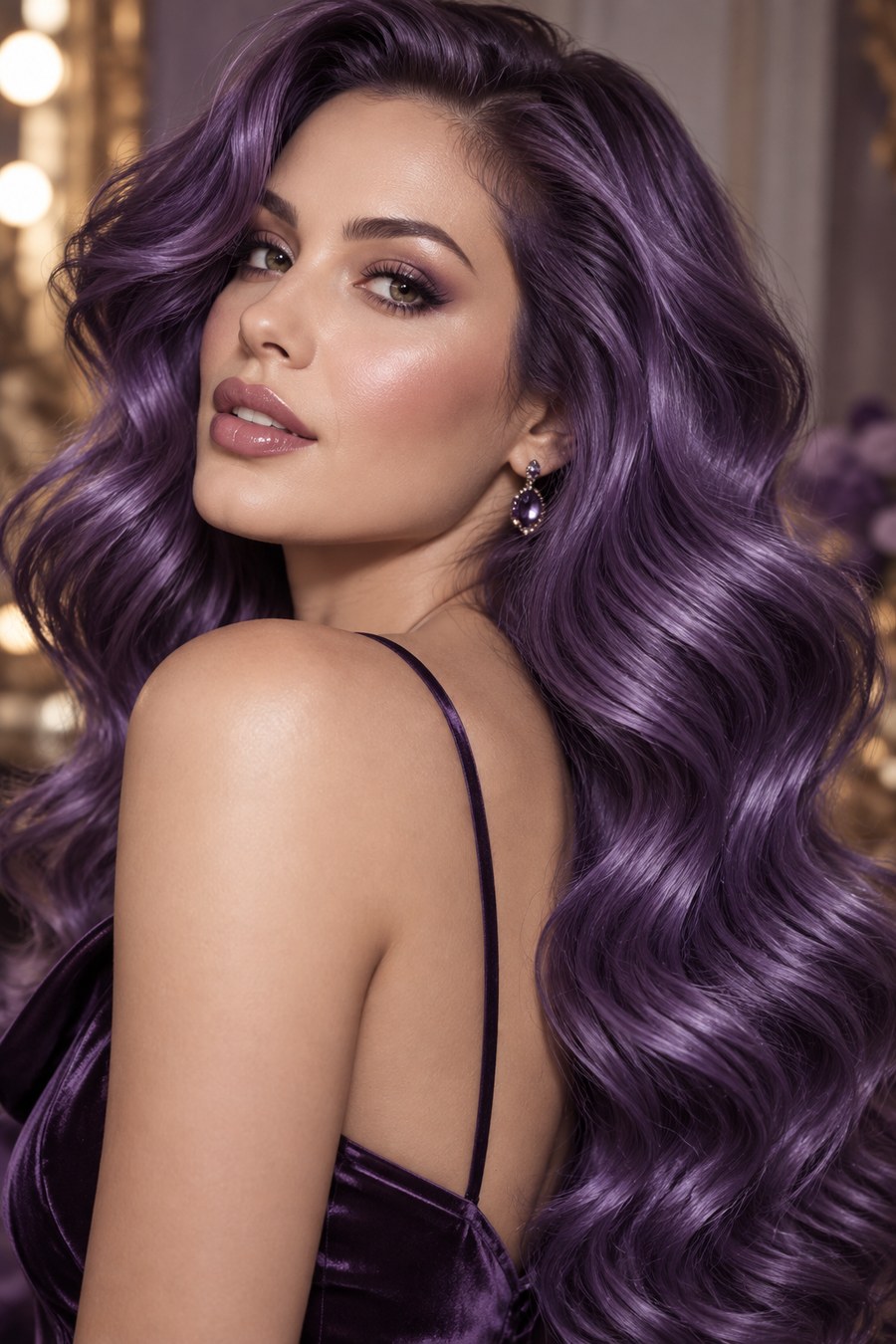
For a bolder, more saturated take, rich violet-lavender skips the pastel dilution and leans into deeper jewel tones while still keeping the cooler, grayer undertone that defines lavender. On wavy or curled hair, the varying light and shadow in each curl brings out the depth of the violet rather than flattening it into one solid block of color. This version tends to hold its vibrancy a bit longer than pastel lavender simply because there’s more pigment saturating the hair to begin with.
18. Lavender Peekaboo Highlights
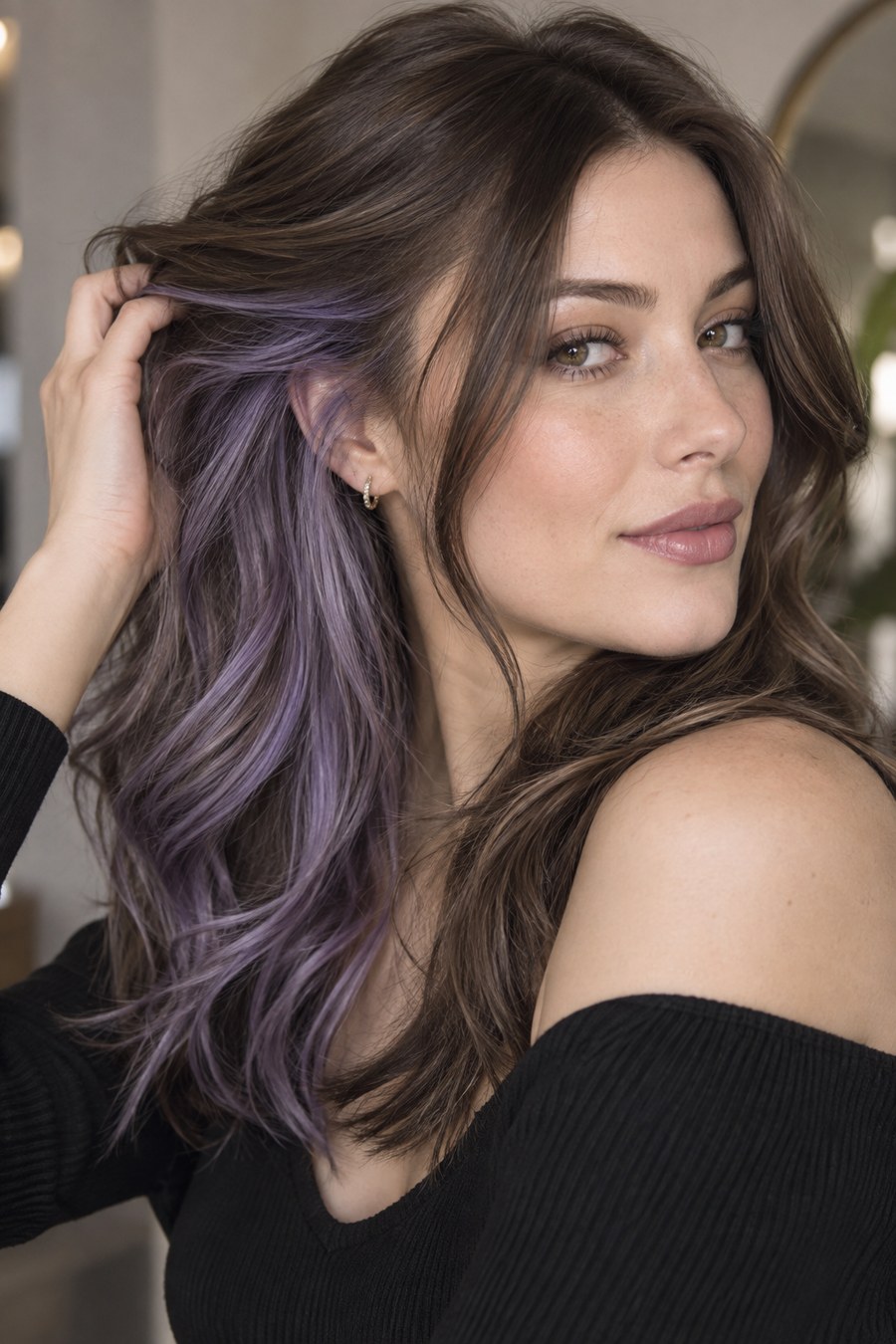
Peekaboo lavender highlights place muted purple ribbons beneath and between darker brunette sections, so the color appears more clearly as the hair moves or is swept away from the face. The placement keeps plenty of natural depth visible and makes the lavender feel subtle rather than all-over. This is a practical way to experiment with purple tones without changing the entire head of hair, and the contrast looks especially dimensional on loose waves.
19. Pastel Lavender Lob
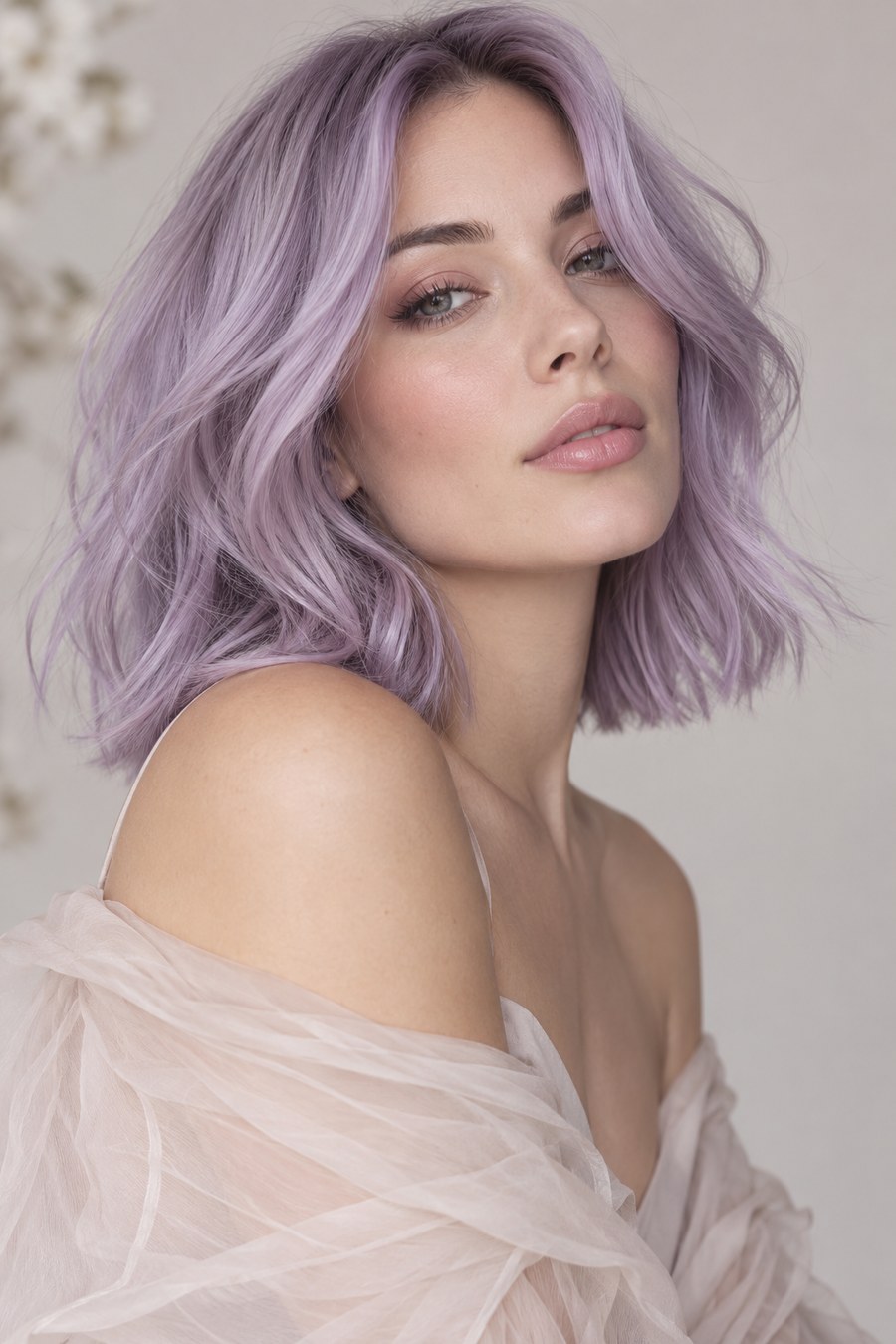
A long bob, or lob, in pastel lavender splits the difference between the boldness of a short cut and the softness of longer hair. The mid-length works well with the pale, airy nature of pastel lavender, giving the color enough surface area to show gradient and movement without the visual weight of very long hair. This length also tends to be more versatile for styling, from sleek and straight to loosely curled.
20. Lavender With Shadow Roots
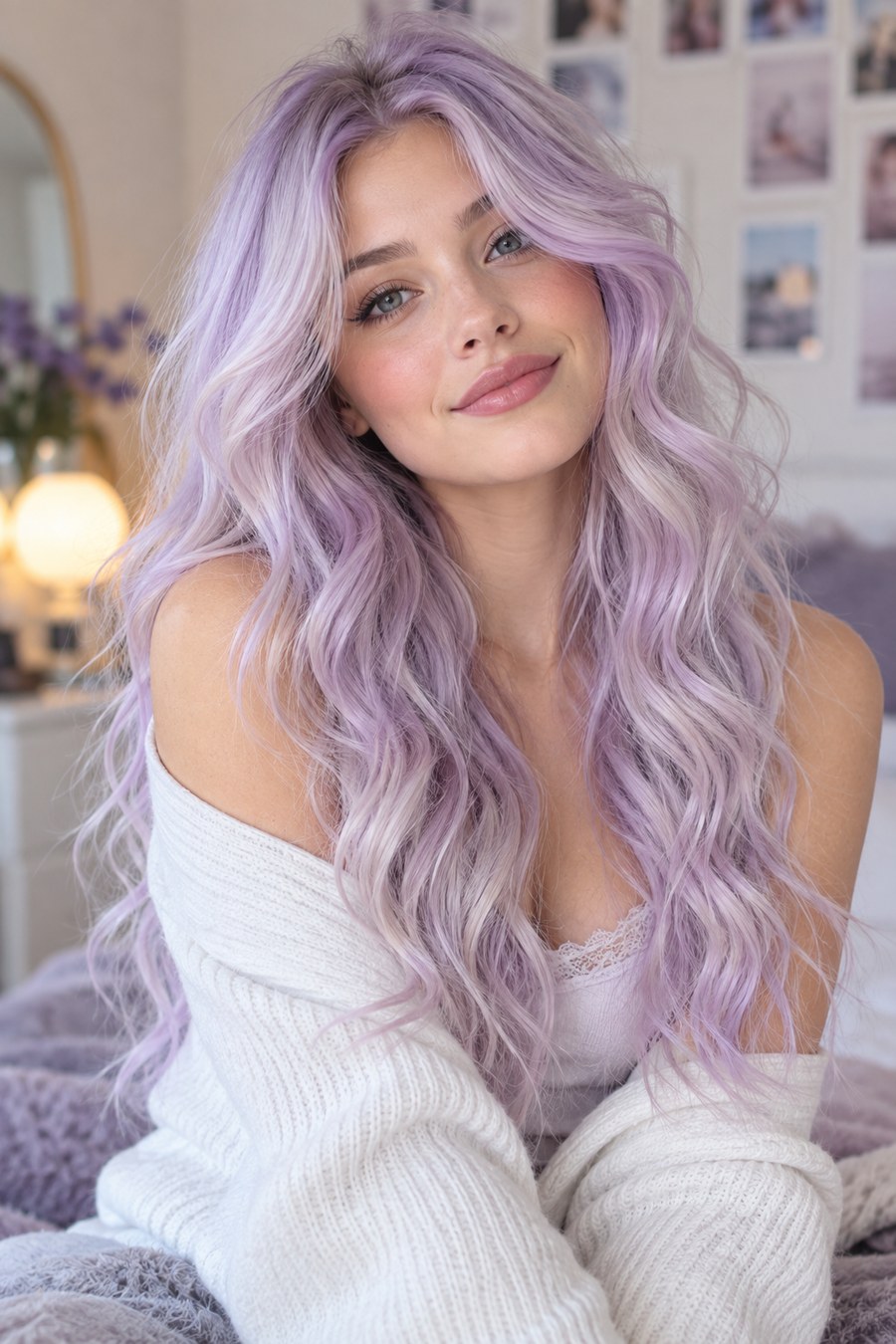
Shadow rooting deliberately blends a soft, smoky root color into the lavender lengths, so the transition looks intentional rather than like overdue regrowth. It’s a practical choice for people who want the freedom of longer stretches between salon visits, since the shadowed root naturally disguises new growth for weeks longer than a solid, all-over application would. This technique also tends to add depth and dimension, since the darker root anchors the lighter lavender ends visually.
21. Rose-Lavender Hair
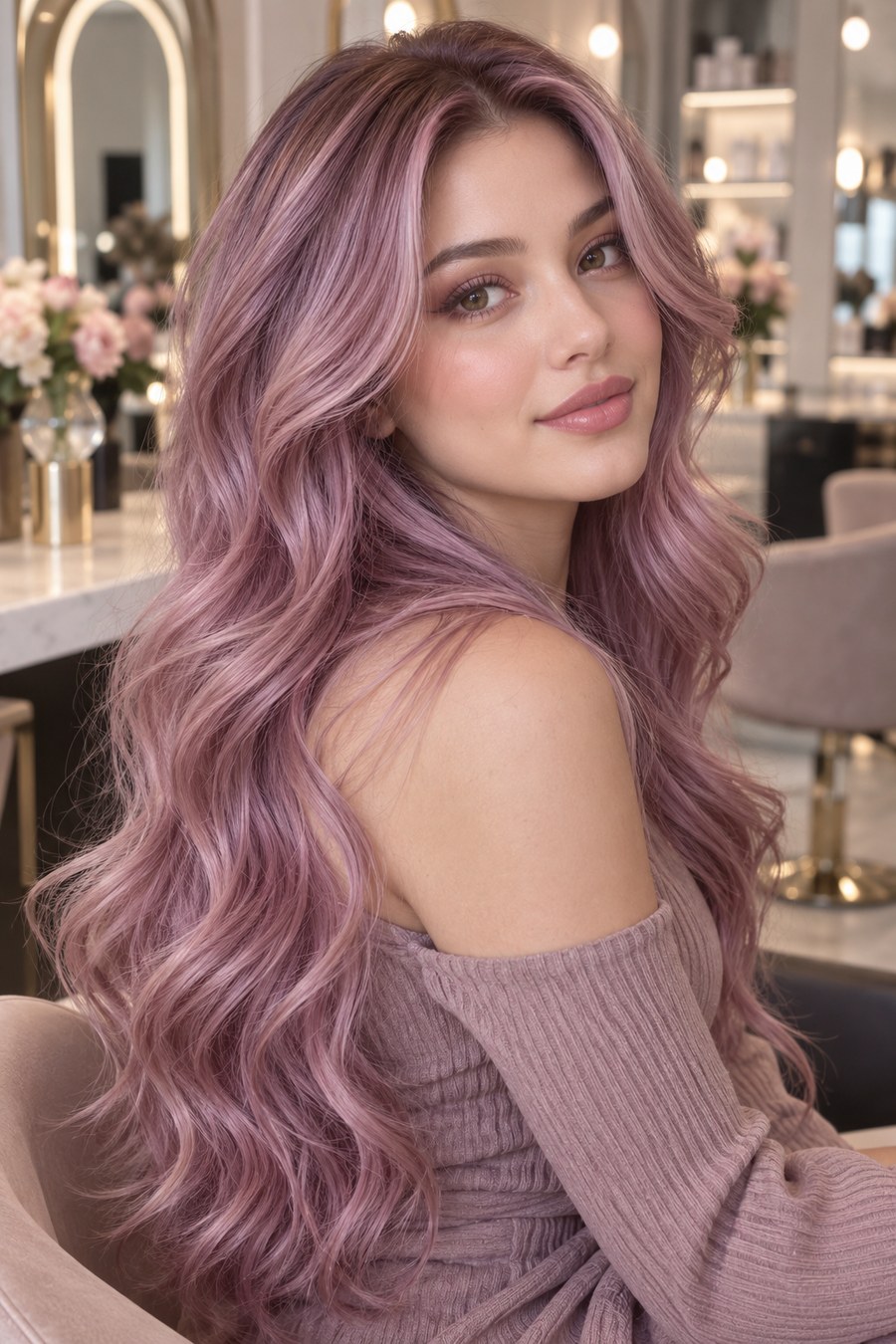
Rose-lavender warms the usual cool palette with a touch of dusty pink, landing on a soft, romantic shade that reads differently depending on the light — sometimes more violet, sometimes more rose. It flatters a wide range of skin tones because the pink undertone softens the starkness that pure lavender can sometimes have. This shade fades in an appealing way too, often mellowing into a pale, warm blonde rather than an uneven or brassy tone.
22. Lavender Curly Hair
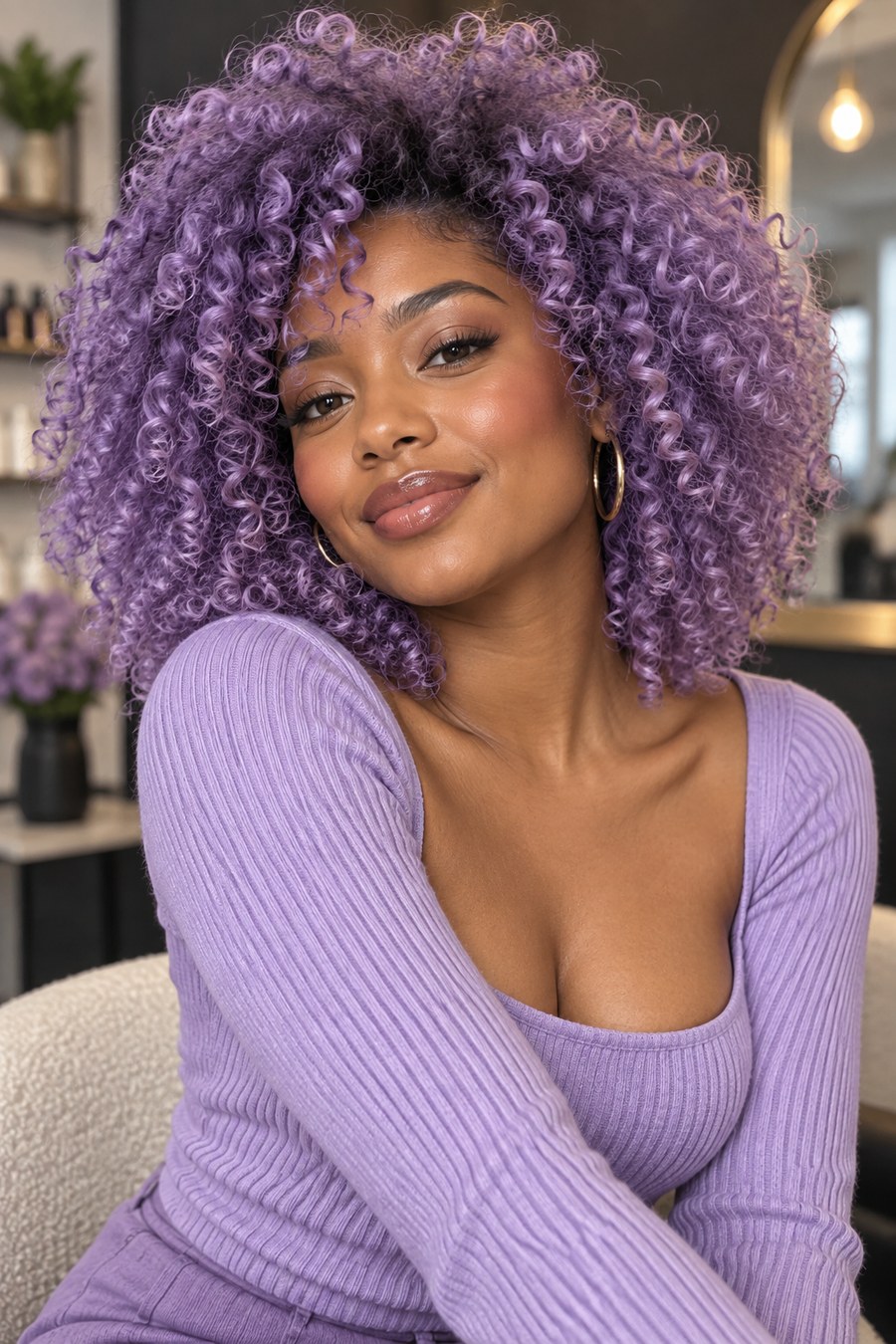
On curly and coily textures, lavender behaves differently than it does on straight hair, since each curl catches and refracts light at a different angle, creating natural highlight-and-shadow variation without any extra highlighting technique. This makes lavender a striking option for curl patterns, as the color itself does some of the dimensional work. Curly hair can also be more porous, meaning color may process faster or fade a bit quicker, so a gentler, sulfate-free routine helps preserve the tone.
23. Mushroom Lavender Balayage
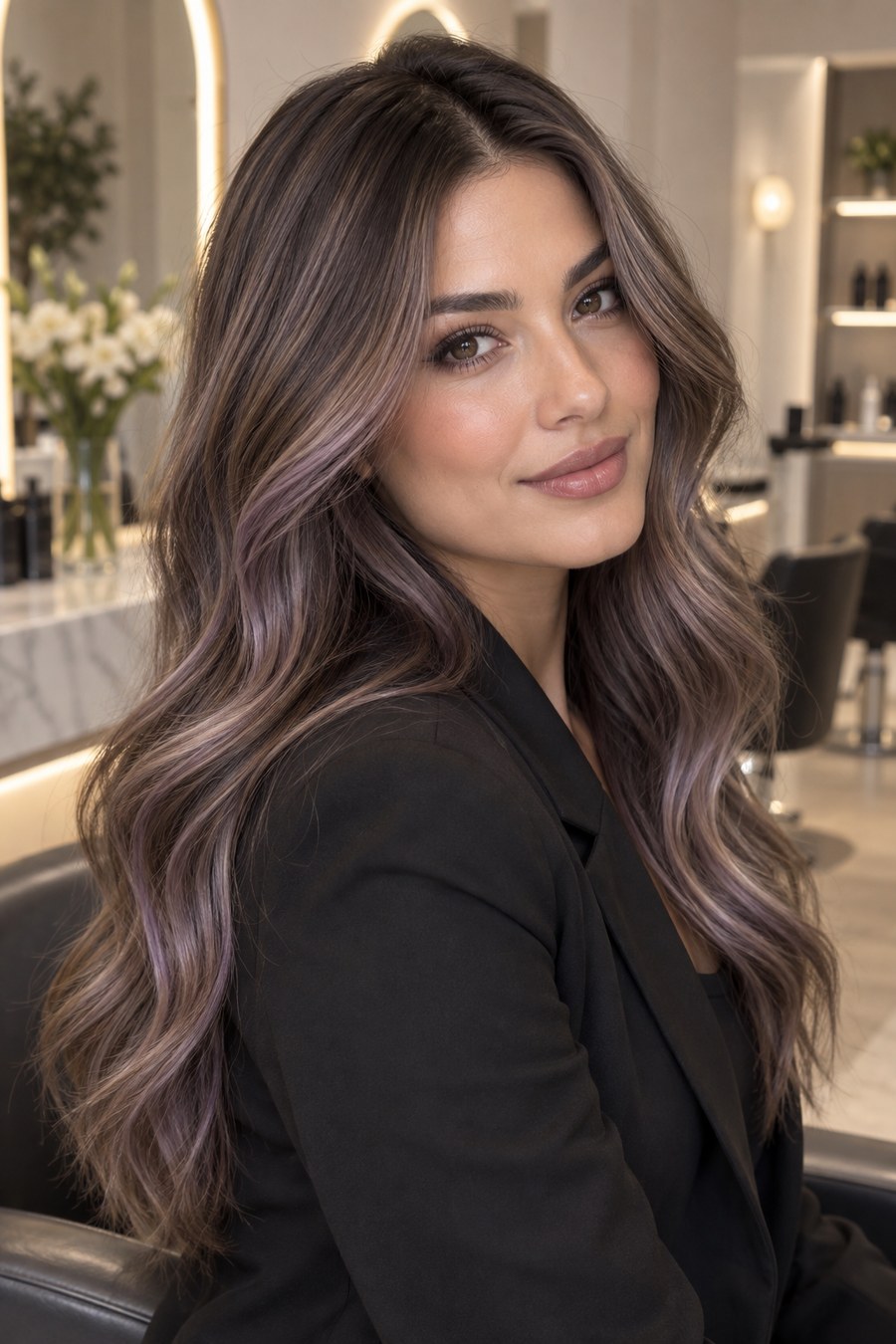
Mushroom lavender blends cool ash-brown with a whisper of violet, resulting in a color that looks mostly natural at first glance and only reveals its lavender undertone in direct light. Applied as balayage, it’s a subtle way to incorporate the trend without straying too far from a natural-looking base. This is a strong option for anyone who wants a hint of purple for work or more conservative settings, and it tends to require less frequent maintenance since the color is close to a natural brunette tone.
24. Lavender Highlights on Blonde Hair
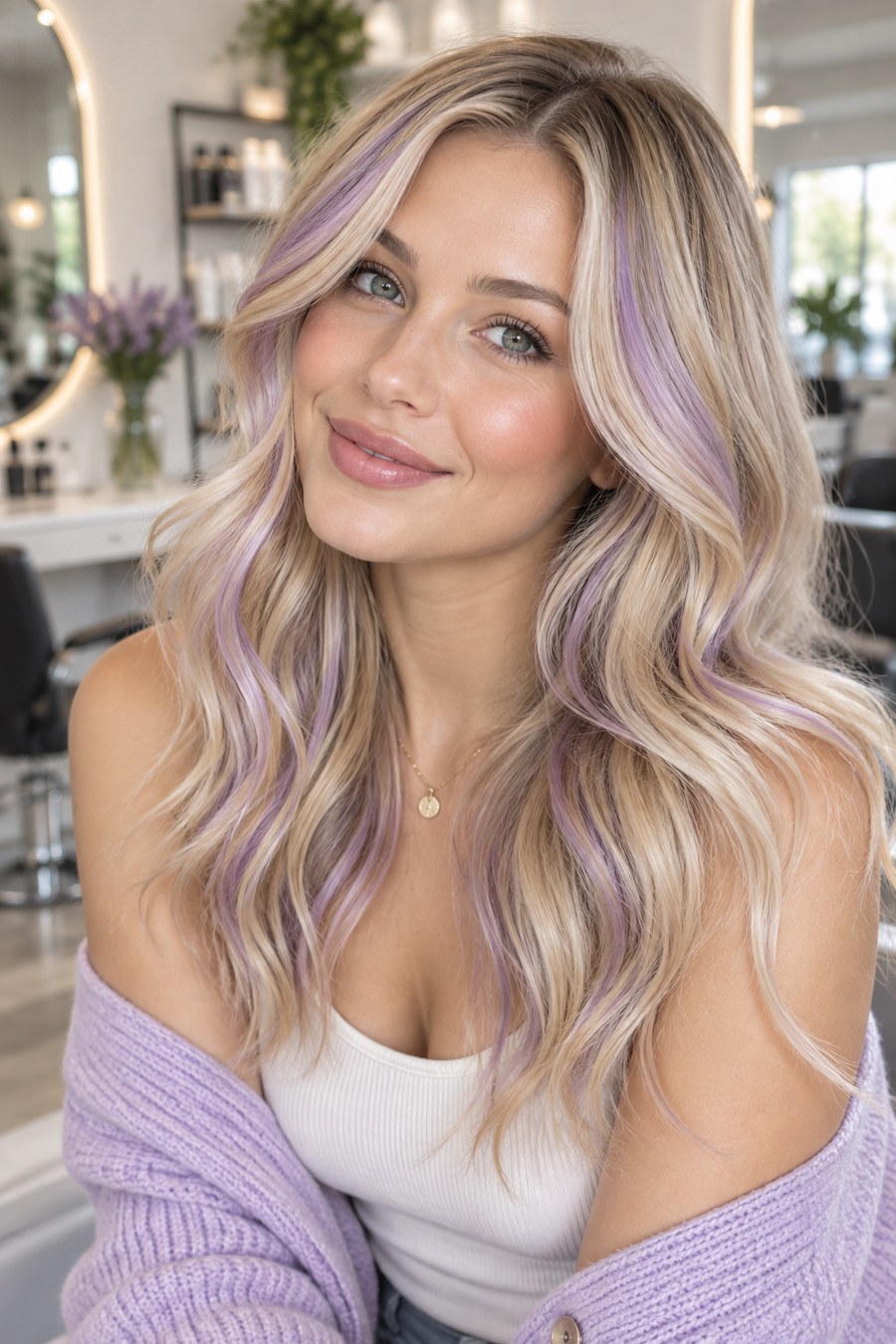
Adding lavender highlights directly onto an existing blonde base is one of the simplest ways to introduce the color, since minimal or no pre-lightening is typically needed. The highlights can be placed sparingly for a barely-there wash of color or more densely for a bolder, all-over lilac effect. Because the base is already light, the violet tone tends to show up clean and true rather than muddy, and touch-ups mostly involve refreshing the toner rather than re-lightening.
25. Dimensional Lavender Melt
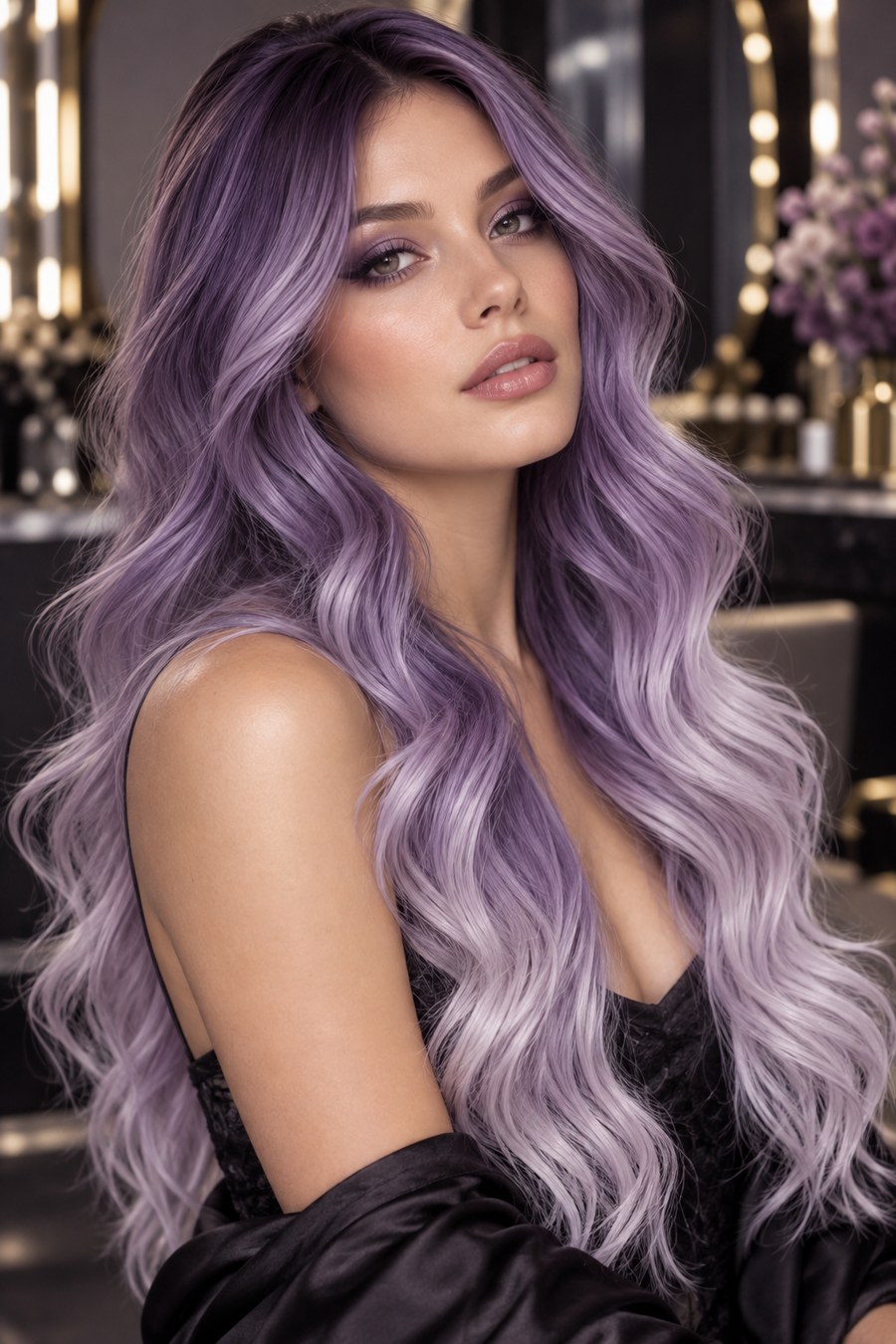
A color melt blends several related shades — perhaps a deeper violet root, a mid-tone lavender through the body, and a paler lilac at the ends — so the color shifts gradually with no visible lines of demarcation. This technique requires a skilled colorist to execute well, since the transitions need to be seamless, but the payoff is a rich, multi-tonal result that looks far more complex than a single-process color. It’s especially flattering on longer hair, where there’s enough length for each tone to have its own moment.
How to Choose the Right Lavender Hair Shade
The right lavender shade depends mostly on your current hair color, how much upkeep you’re willing to take on, and how bold you want the final result to look.
If you’re starting from naturally light or already-lightened hair, pastel lavender, silver lavender, and icy lavender blonde will all show up close to true, since there’s little underlying warmth to interfere with the cool pigment. If your hair is medium or dark brown, options like mushroom lavender balayage, lavender money pieces, or lavender highlights let you incorporate the trend without lightening every strand. Depending on how visible and bright you want the purple to appear, some pre-lightening may still be needed on the colored sections.
Undertone matters too. Cooler-toned lavenders like silver or icy versions tend to suit fair, cool, or neutral skin tones, while warmer variations like rose-lavender or muted mauve often complement medium and warm complexions. If maintenance is a concern, look toward shadow roots, balayage, or highlight-based placements rather than a solid all-over pastel, since regrowth is far less noticeable with a gradual technique. And if you’re unsure how bold to go, it’s almost always easier to start with highlights or a money piece and go fuller later than to commit to full-head lavender right away.
How to Maintain Lavender Hair Color
Lavender hair color fades gradually with every wash, so a few simple habits go a long way toward keeping it looking fresh between salon visits.
Start with a color-safe shampoo and conditioner; many people also prefer sulfate-free formulas because they tend to cleanse more gently. Washing less frequently, when your hair and scalp allow it, can help slow visible fading, and lukewarm or cool water is generally gentler on color-treated hair than very hot water. When using hot tools, apply a heat protectant and keep temperatures moderate to reduce unnecessary stress on both the hair and the color.
Because pastel and cool tones fade unevenly, many people use a purple or lavender-tinted color-depositing conditioner or mask between salon visits to refresh the tone and counteract any brassiness. A glaze or toning appointment every four to six weeks is typically enough to maintain vibrancy without over-processing the hair. Finally, sun exposure and chlorinated or salt water can accelerate fading, so a UV-protectant spray or simply covering the hair during long days outside or at the pool can help the color last longer.
Frequently Asked Questions About Lavender Hair
Is lavender hair hard to maintain?
It depends on the shade. Pastel and silver-toned lavenders fade faster and need more frequent toning, while deeper or balayage-based lavenders on darker bases require less upkeep since there’s more natural color supporting the tone underneath.
Does lavender hair fade quickly?
Yes. Pale lavender and other pastel fashion shades can lose visible intensity fairly quickly, especially with frequent washing, heat styling, sun exposure, or swimming. Deeper violet-lavender shades usually keep noticeable color longer than very pale pastels.
Do I need to bleach my hair before dyeing it lavender?
Usually, yes, if you want a true pastel, silver, or icy lavender. Darker or muted purple tones may show on deeper bases with less lightening, but the amount of pre-lightening needed depends on your starting color, hair condition, and the brightness you want to achieve.
What skin tones look good with lavender hair?
Most skin tones can wear some version of lavender. Cooler, icier shades often pair naturally with cool or neutral undertones, while rose-lavender and mauve variations can bring extra warmth. A colorist can also adjust the balance of pink, blue, gray, or violet to personalize the shade.
What does lavender hair fade to?
Lavender can fade toward pale lilac, silvery blonde, or a warmer blonde tone as the violet pigment softens. The exact result depends on the starting base, the lightening process, the formula used, and any underlying warmth in the hair.
Can brunettes get lavender hair?
Yes. Brunettes can try mushroom lavender balayage, lavender highlights, money pieces, or deeper violet tones. Some sections may need to be pre-lightened for the lavender to appear clearly, while a pale pastel result generally requires a much lighter base.
What is the difference between lavender and lilac hair?
Lilac tends to lean slightly pinker and softer, while lavender stays cooler and grayer. The two are closely related and often used interchangeably, but a side-by-side comparison usually shows lilac with a touch more warmth.
How can I make lavender hair color last longer?
Use color-safe, sulfate-free products, wash less often, rinse with cool water, and refresh the tone periodically with a purple or lavender-tinted conditioner between salon toning appointments.
Conclusion
From a single pastel wave to a fully dimensional color melt, lavender proves it can be as subtle or as dramatic as you want it to be. These 25 lavender hair color ideas show just how much range this shade family really has, whether you’re drawn to smoky balayage, icy silver tones, dark roots with pastel ends, or a soft rose-lavender blend. The best place to start is with your current base color, your comfort level with maintenance, and how bold you want the transformation to feel.
Whatever direction you lean, lavender remains one of the more versatile and wearable ways to bring color into your hair without losing a sense of natural movement and dimension. Save the looks that speak to you and bring them to your colorist as a starting point — from there, they can adjust placement, depth, and tone to fit your hair perfectly.


