
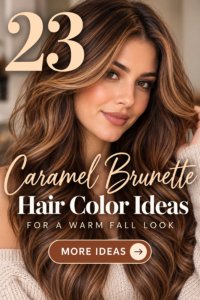



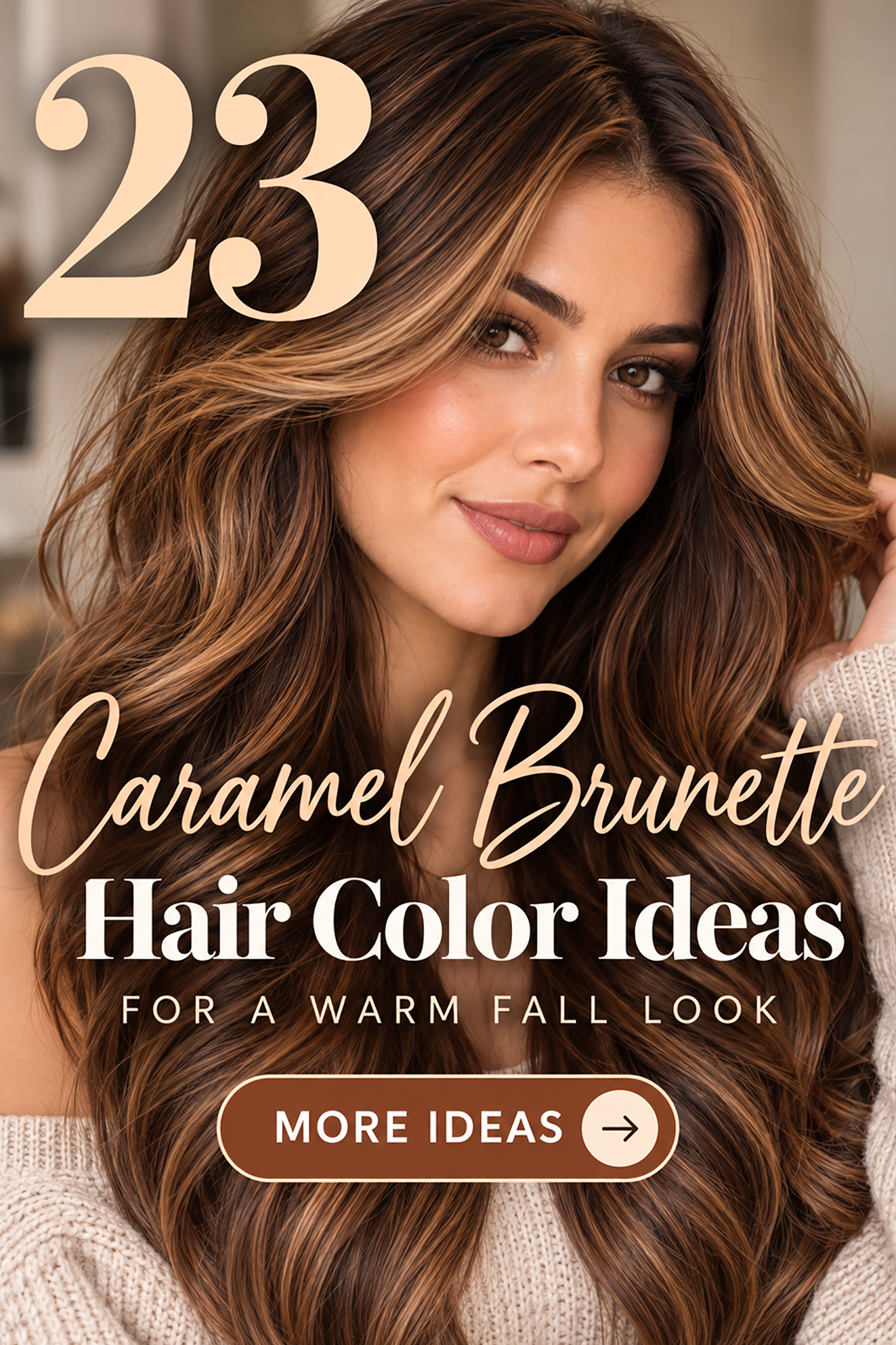
Caramel brunette combines a rich brown base with warm caramel tones, ranging from soft gold to deep amber. It adds warmth and dimension without taking away the depth of brunette hair, making it an especially fitting choice for fall.
These caramel brunette hair color ideas can be customized with balayage, highlights, face-framing pieces, or deeper blended tones. Here are 23 beautiful variations to inspire your next salon visit.
1. Classic Caramel Brunette
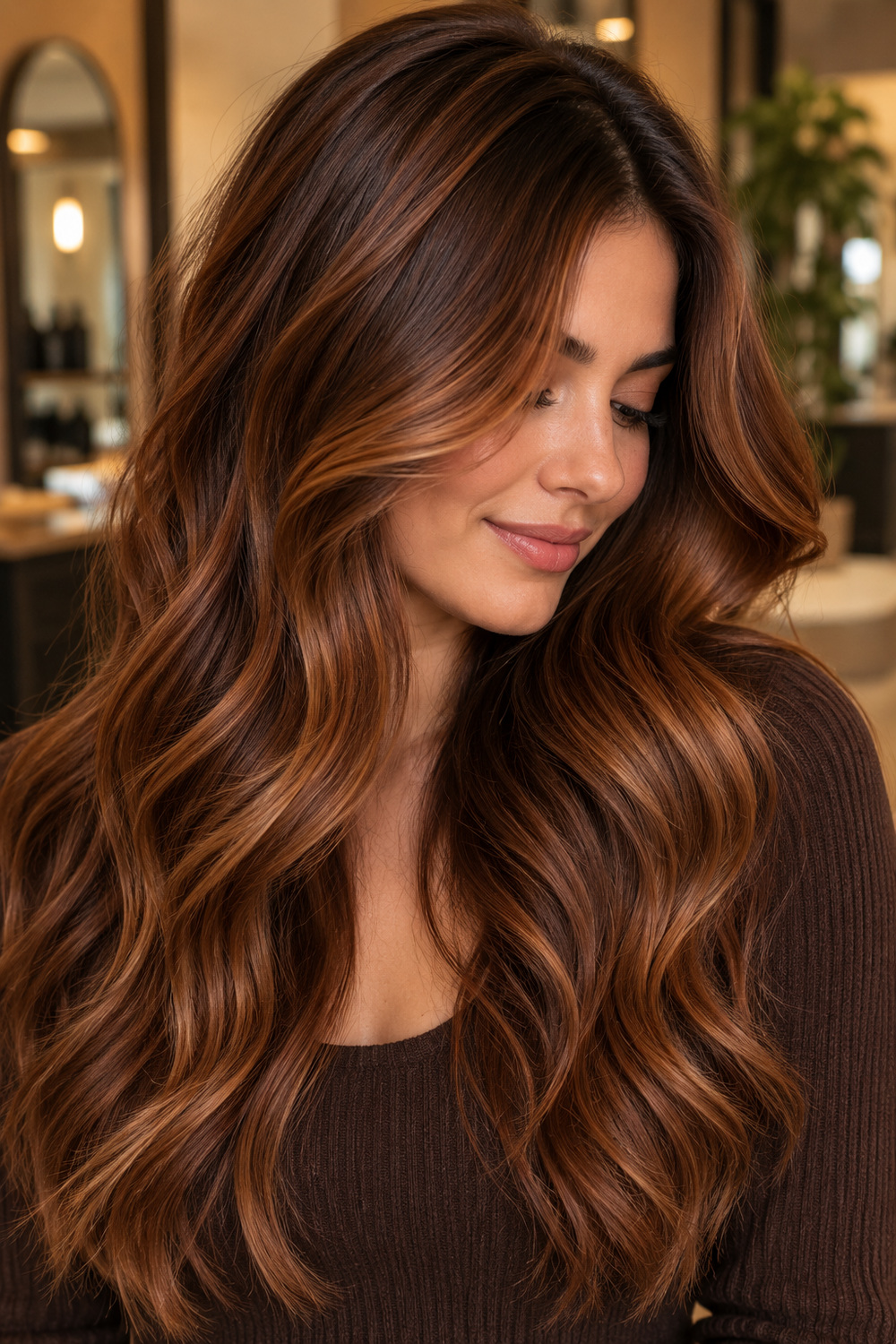

This is the baseline version of the look: a medium to dark brown base warmed throughout with caramel tones rather than concentrated in a specific placement. The color is typically applied in a semi-uniform way, so the brunette and caramel blend into one cohesive shade instead of showing distinct strands. It reads as rich and warm without appearing multi-tonal, which makes it a comfortable entry point for anyone who wants warmth without visible highlights. It’s also relatively easy for a colorist to maintain at the roots.
2. Dark Brunette With Caramel Highlights
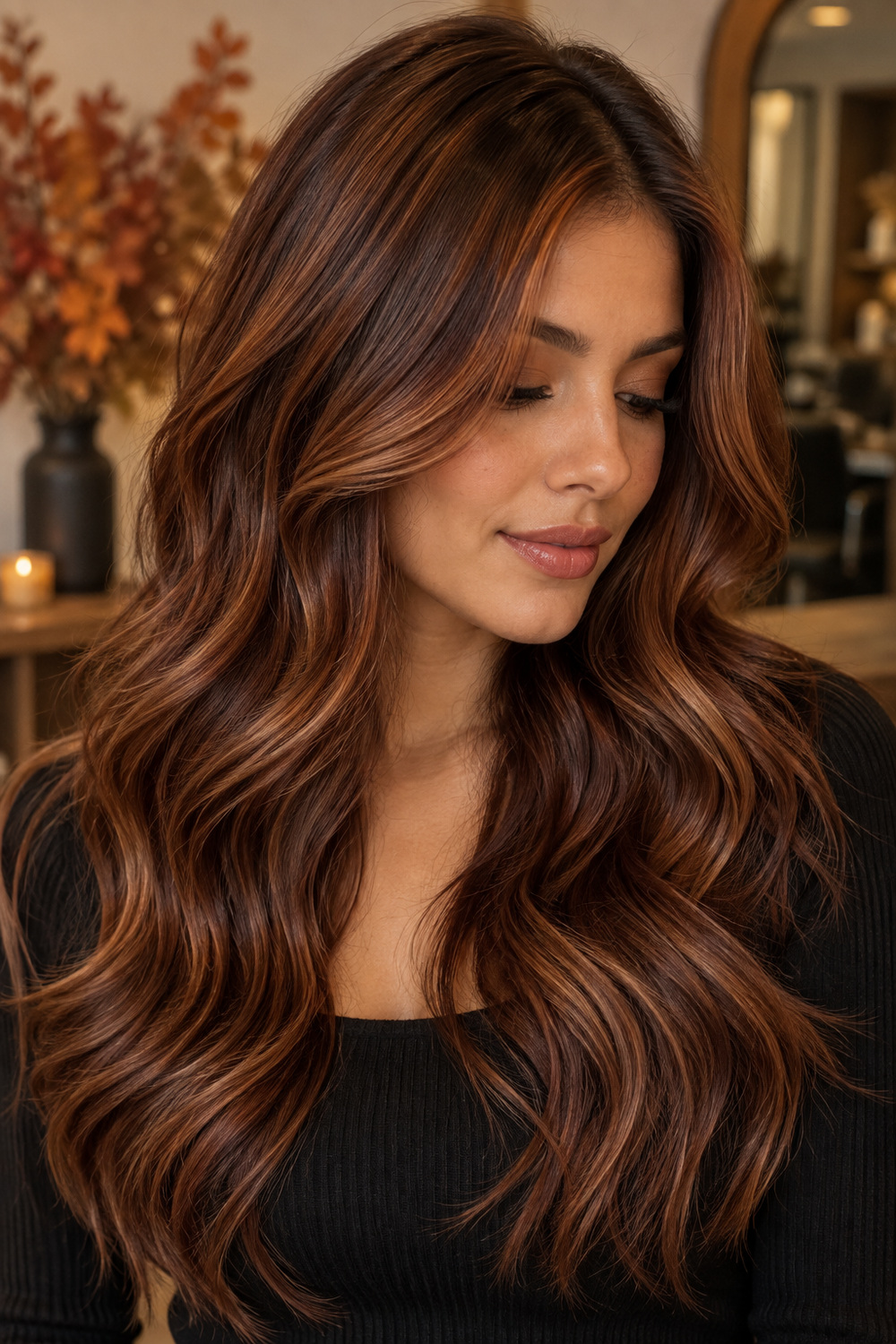
Here, a deep brown or near-black base stays dominant while fine or medium caramel highlights are placed throughout for contrast. Because the base is so dark, the caramel tends to show up more distinctly than it would on a lighter brunette, creating a noticeable but still controlled amount of dimension. This version can work particularly well for those with naturally dark hair who want warmth without lightening the overall color significantly, and the highlight density can be scaled up or down depending on how much contrast is desired.
3. Caramel Brunette Balayage
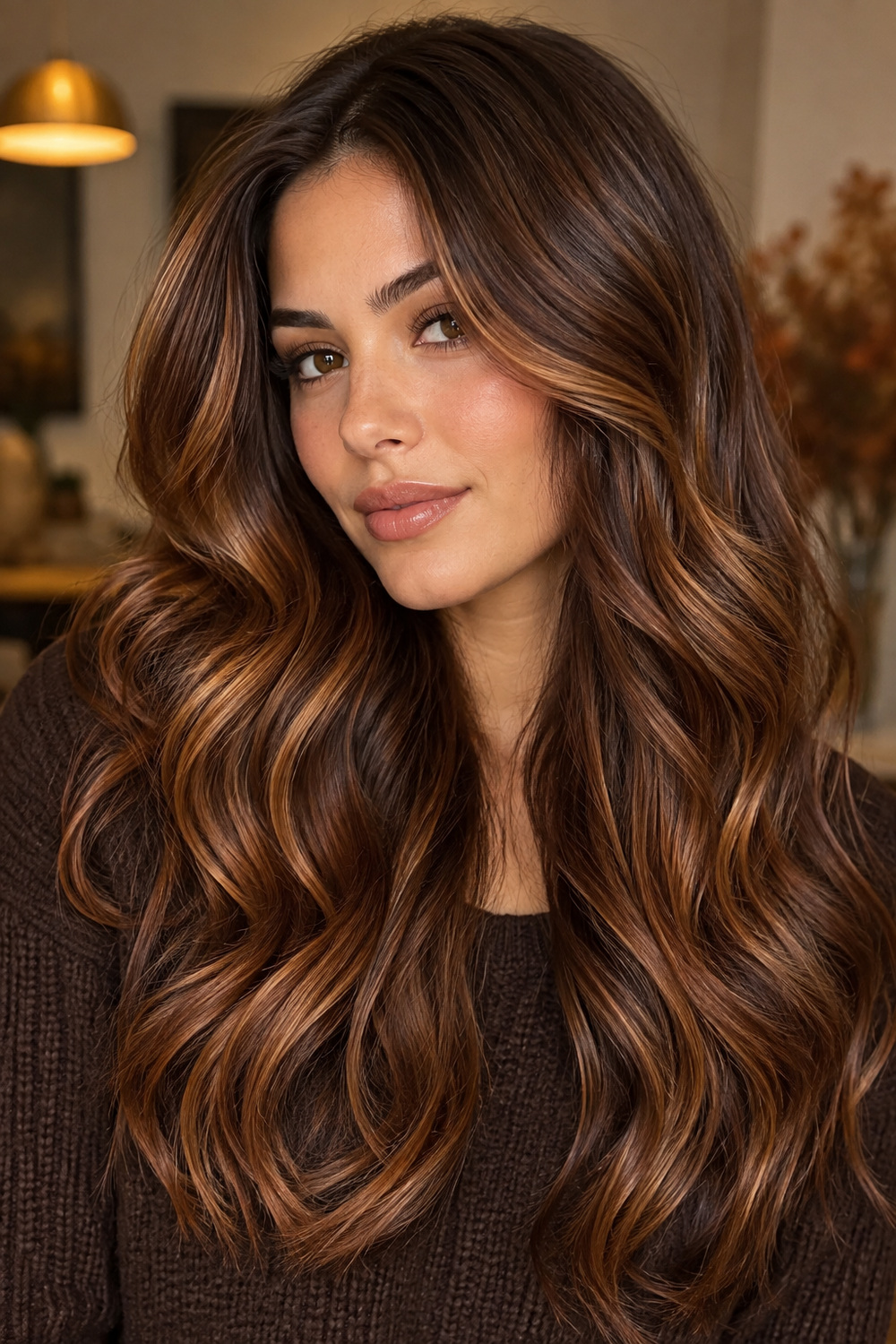
Balayage is a hand-painted technique where color is swept onto the surface of the hair rather than foiled in uniform sections, which creates a softer, more graduated transition between the brunette base and caramel tones. The result tends to look sun-warmed rather than striped, with lighter caramel concentrated toward the mid-lengths and ends. This approach generally grows out more gently than foiled highlights, since there’s less of a hard line at the root. It’s a popular option for those who want dimension but prefer fewer, more spaced-out salon visits.
4. Chocolate Caramel Brunette
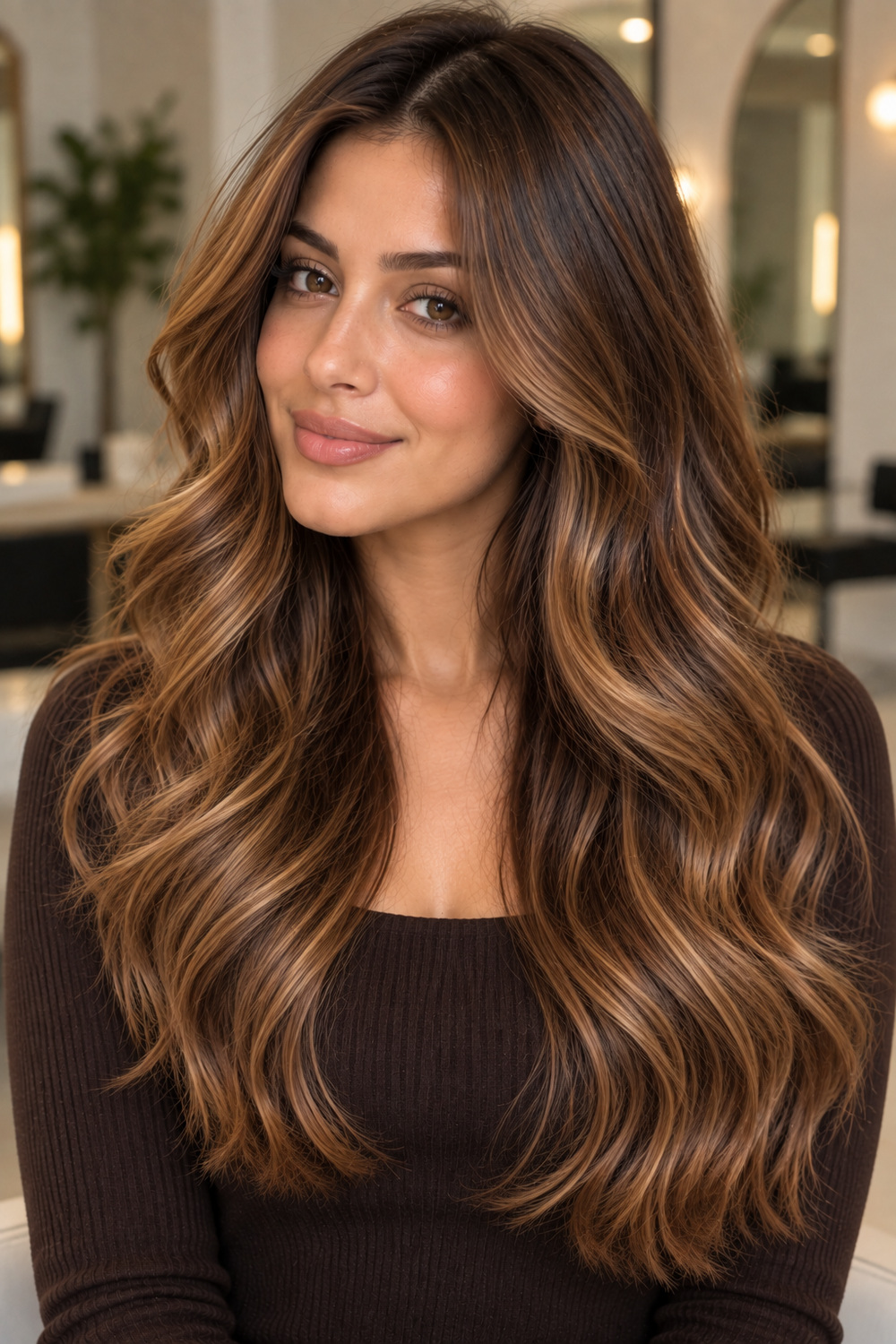
This shade pairs a warm chocolate-brown base with caramel woven through in soft ribbons or highlights, leaning into a dessert-inspired palette that reads as rich rather than flat. The chocolate base has enough depth to keep the overall look grounded, while the caramel keeps it from appearing one-dimensional or overly cool. It can complement medium to deep natural brunette hair, and colorists often use this combination when a client wants warmth added without straying too far from their existing depth.
5. Caramel Face-Framing Highlights
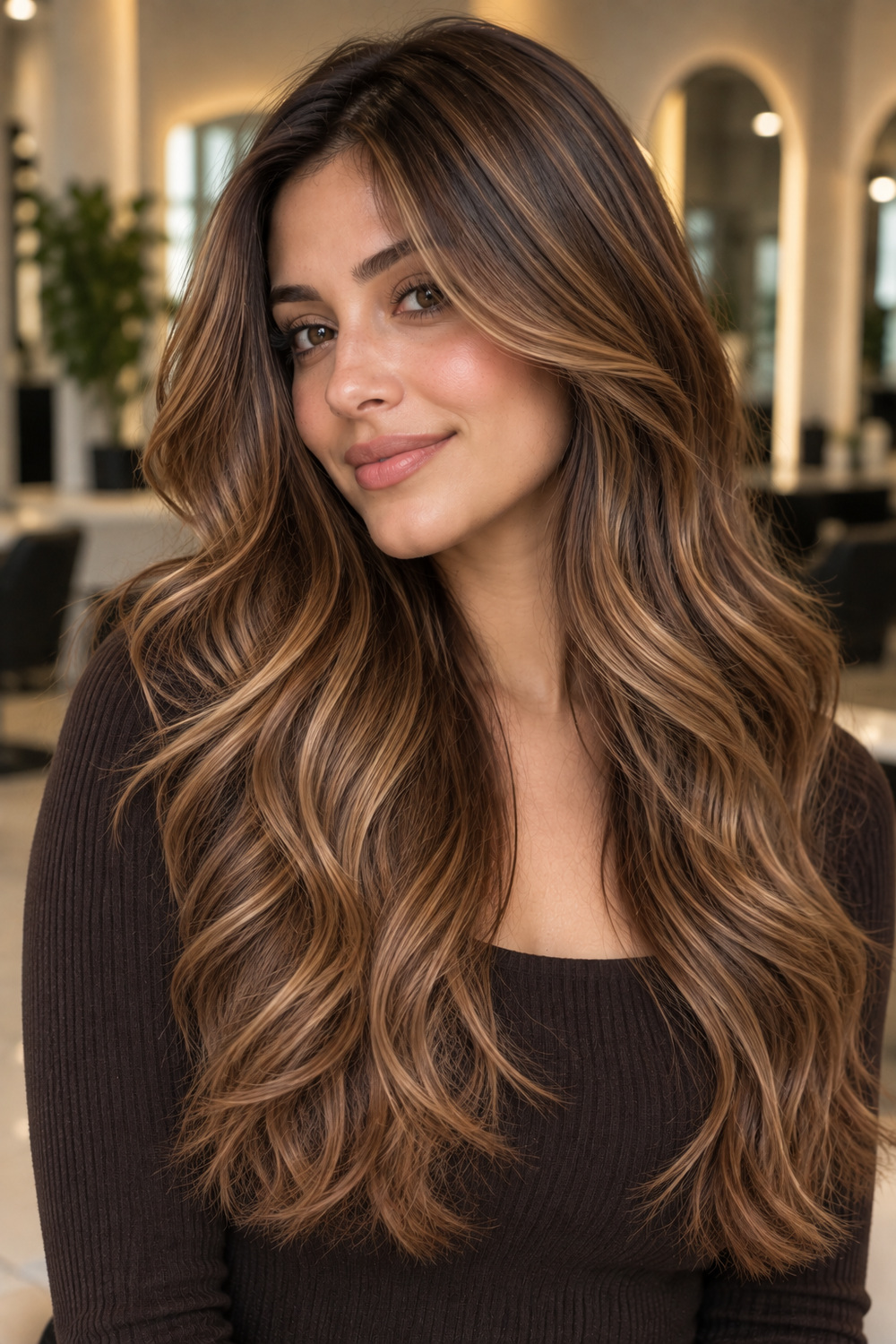
Rather than distributing caramel throughout the whole head, this technique concentrates lighter pieces around the hairline, particularly near the part and the strands framing the face. This placement draws attention toward the face without requiring a full head of highlights, and it’s a lower-commitment option since the rest of the base stays untouched. Face-framing caramel tends to work on most lengths and can be added to virtually any existing brunette base as a way to test the color family before going further.
6. Soft Caramel Ribbons on Brown Hair
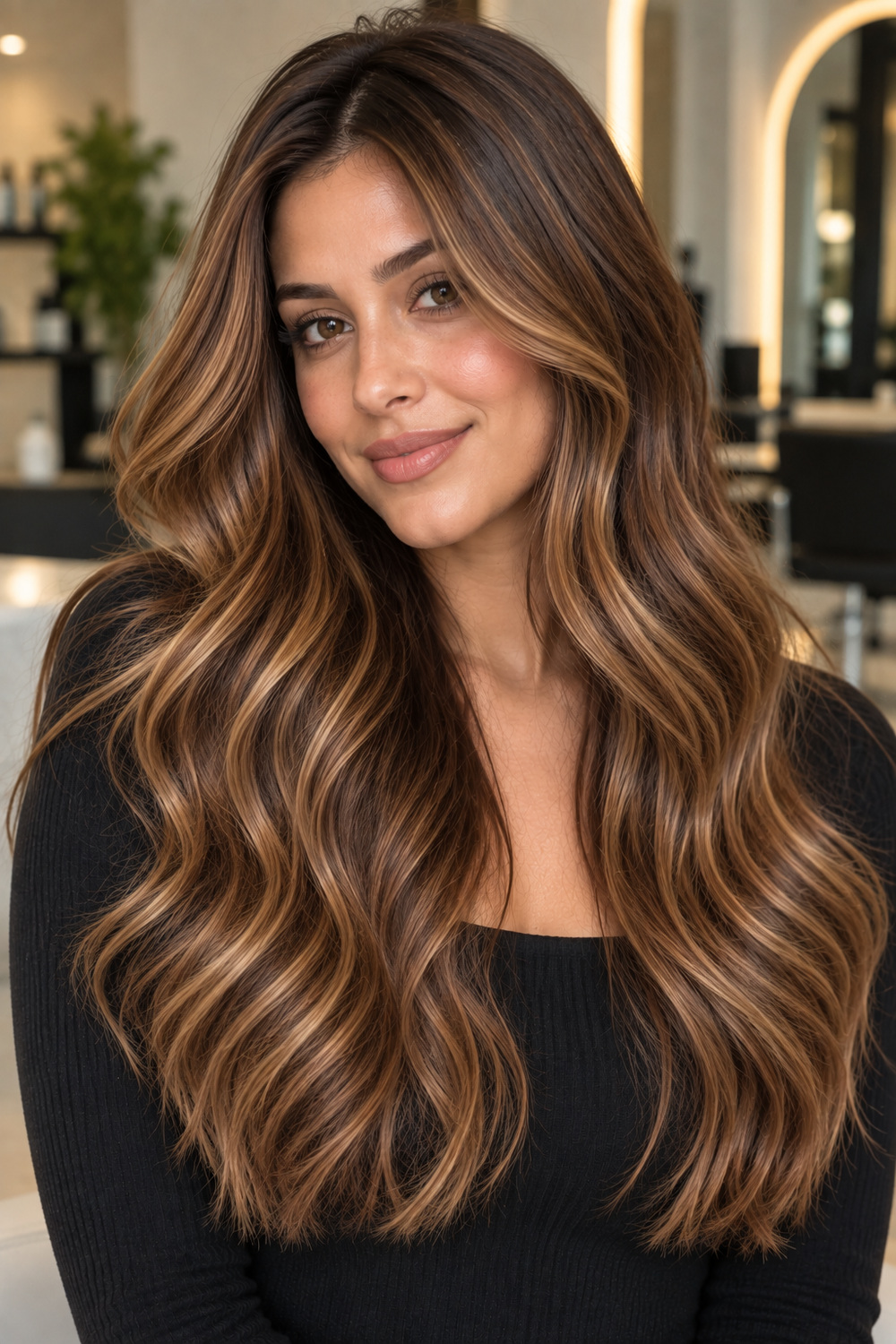
This look uses thin, softly blended strands of caramel worked through a brown base rather than the broader panels seen in traditional balayage or highlights. The ribbons catch the light and move with the hair rather than standing out as separate sections, so the effect stays close to the natural base color with just a touch of shine and warmth. It’s a good option for those who want a hint of caramel brunette without a dramatic shift, and it tends to be easy to maintain since so little lightening is involved.
7. Golden Caramel Brunette
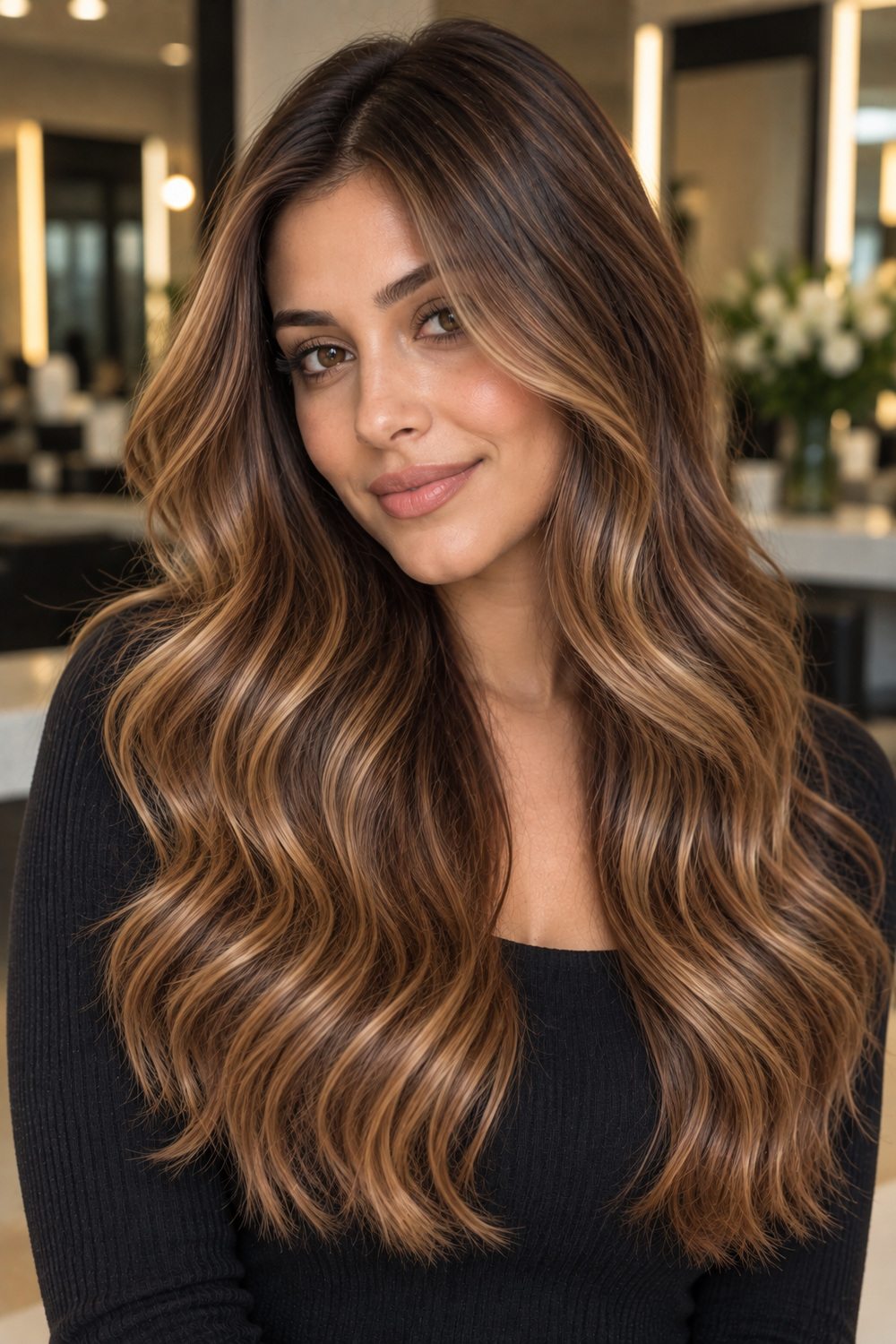
In this variation, the caramel tone leans distinctly gold rather than neutral or deep, giving the overall color a warmer, almost honeyed cast. It works well layered over a medium brown base, where the gold has enough contrast to read clearly without needing to go too light. Because gold tones can shift toward brassiness as color fades, this shade may require a bit more attention to toning between salon visits, so it’s worth discussing your hair’s underlying pigment with a colorist beforehand.
8. Caramel Brunette With Money Pieces
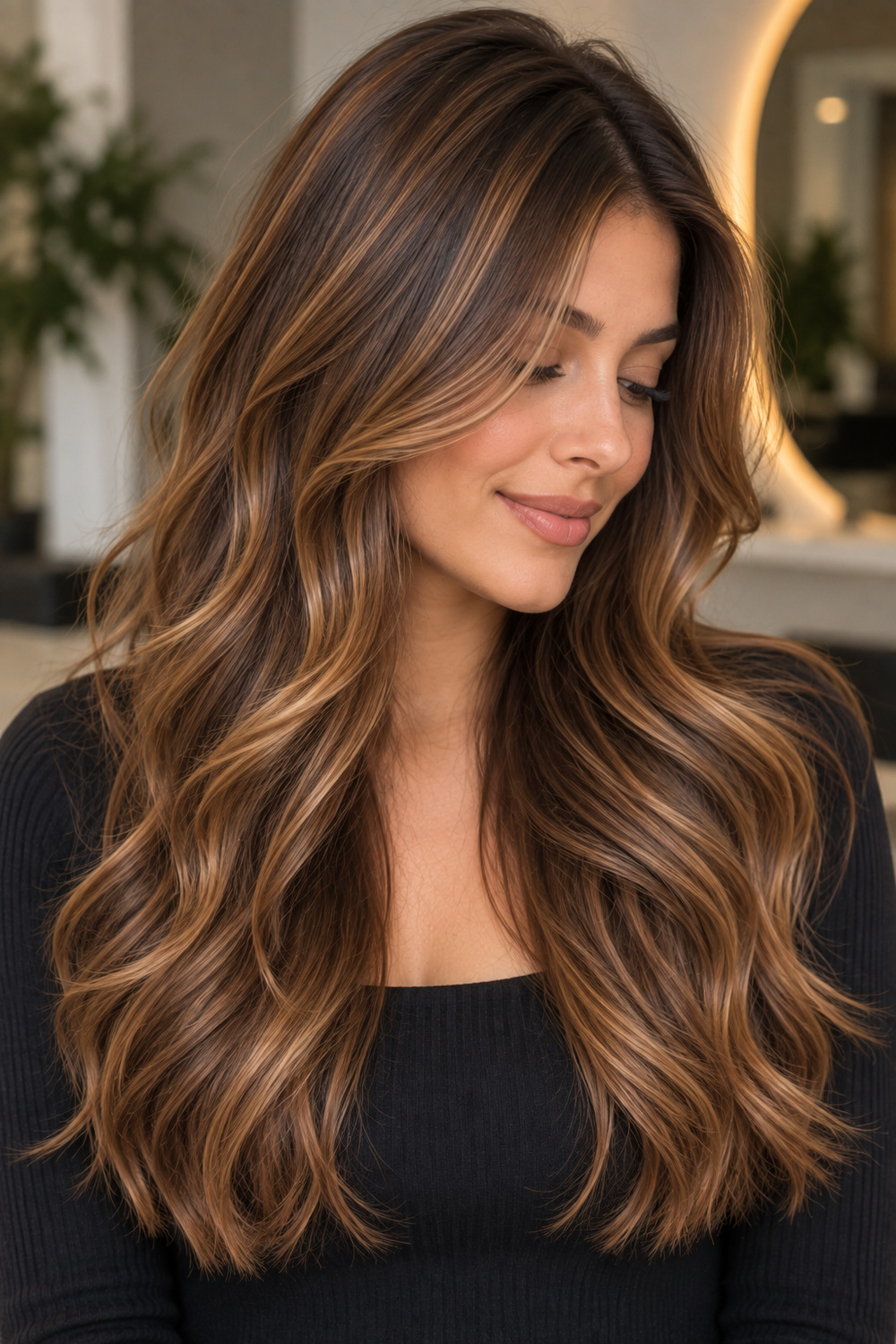
Money pieces are bold, face-framing highlights placed just at the front of the hair, colored here in caramel against a deeper brunette base. The concentrated placement creates a strong pop of contrast right where it’s most visible, while the rest of the hair stays close to its natural depth. This approach suits those who want a noticeable change without committing to highlights throughout, though because the pieces sit close to the root, they may need more frequent touch-ups to stay crisp.
9. Espresso Brown With Caramel Dimension
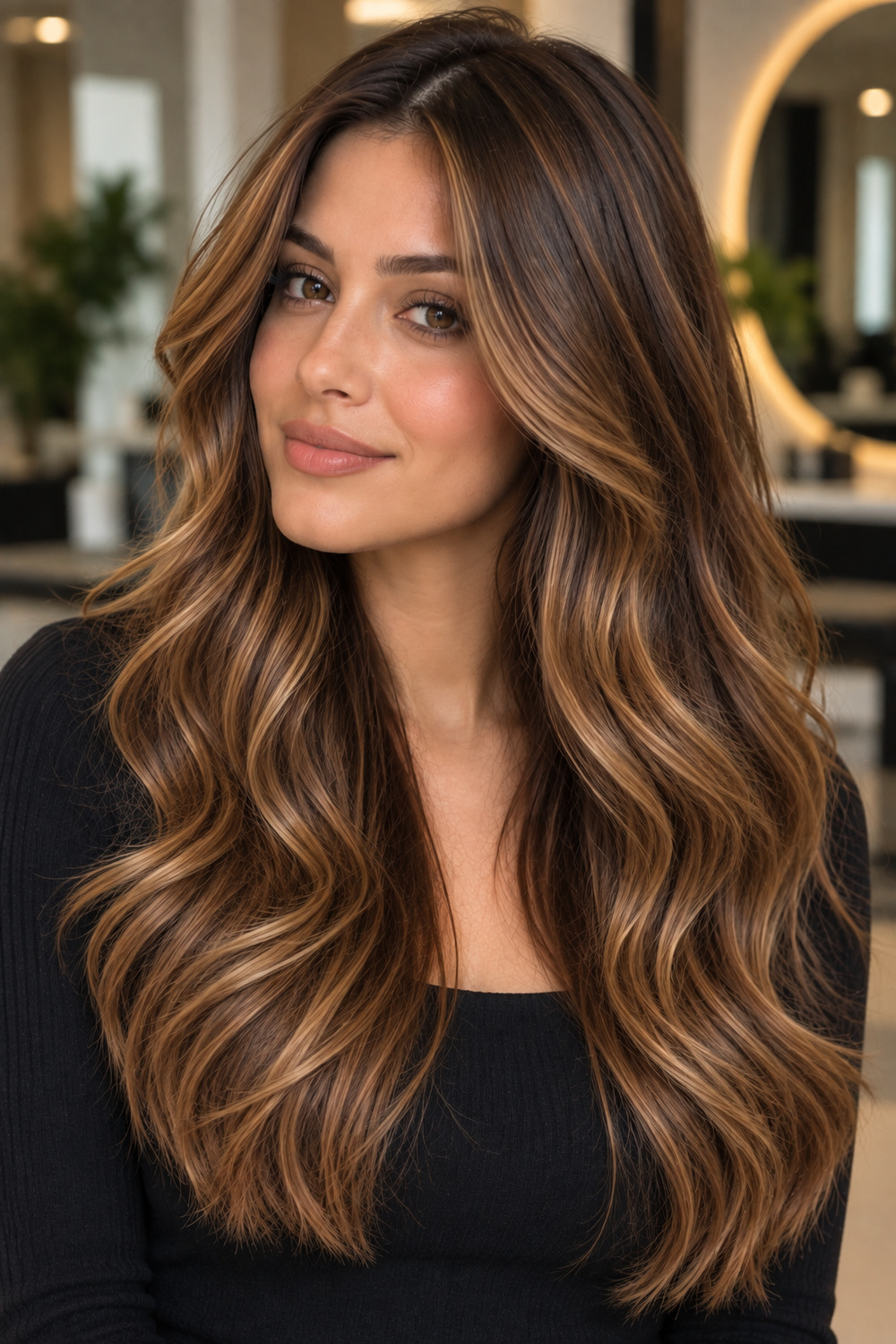
An espresso base is deeper and often slightly cooler than a standard chocolate brown, which makes the caramel dimension added on top feel especially warm by contrast. The caramel is typically placed in finer sections through the mid-lengths and ends rather than near the face, giving a subtle lift without changing the overall depth. This can be a good match for naturally dark brunettes who want warmth introduced gradually, since the deep base helps camouflage regrowth between appointments.
10. Caramel Brunette Ombre
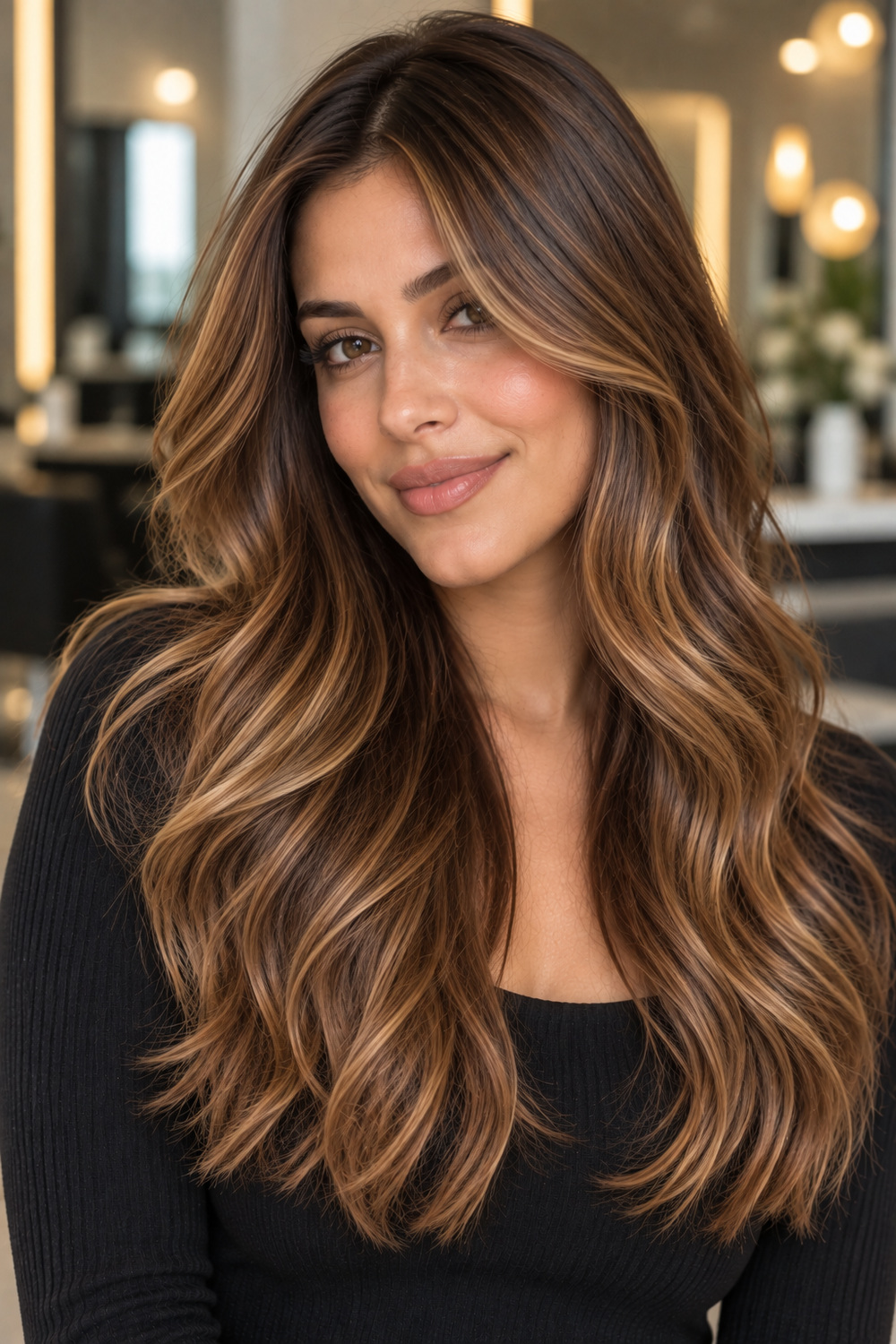
Ombre transitions from a darker brunette root into caramel tones toward the ends, with the color change happening gradually over the length of the hair rather than in individual strands. Unlike balayage, which distributes lighter pieces throughout, ombre keeps the top portion essentially untouched and concentrates the lightening lower down, creating a clear gradient that looks especially warm on longer hair. It’s also a low-maintenance option at the root, since the dark base naturally blends into new growth.
11. Warm Caramel Highlights on Medium Brown Hair
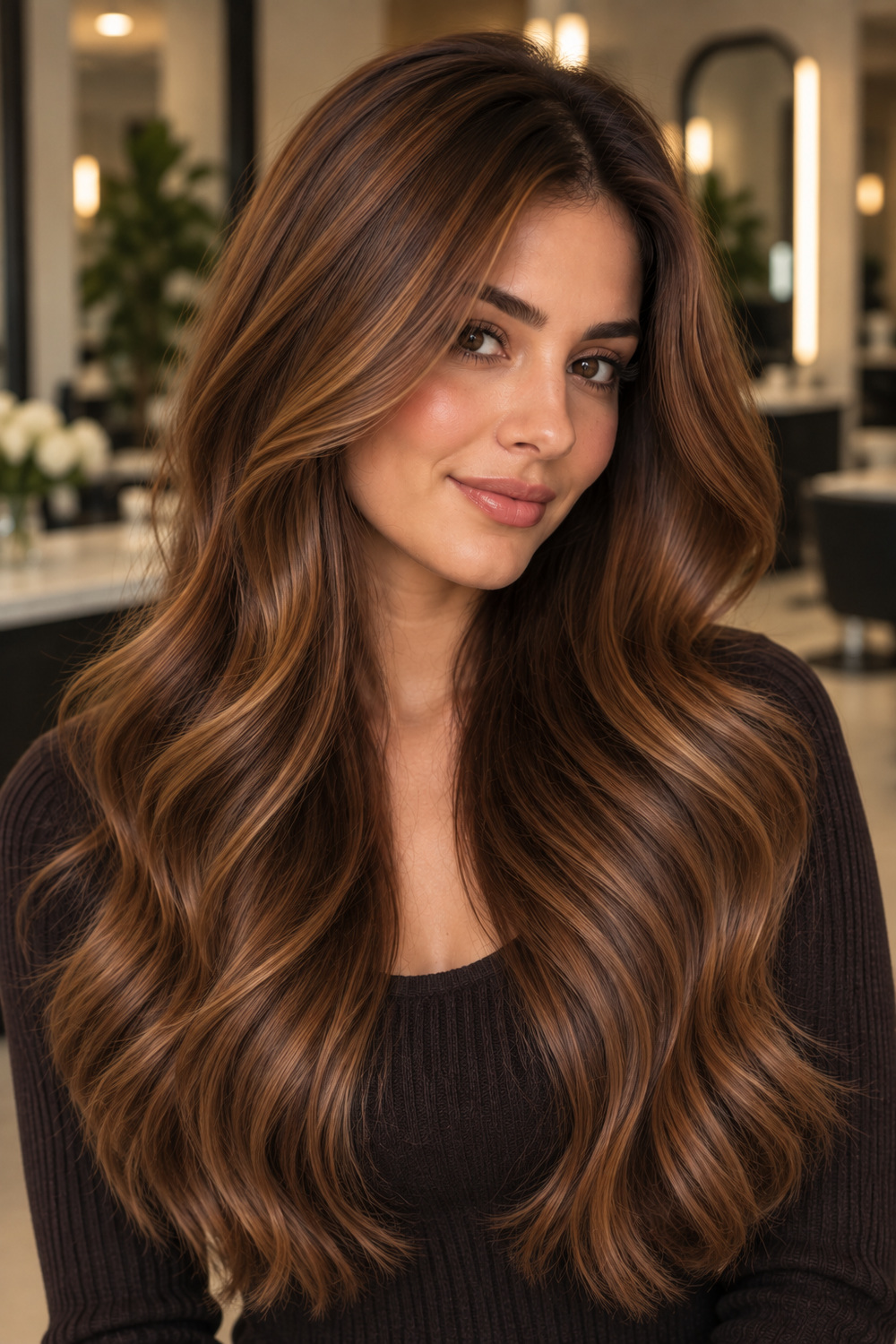
Medium brown is a versatile base for caramel highlighting because it sits close enough to the caramel tone that the transition looks blended rather than harsh, while still offering enough contrast to be visible. Highlights can be placed in a traditional foiled pattern or painted on more loosely, depending on how structured or lived-in the result should look. This combination tends to require moderate maintenance, since the base and highlight color aren’t far apart, making regrowth less noticeable than on darker or lighter starting shades.
12. Caramel Brunette With Dark Roots
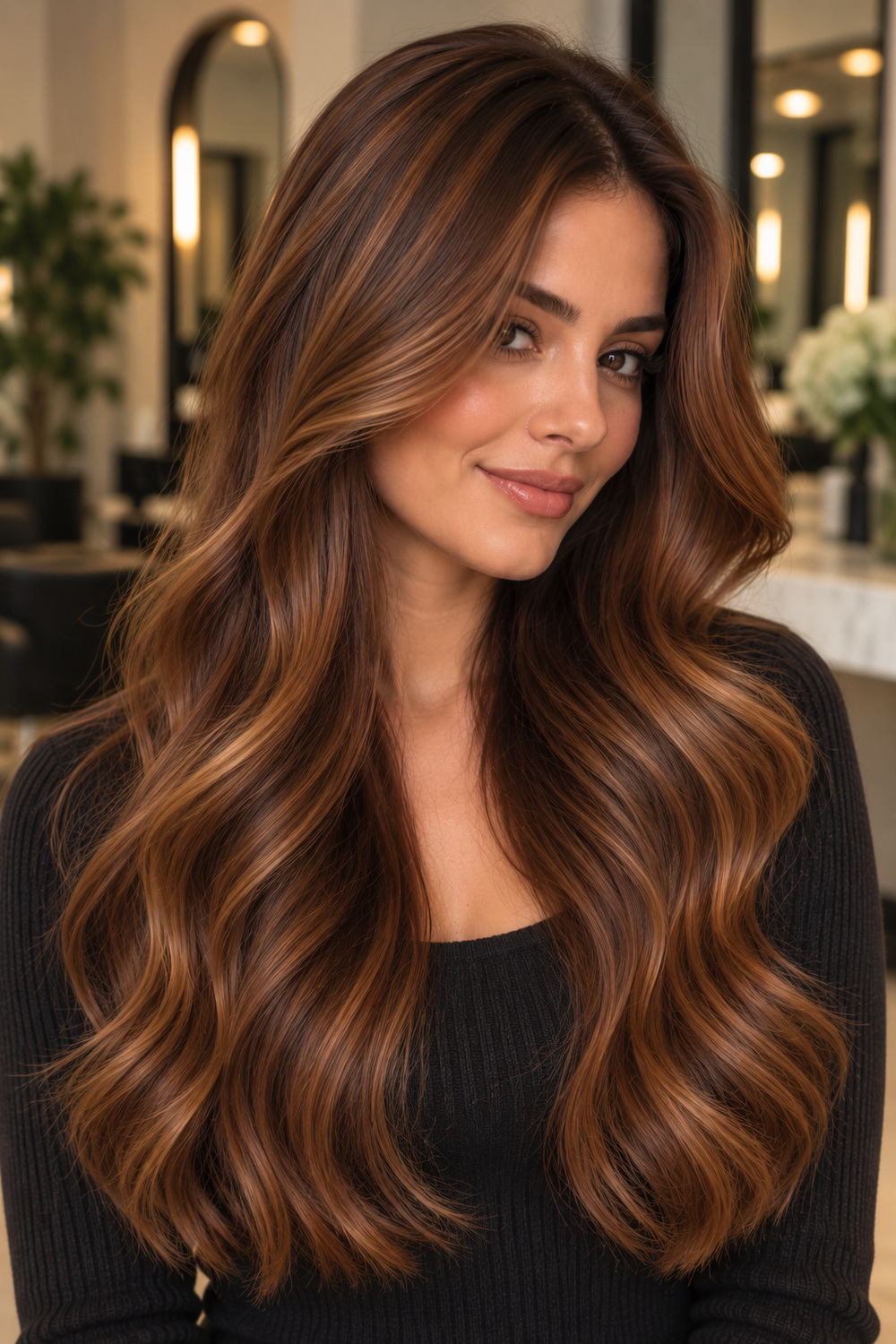
This look intentionally preserves a few inches of the natural or deeper brunette color at the root before transitioning into caramel tones through the mid-lengths and ends. The dark root creates depth at the crown and makes the overall color look more grounded, since regrowth blends in naturally rather than creating a visible line. It’s a practical option for those who want caramel dimension without frequent root touch-ups.
13. Toffee Caramel Brunette
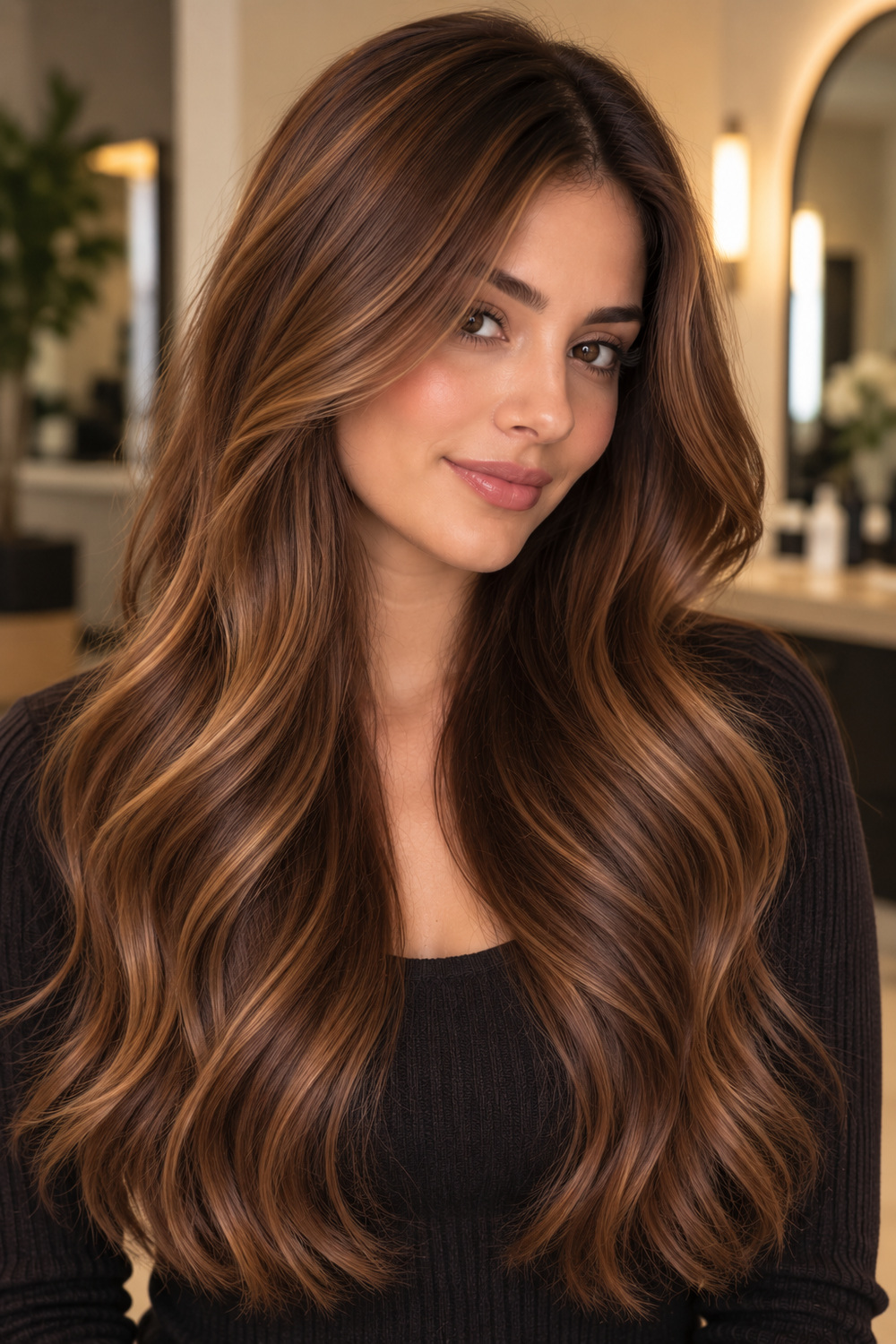
Toffee is a slightly deeper, more muted version of caramel, with less gold and more brown mixed into the tone. Paired with a brunette base, it creates a color that reads as warm without being especially bright, suiting those who want dimension but prefer a subdued, everyday-wearable result. This shade tends to blend well with both cool and warm natural brunette bases, since the toffee tone itself sits somewhere in the middle.
14. Caramel Brown With Subtle Babylights
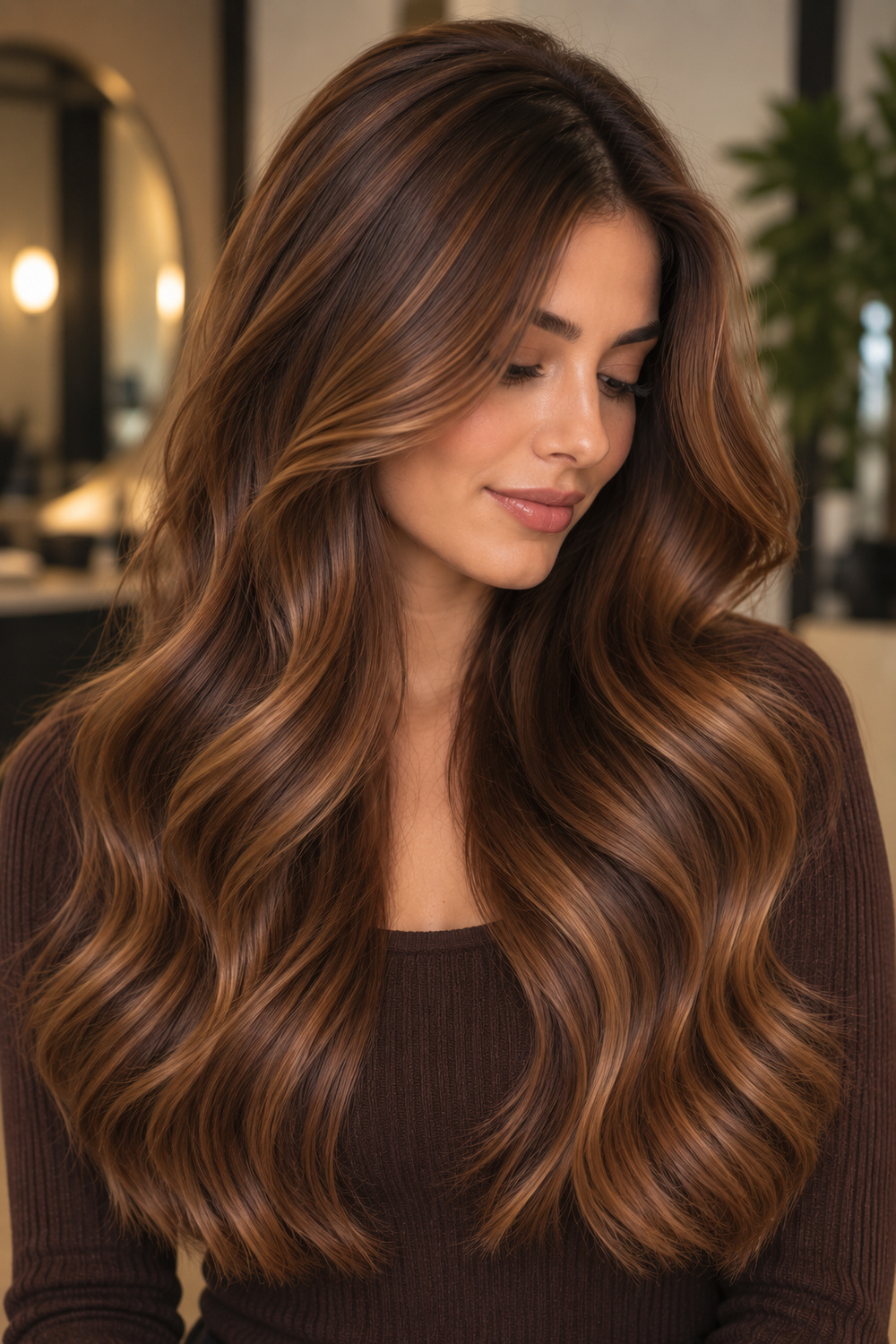
Babylights are very fine, delicately placed highlights originally designed to mimic the way children’s hair naturally lightens near the hairline and part. Applied in caramel tones over a brown base, they create a soft, diffused warmth rather than distinct highlighted sections, and because the strands are so fine, the technique grows out with very little visible demarcation. It’s a strong option for those who want caramel warmth without an obviously highlighted look.
15. Caramel Brunette on Long Layered Hair
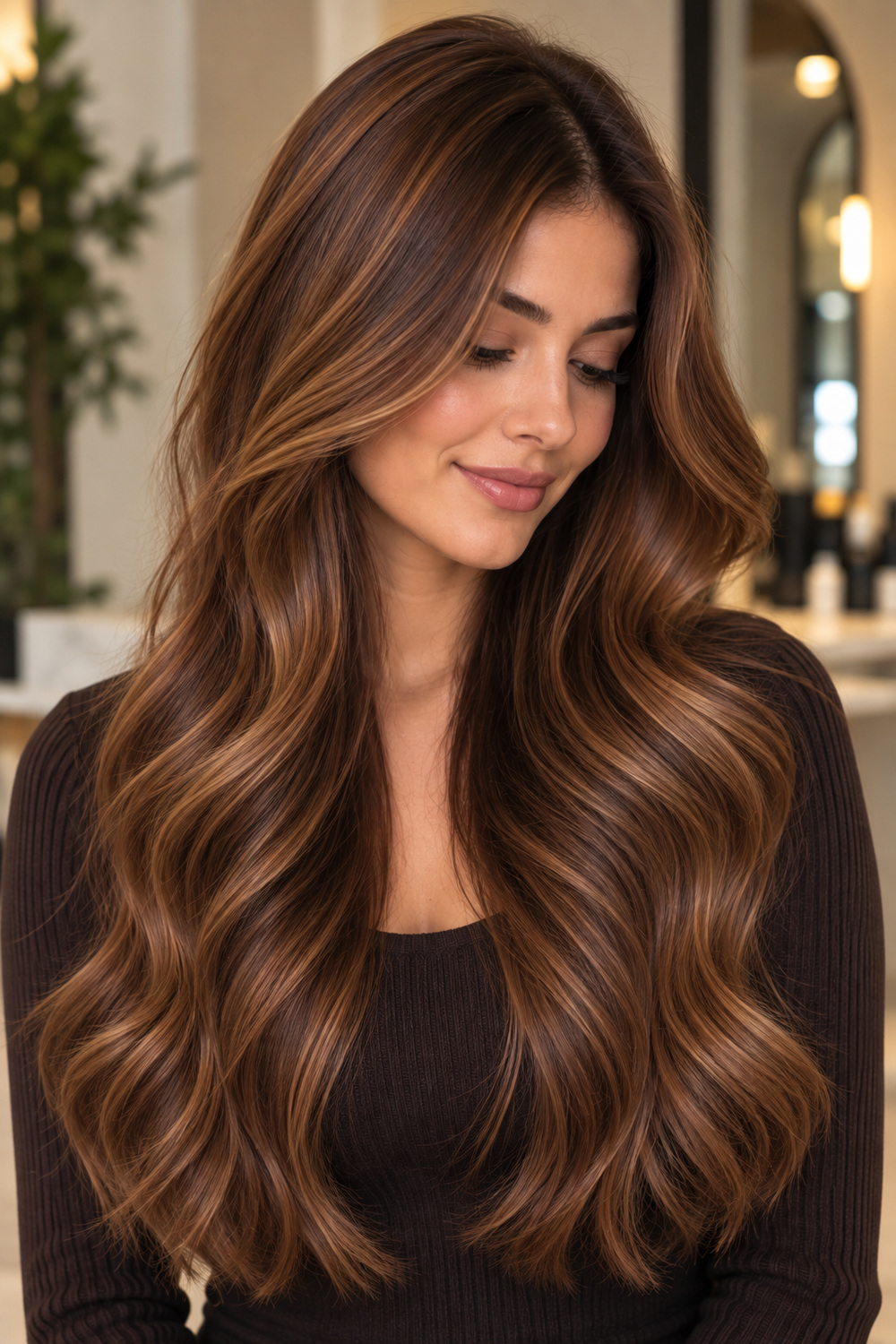
On longer hair, layering gives caramel tones more surface area to catch the light as the layers move, making the color feel more dynamic than it would on a single length. Caramel is often placed through the mid-lengths and ends, following the shape of the layers so the warmth appears in the pieces framing the face and shoulders. The contrast can be adjusted depending on how bold the layers are cut.
16. Caramel Brunette on a Lob
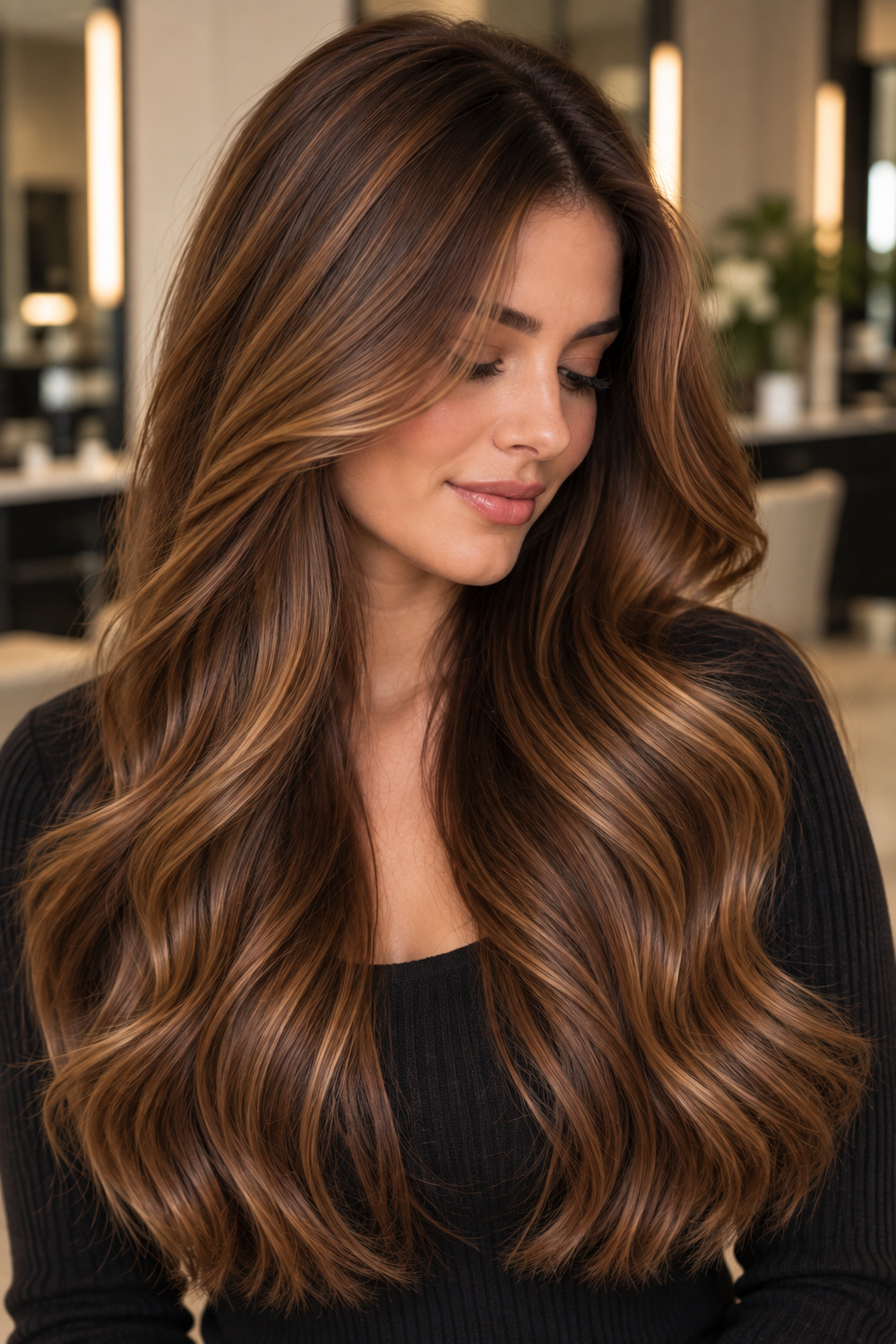
A long bob, or lob, offers a shorter canvas where caramel tones show up more concentrated and visible than on longer hair, simply because there’s less length for the color to spread across. Balayage or subtle highlights are common choices here, allowing the caramel to sit naturally along the ends without looking heavy-handed. This length can also make regrowth noticeable sooner, so plan for slightly more frequent toning or gloss appointments.
17. Caramel Brunette for Curly Hair
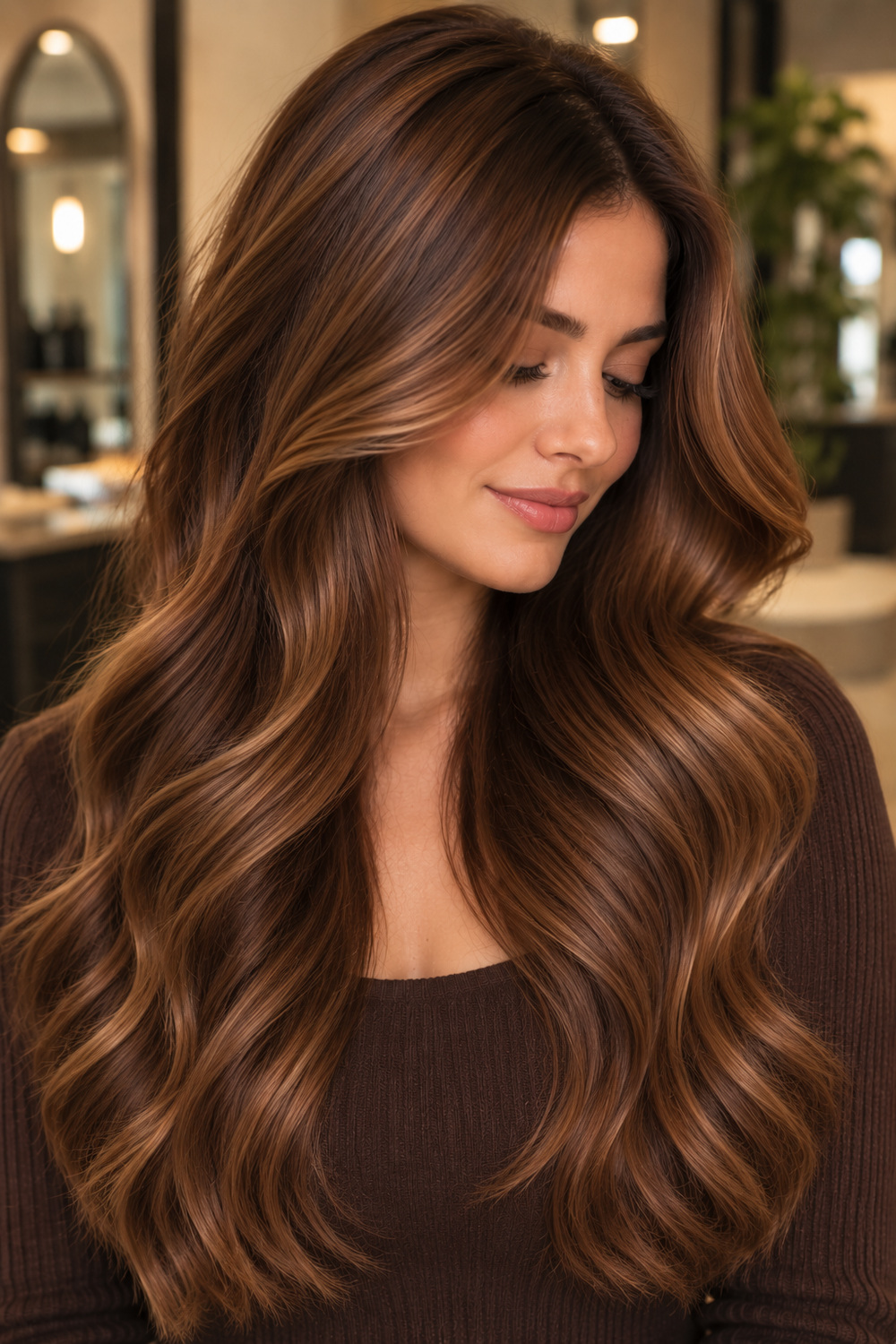
On curly hair, caramel tones catch the light differently than they do on straight hair, since the curl pattern creates more depth and shadow throughout each strand. Highlights or balayage placed with the curl pattern in mind — rather than in flat, straight sections — help the caramel look integrated rather than choppy once the hair dries into its natural texture. This approach often works best when a colorist applies the product with the hair in its natural state.
18. Caramel Brunette for Wavy Hair
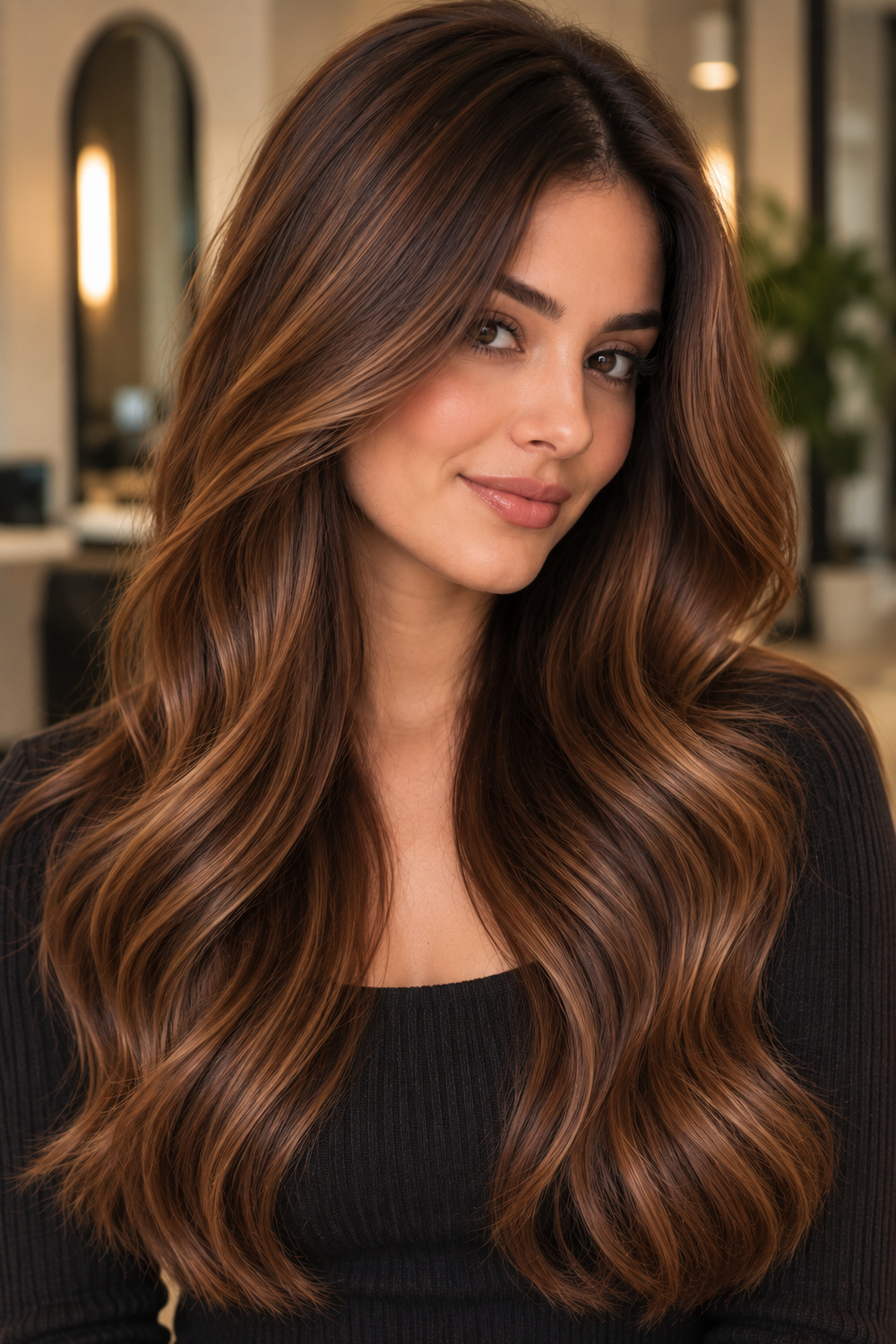
Wavy hair sits between straight and curly texture, and caramel tones applied through the lengths can enhance the natural movement by highlighting the peaks and dips created by the wave pattern. Balayage suits this texture particularly well, since the soft, hand-painted transitions mirror the softness of the wave rather than competing with it. The result can look warm and dimensional without a high level of contrast, feeling like an extension of the natural texture.
19. Deep Caramel Brunette
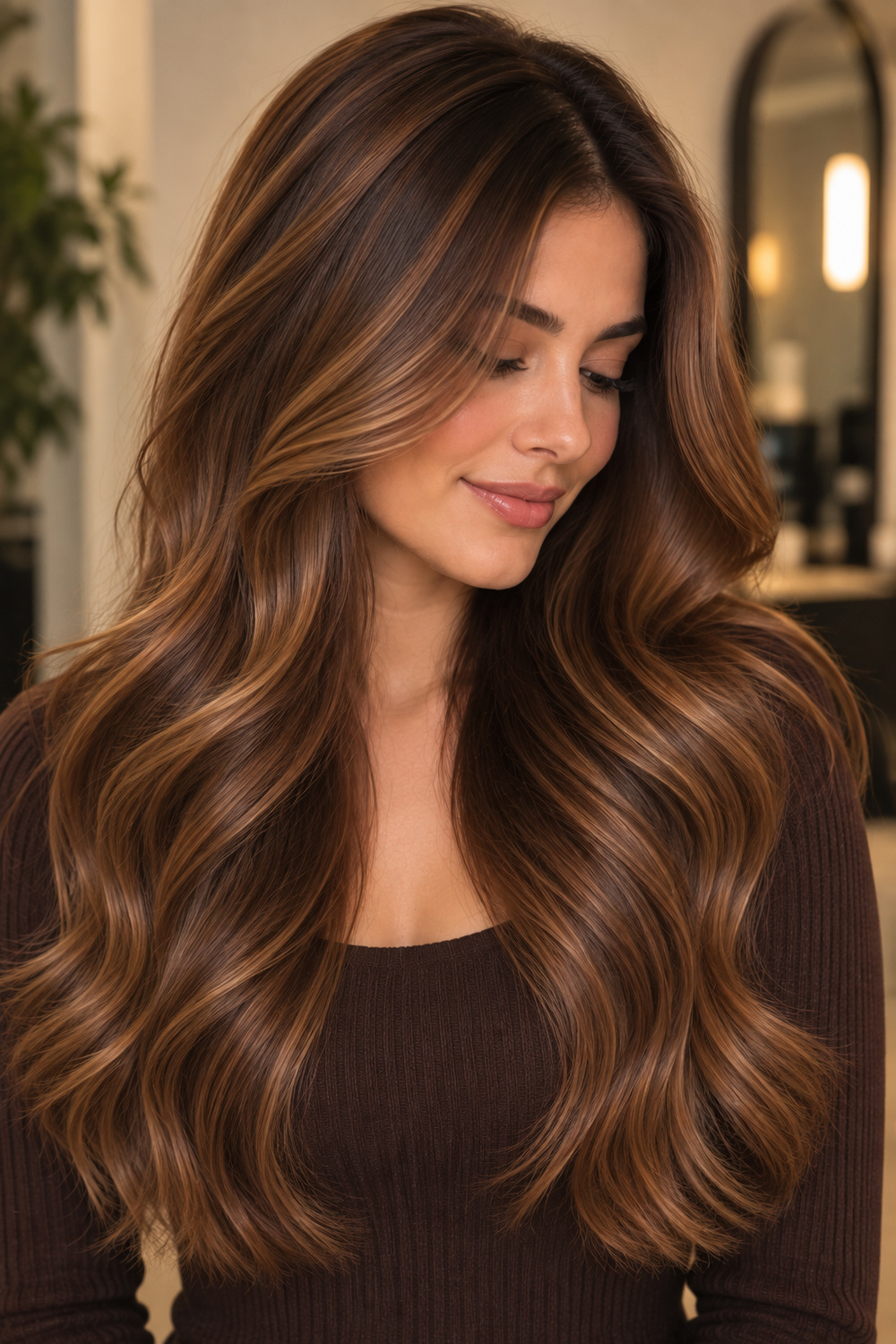
This version leans the caramel tone darker and richer rather than light and golden, keeping the overall color closer to the brunette base while still introducing warmth. It’s a subtler take on the caramel brunette family, better suited to those who want dimension without strong contrast. Because the caramel here is deeper, it blends more seamlessly with darker natural brunette shades and generally requires less frequent toning, since deeper tones show less obvious brassiness as they fade.
20. Honey-Caramel Brunette
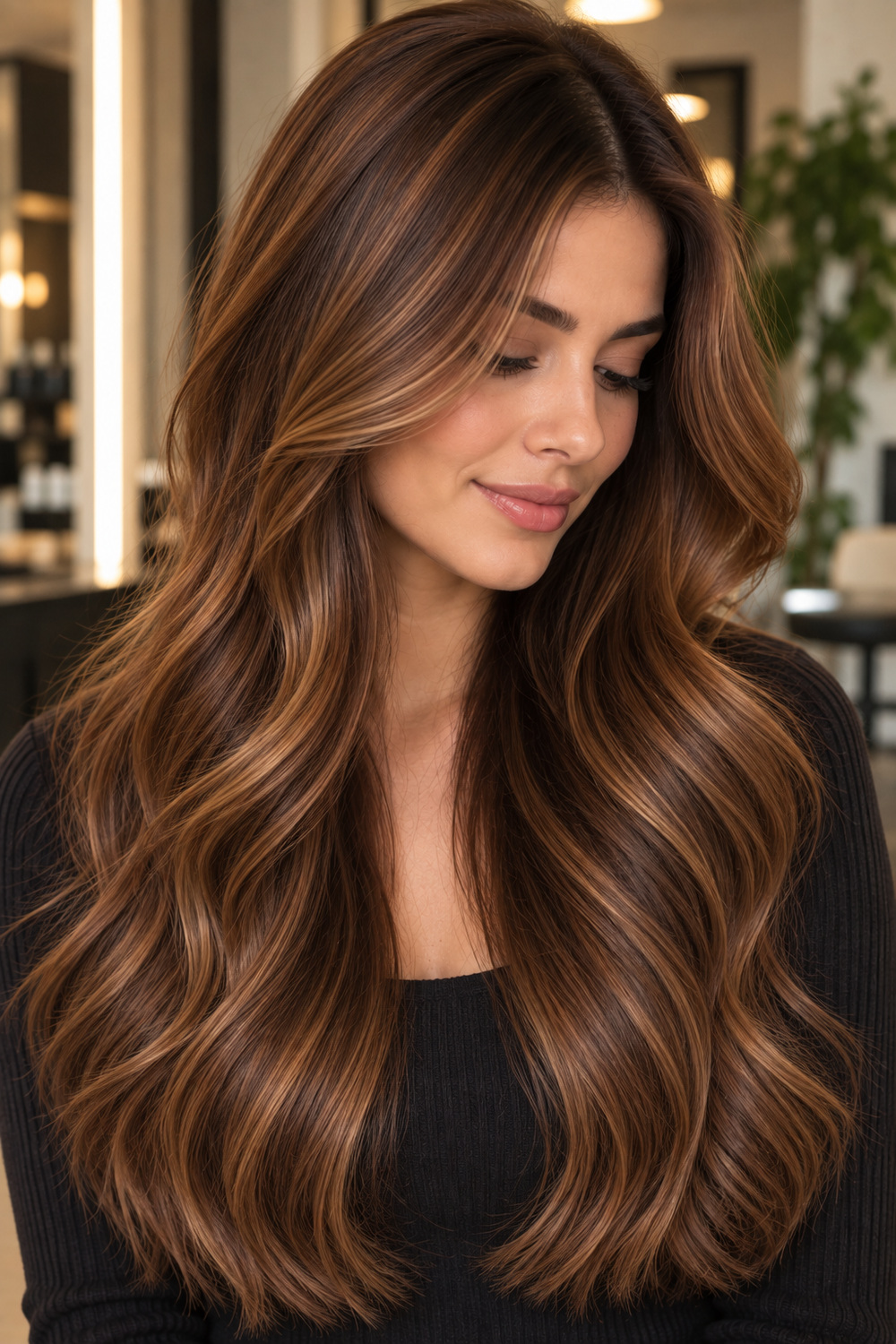
Combining honey and caramel tones creates a lighter, more golden result than caramel alone, with the honey adding brightness and the caramel keeping some depth in the mix. This blend tends to work well over a medium brown base, where there’s enough contrast for the honey tones to stand out without significant lightening. It’s a warmer, brighter option that may need more attention to toning, since lighter, golden tones are more prone to shifting brassy as they fade.
21. Cinnamon Caramel Brunette
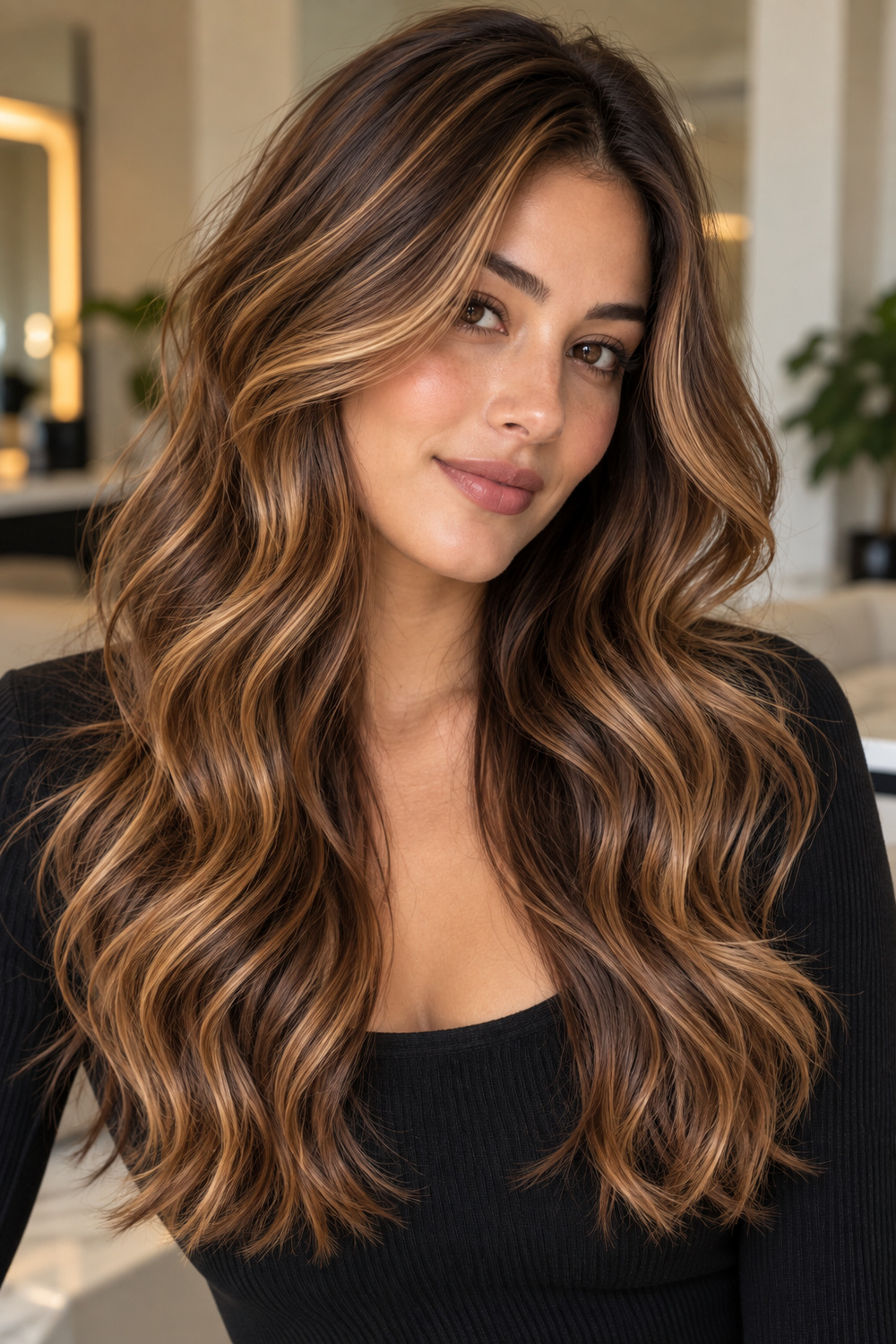
This shade introduces a reddish-warm undertone into the caramel, giving the color a spiced, cinnamon-like cast that leans into deeper autumn tones like chestnut and amber. It tends to look richest on medium to dark brunette bases, where the red-caramel mix has enough depth to read as warm rather than brassy. Because red-toned color can fade unevenly, it may benefit from color-safe products formulated to help hold warm tones.
22. Caramel Brunette With a Glossy Finish
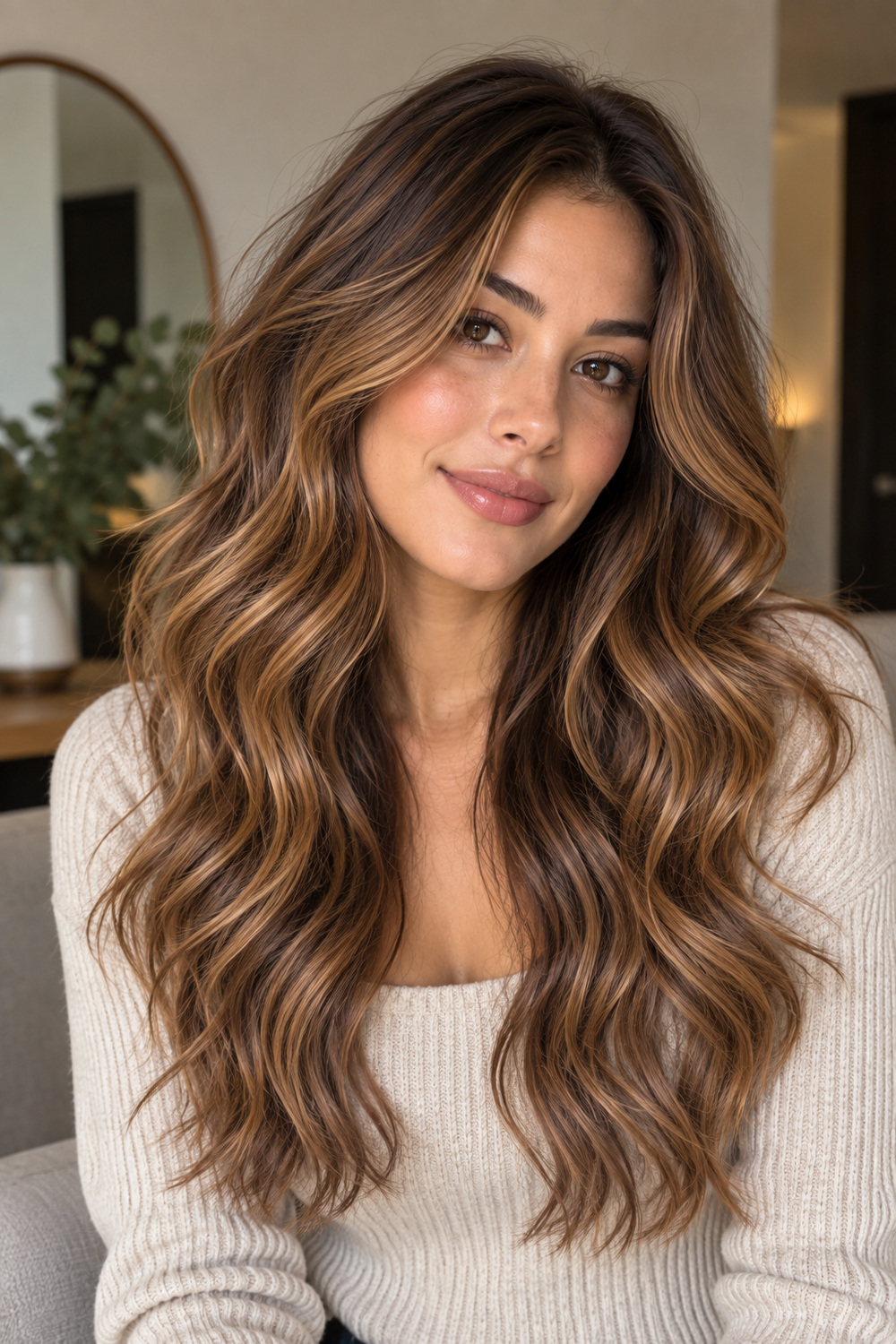
Rather than changing the placement of the caramel itself, this approach finishes the color with a clear or lightly tinted gloss that boosts shine and helps the brunette and caramel tones blend more seamlessly. A gloss can also neutralize unwanted brassiness, giving the whole head a more polished, cohesive look. It’s often a maintenance step added onto existing color rather than a standalone technique — a quick way to refresh the look between full appointments.
23. Lived-In Caramel Brunette Balayage
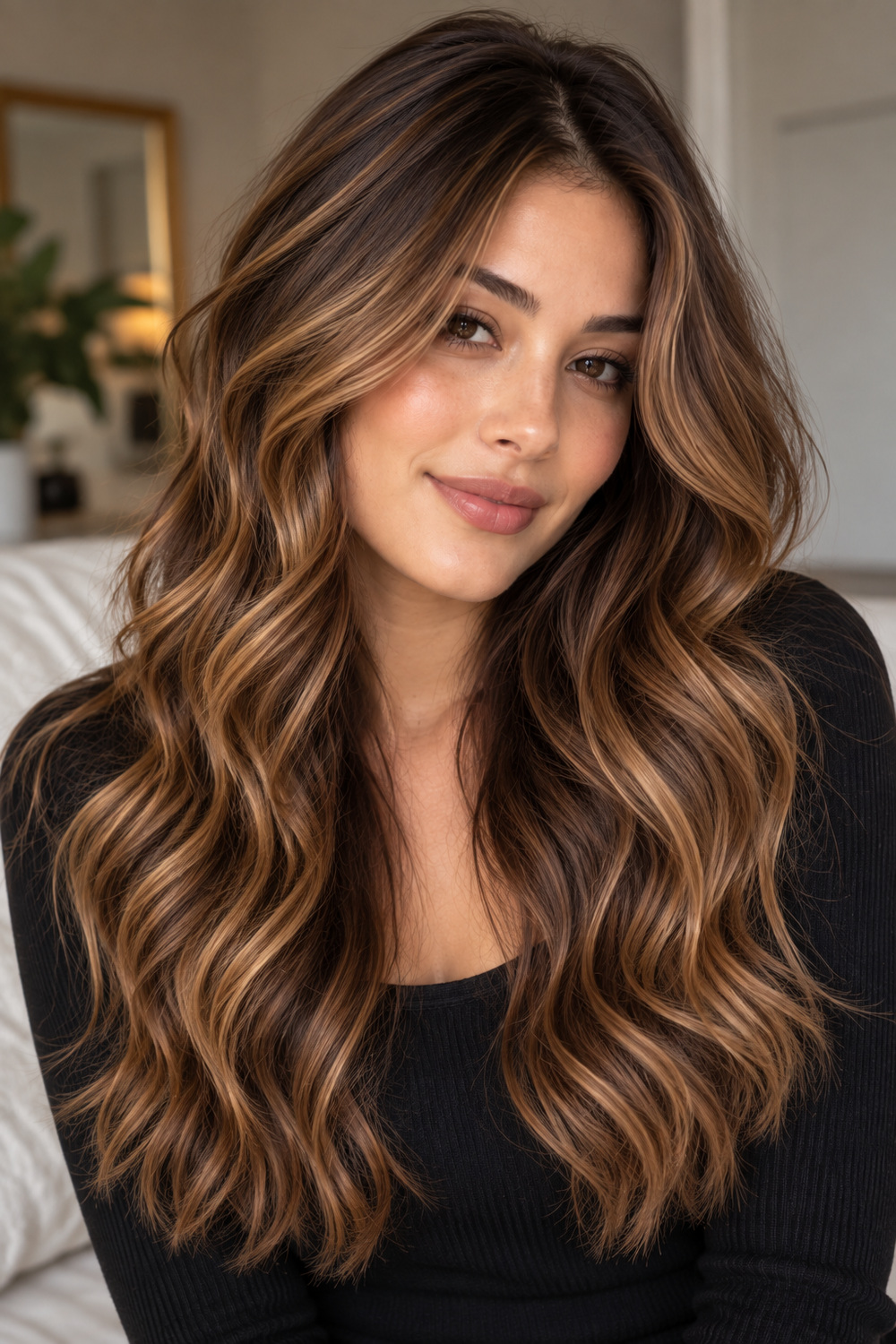
This version of balayage is designed to grow out gracefully, with caramel placed slightly further from the root and blended in a way that avoids a hard regrowth line. The goal is a color that still looks intentional and dimensional several months after the initial appointment, rather than one that needs immediate touch-ups. It suits those who want a caramel brunette look without frequent salon visits, and it pairs well with a root-smudge technique that softens the transition between the base and caramel tones.
How to Choose the Right Caramel Brunette Shade
Choose your caramel brunette shade based on your natural hair depth, preferred contrast, and maintenance routine. Golden and honey caramel tones stand out beautifully on medium brown hair, while deeper toffee and amber shades blend more naturally with dark brunette bases. For a bolder look, try face-framing highlights or brighter balayage. If you prefer something softer, ask your colorist for babylights or finely blended caramel ribbons.
How to Maintain Caramel Brunette Hair
Keep caramel brunette hair fresh by protecting its shine and warm tone. Wash with a gentle, color-safe shampoo and conditioner, and reduce excessive heat styling to prevent dryness and fading. Always apply a heat protectant before using hot tools. When the color starts to lose its richness, a gloss or toner can refresh the caramel tones and restore a polished finish.
FAQ
1. What is caramel brunette hair color?
Caramel brunette hair combines a rich brown base with warm caramel tones that add depth and dimension. These tones can range from soft honey and gold to deeper toffee and amber shades. Colorists can weave caramel through the hair as highlights, balayage, or face-framing pieces. The combination creates a warmer and more dimensional brunette look.
2. Is caramel brunette a warm or cool hair color?
Caramel brunette usually falls on the warm side because caramel shades contain golden, honey, and amber undertones. However, the brunette base can influence the final result. A neutral or deep brown base can soften the warmth and create a more balanced finish. Your colorist can adjust the caramel tone to match the look you want.
3. Does caramel brunette work on naturally dark brown hair?
Yes, caramel brunette works especially well on naturally dark brown hair. Caramel highlights or balayage add warmth and movement while allowing the darker base to remain dominant. For very dark hair, a colorist may lighten selected sections so the caramel tones appear clearly. You can choose subtle highlights for a blended result or brighter pieces for stronger contrast.
4. Is caramel brunette balayage low-maintenance?
Caramel brunette balayage usually requires less upkeep than traditional highlights because the colorist places the lighter tones away from the root and blends them gradually into the base. This technique allows new growth to look softer and less noticeable. Occasional gloss or toner appointments can keep the caramel shade fresh. A lived-in balayage works particularly well for anyone who wants longer gaps between salon visits.
5. How do I keep caramel highlights from looking brassy?
Use color-safe hair products and avoid washing your hair too often with very hot water. Limit heat styling and use a heat protectant whenever you reach for hot tools. Sun exposure can also fade caramel tones, so protect your hair when spending long periods outdoors. If the highlights start looking orange or dull, ask your colorist for a gloss or toner to restore the desired tone.
Conclusion
Caramel brunette hair adds warmth, richness, and dimension while keeping the natural depth of a brunette base. You can choose subtle caramel ribbons and babylights for a soft finish or brighter balayage and face-framing highlights for more contrast. Different tones and placements make this color easy to adapt to various hair lengths and textures. With the right shade and regular care, caramel brunette can stay glossy, dimensional, and beautiful throughout fall and beyond.


