



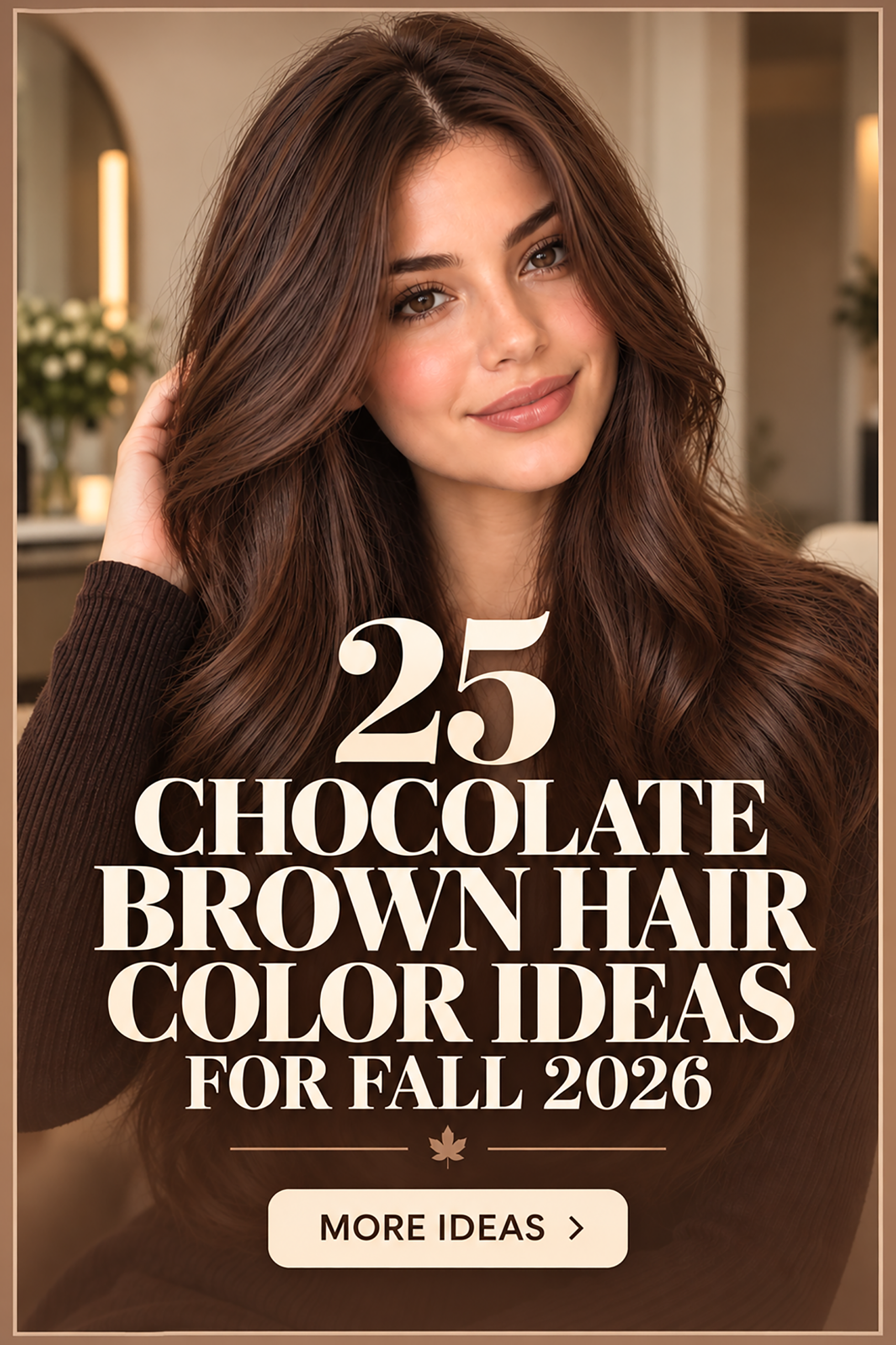
Fall is the season brunettes look forward to all year, and chocolate brown sits right at the center of it. As the light turns softer and warmer, this color family reflects it beautifully, moving from cozy neutral tones to deep, glossy shades that feel grounded for the season. Part of what makes chocolate brown hair color ideas so popular is their range. Some versions lean warm and golden, others stay closer to a true neutral brunette, and a few dip into deeper, richer territory without turning black. Whether your hair is long or short, straight or curly, there’s a version of chocolate brown that can work with your natural base. The 25 ideas below cover different lengths, undertones and levels of dimension so you can find a starting point for your own fall color.
1. Classic Chocolate Brown
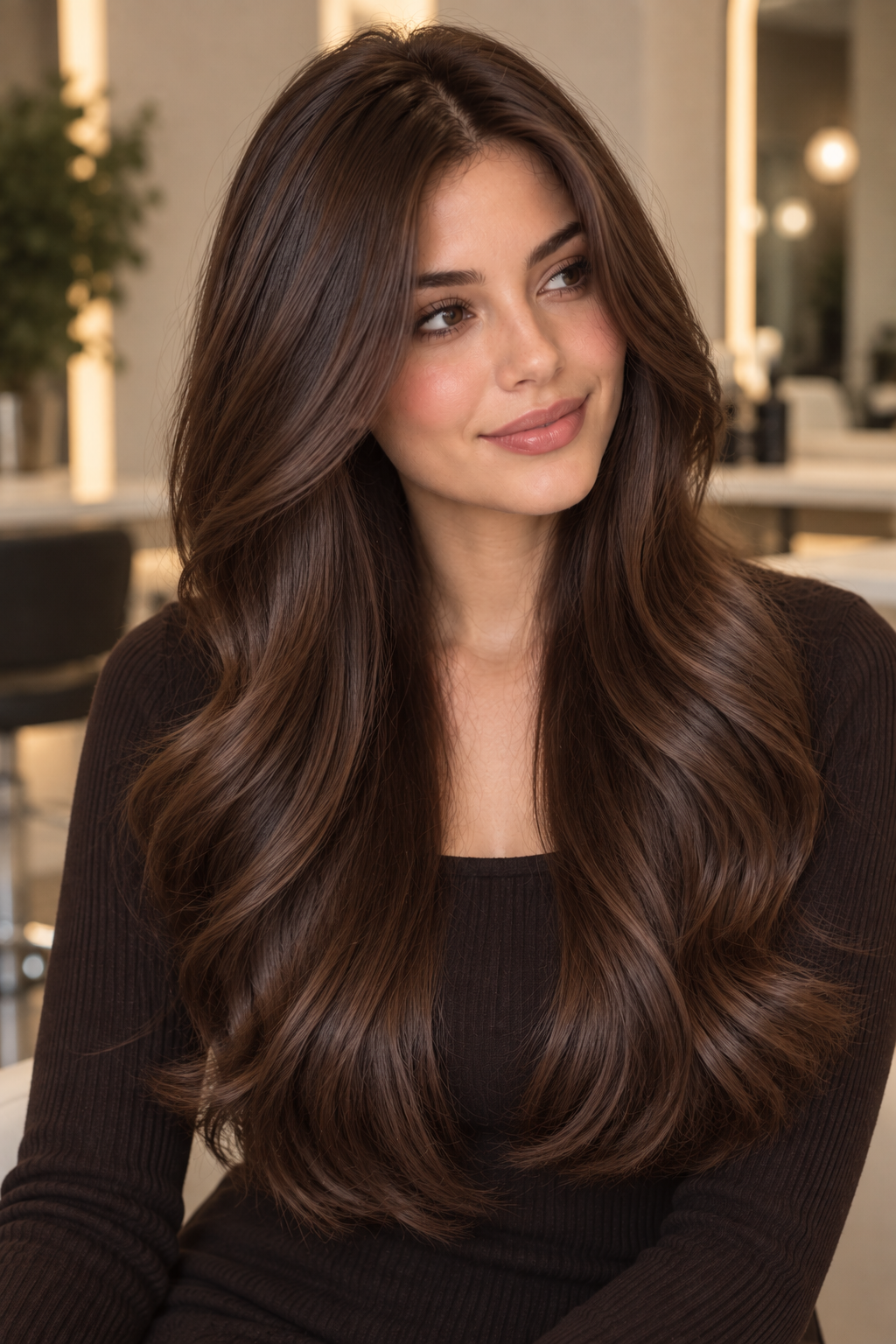

This is the shade most people picture first: a true, balanced brunette with no strong warm or cool pull. It reads as rich but not heavy, and it works on nearly any length. On medium to long hair, it holds a soft shine that looks polished with minimal styling. Because it’s a neutral base, it pairs easily with subtle highlights later if you want more dimension, but on its own it already feels complete and easy to wear.
2. Rich Chocolate Brunette
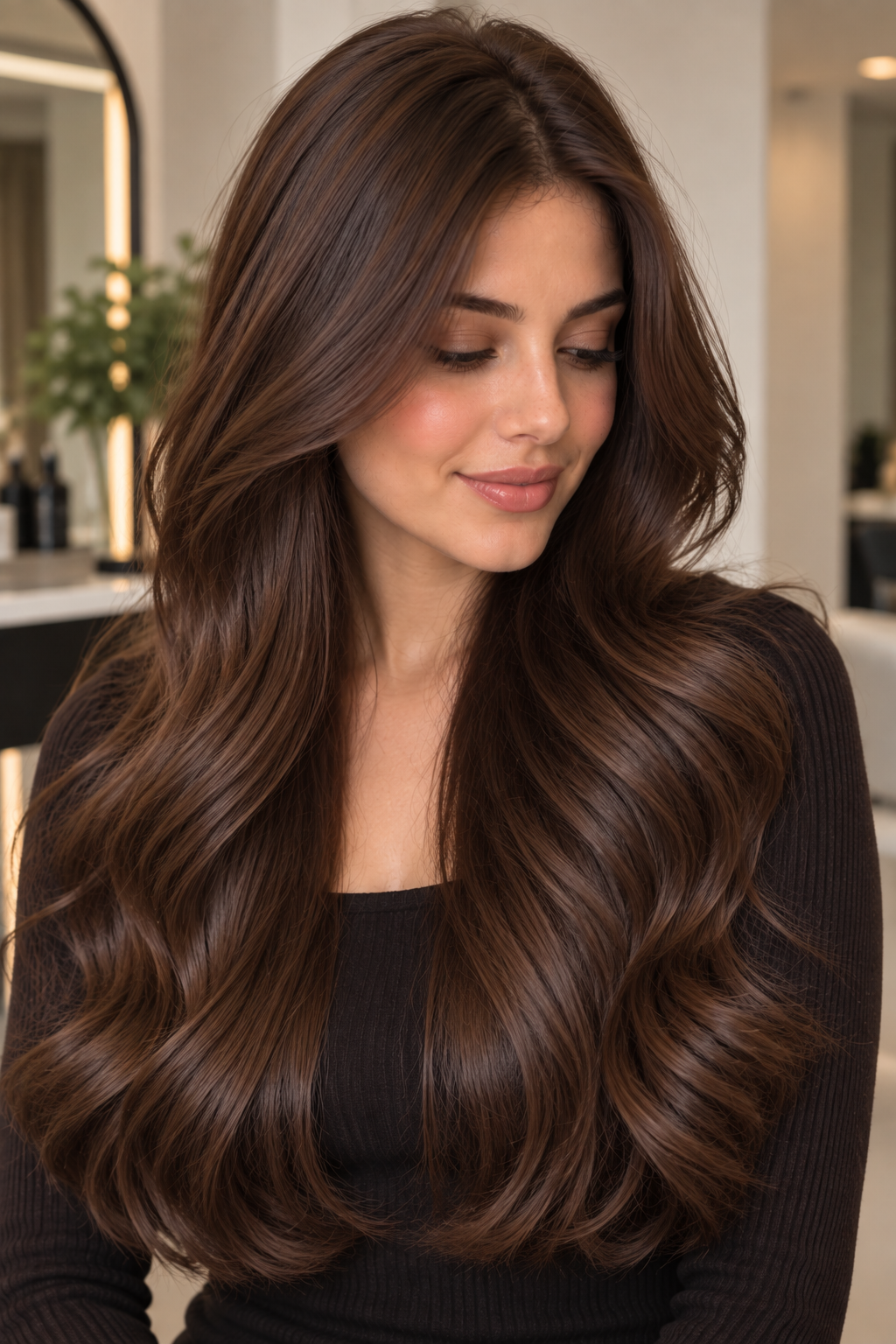
A slightly deeper take on classic brown, this version leans into richness rather than lightness. It suits medium to long hair especially well, where the extra length lets the color pool and catch light. The tone stays warm without turning red, giving it a cozy, autumn-appropriate feel. It photographs particularly well in natural light, which makes it a popular choice for anyone who wants their color to look intentional in everyday photos, not just under salon lighting.
3. Warm Chocolate Brown
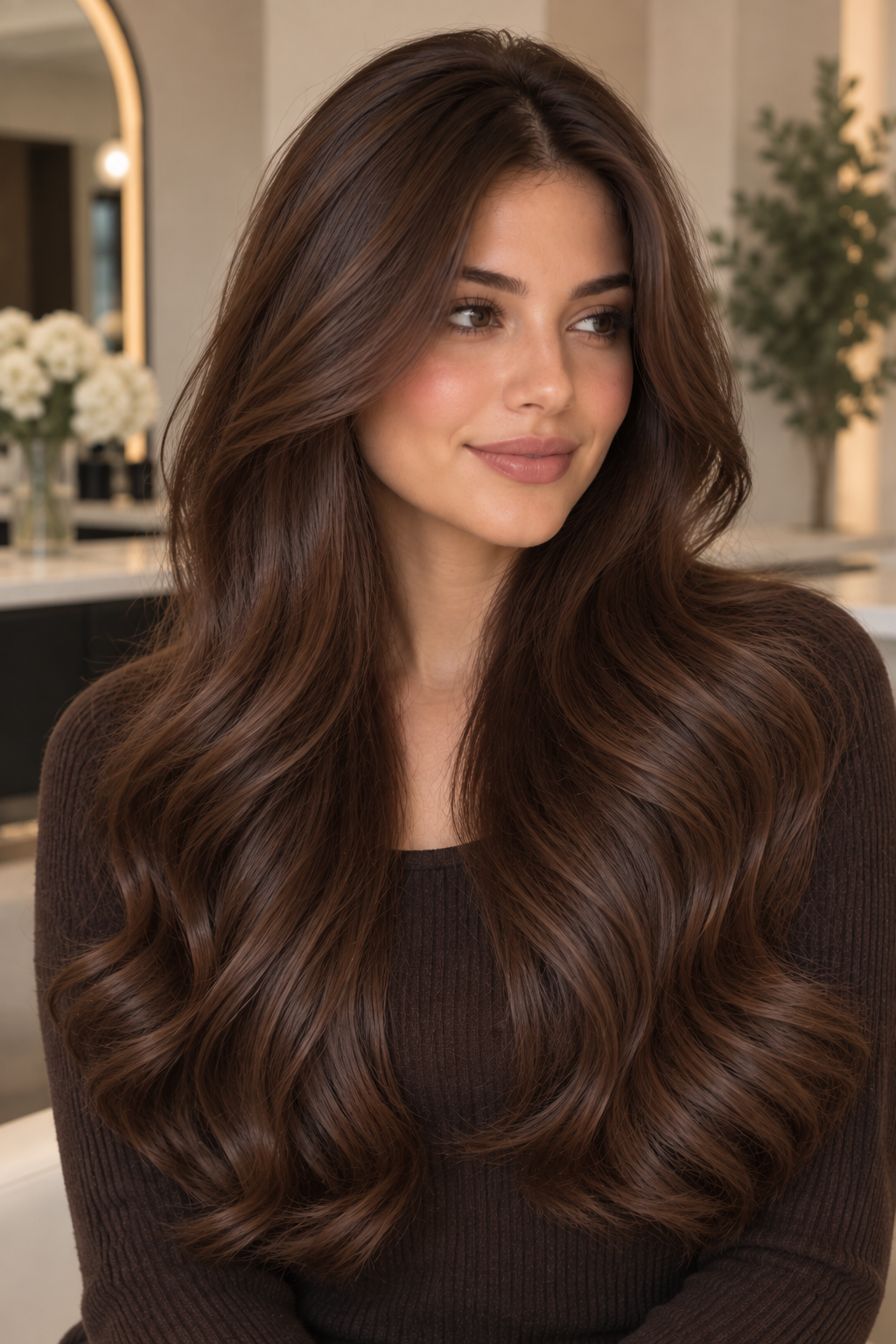
Warm chocolate brown carries golden and reddish undertones that read as inviting rather than bold. It tends to complement warmer skin undertones, though it isn’t limited to them. On wavy or curly textures, the warmth catches light differently with every movement, which adds visual interest without needing added highlights. It’s a good option for anyone transitioning from a lighter summer color who still wants some warmth left in their brunette.
4. Neutral Chocolate Brown
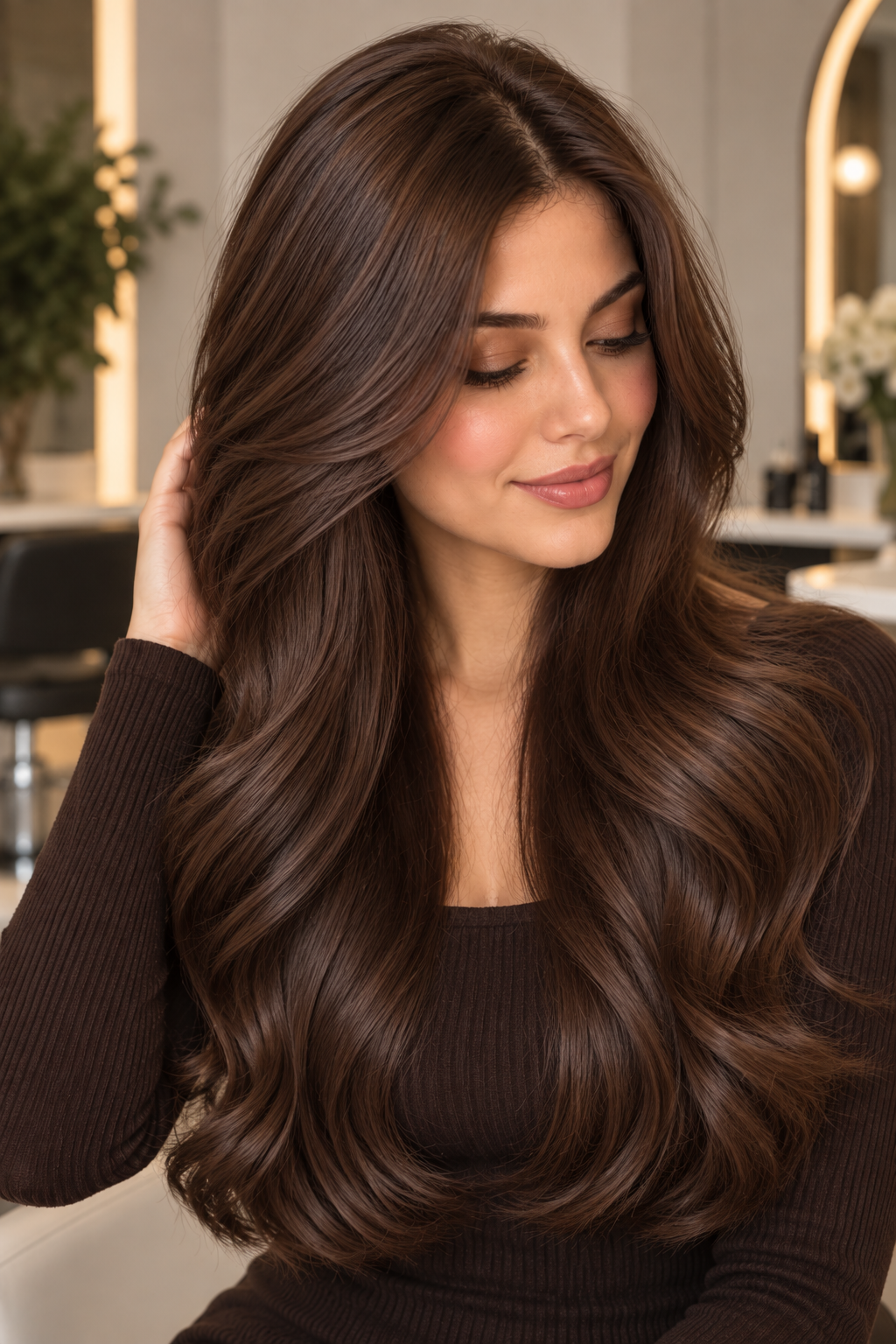
For those who want brown without any orange, red or ash pull, neutral chocolate brown is the answer. It’s a straightforward, versatile shade that works with cooler and warmer complexions alike since it doesn’t lean strongly in either direction. This tone is especially low-maintenance for colorists to match, since it doesn’t fight against most natural brunette bases, making touch-ups more predictable over time.
5. Deep Chocolate Brown
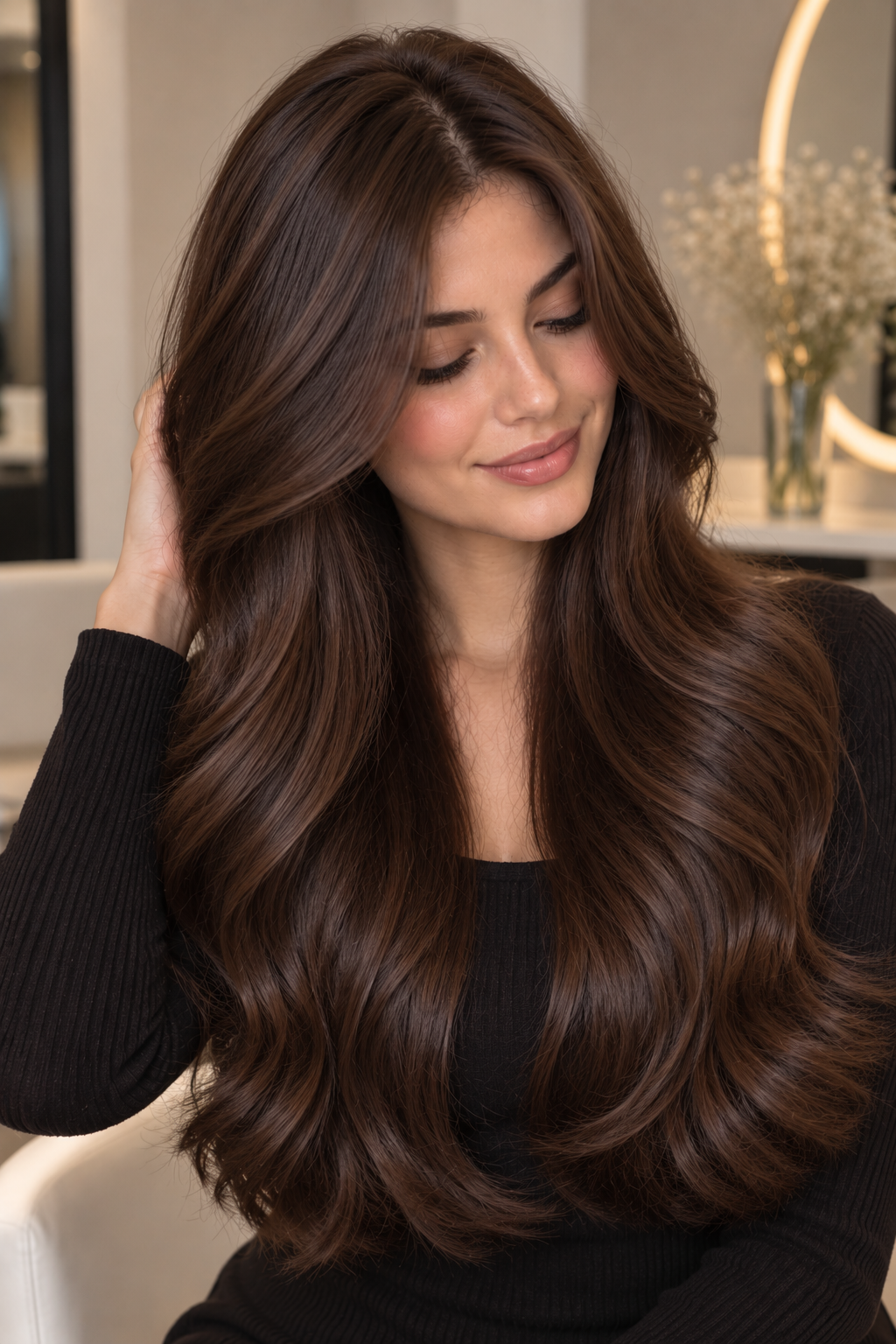
Deep chocolate brown sits a few shades darker than the classic version, though it still reads as brown rather than black in daylight. It’s a strong option for fall because darker tones tend to photograph well against sweaters and outerwear. This shade suits long, straight hair particularly well, where the length allows the depth of color to show without looking flat under indoor lighting.
6. Milk Chocolate Brown
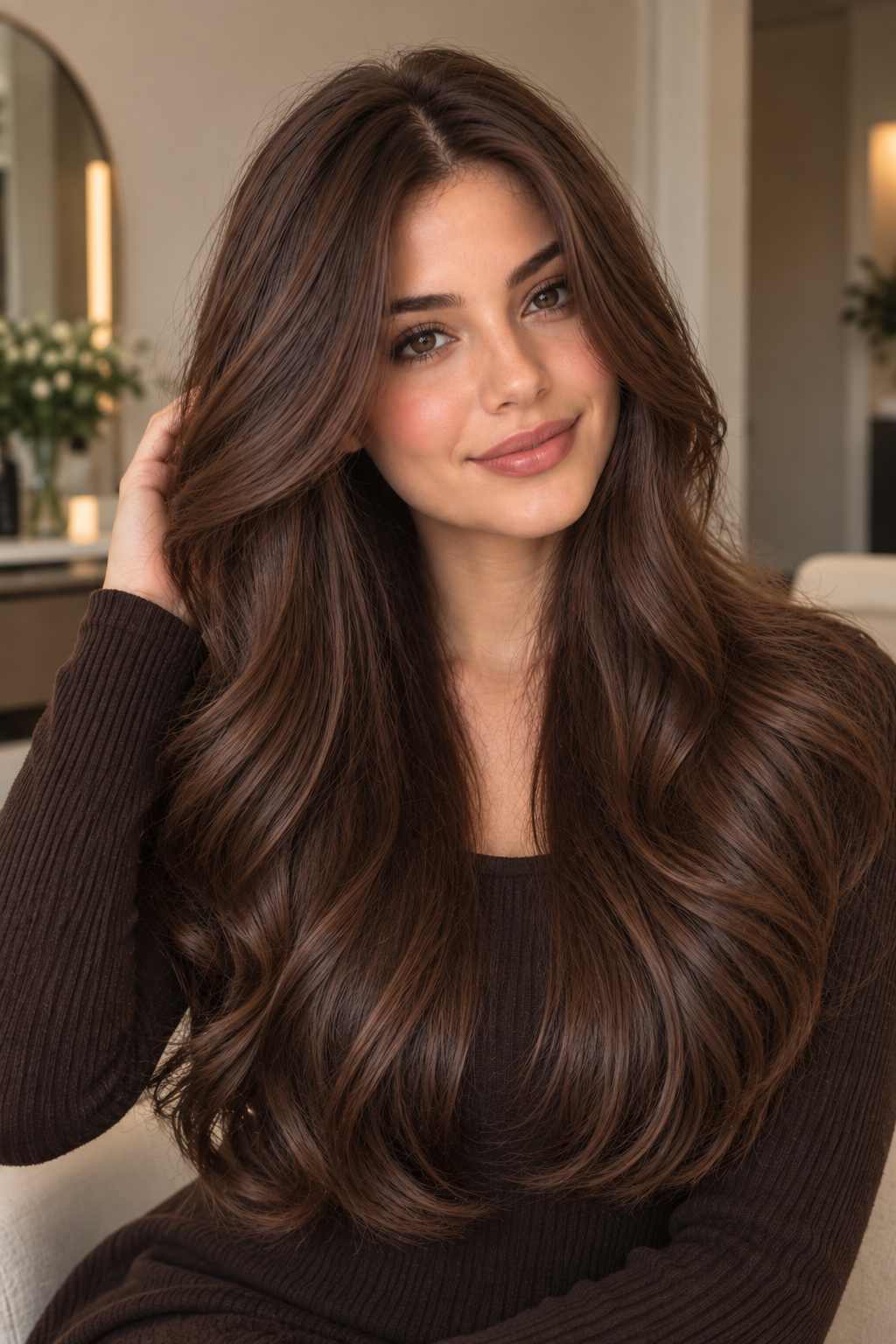
Lighter and softer than most shades on this list, milk chocolate brown has a gentle, warm quality that feels approachable. It works nicely on medium-length hair and tends to look softer around the face than deeper browns. This shade is a comfortable middle ground for anyone who wants to move away from very dark hair without jumping into full balayage or dramatic highlights.
7. Glossy Chocolate Brunette
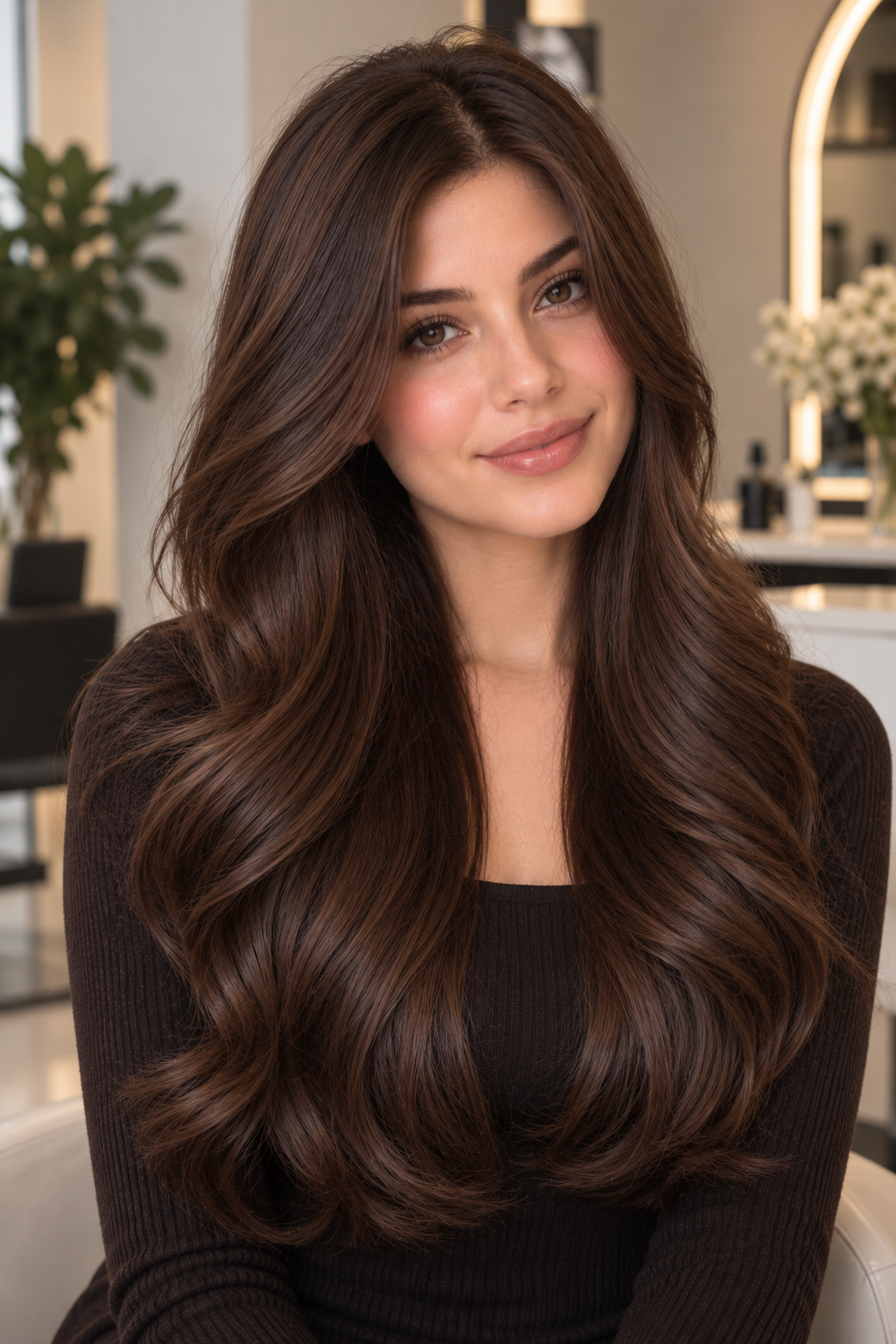
This idea focuses less on the exact tone and more on finish. A glossy chocolate brunette look is achieved through a clear gloss or toning service applied over an existing brunette base, boosting shine and evening out tone. It works on any length but shows up most noticeably on straight or blown-out hair, where light travels down the strand and reflects more visibly.
8. Dimensional Chocolate Brown
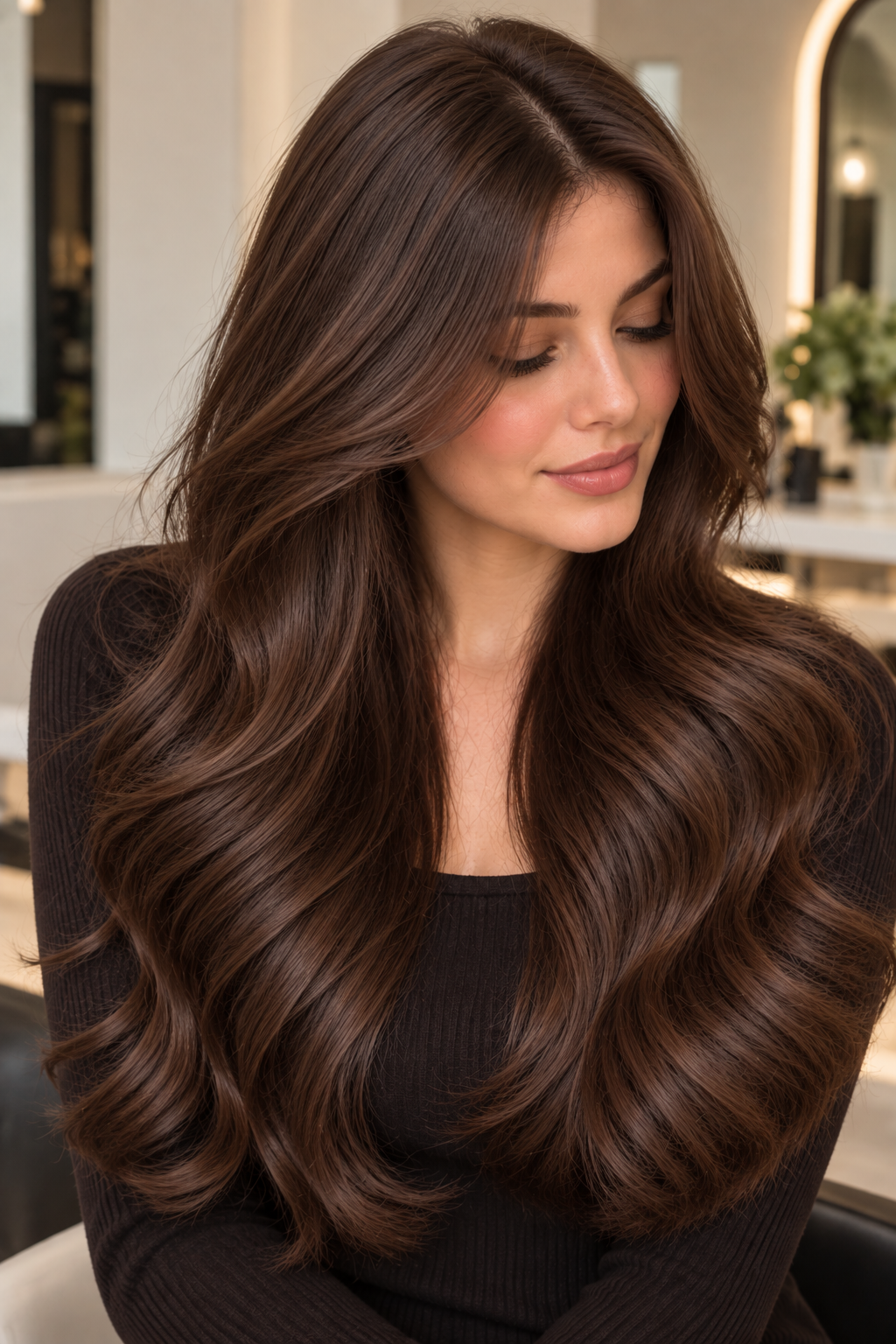
Rather than one flat tone, this version blends two or three closely related shades of brown throughout the hair. The effect is subtle, low-contrast movement rather than obvious highlights. It suits long layers especially well, since the layers themselves create natural separation for the tones to peek through as the hair moves.
9. Chocolate Brown Balayage
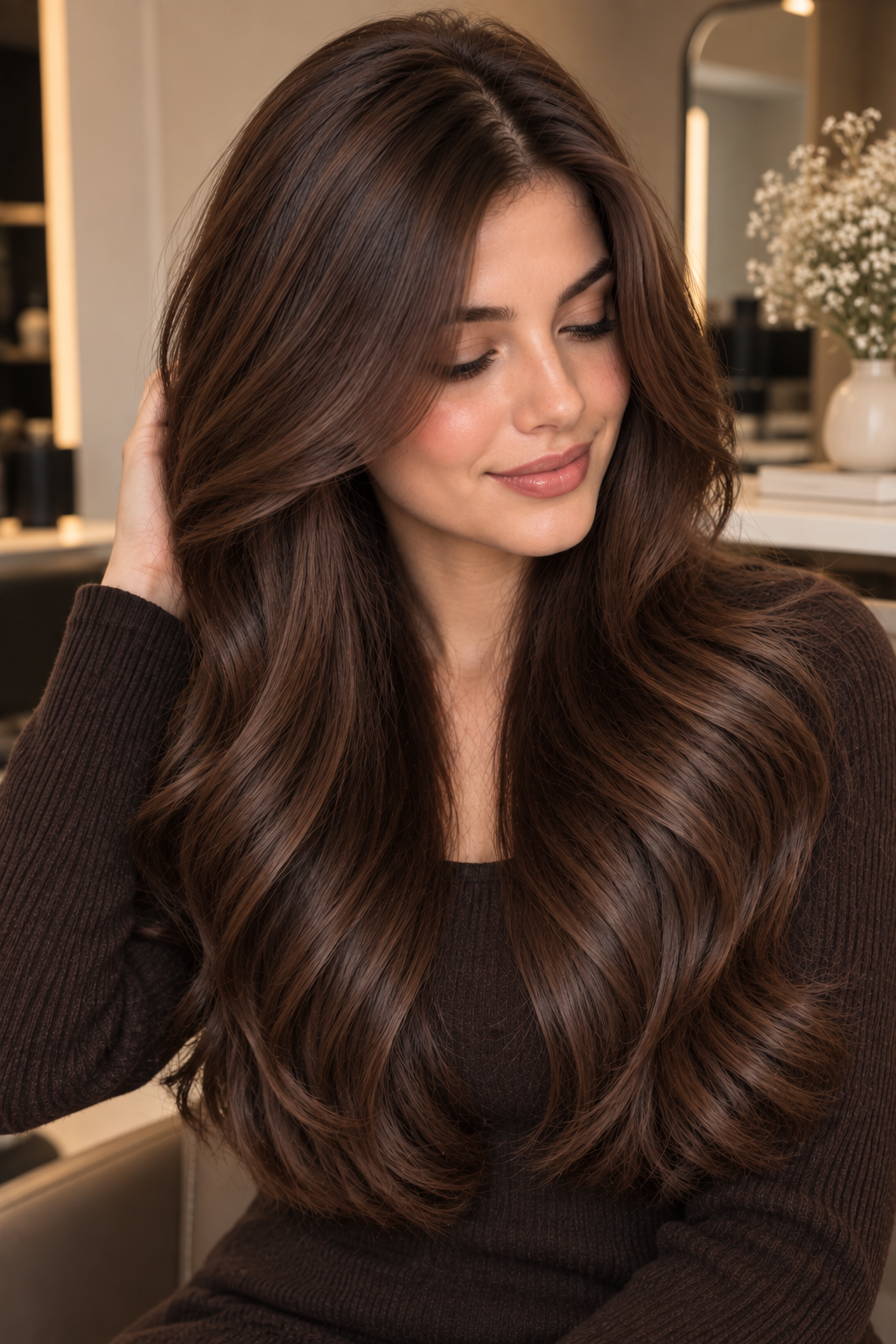
A hand-painted technique that lightens strands closer to the mid-lengths and ends while keeping the base a true chocolate brown near the roots. The transition is soft and diffused rather than sharply lined. This works particularly well on long hair, where there’s more length for the gradual color shift to unfold naturally.
10. Chocolate Brown with Soft Face-Framing
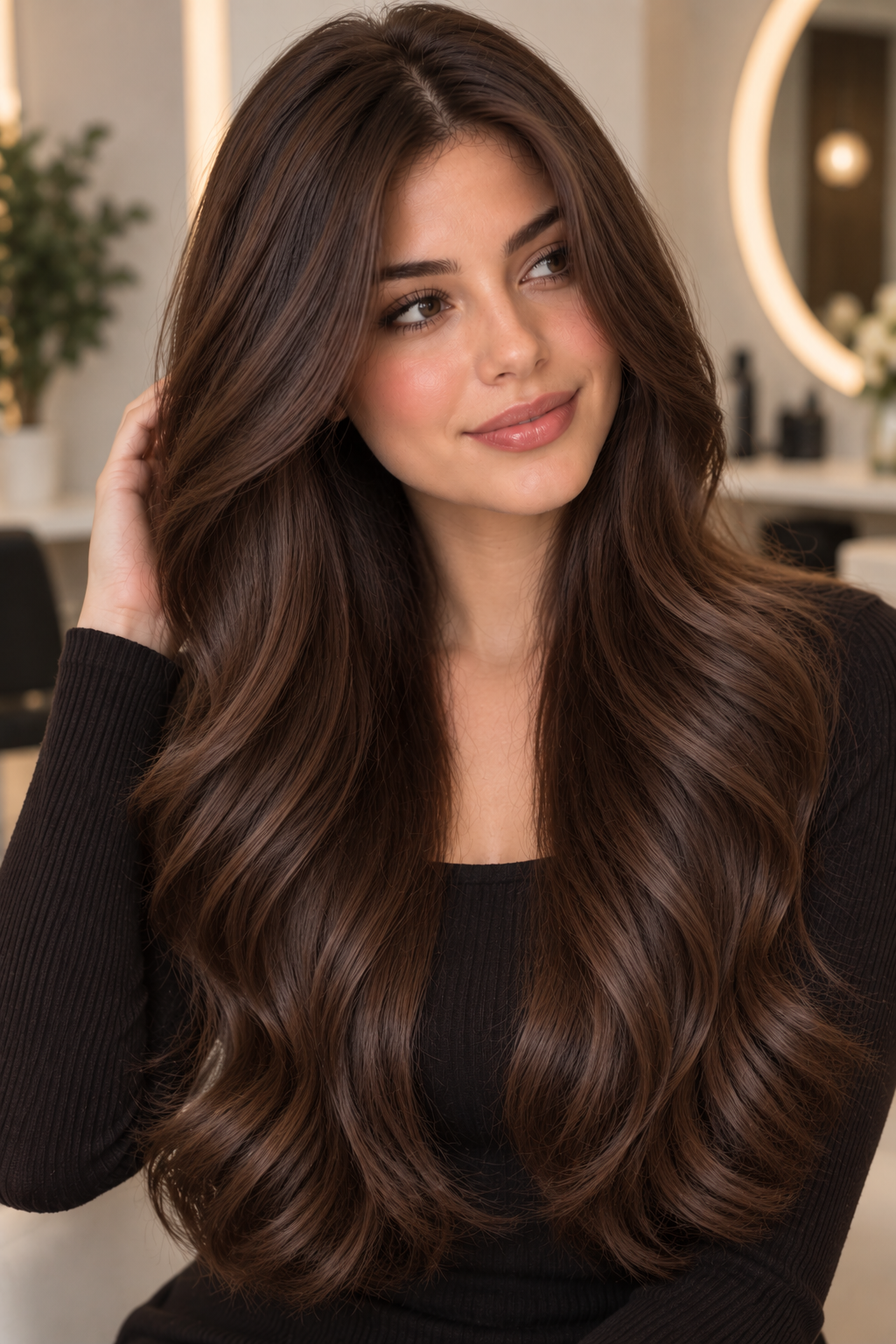
Instead of all-over highlights, a few lighter strands are placed only around the face. This draws light toward the features without changing the overall depth of the brunette color. It’s a subtle way to add brightness near the face for anyone who wants dimension without committing to a broader highlighting service.
11. Chocolate Brown on Long Layers
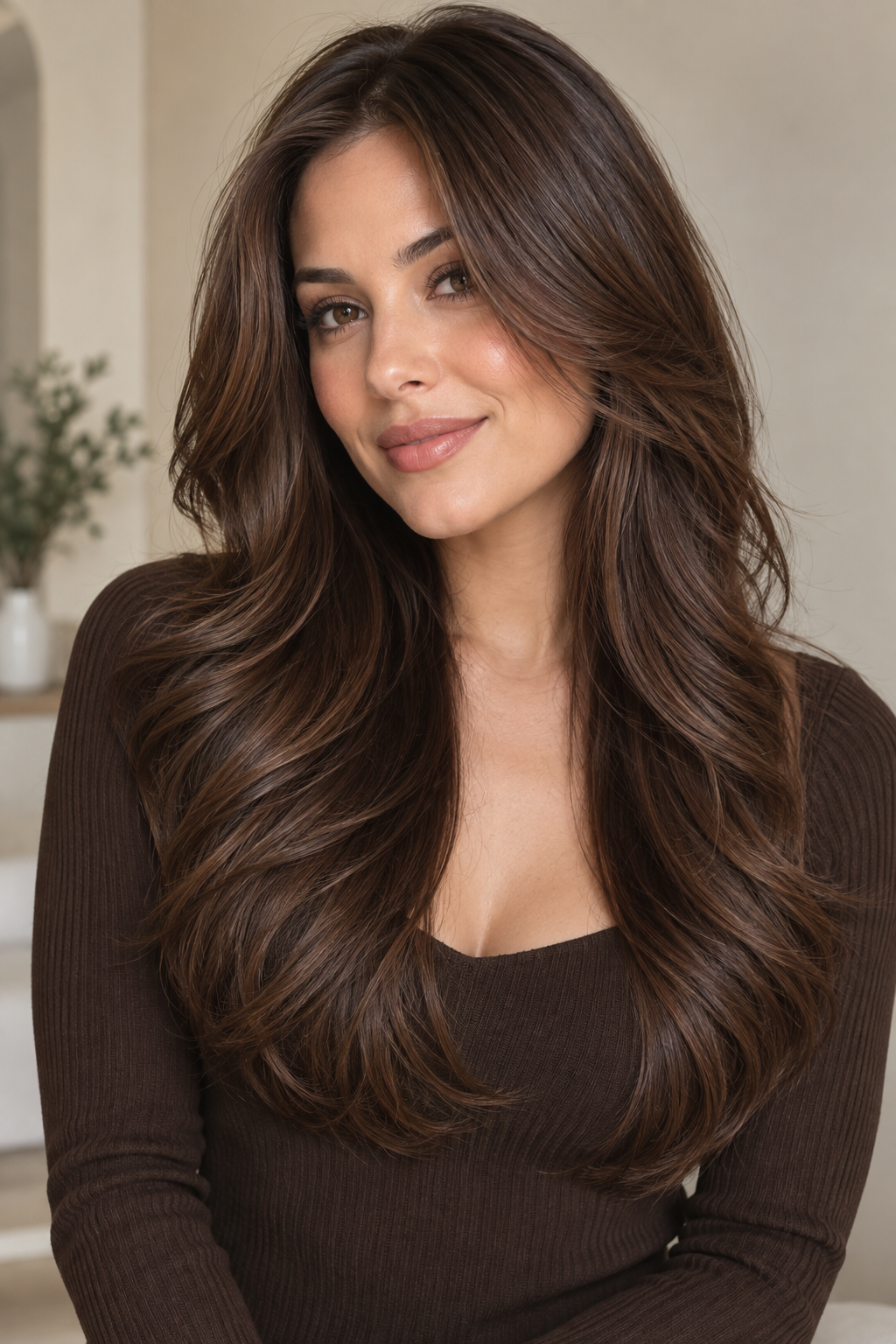
Long layers give chocolate brown color room to move and settle differently at each length. The layered ends often pick up more shine than the heavier top sections, creating natural depth even in a single-process color. This combination suits straight or loosely wavy hair, where the layers are visible rather than hidden in tighter curl patterns.
12. Chocolate Brown Bob
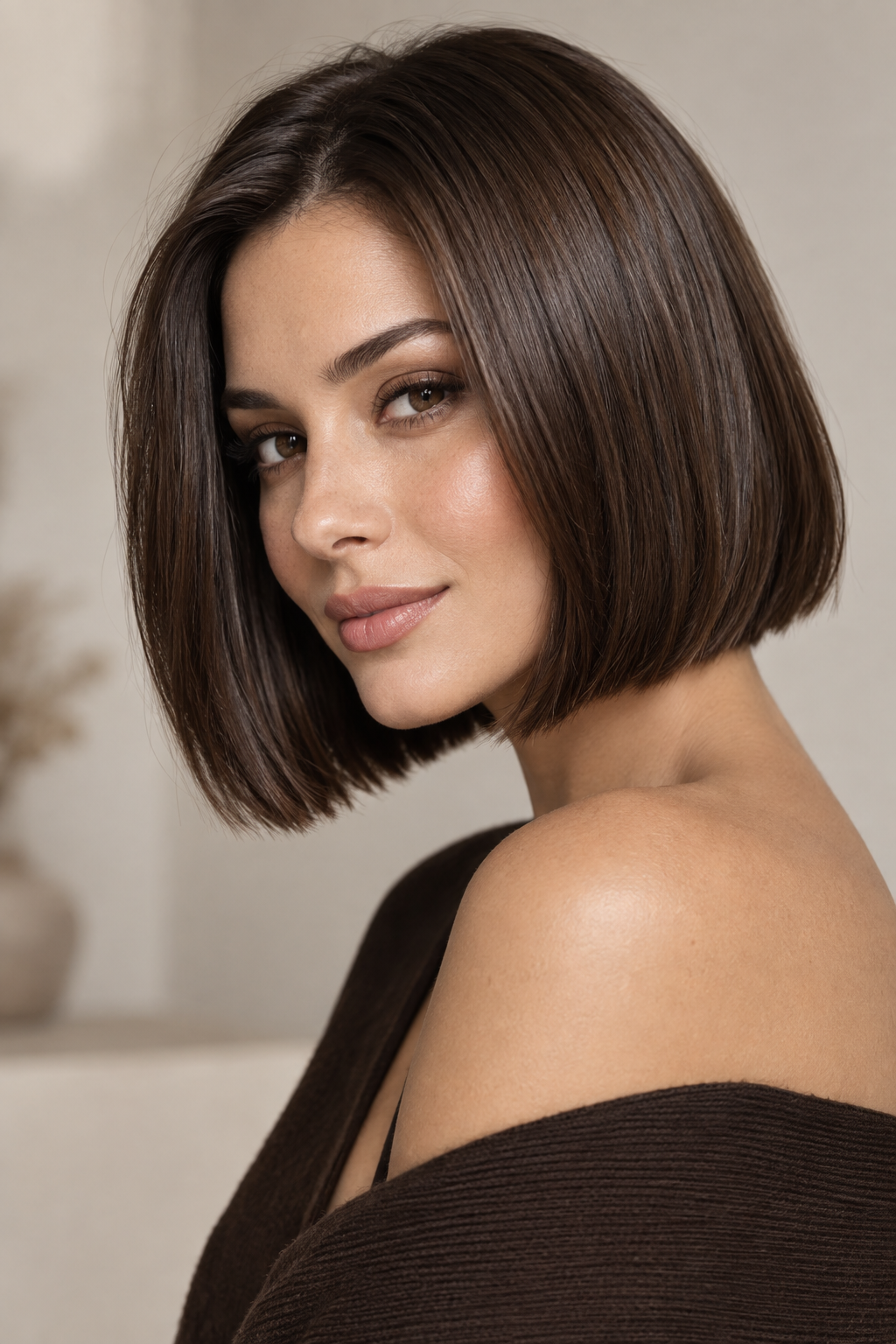
A blunt or slightly angled bob in chocolate brown feels polished and current for fall. The shorter length concentrates the color, so even a simple, single-tone application looks rich and full. This cut works well with a glossy finish, since shine is easier to see and maintain across shorter hair.
13. Chocolate Brown on Curly Hair
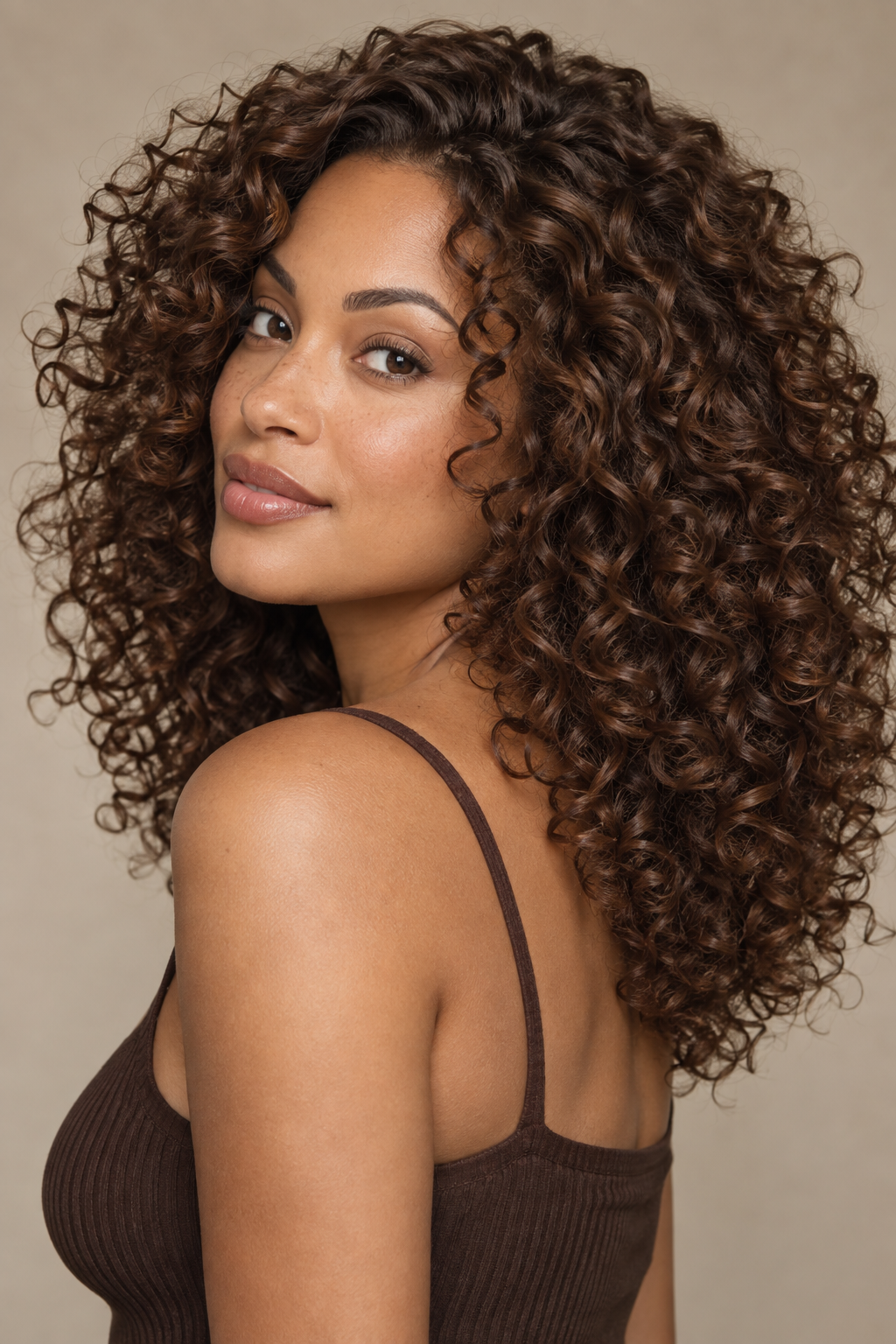
On curly textures, chocolate brown catches light unevenly in a way that adds natural dimension without extra highlighting. Each curl reflects slightly differently, giving the color visual depth on its own. A slightly warmer version of chocolate brown tends to look especially vibrant against curl patterns, since warmth reads clearly in the light and shadow created by the curls.
14. Chocolate Brown on Wavy Hair
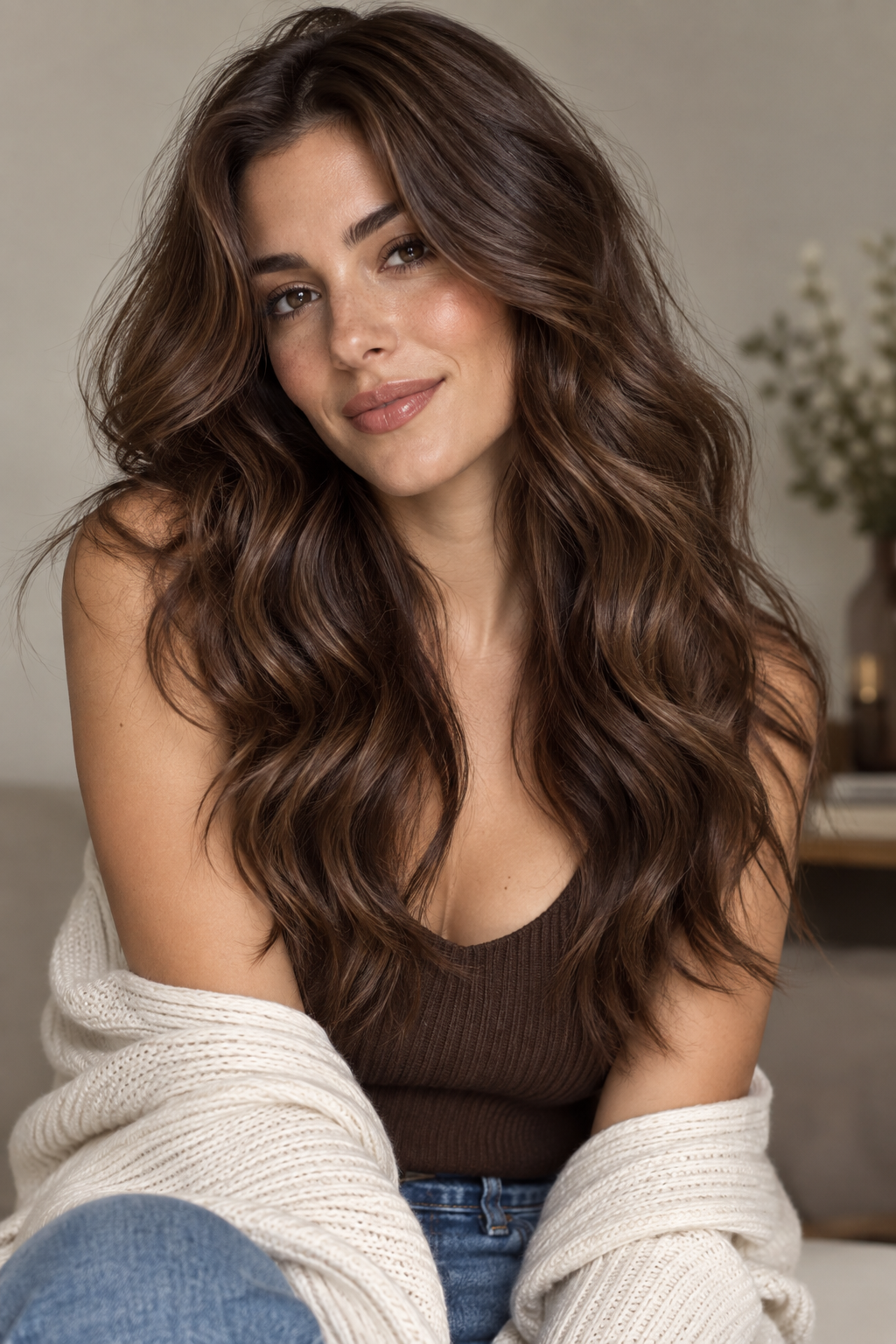
Waves add gentle movement to chocolate brown without the higher contrast that curls can create. This texture suits both warm and neutral versions of the shade, and it tends to look effortless with minimal styling. A loose, undone wave pattern pairs well here, letting the color look soft rather than sharply defined.
15. Chocolate Brown for Straight Hair
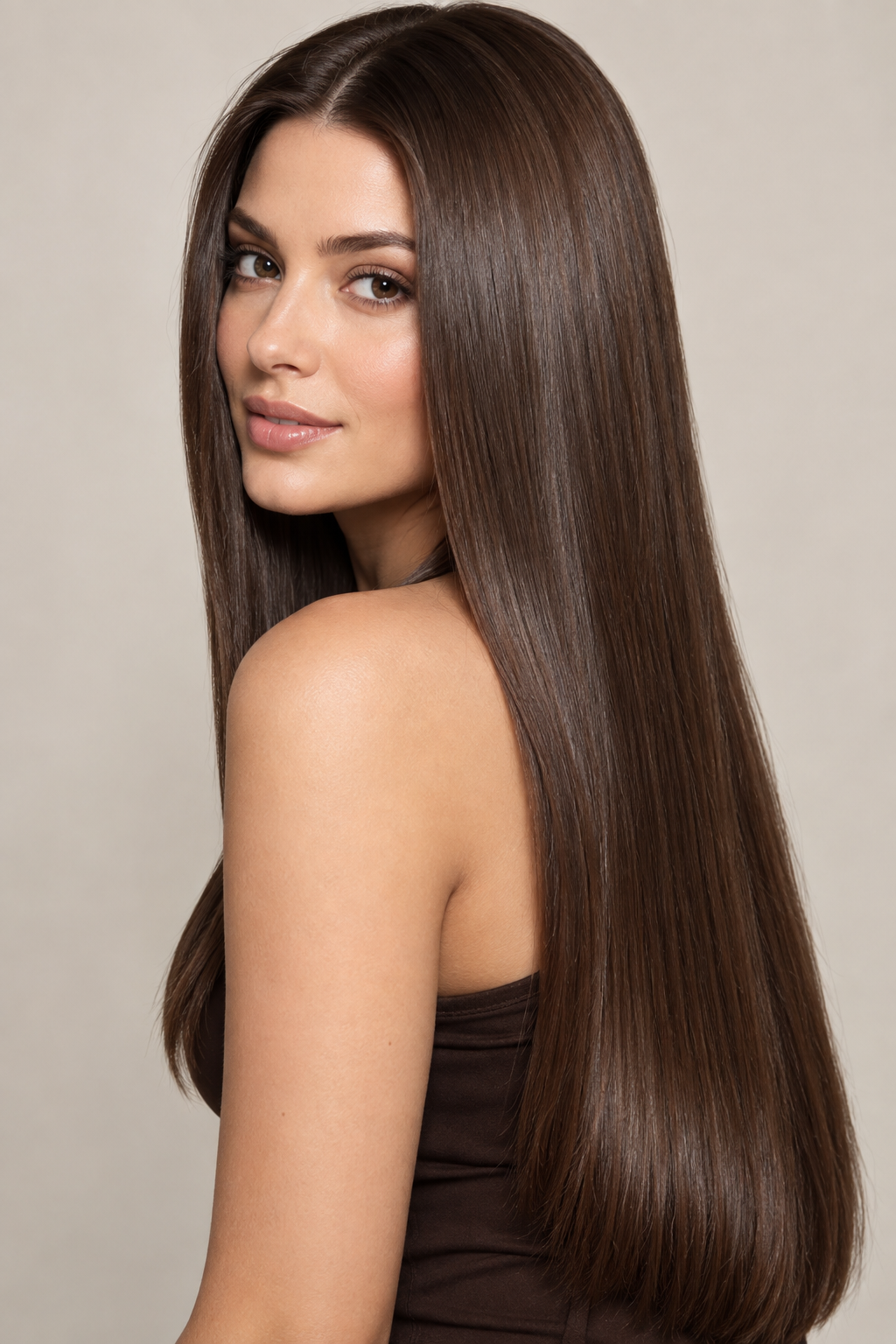
Straight hair shows off chocolate brown in its most uniform, sleek form. Light travels down the length of the strand more evenly, so the color reads smooth and consistent from root to end. This is a good option for anyone who wants their brunette shade to look tidy and intentional with a simple blow-dry.
16. Soft Chocolate Brunette
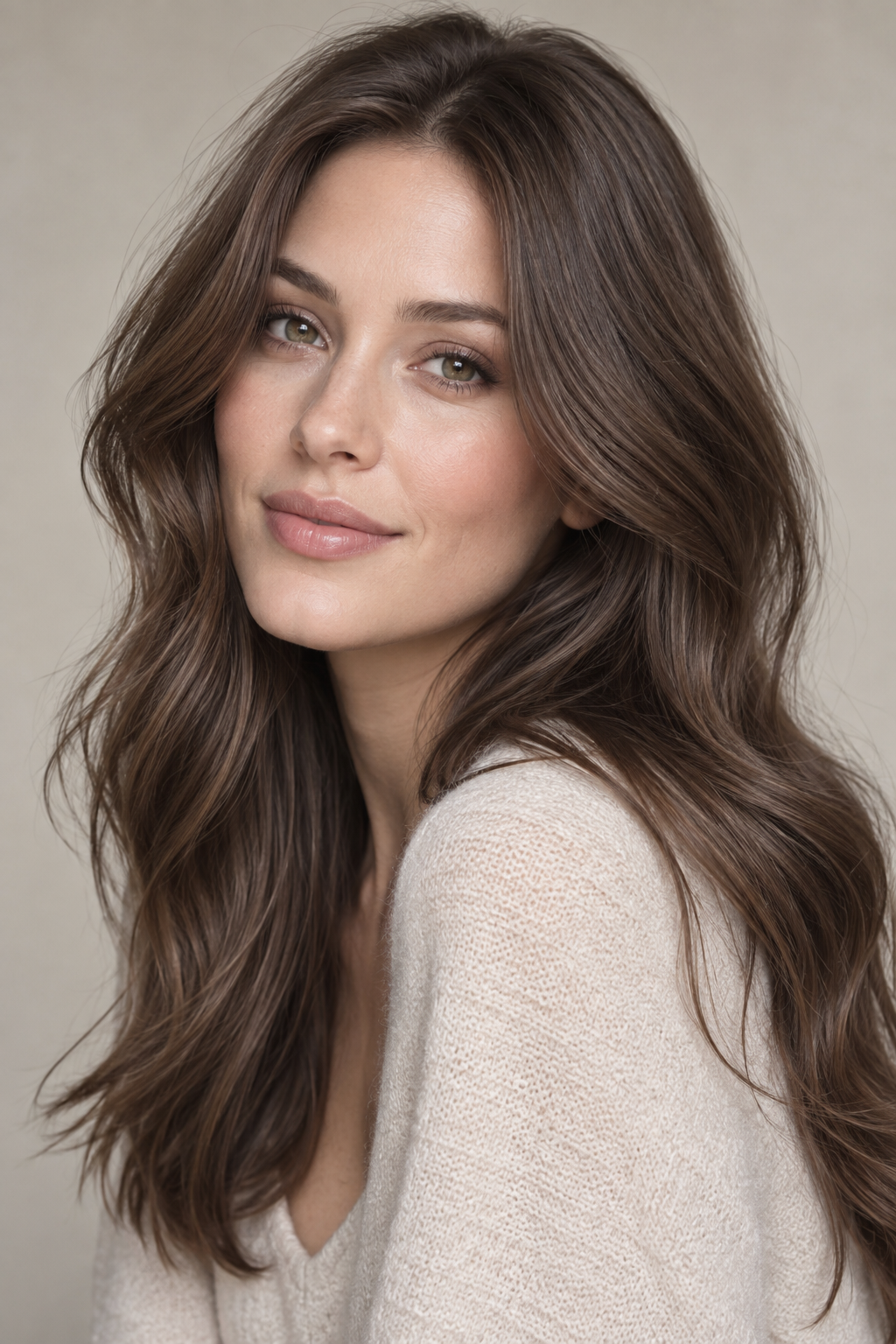
A gentler, lower-contrast version of chocolate brown that avoids looking too dark or too warm. It’s designed to feel wearable and easy rather than dramatic. This shade suits fine or thinner hair particularly well, since deeper or more saturated browns can sometimes look heavier on finer strands.
17. Espresso-Chocolate Blend
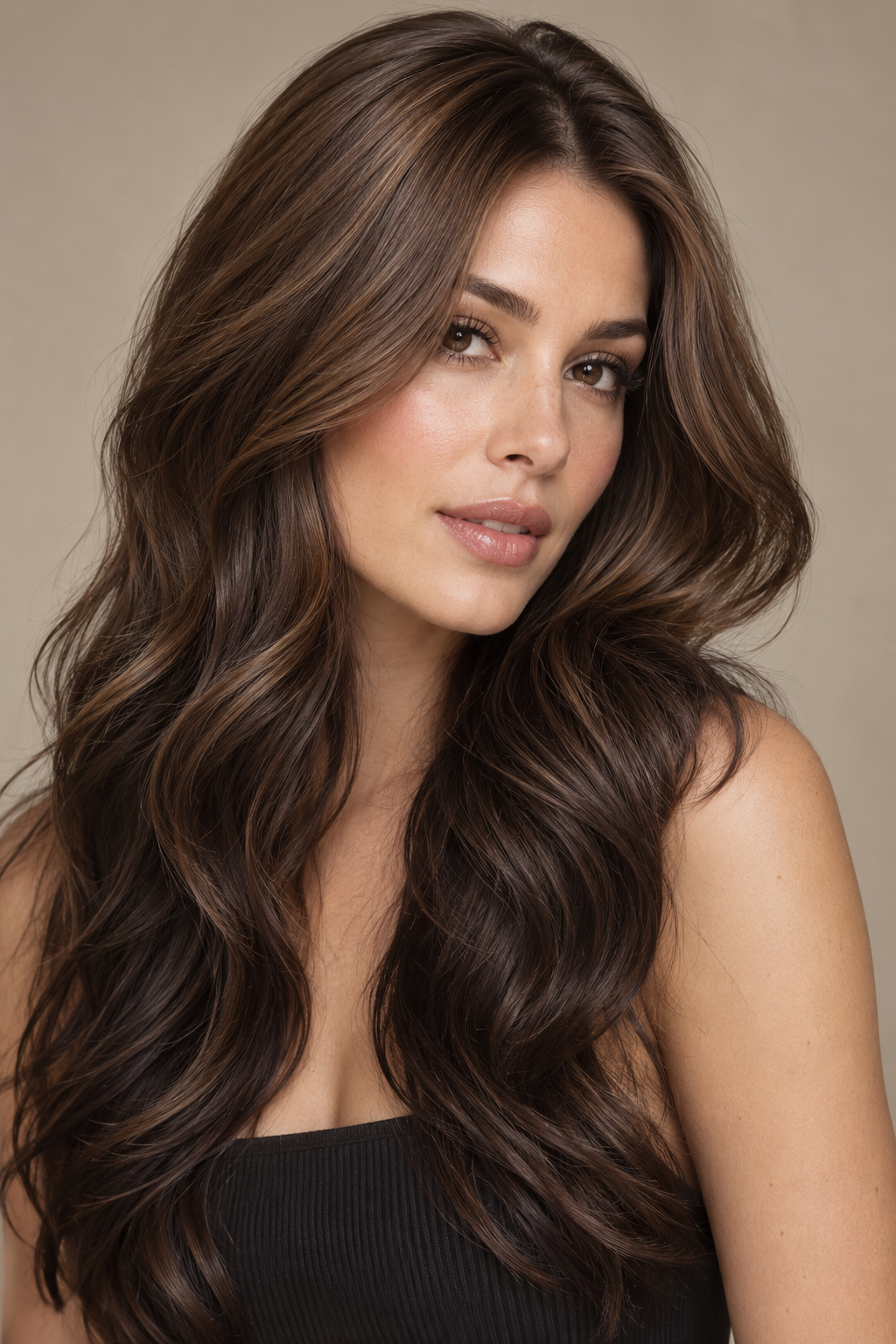
This idea blends a slightly darker espresso tone through the mid-lengths with a lighter chocolate brown remaining closer to the roots. The result is a soft gradient rather than a strong contrast. It works well on medium to long hair, where the blend has enough length to transition gradually instead of looking segmented.
18. Chocolate Brown with Subtle Caramel Dimension
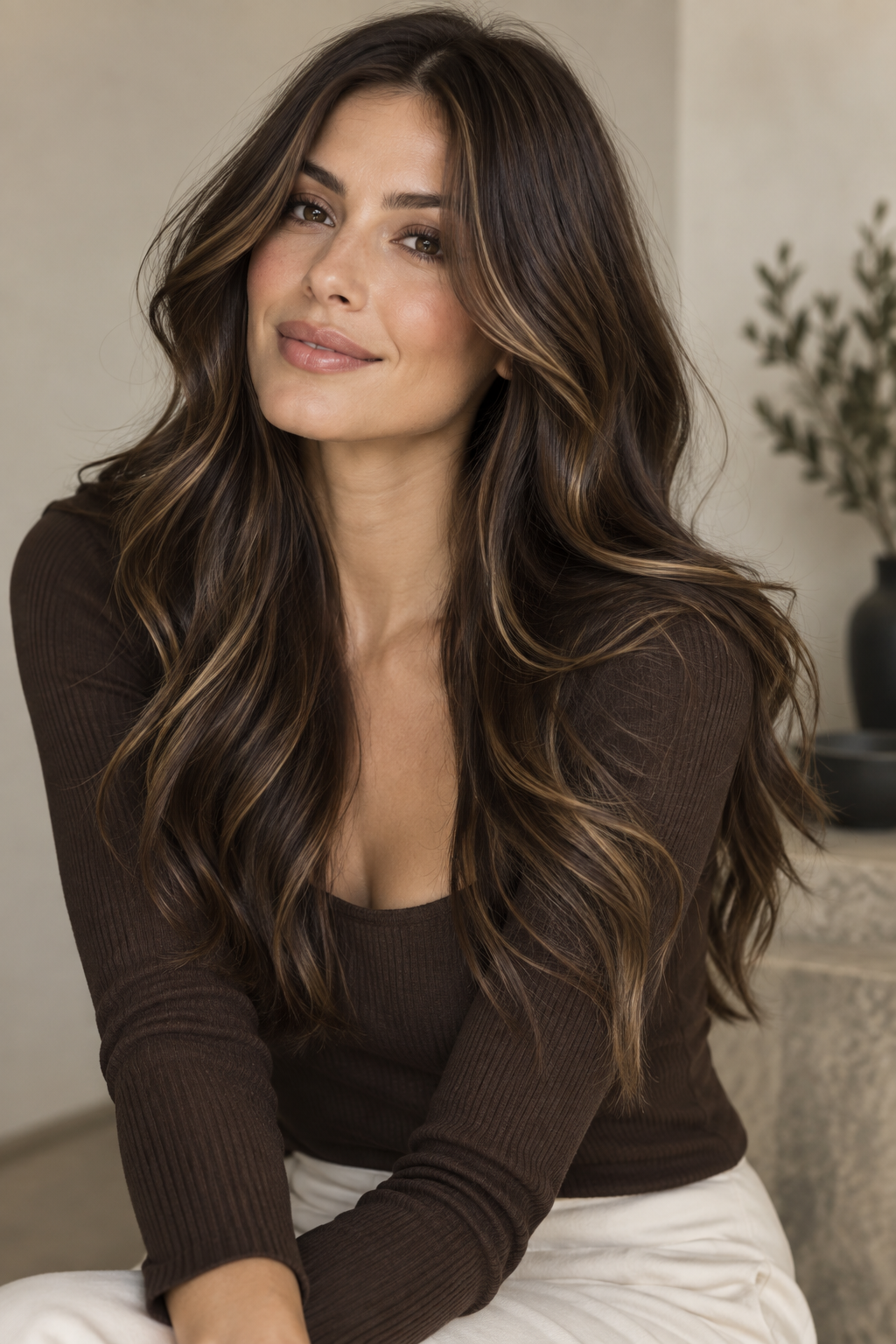
Here, a small amount of caramel is woven through as fine highlights rather than a dominant feature. The base stays chocolate brown throughout, with caramel only appearing as light catches certain pieces. This works nicely on medium to long hair with some layering, since the caramel highlights need movement to show properly.
19. Chocolate Brown with Soft Chestnut Warmth
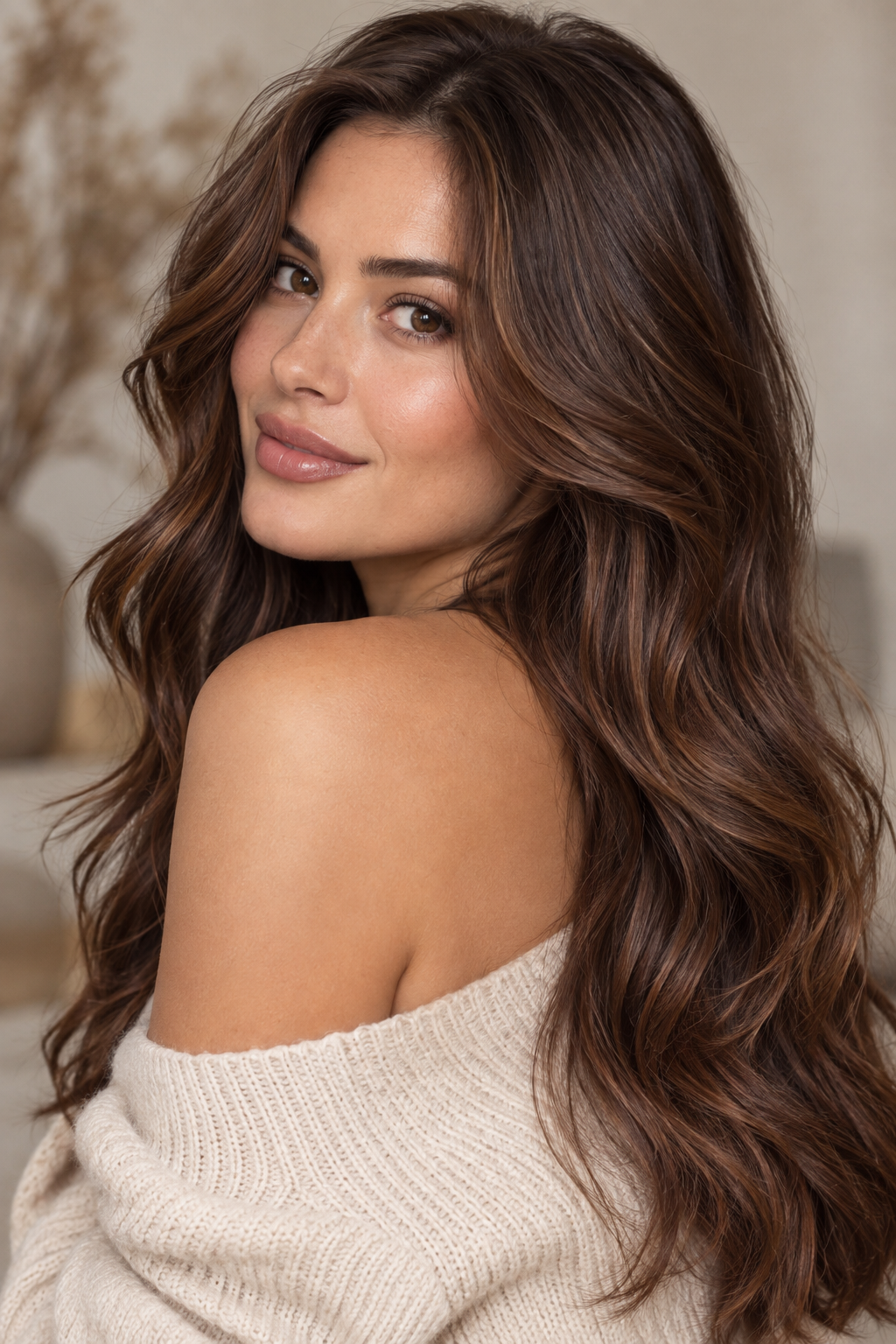
Chestnut brings a warm, slightly reddish undertone into the chocolate brown base, without shifting the overall color into a red family. It’s a subtle warmth rather than an obvious one. This combination tends to suit warmer complexions well, though it can be adjusted lighter or deeper depending on someone’s natural base color.
20. Dark-Rooted Chocolate Brunette
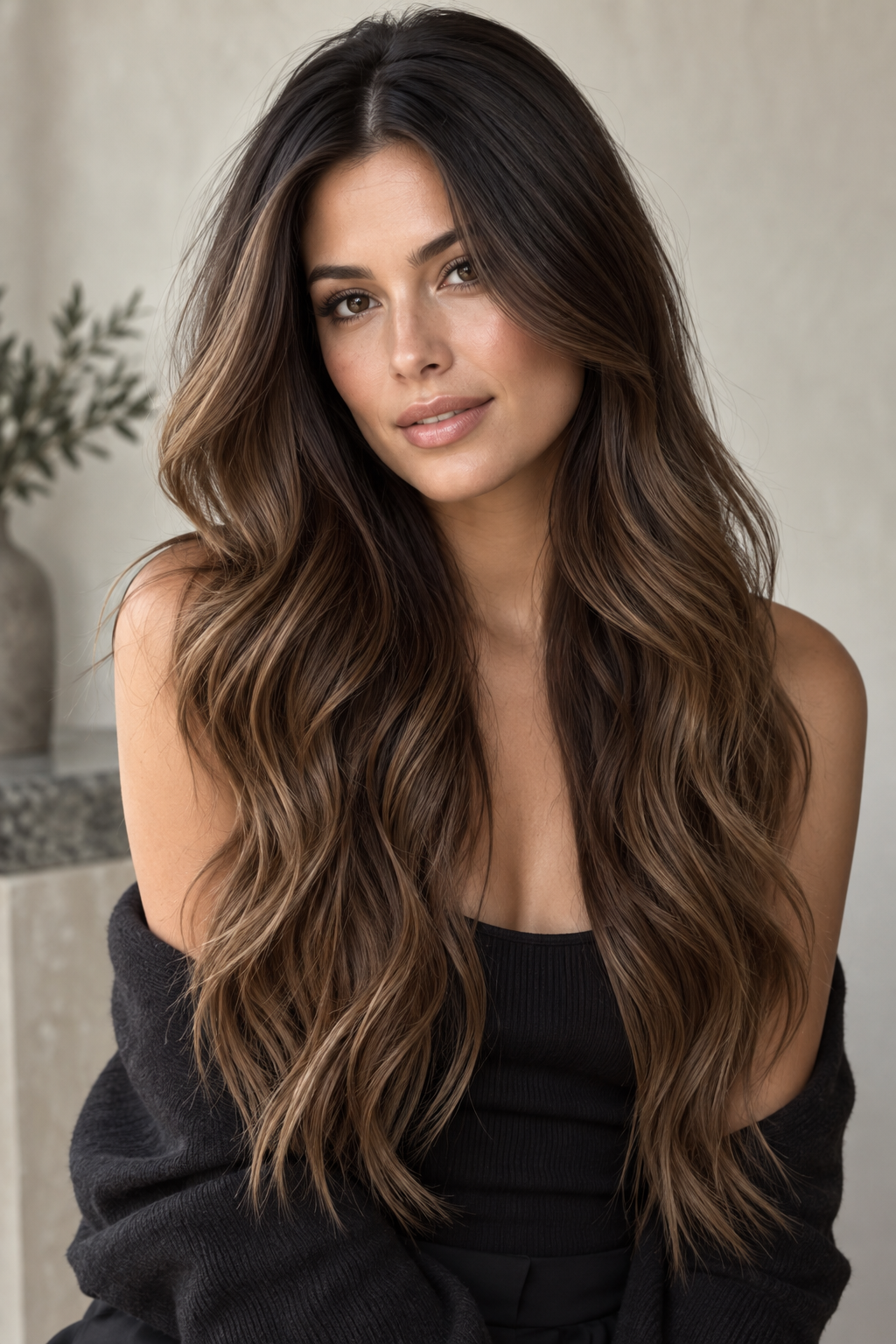
This look keeps a deeper, more natural root and gradually transitions into a lighter chocolate brown through the mid-lengths and ends. It’s a lower-maintenance option because the root shadow blends with natural regrowth over time. It suits long hair especially well, giving the color room to shift gradually rather than abruptly.
21. Chocolate Brown Lob
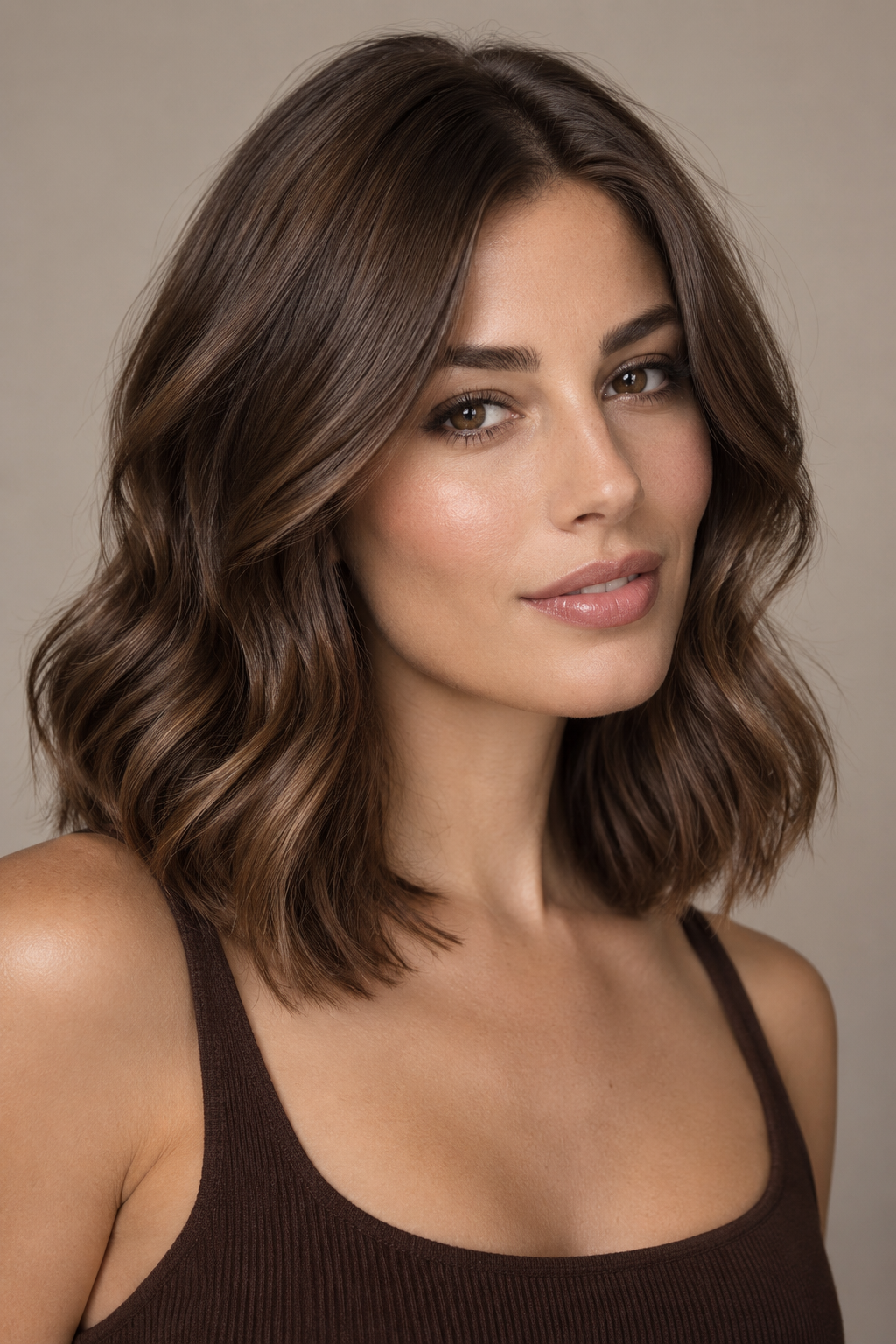
A long bob, or lob, in chocolate brown offers a middle ground between short and long styles. The length hits around the collarbone, which is long enough for soft waves but short enough to keep the color looking dense and full. This length works well with either a neutral or warm chocolate brown base.
22. Sun-Kissed Chocolate Brown
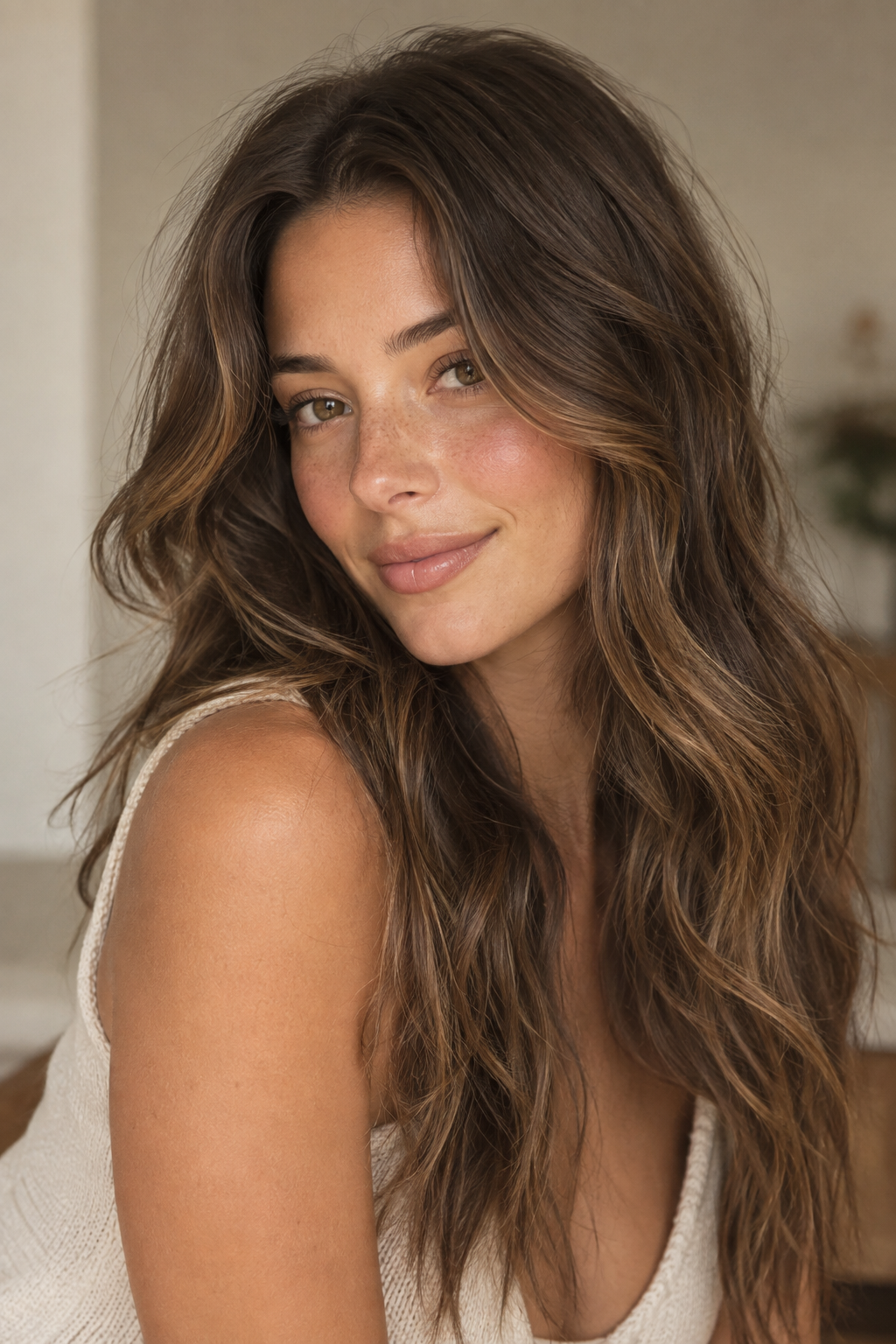
This version mimics the way brown hair naturally lightens after time outdoors, with soft, uneven lightening concentrated at the ends and around the face. It’s a subtler take on balayage, designed to look like a natural fade rather than a deliberate highlighting pattern. It suits medium to long hair with some texture, whether wavy or straight.
23. Cool-Toned Chocolate Brown
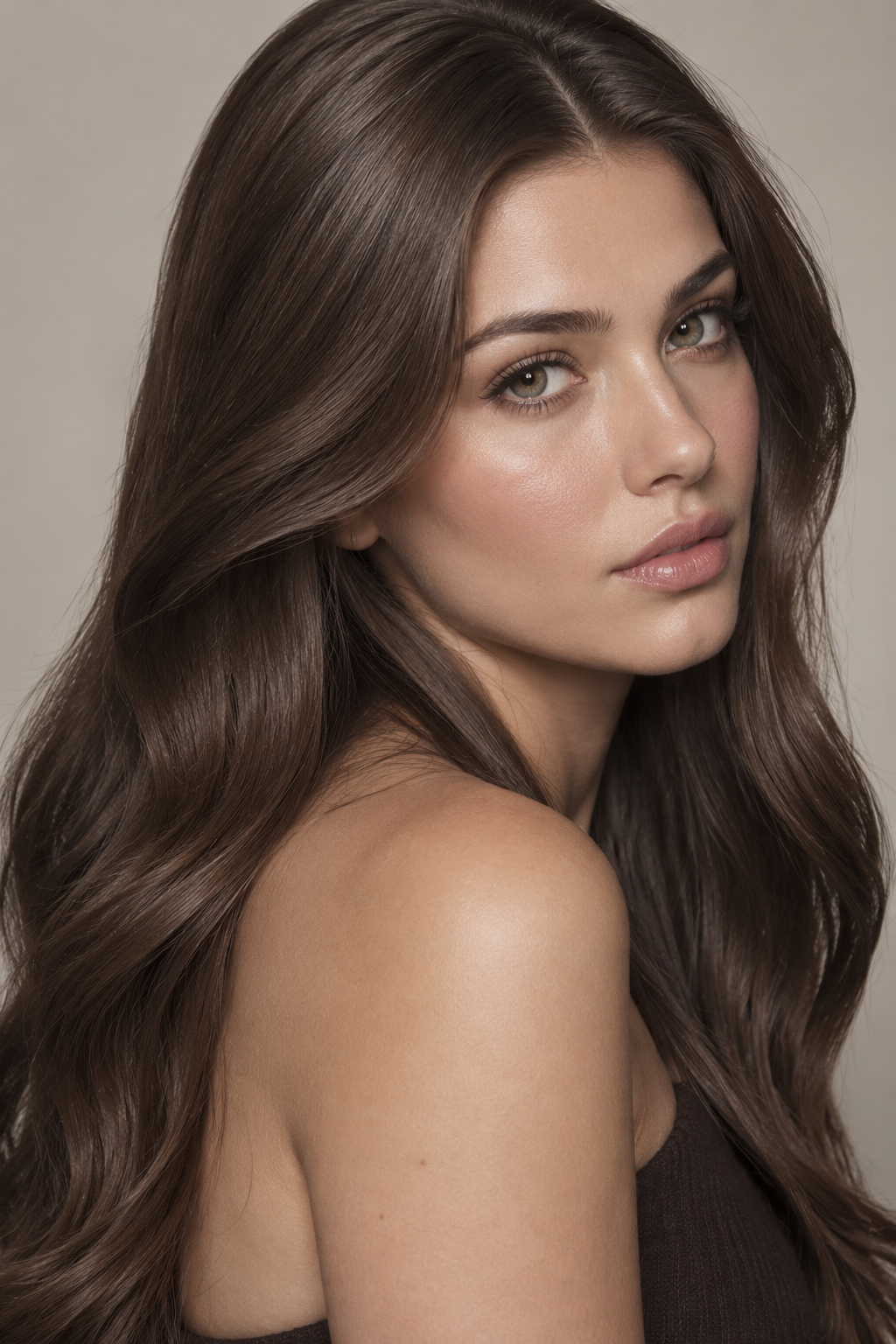
Rather than warmth, this shade is toned to minimize red and gold undertones, leaning slightly ashier while still reading as brown rather than gray. It can suit cooler complexions particularly well, though results vary depending on natural hair texture and porosity. This tone often requires more precise toning to maintain, since brunette colors can shift warmer as they fade.
24. Chocolate Brown with Subtle Copper Undertone
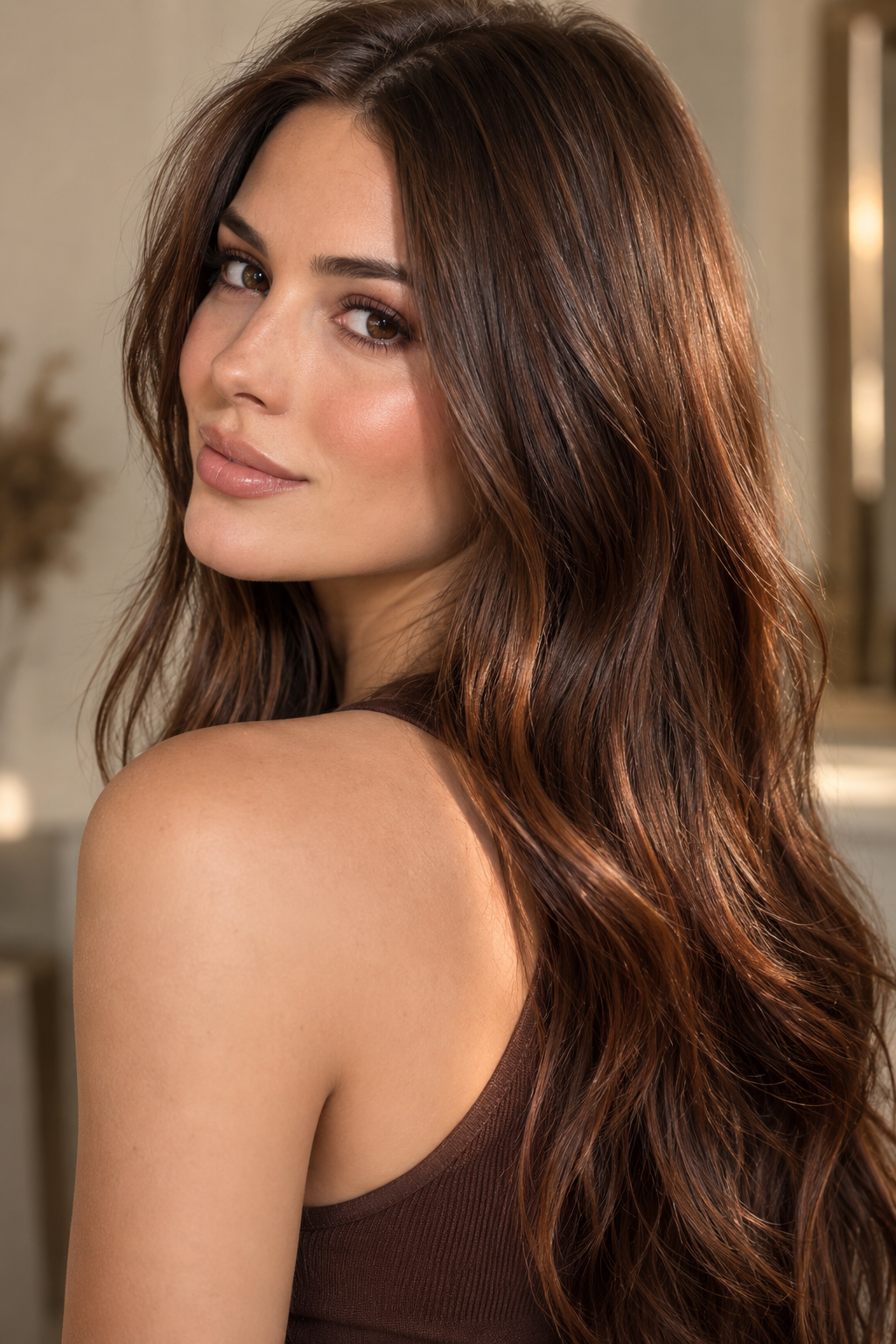
A small amount of copper is blended into the base, giving chocolate brown a warm glow that’s noticeable mainly in direct or natural light. Indoors, it reads as a fairly standard brunette; outside, the copper becomes more visible. This works well on straight or lightly waved hair, where the undertone can be seen clearly rather than lost in heavier texture.
25. All-Over Solid Chocolate Brown
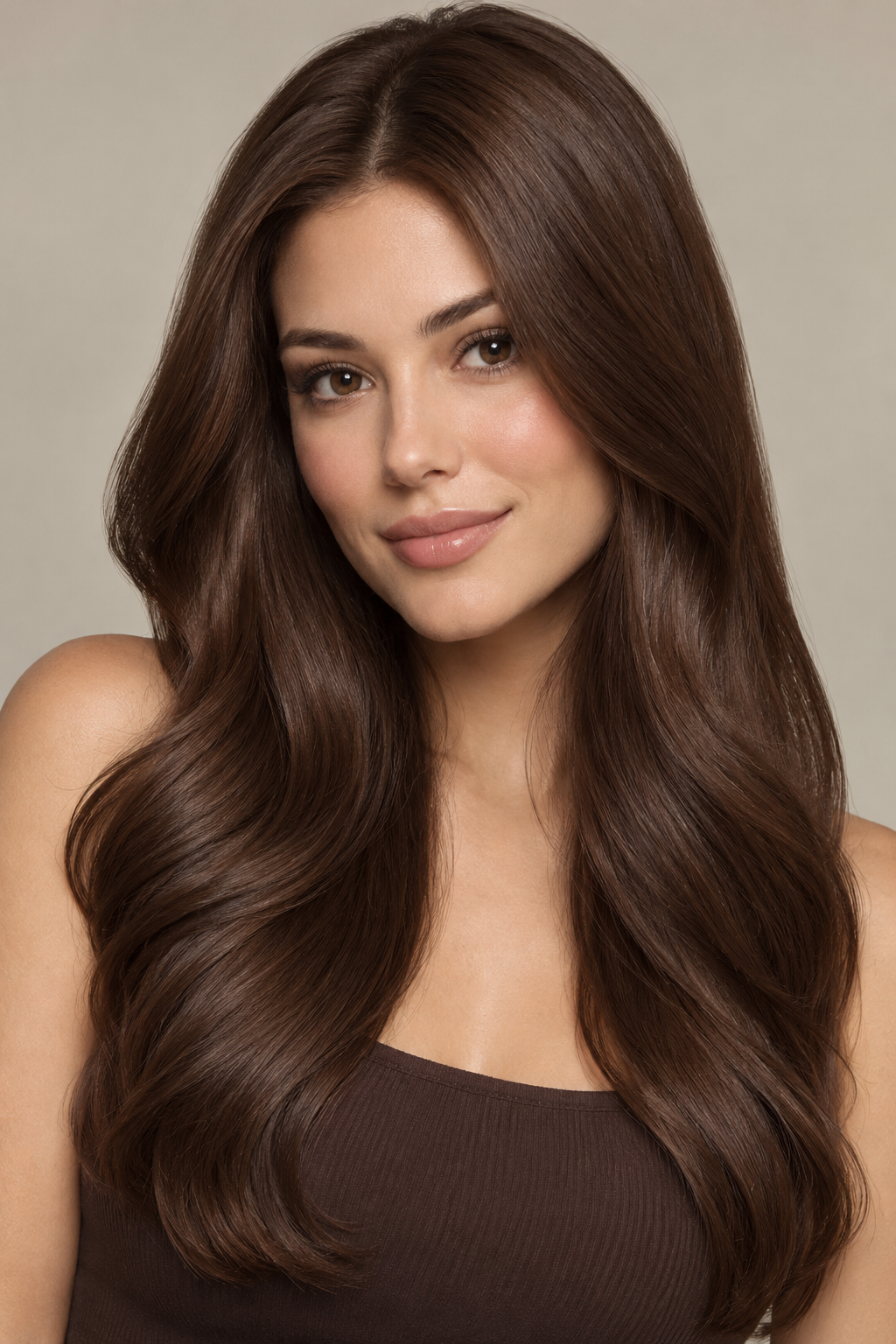
A single, uniform application of chocolate brown from root to end, with no highlights, lowlights or gradient. This is the most straightforward version on the list and suits anyone who wants a clean, consistent brunette without added maintenance from highlight regrowth. It works on any length and texture, since the simplicity of the color lets the natural shine of the hair do most of the visual work.
How to Choose the Right Chocolate Brown Hair Color
Choose your chocolate brown shade based on your natural hair color, undertone, and how much maintenance you want. Warm chocolate brown has golden or reddish tones, cool shades look softer and ashier, while neutral chocolate brown sits in between and is usually easier to maintain.
Your starting hair color also matters. Very light, highlighted, or very dark hair may need more than one salon visit to reach the right shade. If you prefer low maintenance, choose a solid or low-contrast chocolate brown instead of balayage or stronger highlights.
Hair length and texture can also affect how the color looks, so take reference photos to your colorist to help choose the right depth and undertone.
How to Maintain Chocolate Brown Hair
Chocolate brown hair, like most brunette color treatments, can fade and shift tone over time, so a few habits go a long way in keeping it looking fresh. A color-safe shampoo and conditioner designed for colored hair helps slow fading and protects the vibrancy of the shade, especially compared with clarifying formulas that can strip color faster than intended.
Overwashing is one of the more common reasons brunette color looks dull sooner than expected. Washing hair less frequently, or using a dry shampoo between washes, helps color-treated hair hold onto its tone and shine longer.
Heat styling is often unavoidable, but using a heat protectant before blow-drying, curling or straightening helps prevent the dryness that can make brown hair look flat or brassy over time. Lowering the heat setting when possible also reduces cumulative damage.
Sun exposure and general environmental factors, like chlorine or hard water, can gradually shift brunette tones warmer or duller than intended. Wearing a hat in strong sun or rinsing hair after swimming can help minimize this kind of fading.
To maintain shine specifically, a glossing treatment every few weeks — either at home or in the salon — can refresh the surface of the hair and keep chocolate brown looking rich rather than dull.
How often you need a color refresh depends on the type of service. All-over solid color usually needs root touch-ups every four to six weeks, depending on how quickly your natural color grows in. Balayage or dimensional color tends to stretch longer between full appointments, though a toning gloss in between visits helps keep the tone consistent. Talking to your colorist about your specific formula is the most reliable way to plan a maintenance schedule that actually fits your hair.
How to Make Chocolate Brown Hair Look Even Better for Fall
- Glossy blowouts help chocolate brown catch light evenly, which makes even a simple single-process color look polished and rich.
- Soft waves add gentle movement that lets dimensional or balayage color show through more naturally than flat, straight styling.
- Textured bobs concentrate color into a shorter shape, making brunette shades look fuller and more saturated.
- Long layers create natural separation in the hair, which helps subtle highlights or lowlights peek through as you move.
- Face-framing pieces draw attention toward lighter or warmer tones near the face without requiring an all-over highlighting service.
- Loose curls add uneven light and shadow throughout the hair, which brings out warmth in shades like chestnut or copper-toned chocolate brown.
- Sleek, straight styling shows off uniform color most clearly, making it a good choice for classic or all-over solid chocolate brown looks.
Frequently Asked Questions
Is chocolate brown hair warm or cool?
Chocolate brown can be formulated as warm, neutral or cool, depending on the undertone a colorist mixes in. Warm versions lean golden or reddish, cool versions minimize those tones, and neutral sits in between. There isn’t one single “chocolate brown” — it’s a range, so it’s worth discussing which undertone you’re picturing before a color appointment.
What skin tones suit chocolate brown hair?
Chocolate brown works across a wide range of complexions because the shade itself can be adjusted warmer or cooler to complement different undertones. Rather than one version suiting everyone, it’s more useful to think about which specific tone — warm, neutral or cool — tends to work well with your coloring, and adjust from there with your colorist.
Is chocolate brown darker than medium brown?
Generally, yes — chocolate brown tends to sit a shade or two deeper than medium brown, though the exact difference depends on how a colorist formulates it. Some chocolate brown shades are closer to medium brown with added richness, while others, like deep chocolate brown, sit noticeably darker.
Does chocolate brown hair require a lot of maintenance?
It depends on the technique. All-over solid color is generally lower maintenance, needing root touch-ups every four to six weeks. Balayage or dimensional versions can stretch longer between full appointments but often benefit from periodic toning to keep the color looking fresh in between.
Can dark hair be changed to chocolate brown?
In many cases, yes, though the process depends on how dark the current color is and whether it’s natural or previously colored. Moving from very dark or black hair to a lighter chocolate brown shade may take more than one appointment, so it’s worth discussing a realistic timeline with a colorist first.
What highlights look good with chocolate brown hair?
Subtle caramel, soft chestnut and fine face-framing highlights are common choices that add dimension without overwhelming the base color. The right choice depends on how much contrast you want and your natural undertone, so bringing reference photos to a consultation can help narrow it down.
Conclusion
Chocolate brown continues to hold up as one of the most flexible fall brunette hair color options, and part of that comes down to how many directions it can take. From a soft milk chocolate shade to a deeper, dark-rooted version, there’s enough range within this one color family to fit different hair lengths, textures and undertones. Rather than choosing based on a single “correct” shade, it helps to think about your natural base, how much upkeep you’re comfortable with, and how much contrast or dimension you actually want. If any of the 25 looks above caught your eye, save them and bring them along the next time you sit down with your colorist to talk through your fall color.


